
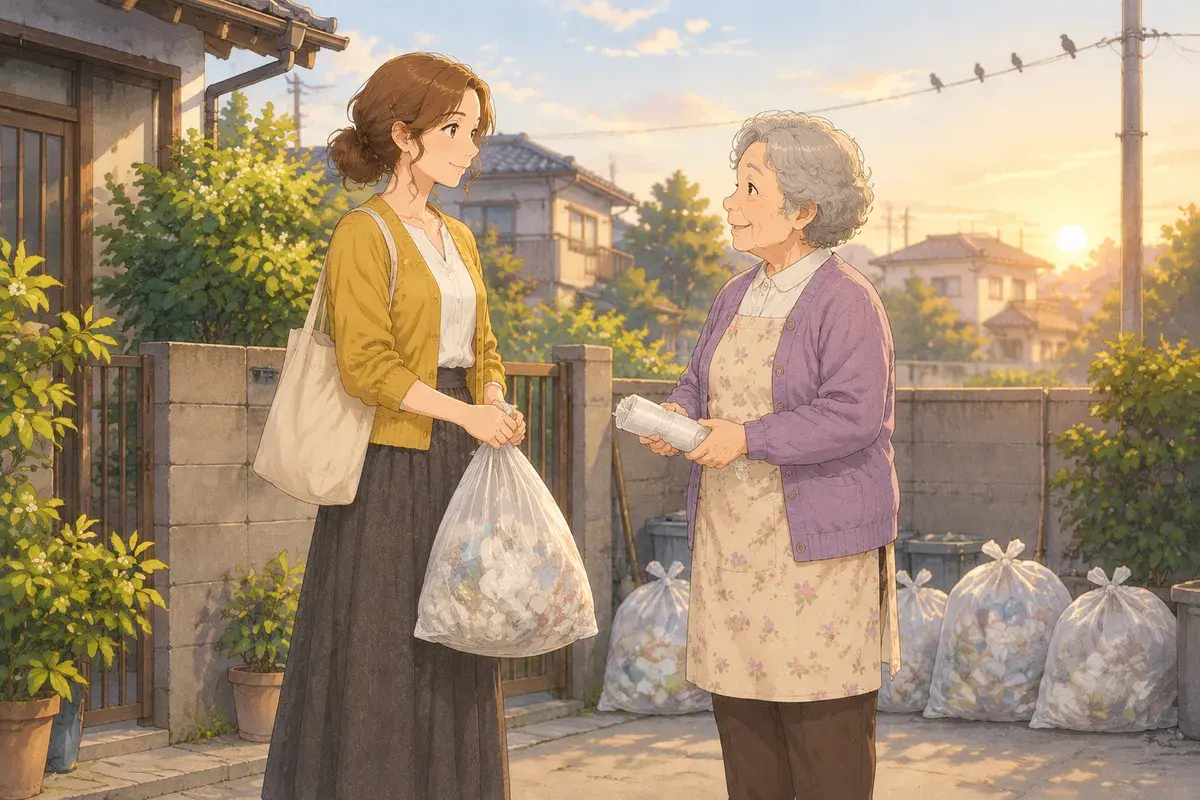
Japanese dialogue with translation · A2 · 16 lines
夜は出さないでください Please don't put it out at night.
Comic · 10 panels
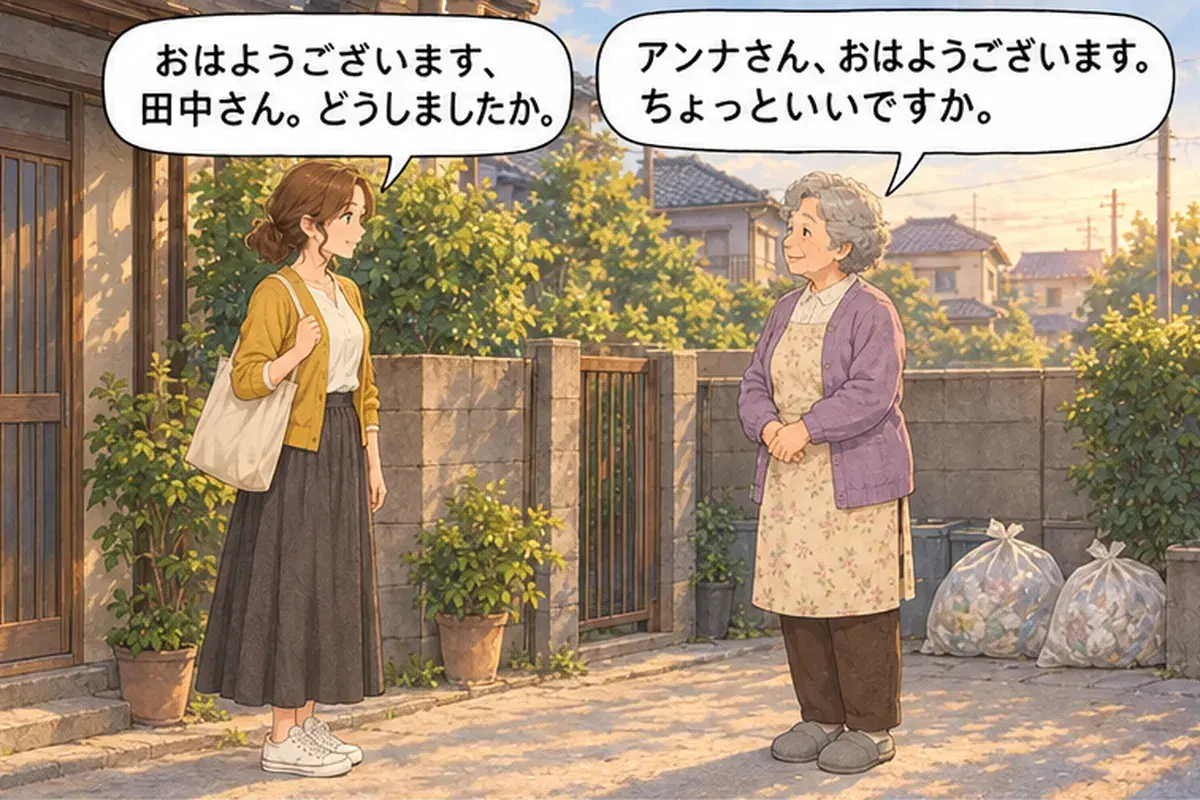
- 田中
アンナさん、おはようございます。ちょっといいですか。
Anna-san, good morning. Do you have a minute?
- アンナ
おはようございます、田中さん。どうしましたか。
Good morning, Tanaka-san. What's wrong?
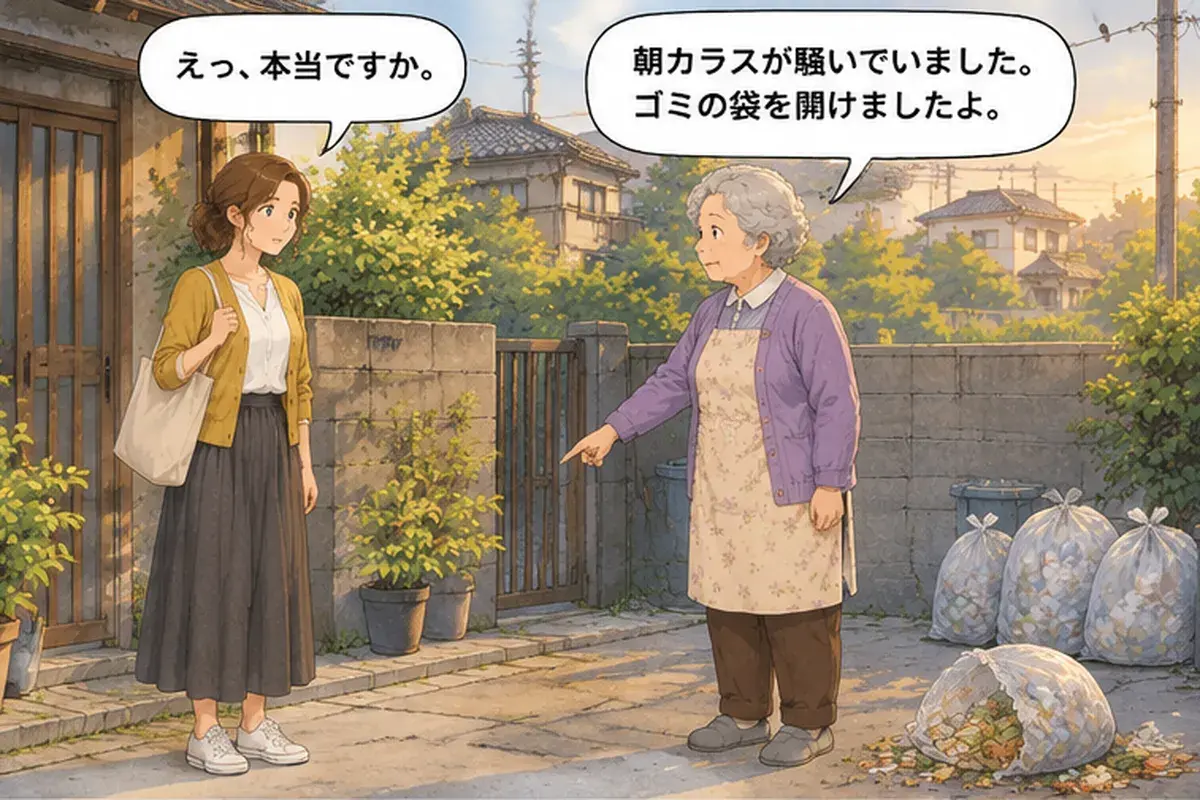
- 田中
朝カラスが騒いでいました。ゴミの袋を開けましたよ。
This morning the crows were making a racket. They opened a trash bag.
- アンナ
えっ、本当ですか。
What? Really?
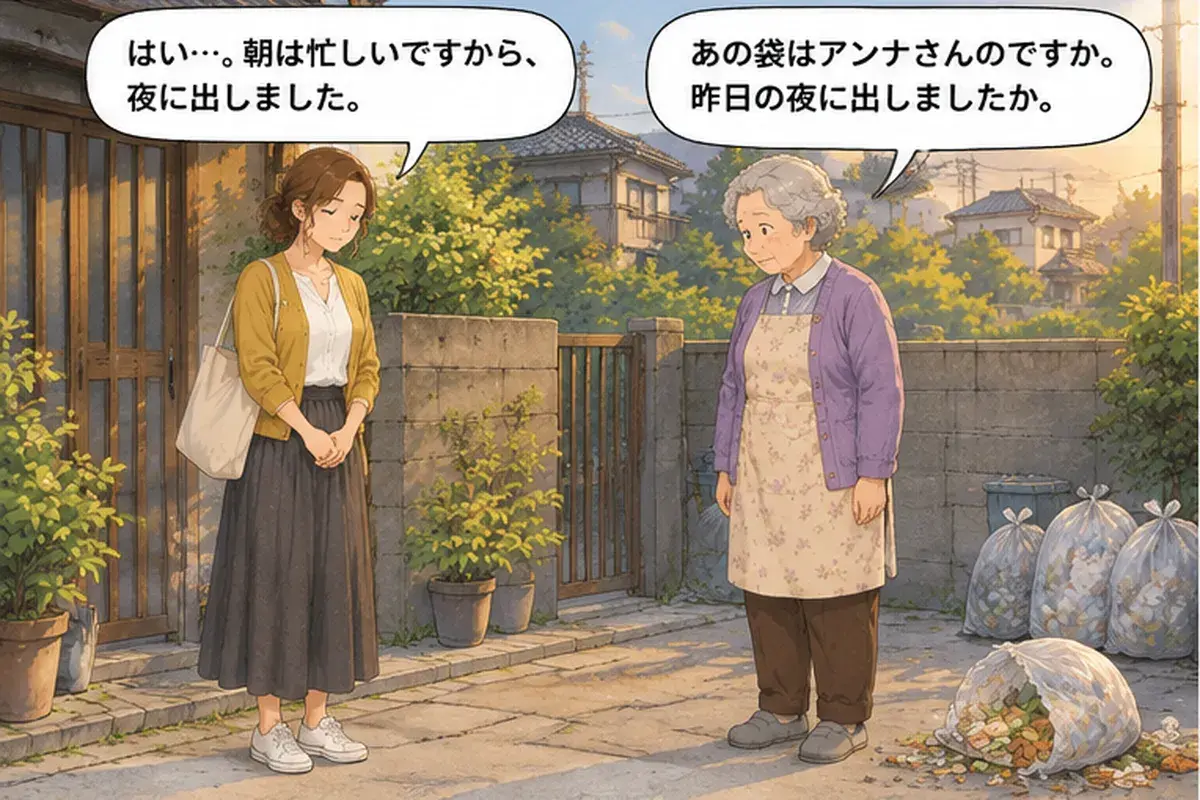
- 田中
あの袋はアンナさんのですか。昨日の夜に出しましたか。
Is that bag yours, Anna-san? Did you put it out last night?
- アンナ
はい…。朝は忙しいですから、夜に出しました。
Yes... I'm busy in the morning, so I put it out at night.
- 田中
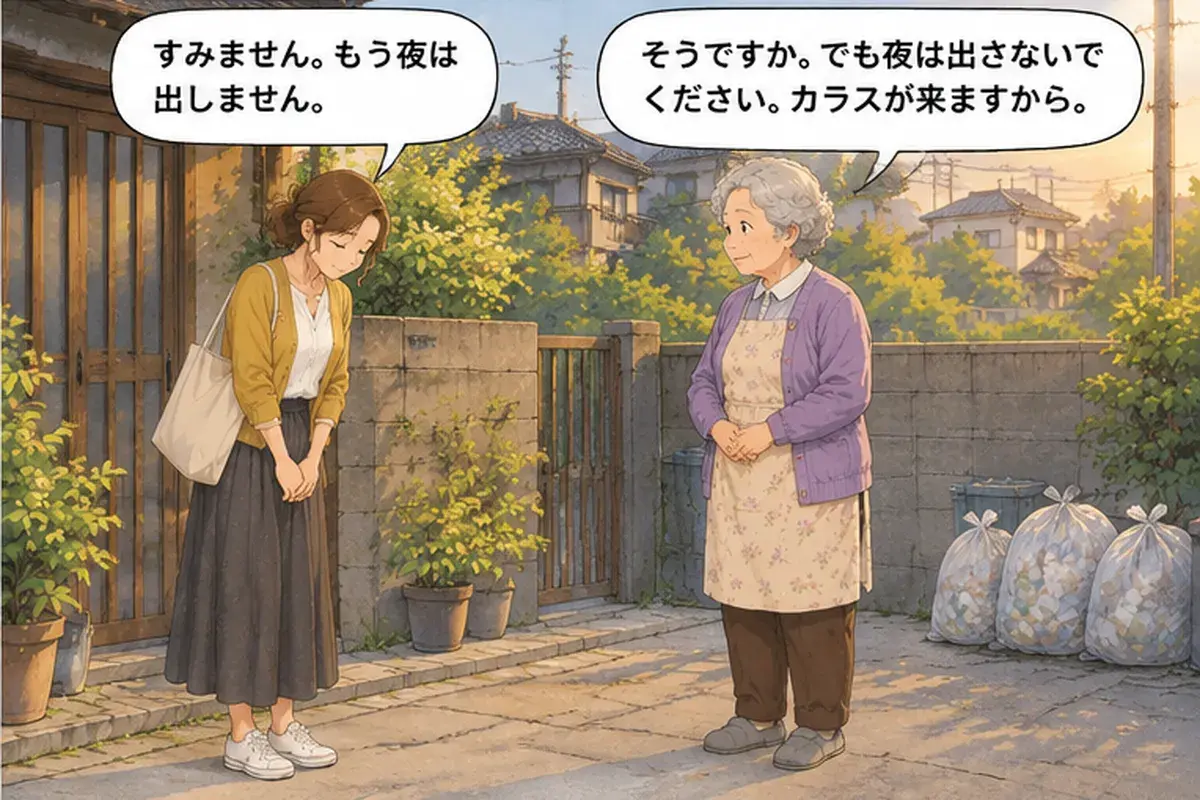
そうですか。でも夜は出さないでください。カラスが来ますから。
I see. But please don't put it out at night. The crows come.
- アンナ
すみません。もう夜は出しません。
I'm sorry. I won't put it out at night anymore.
- 田中
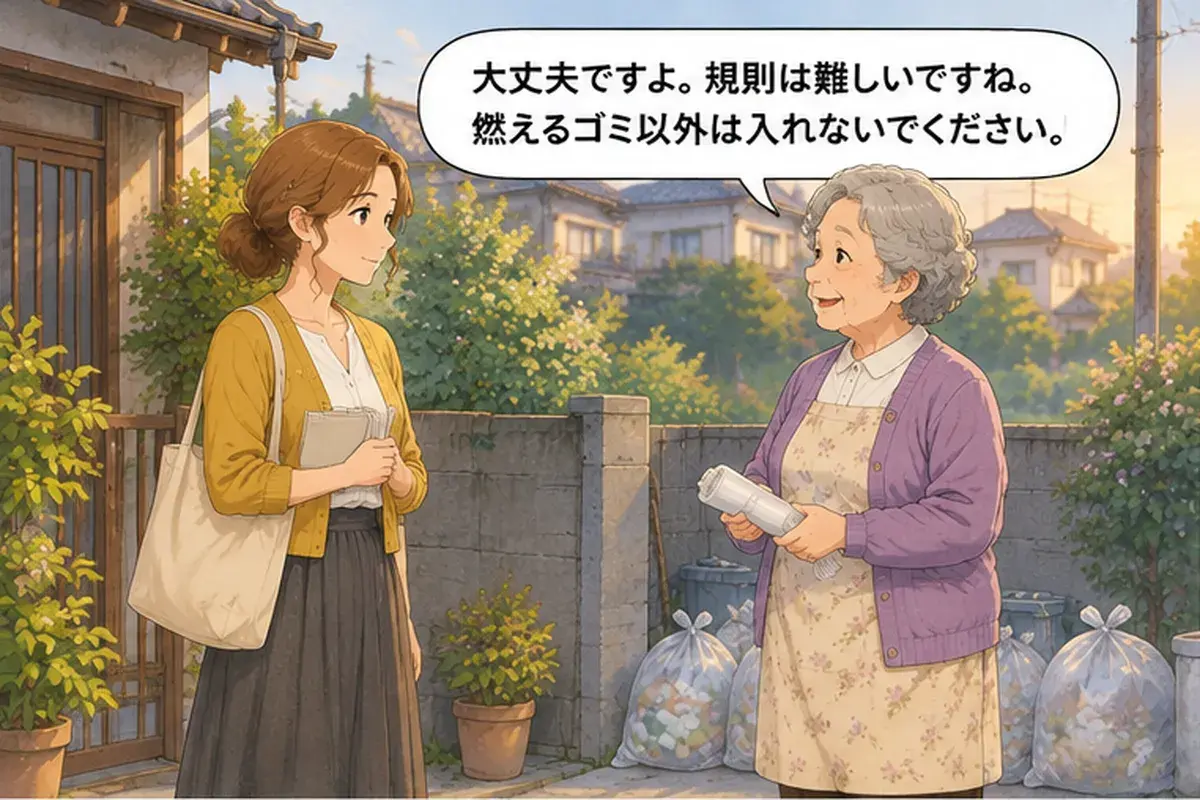
大丈夫ですよ。規則は難しいですね。燃えるゴミ以外は入れないでください。
It's fine. The rules are hard, aren't they? Please don't put anything in except burnable trash.
- アンナ
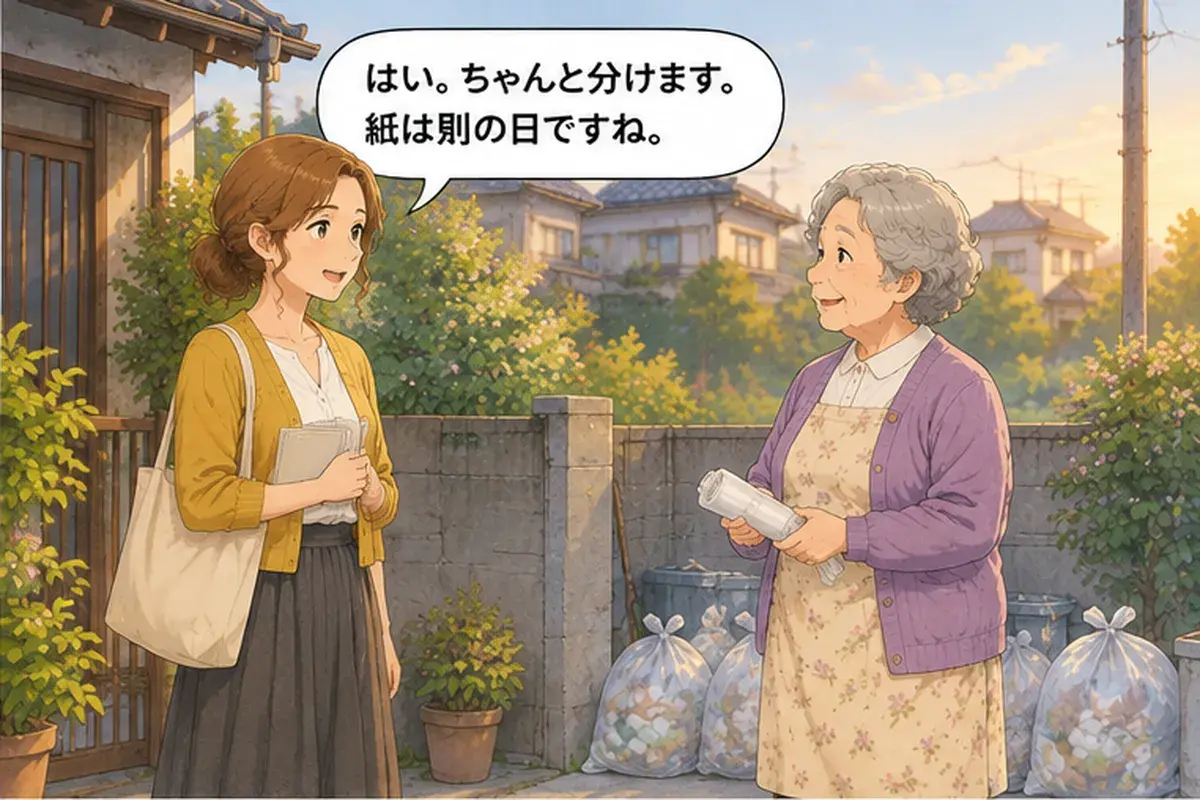
はい。ちゃんと分けます。紙は別の日ですね。
Okay. I'll sort it properly. Paper goes out on a different day, right?
- 田中
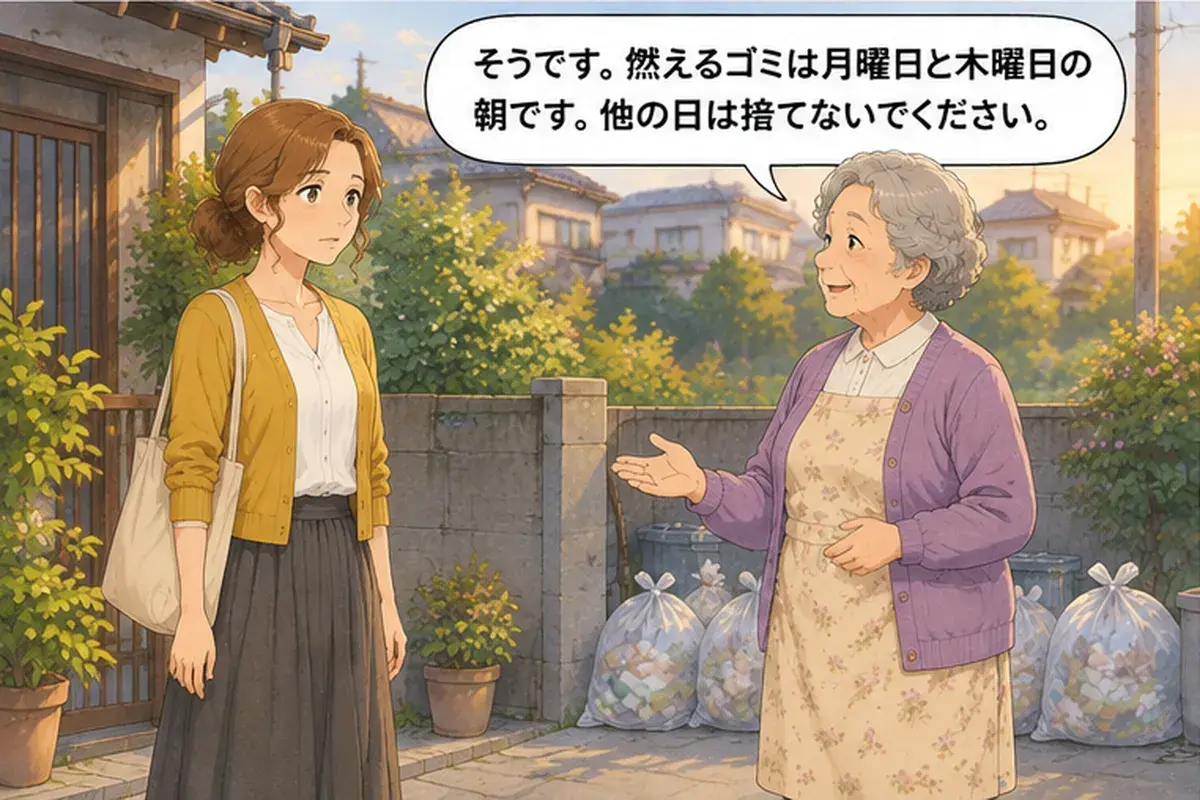
そうです。燃えるゴミは月曜日と木曜日の朝です。他の日は捨てないでください。
That's right. Burnable trash goes out Monday and Thursday mornings. Please don't throw it out on other days.
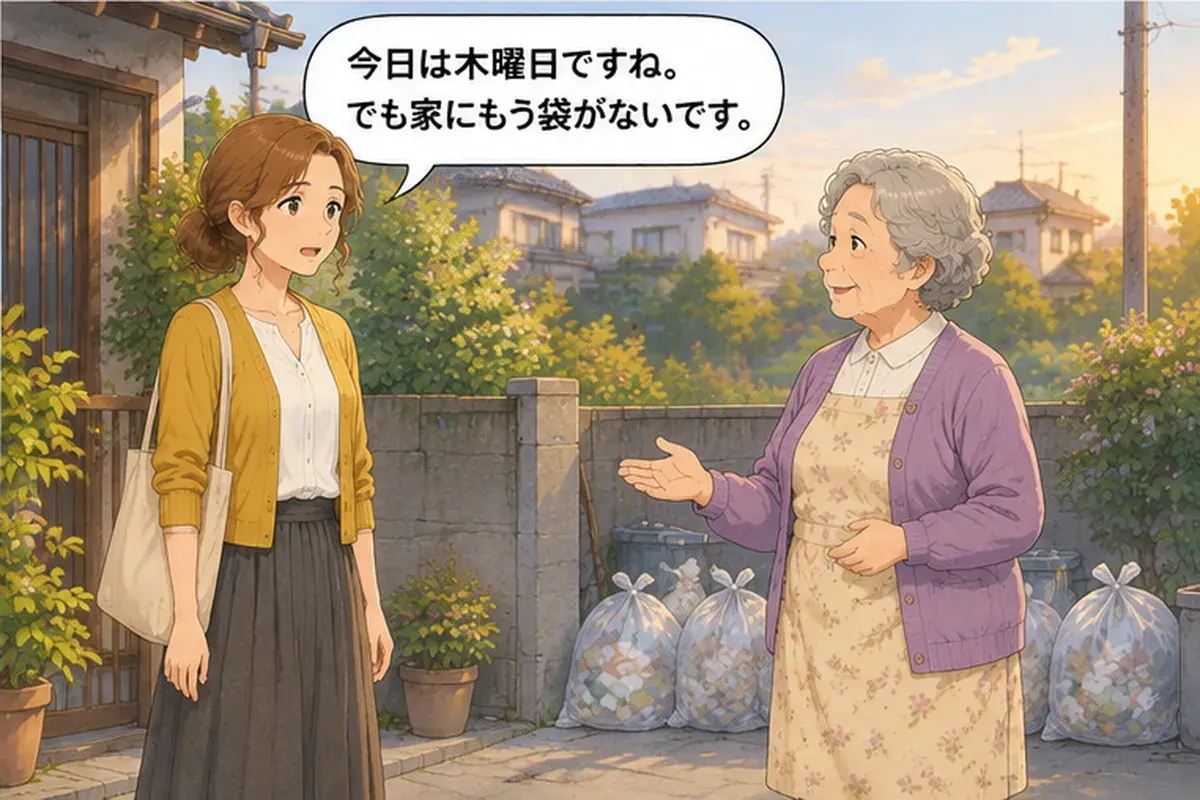
- アンナ
今日は木曜日ですね。でも家にもう袋がないです。
Today is Thursday, isn't it? But I don't have any bags left at home.
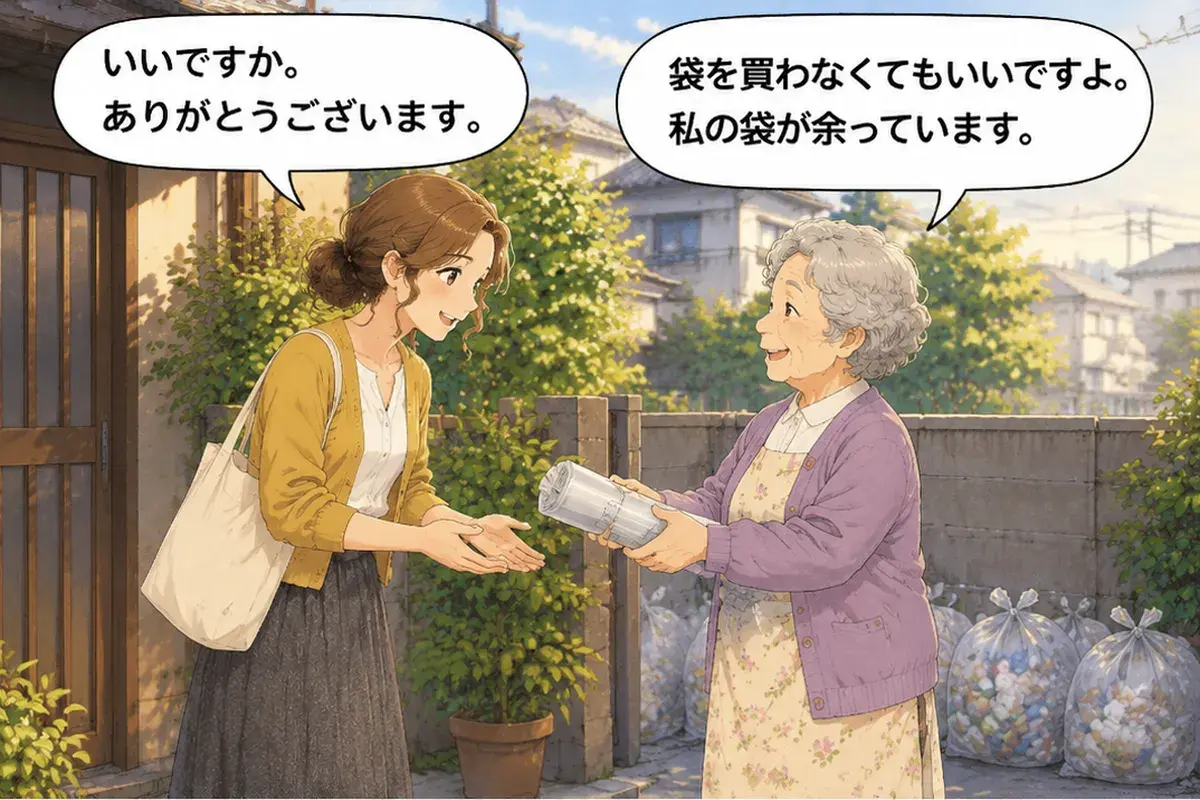
- 田中
袋を買わなくてもいいですよ。私の袋が余っています。
You don't have to buy a bag. I have extra bags.
- アンナ
いいですか。ありがとうございます。
Is that OK? Thank you very much.
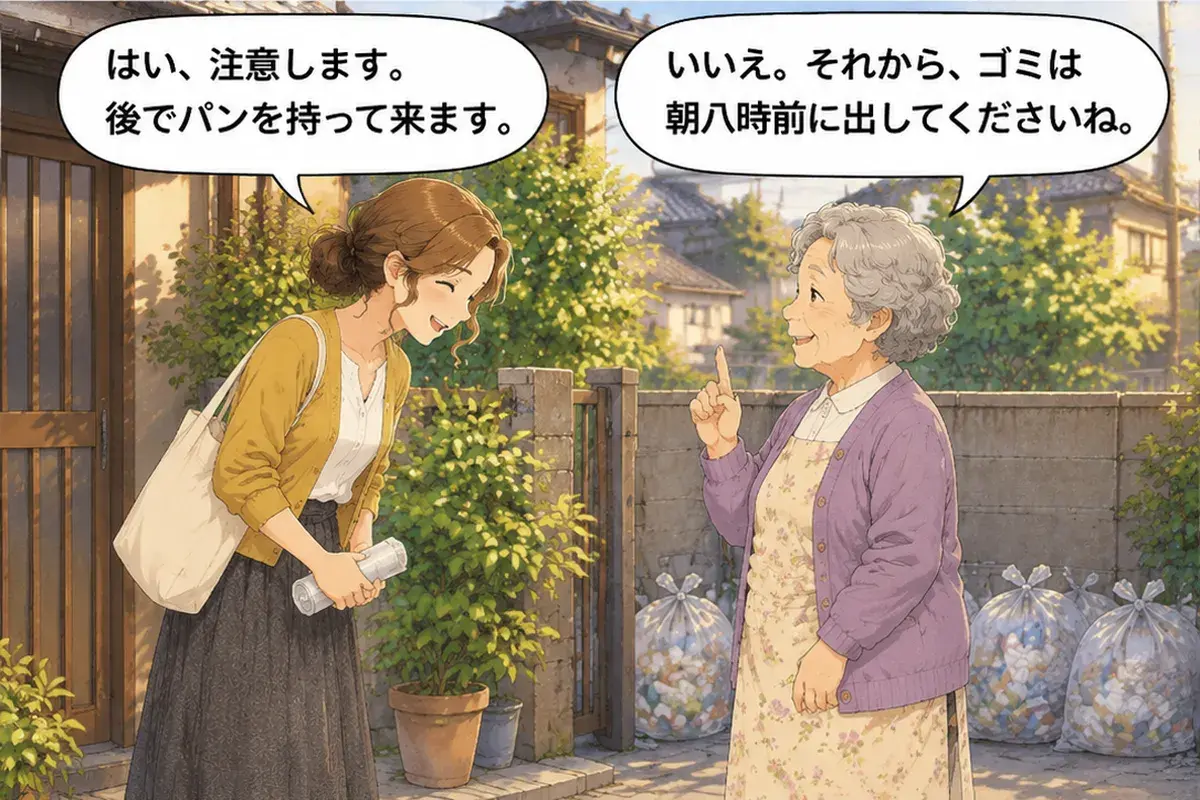
- 田中
いいえ。それから、ゴミは朝八時前に出してくださいね。
Not at all. Also, please put out the trash before eight in the morning.
- アンナ
はい、注意します。後でパンを持って来ます。
Yes, I'll be careful. I'll bring you some bread later.
Grammar for this text
夜 は 出さないで ください— Please don't put it out at night. From出す(to put out) you get出さない, then addで.夜 はmeans "but at night, no", in contrast to the morning.袋 が ない です— There are no bags.ないis "there isn't" fromある: notあらない, justない.ない ですmeans almost the same asありません, only more conversational.袋 を 買わなくても いい です— You don't have to buy bags.買う→買わない(うbecomesわ) →買わなくても. It's not a ban, it frees you from a duty.私 の 袋 が 余って います— I have extra bags.余るmeans "to be left over".〜て いますshows a state: the extra bags are left and sitting at Tanaka-san's.燃えるゴミ 以外 は 入れないで ください— Please don't put anything in except burnable trash.以外means "except". And他 の 日means "on other days".ちゃんと 分けます— I'll sort it properly.ちゃんとmeans "properly, carefully";分けるmeans "to separate, to sort" trash by type.朝 カラス が 騒いで いました— This morning the crows were making a racket.いましたis the past of〜て います: the crows were noisy for some time.後で パン を 持って 来ます— I'll bring some bread later.持って 来るmeans "to bring" (literally "take and come").ゴミ は 朝 八時 前 に 出して ください— Please put out the trash before eight in the morning.前 にafter a time means "before". The trash truck comes in the morning, so you put trash out on pickup day, not the night before.
Words and grammar of the unit: Explain rules and what not to do.
Learn the words from the texts with flashcards
In the app, you can tap any word in a text to see its translation, forms and examples, and new words stick with flashcards. 15 minutes a day.
Start for freeEverything is open for free. No card needed to sign up.