
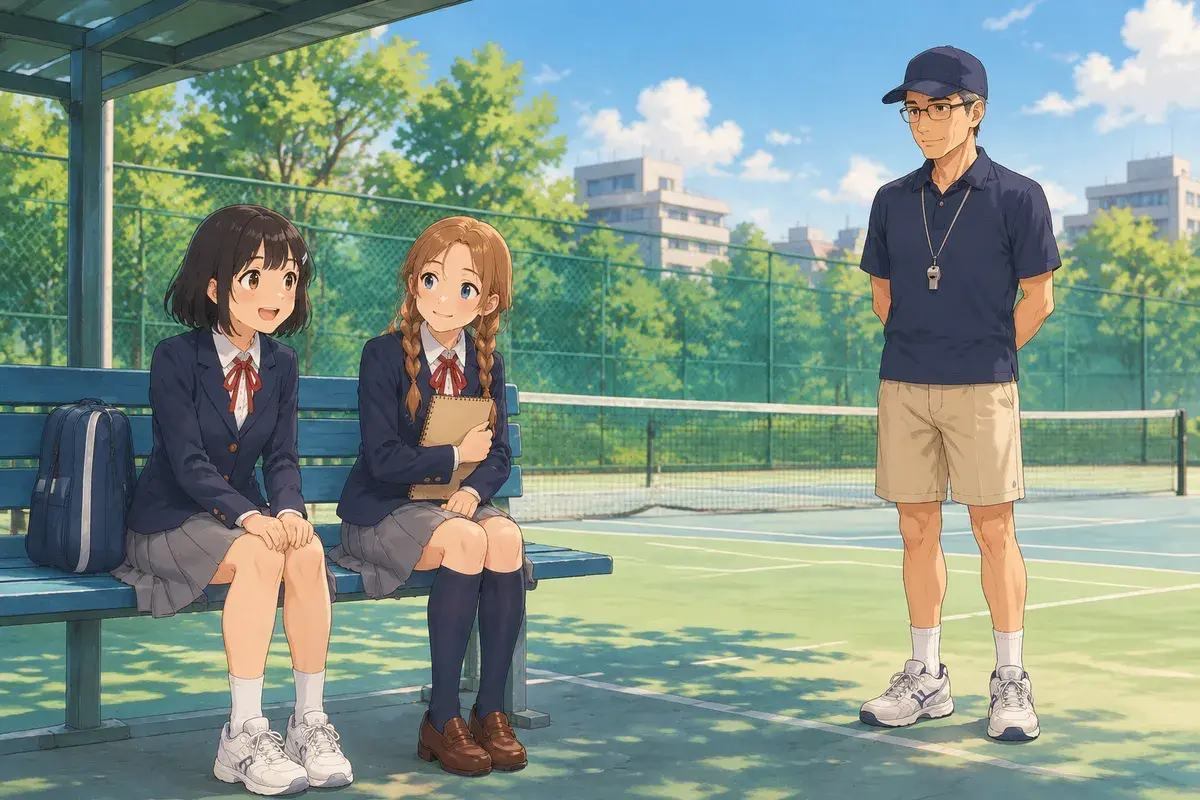
Japanese dialogue with translation · A2 · 16 lines
走らないでください Please don't run.
Comic · 16 panels
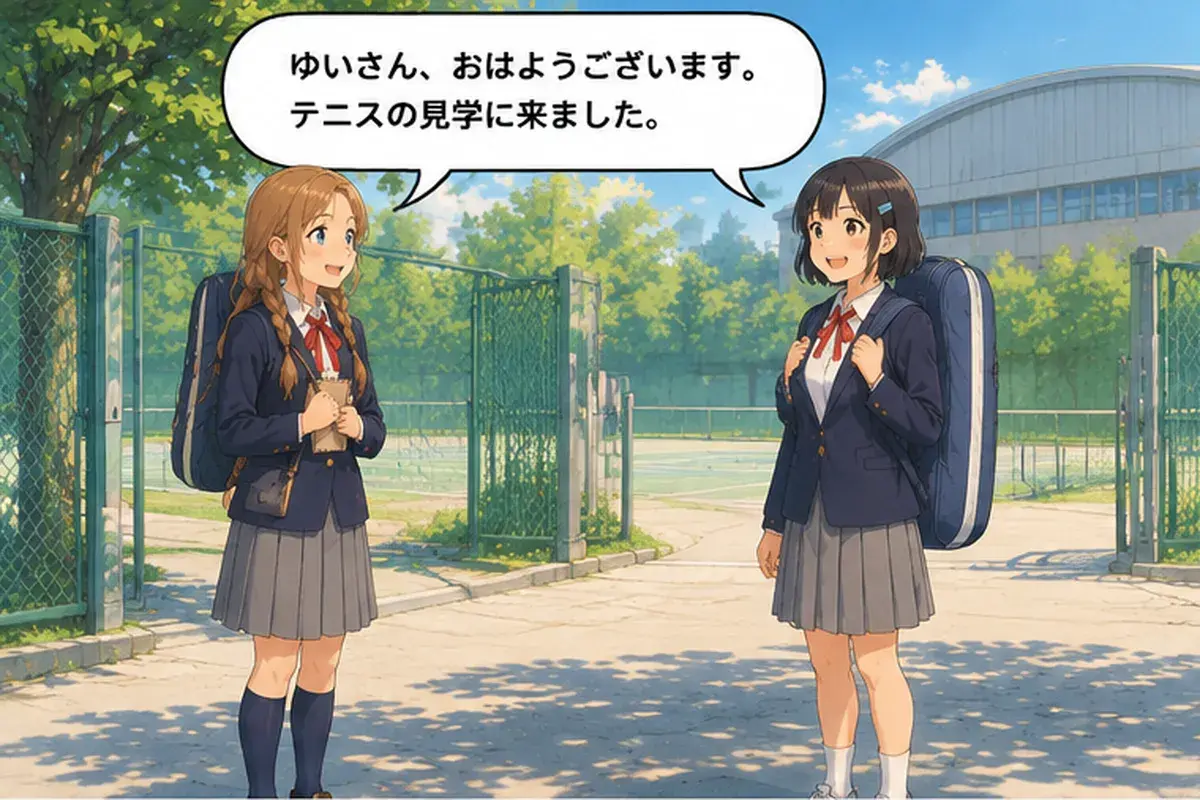
- ソーニャ
ゆいさん、おはようございます。テニスの見学に来ました。
Yui-san, good morning. I came to watch tennis practice.
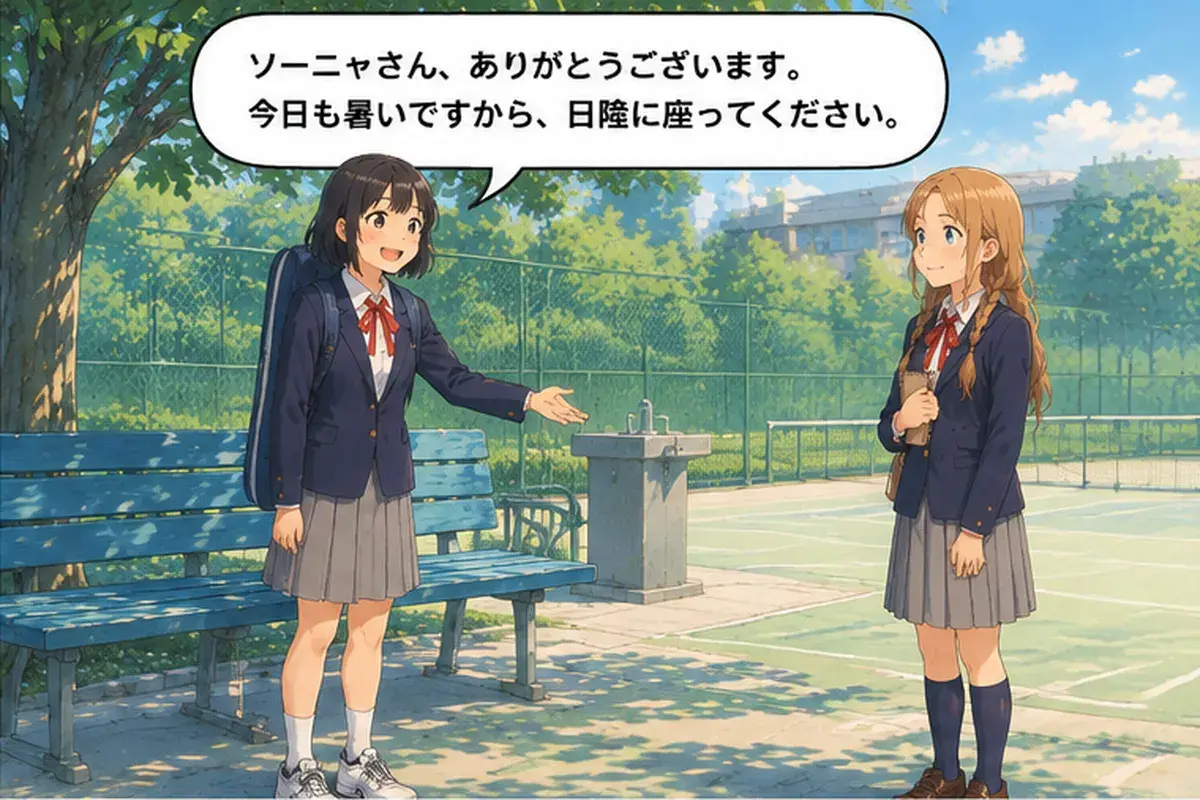
- ゆい
ソーニャさん、ありがとうございます。今日も暑いですから、日陰に座ってください。
Thank you, Sonya-san. It's hot again today, so please sit in the shade.
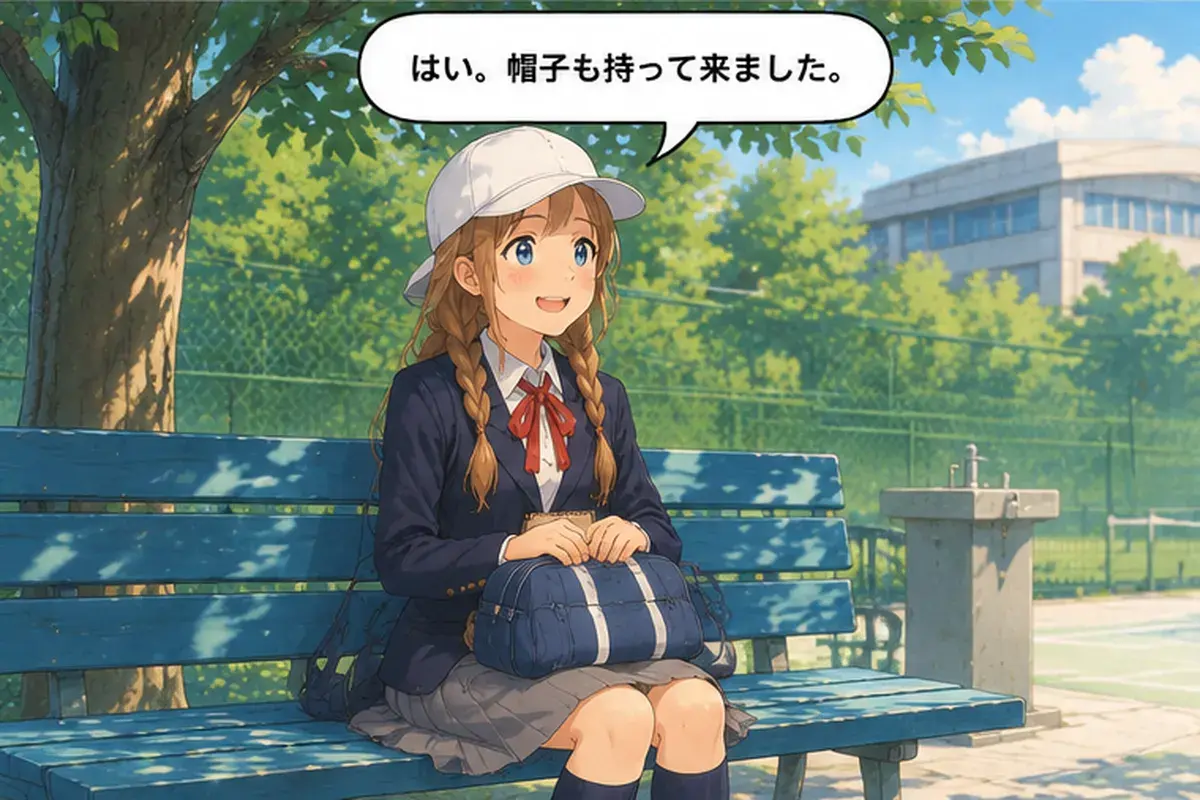
- ソーニャ
はい。帽子も持って来ました。
Okay. I brought a hat too.
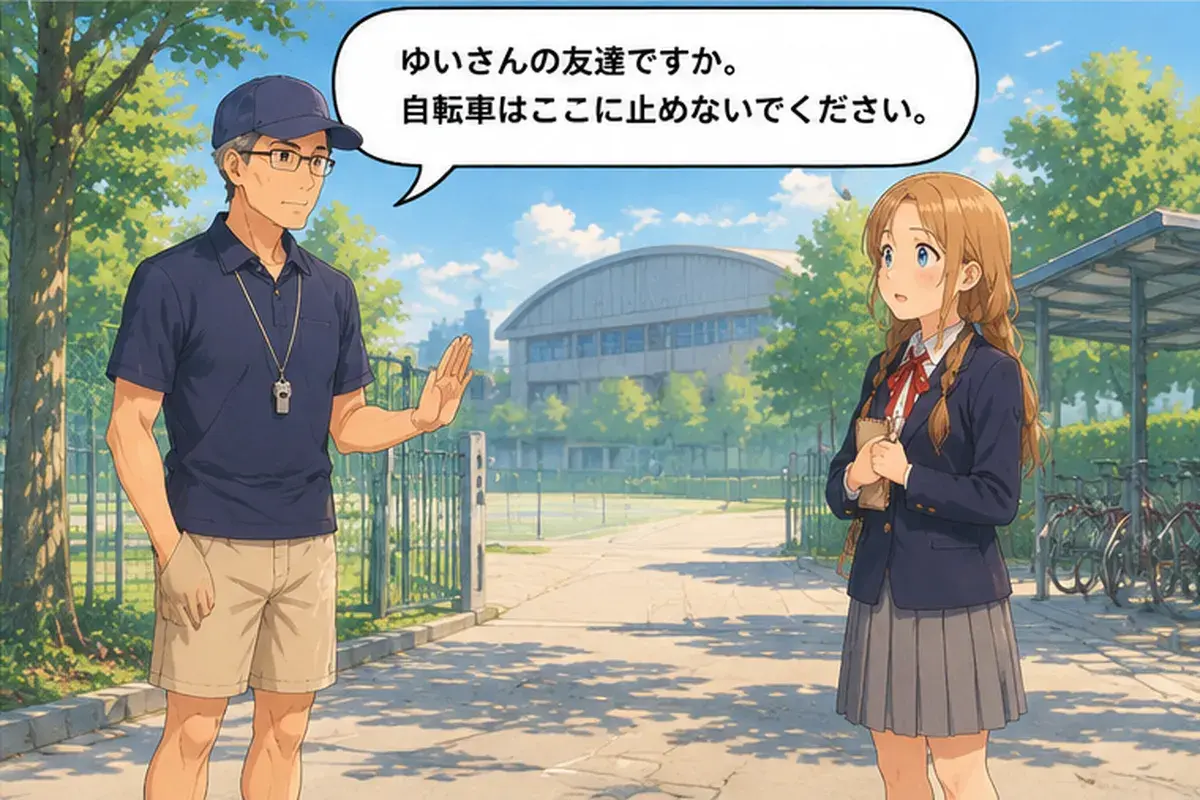
- 先生
ゆいさんの友達ですか。自転車はここに止めないでください。
Are you Yui-san's friend? Please don't park your bicycle here.
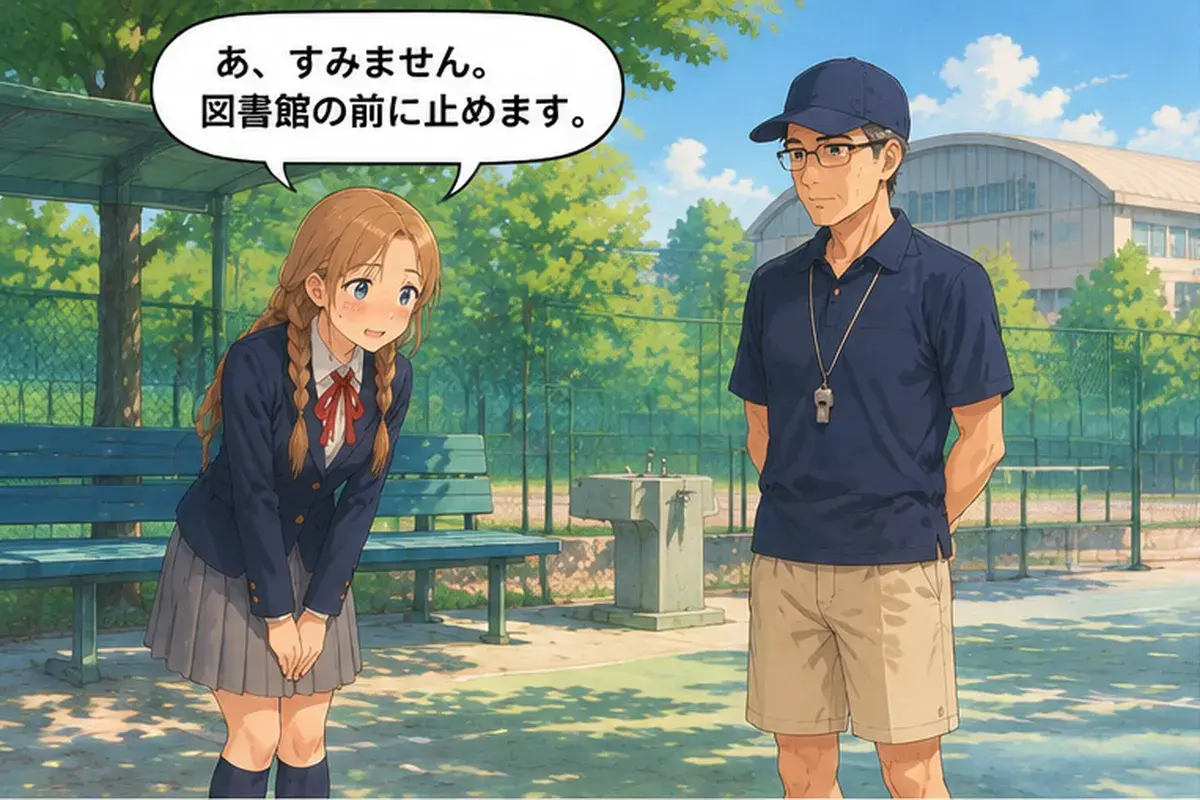
- ソーニャ
あ、すみません。図書館の前に止めます。
Oh, I'm sorry. I'll park it in front of the library.
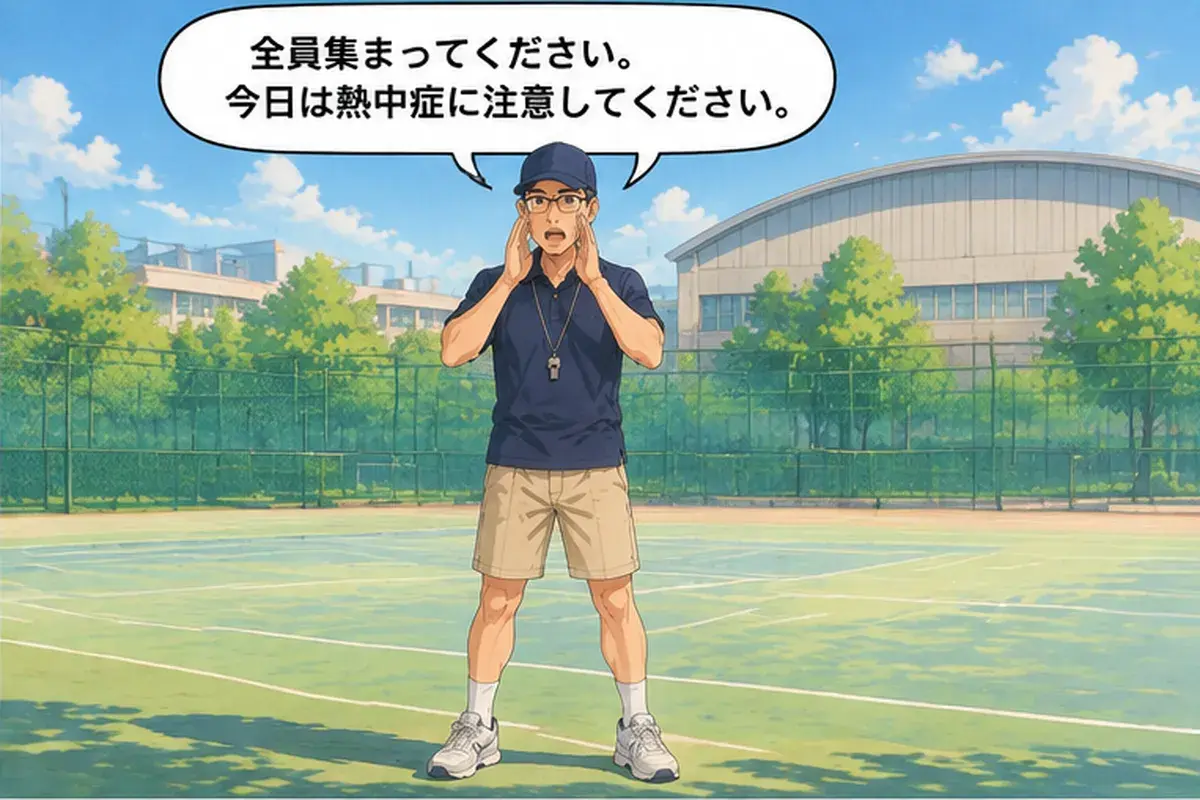
- 先生
全員集まってください。今日は熱中症に注意してください。
Everyone, please gather around. Today, please watch out for heatstroke.
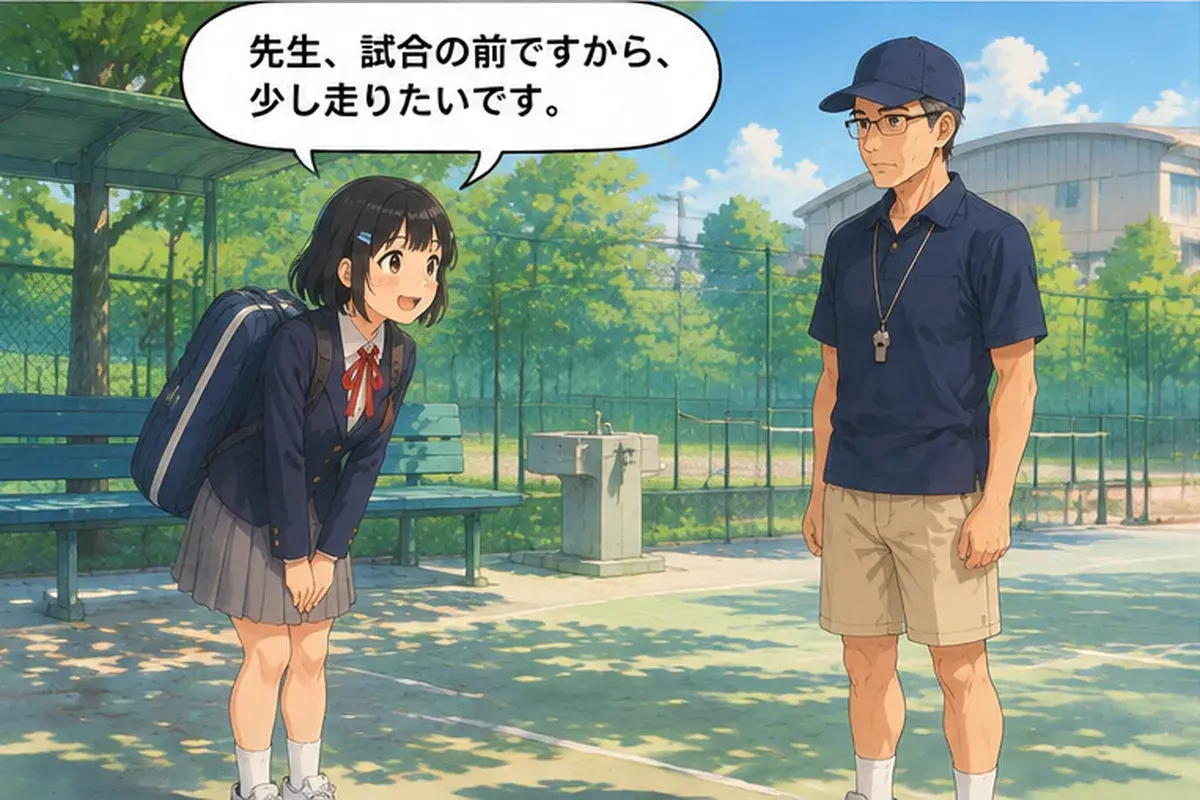
- ゆい
先生、試合の前ですから、少し走りたいです。
Teacher, the match is coming up, so I want to run a little.
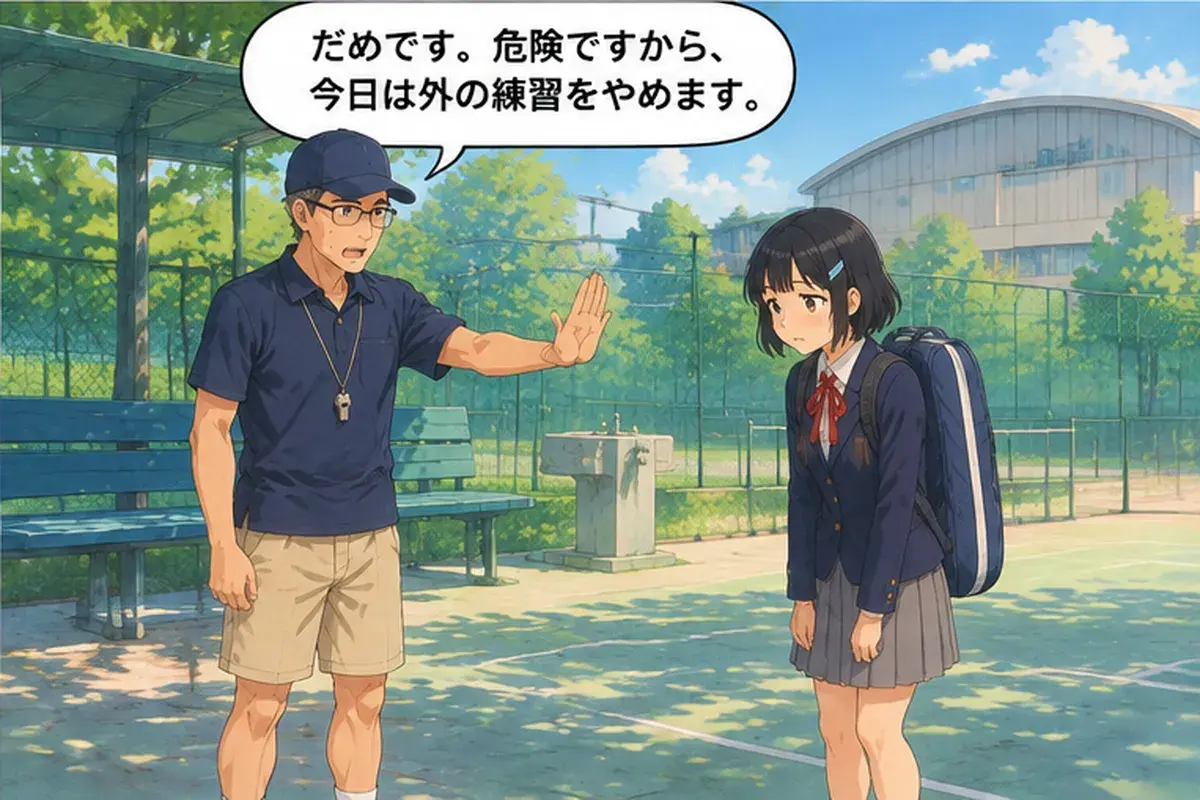
- 先生
だめです。危険ですから、今日は外の練習をやめます。
No. It's dangerous, so we're canceling outdoor practice today.
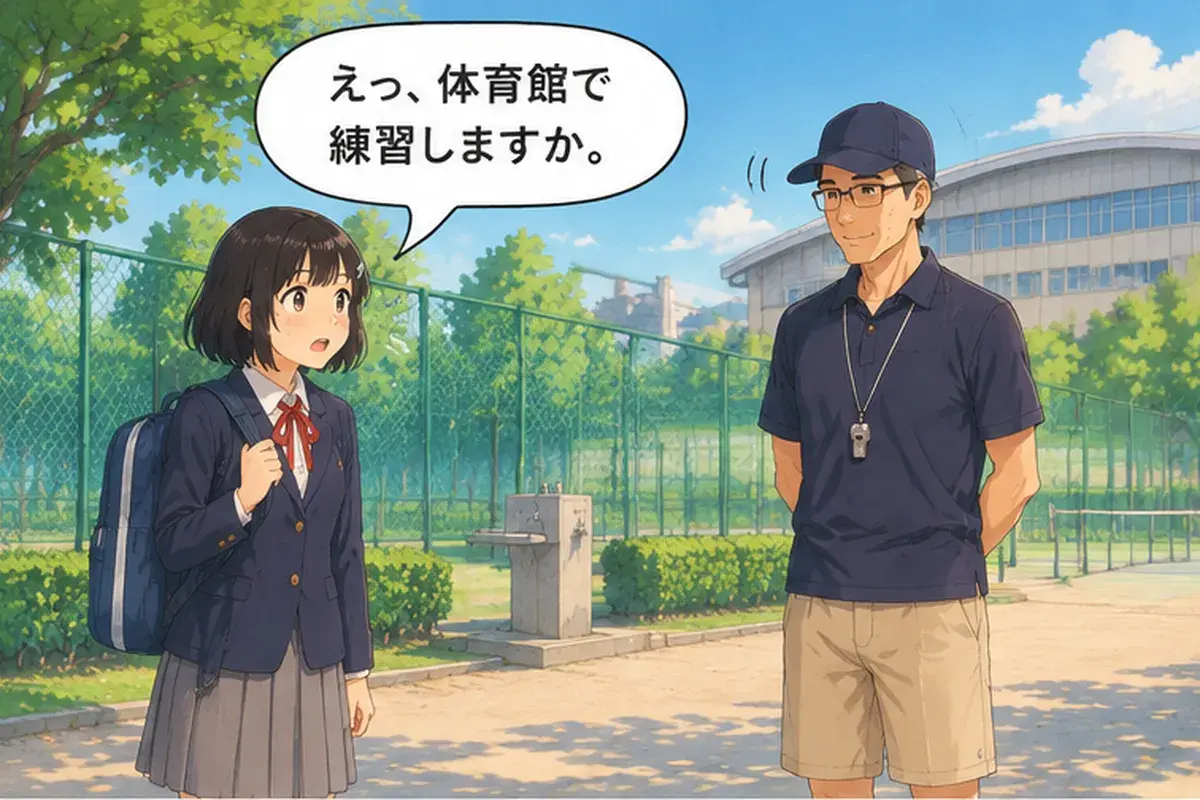
- ゆい
えっ、体育館で練習しますか。
What? Are we practicing in the gym?
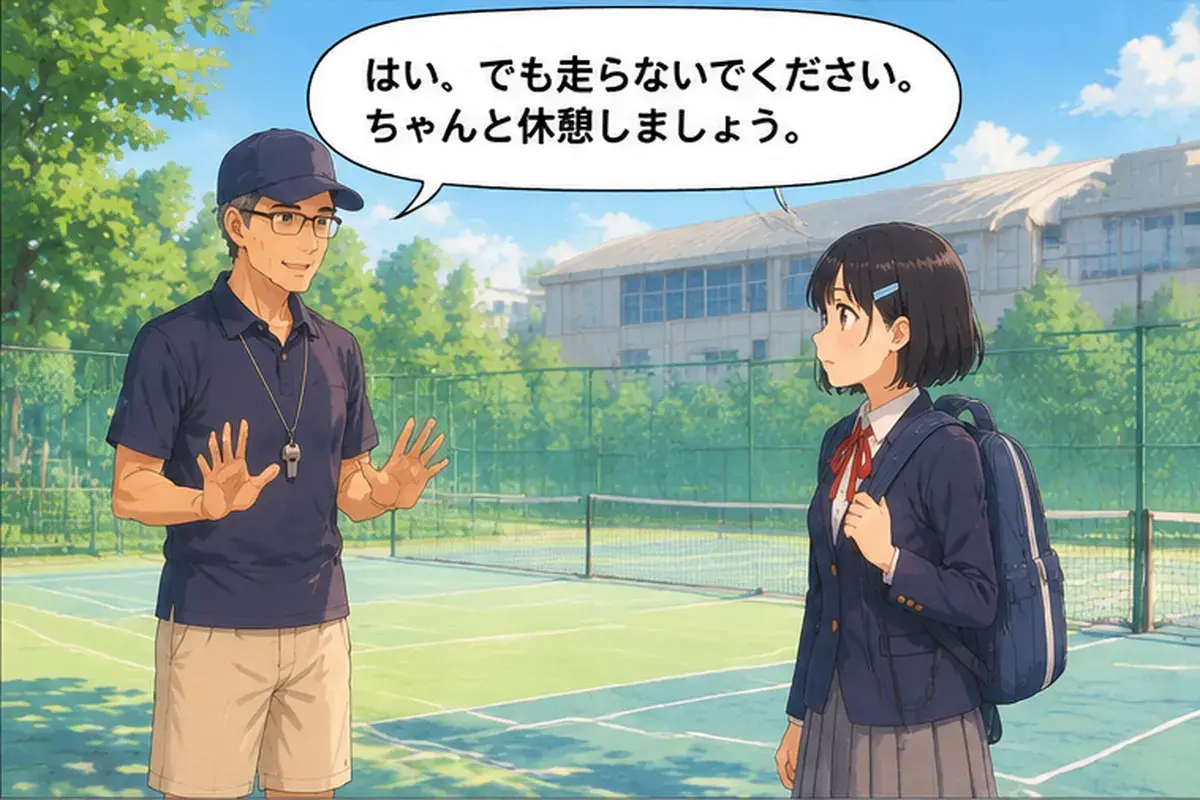
- 先生
はい。でも走らないでください。ちゃんと休憩しましょう。
Yes. But please don't run. Let's take a proper break.
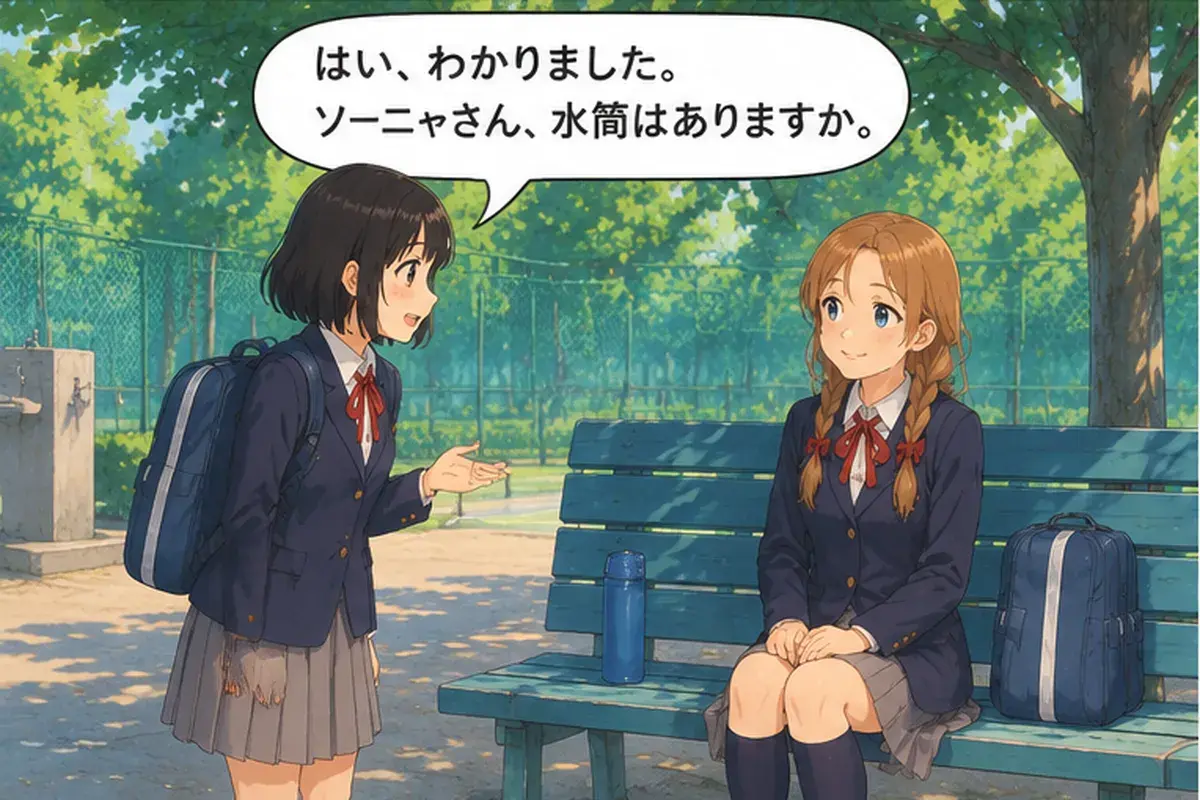
- ゆい
はい、わかりました。ソーニャさん、水筒はありますか。
Okay, I understand. Sonya-san, do you have a water bottle?
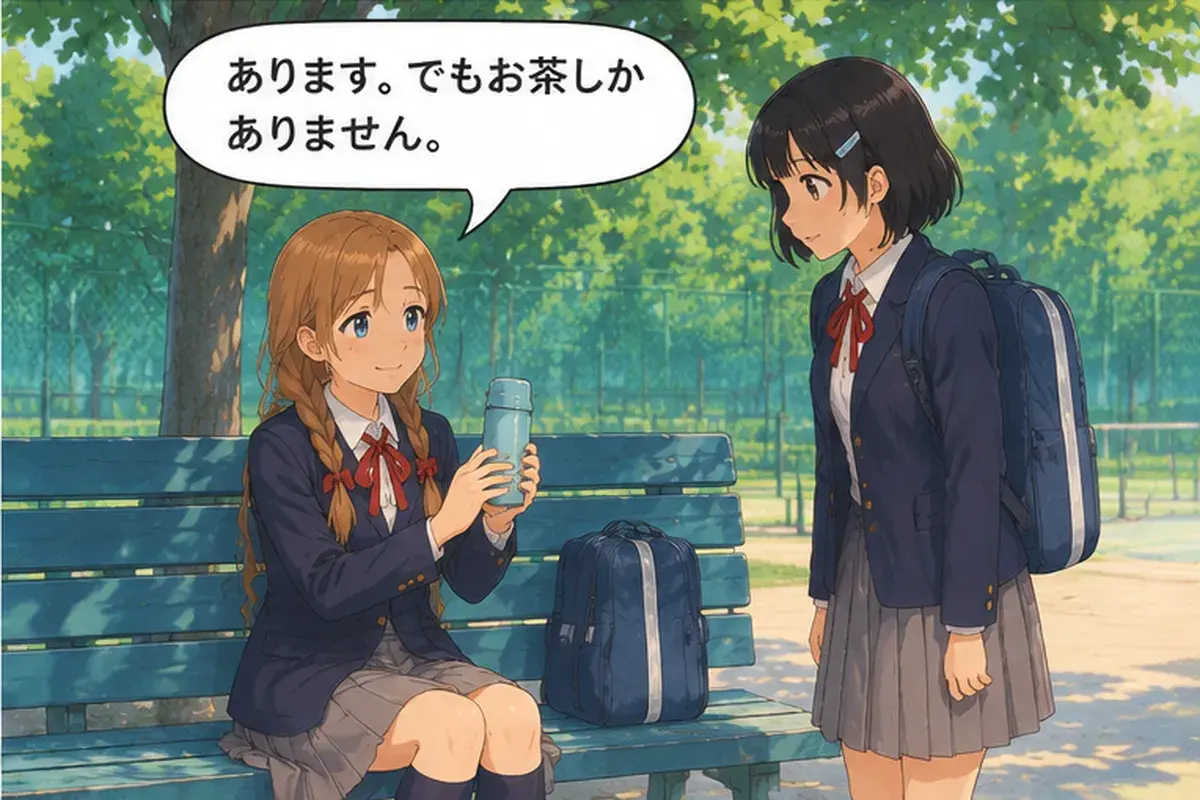
- ソーニャ
あります。でもお茶しかありません。
I do. But I only have tea.
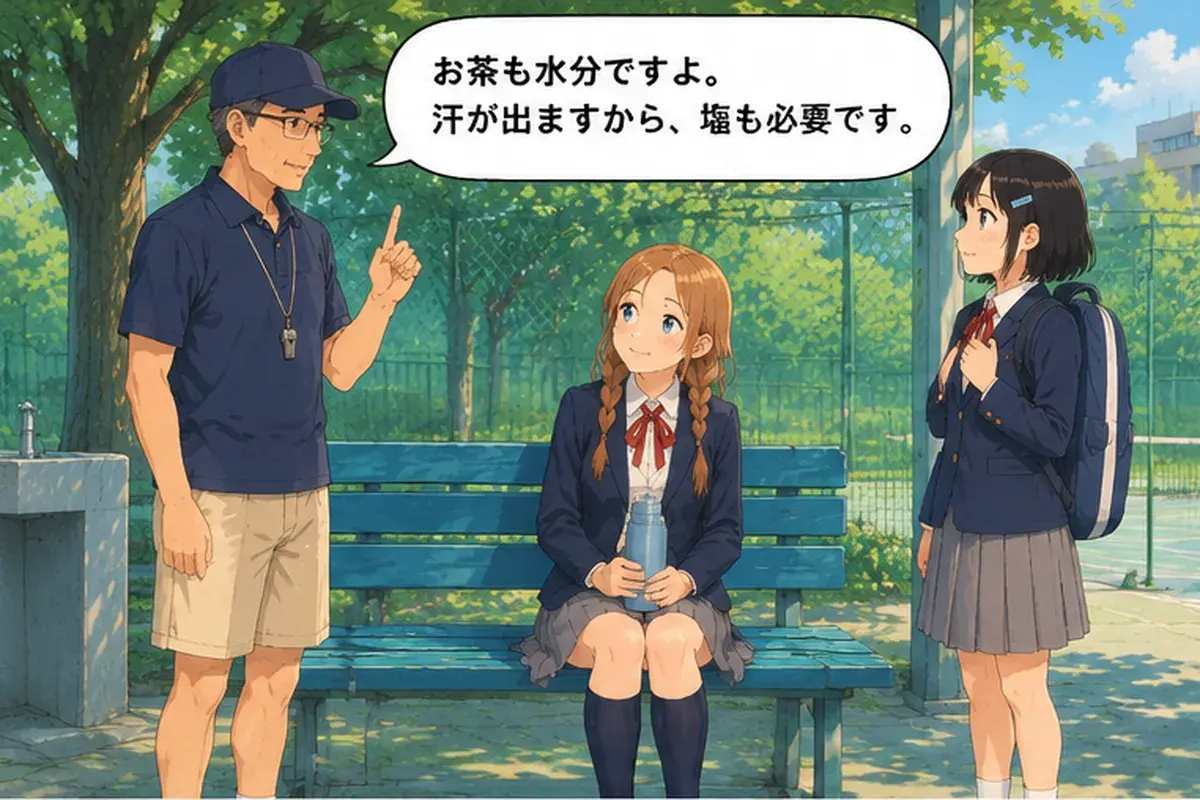
- 先生
お茶も水分ですよ。汗が出ますから、塩も必要です。
Tea counts as fluids too. You'll sweat, so you need salt too.
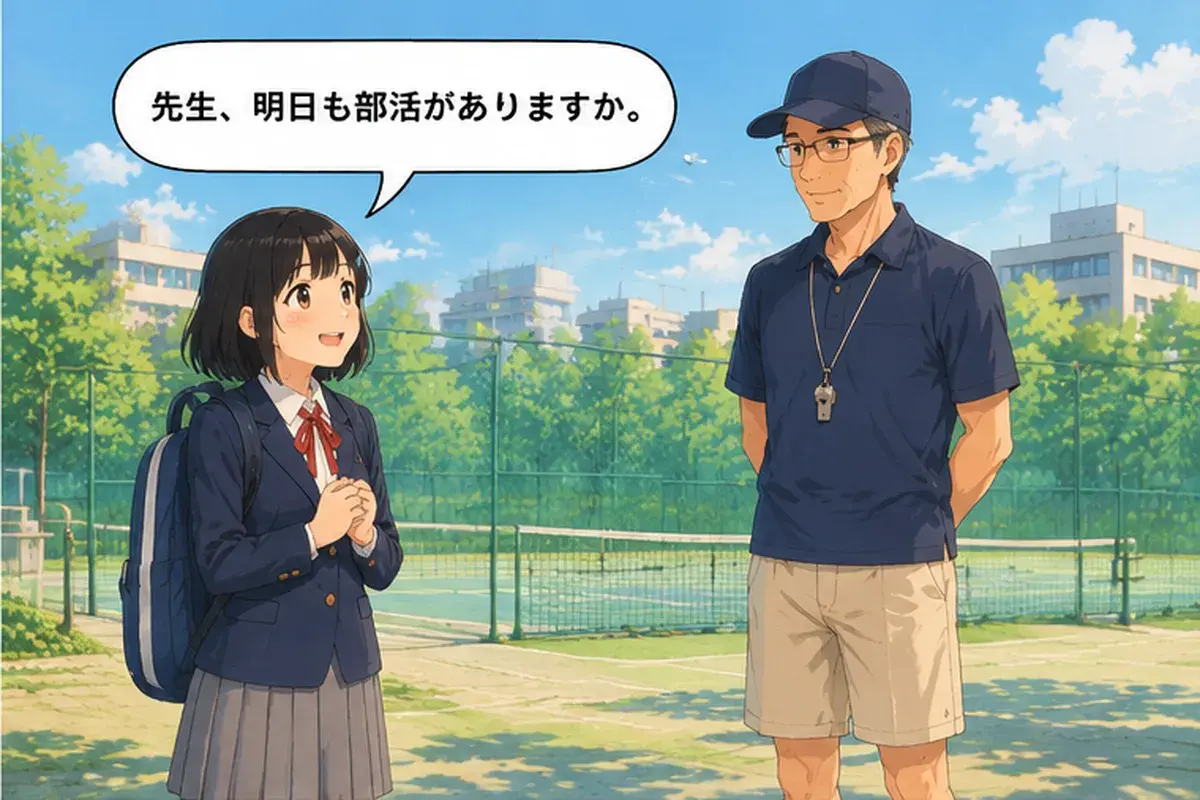
- ゆい
先生、明日も部活がありますか。
Teacher, is there club practice tomorrow too?
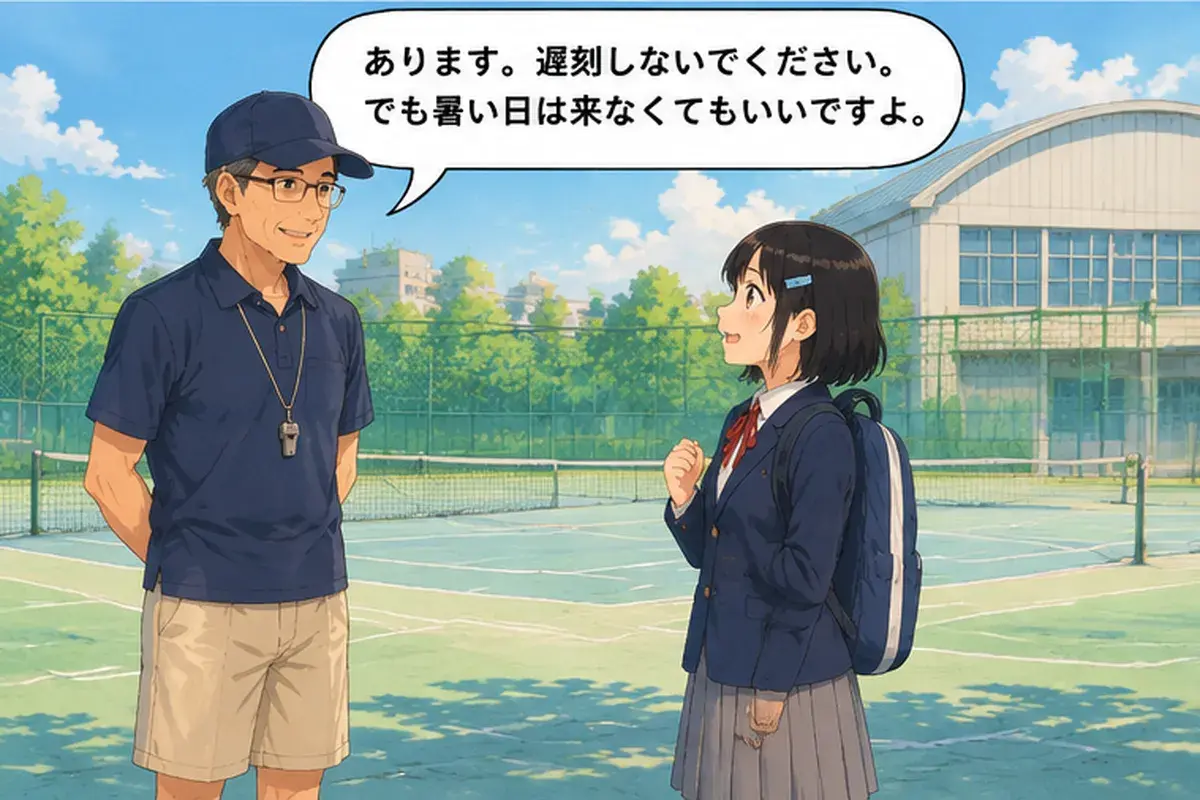
- 先生
あります。遅刻しないでください。でも暑い日は来なくてもいいですよ。
Yes. Please don't be late. But on hot days you don't have to come.
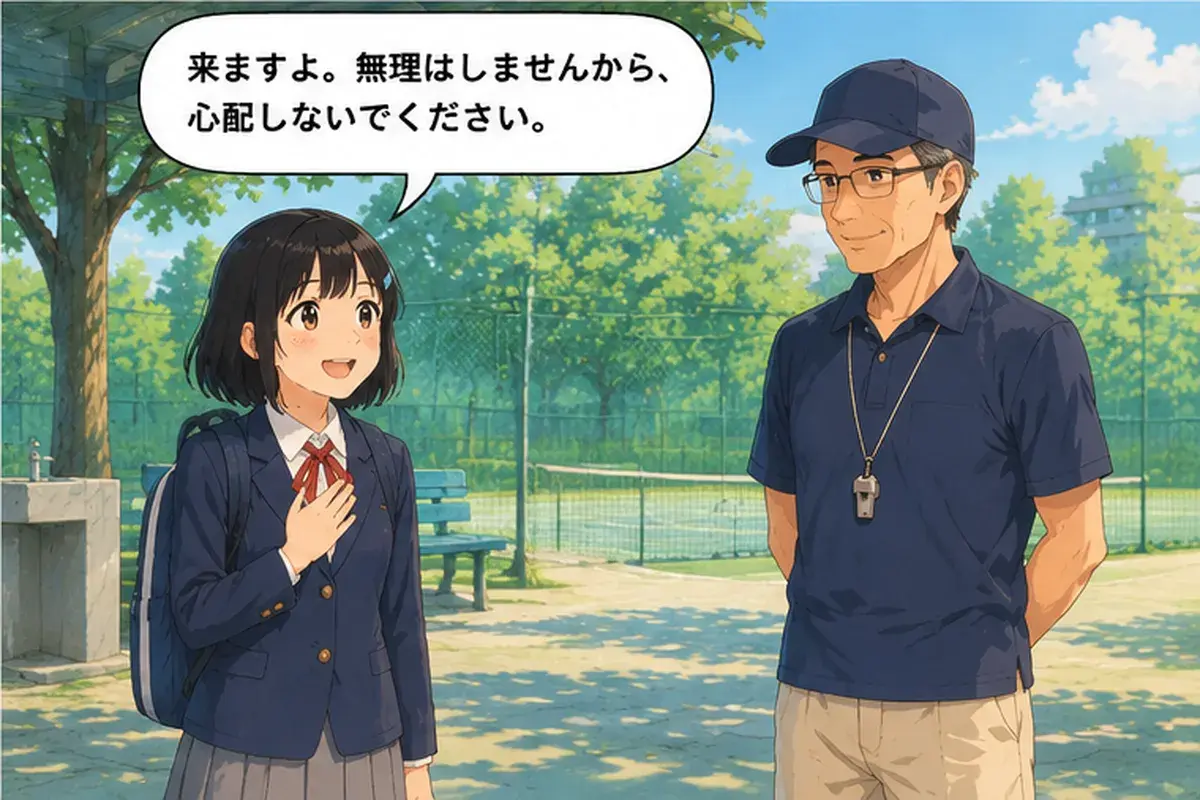
- ゆい
来ますよ。無理はしませんから、心配しないでください。
I'll come. I won't push myself, so please don't worry.
Grammar for this text
走らないで ください— Please don't run. From走る(to run) you get走らない, then addで. It's the opposite of〜て ください: here you ask someone not to do something.自転車 は ここ に 止めないで ください— Please don't park your bicycle here.止めるmeans not only "to stop" but also "to park" a bicycle or car:止める→止めない→止めないで ください. In Japan the place to park is strictly set: schools, stations and stores each have their own spot.遅刻しないで ください— Please don't be late.遅刻する→遅刻しない.来なくても いい です よ— You don't have to come. Take来ない, dropい, addくても, thenいい です. It's not a ban, it's permission not to do something.お茶 しか ありません— There's only tea (and Sonya finds that too little). Afterしかthe sentence is always negative, even though the meaning is "there is".無理 は しません から、 心配しないで ください— I won't push myself, so please don't worry.無理 を するmeans "to push yourself too hard"; with a negative,をchanges toは.心配する(to worry) gives心配しない: Yui asks the teacher not to worry.熱中症 に 注意して ください— Please watch out for heatstroke.注意するmeans "to be careful";にnames what to watch out for. You hear this phrase everywhere in summer.外 の 練習 を やめます— We're canceling outdoor practice.やめるhere means "to cancel": we won't hold the outdoor practice.
Words and grammar of the unit: Explain rules and what not to do.
Learn the words from the texts with flashcards
In the app, you can tap any word in a text to see its translation, forms and examples, and new words stick with flashcards. 15 minutes a day.
Start for freeEverything is open for free. No card needed to sign up.