

Japanese dialogue with translation · A2 · 12 lines
東京で一番おいしい The tastiest in Tokyo
Comic · 8 panels

- けん
マルクさん、もう十二時ですよ。昼ご飯はラーメンにしましょう。
Mark-san, it's already twelve o'clock. Let's have ramen for lunch.
- マルク
いいですね。どこにしましょうか。
Sounds good. Where shall we go?

- けん
駅の前の店と新しい店と、どっちがいいですか。
Which do you prefer, the shop in front of the station or the new shop?
- マルク
駅の前の店は味が濃いですね。新しい店はスープが薄いです。
The shop in front of the station has a rich flavor. The soup at the new shop is thin.

- けん
私は濃いのが好きです。駅の前の店は東京で一番おいしいですよ。
I like rich ones. The shop in front of the station is the tastiest in Tokyo.

- マルク
でも今日は暑いですから、重いラーメンより軽いほうがいいです。
But it's hot today, so I'd rather have a light one than heavy ramen.
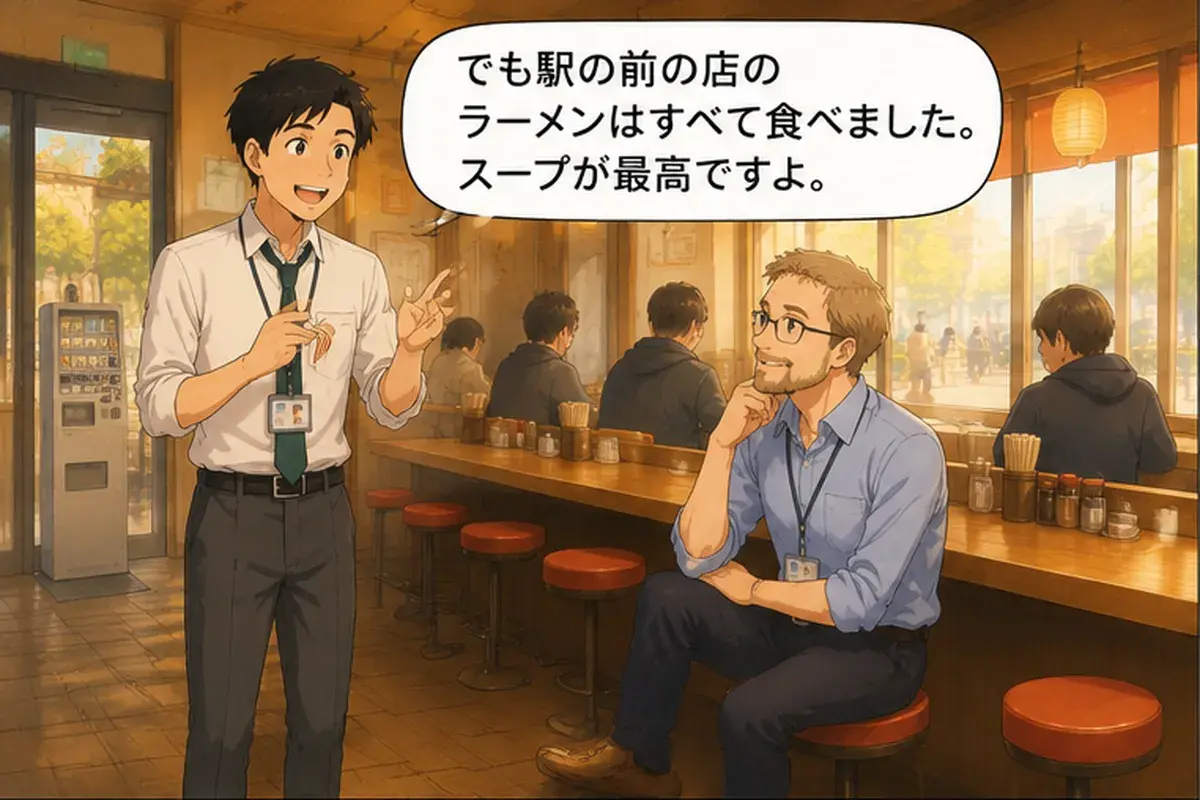
- けん
でも駅の前の店のラーメンはすべて食べました。スープが最高ですよ。
But I've eaten all the ramen at the shop in front of the station. The soup is the best.
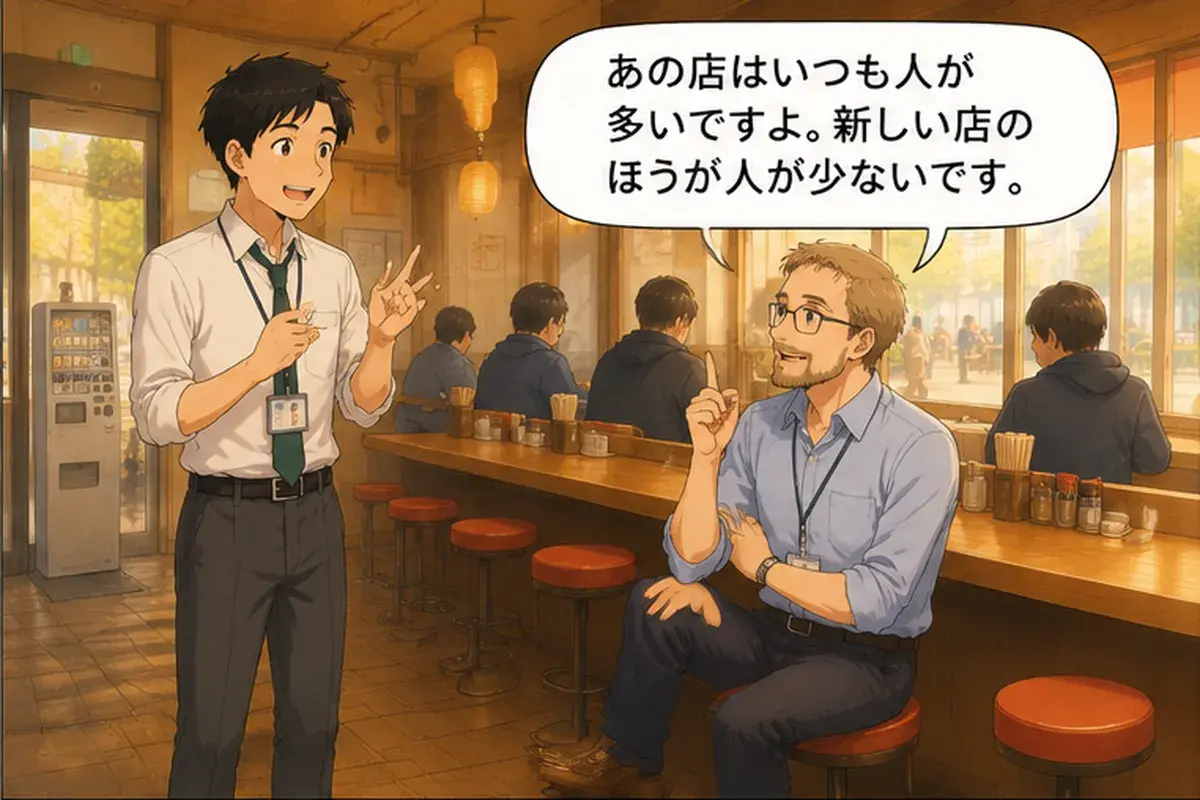
- マルク
あの店はいつも人が多いですよ。新しい店のほうが人が少ないです。
That shop always has a lot of people. The new shop has fewer people.
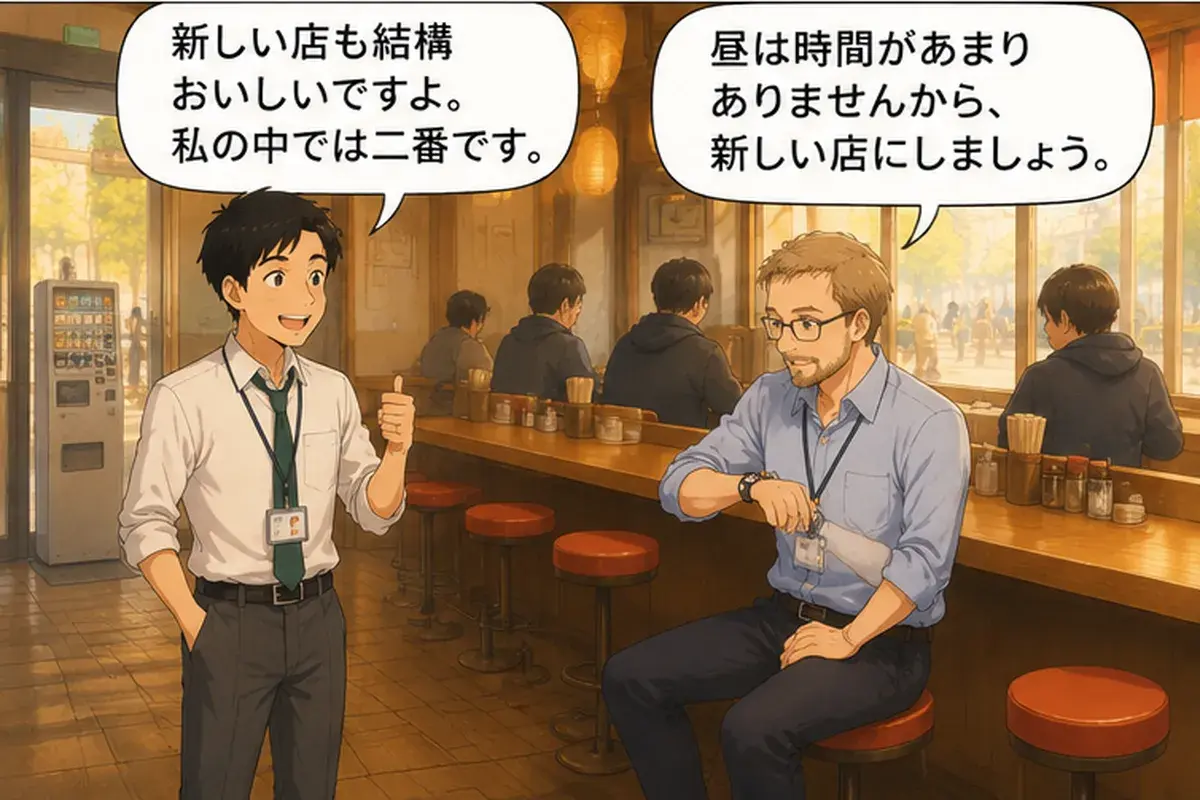
- けん
新しい店も結構おいしいですよ。私の中では二番です。
The new shop is pretty tasty too. It's second place in my book.
- マルク
昼は時間があまりありませんから、新しい店にしましょう。
I don't have much time at lunch, so let's go to the new shop.
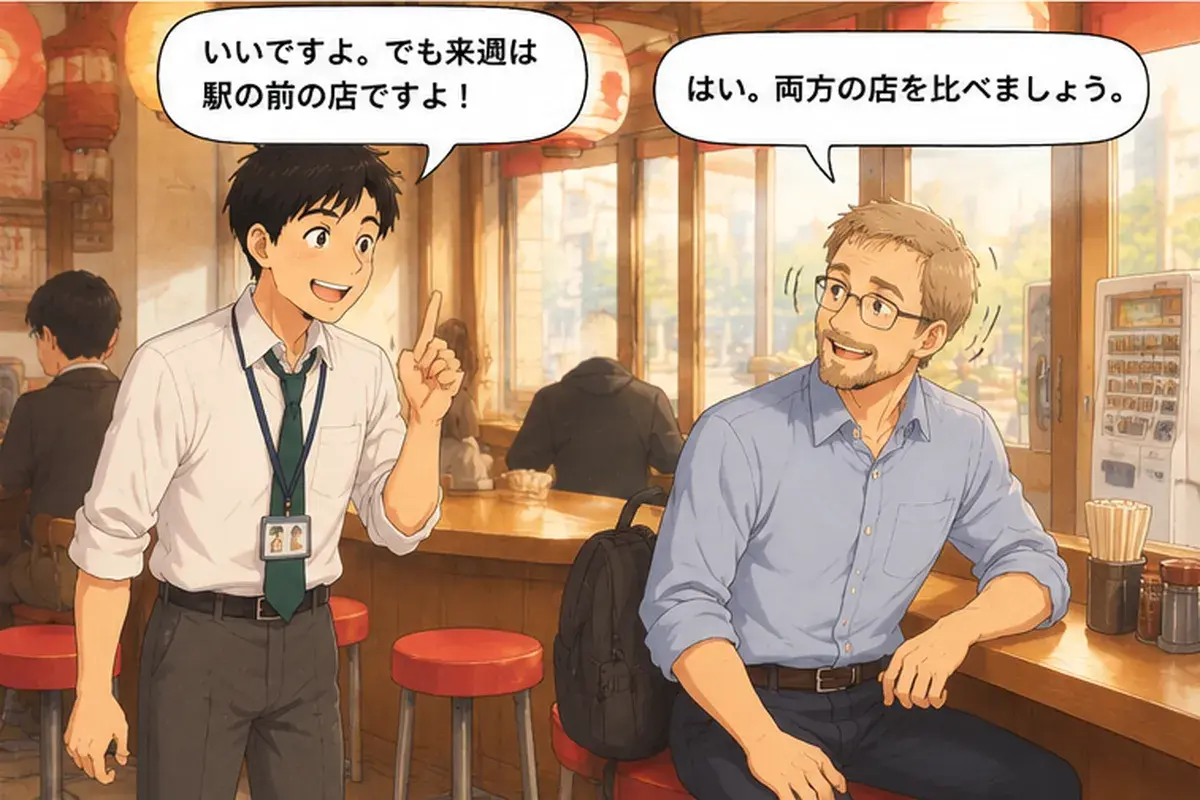
- けん
いいですよ。でも来週は駅の前の店ですよ!
Okay. But next week it's the shop in front of the station!
- マルク
はい。両方の店を比べましょう。
Yes. Let's compare both shops.
Grammar for this text
重い ラーメン より 軽い ほう が いい です— I'd rather have a light one than heavy ramen. This is the whole comparison pattern:A より B の ほう が いいmeans "B is better than A". Hereのis not needed after the adjective:軽い ほう. About food,重いand軽いmean "heavy, filling" and "light".どっち が いい です か— Which one is better?どっちis the casualどちら. Ken is talking to a coworker he knows well. To a clerk you would sayどちら.味 が 濃い— The flavor is rich. Andスープ が 薄い— The soup is thin.濃いmeans "rich, strong" and薄いmeans "thin, weak". Weak flavor is薄い, not弱い. In濃い の が 好き です— I like rich ones,のstands for the word "soup".東京 で 一番 おいしい— The tastiest in Tokyo.一番goes before the adjective: "the most delicious".でmeans "among everything in Tokyo".新しい 店 の ほう が 人 が 少ない です— The new shop has fewer people.の ほう がafter a noun means "of the two, the new one". Twoがin a row is not a mistake: the first goes with "the side", the second with "people".私 の 中 で は 二 番 です— In my book it's second place.番is the counter for places and numbers.ラーメン は すべて 食べました— I ate all the ramen.すべてmeans "everything without exception".スープ が 最高 です よ— The soup is the best.最高means "it can't get better".結構 おいしい— pretty tasty.結構means "quite".両方 の 店 を 比べましょう— Let's compare both shops.両方means "both" and比べるmeans "to compare". Ken doesn't give up completely: the new shop today, his favorite next week.
Words and grammar of the unit: Choose an air conditioner in a store.
Learn the words from the texts with flashcards
In the app, you can tap any word in a text to see its translation, forms and examples, and new words stick with flashcards. 15 minutes a day.
Start for freeEverything is open for free. No card needed to sign up.