
Japanese dialogue with translation · A2 · 16 lines
右のほうがずっと静か The one on the right is much quieter
Comic · 11 panels
- アンナ
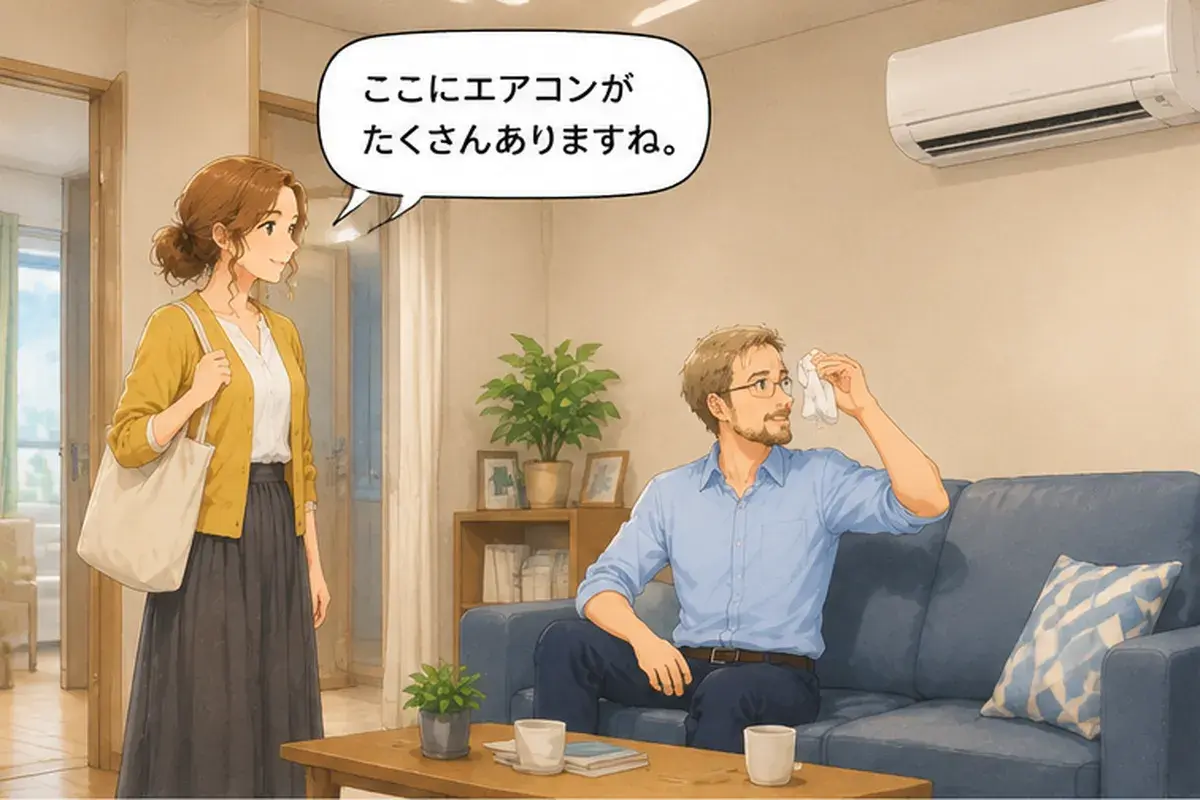
ここにエアコンがたくさんありますね。
There are so many air conditioners here, aren't there?
- マルク
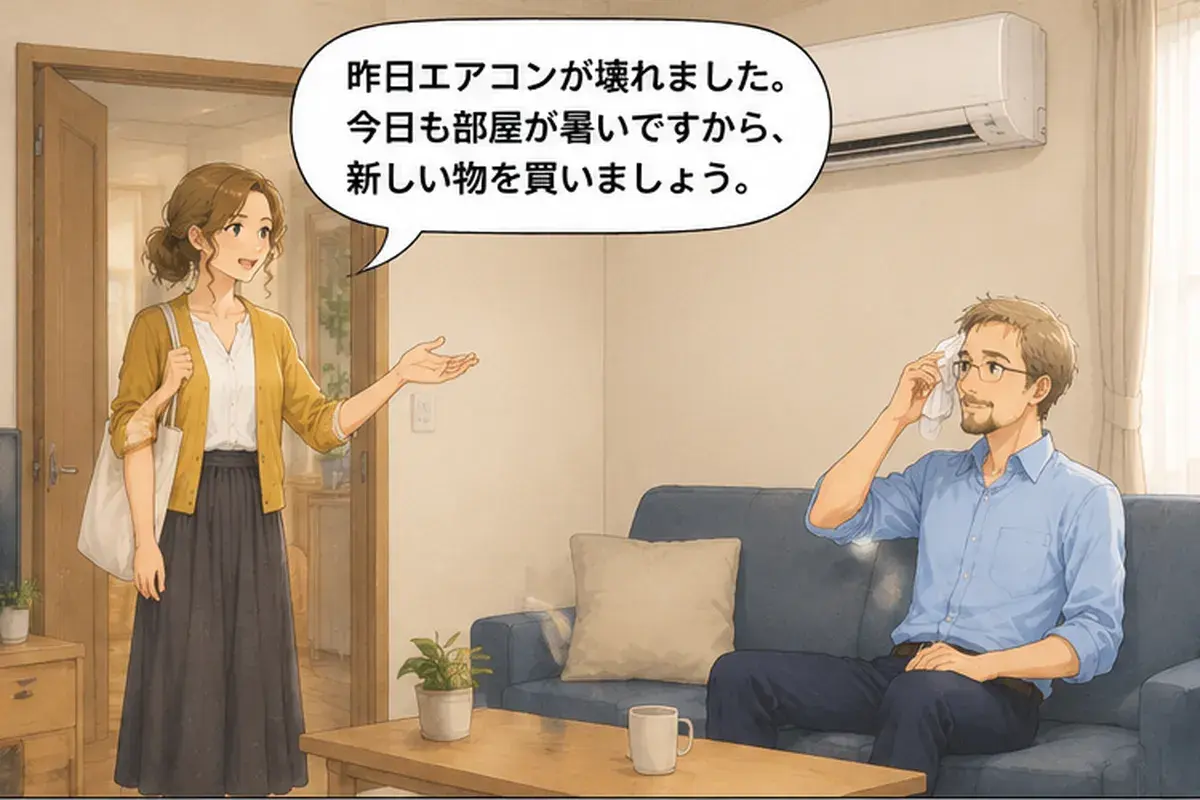
昨日エアコンが壊れました。今日も部屋が暑いですから、新しい物を買いましょう。
Our air conditioner broke yesterday. It's hot in the room today too, so let's buy a new one.
- アンナ
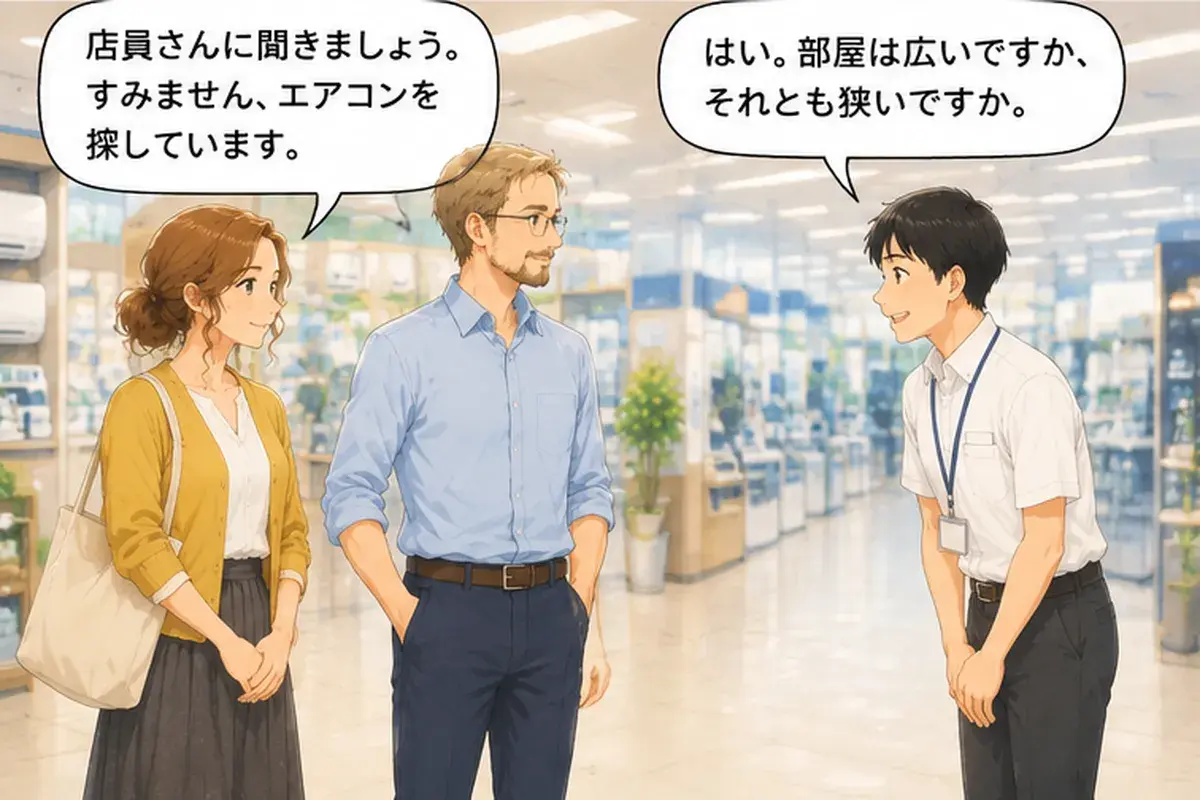
店員さんに聞きましょう。すみません、エアコンを探しています。
Let's ask a clerk. Excuse me, we're looking for an air conditioner.
- 店員
はい。部屋は広いですか、それとも狭いですか。
Yes. Is your room spacious or cramped?
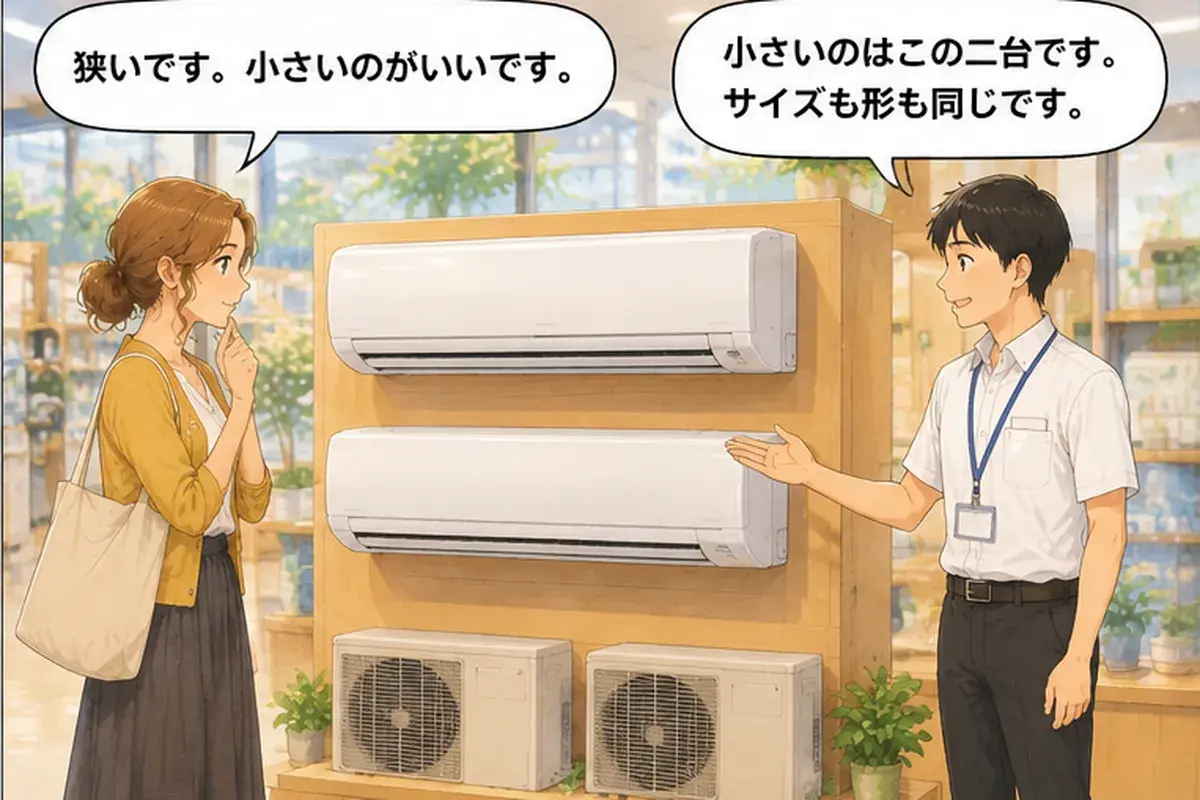
- アンナ
狭いです。小さいのがいいです。
It's cramped. I'd like a small one.
- 店員
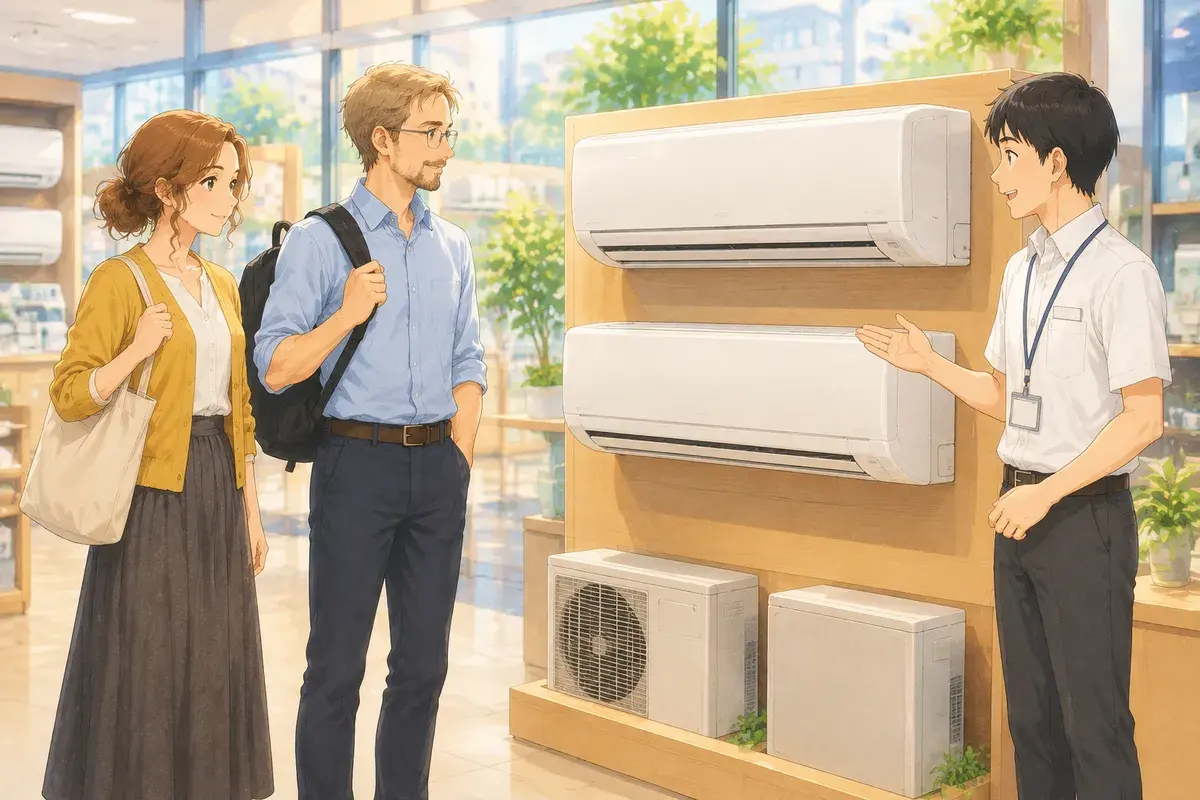
小さいのはこの二台です。サイズも形も同じです。
The small ones are these two. They're the same in both size and shape.
- アンナ
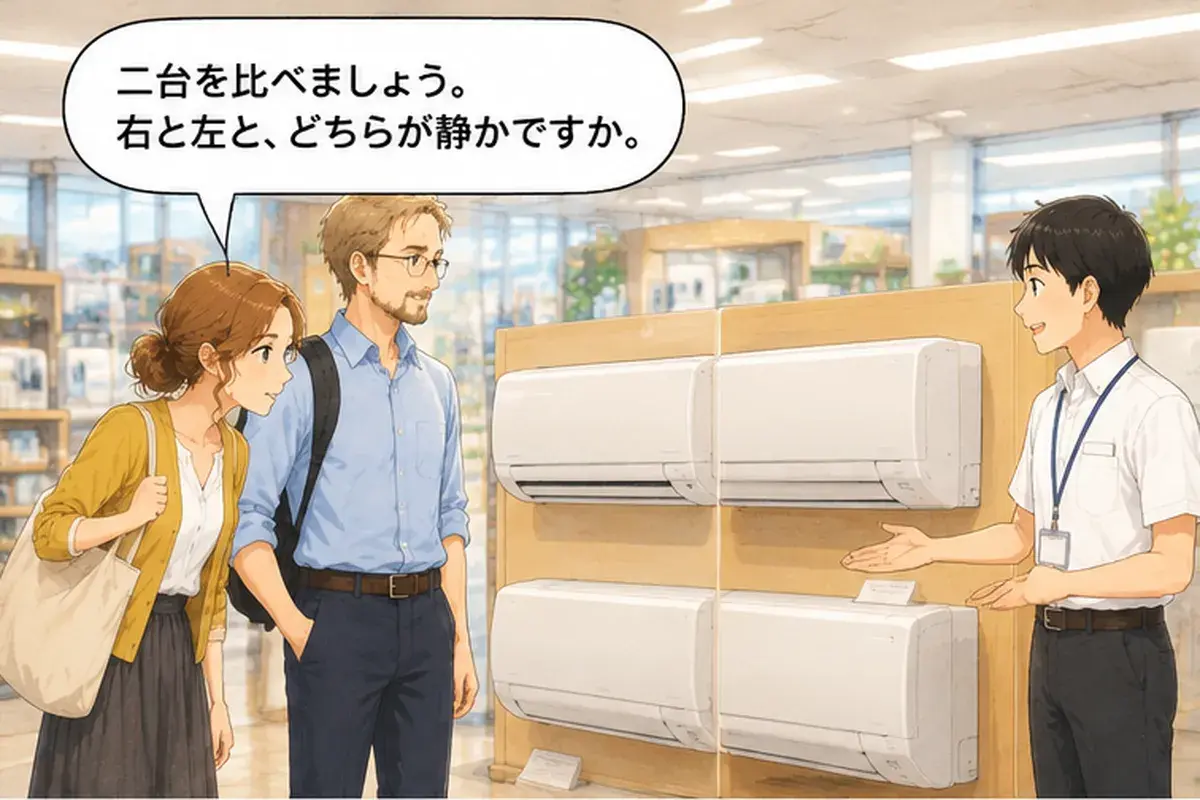
二台を比べましょう。右と左と、どちらが静かですか。
Let's compare the two. Which one is quieter, the right one or the left one?
- 店員
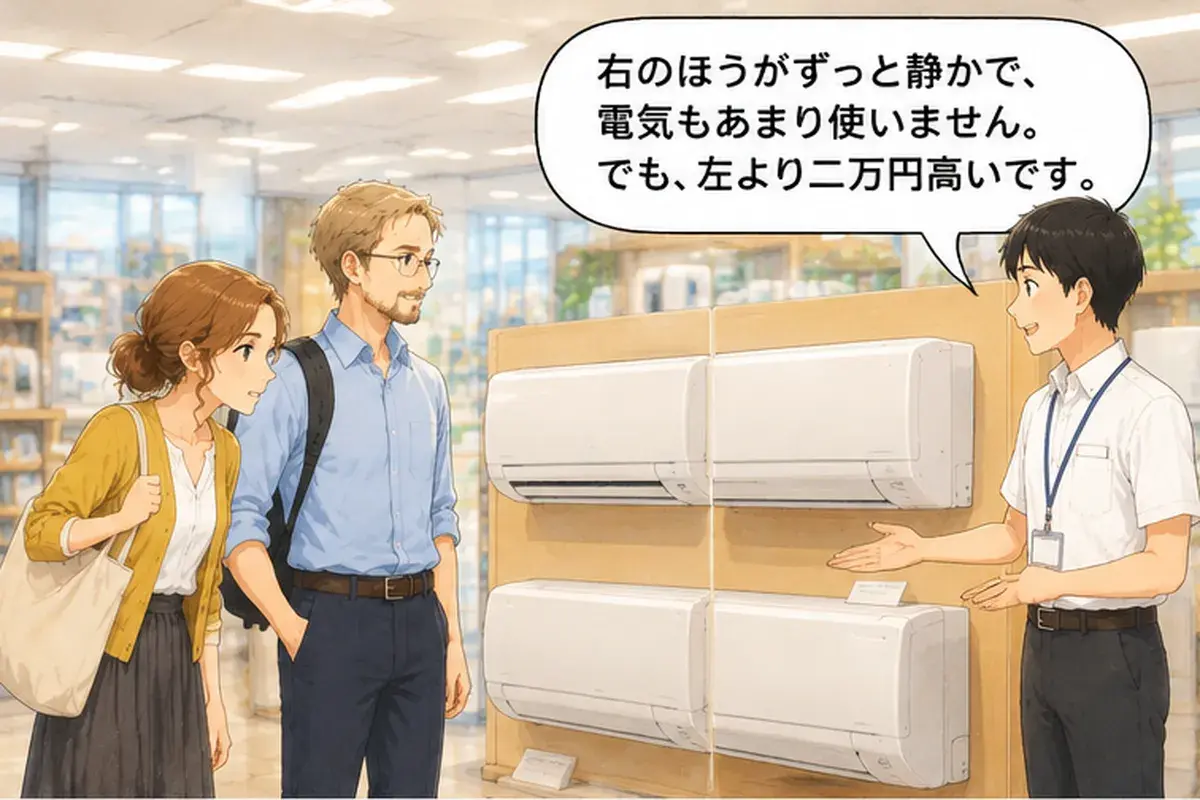
右のほうがずっと静かで、電気もあまり使いません。でも、左より二万円高いです。
The one on the right is much quieter, and it doesn't use much electricity. But it's 20,000 yen more expensive than the one on the left.
- マルク
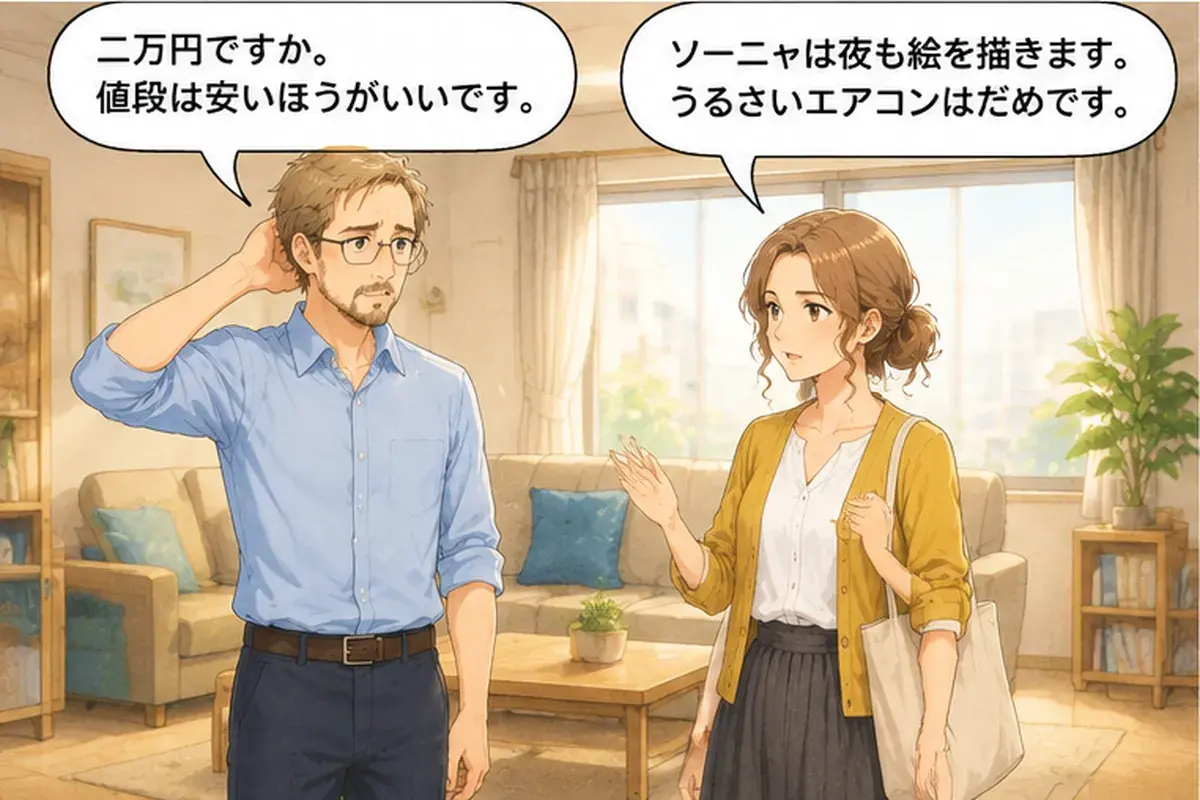
二万円ですか。値段は安いほうがいいです。
20,000 yen? A lower price is better.
- アンナ
ソーニャは夜も絵を描きます。うるさいエアコンはだめです。
Sonya draws at night too. A noisy air conditioner is no good.
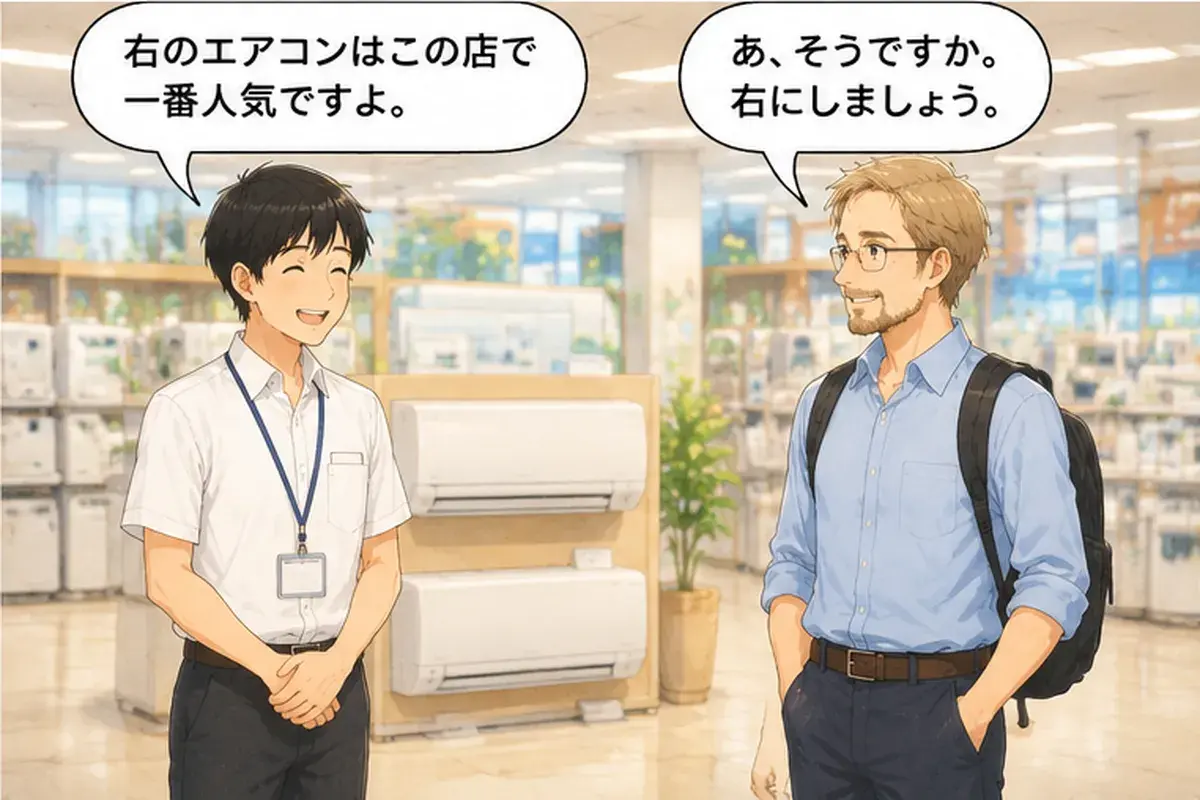
- 店員
右のエアコンはこの店で一番人気ですよ。
The one on the right is the most popular in this store.
- マルク
あ、そうですか。右にしましょう。
Oh, I see. Let's go with the one on the right.
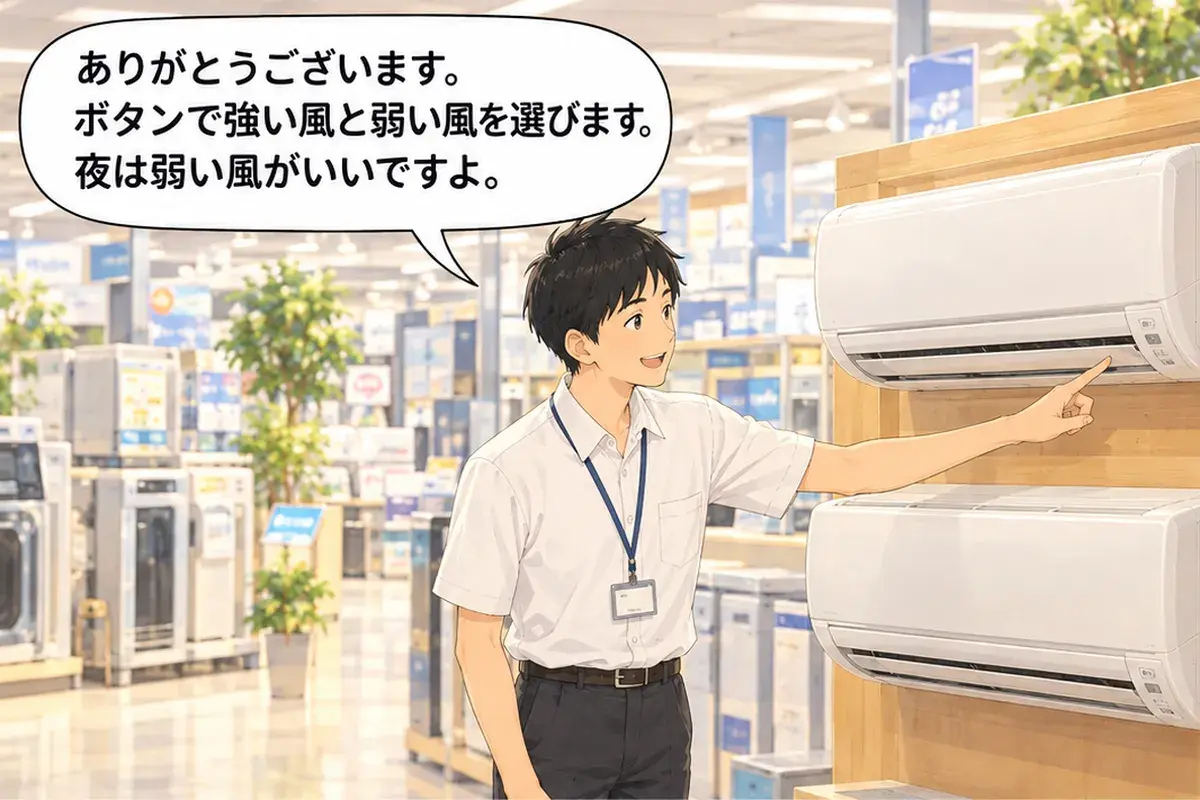
- 店員
ありがとうございます。ボタンで強い風と弱い風を選びます。夜は弱い風がいいですよ。
Thank you very much. You choose strong or weak airflow with a button. At night, weak airflow is better.
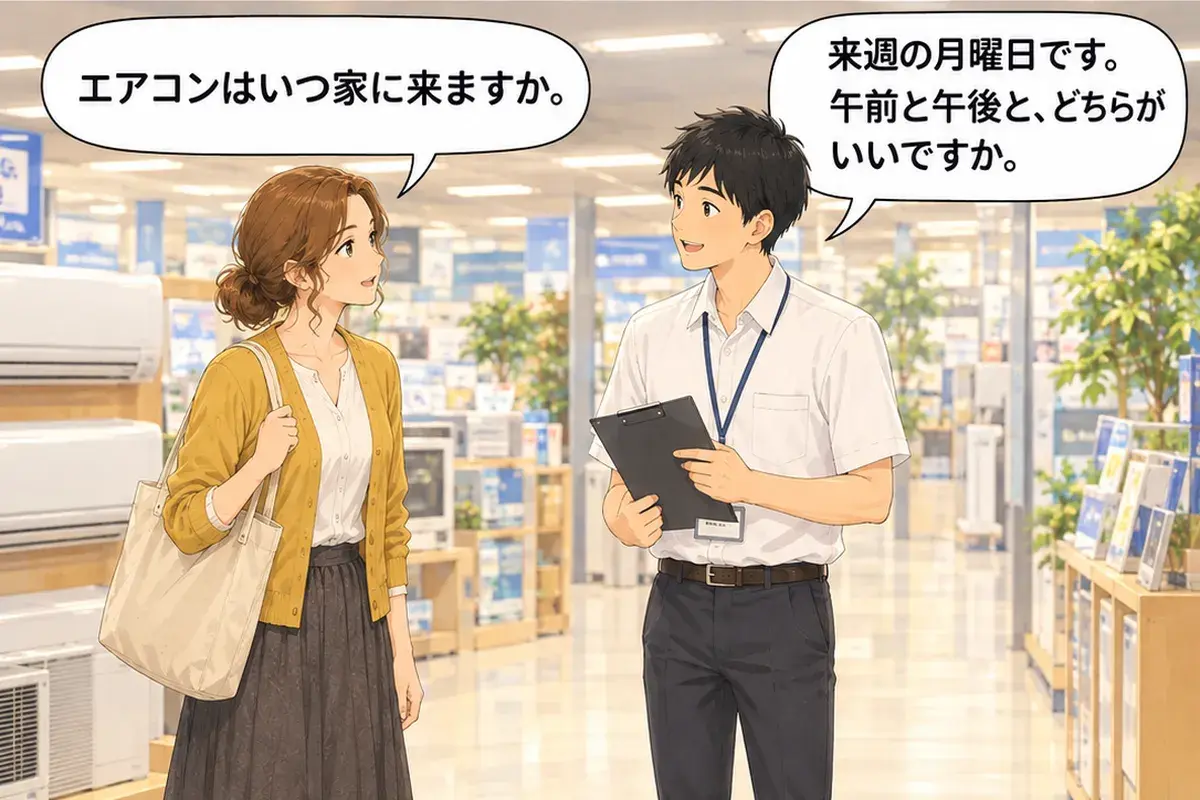
- アンナ
エアコンはいつ家に来ますか。
When will the air conditioner arrive at our home?
- 店員
来週の月曜日です。午前と午後と、どちらがいいですか。
Next Monday. Which is better for you, morning or afternoon?
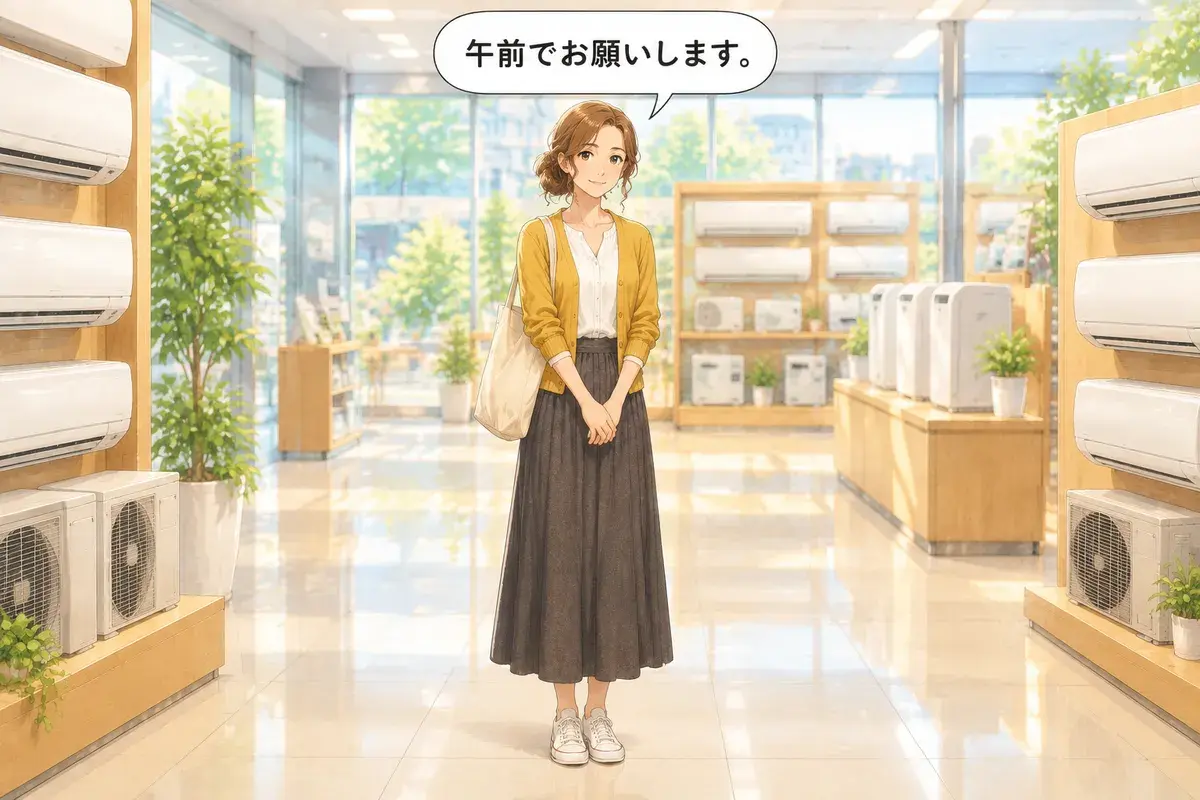
- アンナ
午前でお願いします。
Morning, please.
Grammar for this text
右 の ほう が ずっと 静か で— The one on the right is much quieter and… This compares two things.ほうmeans "side": "the right side (of the two) is much quieter".ずっとadds "much". The adjective stays静か; the "-er" meaning comes fromの ほう が. After a na-adjective,でjoins two qualities: "quiet and…".左 より 二 万 円 高い です— It's 20,000 yen more expensive than the one on the left.よりmeans "than" and goes after the thing you compare with. The amount of the difference goes right before the adjective:二 万 円 高いis "20,000 yen more expensive" (二 万= 20,000).右 と 左 と、 どちら が 静か です か— Which one is quieter, the right one or the left one? This is a question about two things:A と B と、 どちら が ….どちらis the polite "which of the two". The same pattern comes at the end:午前 と 午後 と、 どちら が いい です か— Which is better, morning or afternoon? This is how a clerk asks when you want the delivery.値段 は 安い ほう が いい です— A lower price is better. An adjective right beforeほうgives "the cheaper one".小さい の が いい です— I'd like a small one.のstands for a word that is already clear: "a small (air conditioner)". Same in小さい の は この 二 台 です— The small ones are these two.サイズ も 形 も 同じ です— They're the same in both size and shape.同じmeans "the same";A も B もmeans "both A and B".この 店 で 一番 人気 です— It's the most popular in this store.一番means "the most", andでmeans "among everything in this store".部屋 は 広い です か、 それとも 狭い です か— Is your room spacious or cramped?それともmeans "or" between two questions.台is the counter for machines:二 台— two machines.エアコン は いつ 家 に 来ます か— When will the air conditioner arrive at our home? Japanese says the thing "comes"; this is how you ask about delivery.午前 で お願いします— Morning, please. Hereでmarks the choice you settle on: "let's go with morning".
Words and grammar of the unit: Choose an air conditioner in a store.
Learn the words from the texts with flashcards
In the app, you can tap any word in a text to see its translation, forms and examples, and new words stick with flashcards. 15 minutes a day.
Start for freeEverything is open for free. No card needed to sign up.