
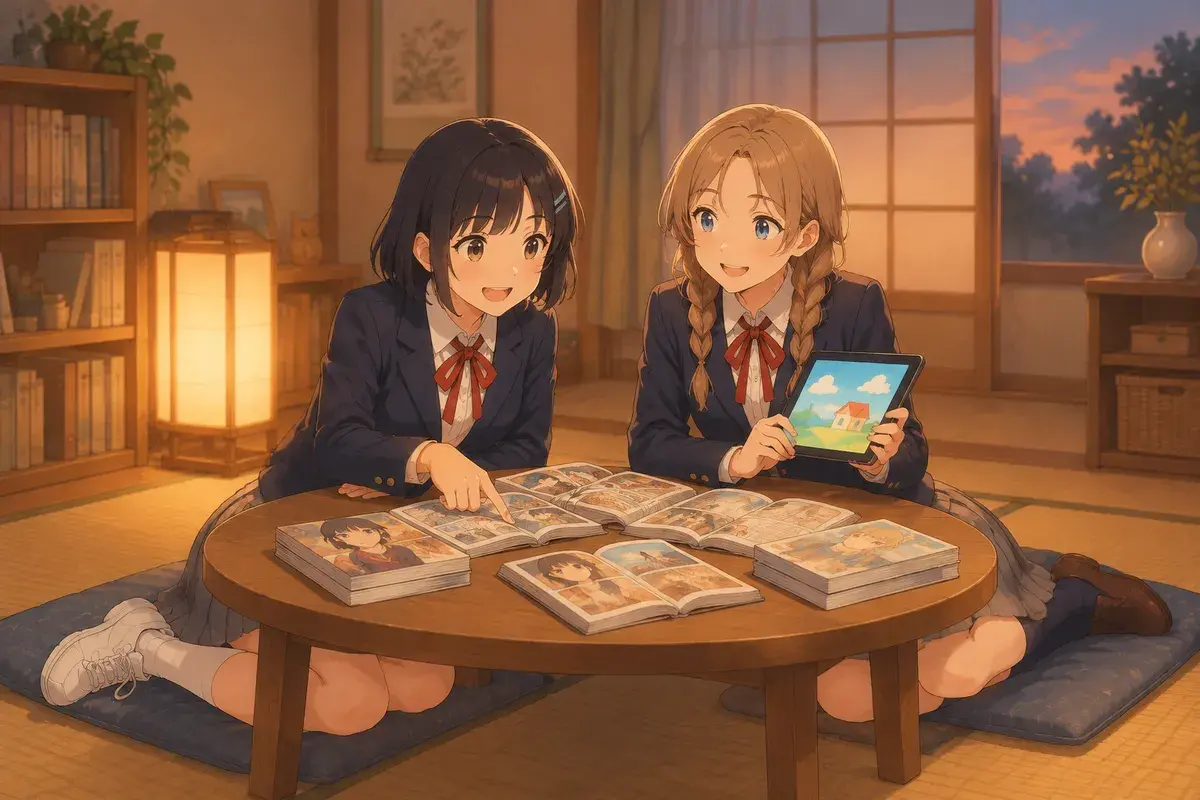
Japanese dialogue with translation · A2 · 13 lines
楽器を弾くことができますか Can you play a musical instrument?
Comic · 10 panels
- ゆい
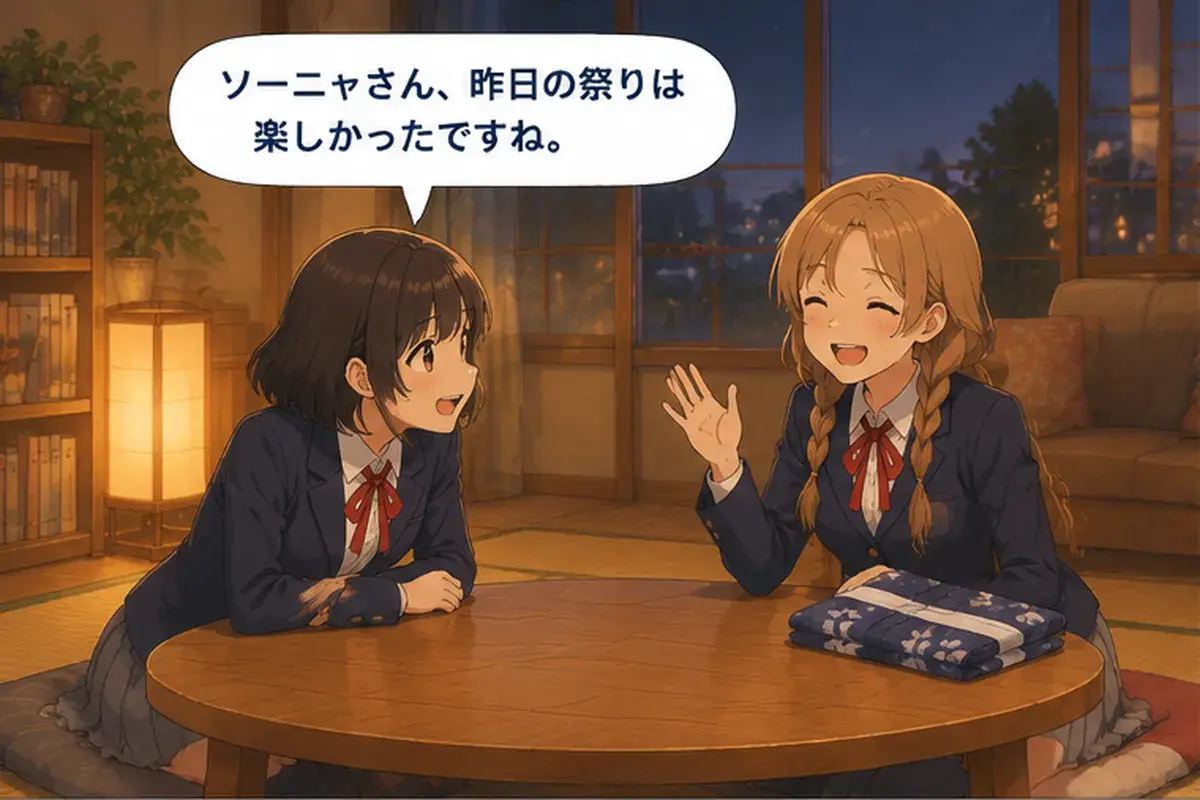
ソーニャさん、昨日の祭りは楽しかったですね。
Sonya-san, yesterday's festival was fun, wasn't it?
- ソーニャ
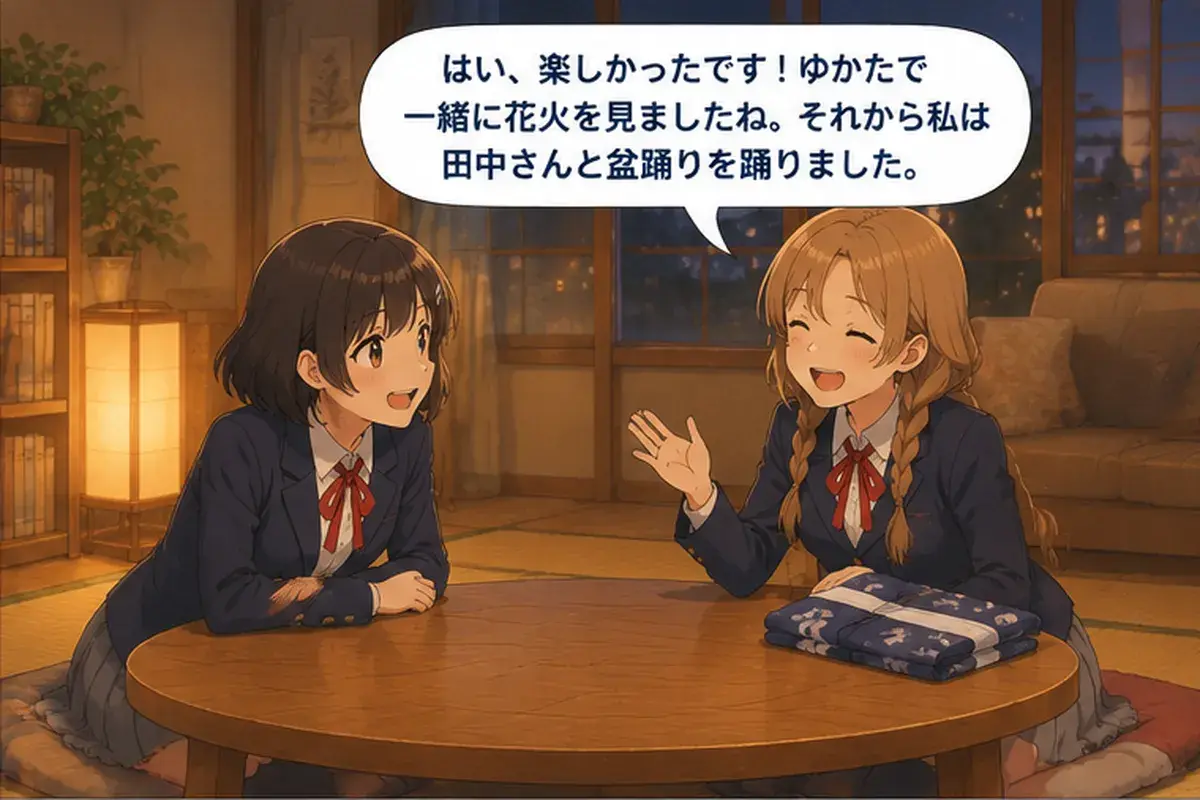
はい、楽しかったです!ゆかたで一緒に花火を見ましたね。それから私は田中さんと盆踊りを踊りました。
Yes, it was fun! We watched the fireworks together in our yukatas, didn't we? And then I danced the Bon dance with Tanaka-san.
- ゆい
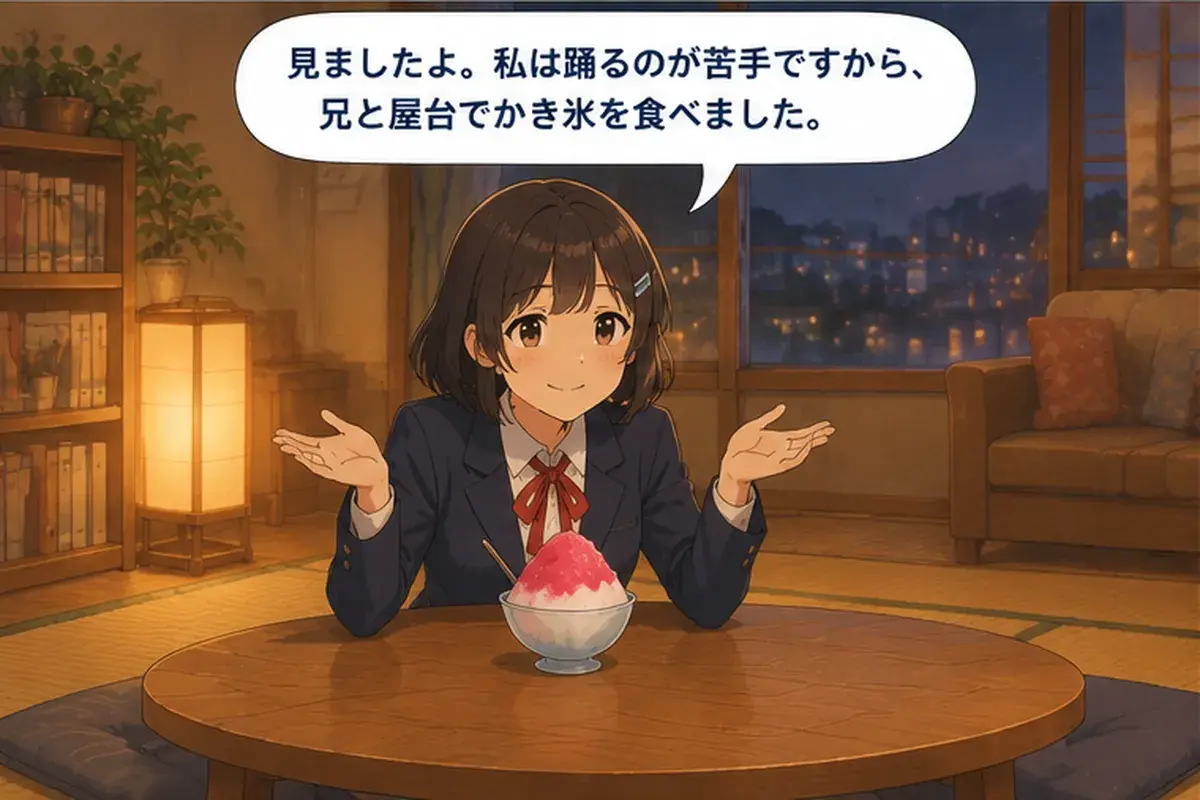
見ましたよ。私は踊るのが苦手ですから、兄と屋台でかき氷を食べました。
I saw you. I'm not good at dancing, so I ate shaved ice at a food stall with my brother.
- ソーニャ
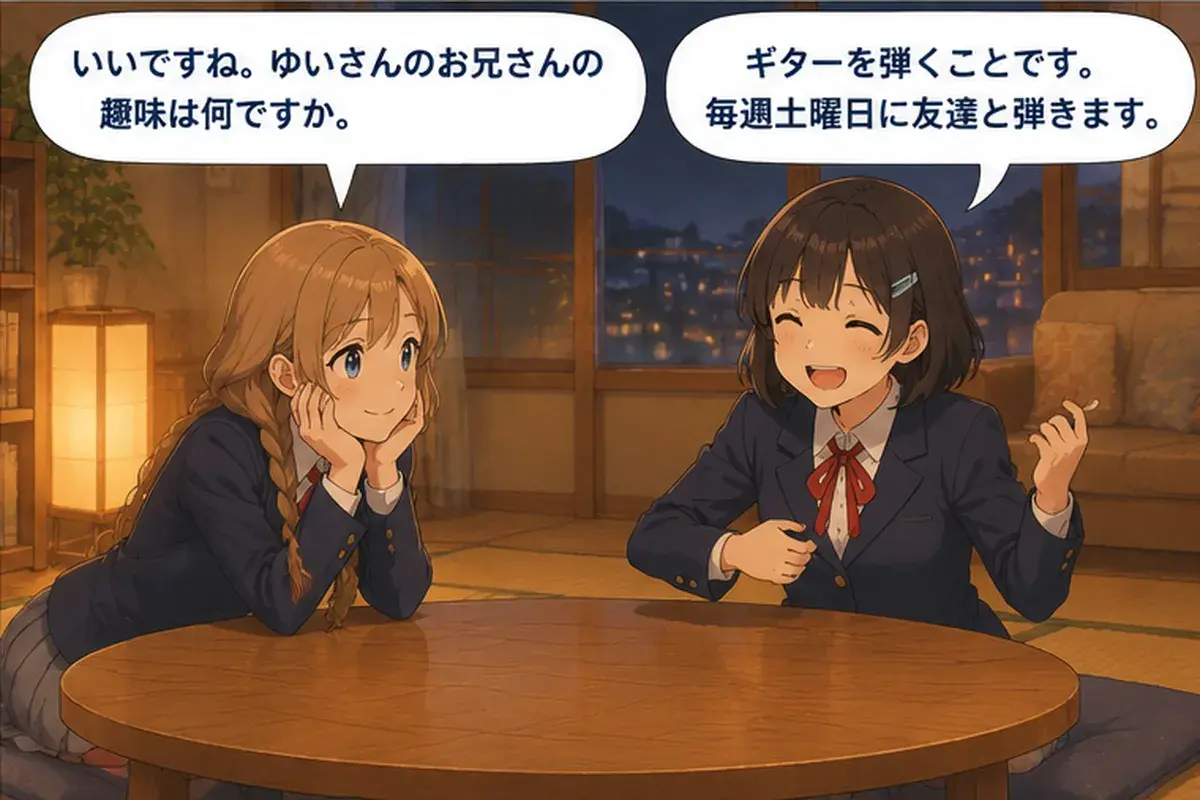
いいですね。ゆいさんのお兄さんの趣味は何ですか。
That's nice. Yui-san, what's your brother's hobby?
- ゆい
ギターを弾くことです。毎週土曜日に友達と弾きます。
Playing the guitar. Every Saturday he plays with his friends.
- ソーニャ
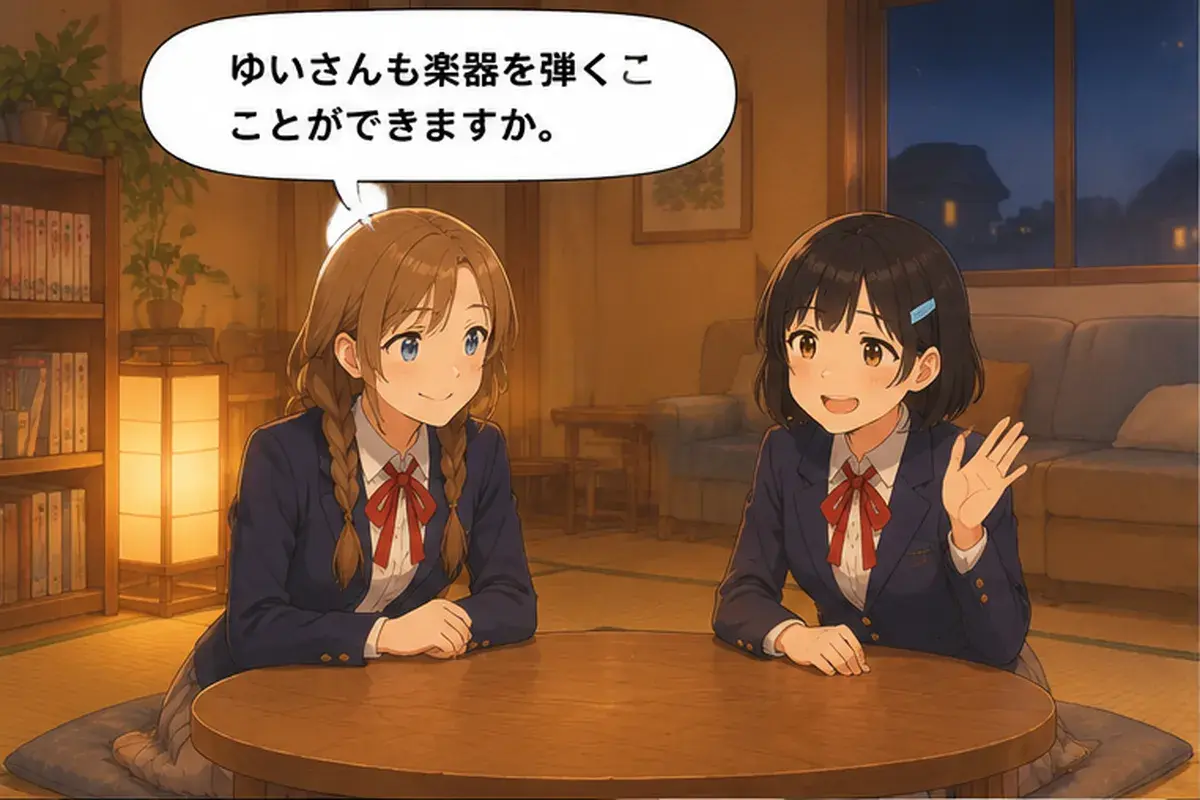
ゆいさんも楽器を弾くことができますか。
Yui-san, can you play an instrument too?
- ゆい
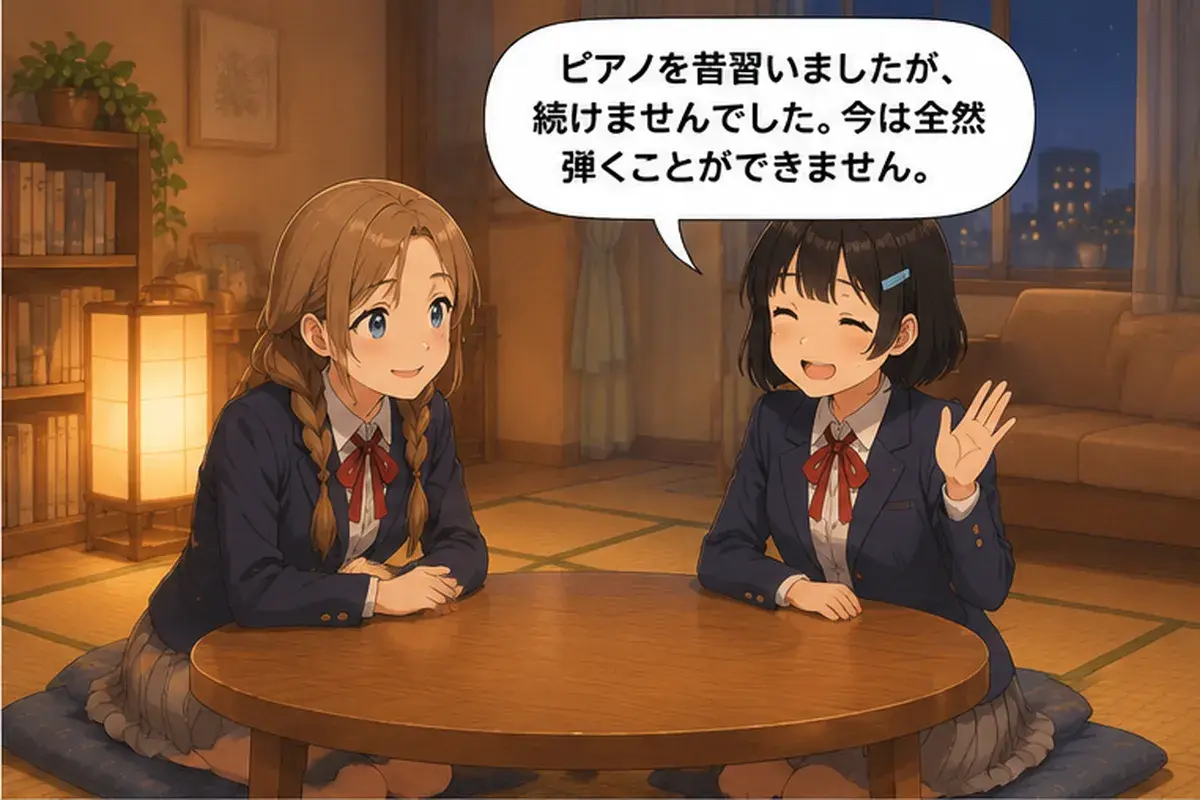
ピアノを昔習いましたが、続けませんでした。今は全然弾くことができません。
I took piano lessons a long time ago, but I didn't keep it up. I can't play at all now.
- ソーニャ
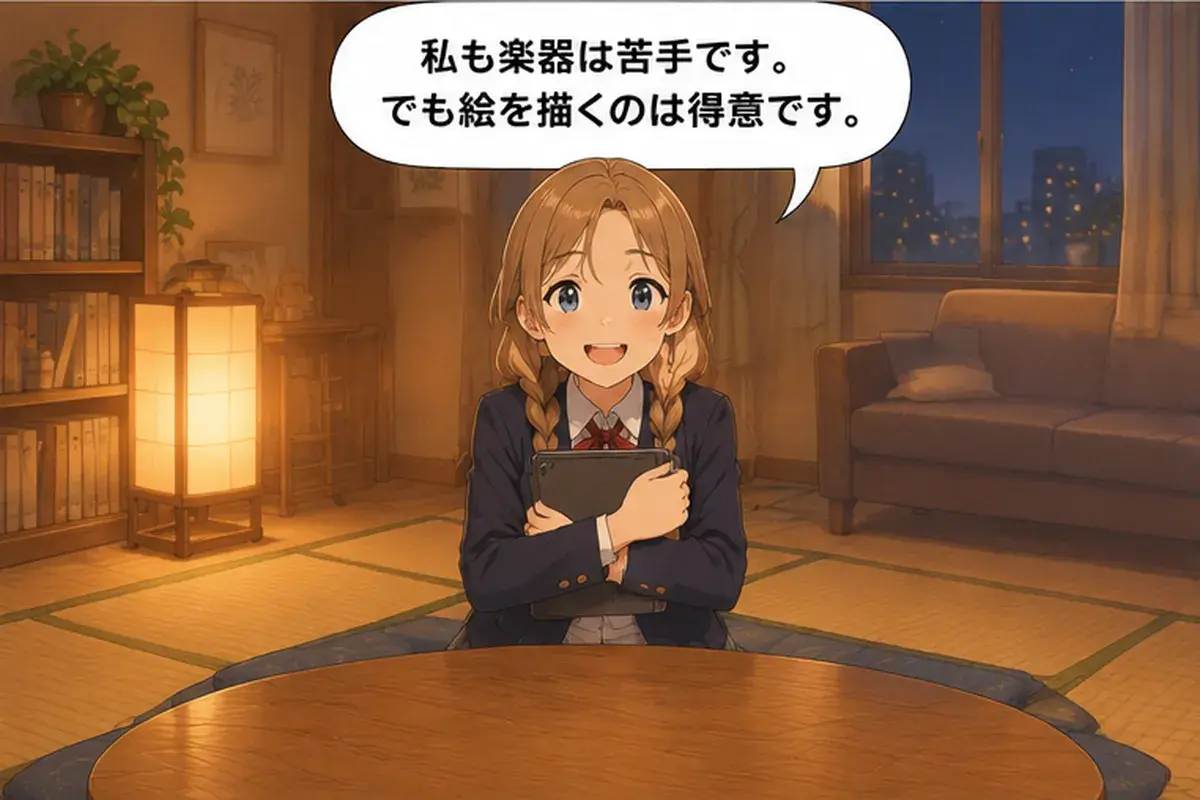
私も楽器は苦手です。でも絵を描くのは得意です。
I'm not good with instruments either. But I'm good at drawing.
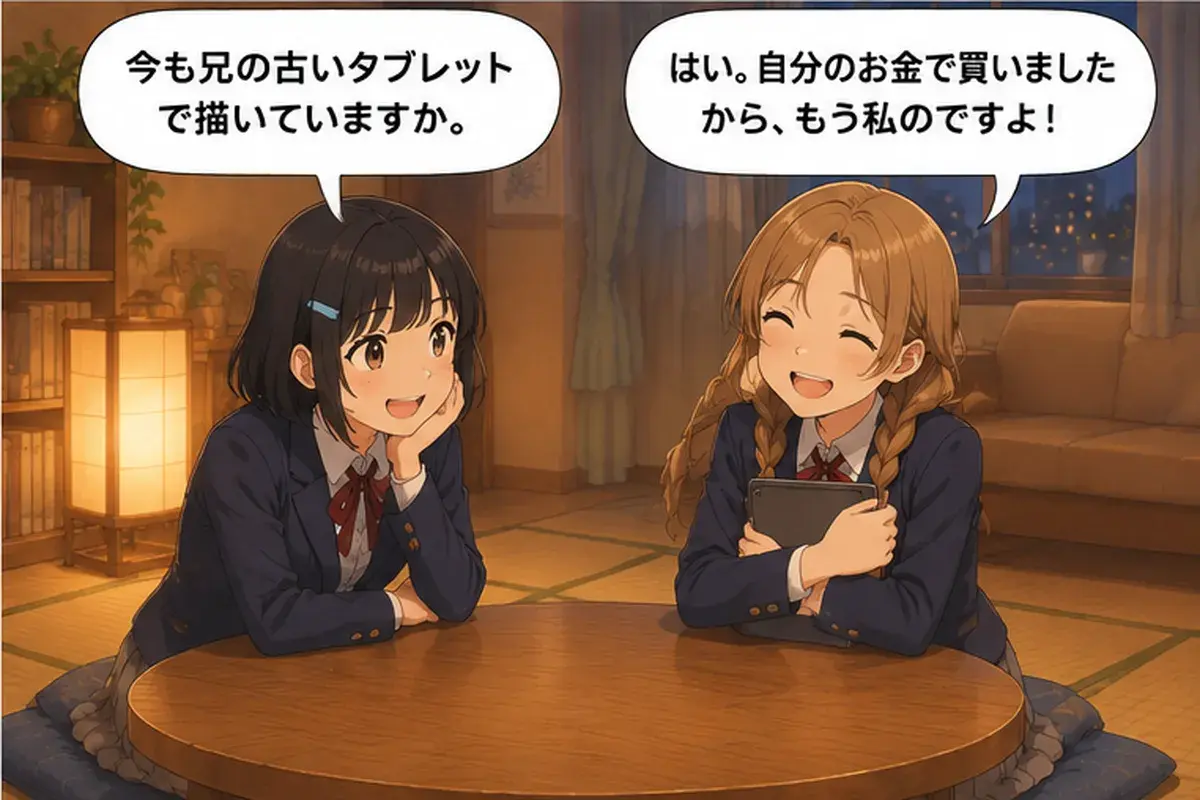
- ゆい
今も兄の古いタブレットで描いていますか。
Are you still drawing on my brother's old tablet?
- ソーニャ
はい。自分のお金で買いましたから、もう私のですよ!
Yes. I bought it with my own money, so it's mine now!
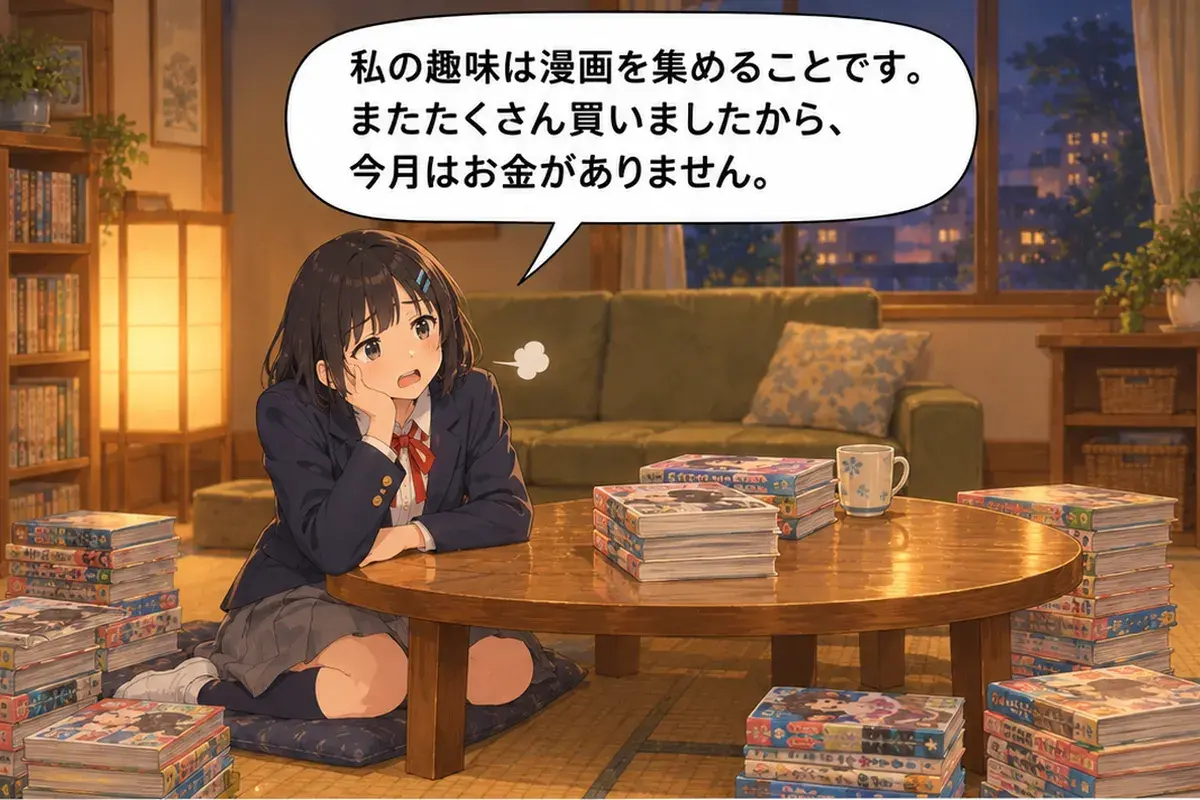
- ゆい
私の趣味は漫画を集めることです。またたくさん買いましたから、今月はお金がありません。
My hobby is collecting manga. I bought a lot again, so I have no money this month.
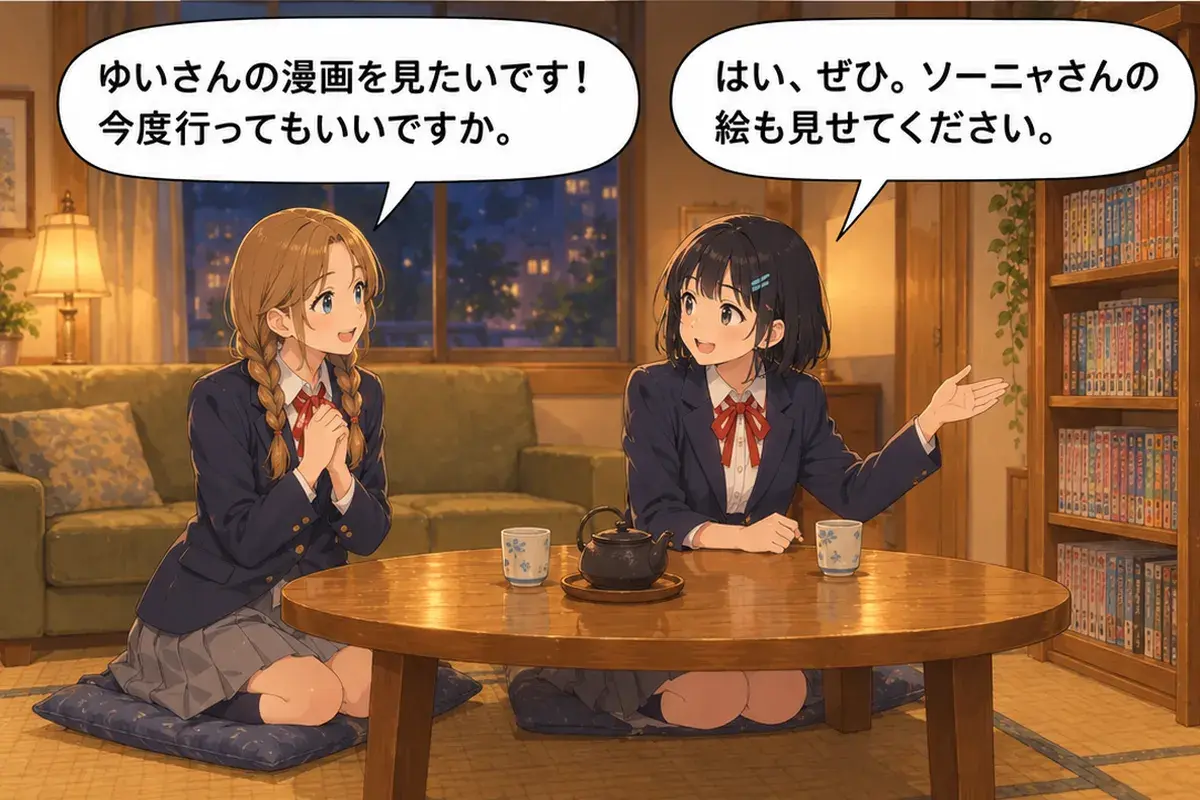
- ソーニャ
ゆいさんの漫画を見たいです!今度行ってもいいですか。
I want to see your manga! Can I come over sometime?
- ゆい
はい、ぜひ。ソーニャさんの絵も見せてください。
Yes, definitely. Please show me your drawings too, Sonya-san.
Grammar for this text
ギター を 弾く こと です— Playing the guitar.弾くmeans "to play" a string or keyboard instrument, and what you play takesを:ギター を 弾く,ピアノ を 弾く. It sounds like引く("to pull"), but it's written differently. A hobby ends inこと です.ゆい さん も 楽器 を 弾く こと が できます か— Can you play an instrument too, Yui-san? This is the dictionary form弾くplusこと が できます, the topic of the unit.ピアノ を 昔 習いました が、 続けませんでした— I took piano lessons a long time ago, but I didn't keep it up.続けませんでしたmeans "I didn't continue":ませんでしたis the polite past negative (A1 unit 11). Theがmeans "but".今 は 全然 弾く こと が できません— I can't play at all now.全然withできませんmeans "not at all".絵 を 描く の は 得意 です— I'm good at drawing.得意means "my strong point" and pairs with苦手("not my thing"). You use得意about yourself and上手when you praise someone else.の はsets two things against each other: instruments, no; drawing, yes.今 も 兄 の 古い タブレット で 描いて います か— Are you still drawing on my brother's old tablet?今 もmeans "even now, still". Yui says兄about her own brother; about someone else's brother you'd sayお兄さん. Sonya bought this tablet from Yui's brother.自分 の お金 で 買いました から、 もう 私 の です よ— I bought it with my own money, so it's mine now!自分 の お金means "my very own money". In私 の("mine"), the word for "tablet" is left out andのstands in for it.漫画 を 集める こと です— Collecting manga.集めるmeans "to collect". Don't mix it up with集まる, "to gather" (by itself).今月 は お金 が ありません— I have no money this month. Yui is joking: she bought a lot of manga again and is out of money.ゆかた で 一緒に 花火 を 見ました ね— We watched the fireworks together in our yukatas, didn't we?ゆかた でmeans "in yukatas": the friends went to the festival together, as they'd agreed back in July.
Words and grammar of the unit: Talk about what you can do.
Learn the words from the texts with flashcards
In the app, you can tap any word in a text to see its translation, forms and examples, and new words stick with flashcards. 15 minutes a day.
Start for freeEverything is open for free. No card needed to sign up.