

Japanese dialogue with translation · A2 · 15 lines
毎朝会社に行く前に走ります I run before I go to work every morning
Comic · 13 panels
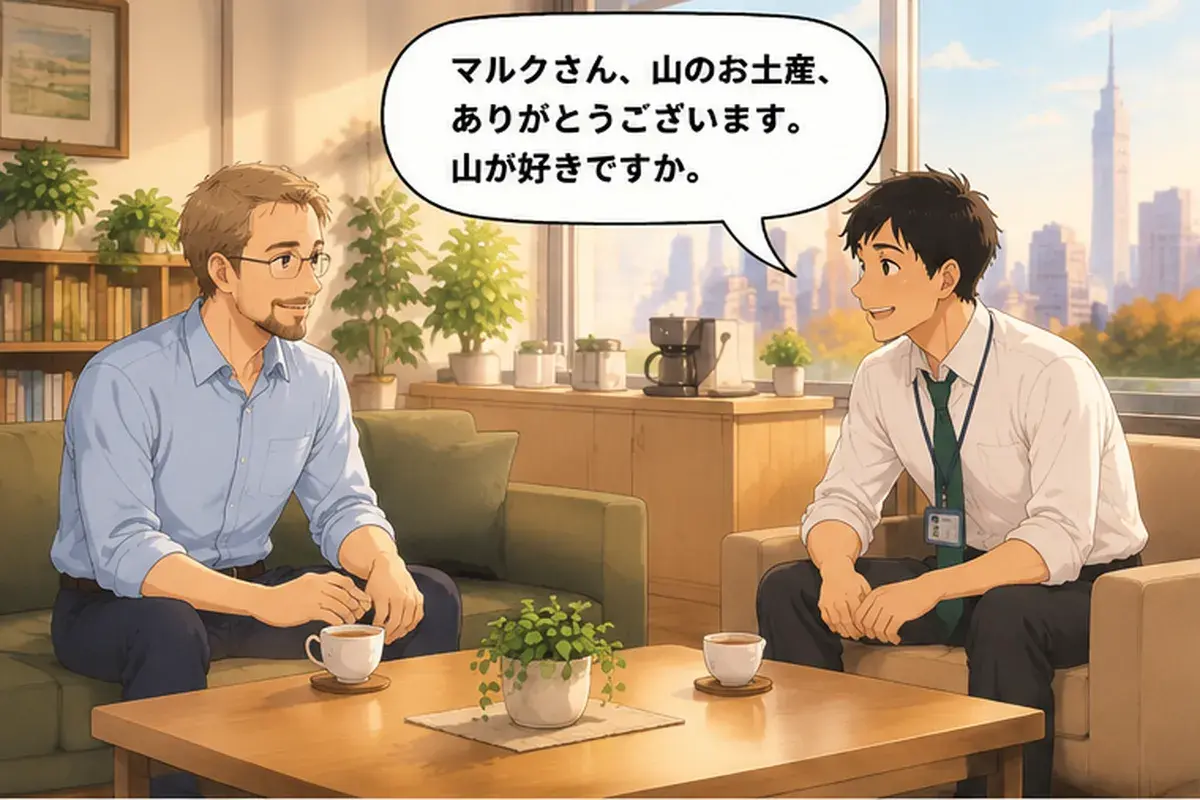
- けん
マルクさん、山のお土産、ありがとうございます。山が好きですか。
Mark-san, thank you for the souvenir from the mountains. Do you like mountains?
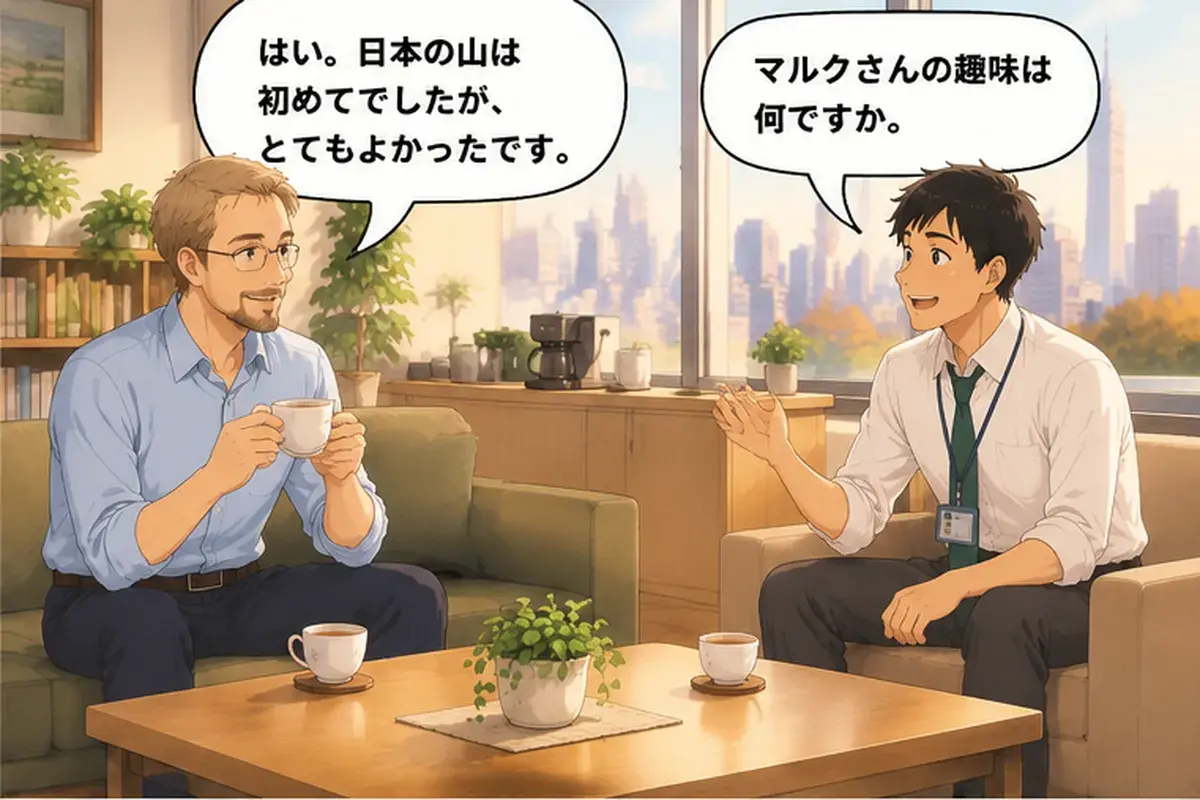
- マルク
はい。日本の山は初めてでしたが、とてもよかったです。
Yes. It was my first time in the mountains in Japan, but it was great.
- けん
マルクさんの趣味は何ですか。
Mark-san, what's your hobby?
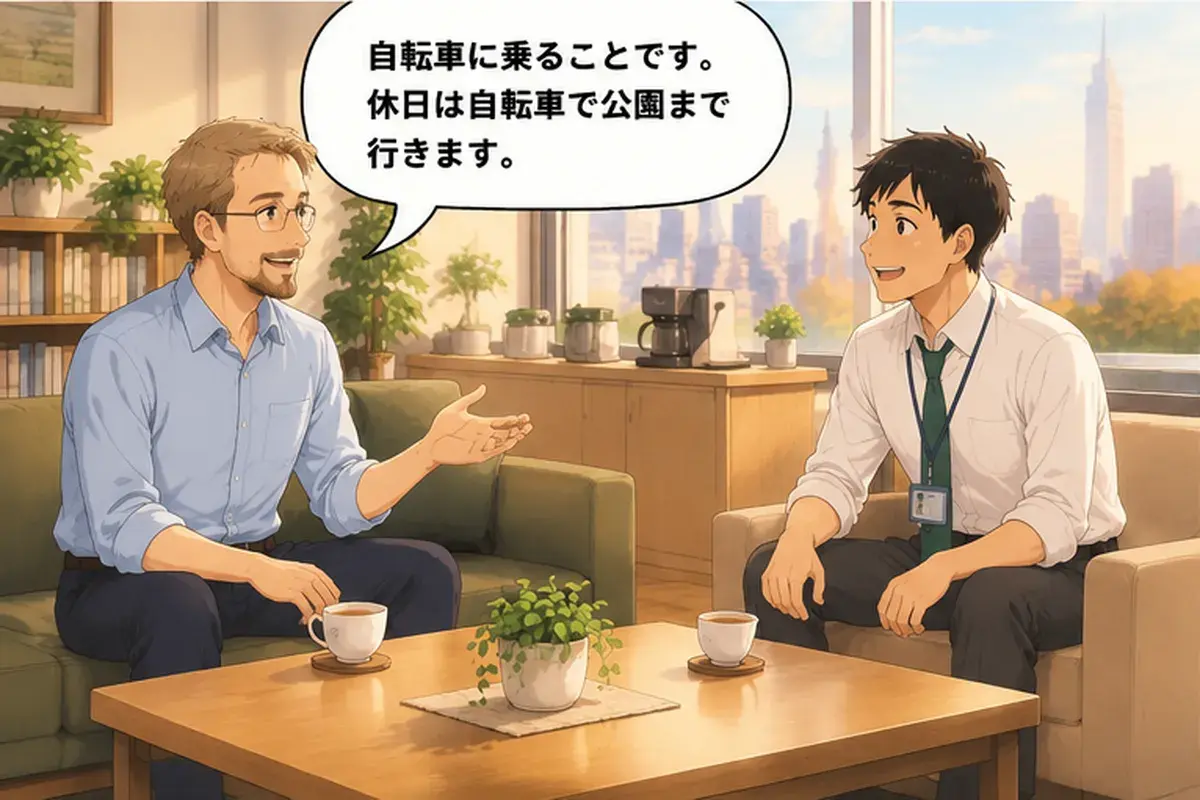
- マルク
自転車に乗ることです。休日は自転車で公園まで行きます。
Riding my bike. On my days off I ride my bike to the park.
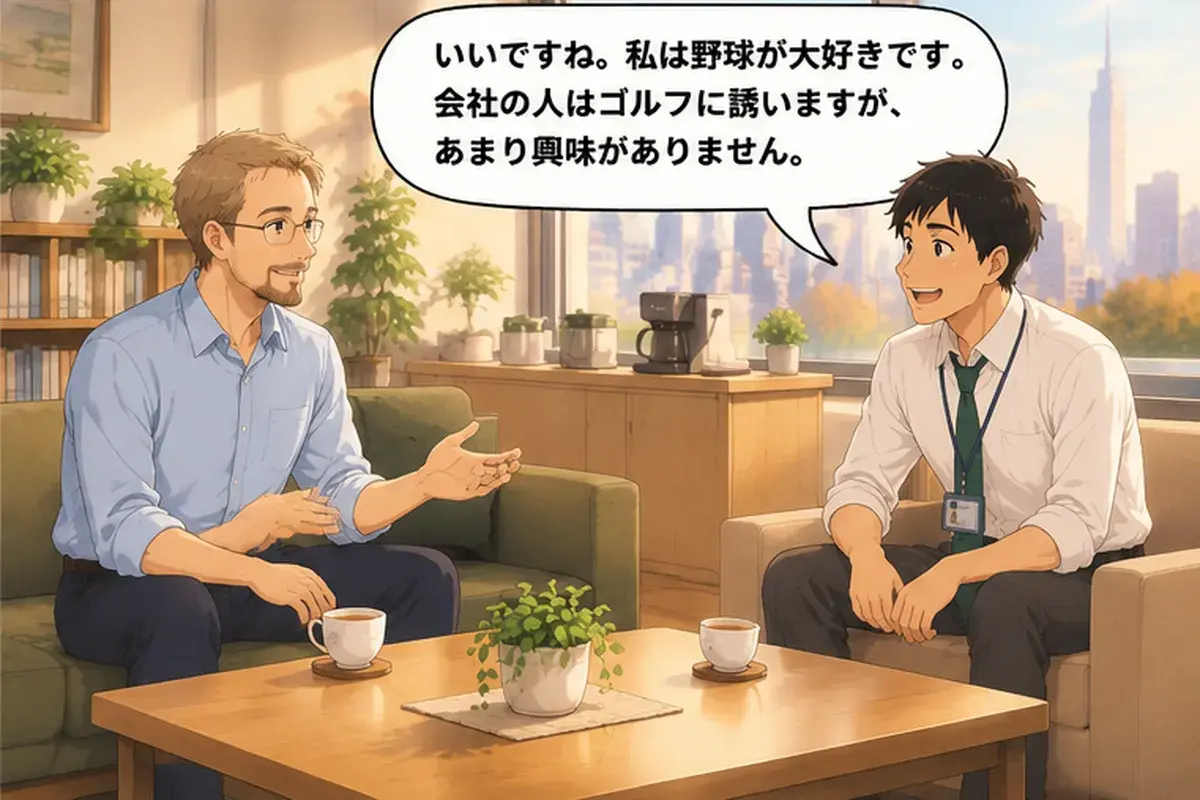
- けん
いいですね。私は野球が大好きです。会社の人はゴルフに誘いますが、あまり興味がありません。
That sounds nice. I love baseball. People at my company invite me to play golf, but I'm not very interested.
- マルク
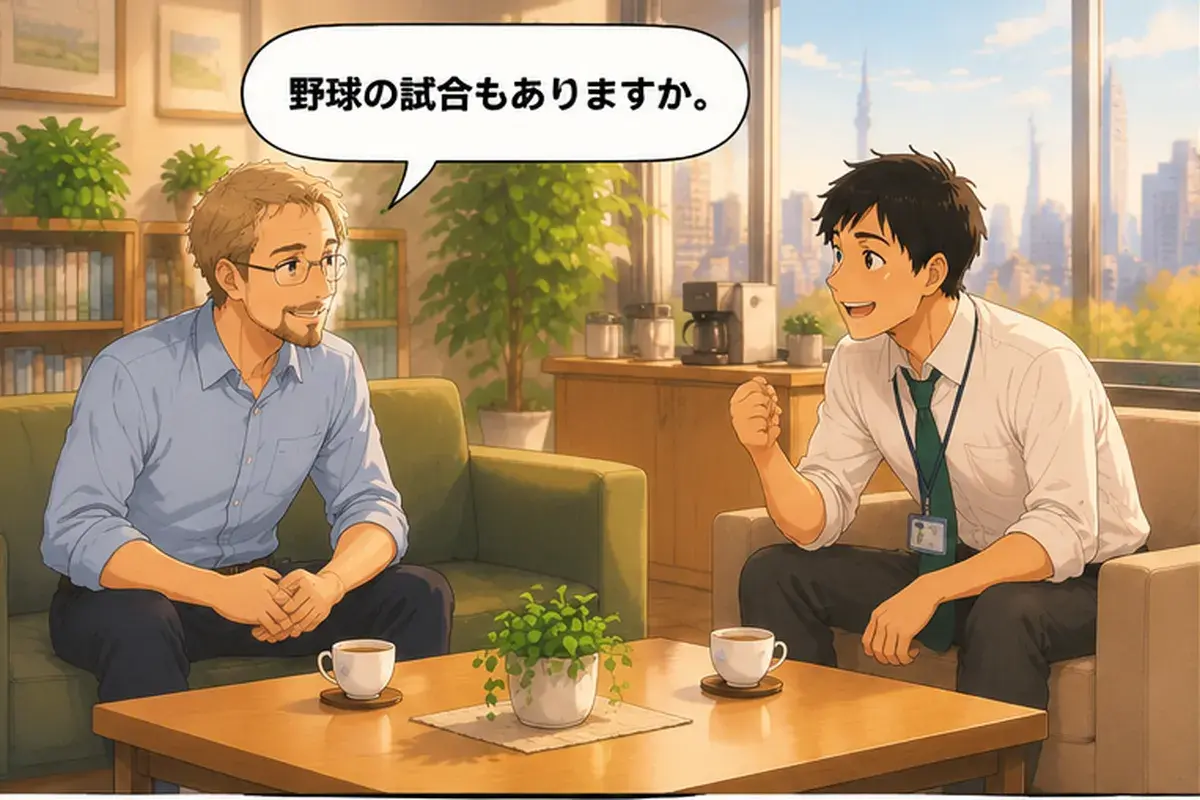
野球の試合もありますか。
Are there baseball games too?
- けん
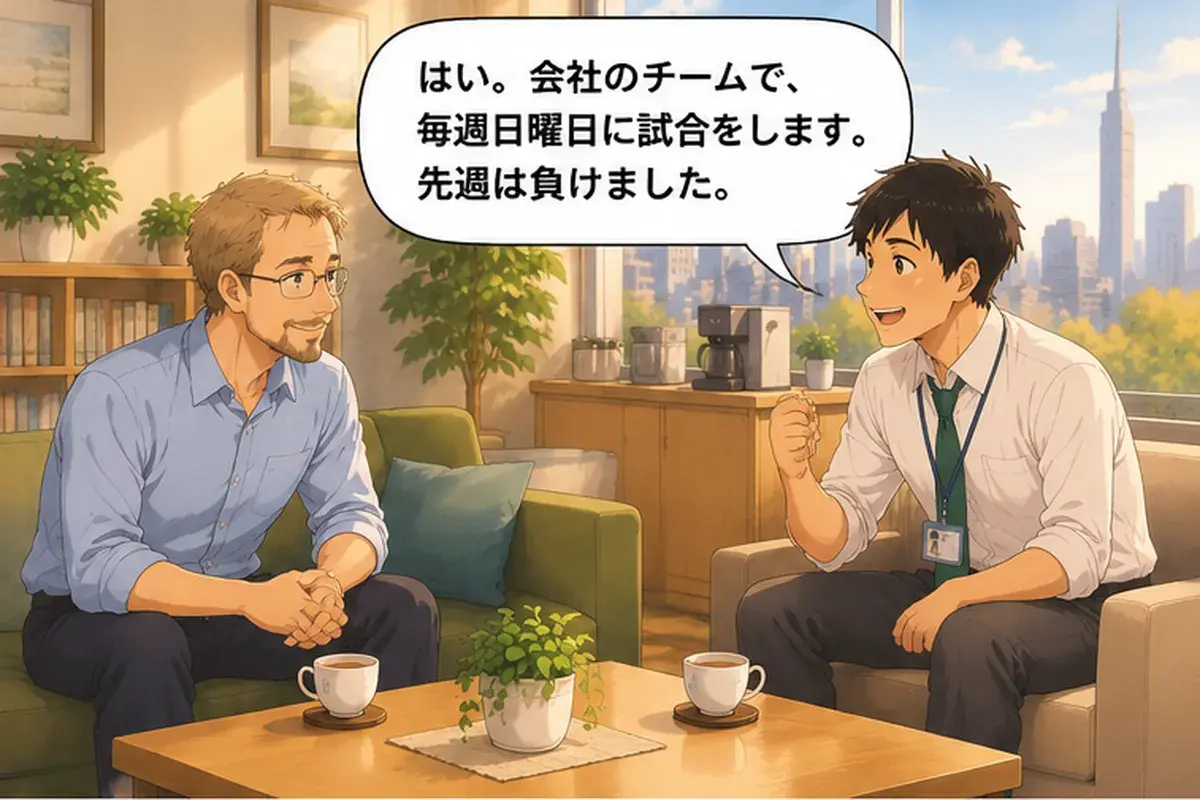
はい。会社のチームで、毎週日曜日に試合をします。先週は負けました。
Yes. We play a game every Sunday with our company team. We lost last week.
- マルク
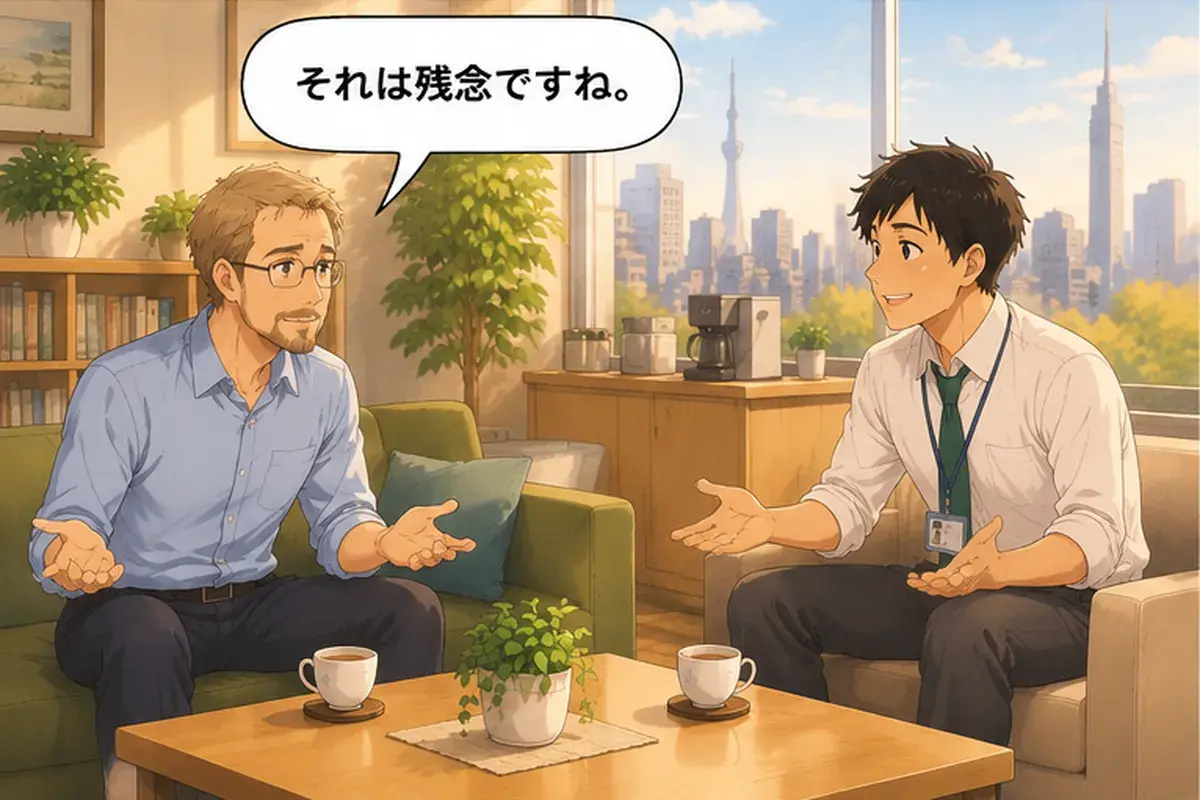
それは残念ですね。
That's too bad.
- けん
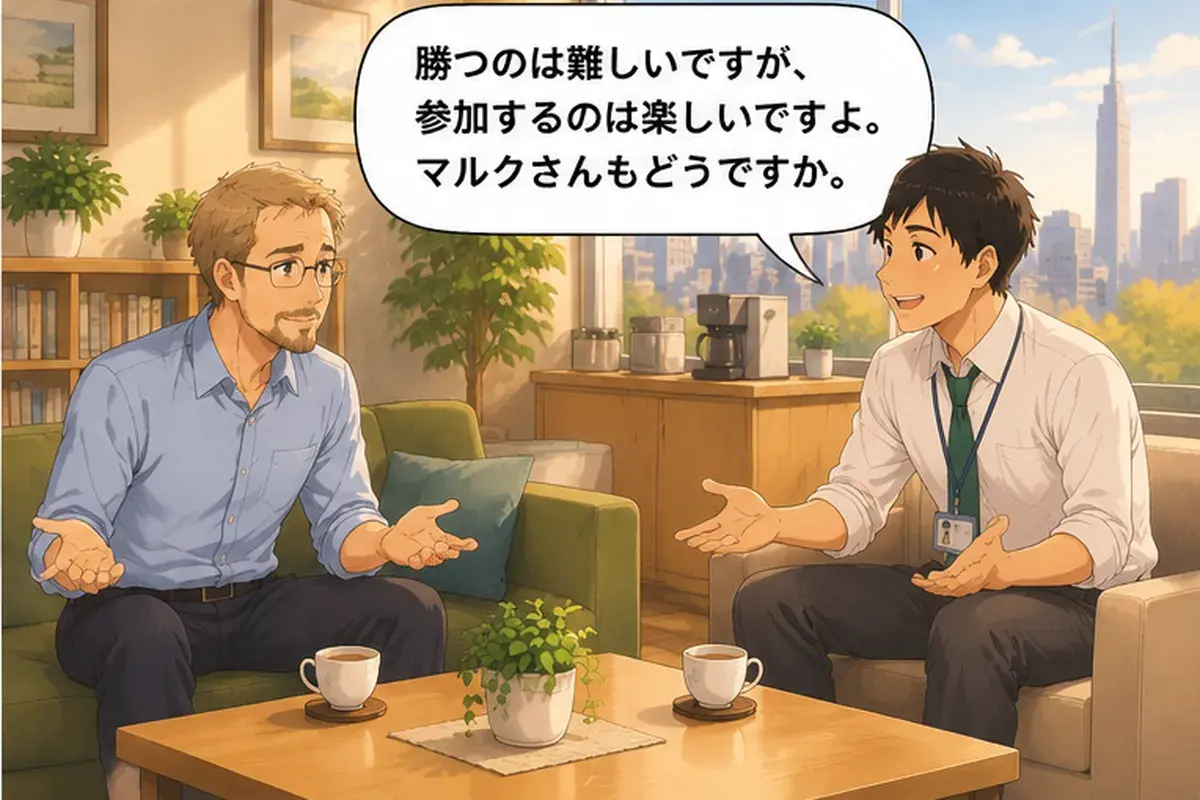
勝つのは難しいですが、参加するのは楽しいですよ。マルクさんもどうですか。
Winning is hard, but taking part is fun. How about it, Mark-san?
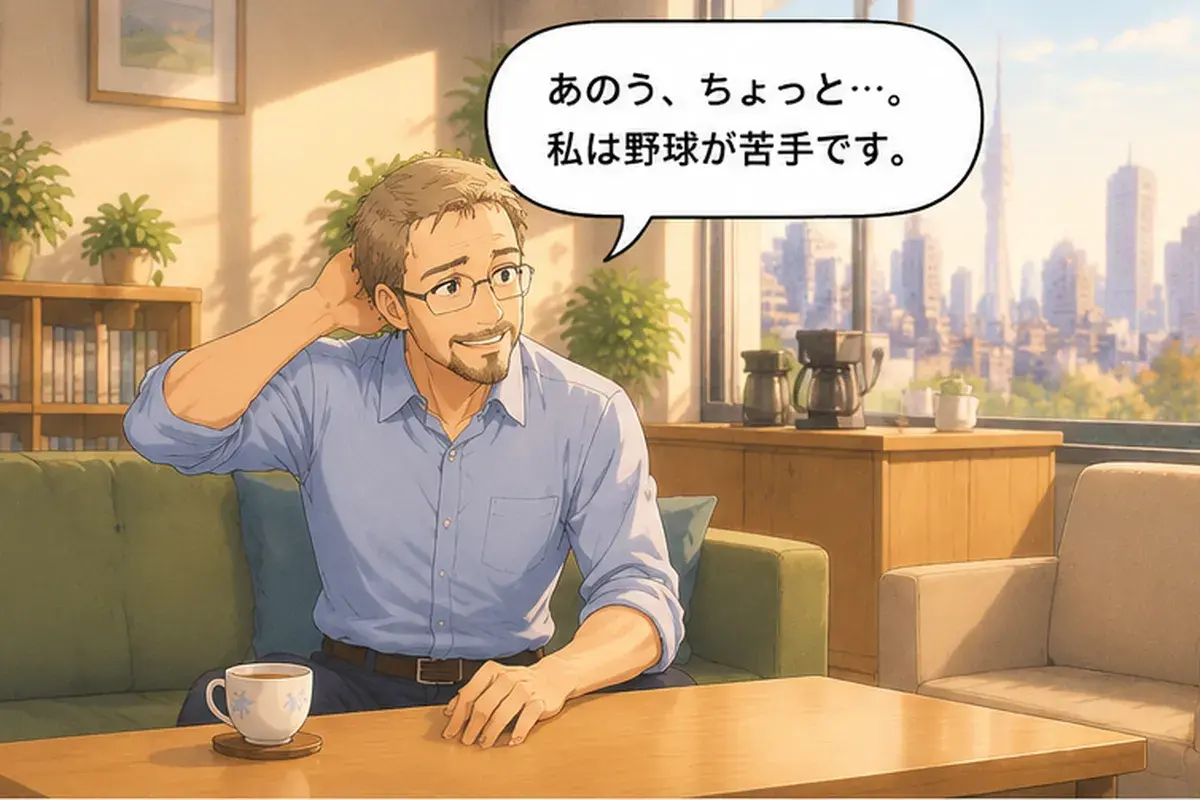
- マルク
あのう、ちょっと…。私は野球が苦手です。
Um, well... I'm not good at baseball.
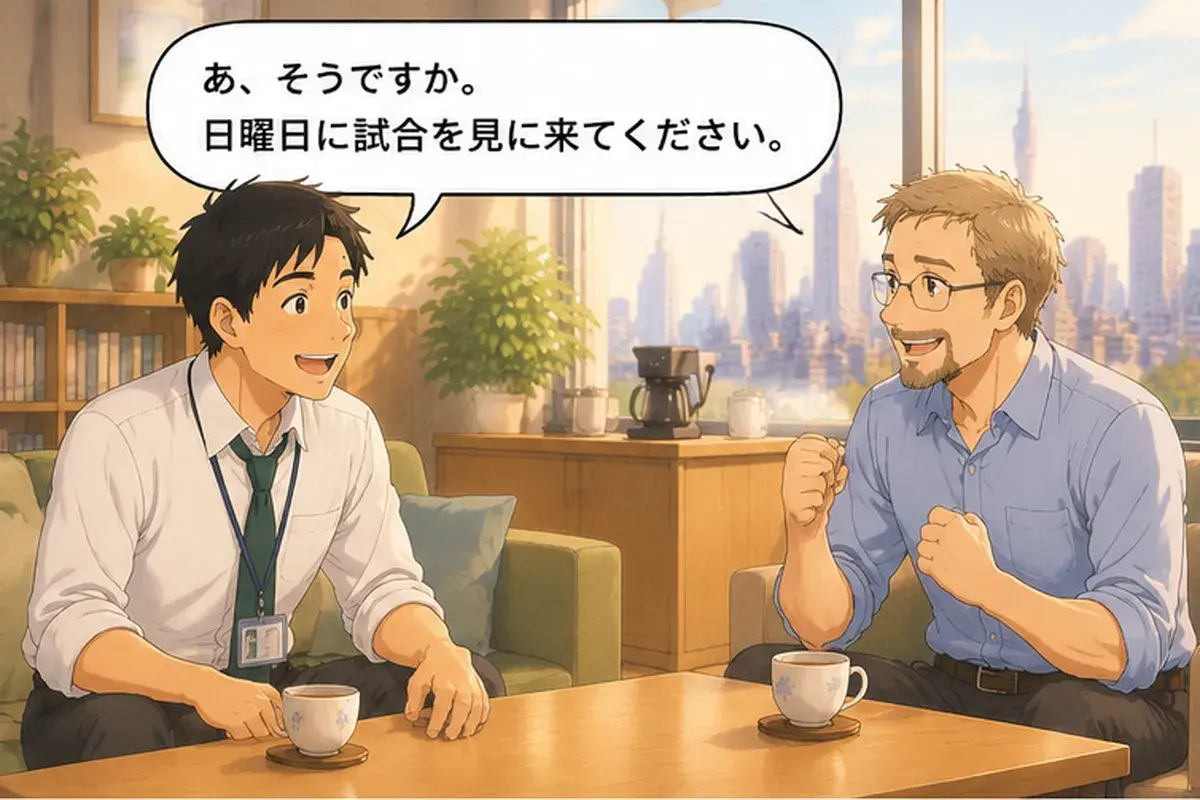
- けん
あ、そうですか。日曜日に試合を見に来てください。
Oh, I see. Please come watch a game on Sunday.
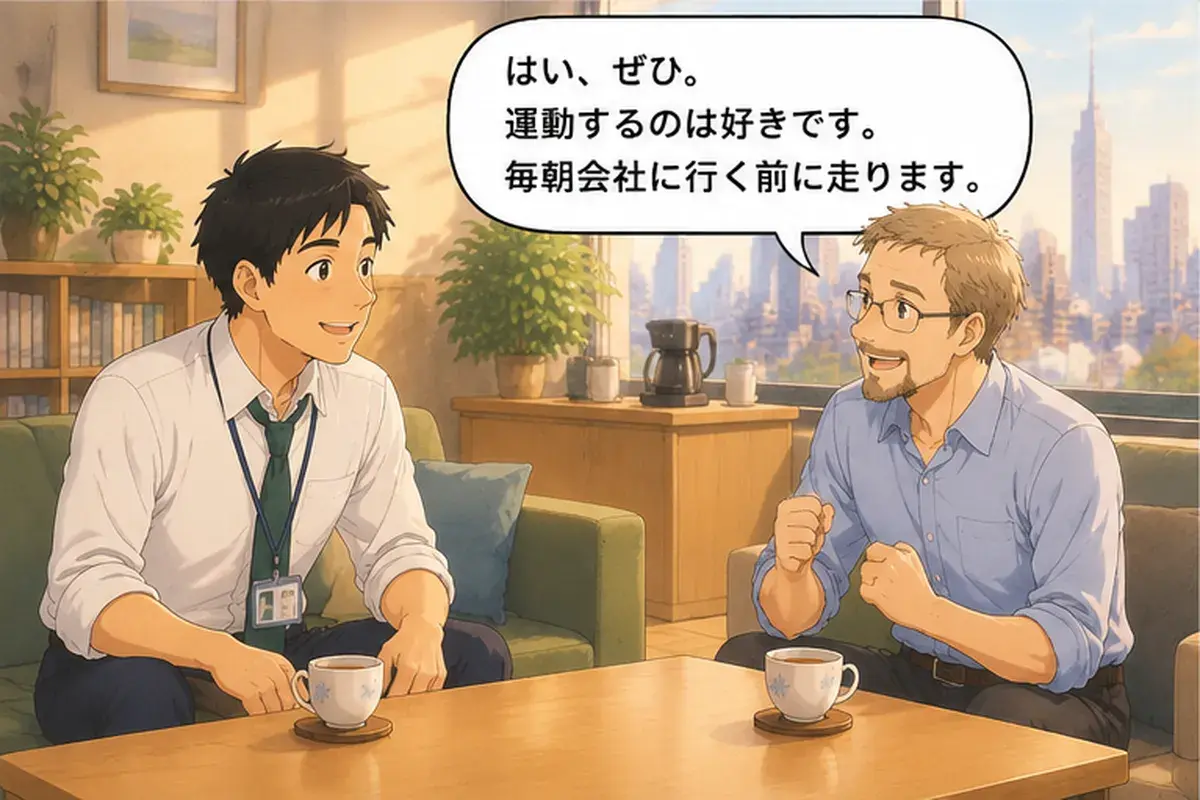
- マルク
はい、ぜひ。運動するのは好きです。毎朝会社に行く前に走ります。
Yes, I'd love to. I like exercising. I run every morning before I go to work.
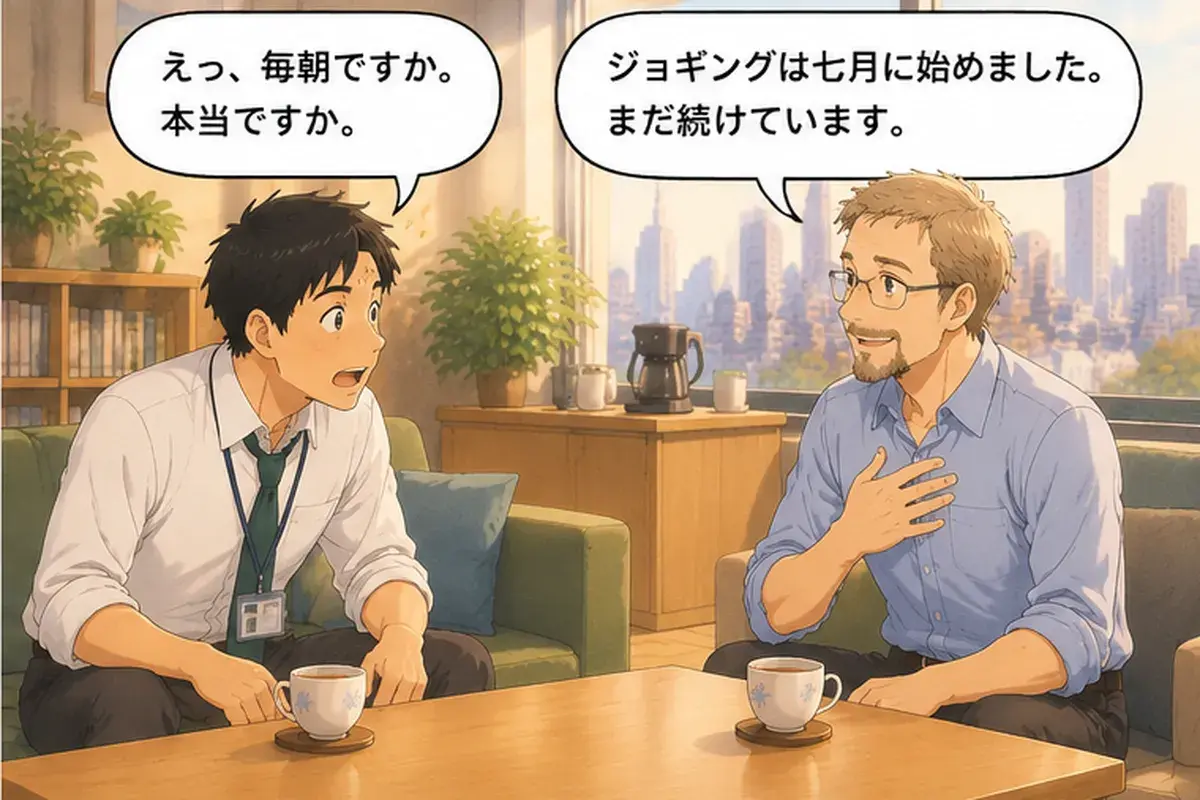
- けん
えっ、毎朝ですか。本当ですか。
What, every morning? Really?
- マルク
ジョギングは七月に始めました。まだ続けています。
I started jogging in July. I'm still keeping it up.
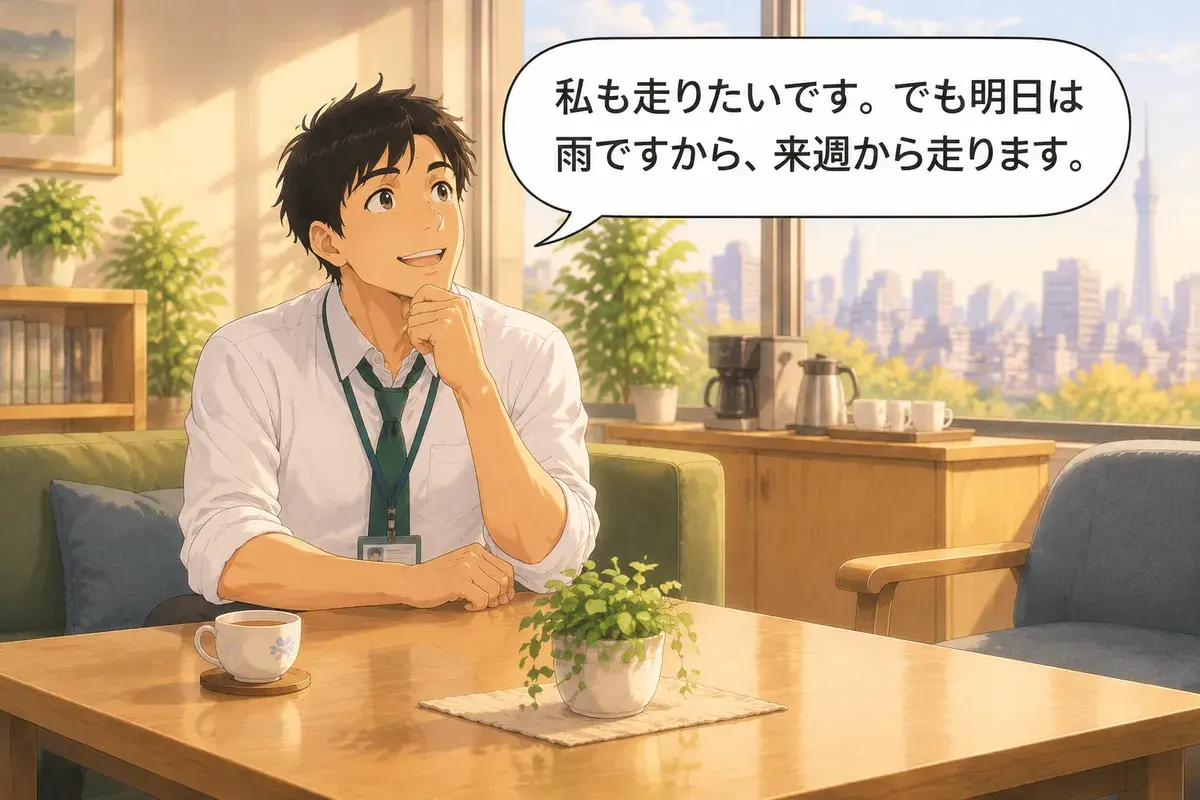
- けん
私も走りたいです。でも明日は雨ですから、来週から走ります。
I want to run too. But it's going to rain tomorrow, so I'll start next week.
Grammar for this text
山 の お土産、 ありがとう ございます— Thank you for the souvenir from the mountains. Mark went to the mountains in the summer and brought Ken a sweet souvenir, as he'd promised.日本 の 山 は 初めて でした が、 とても よかった です— It was my first time in the mountains in Japan, but it was great. Hereがjust links the two parts, without a sharp "but".マルク さん の 趣味 は 何 です か— What's your hobby, Mark-san? It's a normal question when you get to know someone better. The answer is an action withこと:自転車 に 乗る こと です— Riding my bike. After趣味 は, Japanese expects an action withこと, or a direct question about liking something.あのう、 ちょっと…— Um, well... This is a polite refusal. People don't say a direct "no":ちょっと…and a pause already mean "that won't work". Ken understands and answersあ、 そう です か— Oh, I see. He doesn't push, and suggests something else instead.勝つ の は 難しい です が、 参加する の は 楽しい です よ— Winning is hard, but taking part is fun.勝つand参加するare in the dictionary form, andのmakes each of them a "thing". Theがmeans "but".毎朝 会社 に 行く 前 に 走ります— I run every morning before I go to work. Before前 にcomes the dictionary form; the last verb shows the tense.ジョギング は 七月 に 始めました— I started jogging in July.始めるmeans "to start" and続けるmeans "to continue"; both are Group 2 verbs.まだ 続けて います— I'm still keeping it up. It means "I'm still continuing": he hasn't quit.明日 は 雨 です から、 来週 から 走ります— It's going to rain tomorrow, so I'll start running next week. This is Ken's joke: rain is a handy excuse to put it off. The firstからmeans "because", the second means "starting from".
Words and grammar of the unit: Talk about what you can do.
Learn the words from the texts with flashcards
In the app, you can tap any word in a text to see its translation, forms and examples, and new words stick with flashcards. 15 minutes a day.
Start for freeEverything is open for free. No card needed to sign up.