
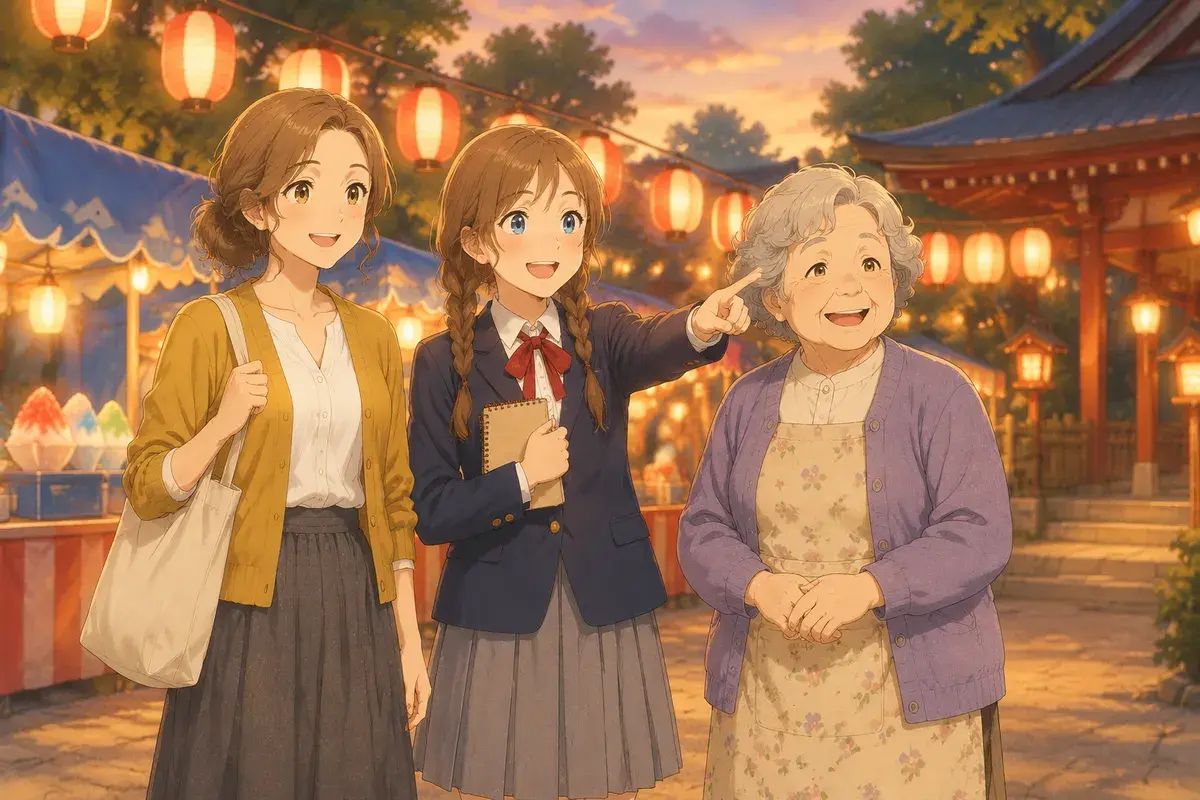
Japanese dialogue with translation · A2 · 16 lines
盆踊りを踊ることができますか Can you dance the Bon dance?
Comic · 16 panels
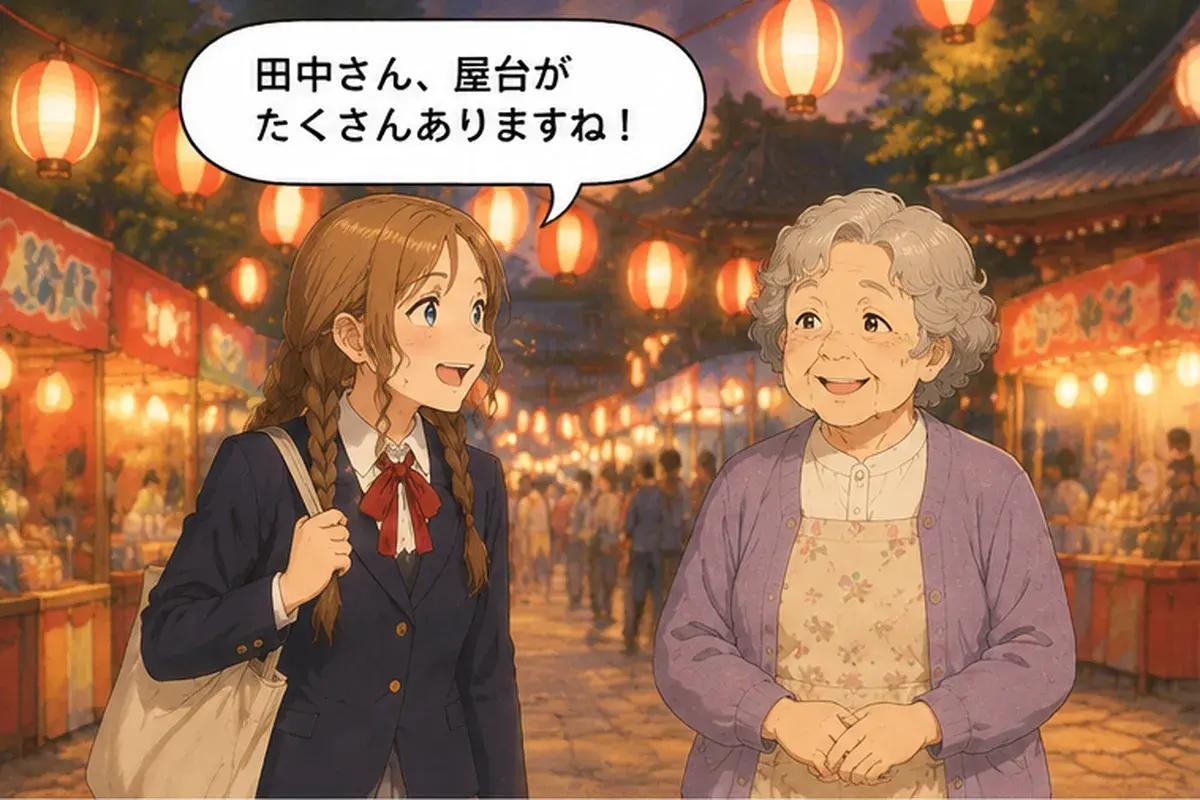
- ソーニャ
田中さん、屋台がたくさんありますね!
Tanaka-san, there are so many food stalls!
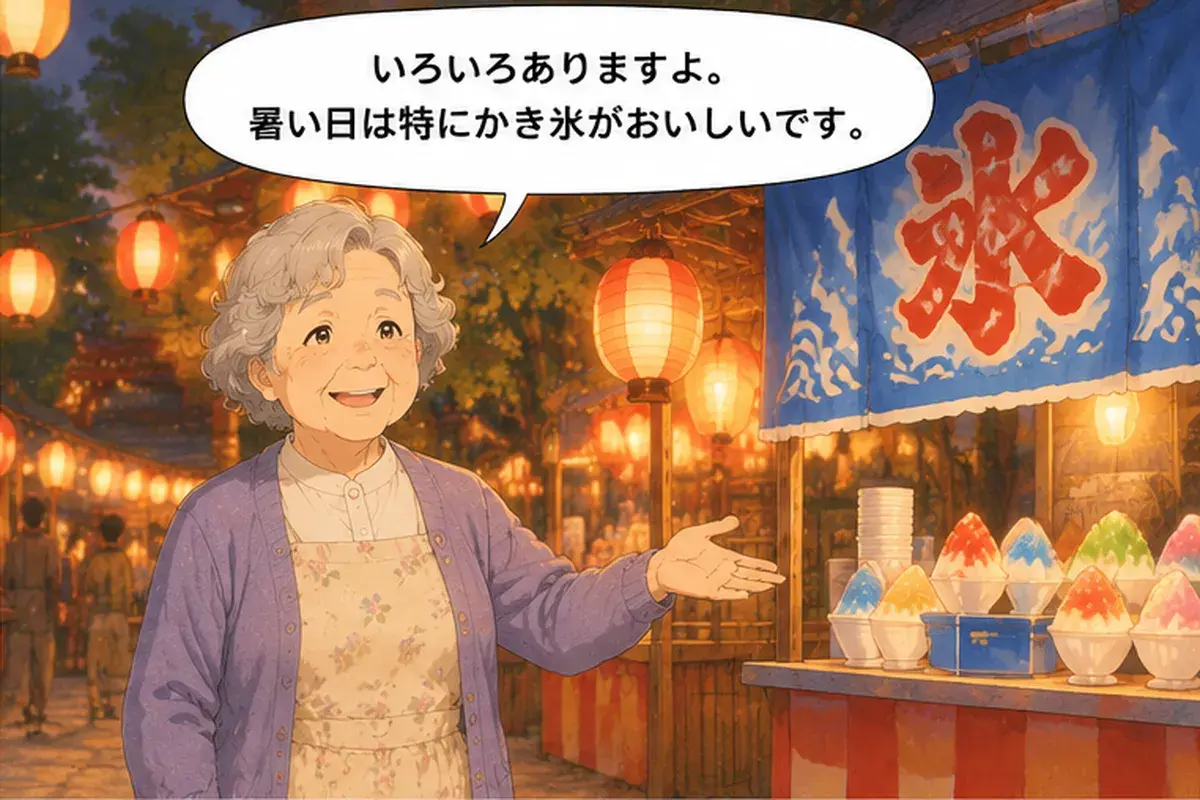
- 田中
いろいろありますよ。暑い日は特にかき氷がおいしいです。
They have all kinds of things. On a hot day, shaved ice is especially good.
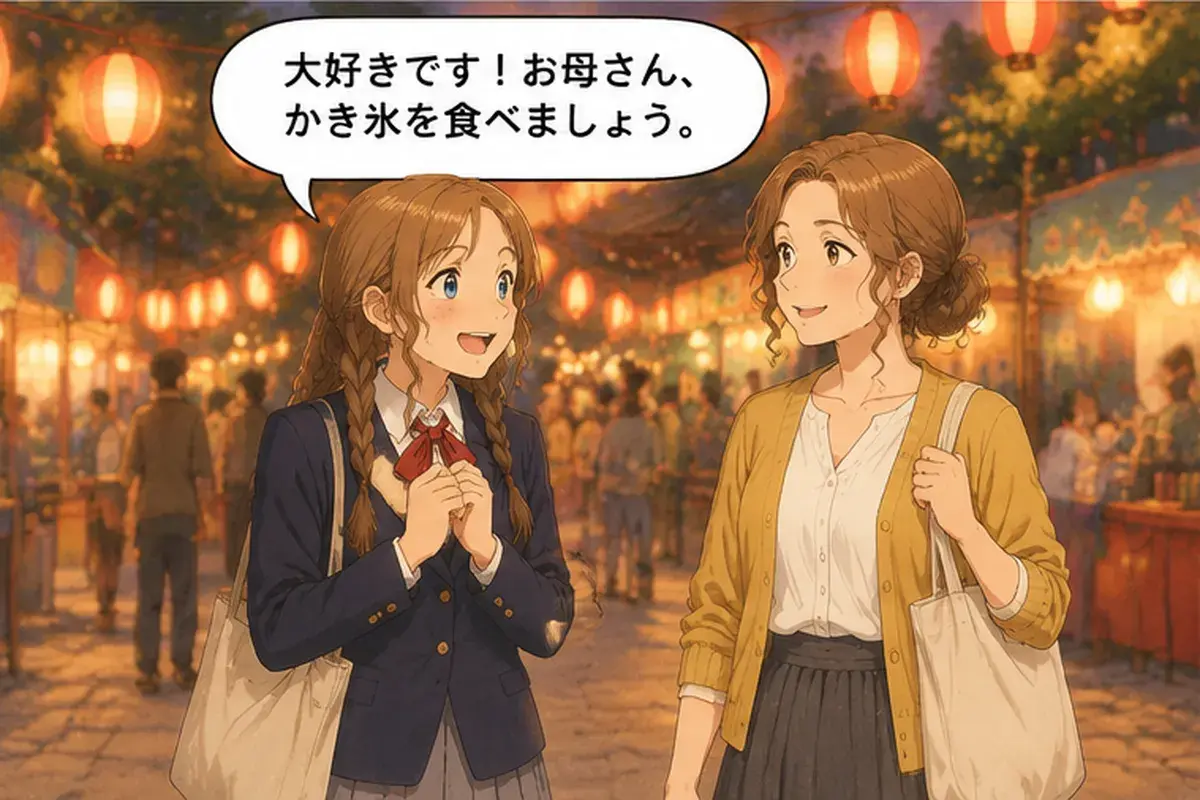
- ソーニャ
大好きです!お母さん、かき氷を食べましょう。
I love it! Mom, let's have some shaved ice.
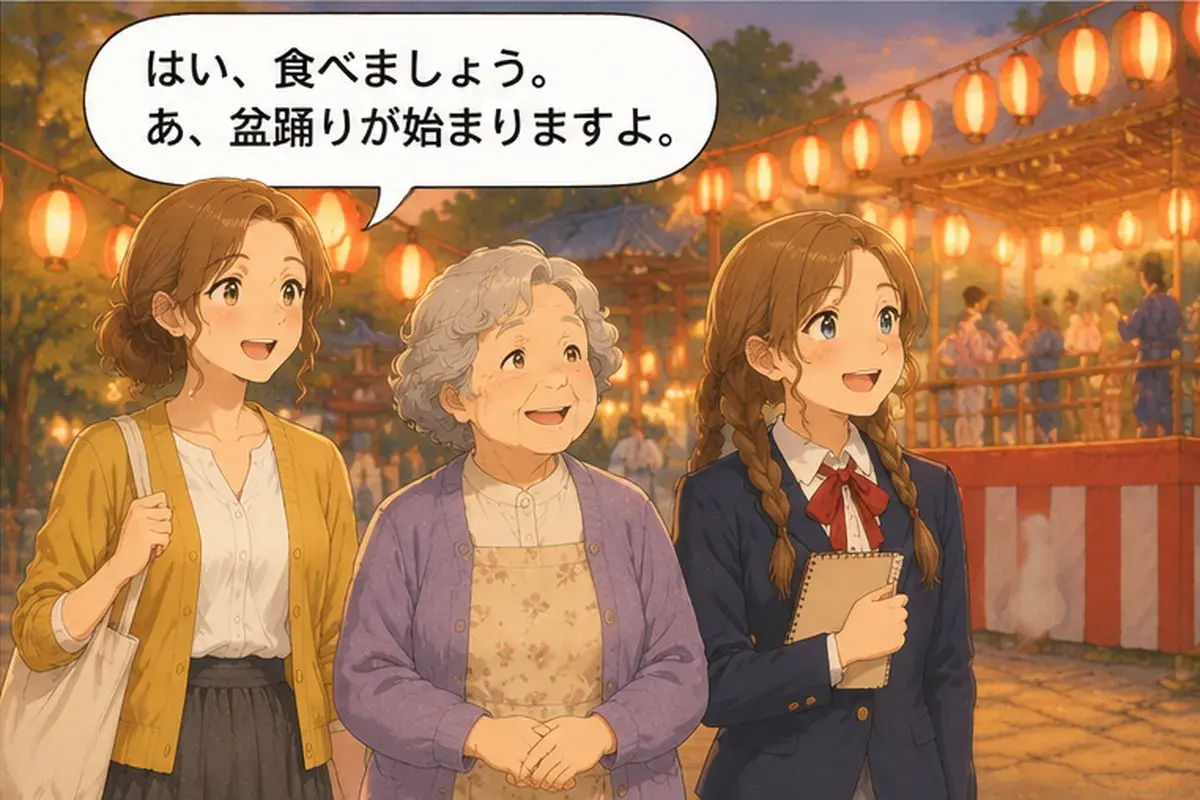
- アンナ
はい、食べましょう。あ、盆踊りが始まりますよ。
Yes, let's. Oh, the Bon dance is starting!
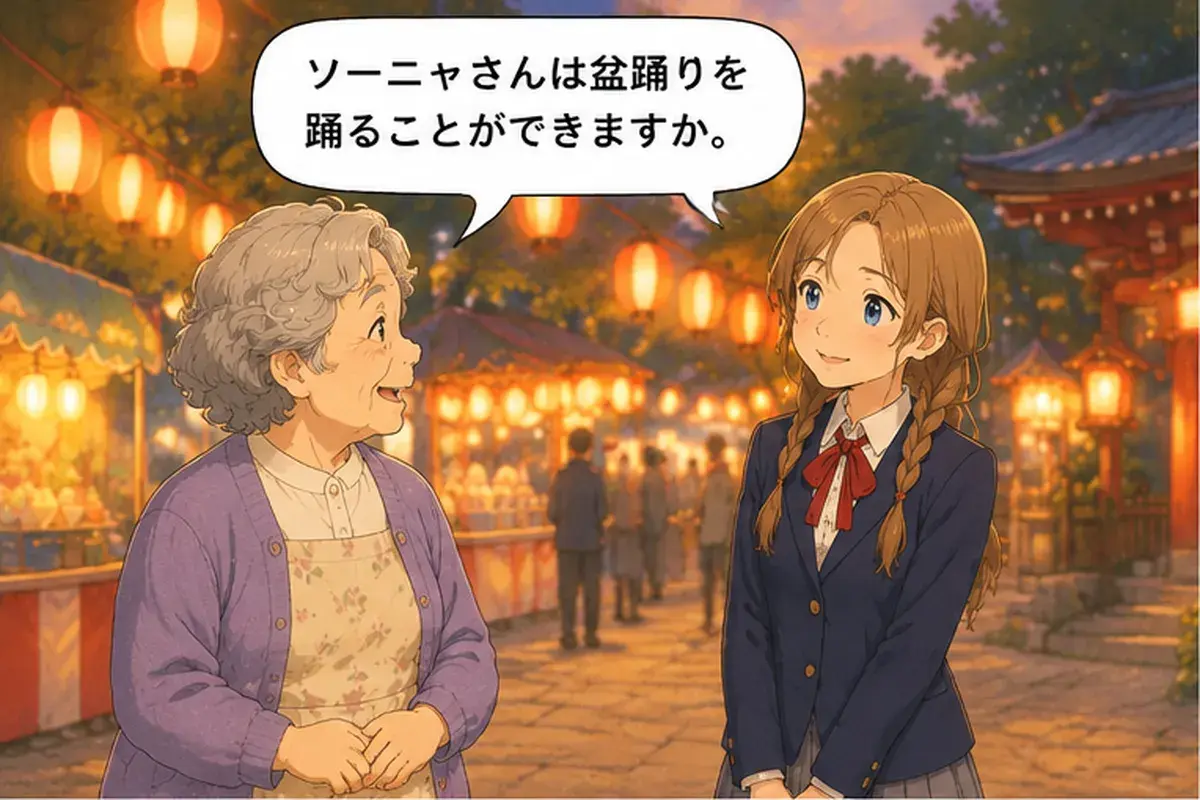
- 田中
ソーニャさんは盆踊りを踊ることができますか。
Sonya-san, can you dance the Bon dance?
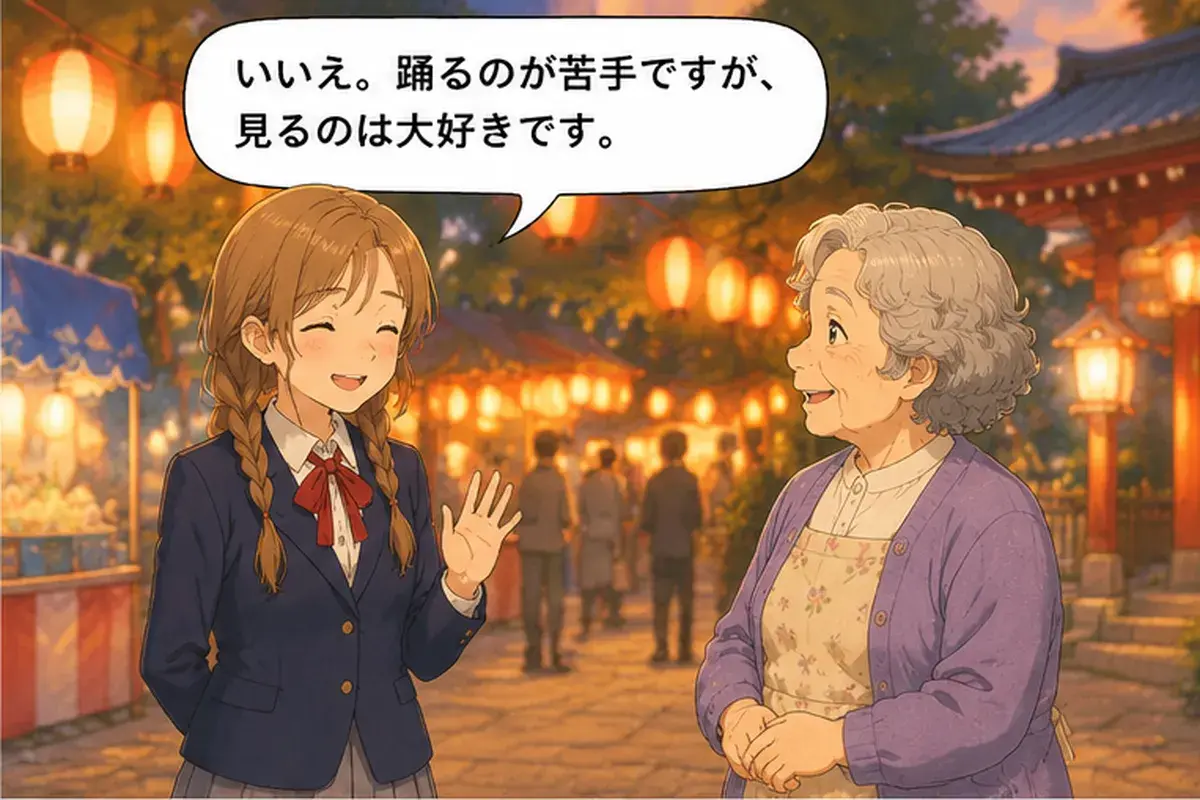
- ソーニャ
いいえ。踊るのが苦手ですが、見るのは大好きです。
No. I'm not good at dancing, but I love watching.
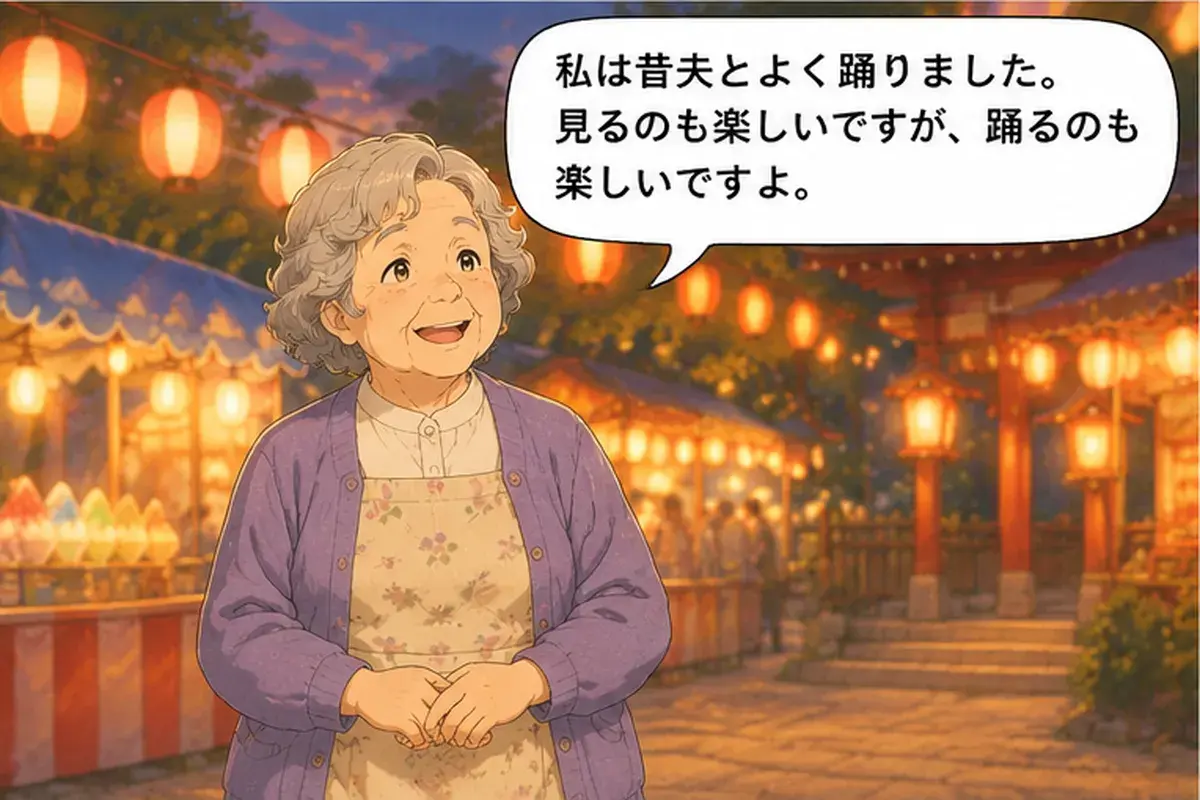
- 田中
私は昔夫とよく踊りました。見るのも楽しいですが、踊るのも楽しいですよ。
I used to dance a lot with my husband a long time ago. Watching is fun, but dancing is fun too!
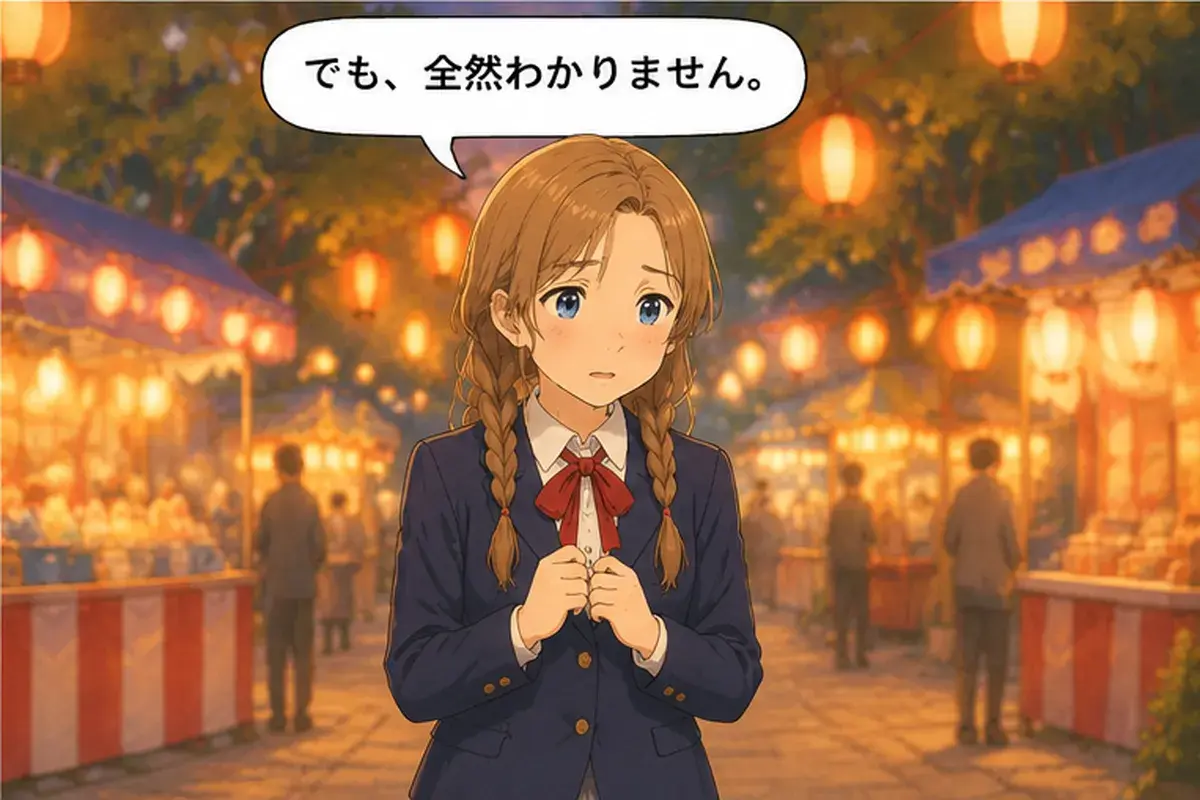
- ソーニャ
でも、全然わかりません。
But I don't get it at all.
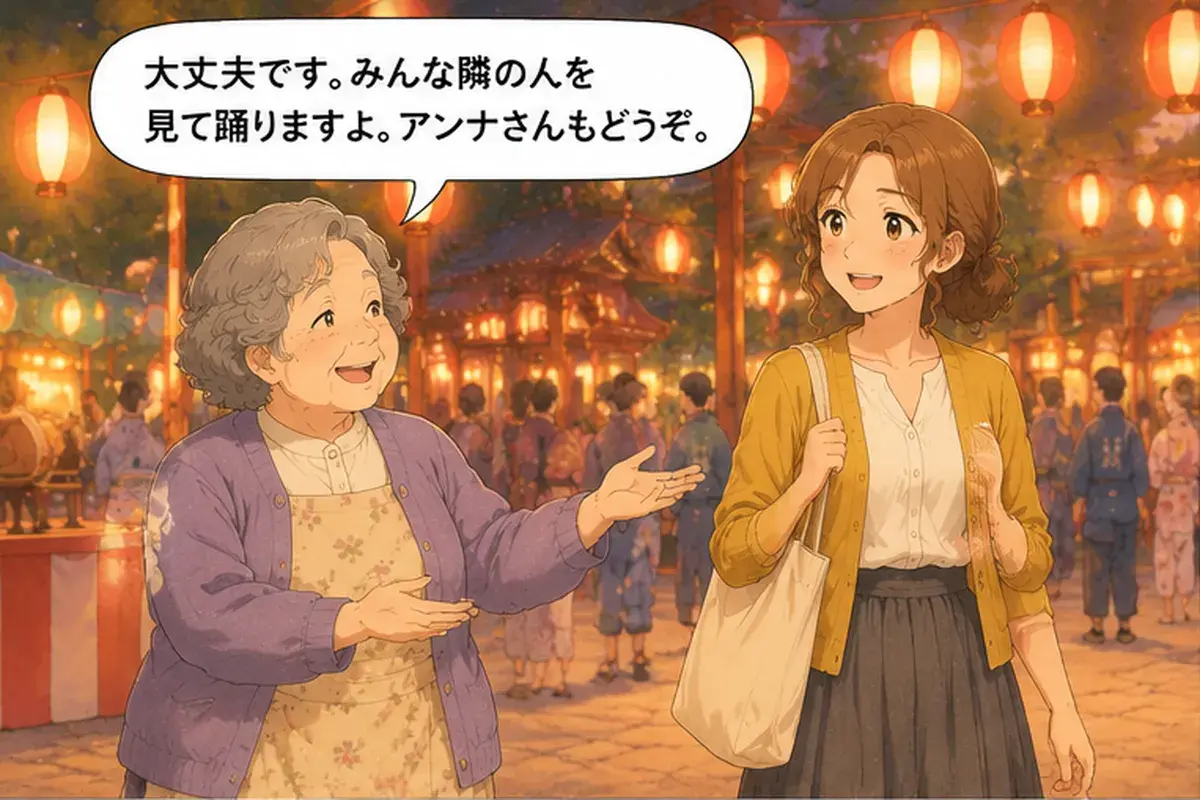
- 田中
大丈夫です。みんな隣の人を見て踊りますよ。アンナさんもどうぞ。
It's all right. Everyone dances watching the person next to them. Anna-san, please join us too.
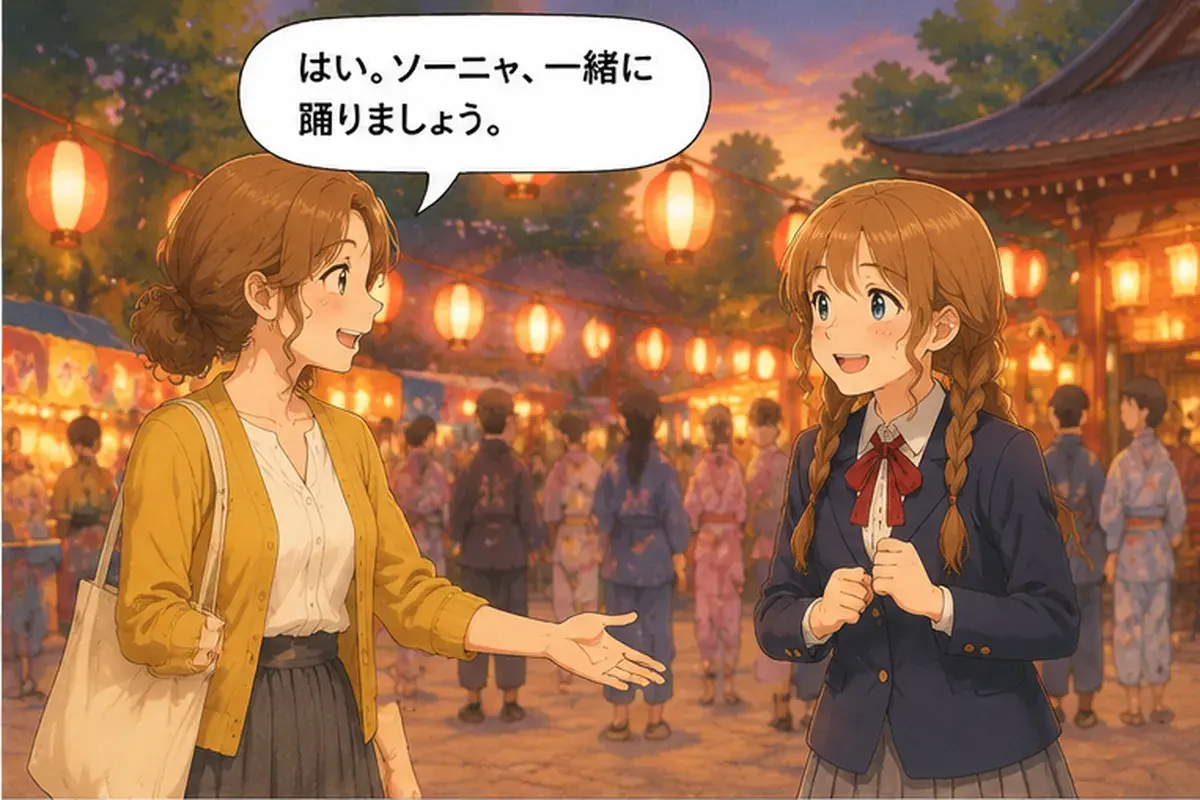
- アンナ
はい。ソーニャ、一緒に踊りましょう。
Yes. Sonya, let's dance together.
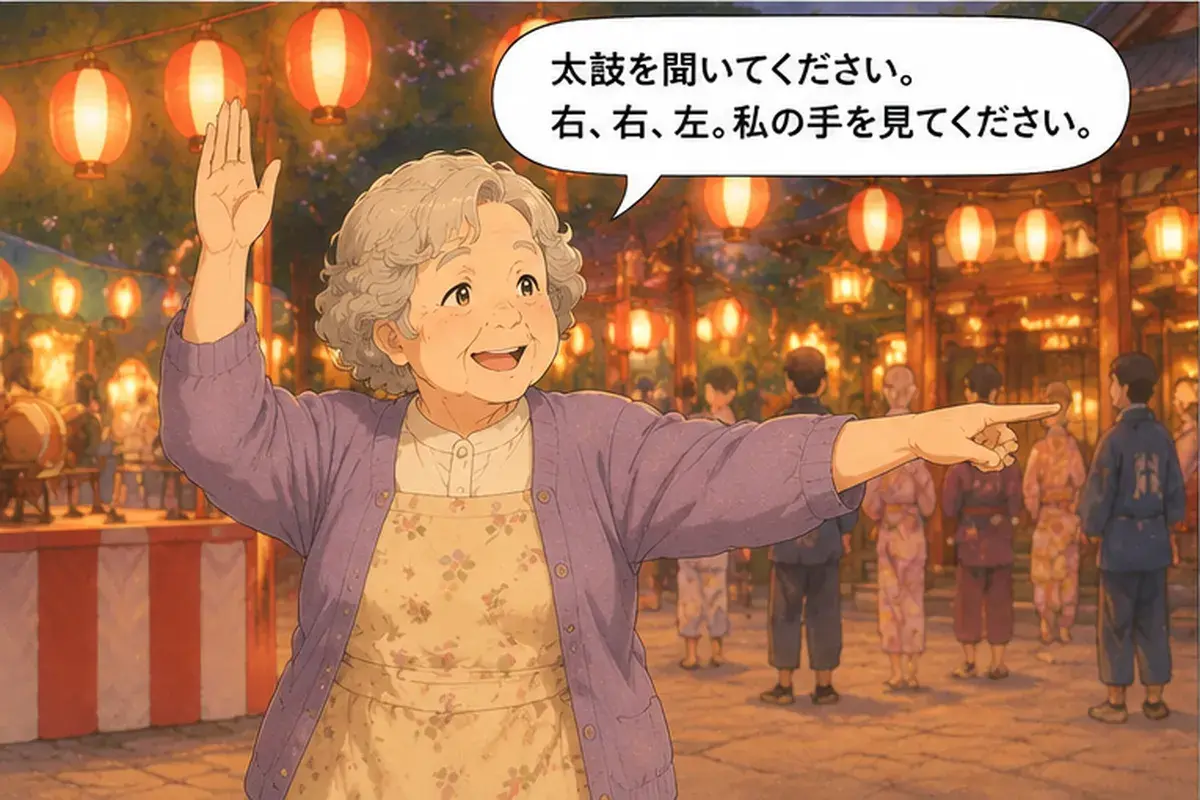
- 田中
太鼓を聞いてください。右、右、左。私の手を見てください。
Listen to the taiko drum. Right, right, left. Watch my hands.
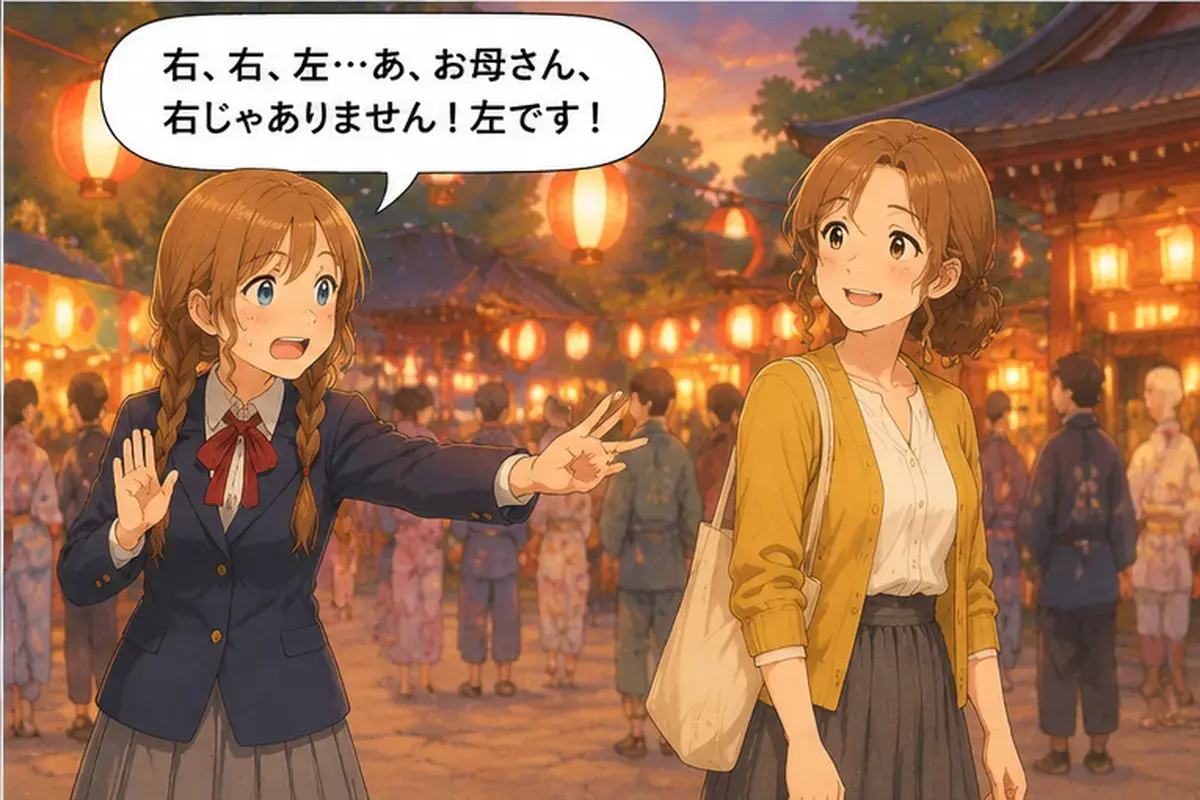
- ソーニャ
右、右、左…あ、お母さん、右じゃありません!左です!
Right, right, left... Oh, Mom, it's not the right one! It's the left!
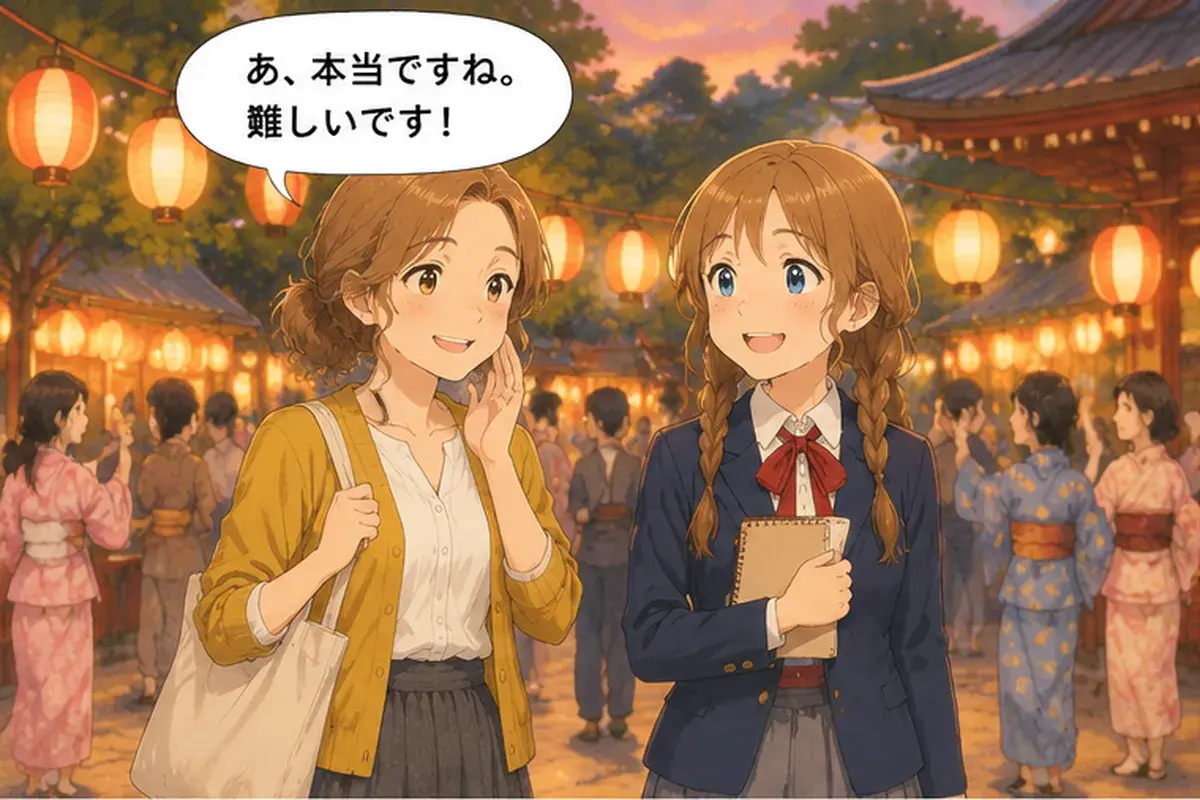
- アンナ
あ、本当ですね。難しいです!
Oh, you're right. This is hard!
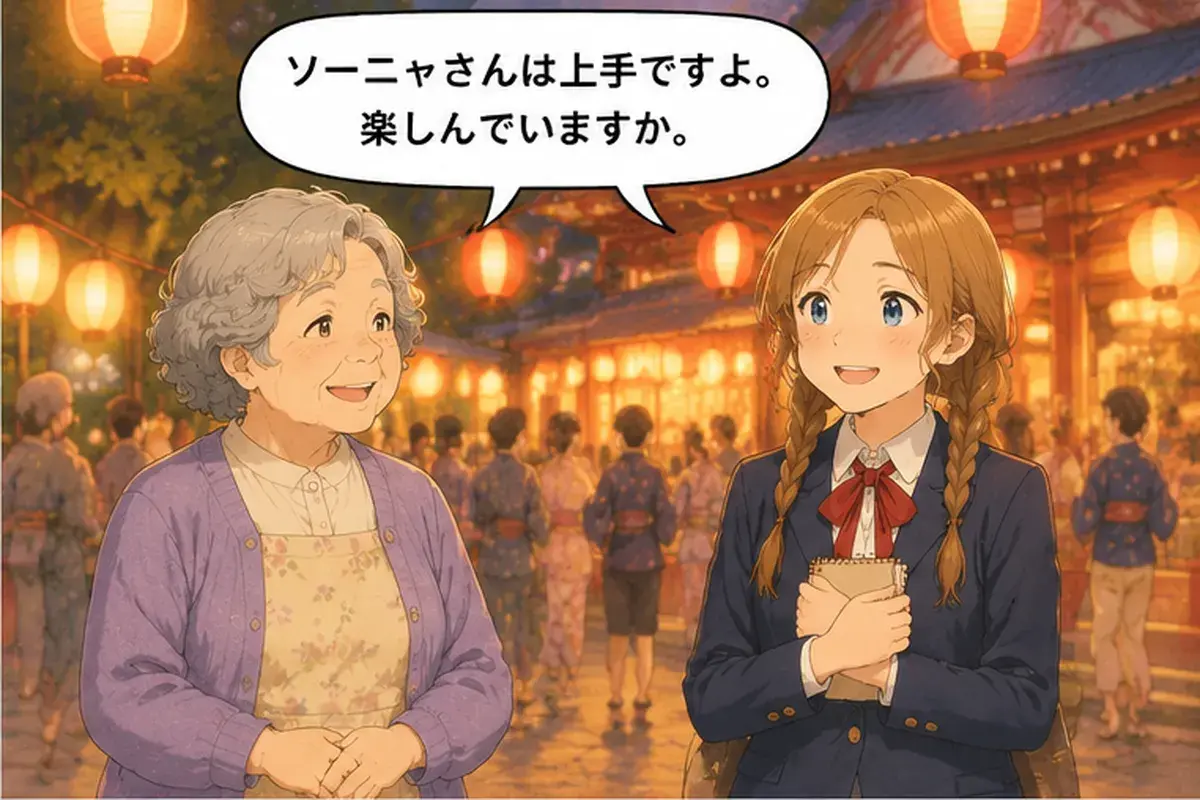
- 田中
ソーニャさんは上手ですよ。楽しんでいますか。
Sonya-san, you're good! Are you enjoying yourself?
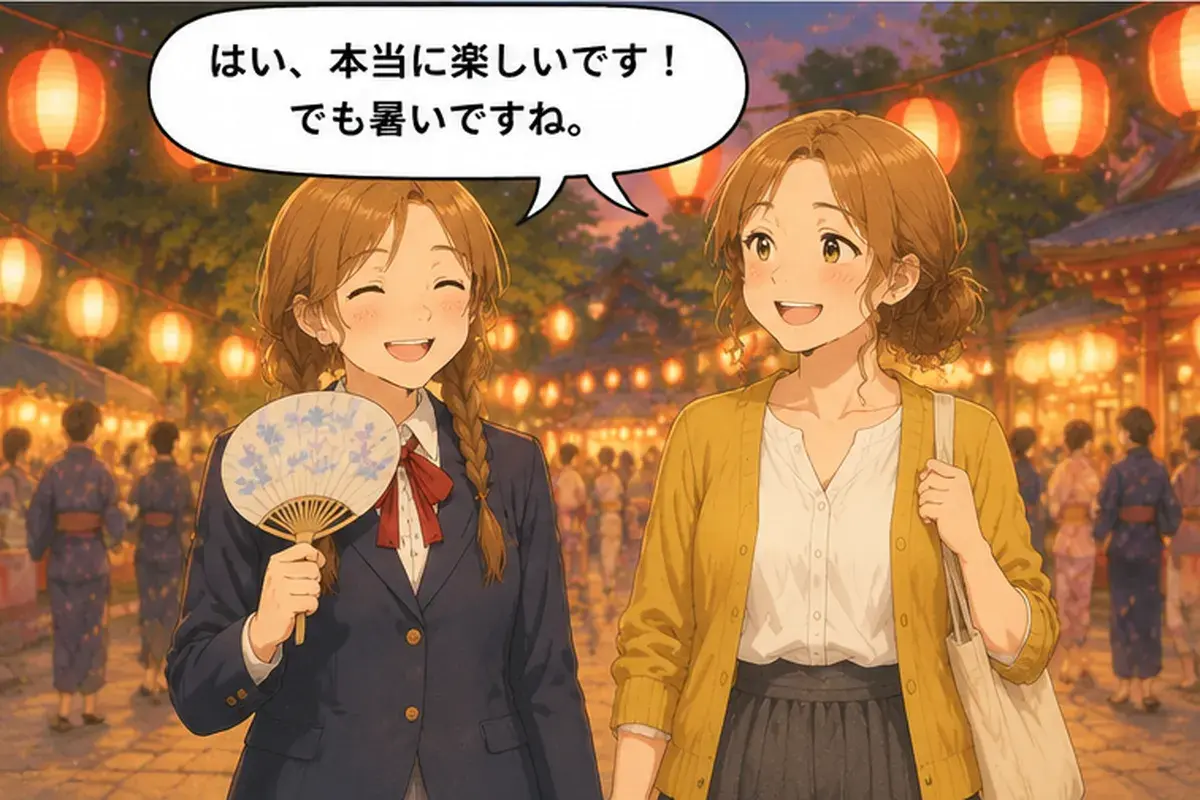
- ソーニャ
はい、本当に楽しいです!でも暑いですね。
Yes, it's really fun! But it's hot.
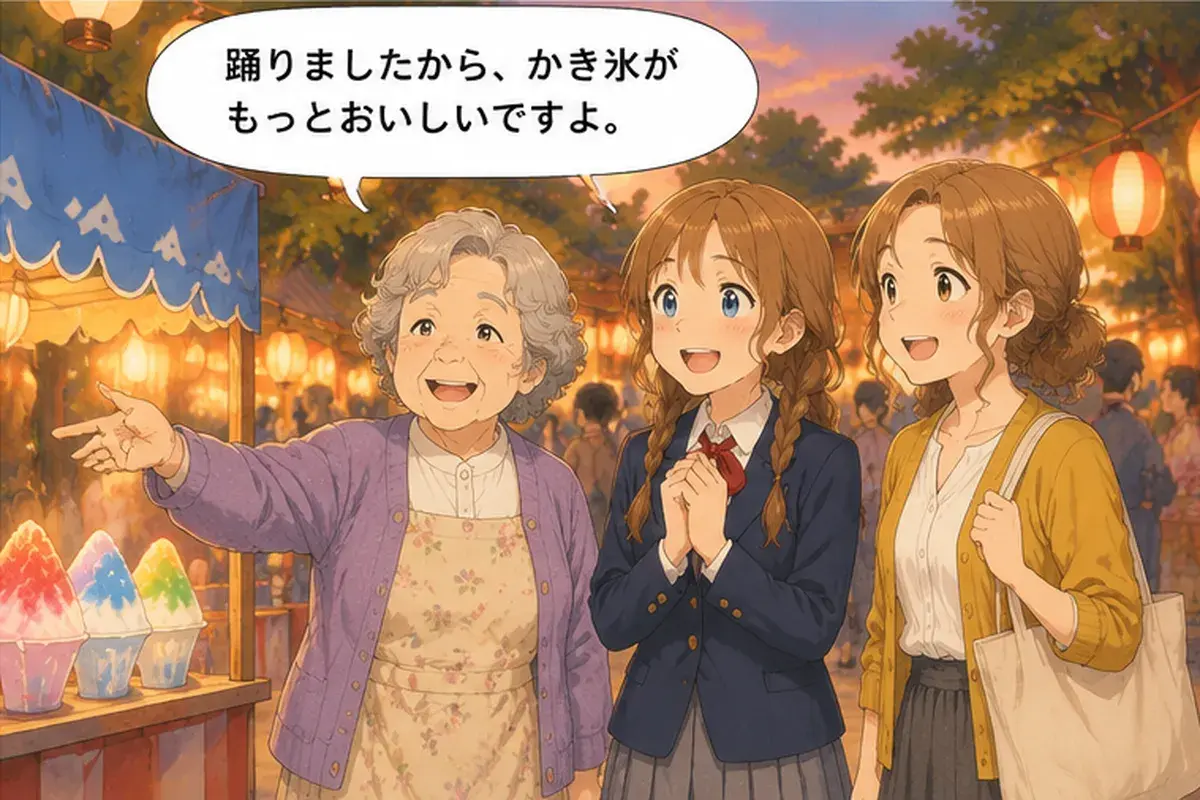
- 田中
踊りましたから、かき氷がもっとおいしいですよ。
Since we danced, the shaved ice will be even tastier!
Grammar for this text
盆踊り を 踊る こと が できます か— Can you dance the Bon dance? Beforeことcomes the dictionary form踊る, not踊ります:ことturns the verb into a noun ("dancing"), andが できますmeans "can". The full rule is in the unit grammar.踊る の が 苦手 です が、 見る の は 大好き です— I'm not good at dancing, but I love watching.のafter the dictionary form also turns a verb into a noun.苦手doesn't mean "bad", it means "not my thing". The lastがmeans "but". After見る の, the particleはsets two things against each other: dancing, no; watching, yes.暑い 日 は 特に かき氷 が おいしい です— On a hot day, shaved ice is especially good.特にmeans "especially" and stands right before the thing you single out.昔 夫 と よく 踊りました— I used to dance a lot with my husband a long time ago.昔means "a long time ago",夫is how you talk about your own husband, andとmeans "with".みんな 隣 の 人 を 見て 踊ります— Everyone dances watching the person next to them. With見て 踊りますtwo actions go together: "watching, they dance".楽しんで います か— Are you enjoying yourself?楽しむis a verb meaning "to enjoy", and楽しんで いますmeans "(right now) you're enjoying" (むbecomesんで, like飲むand飲んで). Don't mix it up with楽しい, which means "fun".踊りました から、 かき氷 が もっと おいしい です よ— Since we danced, the shaved ice will be even tastier!からafter a past verb means "since / because". Tanaka-san is thinking of the shaved ice: they never got to eat it, because the dance started.
Words and grammar of the unit: Talk about what you can do.
Learn the words from the texts with flashcards
In the app, you can tap any word in a text to see its translation, forms and examples, and new words stick with flashcards. 15 minutes a day.
Start for freeEverything is open for free. No card needed to sign up.