
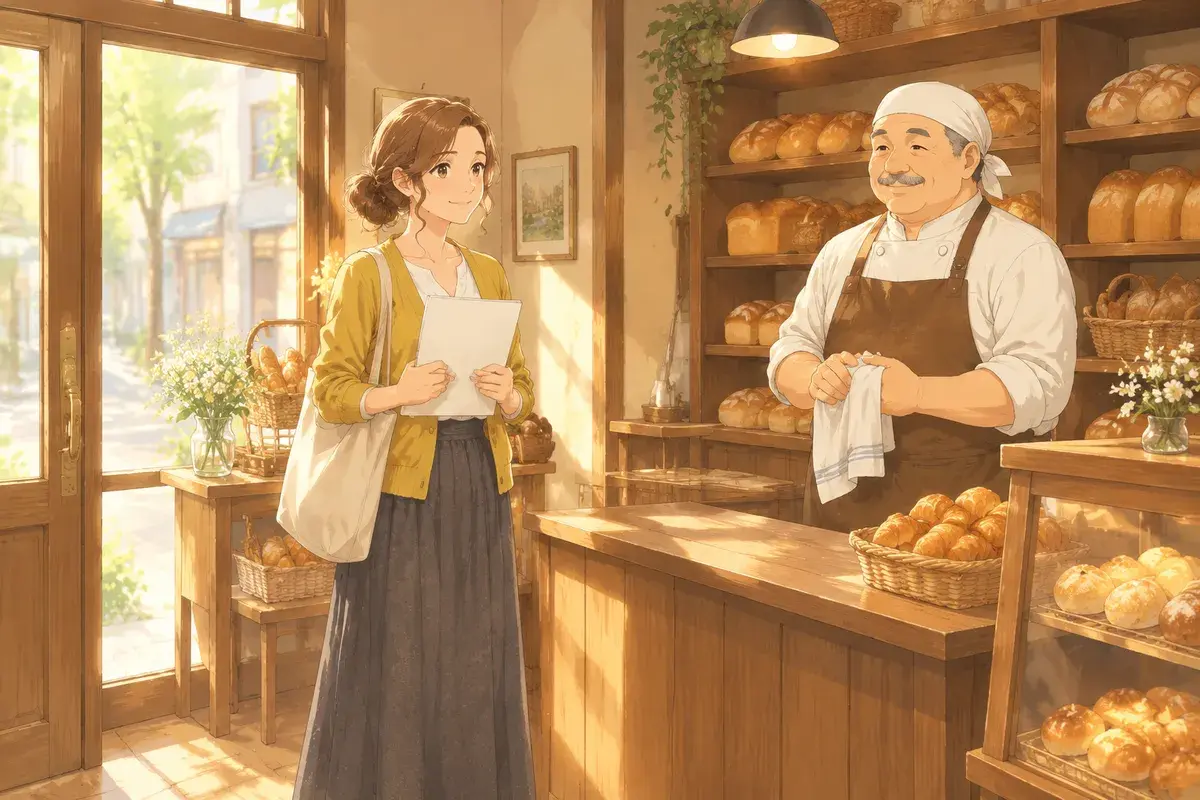
Japanese dialogue with translation · A2 · 16 lines
ここで働かせてください Please let me work here
Comic · 13 panels
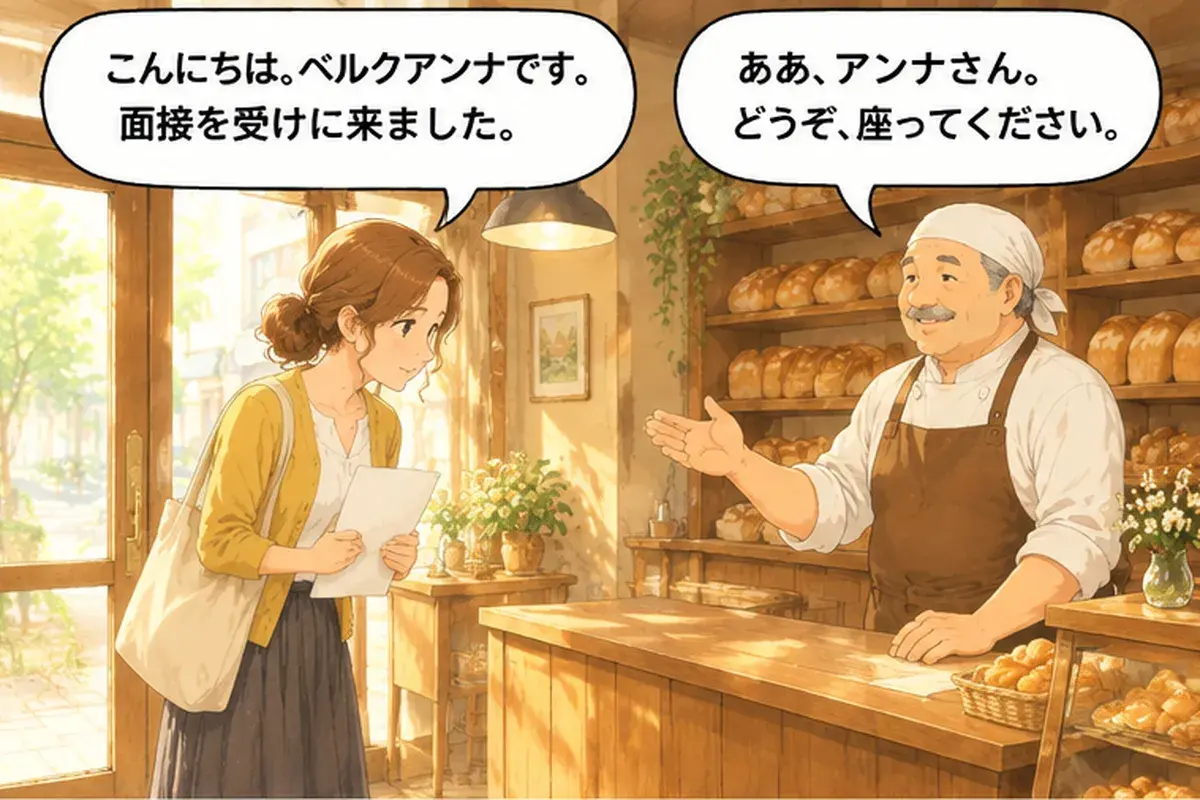
- アンナ
こんにちは。ベルクアンナです。面接を受けに来ました。
Hello. I'm Anna Berg. I came for my interview.
- 小林
ああ、アンナさん。どうぞ、座ってください。
Ah, Anna-san. Please, have a seat.
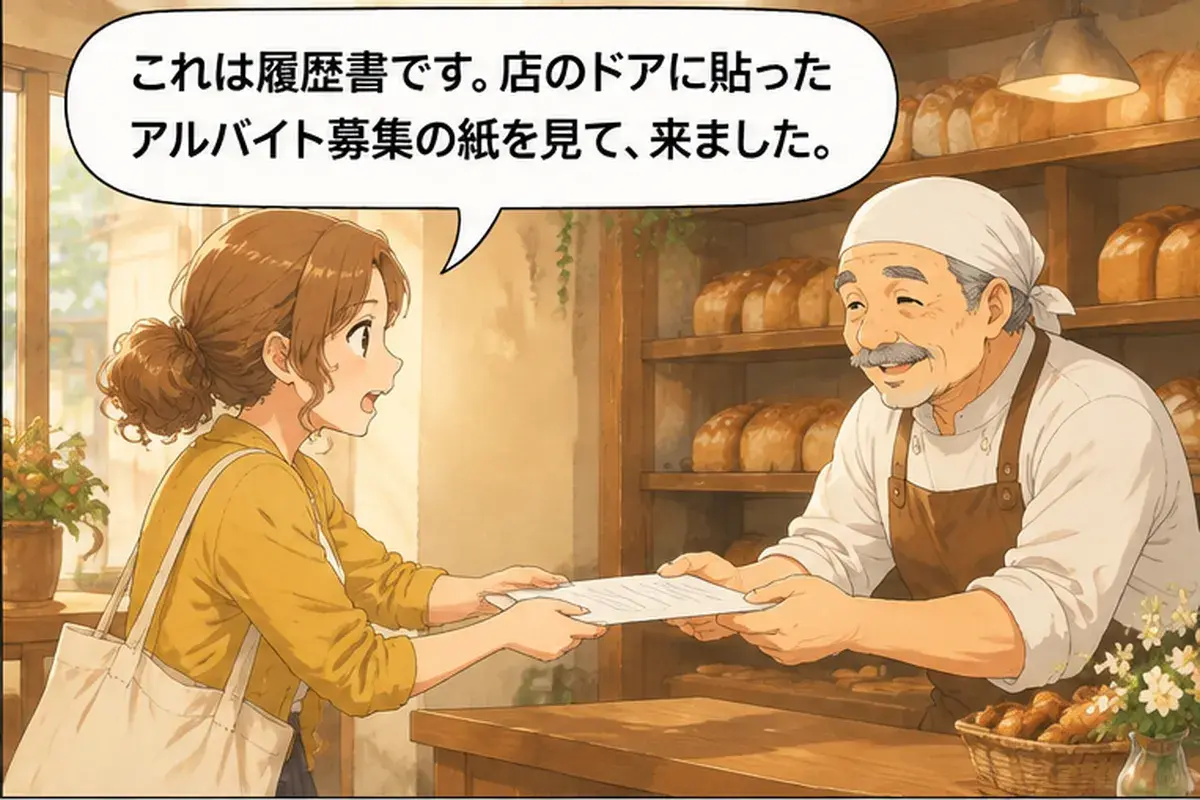
- アンナ
これは履歴書です。店のドアに貼ったアルバイト募集の紙を見て、来ました。
This is my resume. I saw the part-time help wanted notice you put up on the store door, so I came.
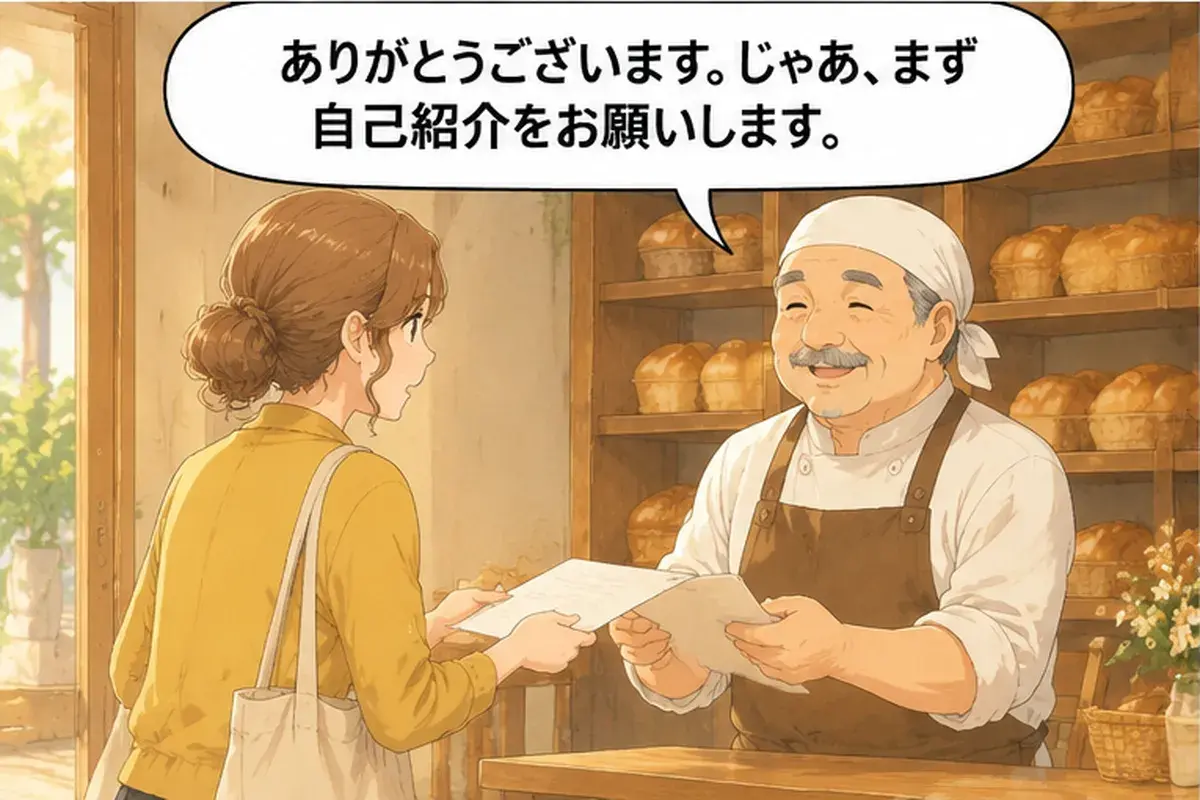
- 小林
ありがとうございます。じゃあ、まず自己紹介をお願いします。
Thank you. Well then, first please introduce yourself.
- アンナ
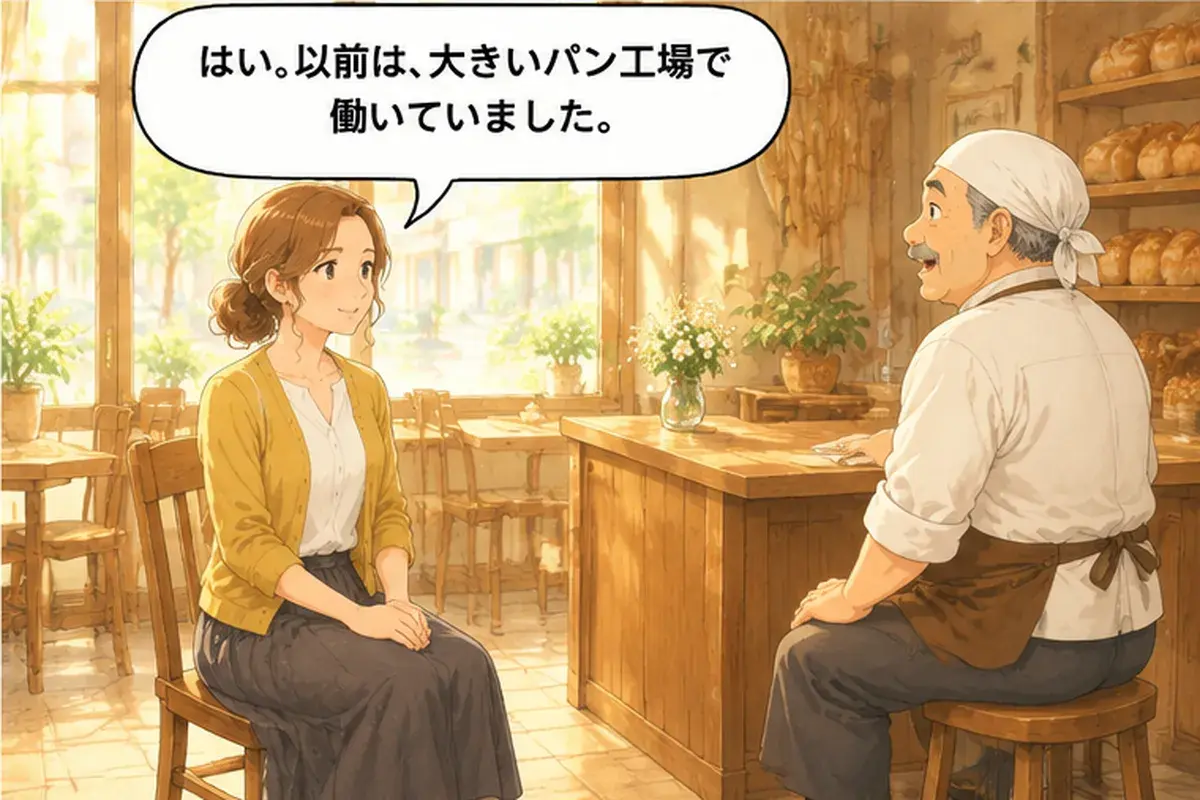
はい。以前は、大きいパン工場で働いていました。
Yes. I used to work at a big bread factory.
- 小林
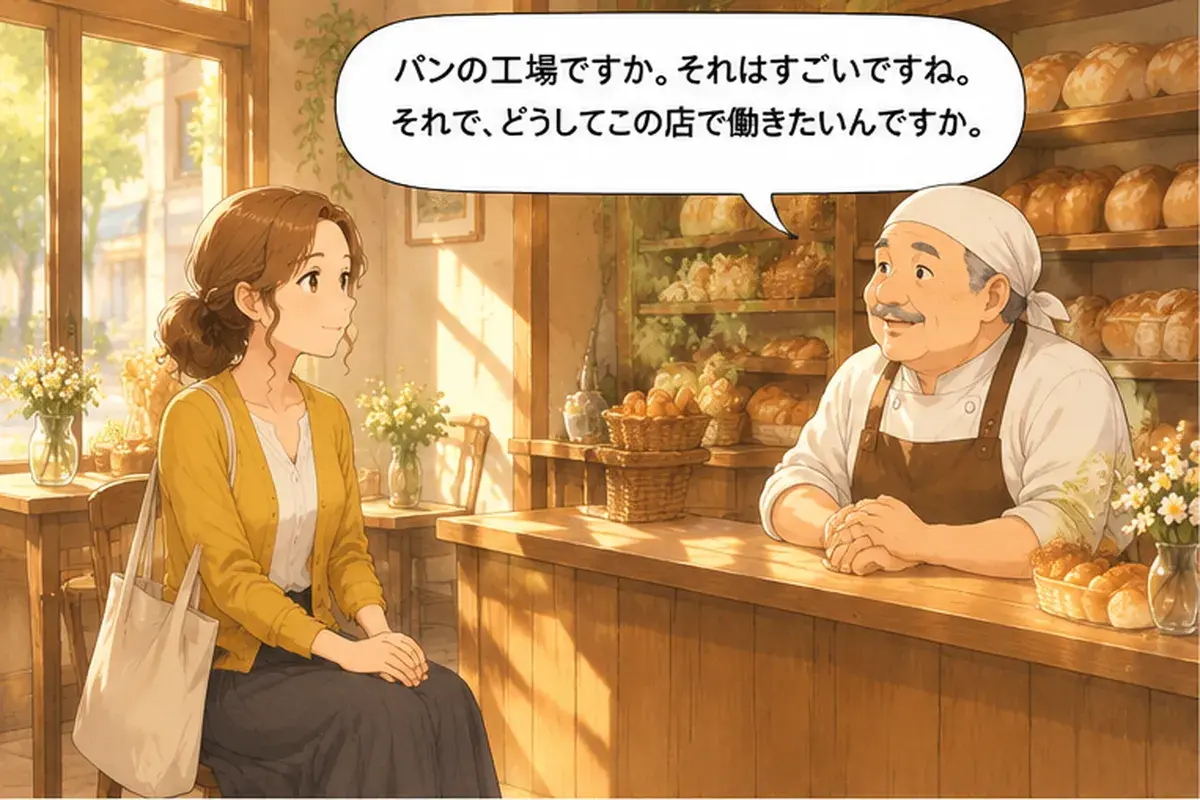
パンの工場ですか。それはすごいですね。それで、どうしてこの店で働きたいんですか。
A bread factory? That's impressive. So, why do you want to work at this store?
- アンナ
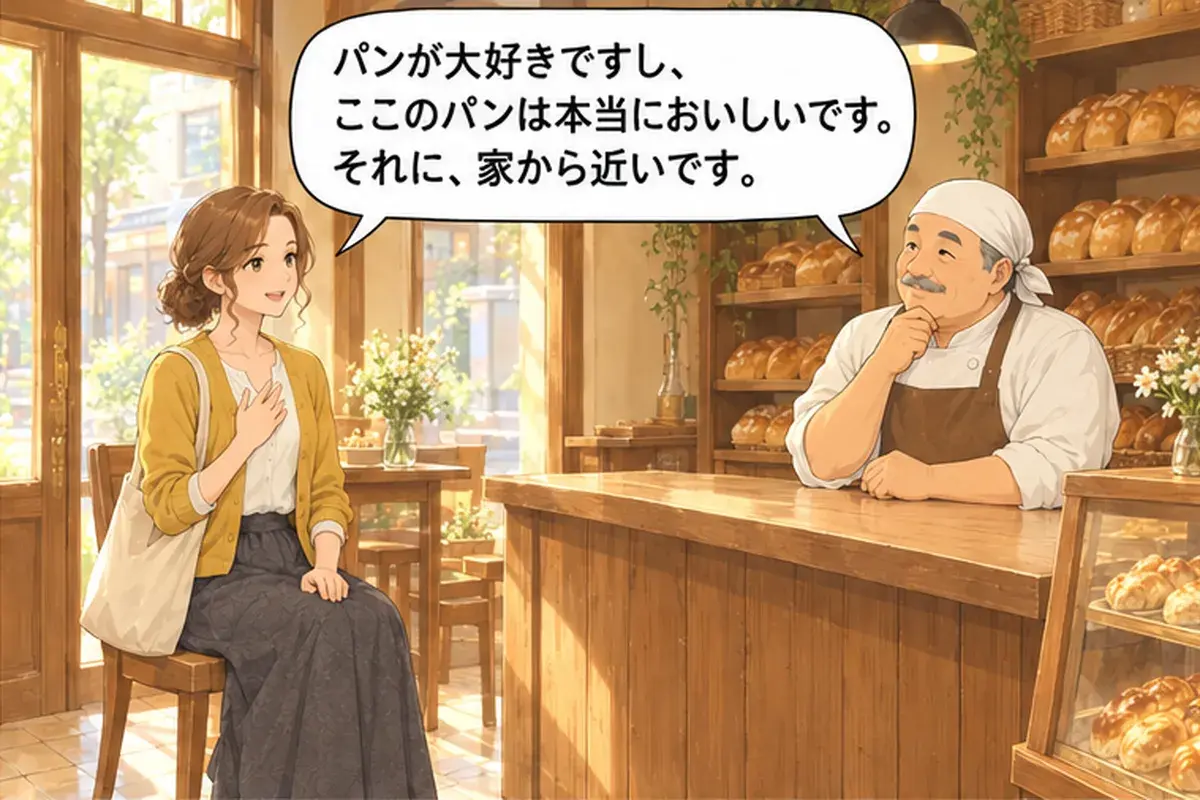
パンが大好きですし、ここのパンは本当においしいです。それに、家から近いです。
I love bread, and the bread here is really good. Besides, it's close to my house.
- 小林
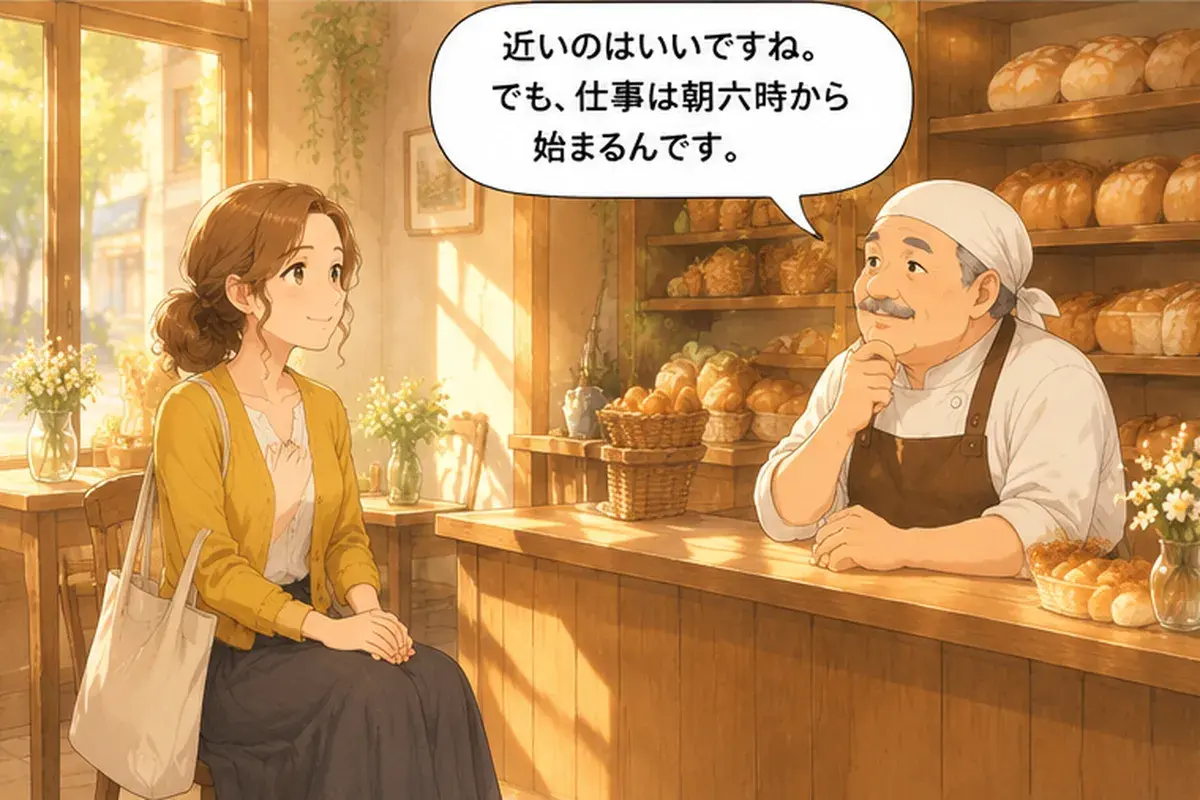
近いのはいいですね。でも、仕事は朝六時から始まるんです。
It's good that it's close. But the thing is, work starts at six in the morning.
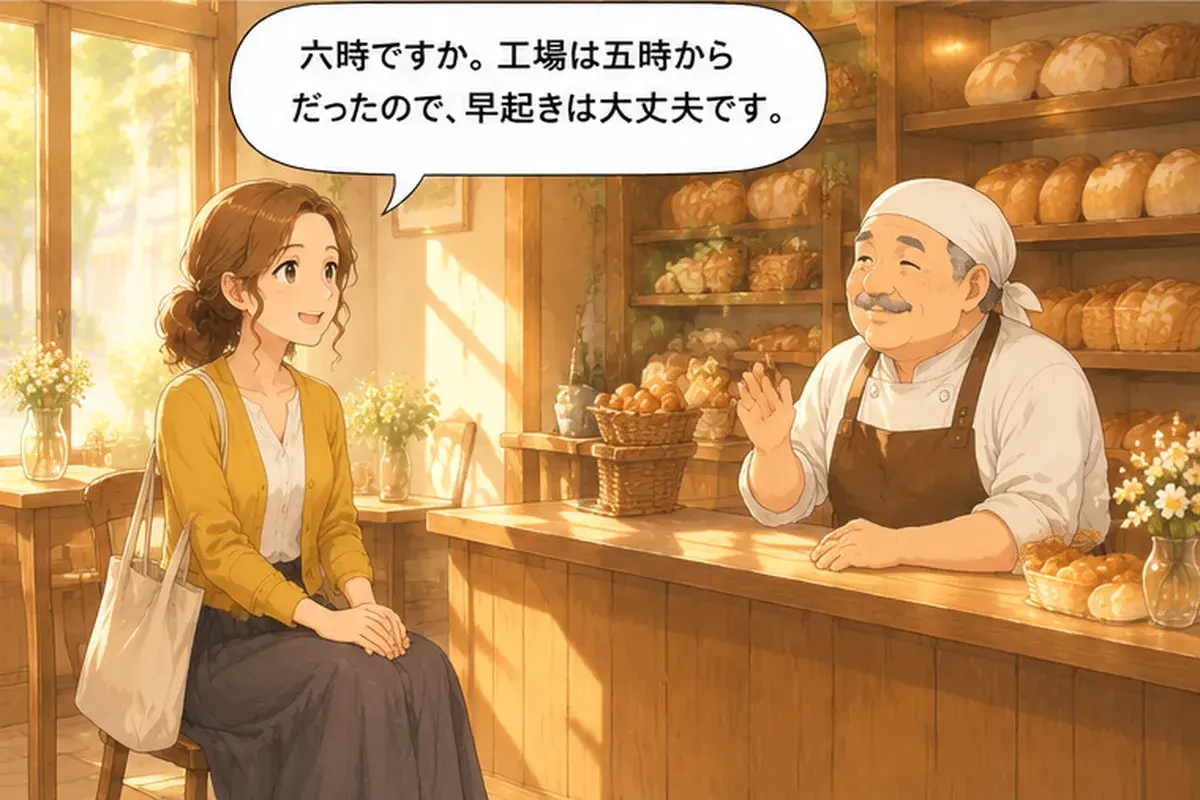
- アンナ
六時ですか。工場は五時からだったので、早起きは大丈夫です。
Six? The factory started at five, so getting up early is no problem.
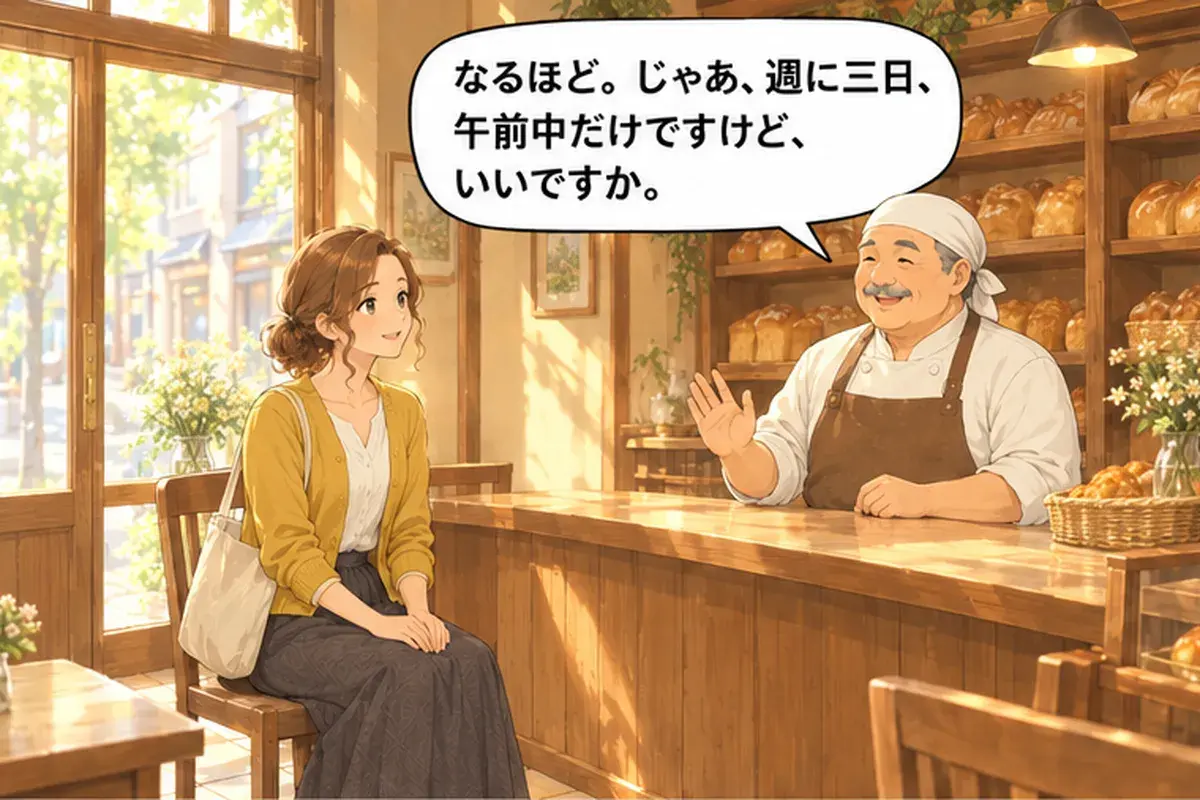
- 小林
なるほど。じゃあ、週に三日、午前中だけですけど、いいですか。
I see. Well then, it's three days a week, mornings only, but is that OK?
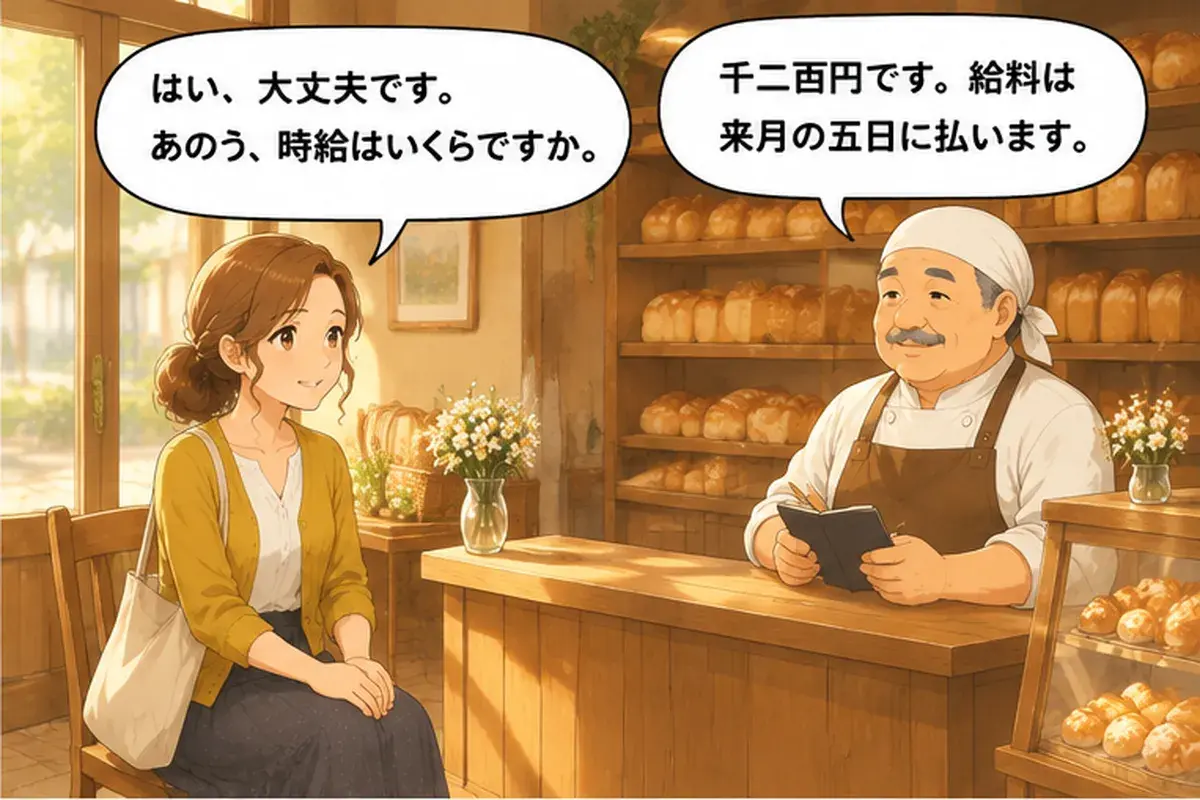
- アンナ
はい、大丈夫です。あのう、時給はいくらですか。
Yes, that's fine. Um, what's the hourly wage?
- 小林
千二百円です。給料は来月の五日に払います。
1,200 yen. We pay the salary on the fifth of next month.
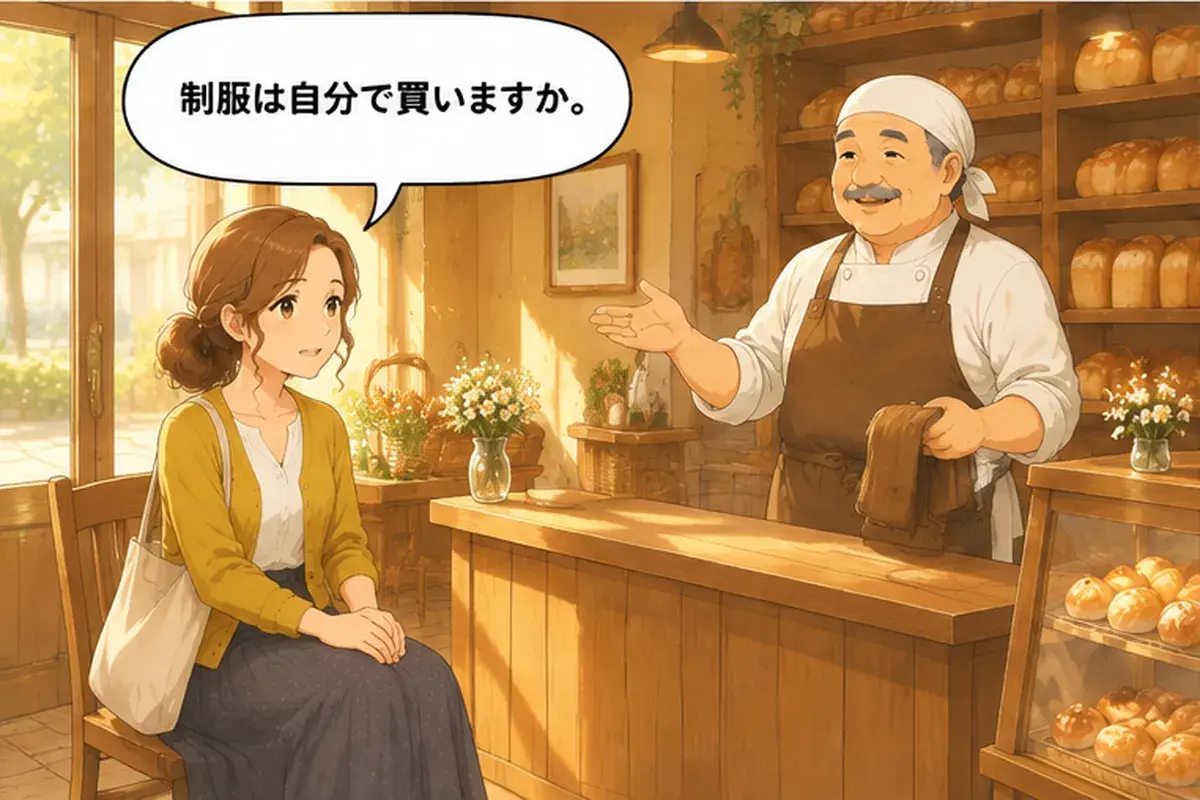
- アンナ
制服は自分で買いますか。
Do I buy the uniform myself?
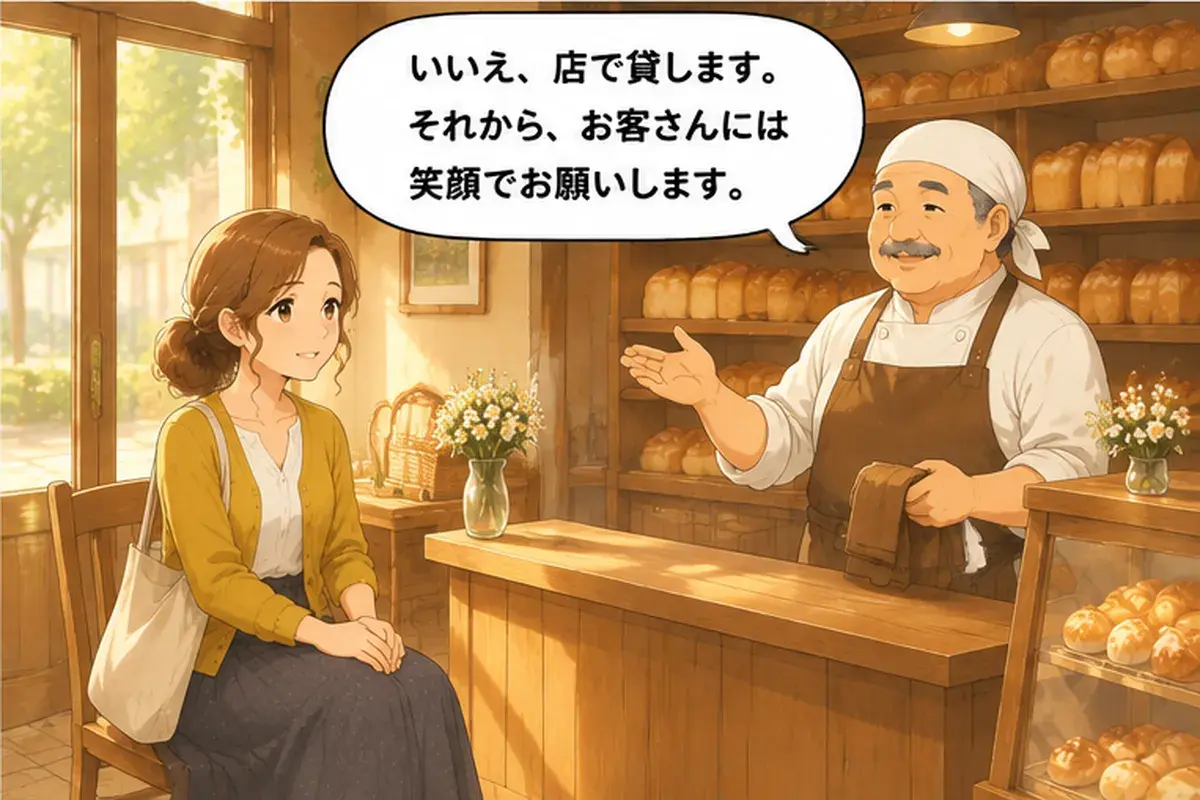
- 小林
いいえ、店で貸します。それから、お客さんには笑顔でお願いします。
No, the store lends them. And with customers, a smile, please.
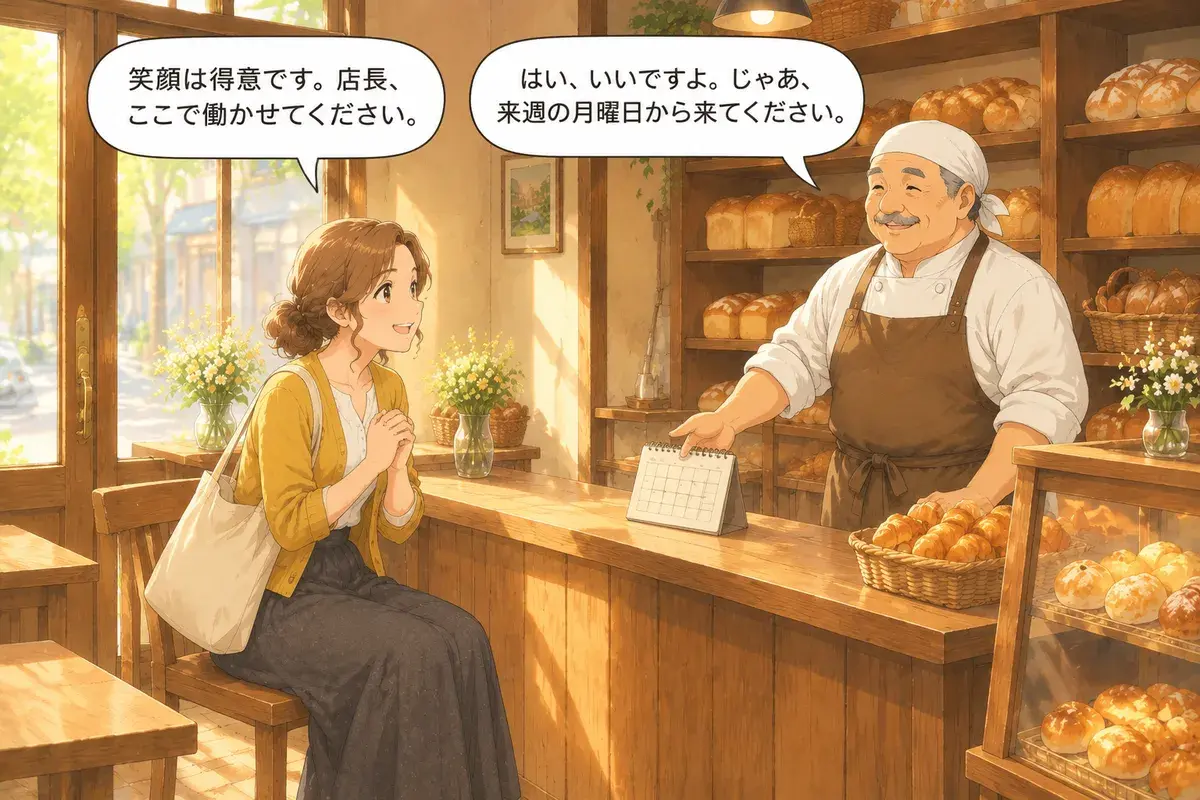
- アンナ
笑顔は得意です。店長、ここで働かせてください。
I'm good at smiling. Store manager, please let me work here.
- 小林
はい、いいですよ。じゃあ、来週の月曜日から来てください。
Yes, that's fine. Then please start coming in next Monday.
Grammar for this text
面接 を 受け に 来ました— I came for my interview. Here受けるmeans "to take": in Japanese you "receive" an interview the way English "takes" a test.受け に 来ましたmeans "came in order to": verb stem +に, like見 に 行きます(A1, unit 18).ベルク アンナ です— I'm Anna Berg. At an interview you give your family name too, and in Japanese it comes first: "Berg Anna". Kobayashi has known Anna for a while, so he answers simply withアンナ さん.ドア に 貼った アルバイト 募集 の 紙— the notice for part-time help that you put up on the door.ドア に 貼った("that was stuck on the door") comes before紙and tells you which paper. In English this part comes after the noun.アルバイト 募集means "part-time help wanted"; it is what notices say.近い の は いい です ね— It's good that it's close. Hereのstands in for a word: "the thing that is close".朝 六時 から 始まる ん です— Work starts at six in the morning, you see. Hereん ですis a warning: "keep in mind, the thing is...".工場 は 五時 から だった ので— Since it started at five at the factory.だったis the plain form ofです, and beforeのでyou use exactly this, notでした.笑顔 で お願いします— With a smile, please.でshows how to do something: "with a smile".お願いしますis a polite request here: "please smile".店長、ここ で 働かせて ください— Store manager, please let me work here.店長means "store manager": in a small bakery it is the person in charge, and Anna addresses Kobayashi by his title.働かせて くださいis a set phrase: "please let me work here". It is not働いて ください("please work for me"): the learner asks for permission. The grammar block of the unit explains how the phrase is built.
Words and grammar of the unit: Get through a part-time job interview.
Learn the words from the texts with flashcards
In the app, you can tap any word in a text to see its translation, forms and examples, and new words stick with flashcards. 15 minutes a day.
Start for freeEverything is open for free. No card needed to sign up.