
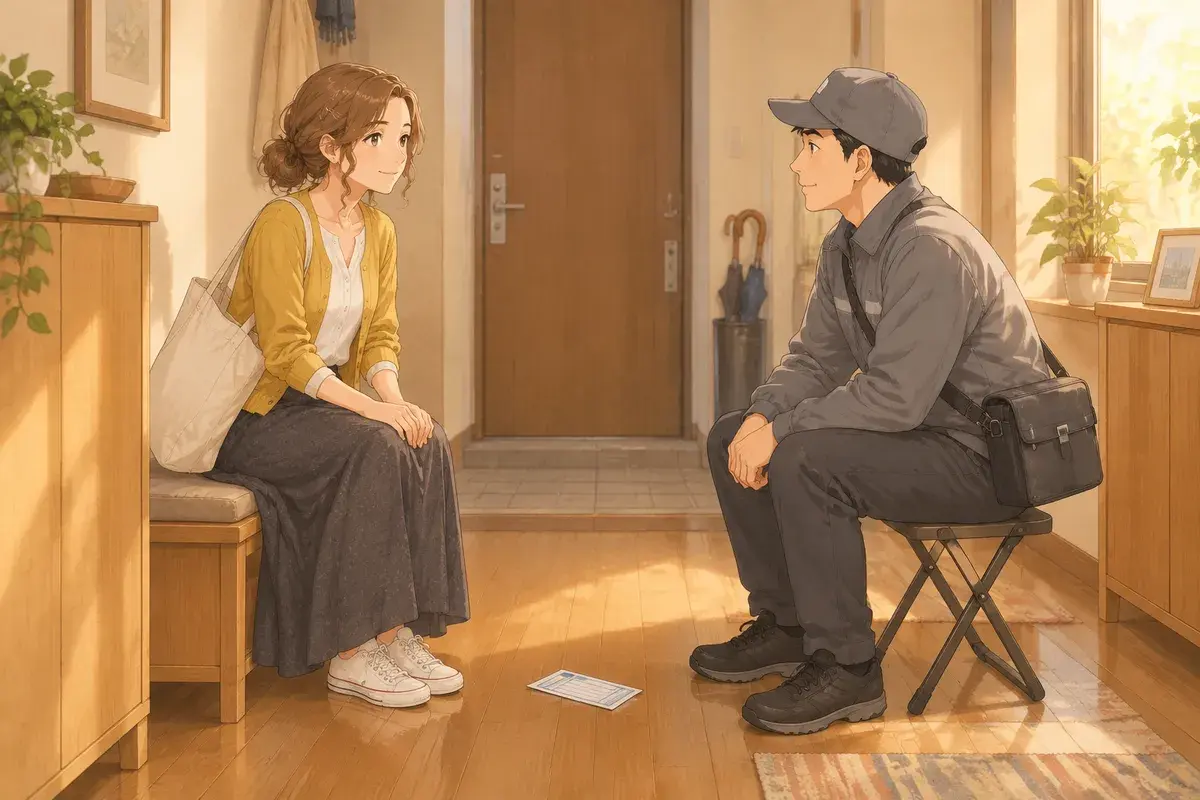
Japanese dialogue with translation · A2 · 12 lines
インターホンに出ませんでした I didn't answer the intercom
Comic · 11 panels
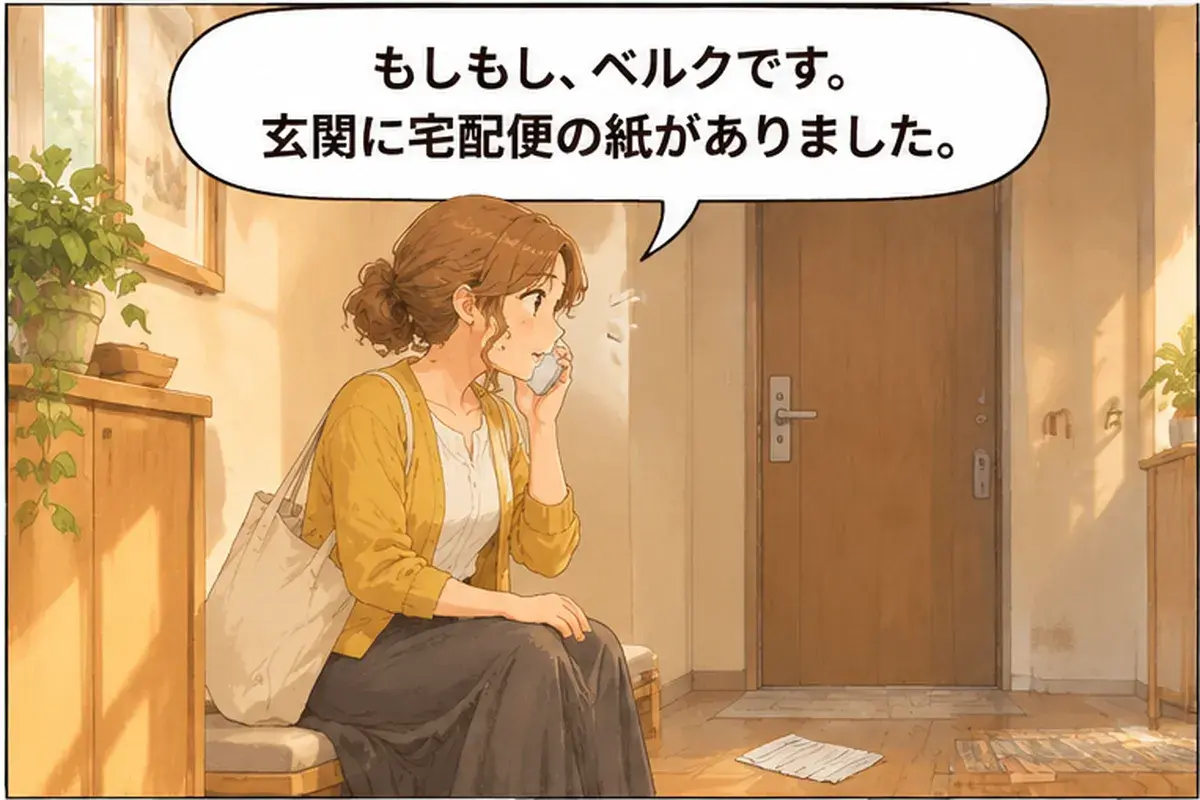
- アンナ
もしもし、ベルクです。玄関に宅配便の紙がありました。
Hello, this is Berg. There was a delivery notice at the entryway.
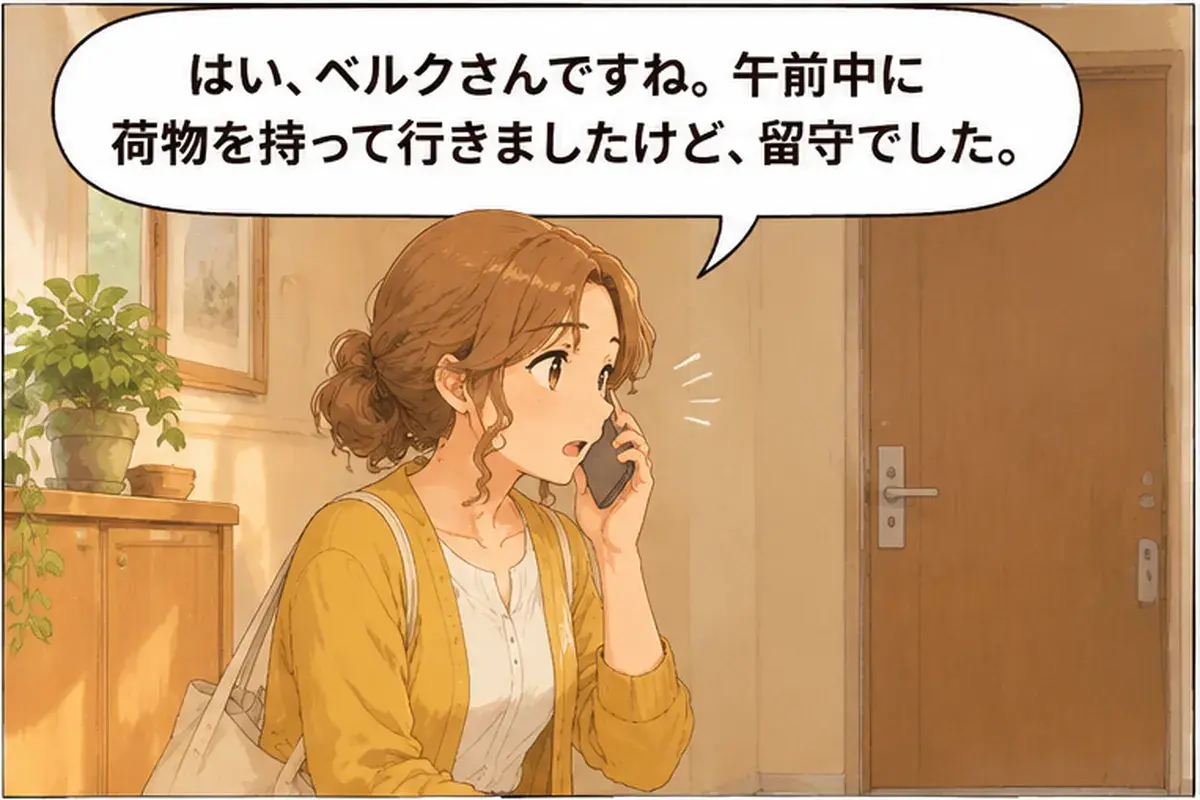
- 配達員
はい、ベルクさんですね。午前中に荷物を持って行きましたけど、留守でした。
Yes, Berg-san, right? I brought a package this morning, but no one was home.
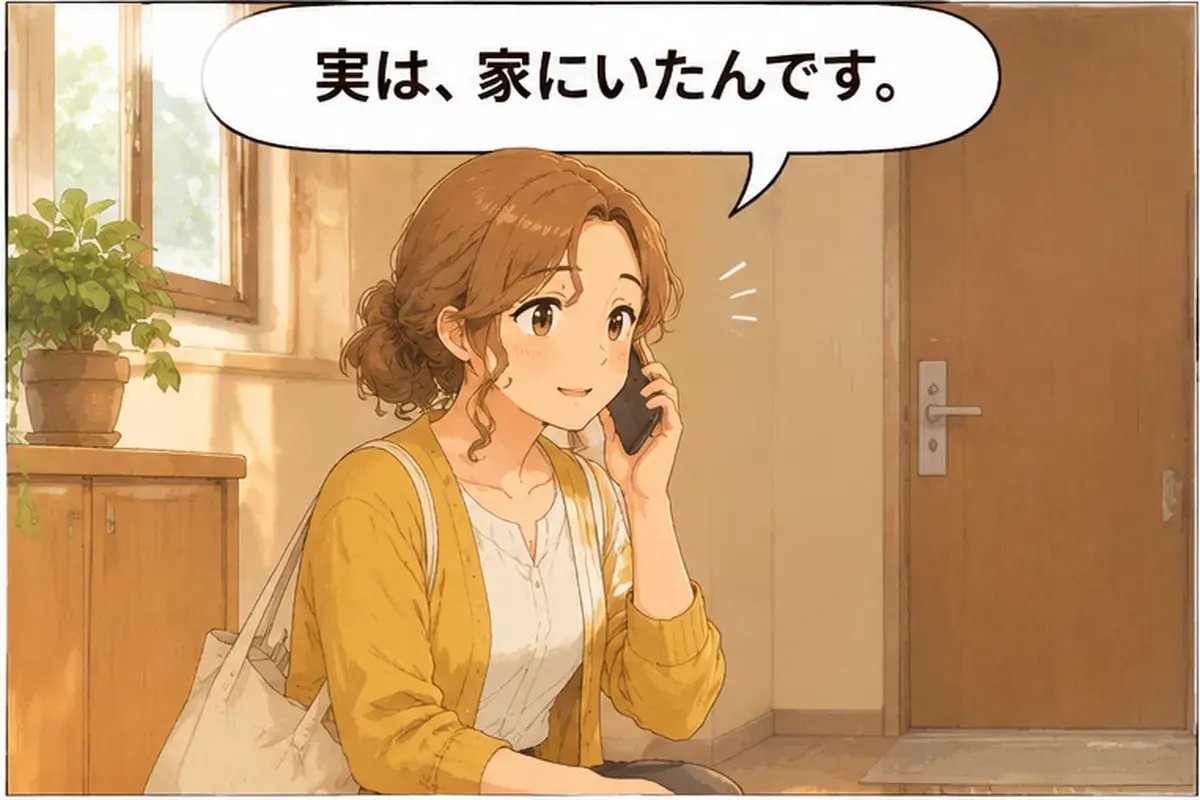
- アンナ
実は、家にいたんです。
Actually, I was home.
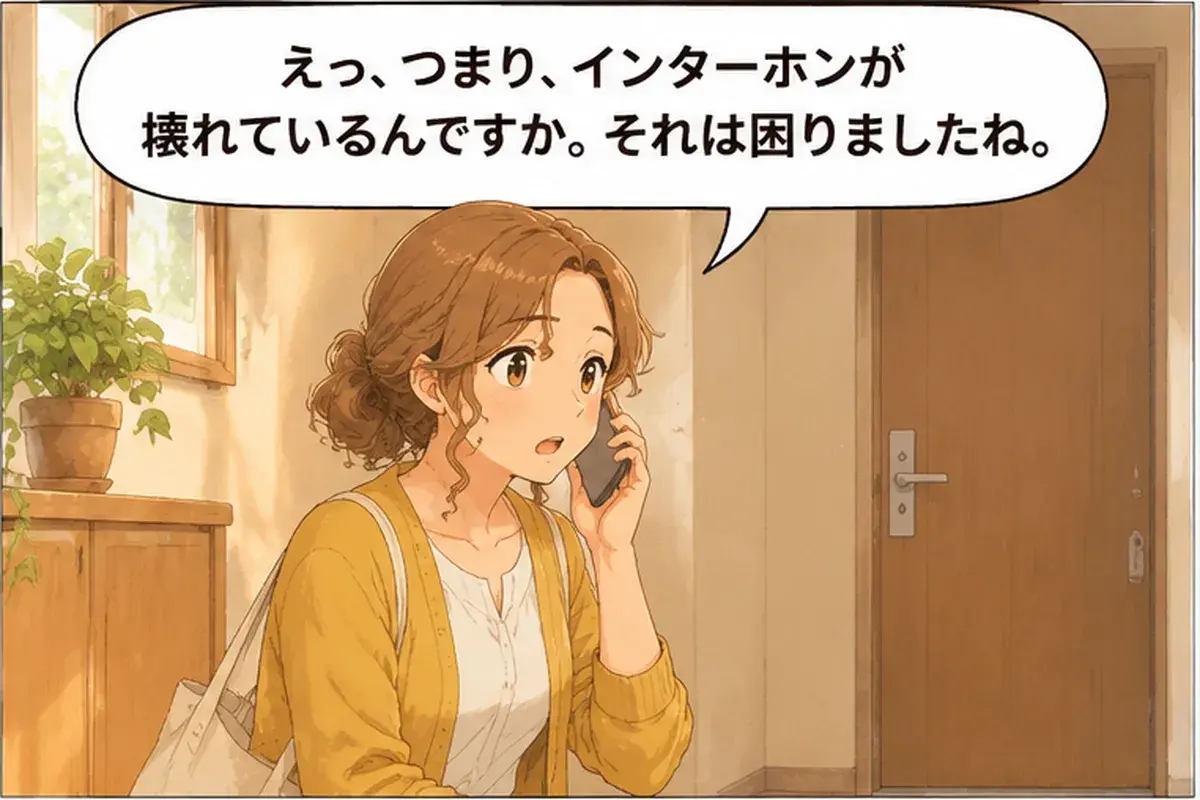
- 配達員
えっ、つまり、インターホンが壊れているんですか。それは困りましたね。
What? So, is your intercom broken? Oh, that's a problem.
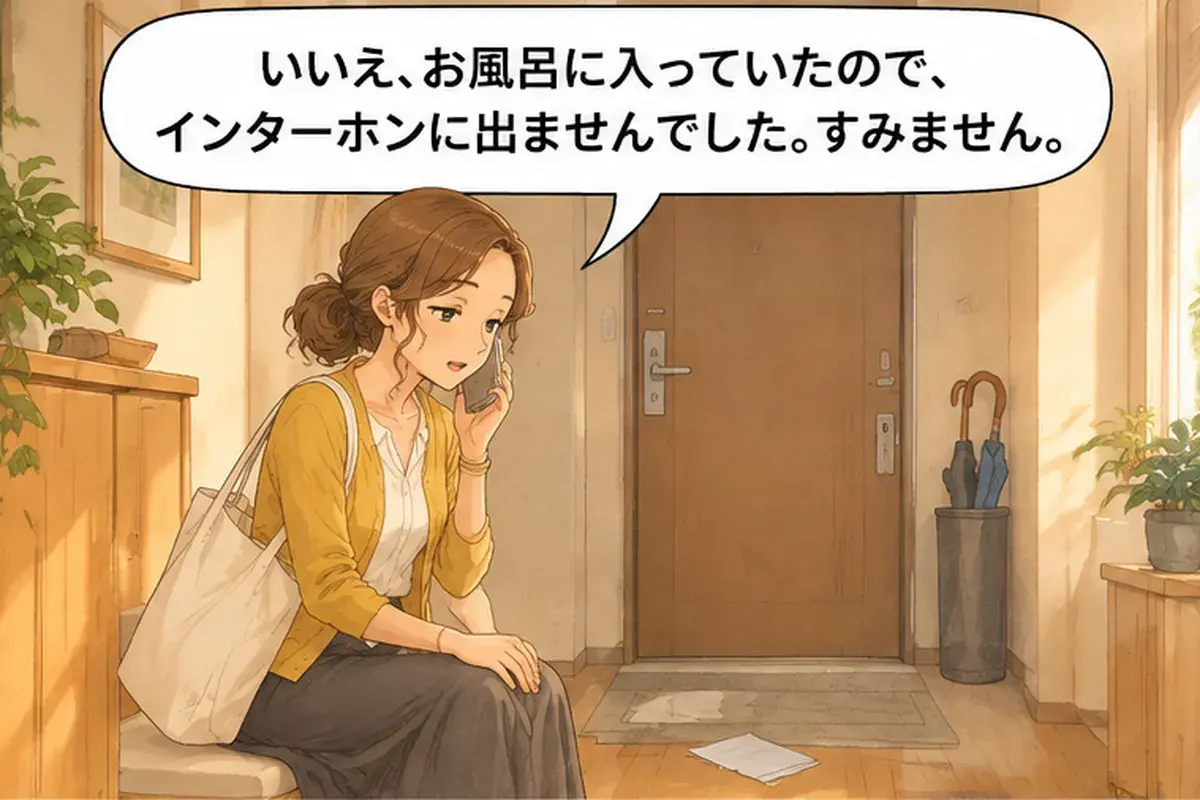
- アンナ
いいえ、お風呂に入っていたので、インターホンに出ませんでした。すみません。
No, I was in the bath, so I didn't answer the intercom. I'm sorry.
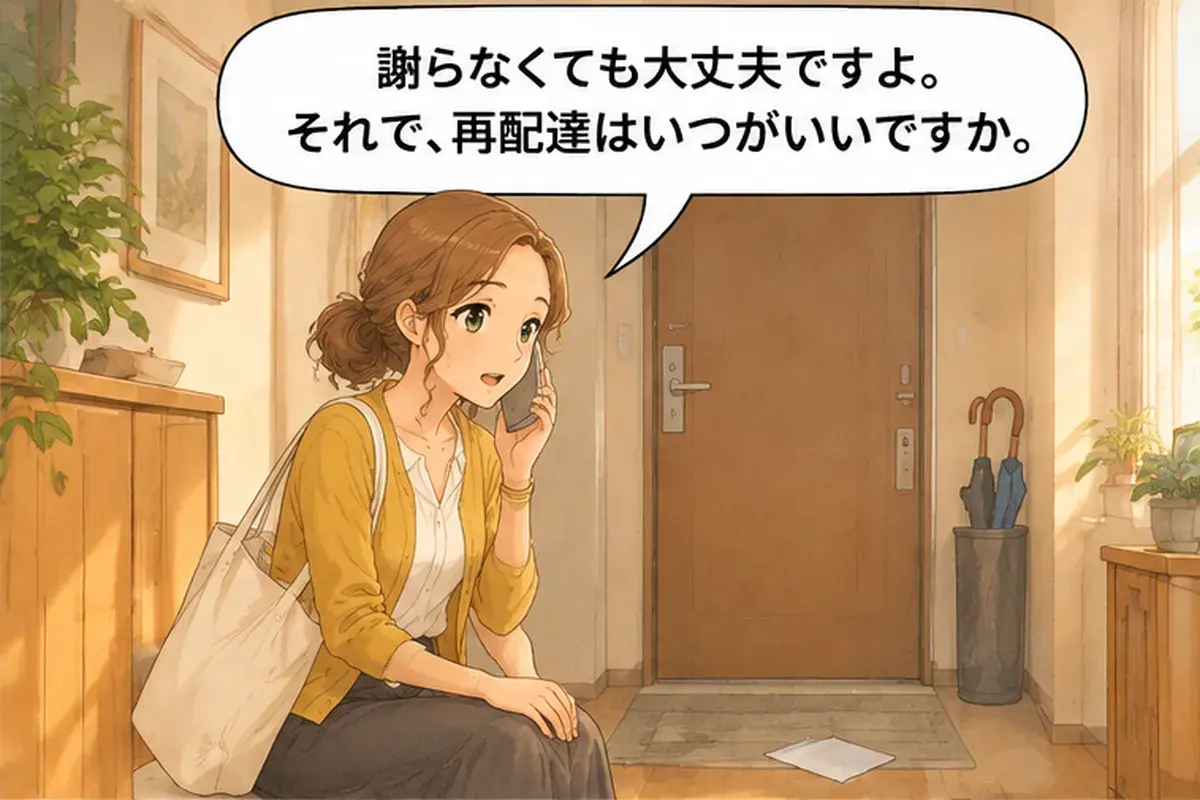
- 配達員
謝らなくても大丈夫ですよ。それで、再配達はいつがいいですか。
You don't have to apologize. So, when would be good for redelivery?
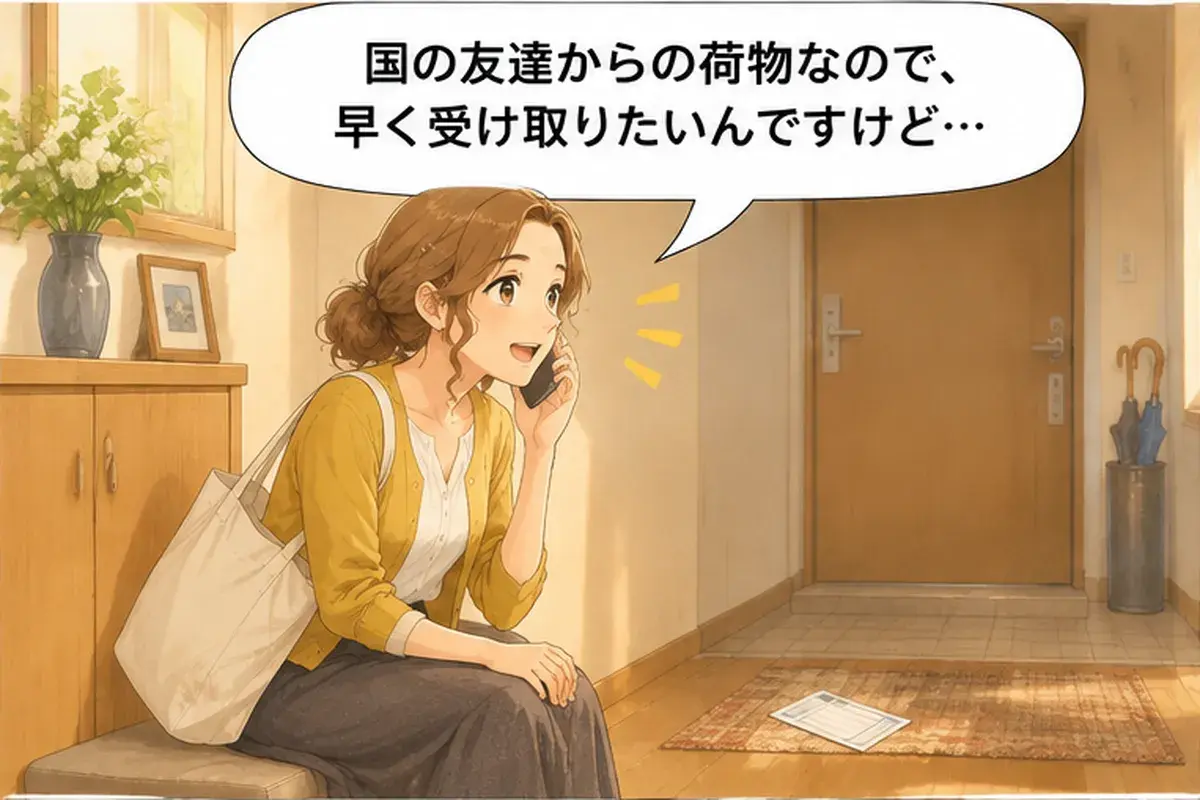
- アンナ
国の友達からの荷物なので、早く受け取りたいんですけど…
It's a package from friends back home, so I'd like to get it soon, you see, but...
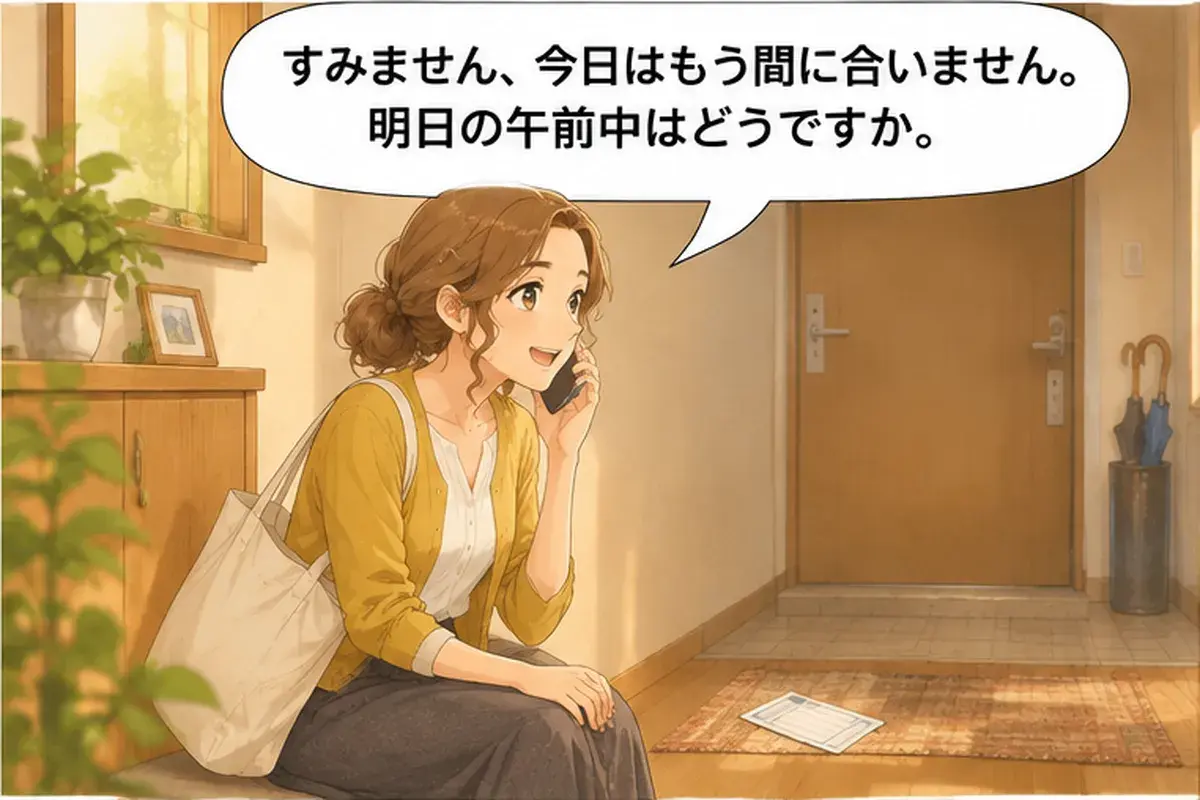
- 配達員
すみません、今日はもう間に合いません。明日の午前中はどうですか。
I'm sorry, we can't make it today anymore. How about tomorrow morning?
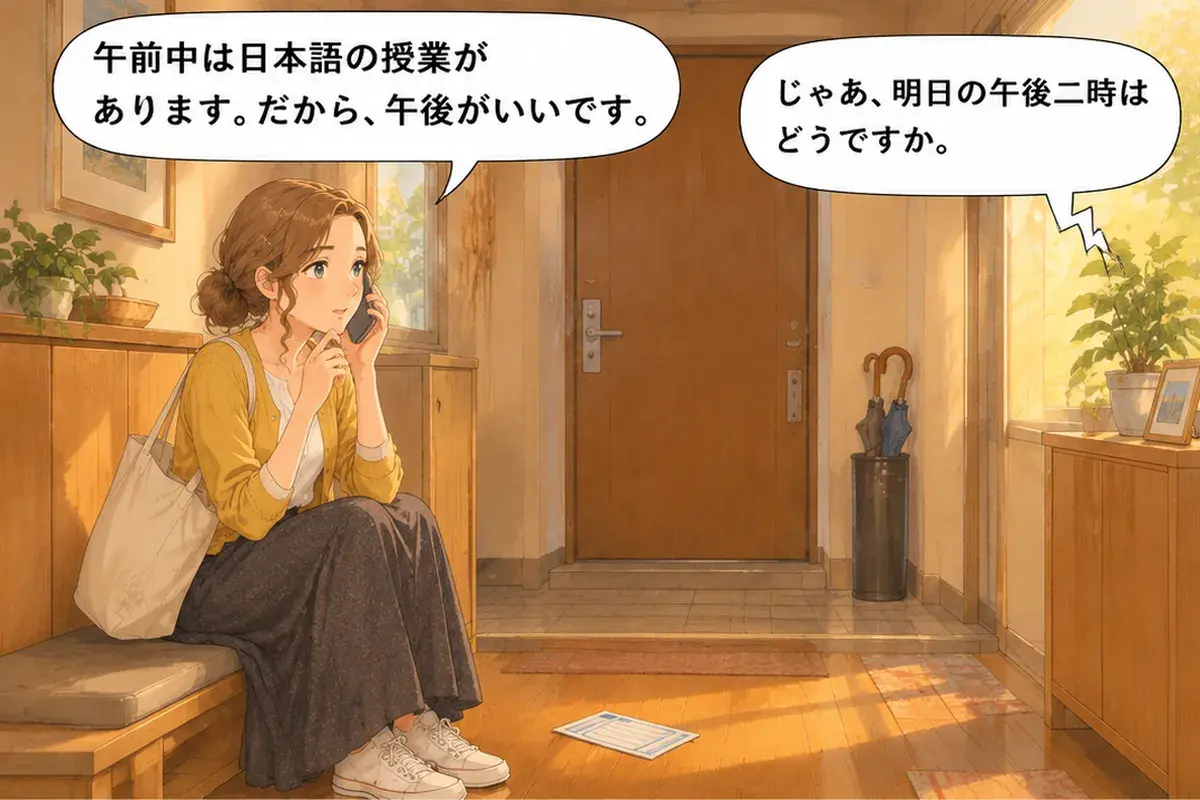
- アンナ
午前中は日本語の授業があります。だから、午後がいいです。
I have a Japanese class in the morning. So afternoon is better.
- 配達員
じゃあ、明日の午後二時はどうですか。
Then how about tomorrow at 2 p.m.?
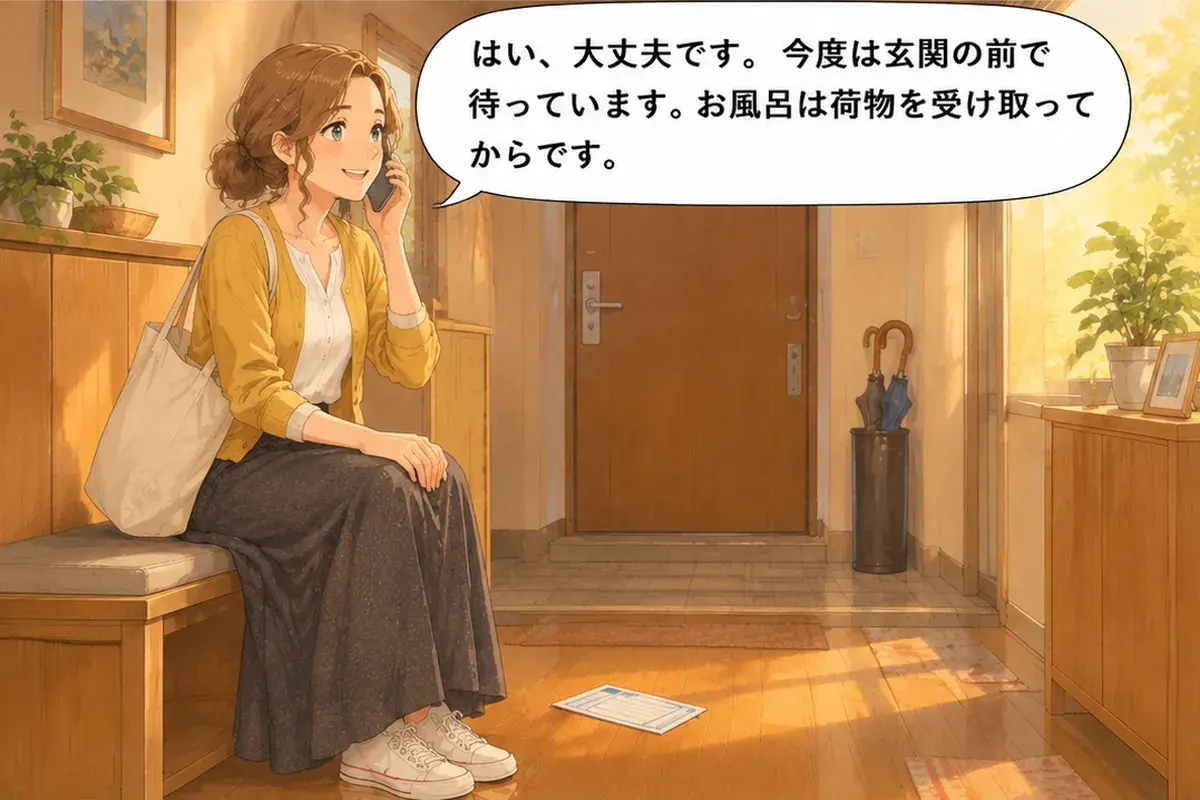
- アンナ
はい、大丈夫です。今度は玄関の前で待っています。お風呂は荷物を受け取ってからです。
Yes, that's fine. This time I'll be waiting in front of the entryway. I'll take my bath after I get the package.
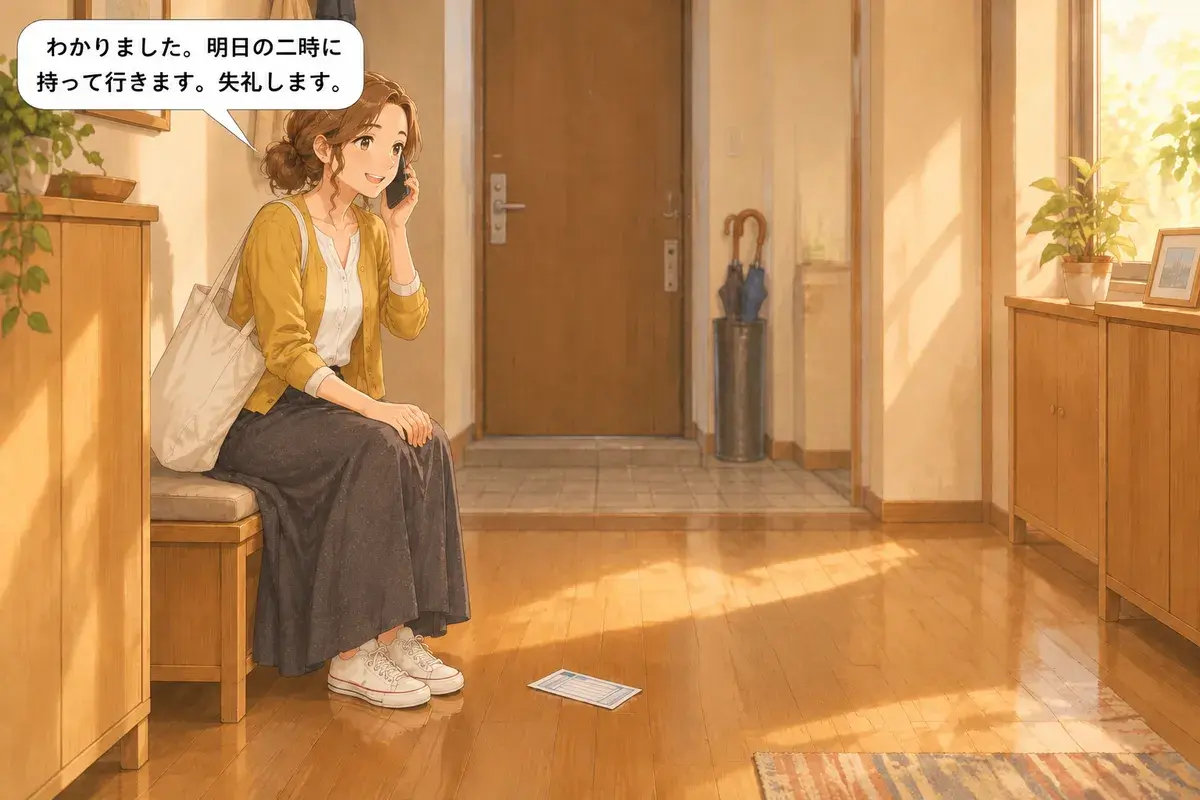
- 配達員
わかりました。明日の二時に持って行きます。失礼します。
Understood. I'll bring it tomorrow at two. Goodbye.
Grammar for this text
実は、家 に いた ん です— Actually, I was home.実は("actually") introduces a confession.ん ですdoesn't add a new fact; it explains: "the thing is, I was home."いたis the plain past ofいる.つまり、インターホン が 壊れて いる ん です か— So, is your intercom broken?つまり("in other words"): the driver draws a conclusion from what Anna said (she was home but didn't answer, so maybe the intercom is broken?).ん です かis how you ask about the reason.それ は 困りました ね— Oh, that's a problem.困るmeans "to be in trouble". The driver is sympathizing, not blaming.お風呂 に 入って いた ので— Since I was in the bath.のでis a soft "so": the reason comes before the result, not after it as in English "I didn't answer because...".お風呂 に 入るmeans "to take a bath" (literally "to enter the bath").インターホン に 出ませんでした— I didn't answer the intercom.出るwithにmeans "to go to the call, to answer" (the intercom, the phone). You can't say ✗インターホン を 出る.謝らなくても 大丈夫 です よ— You don't have to apologize.謝る("to apologize") in the〜なくてもform (unit 3): "it's OK not to apologize".荷物 な ので— Since it's a package. After a noun you putなbeforeので.受け取りたい ん です けど…— I'd like to get it soon, you see, but... Aけどat the end with nothing after it is a soft request: Anna doesn't demand "bring it today", she hints.今日 は もう 間に合いません— We can't make it today anymore.間に合うmeans "to make it in time"; hereもうmeans "anymore".だから、午後 が いい です— So afternoon is better.だから("so") starts a new sentence: Anna gave the reason in a separate sentence before it.
Words and grammar of the unit: Get through a part-time job interview.
Learn the words from the texts with flashcards
In the app, you can tap any word in a text to see its translation, forms and examples, and new words stick with flashcards. 15 minutes a day.
Start for freeEverything is open for free. No card needed to sign up.