
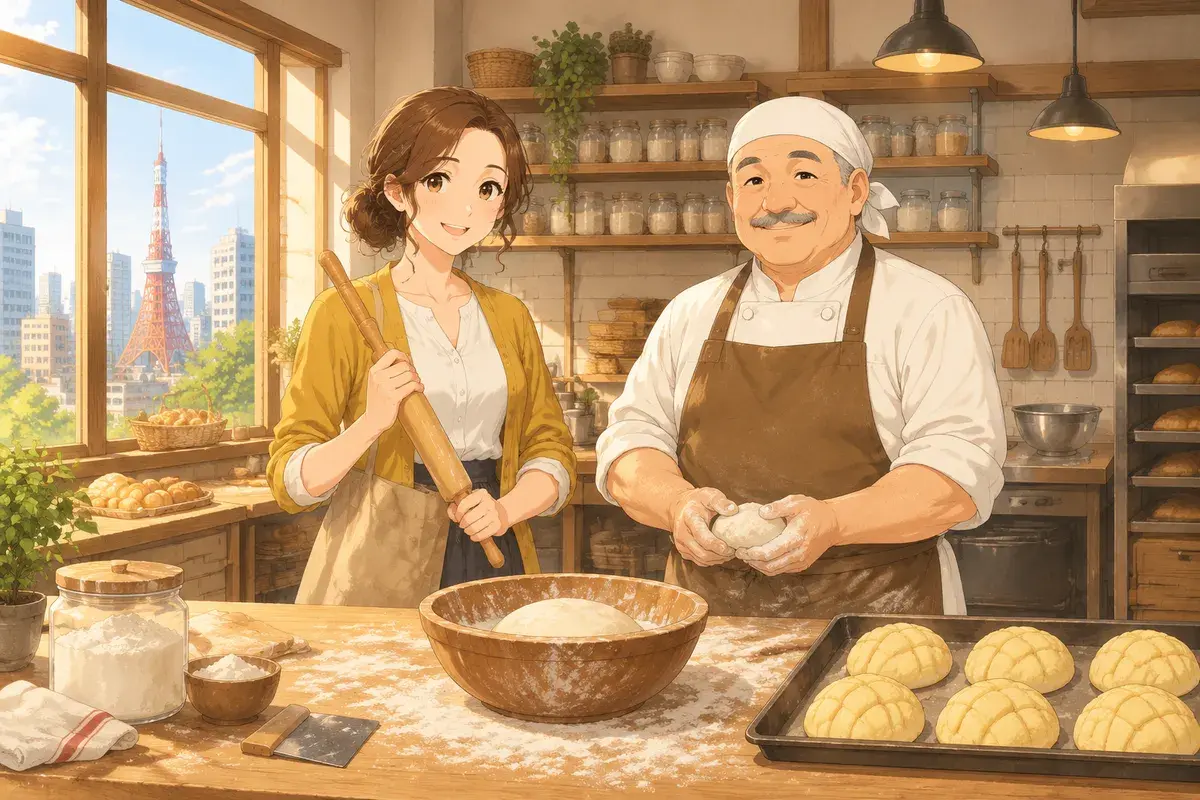
Japanese dialogue with translation · A2 · 16 lines
メロンは入れない You don't put melon in it
Comic · 12 panels
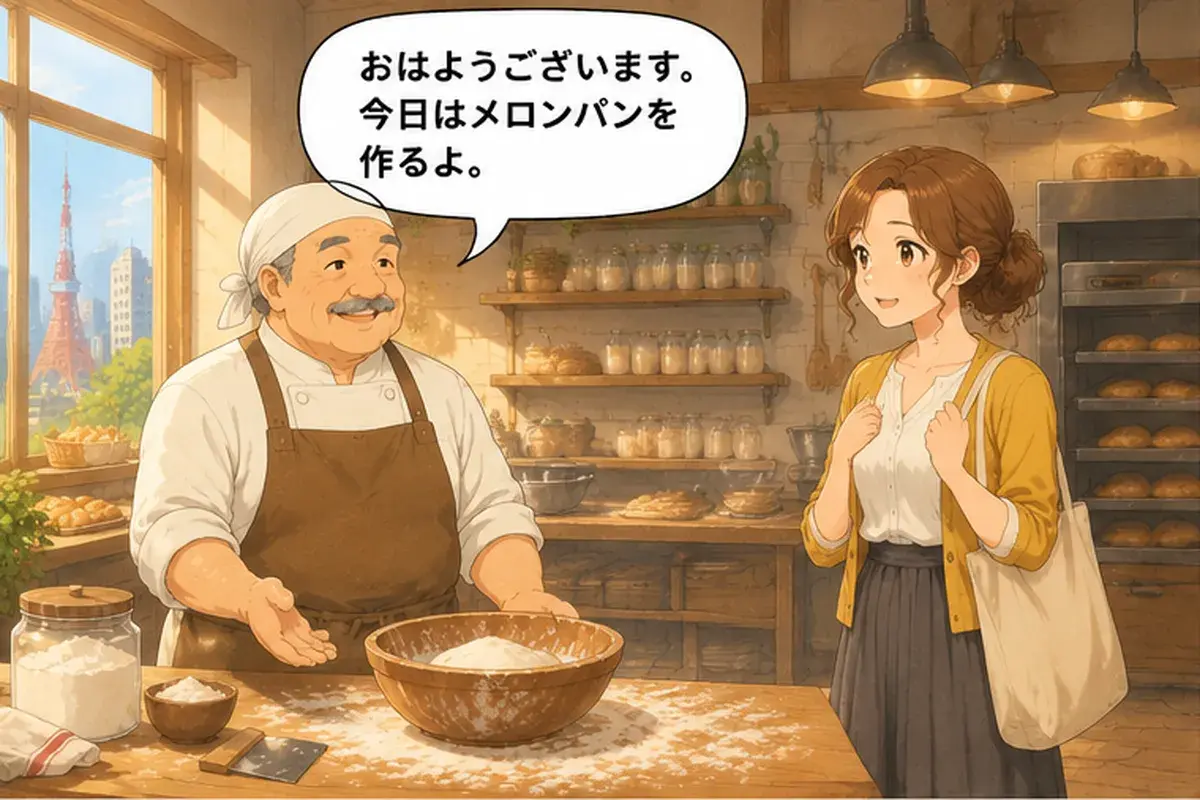
- 小林
おはようございます。今日はメロンパンを作るよ。
Good morning. We're making melon bread today (casual).
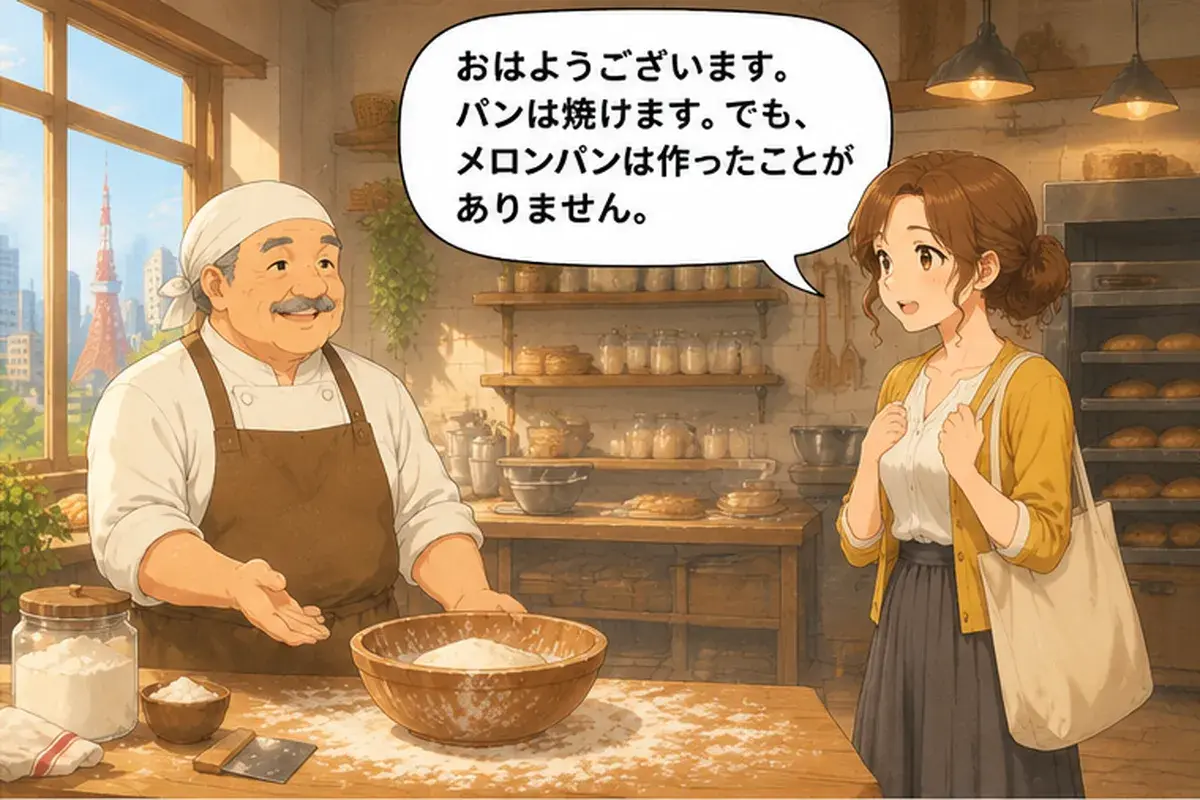
- アンナ
おはようございます。パンは焼けます。でも、メロンパンは作ったことがありません。
Good morning. I can bake bread. But I've never made melon bread.
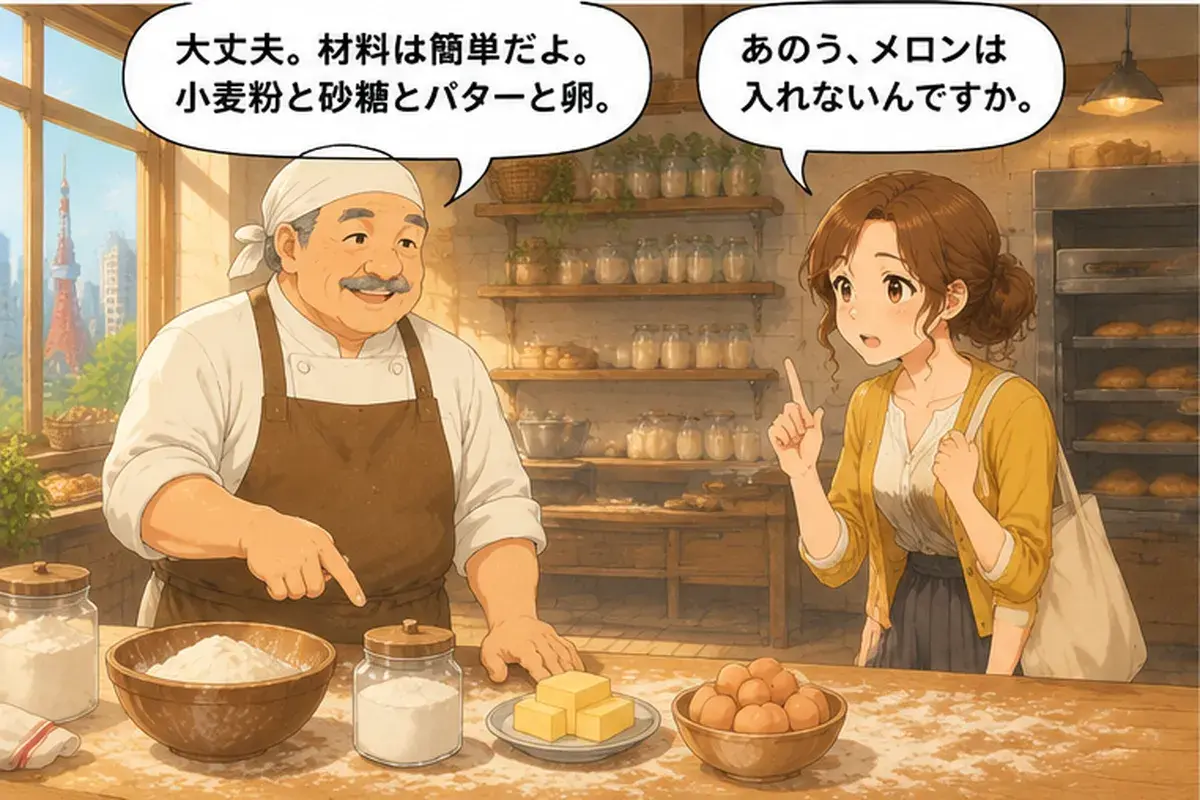
- 小林
大丈夫。材料は簡単だよ。小麦粉と砂糖とバターと卵。
It's OK. The ingredients are easy (casual). Flour, sugar, butter, and eggs.
- アンナ
あのう、メロンは入れないんですか。
Um, you don't put melon in it?
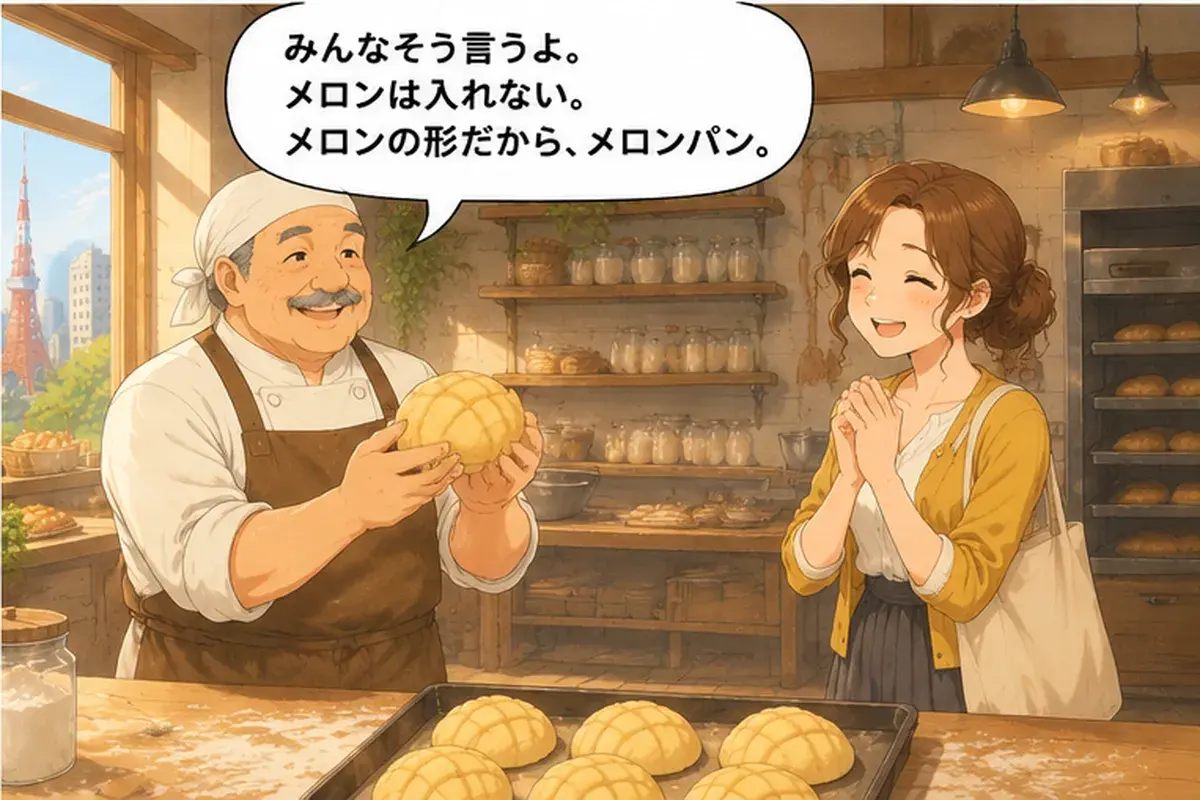
- 小林
みんなそう言うよ。メロンは入れない。メロンの形だから、メロンパン。
Everyone says that. You don't put melon in. It's called melon bread because of the melon shape (casual).
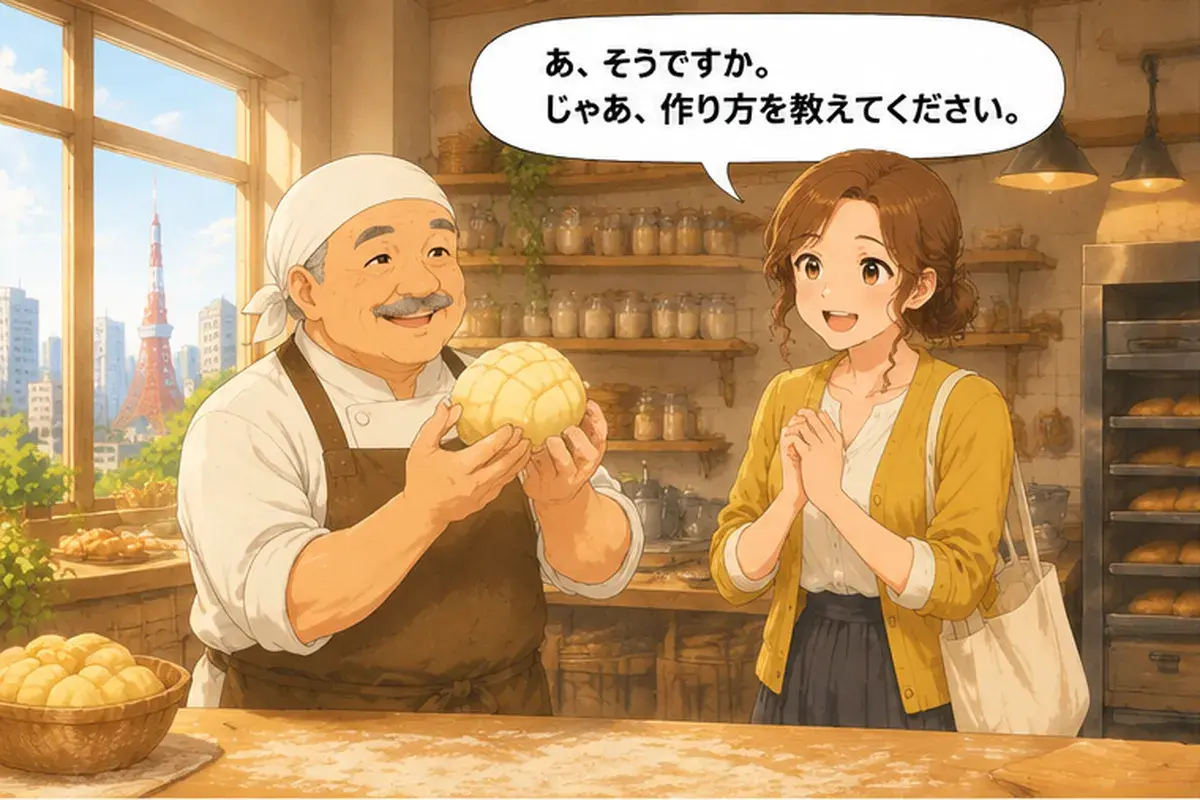
- アンナ
あ、そうですか。じゃあ、作り方を教えてください。
Oh, I see. Then please tell me how to make it.
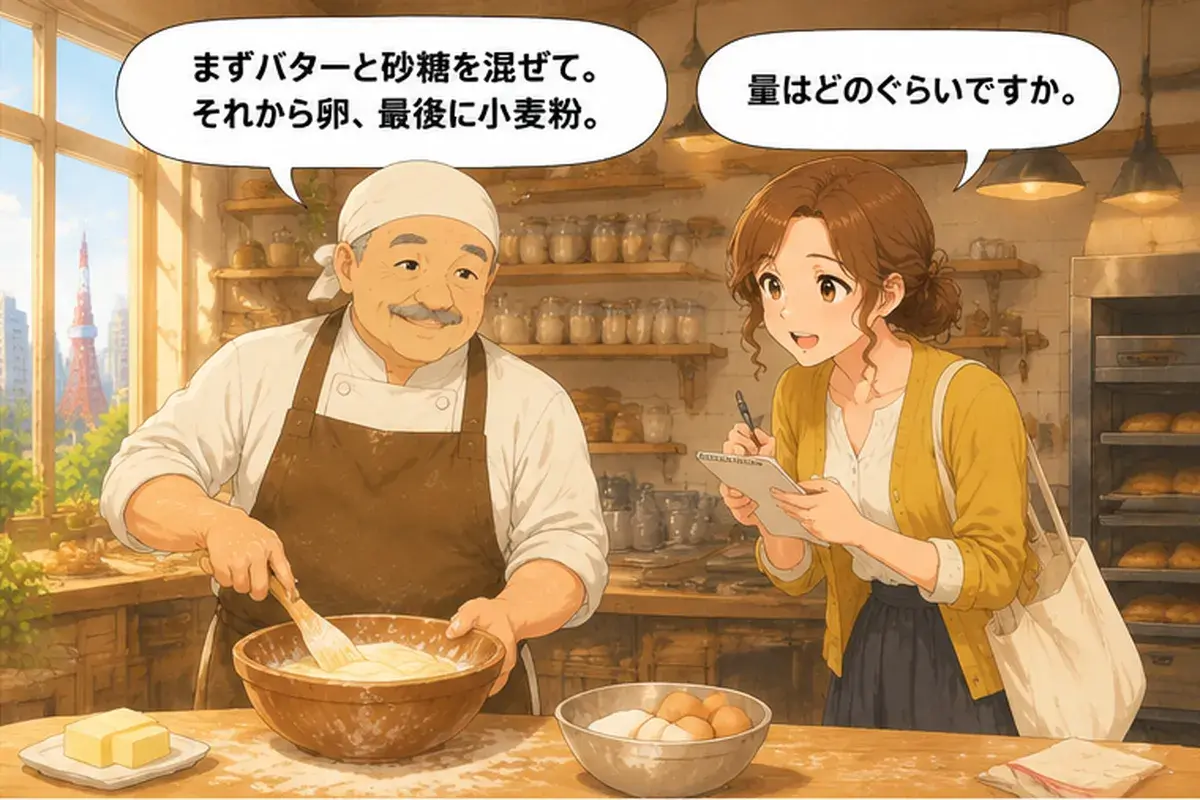
- 小林
まずバターと砂糖を混ぜて。それから卵、最後に小麦粉。
First mix the butter and sugar. Then the eggs, and finally the flour (casual).
- アンナ
量はどのぐらいですか。
What's the amount, roughly?
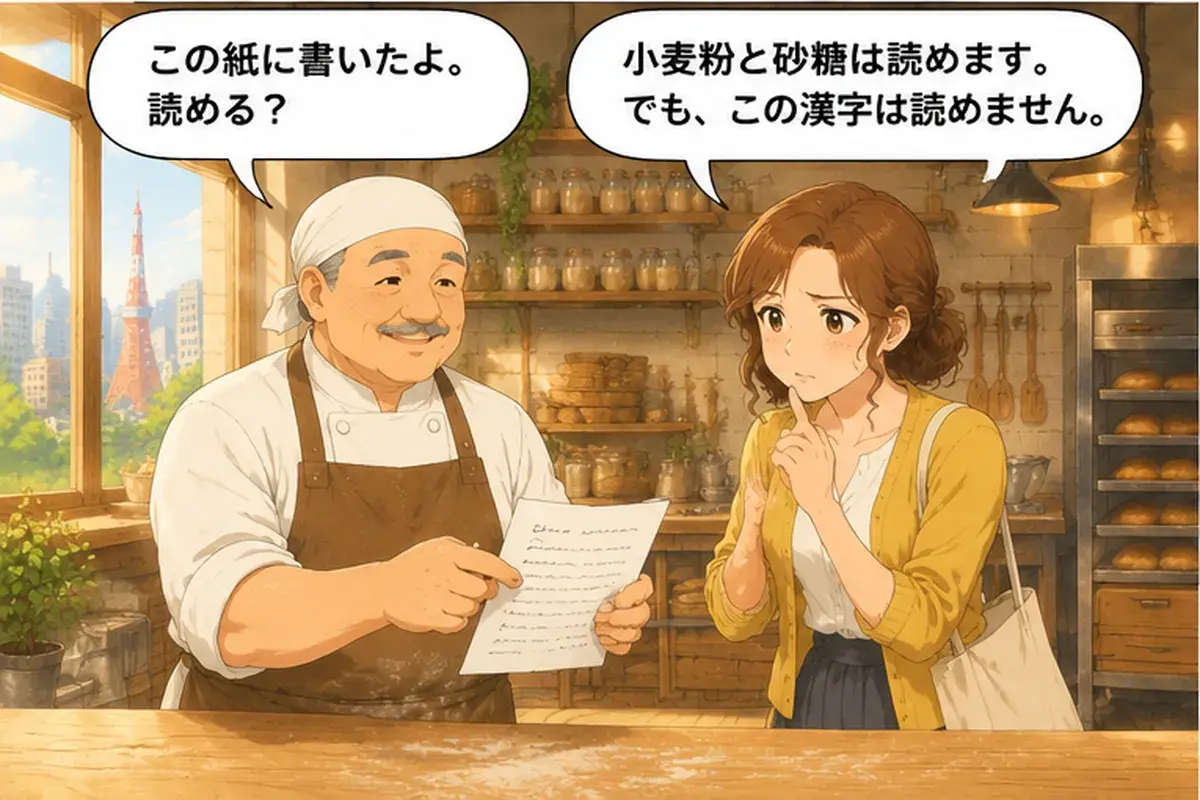
- 小林
この紙に書いたよ。読める?
I wrote it on this paper. Can you read it? (casual)
- アンナ
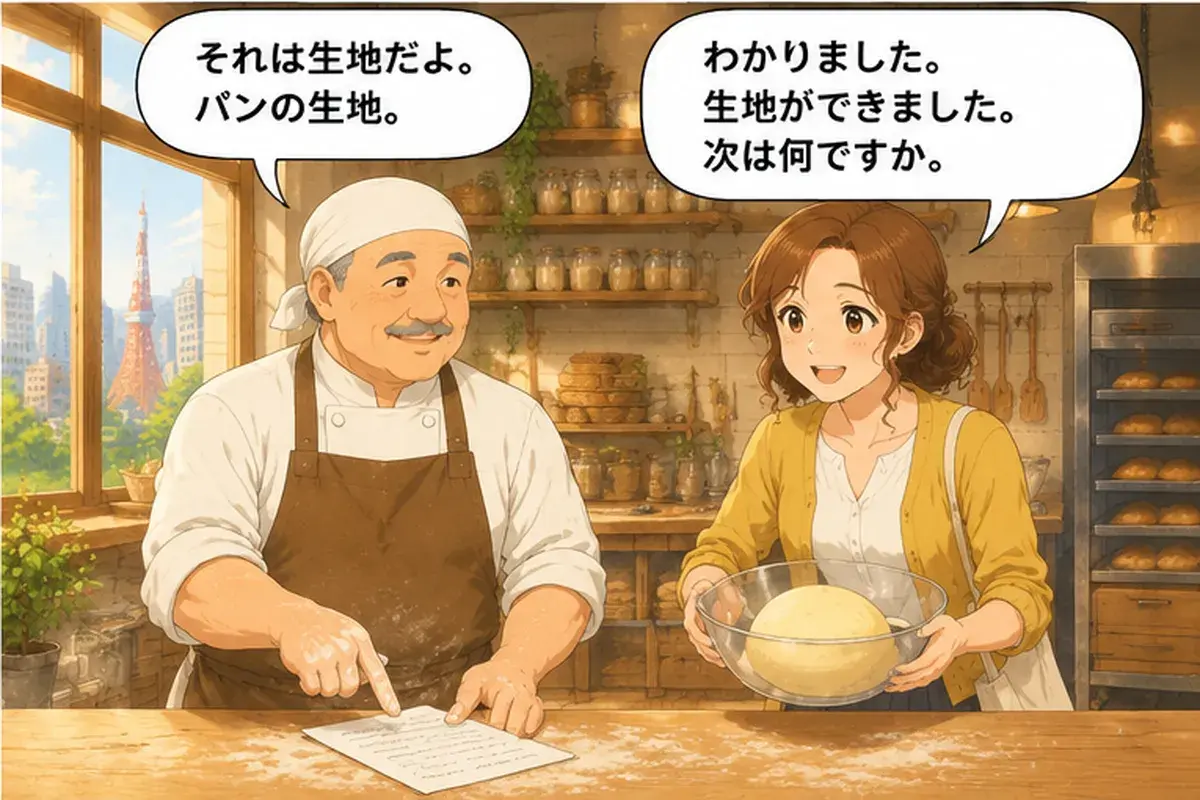
小麦粉と砂糖は読めます。でも、この漢字は読めません。
I can read flour and sugar. But I can't read this kanji.
- 小林
それは生地だよ。パンの生地。
That says dough. Bread dough (casual).
- アンナ
わかりました。生地ができました。次は何ですか。
I see. The dough is ready. What's next?
- 小林
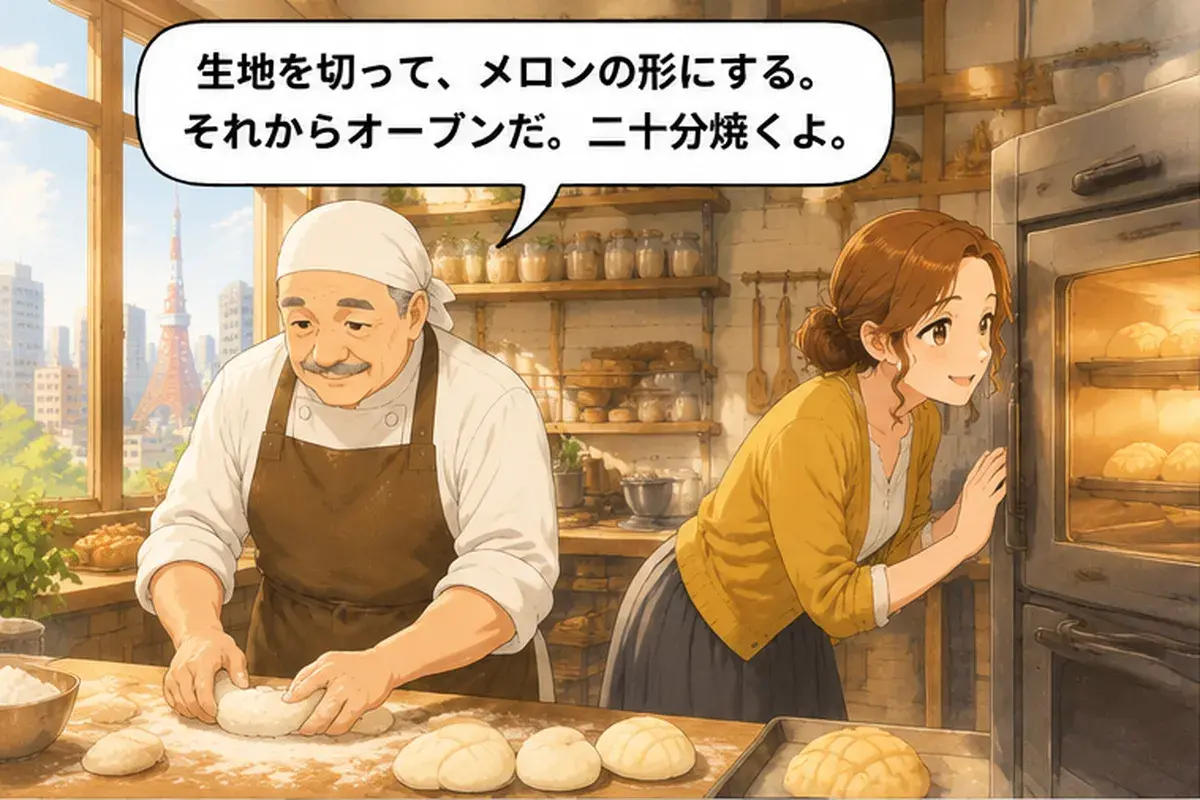
生地を切って、メロンの形にする。それからオーブンだ。二十分焼くよ。
Cut the dough and shape it like a melon. Then the oven. We bake it for twenty minutes (casual).
- アンナ
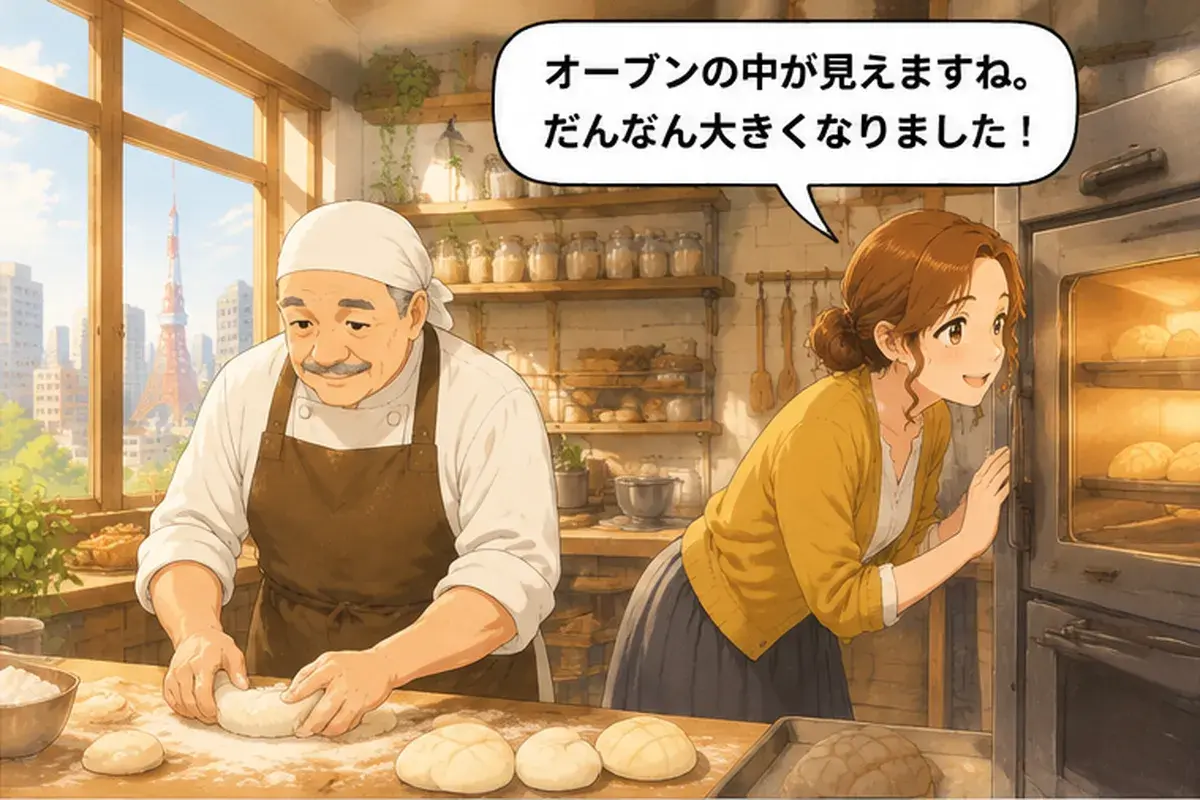
オーブンの中が見えますね。だんだん大きくなりました!
I can see inside the oven, can't I? They've gradually gotten bigger!
- 小林
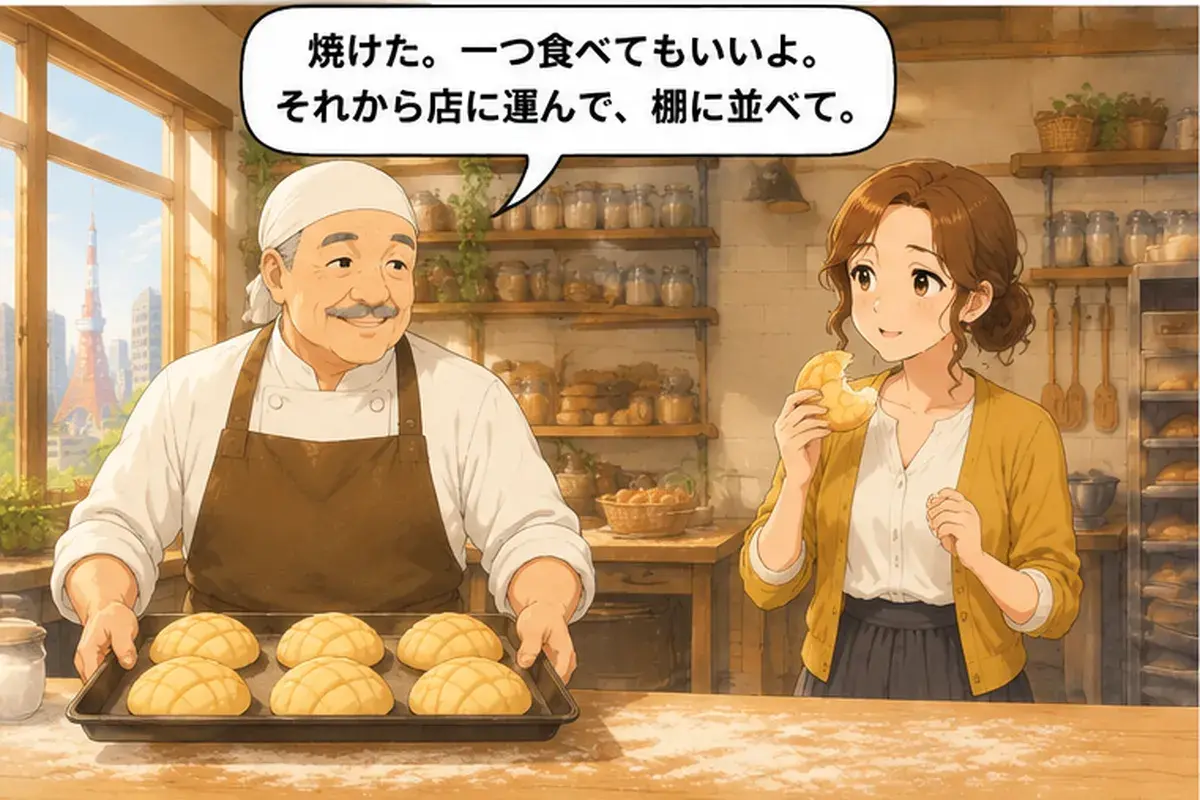
焼けた。一つ食べてもいいよ。それから店に運んで、棚に並べて。
It's baked. You can eat one. Then carry them to the store and arrange them on the shelf (casual).
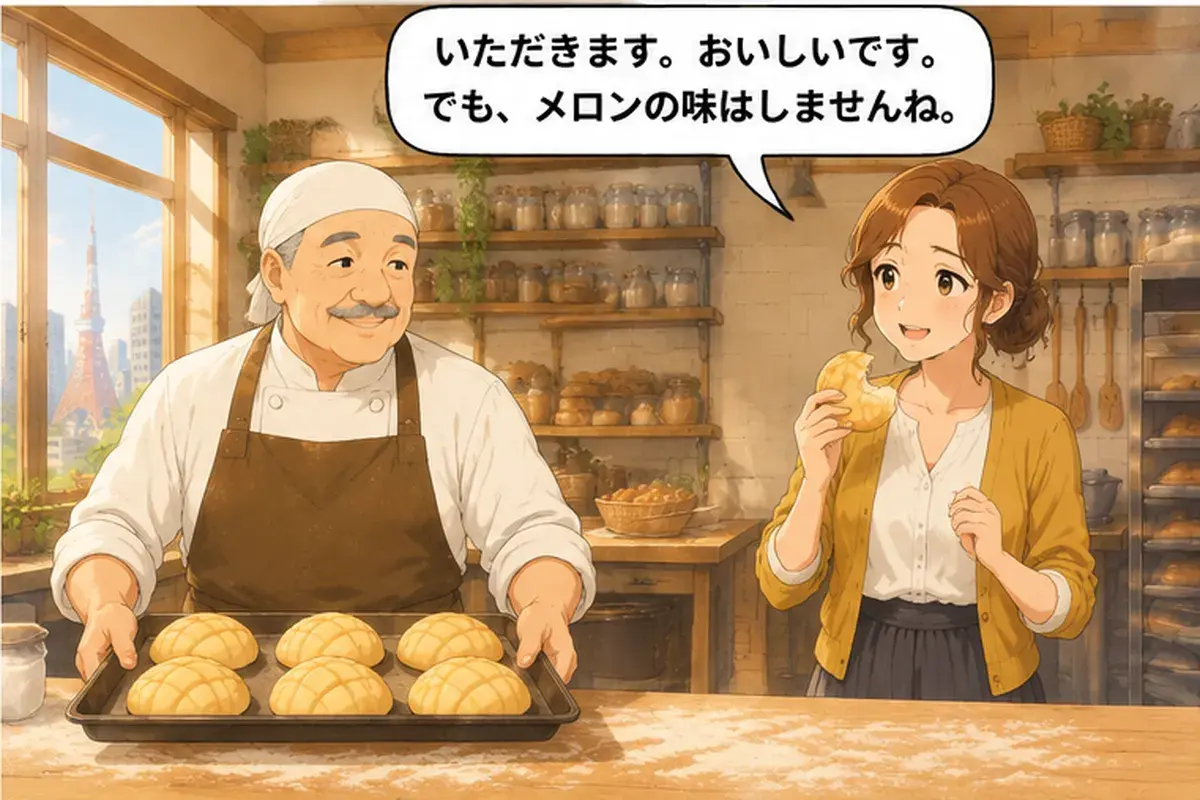
- アンナ
いただきます。おいしいです。でも、メロンの味はしませんね。
Let's eat! It's delicious. But it doesn't taste like melon, does it?
Grammar for this text
パン は 焼けます— I can bake bread.焼けますis the “can” form of焼く(“to bake”). It takesは, notが, because Anna is contrasting bread with melon bread.焼けた。— It's baked.焼けるcan also mean “to get baked,” so at the end it means “it's done.” The situation tells you which meaning it is.メロン は 入れない ん です か— You don't put melon in it?入れないmeans “don't put in” (unit 3), andん です か(unit 9) shows that Anna is surprised and wants an explanation. Melon bread really has no melon in it; the name comes from the shape.メロン の 形 だ から、 メロンパン— It's called melon bread because of the melon shape.読める?— Can you read it? Kobayashi talks in short, casual forms, like a boss to an employee: noます, noか, and the question is only in the rising voice (?in writing). This is the plain form of “can.”この 漢字 は 読めません— I can't read this kanji. Anna answers politely.オーブン の 中 が 見えます ね— I can see inside the oven, can't I? It's見えます, not見られます: Anna isn't doing anything, the inside of the oven is simply in view.だんだん 大きく なりました— They've gradually gotten bigger.大きく なりましたmeans “got bigger” (A1, unit 17), andだんだんmeans “gradually.”いただきます— Let's eat! People say it before eating, even when it's just one bun.
Words and grammar of the unit: Say what you can do now.
Learn the words from the texts with flashcards
In the app, you can tap any word in a text to see its translation, forms and examples, and new words stick with flashcards. 15 minutes a day.
Start for freeEverything is open for free. No card needed to sign up.