

Japanese dialogue with translation · A2 · 16 lines
レジはできる Can you handle the register?
Comic · 10 panels
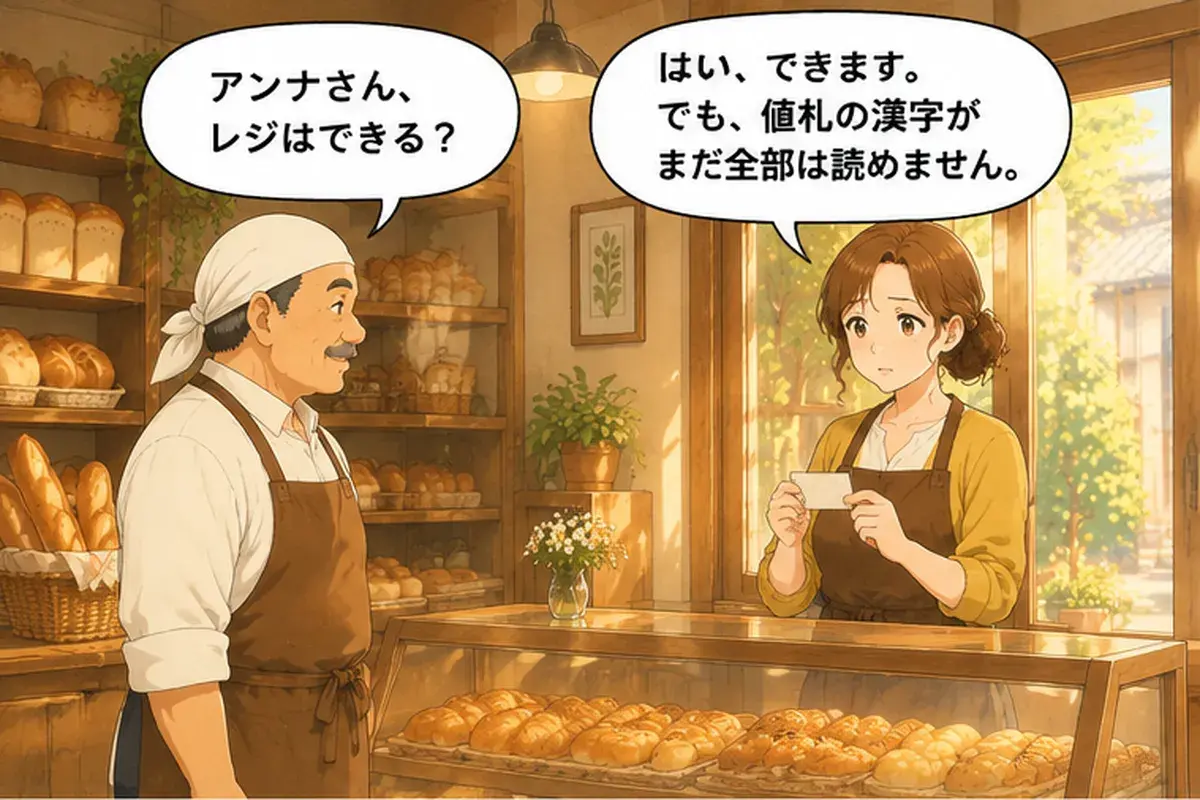
- 小林
アンナさん、レジはできる?
Anna-san, can you handle the register? (casual)
- アンナ
はい、できます。でも、値札の漢字がまだ全部は読めません。
Yes, I can. But I still can't read all the kanji on the price tags.
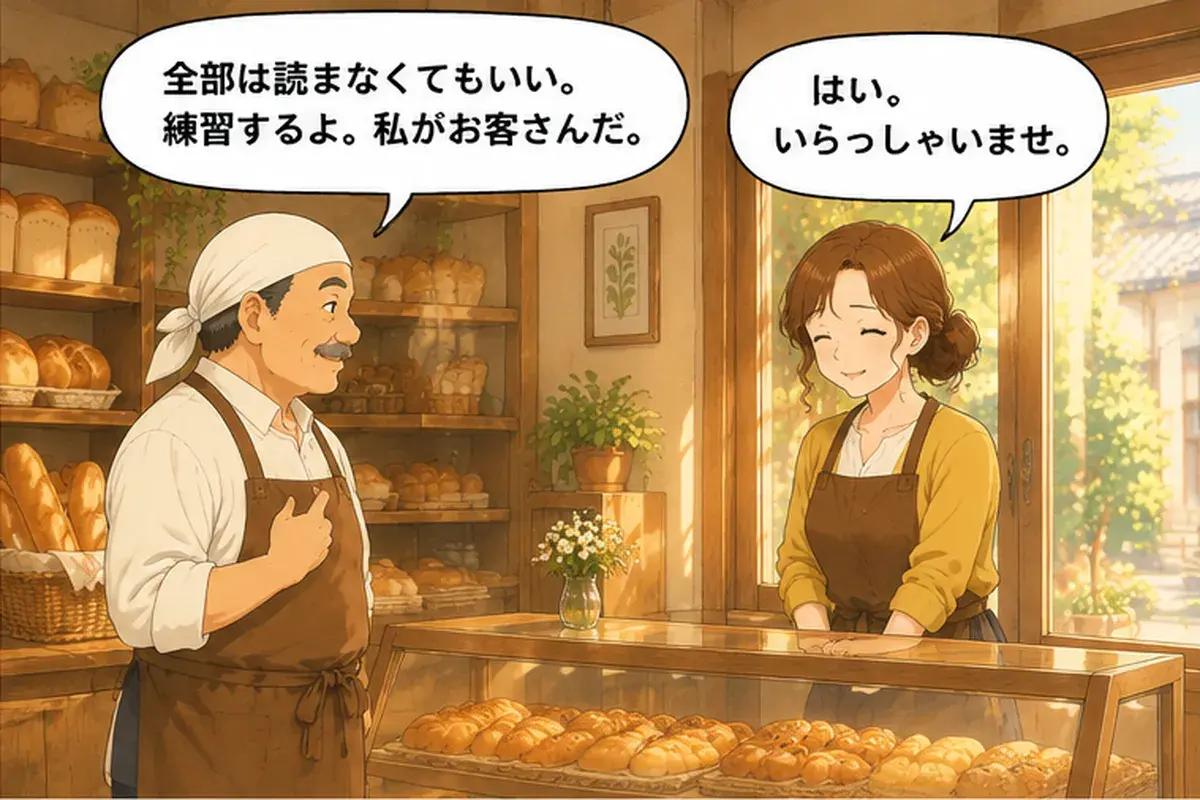
- 小林
全部は読まなくてもいい。練習するよ。私がお客さんだ。
You don't have to read all of them. We'll practice. I'll be the customer (casual).
- アンナ
はい。いらっしゃいませ。
Okay. Welcome!
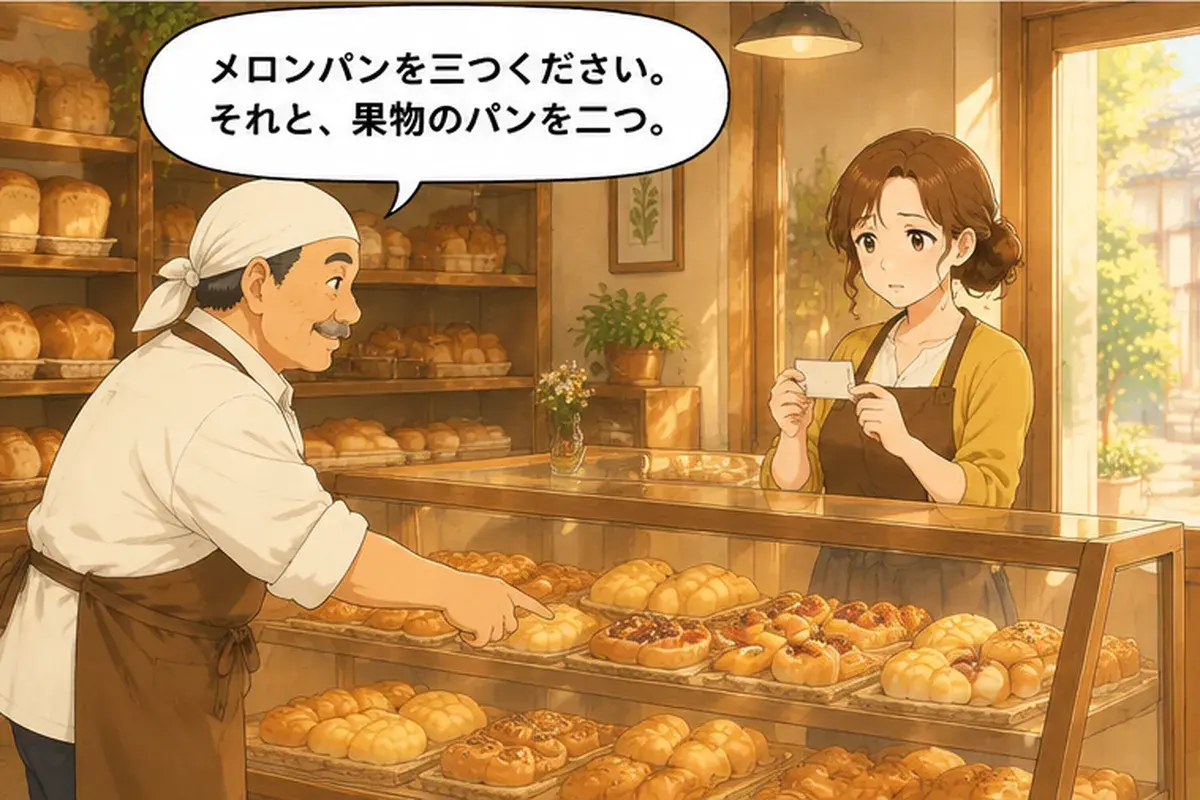
- 小林
メロンパンを三つください。それと、果物のパンを二つ。
Three melon breads, please. And two fruit breads.
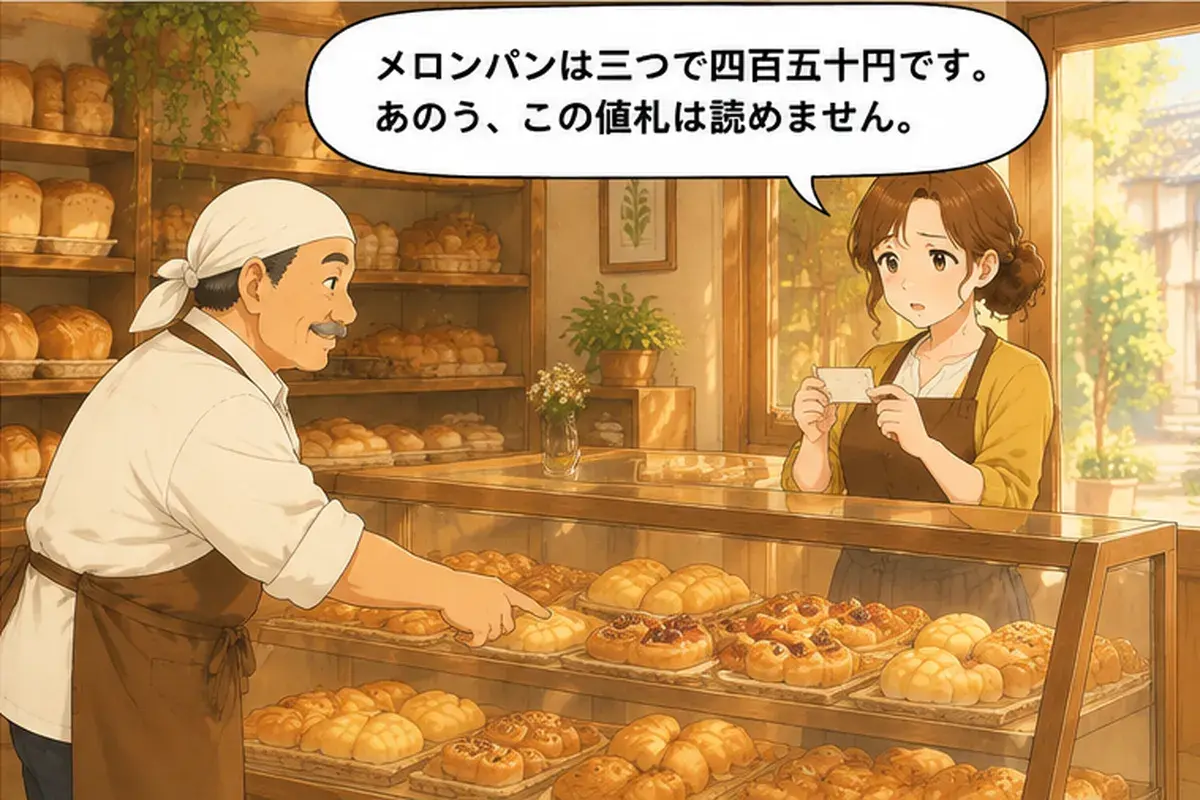
- アンナ
メロンパンは三つで四百五十円です。あのう、この値札は読めません。
Three melon breads are 450 yen. Um, I can't read this price tag.
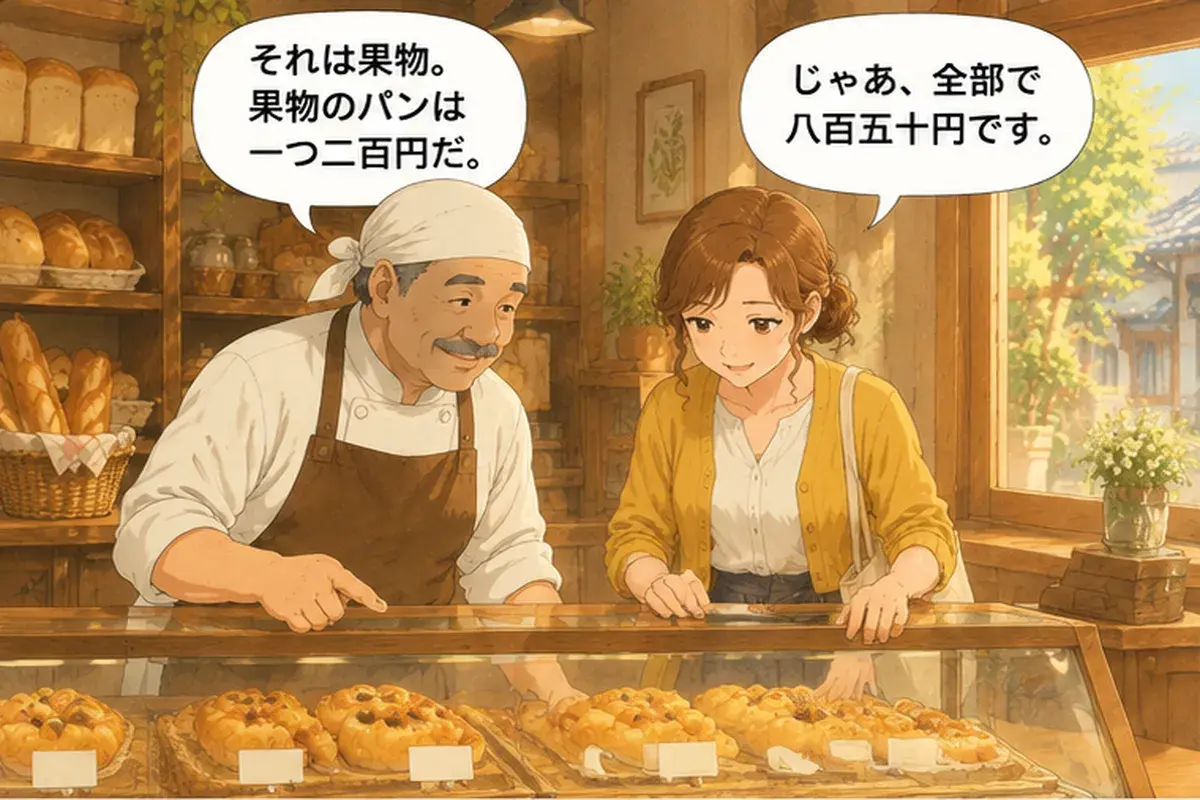
- 小林
それは果物。果物のパンは一つ二百円だ。
That says fruit. The fruit bread is 200 yen each (casual).
- アンナ
じゃあ、全部で八百五十円です。
Then the total is 850 yen.
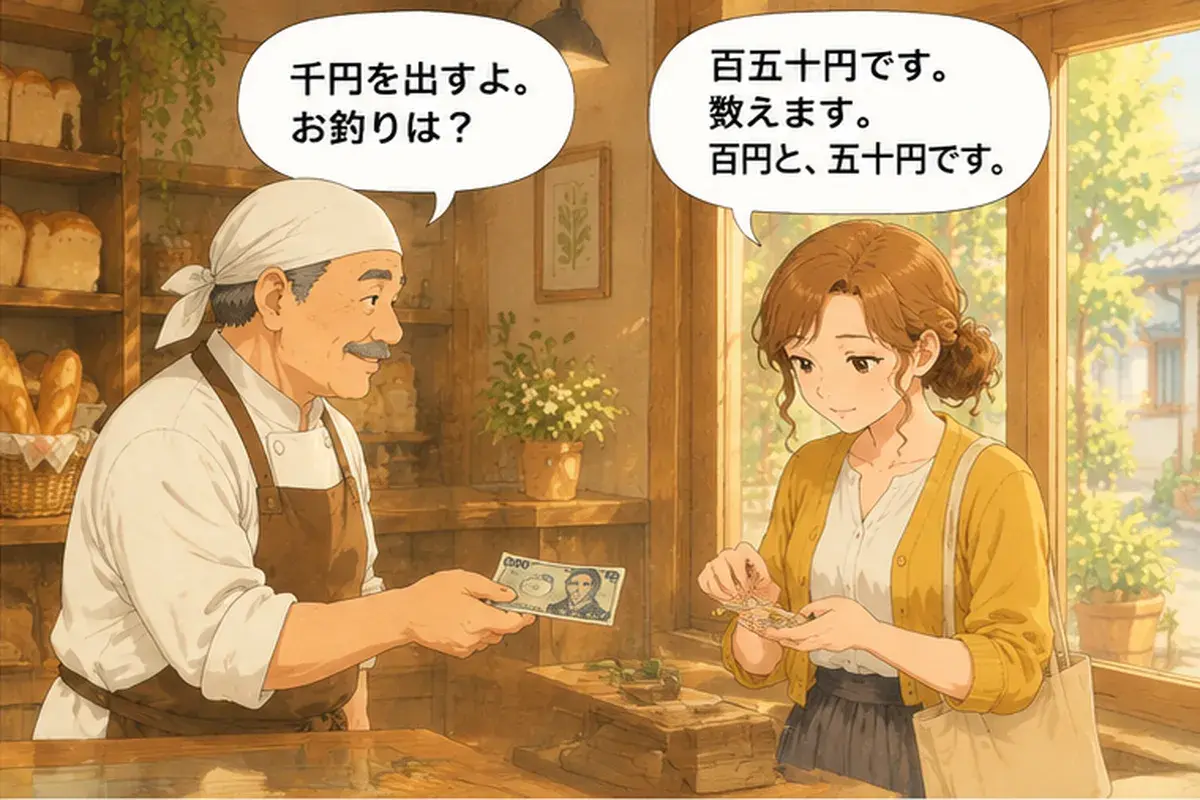
- 小林
千円を出すよ。お釣りは?
I'll hand you 1,000 yen. What's my change? (casual)
- アンナ
百五十円です。数えます。百円と、五十円です。
It's 150 yen. I'll count it. 100 yen and 50 yen.
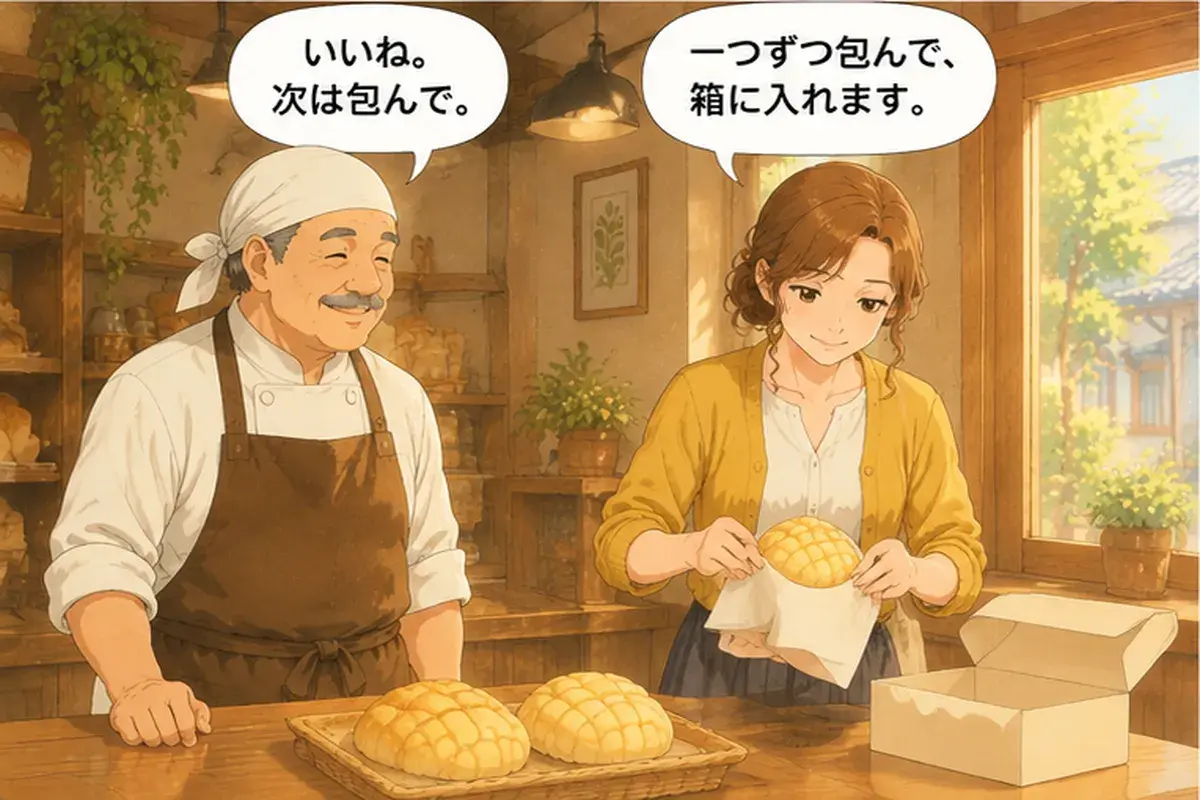
- 小林
いいね。次は包んで。
Good. Next, wrap them (casual).
- アンナ
一つずつ包んで、箱に入れます。
I'll wrap them one at a time and put them in a box.
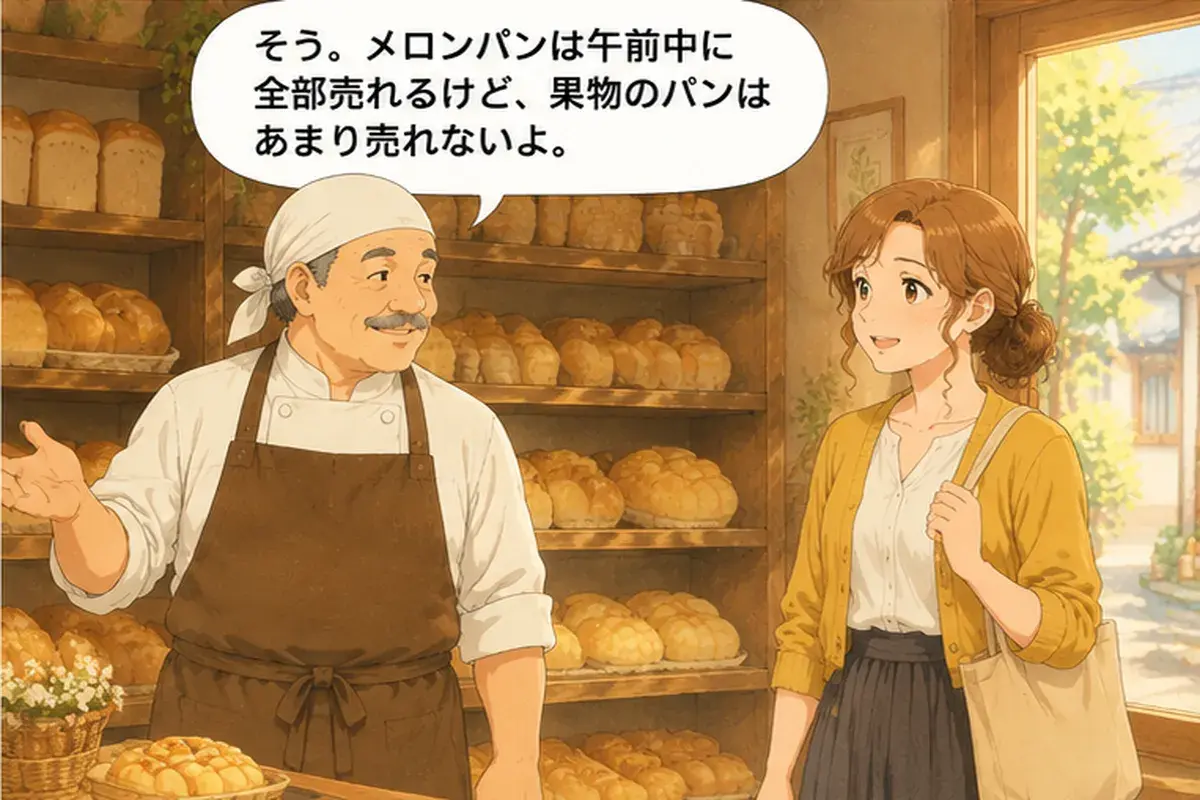
- 小林
そう。メロンパンは午前中に全部売れるけど、果物のパンはあまり売れないよ。
Right. All the melon bread sells out in the morning, but the fruit bread doesn't sell very well (casual).
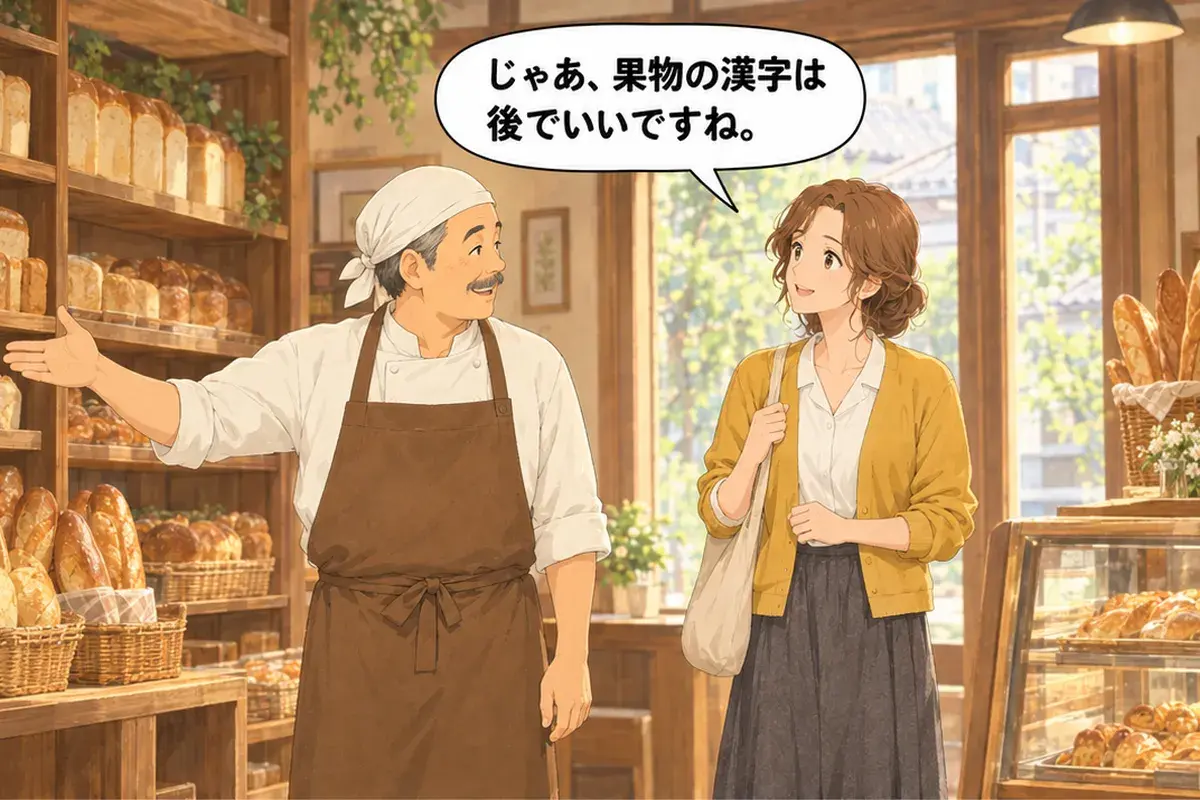
- アンナ
じゃあ、果物の漢字は後でいいですね。
Then the kanji for fruit can wait until later, right?
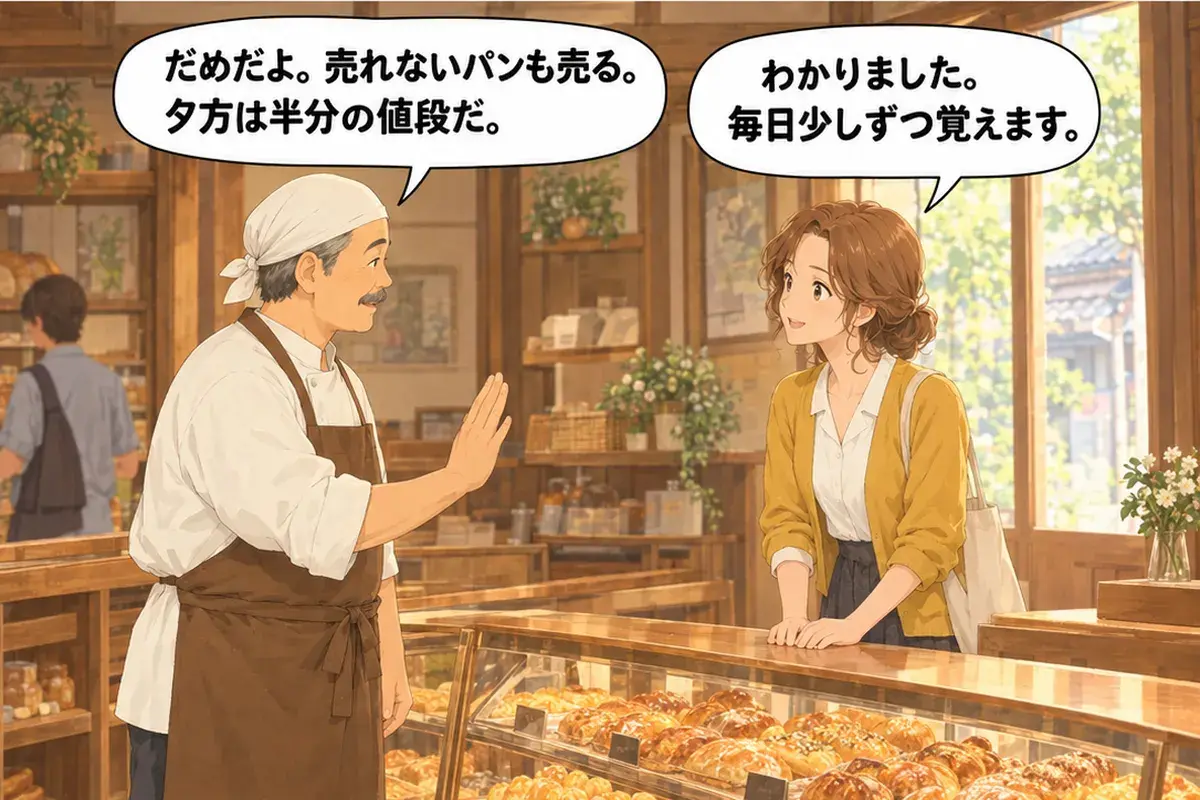
- 小林
だめだよ。売れないパンも売る。夕方は半分の値段だ。
No, it can't. We sell the bread that doesn't sell, too. In the evening it's half price (casual).
- アンナ
わかりました。毎日少しずつ覚えます。
Understood. I'll learn them little by little every day.
Grammar for this text
レジ は できる?— Can you handle the register?できるhere means “can you manage, can you do it,” in the plain form: the boss talks in short forms.はい、 できます— Yes, I can. Anna's answer is polite.全部 は 読まなくて も いい— You don't have to read all of them.〜なくても いいmeans “don't have to” (unit 3). Notice全部 は: with a negative it means “not all,” so you still need to read some.まだ 全部 は 読めません— I still can't read all of them. Anna uses the same “not all” idea.この 値札 は 読めません— I can't read this price tag.読めませんmeans “I can't read it” (an unknown kanji). If the numbers were just too small, you would say見えません.メロンパン は 三つ で 四百 五十 円 です— Three melon breads are 450 yen.三つ でmeans “for three pieces”:でgives the total for that amount.一つ ずつ 包んで— Wrap them one at a time.ずつmeans “one at a time,” and包んでis a request withoutください. A boss talks this way to an employee; Anna wouldn't say it to him.メロンパン は 午前中 に 全部 売れる けど— All the melon bread sells out in the morning, but...売れるmeans “to sell” for a product that gets bought; a person who sells is売る.けど(unit 9) means “but.”夕方 は 半分 の 値段 だ— In the evening it's half price. Many stores sell off what's left this way.
Words and grammar of the unit: Say what you can do now.
Learn the words from the texts with flashcards
In the app, you can tap any word in a text to see its translation, forms and examples, and new words stick with flashcards. 15 minutes a day.
Start for freeEverything is open for free. No card needed to sign up.