

Japanese dialogue with translation · A2 · 13 lines
読めるようになりました Now I can read
Comic · 12 panels
- リン
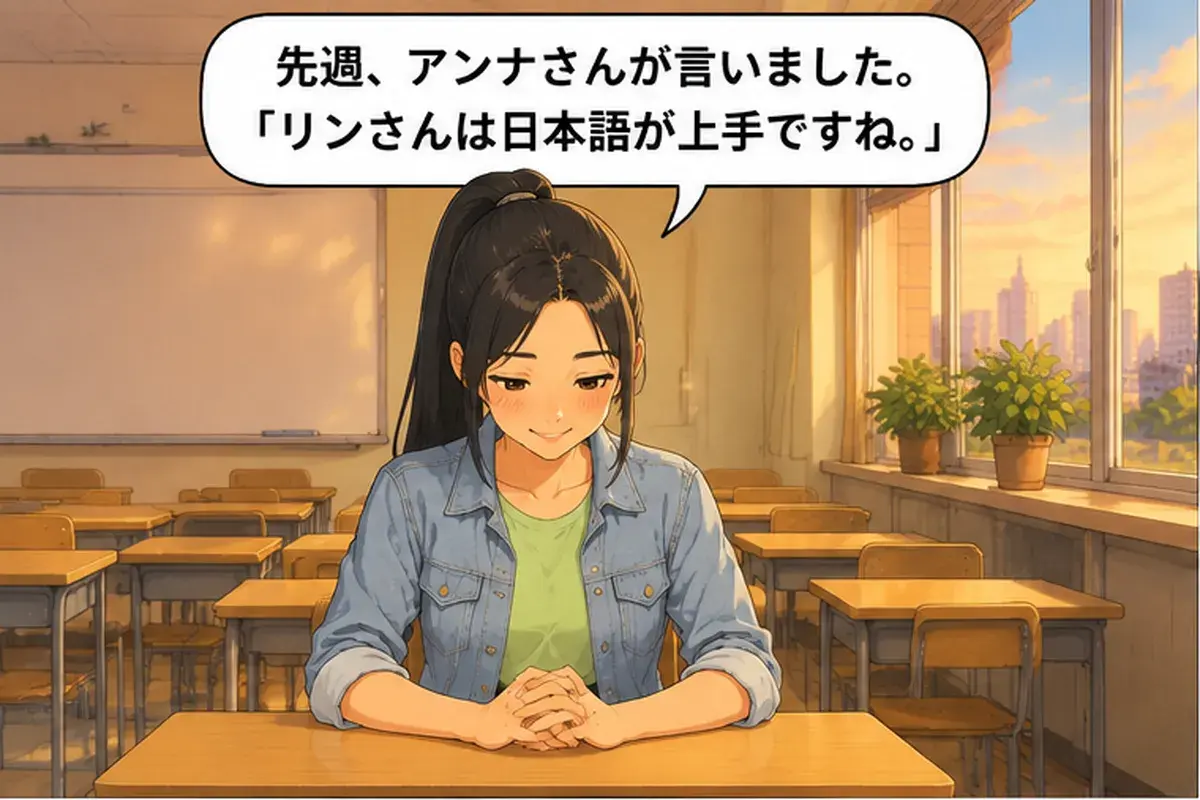
先週、アンナさんが言いました。「リンさんは日本語が上手ですね。」
Last week Anna-san said, “Linh-san, you're good at Japanese, aren't you?”
- リン
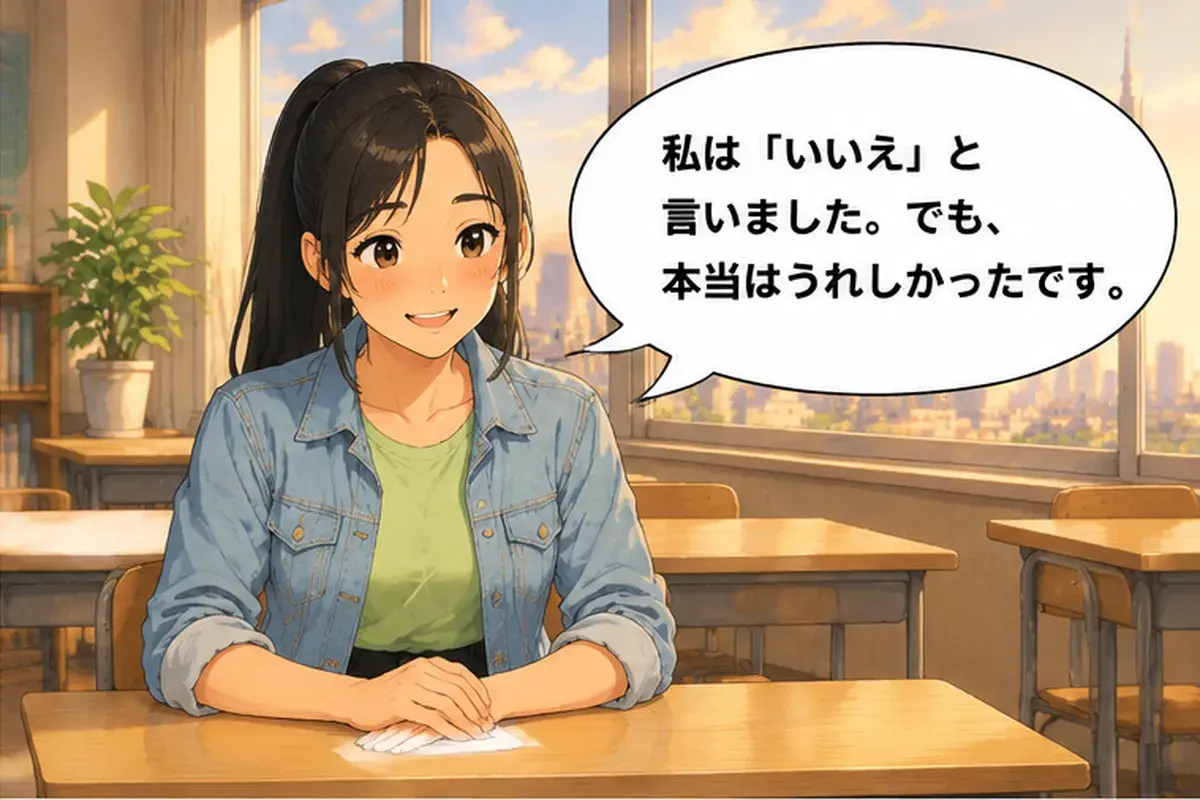
私は「いいえ」と言いました。でも、本当はうれしかったです。
I said, “No.” But honestly, I was happy.
- リン
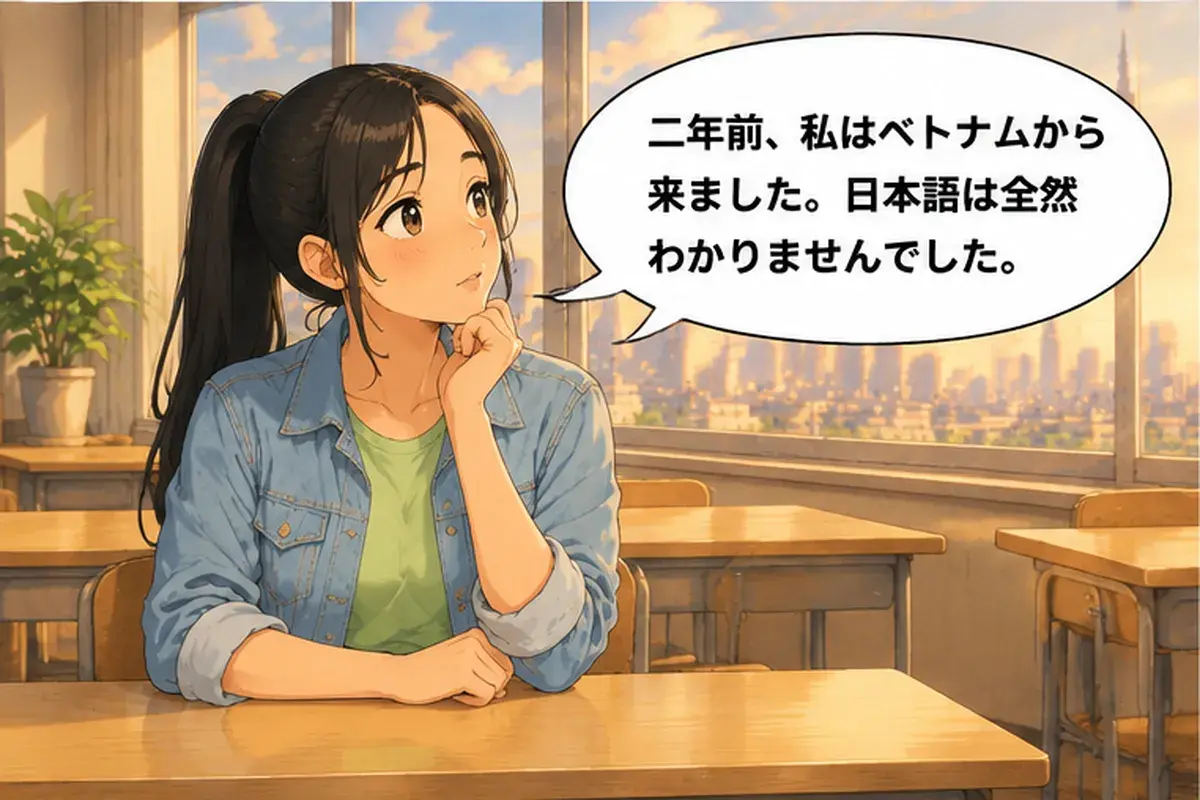
二年前、私はベトナムから来ました。日本語は全然わかりませんでした。
Two years ago I came from Vietnam. I didn't understand any Japanese.
- リン
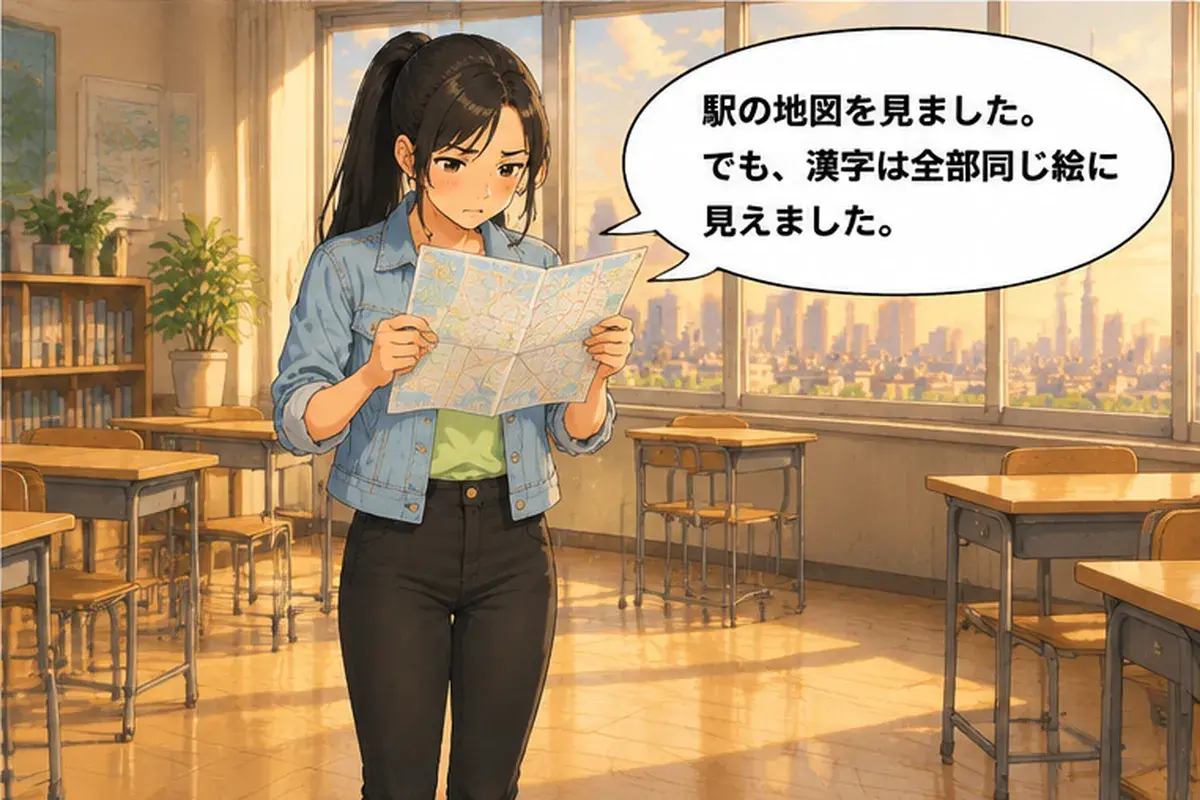
駅の地図を見ました。でも、漢字は全部同じ絵に見えました。
I looked at the map at the station. But all the kanji looked like the same picture.
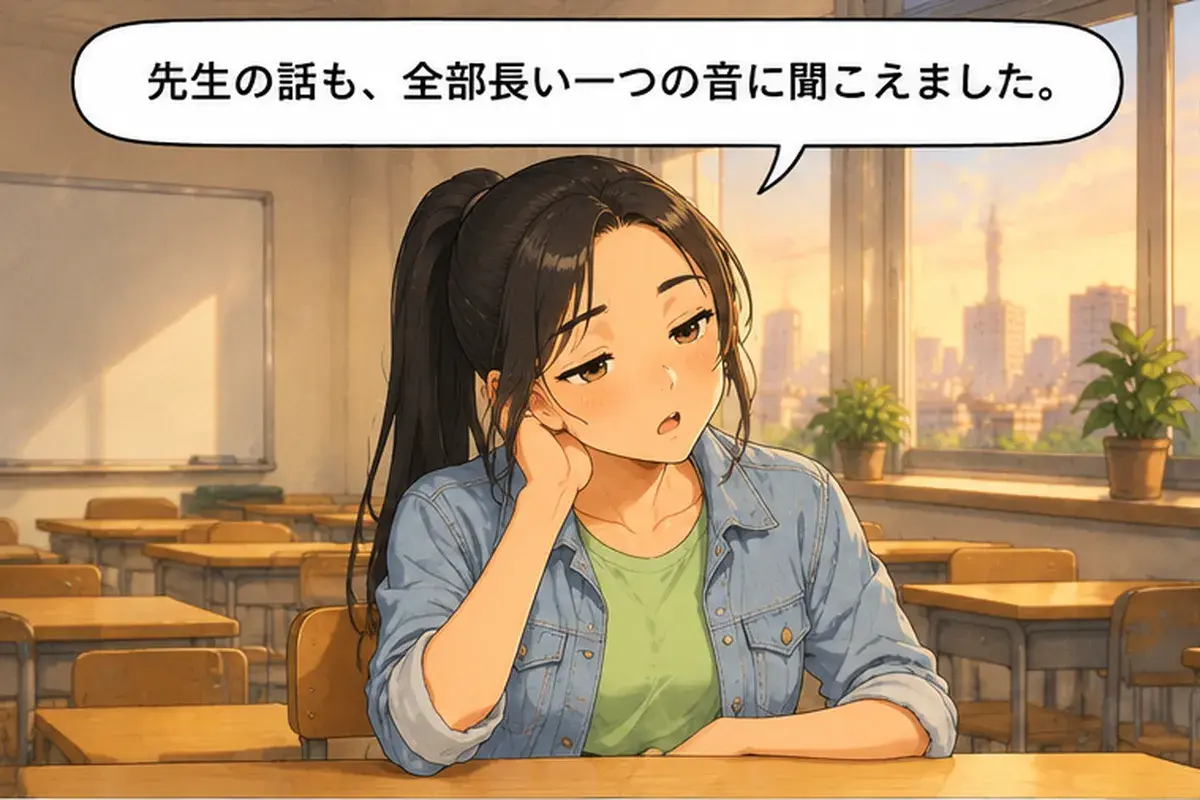
- リン
先生の話も、全部長い一つの音に聞こえました。
My teacher's speech, too, all sounded like one long sound.
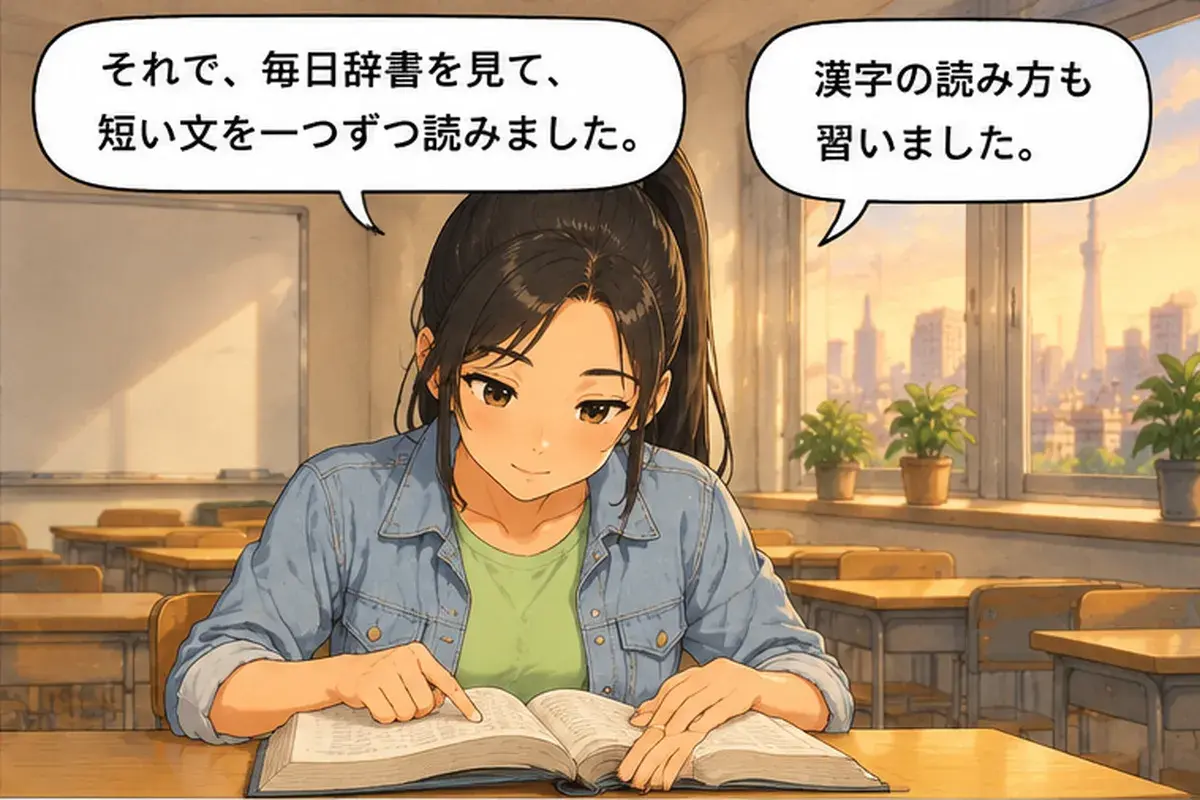
- リン
それで、毎日辞書を見て、短い文を一つずつ読みました。
So every day I looked in the dictionary and read short sentences one at a time.
- リン
漢字の読み方も習いました。
I also took lessons on how to read kanji.

- リン
だんだん地図の漢字が読めるようになりました。
I've gradually learned to read the kanji on the map.
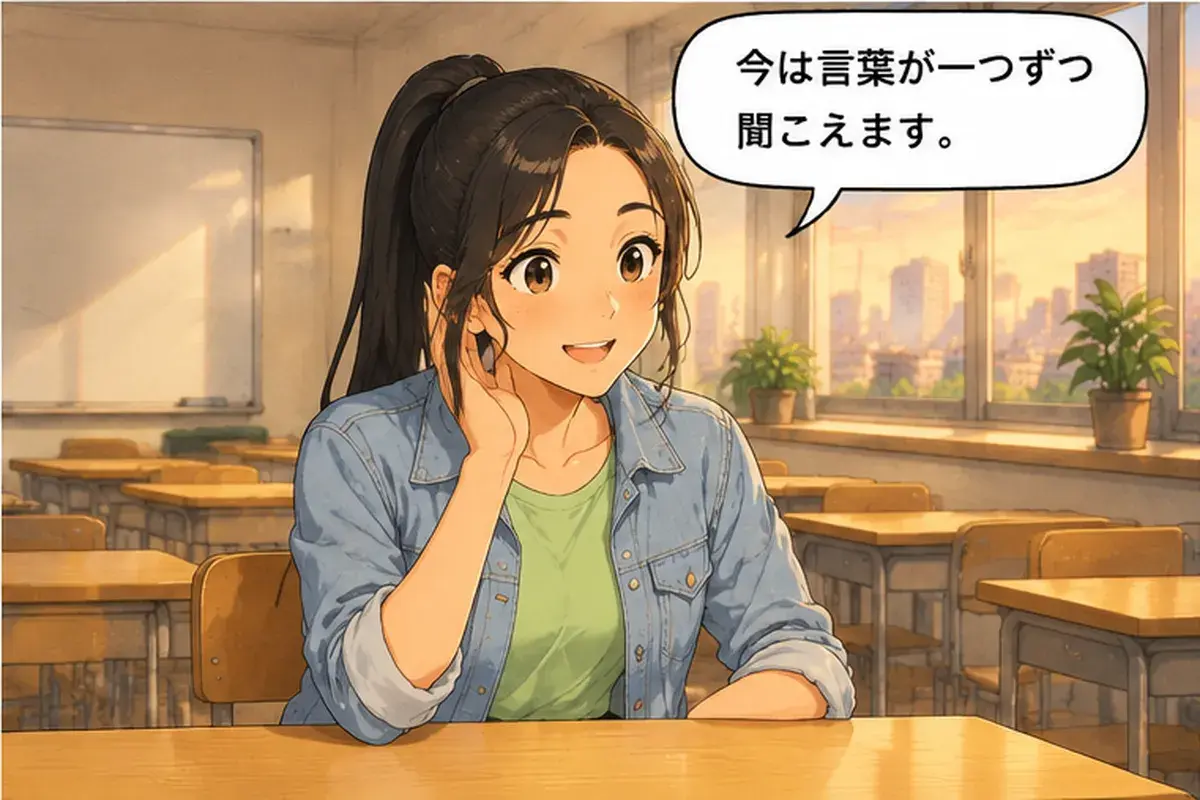
- リン
今は言葉が一つずつ聞こえます。
Now I can hear the words one at a time.

- リン
コンビニのレジにも慣れました。お客さんとも話せます。
I've gotten used to the register at the convenience store, too. I can talk with customers, too.
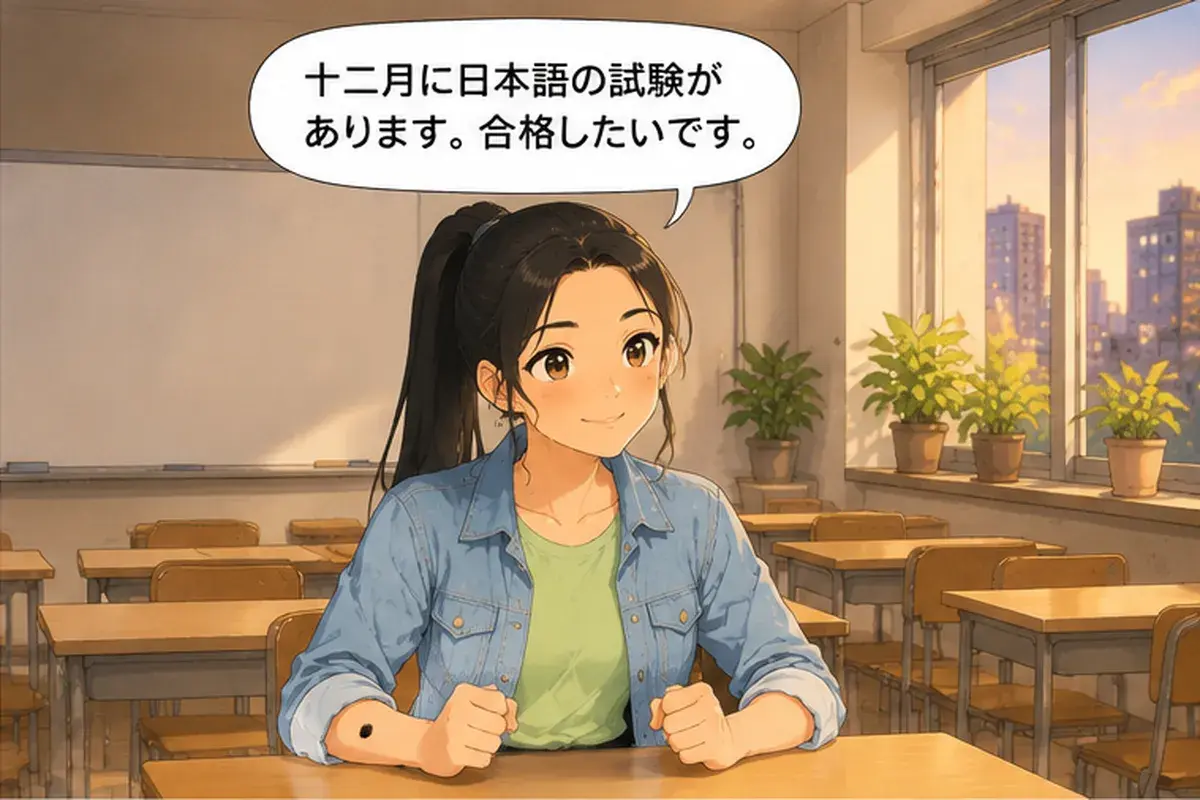
- リン
十二月に日本語の試験があります。合格したいです。
In December I have a Japanese exam. I want to pass.
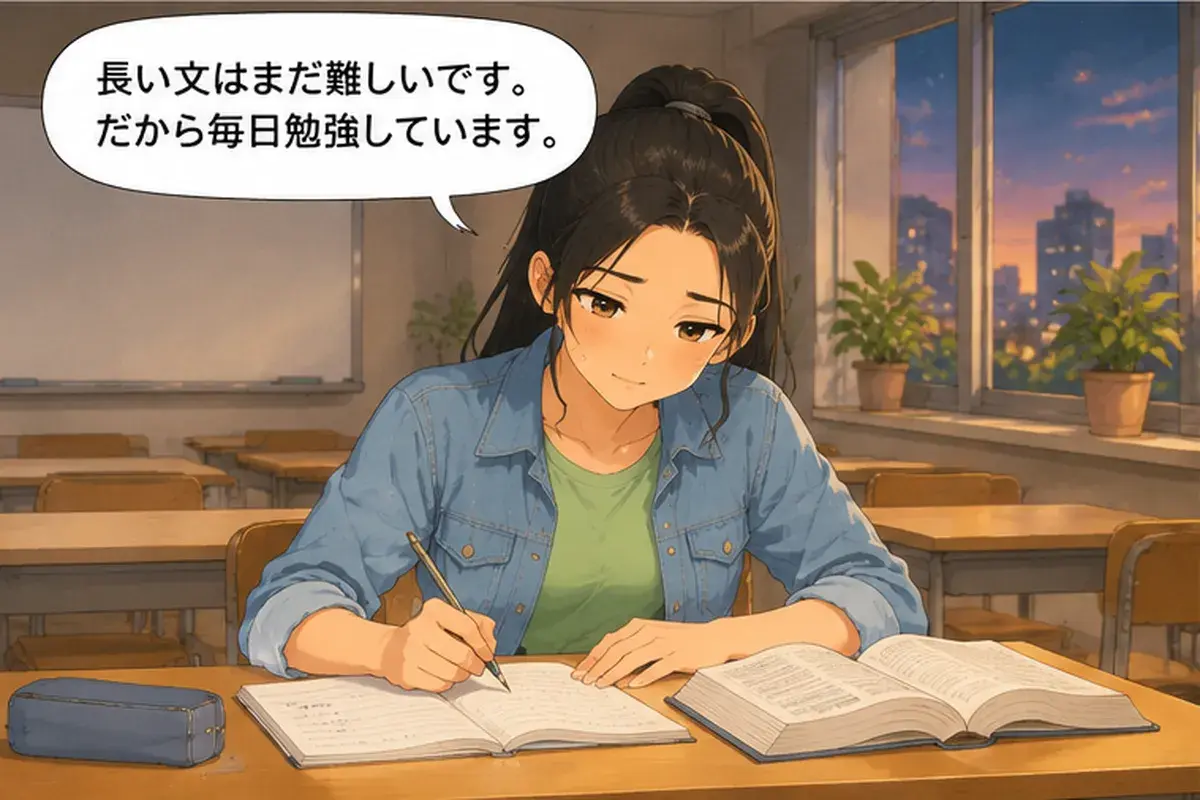
- リン
長い文はまだ難しいです。だから毎日勉強しています。
Long sentences are still hard. So I study every day.
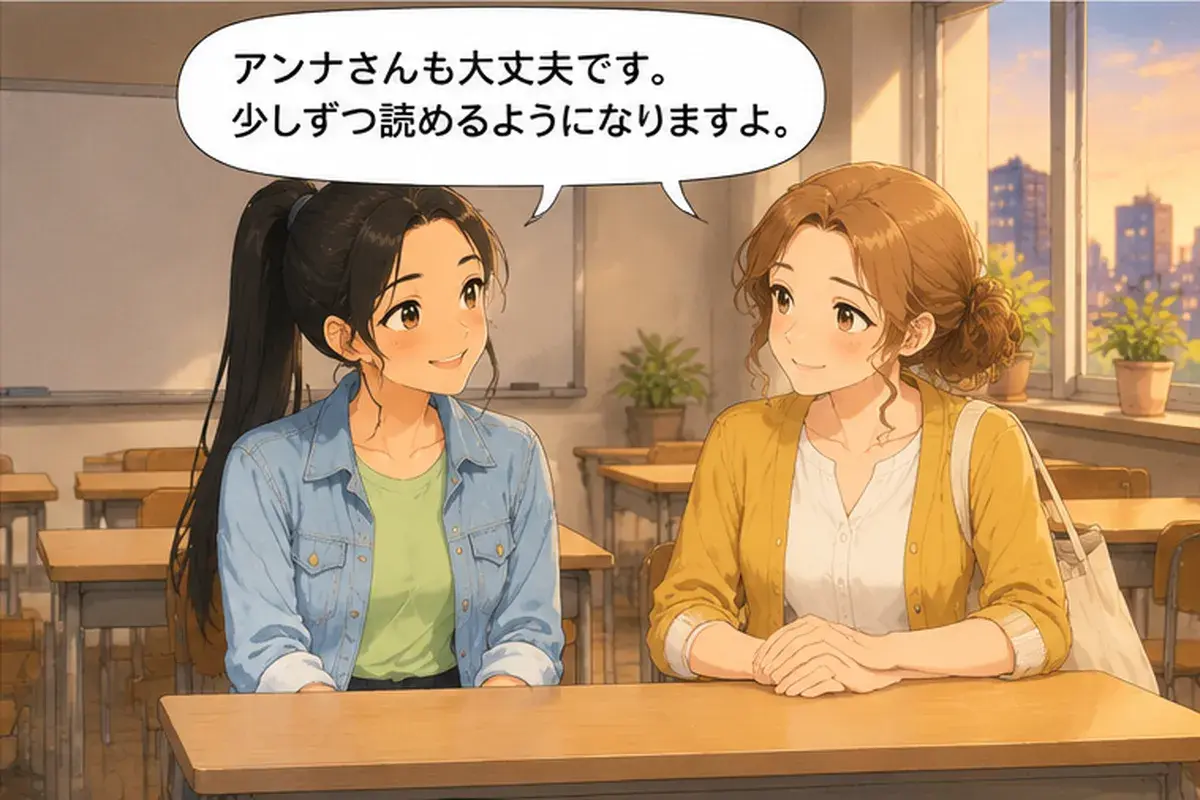
- リン
アンナさんも大丈夫です。少しずつ読めるようになりますよ。
Anna-san will be OK, too. She'll learn to read little by little.
Grammar for this text
私 は 「いいえ」 と 言いました— I said “No.” In Japan the usual reply to a compliment is “oh no, not really,” even when you're pleased. Linh is honest with us about it.本当 は うれしかった です— Honestly, I was happy.同じ 絵 に 見えました— They looked like the same picture.〜に 見えるmeans “looks like, seems.” It isn't “can be seen” but “seemed”: all the kanji looked alike.長い 一つ の 音 に 聞こえました— It sounded like one long sound. It works the same way with聞こえる.読み 方— how to read it. It is the stem読みfrom読むplus方.読める ように なりました— Now I can read it, I've learned to. This is the main phrase of the unit.少し ずつ 読める ように なります よ— She'll learn to read little by little. Here it'sなります: “in time it will start to work.” Linh is encouraging Anna.今 は 言葉 が 一つ ずつ 聞こえます— Now I can hear the words one at a time.聞こえますmeans the words now come through clearly on their own.コンビニ の レジ に も 慣れました— I've gotten used to the register at the convenience store, too.慣れるgoes withに: “to get used to something.”に もmeans “to this, too.”お客さん と も 話せます— I can talk with customers, too.話せますcomes from話すand means “can talk.”と もmeans “with the customers, too.”合格したい です— I want to pass.合格するmeans “to pass an exam.”
Words and grammar of the unit: Say what you can do now.
Learn the words from the texts with flashcards
In the app, you can tap any word in a text to see its translation, forms and examples, and new words stick with flashcards. 15 minutes a day.
Start for freeEverything is open for free. No card needed to sign up.