
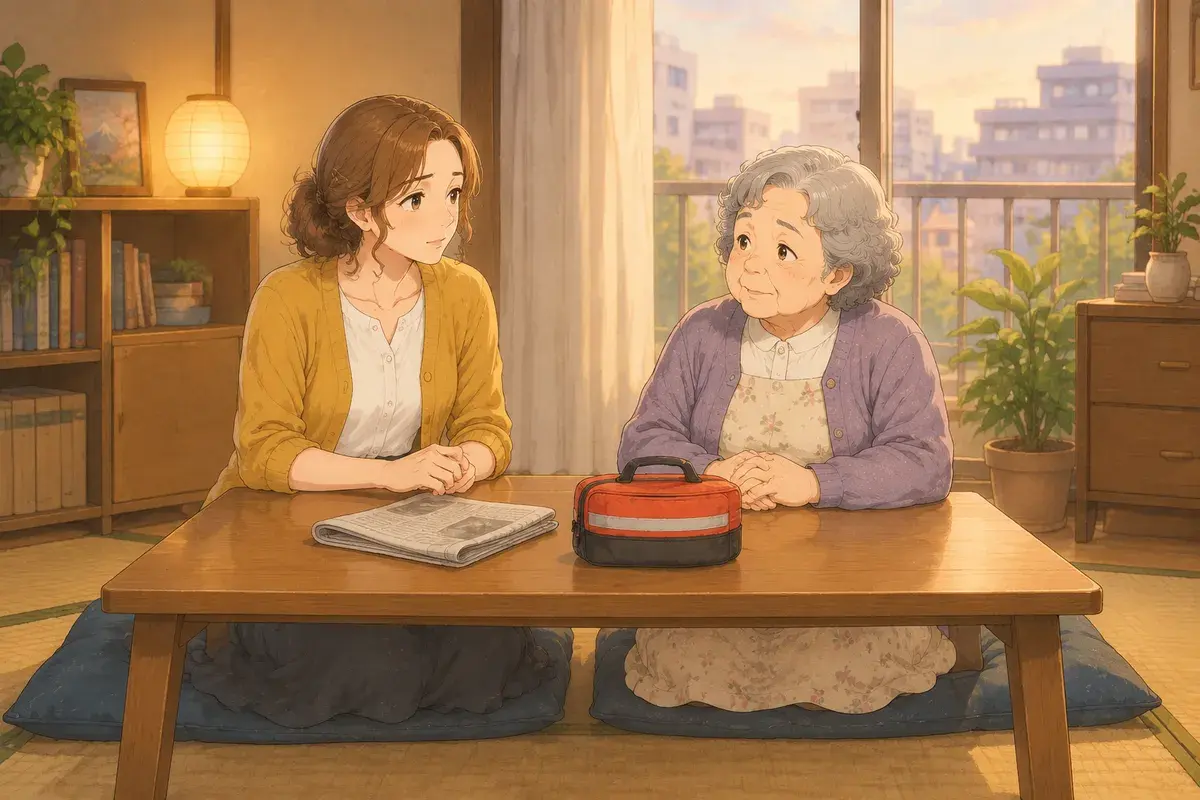
Japanese dialogue with translation · A2 · 16 lines
食料と水は必ず買っておきます I'll definitely buy food and water ahead of time
Comic · 13 panels
- 田中
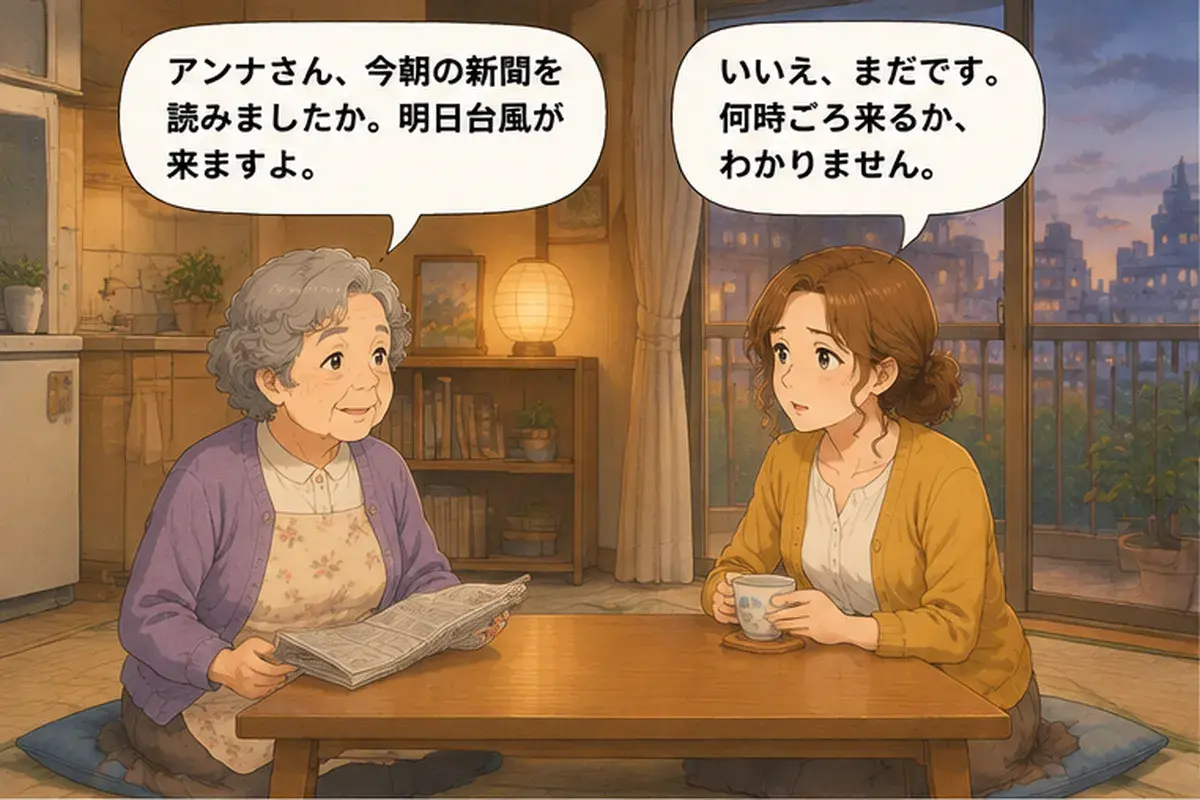
アンナさん、今朝の新聞を読みましたか。明日台風が来ますよ。
Anna-san, did you read this morning's newspaper? A typhoon is coming tomorrow.
- アンナ
いいえ、まだです。何時ごろ来るか、わかりません。
No, not yet. I don't know about what time it will come.
- 田中
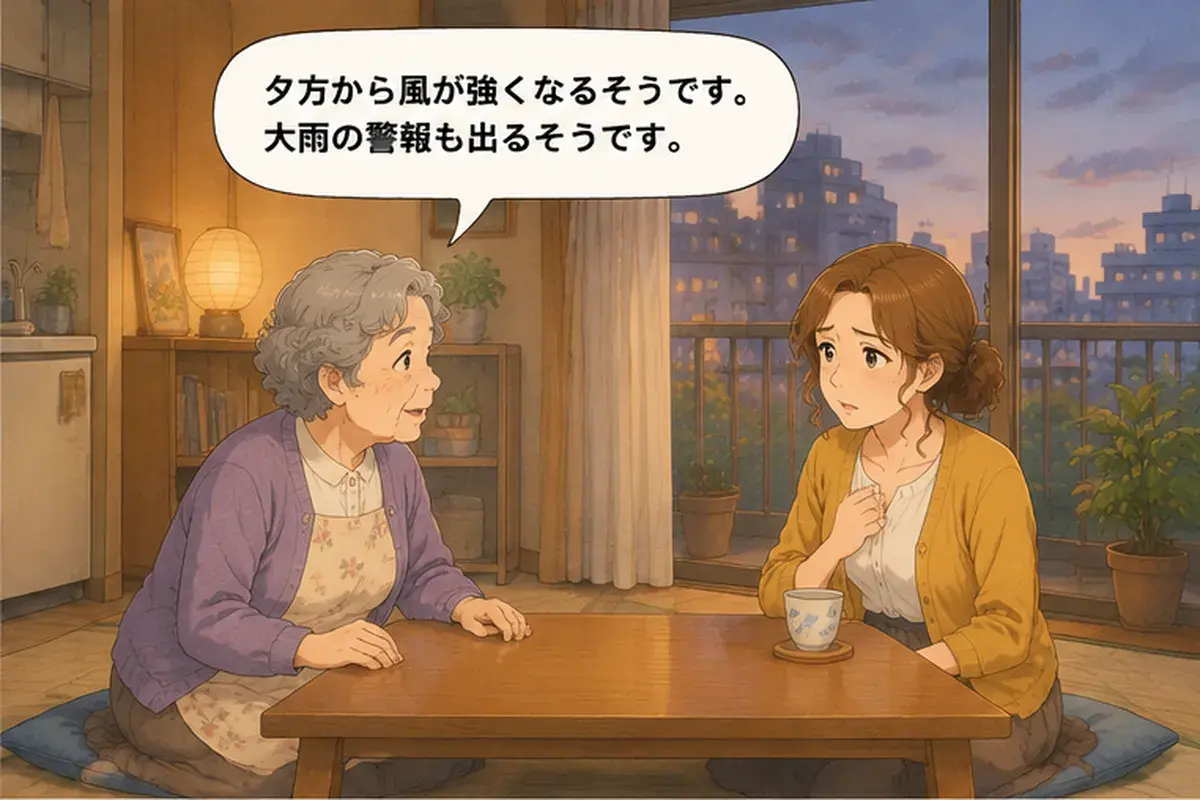
夕方から風が強くなるそうです。大雨の警報も出るそうです。
I hear the wind will get strong from the evening. They say a heavy rain warning will be issued too.
- アンナ
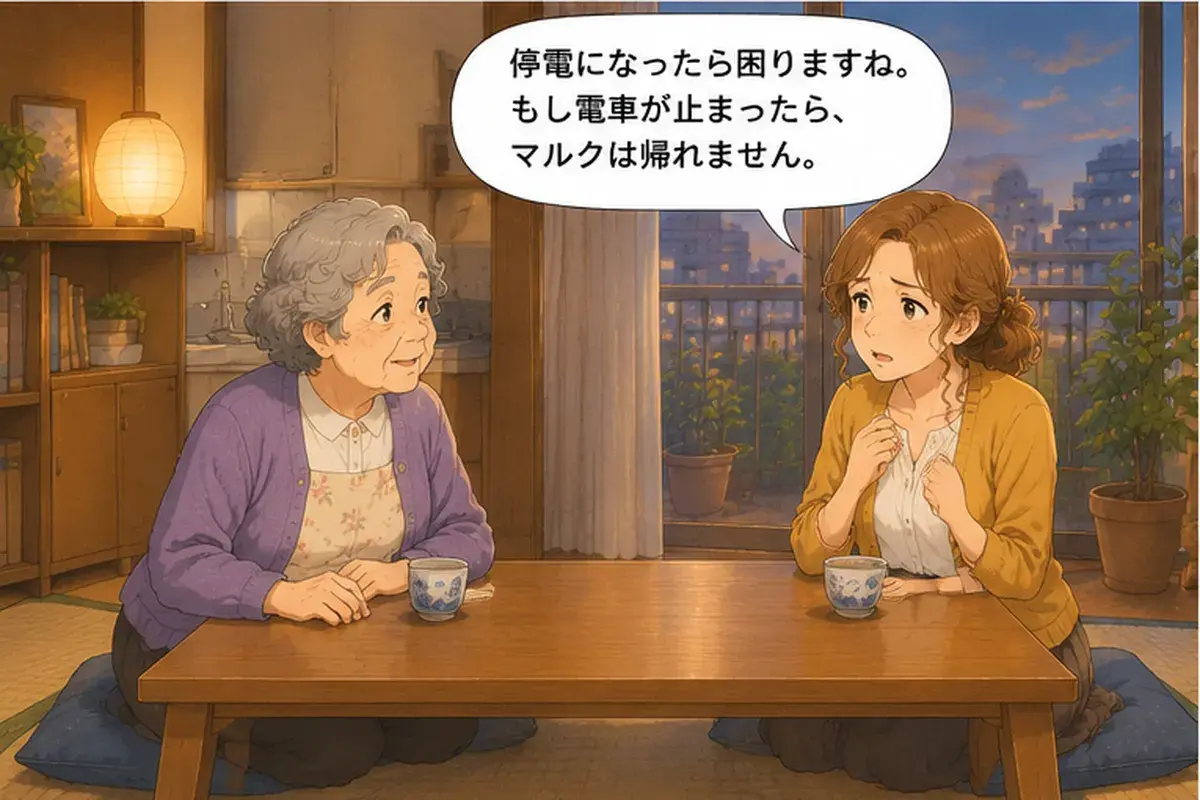
停電になったら困りますね。もし電車が止まったら、マルクは帰れません。
If the power goes out, that'll be a problem, won't it? If the trains stop, Mark won't be able to get home.
- 田中
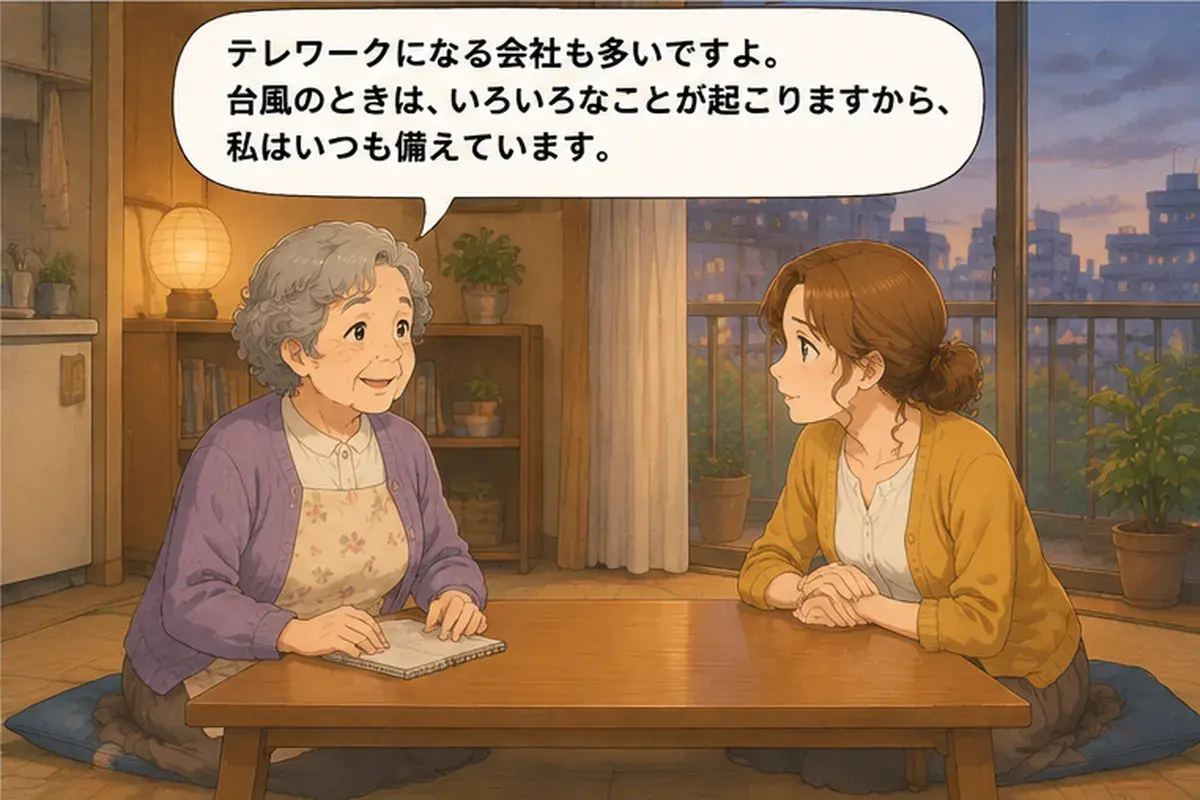
テレワークになる会社も多いですよ。台風のときは、いろいろなことが起こりますから、私はいつも備えています。
Many companies switch to remote work too. All kinds of things happen during a typhoon, so I'm always prepared.
- アンナ
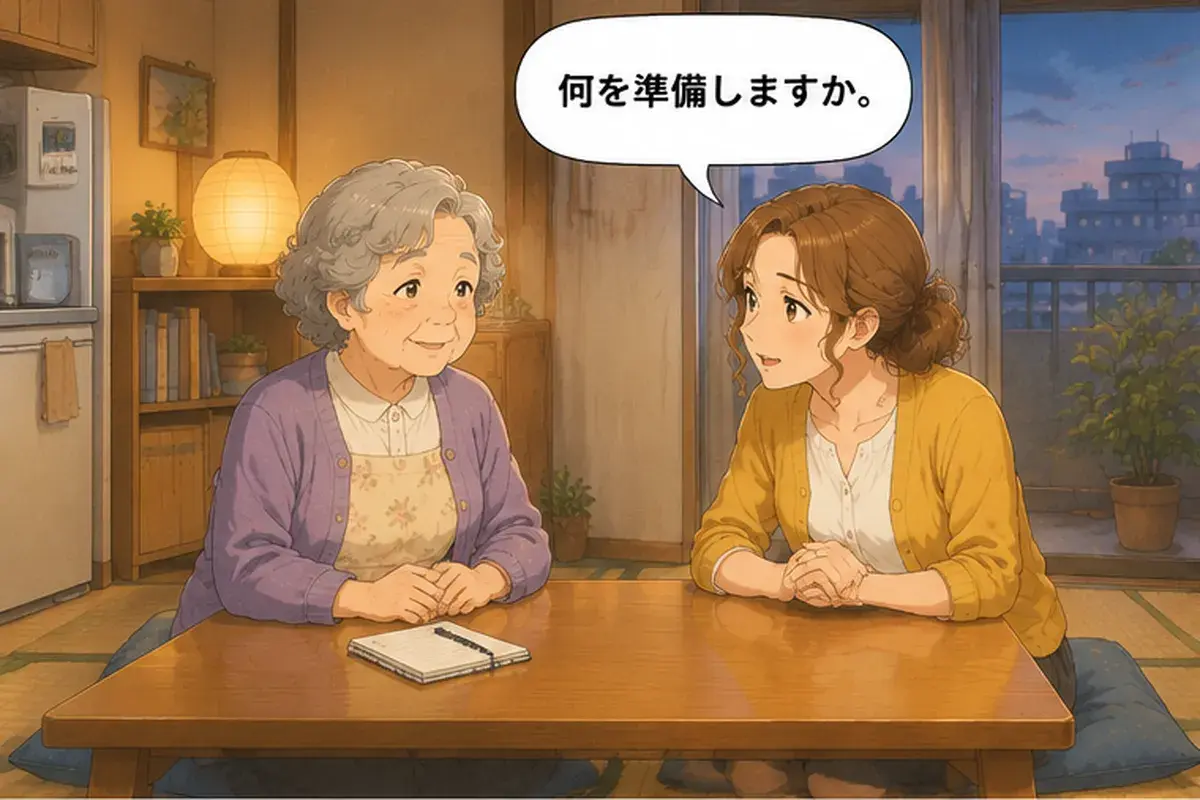
何を準備しますか。
What do you prepare?
- 田中
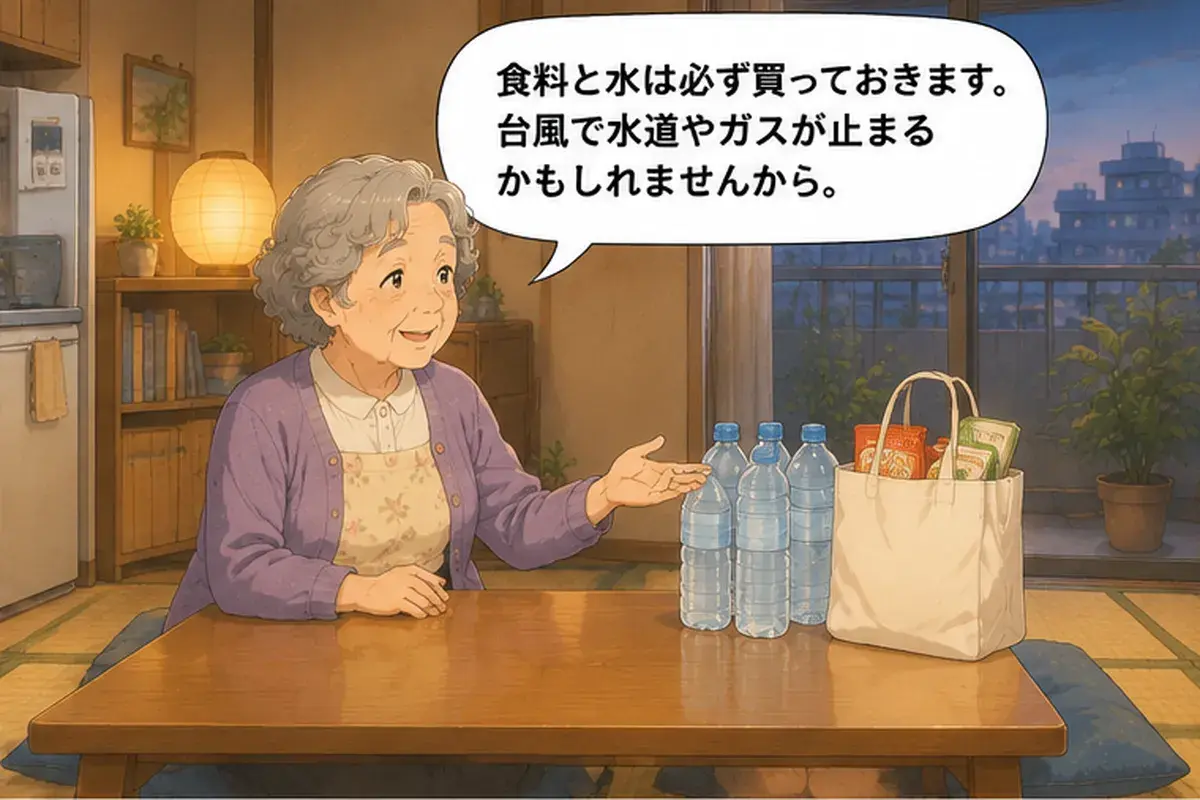
食料と水は必ず買っておきます。台風で水道やガスが止まるかもしれませんから。
I always buy food and water ahead of time. The water and gas might be shut off because of the typhoon.
- アンナ
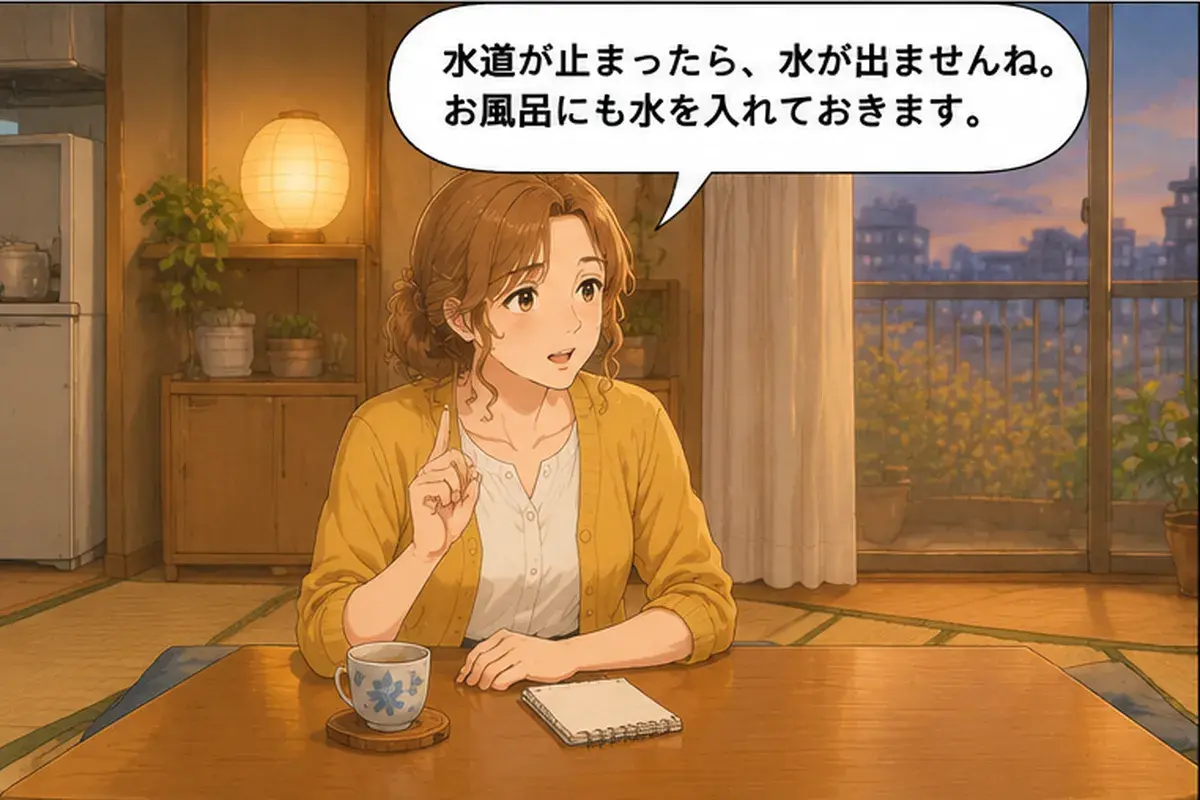
水道が止まったら、水が出ませんね。お風呂にも水を入れておきます。
If the water is shut off, nothing comes out of the tap, right? I'll fill the bathtub with water ahead of time, too.
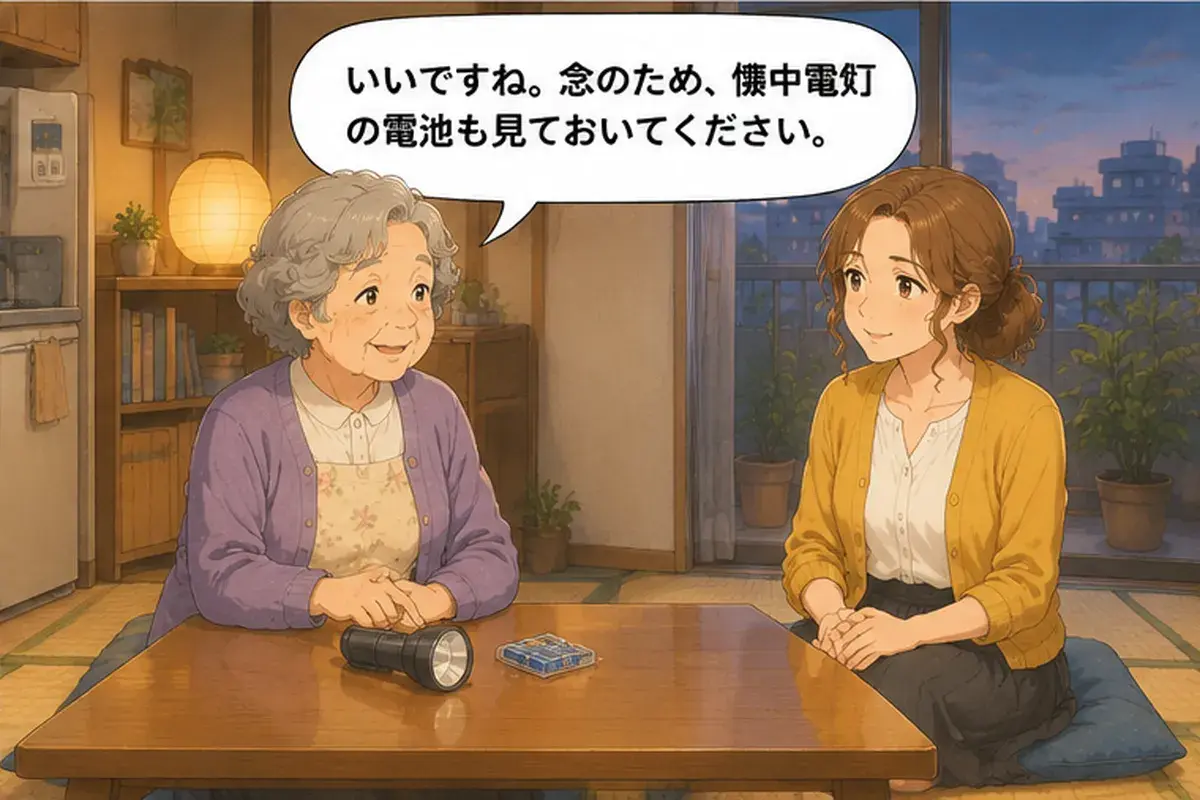
- 田中
いいですね。念のため、懐中電灯の電池も見ておいてください。
That's good. Just in case, please check the flashlight batteries ahead of time, too.
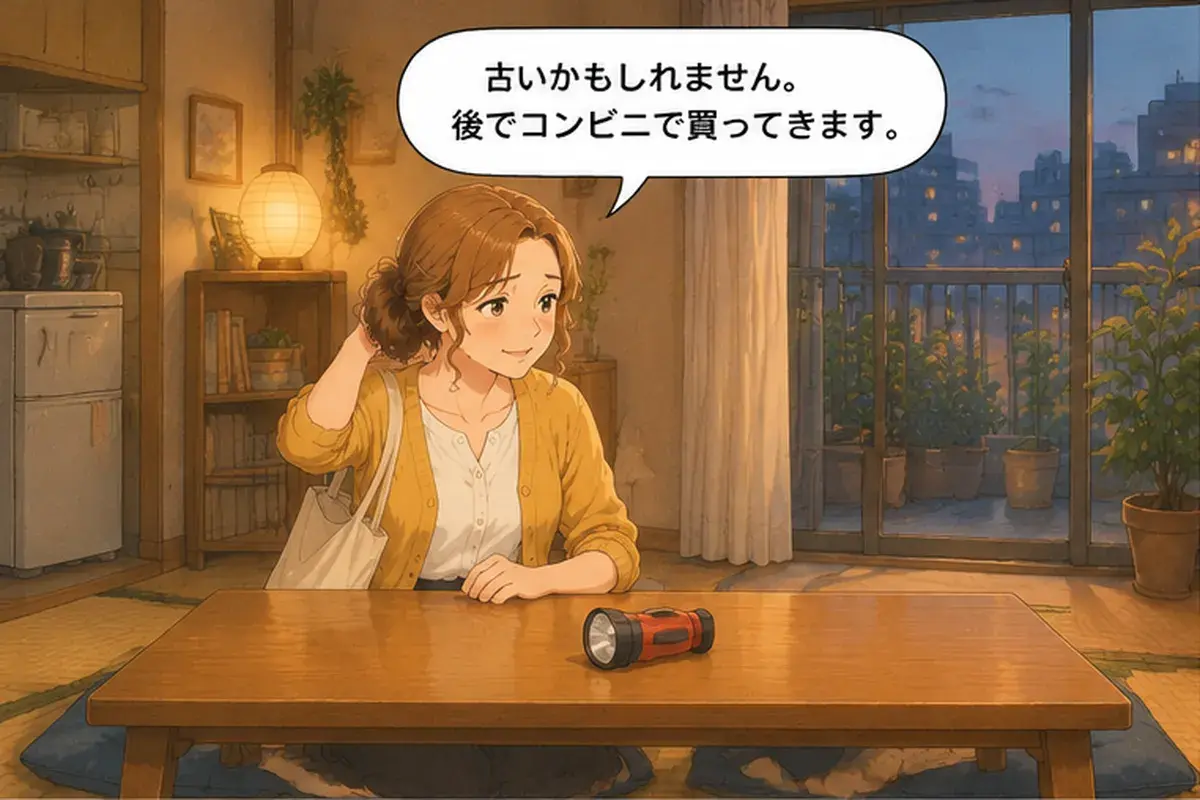
- アンナ
古いかもしれません。後でコンビニで買ってきます。
They might be old. I'll go buy some at the convenience store later.
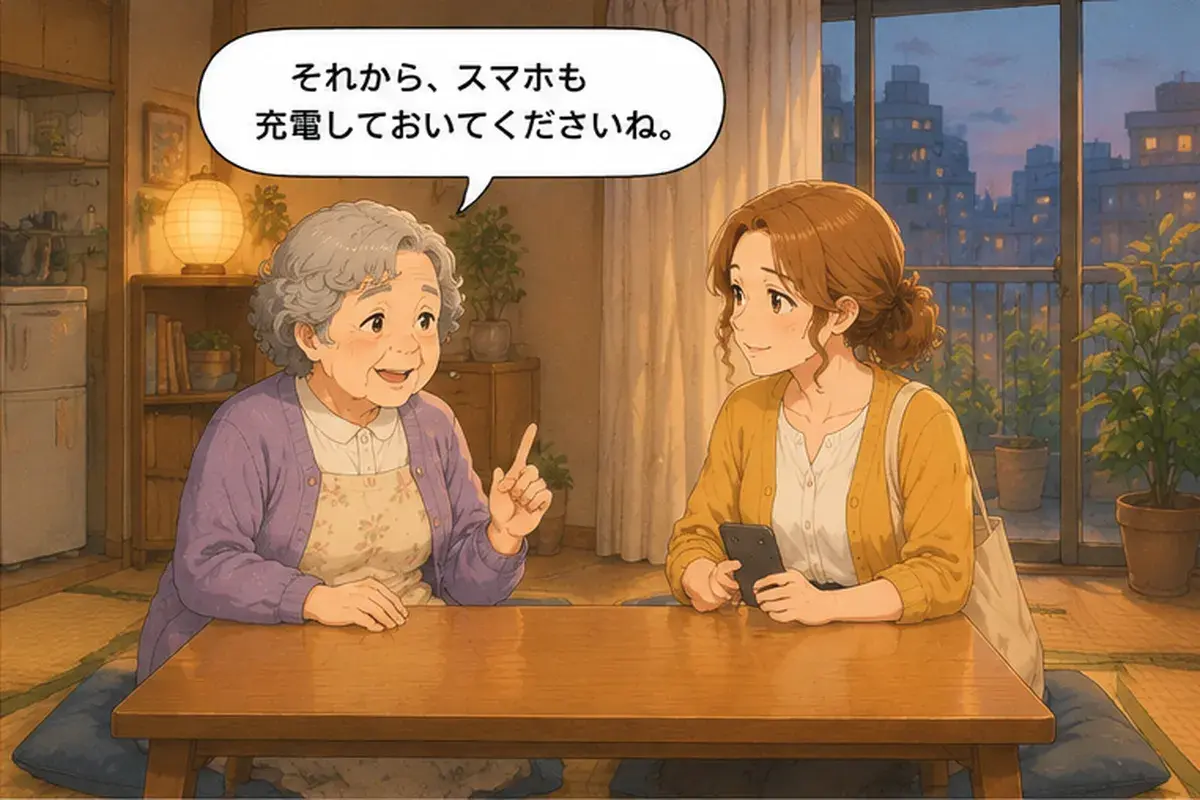
- 田中
それから、スマホも充電しておいてくださいね。
And please charge your smartphone ahead of time, too.
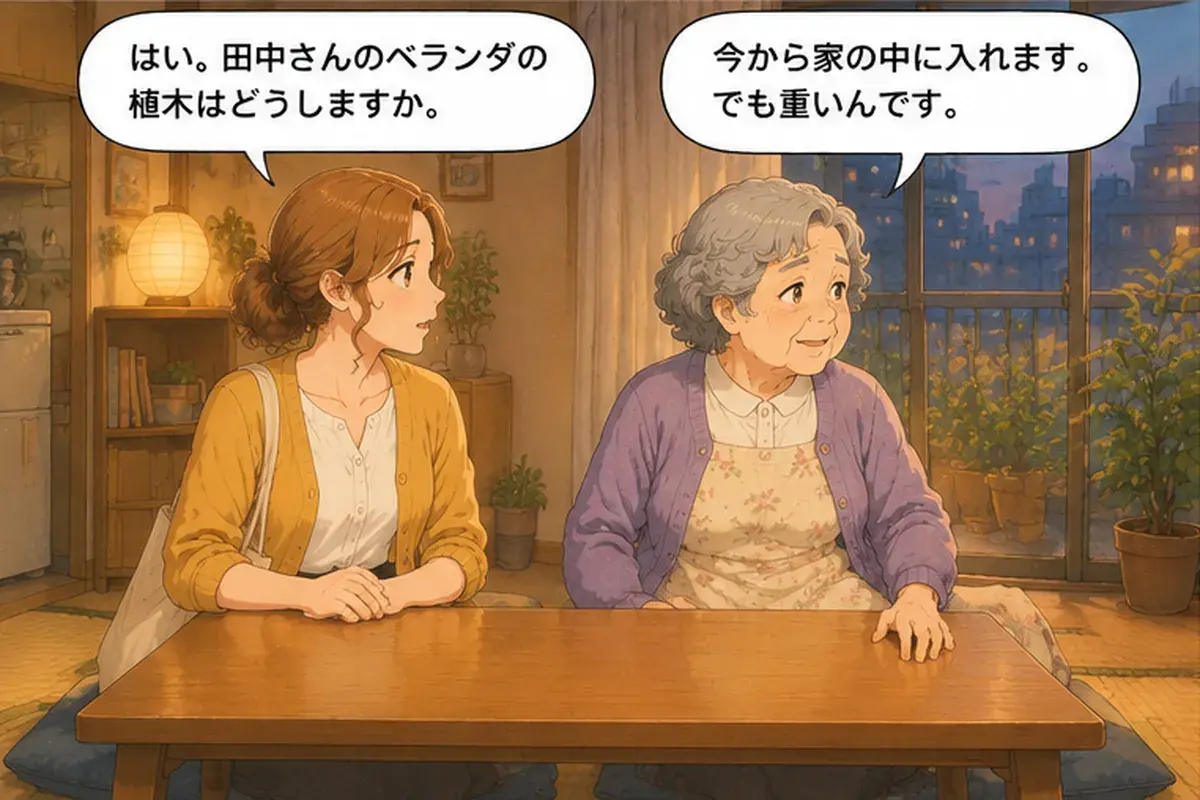
- アンナ
はい。田中さんのベランダの植木はどうしますか。
Okay. What will you do with the plants on your balcony, Tanaka-san?
- 田中
今から家の中に入れます。でも重いんです。
I'll bring them inside now. But they're heavy.
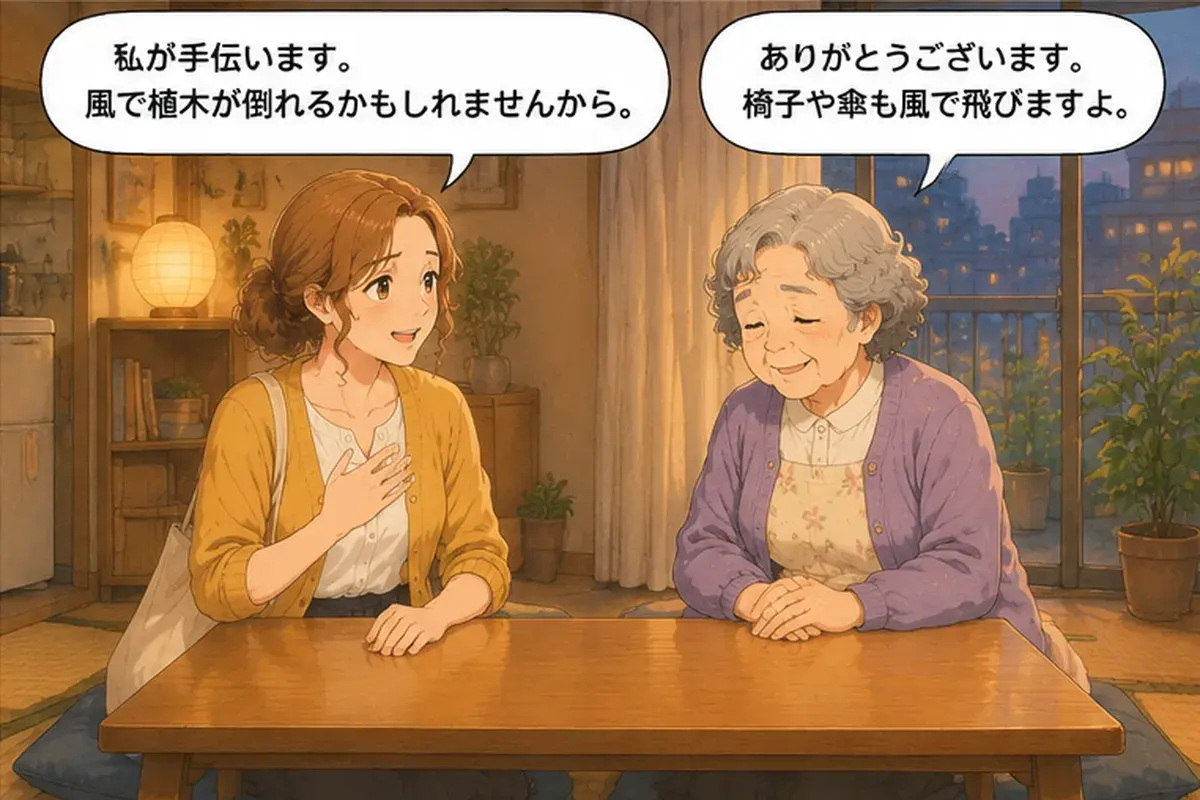
- アンナ
私が手伝います。風で植木が倒れるかもしれませんから。
I'll help. The wind might knock the plants over.
- 田中
ありがとうございます。椅子や傘も風で飛びますよ。
Thank you. The wind blows chairs and umbrellas away, too.
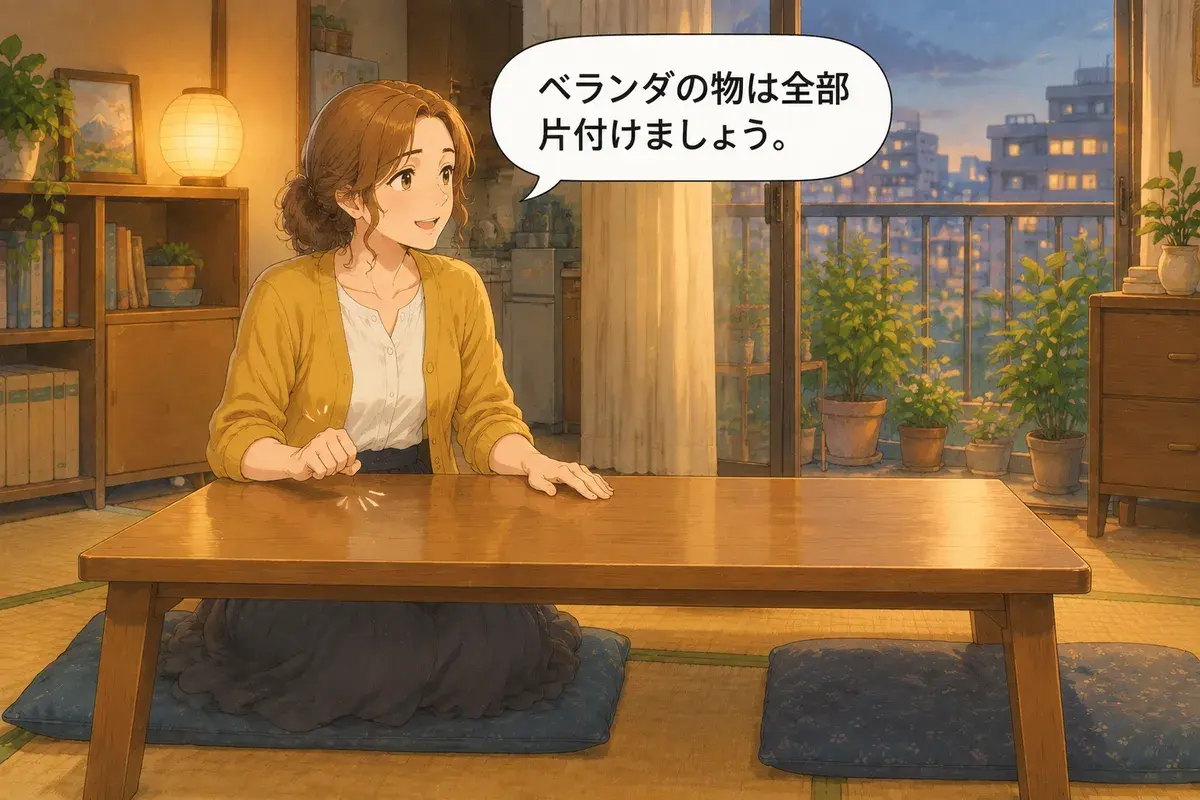
- アンナ
ベランダの物は全部片付けましょう。
Let's put away everything on the balcony.
Grammar for this text
停電 に なったら 困ります ね— If the power goes out, that'll be a problem, won't it?なったらis the main form of this unit: the ta-formなったplusら. Everything before it is the condition, and what happens next comes after the comma. The same goes for水道 が 止まったら. Inもし 電車 が 止まったら,もしjust adds "what if."何時 ごろ 来る か、わかりません— I don't know about what time it will come. The question何時 ごろ 来る かsits inside the sentence, so there is no question mark at the end: only part of the sentence asks the question.大雨 の 警報 も 出る そう です— I hear a heavy rain warning will be issued too.そう ですafter the dictionary form means "I heard that" (A2, unit 7), not "it looks like."いろいろ な こと が 起こります から、私 は いつも 備えて います— All kinds of things happen, so I'm always prepared.起こるmeans "to happen" and備えるmeans "to prepare ahead of time (for danger)";からmeans "because" (A1).食料 と 水 は 必ず 買って おきます— I always buy food and water ahead of time.おきますafter a te-form means "do ahead of time, just in case." It is written in kana and is not置く(to put).後で コンビニ で 買って きます— I'll go buy some at the convenience store later. Hereきますdoesn't mean "I'll come"; it is part of one trip there and back.台風 で 水道 や ガス が 止まる かもしれません— The water and gas might be shut off because of the typhoon.でafter typhoon shows the cause.かもしれませんmeans "maybe" and comes after a plain form; after古いin古い かもしれませんit is the same.
Words and grammar of the unit: Get ready for bad weather.
Learn the words from the texts with flashcards
In the app, you can tap any word in a text to see its translation, forms and examples, and new words stick with flashcards. 15 minutes a day.
Start for freeEverything is open for free. No card needed to sign up.