

Japanese dialogue with translation · A2 · 16 lines
学校があるかどうか Will there be school or not
Comic · 9 panels
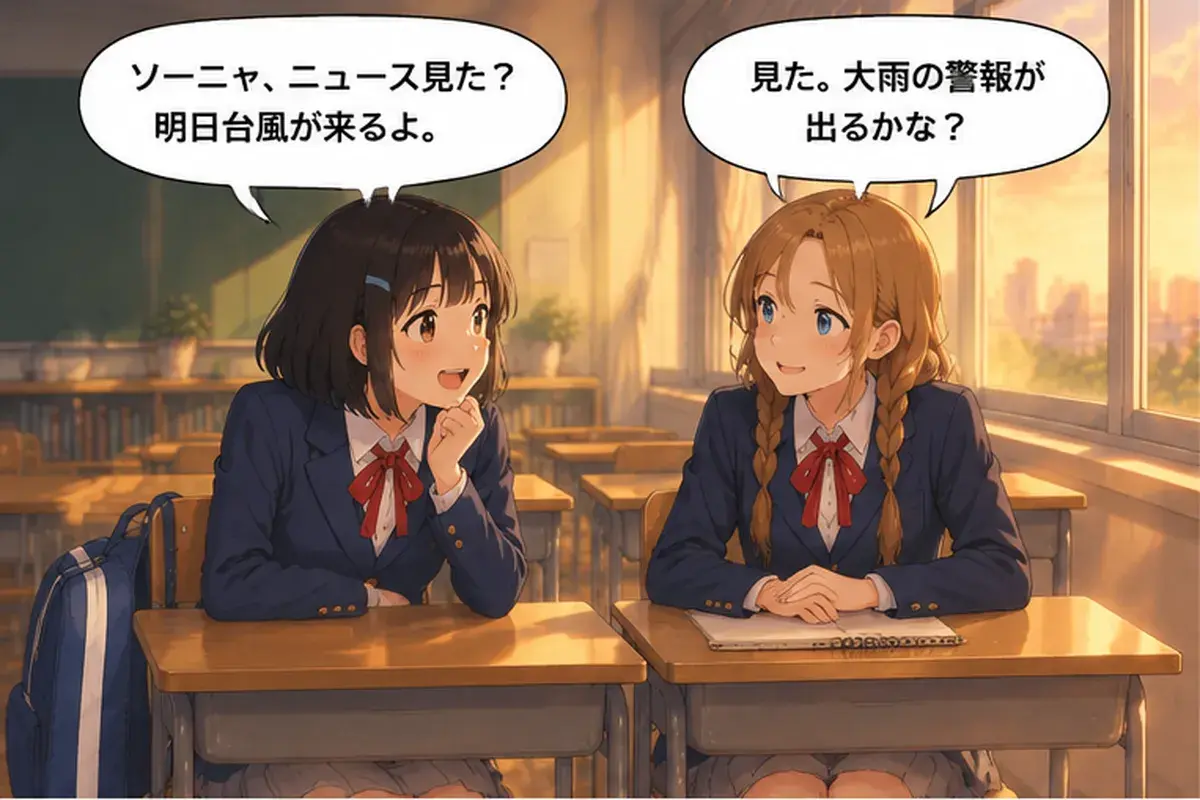
- ゆい
ソーニャ、ニュース見た?明日台風が来るよ。
Sonya, did you watch the news? A typhoon is coming tomorrow (casual).
- ソーニャ
見た。大雨の警報が出るかな?
I did. I wonder if they'll issue a heavy rain warning (casual).
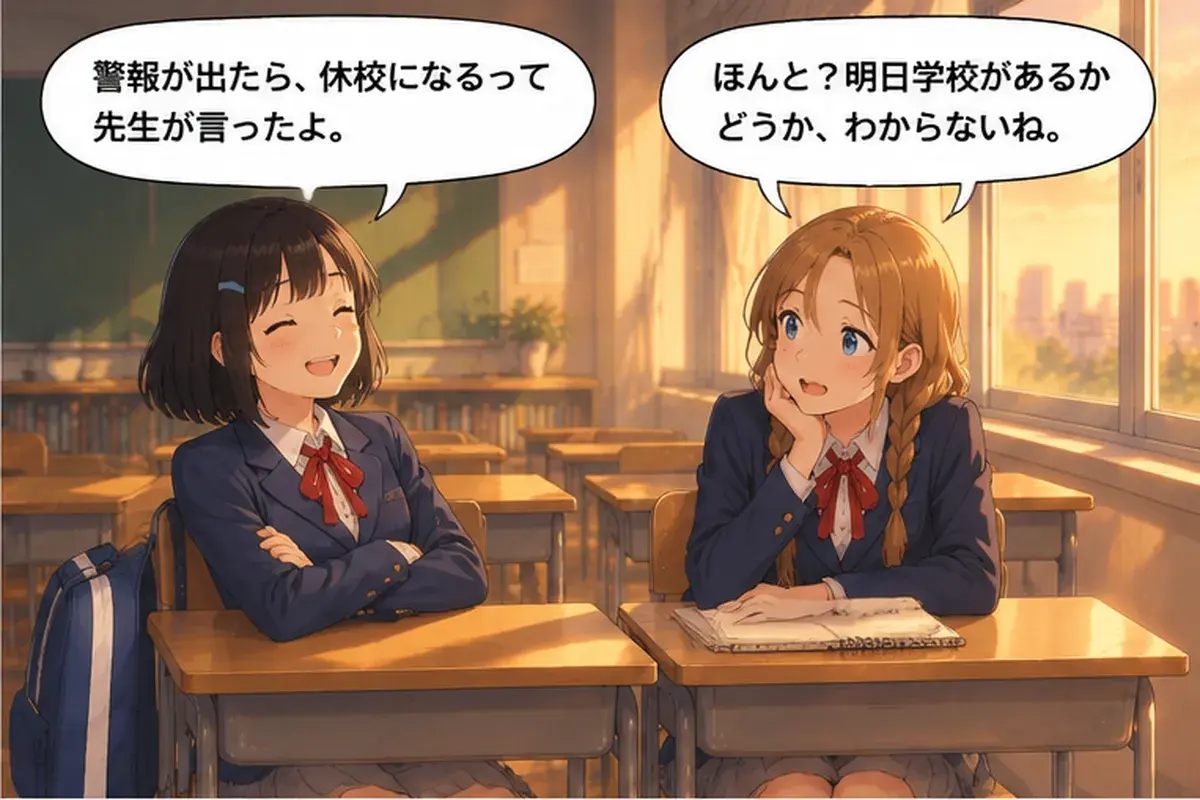
- ゆい
警報が出たら、休校になるって先生が言ったよ。
Our teacher said that if a warning is issued, school will be closed (casual).
- ソーニャ
ほんと?明日学校があるかどうか、わからないね。
Really? So we don't know whether there'll be school tomorrow (casual).
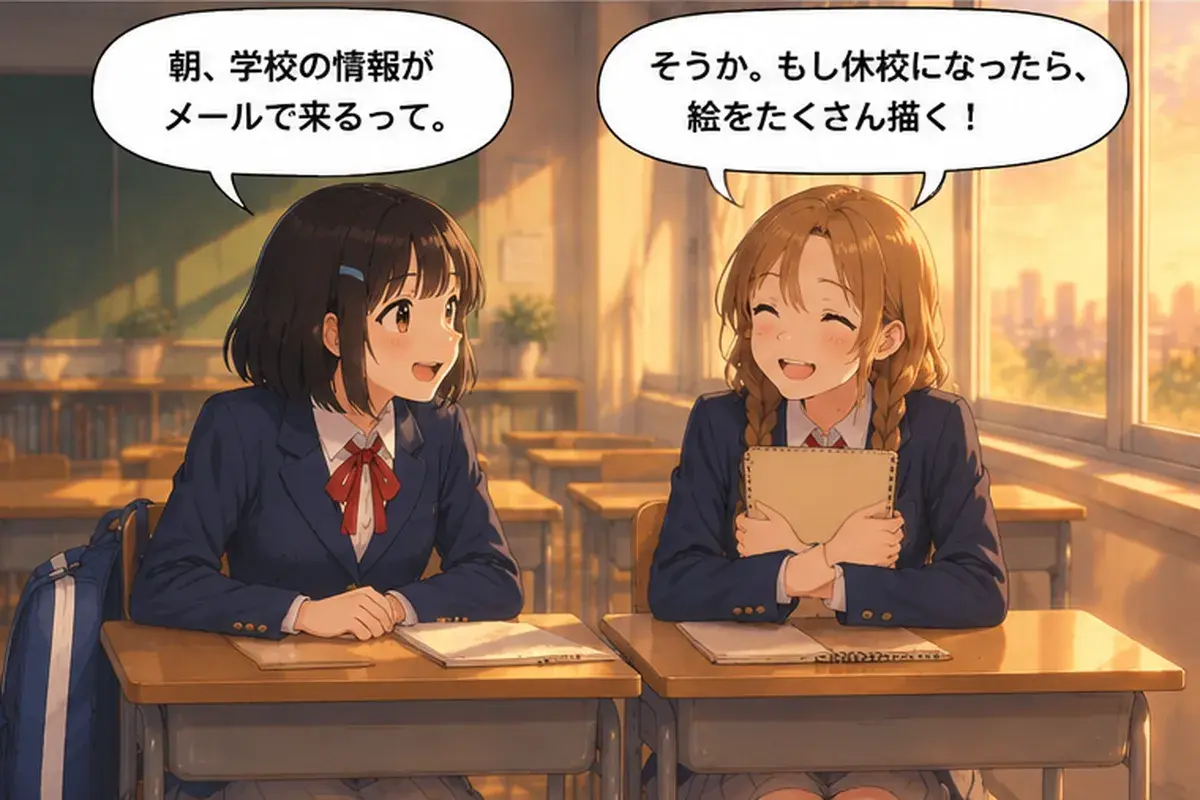
- ゆい
朝、学校の情報がメールで来るって。
I hear we'll get information about school by email in the morning (casual).
- ソーニャ
そうか。もし休校になったら、絵をたくさん描く!
I see. If school is closed, I'll draw lots of pictures (casual)!
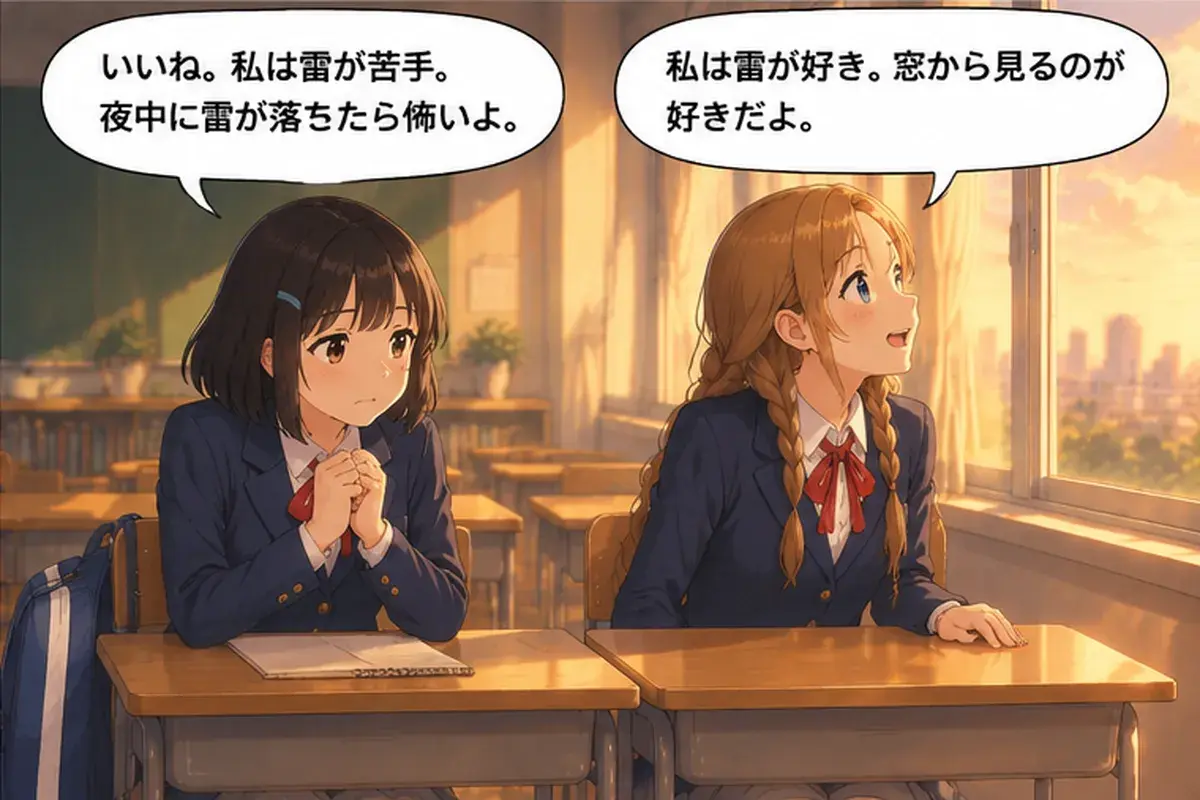
- ゆい
いいね。私は雷が苦手。夜中に雷が落ちたら怖いよ。
Sounds good. I'm not good with thunder. It's scary if lightning strikes in the middle of the night (casual).
- ソーニャ
私は雷が好き。窓から見るのが好きだよ。
I like thunder. I like watching it from the window (casual).
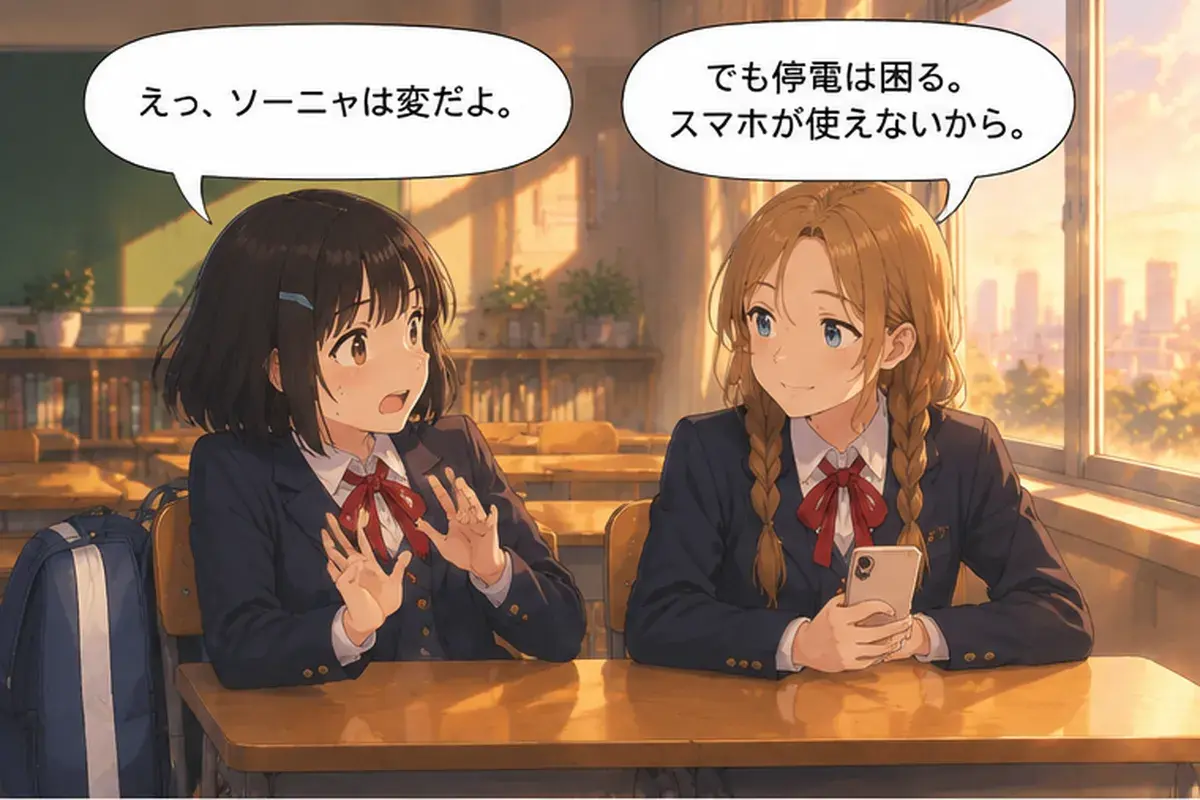
- ゆい
えっ、ソーニャは変だよ。
What? Sonya, you're weird (casual).
- ソーニャ
でも停電は困る。スマホが使えないから。
But a power outage is a problem. Because I can't use my smartphone (casual).
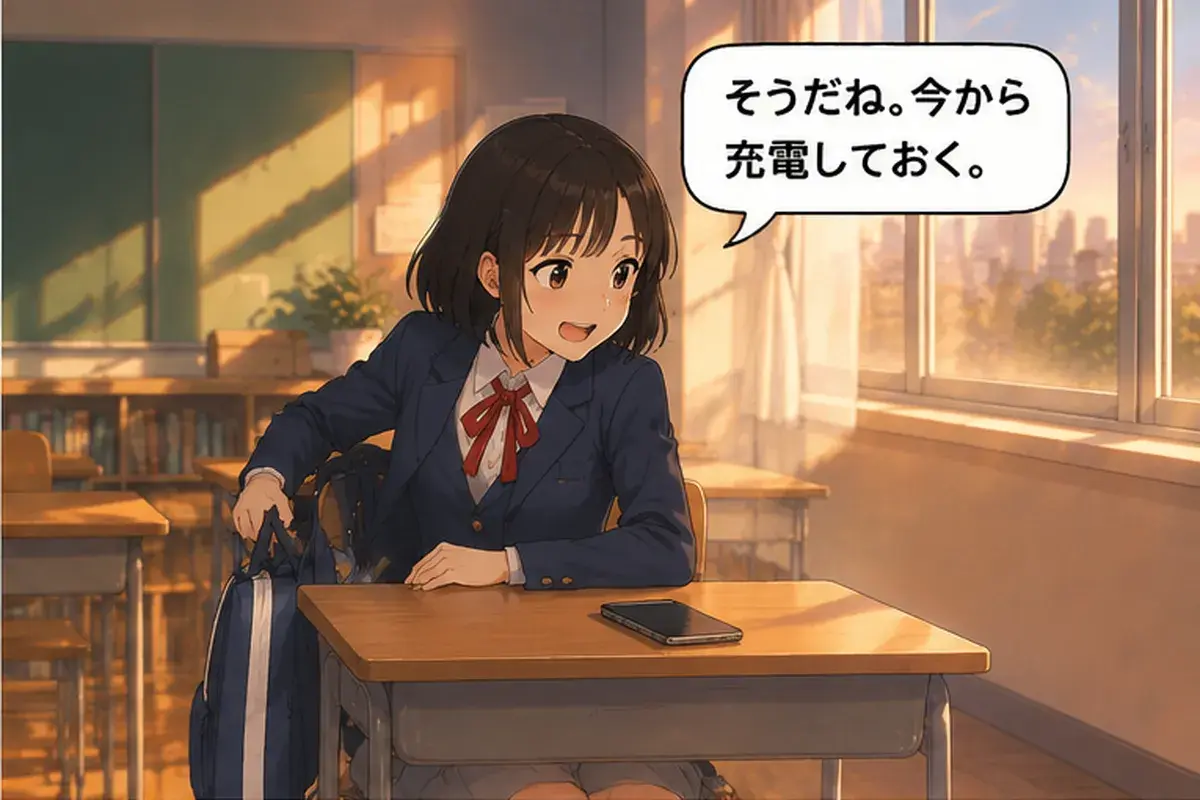
- ゆい
そうだね。今から充電しておく。
You're right. I'll charge mine ahead of time right now (casual).
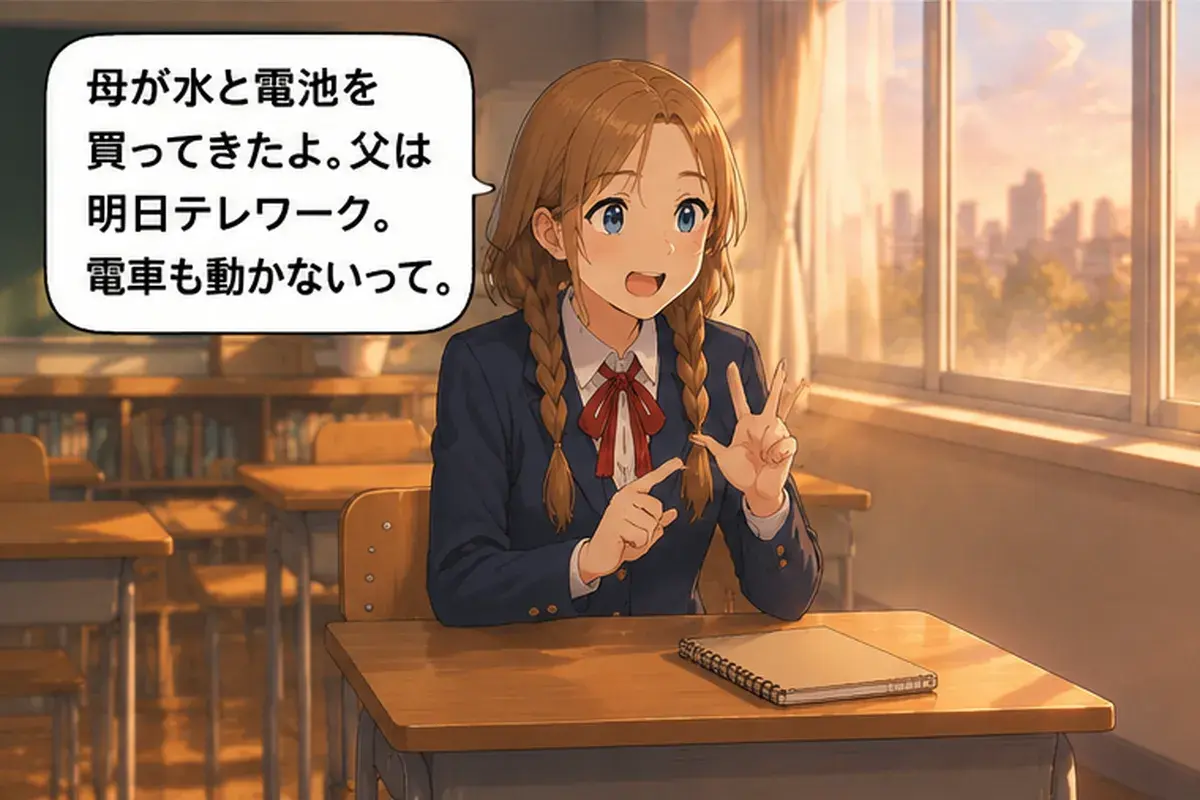
- ソーニャ
母が水と電池を買ってきたよ。父は明日テレワーク。電車も動かないって。
My mom went and bought water and batteries. My dad is working remotely tomorrow. I hear the trains won't be running either (casual).
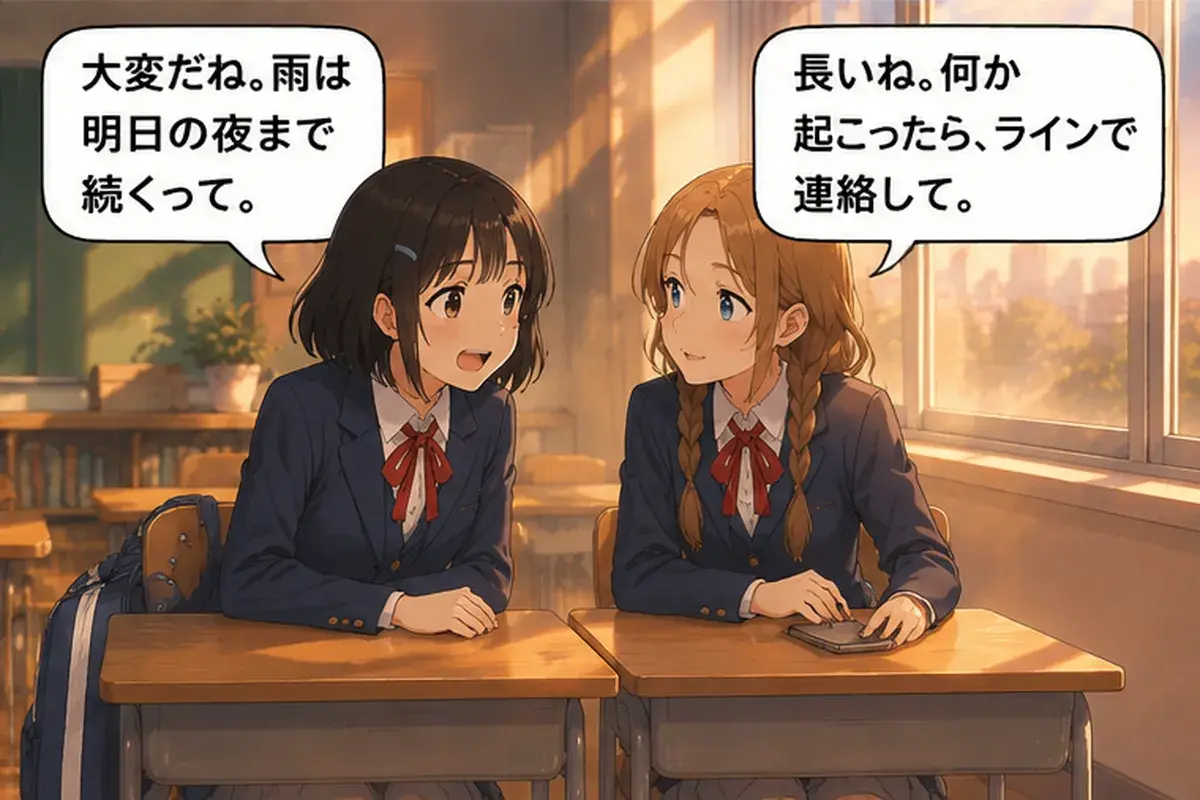
- ゆい
大変だね。雨は明日の夜まで続くって。
That's rough. I hear the rain will go on until tomorrow night (casual).
- ソーニャ
長いね。何か起こったら、ラインで連絡して。
That's long. If anything happens, message me on LINE (casual).
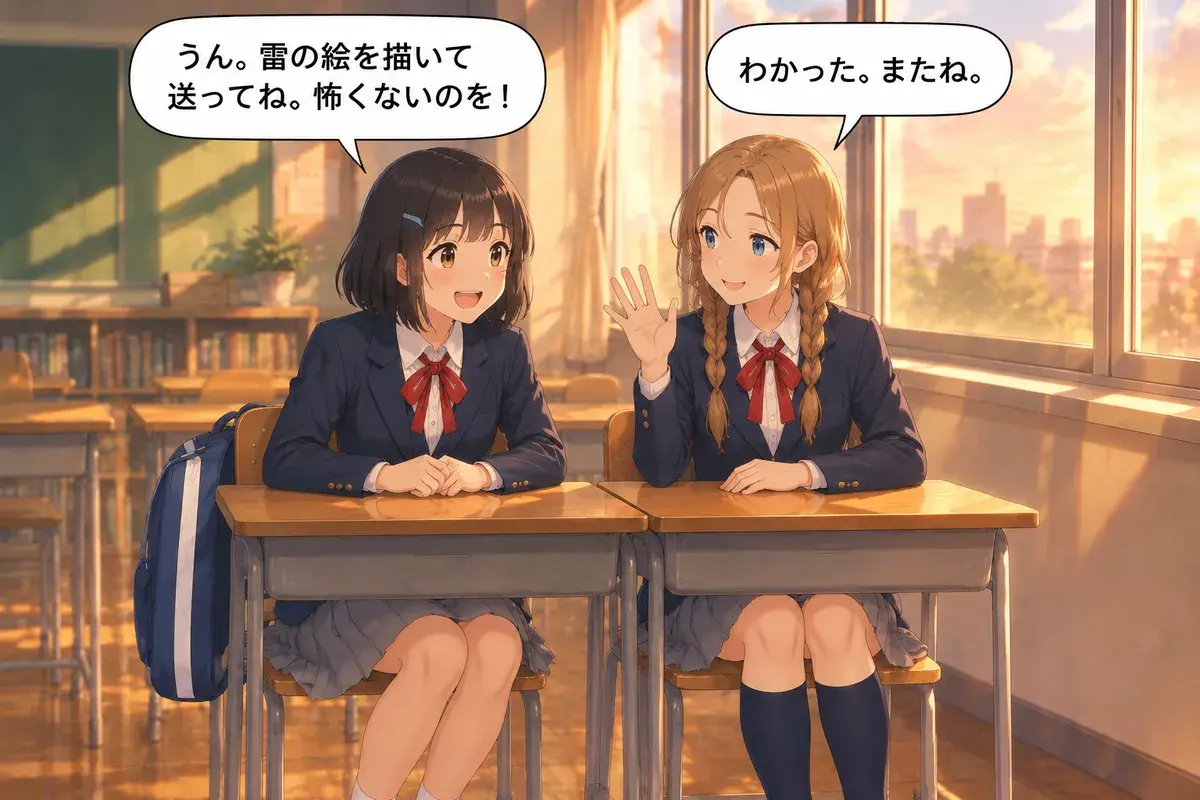
- ゆい
うん。雷の絵を描いて送ってね。怖くないのを!
Okay. Draw a picture of thunder and send it to me, okay? One that isn't scary (casual)!
- ソーニャ
わかった。またね。
Got it. See you later (casual).
Grammar for this text
警報 が 出たら、休校 に なる って 先生 が 言った よ— The teacher said that if a warning is issued, school will be closed.たらmeans "if" (the main form of this unit).ってis a casual "that": friends use it to pass on what someone said (A2, unit 7).休校 に なるliterally means "will become a school closure."ある か どう か、わからない— I don't know whether there will be school. To put a yes-or-no question inside a sentence, use the plain form and thenか どう か("or not").かalone is not enough for this kind of question.夜中 に 雷 が 落ちたら 怖い よ— It's scary if lightning strikes in the middle of the night.雷 が 落ちるliterally means "thunder falls": Japanese says "falls" (落ちる) where English says "strikes."夜中is the deep night after midnight;夜is just evening and night.母 が 水 と 電池 を 買って きた よ— My mom went and bought water and batteries.きたis the past ofくるafter a te-form: the person went, bought it and came back.電車 も 動かない って— I hear the trains won't be running either.動かないis the negative of動く, andってat the end means "I hear."怖くない の を— One that isn't scary!のstands in for the word "picture" (A2, unit 2): "draw a picture that isn't scary."
Words and grammar of the unit: Get ready for bad weather.
Learn the words from the texts with flashcards
In the app, you can tap any word in a text to see its translation, forms and examples, and new words stick with flashcards. 15 minutes a day.
Start for freeEverything is open for free. No card needed to sign up.