

Japanese dialogue with translation · A2 · 10 lines
明日はテレワークです Tomorrow is remote work
Comic · 8 panels
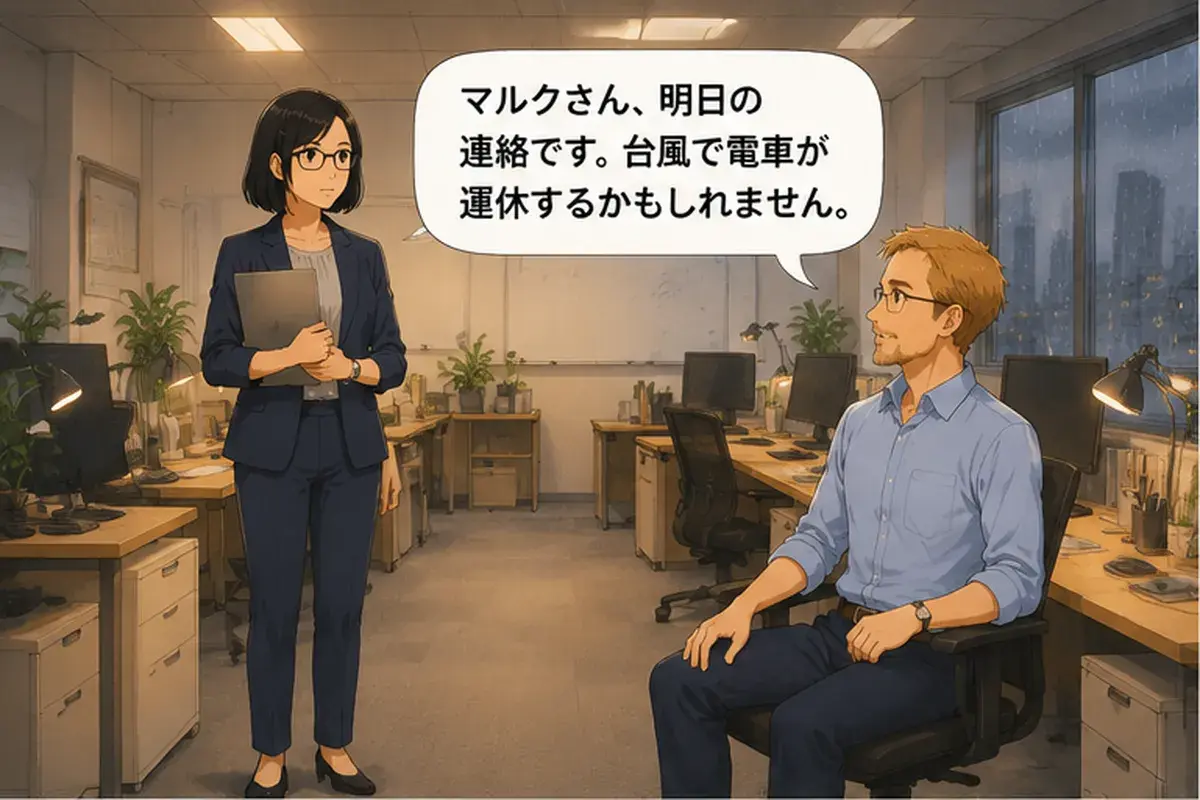
- 木村
マルクさん、明日の連絡です。台風で電車が運休するかもしれません。
Mark-san, here's the announcement for tomorrow. The trains might be suspended because of the typhoon.
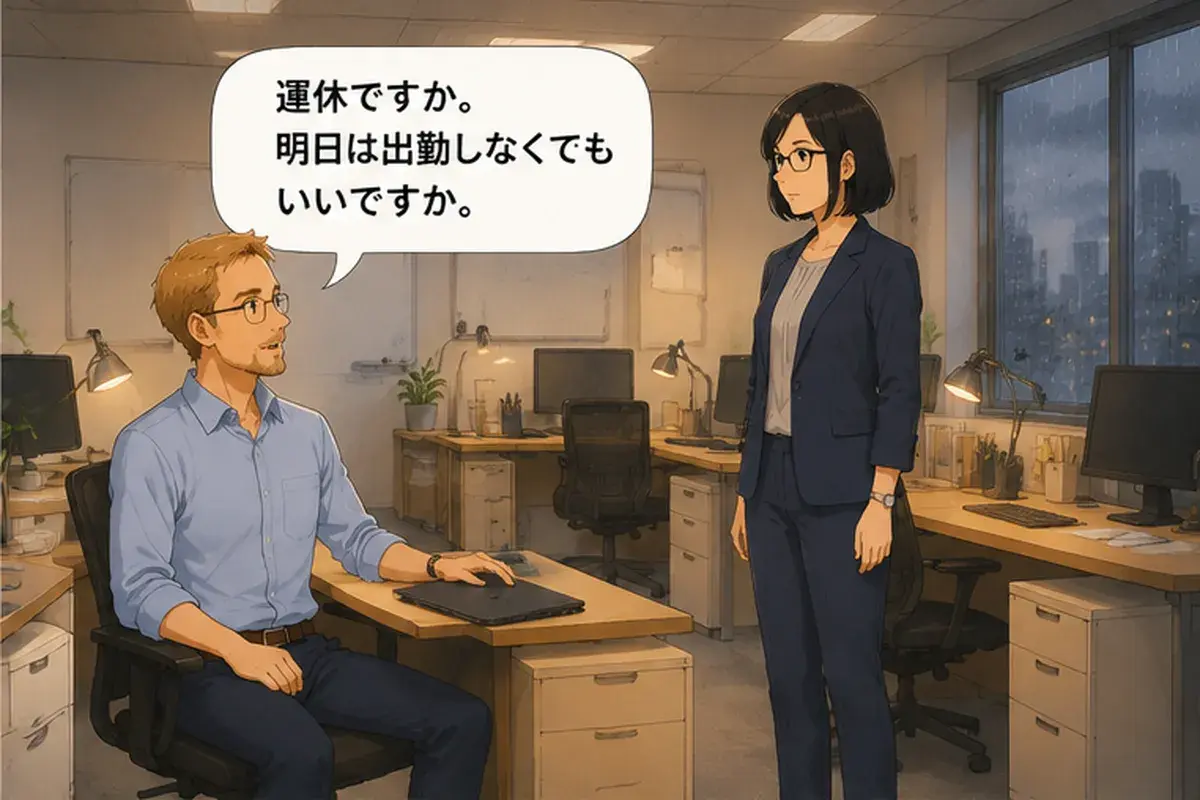
- マルク
運休ですか。明日は出勤しなくてもいいですか。
Suspended? Is it okay if I don't go to work tomorrow?
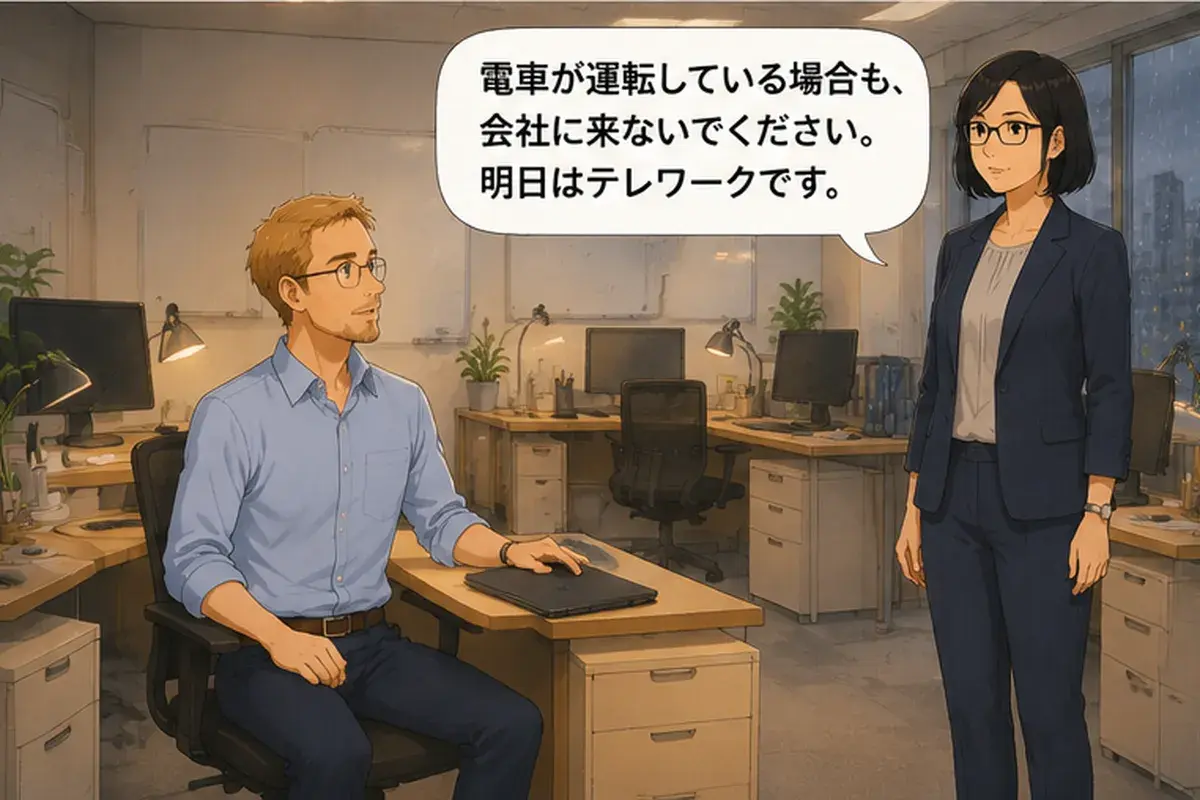
- 木村
電車が運転している場合も、会社に来ないでください。明日はテレワークです。
Even if the trains are running, please don't come to the office. Tomorrow is remote work.
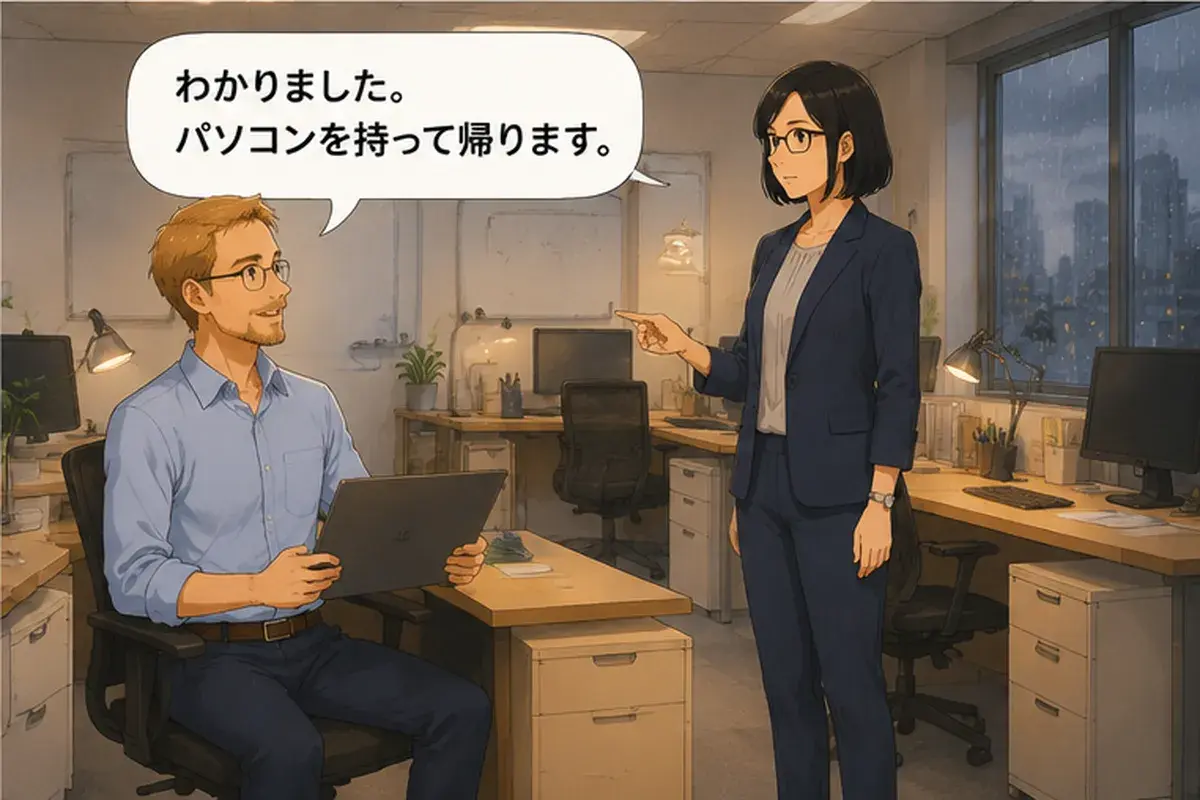
- マルク
わかりました。パソコンを持って帰ります。
Understood. I'll take my computer home.
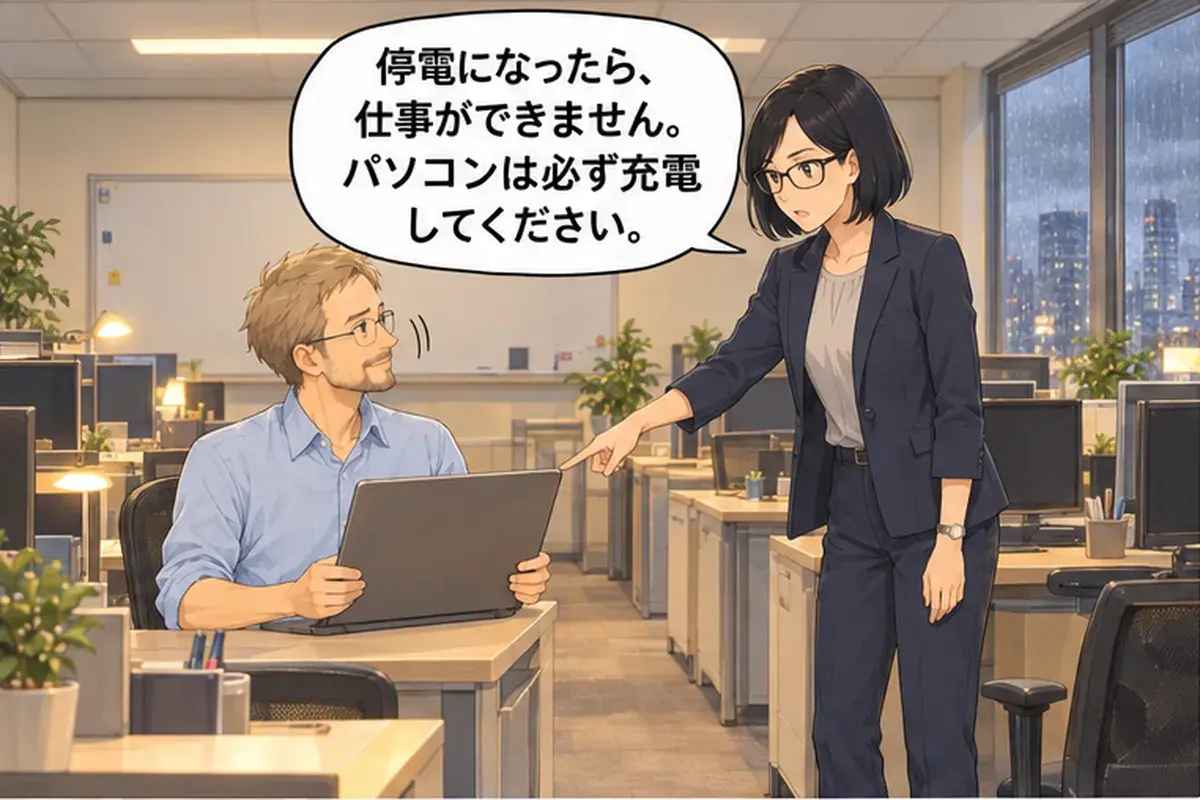
- 木村
停電になったら、仕事ができません。パソコンは必ず充電してください。
If the power goes out, you can't work. Please be sure to charge your computer.
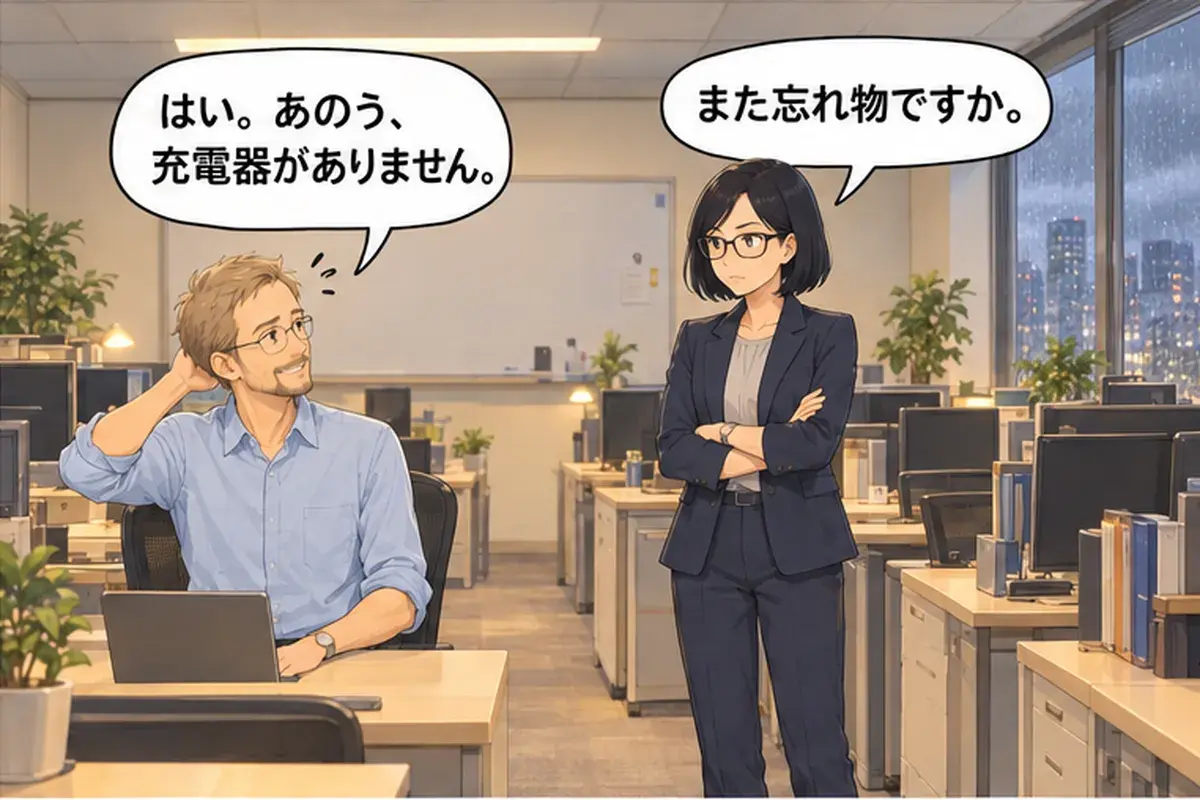
- マルク
はい。あのう、充電器がありません。
Okay. Um, I don't have a charger.
- 木村
また忘れ物ですか。
Did you forget something again?
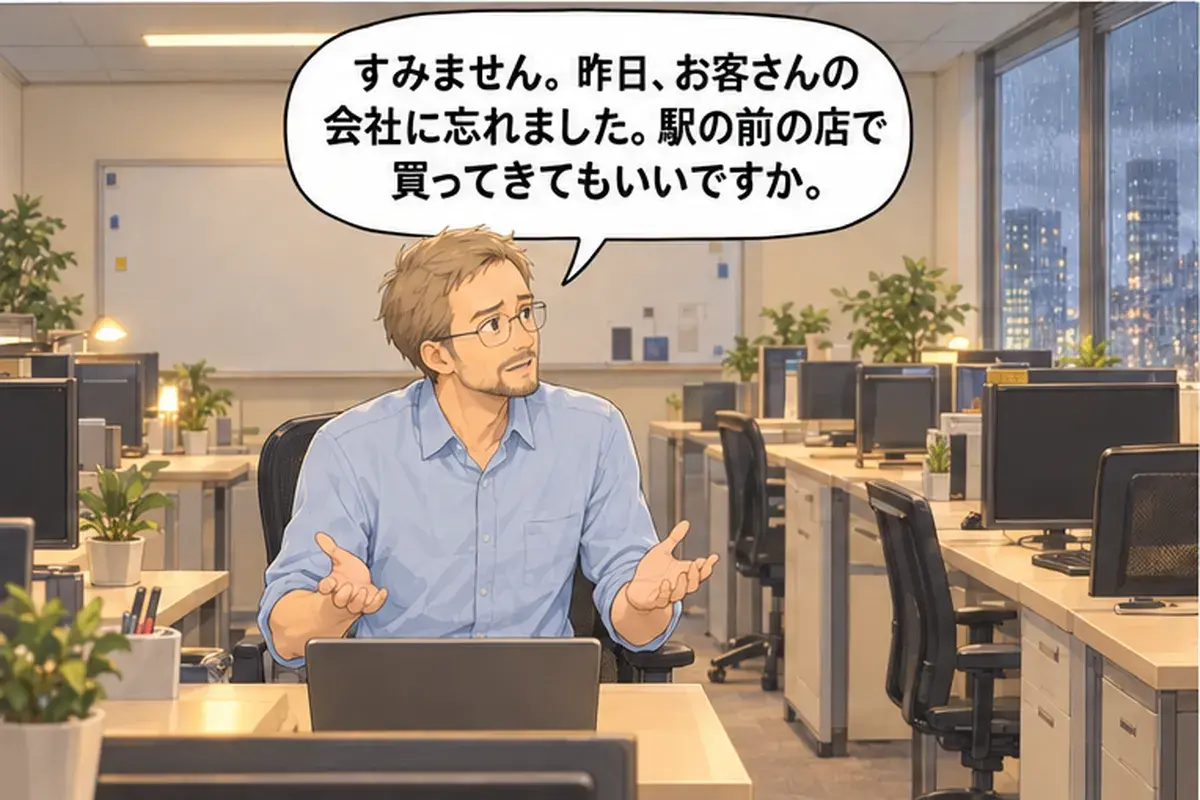
- マルク
すみません。昨日、お客さんの会社に忘れました。駅の前の店で買ってきてもいいですか。
I'm sorry. I left it yesterday at a customer's company. May I go buy one at the store in front of the station and come back?
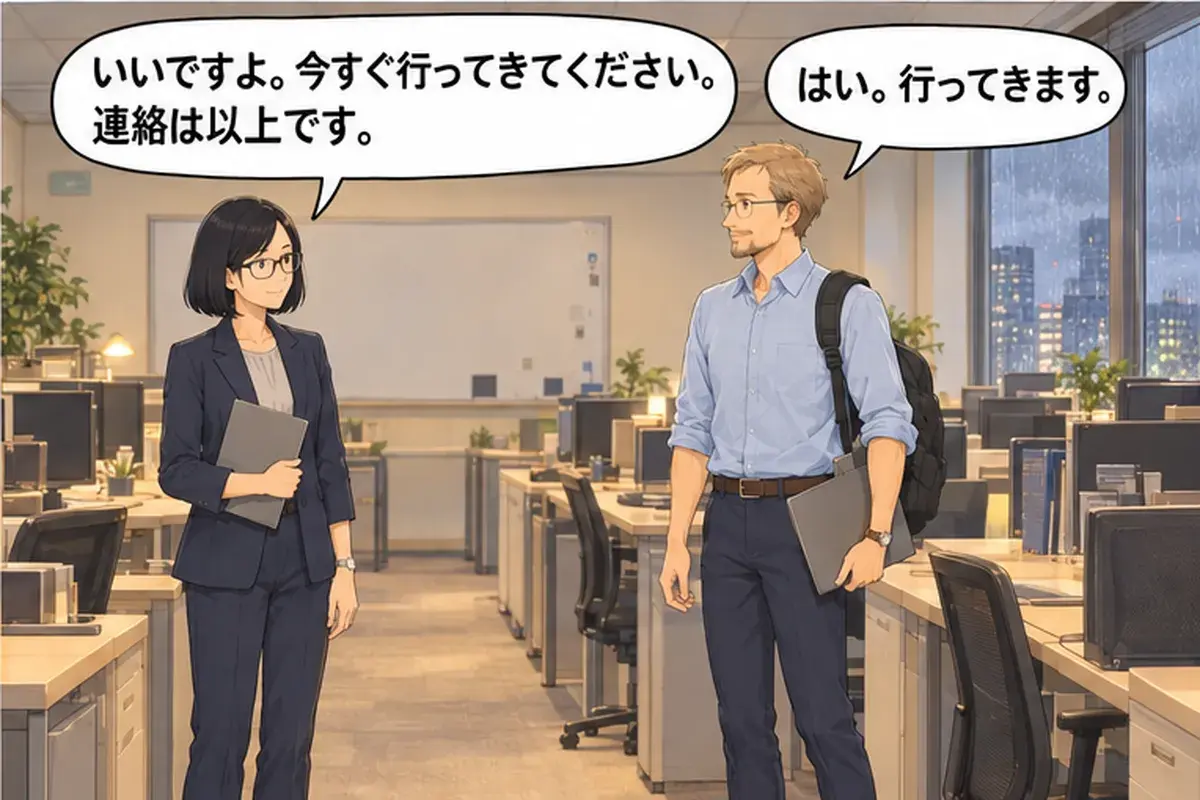
- 木村
いいですよ。今すぐ行ってきてください。連絡は以上です。
Sure. Please go right now and come back. That's all for the announcement.
- マルク
はい。行ってきます。
Okay. I'm off.
Grammar for this text
運休する かもしれません— The trains might be suspended.運休するmeans "to suspend service" (trains, planes), andかもしれませんmeans "maybe." It comes after a plain form:運休する("they'll suspend"), then noです.電車 が 運転して いる 場合 も、会社 に 来ないで ください— Even if the trains are running, please don't come to the office.運転するfor trains means "to run."場合means "case," and withもit means "even in the case that." The request来ないで くださいmeans "please don't come" (A2, unit 3).明日 は テレワーク です— Tomorrow is remote work.テレワークmeans working from home. The opposite is出勤する:出勤しなくても いい です かmeans "Is it okay if I don't go to work?"停電 に なったら、仕事 が できません— If the power goes out, you can't work.たらmeans "if" (the main form of this unit).買って きて も いい です か— May I go buy one and come back?きてis the te-form ofくる("go and come back"), followed byも いい です か, "may I?" (A1, unit 15). Mark is asking: "May I go buy it and come back?"行って きて ください— Please go and come back. Mark answers with行って きます, the usual phrase when leaving (A1, unit 6): "I'm off, and I'll be back."連絡 は 以上 です— That's all for the announcement. This is how you end an announcement or work news.
Words and grammar of the unit: Get ready for bad weather.
Learn the words from the texts with flashcards
In the app, you can tap any word in a text to see its translation, forms and examples, and new words stick with flashcards. 15 minutes a day.
Start for freeEverything is open for free. No card needed to sign up.