
Japanese dialogue with translation · A2 · 16 lines
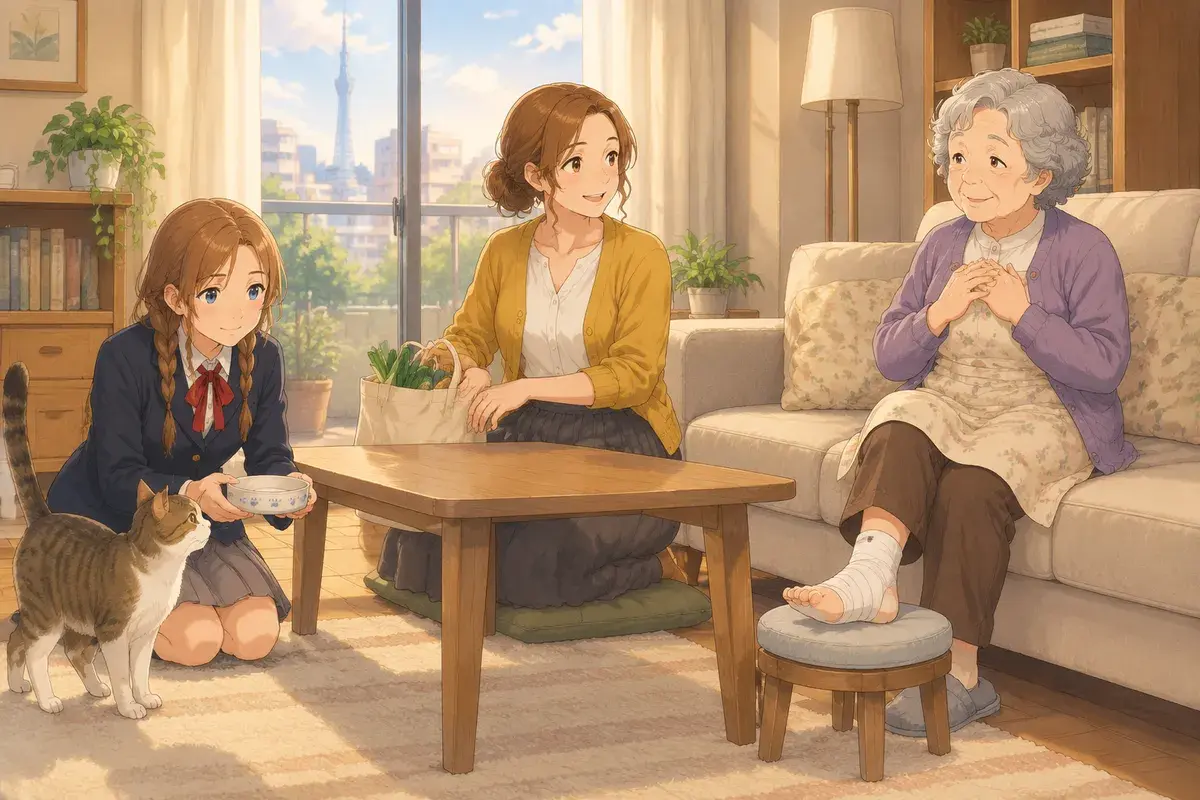
本当に助かりました You've really helped me
Comic · 16 panels
- アンナ
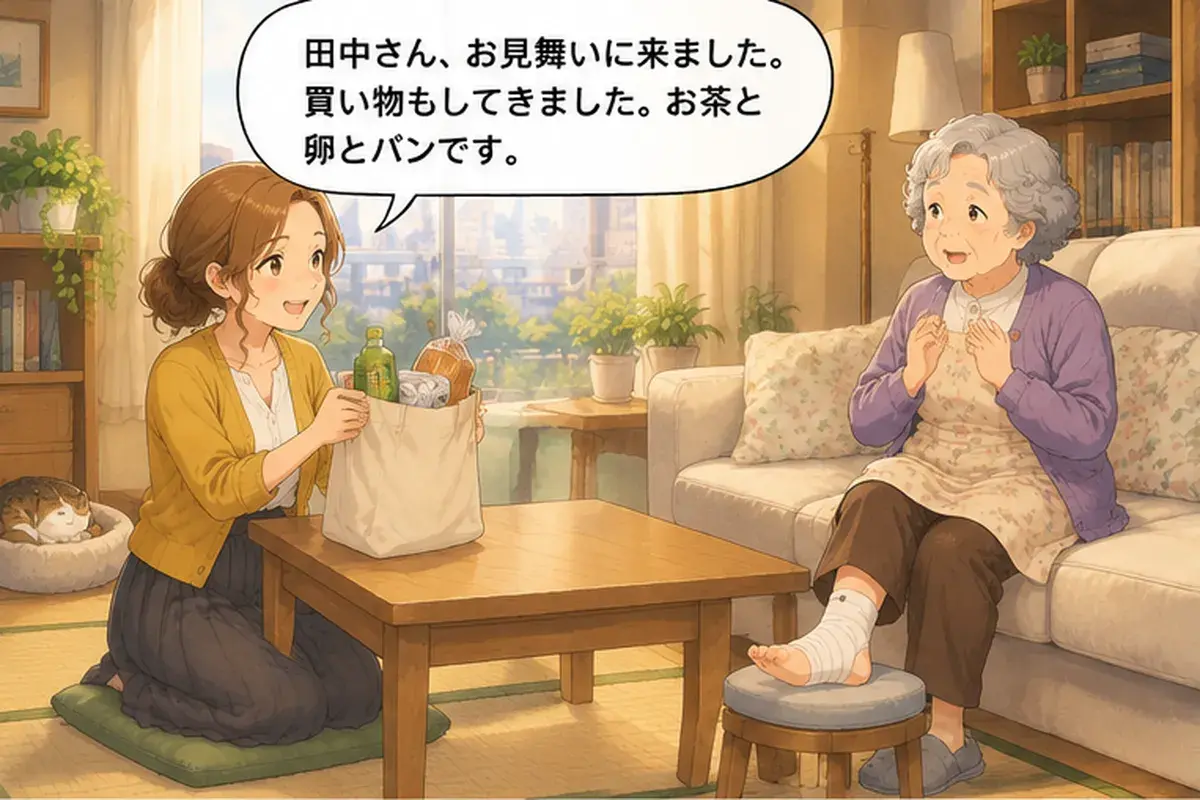
田中さん、お見舞いに来ました。買い物もしてきました。お茶と卵とパンです。
Tanaka-san, I came to visit you. I also went shopping. Tea, eggs, and bread.
- 田中
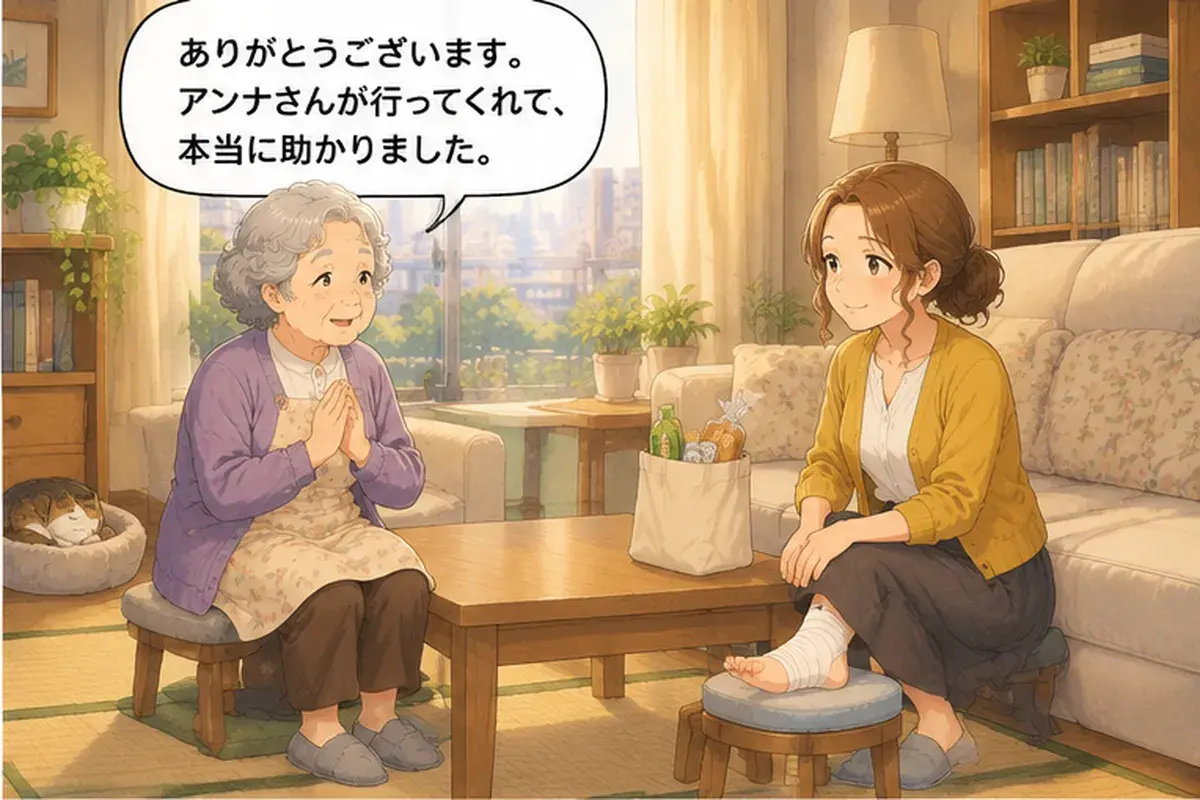
ありがとうございます。アンナさんが行ってくれて、本当に助かりました。
Thank you. You went for me, and it really helped me out.
- アンナ
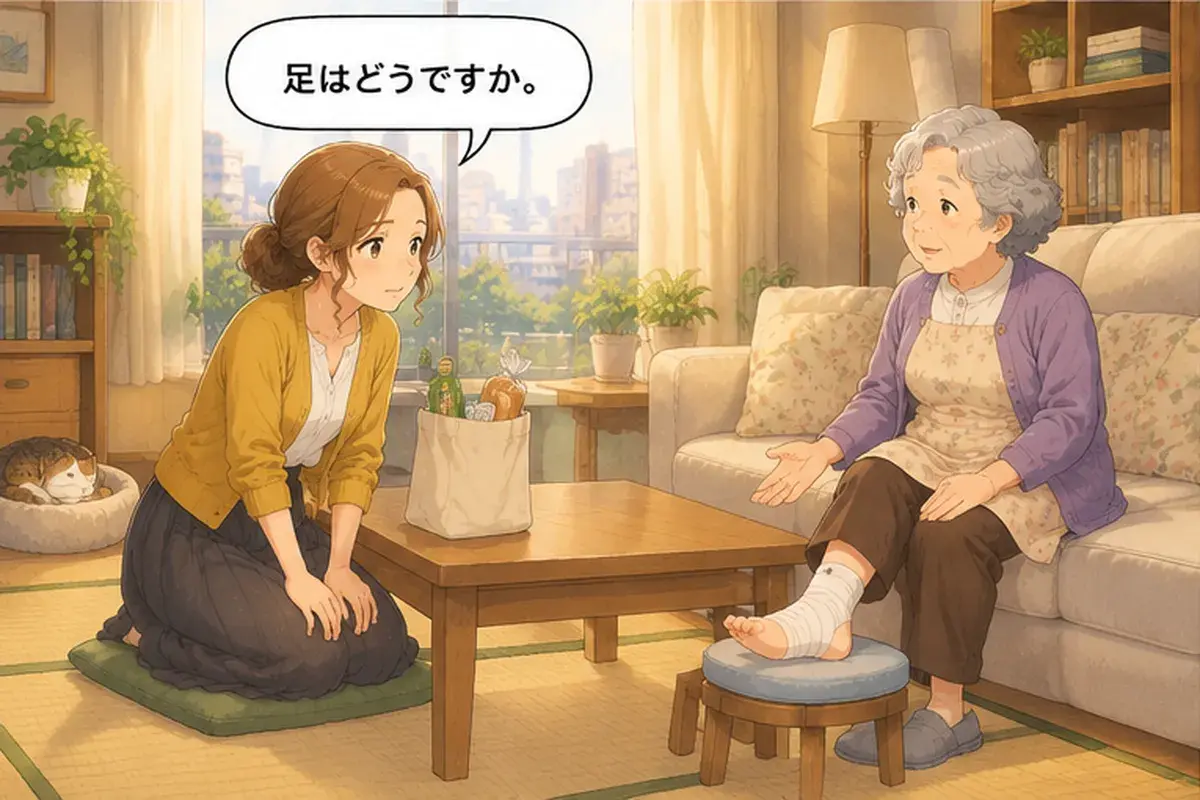
足はどうですか。
How's your leg?
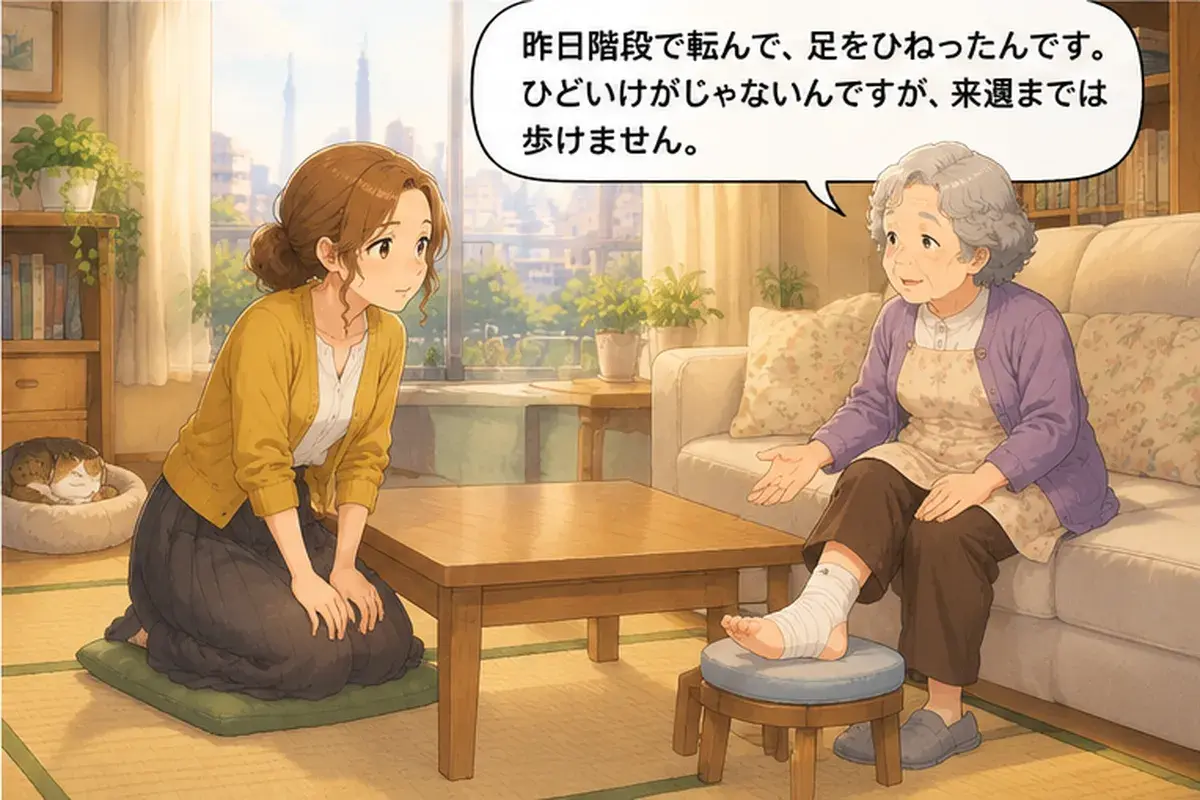
- 田中
昨日階段で転んで、足をひねったんです。ひどいけがじゃないんですが、来週までは歩けません。
I fell on the stairs yesterday and twisted my ankle. It's not a bad injury, but I can't walk until next week.
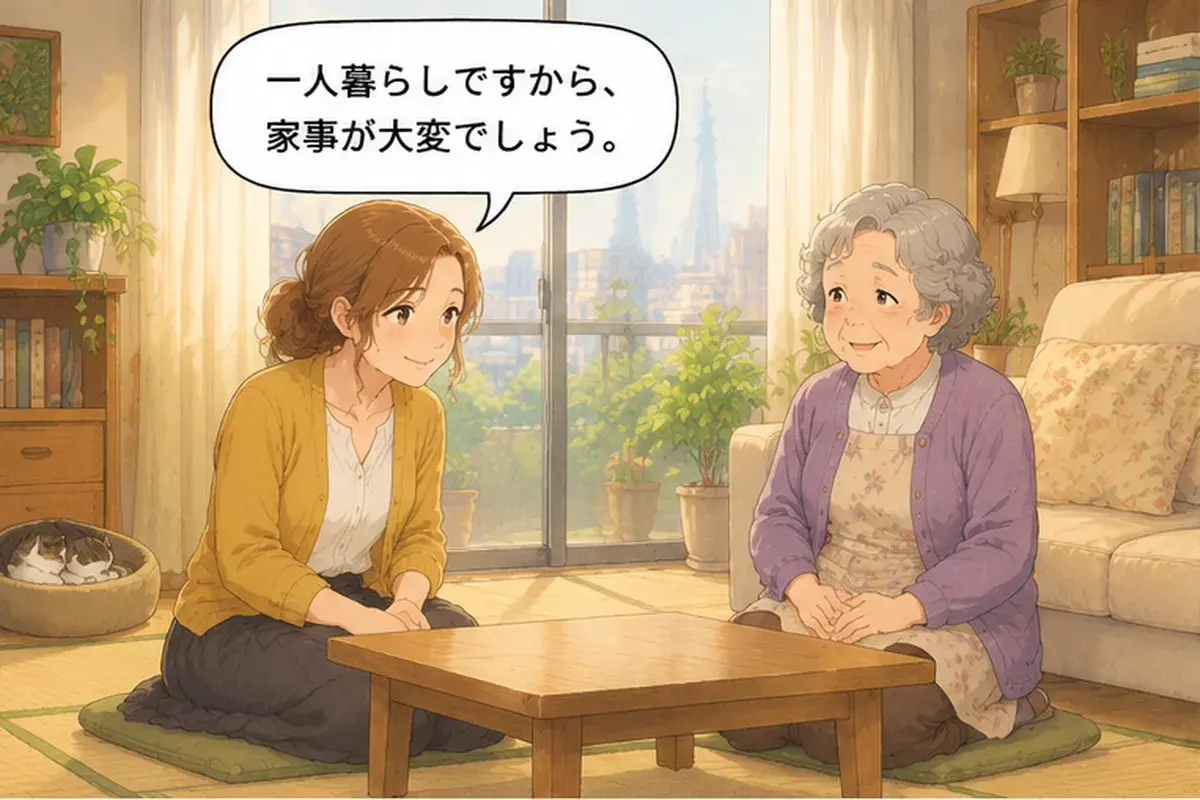
- アンナ
一人暮らしですから、家事が大変でしょう。
You live alone, so the housework must be hard.
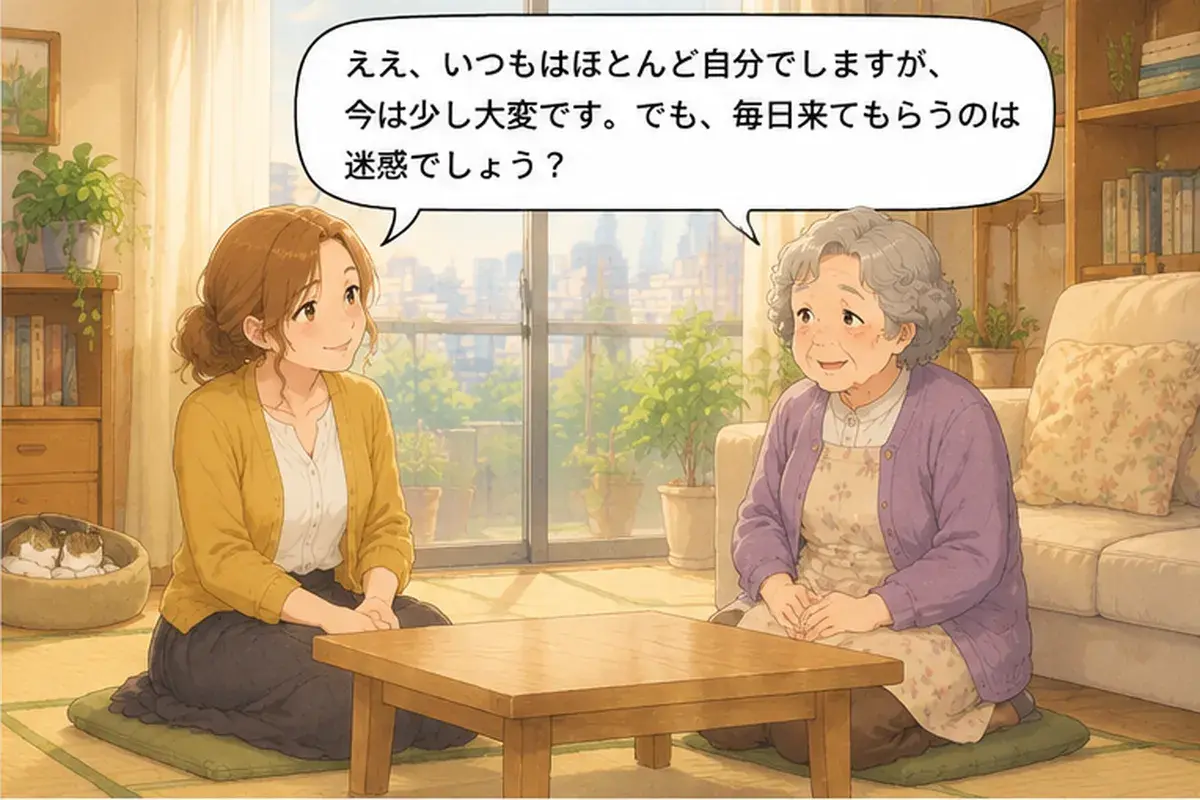
- 田中
ええ、いつもはほとんど自分でしますが、今は少し大変です。でも、毎日来てもらうのは迷惑でしょう?
Yes. I usually do almost everything myself, but right now it's a little hard. But isn't it a bother for you to come every day?
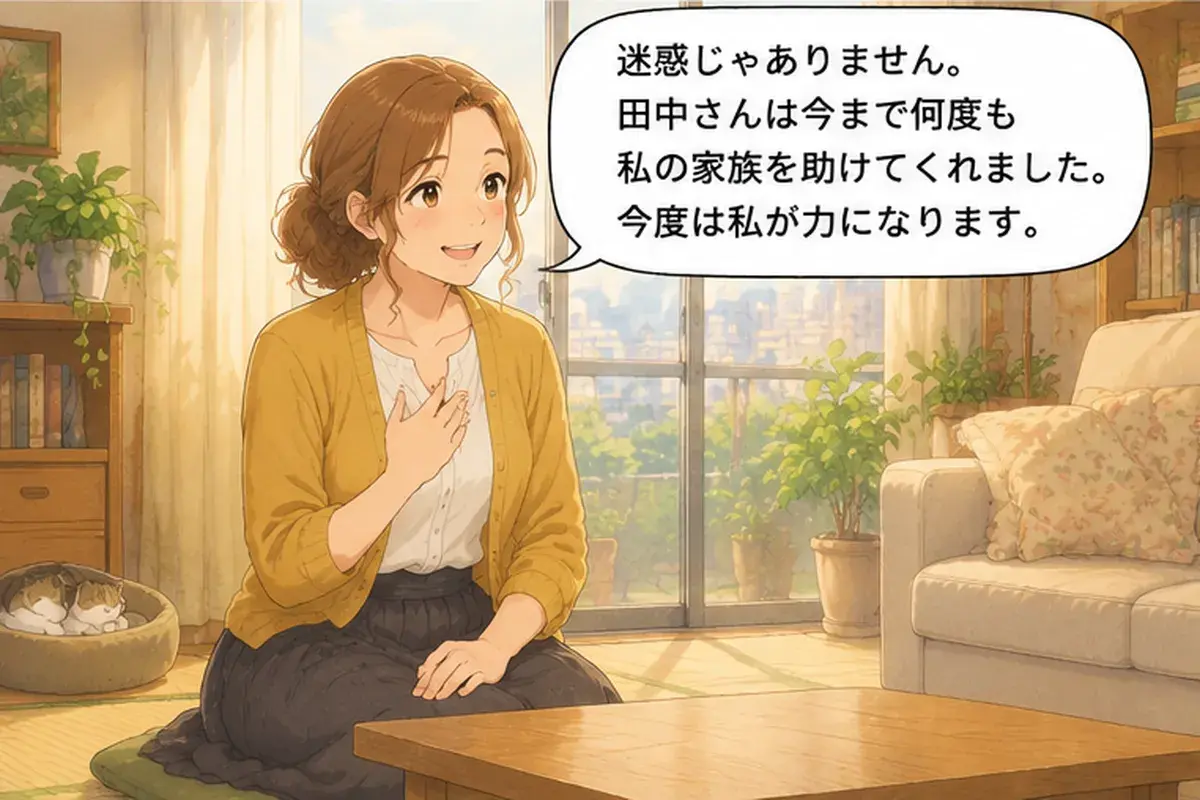
- アンナ
迷惑じゃありません。田中さんは今まで何度も私の家族を助けてくれました。今度は私が力になります。
It's not a bother. You've helped my family many times. This time I'll help you out.
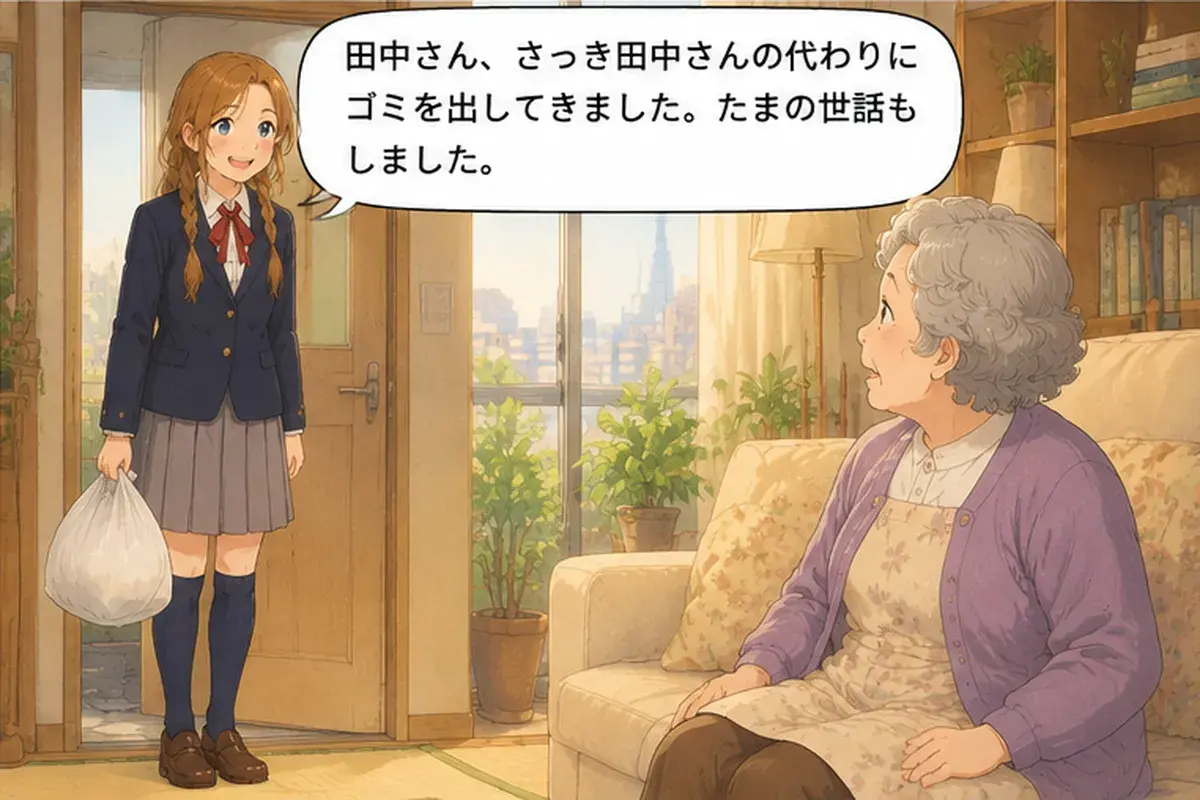
- ソーニャ
田中さん、さっき田中さんの代わりにゴミを出してきました。たまの世話もしました。
Tanaka-san, I just took out the trash in your place. I looked after Tama too.
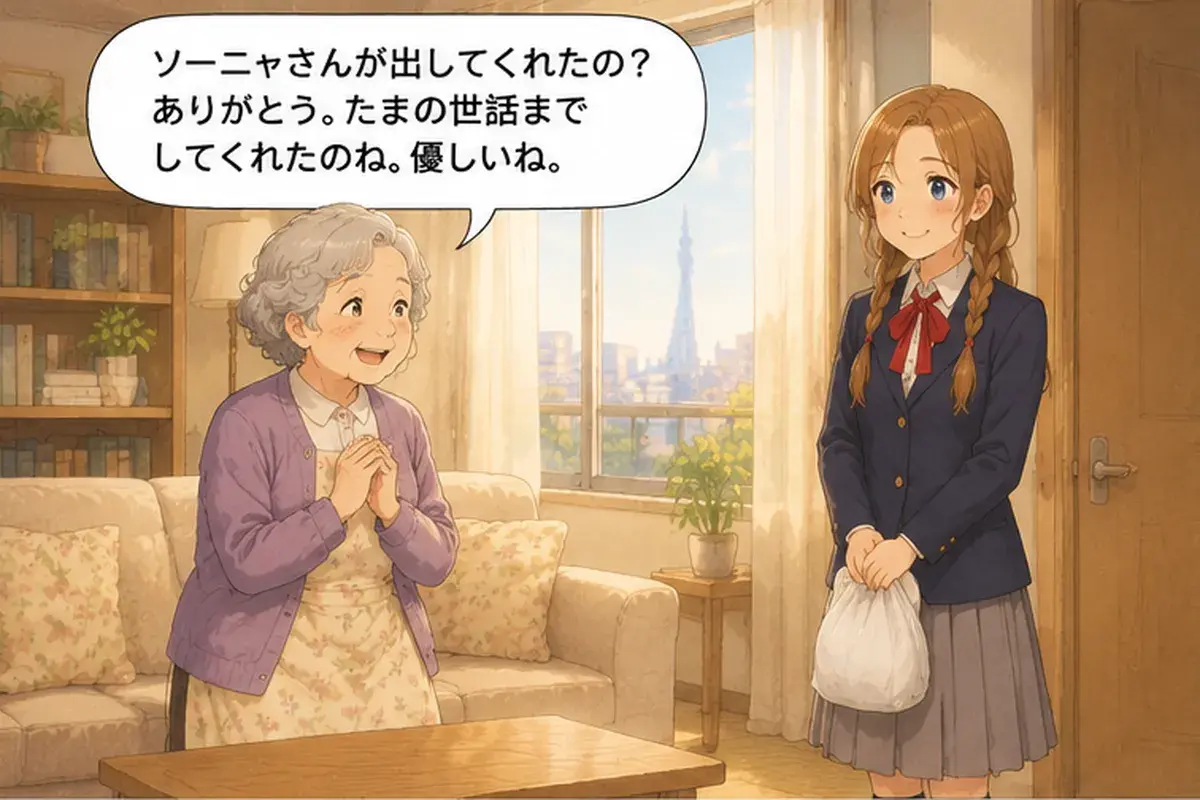
- 田中
ソーニャさんが出してくれたの?ありがとう。たまの世話までしてくれたのね。優しいね。
You took it out for me? Thanks. You even looked after Tama. How kind you are (casual).
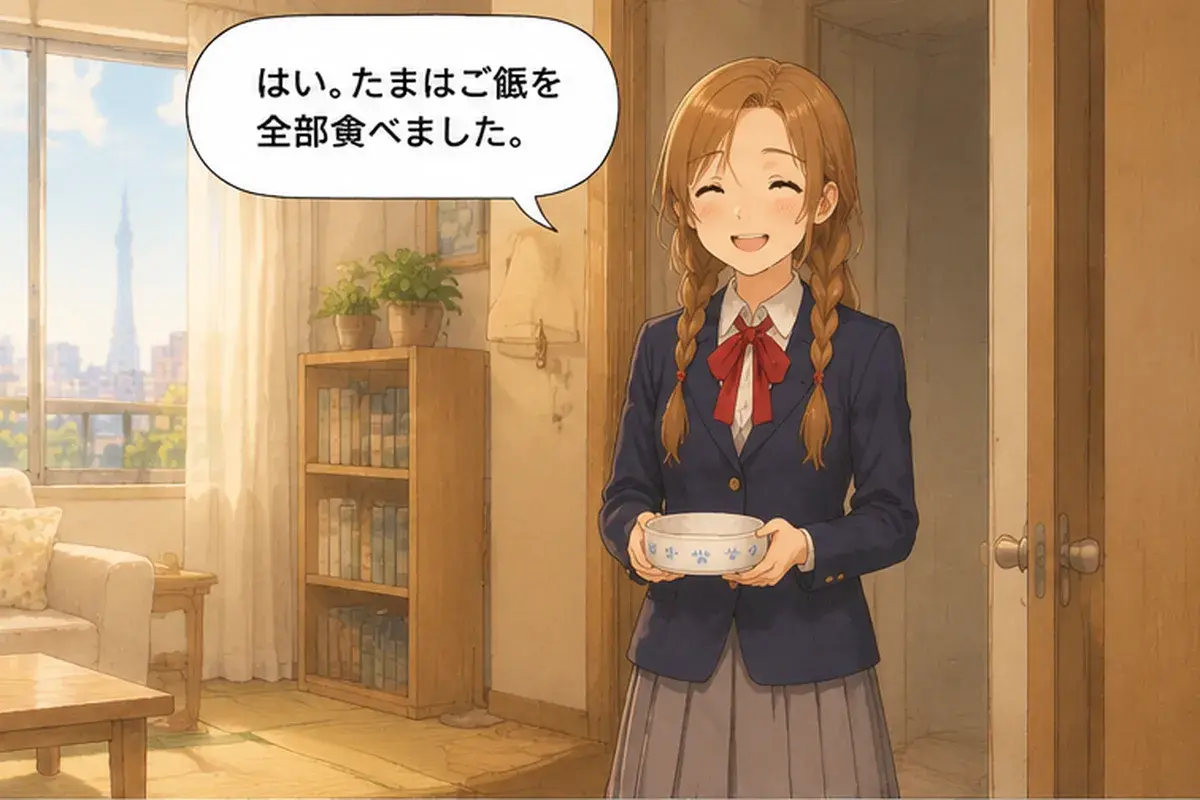
- ソーニャ
はい。たまはご飯を全部食べました。
Yes. Tama ate all the food.
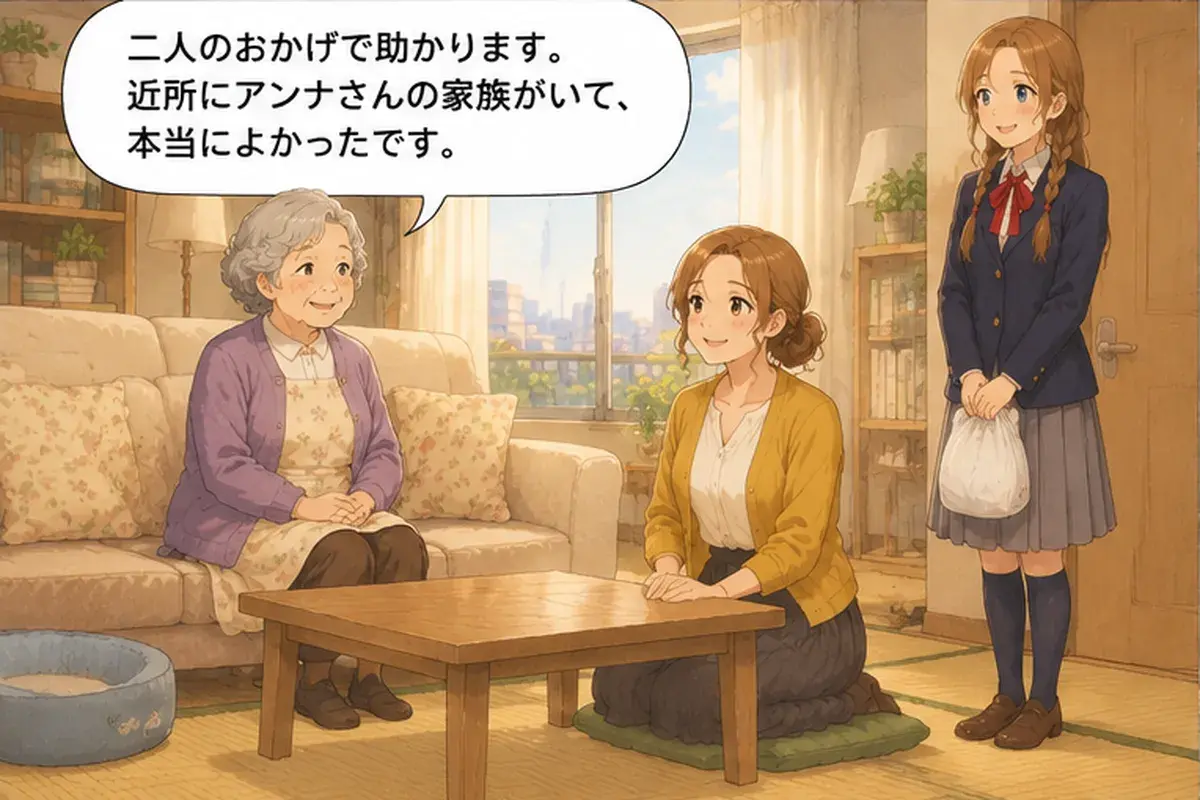
- 田中
二人のおかげで助かります。近所にアンナさんの家族がいて、本当によかったです。
Thanks to you two, I'm managing. I'm really glad Anna-san's family lives nearby.
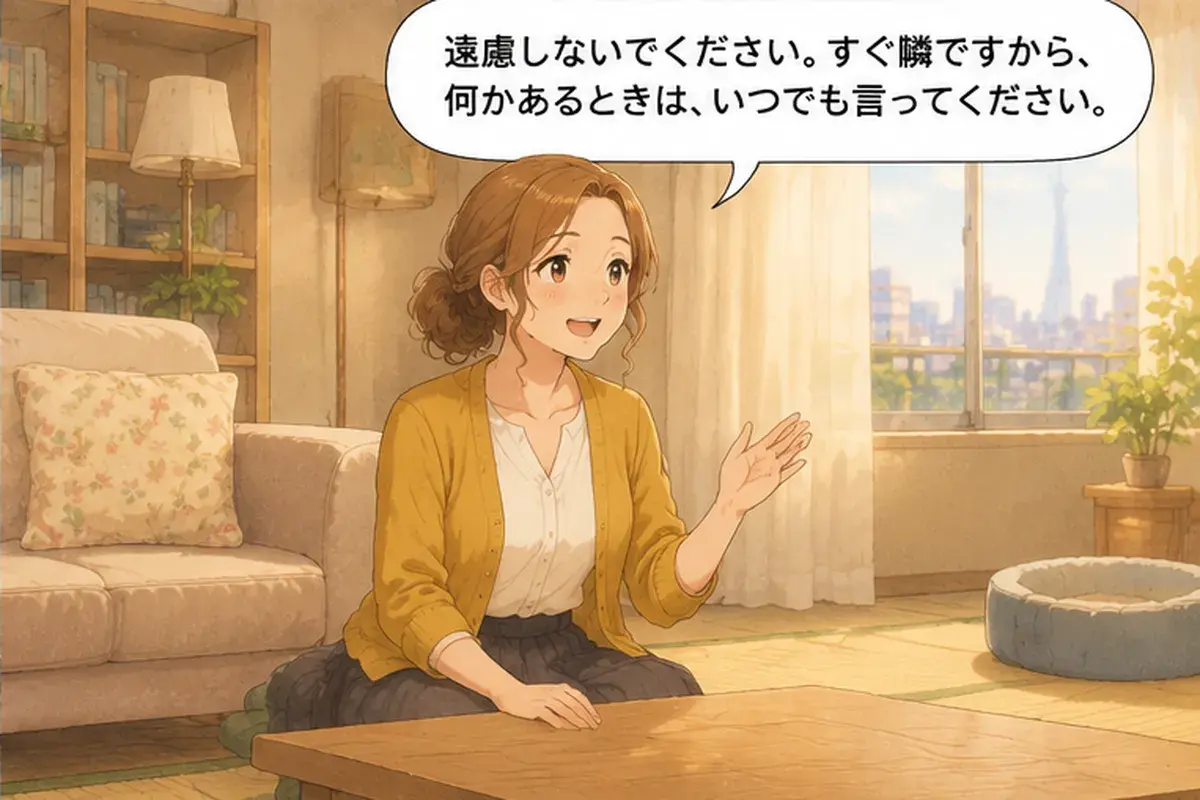
- アンナ
遠慮しないでください。すぐ隣ですから、何かあるときは、いつでも言ってください。
Please don't hold back. We're right next door, so if you ever need anything, tell us anytime.
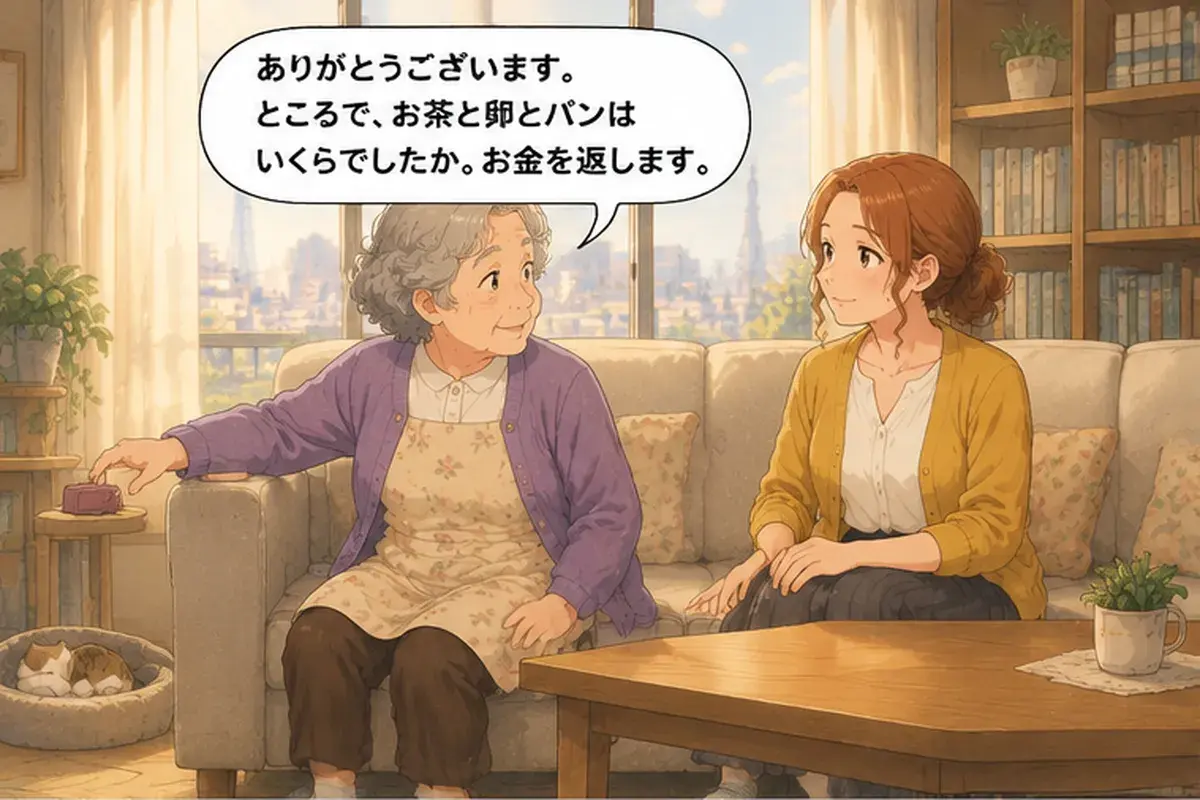
- 田中
ありがとうございます。ところで、お茶と卵とパンはいくらでしたか。お金を返します。
Thank you. By the way, how much were the tea, eggs, and bread? I'll pay you back.
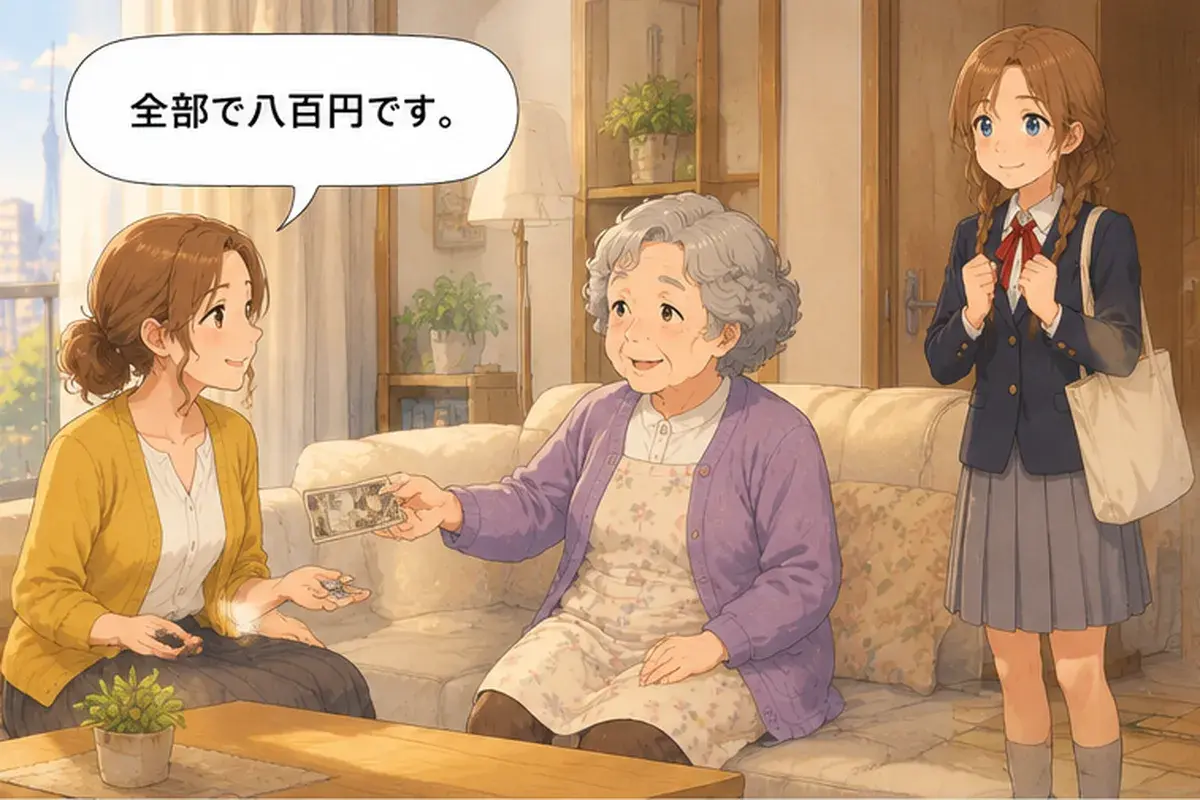
- アンナ
全部で八百円です。
It's 800 yen in total.
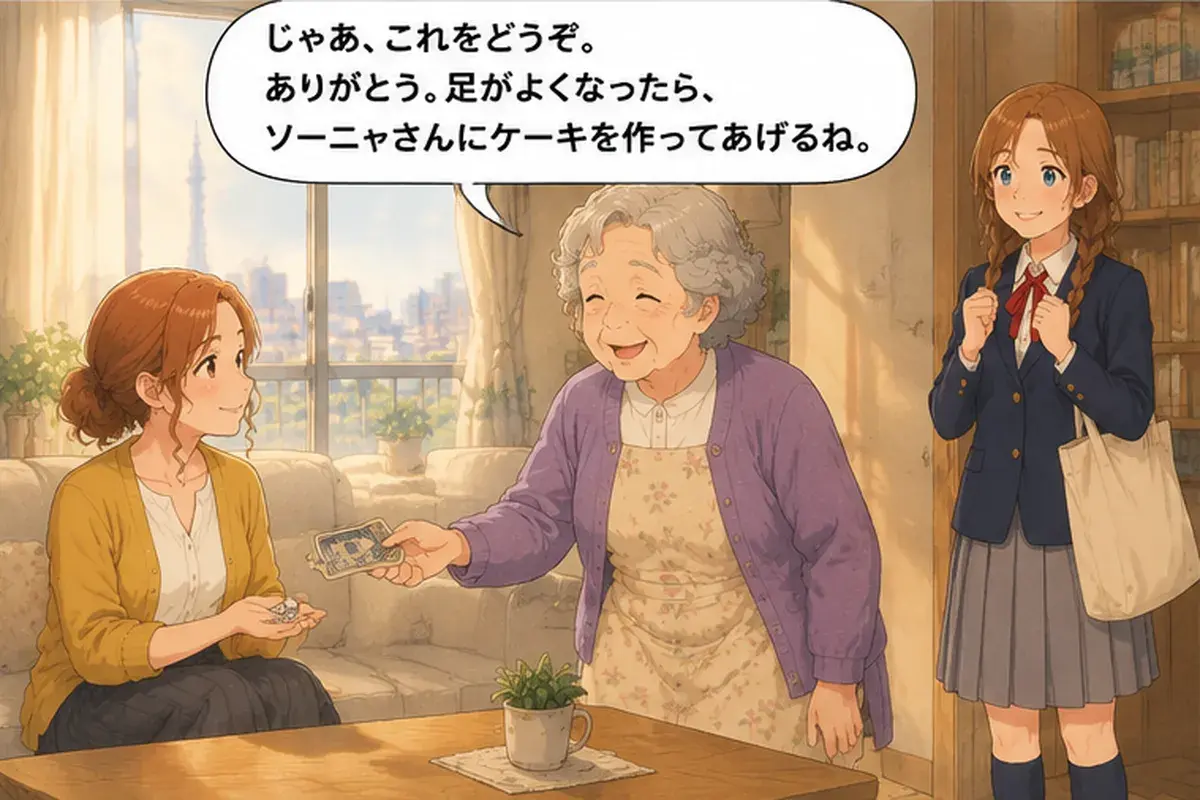
- 田中
じゃあ、これをどうぞ。ありがとう。足がよくなったら、ソーニャさんにケーキを作ってあげるね。
Well then, here you go. Thank you. When my leg gets better, I'll make you a cake, Sonya-san (casual).
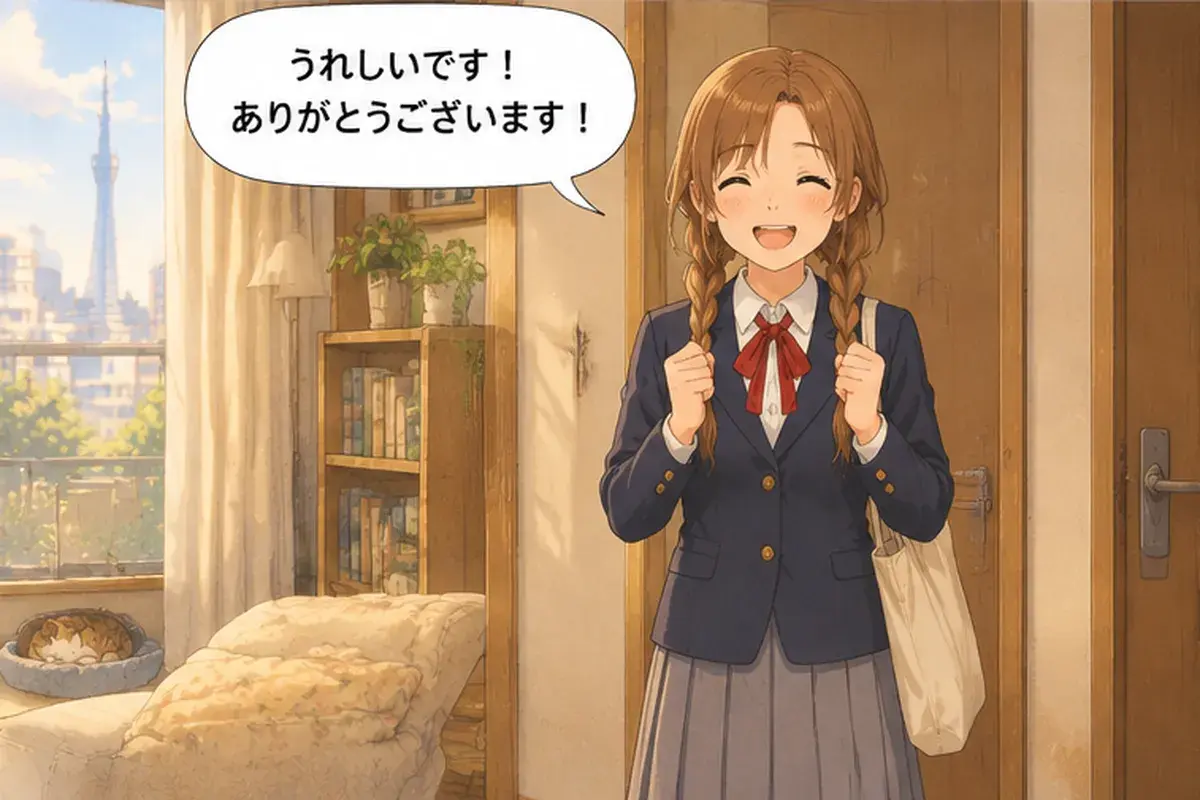
- ソーニャ
うれしいです!ありがとうございます!
I'm so happy! Thank you!
Grammar for this text
アンナ さん が 行って くれて、 本当 に 助かりました— You went for me, and it really helped me.行って くれるmeans "she went for me." A Japanese speaker thanks you not for the things but for the act: "you went, and that helped me."助かるis the verb for the person who got help ("I was helped out");助けるis for the person who helps:私 の 家族 を 助けて くれました— she helped my family.お見舞い に 来ました— I came to visit you.お見舞いis a visit to someone who is sick;〜に 来るmeans "come in order to..." (like見 に 行きます, A1, unit 18).毎日 来て もらう の は 迷惑 でしょう?— Isn't it a bother to have you come every day? Tanaka-san feels shy about asking.来て もらうmeans "to have you come to me" (she looks from her own side). Anna answers this directly:迷惑 じゃ ありません— It's not a bother. In Japan people first turn down help, and the one who wants to help should insist.ソーニャ さん が 出して くれた の?— You took it out for me? (casual) Tanaka-san talks to Sonya in a plain, casual way, so it'sくれたwithoutます, and the question rests on intonation andの, with noか.田中 さん の 代わり に— in Tanaka-san's place.代わり にmeans "instead of."今度 は 私 が 力 に なります— This time I'll help you out.力 に なるmeans "to be a support, to help": Anna says it's her turn to help.二人 の おかげ で 助かります— Thanks to you two, I'm managing.おかげ でmeans "thanks to." It's a way to say thank you, not to apologize.近所 に … いて— (you) live nearby;近所means "the neighborhood."遠慮 しないで ください— Please don't hold back.遠慮するmeans "to hold back, to not ask."すぐ 隣 です から— We're right next door.ソーニャ さん に ケーキ を 作って あげる ね— I'll make you a cake, Sonya-san (casual).作って あげるmeans "I'll make it for you." You say this to a girl; you wouldn't say it to an older person, because it sounds like a favor (see the unit grammar).
Words and grammar of the unit: Thank someone for their help.
Learn the words from the texts with flashcards
In the app, you can tap any word in a text to see its translation, forms and examples, and new words stick with flashcards. 15 minutes a day.
Start for freeEverything is open for free. No card needed to sign up.