
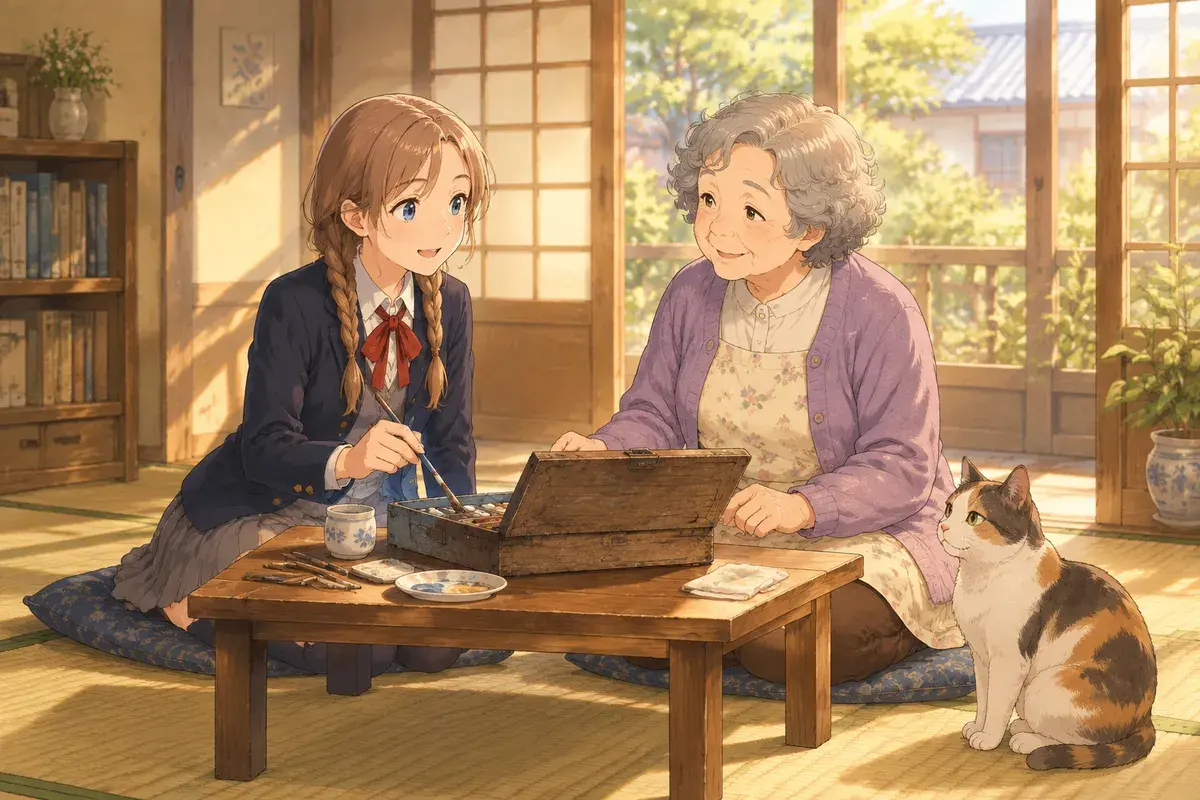
Japanese dialogue with translation · A2 · 14 lines
ご主人の筆をくれました She gave me her husband's brushes
Comic · 14 panels
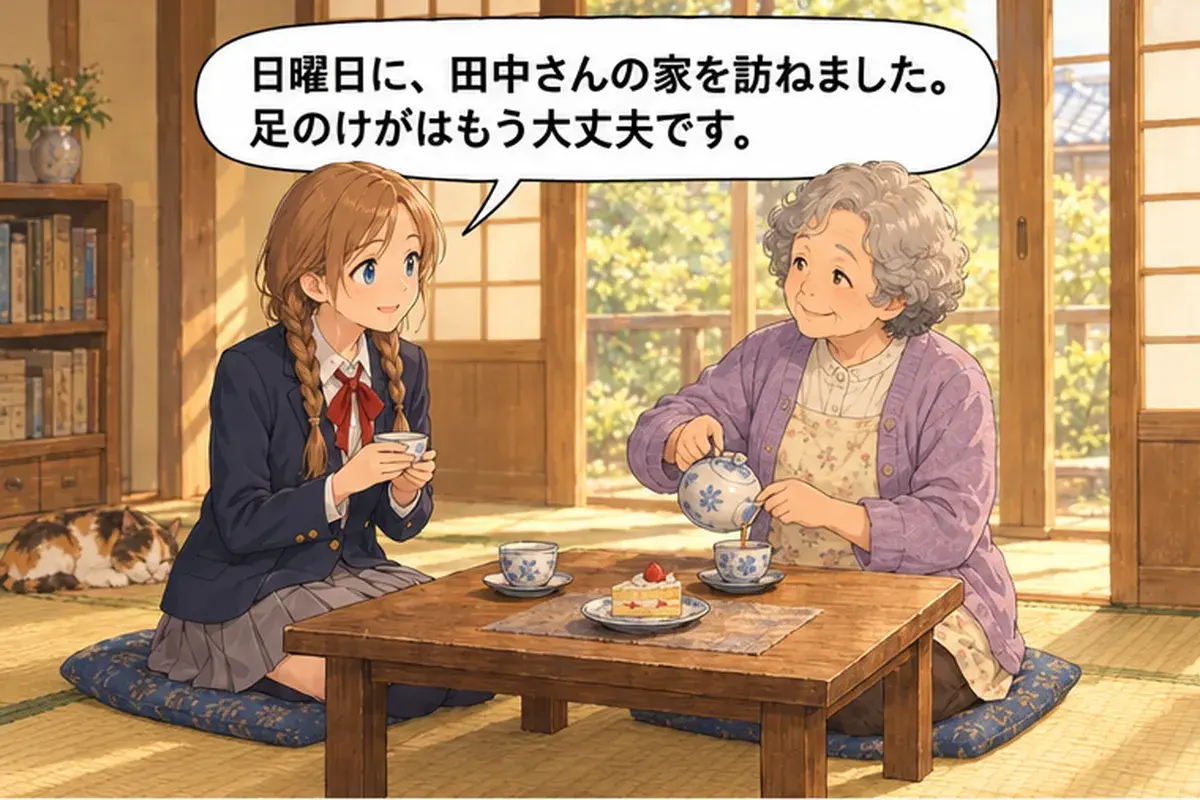
- ソーニャ
日曜日に、田中さんの家を訪ねました。足のけがはもう大丈夫です。
On Sunday I visited Tanaka-san's house. Her leg injury is fine now.
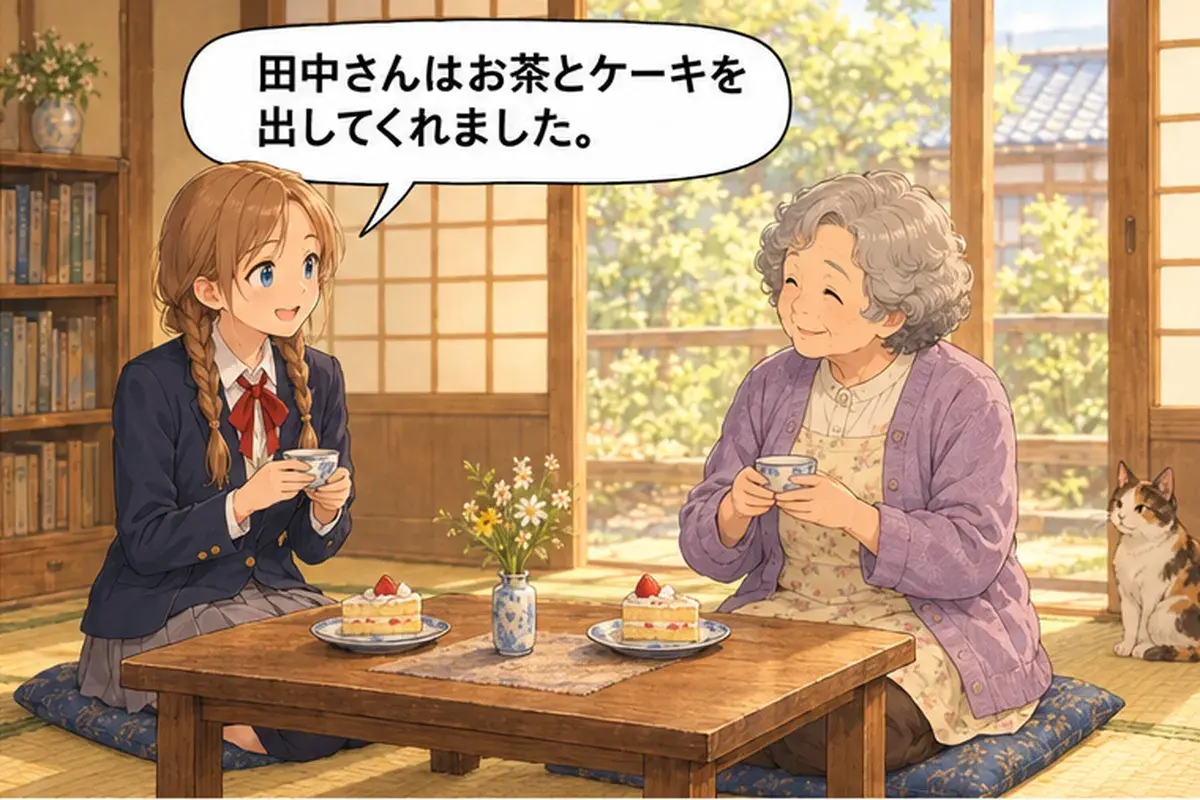
- ソーニャ
田中さんはお茶とケーキを出してくれました。
Tanaka-san brought out tea and cake for me.
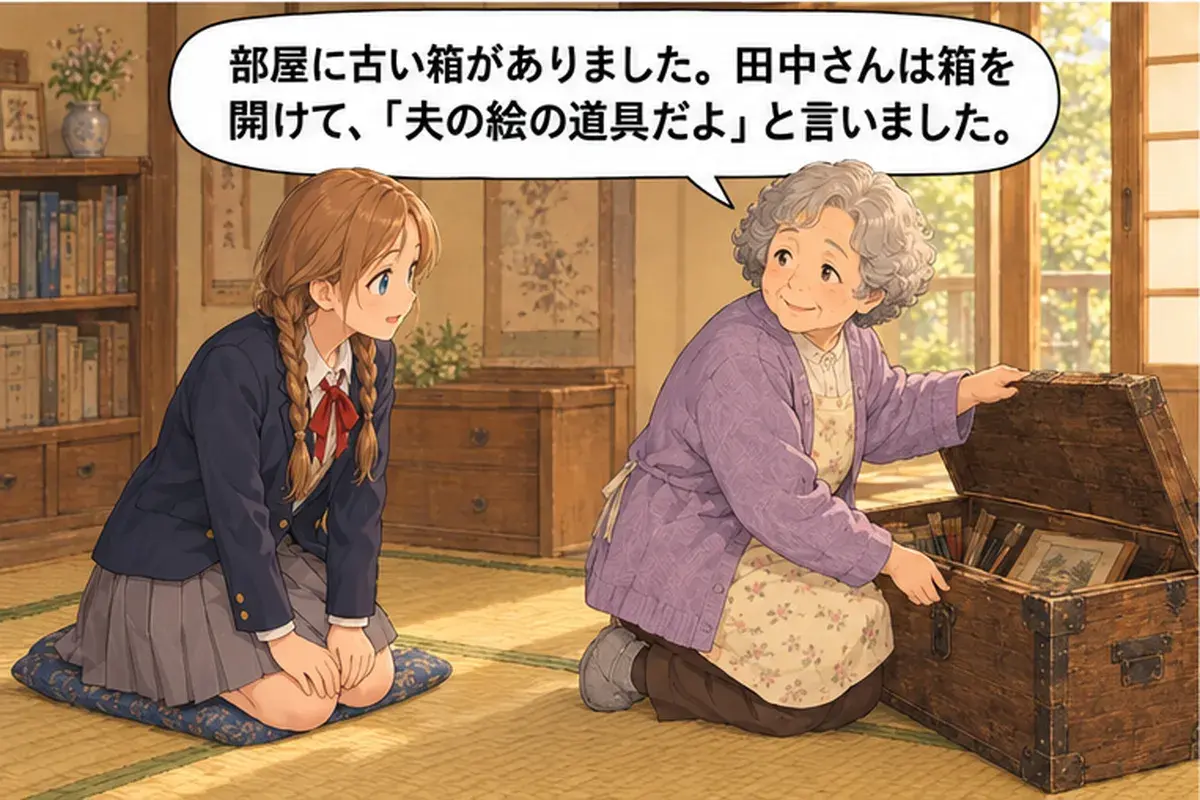
- ソーニャ
部屋に古い箱がありました。田中さんは箱を開けて、「夫の絵の道具だよ」と言いました。
There was an old box in the room. Tanaka-san opened it and said, “These are my husband's painting supplies.”
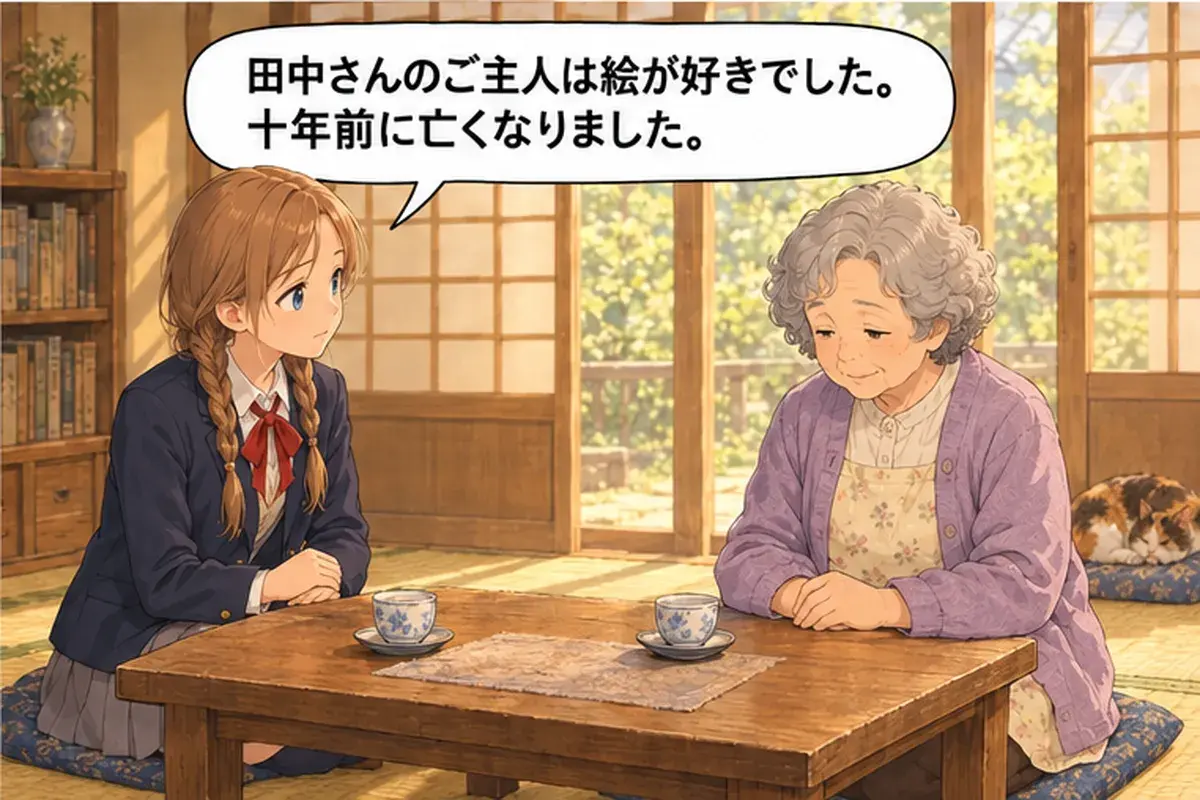
- ソーニャ
田中さんのご主人は絵が好きでした。十年前に亡くなりました。
Tanaka-san's husband liked painting. He passed away ten years ago.
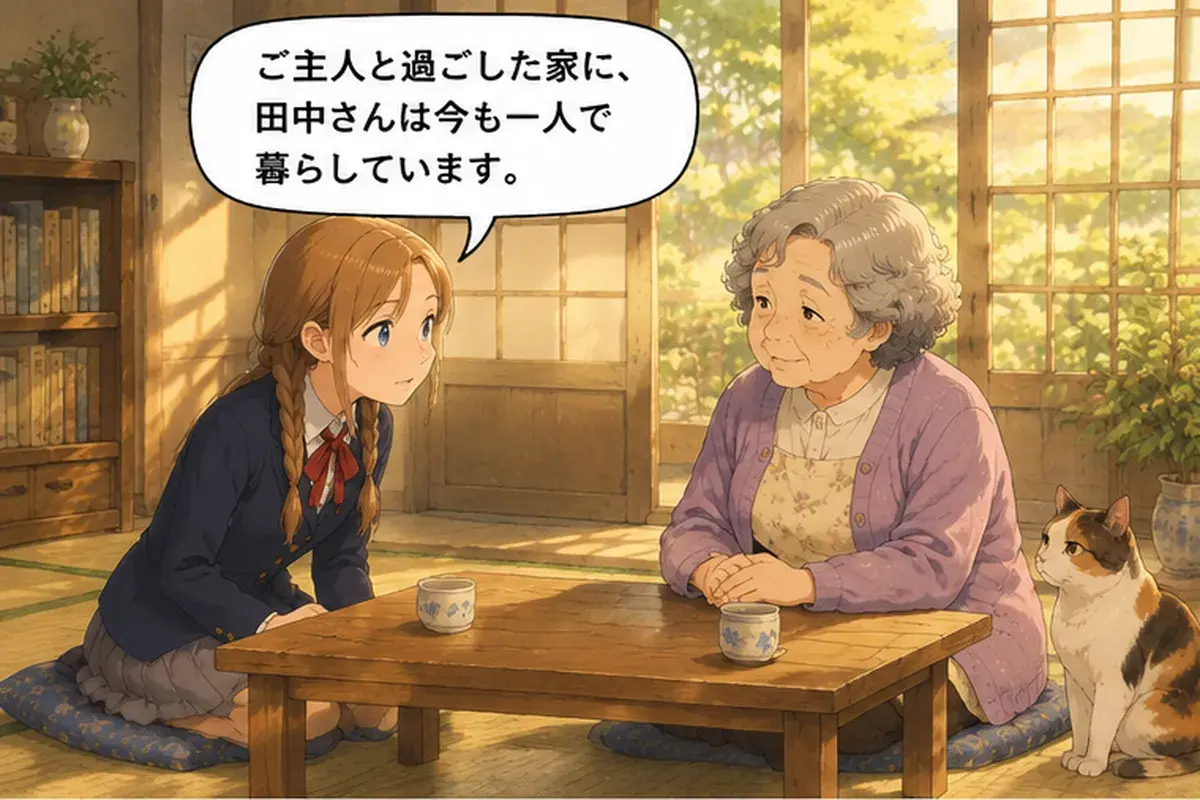
- ソーニャ
ご主人と過ごした家に、田中さんは今も一人で暮らしています。
Tanaka-san still lives alone in the house where she spent her life with her husband.
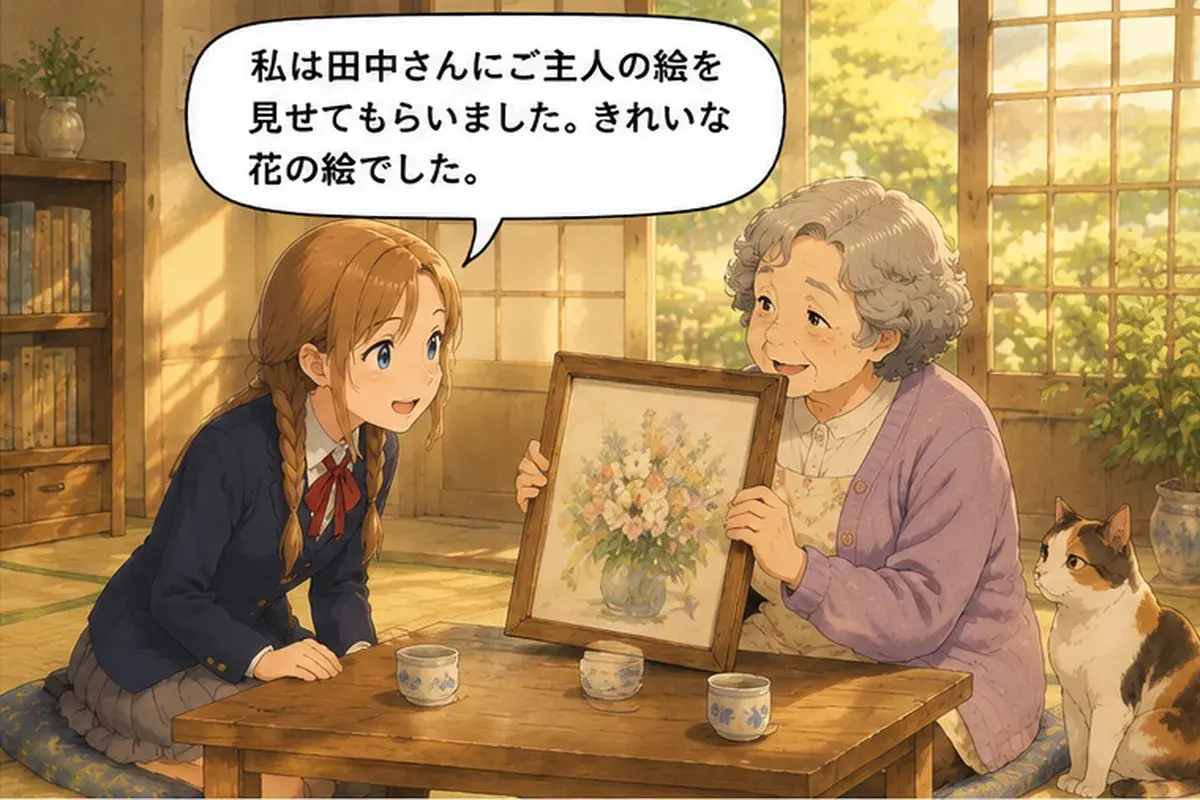
- ソーニャ
私は田中さんにご主人の絵を見せてもらいました。きれいな花の絵でした。
I got Tanaka-san to show me her husband's paintings. It was a beautiful painting of flowers.
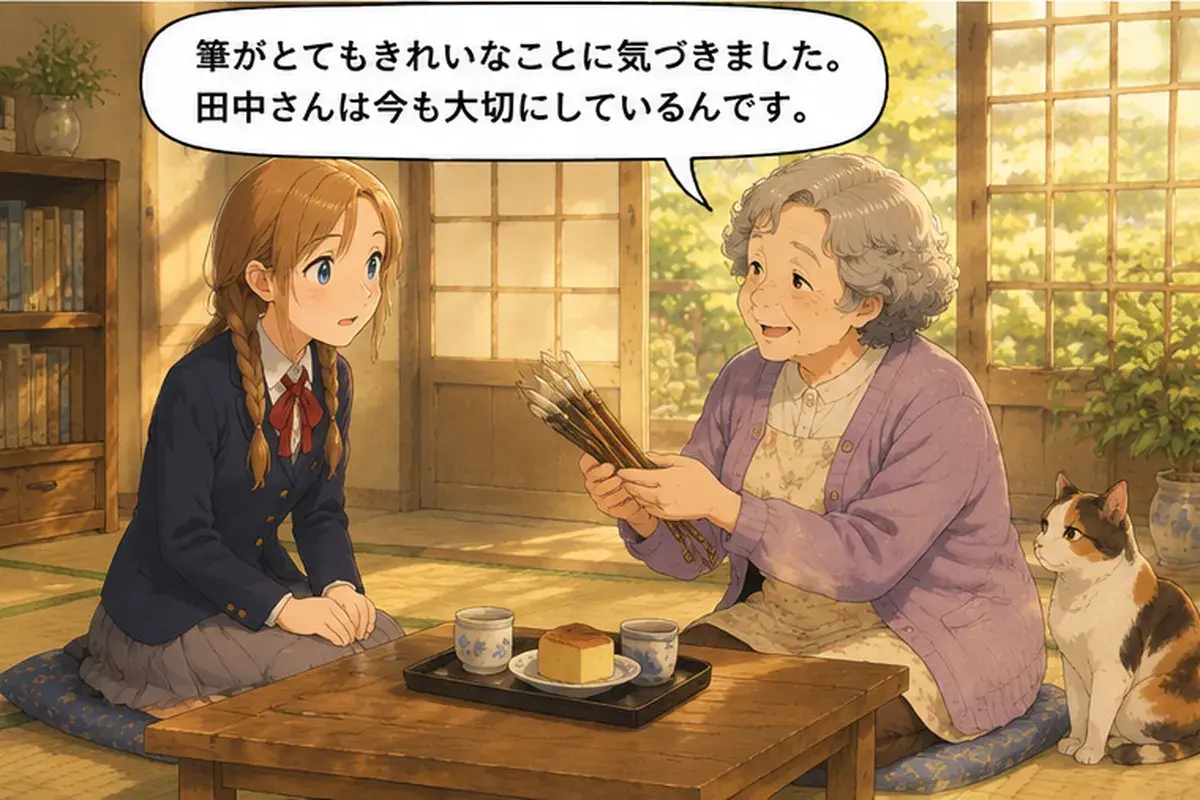
- ソーニャ
筆がとてもきれいなことに気づきました。田中さんは今も大切にしているんです。
I noticed that the brushes were very clean. Tanaka-san still takes good care of them.
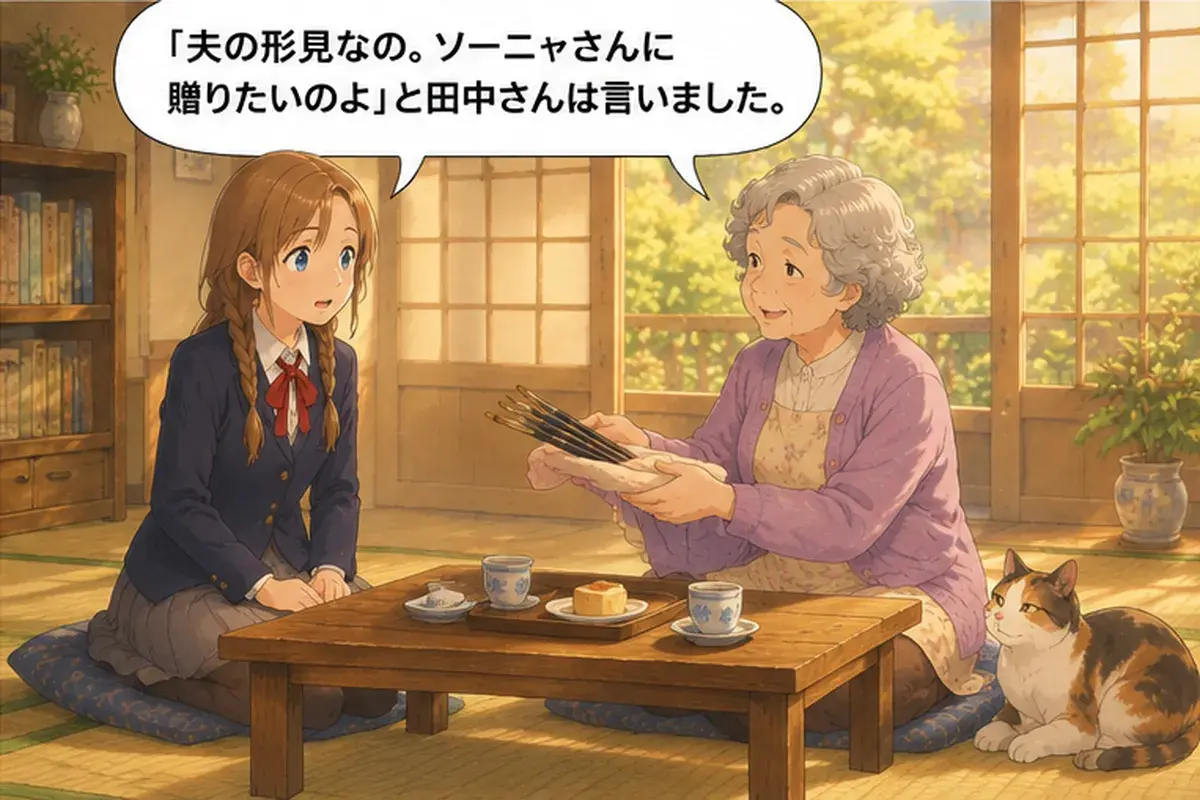
- ソーニャ
「夫の形見なの。ソーニャさんに贈りたいのよ」と田中さんは言いました。
“It's a keepsake of my husband's. I want to give it to you, Sonya-san,” Tanaka-san said.
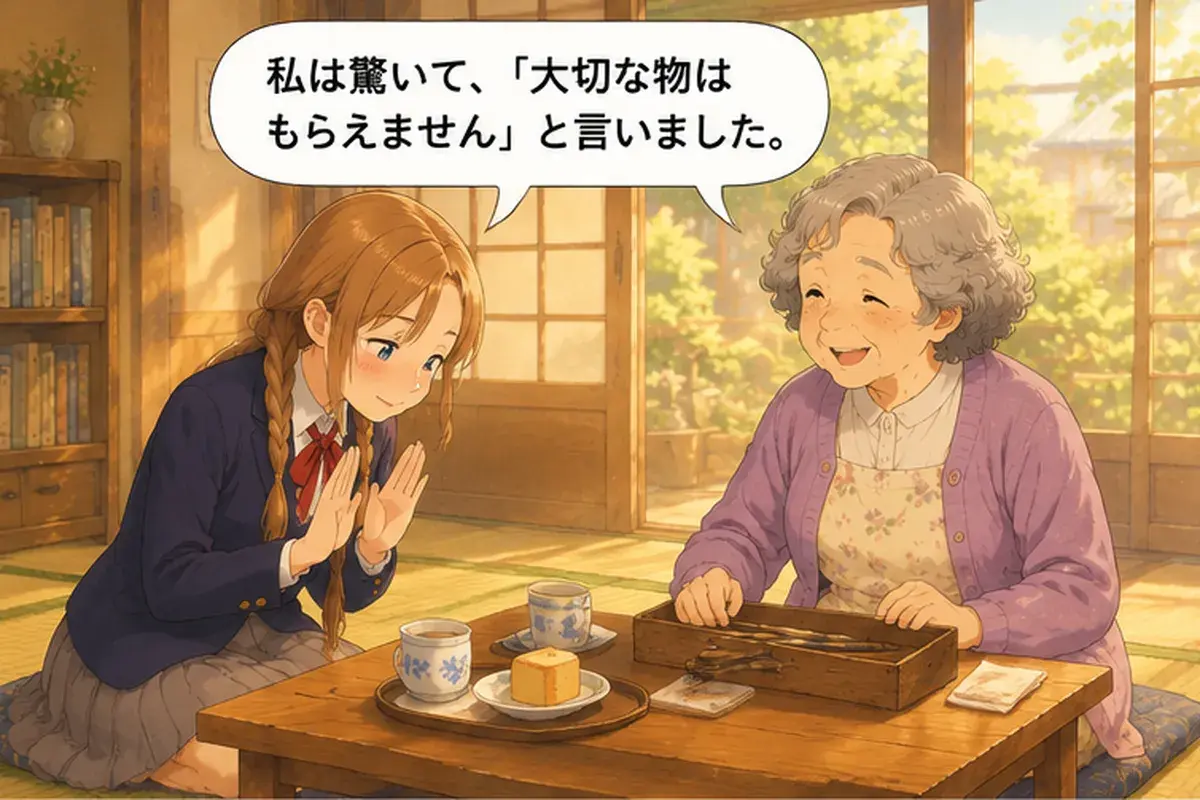
- ソーニャ
私は驚いて、「大切な物はもらえません」と言いました。
I was surprised and said, “I can't accept something so precious.”
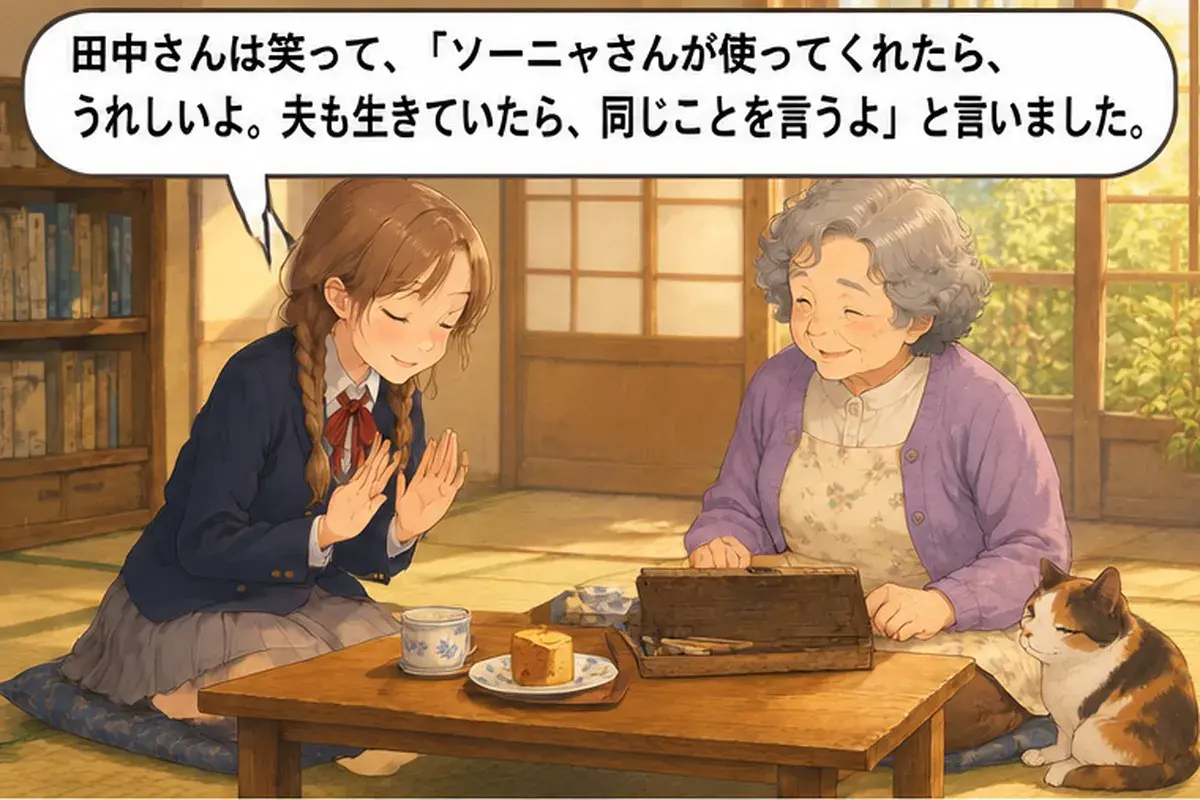
- ソーニャ
田中さんは笑って、「ソーニャさんが使ってくれたら、うれしいよ。夫も生きていたら、同じことを言うよ」と言いました。
Tanaka-san smiled and said, “I'd be happy if you used them. My husband would say the same thing if he were alive.”
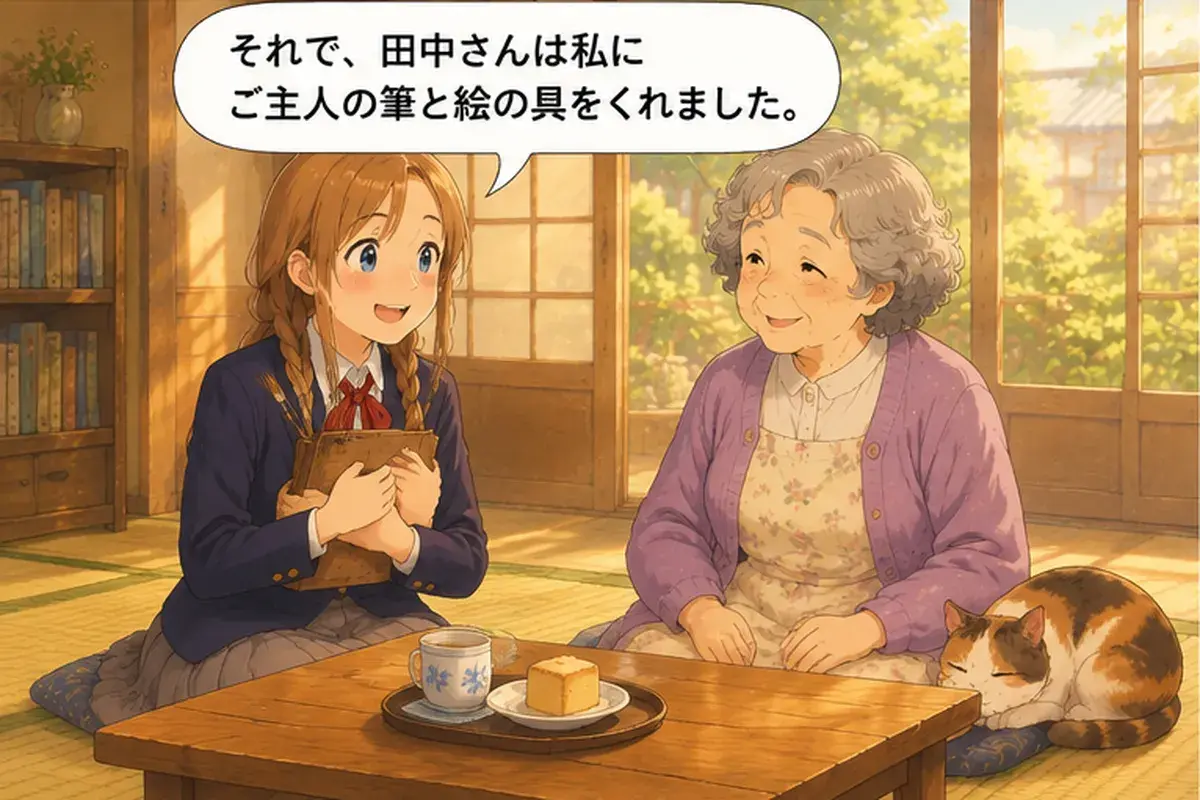
- ソーニャ
それで、田中さんは私にご主人の筆と絵の具をくれました。
So Tanaka-san gave me her husband's brushes and paints.
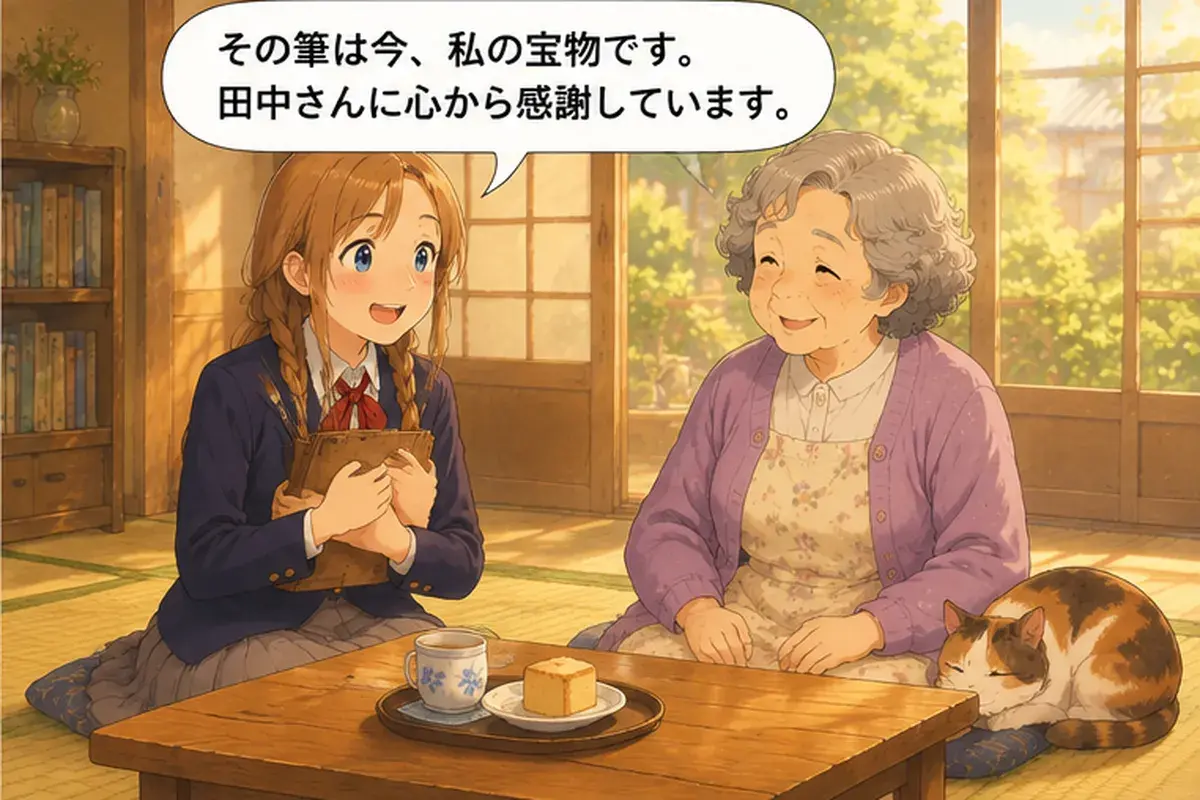
- ソーニャ
その筆は今、私の宝物です。田中さんに心から感謝しています。
Those brushes are now my treasure. I'm truly grateful to Tanaka-san from the bottom of my heart.
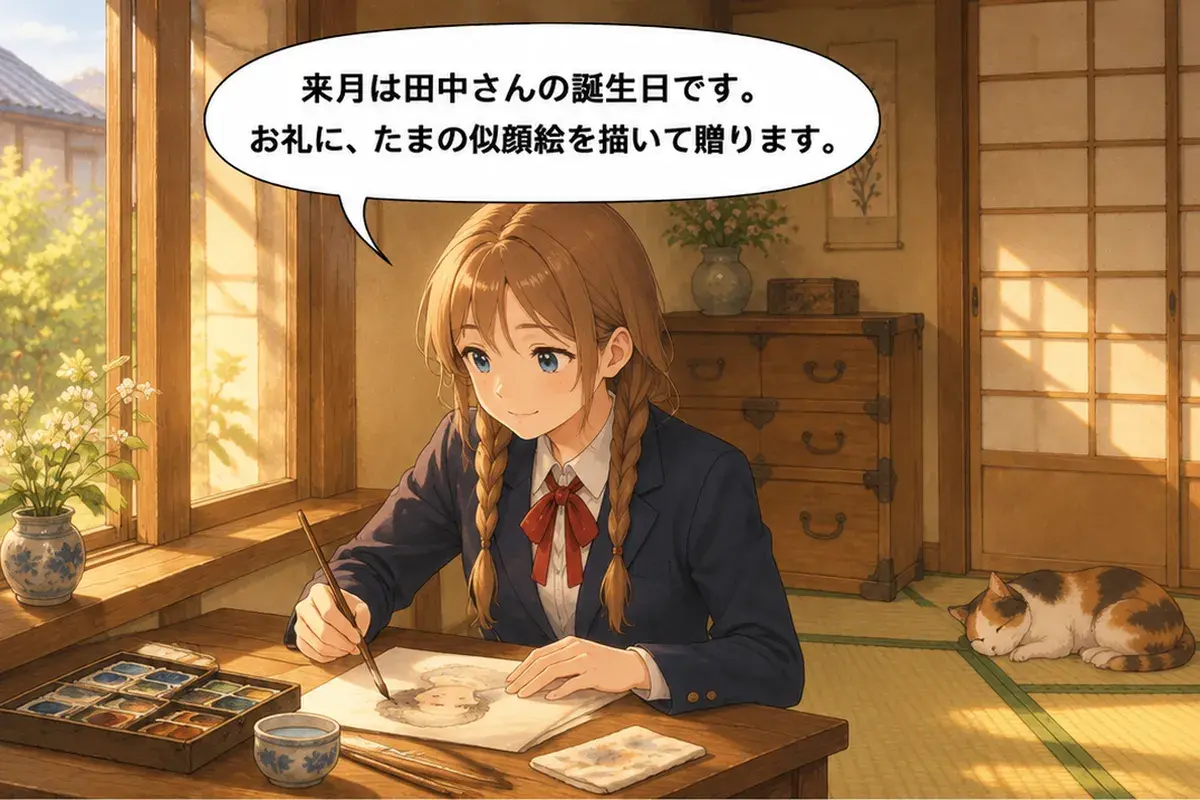
- ソーニャ
来月は田中さんの誕生日です。お礼に、たまの似顔絵を描いて贈ります。
Next month is Tanaka-san's birthday. To thank her, I'll paint a portrait of Tama and give it to her.
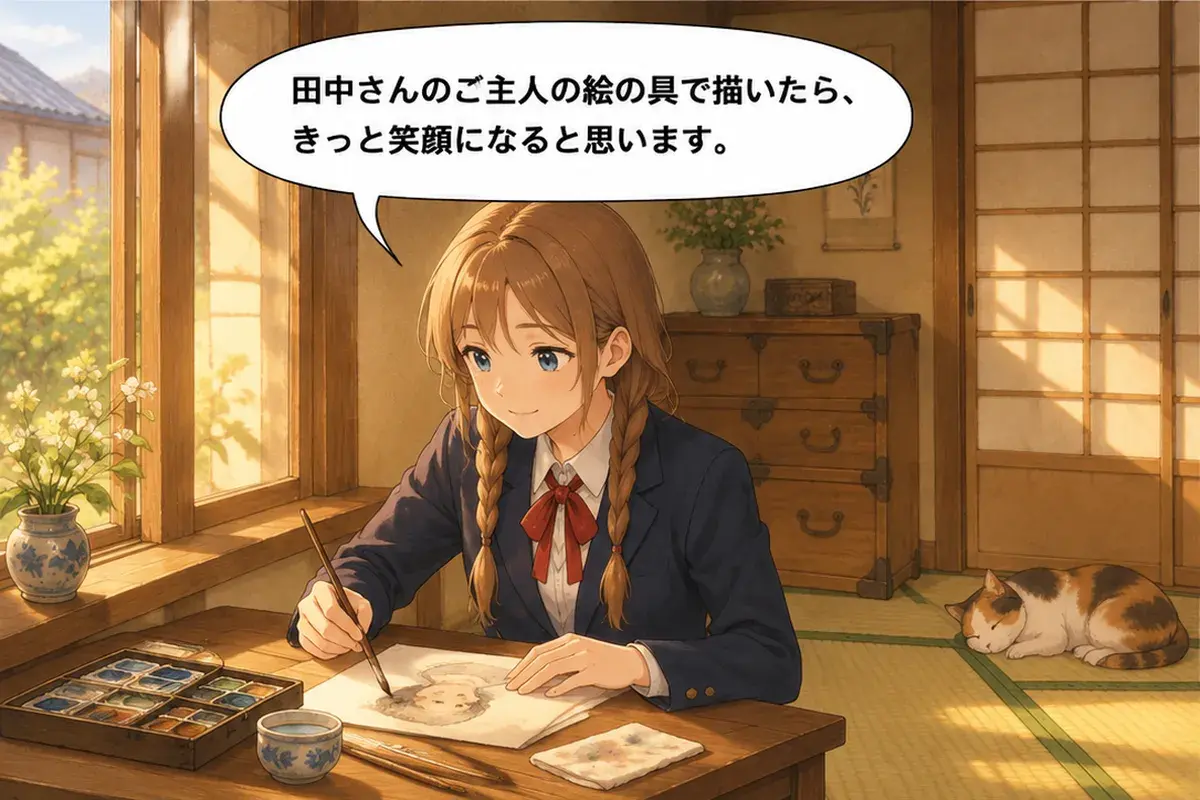
- ソーニャ
田中さんのご主人の絵の具で描いたら、きっと笑顔になると思います。
I think that if I paint it with her husband's paints, she'll surely smile.
Grammar for this text
田中 さん は お茶 と ケーキ を 出して くれました— Tanaka-san brought out tea and cake for me. Sonya is the one receiving, so it'sくれました, notあげました: "Tanaka-san did it for me."田中 さん の ご主人 は 絵 が 好き でした— Tanaka-san's husband liked painting. About someone else's husband you sayご主人. About your own husband you say夫, as Tanaka-san does in her own words:夫 の 絵 の 道具,夫 の 形見.私 は 田中 さん に ご主人 の 絵 を 見せて もらいました— I got Tanaka-san to show me her husband's paintings. It's a similar event, but seen from Sonya's side:見せて もらうmeans "I was shown," and the person who showed takesに.夫 の 形見 な の。 ソーニャ さん に 贈りたい の よ— It's a keepsake of my husband's. I want to give it to you, Sonya-san (casual).形見is something to remember a person who has died;贈るmeans "to give as a gift," more formal thanあげる. Tanaka-san speaks to the girl softly, in a woman's casual way:な の,の よinstead ofな ん です,ん です(unit 9).大切 な 物 は もらえません— I can't accept something so precious.もらえませんmeans "I can't accept" (the potential form ofもらう, unit 10). This is a polite way to turn down a gift that is too valuable.筆 が とても きれい な こと に 気づきました— I noticed that the brushes were very clean.気づくmeans "to notice" and takesに;ことturns "the brushes are clean" into the thing she noticed.ソーニャ さん が 使って くれたら、 うれしい よ— I'd be happy if you used them (casual).使って くれたらmeans "if you would use them (for me)": Tanaka-san is gently urging her to accept.夫 も 生きて いたら、 同じ こと を 言う よ— My husband would say the same thing if he were alive (casual).生きて いたらmeans "if he were alive": hereたら(unit 11) is about something that can no longer happen.心 から 感謝 して います— I'm truly grateful from the bottom of my heart.心 からmeans "from the bottom of my heart"; it's a ready-made phrase.
Words and grammar of the unit: Thank someone for their help.
Learn the words from the texts with flashcards
In the app, you can tap any word in a text to see its translation, forms and examples, and new words stick with flashcards. 15 minutes a day.
Start for freeEverything is open for free. No card needed to sign up.