
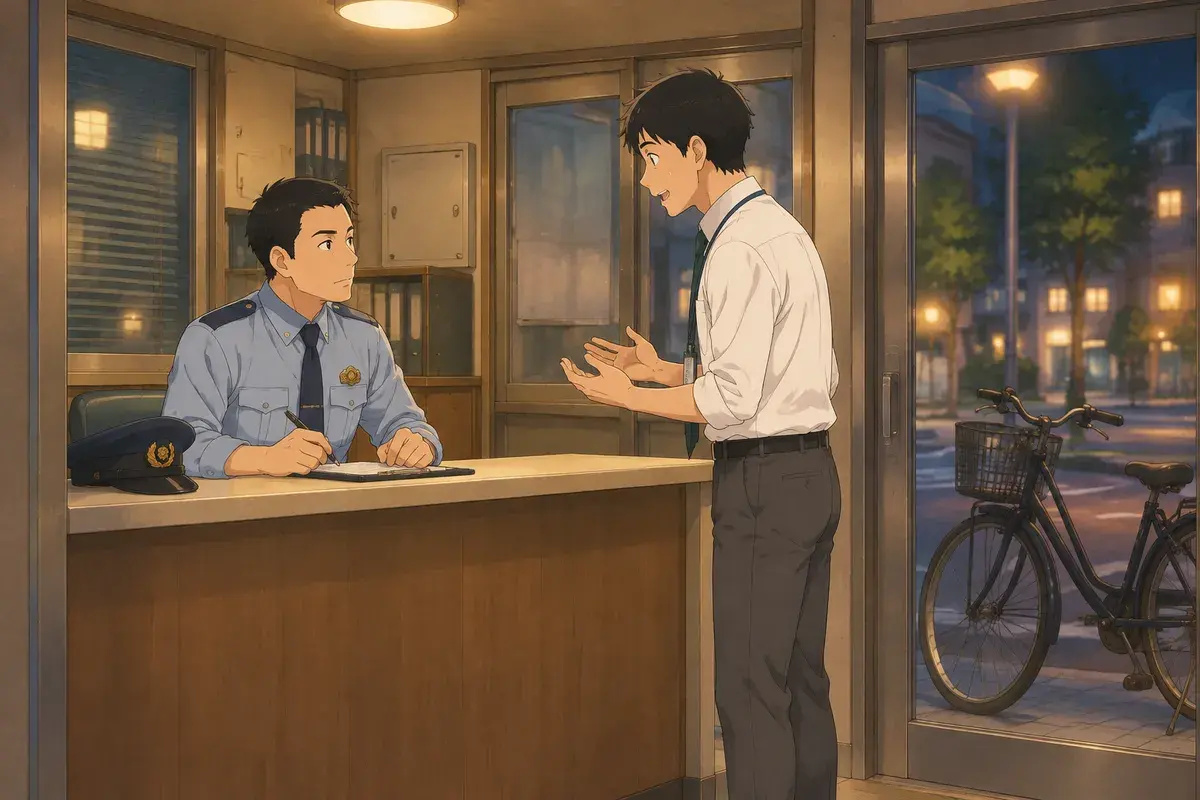
Japanese dialogue with translation · A2 · 16 lines
自転車を盗まれました My bicycle was stolen
Comic · 16 panels
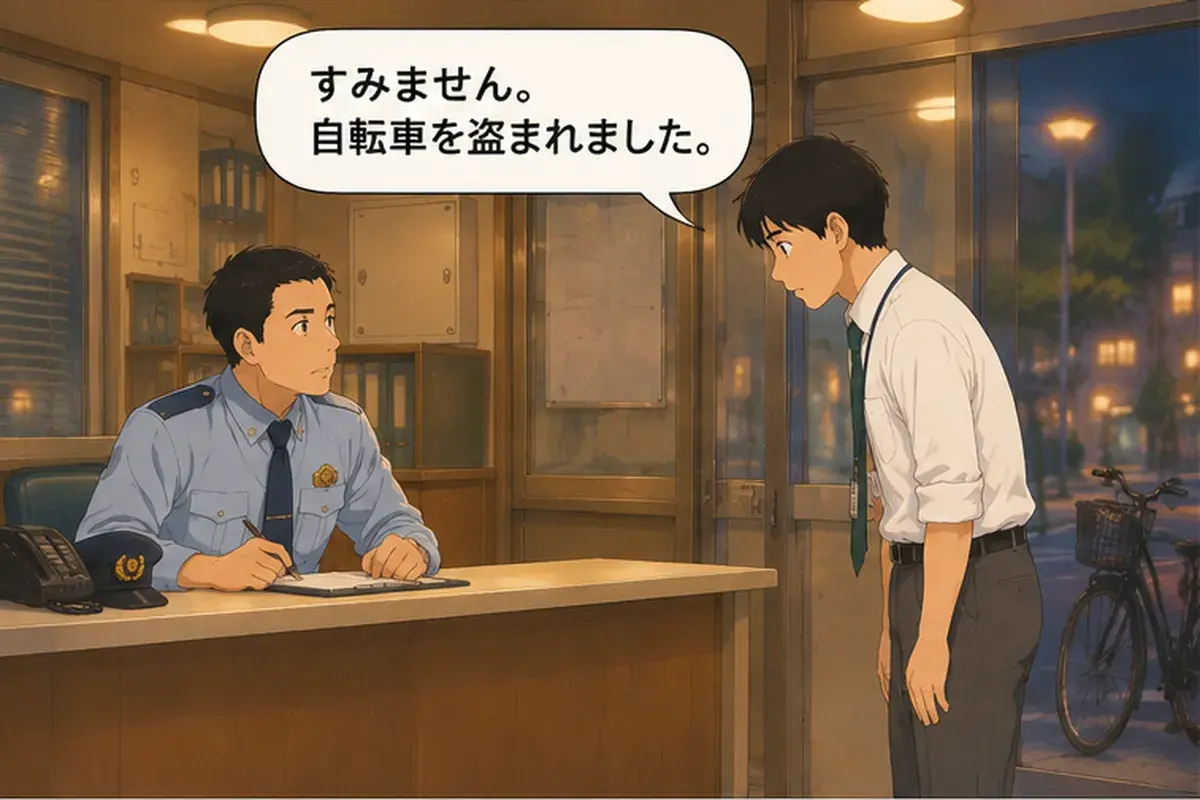
- けん
すみません。自転車を盗まれました。
Excuse me. My bicycle was stolen.
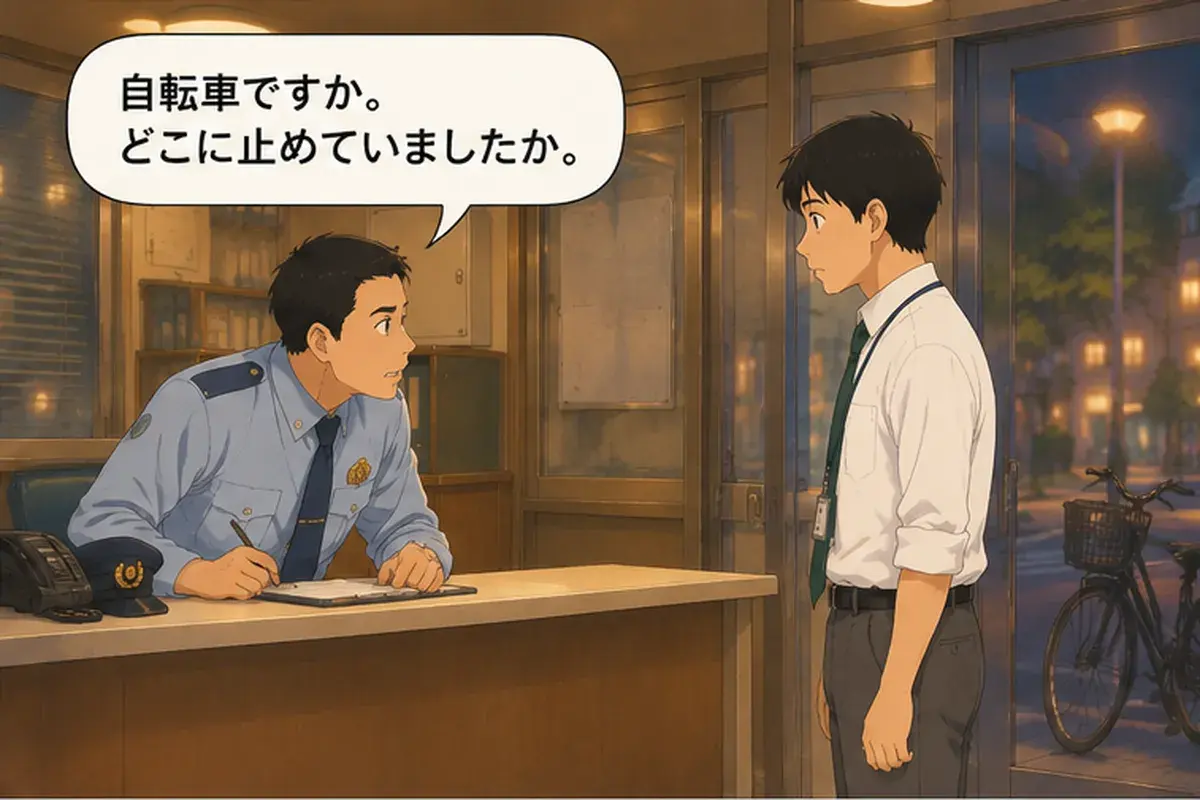
- 警察官
自転車ですか。どこに止めていましたか。
A bicycle? Where did you park it?
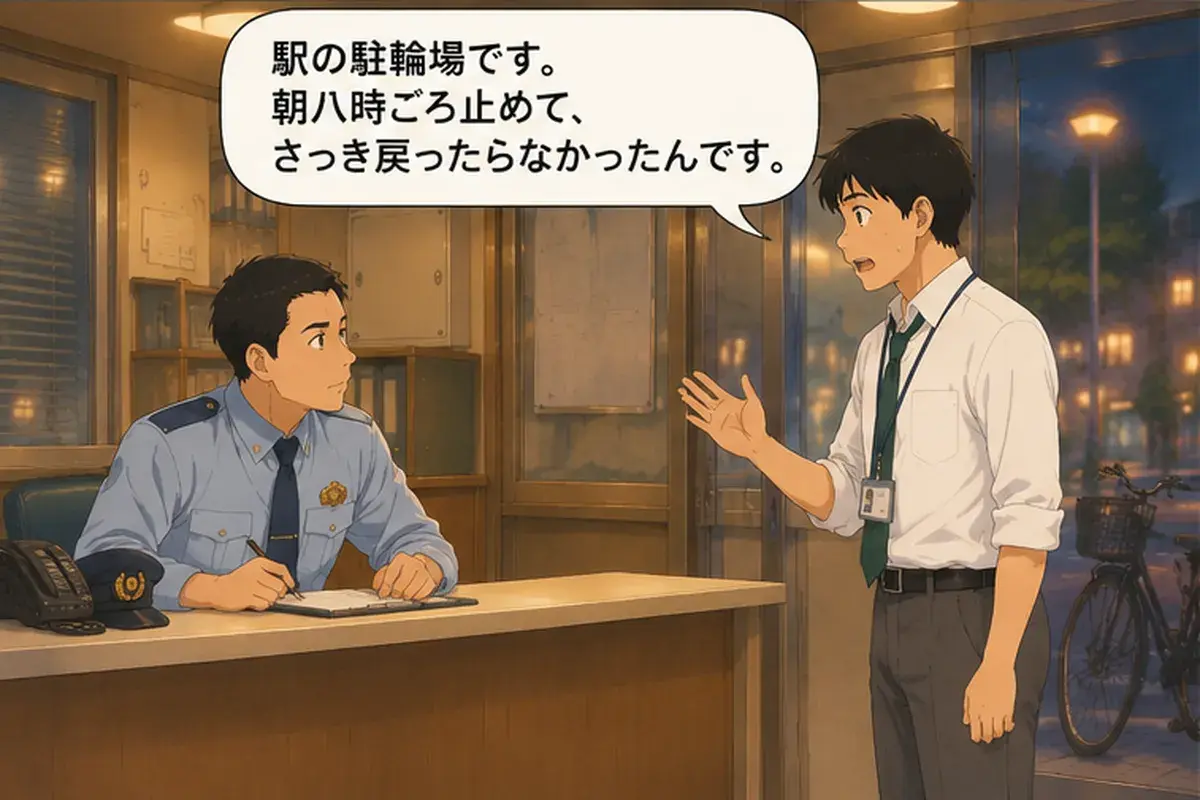
- けん
駅の駐輪場です。朝八時ごろ止めて、さっき戻ったらなかったんです。
At the bicycle lot at the station. I parked it around eight this morning, and when I came back a little while ago, it was gone.
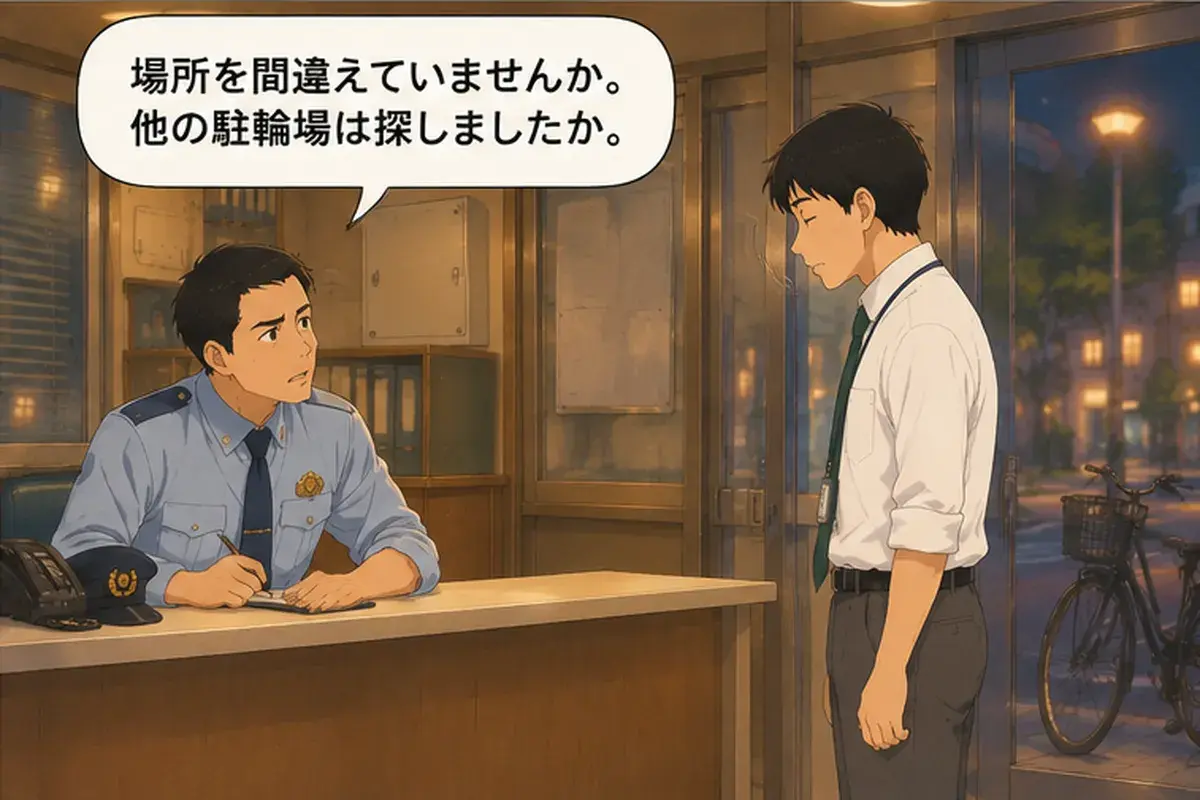
- 警察官
場所を間違えていませんか。他の駐輪場は探しましたか。
Aren't you mistaken about the place? Did you look in the other bicycle lots?
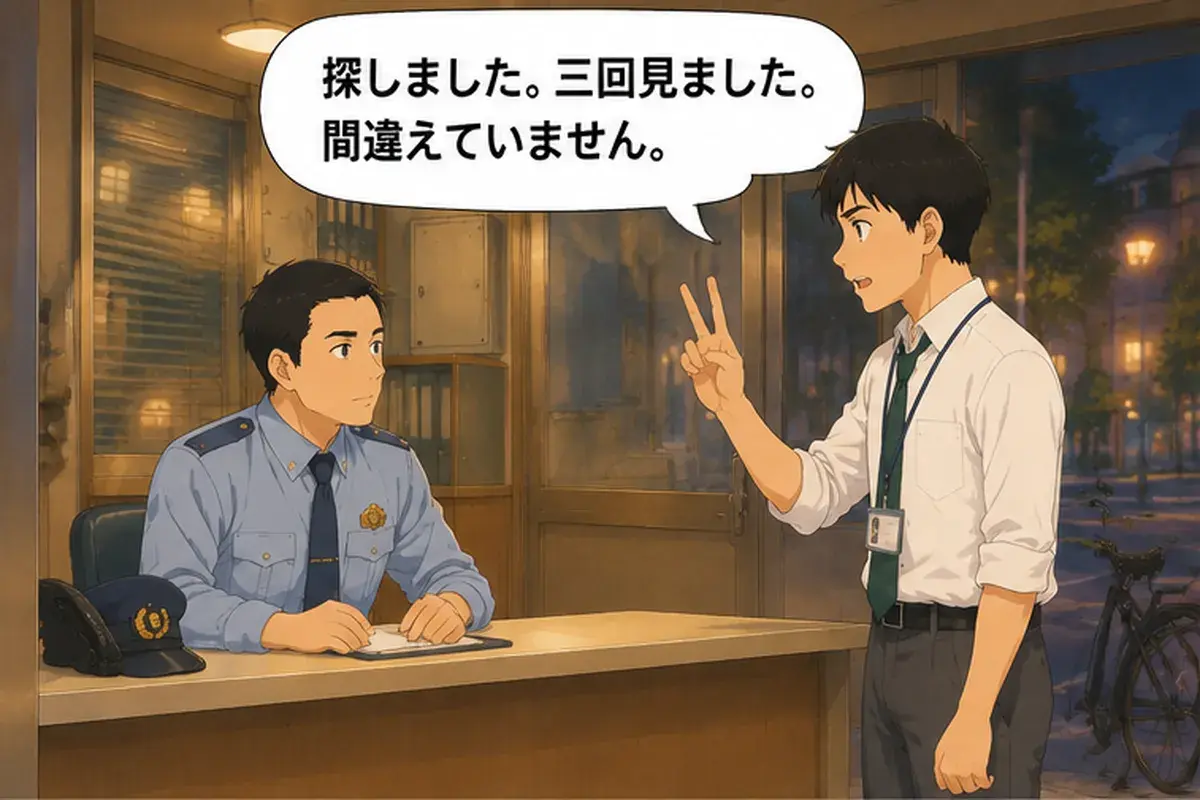
- けん
探しました。三回見ました。間違えていません。
I did. I checked three times. I'm not mistaken.
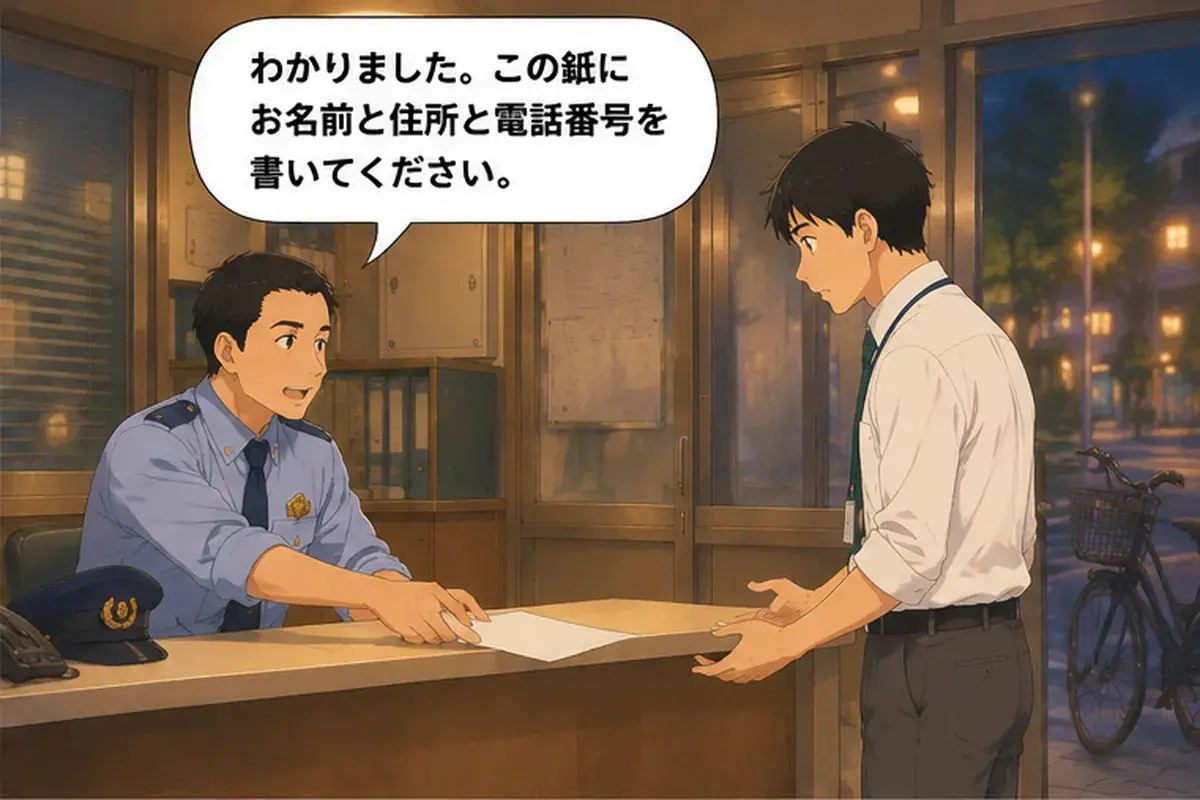
- 警察官
わかりました。この紙にお名前と住所と電話番号を書いてください。
I see. Please write your name, address, and phone number on this sheet.
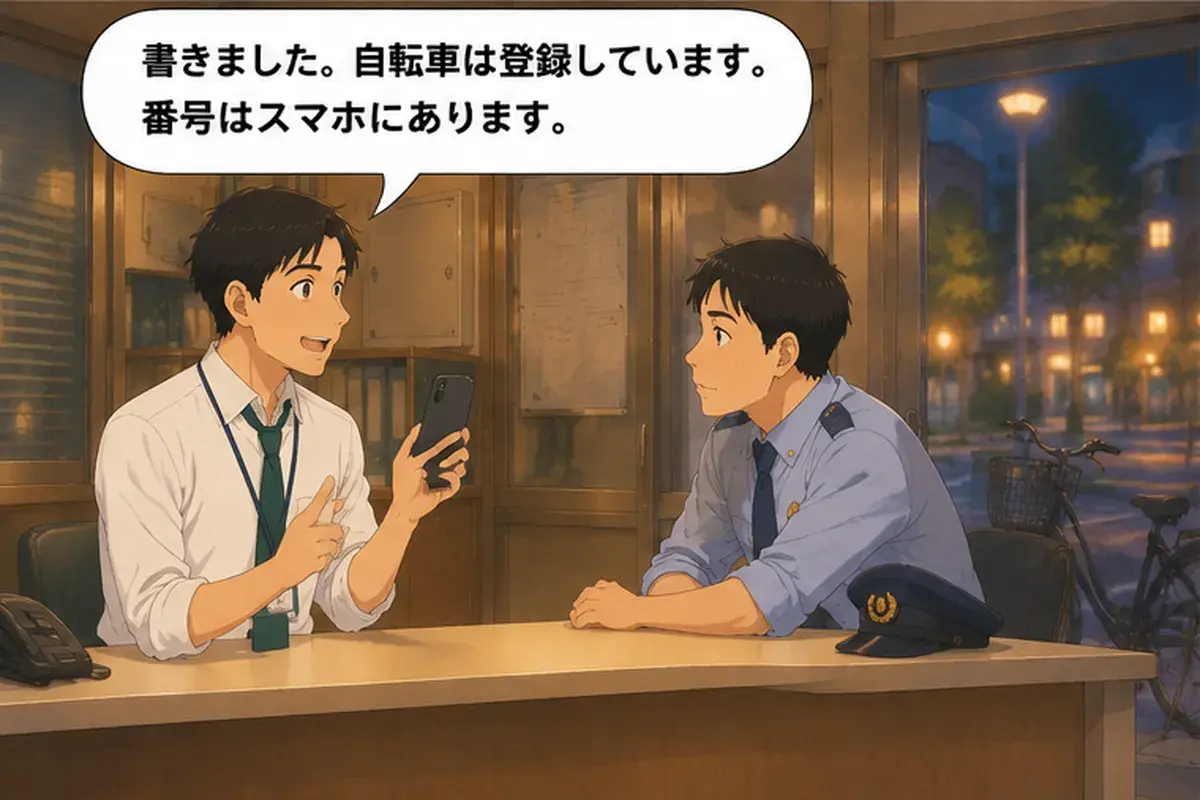
- けん
書きました。自転車は登録しています。番号はスマホにあります。
I wrote them. The bicycle is registered. The number is on my smartphone.
- 警察官
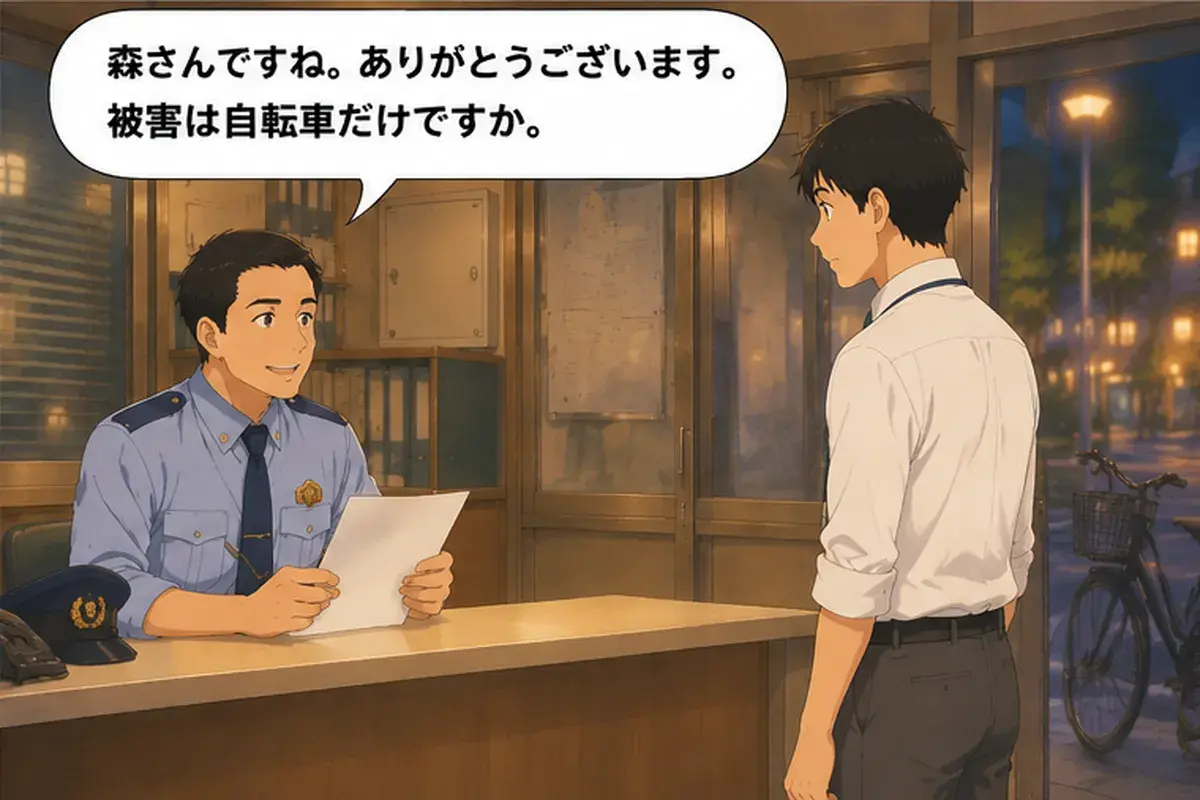
森さんですね。ありがとうございます。被害は自転車だけですか。
You're Mori-san, right? Thank you. Was the bicycle the only loss?
- けん
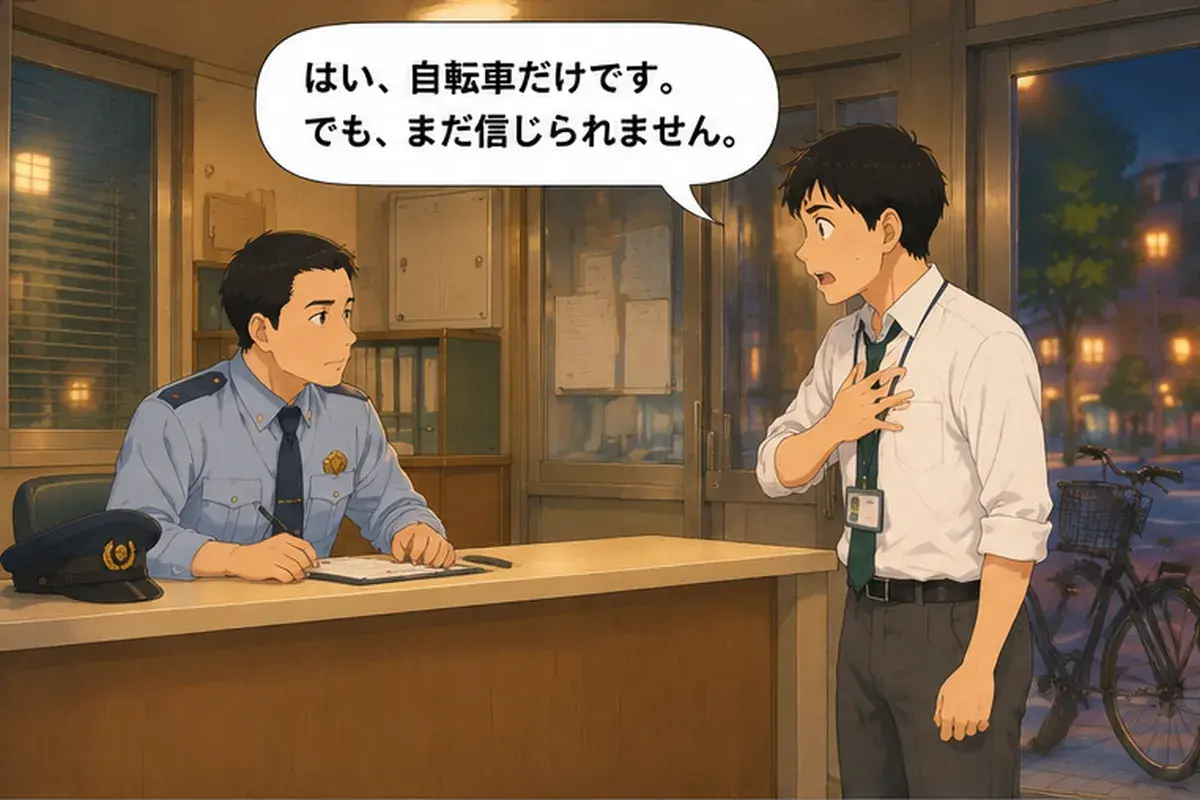
はい、自転車だけです。でも、まだ信じられません。
Yes, just the bicycle. But I still can't believe it.
- 警察官
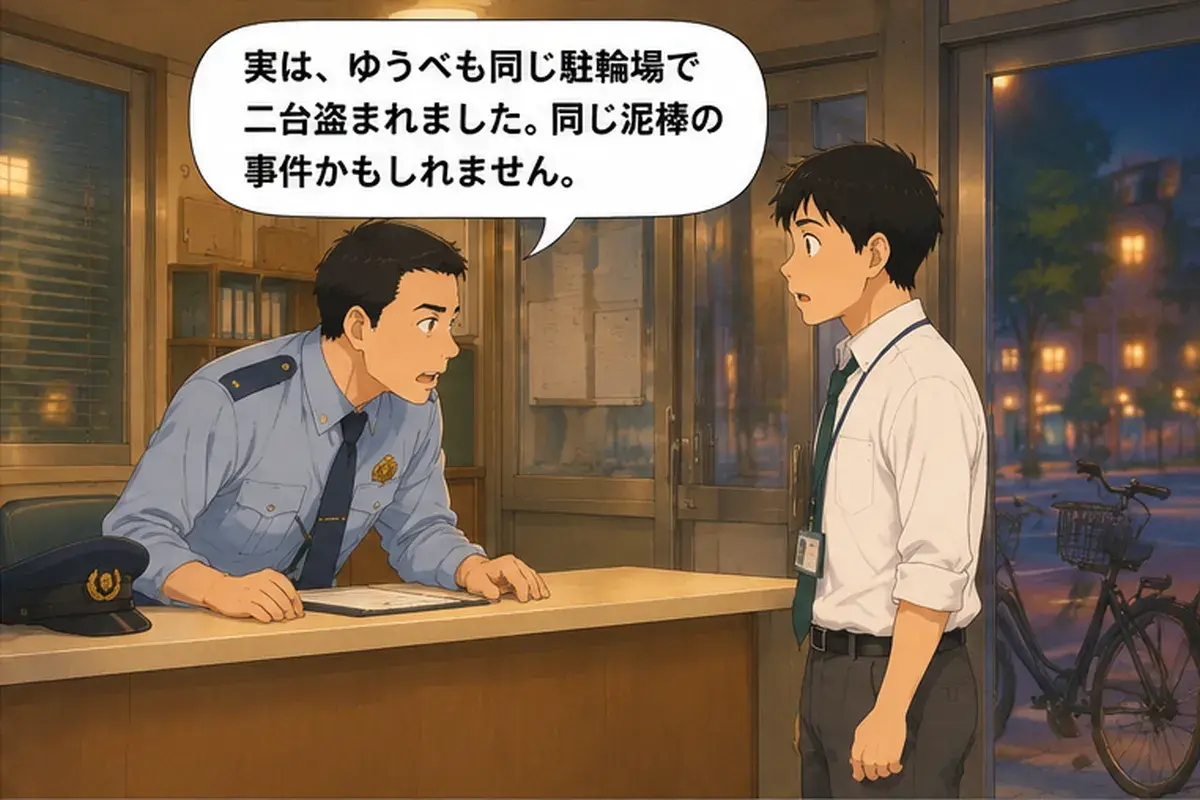
実は、ゆうべも同じ駐輪場で二台盗まれました。同じ泥棒の事件かもしれません。
Actually, two more bicycles were stolen from the same lot last night. It could be a case involving the same thief.
- けん
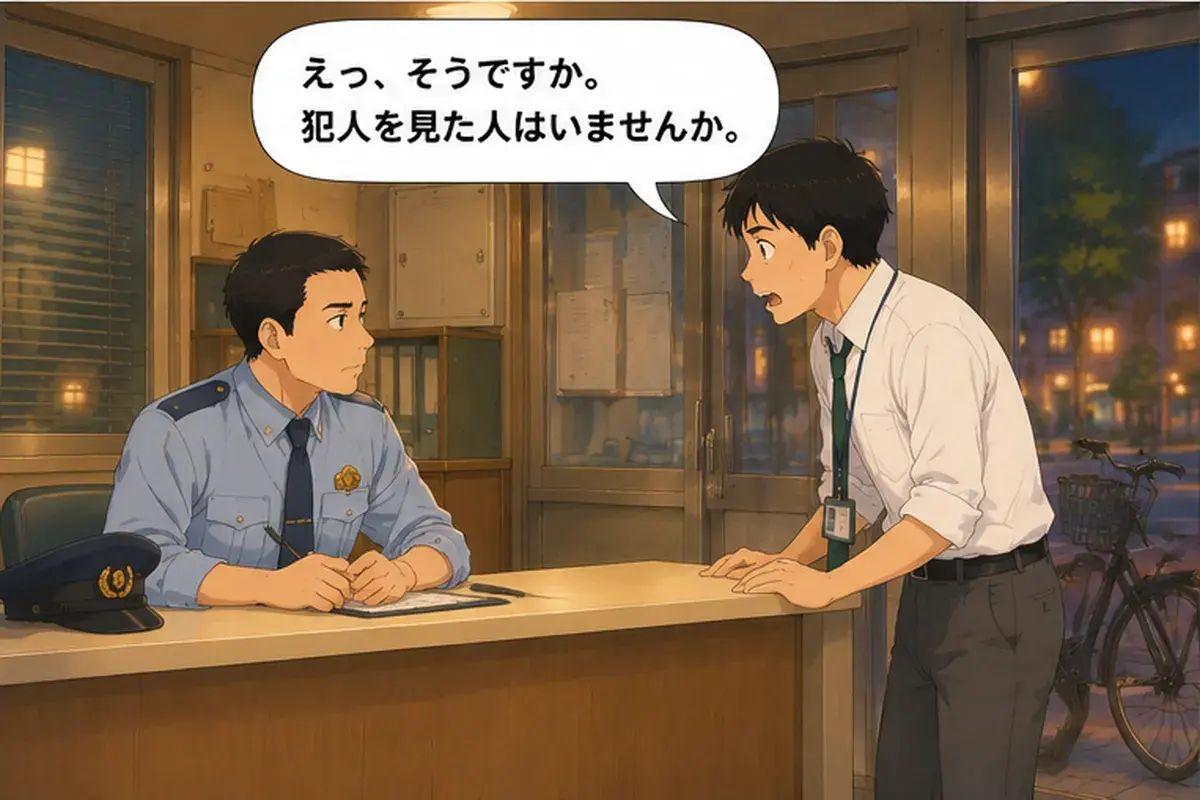
えっ、そうですか。犯人を見た人はいませんか。
Oh, really? Isn't there anyone who saw the criminal?
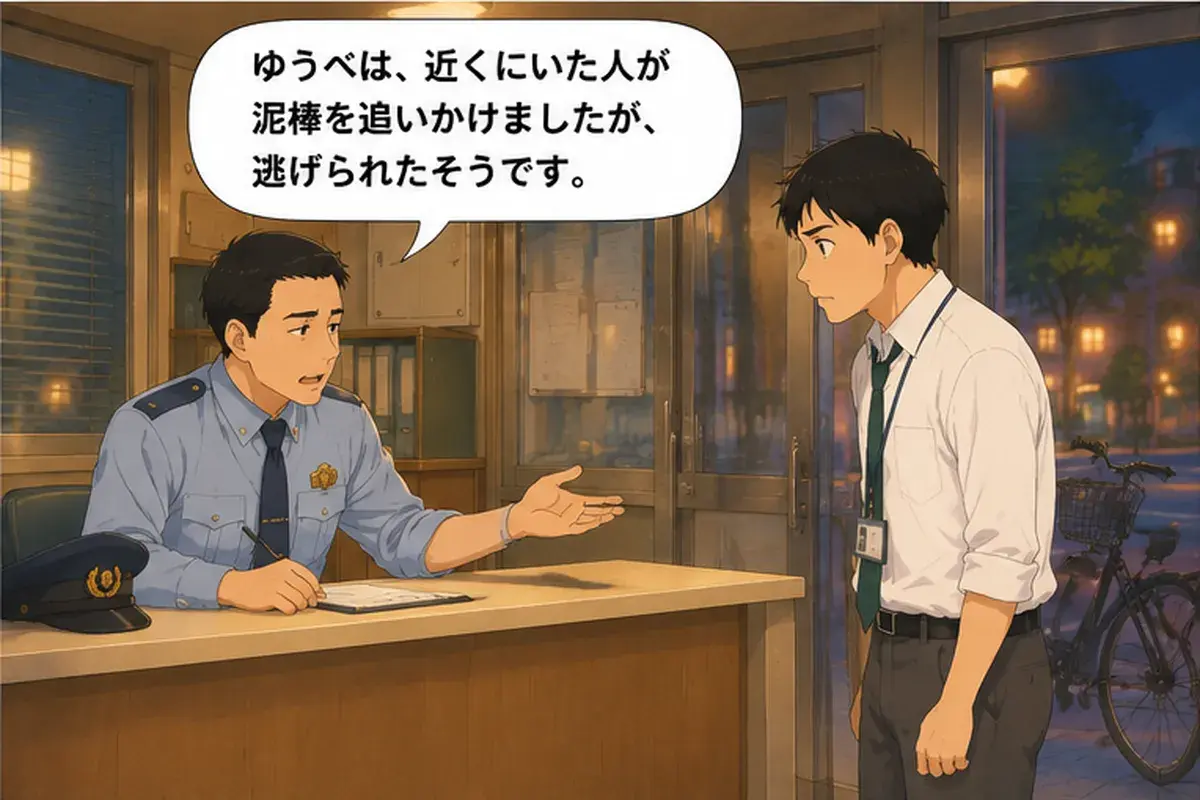
- 警察官
ゆうべは、近くにいた人が泥棒を追いかけましたが、逃げられたそうです。
Last night someone who was nearby chased the thief, but I hear the thief got away from them.
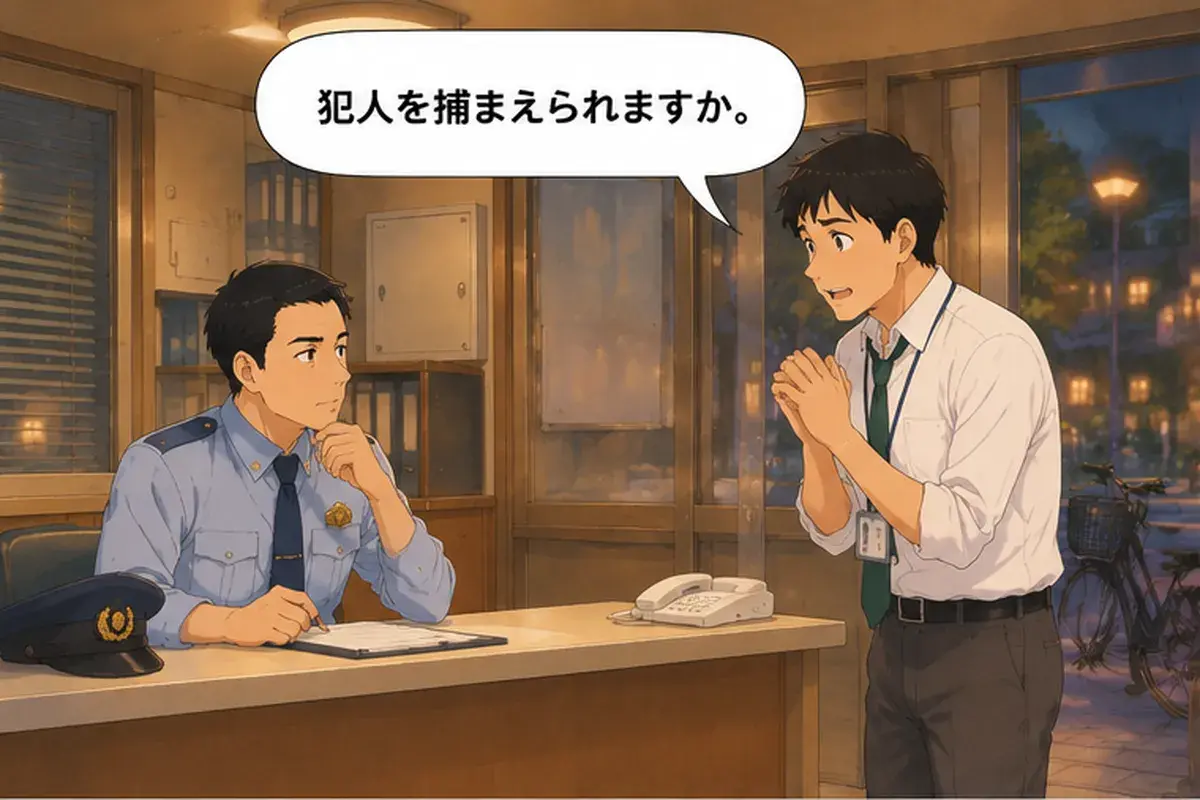
- けん
犯人を捕まえられますか。
Can you catch the criminal?
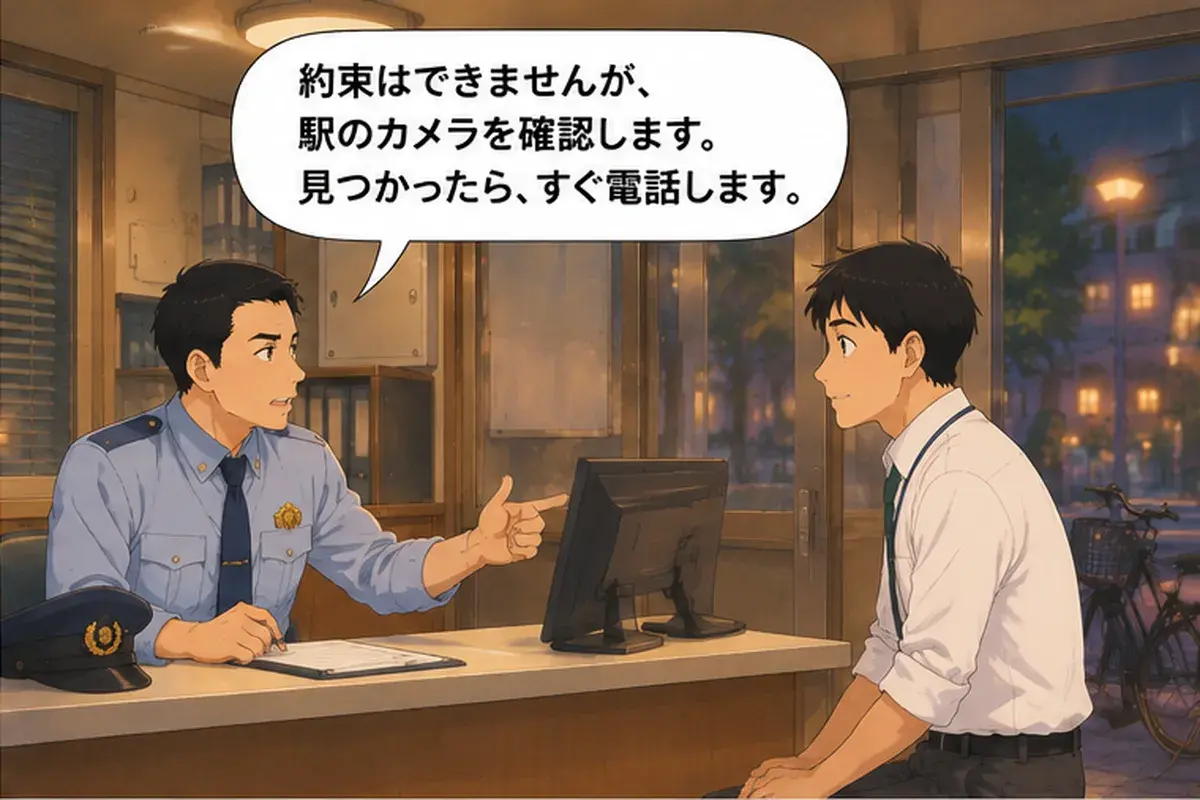
- 警察官
約束はできませんが、駅のカメラを確認します。見つかったら、すぐ電話します。
I can't promise, but we'll check the cameras at the station. If it's found, I'll call you right away.
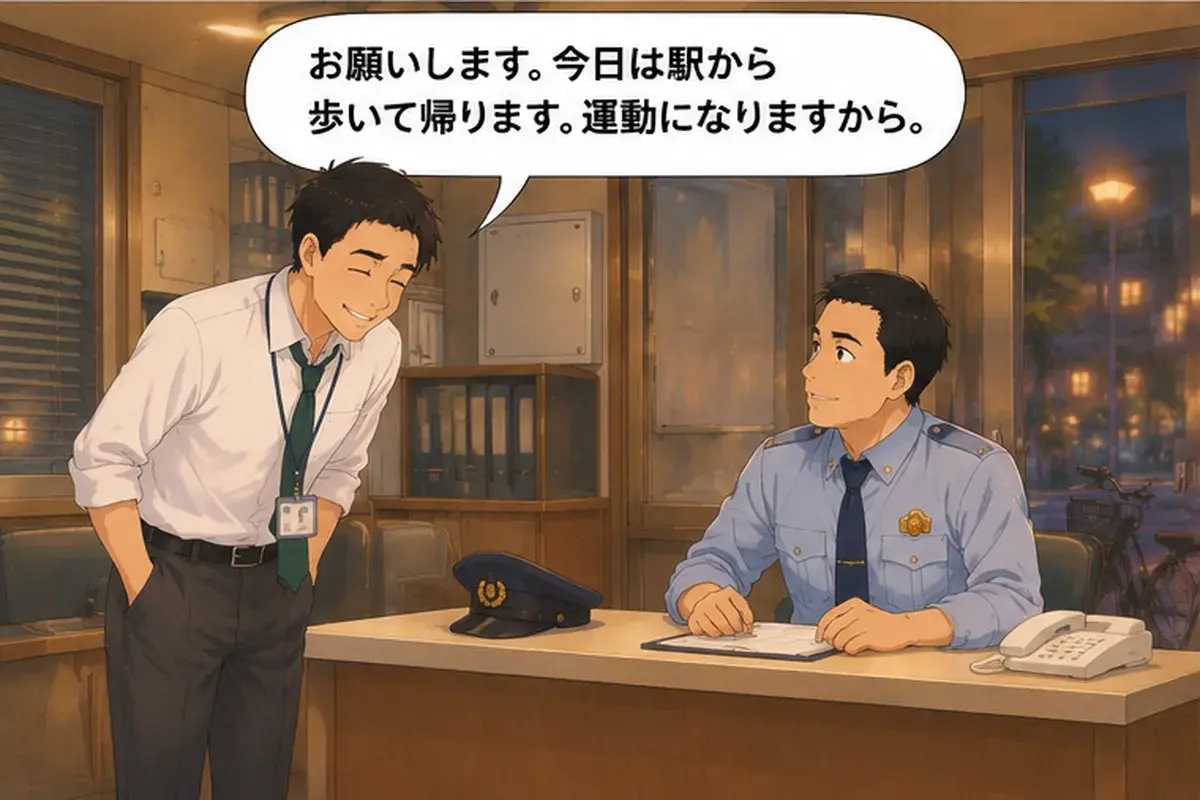
- けん
お願いします。今日は駅から歩いて帰ります。運動になりますから。
Please do. I'll walk home from the station today. It'll count as exercise.
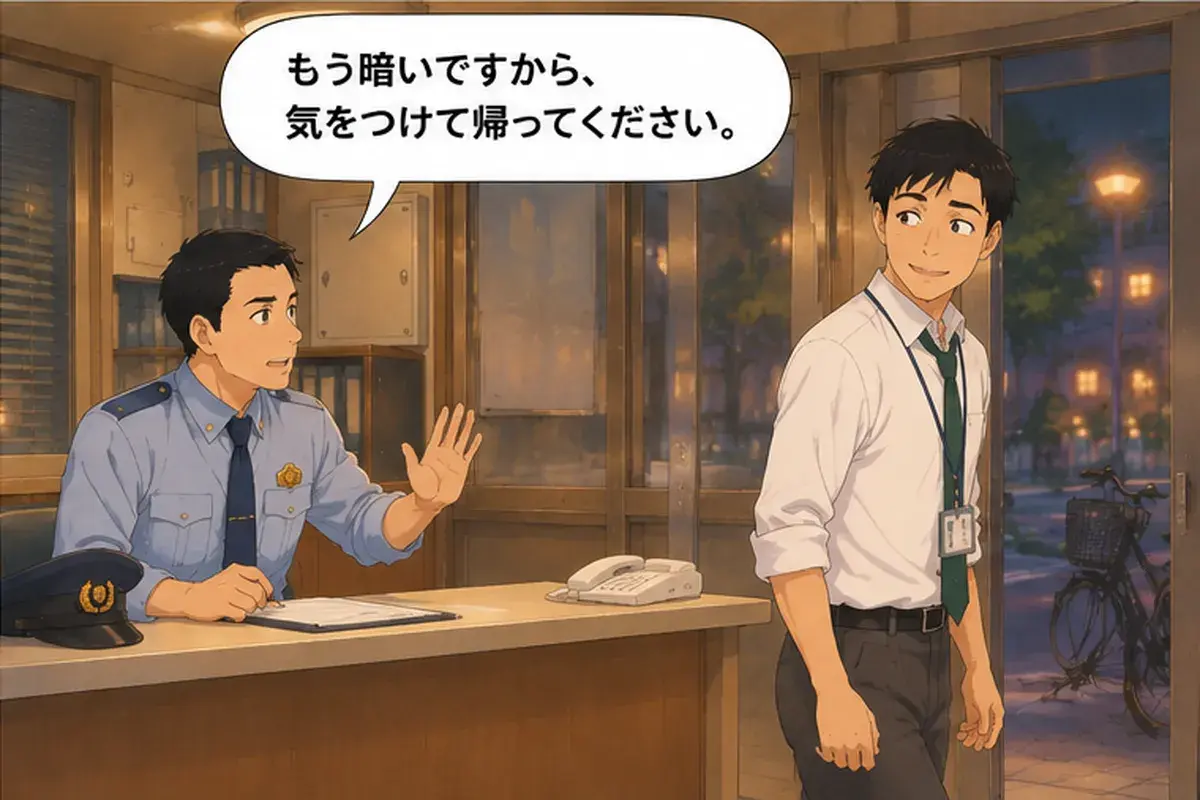
- 警察官
もう暗いですから、気をつけて帰ってください。
It's already dark, so please be careful on your way home.
Grammar for this text
自転車 を 盗まれました— My bicycle was stolen. This is the passive of盗む. We don't know who took it, so there is noにpart. The bicycle stays withを, and there is no word for "my": the subject is clear.逃げられた そう です— I hear the thief got away from them.逃げる(Group 2) →逃げられる: the thief ran away, and the person chasing is the one who is annoyed.そう ですafter a plain form means "I hear" (unit 7).犯人 を 捕まえられます か— Can you catch the criminal? It looks like a passive, but here it means "can" (unit 10). Group 2 verbs have the same form for both, and you tell them apart byをand the question. A passive would be犯人 は 捕まえられます, "the criminal will be caught".まだ 信じられません— I still can't believe it.信じられるis used as "can believe": "can't believe it". People say it when they are shocked.登録して います— It's registered. In Japan bicycles are registered when you buy them, and the police find the owner by the number.ゆうべmeans the evening or night before. For the whole day yesterday, use昨日.二 台—台is the counter for bicycles, cars and machines.お名前 と 住所 と 電話番号 を 書いて ください— Please write your name, address, and phone number. A theft report is written on a form.見つかったら、 すぐ 電話 します— If it's found, I'll call you right away. The phone number is needed so the police can call you when your property turns up.
Words and grammar of the unit: Say what someone did to you.
Learn the words from the texts with flashcards
In the app, you can tap any word in a text to see its translation, forms and examples, and new words stick with flashcards. 15 minutes a day.
Start for freeEverything is open for free. No card needed to sign up.