
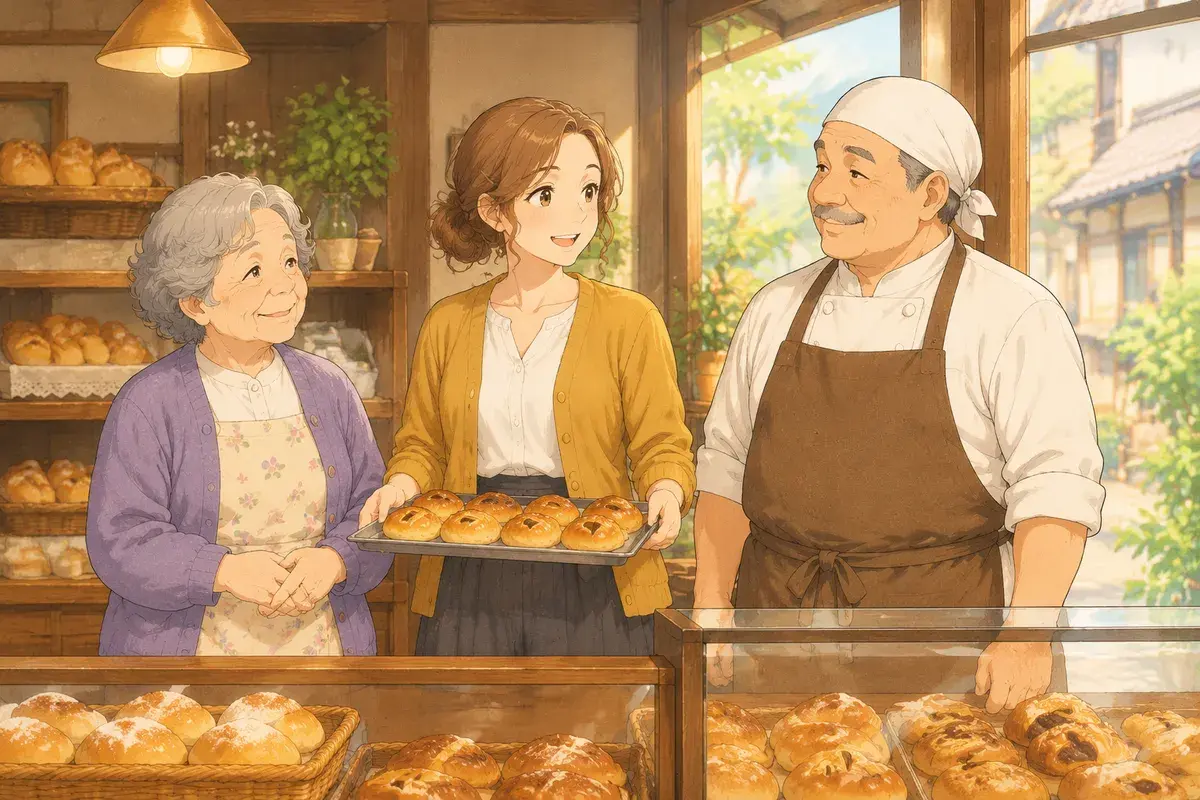
Japanese dialogue with translation · A2 · 15 lines
お客さんに無視されました The customers ignored me
Comic · 12 panels
- 田中
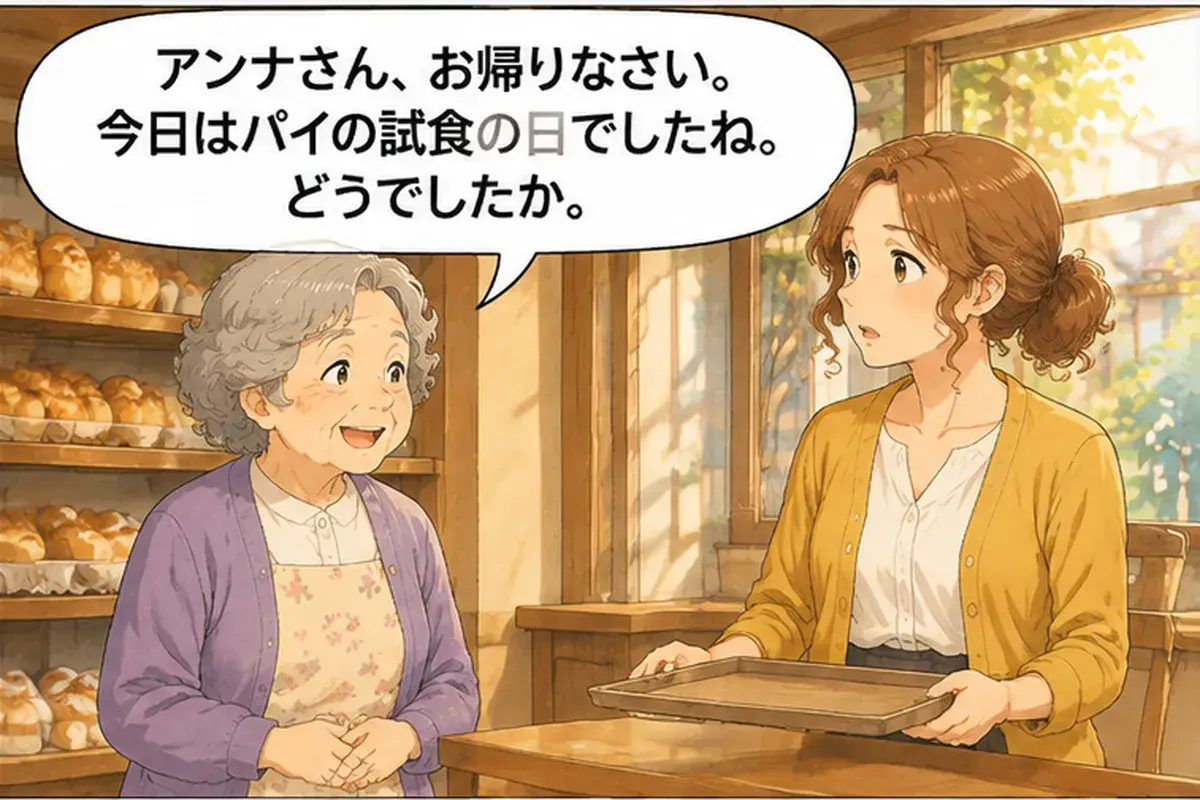
アンナさん、お帰りなさい。今日はパイの試食の日でしたね。どうでしたか。
Welcome home, Anna-san. Today was the pie tasting day, wasn't it? How did it go?
- アンナ
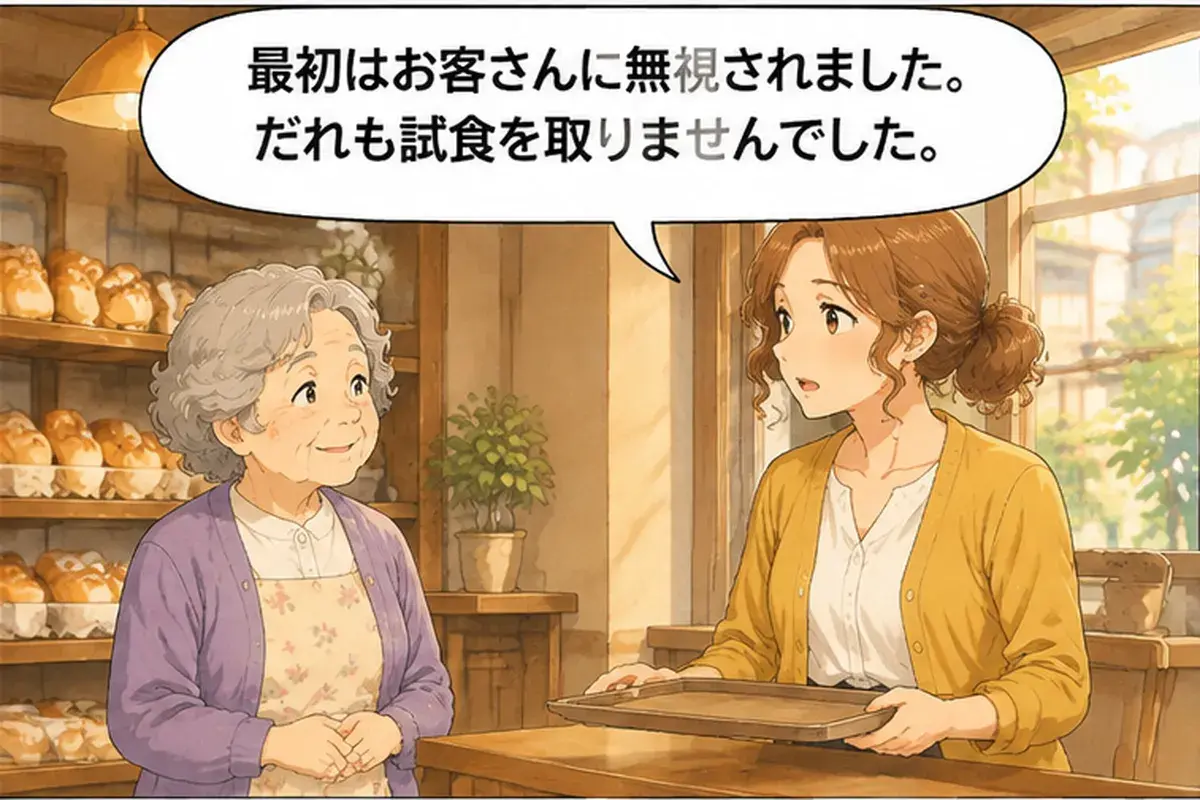
最初はお客さんに無視されました。だれも試食を取りませんでした。
At first the customers ignored me. Nobody took a sample.
- 田中
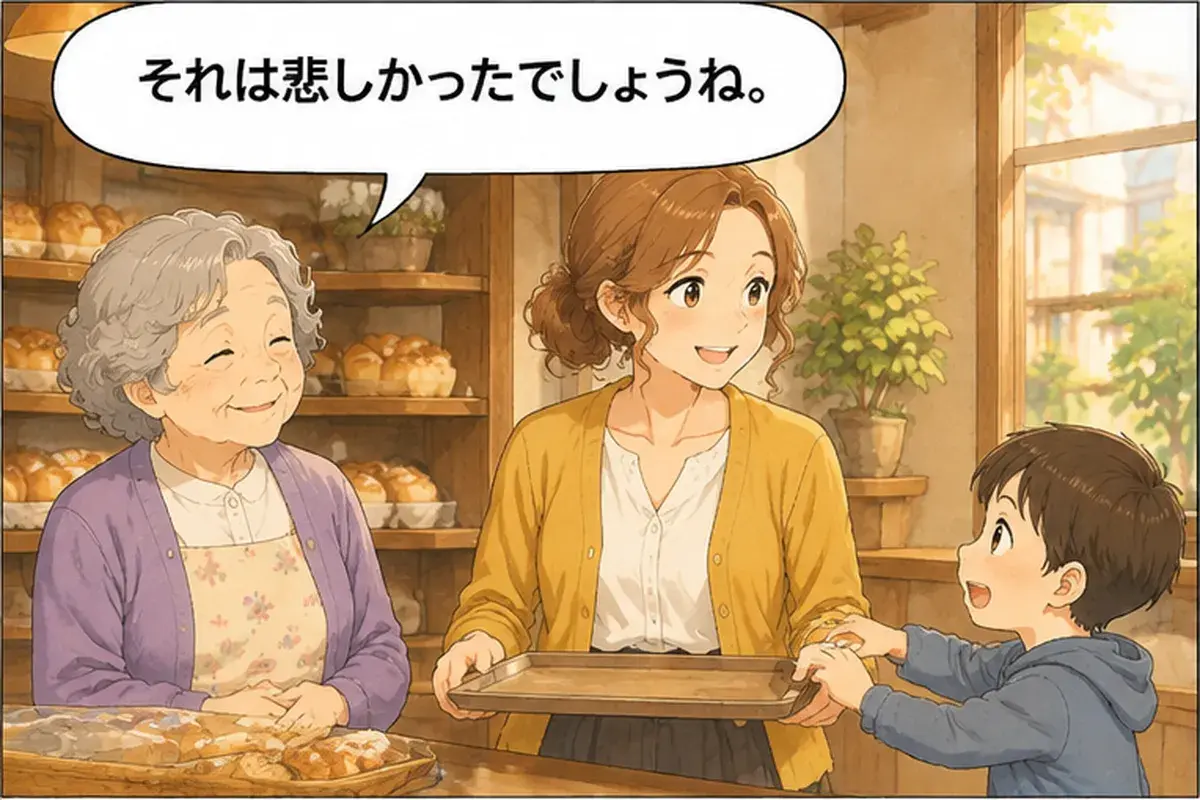
それは悲しかったでしょうね。
That must have been sad.
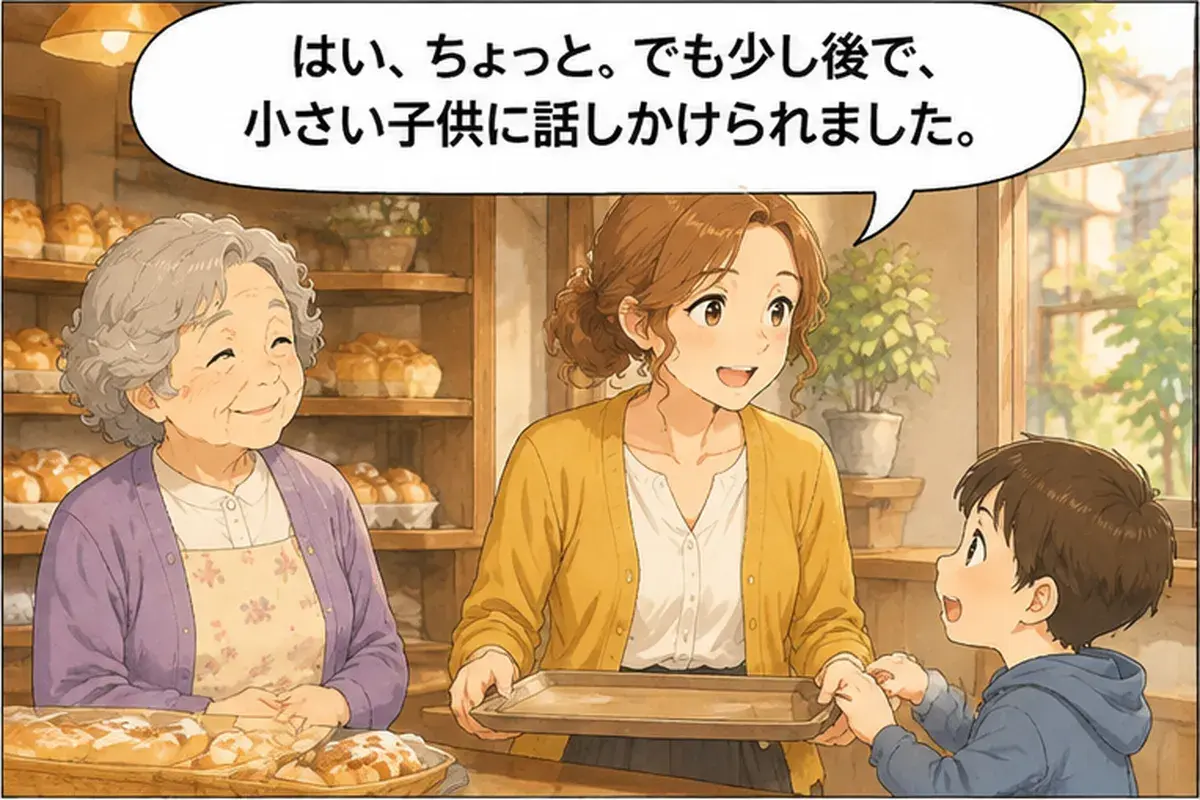
- アンナ
はい、ちょっと。でも少し後で、小さい子供に話しかけられました。
Yes, a little. But a little later, a small child spoke to me.
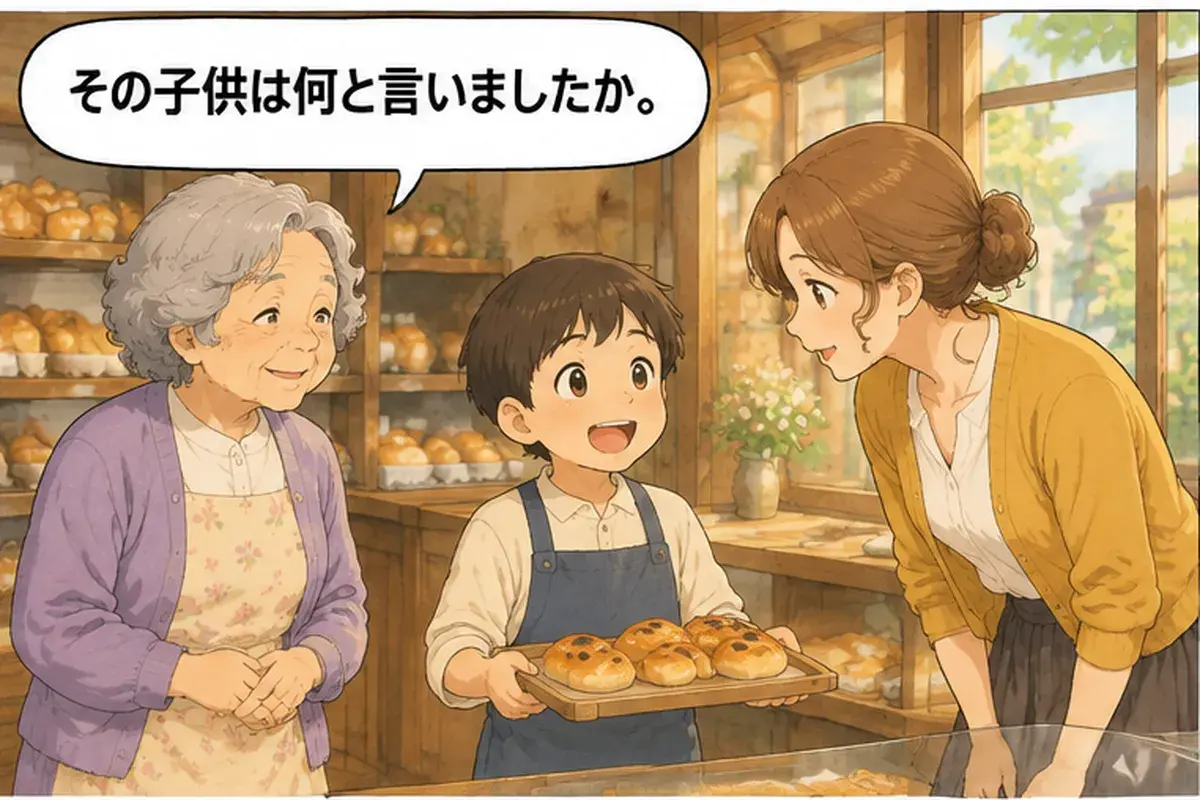
- 田中
その子供は何と言いましたか。
What did that child say?
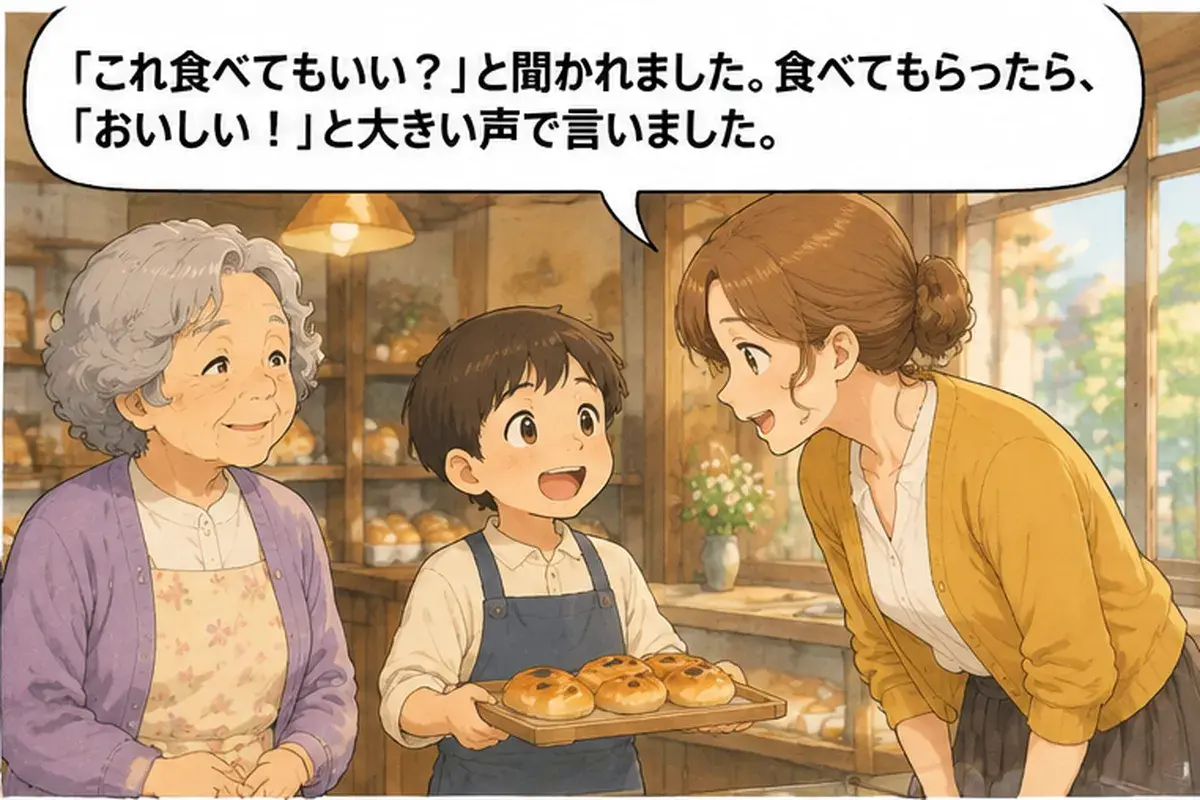
- アンナ
「これ食べてもいい?」と聞かれました。食べてもらったら、「おいしい!」と大きい声で言いました。
The child asked me, “Can I eat this?” When I got the child to eat it, the child said “It's delicious!” in a loud voice.
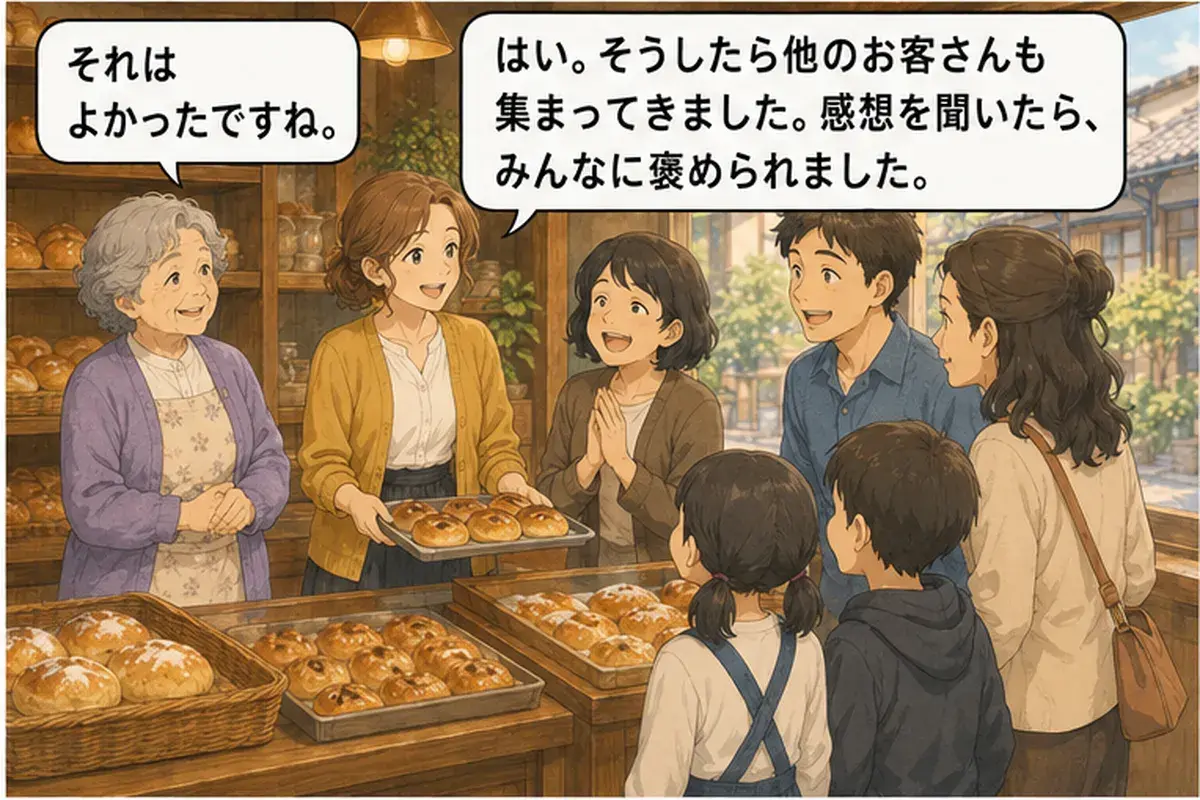
- 田中
それはよかったですね。
That's good to hear.
- アンナ
はい。そうしたら他のお客さんも集まってきました。感想を聞いたら、みんなに褒められました。
Yes. Then other customers gathered around too. When I asked what they thought, they all praised me.
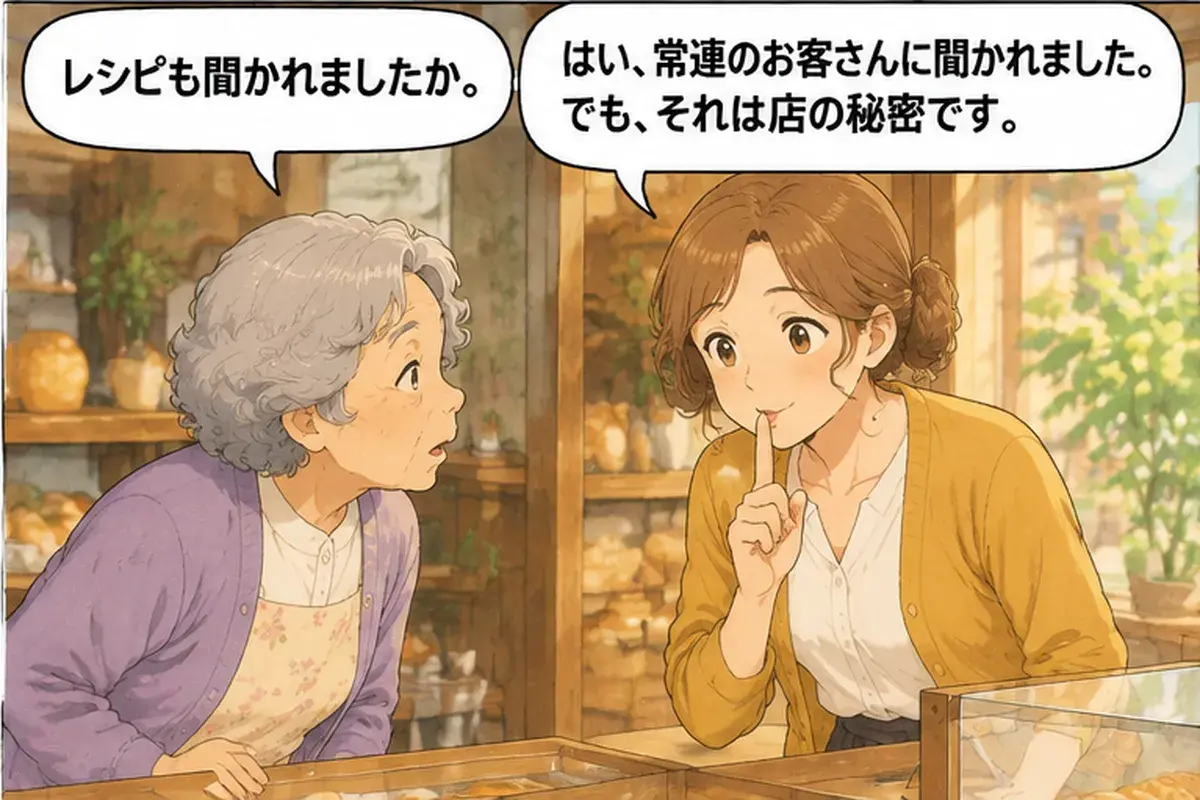
- 田中
レシピも聞かれましたか。
Were you asked for the recipe too?
- アンナ
はい、常連のお客さんに聞かれました。でも、それは店の秘密です。
Yes, I was asked by a regular customer. But that's a store secret.
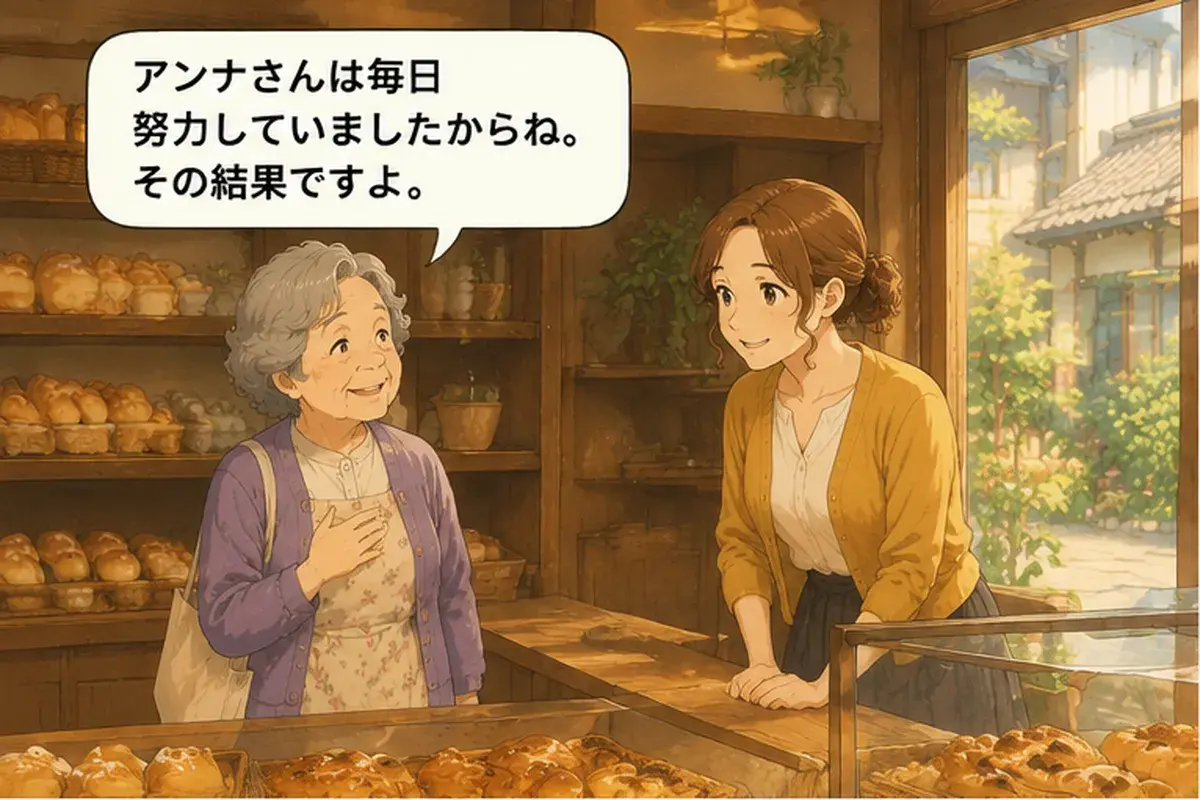
- 田中
アンナさんは毎日努力していましたからね。その結果ですよ。
Anna-san, you worked hard every day, after all. This is the result.
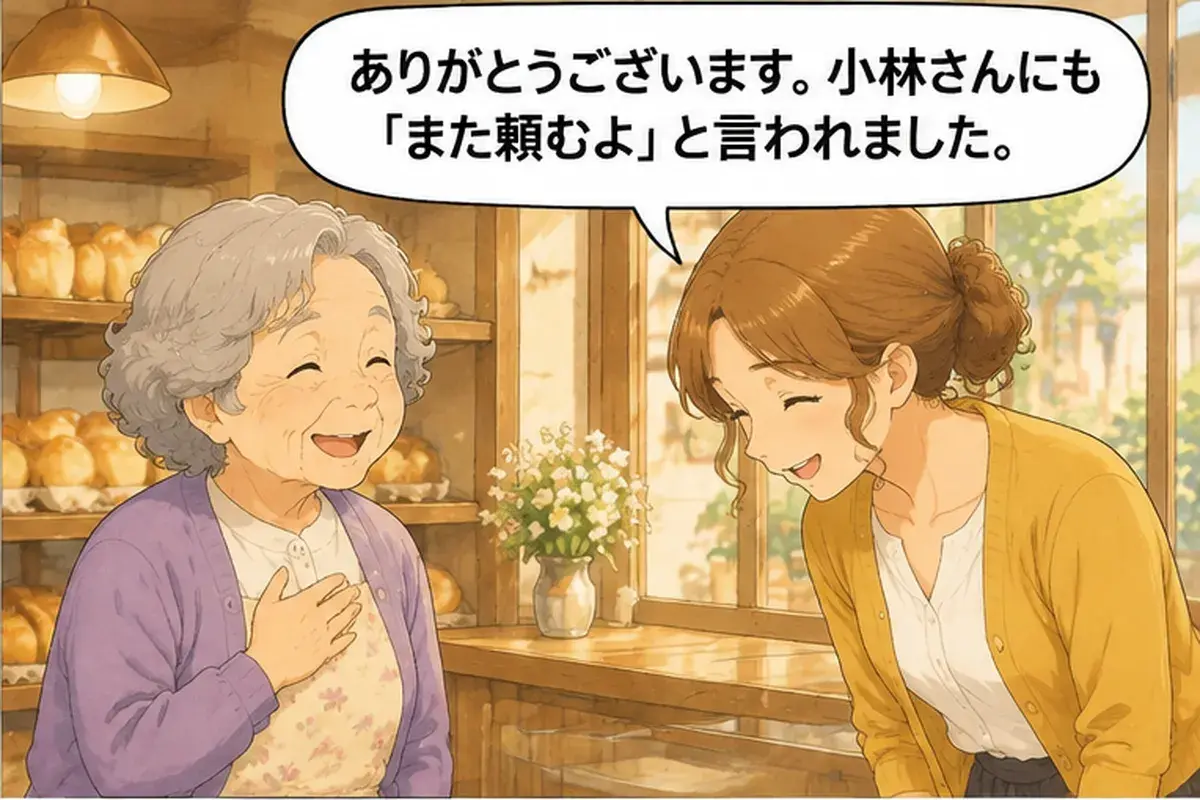
- アンナ
ありがとうございます。小林さんにも「また頼むよ」と言われました。
Thank you. Kobayashi-san also told me, “I'll ask you again.”
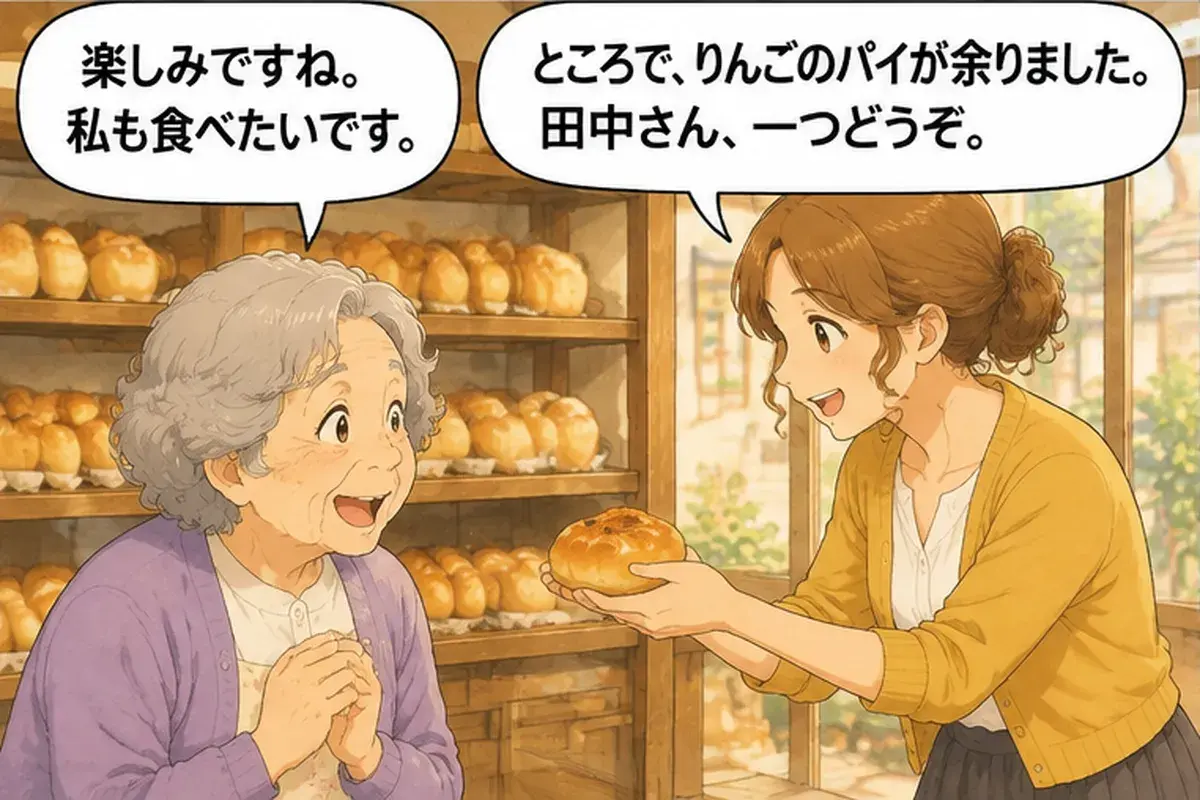
- 田中
楽しみですね。私も食べたいです。
That's something to look forward to. I'd like some too.
- アンナ
ところで、りんごのパイが余りました。田中さん、一つどうぞ。
By the way, there are some apple pies left over. Tanaka-san, please have one.
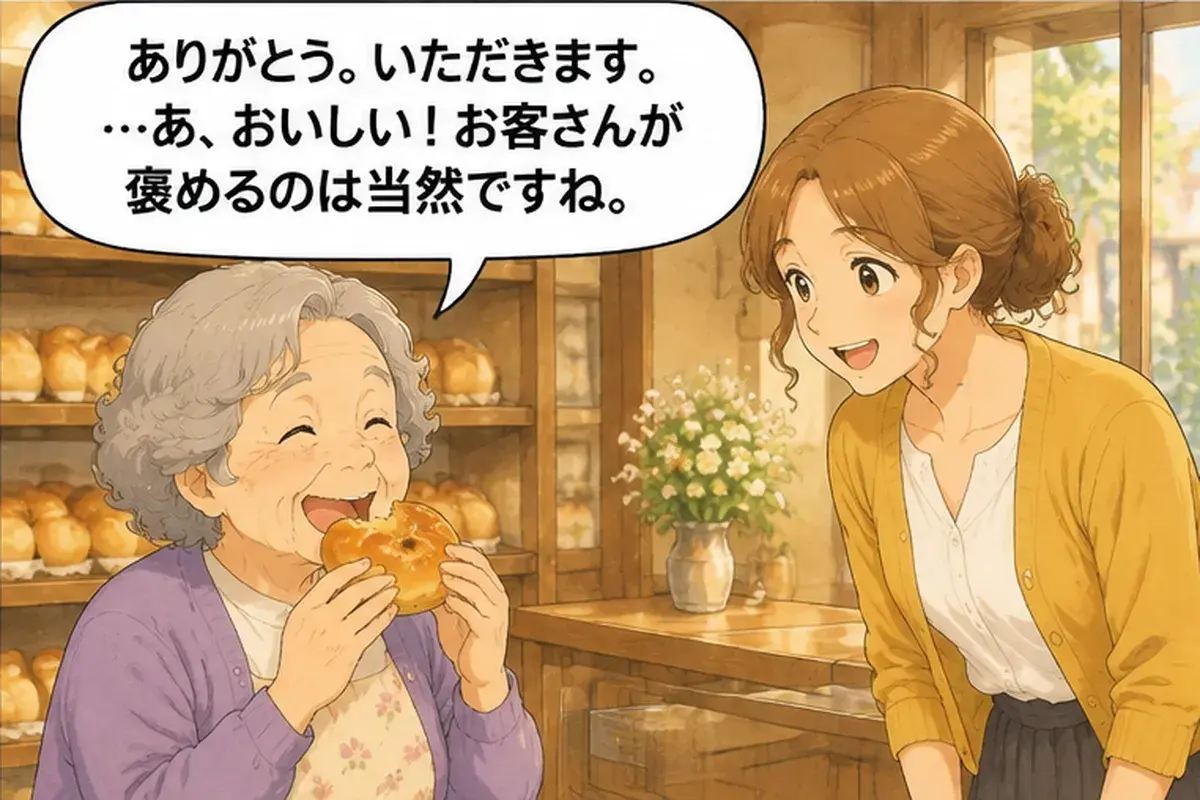
- 田中
ありがとう。いただきます。…あ、おいしい!お客さんが褒めるのは当然ですね。
Thank you. Let's eat! ...Oh, it's delicious! No wonder the customers praise it.
Grammar for this text
お客さん に 無視されました— The customers ignored me.無視する→無視される. The doer comes afterに. It works the same way inみんな に 褒められました— Everyone praised me.小林 さん に も 「また 頼む よ」 と 言われました— Kobayashi-san also told me, “I'll ask you again.” The doer is again marked withに.小さい 子供 に 話しかけられました— A small child spoke to me.話しかける(Group 2, "start talking to someone") →話しかけられる. This passive is a pleasant one.「これ 食べて も いい?」 と 聞かれました— I was asked, “Can I eat this?”聞く→聞かれる. The child's question is in「 」, followed byと.食べて もらったら— When I got the child to eat it. This is〜て もらう(unit 12) and〜たら(unit 11).また 頼む よ— I'll ask you again. This is how Kobayashi-san talks to Anna: short and casual, a boss to an employee. When Anna repeats it, she goes back to polite speech:言われました.余りました— Some was left over. The verb is余る, "to be left over".
Words and grammar of the unit: Say what someone did to you.
Learn the words from the texts with flashcards
In the app, you can tap any word in a text to see its translation, forms and examples, and new words stick with flashcards. 15 minutes a day.
Start for freeEverything is open for free. No card needed to sign up.