
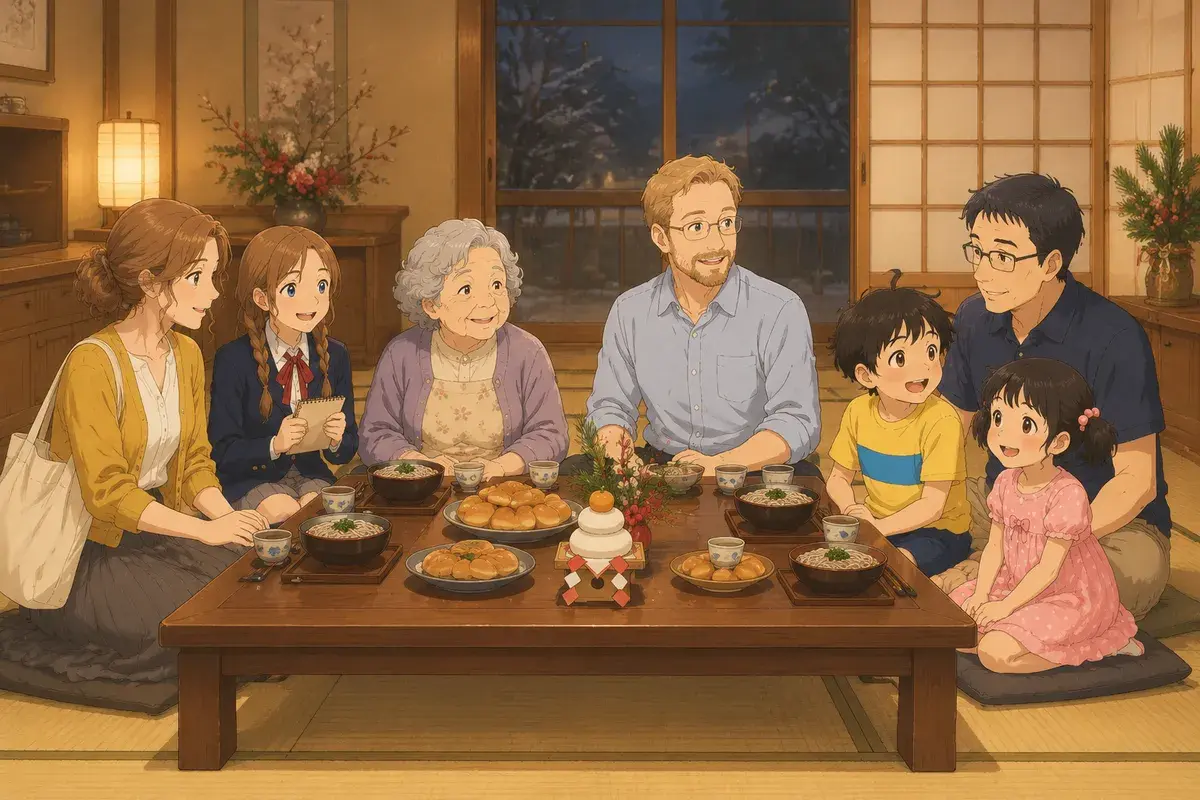
Japanese dialogue with translation · A2 · 15 lines
今夜はそばだよ Tonight it's soba.
Comic · 13 panels
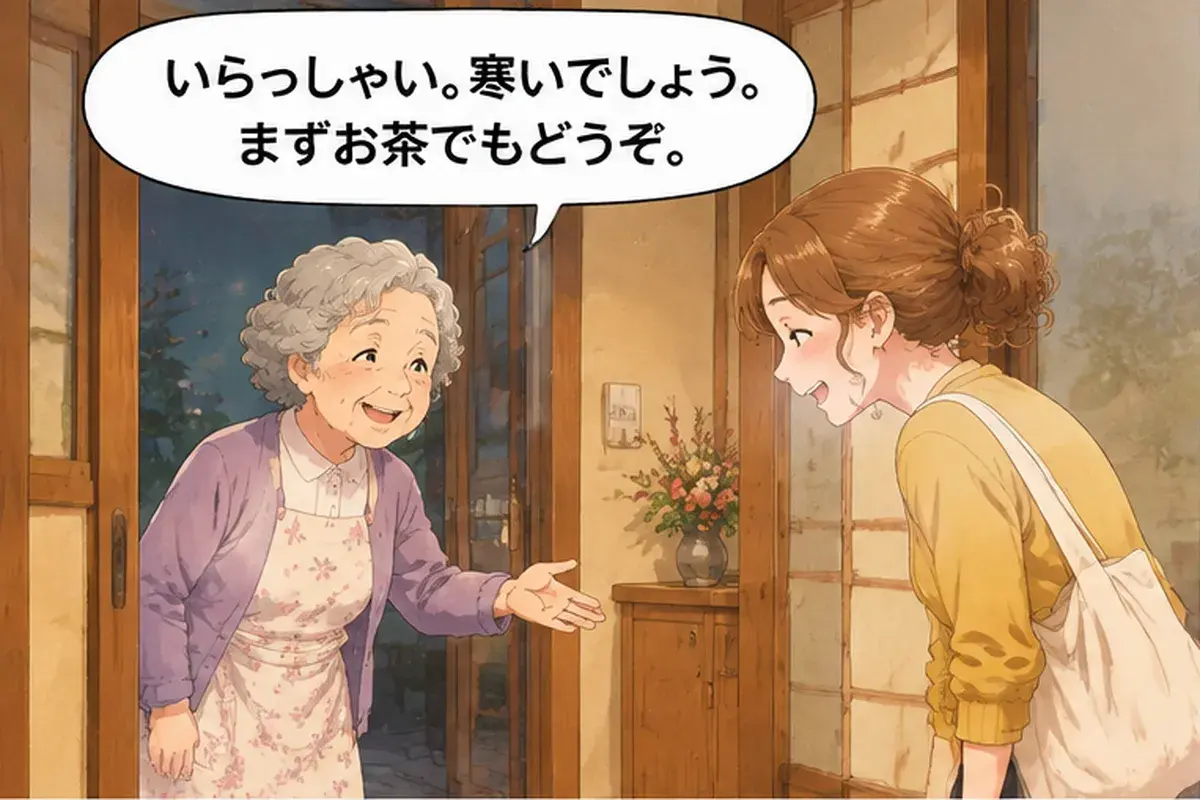
- 田中
いらっしゃい。寒いでしょう。まずお茶でもどうぞ。
Welcome. You must be cold. First, have some tea or something.
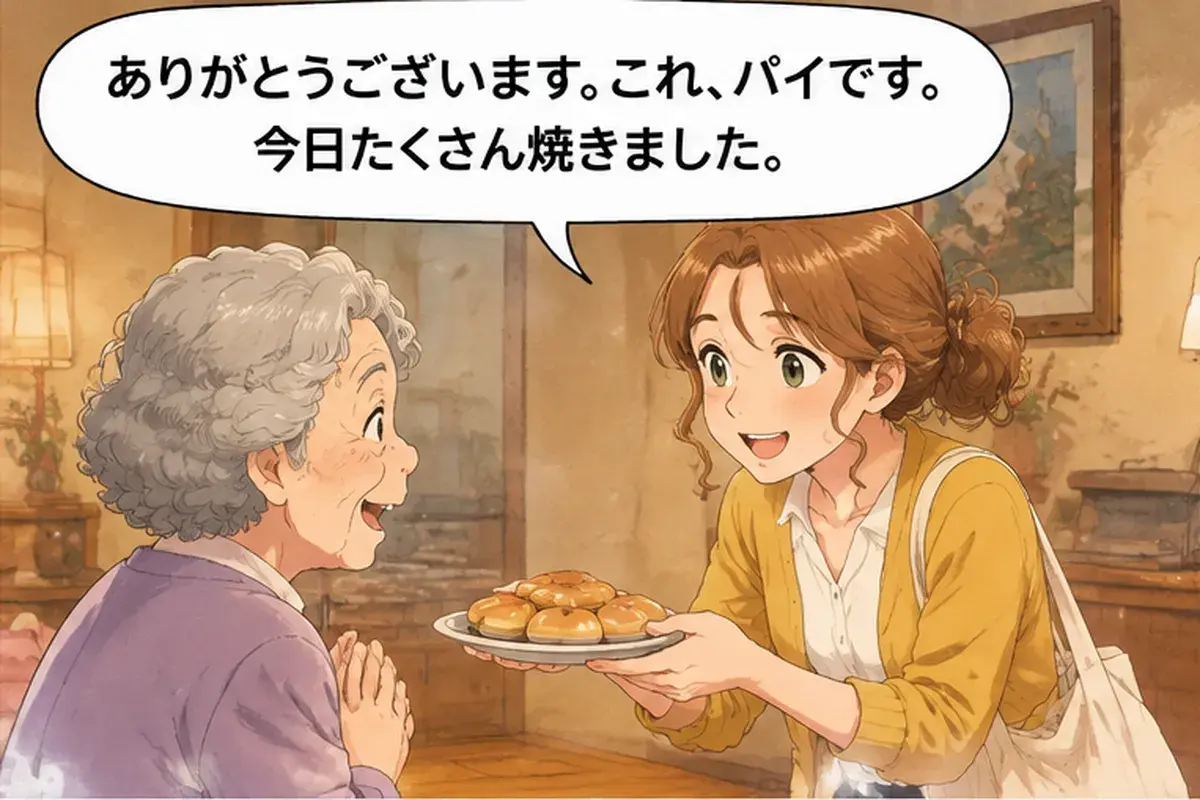
- アンナ
ありがとうございます。これ、パイです。今日たくさん焼きました。
Thank you. Here, it's pie. I baked a lot of it today.
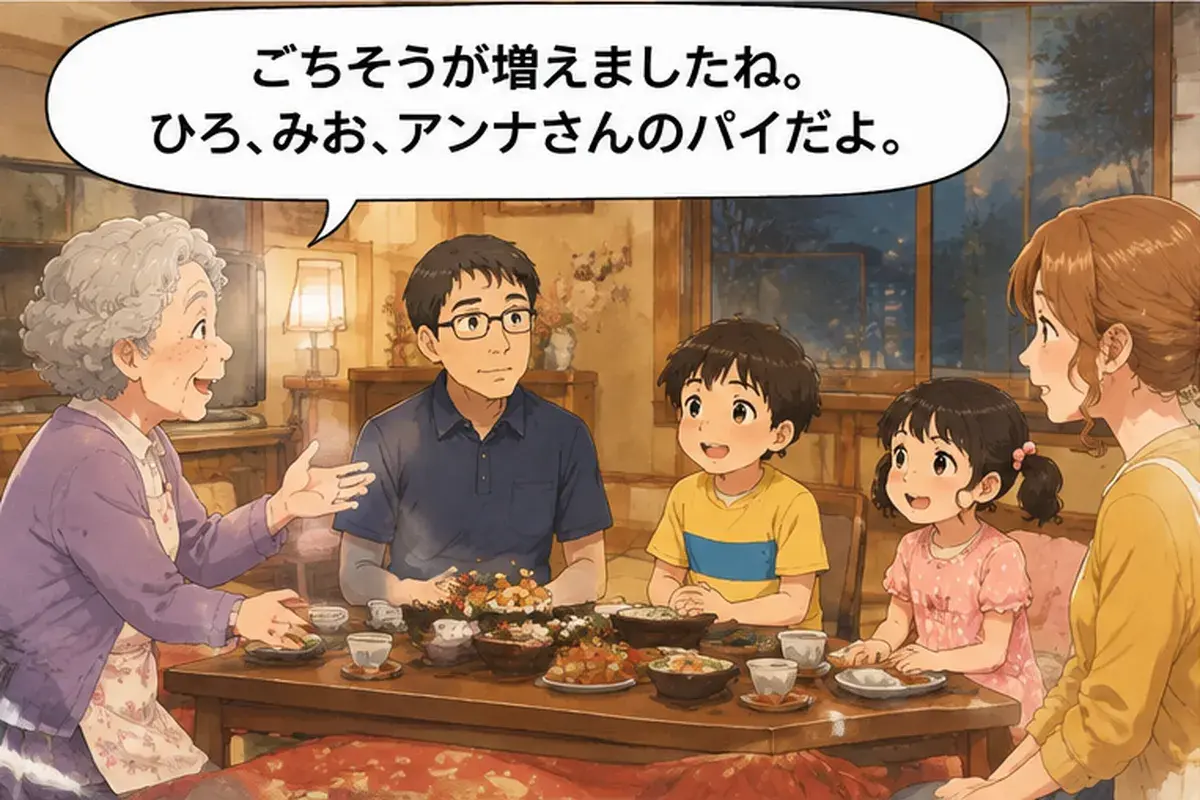
- 田中
ごちそうが増えましたね。ひろ、みお、アンナさんのパイだよ。
Oh, now we have even more treats. Hiro, Mio, it's Anna-san's pie (casual).
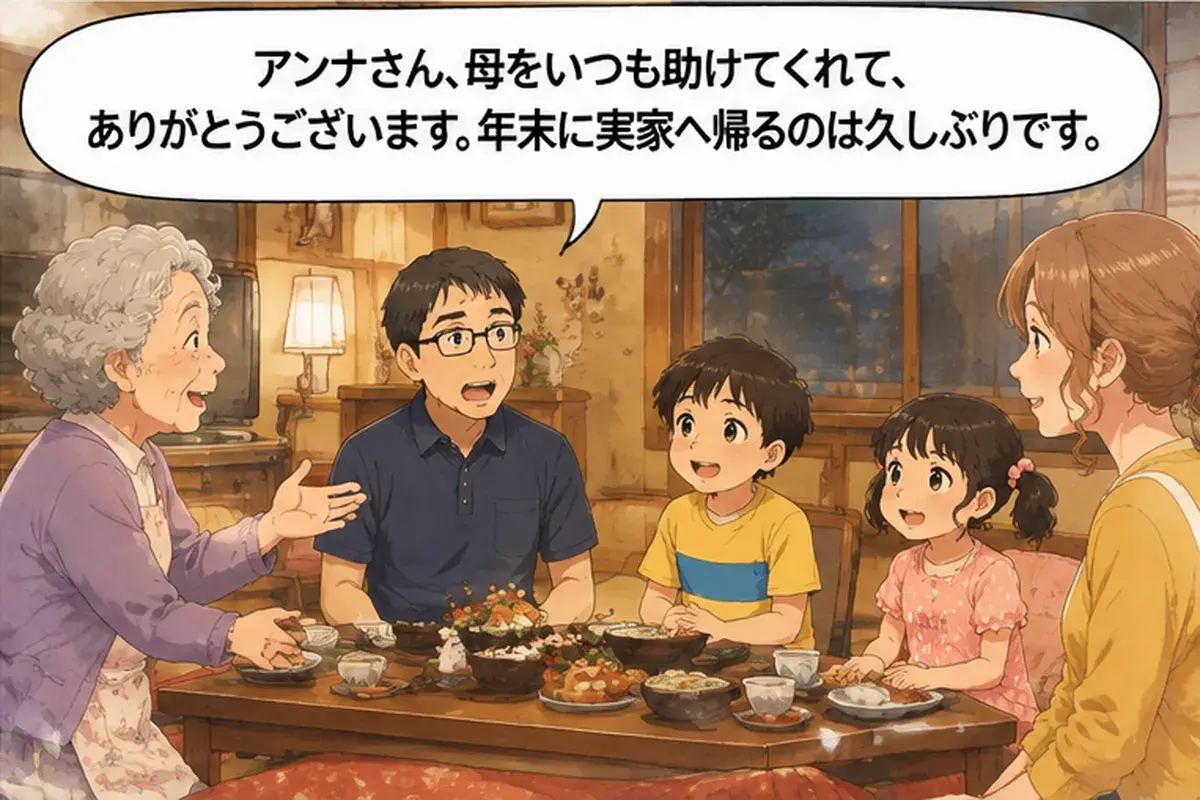
- 息子
アンナさん、母をいつも助けてくれて、ありがとうございます。年末に実家へ帰るのは久しぶりです。
Anna-san, thank you for always helping my mother. It's been a long time since I came back to my parents' home at the end of the year.
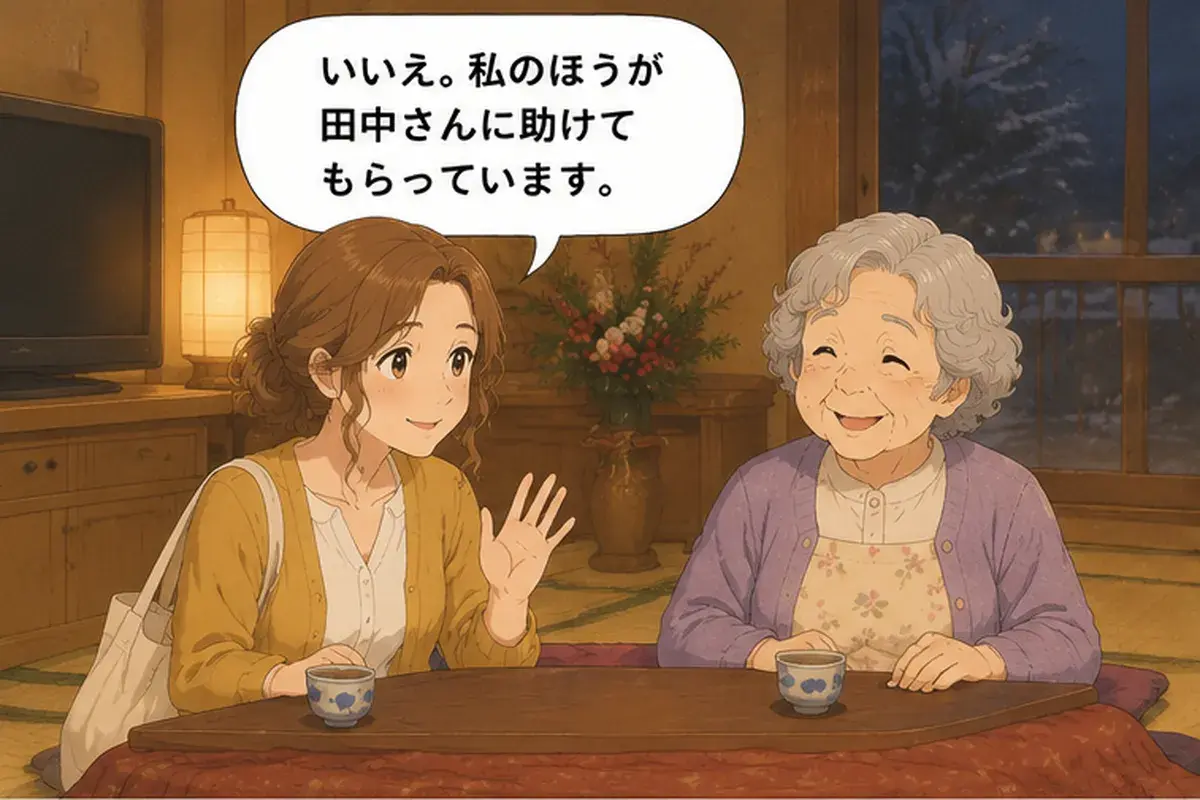
- アンナ
いいえ。私のほうが田中さんに助けてもらっています。
Not at all. I'm the one who gets help from Tanaka-san.
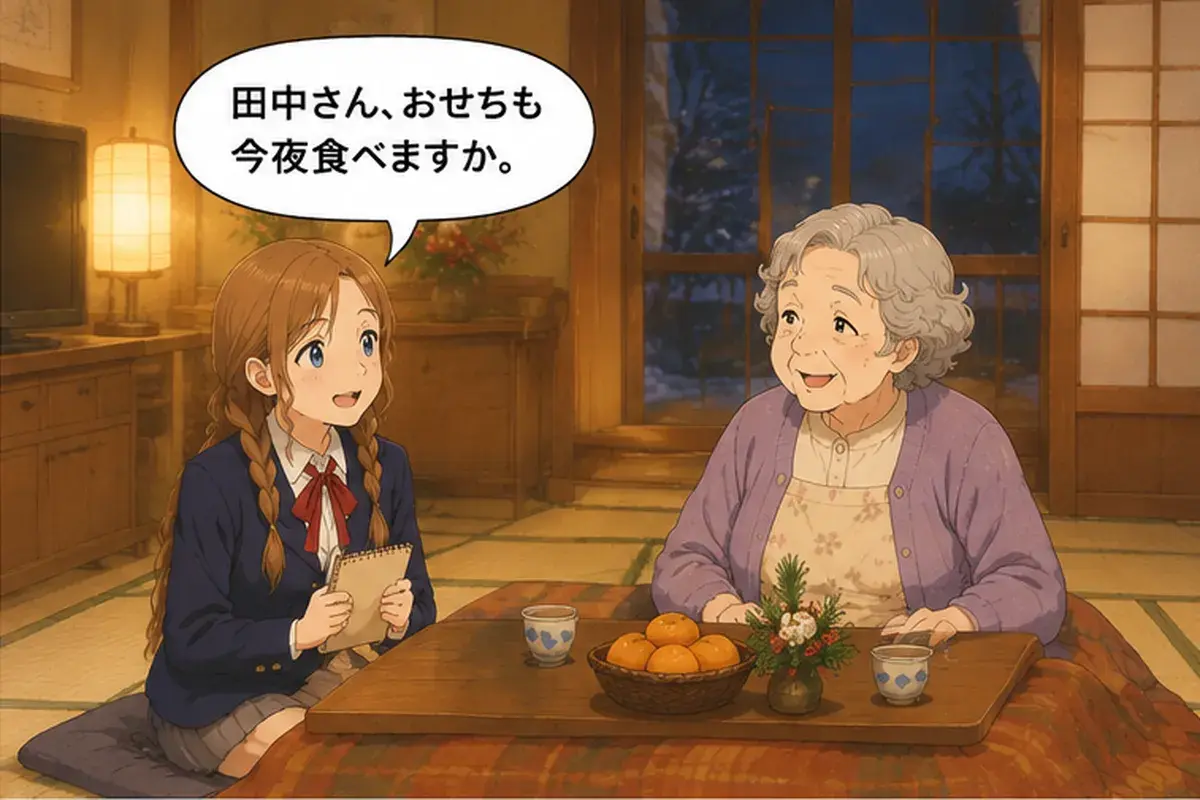
- ソーニャ
田中さん、おせちも今夜食べますか。
Tanaka-san, are we having osechi tonight too?
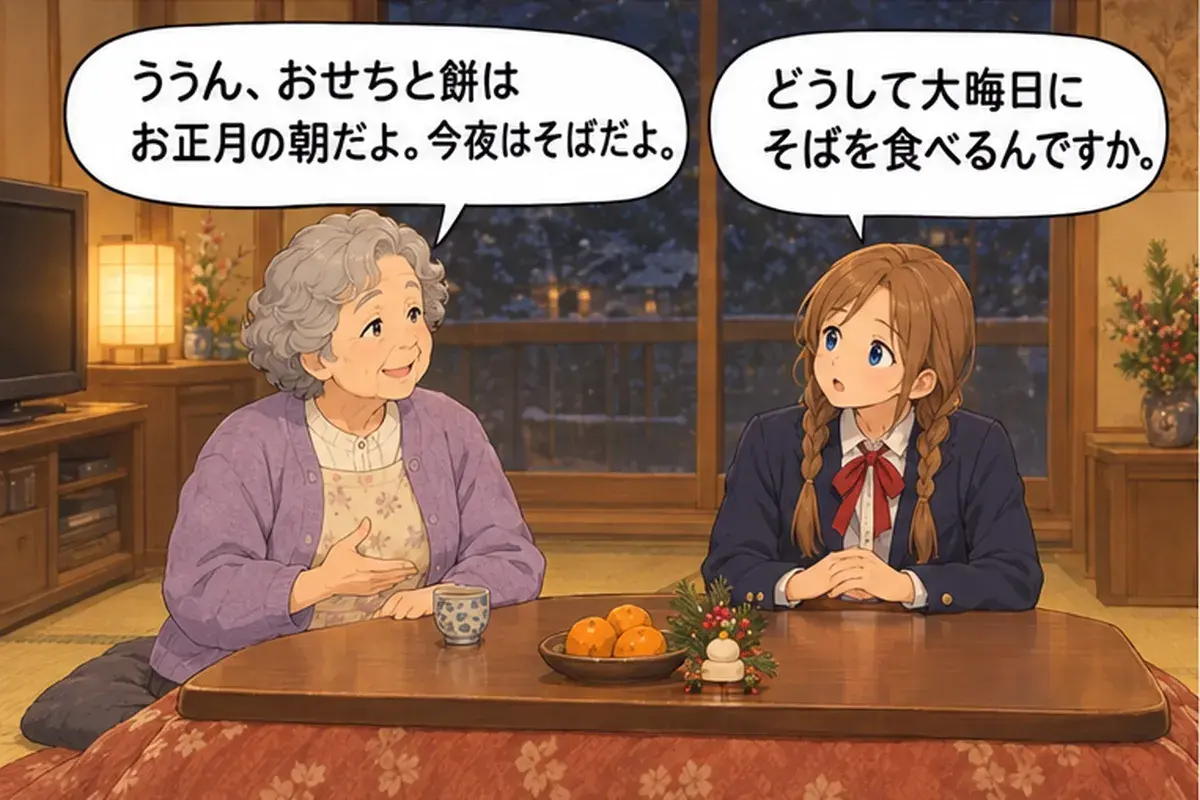
- 田中
ううん、おせちと餅はお正月の朝だよ。今夜はそばだよ。
Nope, osechi and mochi are for New Year's morning. Tonight it's soba.
- ソーニャ
どうして大晦日にそばを食べるんですか。
Why do we eat soba on New Year's Eve?
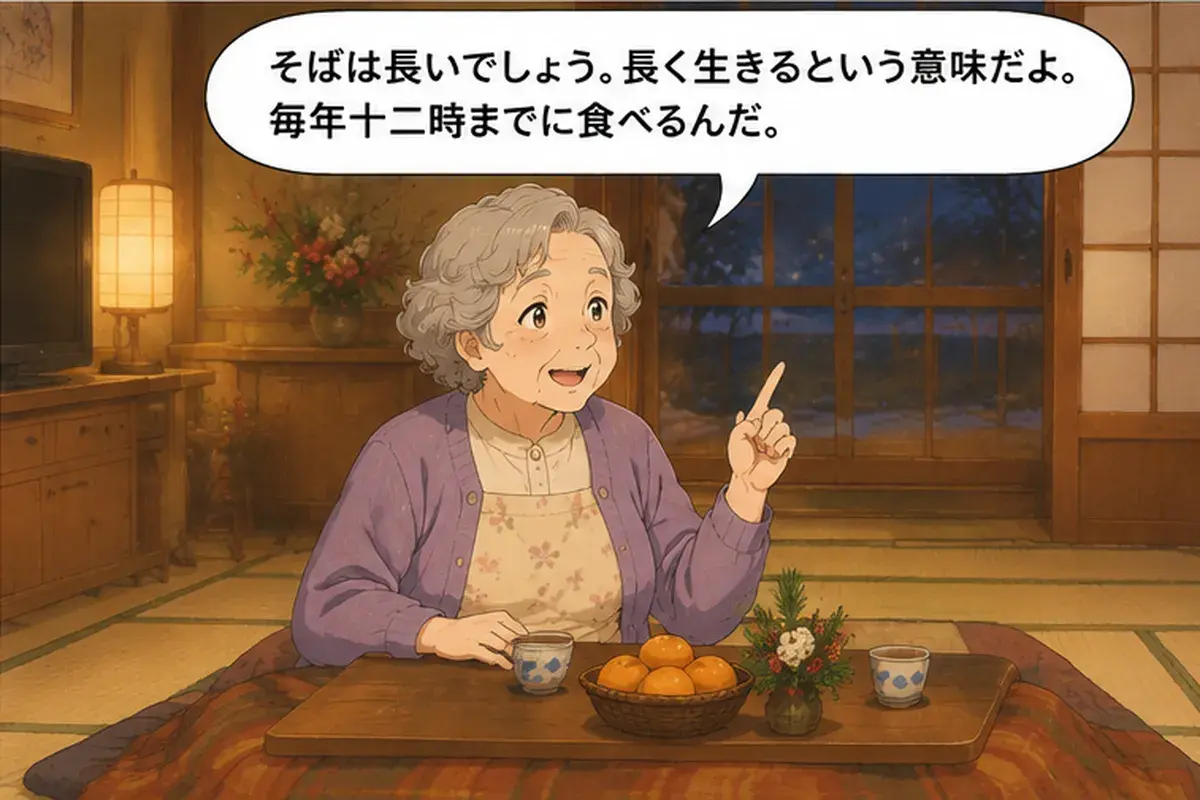
- 田中
そばは長いでしょう。長く生きるという意味だよ。毎年十二時までに食べるんだ。
Soba is long, right? It means living a long life. We eat it every year by twelve o'clock (casual).
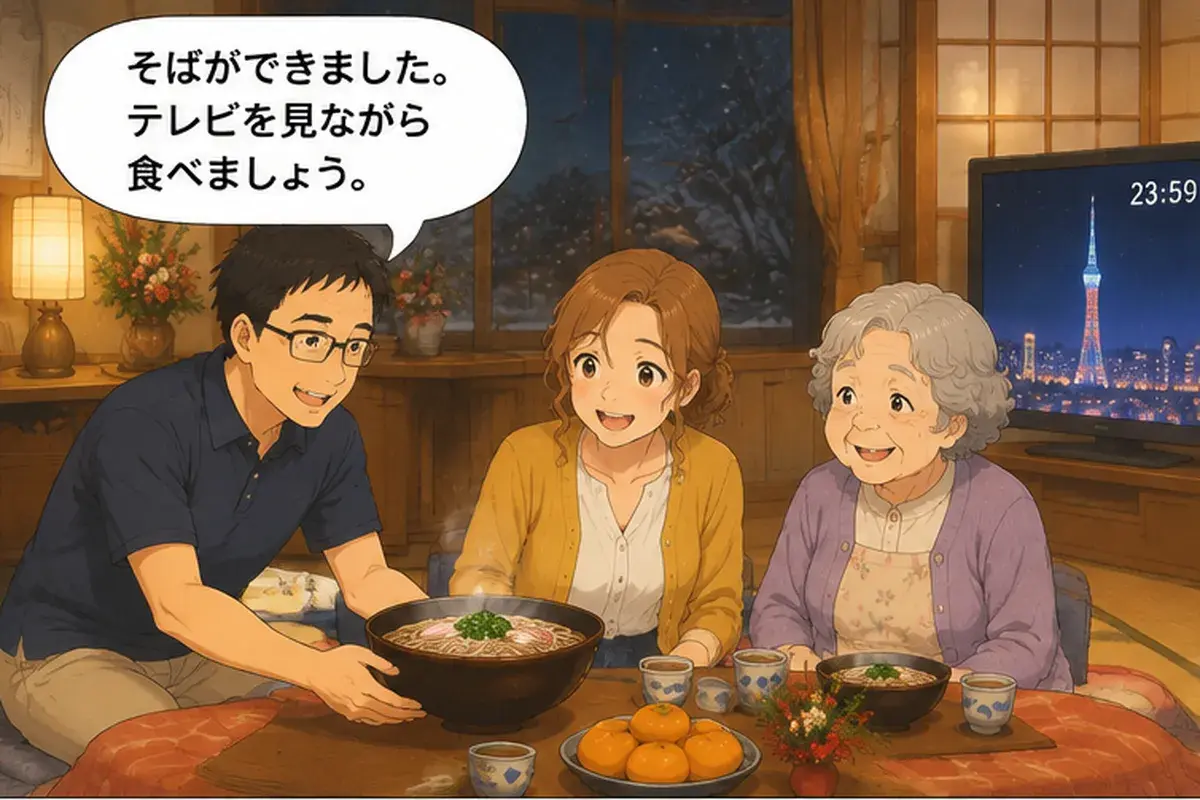
- 息子
そばができました。テレビを見ながら食べましょう。
The soba is ready. Let's eat while watching TV.
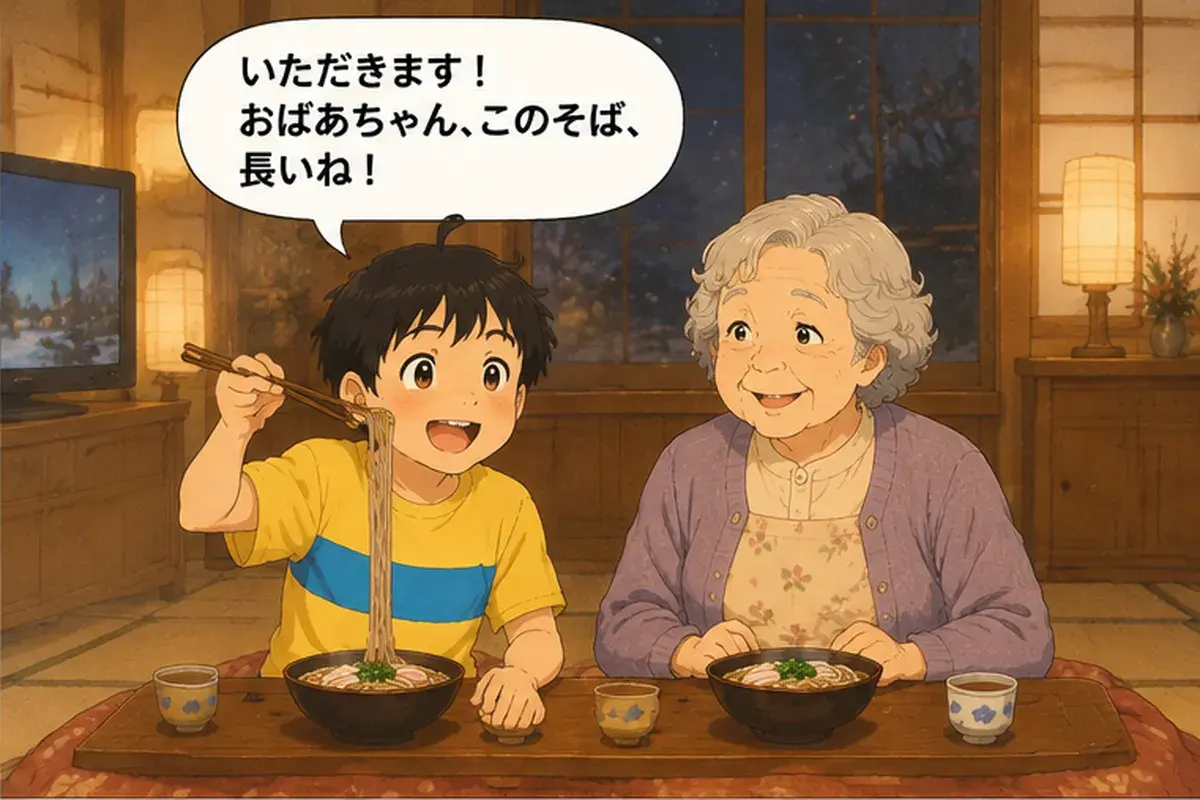
- ひろ
いただきます!おばあちゃん、このそば、長いね!
Let's eat! Grandma, this soba is long! (casual)
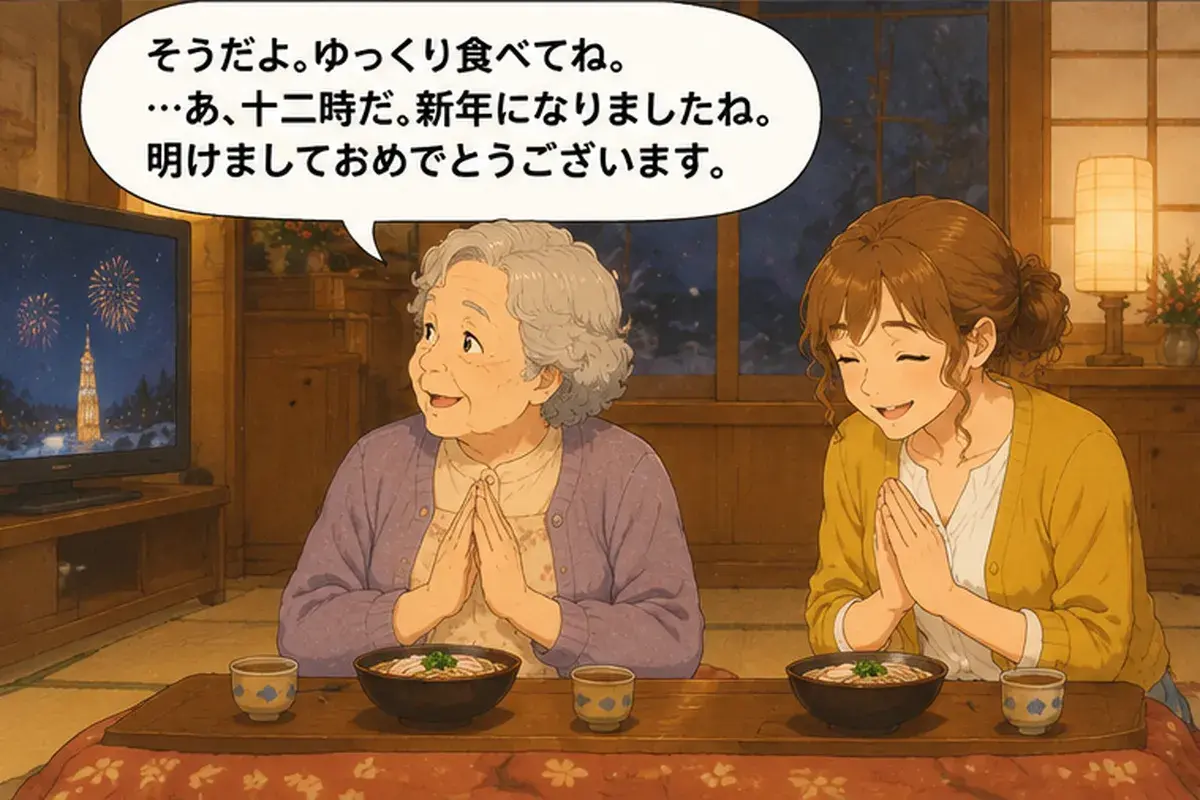
- 田中
そうだよ。ゆっくり食べてね。…あ、十二時だ。新年になりましたね。明けましておめでとうございます。
That's right. Take your time (casual). ...Oh, it's twelve o'clock. It's the New Year now. Happy New Year!
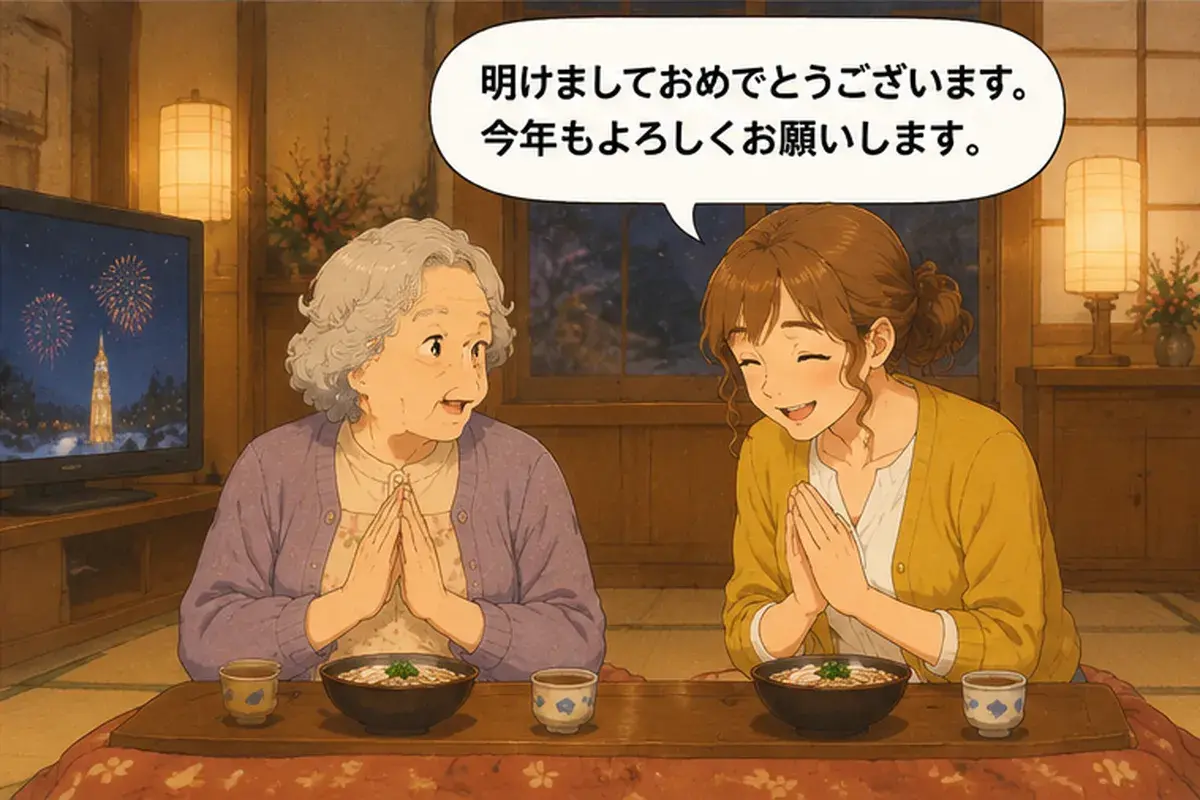
- アンナ
明けましておめでとうございます。今年もよろしくお願いします。
Happy New Year! I hope we get along well this year, too.
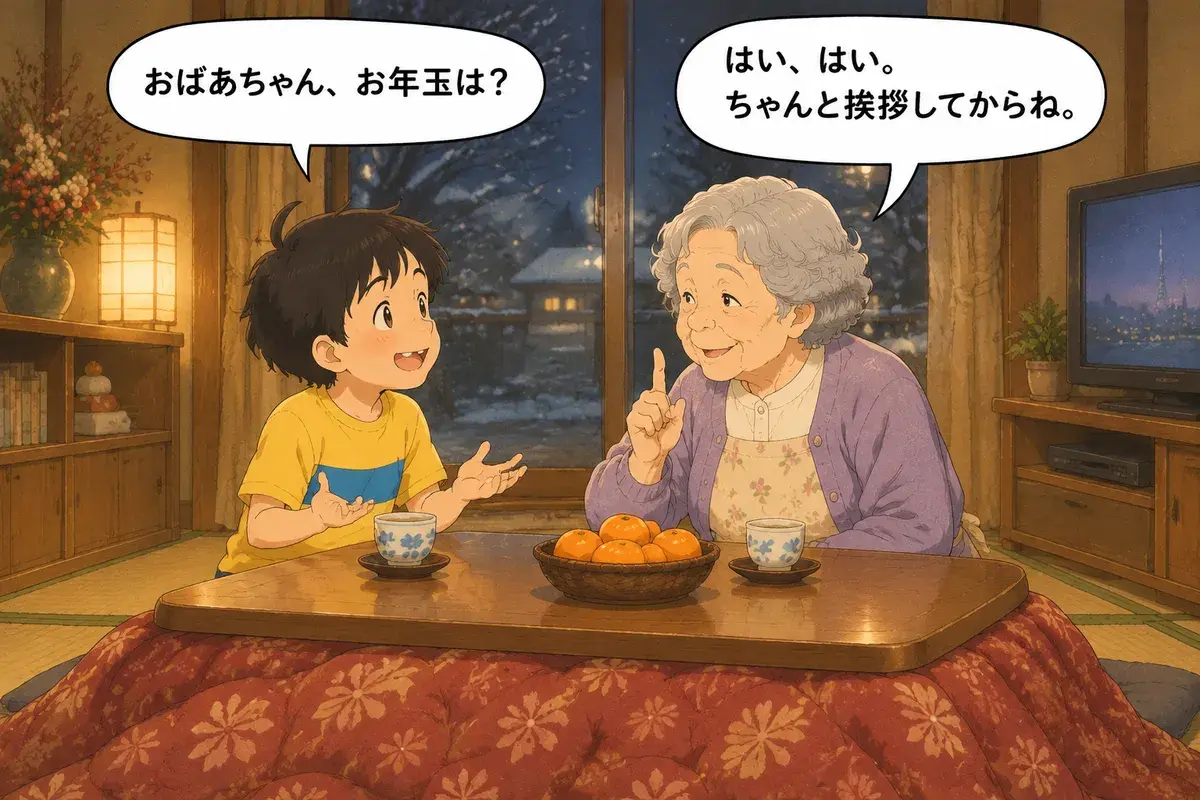
- ひろ
おばあちゃん、お年玉は?
Grandma, what about my New Year's money? (casual)
- 田中
はい、はい。ちゃんと挨拶してからね。
Yes, yes. After you greet us properly, OK? (casual)
Grammar for this text
お茶 でも どうぞ—でもright after a noun means "tea or something". The host doesn't insist on tea; she gently offers something warm (see the block onお茶 でも).母 を いつも 助けて くれて— you call your own mother母and someone else'sお母さん.〜て くれる(Unit 12) means "thank you for doing this for her". Anna's answer助けて もらって いますis modest: literally "I get help", even though she helps too. It's a polite way to wave off a compliment.久しぶり です— "for the first time in a long while": the son hasn't come to his parents' home (実家) at the end of the year (年末) for a long time.今夜 は そば だ よ— Tanaka talks to Sonya in a soft plain style (ううん,だ よ, Unit 5). Soba on New Year's Eve is a tradition, while osechi and mochi are eaten on the morning of January 1.という 意味— "it means..." (Unit 7): long noodles mean a long life.十二時 まで に 食べる—までにmeans "no later than midnight", not "keep eating until midnight".見ながら 食べましょう—ながら: we eat and watch TV at the same time.おばあちゃん— what grandchildren affectionately call their grandma.おばあさん(A1) is more polite and can also be used about someone else's grandmother.明けまして おめでとう ございます— a set phrase.明けましてcomes from明ける(to begin, about a new year). Literally: "the new year has begun, congratulations". People say it after midnight.挨拶して から ね—挨拶するmeans to greet. At New Year children first greet the adults and only then getお年玉.
Words and grammar of the unit: Celebrate New Year in Japanese.
Learn the words from the texts with flashcards
In the app, you can tap any word in a text to see its translation, forms and examples, and new words stick with flashcards. 15 minutes a day.
Start for freeEverything is open for free. No card needed to sign up.