

Japanese dialogue with translation · A2 · 15 lines
宛先を間違えました I got the address wrong
Comic · 13 panels
- マルク
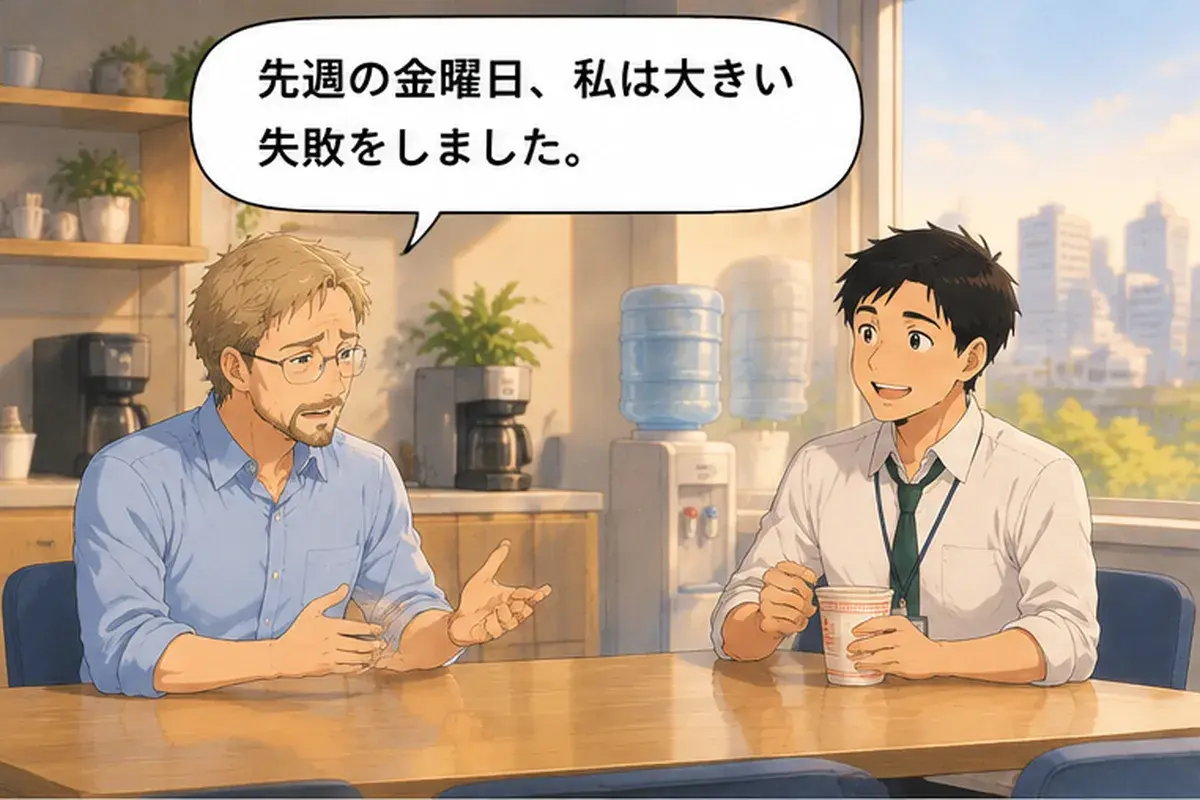
先週の金曜日、私は大きい失敗をしました。
Last Friday, I made a big mistake.
- マルク
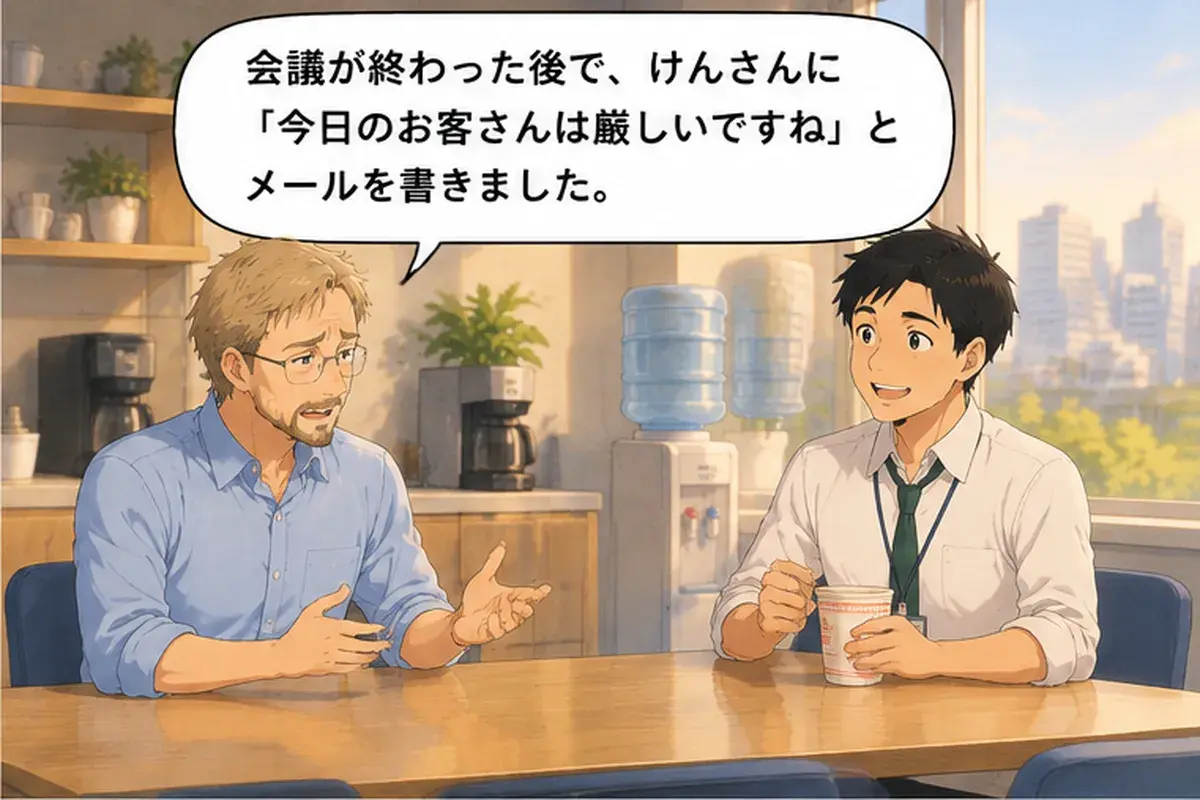
会議が終わった後で、けんさんに「今日のお客さんは厳しいですね」とメールを書きました。
After the meeting ended, I wrote an email to Ken-san: "Today's client is strict, right?"
- マルク
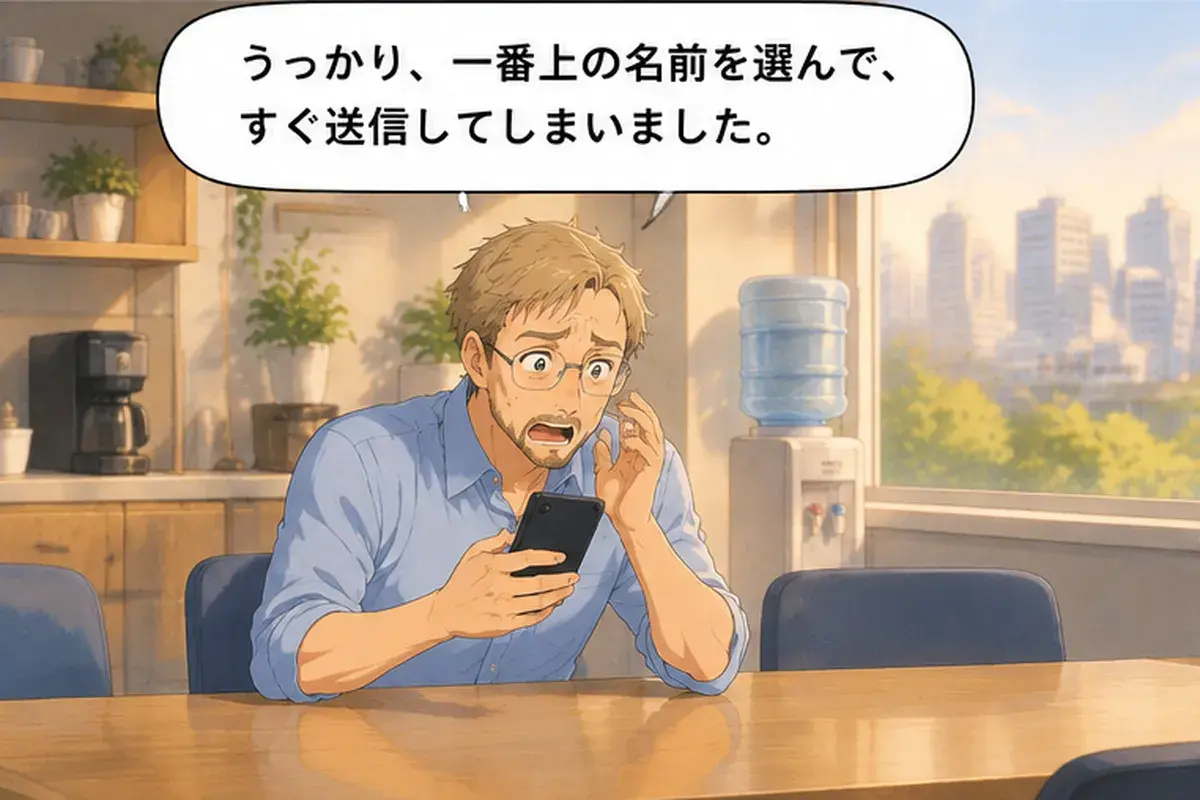
うっかり、一番上の名前を選んで、すぐ送信してしまいました。
Absentmindedly, I picked the name at the very top and sent it right away.
- マルク
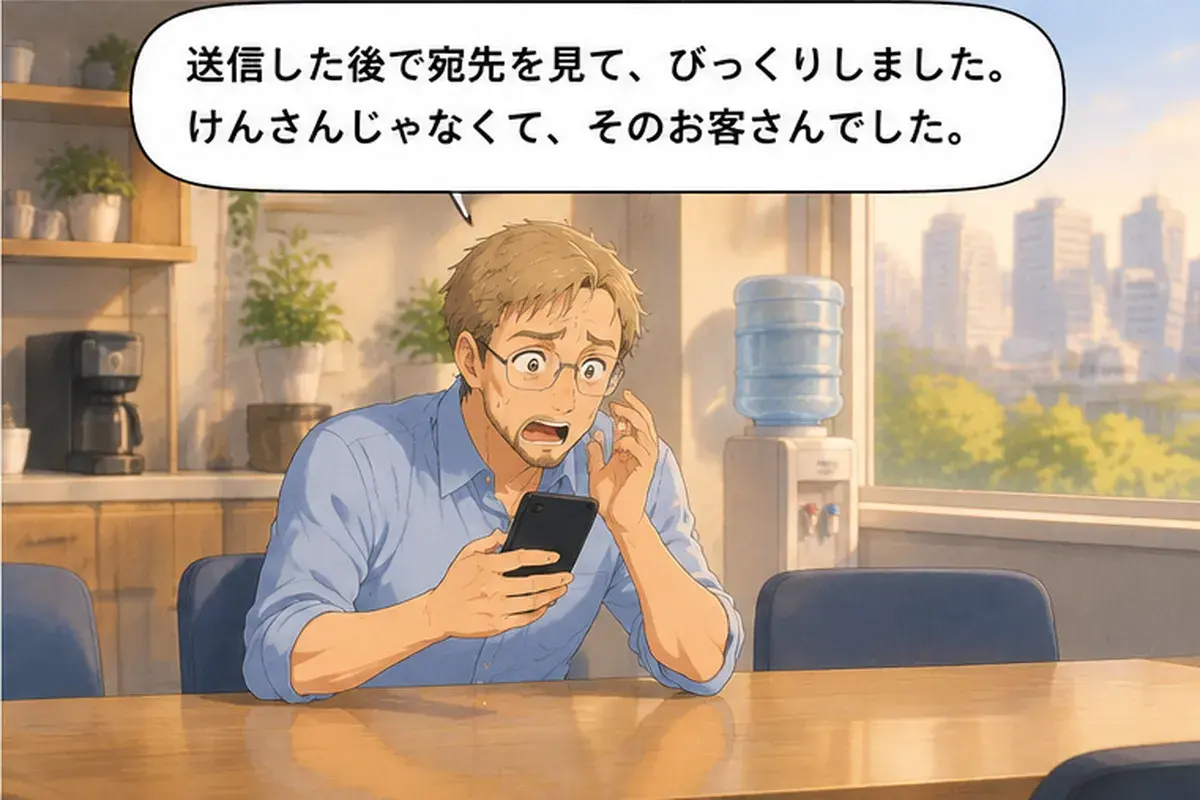
送信した後で宛先を見て、びっくりしました。けんさんじゃなくて、そのお客さんでした。
After sending it, I looked at the address and was shocked. It wasn't Ken-san, but that client.
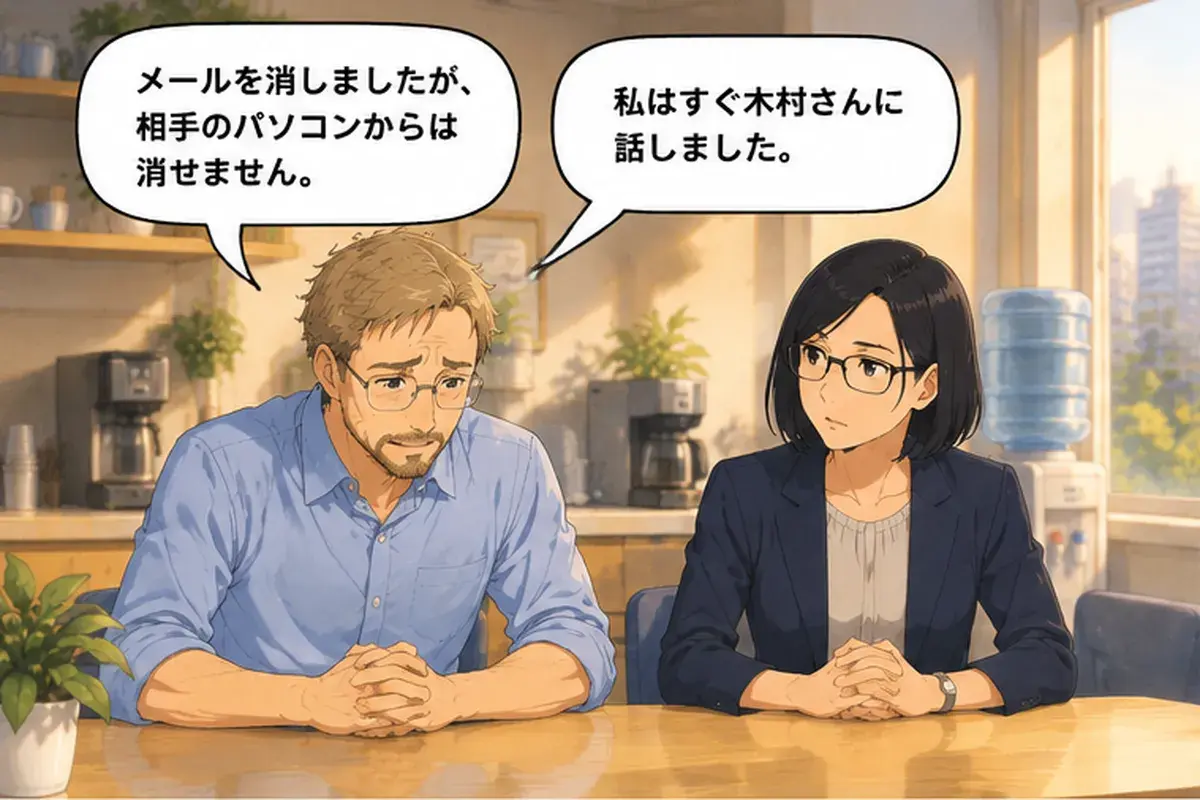
- マルク
メールを消しましたが、相手のパソコンからは消せません。
I deleted the email, but I can't delete it from the recipient's computer.
- マルク
私はすぐ木村さんに話しました。
I told Kimura-san right away.
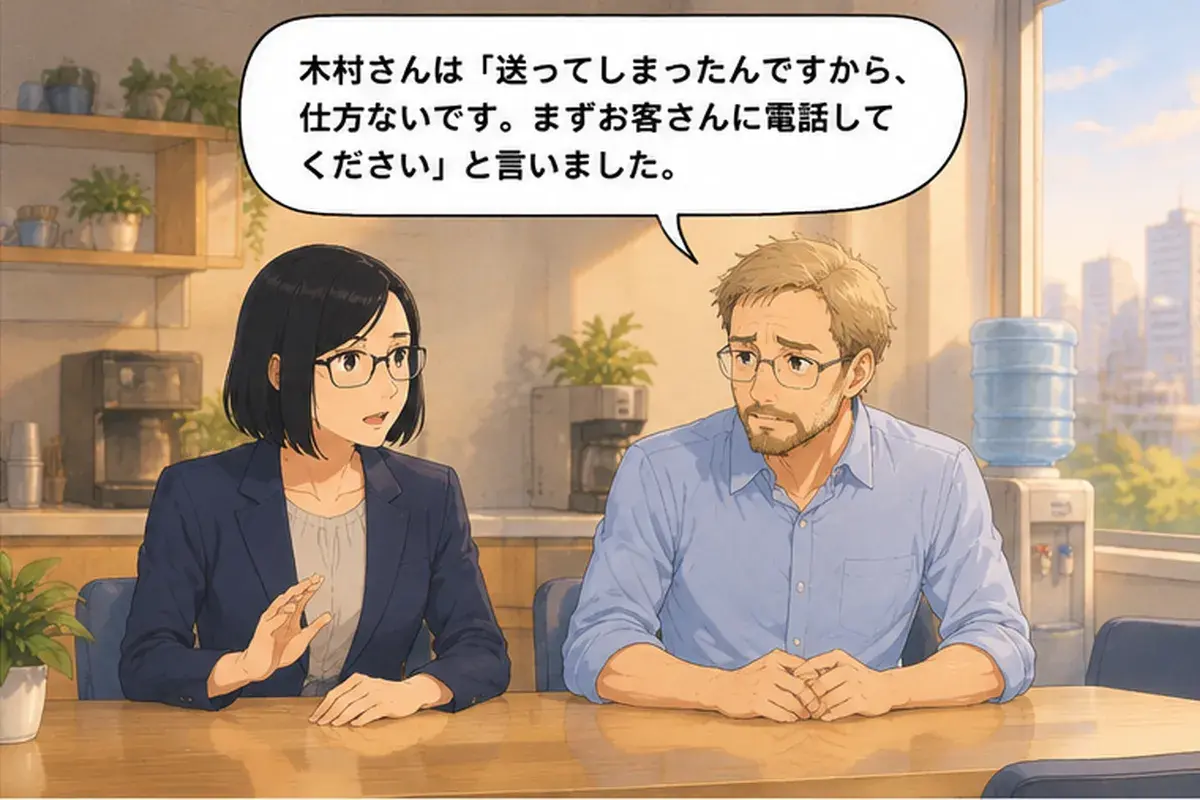
- マルク
木村さんは「送ってしまったんですから、仕方ないです。まずお客さんに電話してください」と言いました。
Kimura-san said, "Since you've already sent it, it can't be helped. First, please call the client."
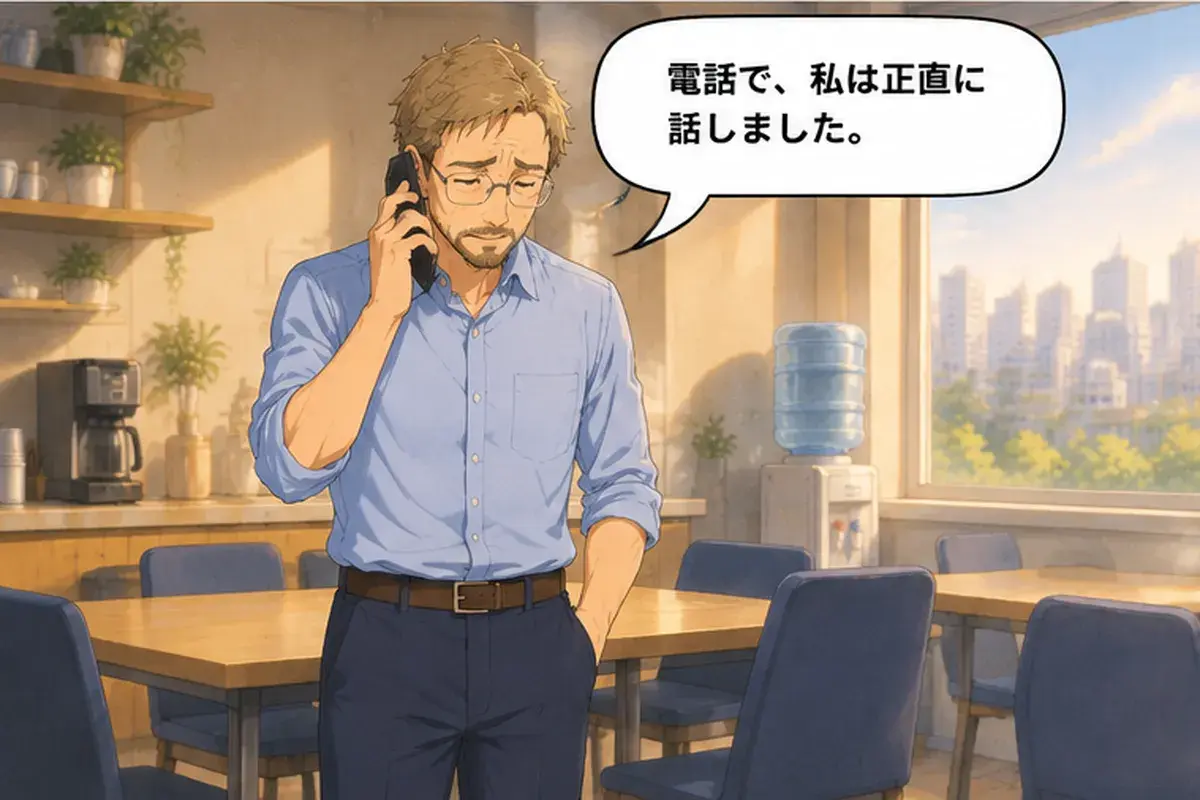
- マルク
電話で、私は正直に話しました。
On the phone, I spoke honestly.
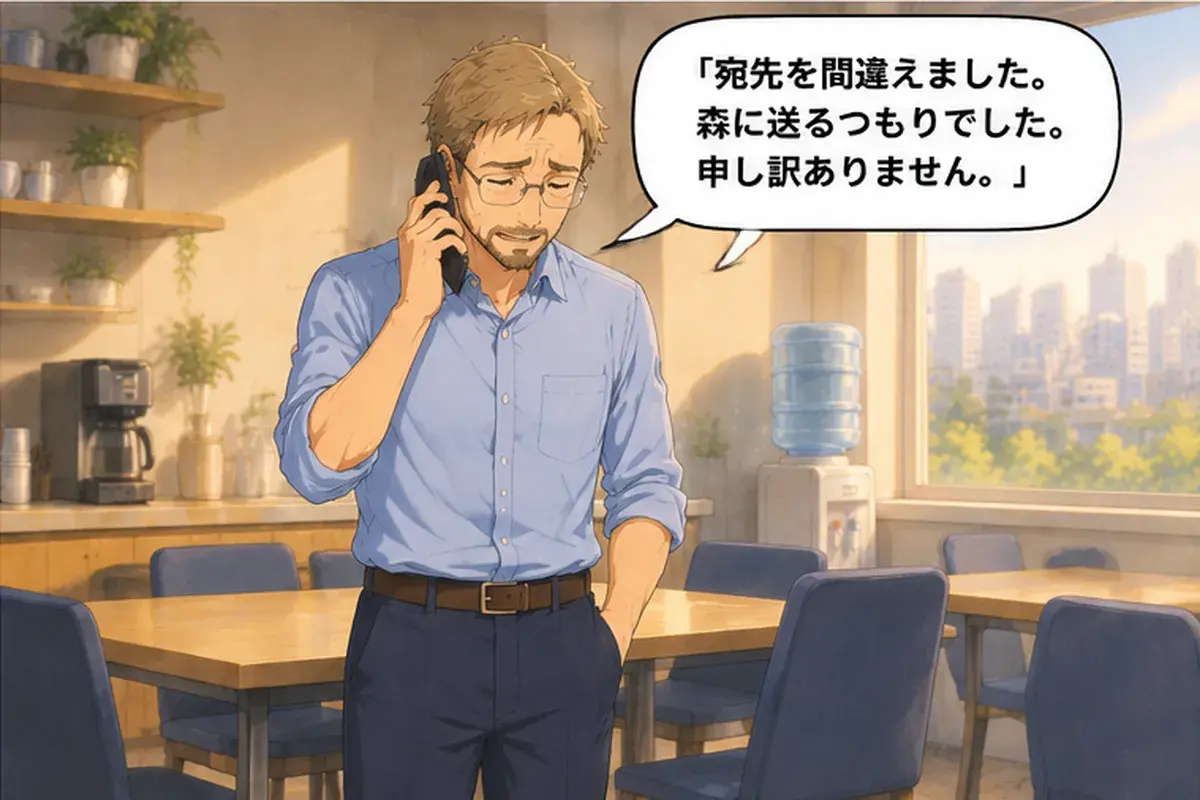
- マルク
「宛先を間違えました。森に送るつもりでした。申し訳ありません。」
"I got the address wrong. I meant to send it to Mori. I'm very sorry."
- マルク
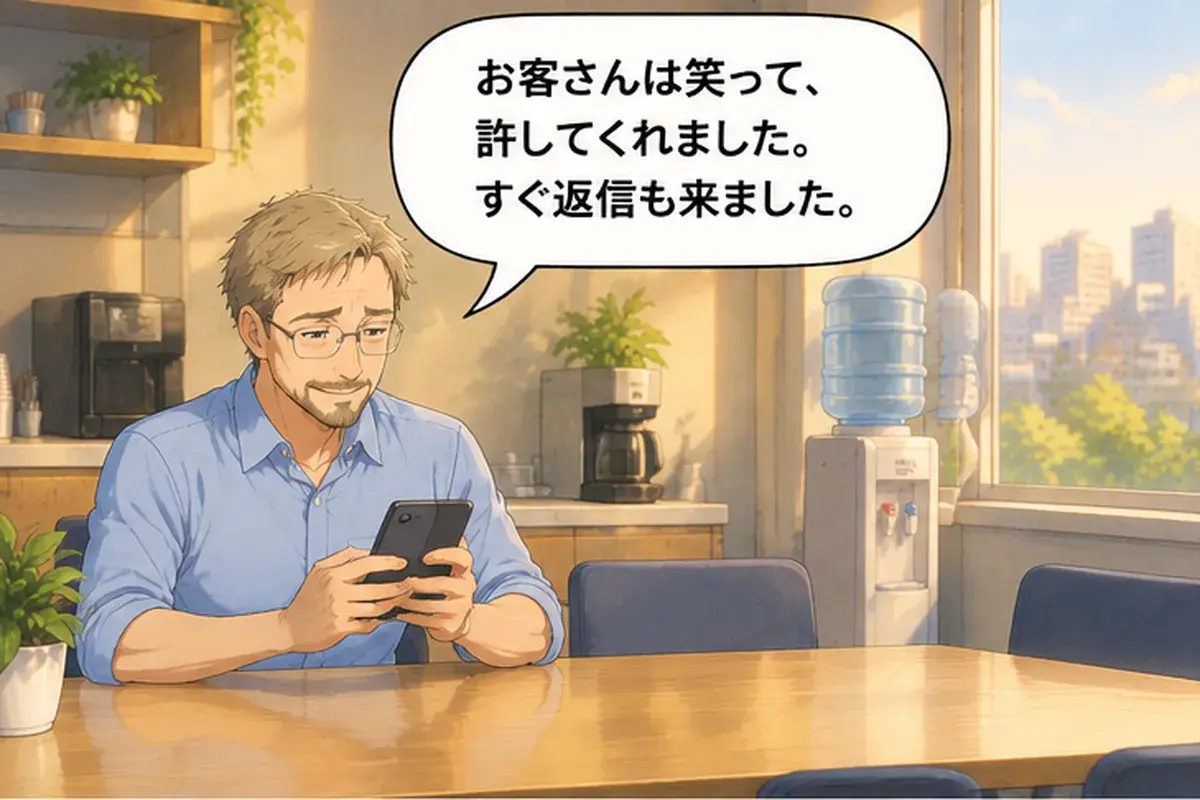
お客さんは笑って、許してくれました。すぐ返信も来ました。
The client laughed and forgave me. A reply came right away, too.
- マルク
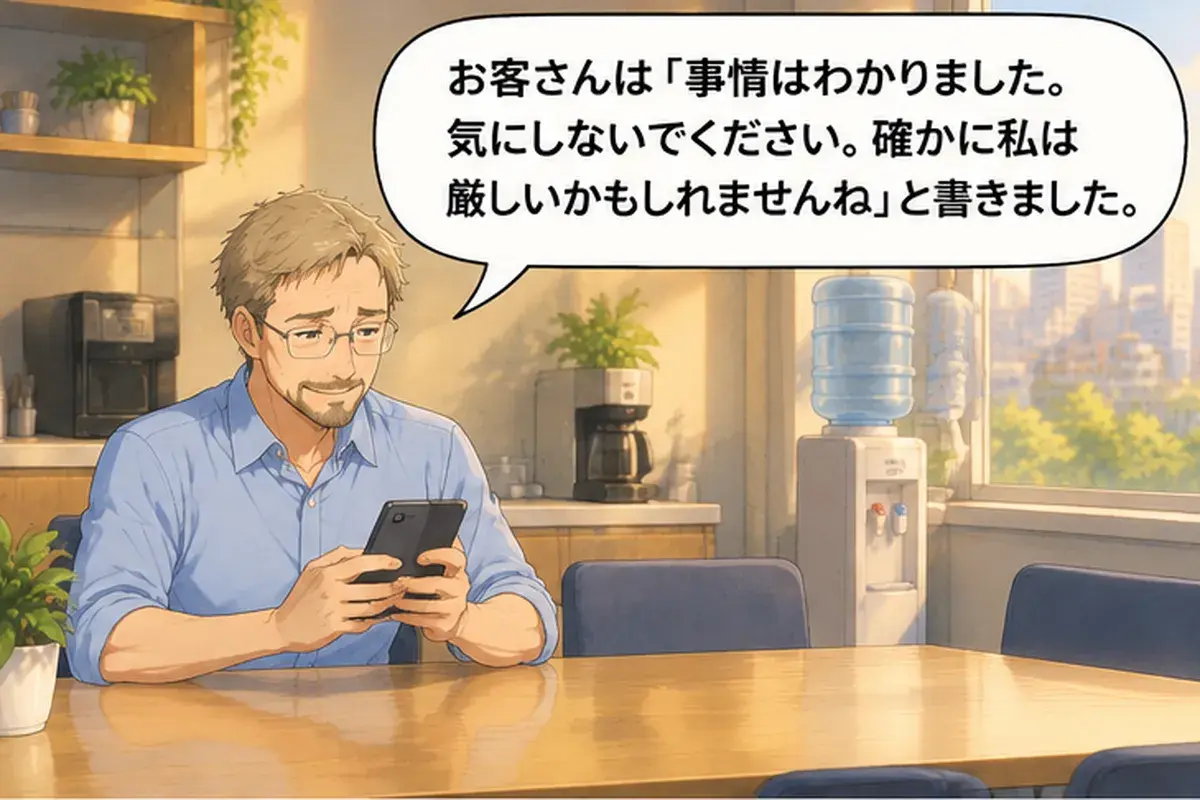
お客さんは「事情はわかりました。気にしないでください。確かに私は厳しいかもしれませんね」と書きました。
The client wrote, "I understand what happened. Please don't worry about it. I may indeed be strict."
- マルク
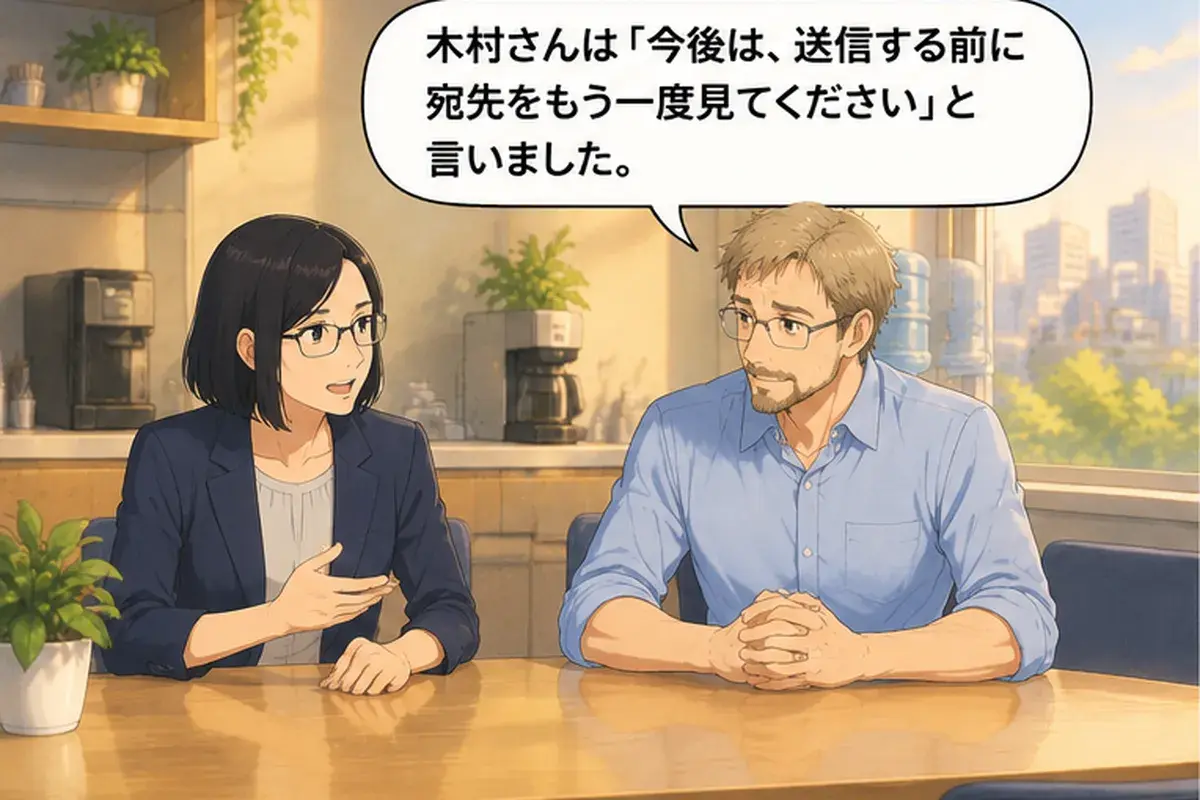
木村さんは「今後は、送信する前に宛先をもう一度見てください」と言いました。
Kimura-san said, "From now on, please check the address once more before you send."
- マルク
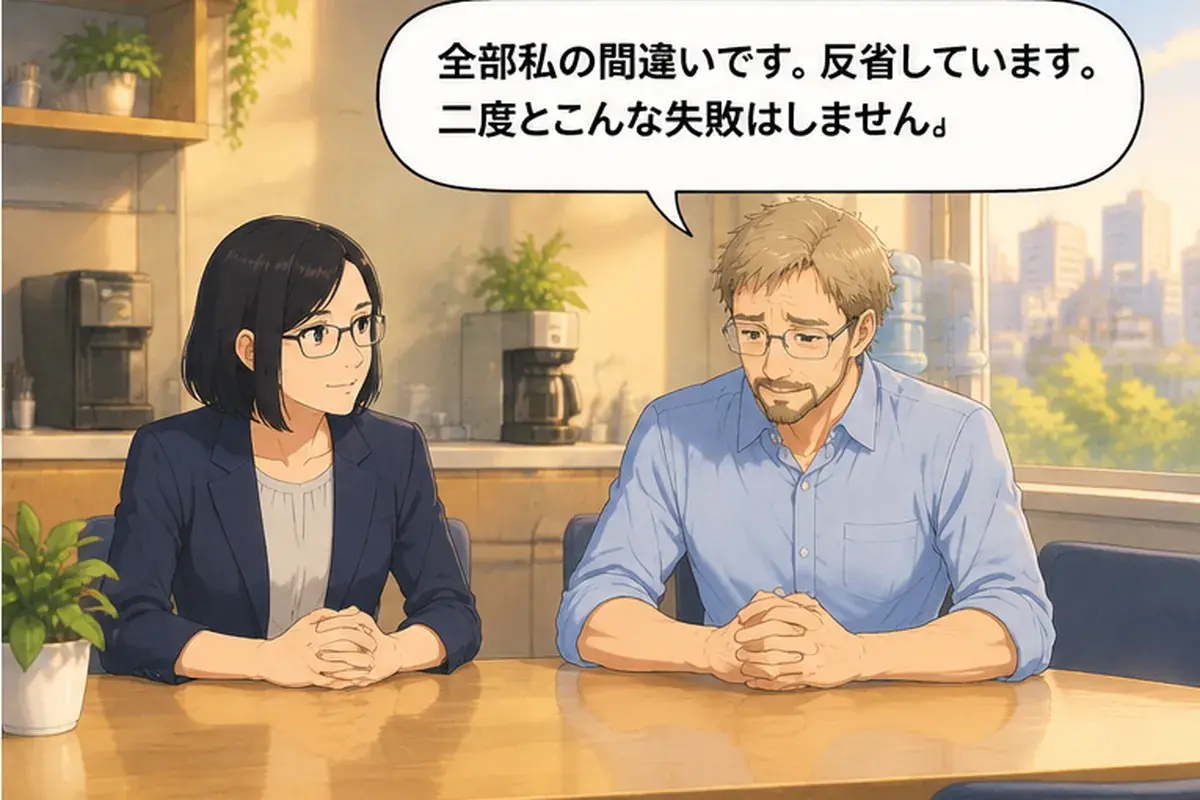
全部私の間違いです。反省しています。二度とこんな失敗はしません。
It's all my mistake. I'm reflecting on it. I'll never make a mistake like this again.
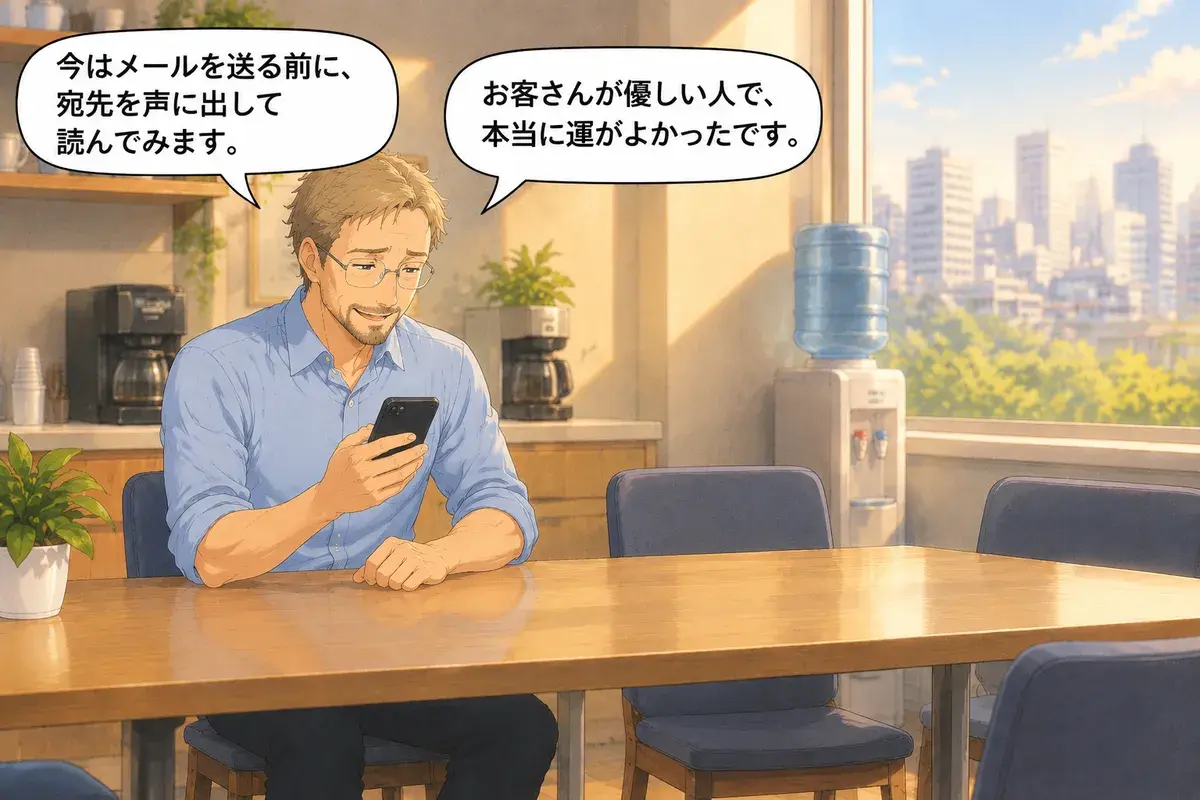
- マルク
今はメールを送る前に、宛先を声に出して読んでみます。
Now, before I send an email, I try reading the address out loud.
- マルク
お客さんが優しい人で、本当に運がよかったです。
The client was a kind person, and I was really lucky.
Grammar for this text
大きい 失敗 を しました— I made a big mistake. You can split 失敗する into 失敗 を する. People do this when the "mistake" is a thing you talk about: "a big mistake."うっかり、 一番 上 の 名前 を 選んで、 すぐ 送信して しまいました— Absentmindedly, I picked the name at the very top and sent it right away. うっかり means "absentmindedly," and 送信して しまいました means "I sent it, and now I can't take it back" (unit grammar).森 に 送る つもり でした— I meant to send it to Mori. To the client, Mark calls his coworker by his last name, with no さん: you do that with your own people when talking to outsiders. In his own story he saysけん さん. つもり でした means "I was planning to" (unit 14).送って しまった ん です から、 仕方ない です— Since you've already sent it, it can't be helped. Kimura-san doesn't scold him, she just states the facts: ん です から means "since it already happened," and 仕方ない means "it can't be helped." Then she moves straight to action: call first.確か に 私 は 厳しい かもしれません ね— I may indeed be strict. This is the client's joke: かもしれません means "maybe" (unit 11). The client isn't offended.二度と こんな 失敗 は しません— I'll never make a mistake like this again. 二度と always goes with a negative: "never again."宛先 を 声 に 出して 読んで みます— I'll try reading the address out loud. 読んで みる means "read it to check": Mark reads the address aloud before sending.
Words and grammar of the unit: Apologize for a mistake.
Learn the words from the texts with flashcards
In the app, you can tap any word in a text to see its translation, forms and examples, and new words stick with flashcards. 15 minutes a day.
Start for freeEverything is open for free. No card needed to sign up.