
Japanese dialogue with translation · A2 · 14 lines
何も持たないでください Please don't carry anything
Comic · 14 panels
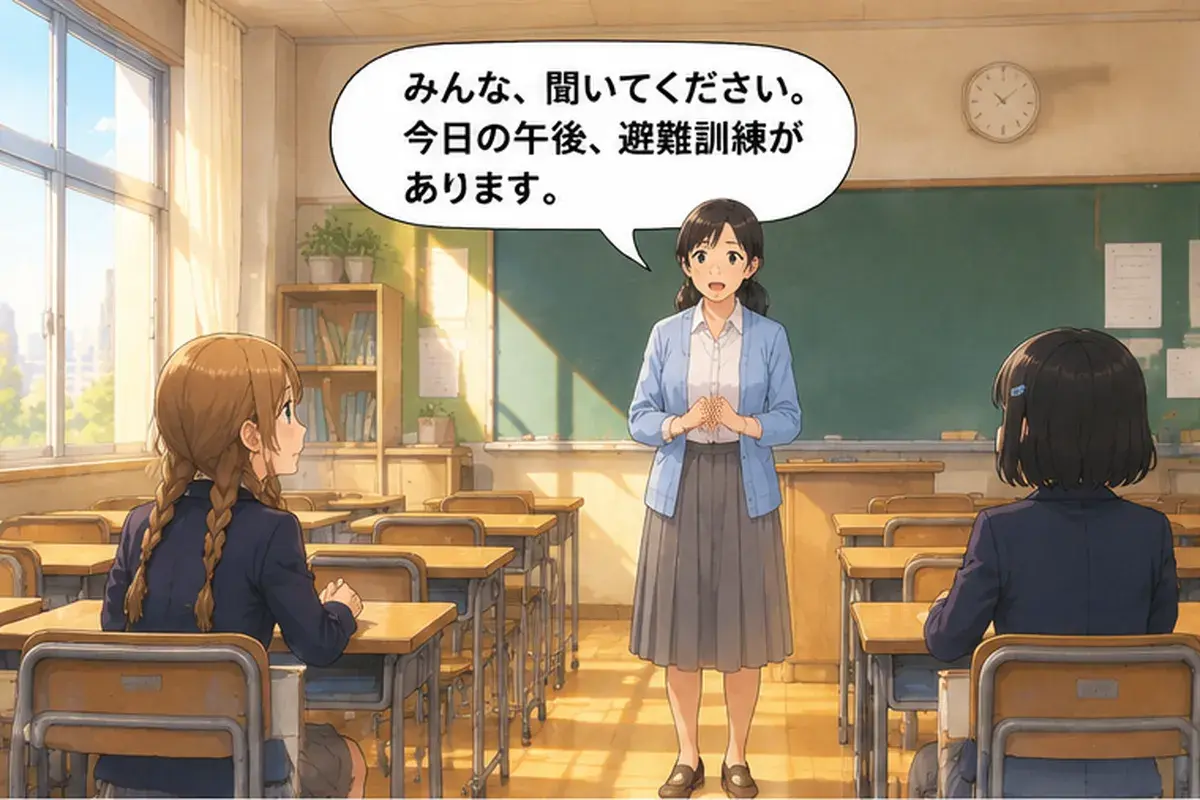
- 先生
みんな、聞いてください。今日の午後、避難訓練があります。
Everyone, listen up. We're having an evacuation drill this afternoon.
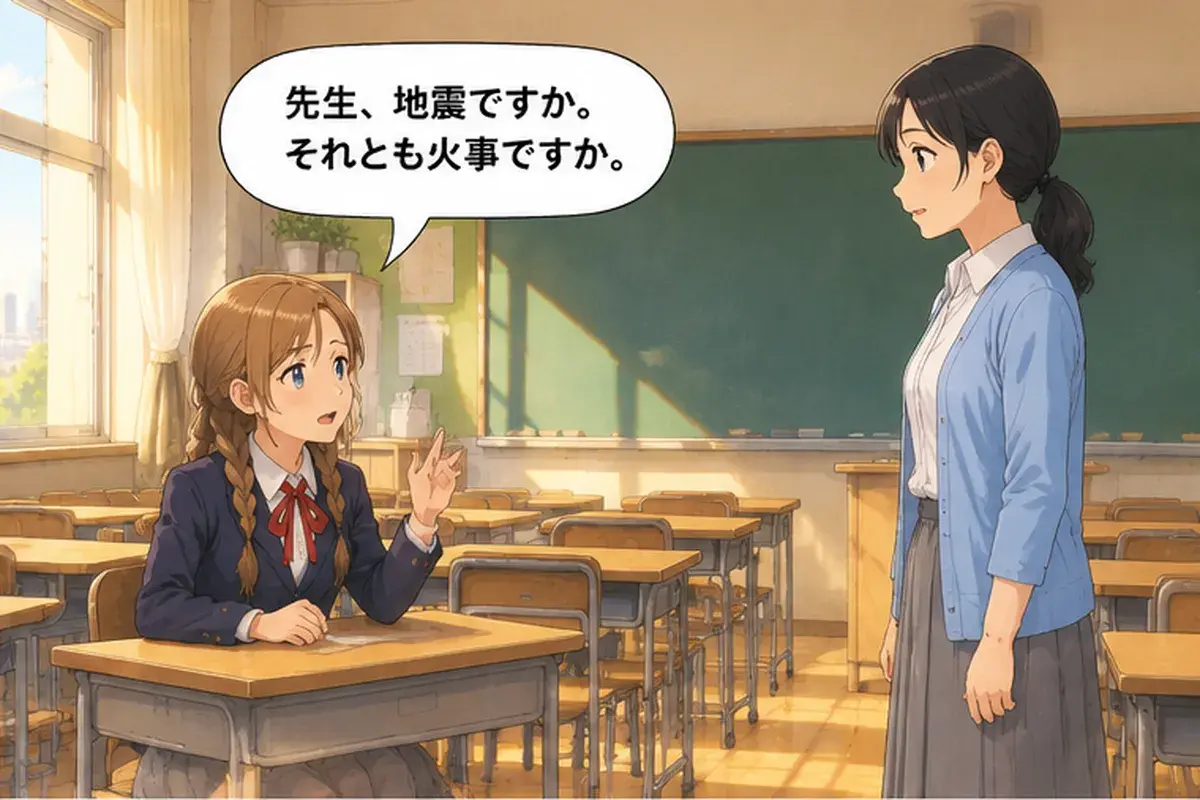
- ソーニャ
先生、地震ですか。それとも火事ですか。
Teacher, is it an earthquake? Or a fire?
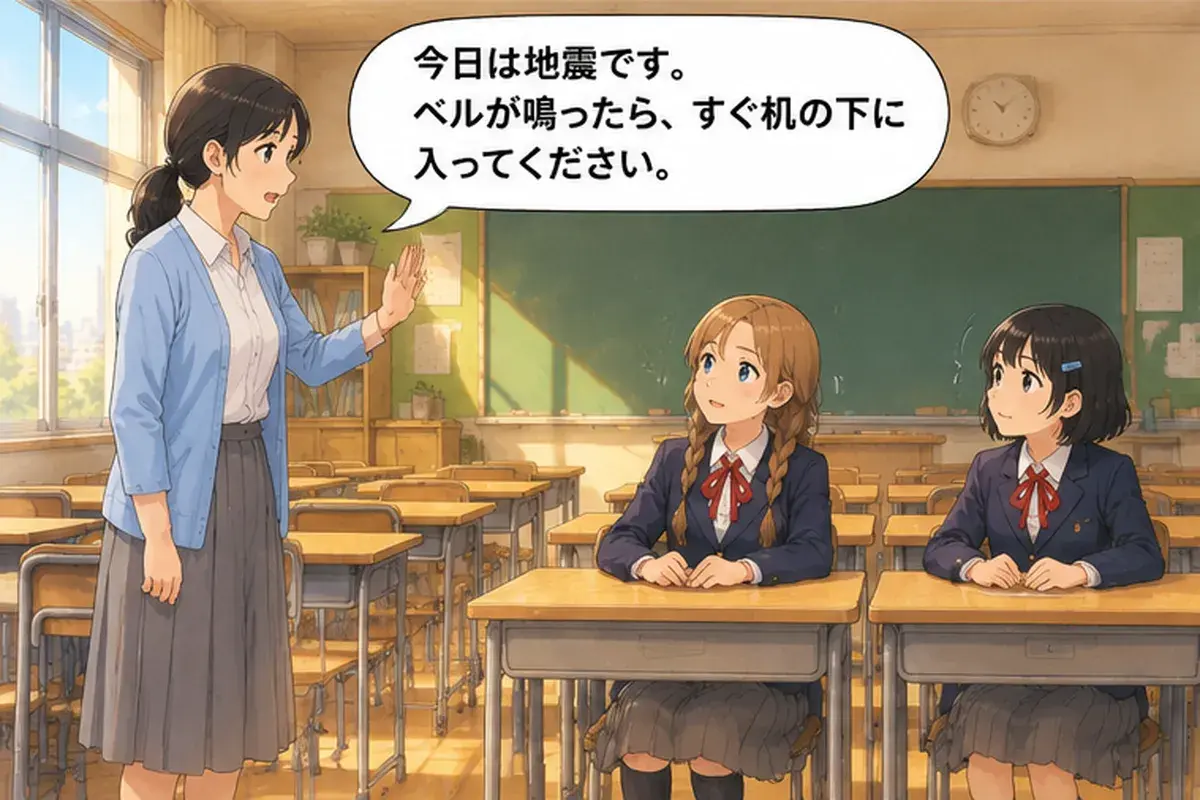
- 先生
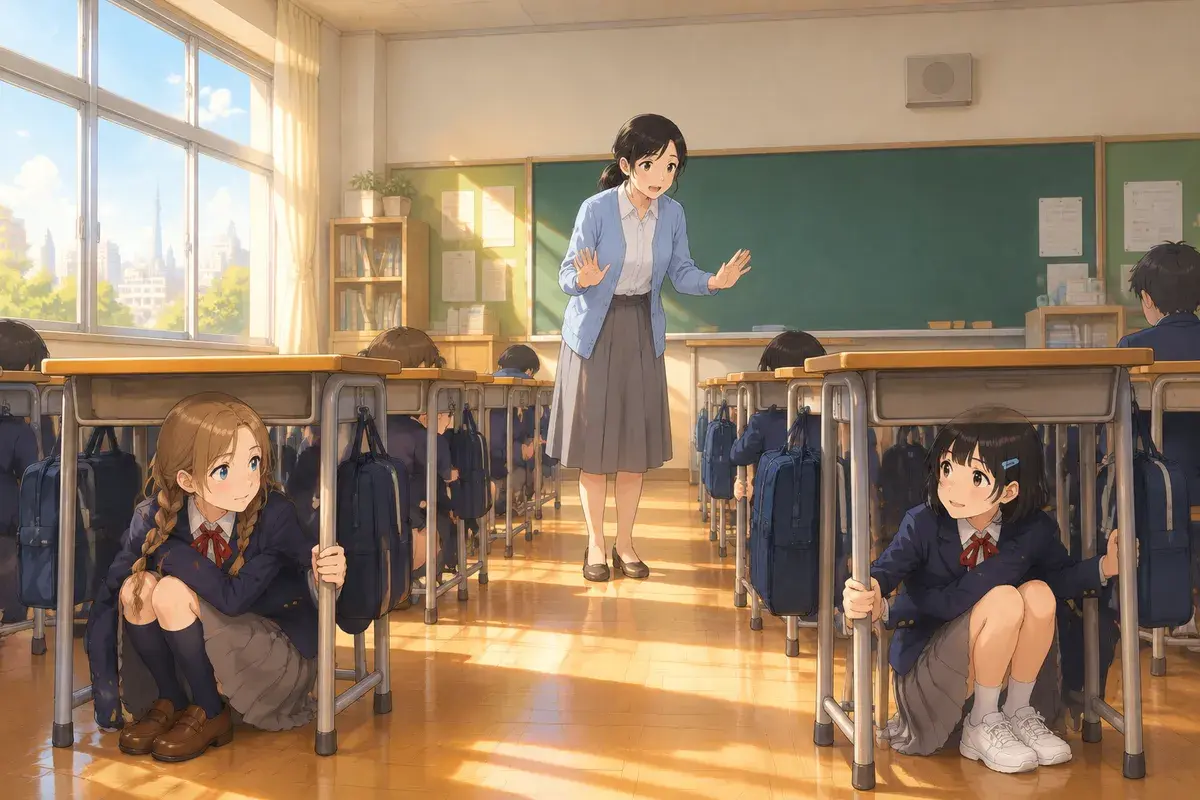
今日は地震です。ベルが鳴ったら、すぐ机の下に入ってください。
Today it's an earthquake. When the bell rings, get under your desk right away.
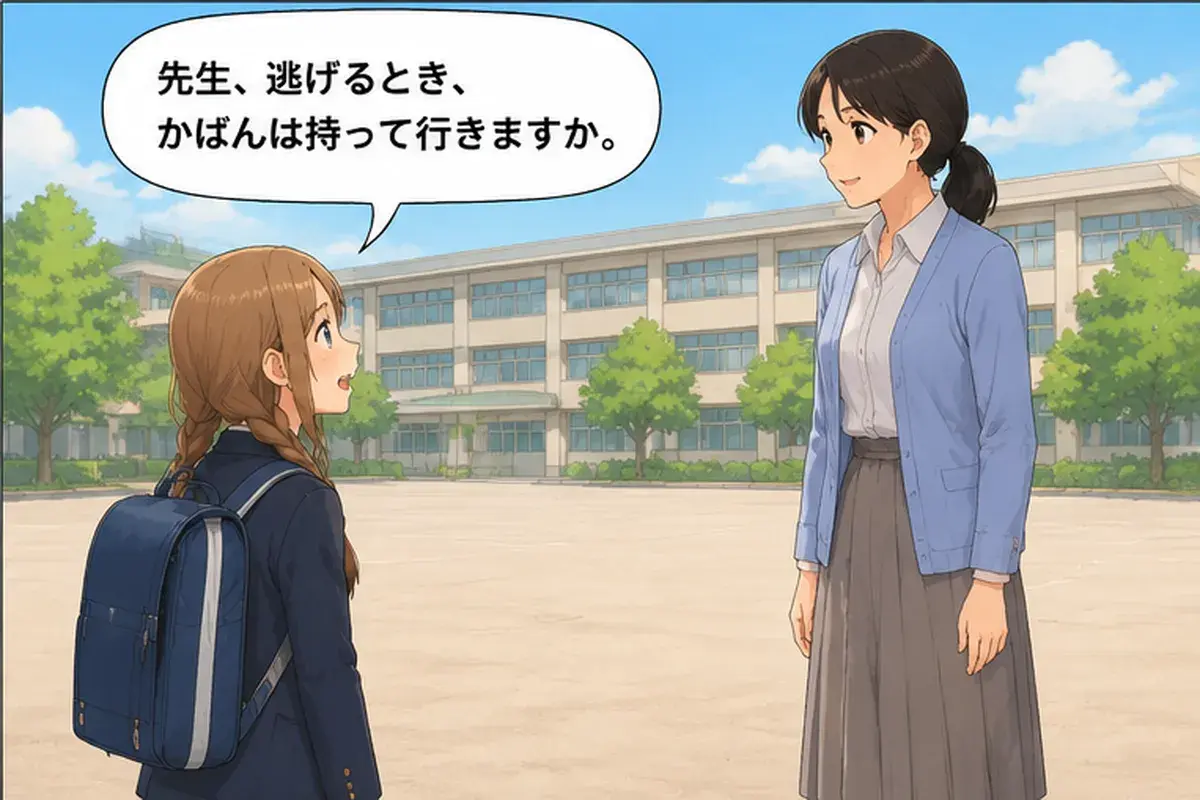
- ソーニャ
先生、逃げるとき、かばんは持って行きますか。
Teacher, when we escape, do we take our bags with us?
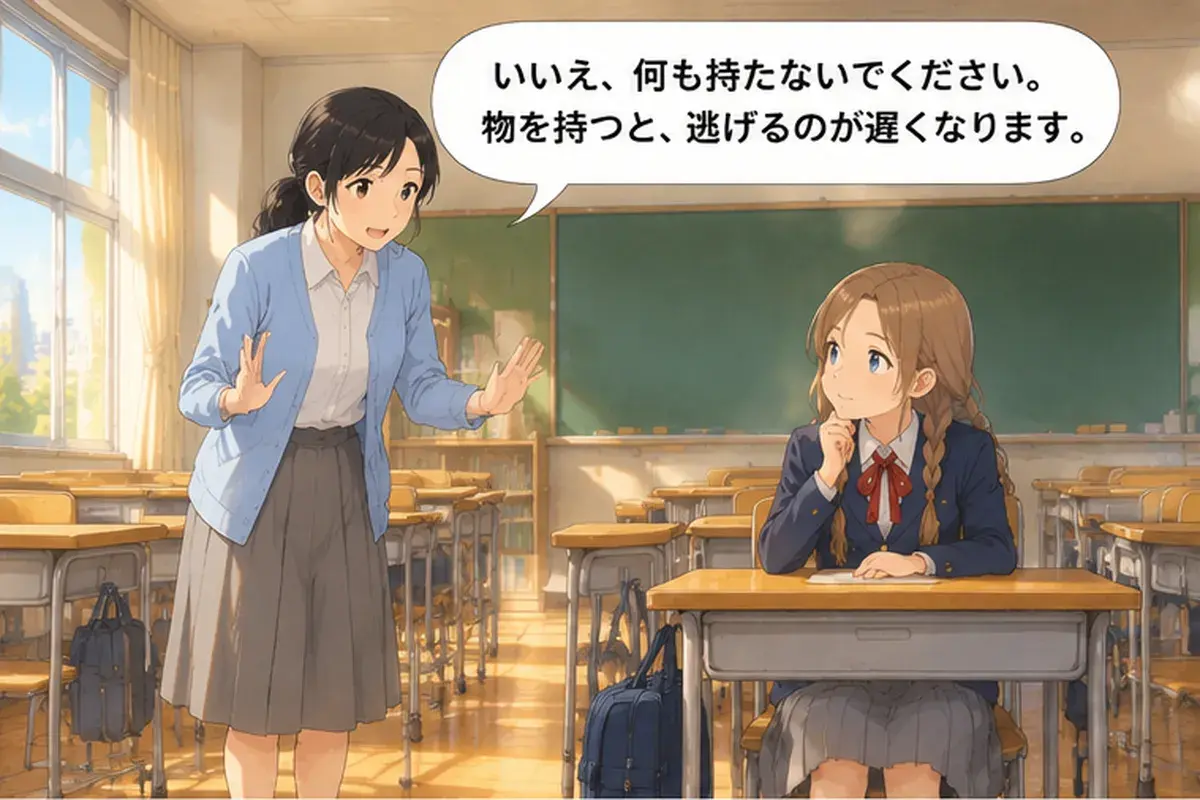
- 先生
いいえ、何も持たないでください。物を持つと、逃げるのが遅くなります。
No, please don't carry anything. If you carry things, you'll be slower to escape.
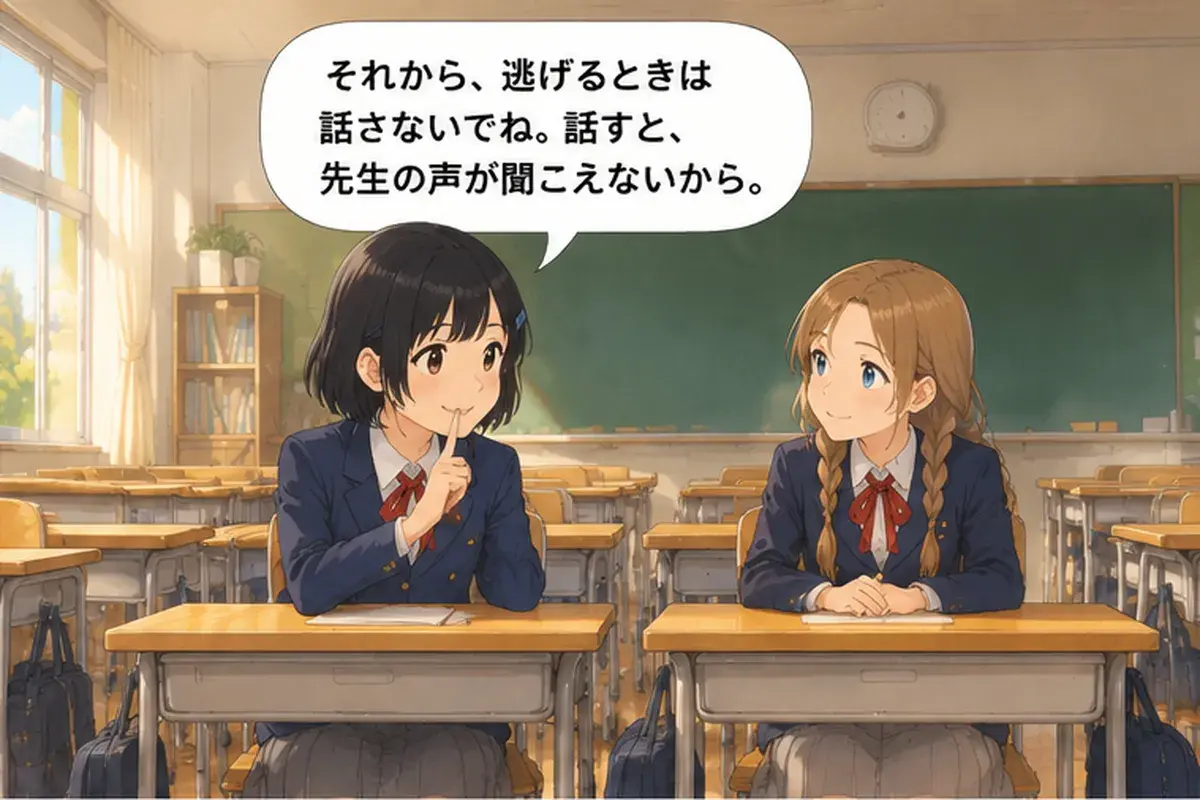
- ゆい
それから、逃げるときは話さないでね。話すと、先生の声が聞こえないから。
Also, don't talk when we're going out, okay? If you talk, we won't be able to hear the teacher's voice. (casual)
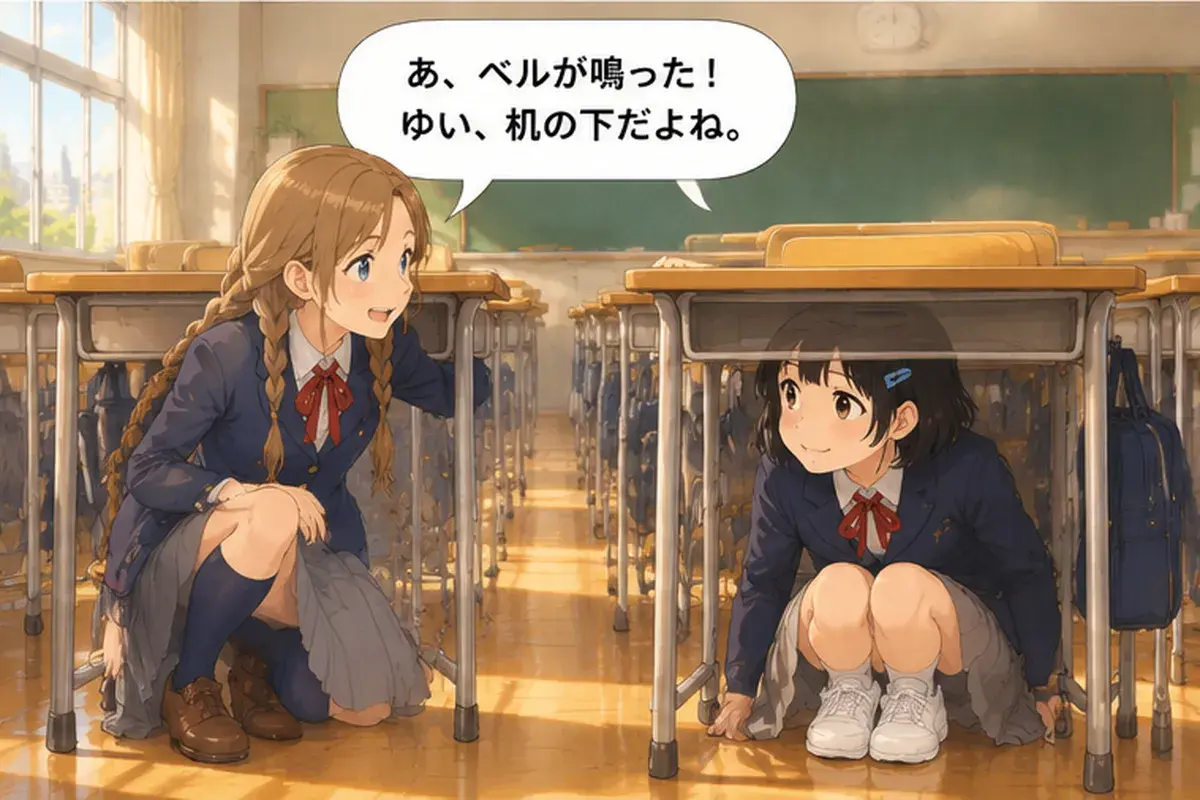
- ソーニャ
あ、ベルが鳴った!ゆい、机の下だよね。
Oh, the bell rang! Yui, we get under our desks, right? (casual)
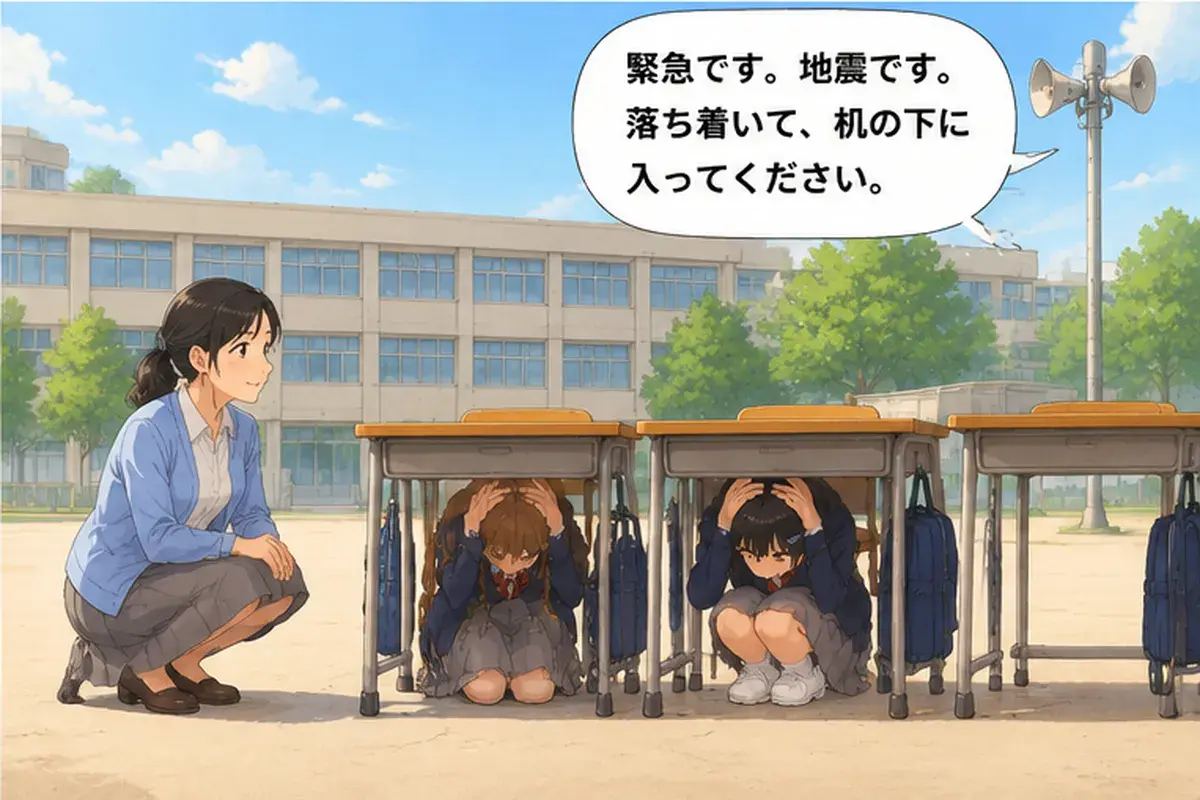
- アナウンス
緊急です。地震です。落ち着いて、机の下に入ってください。
This is an emergency. This is an earthquake. Stay calm and get under your desks.
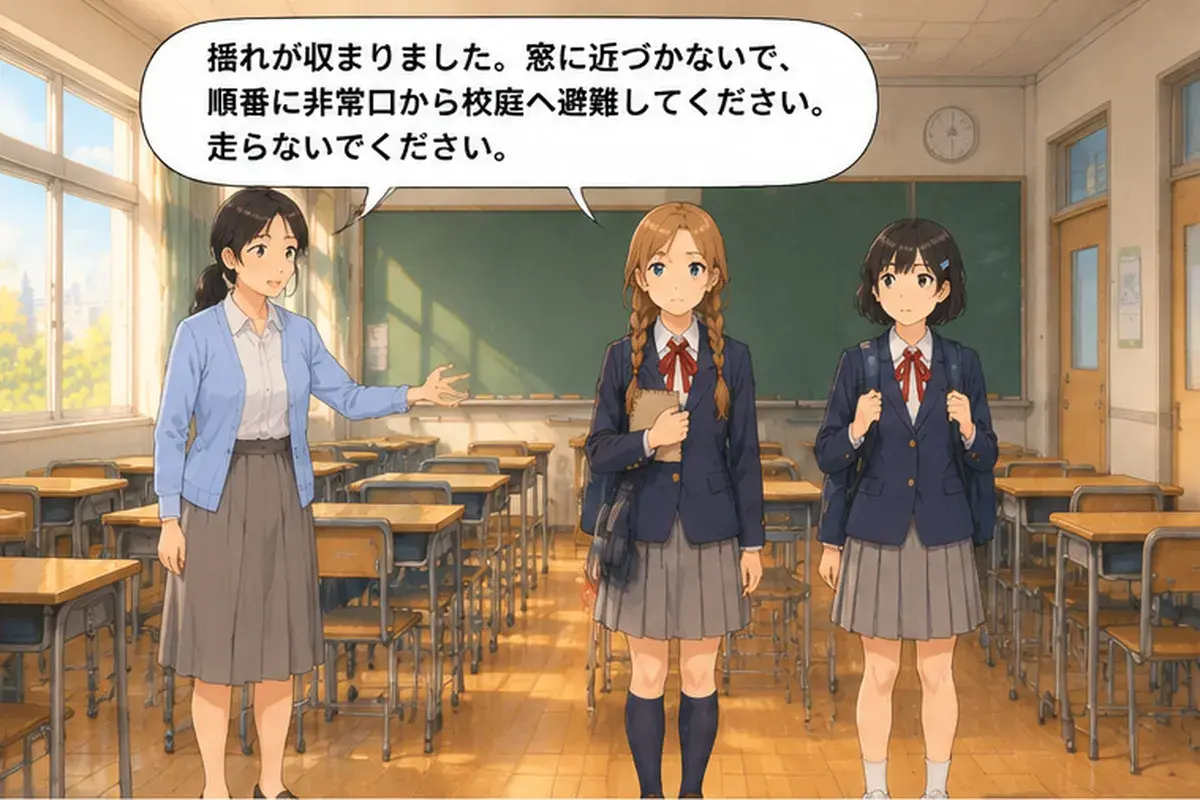
- 先生
揺れが収まりました。窓に近づかないで、順番に非常口から校庭へ避難してください。走らないでください。
The shaking has stopped. Stay away from the windows and evacuate to the schoolyard through the emergency exit in order. Don't run.
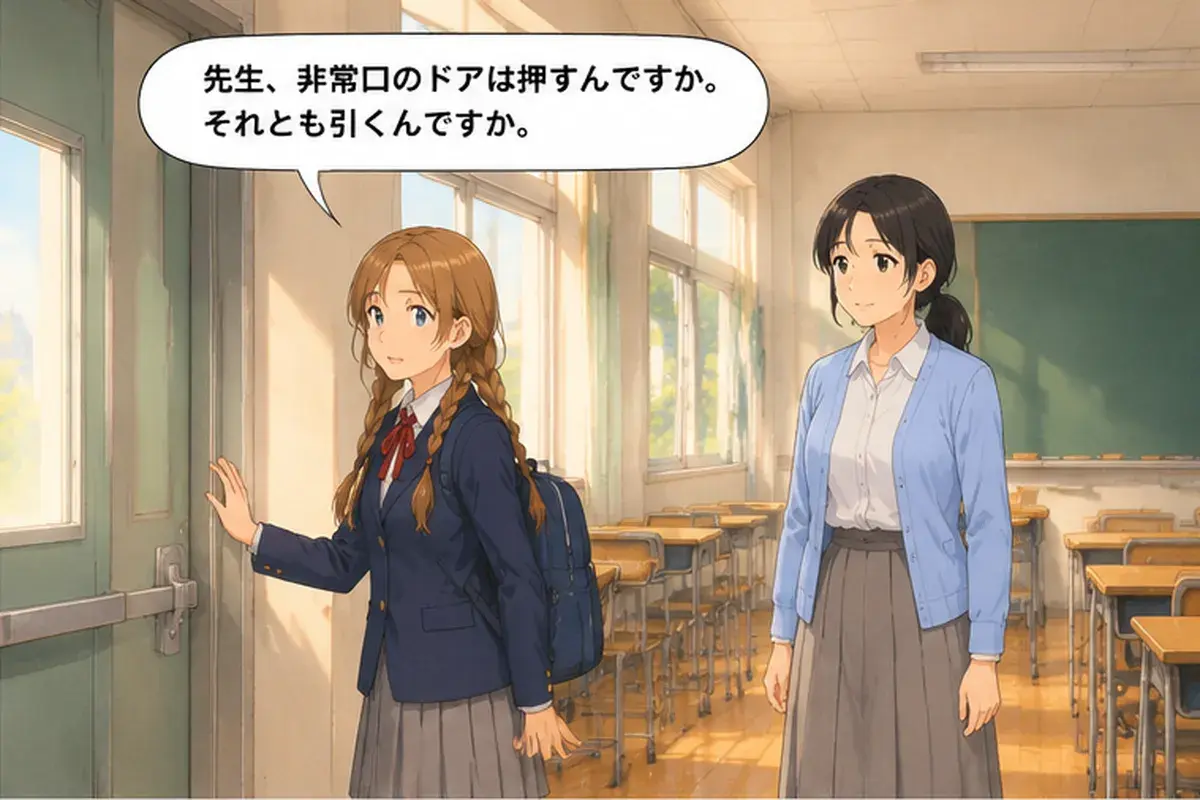
- ソーニャ
先生、非常口のドアは押すんですか。それとも引くんですか。
Teacher, do we push the emergency exit door? Or do we pull it?
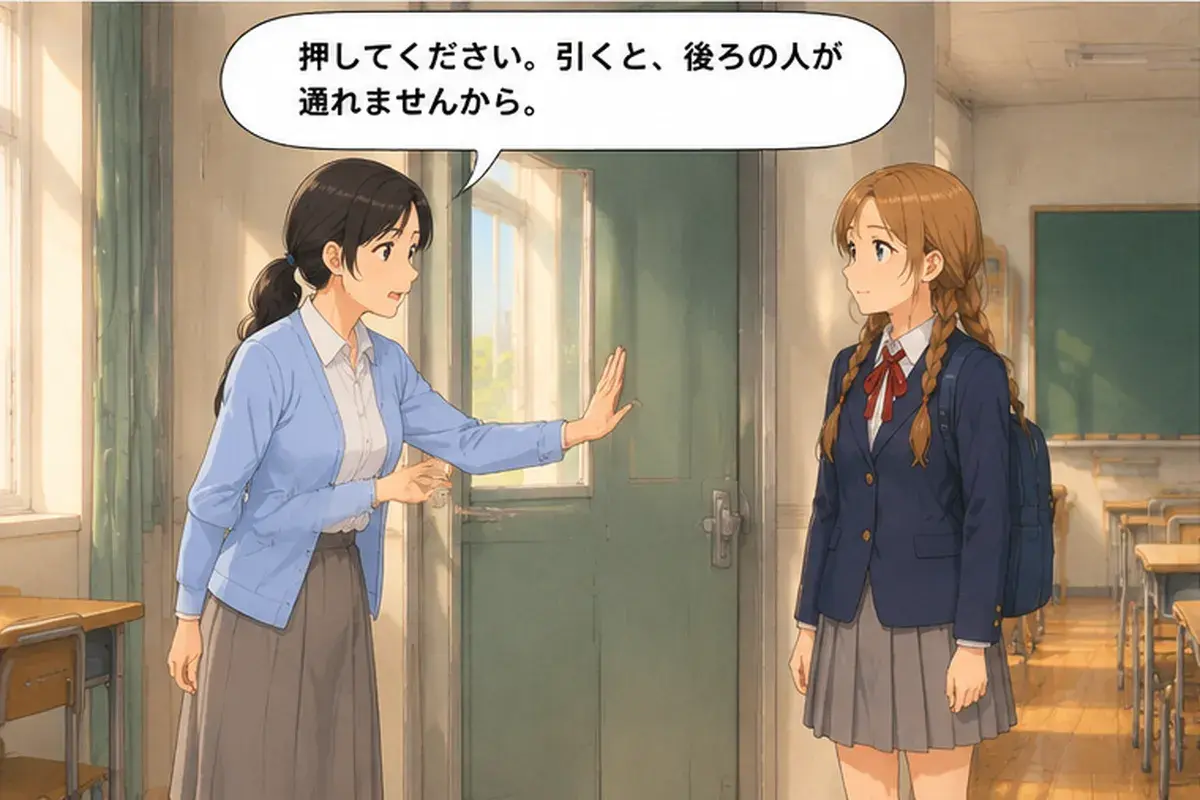
- 先生
押してください。引くと、後ろの人が通れませんから。
Push it. If you pull it, the people behind you can't get through.
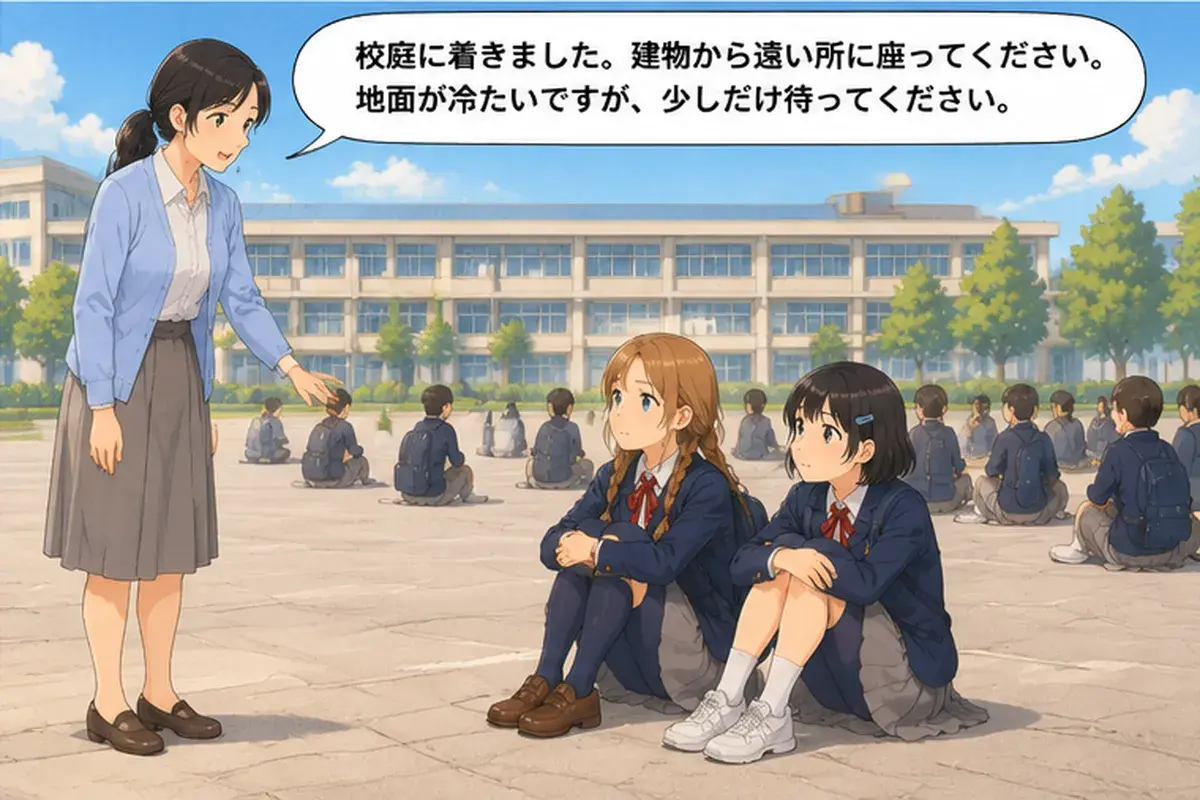
- 先生
校庭に着きました。建物から遠い所に座ってください。地面が冷たいですが、少しだけ待ってください。
We've reached the schoolyard. Please sit down somewhere far from the building. The ground is cold, but please wait just a little.
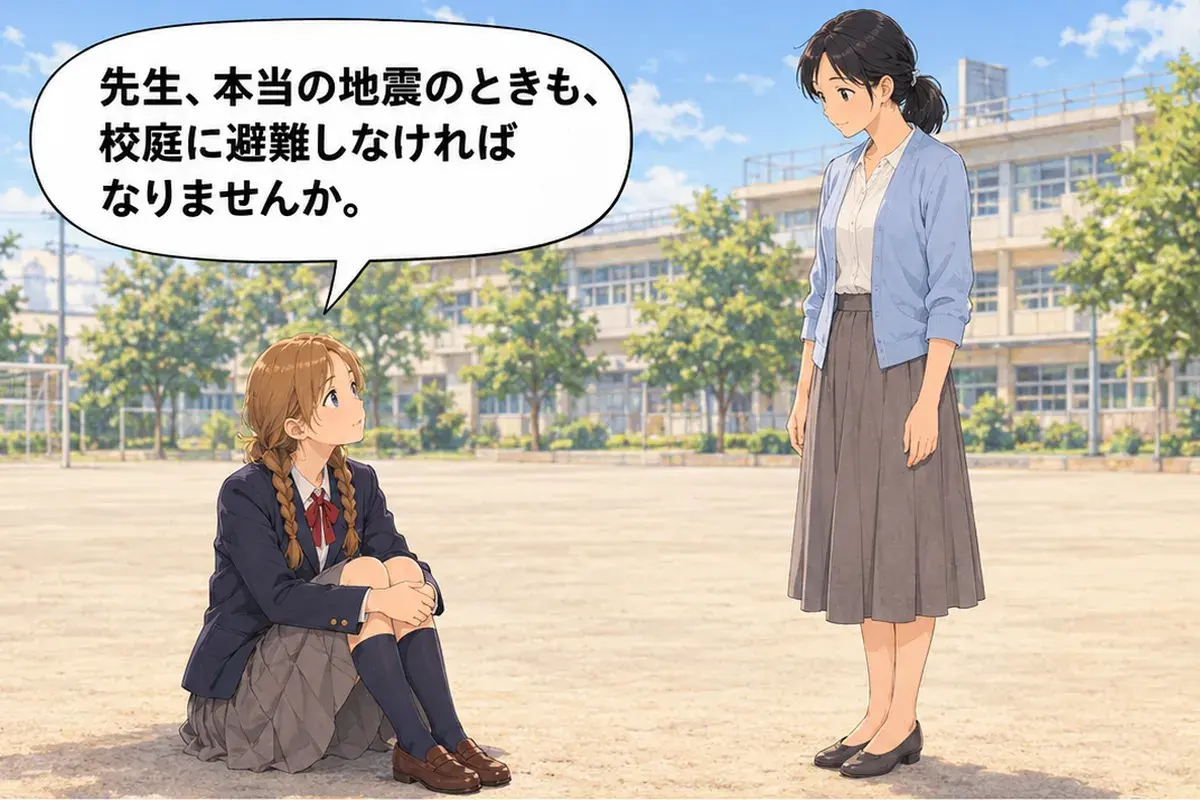
- ソーニャ
先生、本当の地震のときも、校庭に避難しなければなりませんか。
Teacher, in a real earthquake, do we also have to evacuate to the schoolyard?
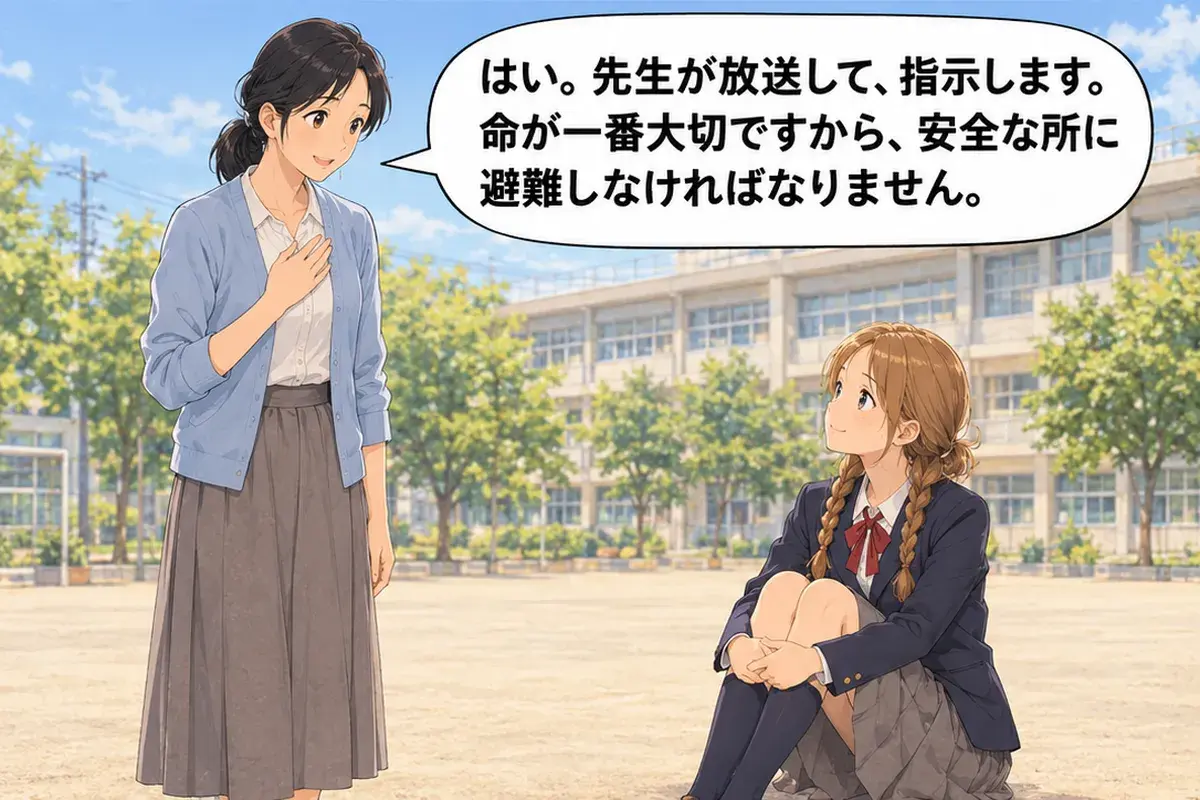
- 先生
はい。先生が放送して、指示します。命が一番大切ですから、安全な所に避難しなければなりません。
Yes. We'll make an announcement and give instructions. Your life is the most important thing, so you have to evacuate to a safe place.
Grammar for this text
物 を 持つ と、 逃げる の が 遅く なります— If you carry things, you'll be slower getting out. This is〜と(unit 17): what always happens by itself after the first action.遅く なるmeans "become slower".話す と、 先生 の 声 が 聞こえない から— If you talk, you can't hear the teacher. It's the sameと. Yui talks casually to her friend, so she says聞こえないinstead of聞こえません.ベル が 鳴ったら、 すぐ 机 の 下 に 入って ください— The request comes after〜たら. Afterとyou can't make a request.何も 持たないで ください—何もwith a negative means "nothing";〜ないで くださいmeans "please don't" (unit 3). In a real alarm you leave your bag behind, too.緊急 です— This is how an announcement starts:緊急means "emergency". The voice is polite and calm, because you need to listen, not be afraid.窓 に 近づかないで—近づくmeans "come close to", so this is "don't go near the windows". In an earthquake you stay away from glass.押す ん です か。 それとも 引く ん です か—ん です かasks for an explanation;それともmeans "or".後ろ の 人 が 通れません—通れませんmeans "can't get through" (the "can" form, unit 10).校庭 に 避難しなければ なりません か— "Do we have to evacuate to the schoolyard?"〜なければ なりませんmeans "have to" (unit 17).
Words and grammar of the unit: Understand what to do in an earthquake.
Learn the words from the texts with flashcards
In the app, you can tap any word in a text to see its translation, forms and examples, and new words stick with flashcards. 15 minutes a day.
Start for freeEverything is open for free. No card needed to sign up.