
Japanese dialogue with translation · A2 · 15 lines
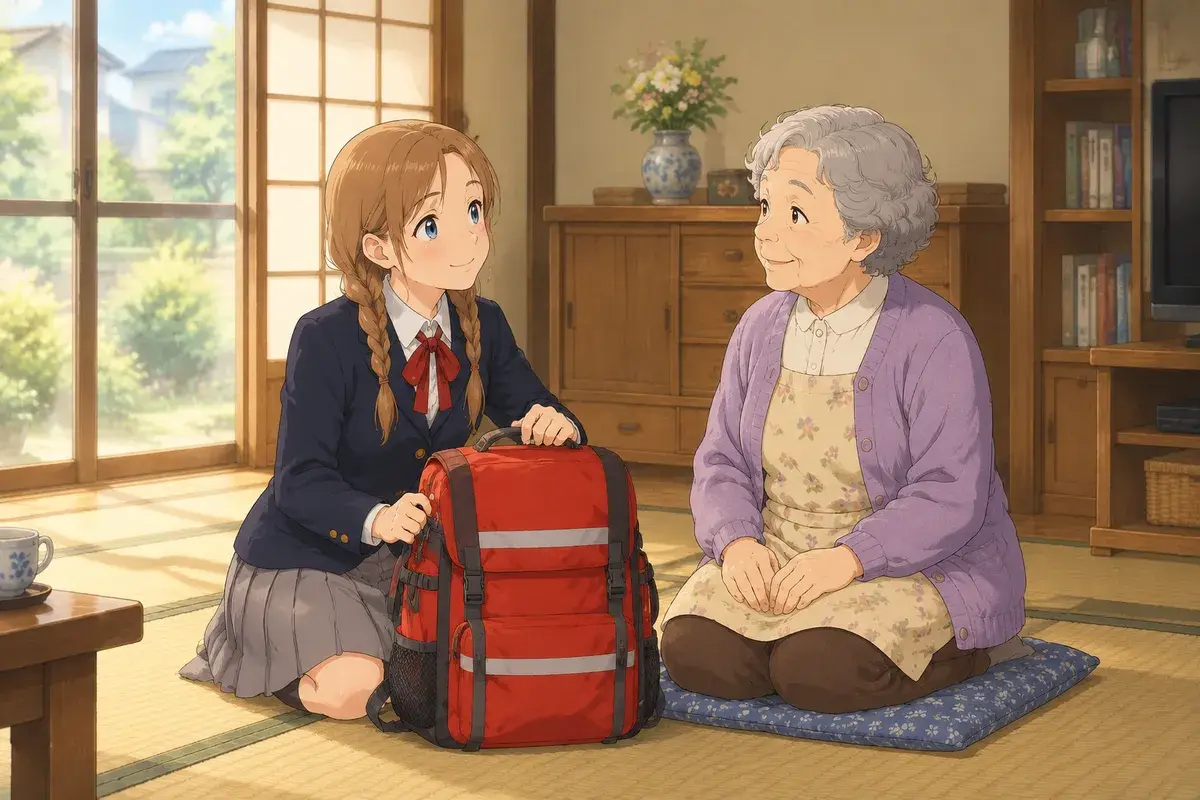
これは防災のリュックです This is a disaster preparedness backpack
Comic · 14 panels
- ソーニャ
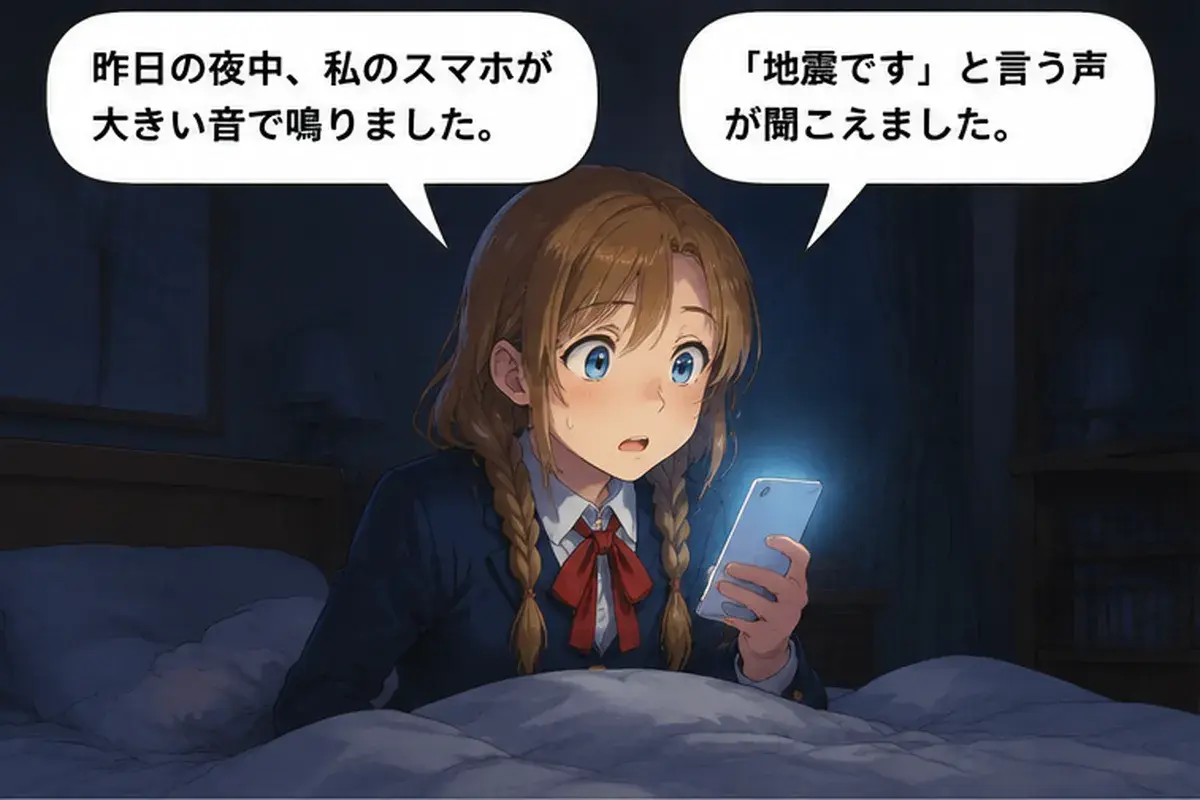
昨日の夜中、私のスマホが大きい音で鳴りました。
Last night in the middle of the night, my smartphone went off with a loud sound.
- ソーニャ
「地震です」と言う声が聞こえました。
I heard a voice say, "This is an earthquake."
- ソーニャ
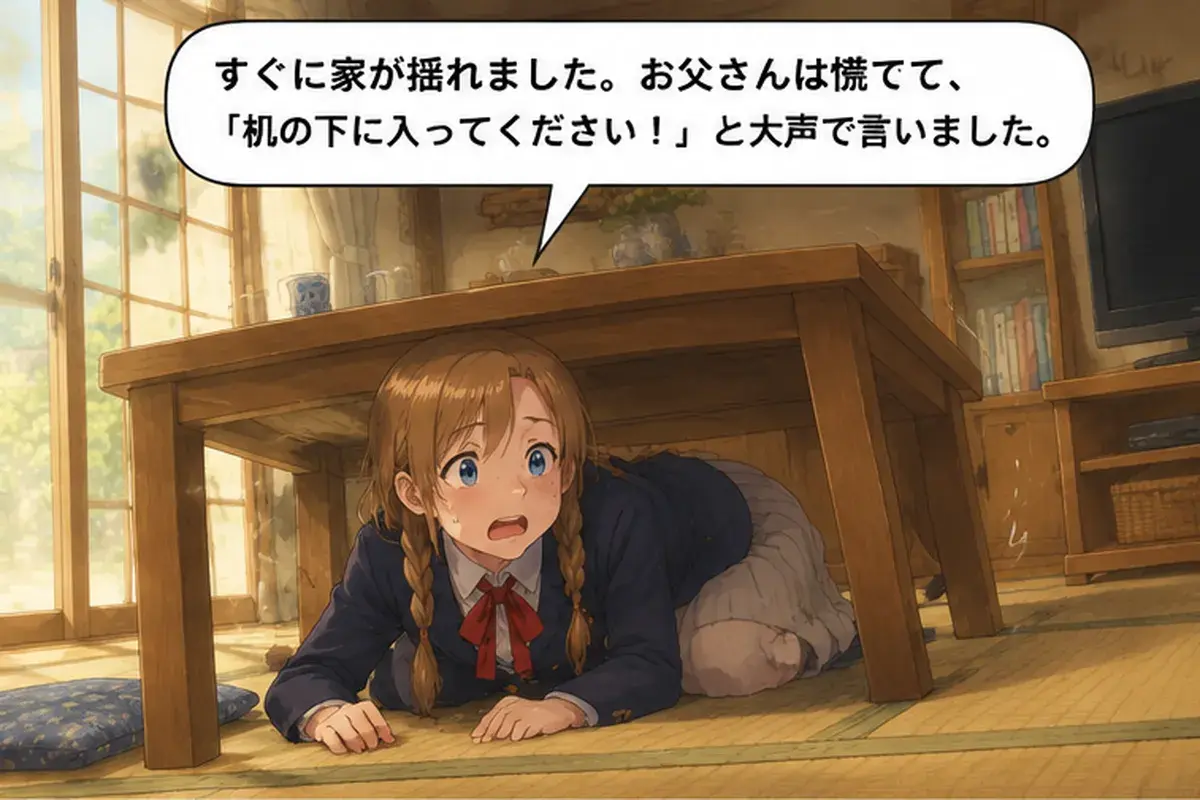
すぐに家が揺れました。お父さんは慌てて、「机の下に入ってください!」と大声で言いました。
Right away the house shook. Dad panicked and shouted loudly, "Please get under the desk!"
- ソーニャ
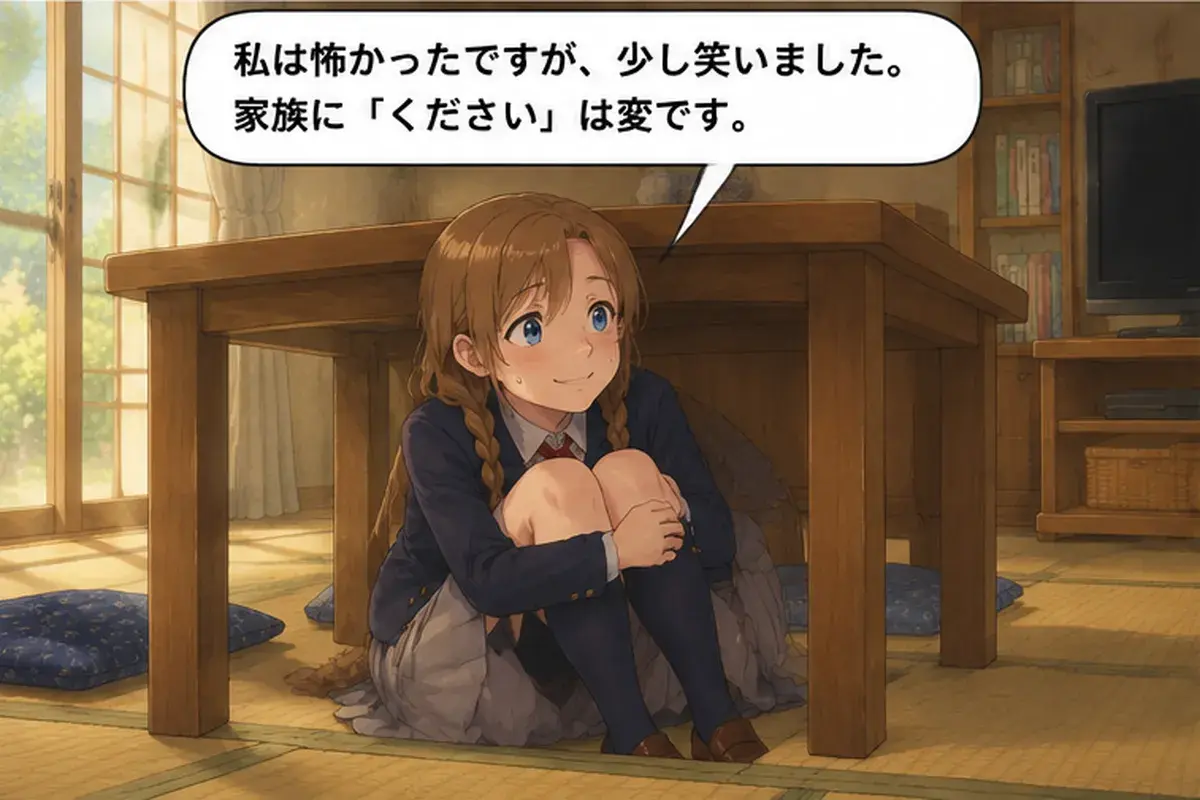
私は怖かったですが、少し笑いました。家族に「ください」は変です。
I was scared, but I laughed a little. Saying "please" to your own family is strange.
- ソーニャ
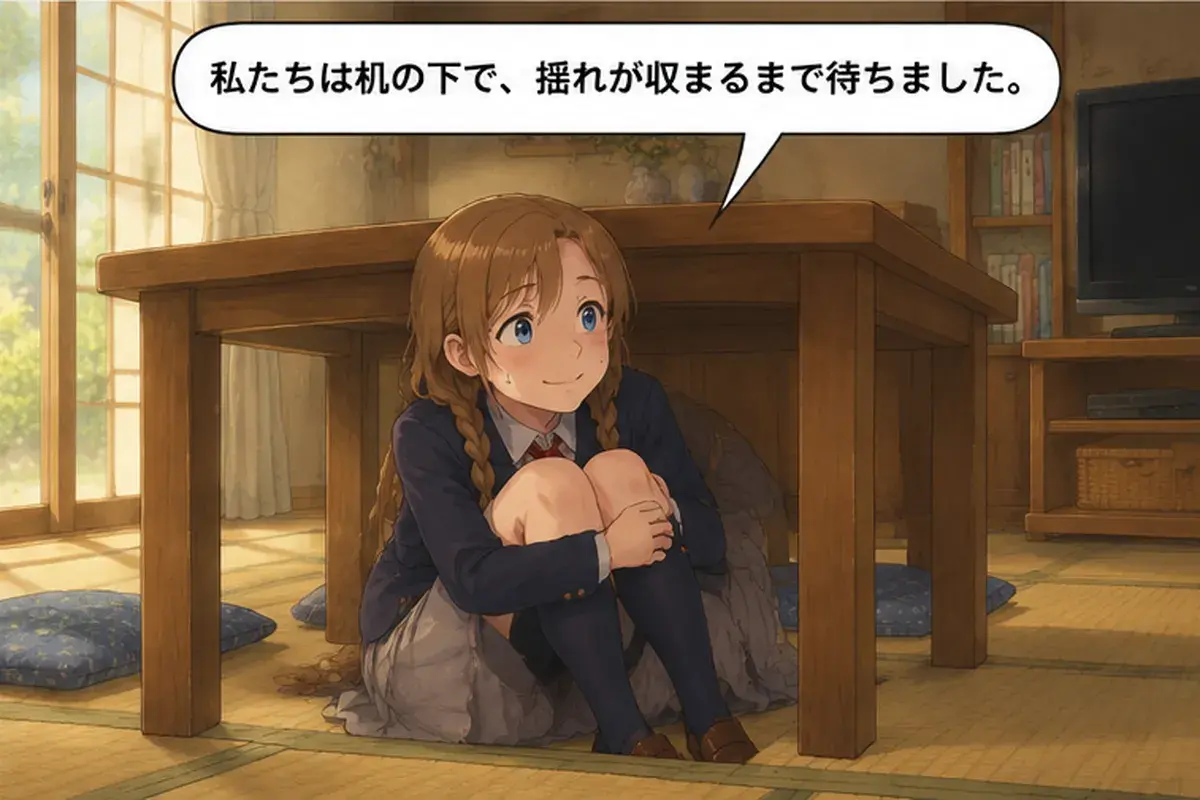
私たちは机の下で、揺れが収まるまで待ちました。
We waited under the desk until the shaking stopped.
- ソーニャ
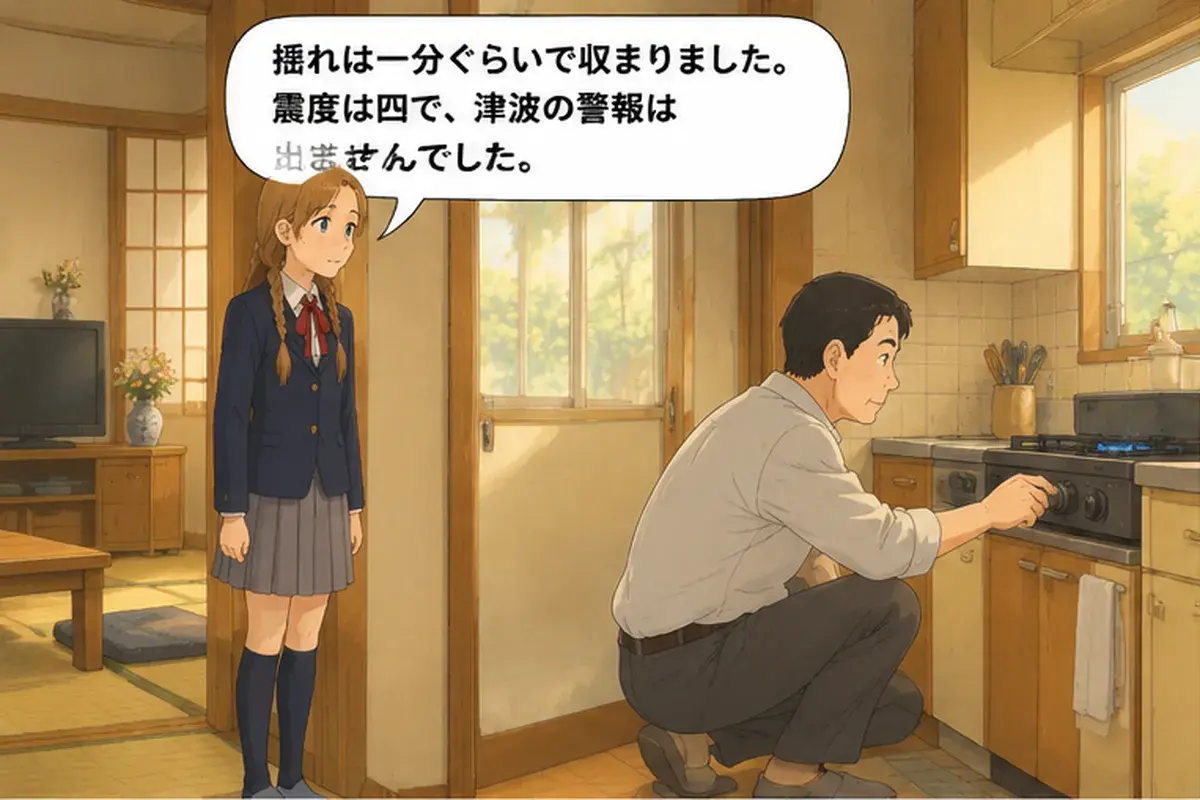
揺れは一分ぐらいで収まりました。震度は四で、津波の警報は出ませんでした。
The shaking stopped after about a minute. The seismic intensity was 4, and there was no tsunami warning.
- ソーニャ
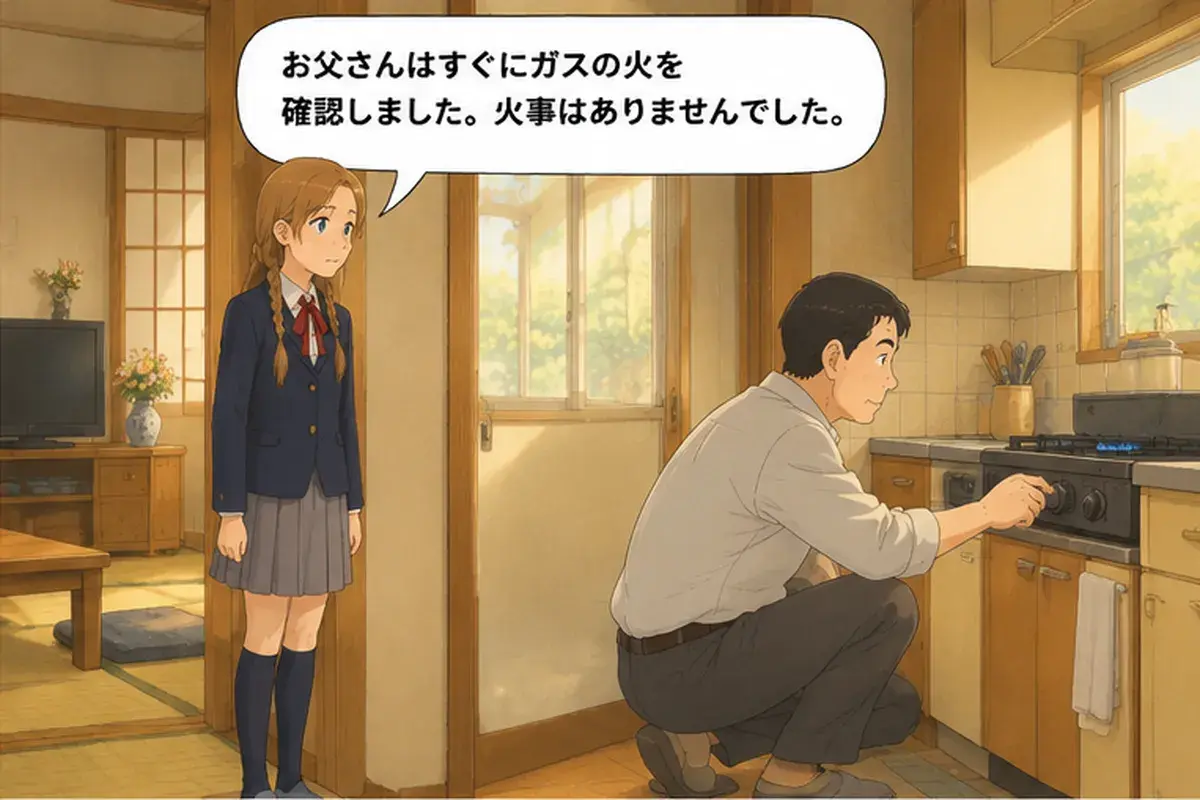
お父さんはすぐにガスの火を確認しました。火事はありませんでした。
Dad immediately checked the gas flame. There was no fire.
- ソーニャ
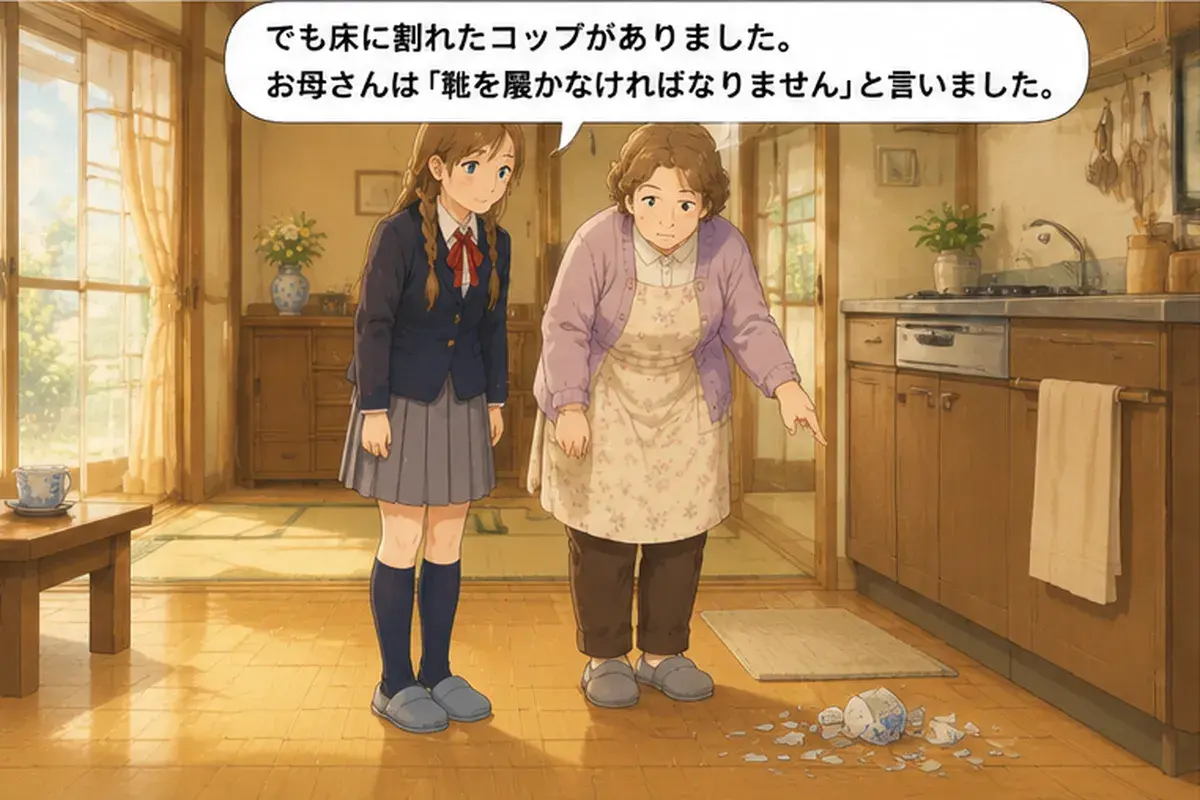
でも床に割れたコップがありました。お母さんは「靴を履かなければなりません」と言いました。
But there was a broken cup on the floor. Mom said, "We have to put our shoes on."
- ソーニャ
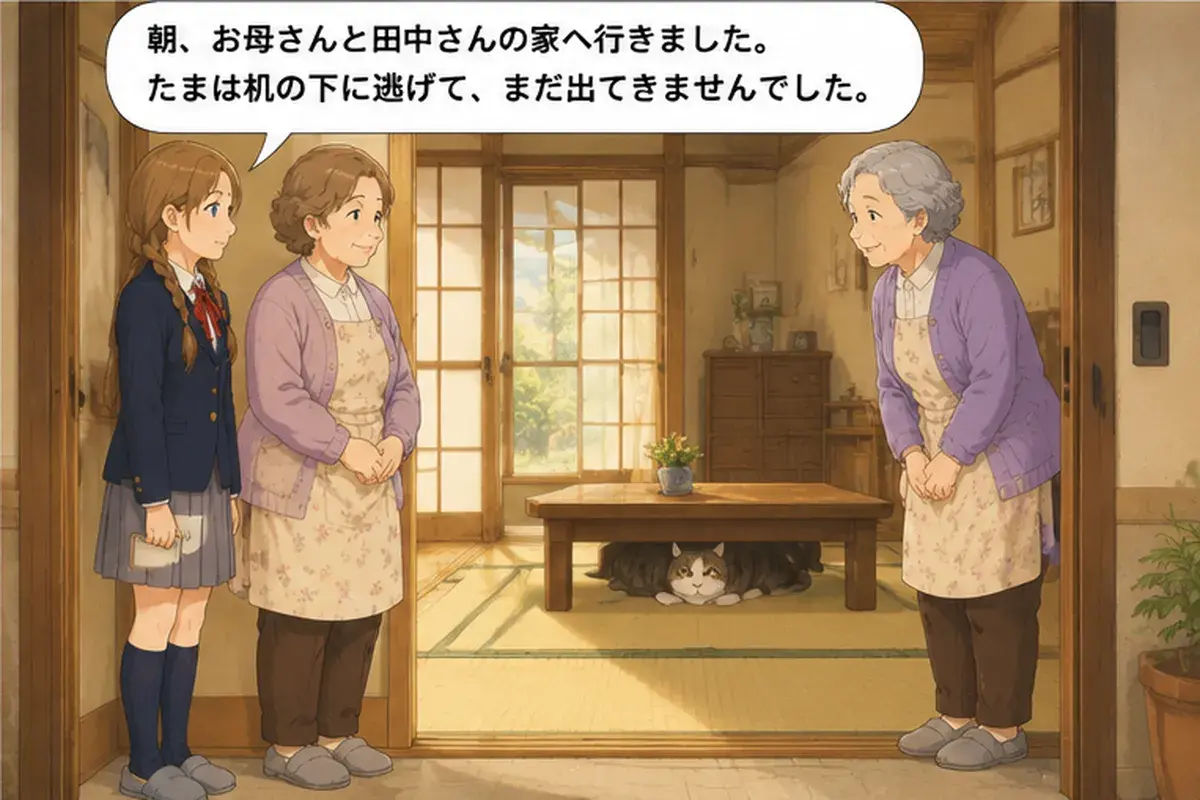
朝、お母さんと田中さんの家へ行きました。たまは机の下に逃げて、まだ出てきませんでした。
In the morning, I went to Tanaka-san's house with Mom. Tama had run under a desk and still hadn't come out.
- ソーニャ
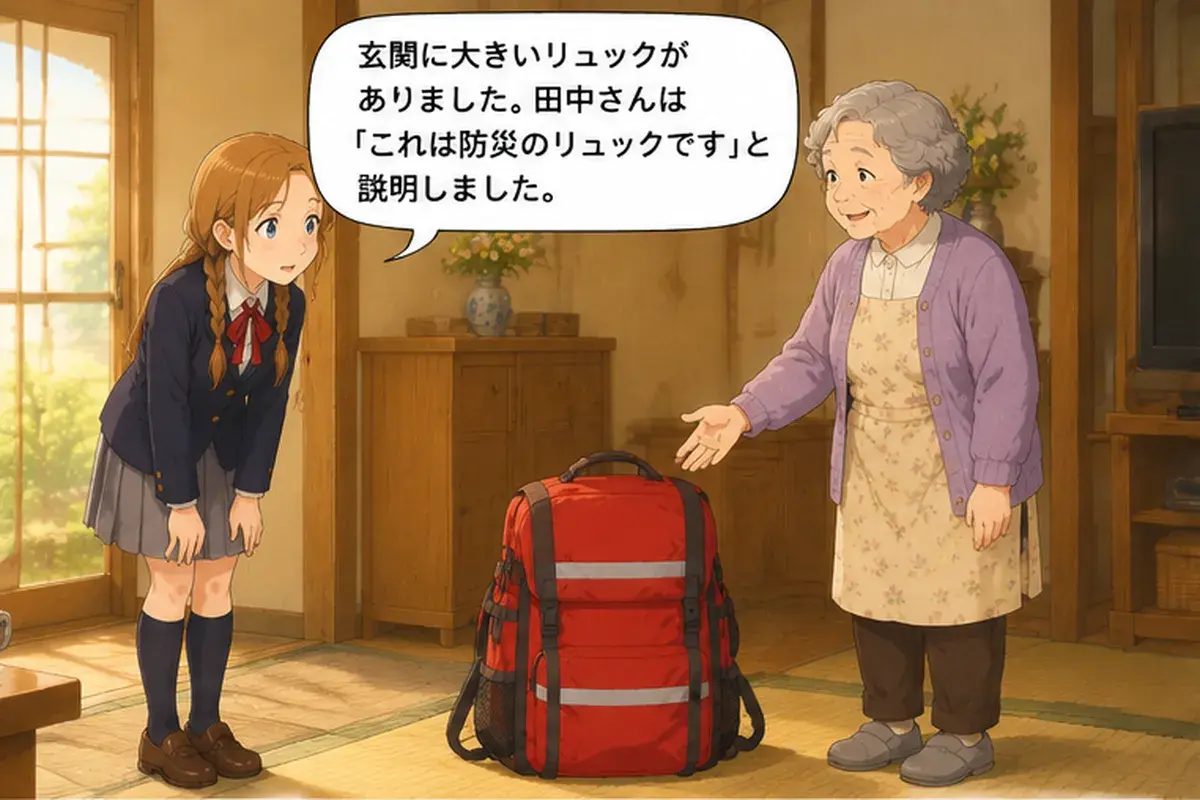
玄関に大きいリュックがありました。田中さんは「これは防災のリュックです」と説明しました。
There was a big backpack in the entryway. Tanaka-san explained, "This is a disaster preparedness backpack."
- ソーニャ
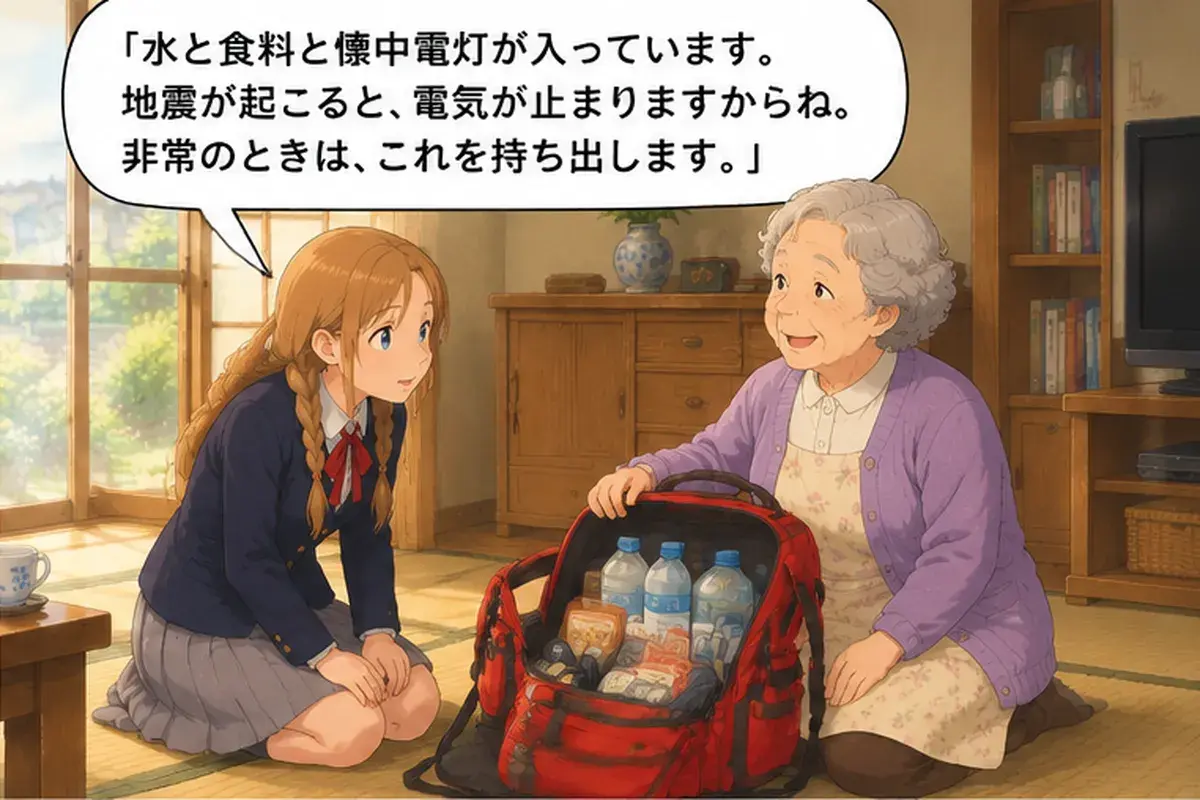
「水と食料と懐中電灯が入っています。地震が起こると、電気が止まりますからね。非常のときは、これを持ち出します。」
"It has water, food, and a flashlight in it. When an earthquake happens, the electricity goes out, you know. In an emergency, I take this with me."
- ソーニャ
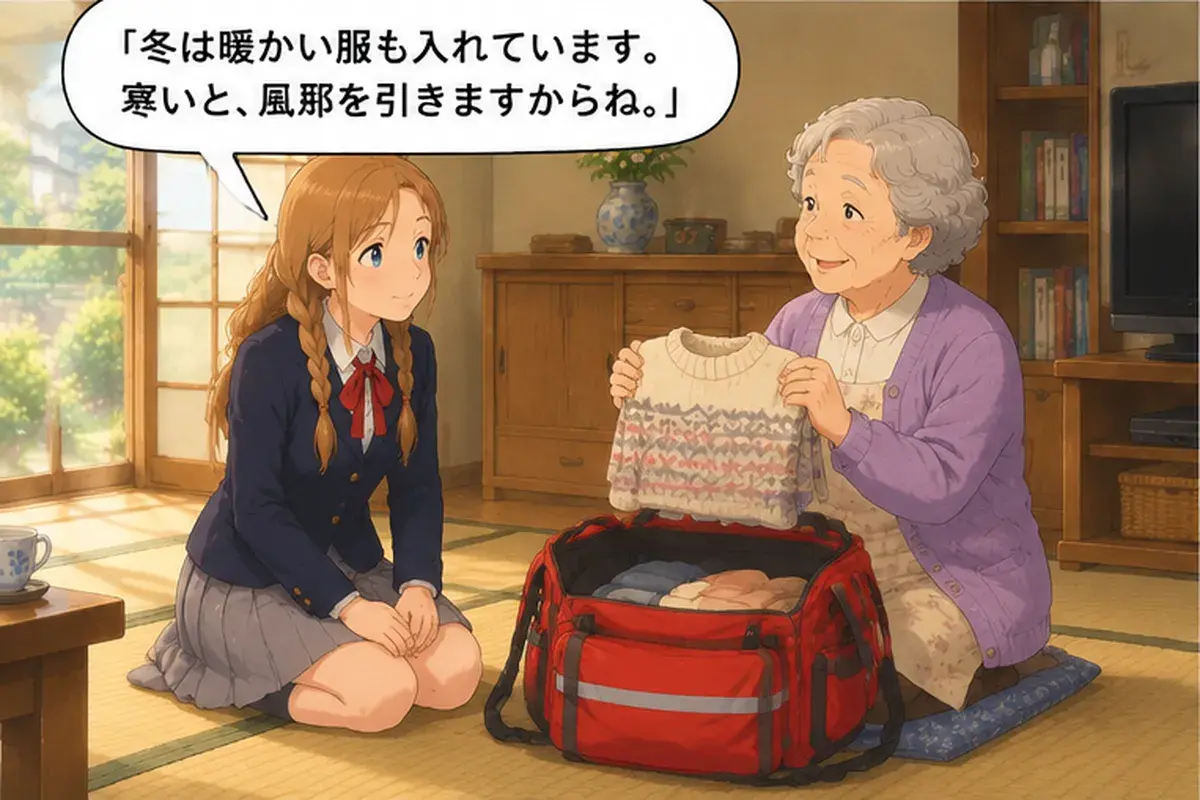
「冬は暖かい服も入れています。寒いと、風邪を引きますからね。」
"In winter I put warm clothes in it too. If you get cold, you catch a cold, you know."
- ソーニャ
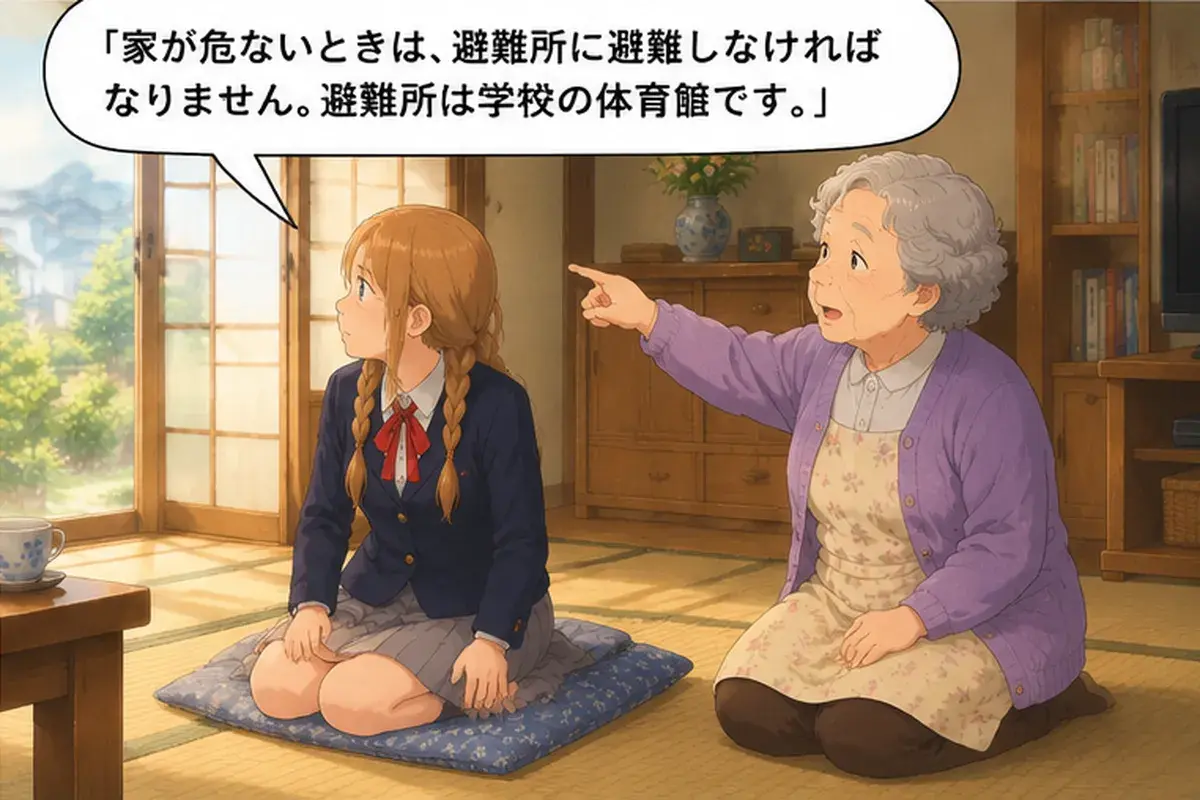
「家が危ないときは、避難所に避難しなければなりません。避難所は学校の体育館です。」
"When your house is dangerous, you have to evacuate to an evacuation shelter. The evacuation shelter is the school gym."
- ソーニャ
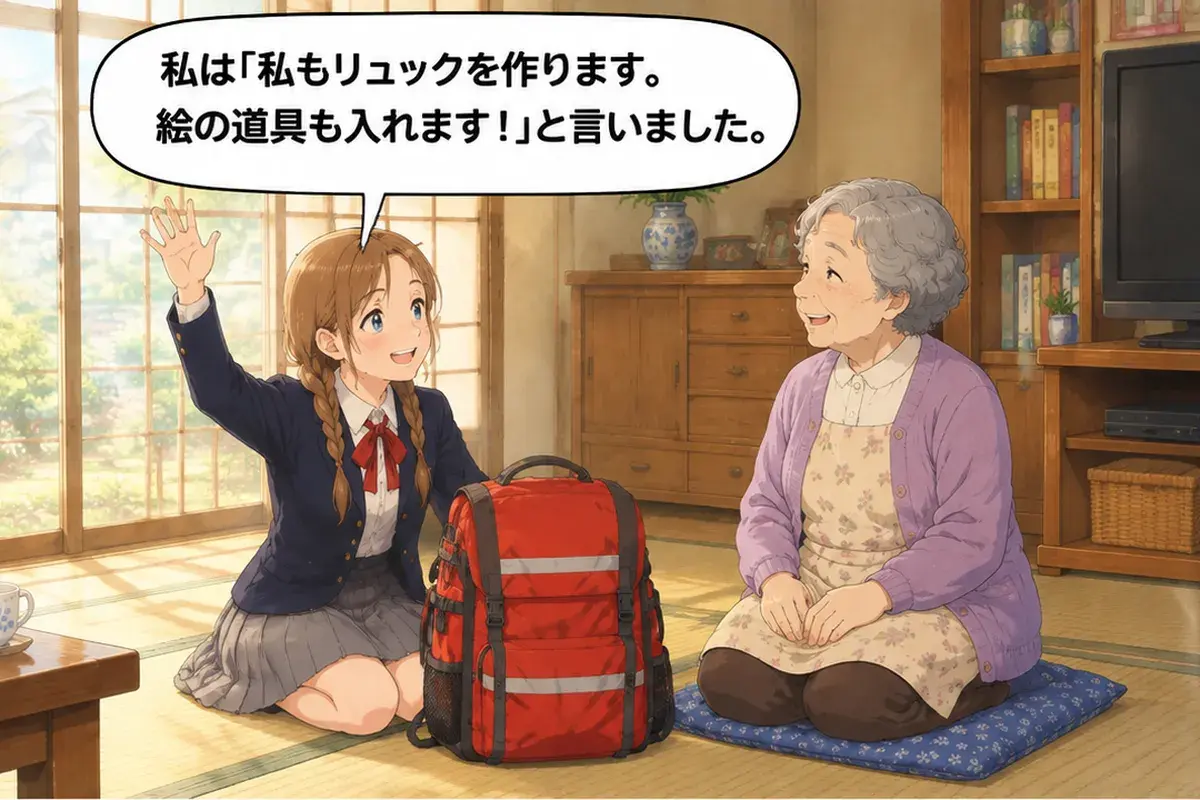
私は「私もリュックを作ります。絵の道具も入れます!」と言いました。
I said, "I'll make a backpack too. I'll put my art tools in it too!"
- ソーニャ
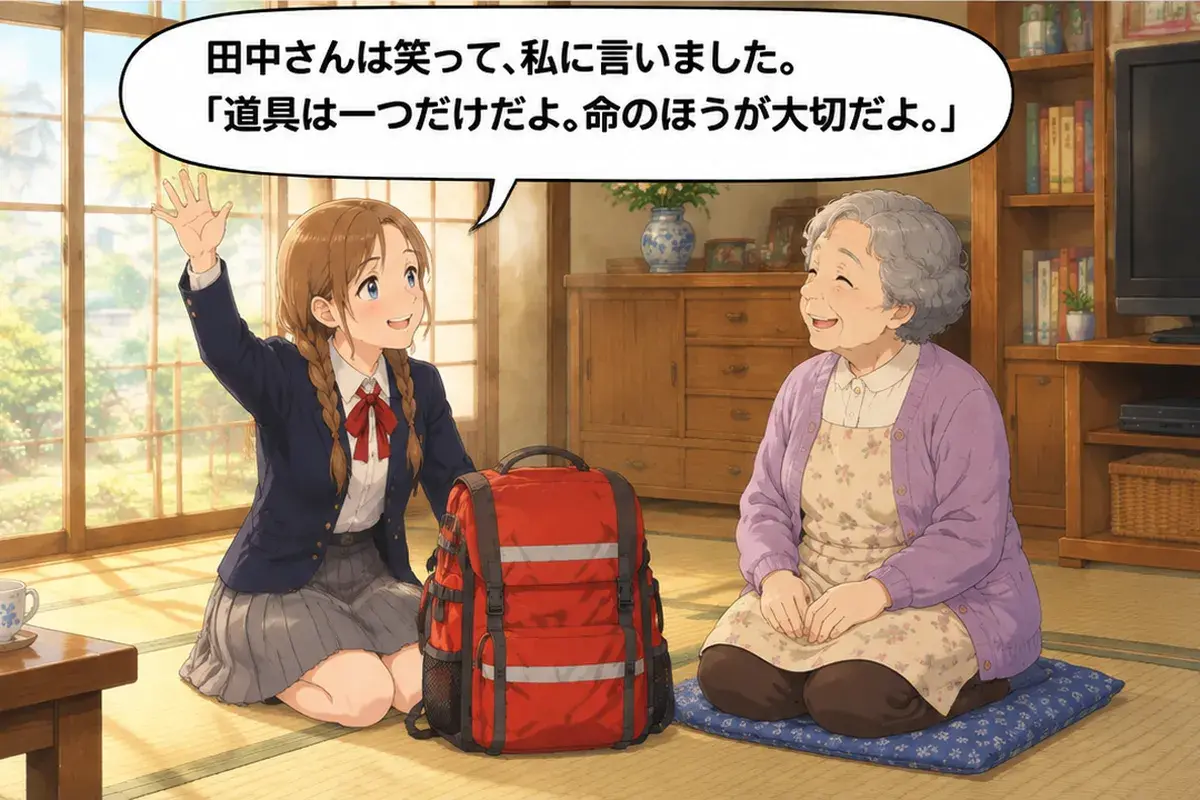
田中さんは笑って、私に言いました。「道具は一つだけだよ。命のほうが大切だよ。」
Tanaka-san laughed and said to me, "Just one art tool. Your life is more important." (casual)
Grammar for this text
「ください」 は 変 です— Dad told his family入って ください, as if they were strangers. At home people say it more simply:入って!. Sonya laughs about it: at home, family members usually talk to each other in casual speech (unit 5).一分 ぐらい—一分is readいっぷん: the sounds of the number and分change when they join:いち+ふん→いっぷん.ぐらいmeans "about".震度 は 四—震度is Japan's scale from 0 to 7. It shows how strongly the ground shook right where you are, not the magnitude. There was no津波warning:出ませんでした.靴 を 履かなければ なりません— "We have to put our shoes on" (〜なければ なりません, unit 17). The reason is the broken glass on the floor.まだ 出て きませんでした—出て くるmeans "come out (to where I am)": the cat still hadn't come out from under the desk.地震 が 起こる と、 電気 が 止まります—〜と(unit 17): "when an earthquake happens, the electricity goes out". The same pattern works after an i-adjective:寒い と、 風邪 を 引きます. Here風邪 を 引くmeans "catch a cold", not "pull".避難所 に 避難しなければ なりません—避難所is the place and避難するis the action: "evacuate to an evacuation shelter".道具 は 一つ だけ だ よ— Tanaka-san talks casually to Sonya (unit 5), but politely to her mother.
Words and grammar of the unit: Understand what to do in an earthquake.
Learn the words from the texts with flashcards
In the app, you can tap any word in a text to see its translation, forms and examples, and new words stick with flashcards. 15 minutes a day.
Start for freeEverything is open for free. No card needed to sign up.