
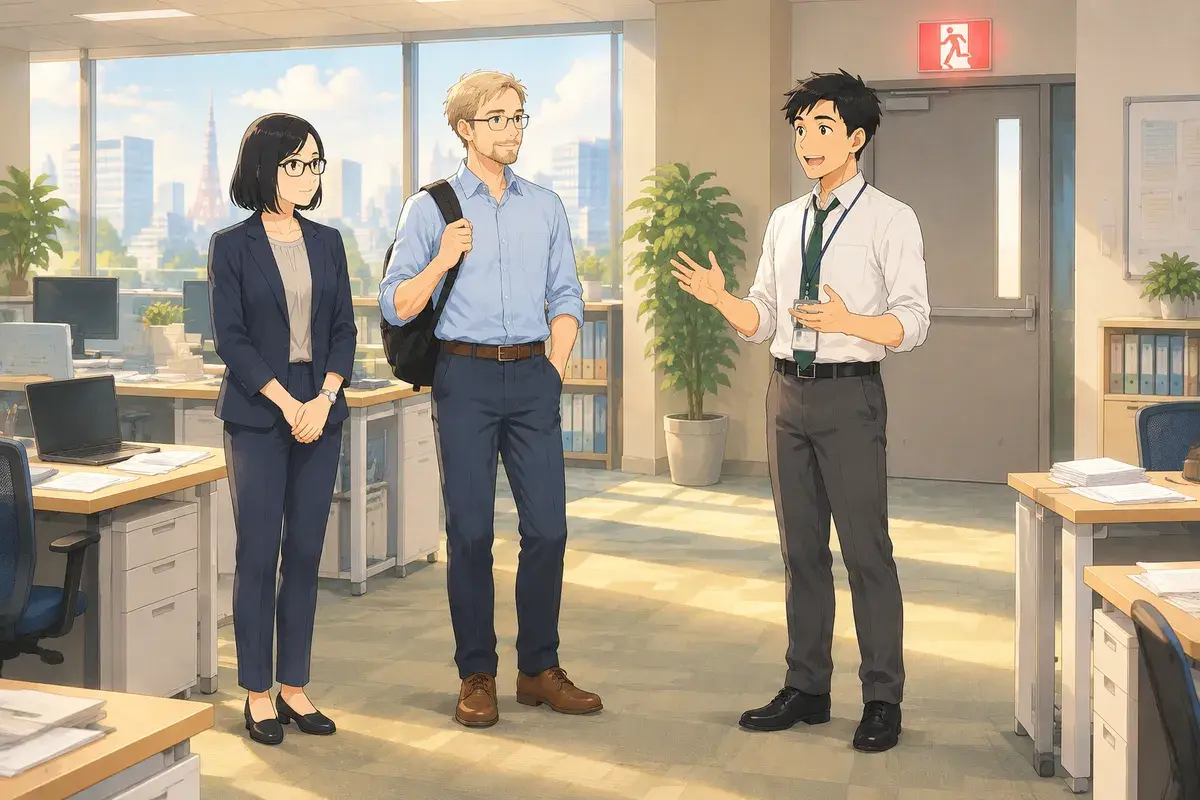
Japanese dialogue with translation · A2 · 14 lines
非常口はあのドアです The emergency exit is that door
Comic · 11 panels
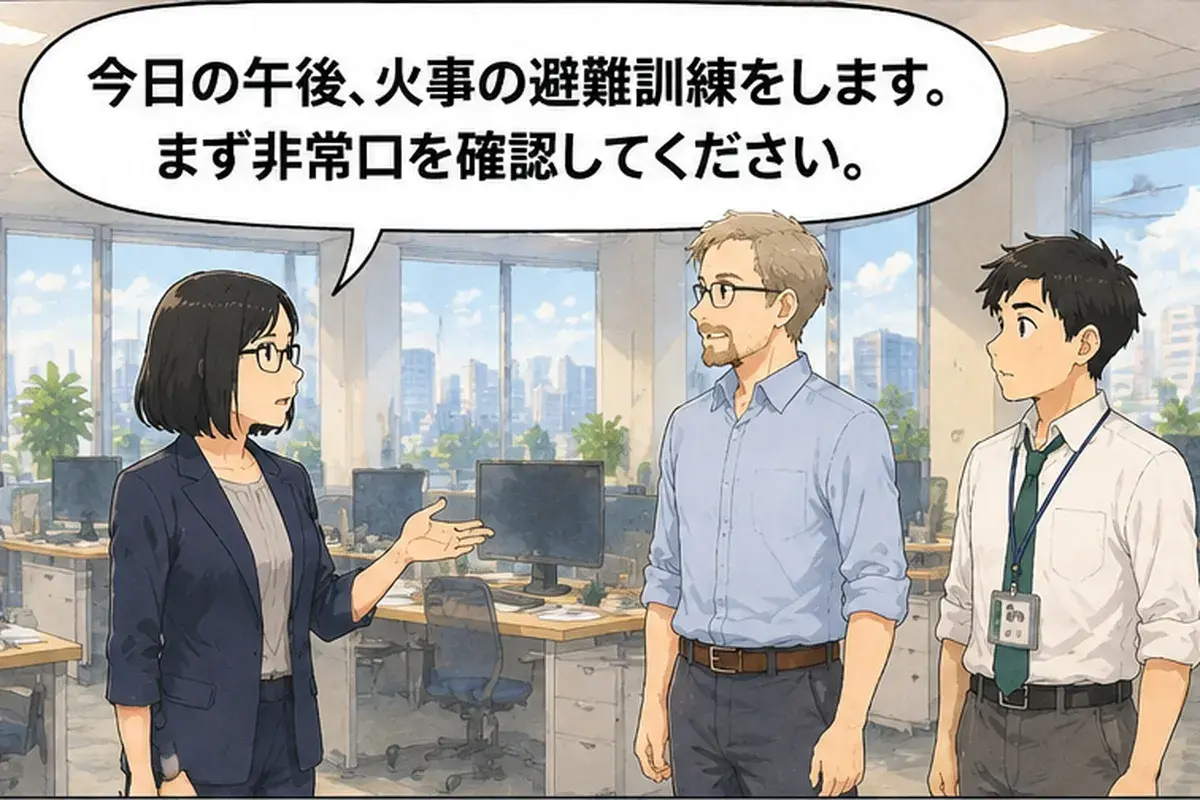
- 木村
今日の午後、火事の避難訓練をします。まず非常口を確認してください。
This afternoon we're having a fire evacuation drill. First, please check where the emergency exit is.
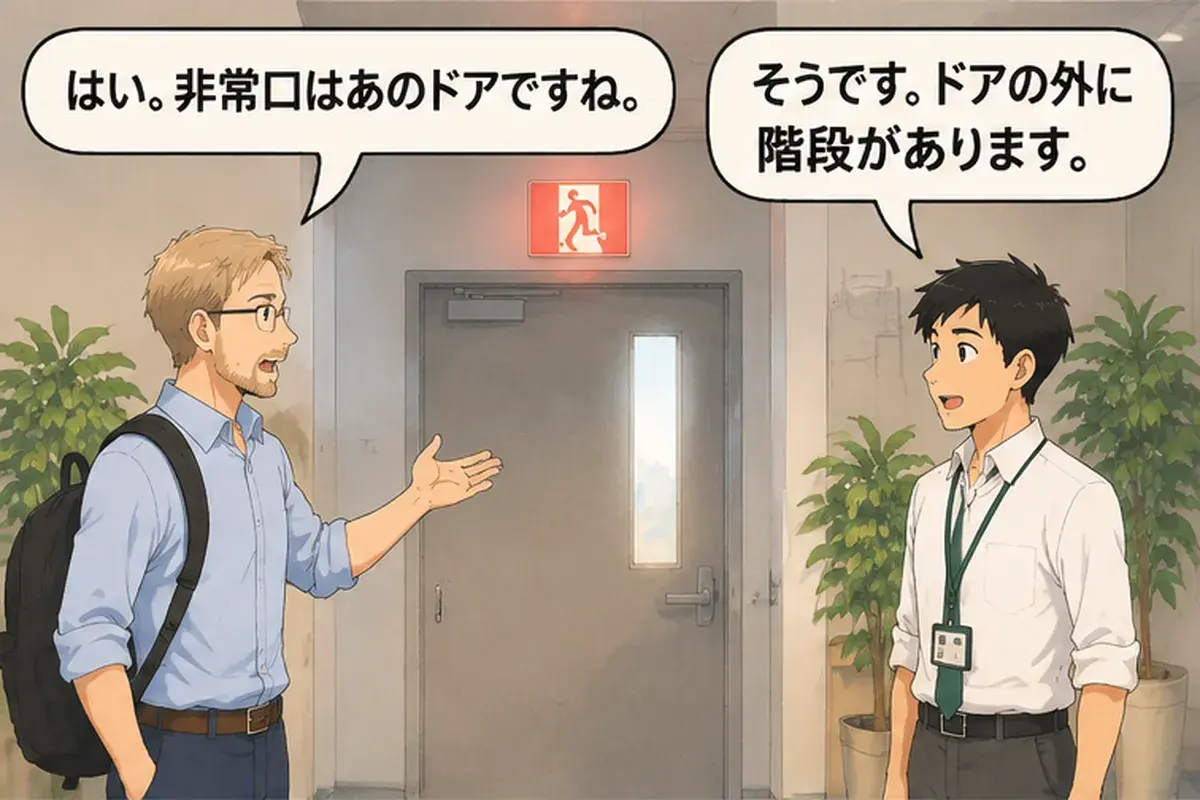
- マルク
はい。非常口はあのドアですね。
Yes. The emergency exit is that door, right?
- けん
そうです。ドアの外に階段があります。
That's right. There are stairs outside the door.
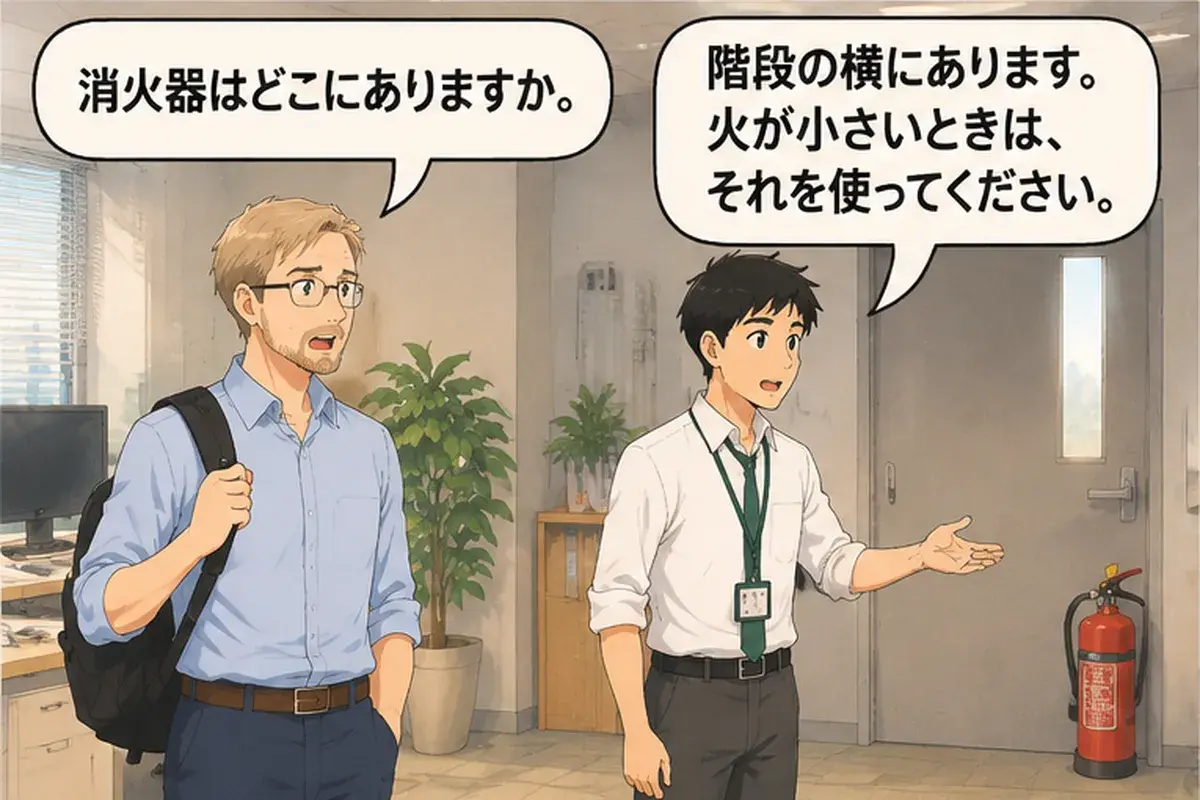
- マルク
消火器はどこにありますか。
Where is the fire extinguisher?
- けん
階段の横にあります。火が小さいときは、それを使ってください。
It's next to the stairs. If the fire is small, please use it.
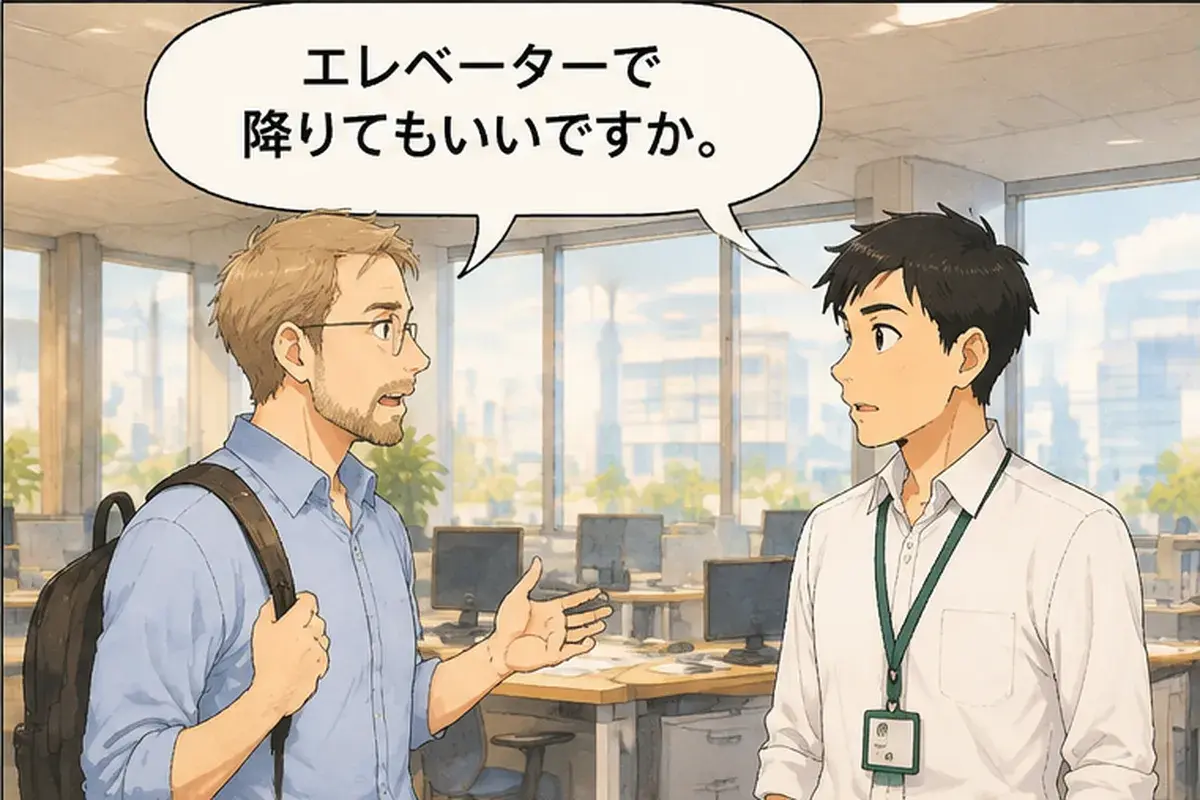
- マルク
エレベーターで降りてもいいですか。
Is it OK to take the elevator down?
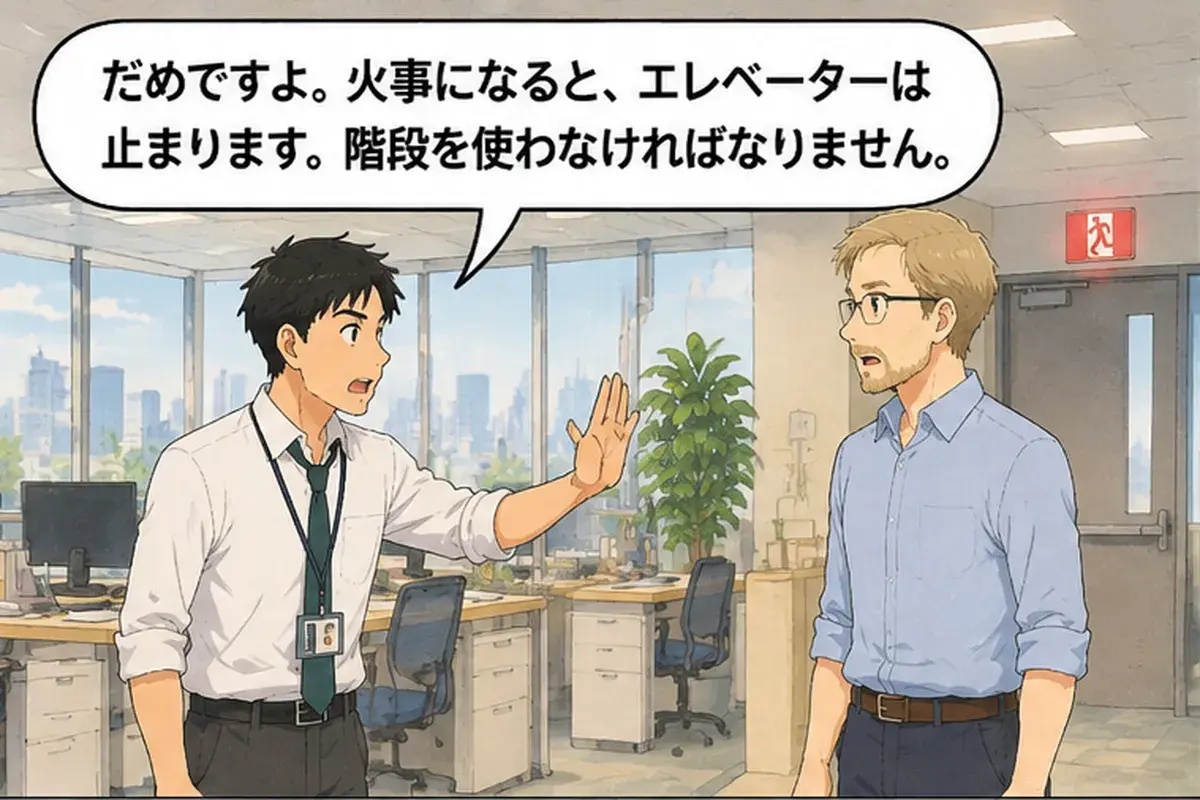
- けん
だめですよ。火事になると、エレベーターは止まります。階段を使わなければなりません。
No, you can't. If there's a fire, the elevator stops. You have to use the stairs.
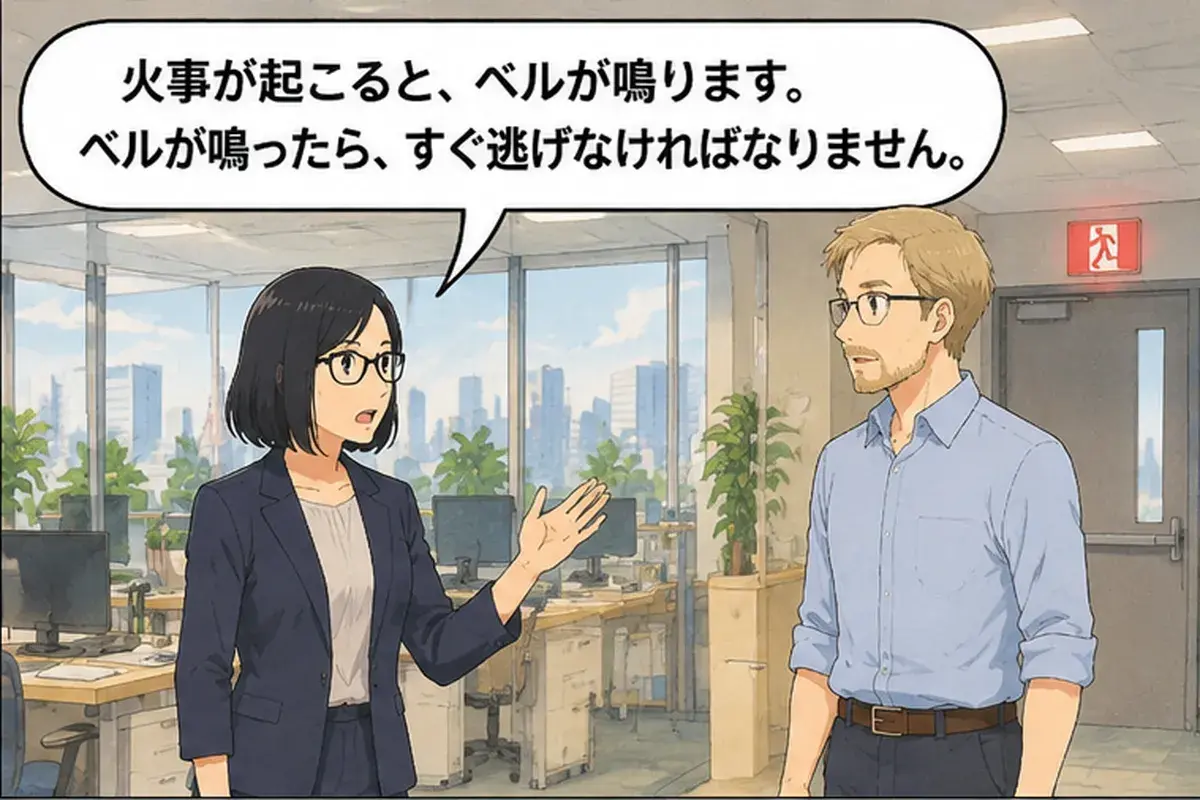
- 木村
火事が起こると、ベルが鳴ります。ベルが鳴ったら、すぐ逃げなければなりません。
When a fire starts, the bell rings. When the bell rings, you have to get out right away.
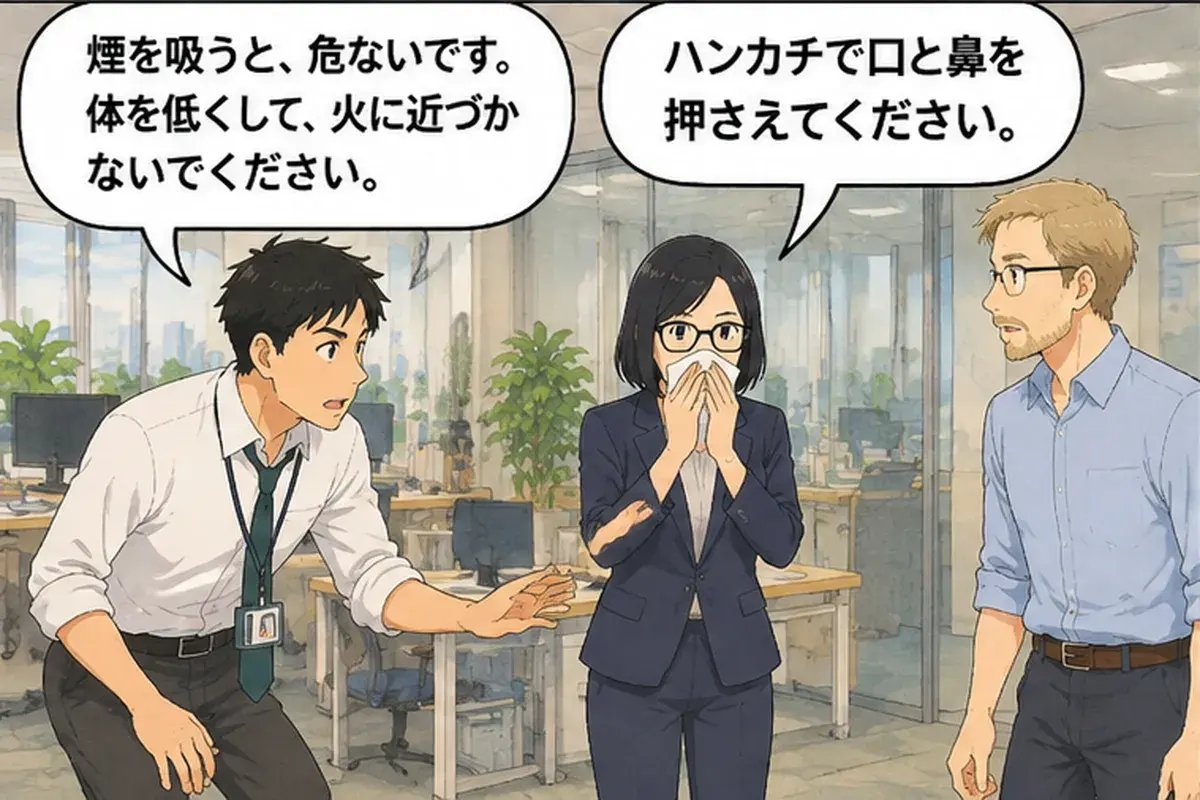
- けん
煙を吸うと、危ないです。体を低くして、火に近づかないでください。
Breathing in smoke is dangerous. Keep your body low and stay away from the fire.
- 木村
ハンカチで口と鼻を押さえてください。
Please cover your mouth and nose with a handkerchief.
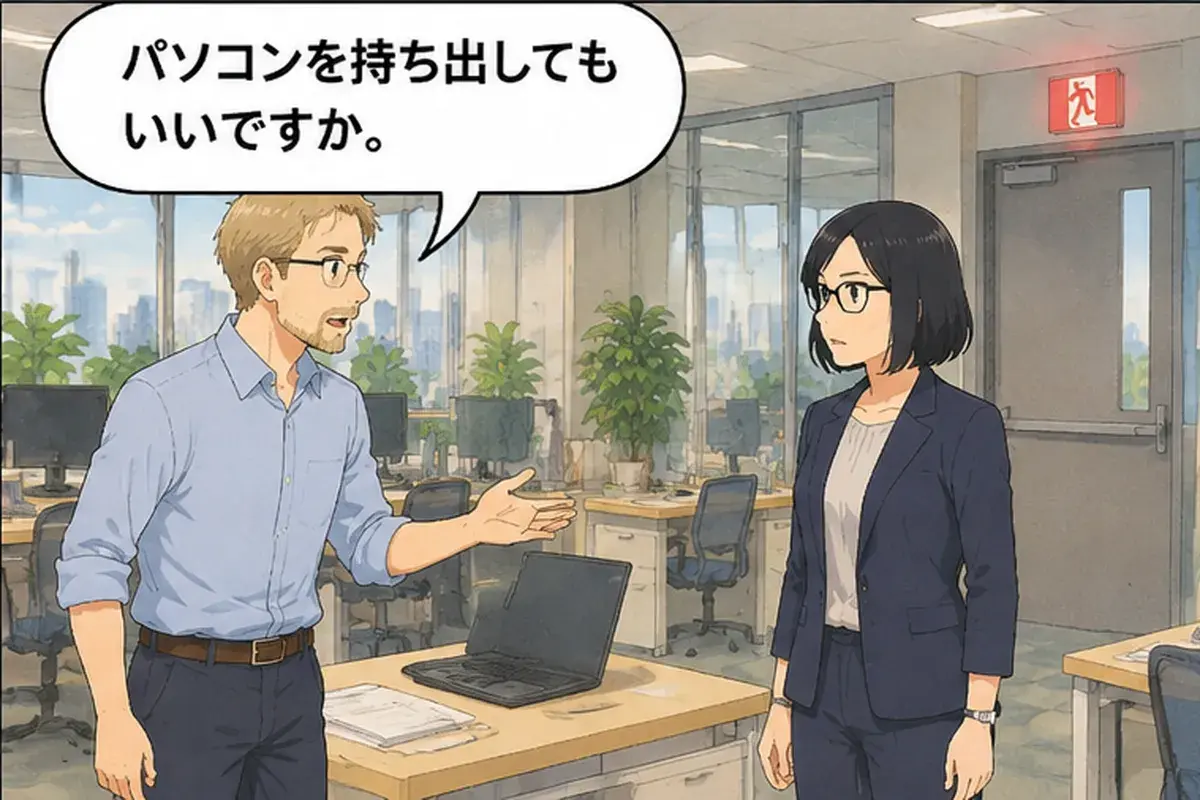
- マルク
パソコンを持ち出してもいいですか。
Is it OK to take my computer with me?
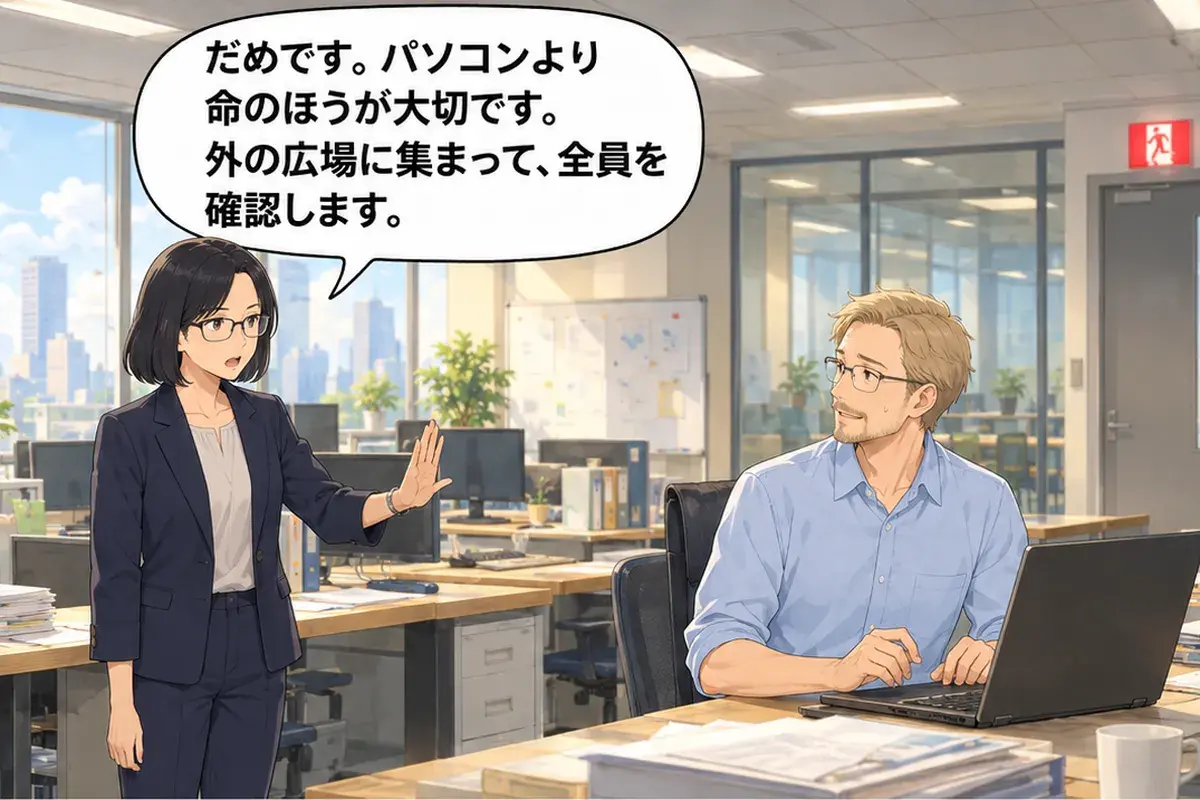
- 木村
だめです。パソコンより命のほうが大切です。外の広場に集まって、全員を確認します。
No. Your life is more important than your computer. We'll gather in the square outside and check that everyone is there.
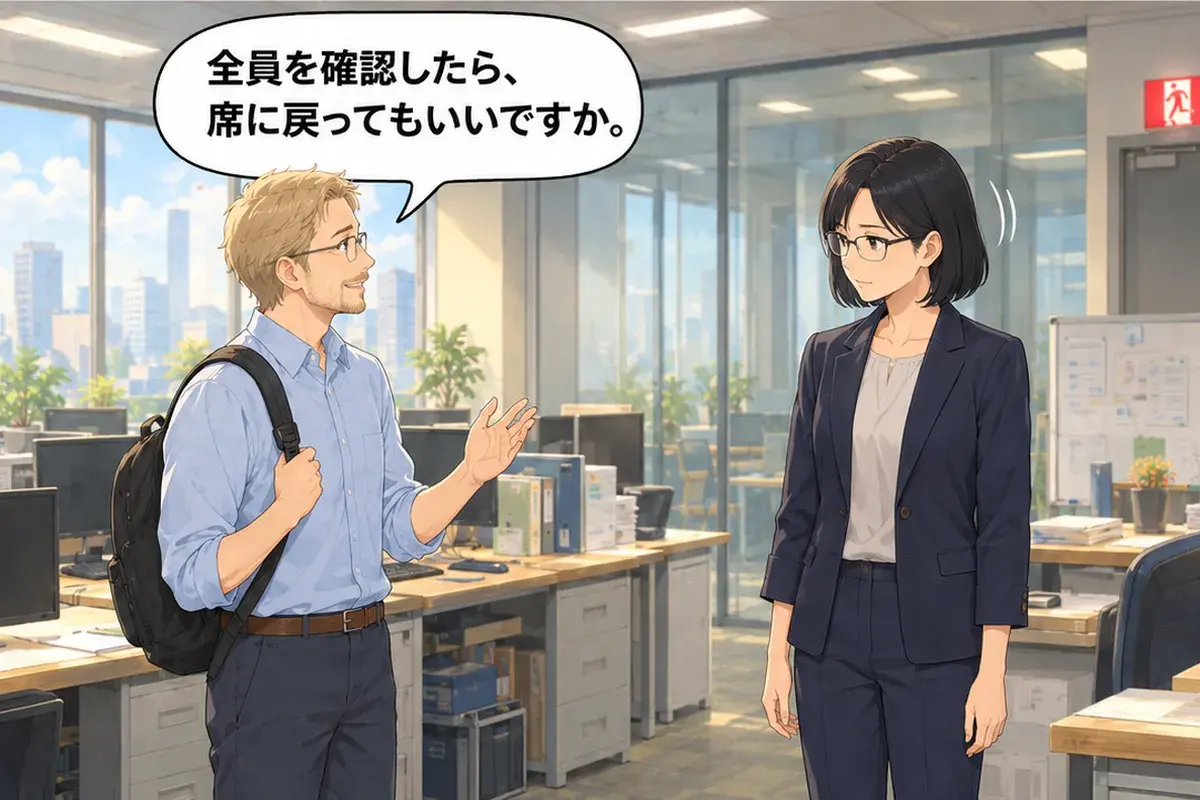
- マルク
全員を確認したら、席に戻ってもいいですか。
After everyone has been checked, can we go back to our seats?
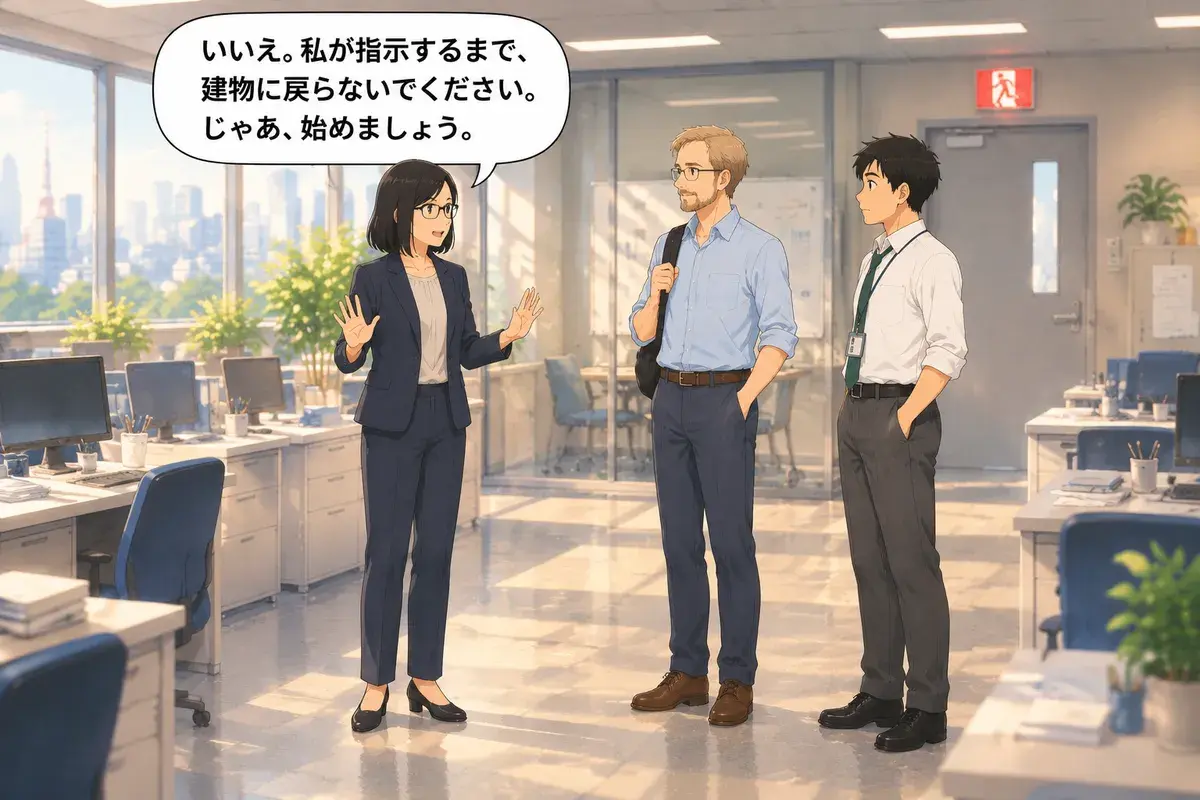
- 木村
いいえ。私が指示するまで、建物に戻らないでください。じゃあ、始めましょう。
No. Don't go back into the building until I give instructions. All right, let's begin.
Grammar for this text
火事 に なる と、 エレベーター は 止まります—〜と(unit 17): "if a fire starts, the elevator stops". This always happens, so it'sと.火事 に なるmeans "a fire breaks out".階段 を 使わなければ なりません— "You have to use the stairs":〜なければ なりません(unit 17) is an obligation, with no choice.火事 が 起こる と、 ベル が 鳴ります— The sameと. You can't put a request or a decision afterと, so the next sentence isベル が 鳴ったら、 すぐ 逃げなければ なりません, with〜たらand "have to".煙 を 吸う と、 危ない です— "Breathing in smoke is dangerous."吸うmeans "breathe in".体 を 低く して—低いbecomes低く, thenして: "make your body low", that is, get down low (unit 14).持ち出して も いい です か— Asking permission (〜て も いい です か, A1).持ち出すmeans "take out with you".パソコン より 命 の ほう が 大切 です— A comparison (unit 2): "life is more important".私 が 指示する まで、 建物 に 戻らないで ください—〜までmeans "until": you may go back only when told.指示するmeans "give instructions".エレベーターmeans "elevator".
Words and grammar of the unit: Understand what to do in an earthquake.
Learn the words from the texts with flashcards
In the app, you can tap any word in a text to see its translation, forms and examples, and new words stick with flashcards. 15 minutes a day.
Start for freeEverything is open for free. No card needed to sign up.