
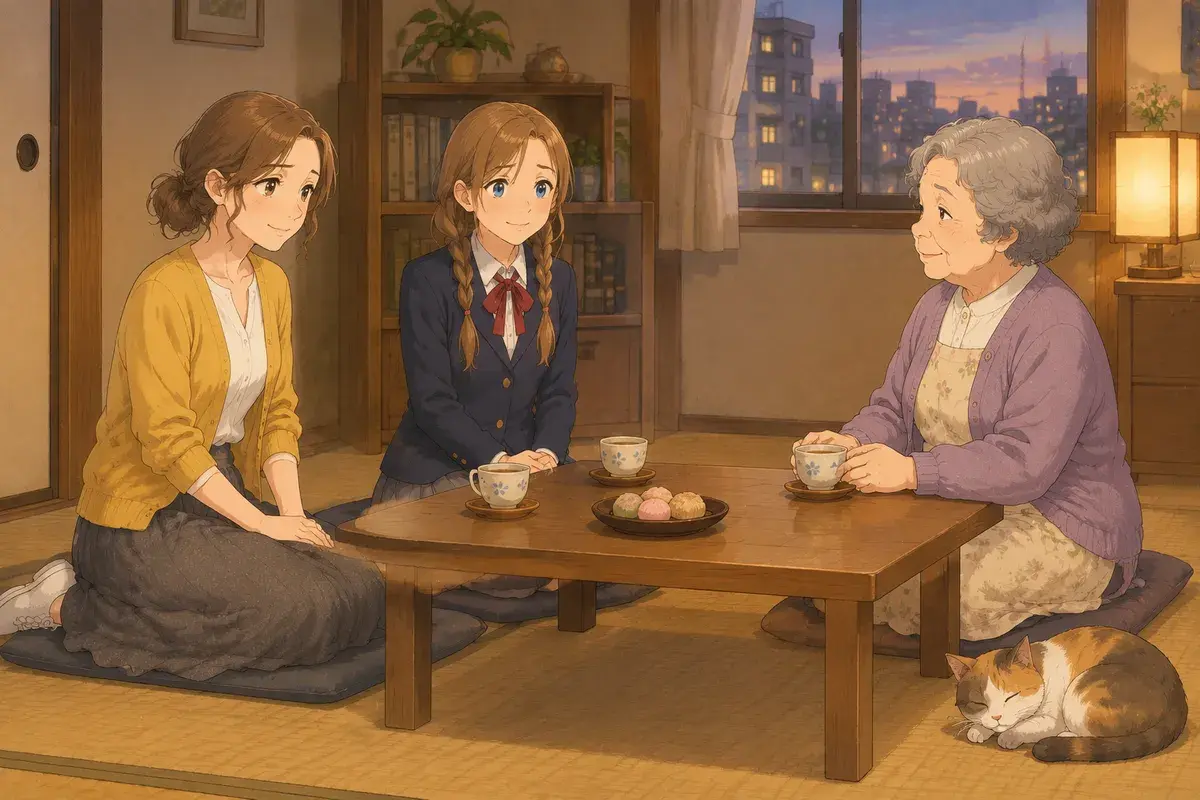
Japanese dialogue with translation · A2 · 16 lines
茶碗を割ってしまいました I broke a teacup
Comic · 13 panels
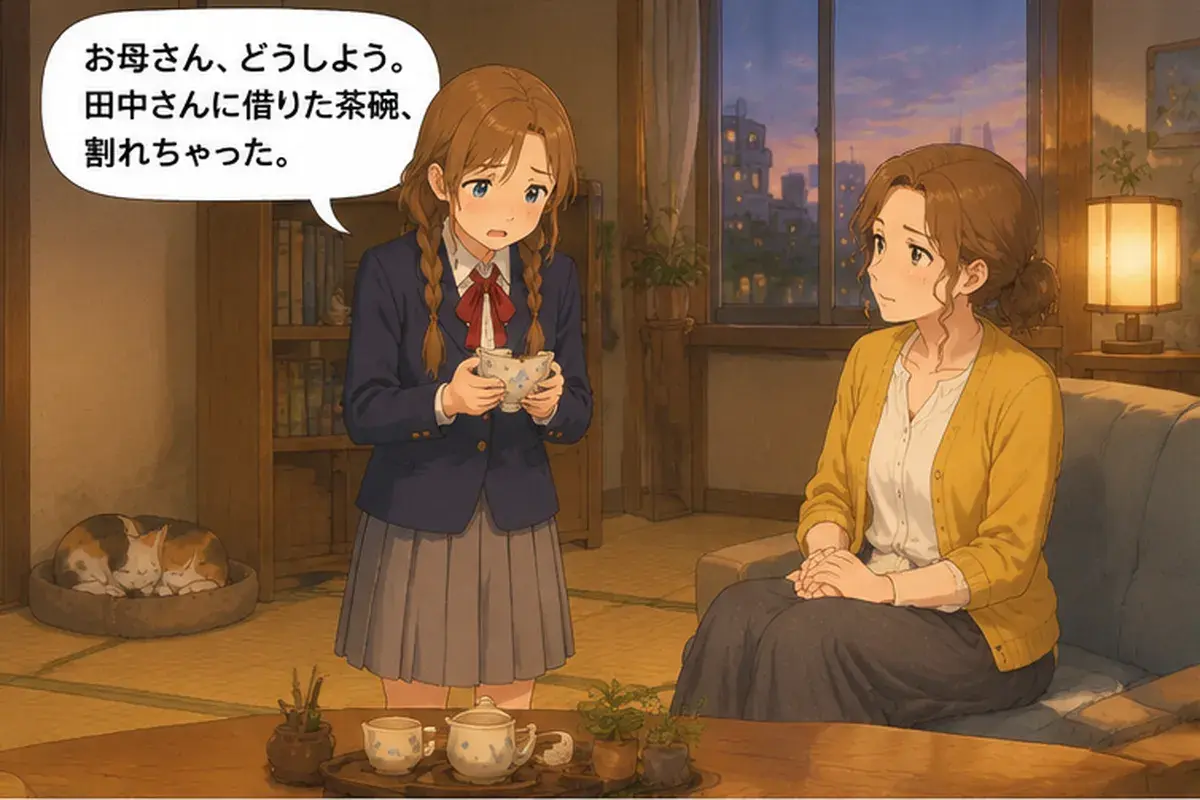
- ソーニャ
お母さん、どうしよう。田中さんに借りた茶碗、割れちゃった。
Mom, what do I do? The teacup I borrowed from Tanaka-san broke! (casual)
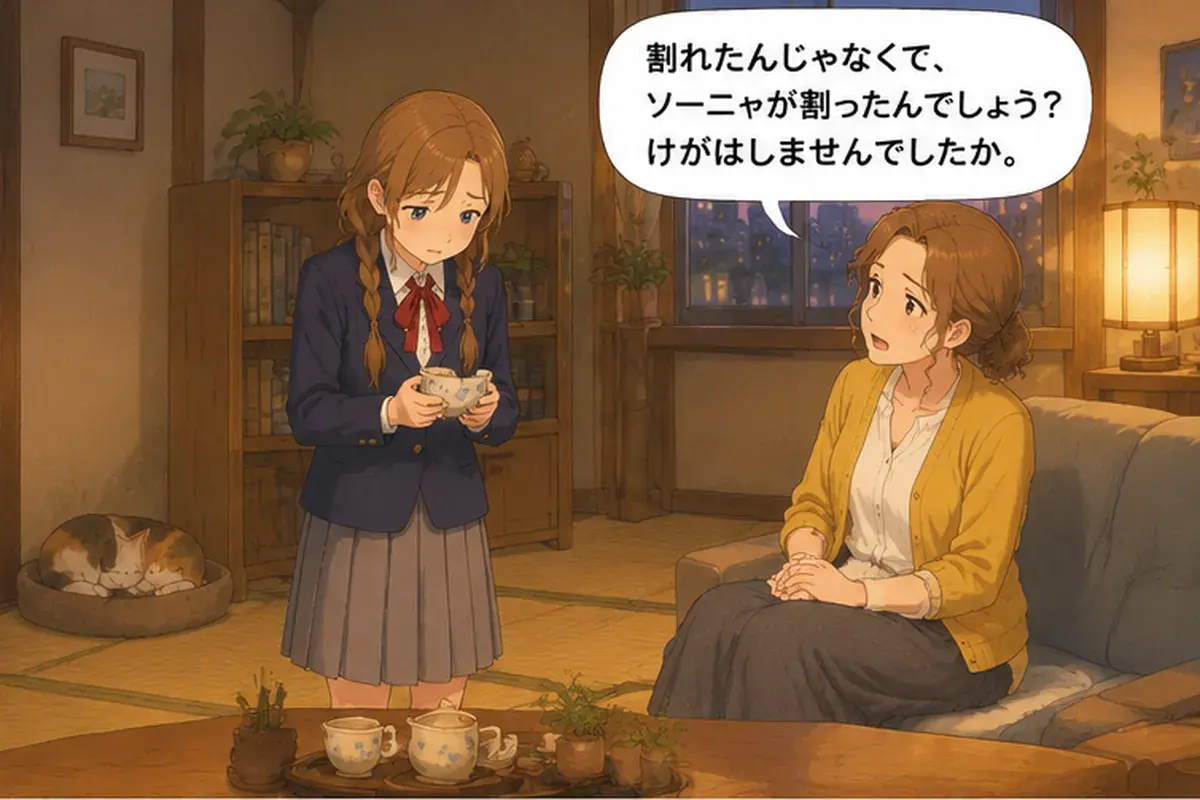
- アンナ
割れたんじゃなくて、ソーニャが割ったんでしょう?けがはしませんでしたか。
It's not that it broke. You broke it, didn't you, Sonya? Did you get hurt?
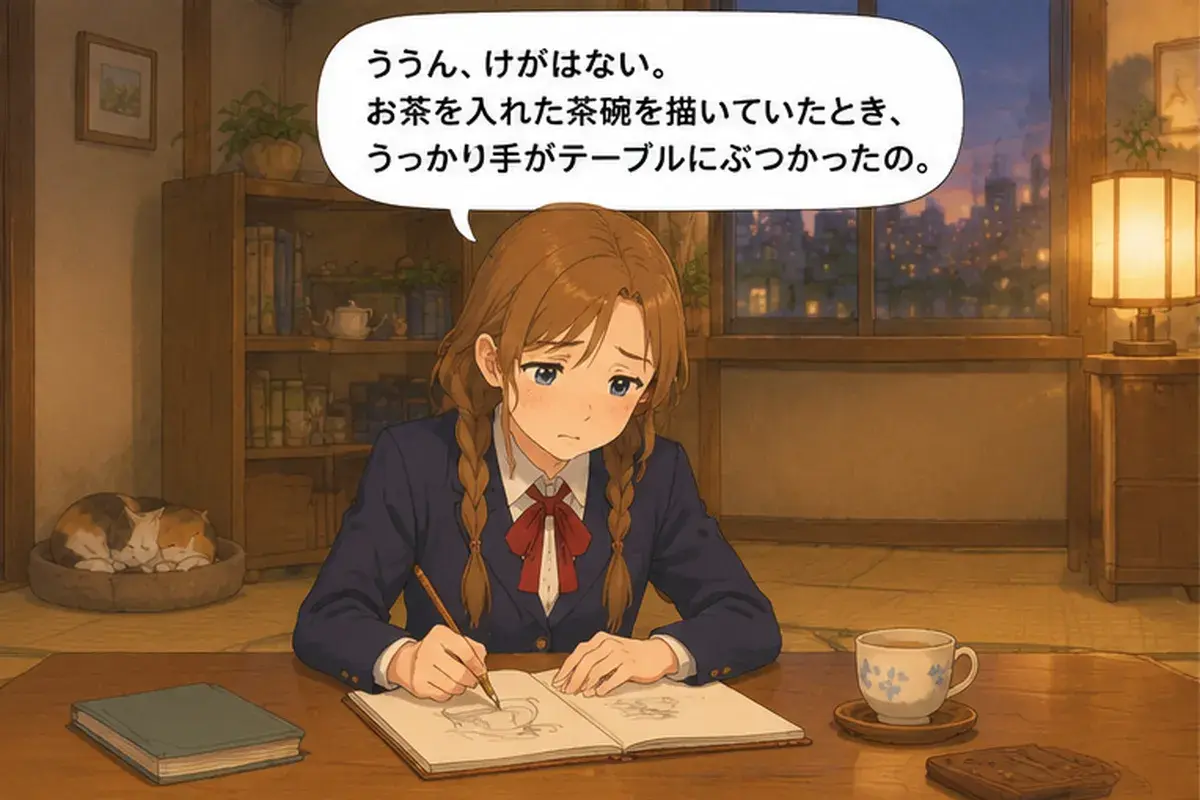
- ソーニャ
ううん、けがはない。お茶を入れた茶碗を描いていたとき、うっかり手がテーブルにぶつかったの。
No, I'm not hurt. I was drawing the teacup I'd poured tea in, and my hand accidentally hit the table. (casual)
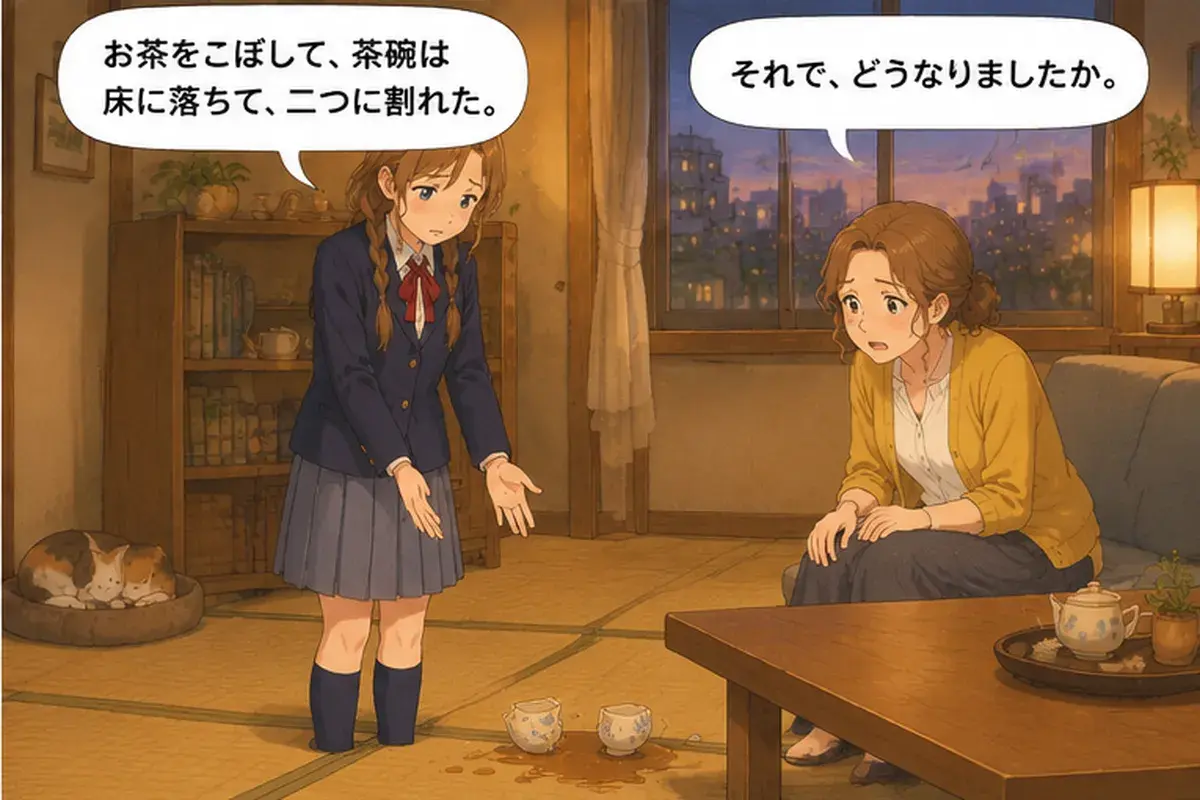
- アンナ
それで、どうなりましたか。
So what happened?
- ソーニャ
お茶をこぼして、茶碗は床に落ちて、二つに割れた。
The tea spilled, the teacup fell on the floor, and it broke in two. (casual)
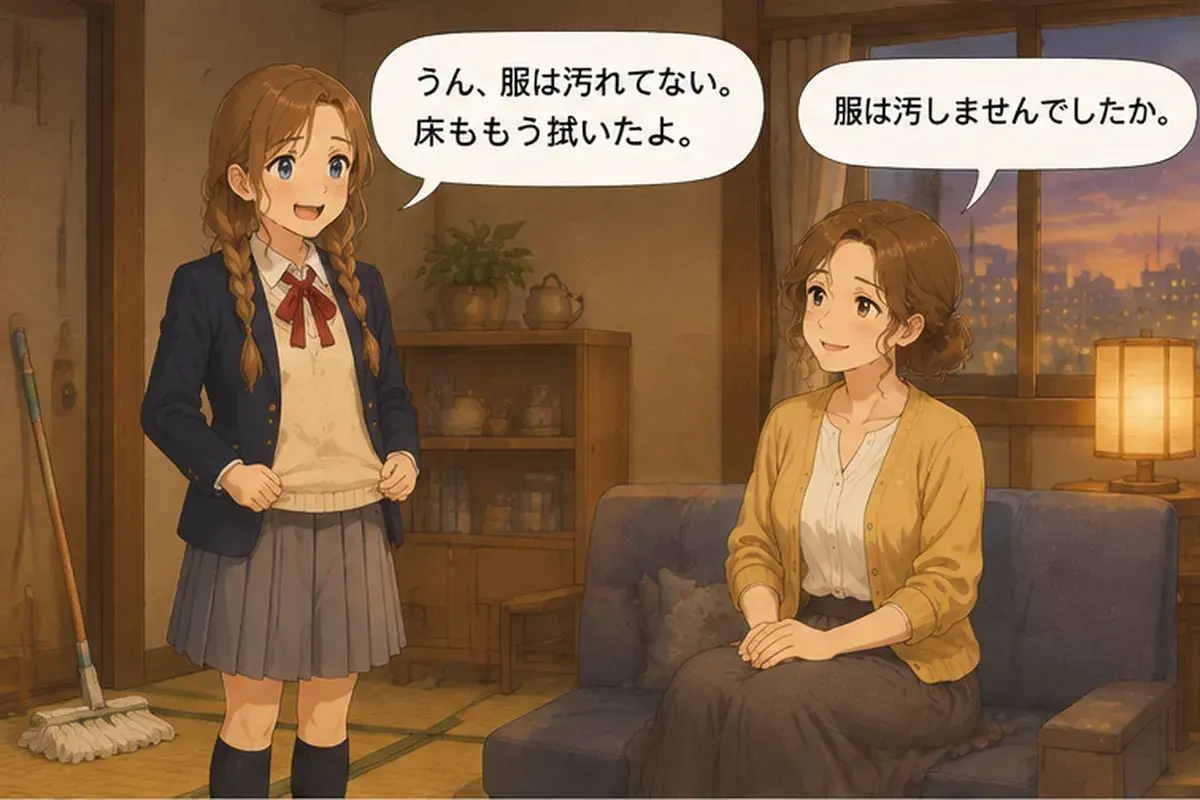
- アンナ
服は汚しませんでしたか。
Didn't you get your clothes dirty?
- ソーニャ
うん、服は汚れてない。床ももう拭いたよ。
Yeah, my clothes aren't dirty. And I already wiped the floor, too. (casual)
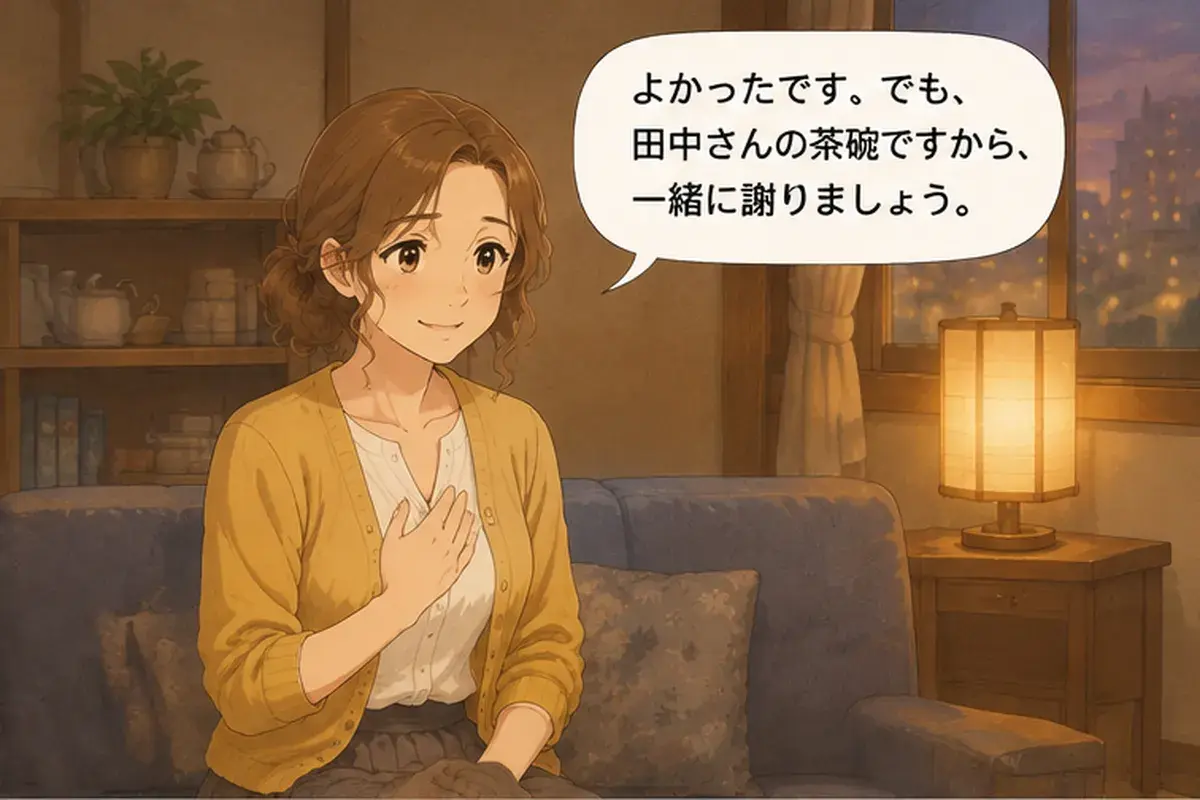
- アンナ
よかったです。でも、田中さんの茶碗ですから、一緒に謝りましょう。
That's good. But it's Tanaka-san's teacup, so let's apologize together.
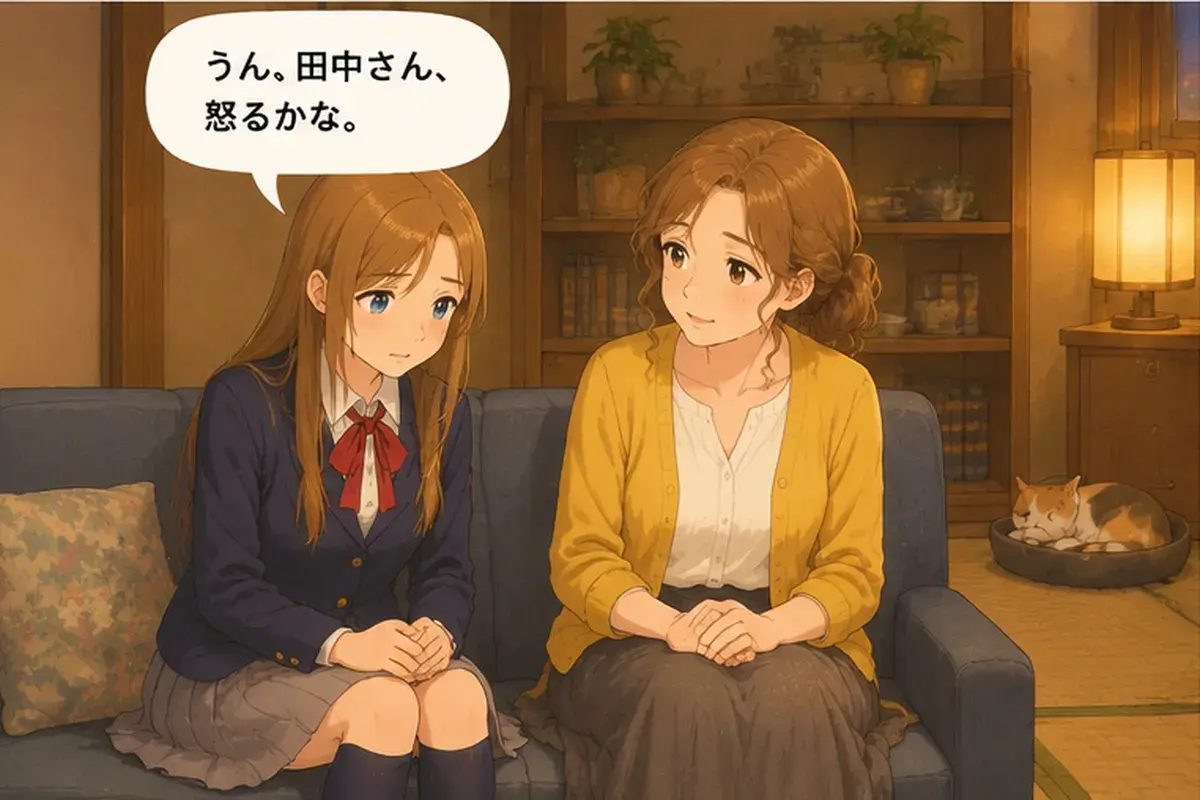
- ソーニャ
うん。田中さん、怒るかな。
Okay. I wonder if Tanaka-san will be angry. (casual)
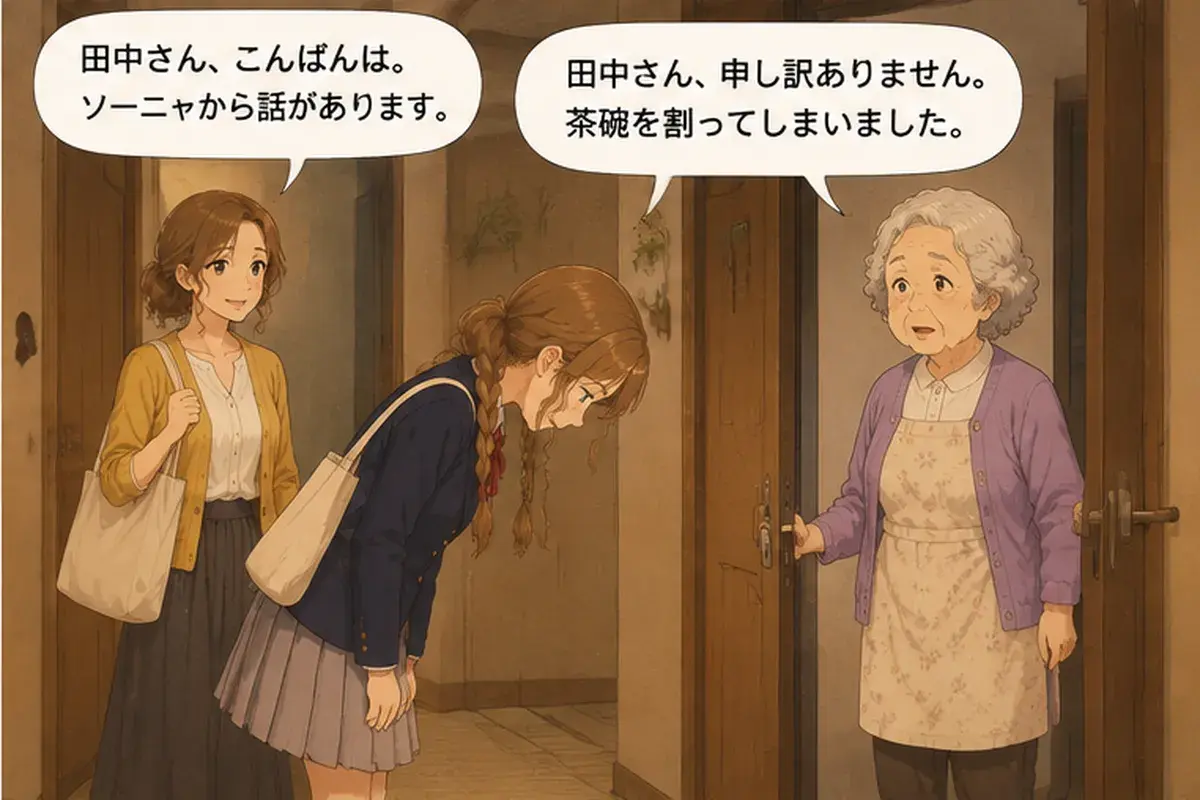
- アンナ
田中さん、こんばんは。ソーニャから話があります。
Tanaka-san, good evening. Sonya has something to tell you.
- ソーニャ
田中さん、申し訳ありません。茶碗を割ってしまいました。
Tanaka-san, I'm very sorry. I broke the teacup.
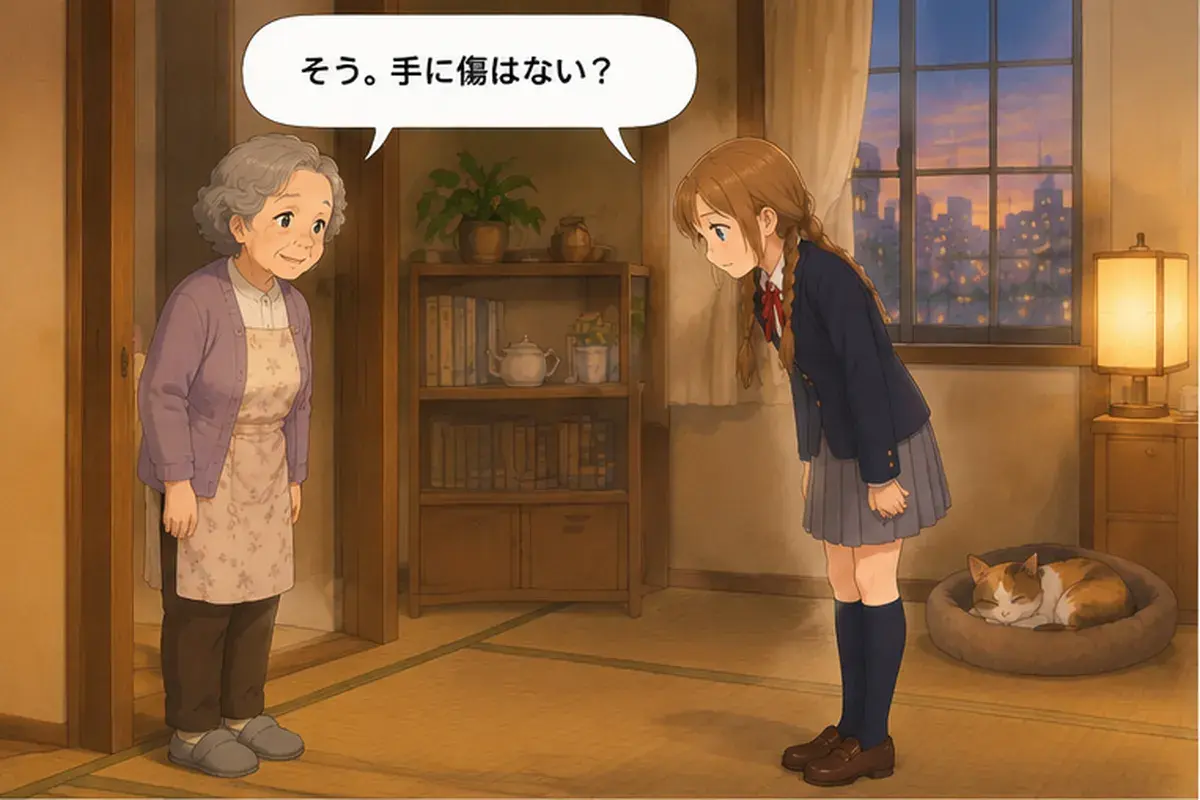
- 田中
そう。手に傷はない?
I see. Do you have any cuts on your hand? (casual)
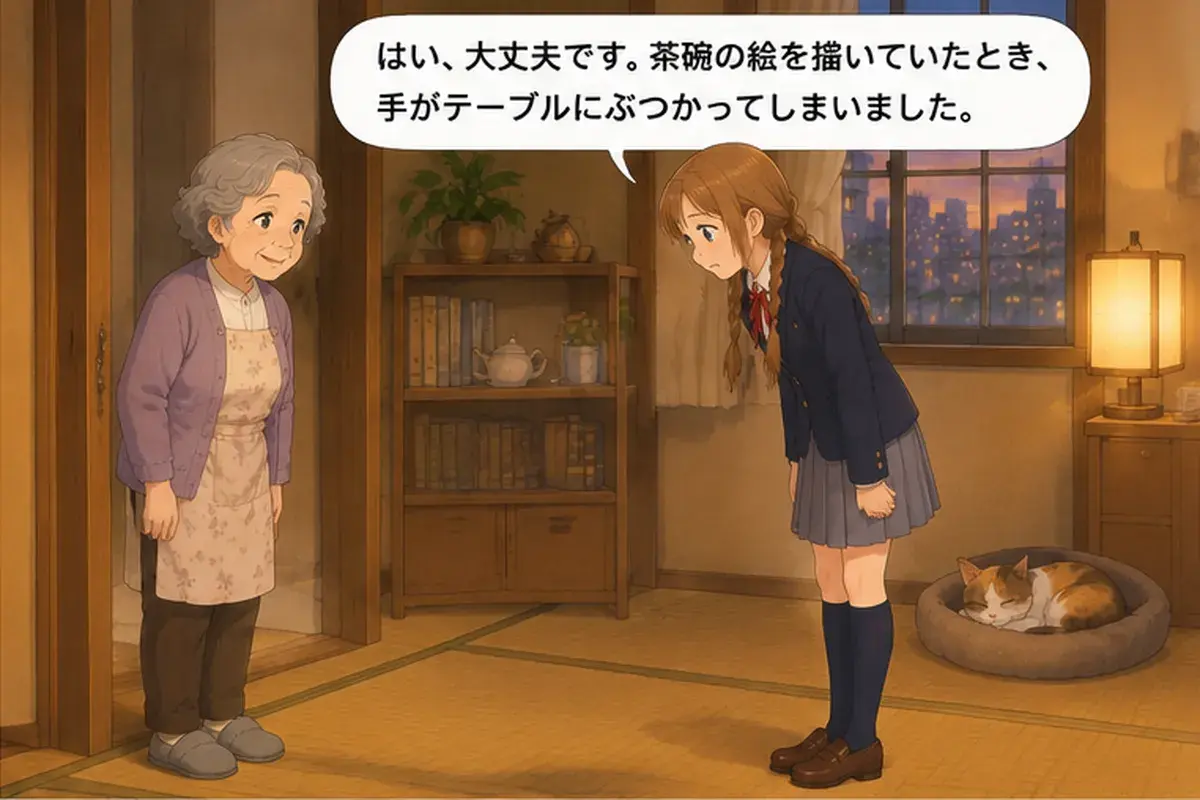
- ソーニャ
はい、大丈夫です。茶碗の絵を描いていたとき、手がテーブルにぶつかってしまいました。
Yes, I'm fine. I was drawing the teacup, and my hand accidentally hit the table.
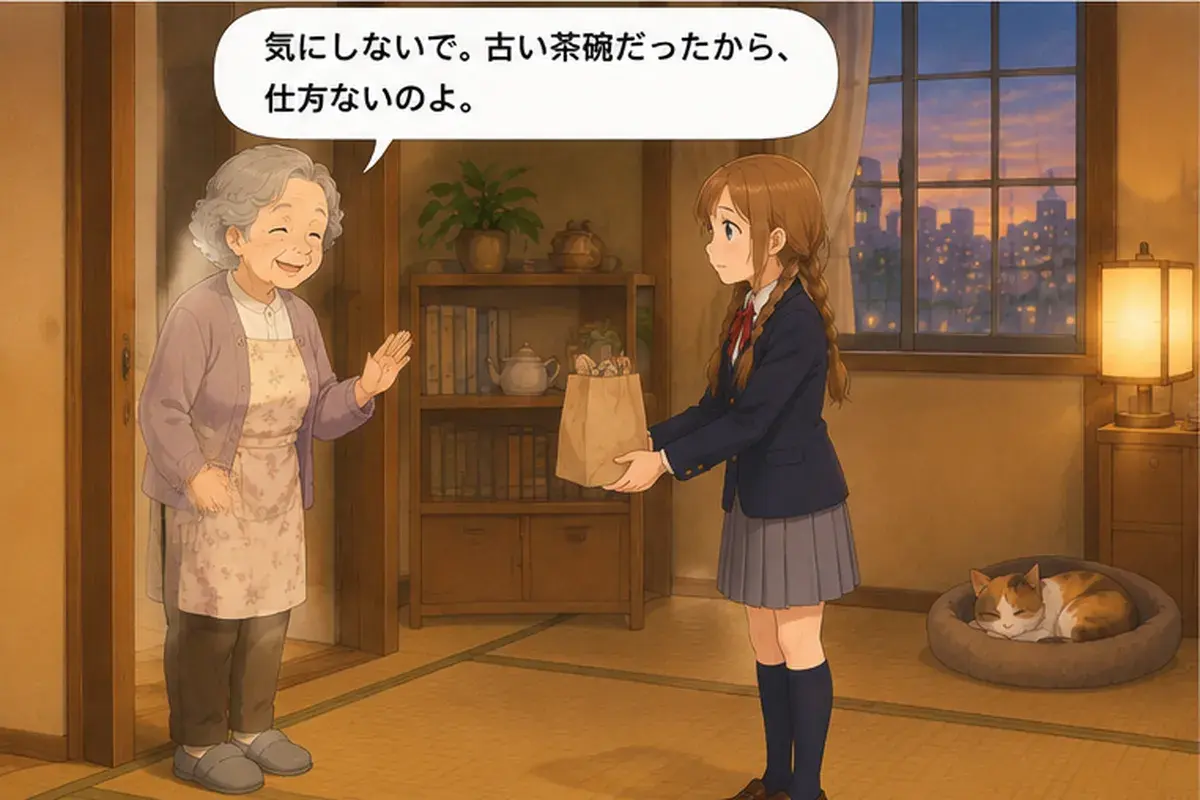
- 田中
気にしないで。古い茶碗だったから、仕方ないのよ。
Don't worry about it. It was an old teacup, so it can't be helped. (casual)
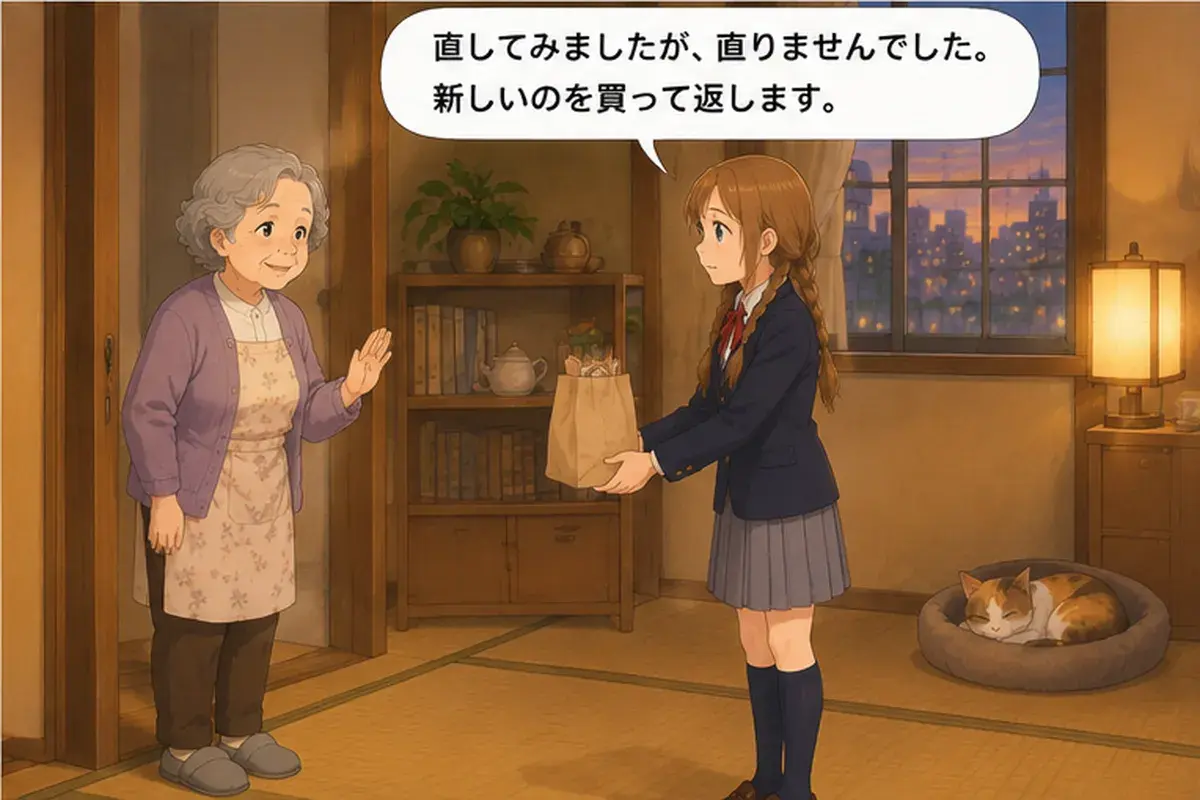
- ソーニャ
直してみましたが、直りませんでした。新しいのを買って返します。
I tried to fix it, but it didn't work. I'll buy a new one and give it back.
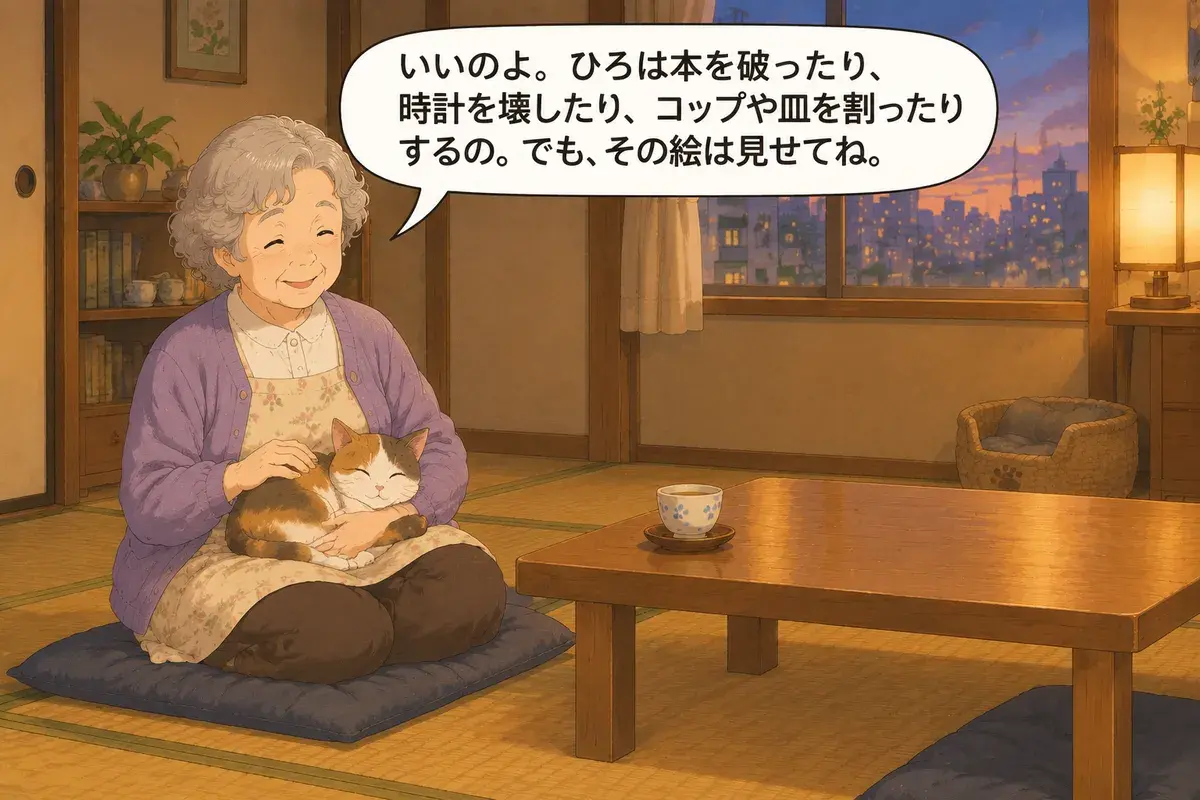
- 田中
いいのよ。ひろは本を破ったり、時計を壊したり、コップや皿を割ったりするの。でも、その絵は見せてね。
You don't need to. Hiro tears books, breaks clocks, breaks cups and plates... But do show me that picture, okay? (casual)
Grammar for this text
割れ ちゃった— It broke! (casual).ちゃったis the short, casual form ofて しまった(see the unit grammar). You can say it to your mom, but not to an adult you don't know well. And 割れる means "it broke by itself," as if nobody were to blame.割れた ん じゃ なくて、 ソーニャ が 割った ん でしょう?— It's not that it broke. You broke it, didn't you, Sonya? Mom corrects her: 割る means "someone broke it," so the person to blame is named. Notice that Mom speaks politely to her daughter (でしょう, ません): that's how the parents talk in our story.服 は 汚しませんでした か— Didn't you get your clothes dirty? 汚す means "to make something dirty," and a person does it. Sonya answers with a different verb:服 は 汚れてない— my clothes aren't dirty (casual). 汚れる means "to get dirty" by itself, and 汚れてない is the same as 汚れて いない: "not dirty."田中 さん、 怒る かな— I wonder if Tanaka-san will be angry. (casual). かな is a question to yourself: "I wonder if..."申し訳 ありません— I'm very sorry. This is the strongest of the usual ways to say sorry. A child says it to an adult she has caused trouble for.手 が テーブル に ぶつかって しまいました— My hand accidentally hit the table. 〜て しまいました means "by accident, it just happened": Sonya didn't mean to.直して みました が、 直りませんでした— I tried to fix it, but it didn't work. 直して みる means "try fixing it" (〜て みる, see the unit grammar), and 直る means "to get fixed" by itself.仕方ない の よ— It can't be helped. (casual). の よ is Tanaka-san's soft way of speaking, like a grandmother's.
Words and grammar of the unit: Apologize for a mistake.
Learn the words from the texts with flashcards
In the app, you can tap any word in a text to see its translation, forms and examples, and new words stick with flashcards. 15 minutes a day.
Start for freeEverything is open for free. No card needed to sign up.