

Japanese dialogue with translation · A2 · 15 lines
食べてから飲んだほうがいいです You should eat something before you take it
Comic · 14 panels
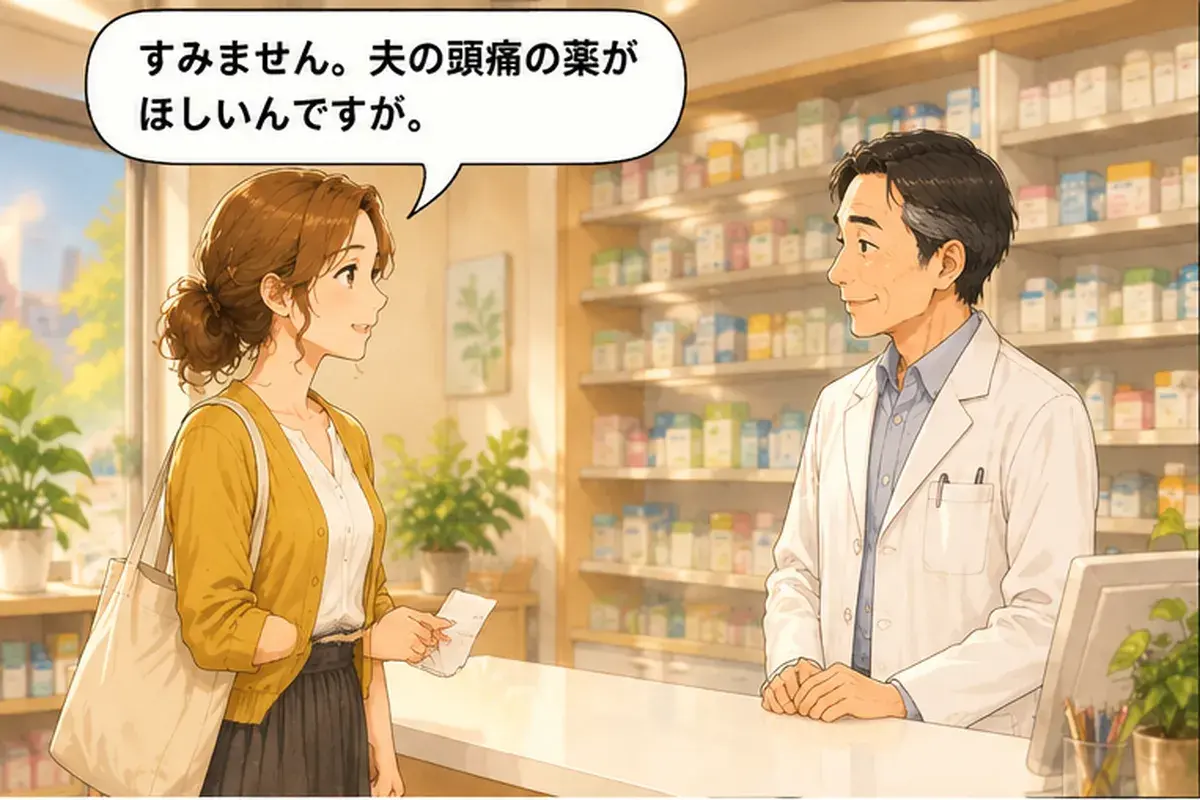
- アンナ
すみません。夫の頭痛の薬がほしいんですが。
Excuse me. I'd like some headache medicine for my husband.
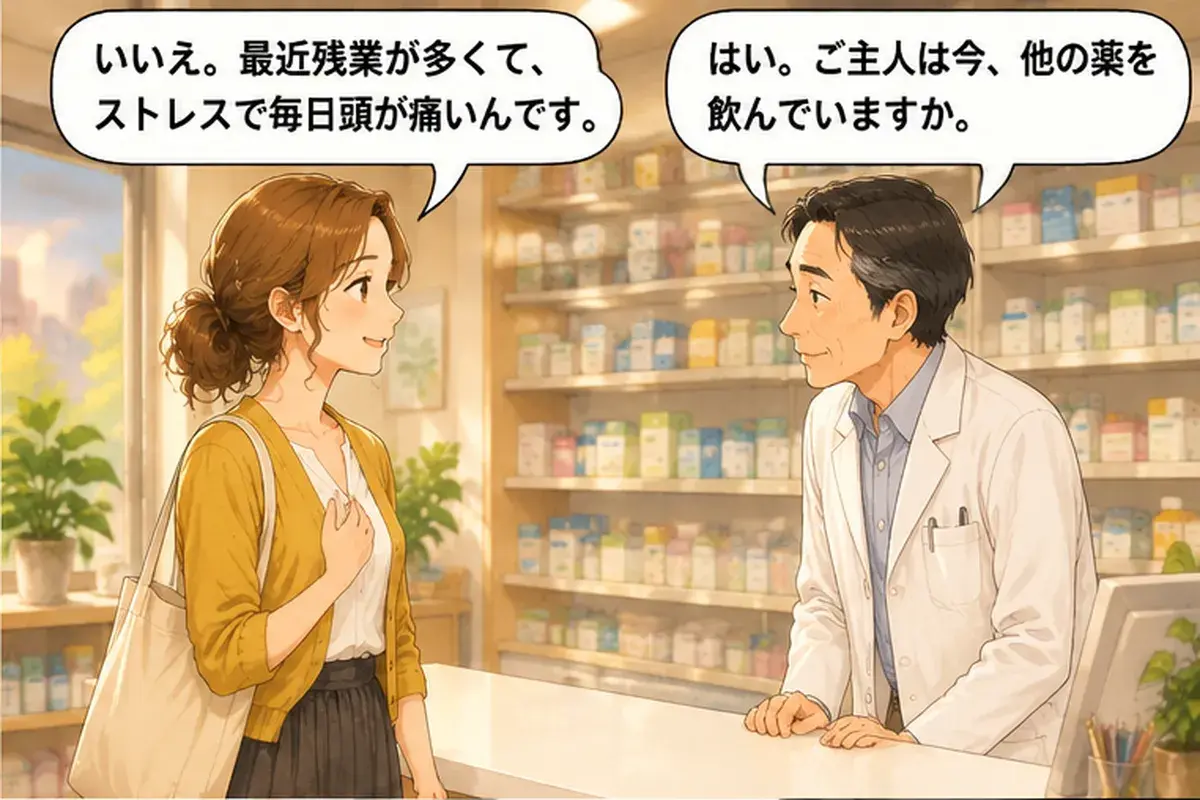
- 店員
はい。ご主人は今、他の薬を飲んでいますか。
Yes. Is your husband taking any other medicine now?
- アンナ
いいえ。最近残業が多くて、ストレスで毎日頭が痛いんです。
No. Lately he's had a lot of overtime, and because of stress he has a headache every day.
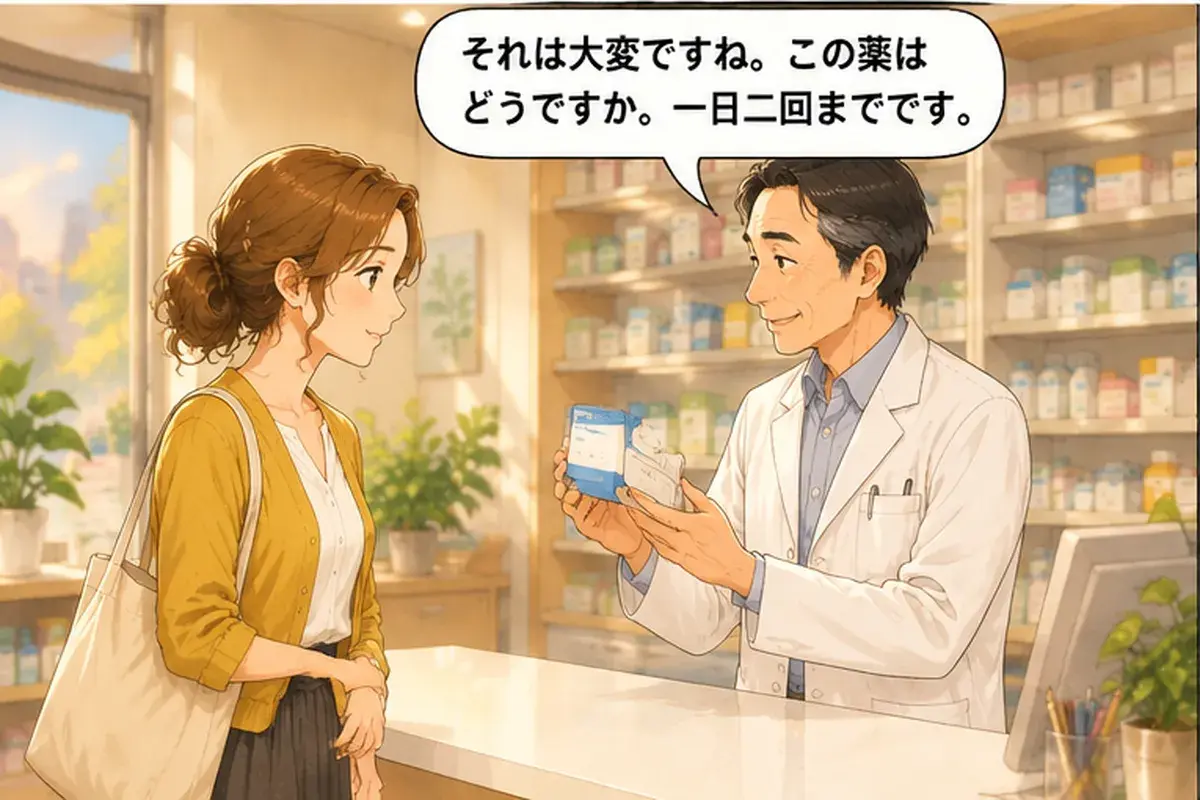
- 店員
それは大変ですね。この薬はどうですか。一日二回までです。
That's rough. How about this medicine? You can take it up to twice a day.
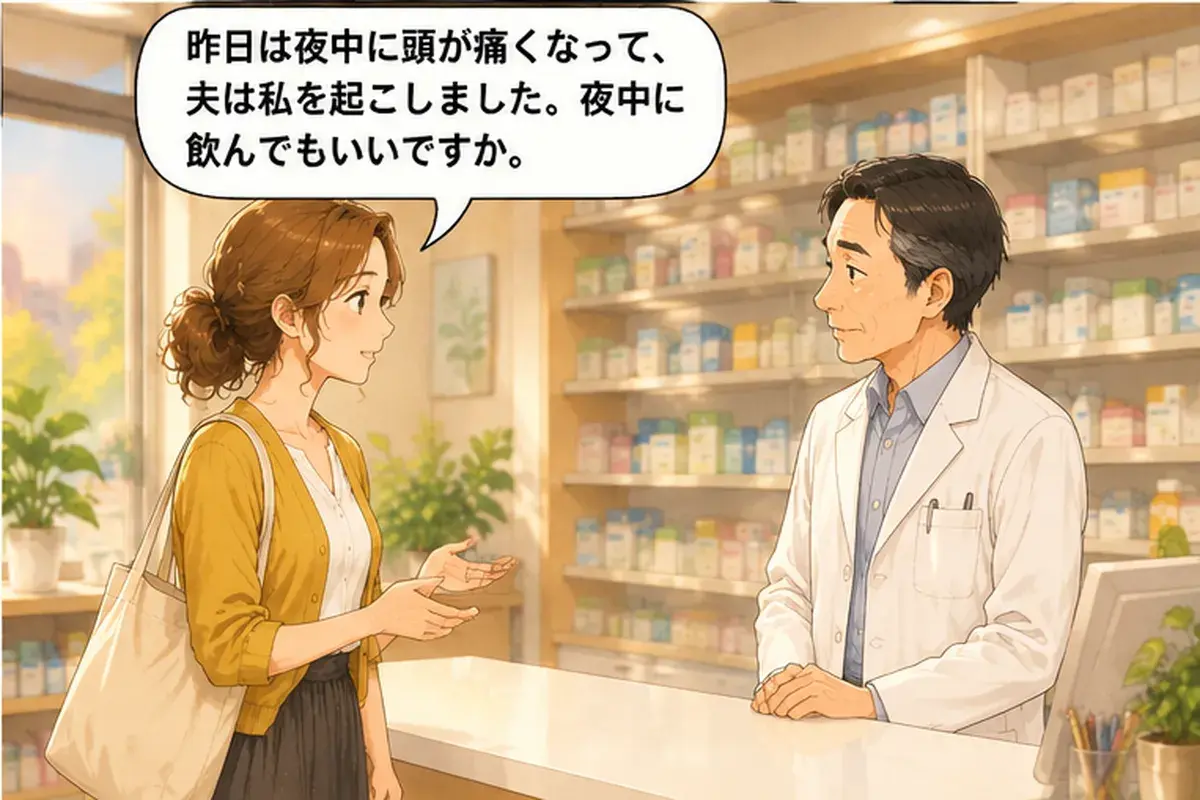
- アンナ
昨日は夜中に頭が痛くなって、夫は私を起こしました。夜中に飲んでもいいですか。
Last night he got a headache in the middle of the night and woke me up. Can he take it in the middle of the night?
- 店員
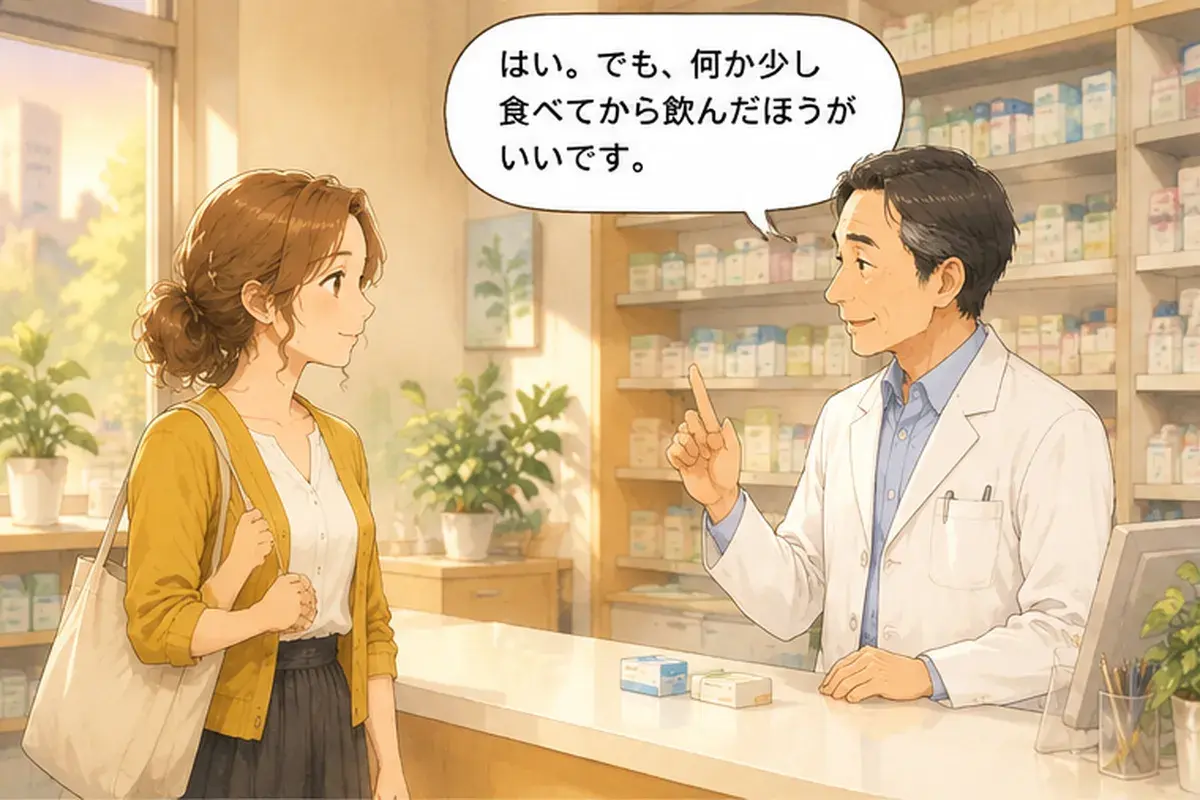
はい。でも、何か少し食べてから飲んだほうがいいです。
Yes. But he should eat a little something before taking it.
- アンナ
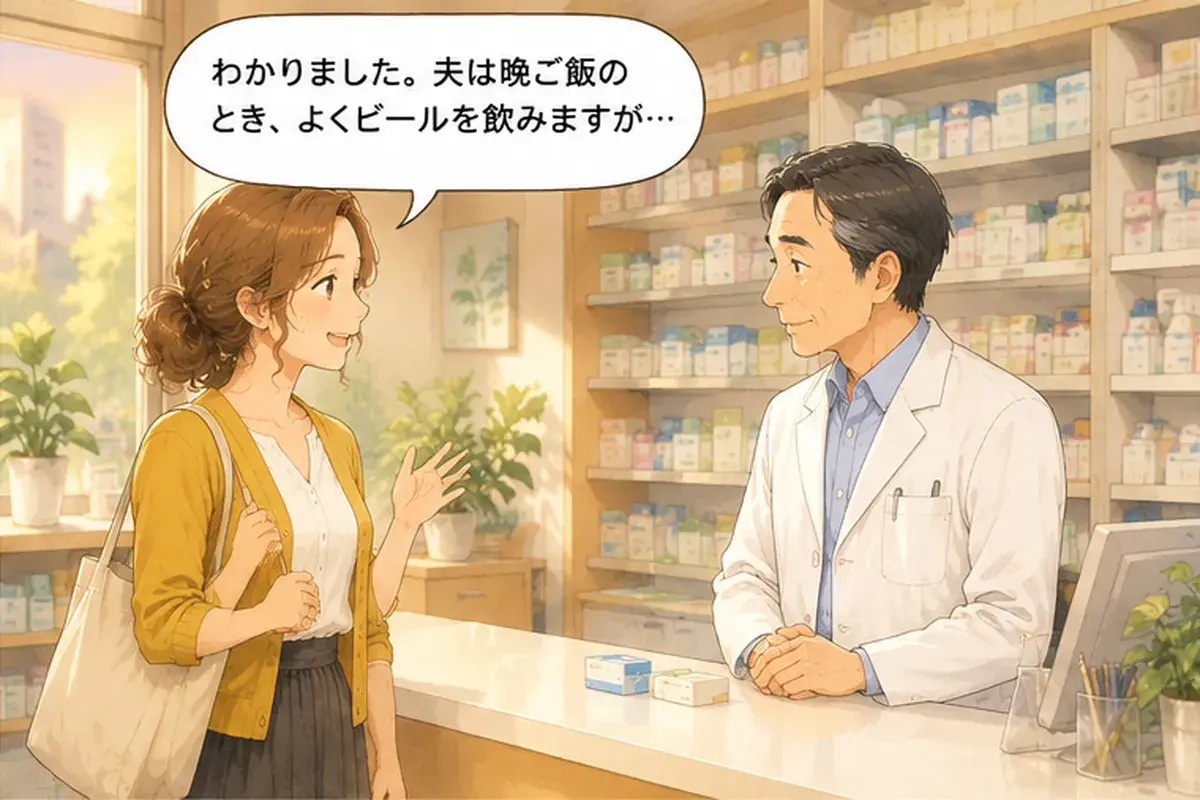
わかりました。夫は晩ご飯のとき、よくビールを飲みますが…
I see. My husband often drinks beer with dinner, but...
- 店員
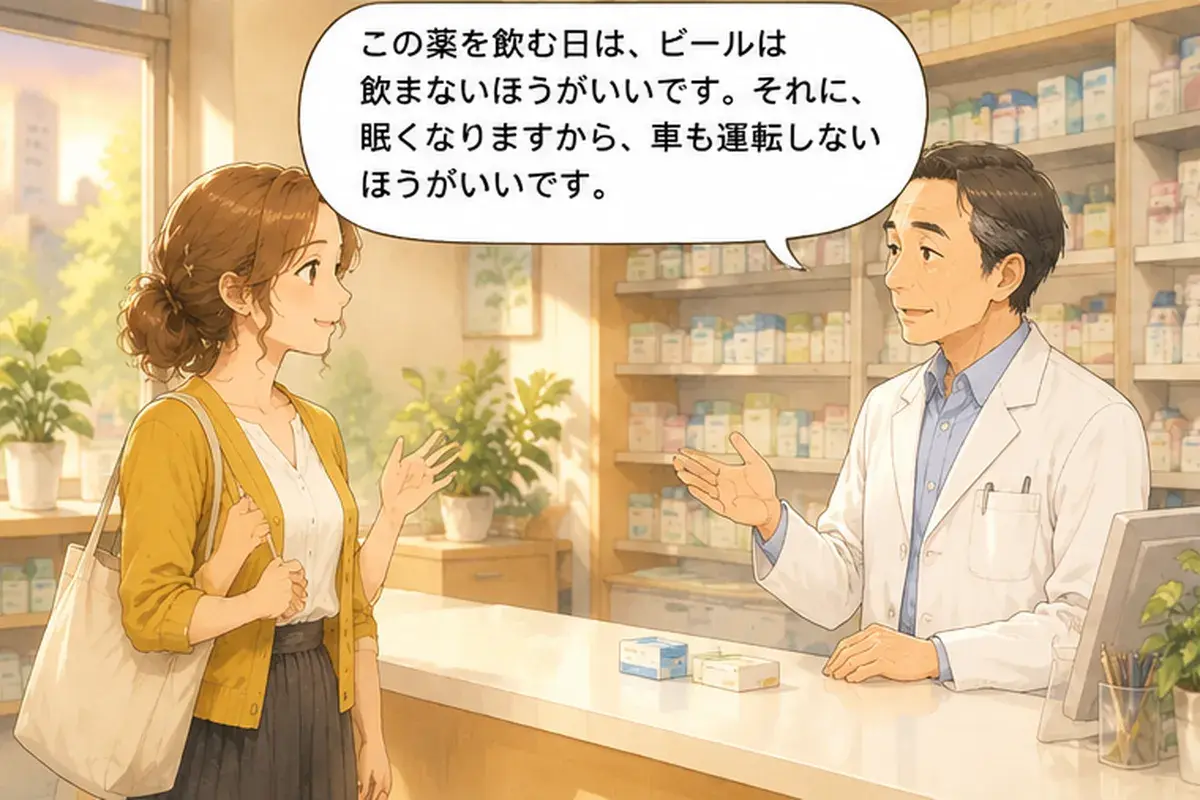
この薬を飲む日は、ビールは飲まないほうがいいです。それに、眠くなりますから、車も運転しないほうがいいです。
On days he takes this medicine, he shouldn't drink beer. Also, it makes you sleepy, so he shouldn't drive either.
- アンナ
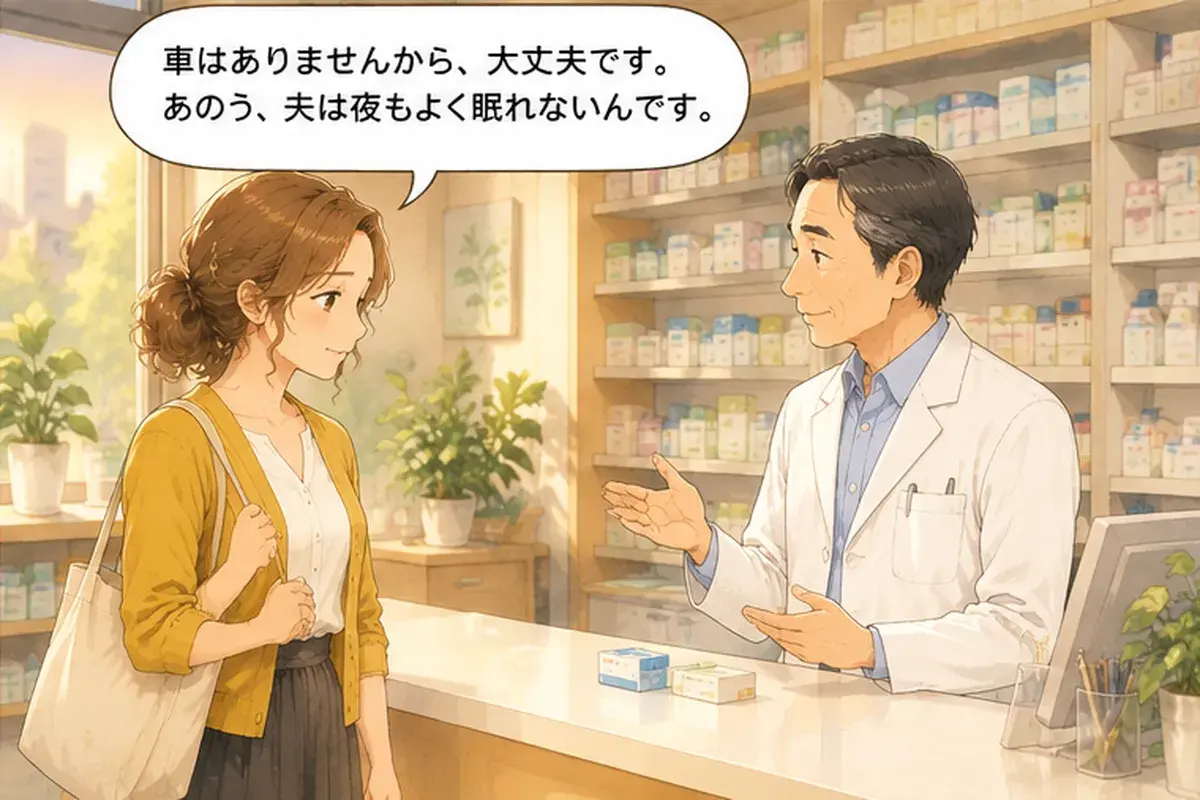
車はありませんから、大丈夫です。あのう、夫は夜もよく眠れないんです。
We don't have a car, so that's fine. Um, my husband also can't sleep well at night.
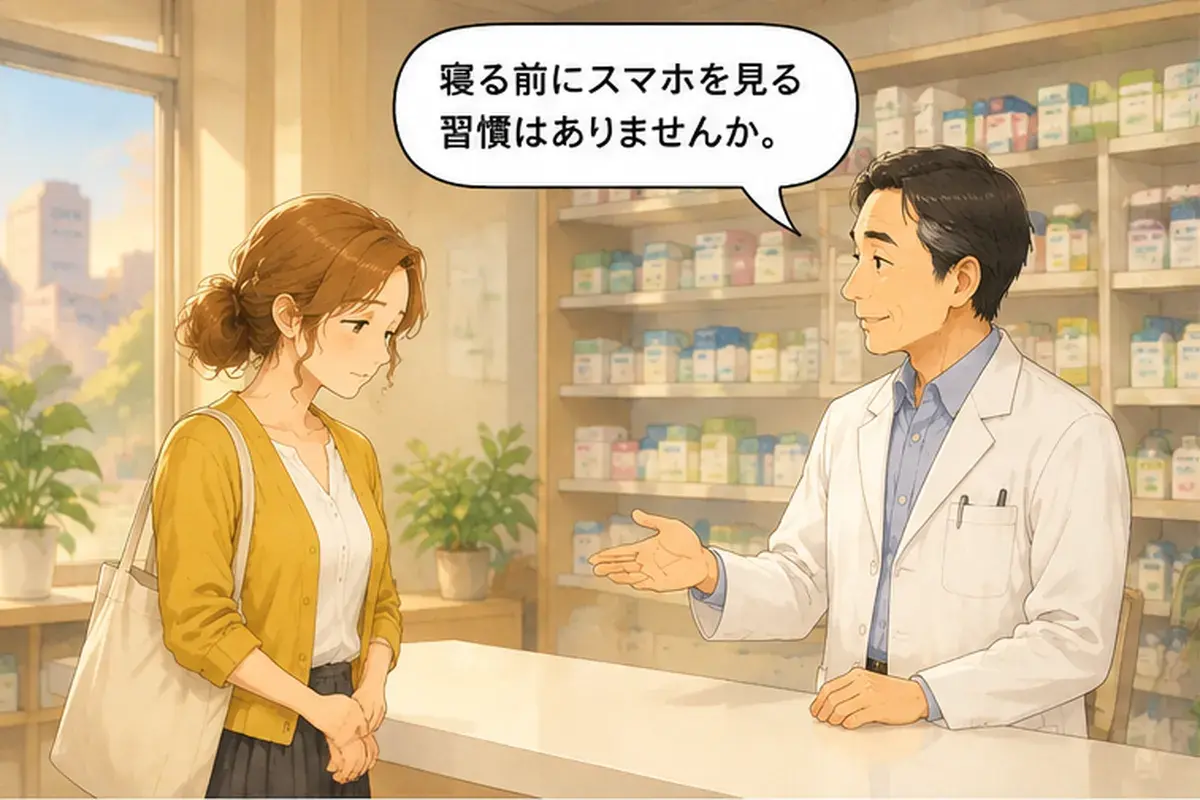
- 店員
寝る前にスマホを見る習慣はありませんか。
Does he have a habit of looking at his phone before bed?
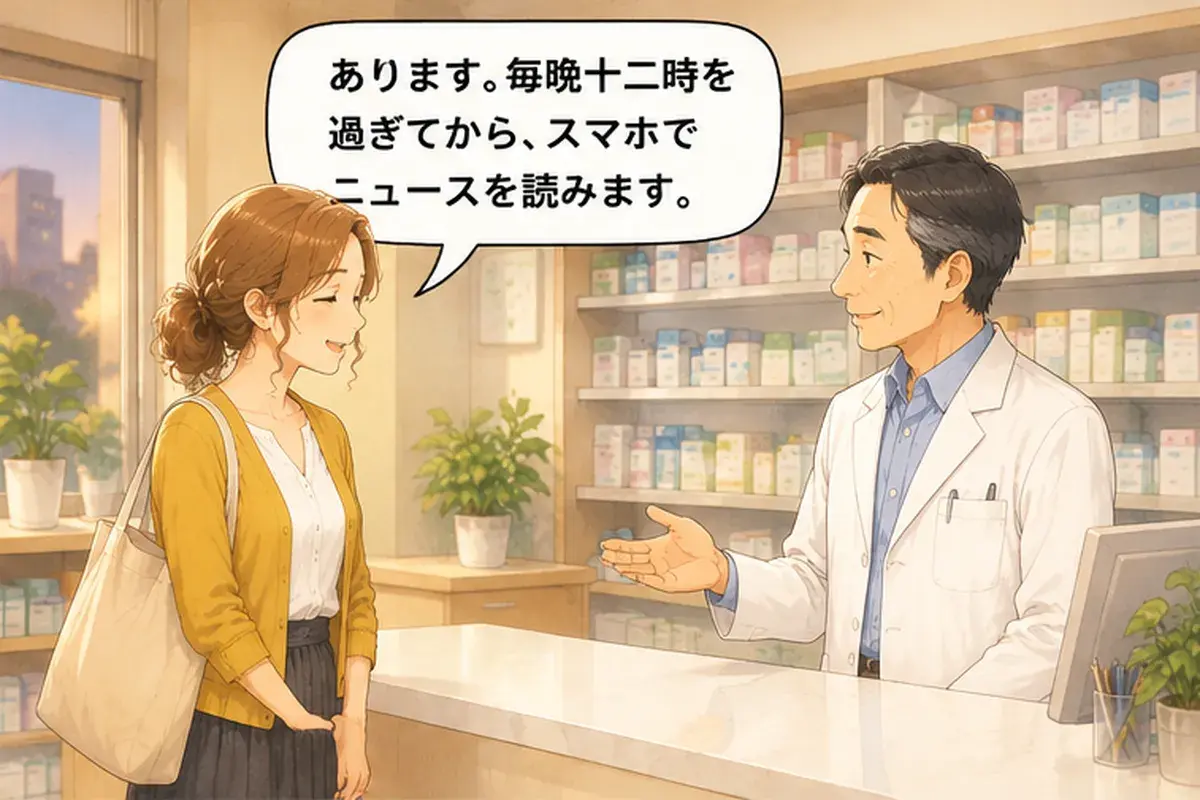
- アンナ
あります。毎晩十二時を過ぎてから、スマホでニュースを読みます。
Yes. Every night after midnight, he reads the news on his phone.
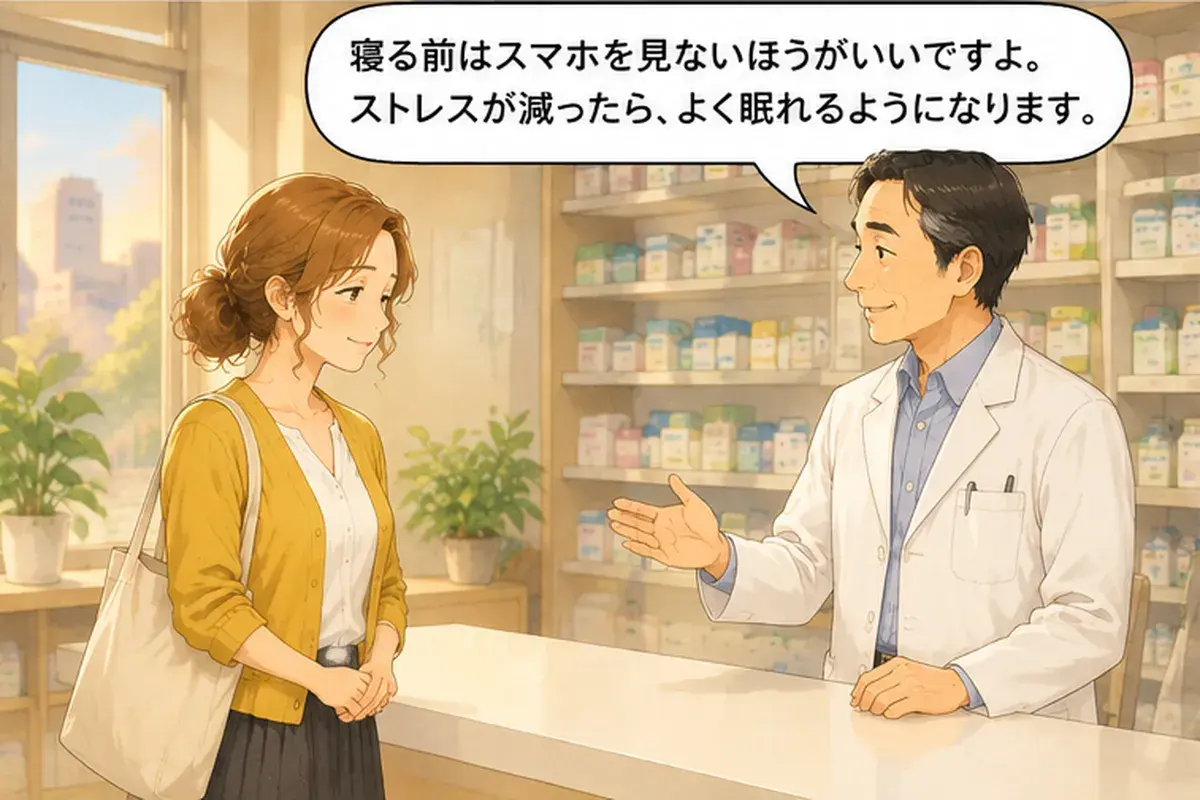
- 店員
寝る前はスマホを見ないほうがいいですよ。ストレスが減ったら、よく眠れるようになります。
He shouldn't look at his phone before bed. And when the stress goes down, he'll be able to sleep well.
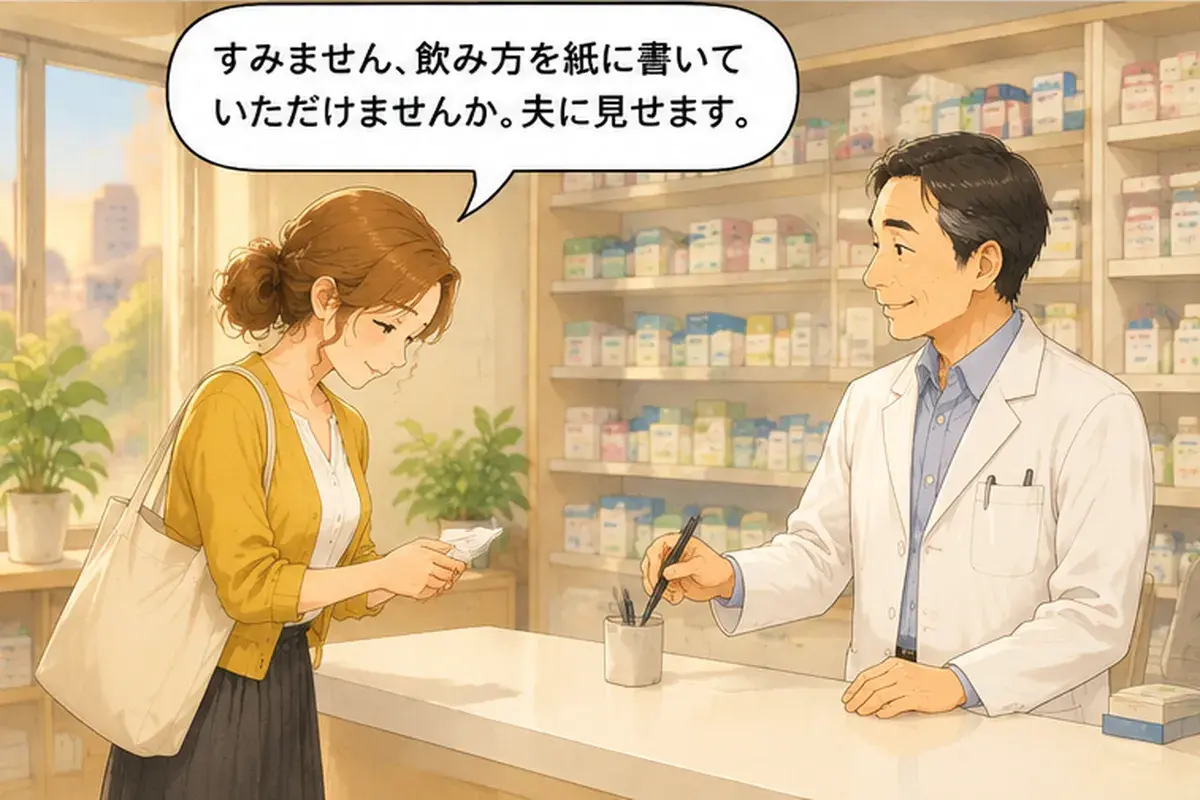
- アンナ
すみません、飲み方を紙に書いていただけませんか。夫に見せます。
Excuse me, could you write down how to take it on a piece of paper? I'll show my husband.
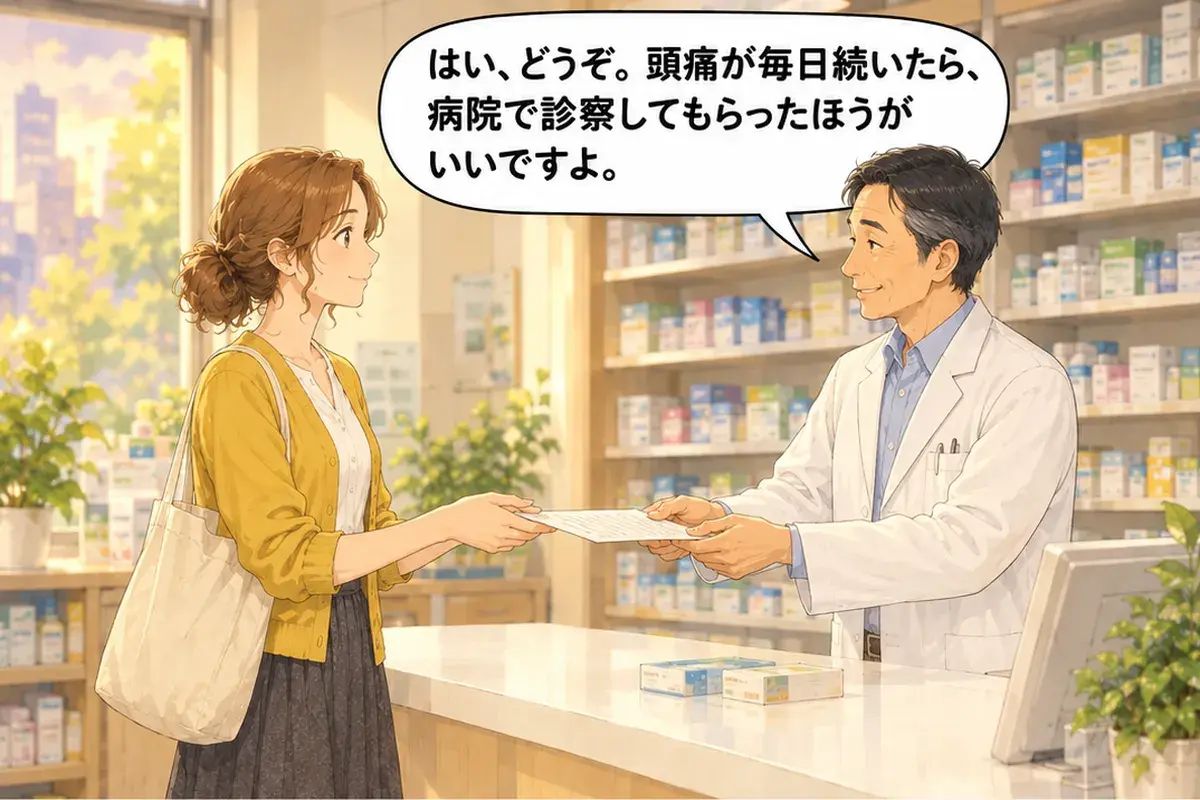
- 店員
はい、どうぞ。頭痛が毎日続いたら、病院で診察してもらったほうがいいですよ。
Of course, here you are. If the headaches continue every day, he should see a doctor at the hospital.
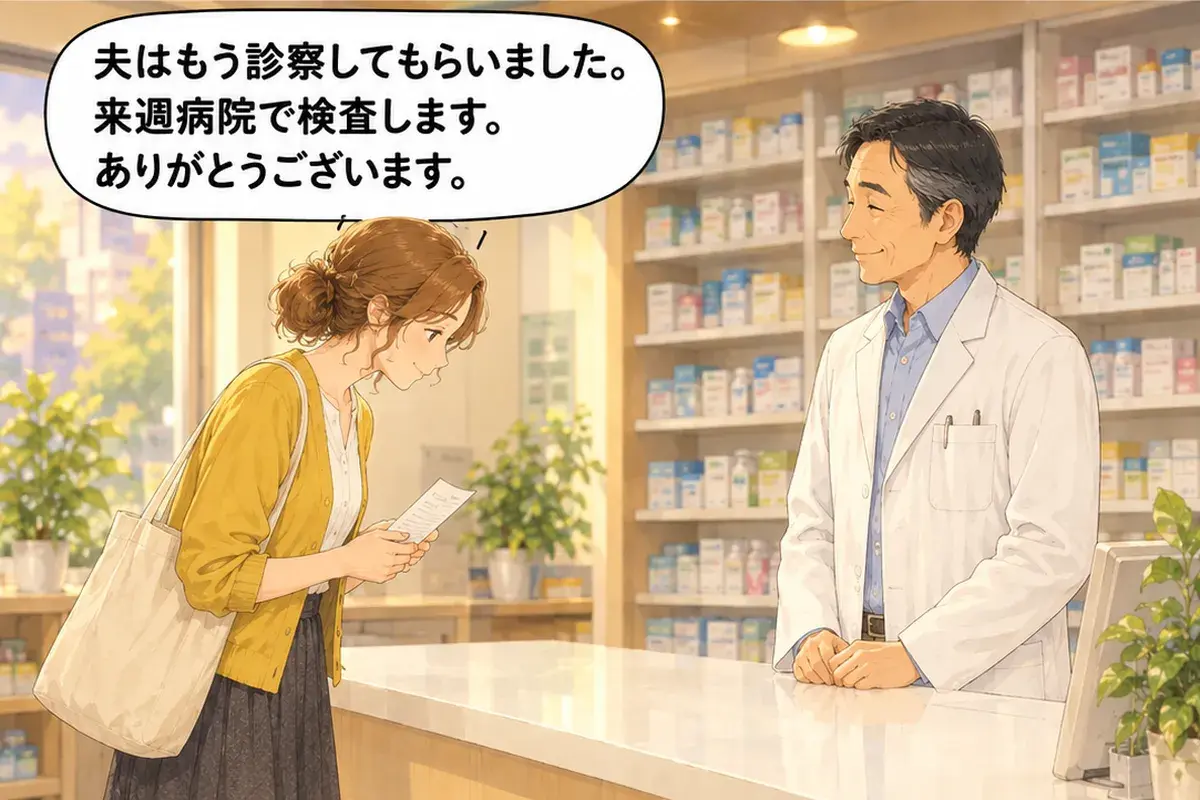
- アンナ
夫はもう診察してもらいました。来週病院で検査します。ありがとうございます。
My husband has already seen a doctor. He's having tests at the hospital next week. Thank you.
Grammar for this text
何か 少し 食べて から 飲んだ ほう が いい です— You should eat a little something before you take it. This is the pharmacist's advice.〜て からmeans "after doing something" (unit 6), and〜た ほう が いいmeans "should" (see the grammar of the unit).ビール は 飲まない ほう が いい です— You shouldn't drink beer: the nai-form +ほう が いい.車 も 運転しない ほう が いい です— You shouldn't drive either.眠く なります— It makes you sleepy.眠いbecomes眠く, and thenなるis added. A warning like this is also printed on medicine packages.夫 の 頭痛 の 薬 が ほしい ん です が— I'd like some headache medicine for my husband.ん です がsoftly opens a request (unit 9). The pharmacist politely says ご主人 about someone else's husband, and Anna says 夫 about her own.夫 は 私 を 起こしました— My husband woke me up.起こすmeans "to wake someone up" and takesを. Don't confuse it with起きる, "to wake up by yourself".十二時 を 過ぎて から— After it's past twelve.過ぎるmeans "to pass", andをmarks the time that has passed.寝る 前 に スマホ を 見る 習慣— The habit of looking at your phone before bed.習慣means "habit", and the description of the habit goes before the word (unit 8).ストレス が 減ったら、 よく 眠れる ように なります— When the stress goes down, you'll be able to sleep well.減るmeans that something becomes less by itself, and〜ように なるmeans "you come to be able to" (unit 10).飲み 方 を 紙 に 書いて いただけませんか— Could you write down how to take it on a piece of paper? This is a very polite request (see the grammar of the unit).飲み 方means "how to take it": the masu stem飲み+方(unit 10).病院 で 診察して もらった ほう が いい です よ— You should see a doctor at the hospital.診察して もらうliterally means "to have someone examine you" (unit 12).夫 は もう 診察して もらいました— My husband has already seen a doctor. Anna means that the tests are still ahead.
Words and grammar of the unit: Give advice and ask for advice.
Learn the words from the texts with flashcards
In the app, you can tap any word in a text to see its translation, forms and examples, and new words stick with flashcards. 15 minutes a day.
Start for freeEverything is open for free. No card needed to sign up.