
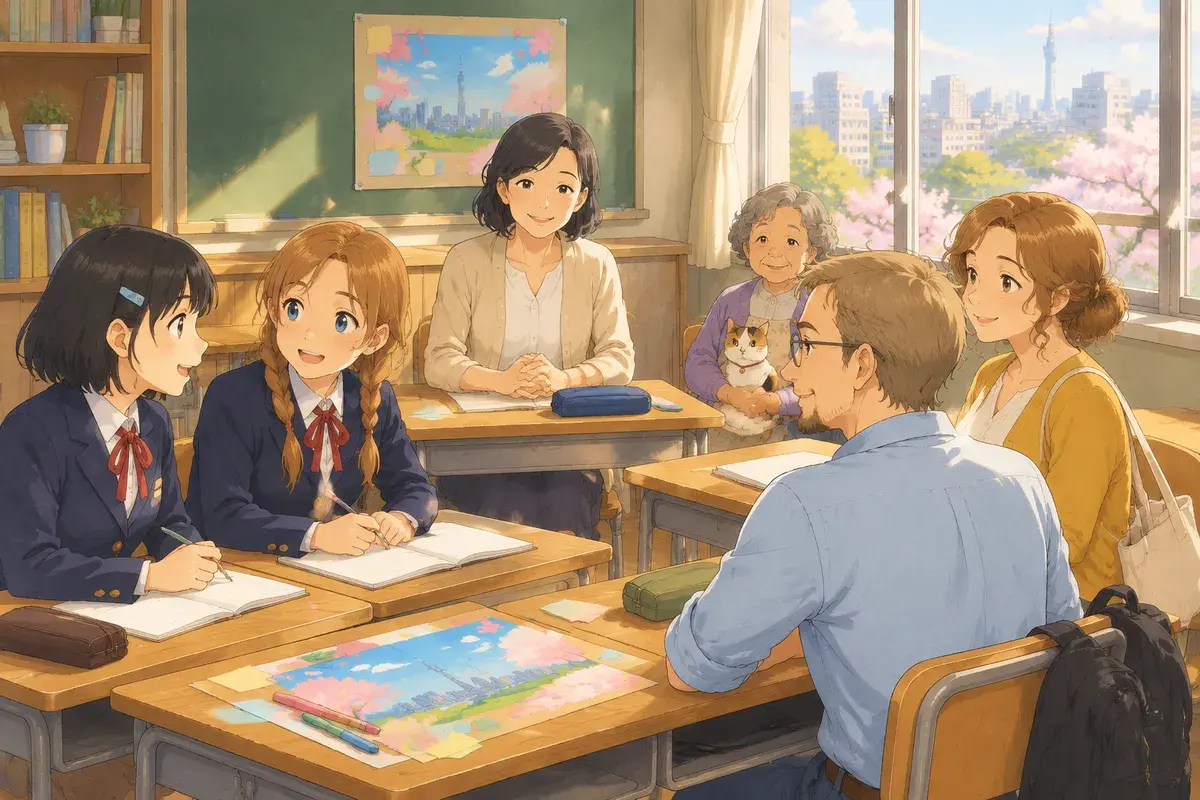
Japanese dialogue with translation · A2 · 16 lines
世界の国を紹介しよう Let's introduce countries around the world
Comic · 16 panels
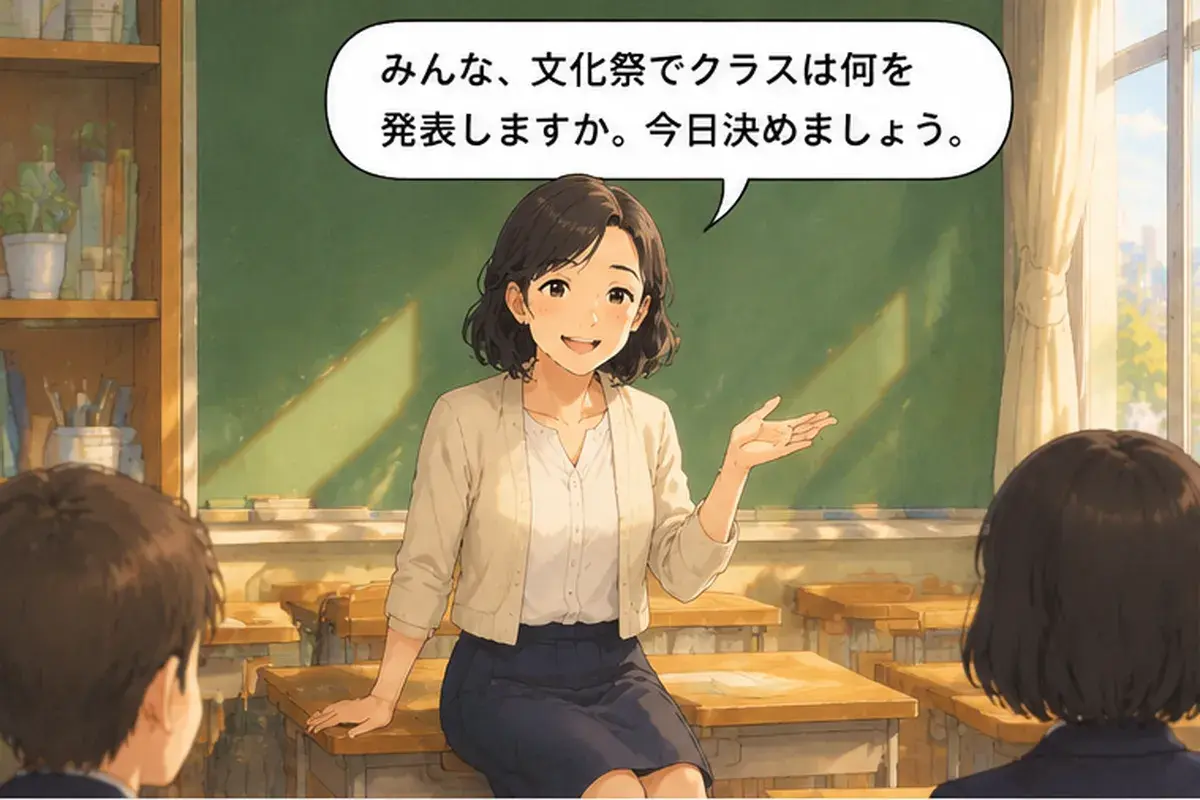
- 先生
みんな、文化祭でクラスは何を発表しますか。今日決めましょう。
Everyone, what will our class present at the school festival? Let's decide today.
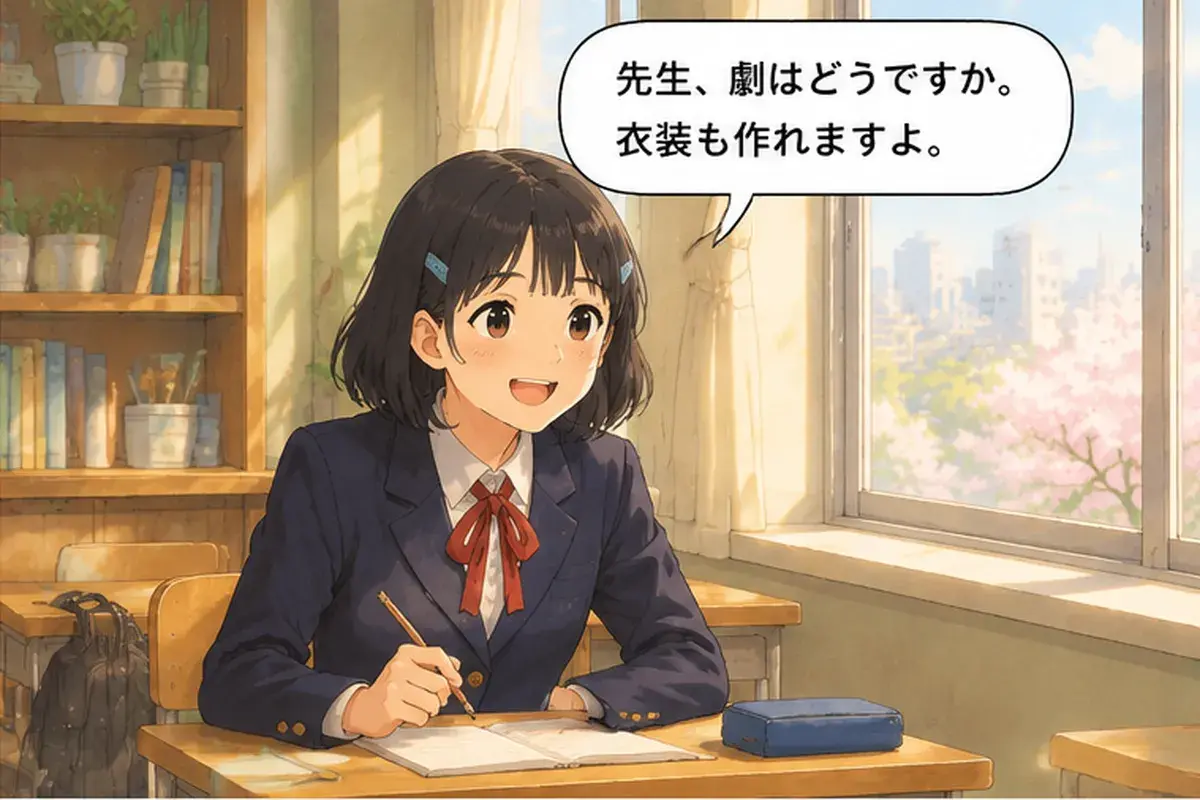
- ゆい
先生、劇はどうですか。衣装も作れますよ。
Teacher, how about a play? We can make the costumes too.
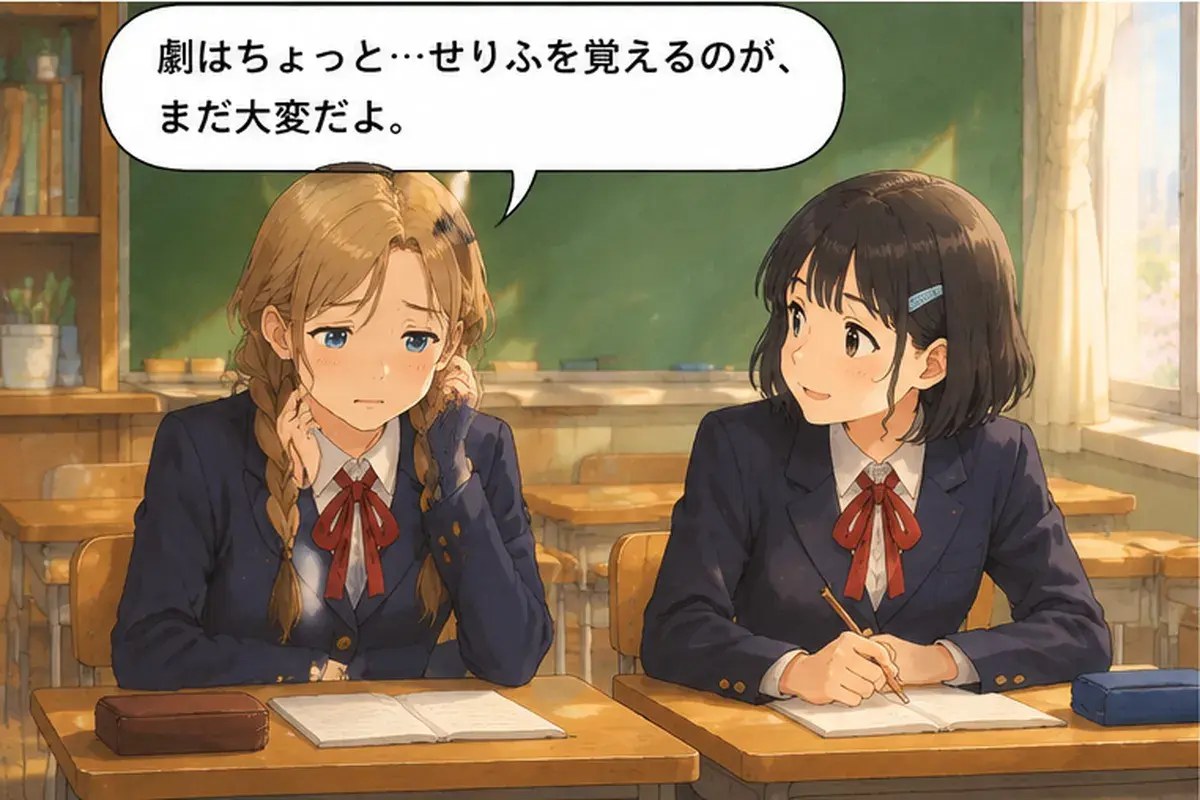
- ソーニャ
劇はちょっと…せりふを覚えるのが、まだ大変だよ。
A play is a little... Memorizing the lines is still hard for me (casual).
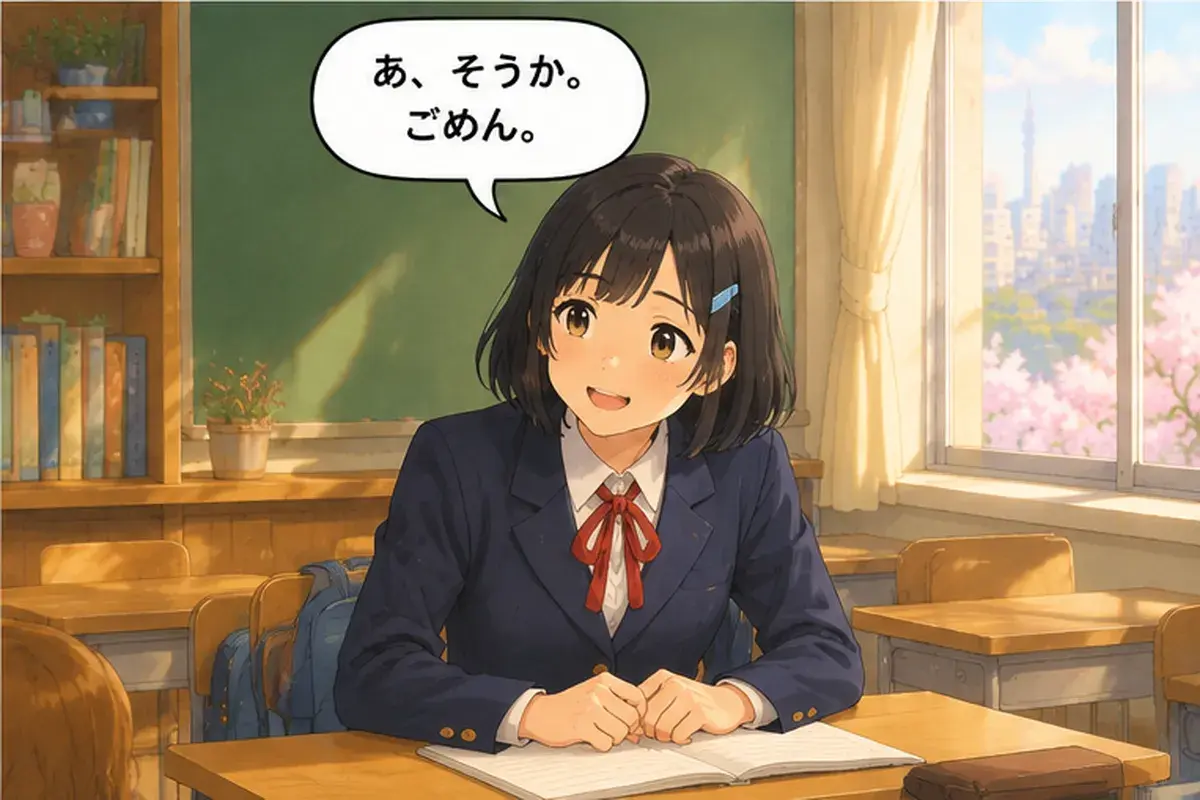
- ゆい
あ、そうか。ごめん。
Oh, I see. Sorry.
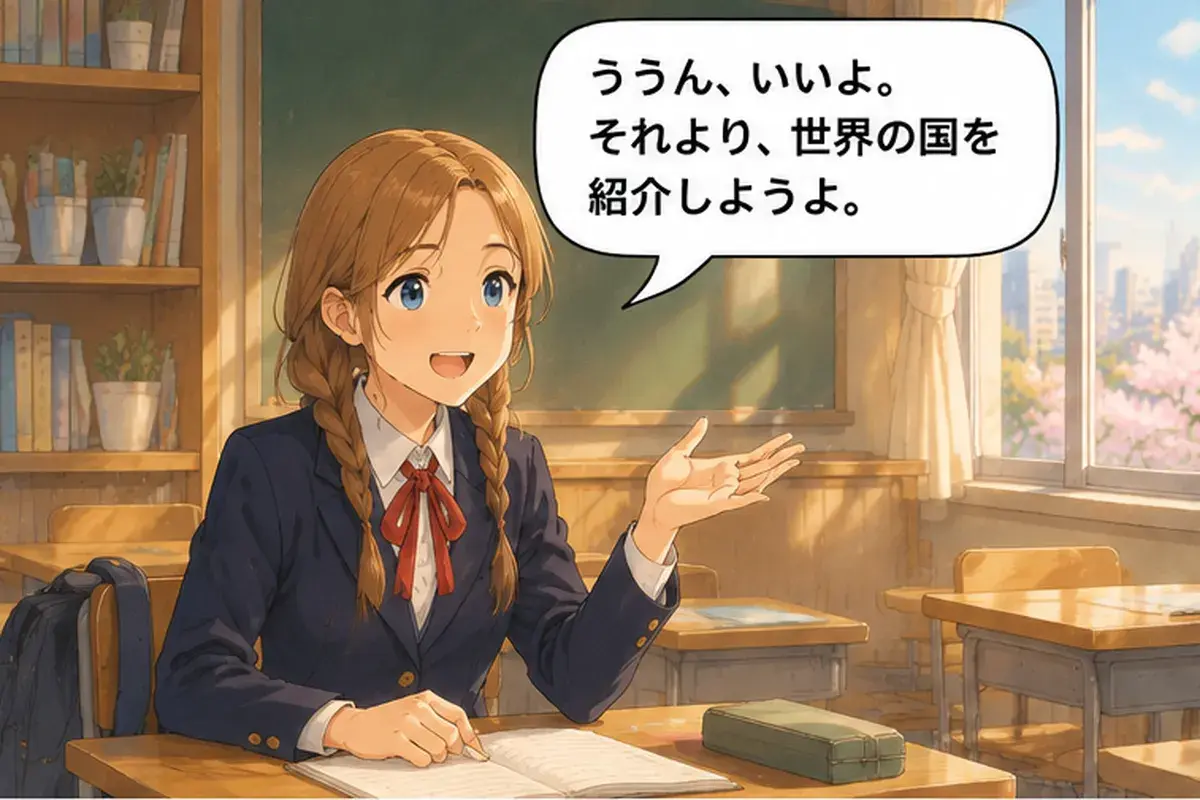
- ソーニャ
ううん、いいよ。それより、世界の国を紹介しようよ。
Nope, it's OK. Let's introduce countries around the world instead (casual).
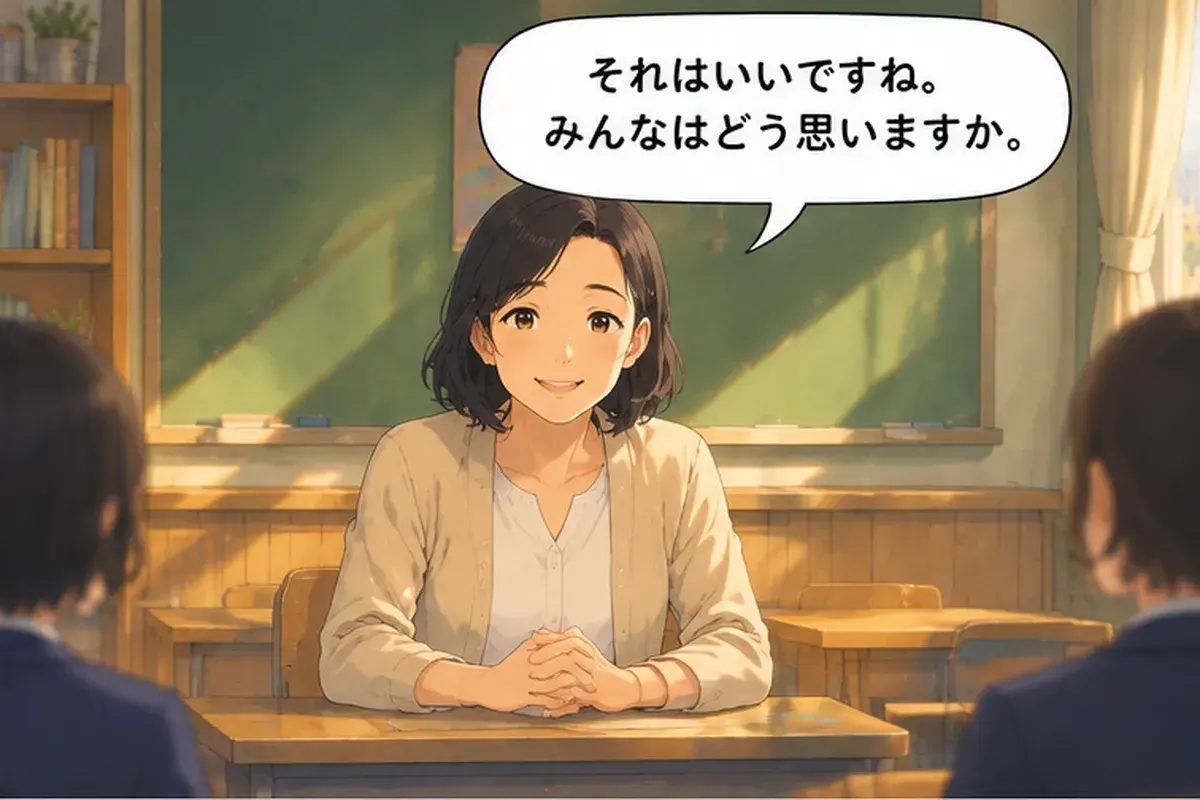
- 先生
それはいいですね。みんなはどう思いますか。
That sounds good. What do the rest of you think?
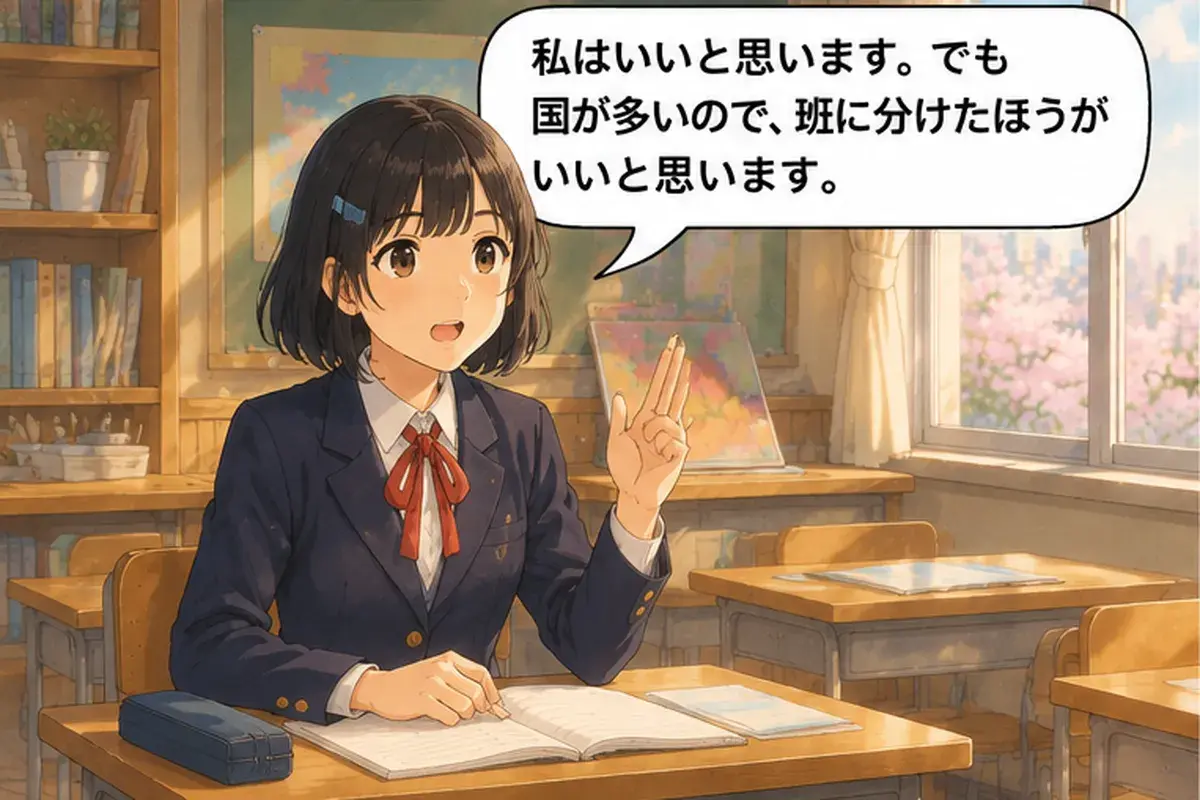
- ゆい
私はいいと思います。でも国が多いので、班に分けたほうがいいと思います。
I think it's good. But there are a lot of countries, so I think we should split into groups.
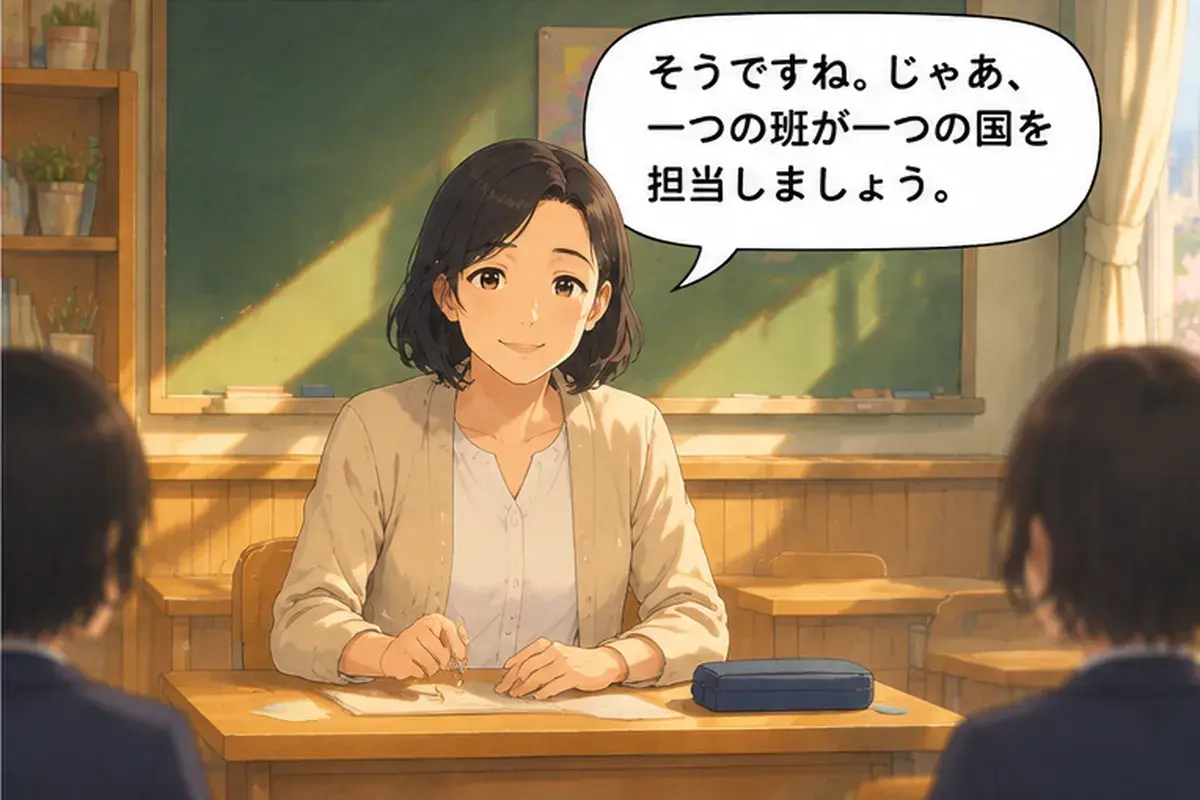
- 先生
そうですね。じゃあ、一つの班が一つの国を担当しましょう。
That's true. Then let's have each group be in charge of one country.
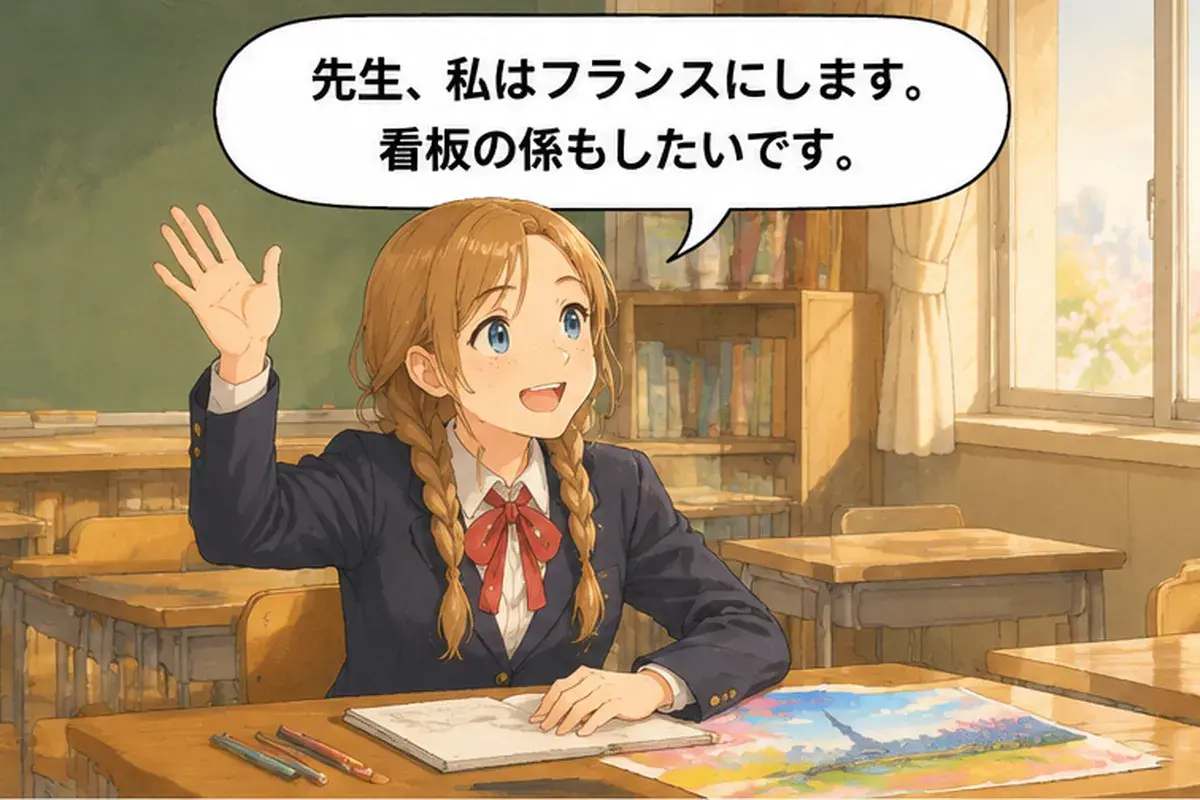
- ソーニャ
先生、私はフランスにします。看板の係もしたいです。
Teacher, I'll go with France. I'd like to be in charge of the sign too.
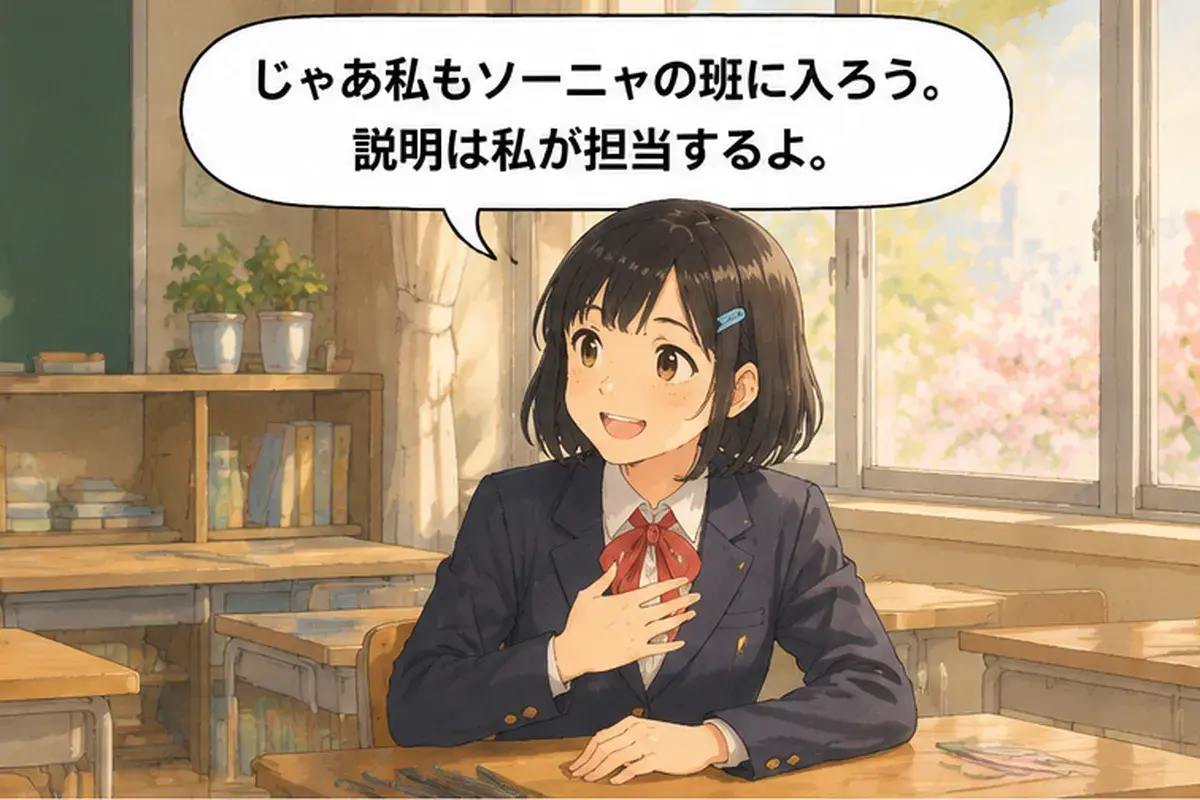
- ゆい
じゃあ私もソーニャの班に入ろう。説明は私が担当するよ。
Then I think I'll join Sonya's group too. I'll be in charge of the explanations (casual).
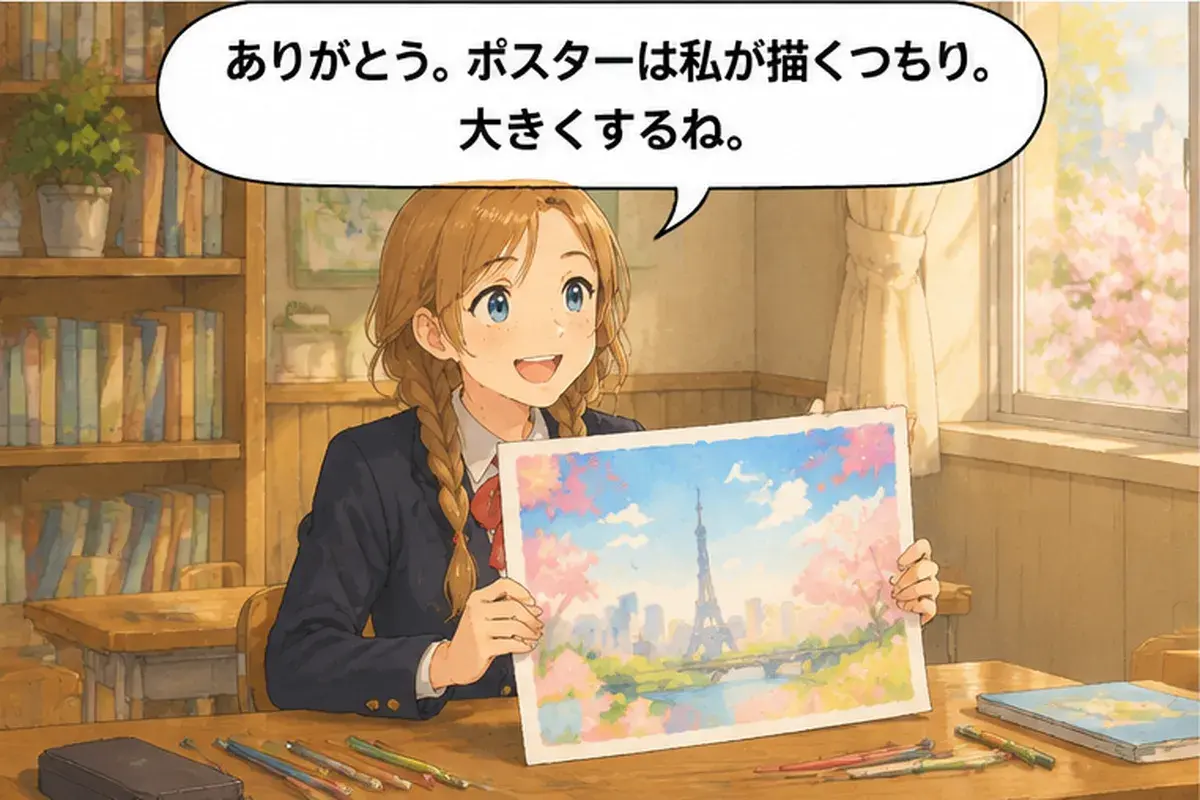
- ソーニャ
ありがとう。ポスターは私が描くつもり。大きくするね。
Thanks. I'm planning to draw the poster myself. I'll make it big (casual).
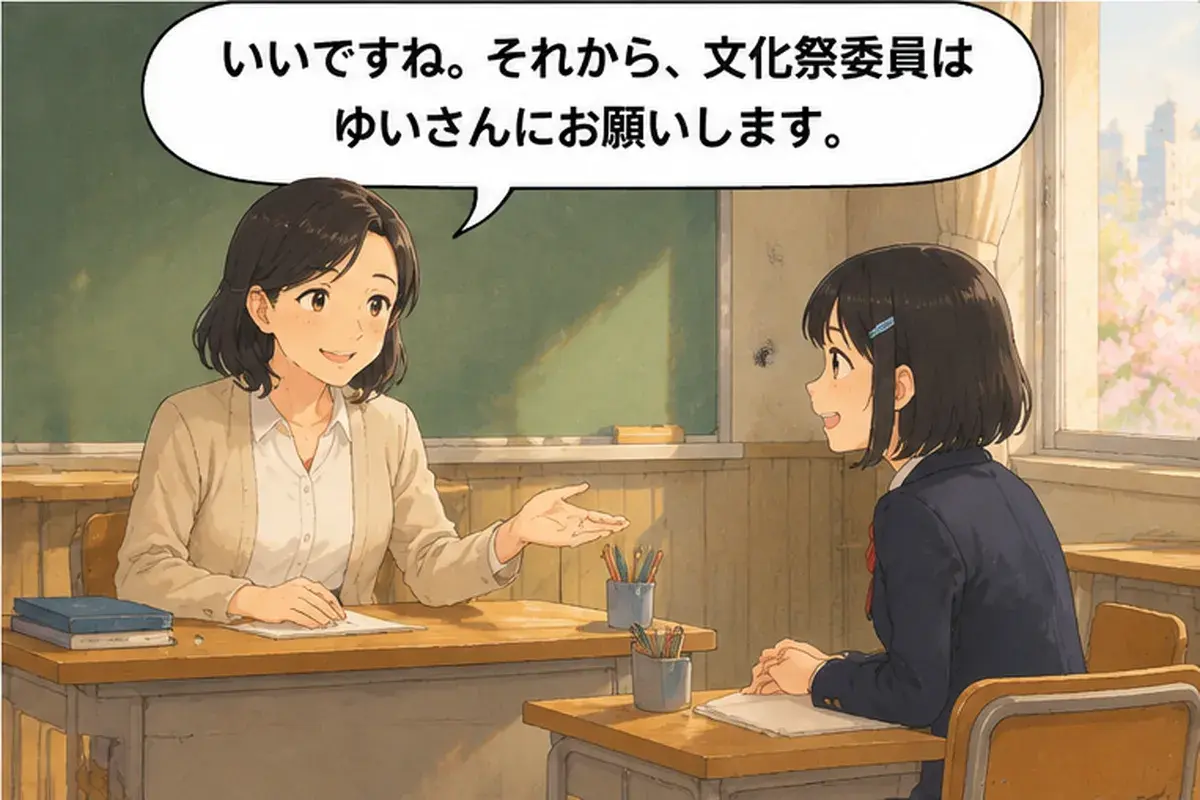
- 先生
いいですね。それから、文化祭委員はゆいさんにお願いします。
Good. And I'd like to ask Yui-san to be on the school festival committee.
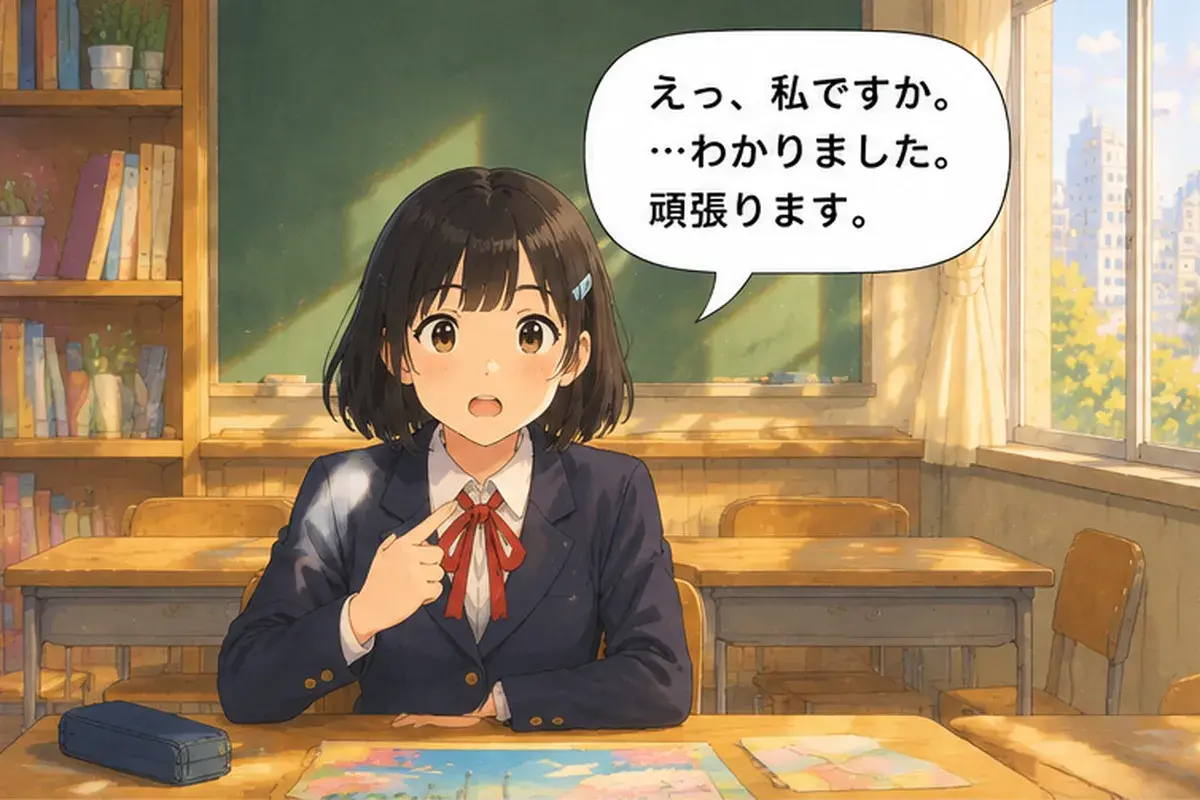
- ゆい
えっ、私ですか。…わかりました。頑張ります。
Huh, me? ...Understood. I'll do my best.
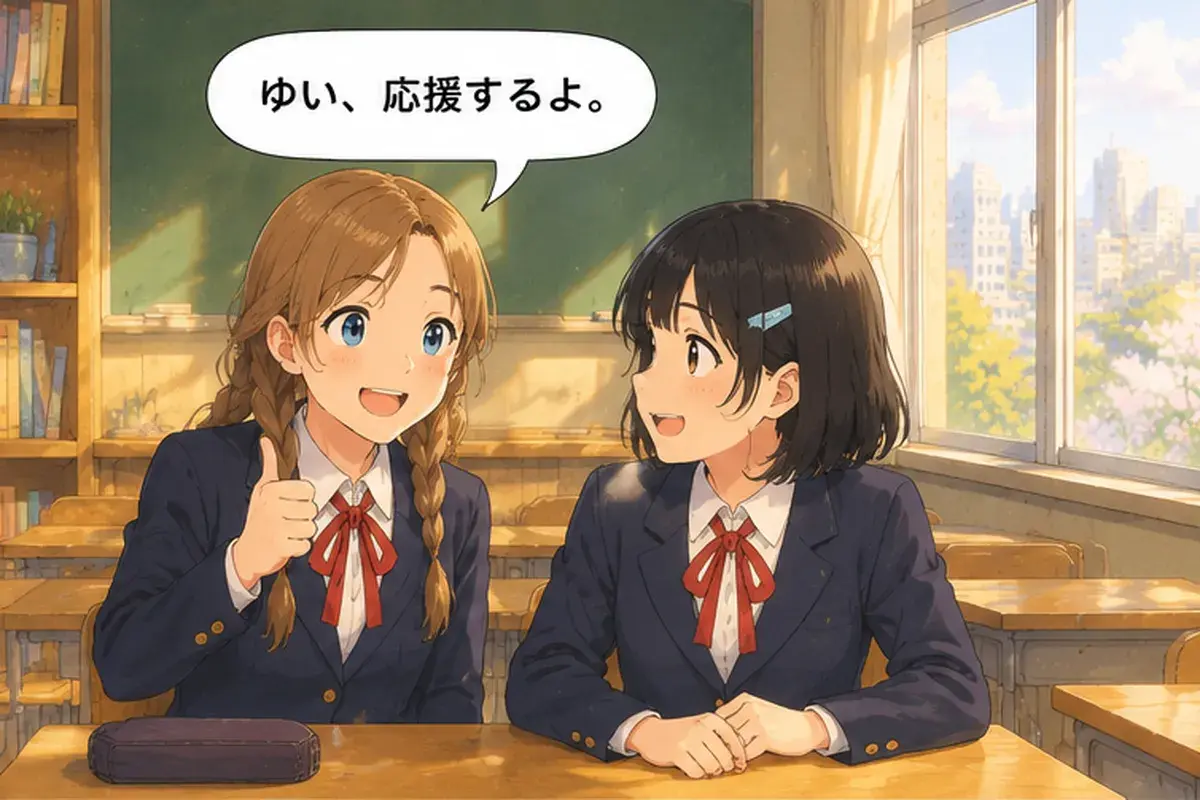
- ソーニャ
ゆい、応援するよ。
Yui, I'll cheer you on (casual).
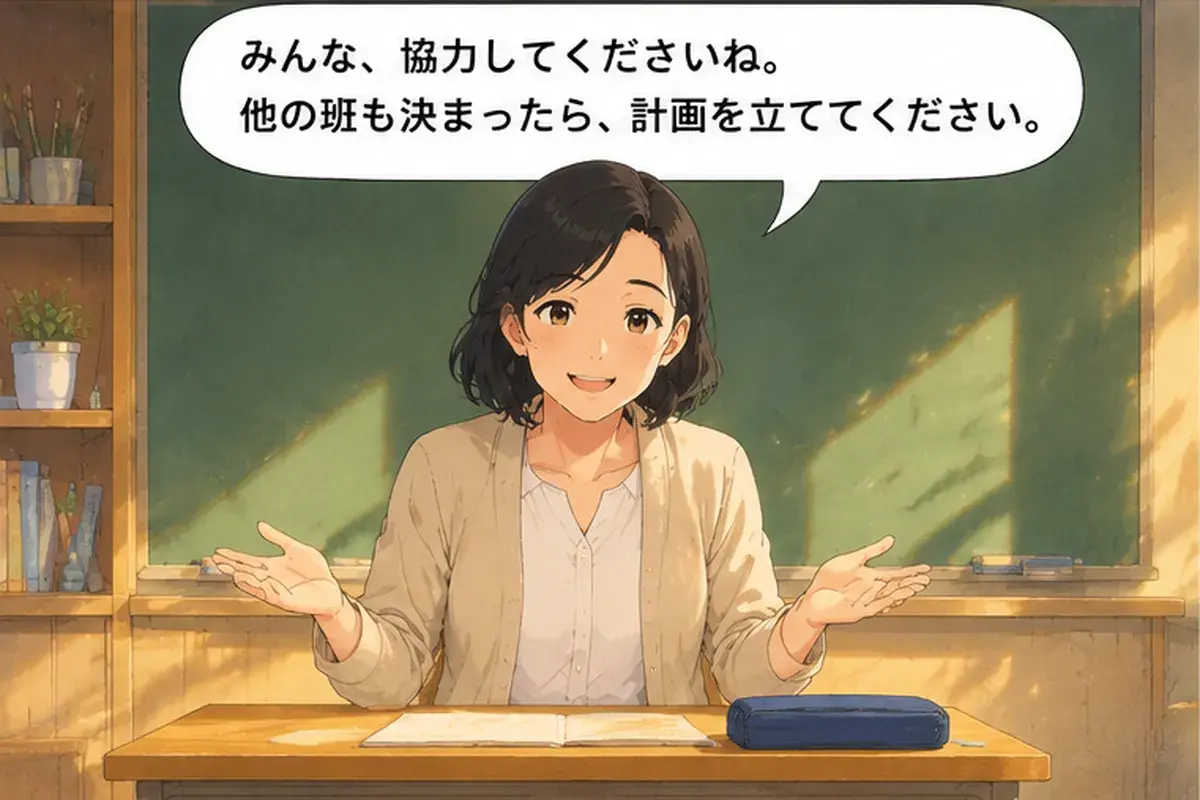
- 先生
みんな、協力してくださいね。他の班も決まったら、計画を立ててください。
Everyone, please work together, OK? Once the other groups are decided, please make a plan.
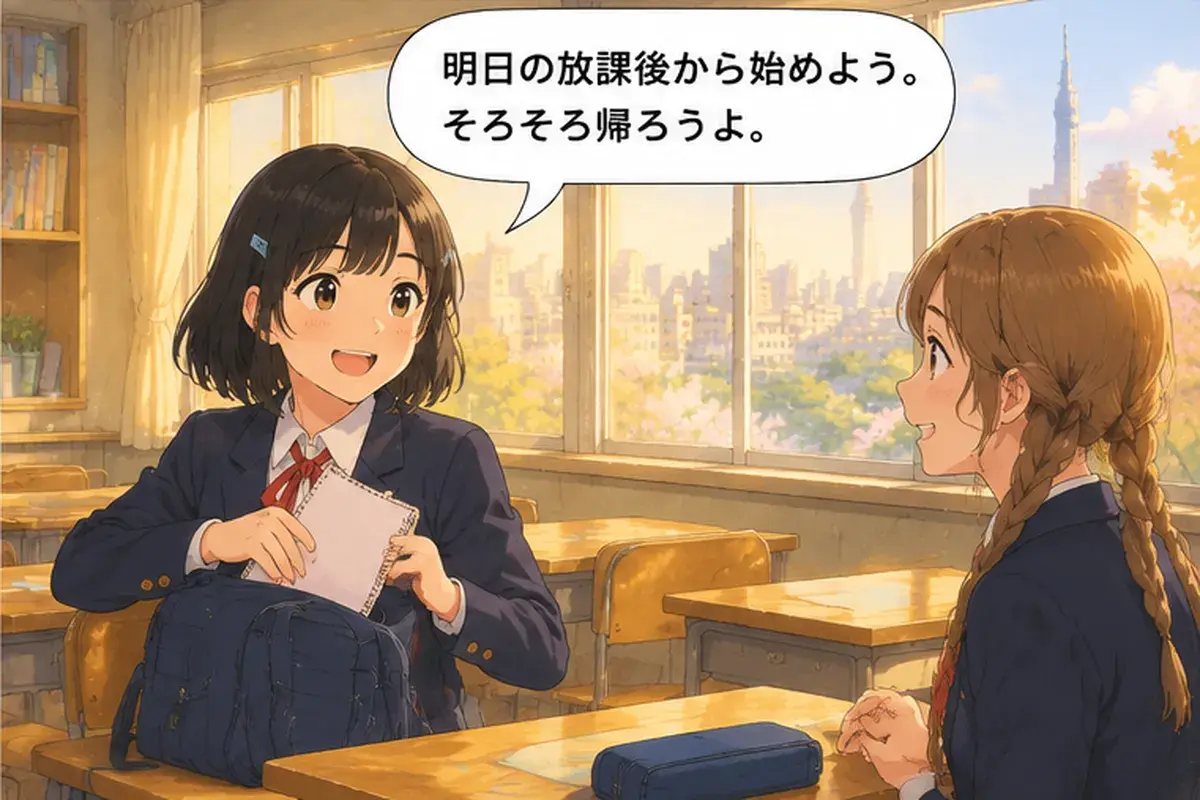
- ゆい
明日の放課後から始めよう。そろそろ帰ろうよ。
Let's start tomorrow after school. It's about time to go home (casual).
Grammar for this text
劇 は ちょっと…— A play is a little... Hereちょっとdoesn't mean "a little". It's a polite way to say no: people in Japan rarely say "no" directly. Sonya trails off, and her friend understands.紹介しよう よ— Let's introduce them. This is the volitional form (unit 14, below): forするit isしよう. The particleよmakes the suggestion friendly. You can't say this to a teacher; use〜ましょう.班 に 分けた ほう が いい と 思います— I think we should split into groups. Yui gives advice with〜た ほう が いい(unit 13). Addingと 思いますmakes it softer, which is right when you advise a teacher.分けるmeans "to divide"; don't confuse it with分かる("to understand").私 は フランス に します— I'll go with France. Here〜に しますmeans "I choose", like ordering in a cafe, not "I make France".入ろう— I think I'll join. It's the same form, but with "I" as the subject: a decision you make right now.入るis a u-verb:る→ろう.描く つもり— I'm planning to draw it. With a friend,ですis dropped.大きく する— I'll make it big.大きい→大きく, thenする.文化祭 委員— school festival committee member.担当するmeans "to take charge of", and看板 の 係is the person in charge of the sign for the booth.
Words and grammar of the unit: Talk about your plans.
Learn the words from the texts with flashcards
In the app, you can tap any word in a text to see its translation, forms and examples, and new words stick with flashcards. 15 minutes a day.
Start for freeEverything is open for free. No card needed to sign up.