

Japanese dialogue with translation · A2 · 14 lines
アドバイスをいただけませんか Could you give me some advice?
Comic · 14 panels
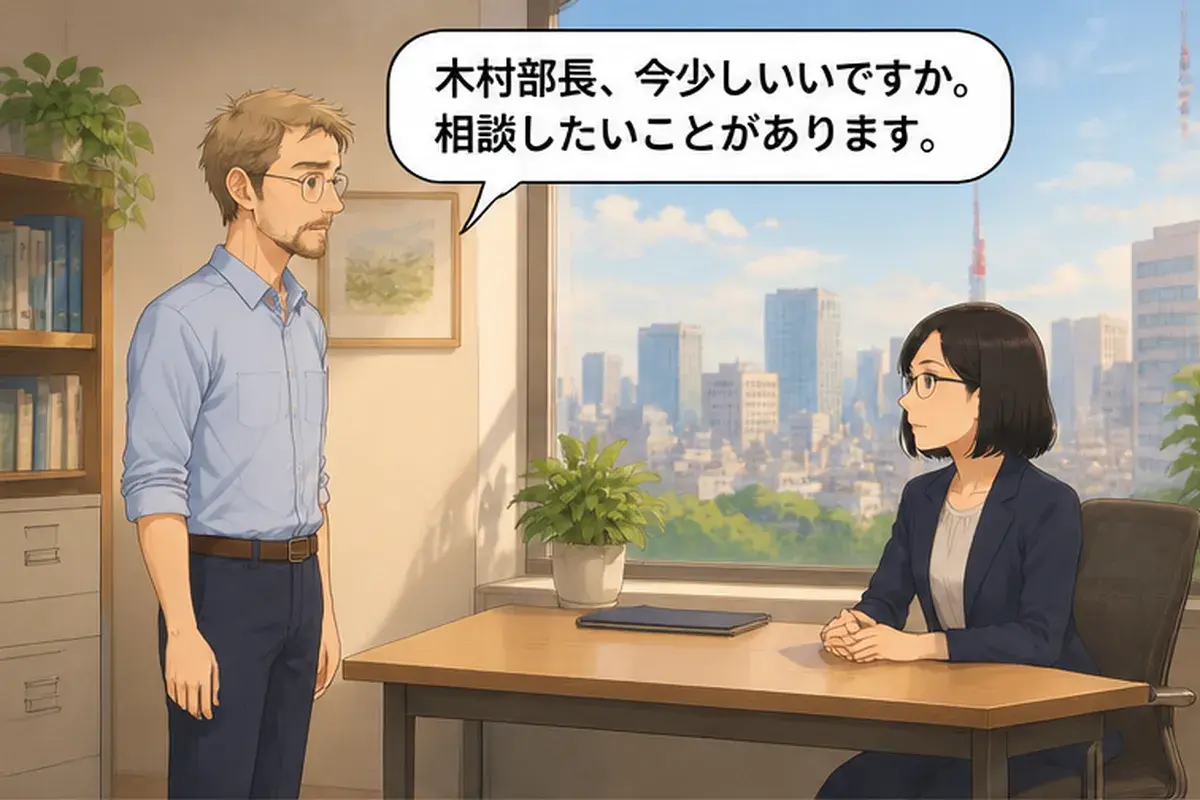
- マルク
木村部長、今少しいいですか。相談したいことがあります。
Manager Kimura, do you have a minute? There's something I'd like to talk to you about.
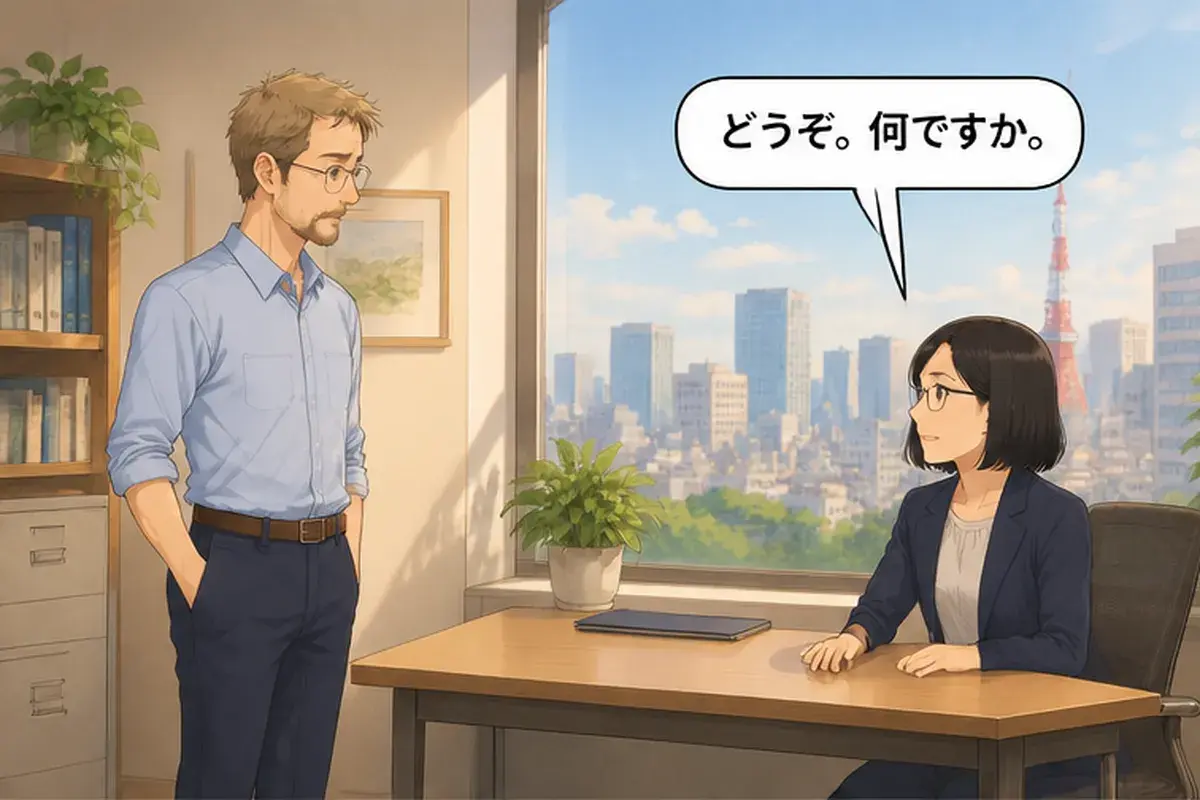
- 木村
どうぞ。何ですか。
Sure. What is it?
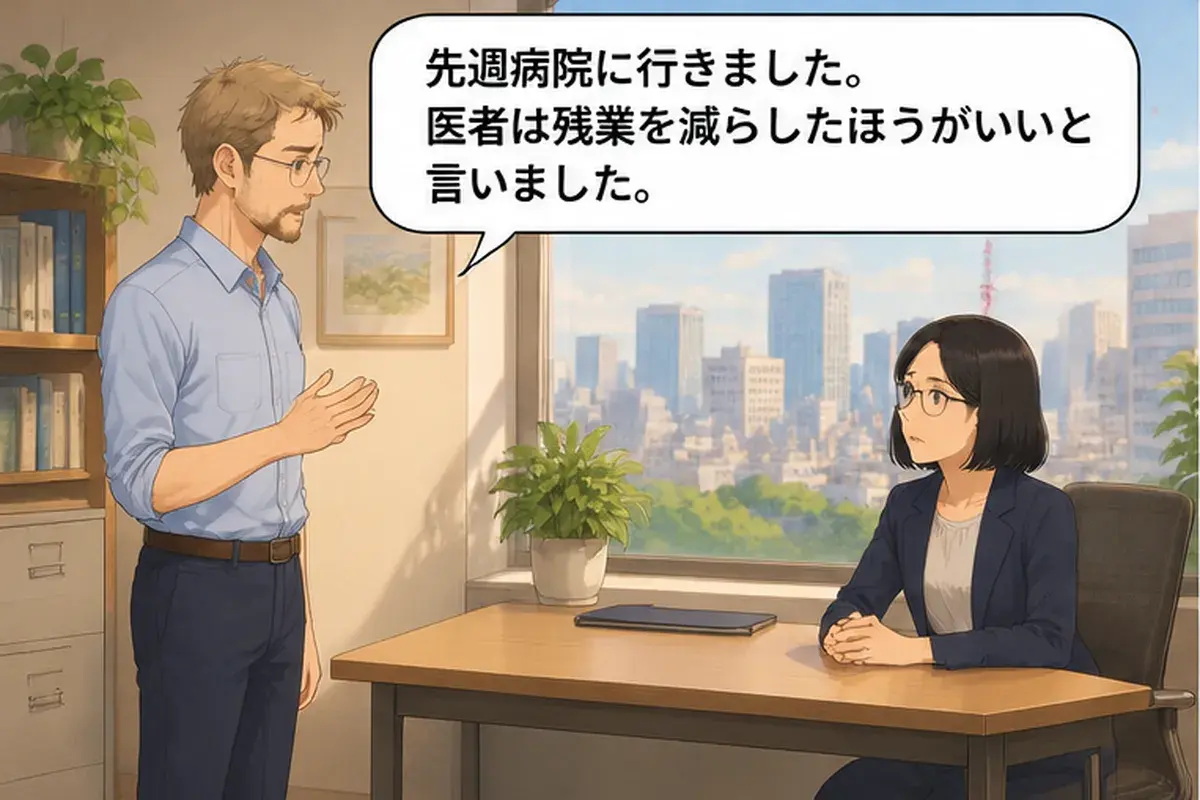
- マルク
先週病院に行きました。医者は残業を減らしたほうがいいと言いました。
I went to the hospital last week. The doctor said I should cut back on overtime.
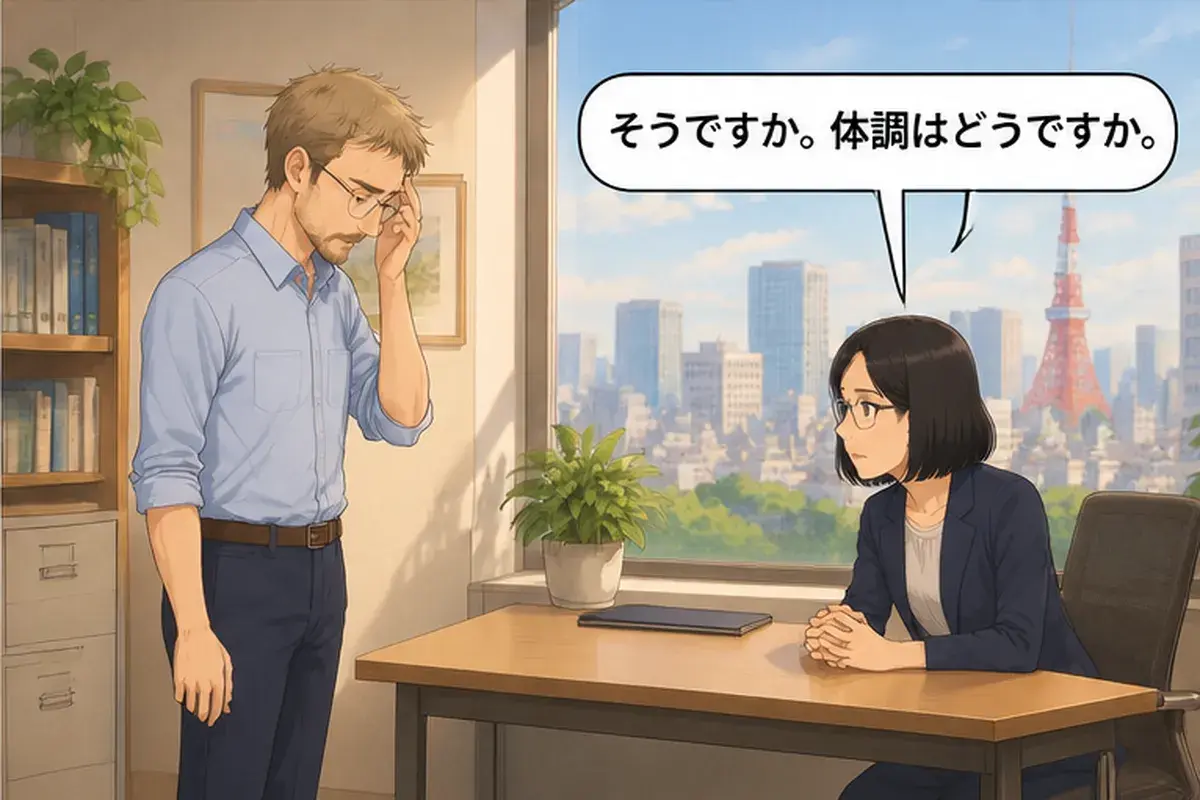
- 木村
そうですか。体調はどうですか。
I see. How are you feeling?

- マルク
頭痛がします。それに、仕事が増えて、毎日残業しています。
I have headaches. Also, my workload has increased, and I'm working overtime every day.
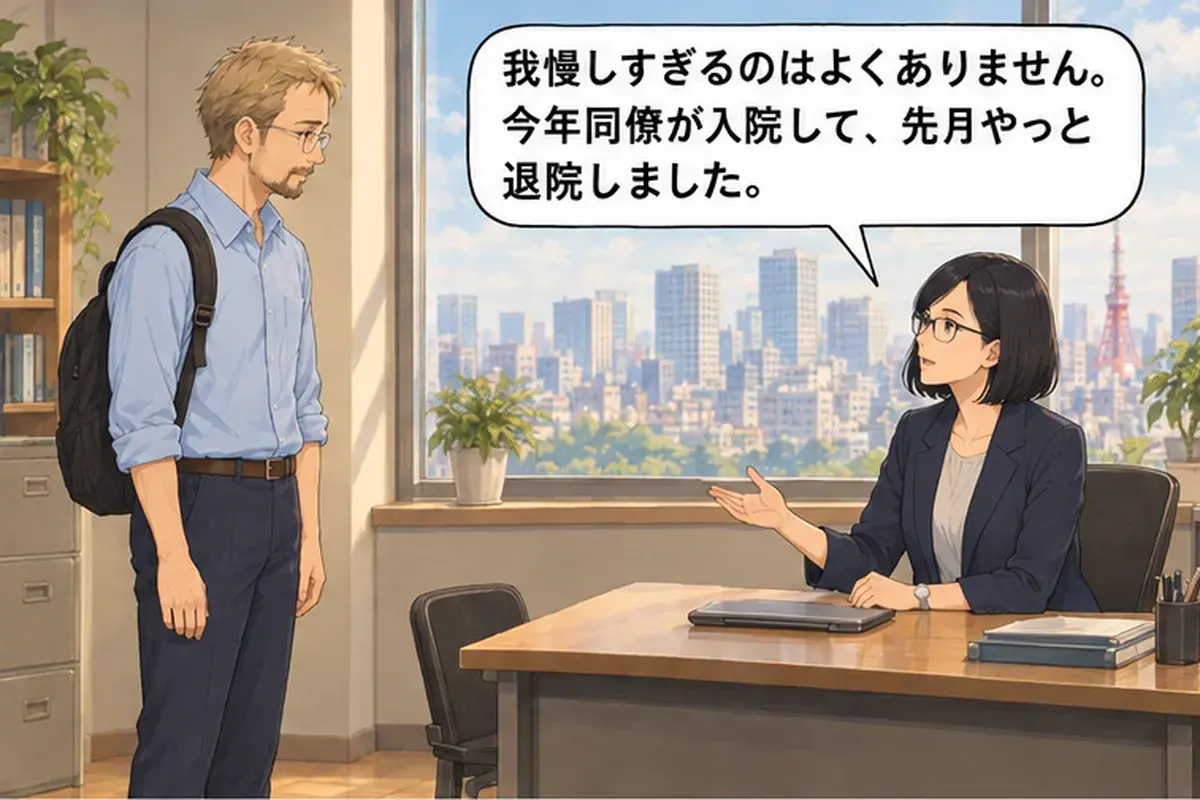
- 木村
我慢しすぎるのはよくありません。今年同僚が入院して、先月やっと退院しました。
It's not good to hold out too long. A coworker was hospitalized this year, and was finally discharged last month.

- マルク
すみません。何かアドバイスをいただけませんか。
I'm sorry. Could you give me some advice?

- 木村
そうですね。まず、睡眠をじゅうぶん取ってください。医者は他に何を勧めましたか。
Let me see. First, please get enough sleep. What else did the doctor recommend?

- マルク
休暇を勧めました。でも、今は仕事が多いので、無理です。
The doctor recommended taking time off. But I have a lot of work right now, so it's impossible.

- 木村
でも、休暇は取ったほうがいいです。仕事の方法は一緒に考えましょう。
Still, you should take time off. Let's think together about how to handle the work.

- マルク
ありがとうございます。それから、家で働いたら、朝通勤する時間に少し長く寝られます。それで、週に二日テレワークを許可していただけませんか。
Thank you. Also, if I work from home, I can sleep a little longer during the time I'd spend commuting in the morning. So could you please allow me to work remotely two days a week?

- 木村
いいですよ。体調がよくなったら、日を増やしてもいいです。
That's fine. When you feel better, you can add more days.

- マルク
ありがとうございます。水曜日と金曜日に家で働きます。
Thank you. I'll work from home on Wednesdays and Fridays.

- 木村
疲れたときは、我慢しないで相談してください。健康が一番大切です。
When you're tired, please don't hold it in; talk to me. Your health is the most important thing.
Grammar for this text
アドバイス を いただけませんか— Could you give me some advice? This is a very polite request, the kind you make to your boss: "Could you please...?" It's a fixed phrase based onもらう(unit 12); see the grammar of the unit.許可して いただけませんか— Could you please give your permission?医者 は 残業 を 減らした ほう が いい と 言いました— The doctor said I should cut back on overtime. Mark reports the doctor's words, and beforeとthey stay in the plain form (unit 7).我慢しすぎる の は よく ありません— It's not good to hold out too long.我慢するmeans "to put up with something, to hold back". Kimura-san says something unusual for Japan: holding it in for too long is bad.今年 同僚 が 入院して、先月 やっと 退院しました— A coworker was hospitalized this year, and was finally discharged last month.入院するmeans "to go into the hospital",退院するmeans "to leave the hospital", andやっとmeans "finally".休暇 を 勧めました— The doctor recommended taking time off.勧めるmeans "to recommend", and the thing recommended takesを.仕事 が 増えて— My workload has increased.増えるmeans that something becomes more by itself.日 を 増やして も いい です— You can add more days.増やすmeans that someone makes something more. These two verbs are a pair.体調 が よく なったら— When you feel better (たら, unit 11).疲れた とき は、我慢しないで 相談して ください— When you're tired, please don't hold it in; talk to me.ないで くださいmeans "please don't do this, do that instead" (unit 3).
Words and grammar of the unit: Give advice and ask for advice.
Learn the words from the texts with flashcards
In the app, you can tap any word in a text to see its translation, forms and examples, and new words stick with flashcards. 15 minutes a day.
Start for freeEverything is open for free. No card needed to sign up.