

Japanese dialogue with translation · A1 · 14 lines
土曜日はたぶん晴れでしょう Saturday will probably be sunny
Comic · 9 panels
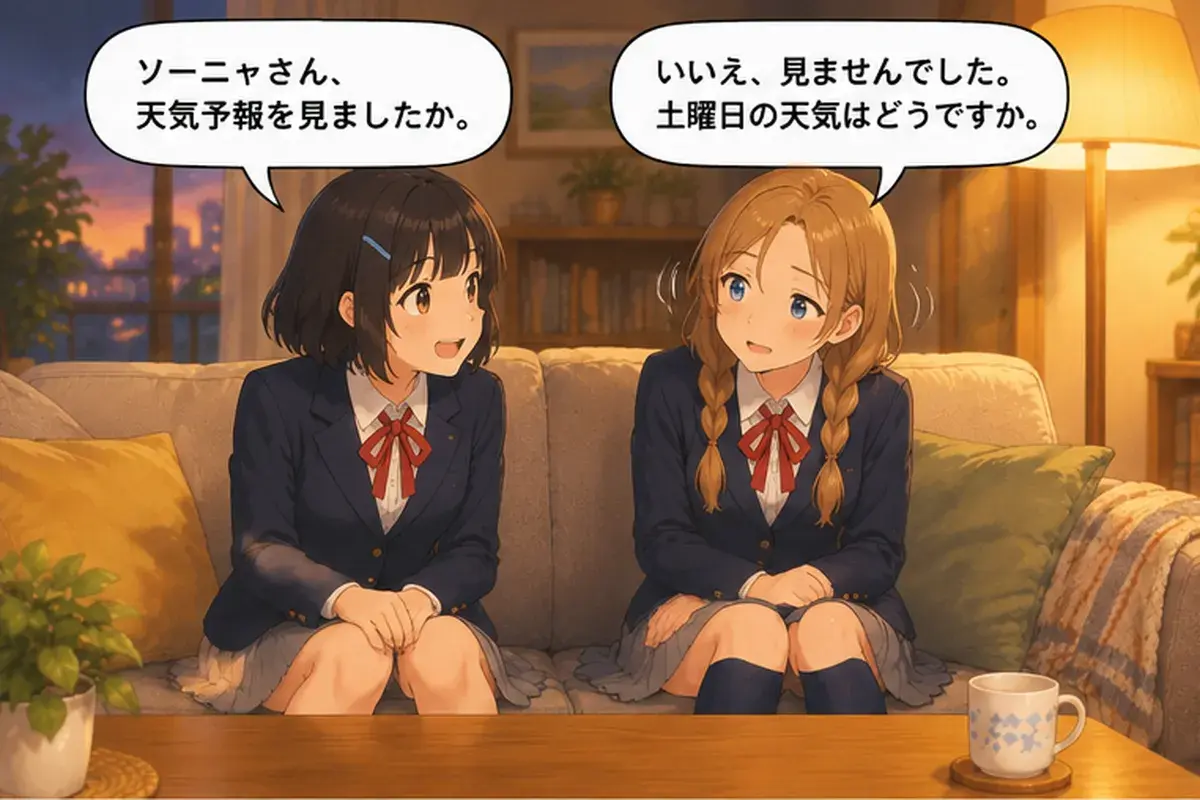
- ゆい
ソーニャさん、天気予報を見ましたか。
Sonya-san, did you watch the weather forecast?
- ソーニャ
いいえ、見ませんでした。土曜日の天気はどうですか。
No, I didn't. What's the weather like on Saturday?
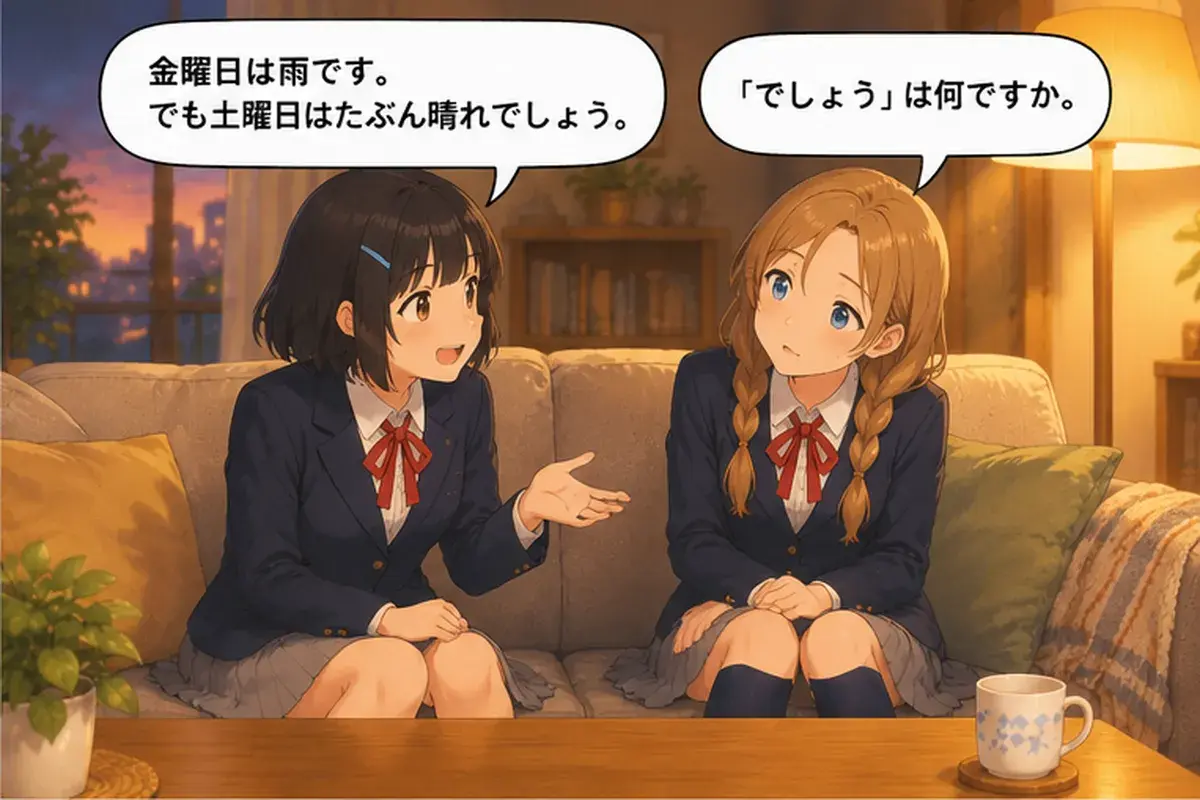
- ゆい
金曜日は雨です。でも土曜日はたぶん晴れでしょう。
Friday is rain. But Saturday will probably be sunny.
- ソーニャ
「でしょう」は何ですか。
What's "deshou"?
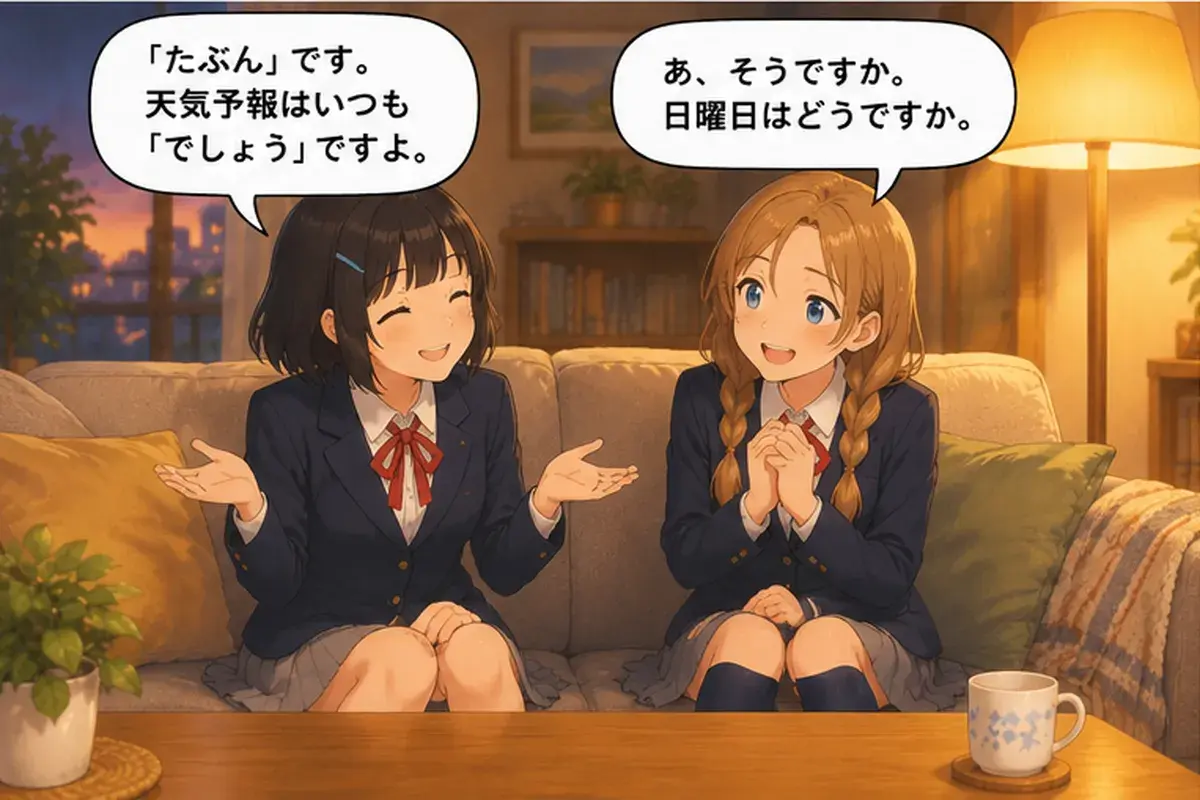
- ゆい
「たぶん」です。天気予報はいつも「でしょう」ですよ。
"Tabun", that is, "probably". The weather forecast always says "deshou".
- ソーニャ
あ、そうですか。日曜日はどうですか。
Oh, I see. What about Sunday?
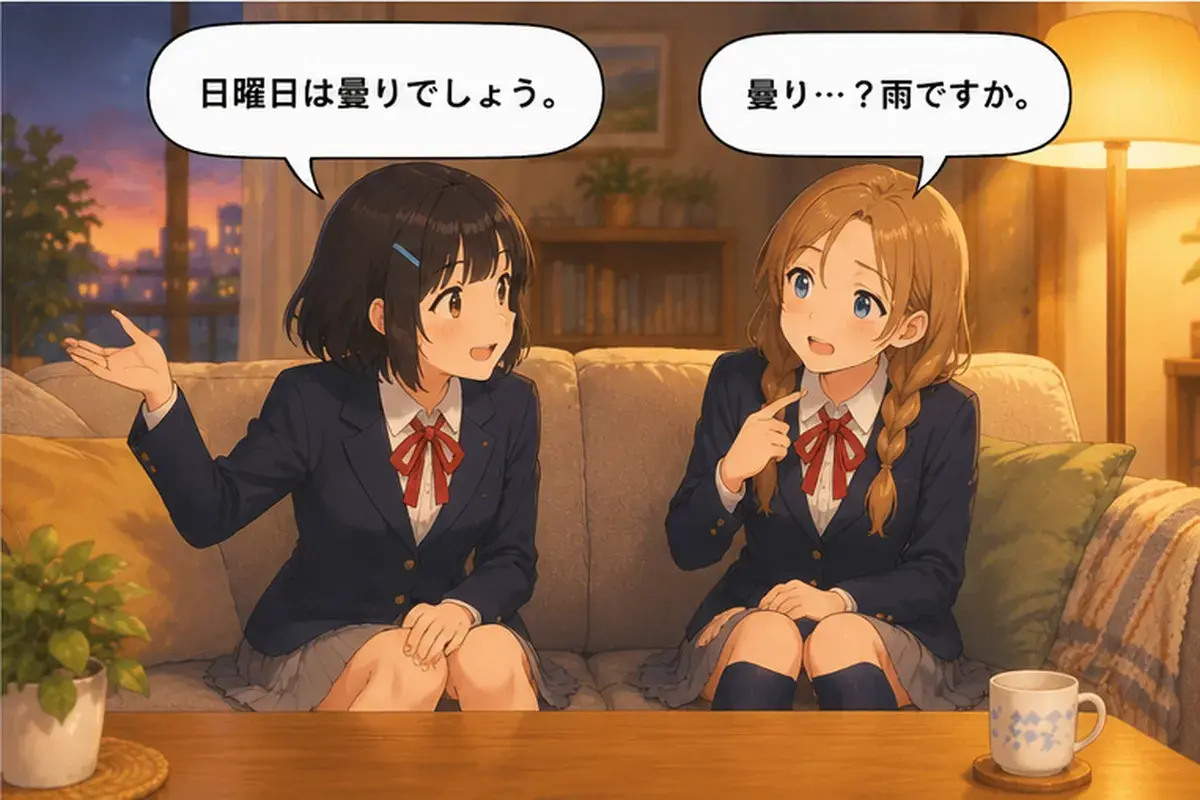
- ゆい
日曜日は曇りでしょう。
Sunday will probably be cloudy.
- ソーニャ
曇り…?雨ですか。
Kumori...? Is it rain?
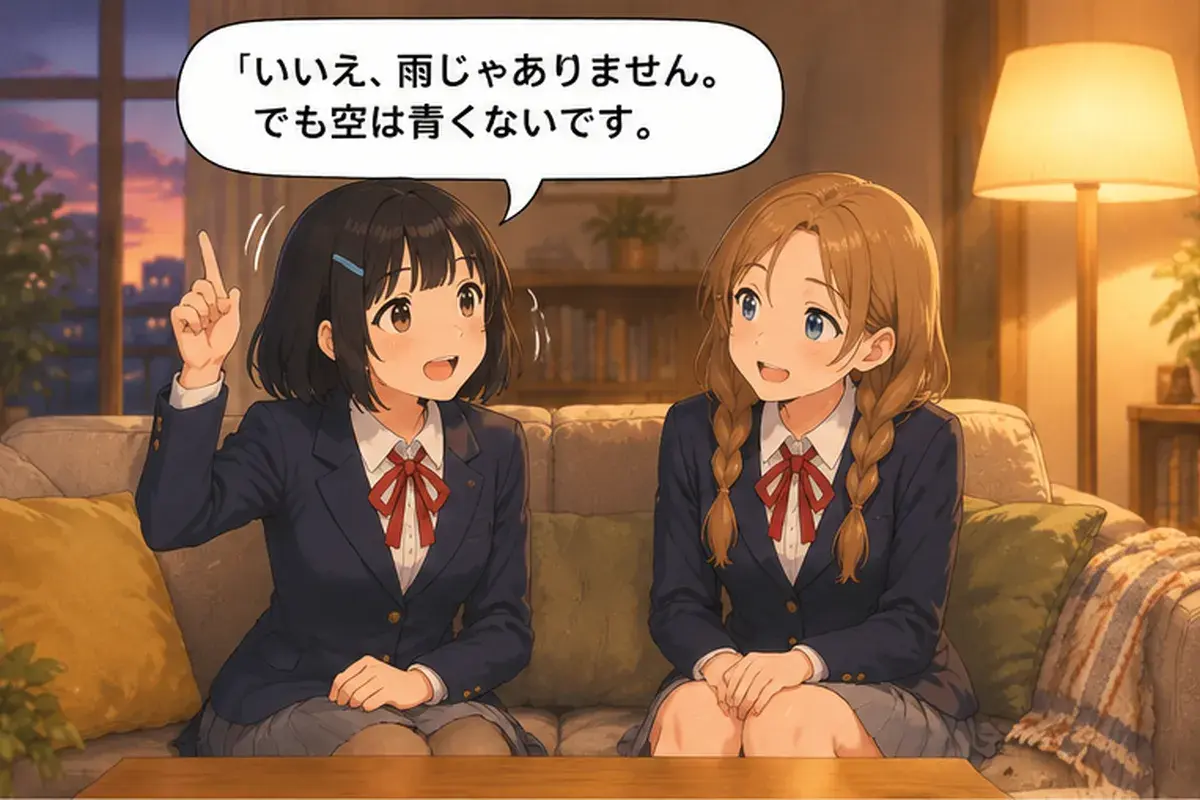
- ゆい
いいえ、雨じゃありません。でも空は青くないです。
No, it isn't rain. But the sky isn't blue.
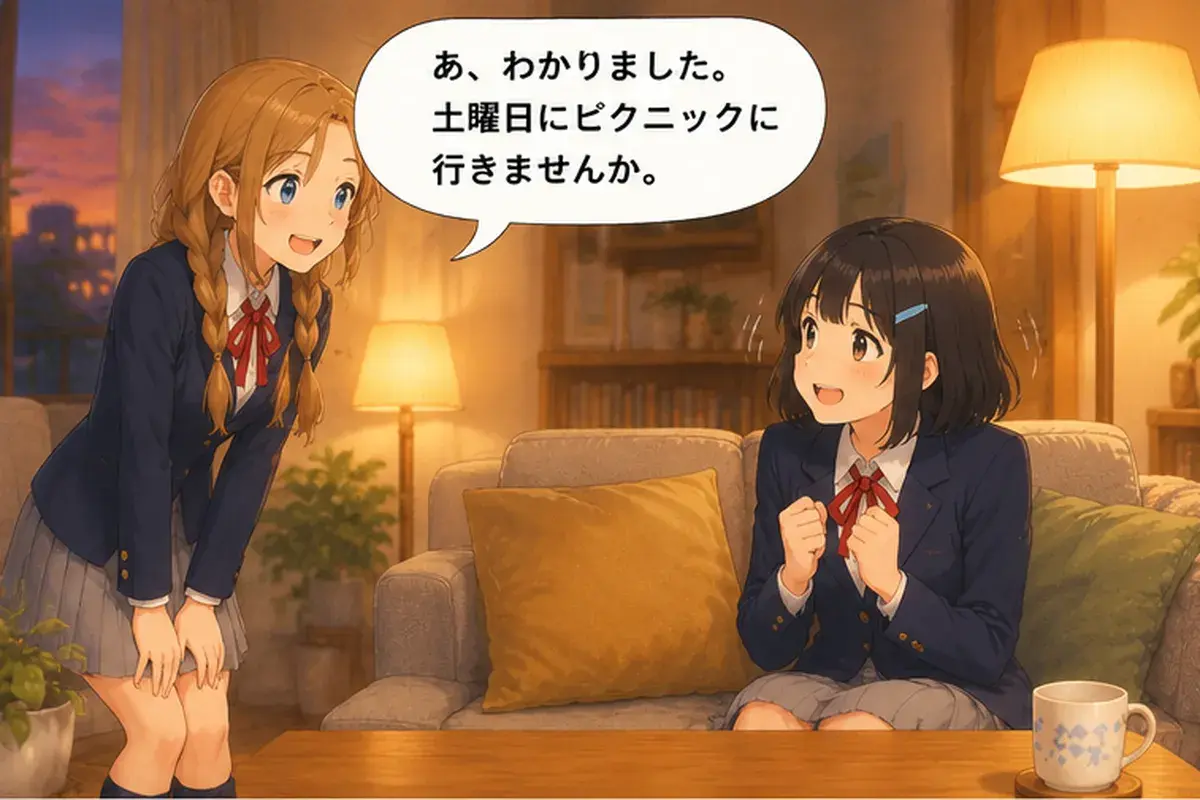
- ソーニャ
あ、わかりました。土曜日にピクニックに行きませんか。
Oh, got it. Why don't we go on a picnic on Saturday?
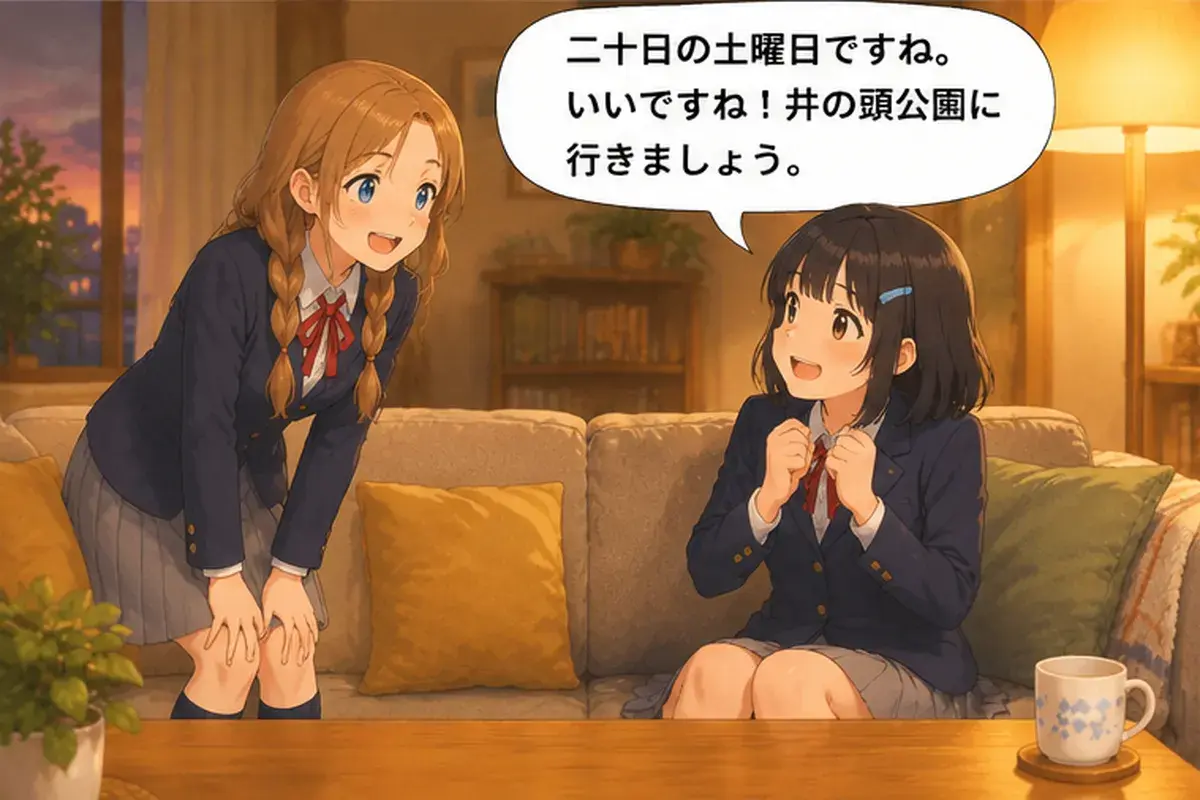
- ゆい
二十日の土曜日ですね。いいですね!井の頭公園に行きましょう。
Saturday the 20th, right? Sounds good! Let's go to Inokashira Park.
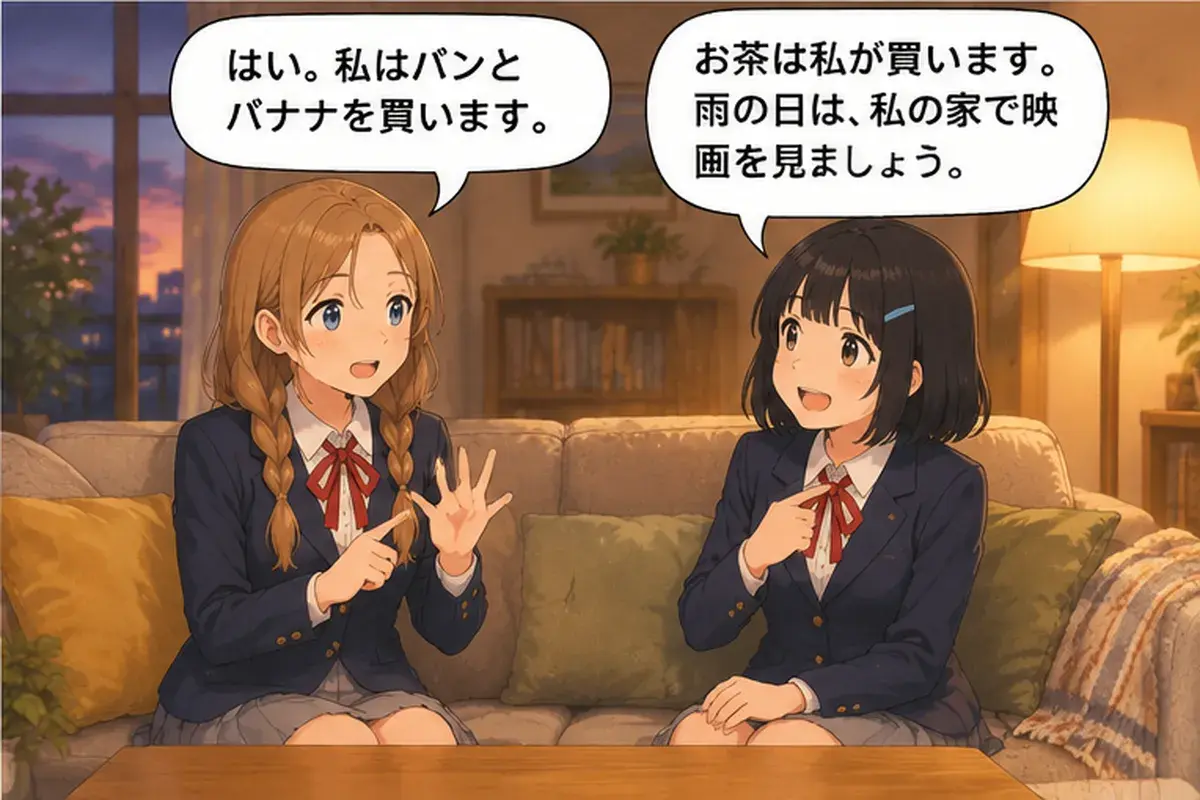
- ソーニャ
はい。私はパンとバナナを買います。
Okay. I'll buy bread and bananas.
- ゆい
お茶は私が買います。雨の日は、私の家で映画を見ましょう。
I'll buy the tea. On a rainy day, let's watch a movie at my house.
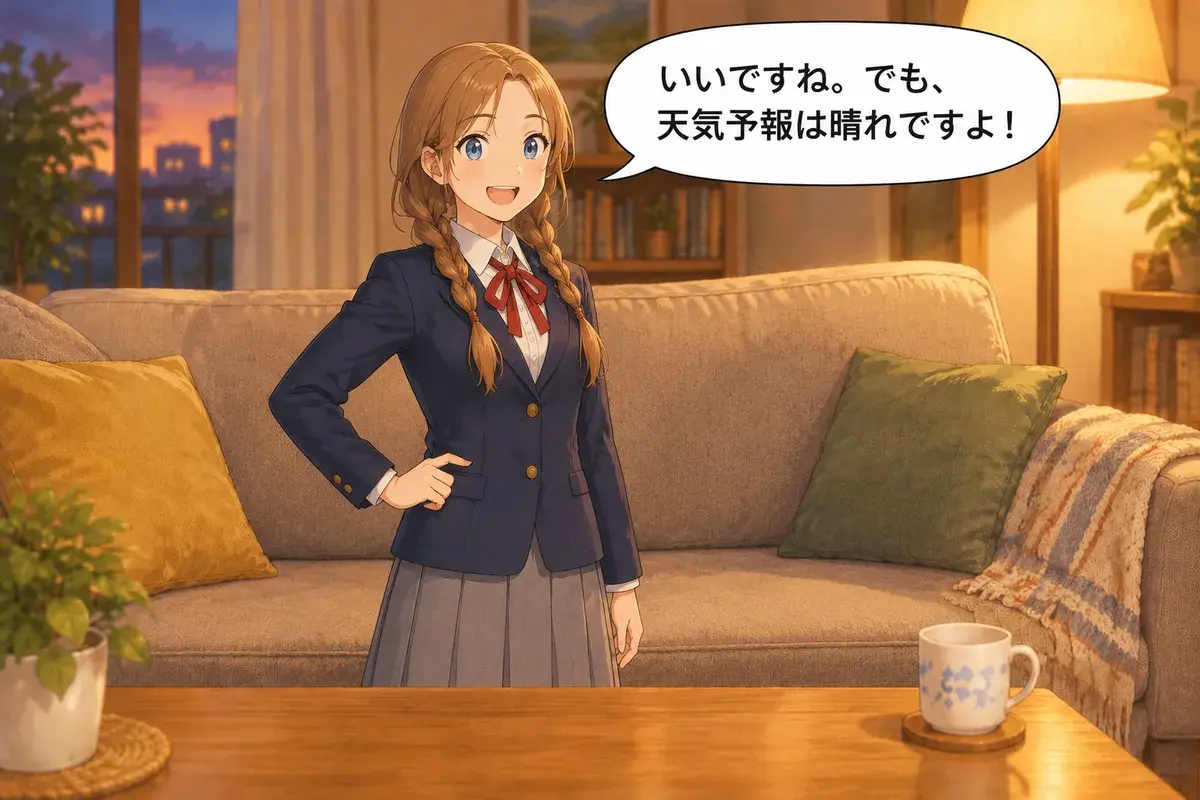
- ソーニャ
いいですね。でも、天気予報は晴れですよ!
Sounds good. But the weather forecast says sunny!
Grammar for this text
でしょう — "probably, most likely". It's です in its unsure form. Weather forecasts use it all the time, and it goes after a word, not after a verb: 晴れ でしょう, 曇り でしょう. Compare: 雨 です is "rain" (for sure), 雨 でしょう is "probably rain".
「でしょう」 は 何 です か — Sonya is asking about a word, so the word is in the brackets 「 」. Japanese texts use them to mark a word that people are talking about, like quotation marks in English.
曇り…? — Sonya doesn't know the word 曇り "cloudy" yet, so she asks about it. Yui explains: 空 は 青くない です. 青い is "blue", and 青くない is "not blue" (unit 8).
ピクニック に 行きません か — an invitation, not a negative: "why don't we go?" (unit 7). The answer is 行きましょう.
二十日 の 土曜日 です ね — Yui checks the date: "Saturday the 20th, right?" 二十日 has a special reading: はつか (hatsuka), not にじゅうにち.
お茶 は 私 が 買います — は sets the topic ("as for the tea"), and が shows who will do it: "I'll buy the tea".
雨 の 日 は、 私 の 家 で 映画 を 見ましょう — a backup plan: "if it rains, a movie at my place". 雨 の 日 means "a rainy day".
天気予報 は 晴れ です よ — Sonya trusts the forecast: "the forecast says sunny!"
Words and grammar of the unit: Talking about the weather.
Learn the words from the texts with flashcards
In the app, you can tap any word in a text to see its translation, forms and examples, and new words stick with flashcards. 15 minutes a day.
Start for freeEverything is open for free. No card needed to sign up.