

Japanese dialogue with translation · A1 · 13 lines
休みじゃありませんね That's not a day off
Comic · 11 panels
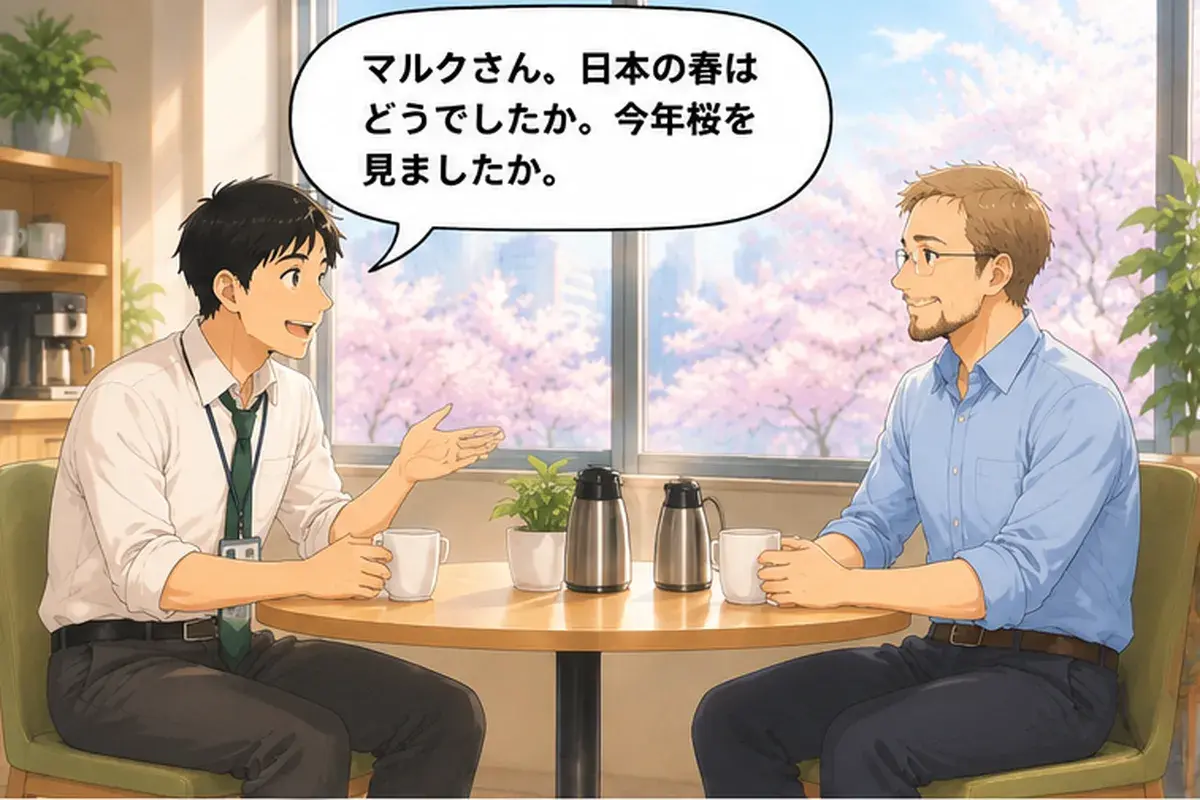
- けん
マルクさん、日本の春はどうでしたか。今年桜を見ましたか。
Mark-san, how was spring in Japan? Did you see the cherry blossoms this year?
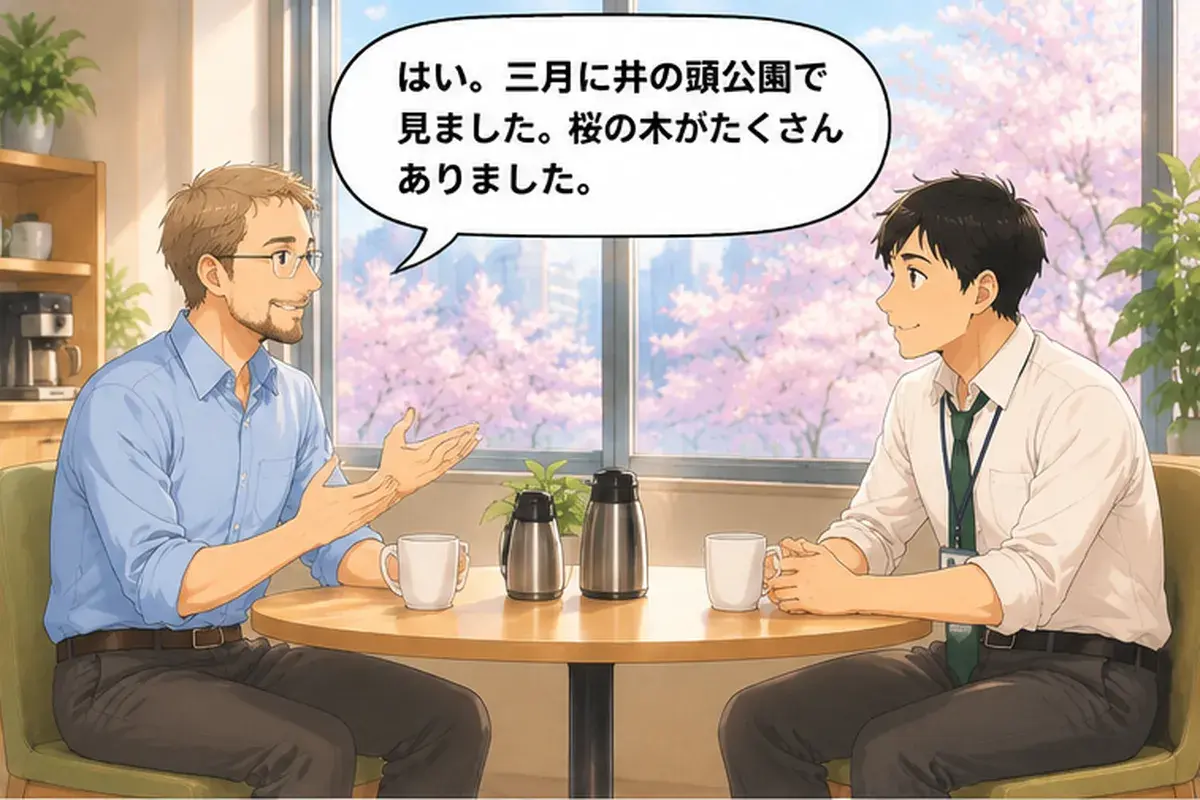
- マルク
はい。三月に井の頭公園で見ました。桜の木がたくさんありました。
Yes. I saw them at Inokashira Park in March. There were lots of cherry trees.
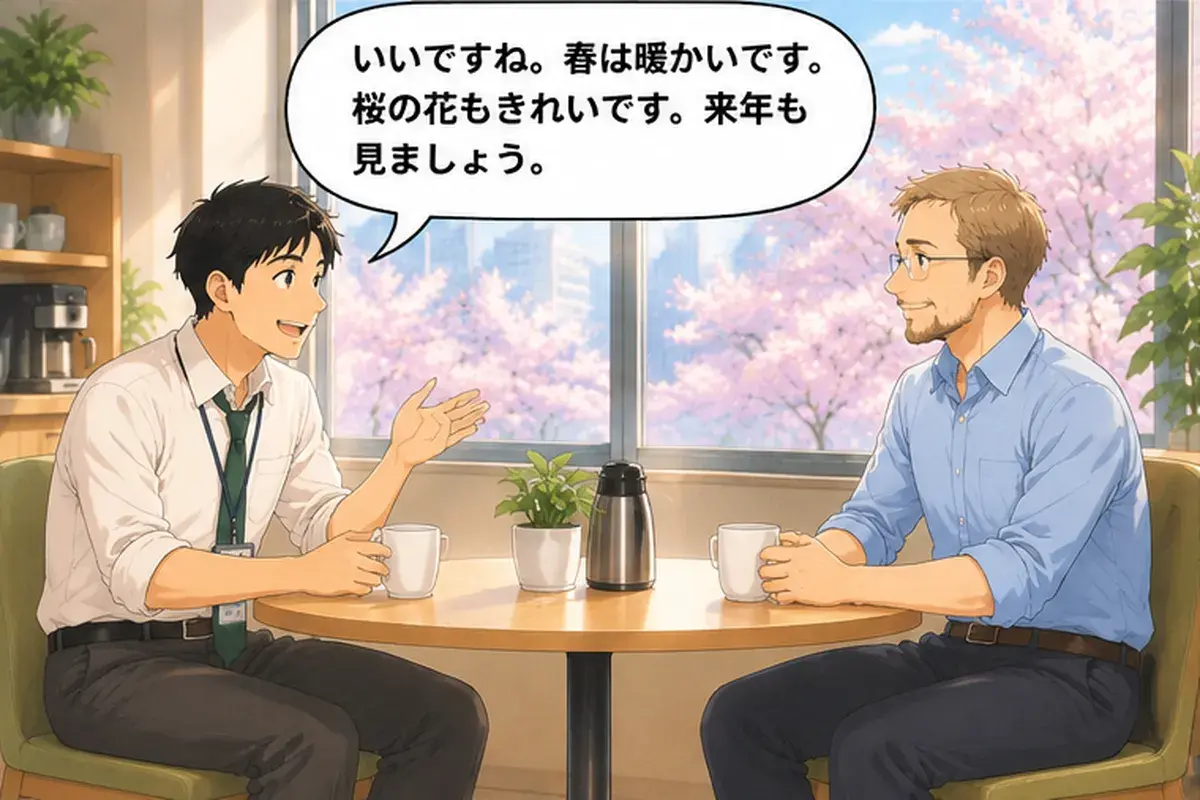
- けん
いいですね。春は暖かいです。桜の花もきれいです。来年も見ましょう。
That's nice. Spring is warm. The cherry blossoms are beautiful too. Let's see them next year too.
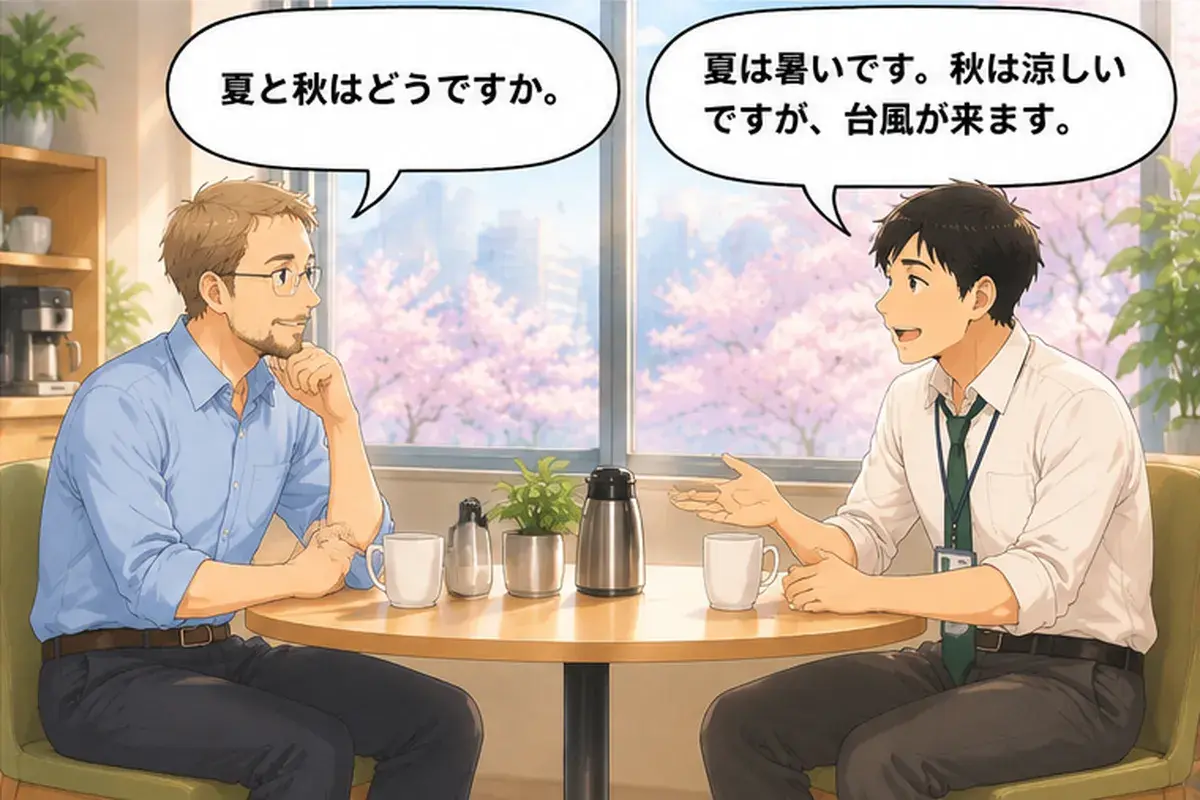
- マルク
夏と秋はどうですか。
What about summer and fall?
- けん
夏は暑いです。秋は涼しいですが、台風が来ます。
Summer is hot. Fall is cool, but typhoons come.
- マルク
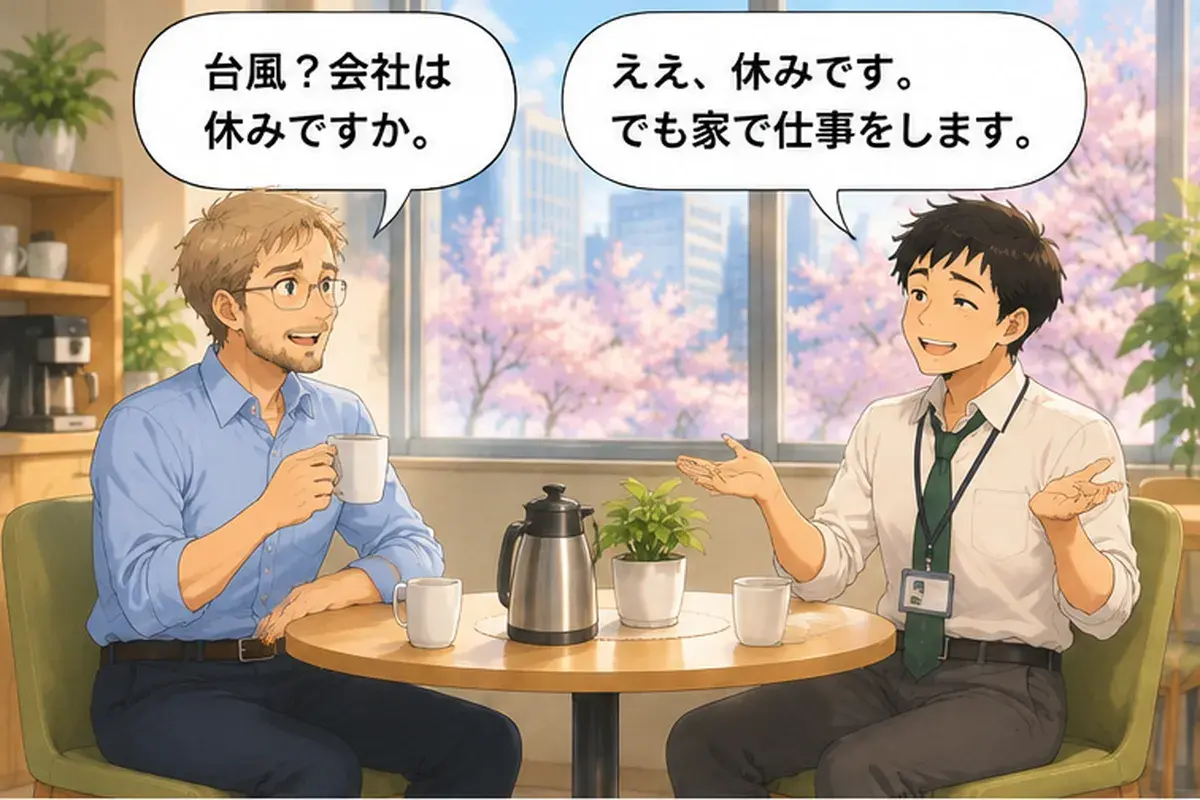
台風?会社は休みですか。
Typhoons? Is the company closed?
- けん
ええ、休みです。でも家で仕事をします。
Yes, it's closed. But we work at home.
- マルク
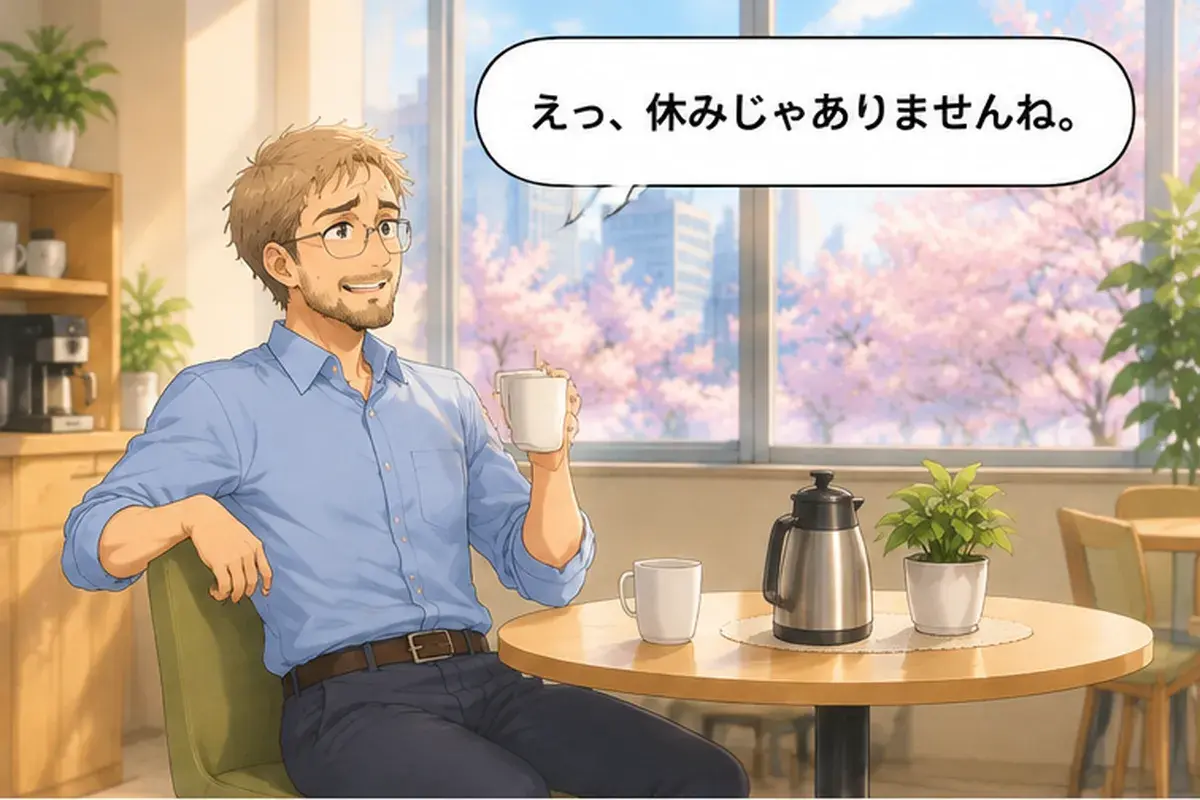
えっ、休みじゃありませんね。
Huh? Then it's not a day off.
- けん
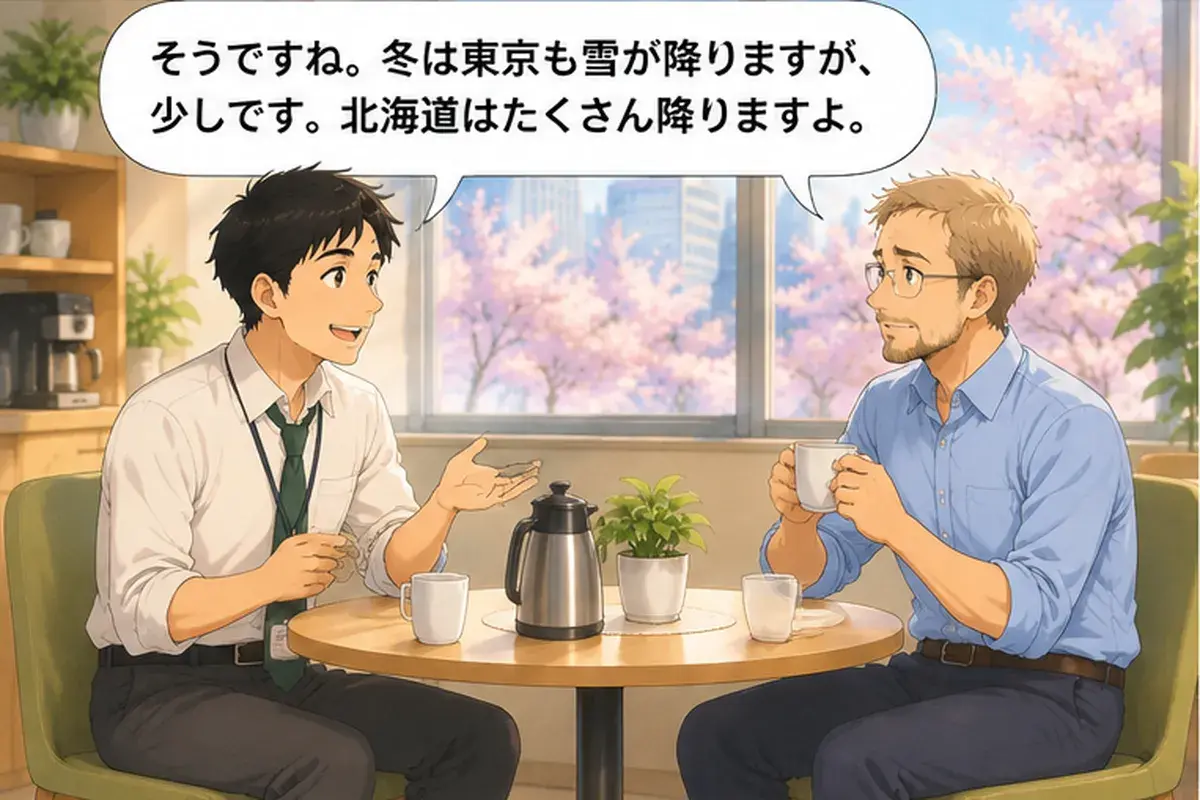
そうですね。冬は東京も雪が降りますが、少しです。北海道はたくさん降りますよ。
That's true. In winter, it snows in Tokyo too, but only a little. In Hokkaido, it snows a lot.
- マルク
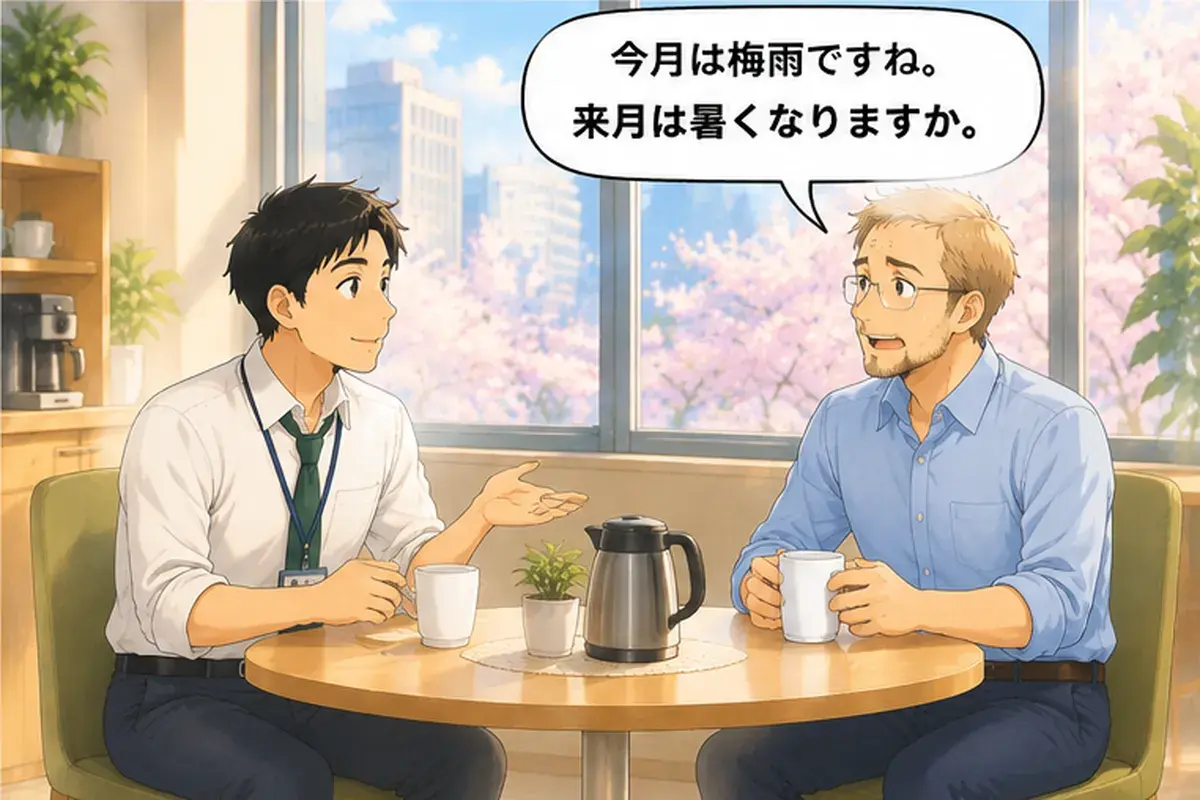
今月は梅雨ですね。来月は暑くなりますか。
This month is the rainy season, right? Will it get hot next month?
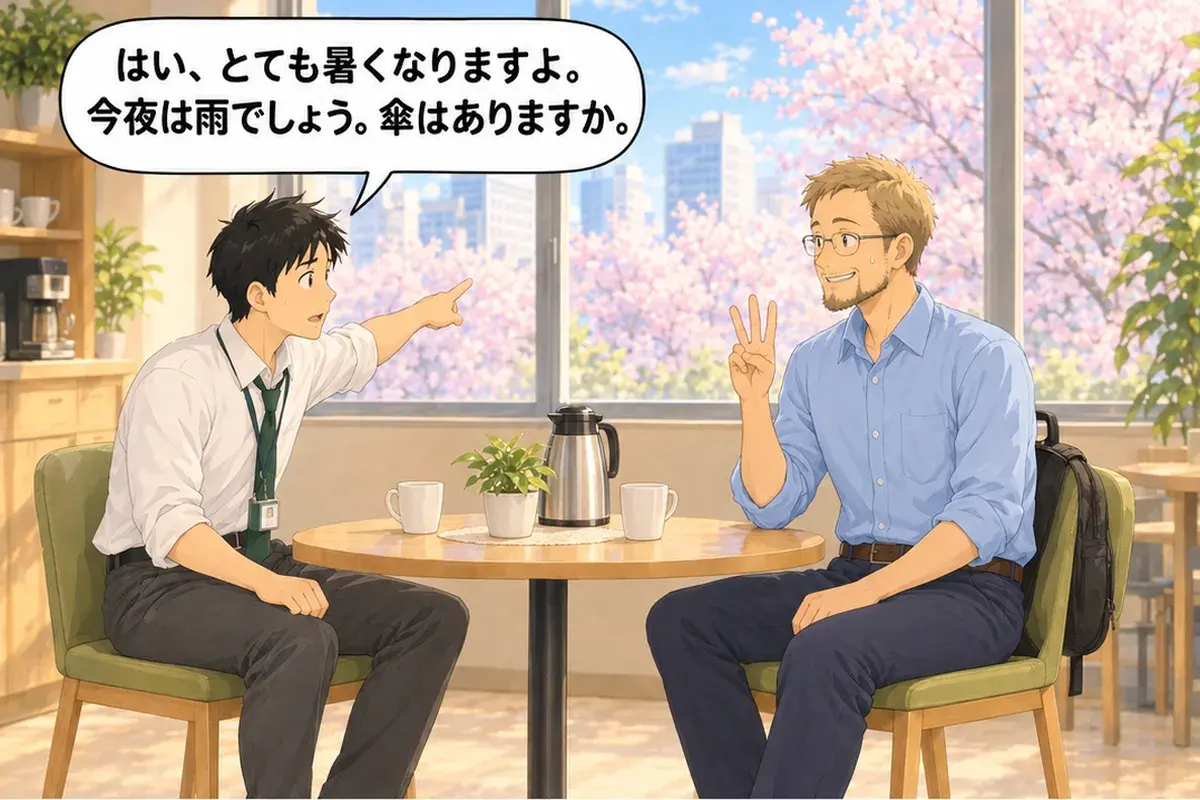
- けん
はい、とても暑くなりますよ。今夜は雨でしょう。傘はありますか。
Yes, it'll get very hot. It'll probably rain tonight. Do you have an umbrella?
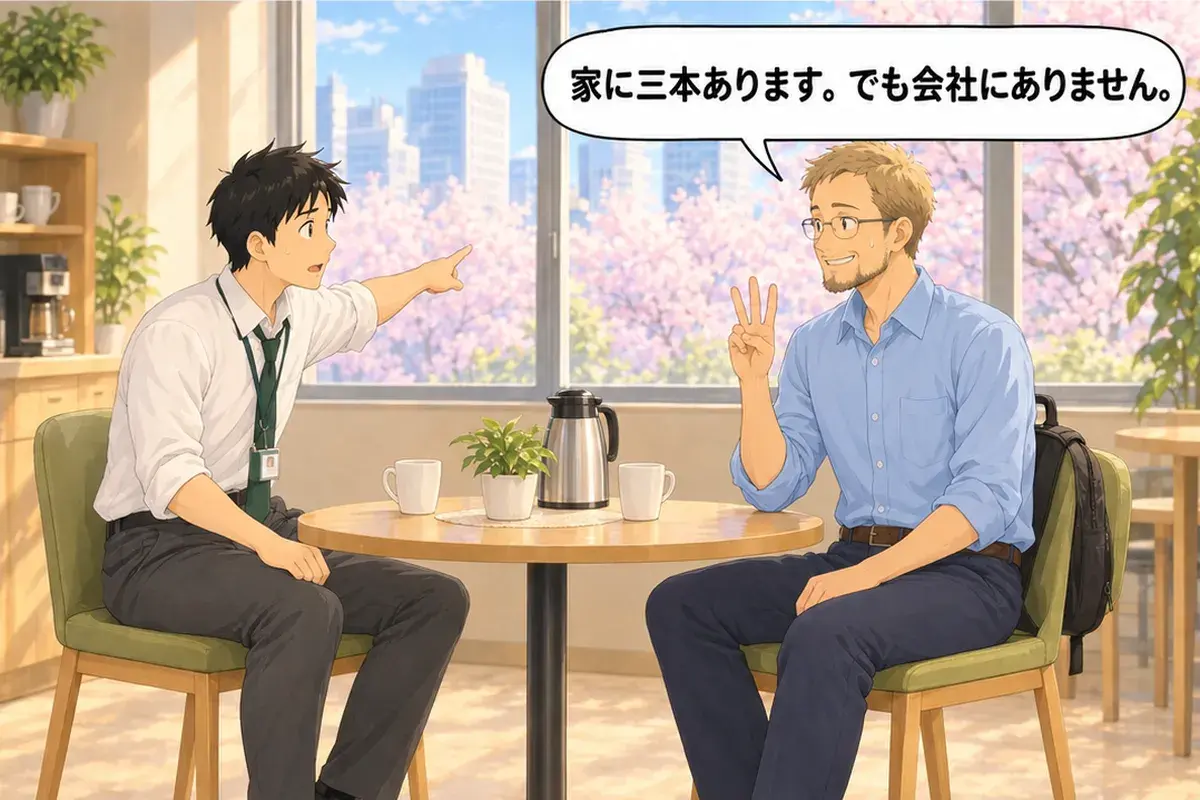
- マルク
家に三本あります。でも会社にありません。
I have three at home. But I don't have one at work.
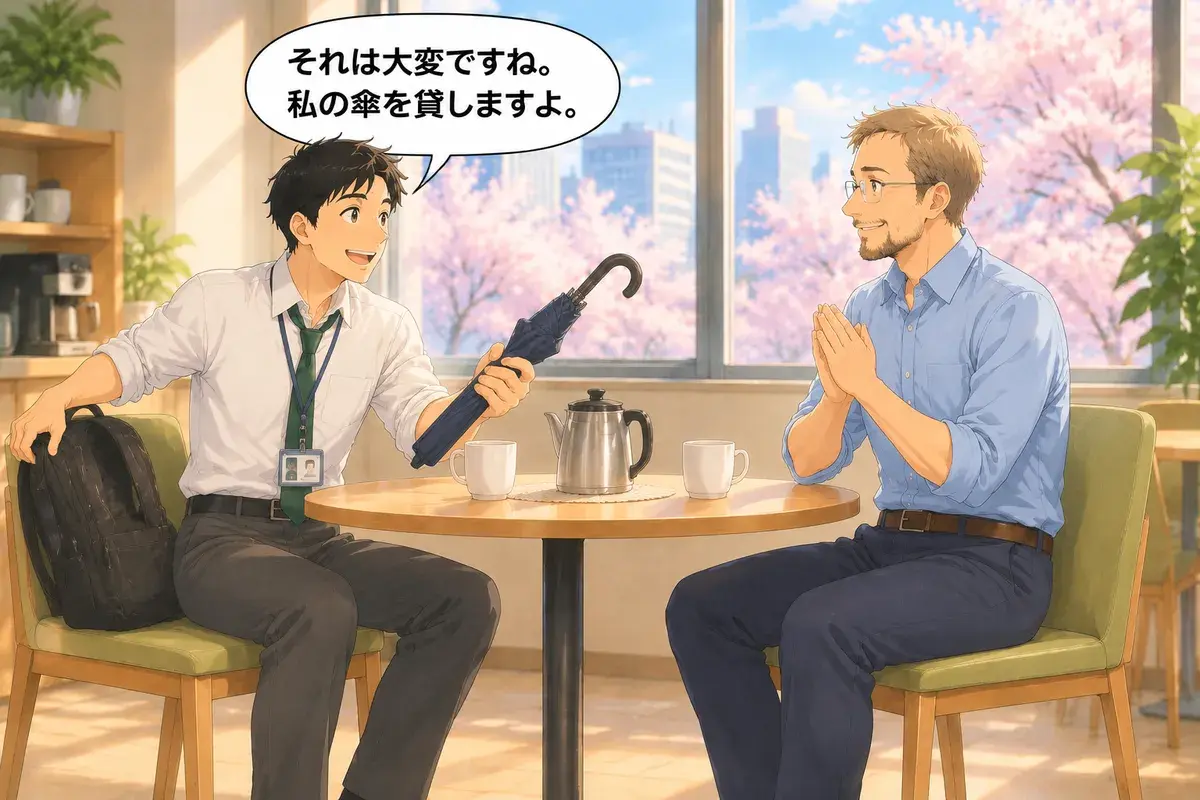
- けん
それは大変ですね。私の傘を貸しますよ。
That's tough. I'll lend you my umbrella.
Grammar for this text
どう でした か — "how was it?": でした is the past of です (unit 11).
桜 の 花, 桜 の 木 — の links two nouns: "cherry blossoms", "cherry trees".
今年, 来年 — "this year", "next year". They're read ことし and らいねん.
三月 に 井の頭公園 で 見ました — a month takes に: "in March". 三月 is read さんがつ (sangatsu).
暖かい — "warm" (about the weather and the air); 暑い — "hot"; 涼しい — "pleasantly cool". "It's warm in spring" puts 春 and 暖かい together.
台風 が 来ます — typhoons come from August to October, mostly in the fall.
休み じゃ ありません ね — Mark is being ironic: if you work at home anyway, it isn't a day off. じゃ ありません means "isn't" (unit 2).
冬 は 東京 も 雪 が 降ります が、 少し です — here が means "but". 少し means "a little".
来月 は 暑く なります か — "will it get hot next month?"; 暑く なります is this unit's grammar.
今夜 は 雨 でしょう — "it'll probably rain". 傘 は あります か — "do you have an umbrella?"
家 に 三本 あります — 三本 (さんぼん): 本 counts umbrellas. 会社 に ありません — once again Mark has no umbrella at work: a joke about how absent-minded he is. 貸します means "I'll lend" (from 貸す, unit 14).
Words and grammar of the unit: Talking about the weather.
Learn the words from the texts with flashcards
In the app, you can tap any word in a text to see its translation, forms and examples, and new words stick with flashcards. 15 minutes a day.
Start for freeEverything is open for free. No card needed to sign up.