
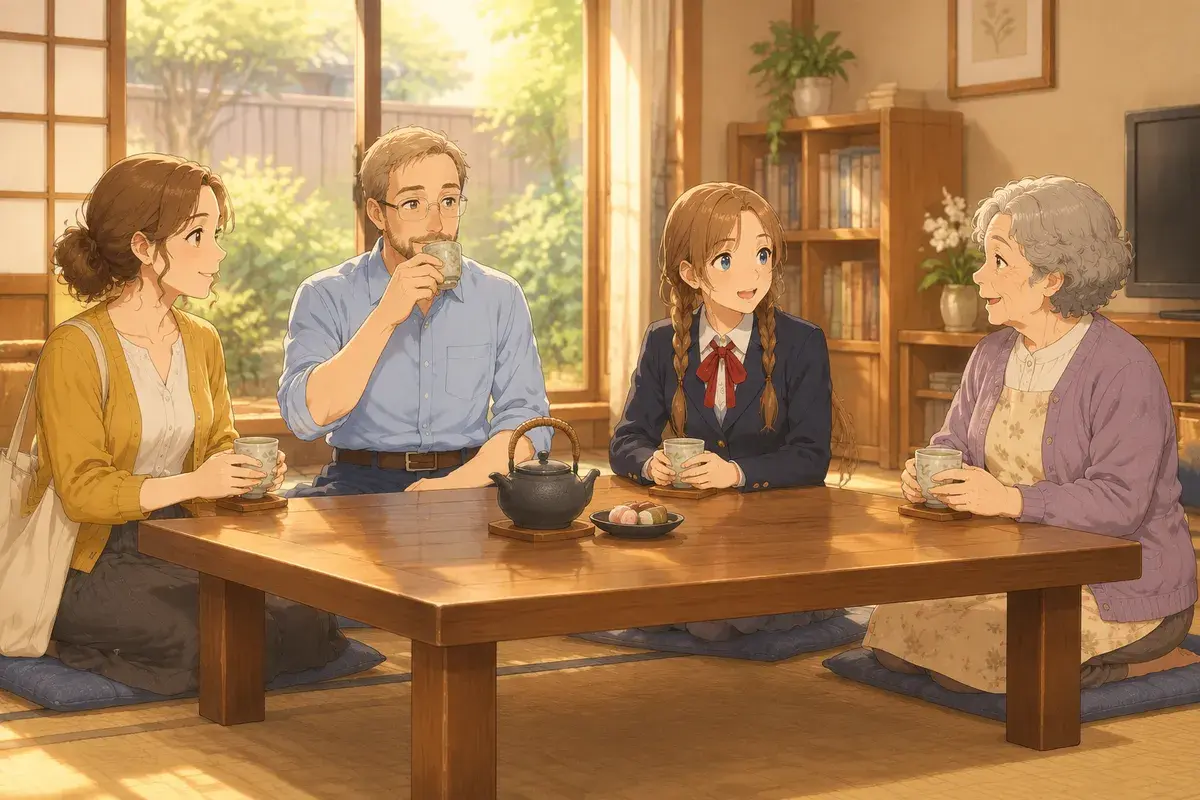
Japanese dialogue with translation · A1 · 14 lines
どこかへ行きたいです I want to go somewhere
Comic · 14 panels
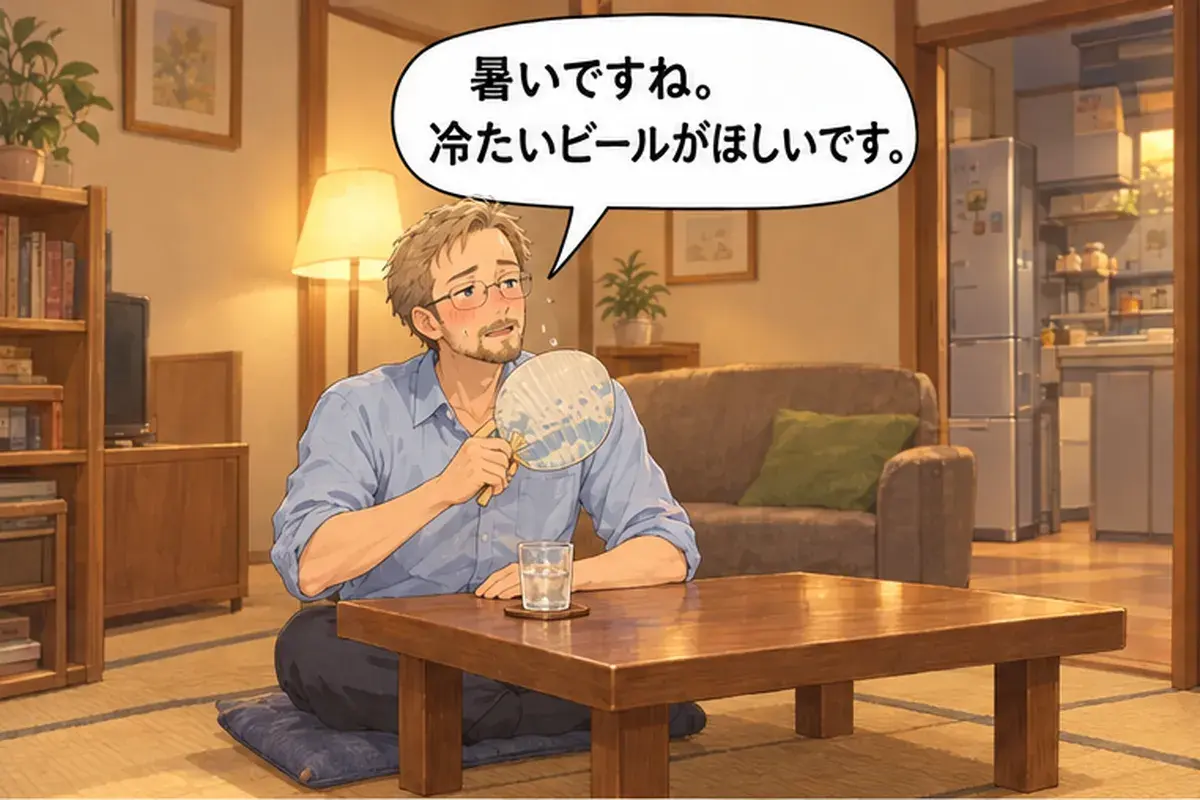
- マルク
暑いですね。冷たいビールがほしいです。
It's hot, isn't it? I want a cold beer.
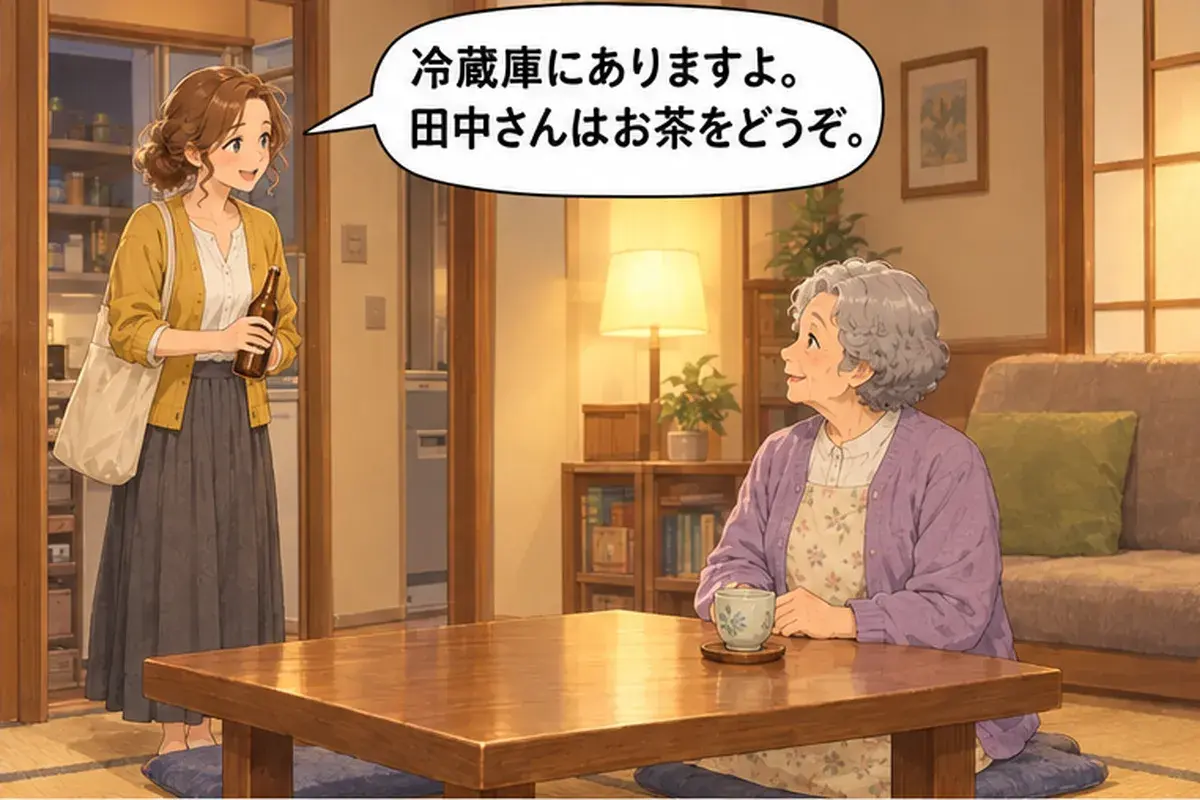
- アンナ
冷蔵庫にありますよ。田中さんはお茶をどうぞ。
There's some in the fridge. Tanaka-san, please have some tea.
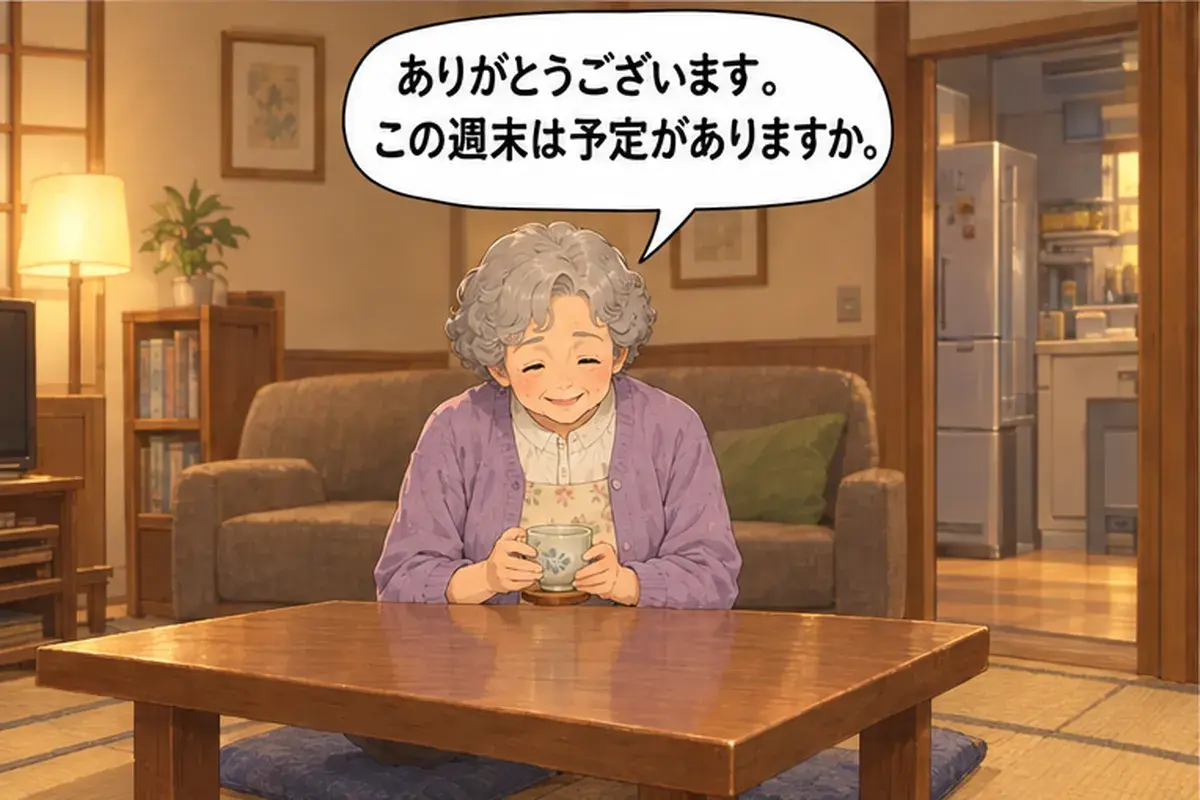
- 田中
ありがとうございます。この週末は予定がありますか。
Thank you. Do you have any plans this weekend?
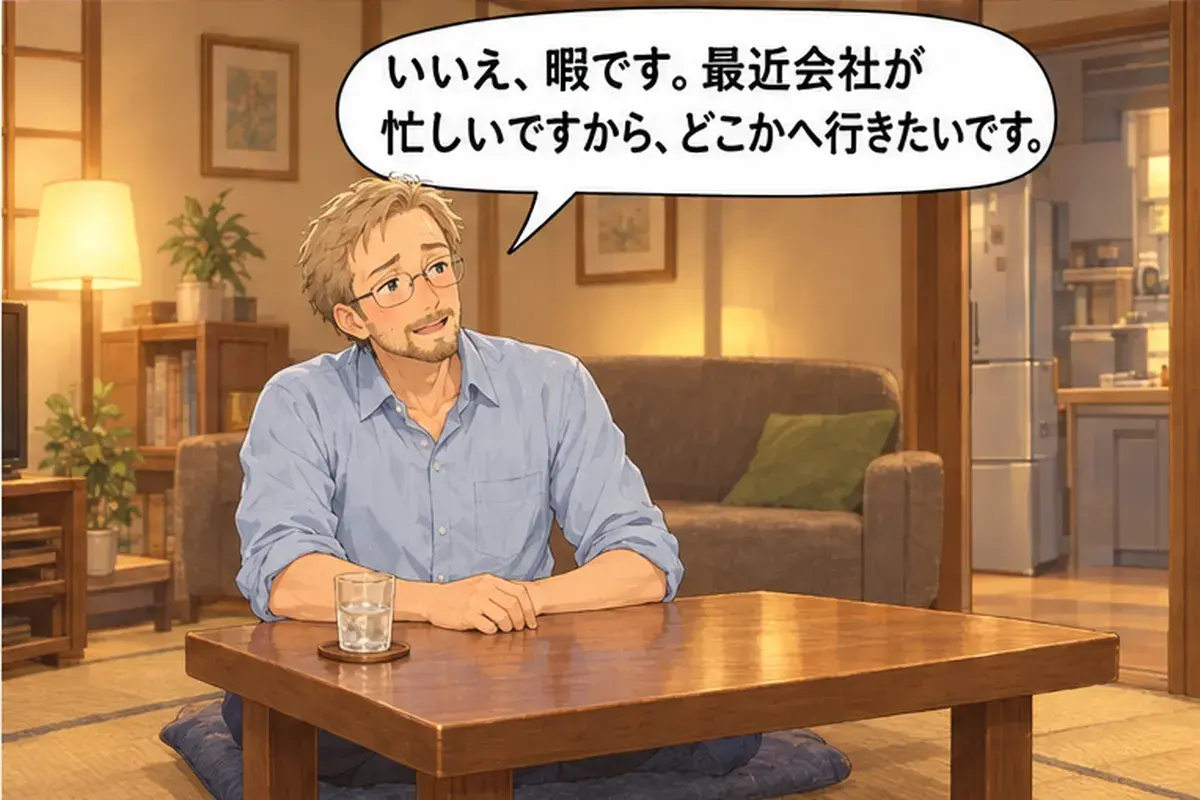
- マルク
いいえ、暇です。最近会社が忙しいですから、どこかへ行きたいです。
No, I'm free. My company has been busy lately, so I want to go somewhere.
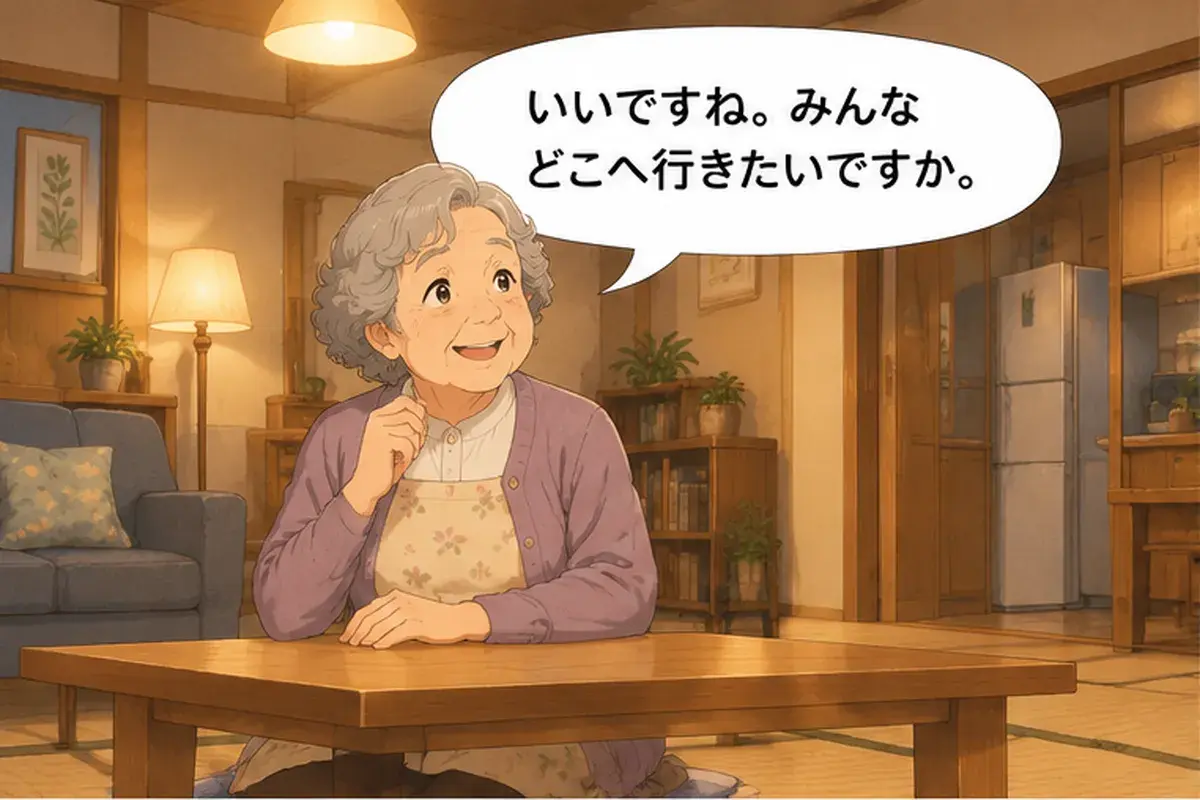
- 田中
いいですね。みんなどこへ行きたいですか。
Sounds good. Where do you all want to go?
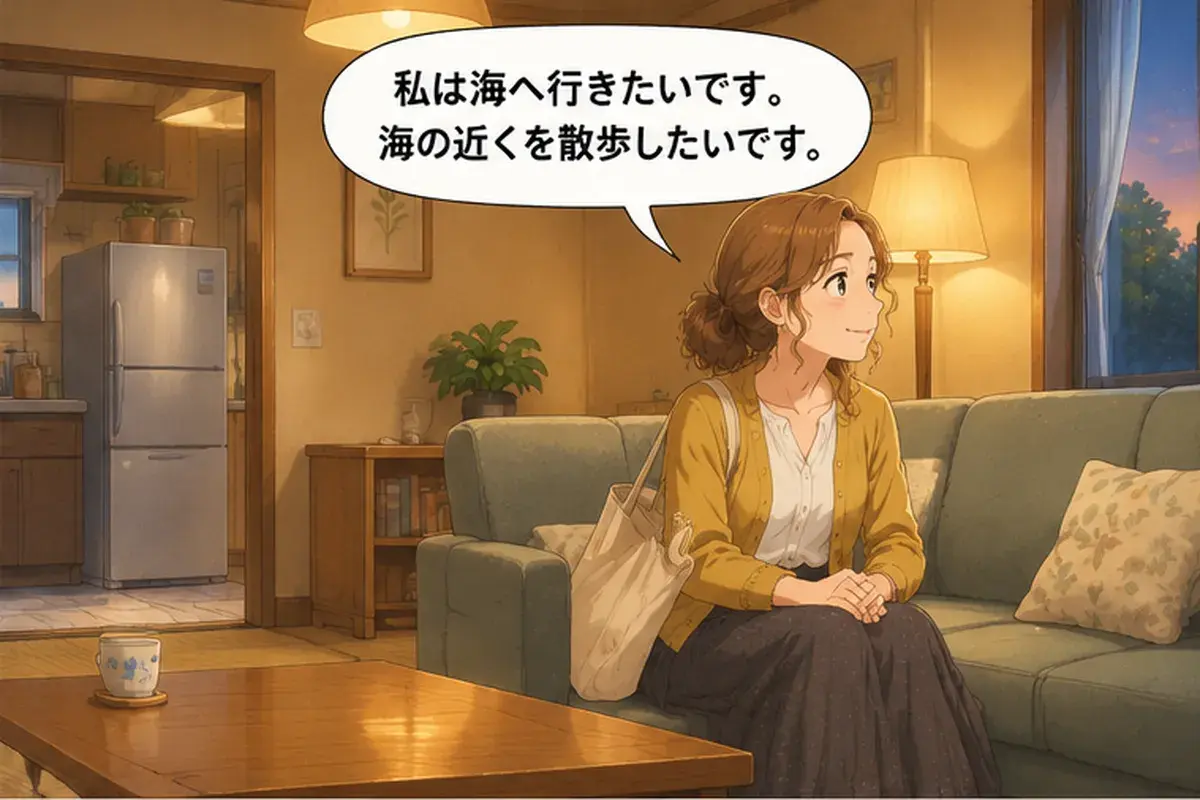
- アンナ
私は海へ行きたいです。海の近くを散歩したいです。
I want to go to the sea. I want to take a walk near the sea.
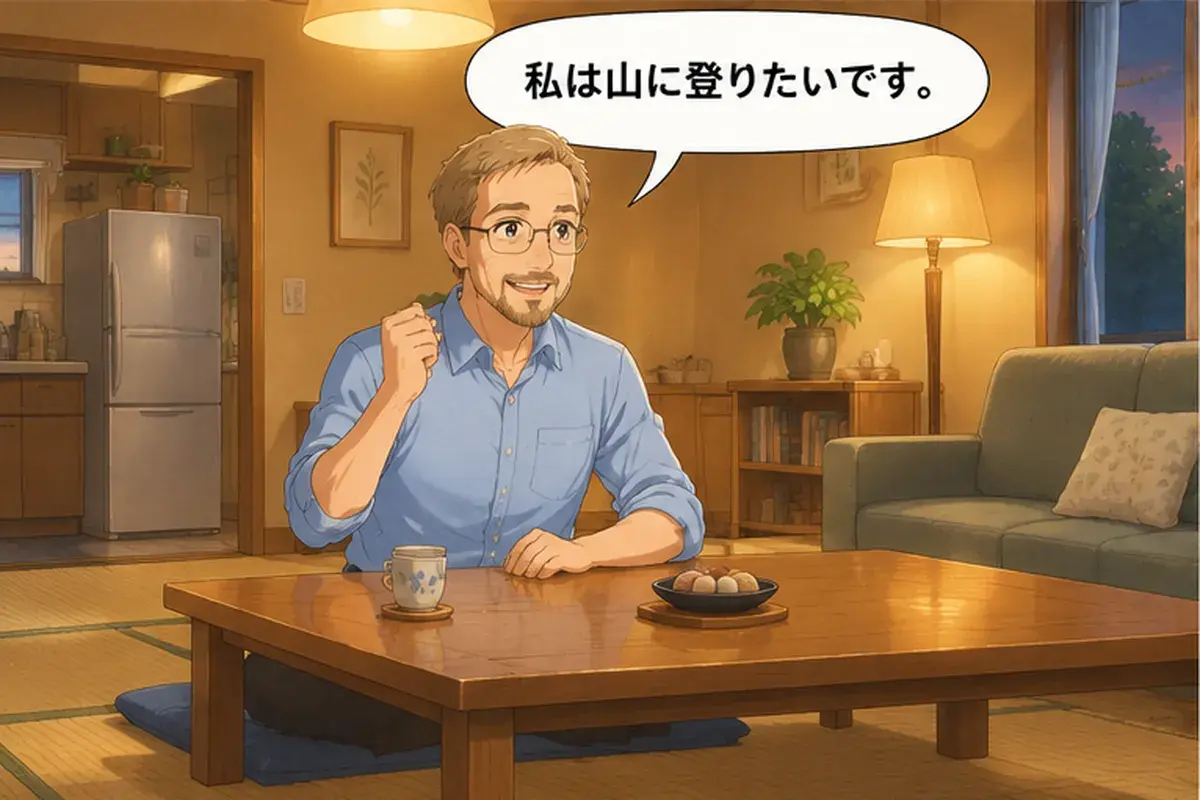
- マルク
私は山に登りたいです。
I want to climb a mountain.
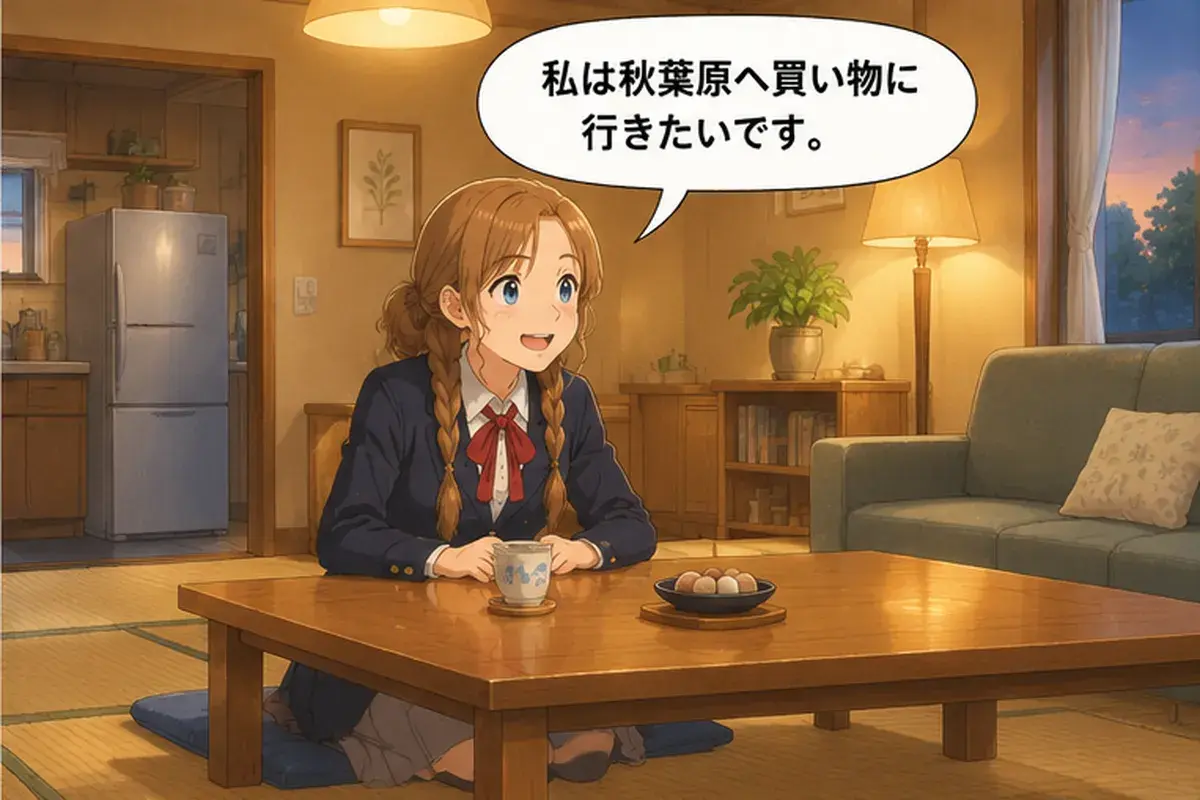
- ソーニャ
私は秋葉原へ買い物に行きたいです。
I want to go to Akihabara to do some shopping.
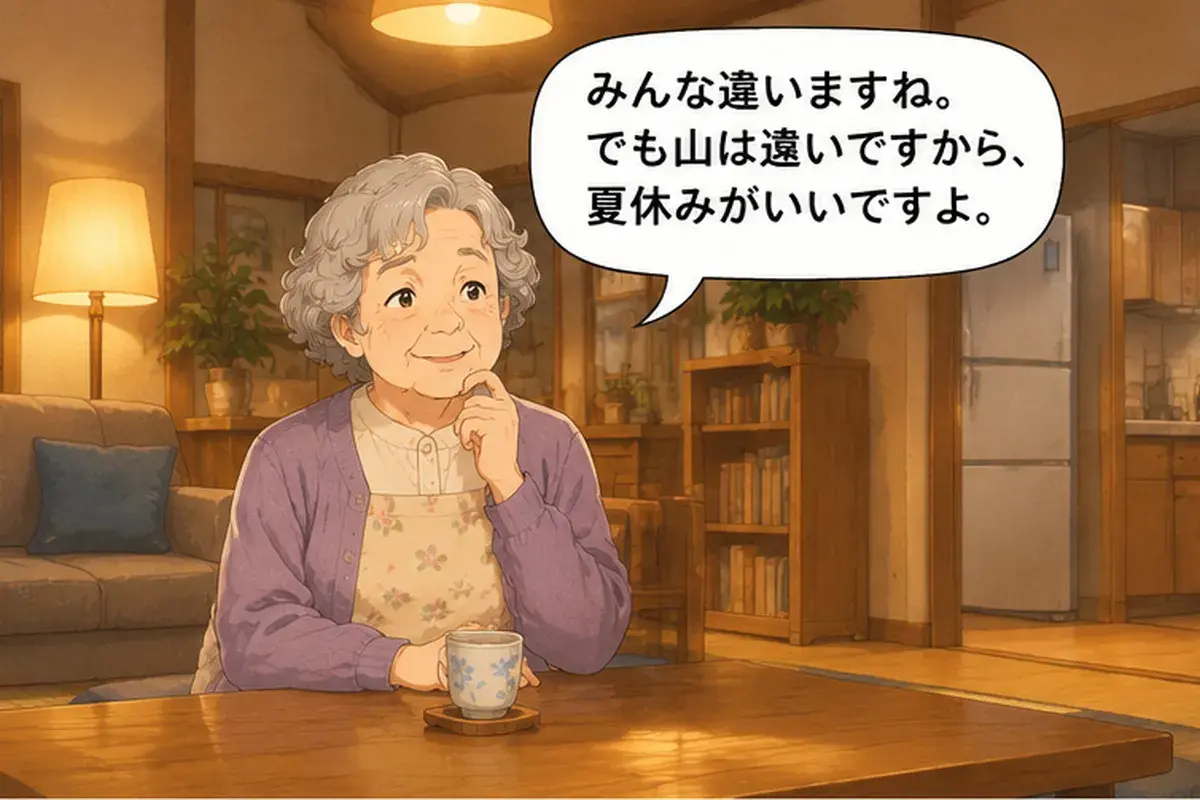
- 田中
みんな違いますね。でも山は遠いですから、夏休みがいいですよ。
Everyone's different, huh. But the mountains are far, so summer vacation would be better.
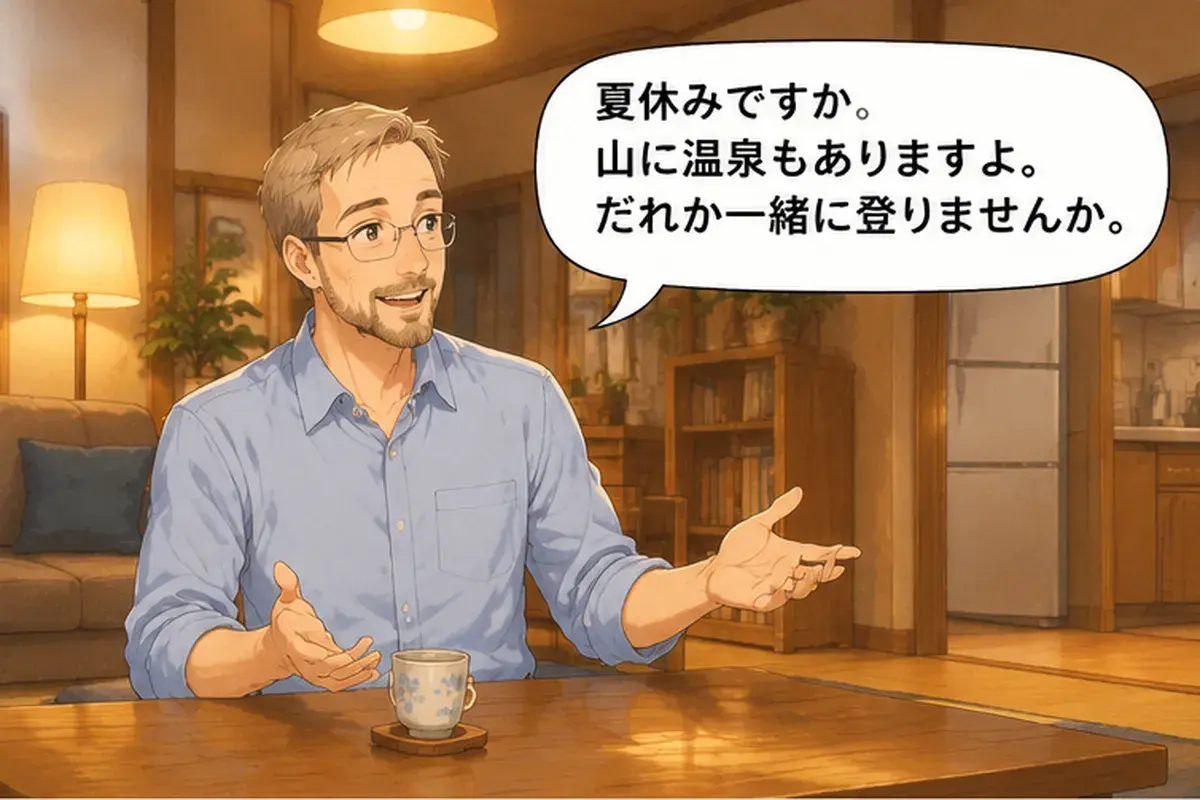
- マルク
夏休みですか。山に温泉もありますよ。だれか一緒に登りませんか。
Summer vacation? There are hot springs in the mountains too. Would anyone like to climb together?
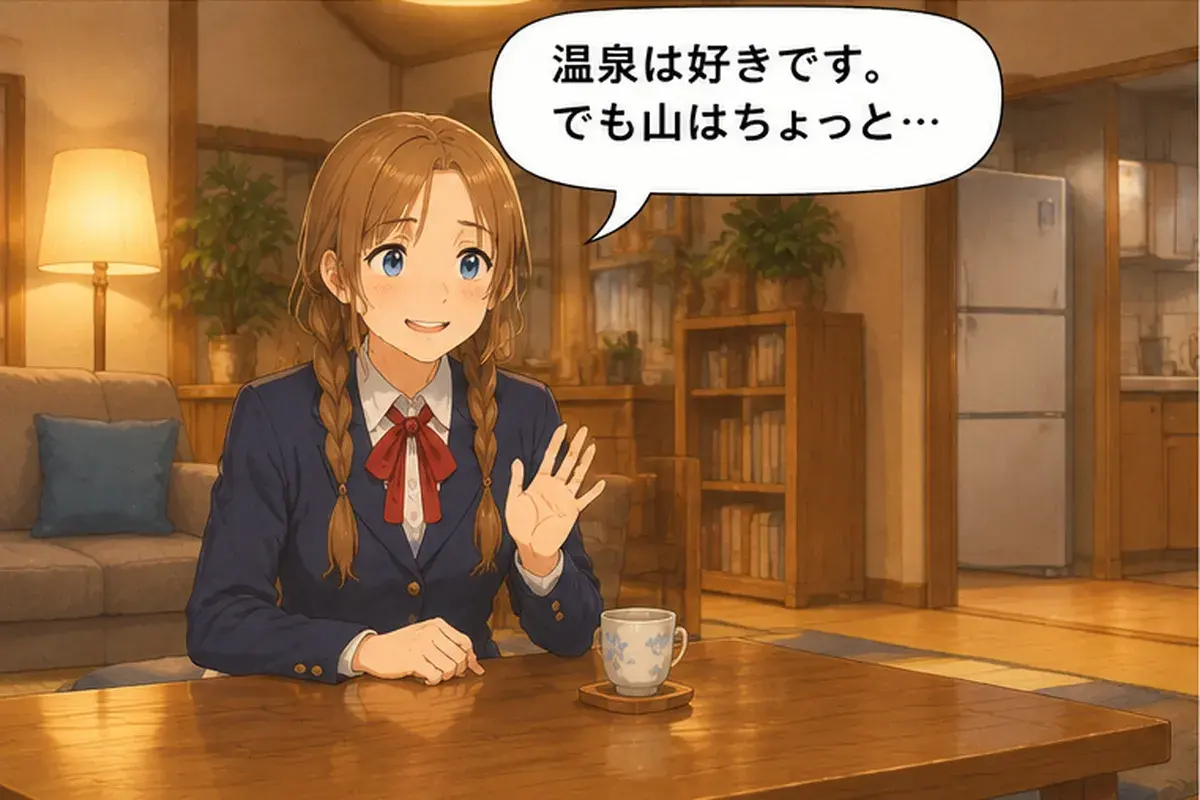
- ソーニャ
温泉は好きです。でも山はちょっと…
I like hot springs. But mountains are a bit...
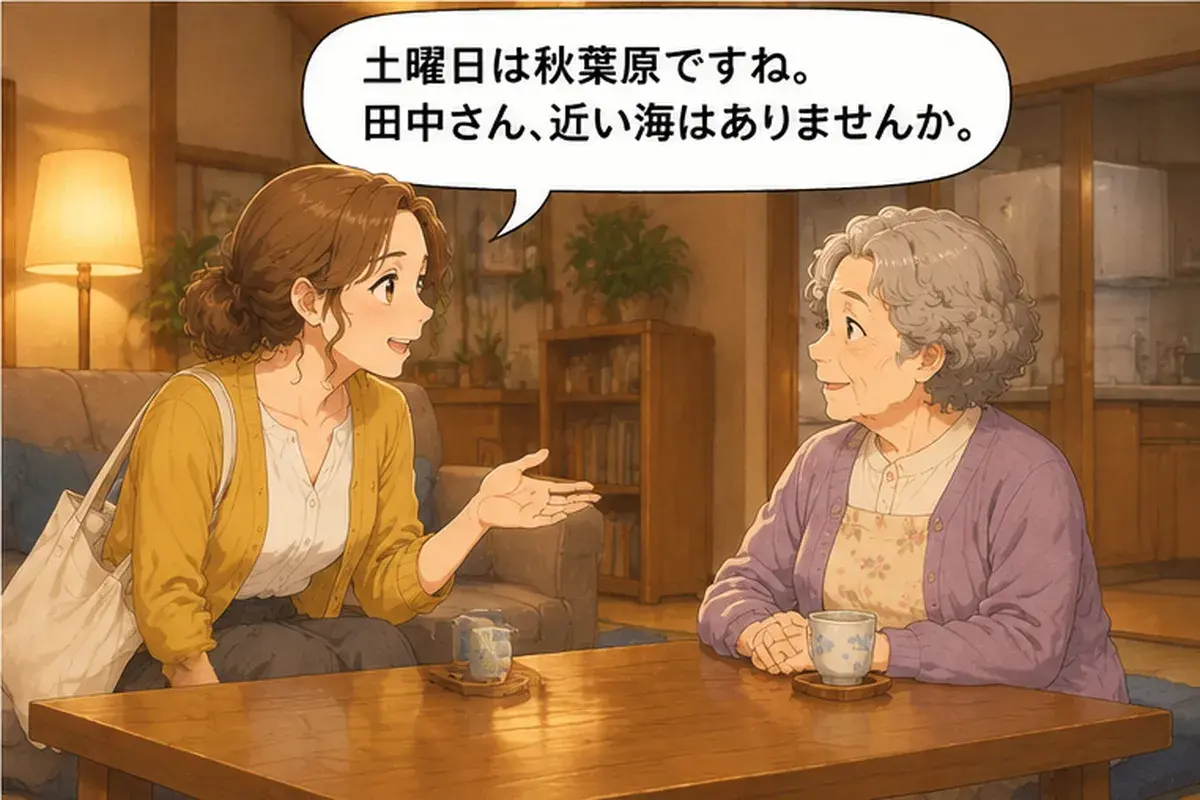
- アンナ
土曜日は秋葉原ですね。田中さん、近い海はありませんか。
So Saturday is Akihabara. Tanaka-san, isn't there a sea nearby?
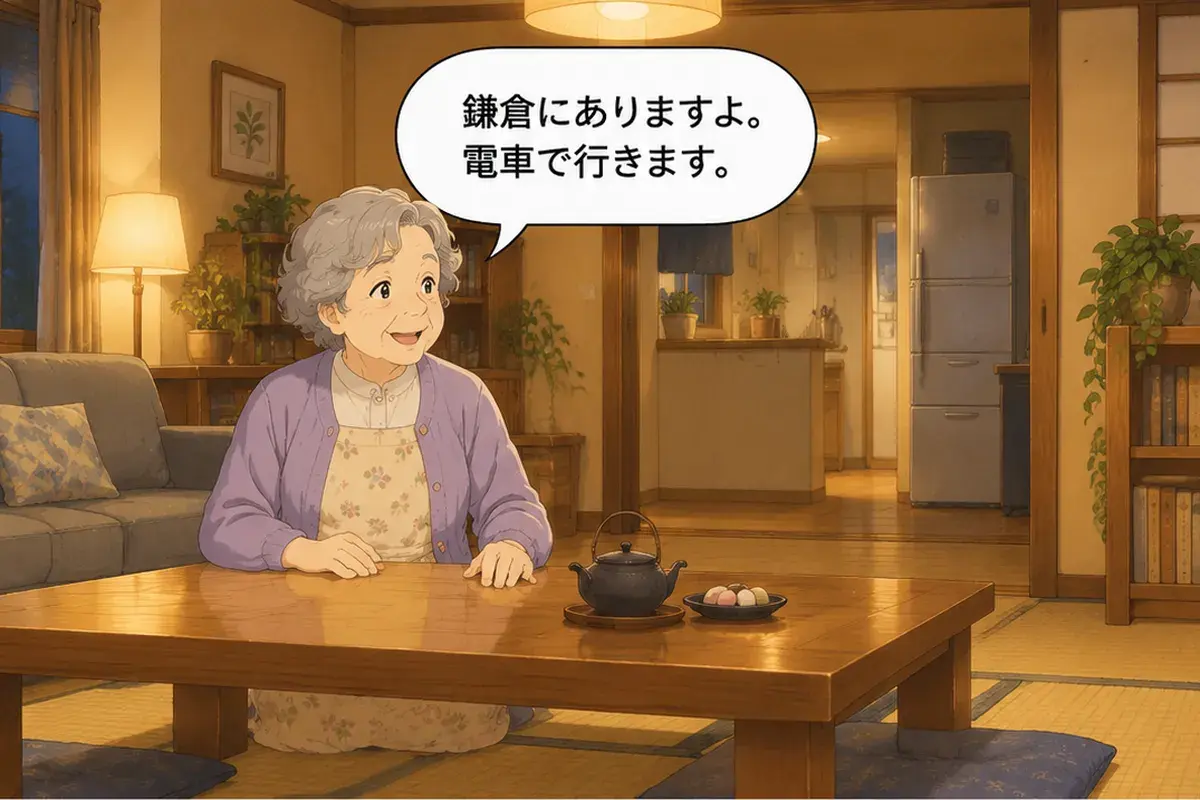
- 田中
鎌倉にありますよ。電車で行きます。
There's one in Kamakura. You go by train.
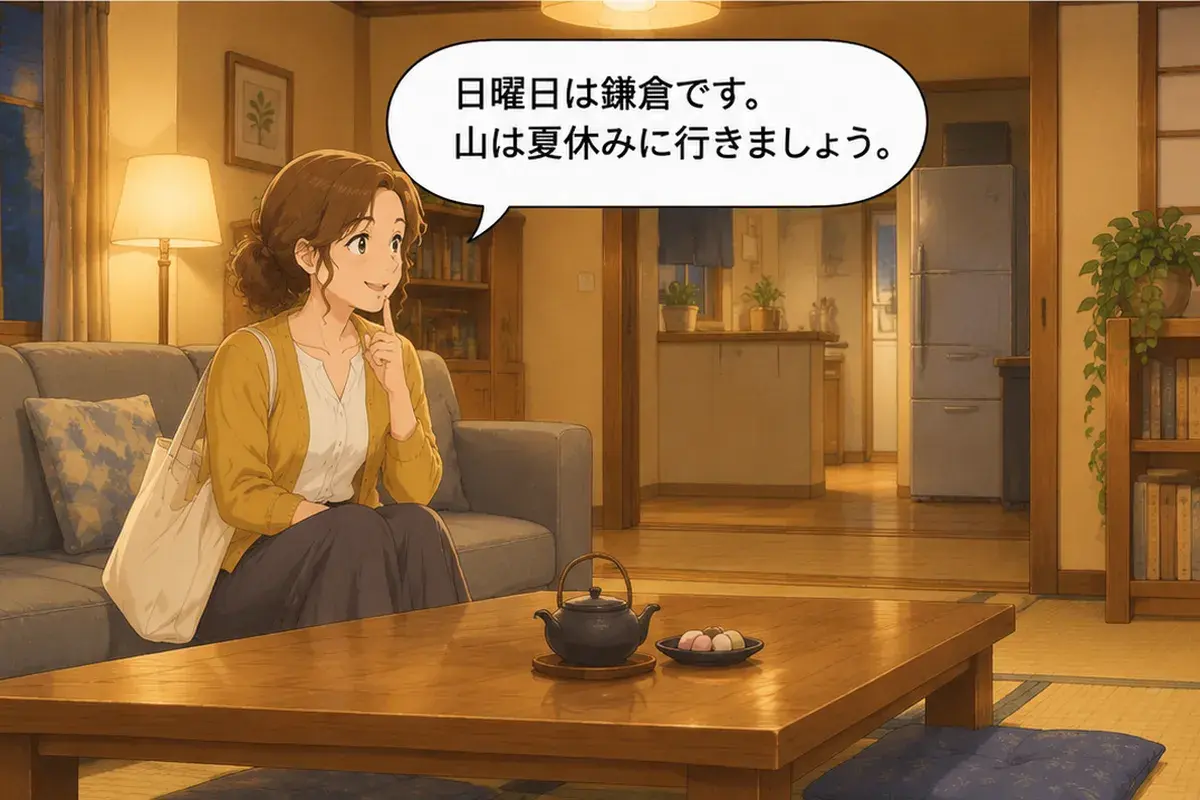
- アンナ
日曜日は鎌倉です。山は夏休みに行きましょう。
Sunday is Kamakura, then. Let's go to the mountains during summer vacation.
Grammar for this text
冷たい ビール が ほしい です— the thing you want takesが, notを.ほしいis an i-adjective, literally "desired".山 に 登りたい です—登りますwithoutます+たい= "I want to climb".山 にmeans "up the mountain".海 の 近く を 散歩したい です— in散歩する(take a walk),するbecomesしたい. The place you walk around takesを, notで, a bit like English "walk the beach".秋葉原 へ 買い物 に 行きたい です— two "where to" parts:へmarks the place,にmarks the purpose, "go there to shop".どこか へ 行きたい です—どこかis "somewhere", andへstays after it.この 週末 は 予定 が あります か— "Do you have any plans this weekend?": a polite way to find out if someone is free. If you answer予定 が あります("I already have plans"), it works as a polite no.だれか 一緒に 登りません か—だれかis "someone, anyone", and〜ませんかis an invitation (unit 7).山 は ちょっと…—ちょっと…is a polite "no". People don't refuse directly: they leave the sentence unfinished.
Words and grammar of the unit: Say what you want.
Learn the words from the texts with flashcards
In the app, you can tap any word in a text to see its translation, forms and examples, and new words stick with flashcards. 15 minutes a day.
Start for freeEverything is open for free. No card needed to sign up.