
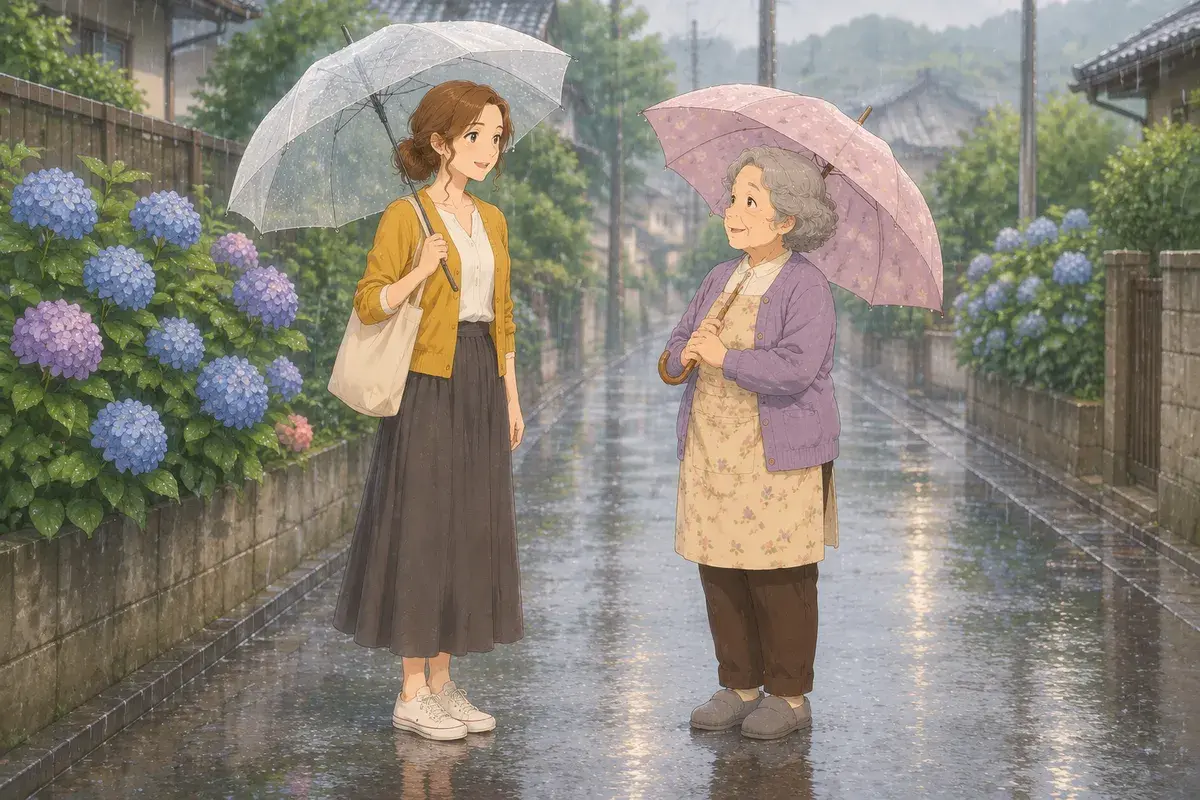
Japanese dialogue with translation · A1 · 14 lines
もう一本買ってください Please buy one more
Comic · 8 panels
- 田中
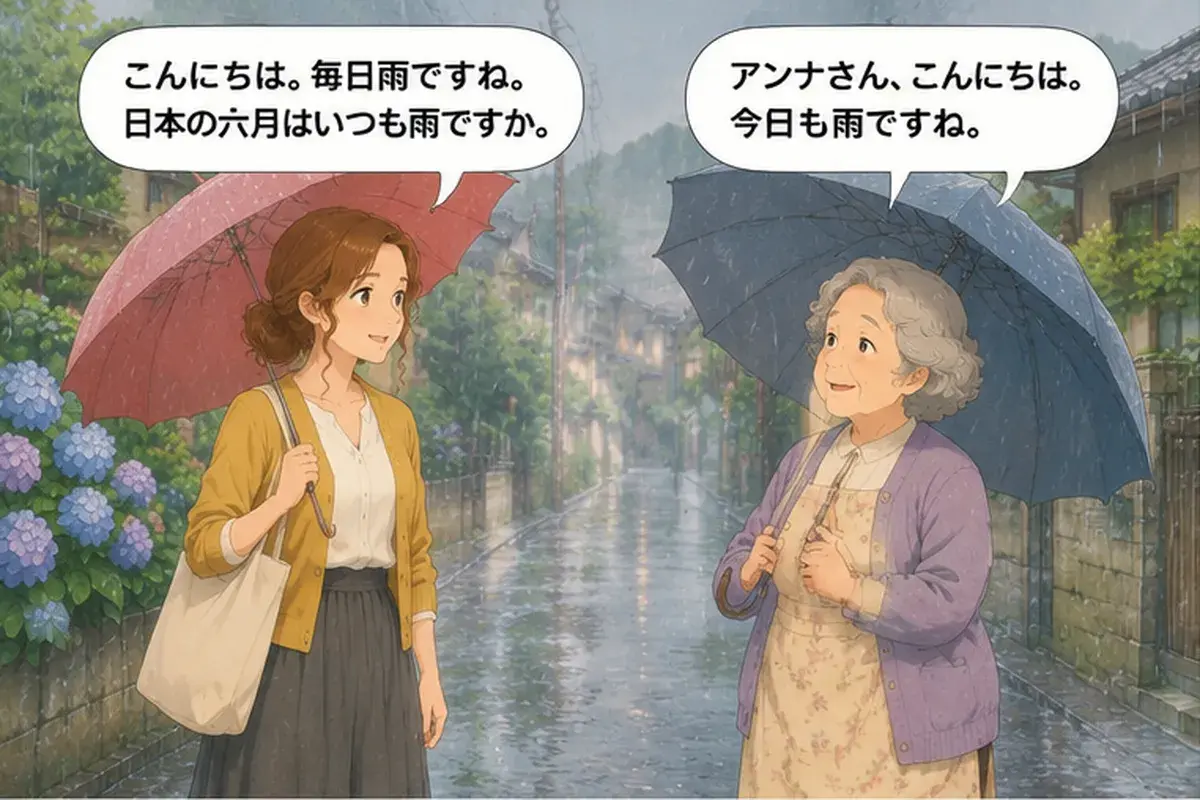
アンナさん、こんにちは。今日も雨ですね。
Hello, Anna-san. It's raining again today, isn't it?
- アンナ
こんにちは。毎日雨ですね。日本の六月はいつも雨ですか。
Hello. It rains every day, doesn't it? Is June in Japan always rainy?
- 田中
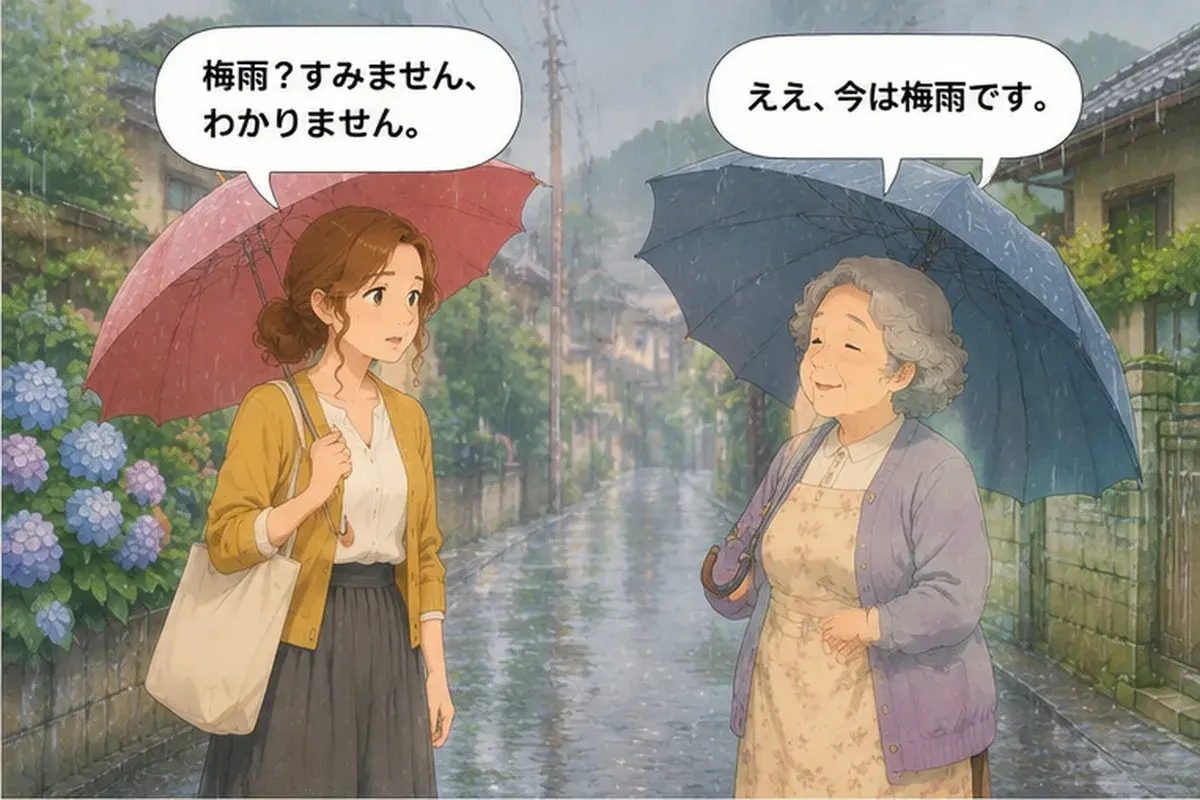
ええ、今は梅雨です。
Yes, it's tsuyu now.
- アンナ
梅雨?すみません、わかりません。
Tsuyu? Sorry, I don't understand.
- 田中
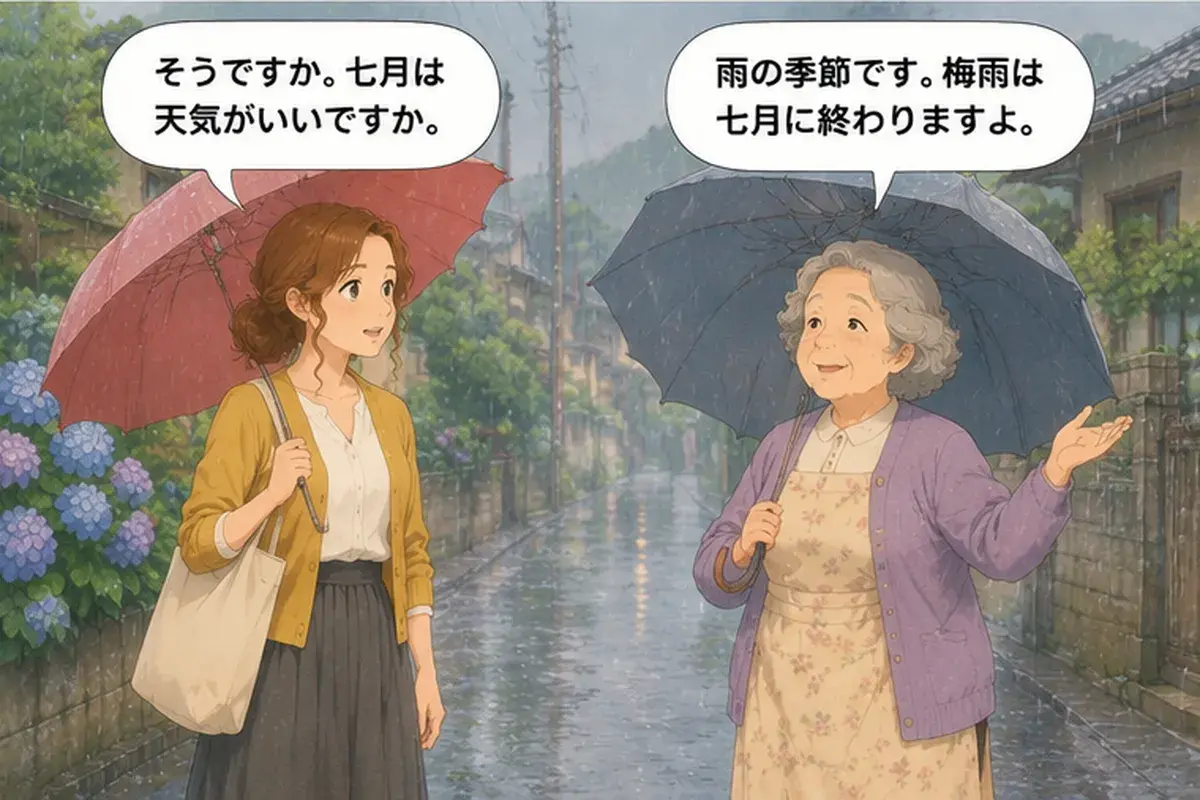
雨の季節です。梅雨は七月に終わりますよ。
It's the season of rain. Tsuyu ends in July.
- アンナ
そうですか。七月は天気がいいですか。
I see. Is the weather good in July?
- 田中
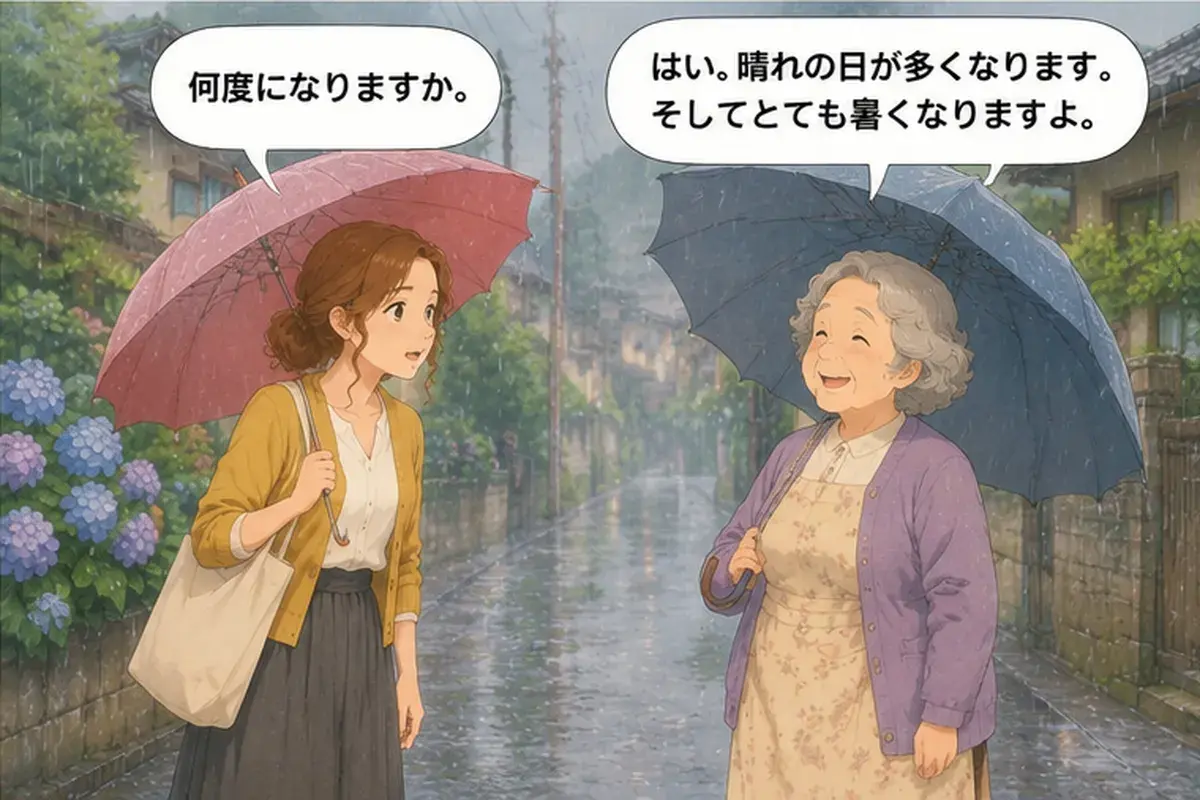
はい。晴れの日が多くなります。そしてとても暑くなりますよ。
Yes. Sunny days become more common. And it gets very hot.
- アンナ
何度になりますか。
How many degrees does it get up to?
- 田中
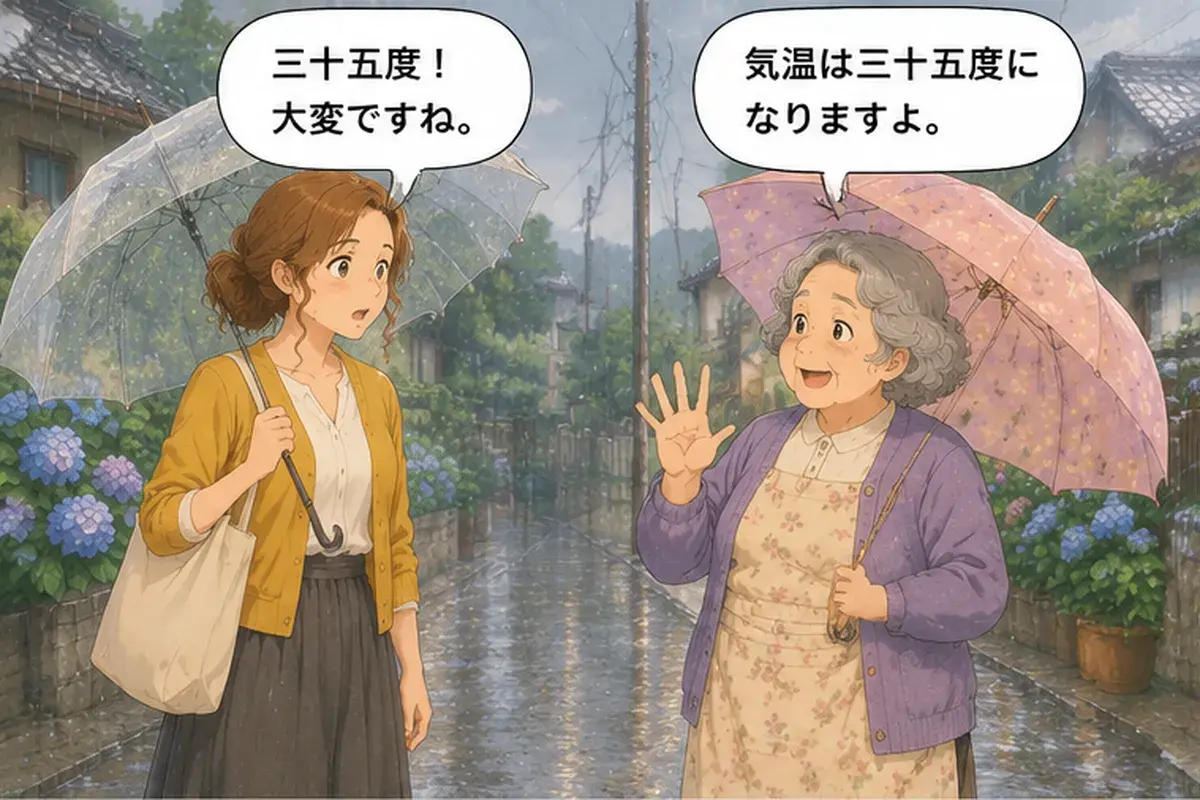
気温は三十五度になりますよ。
The temperature gets up to 35 degrees.
- アンナ
三十五度!大変ですね。
35 degrees! That's tough.
- 田中
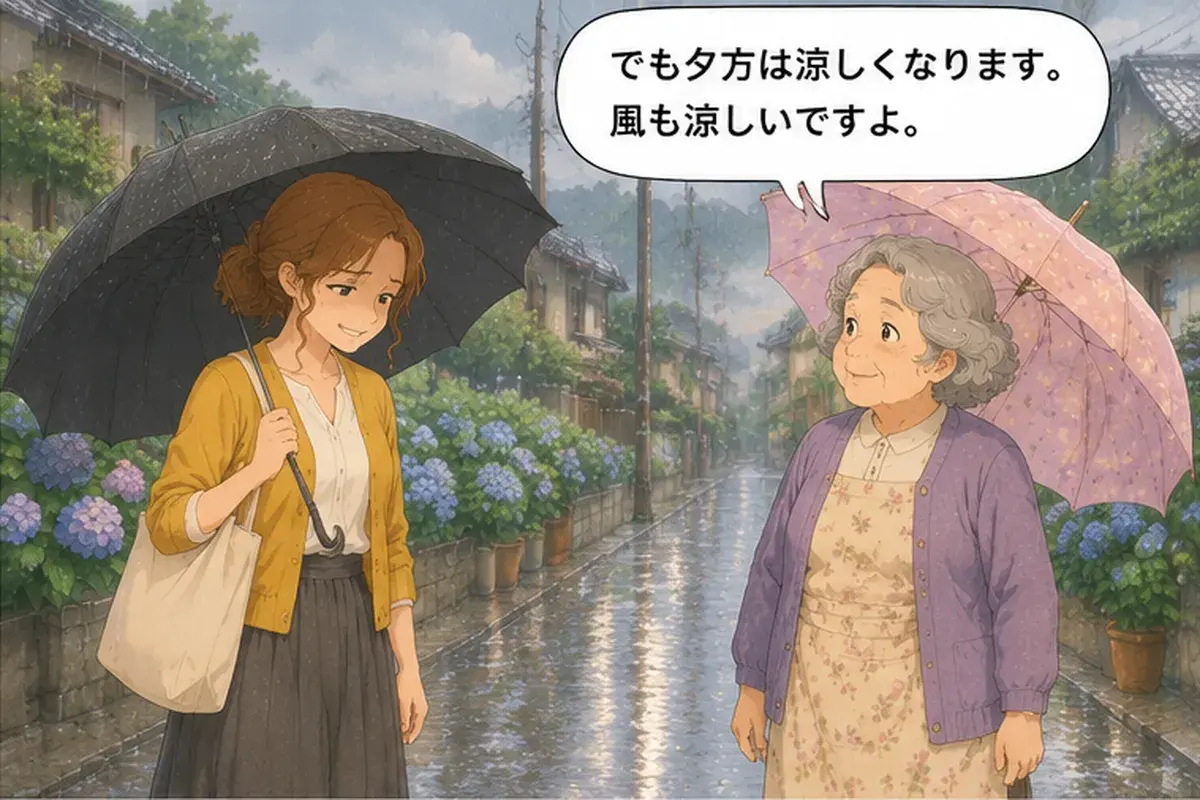
でも夕方は涼しくなります。風も涼しいですよ。
But it gets cool in the evening. The wind is cool too.
- アンナ
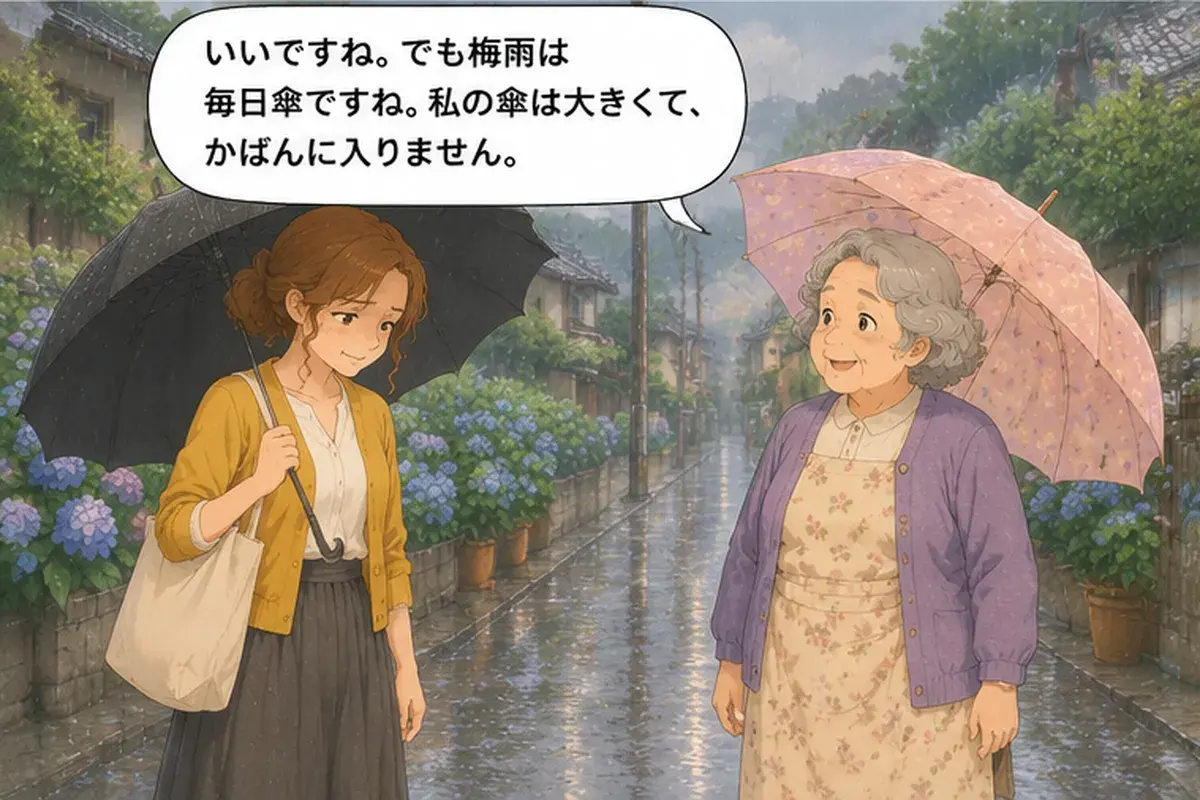
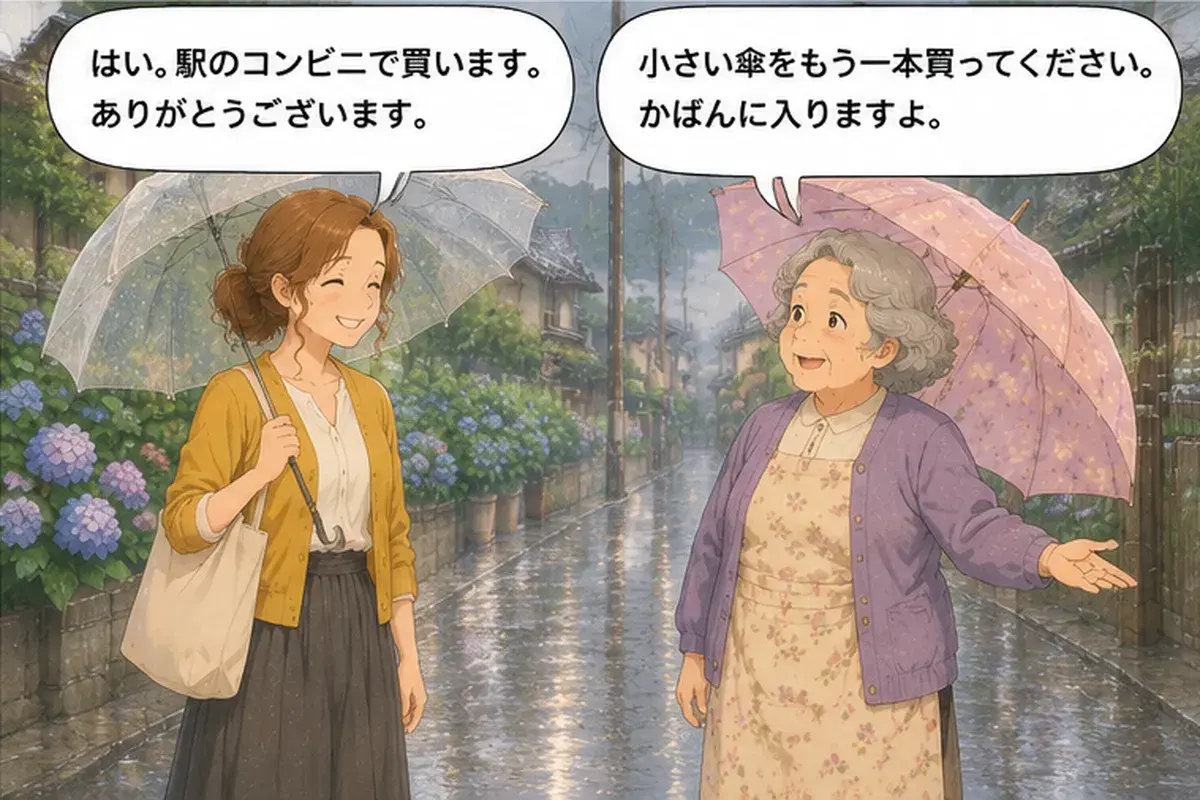
いいですね。でも梅雨は毎日傘ですね。私の傘は大きくて、かばんに入りません。
That's nice. But in the rainy season, it's an umbrella every day. My umbrella is big, so it doesn't fit in my bag.
- 田中
小さい傘をもう一本買ってください。かばんに入りますよ。
Please buy one more umbrella, a small one. It'll fit in your bag.
- アンナ
はい。駅のコンビニで買います。ありがとうございます。
Okay. I'll buy one at the convenience store at the station. Thank you.
Grammar for this text
梅雨 — tsuyu, the rainy season: from June to mid-July. The kanji mean "plum" and "rain", but the word is read as a whole: つゆ.
晴れ の 日 が 多く なります, 暑く なります, 涼しく なります — なります means "becomes, gets". Before it, an i-adjective changes its ending: 暑い → 暑く. You say this when something changes: it was one way, and it's going to be another.
三十 五 度 に なります — before なります, a noun takes に: "it gets up to 35 degrees". 度 is the counter for degrees, read ど (do).
何 度 に なります か — "how many degrees does it get up to?"
気温 — the temperature of the air outside. A sick person's temperature is 熱.
風 も 涼しい です よ — 風 (かぜ) means "wind". It's read the same way as 風邪 "a cold", but written differently.
梅雨 は 毎日 傘 です ね — a short, everyday way to say "in the rainy season, it's an umbrella every day".
大きくて、 かばん に 入りません — 大きくて is 大きい with the ending くて (unit 16): "it's big, and so...". 入る means "to go in"; about a thing, "to fit".
小さい 傘 を もう 一本 買って ください — here 本 is the counter for long things (umbrellas, pencils, bottles). もう 一本 means "one more" (here もう isn't "already" from unit 11, but "more"). 買って is the te-form of 買う; with ください, it makes a request. In the rainy season, people in Japan carry a small folding umbrella in their bag: it can be sunny in the morning and rainy by evening. Convenience stores sell these umbrellas too.
Words and grammar of the unit: Talking about the weather.
Learn the words from the texts with flashcards
In the app, you can tap any word in a text to see its translation, forms and examples, and new words stick with flashcards. 15 minutes a day.
Start for freeEverything is open for free. No card needed to sign up.