

Japanese dialogue with translation · A1 · 14 lines
犬の絵を描きました I drew a picture of a dog
Comic · 8 panels
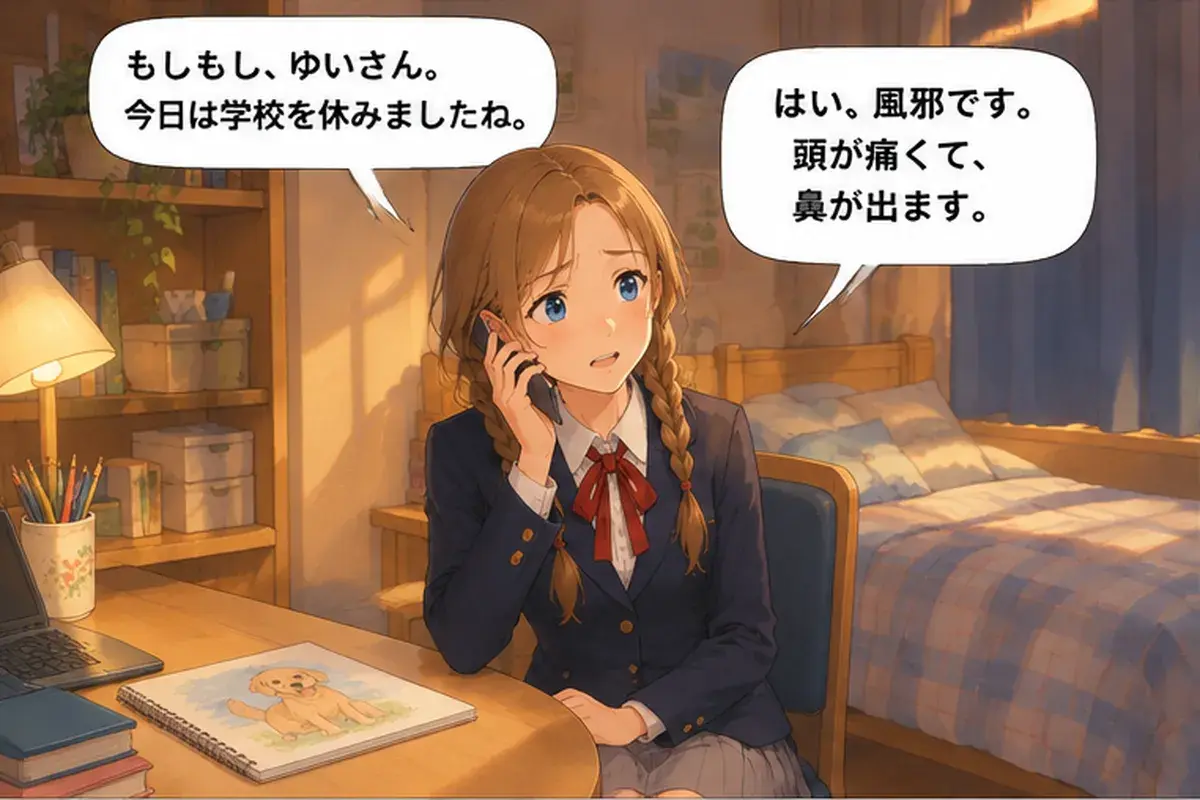
- ソーニャ
もしもし、ゆいさん。今日は学校を休みましたね。
Hello? Yui-san, you stayed home from school today, didn't you?
- ゆい
はい。風邪です。頭が痛くて、鼻が出ます。
Yes. I have a cold. My head hurts, and I have a runny nose.
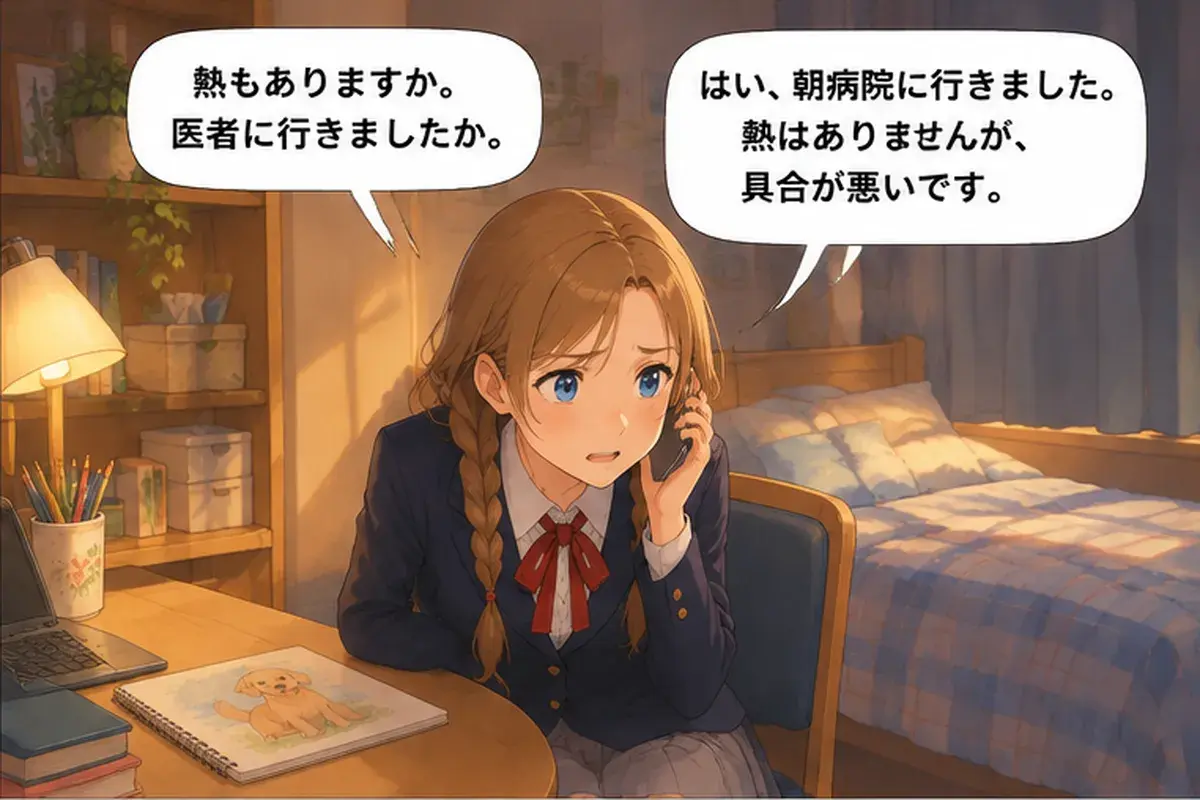
- ソーニャ
熱もありますか。医者に行きましたか。
Do you have a fever too? Did you go to the doctor?
- ゆい
はい、朝病院に行きました。熱はありませんが、具合が悪いです。
Yes, I went to the hospital in the morning. I don't have a fever, but I don't feel well.
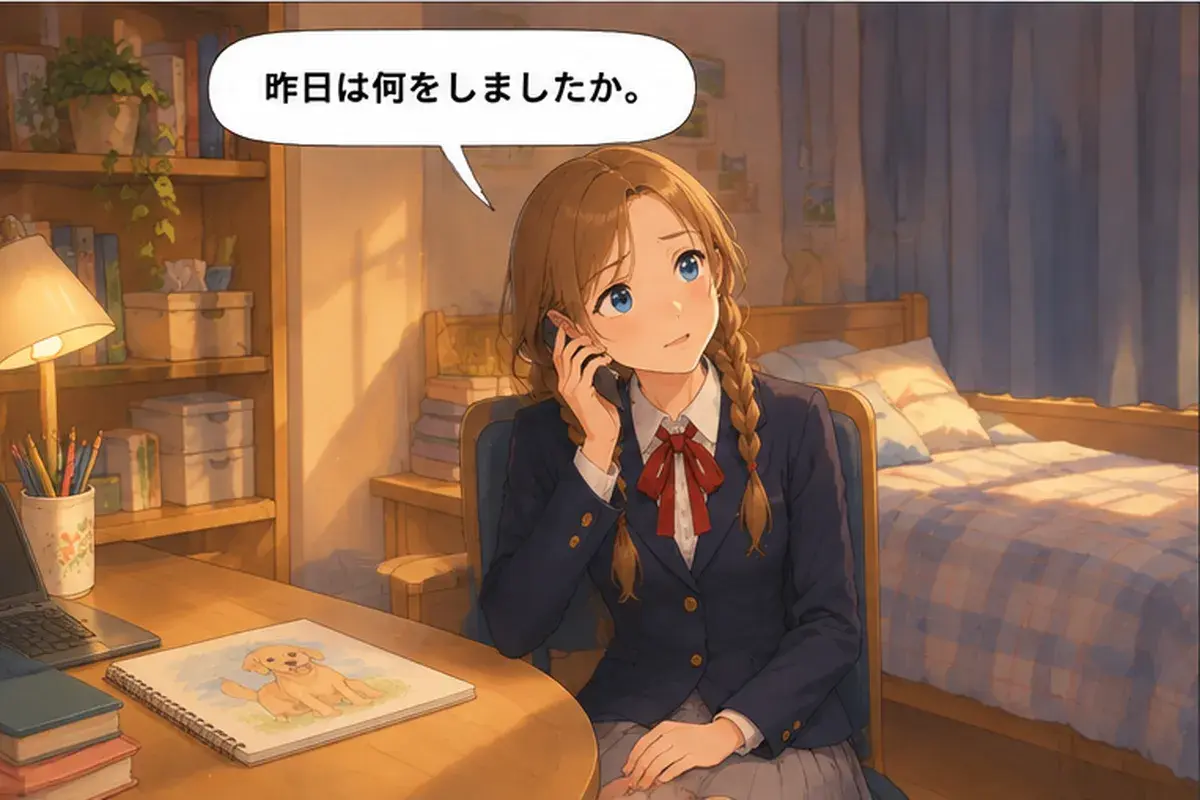
- ソーニャ
昨日は何をしましたか。
What did you do yesterday?
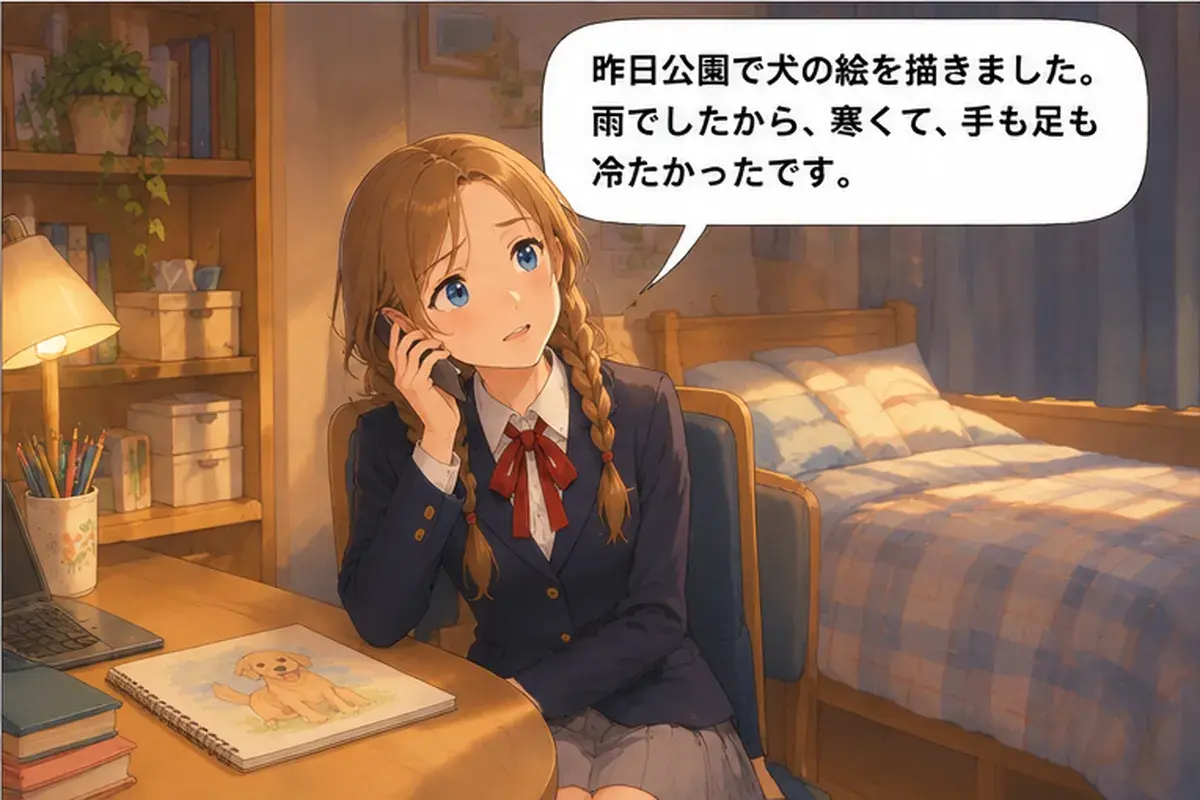
- ゆい
昨日公園で犬の絵を描きました。雨でしたから、寒くて、手も足も冷たかったです。
Yesterday I drew a picture of a dog in the park. It was raining, so I was cold, and both my hands and my feet were cold.
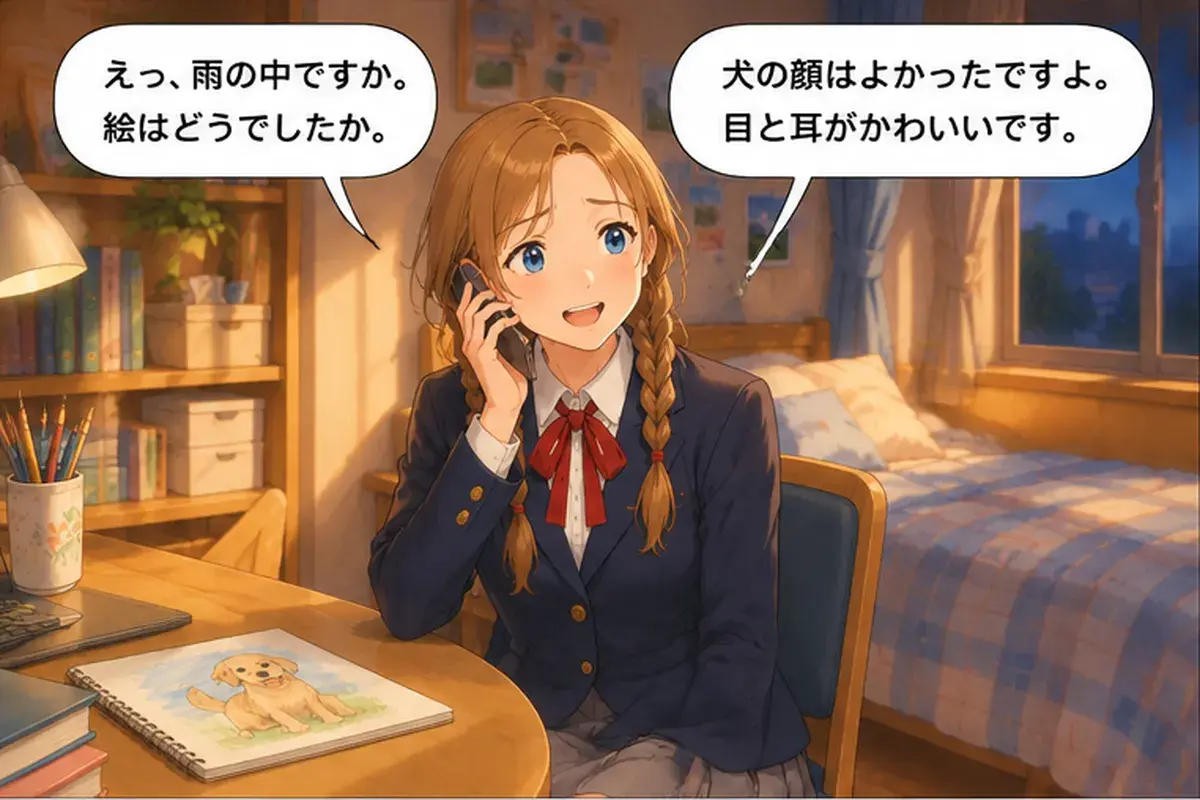
- ソーニャ
えっ、雨の中ですか。絵はどうでしたか。
What? In the rain? How was the picture?
- ゆい
犬の顔はよかったですよ。目と耳がかわいいです。
The dog's face was good. Its eyes and ears are cute.
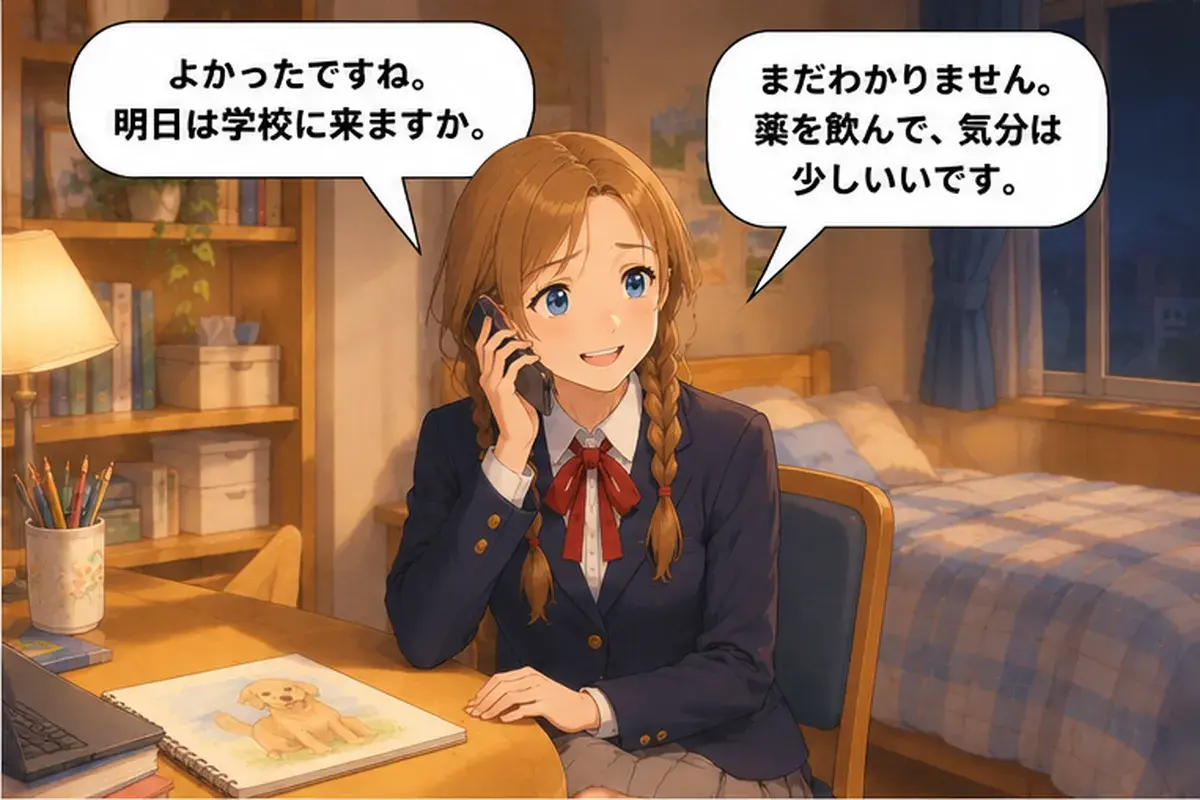
- ソーニャ
よかったですね。明日は学校に来ますか。
I'm glad. Are you coming to school tomorrow?
- ゆい
まだわかりません。薬を飲んで、気分は少しいいです。
I don't know yet. I took some medicine, and I feel a little better.
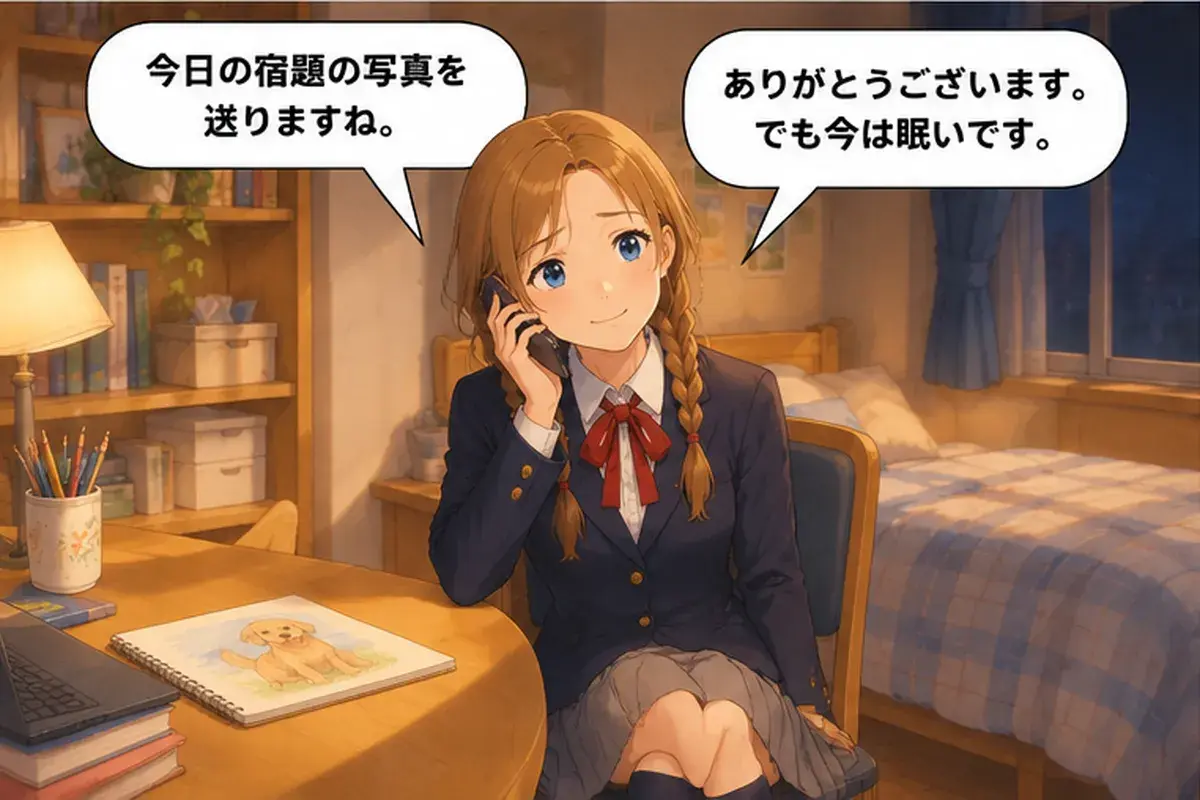
- ソーニャ
今日の宿題の写真を送りますね。
I'll send you a photo of today's homework, OK?
- ゆい
ありがとうございます。でも今は眠いです。
Thank you. But right now I'm sleepy.
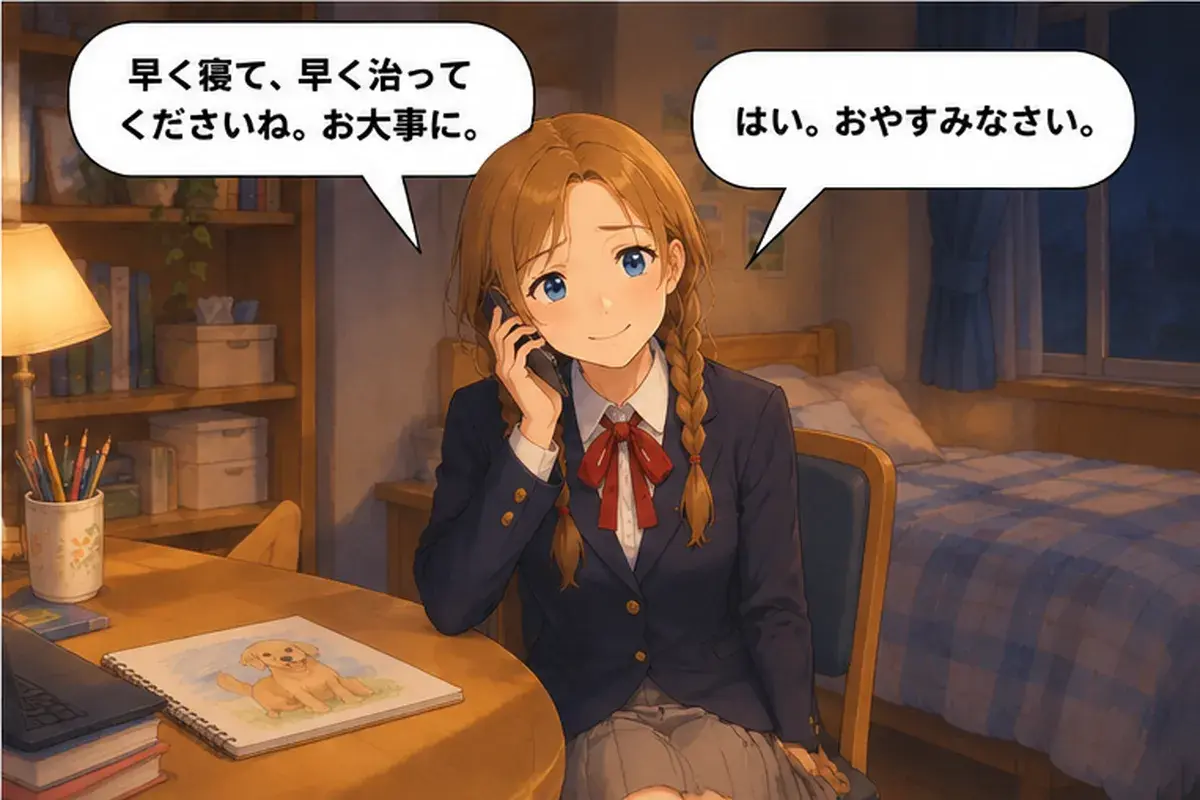
- ソーニャ
早く寝て、早く治ってくださいね。お大事に。
Please go to bed early and get better soon. Take care.
- ゆい
はい。おやすみなさい。
OK. Good night.
Grammar for this text
学校 を 休みました ね — 学校 を 休む means "to miss school, to stay home from school". With ね Sonya isn't really asking; she's checking: "you weren't at school, right?"
頭 が 痛くて、鼻 が 出ます — 鼻 が 出る is literally "the nose comes out"; in English, "I have a runny nose". The two descriptions are joined with the ending くて (see the unit grammar).
熱 は ありません が、具合 が 悪い です — が here means "but" (unit 8). 熱 は with は sets up a contrast: "no fever, but...". 具合 が 悪い means "I don't feel well".
雨 でした から、寒くて、手 も 足 も 冷たかった です — から means "because" (unit 10), and 雨 でした is "it was raining". 手 も 足 も — "both my hands and my feet": Japanese words don't change for the plural. 冷たかった is the past of 冷たい.
犬 の 顔 は よかった です よ — 顔 means "face", for people and animals alike. よかった です is the past of いい: "it came out well". People don't call their own work 上手 (unit 10). Sonya answers よかった です ね — "that's great".
薬 を 飲んで、気分 は 少し いい です — the te-form puts one thing after another: Yui took the medicine, and now she feels a little better. 気分 is how a person feels.
今日 の 宿題 の 写真 を 送ります ね — classmates in Japan really do this: they take a photo of the homework and send it to a sick friend. ね here is like "OK?".
眠い です — you say 眠い about yourself: "I'm sleepy".
早く 寝て、早く 治って ください ね — 治る means "to get better", and its subject is the illness. Asking for it to "get better soon" is the Japanese way to say "get well soon". おやすみなさい — "good night": people say it even in the daytime when someone is going to bed.
Words and grammar of the unit: Say what hurts.
Learn the words from the texts with flashcards
In the app, you can tap any word in a text to see its translation, forms and examples, and new words stick with flashcards. 15 minutes a day.
Start for freeEverything is open for free. No card needed to sign up.