
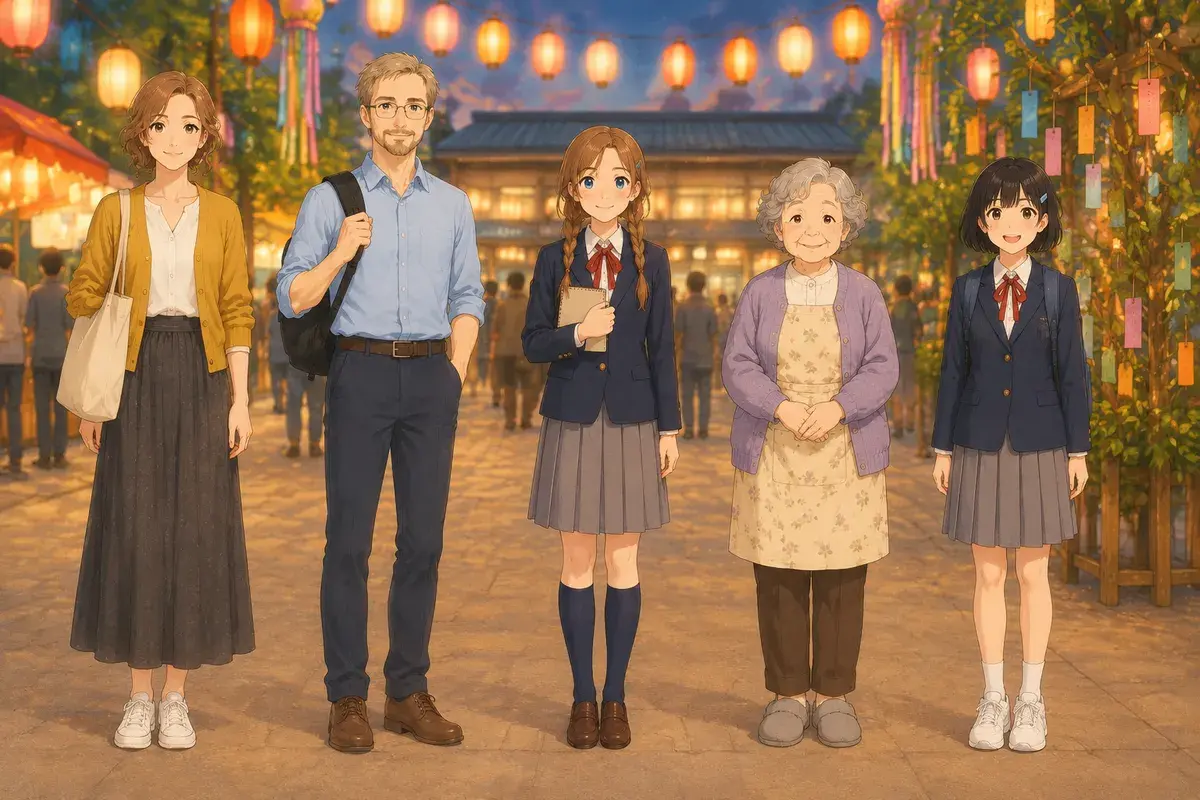
Japanese dialogue with translation · A1 · 15 lines
一年に一回だけ会います They meet only once a year
Comic · 14 panels
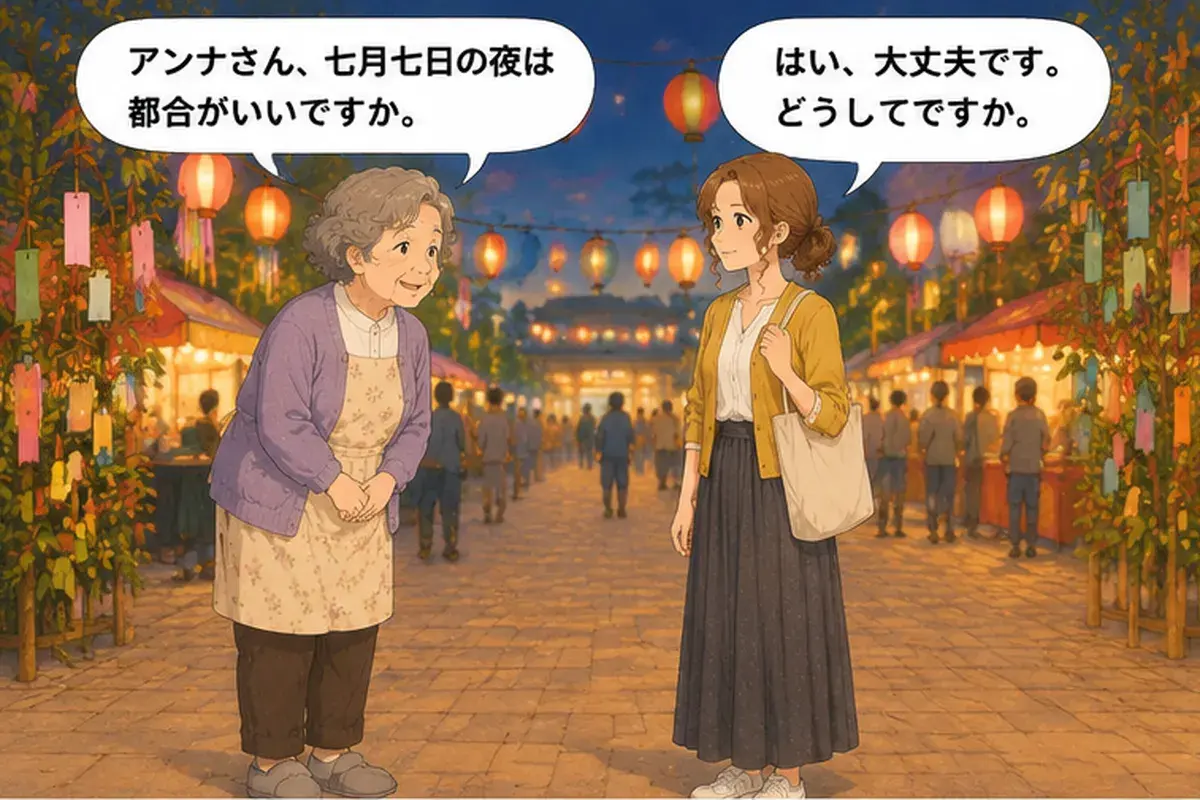
- 田中
アンナさん、七月七日の夜は都合がいいですか。
Anna-san, does the evening of July 7 work for you?
- アンナ
はい、大丈夫です。どうしてですか。
Yes, that's fine. Why do you ask?
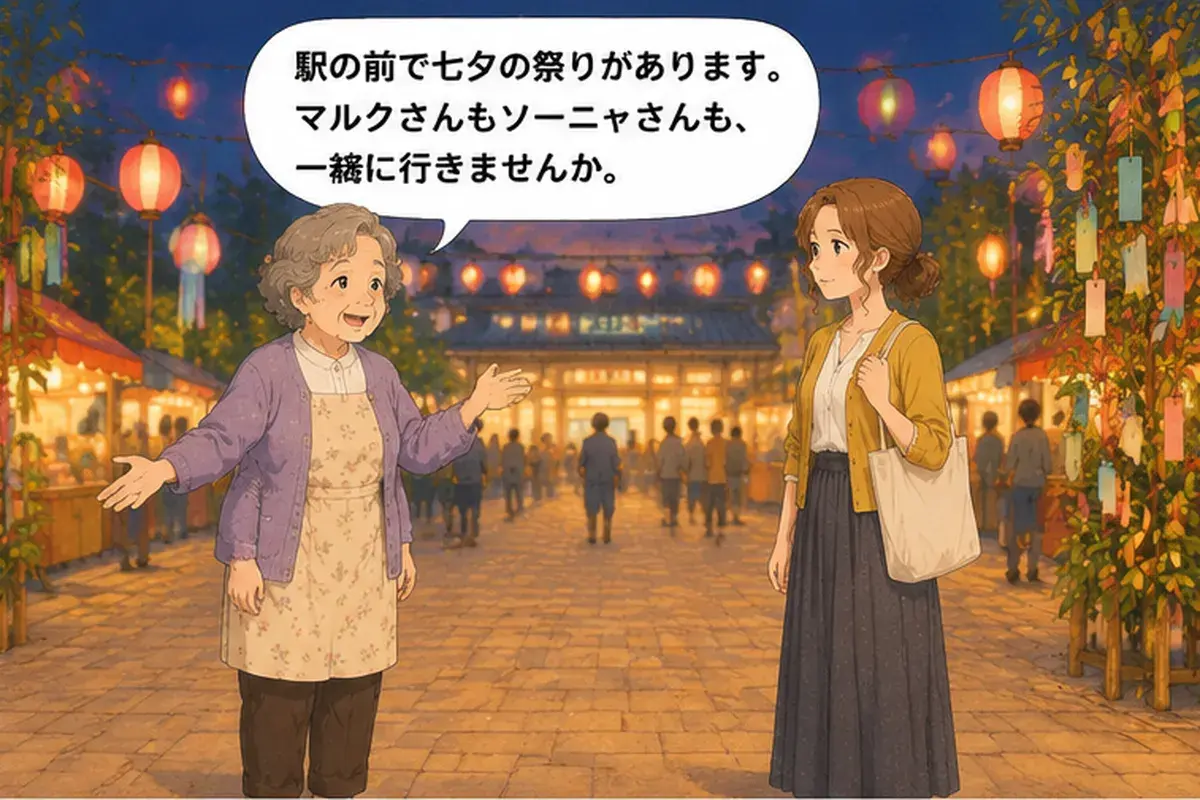
- 田中
駅の前で七夕の祭りがあります。マルクさんもソーニャさんも、一緒に行きませんか。
There's a Tanabata festival in front of the station. Would you like to go together, with Mark-san and Sonya-san too?
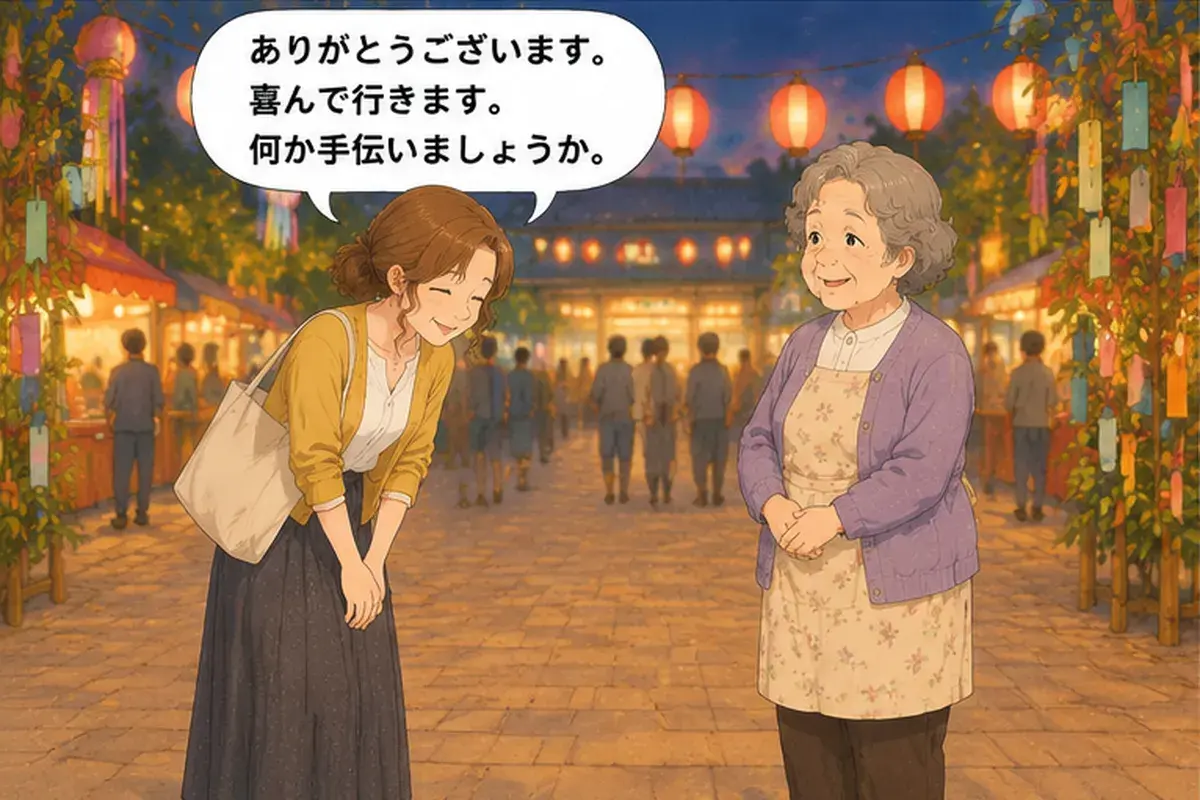
- アンナ
ありがとうございます。喜んで行きます。何か手伝いましょうか。
Thank you. We'd be glad to go. Shall I help with anything?
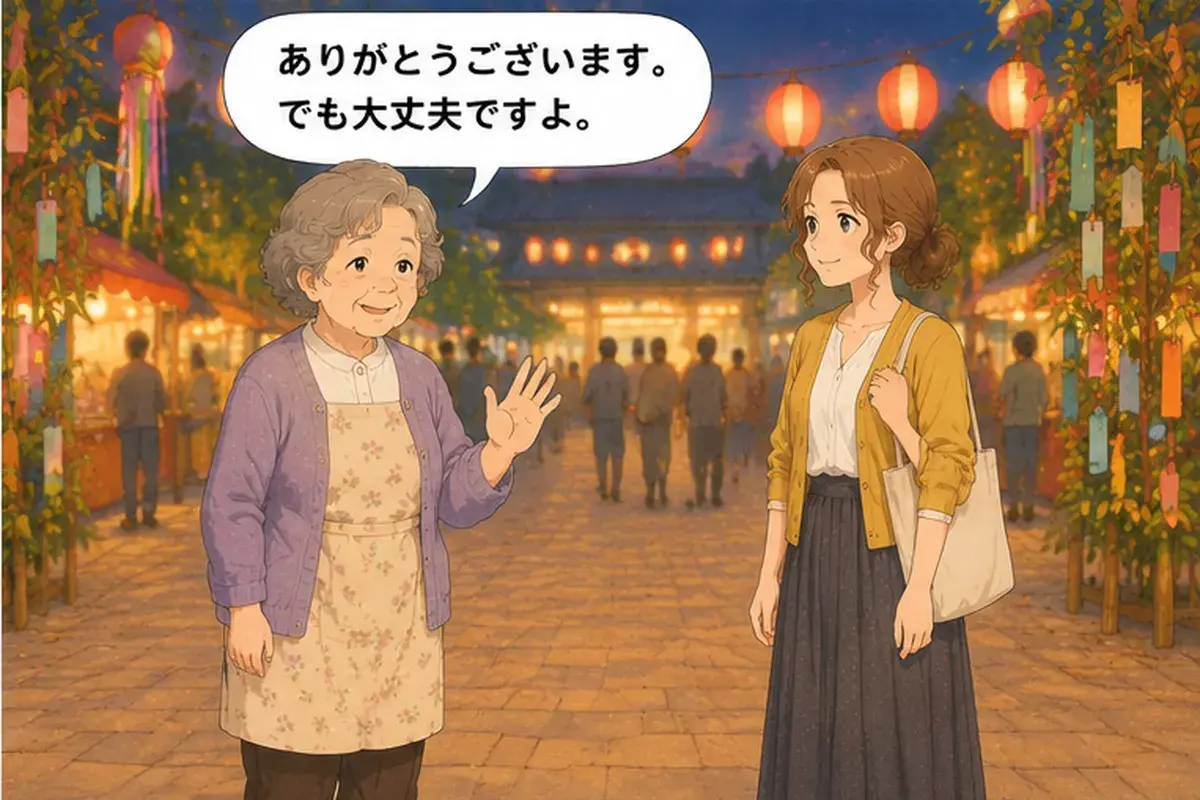
- 田中
ありがとうございます。でも大丈夫ですよ。
Thank you. But it's fine.
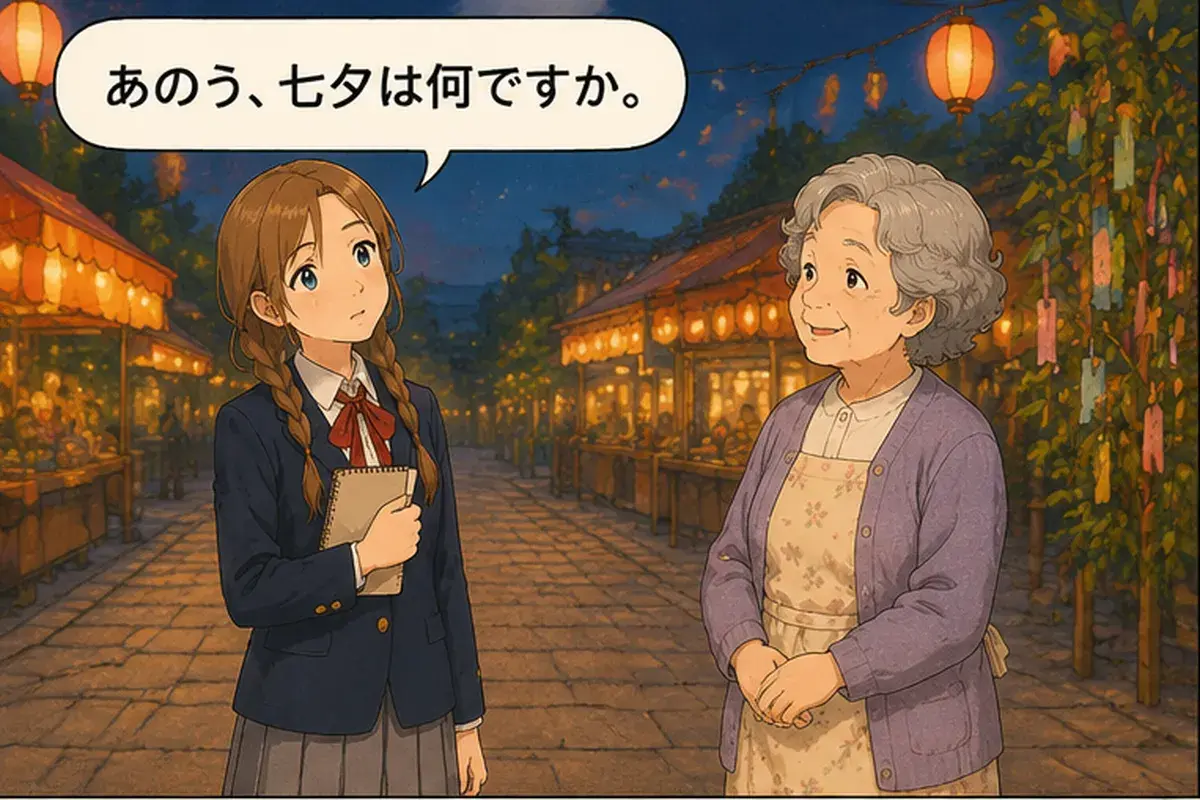
- ソーニャ
あのう、七夕は何ですか。
Um, what is Tanabata?
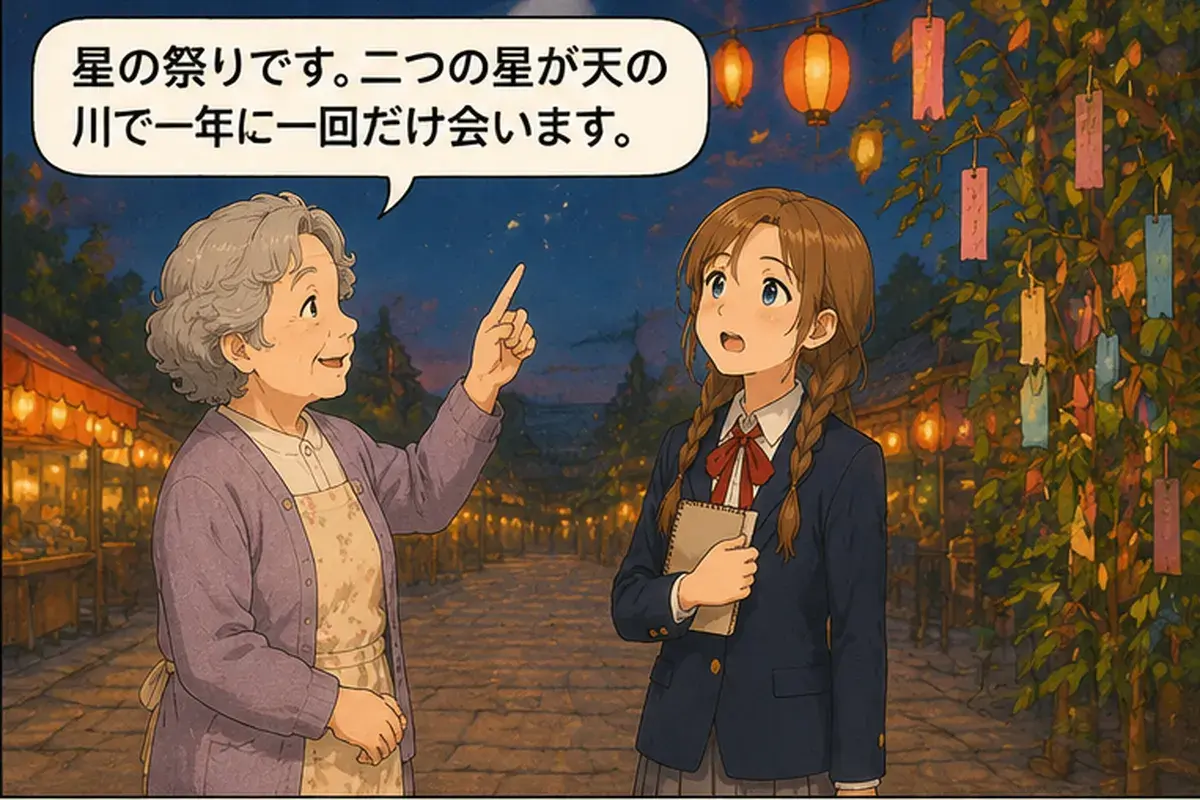
- 田中
星の祭りです。二つの星が天の川で一年に一回だけ会います。
It's a festival of the stars. Two stars meet on the Milky Way only once a year.
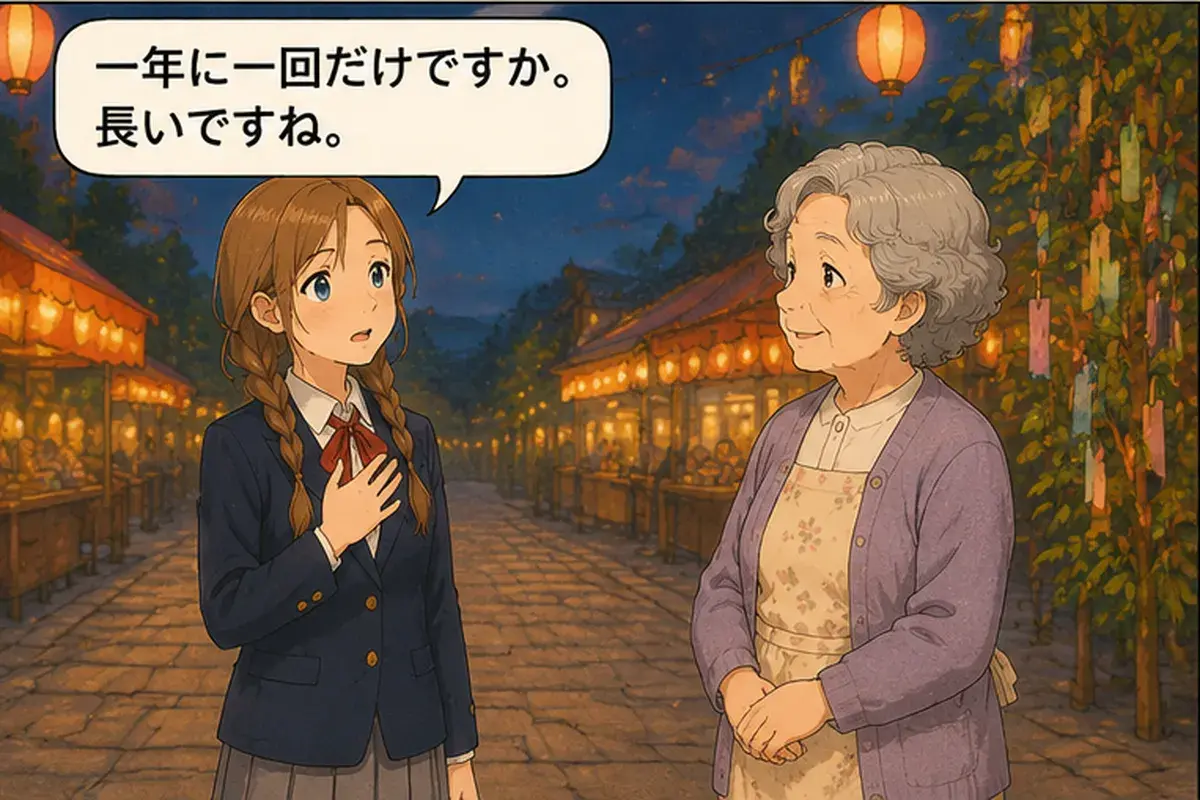
- ソーニャ
一年に一回だけですか。長いですね。
Only once a year? That's a long time.
- 田中
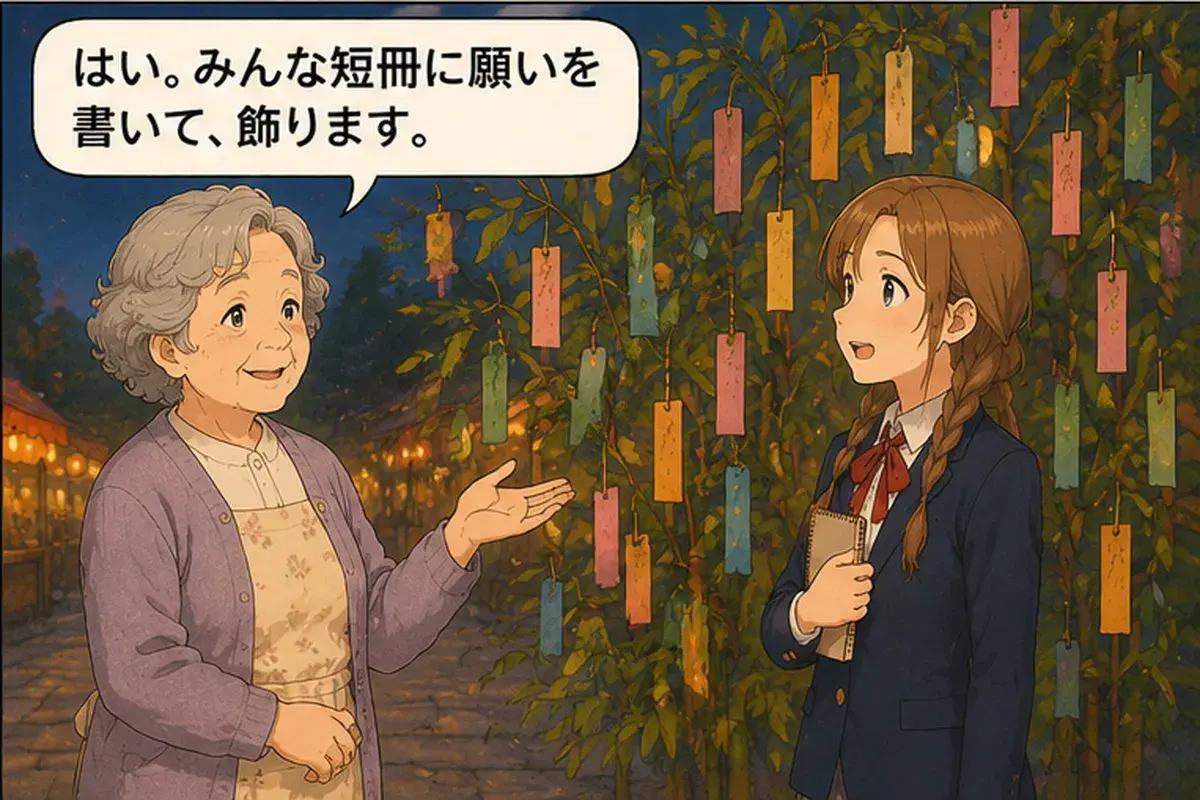
はい。みんな短冊に願いを書いて、飾ります。
Yes. Everyone writes a wish on a paper strip and puts it up.
- ソーニャ
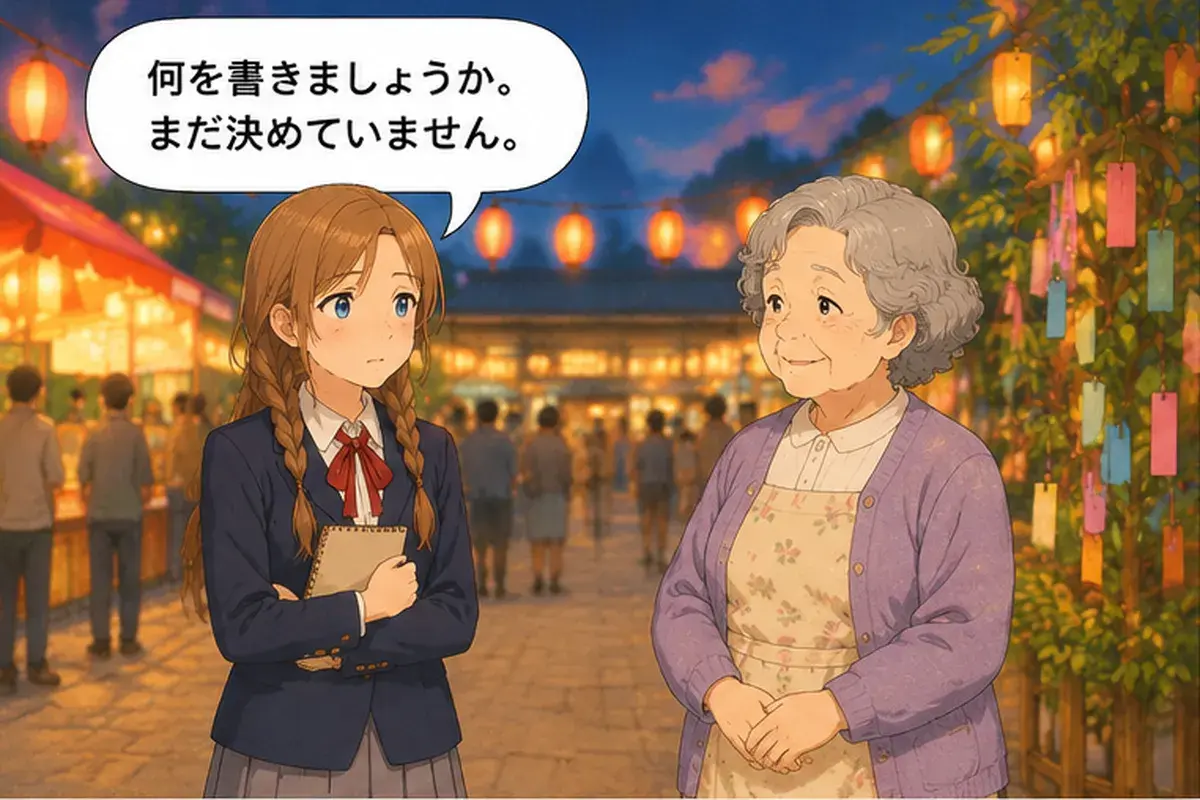
何を書きましょうか。まだ決めていません。
What shall I write? I haven't decided yet.
- 田中
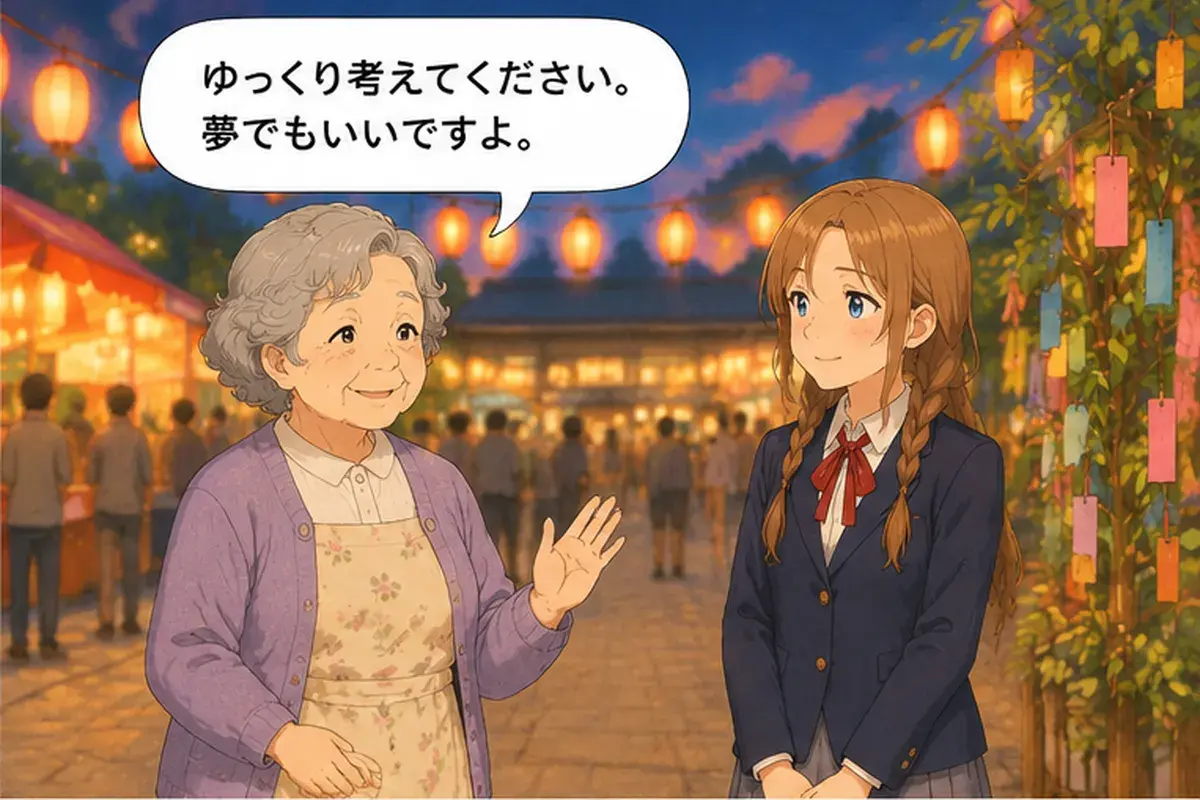
ゆっくり考えてください。夢でもいいですよ。
Take your time and think about it. A dream is fine too.
- ソーニャ
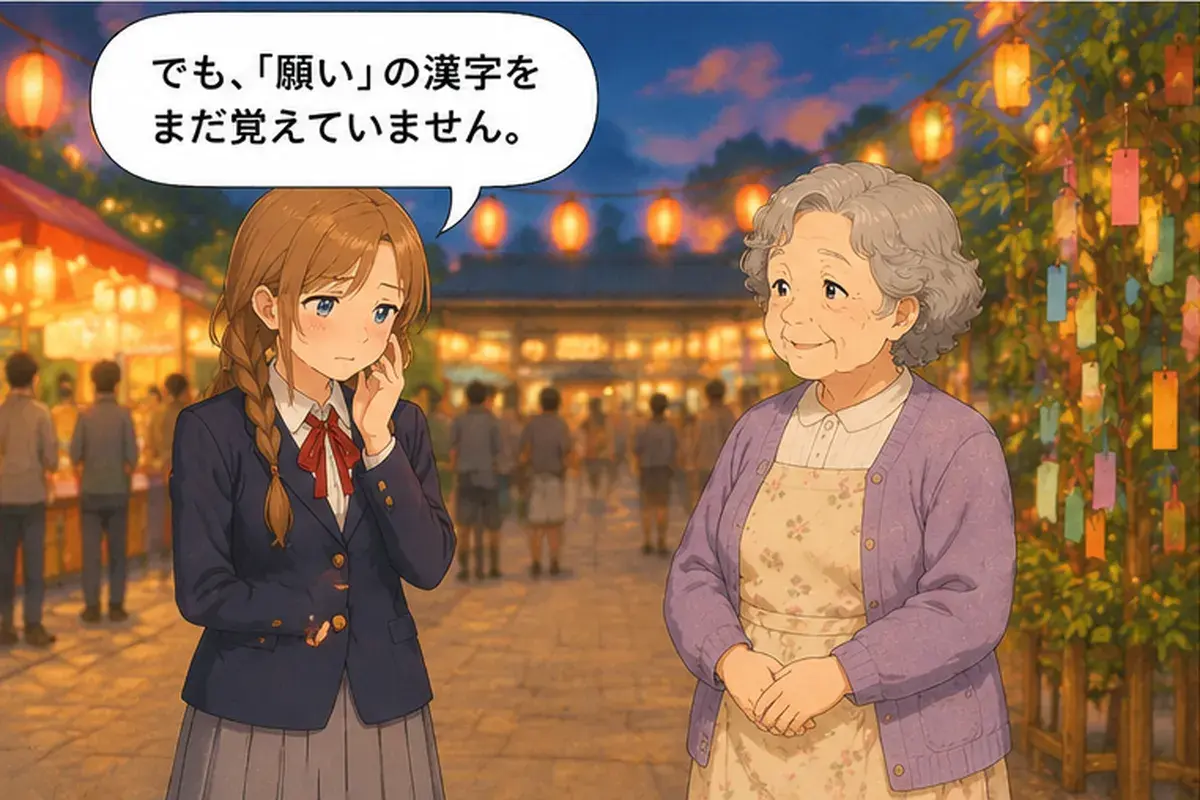
でも、「願い」の漢字をまだ覚えていません。
But I haven't learned the kanji for "wish" yet.
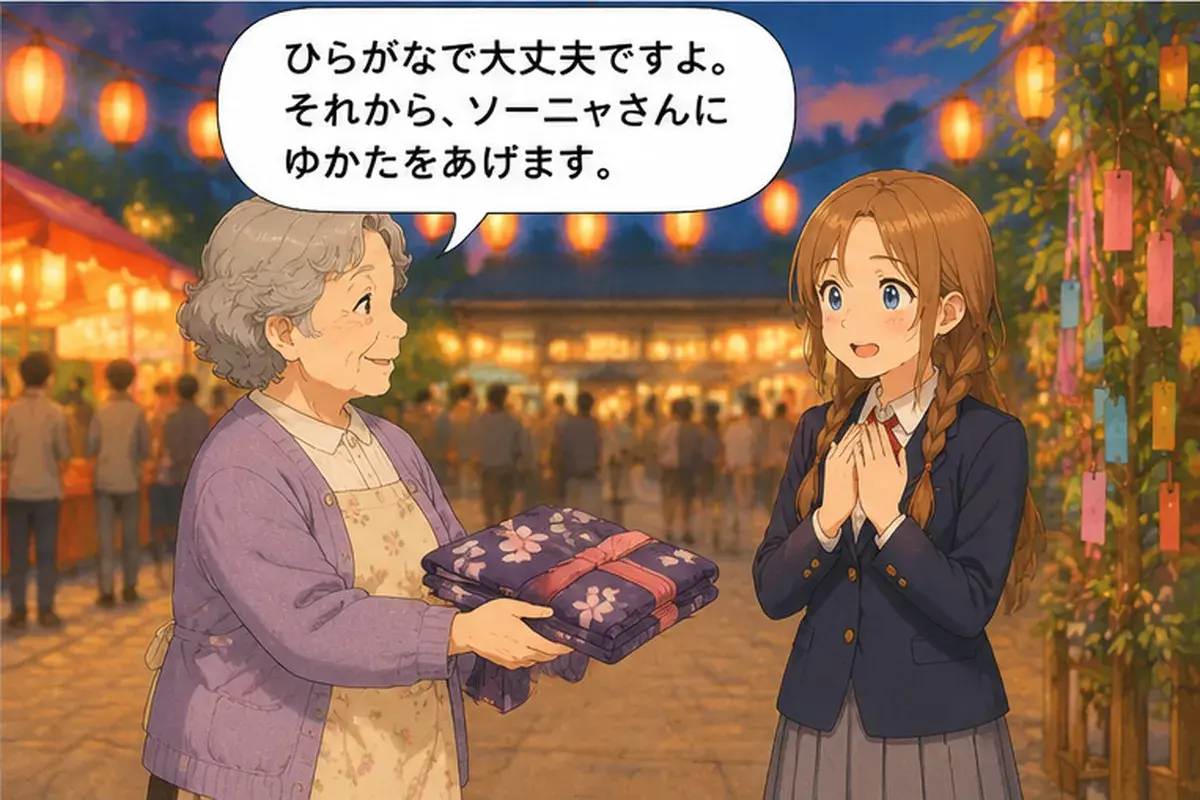
- 田中
ひらがなで大丈夫ですよ。それから、ソーニャさんにゆかたをあげます。
Hiragana is fine. Also, I'll give you a yukata, Sonya-san.
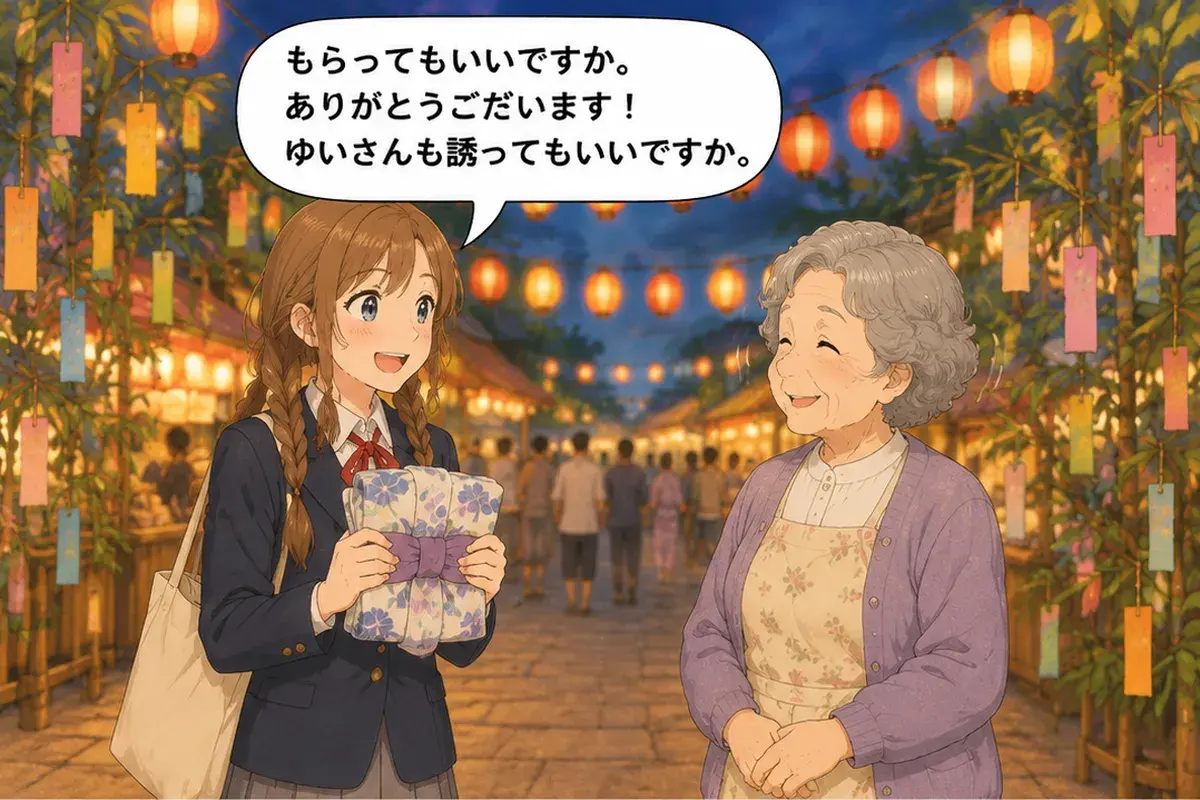
- ソーニャ
もらってもいいですか。ありがとうございます!ゆいさんも誘ってもいいですか。
May I have it? Thank you! May I invite Yui-san too?
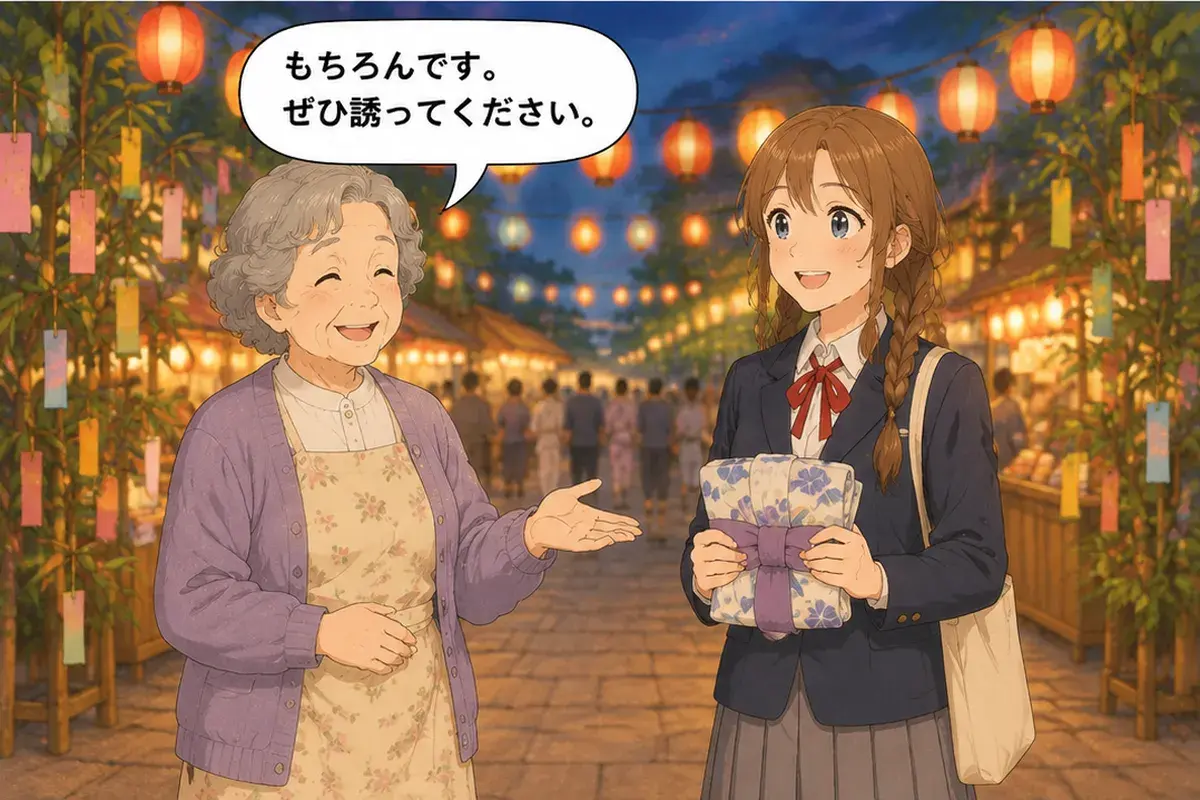
- 田中
もちろんです。ぜひ誘ってください。
Of course. Please be sure to invite her.
Grammar for this text
七月 七日 の 夜 は 都合 が いい です か — Does the evening of July 7 work for you? 都合 is about whether a time fits your plans: it's a polite way to check if someone is free before saying why. 七日 has a special reading, なのか, like the other first ten days of the month (unit 17).
一緒に 行きません か is an invitation (unit 7): literally "won't you go together?". マルク さん も ソーニャ さん も means "both Mark-san and Sonya-san": Tanaka-san is inviting the whole family. Anna's answer 喜んで 行きます means "we'd be glad to go".
何か 手伝いましょう か — Shall I help with anything? (this unit's grammar). Tanaka-san politely says no: 大丈夫 です, "it's fine, no need".
一 年 に 一回 だけ 会います — They meet only once a year. In 一 年 に 一回, に shows how often, and だけ means "only". 天の川 is "the river of heaven", the Milky Way; で marks the place where they meet.
何 を 書きましょう か — Sonya is thinking aloud: "What shall I write?". Here ましょうか isn't an offer of help but thinking it over (this unit's grammar).
まだ 決めて いません and まだ 覚えて いません — I haven't decided yet. I haven't learned it yet. まだ + 〜て いません means "not yet". It doesn't mean "I don't remember".
ゆかた を あげます — Tanaka-san is the one giving, and the receiver, Sonya, takes に. もらって も いい です か — May I have it? (unit 15).
ゆい さん も 誘って も いい です か — 誘う means "to invite, to ask along" (the person takes を); 誘って も いい です か asks for permission (unit 15). The answer ぜひ 誘って ください means "please be sure to invite her".
Words and grammar of the unit: Invite and answer invitations.
Learn the words from the texts with flashcards
In the app, you can tap any word in a text to see its translation, forms and examples, and new words stick with flashcards. 15 minutes a day.
Start for freeEverything is open for free. No card needed to sign up.