
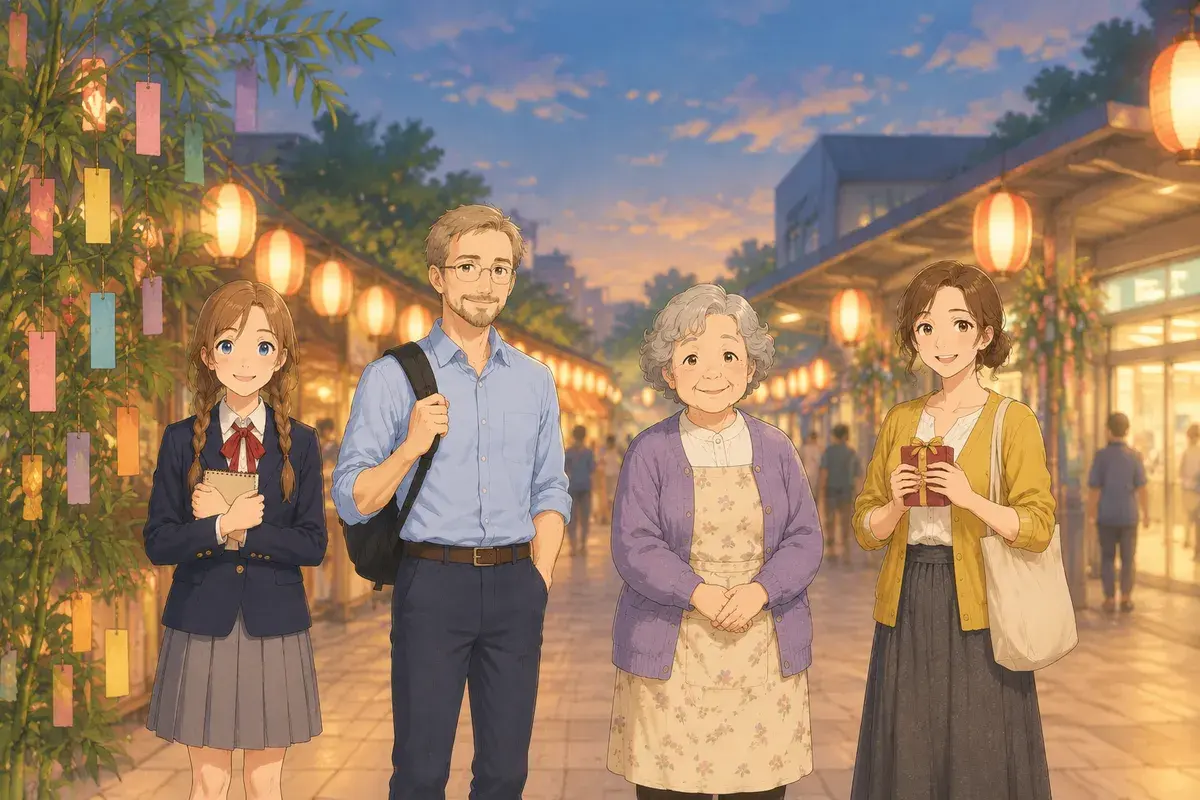
Japanese story with translation · A1 · 15 lines
パンをもらいました I got some bread
Comic · 14 panels
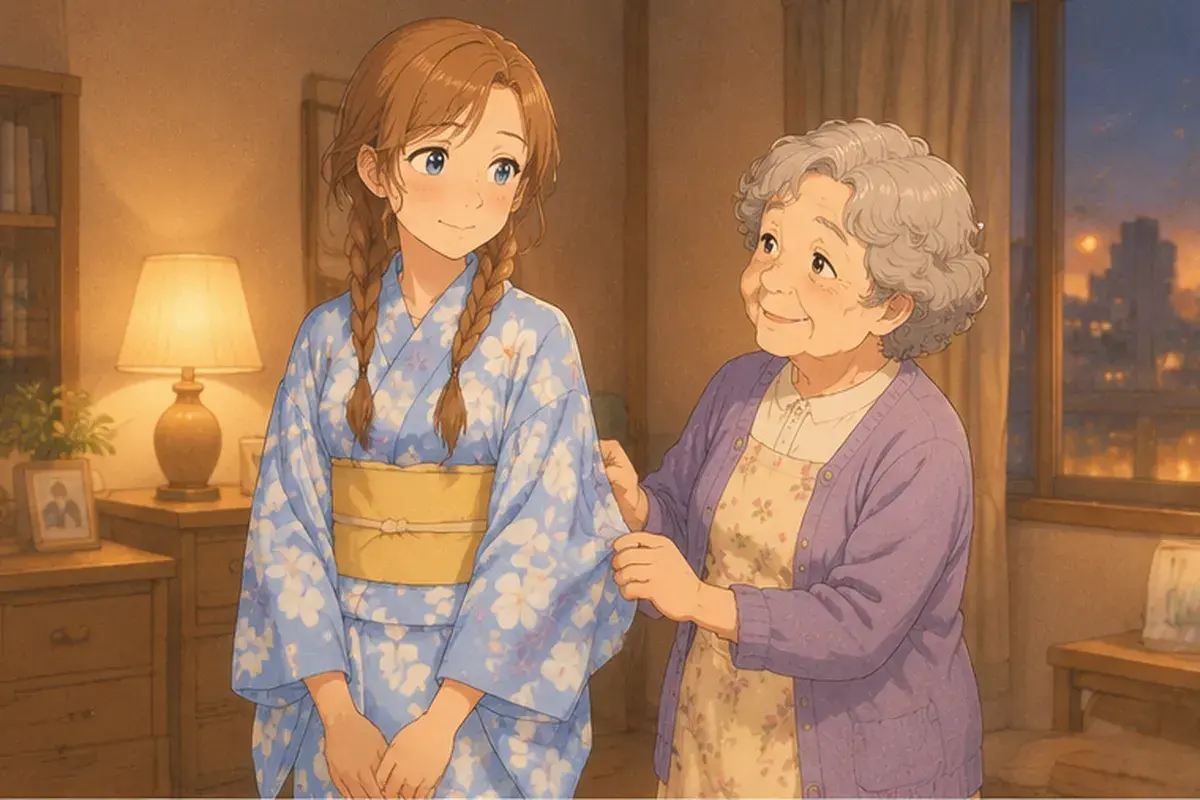
七月七日の夜、ソーニャはゆかたを着ました。田中さんにもらいました。
On the evening of July 7, Sonya put on a yukata. She got it from Tanaka-san.
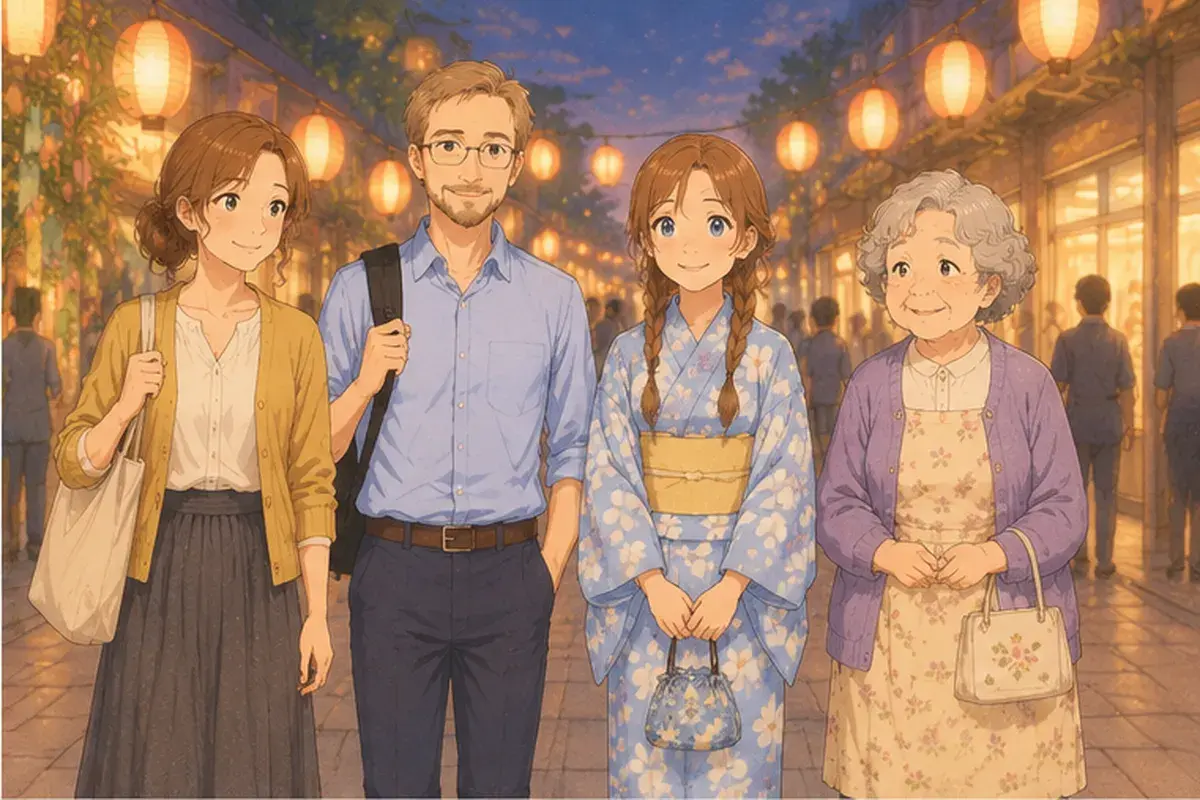
みんなで田中さんと祭りに行きました。
We all went to the festival with Tanaka-san.
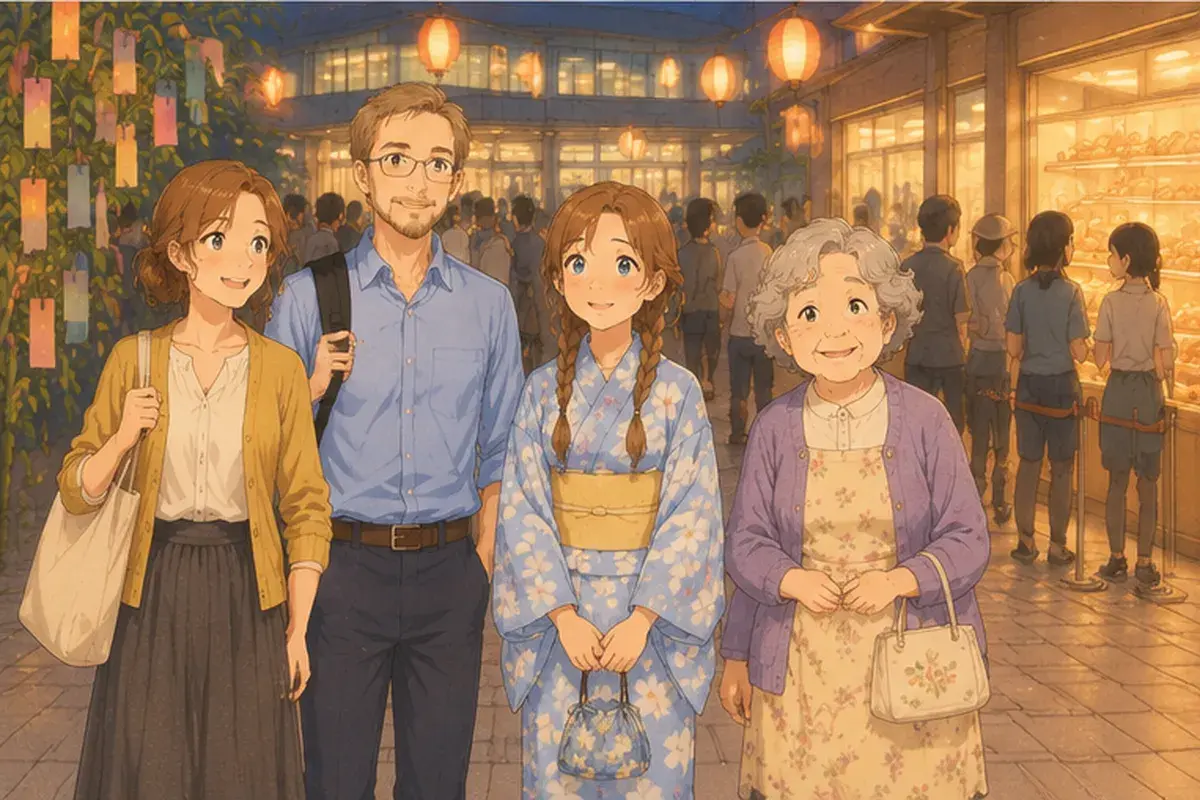
駅の前に人がたくさん集まりました。パン屋の前にも人が並びました。
A lot of people gathered in front of the station. People lined up in front of the bakery too.
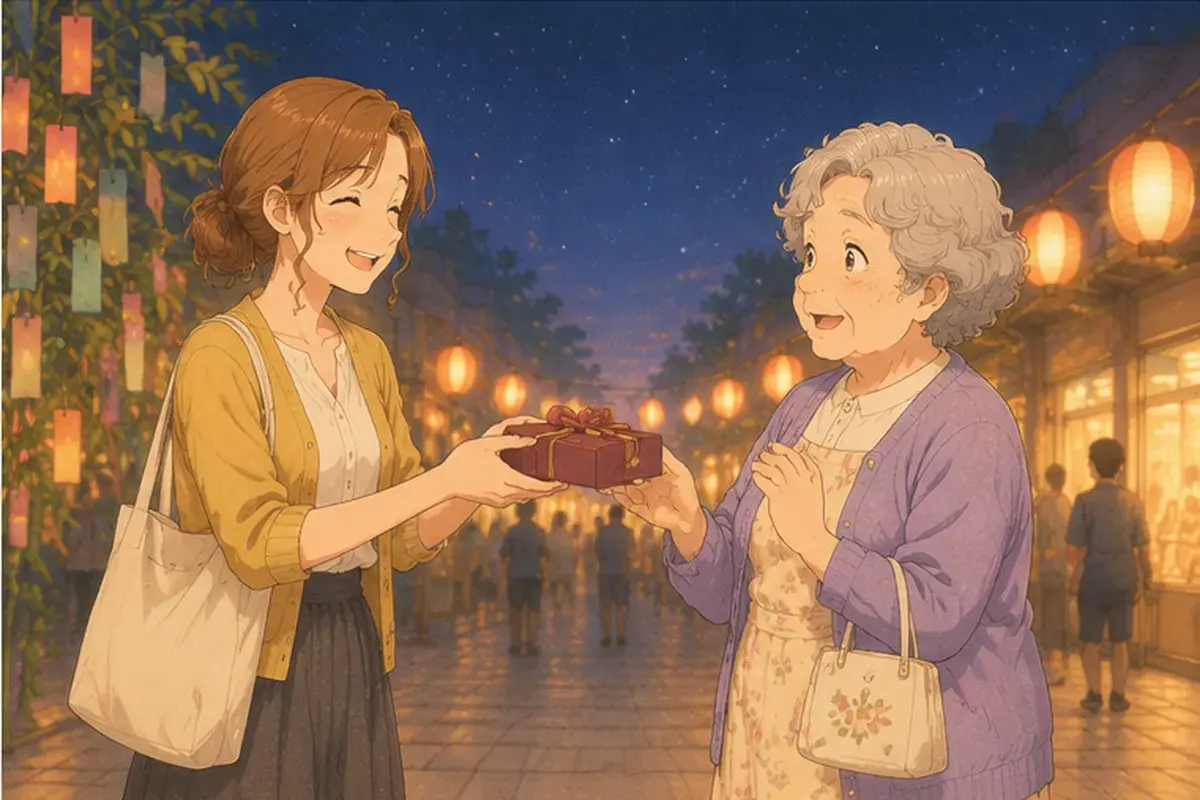
私は田中さんにプレゼントを渡しました。国のチョコレートです。
I handed a present to Tanaka-san. It's chocolate from my country.
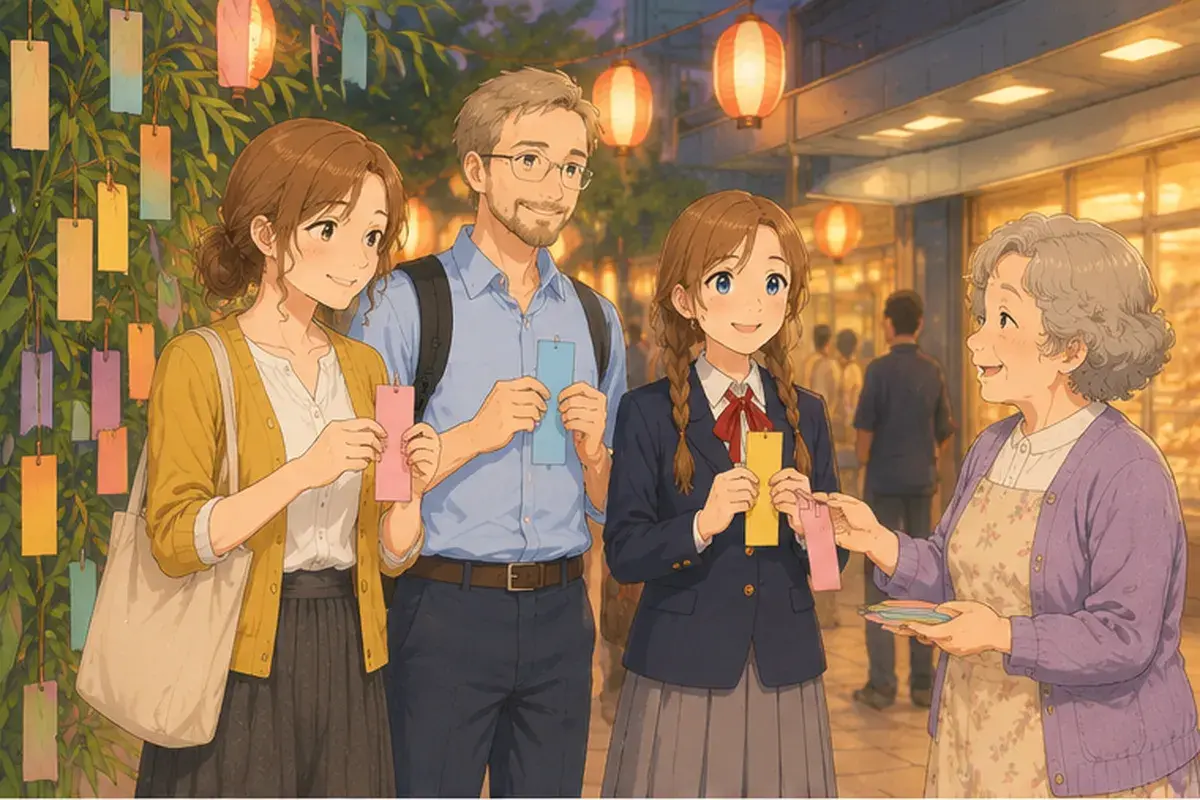
みんな田中さんに短冊をもらいました。
We all got paper strips from Tanaka-san.
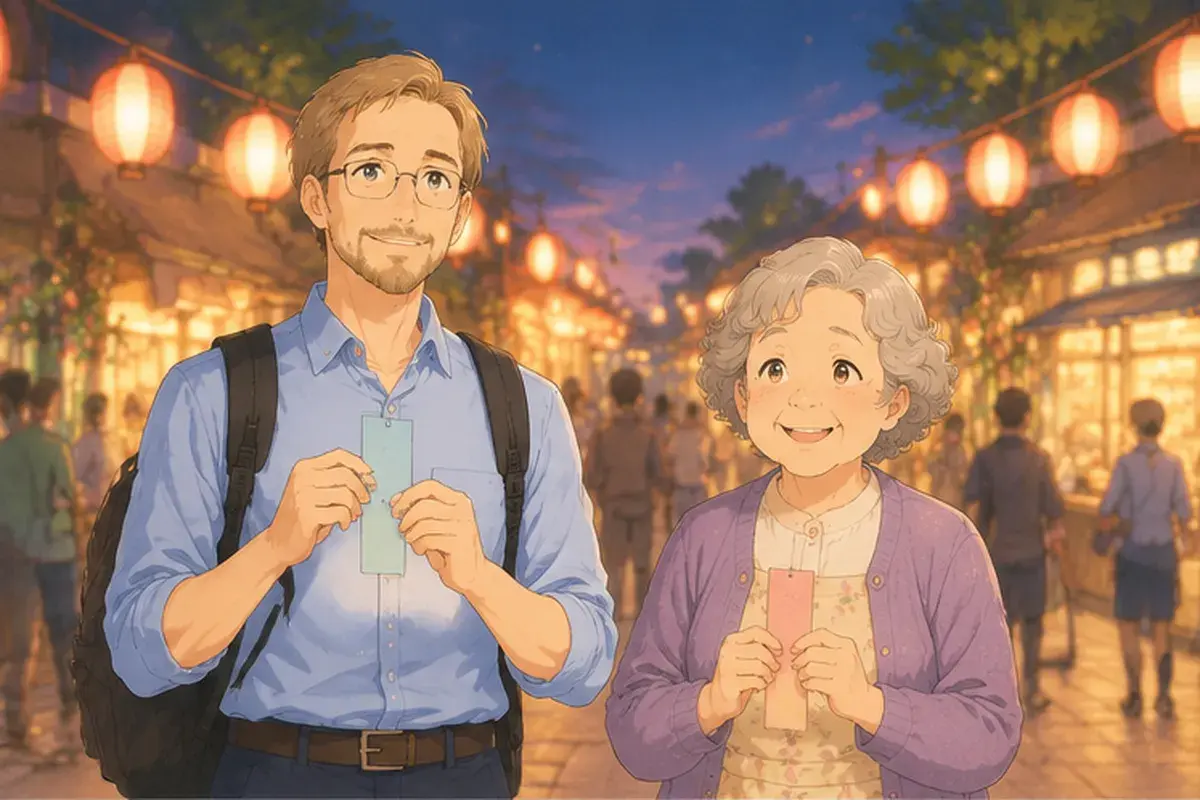
マルクの願いは新しい自転車です。ソーニャの夢は漫画家です。
Mark's wish is a new bicycle. Sonya's dream is to be a manga artist.

私は将来パン屋になりたいです。短冊にパンの絵も描きました。
In the future, I want to be a baker. I also drew a picture of bread on my paper strip.
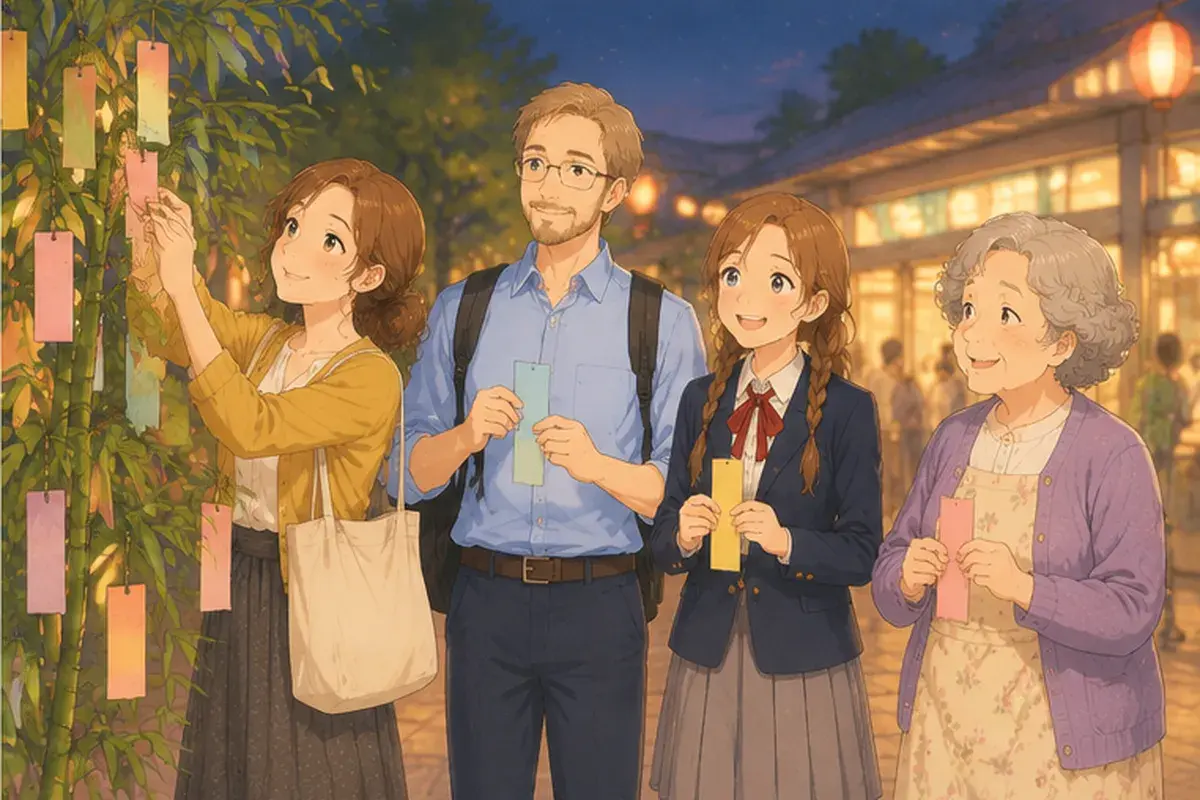
みんなの短冊を駅の前に飾りました。
We put up everyone's paper strips in front of the station.
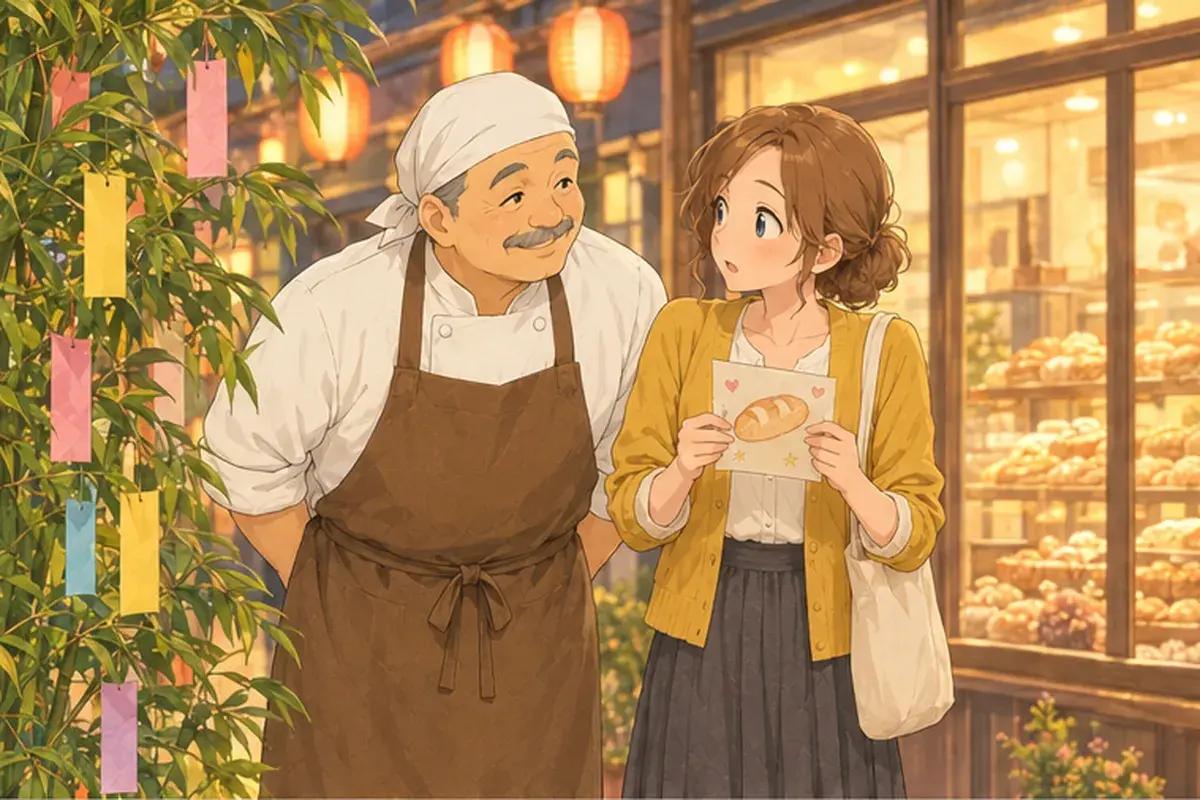
パン屋の人は私の短冊を見ました。それが小林さんでした。
The person from the bakery looked at my paper strip. That was Kobayashi-san.

私は小林さんに初めて会いました。パンをもらいました。
I met Kobayashi-san for the first time. I got some bread from him.
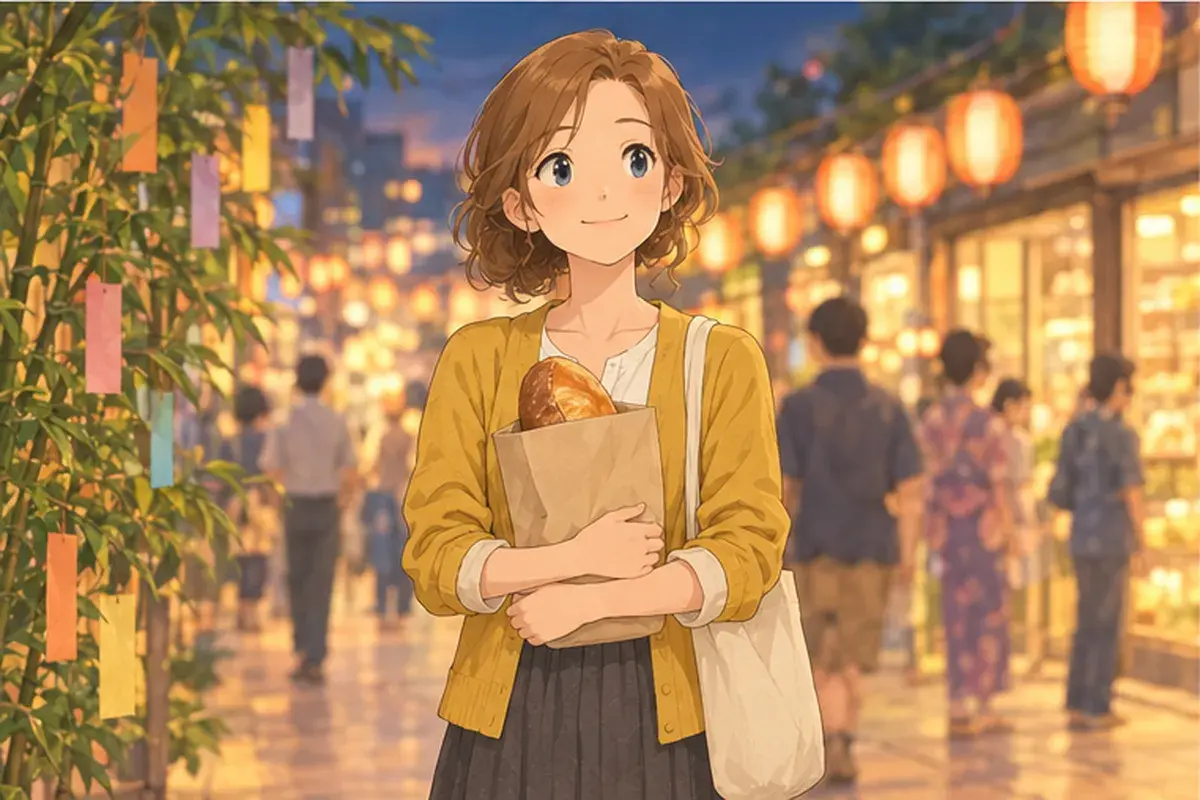
とてもうれしかったです。
I was very happy.
田中さんが言いました。「おめでとうございます!」
Tanaka-san said, "Congratulations!"
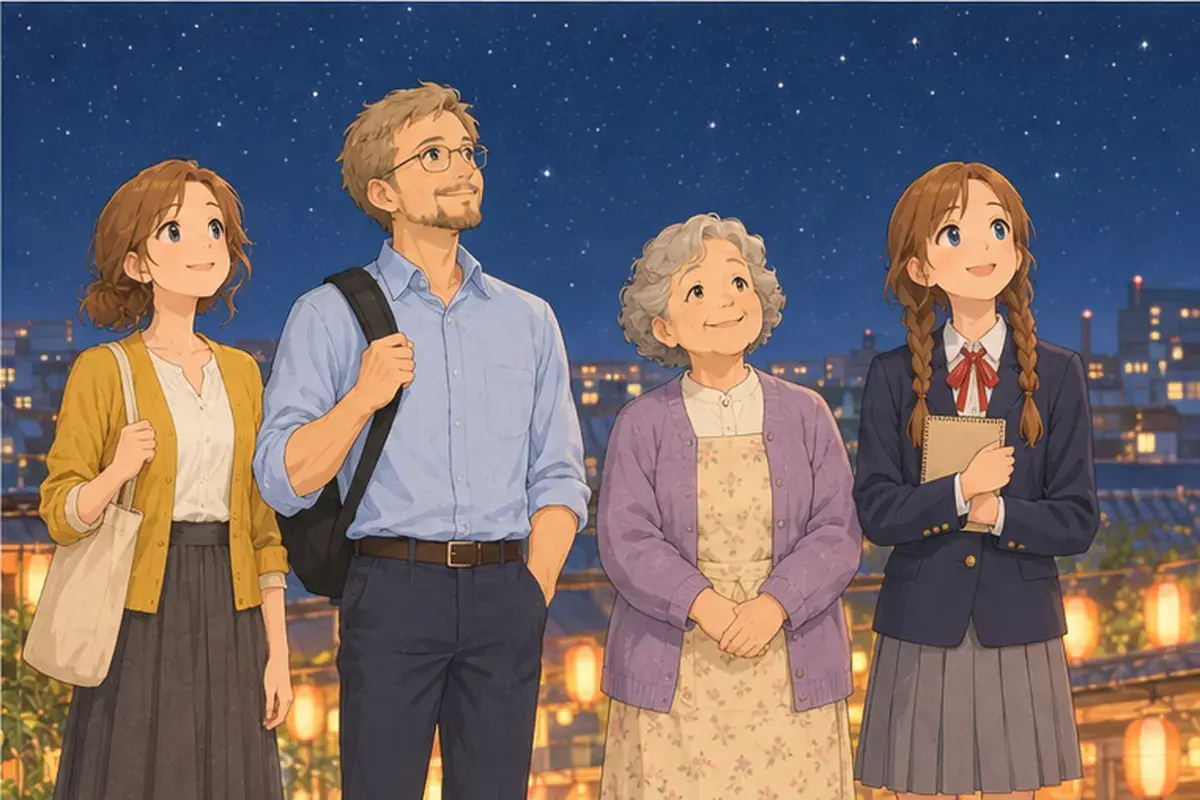
東京の空に天の川はありませんでした。でも星はきれいでした。
There was no Milky Way in the Tokyo sky. But the stars were beautiful.
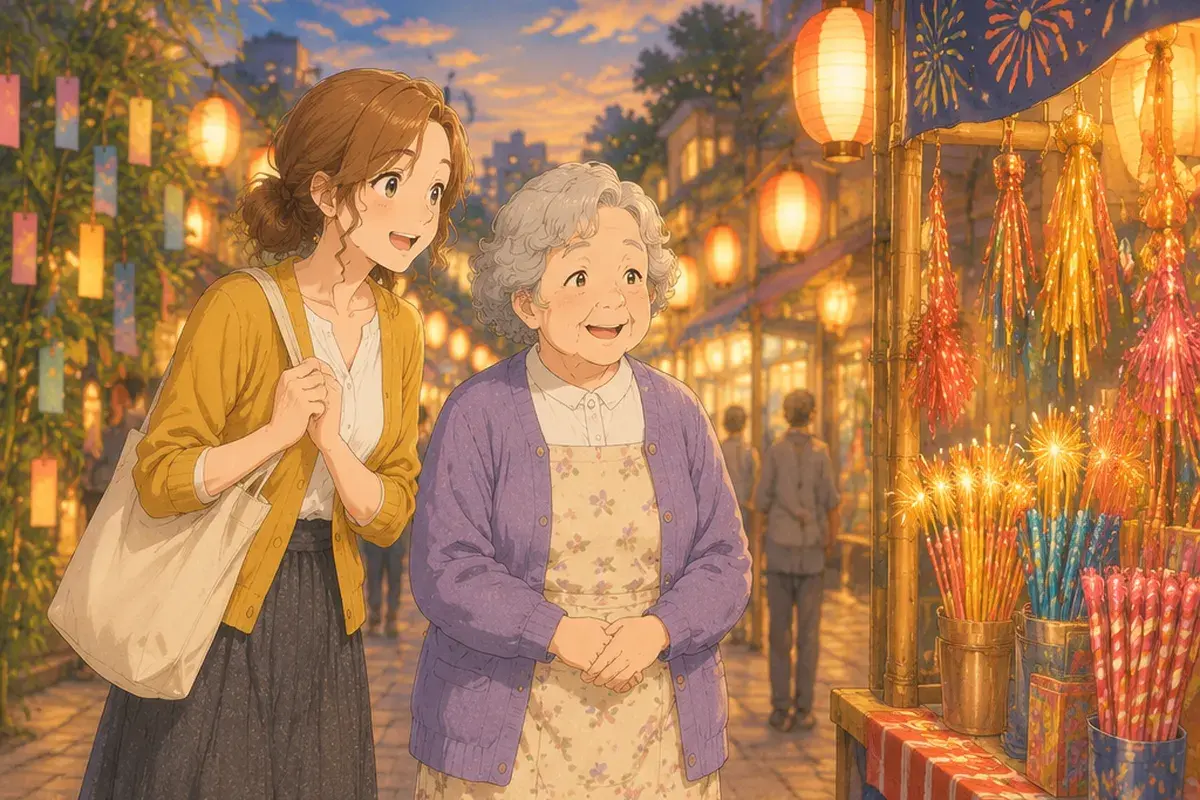
八月に夏の祭りがあります。花火もあります。
There's a summer festival in August. There are fireworks too.

また田中さんと行きます。楽しみです。
We'll go with Tanaka-san again. I'm looking forward to it.
Grammar for this text
ソーニャ は ゆかた を 着ました。 田中 さん に もらいました — Sonya got the yukata from Tanaka-san. もらう means "to get, to receive": the receiver is the subject, and the giver takes に. Same in パン を もらいました: someone gave Anna bread. Not あげました: when someone gives something to you or your family, you say もらいました (this unit's grammar).
人 が たくさん 集まりました — 集まる means "to gather": people gather by themselves, so it's 人 が. 人 が 並びました — 並ぶ means "to line up". パン屋 is both the bakery and the baker.
田中 さん に プレゼント を 渡しました — 渡す means "to hand over", from hand to hand; the person takes に. プレゼント is a present, from the English word.
ソーニャ の 夢 は 漫画家 です — 夢 is "dream", 漫画家 is "manga artist". 私 は 将来 パン屋 に なりたい です — In the future, I want to be a baker (this unit's grammar).
小林 さん に 初めて 会いました — 会う takes に: "I met Kobayashi-san"; 初めて means "for the first time" (unit 11). Anna had heard about the bakery owner before, but they only met in person at the festival.
おめでとう ございます is a polite "congratulations". Learn it as a whole phrase; the answer is ありがとう ございます.
天の川 は ありませんでした — you couldn't see the Milky Way: Tokyo has too many lights. Japanese simply says "there was no Milky Way".
楽しみ です means "I'm looking forward to it"; また means "again".
Words and grammar of the unit: Invite and answer invitations.
Learn the words from the texts with flashcards
In the app, you can tap any word in a text to see its translation, forms and examples, and new words stick with flashcards. 15 minutes a day.
Start for freeEverything is open for free. No card needed to sign up.