
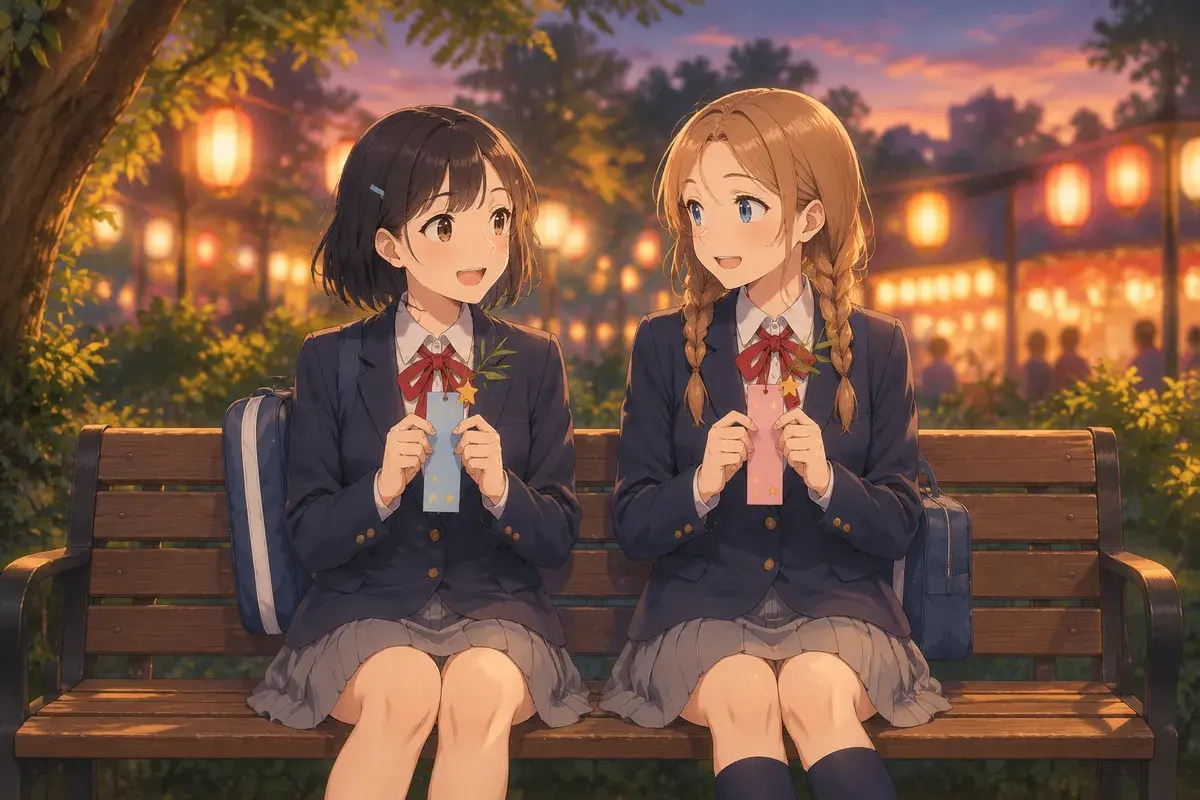
Japanese dialogue with translation · A1 · 14 lines
その日は約束があります I have plans that day
Comic · 9 panels
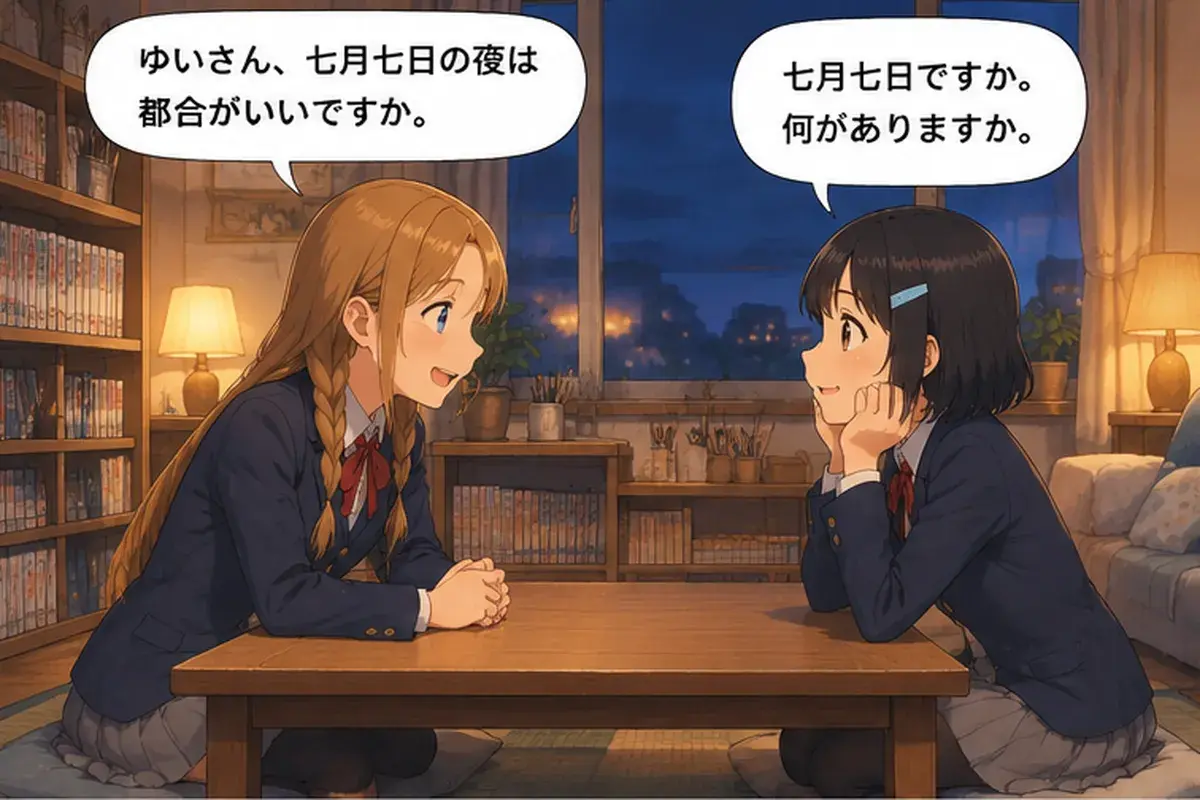
- ソーニャ
ゆいさん、七月七日の夜は都合がいいですか。
Yui-san, does the evening of July 7 work for you?
- ゆい
七月七日ですか。何がありますか。
July 7? What's happening?
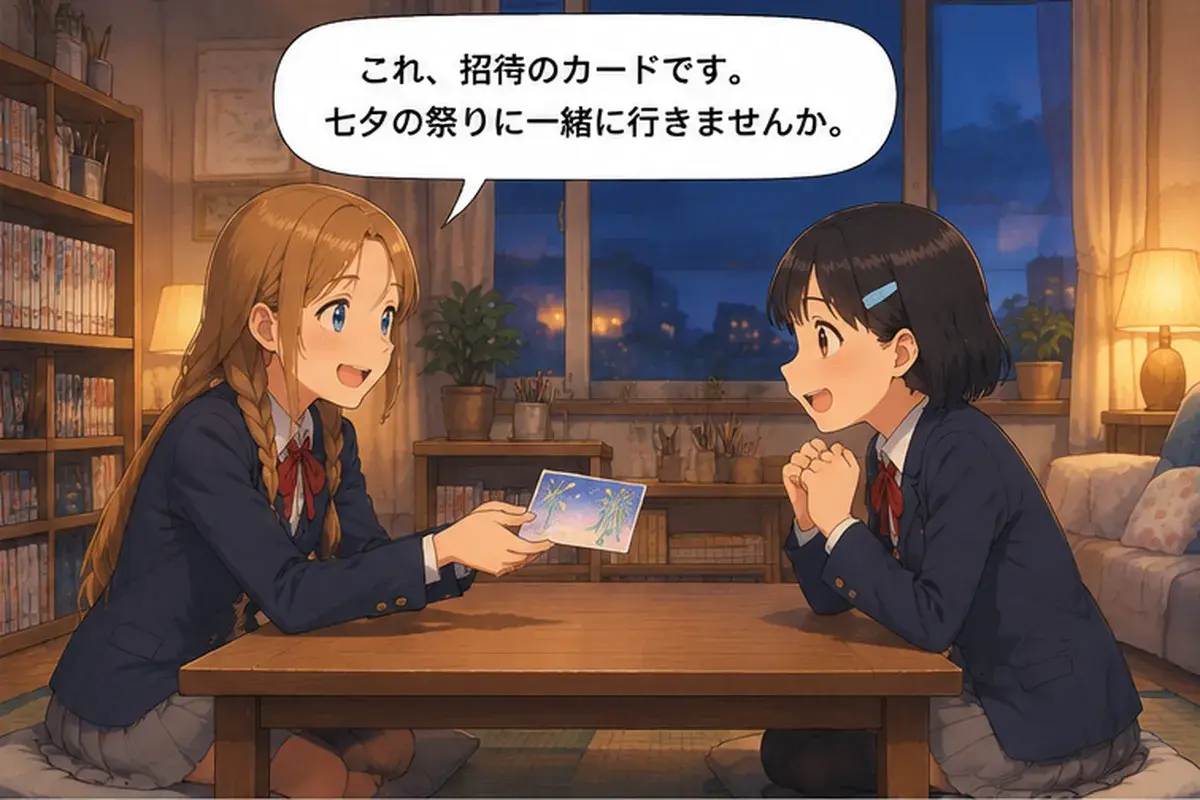
- ソーニャ
これ、招待のカードです。七夕の祭りに一緒に行きませんか。
Here, this is an invitation card. Would you like to go to the Tanabata festival together?
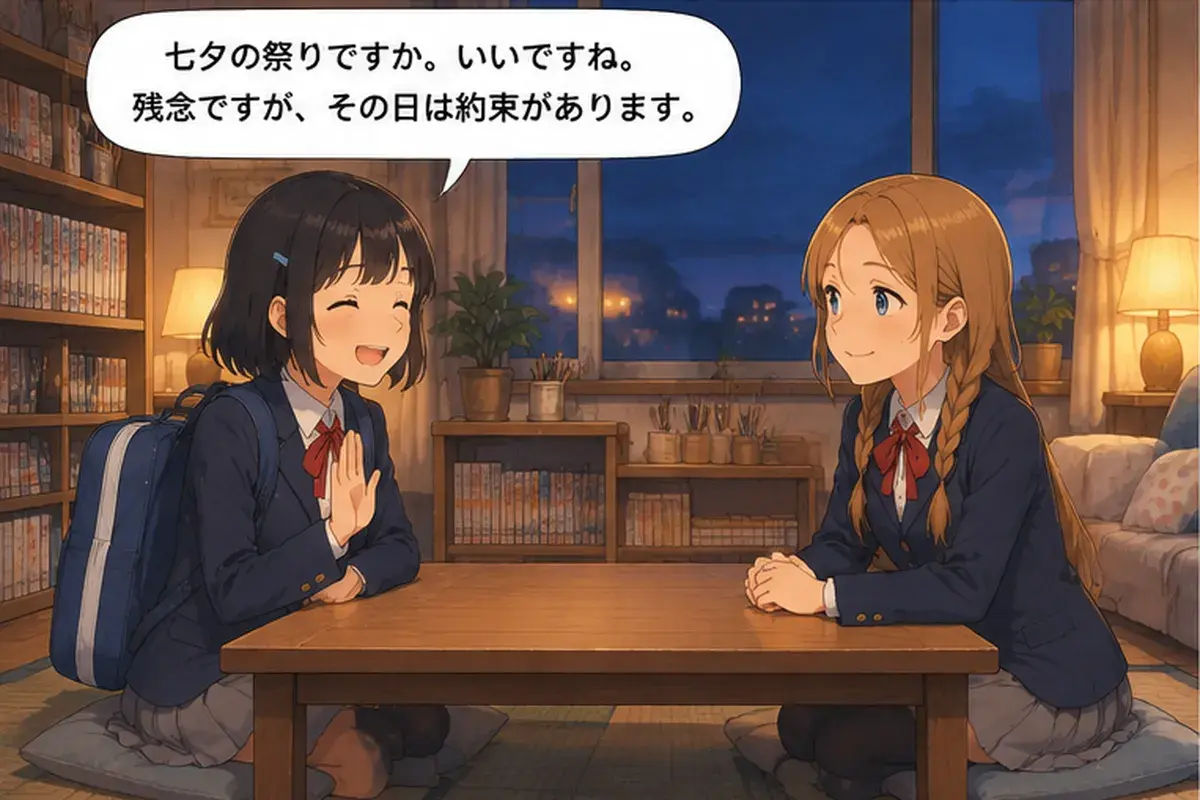
- ゆい
七夕の祭りですか。いいですね。残念ですが、その日は約束があります。
The Tanabata festival? Sounds nice. Unfortunately, I have plans that day.
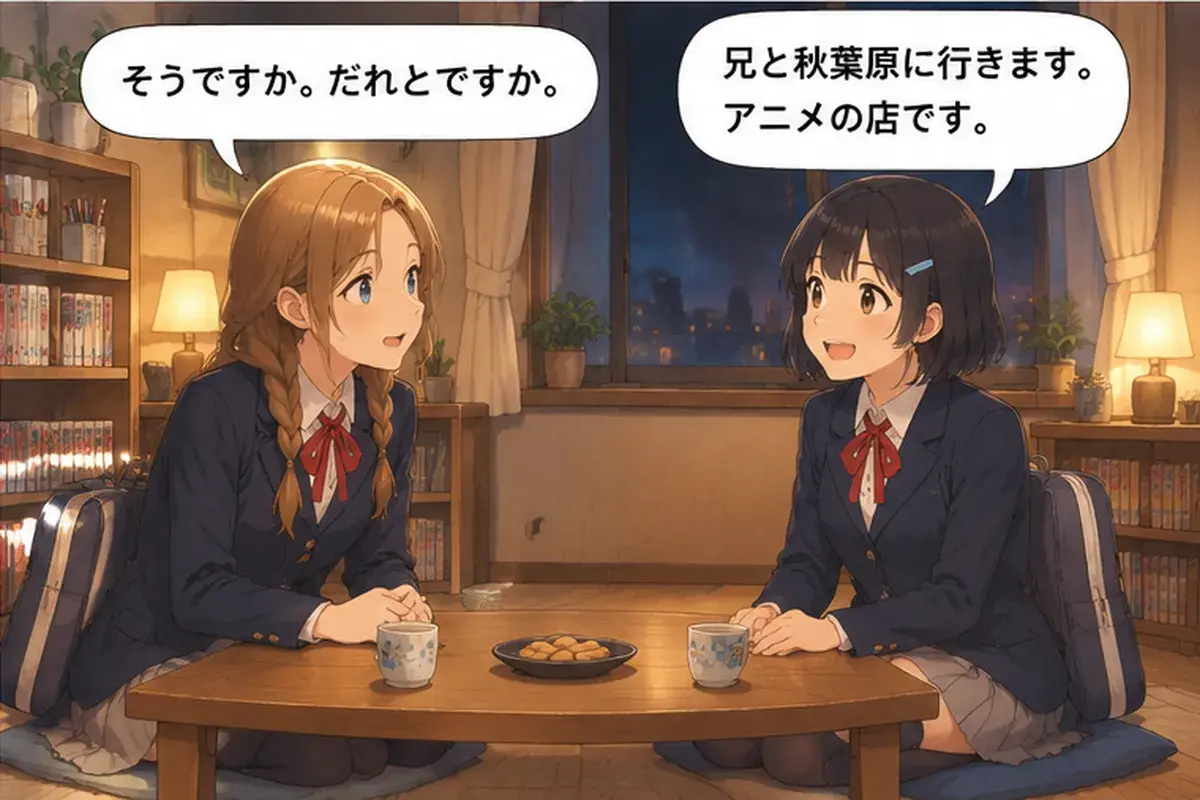
- ソーニャ
そうですか。だれとですか。
I see. Who with?
- ゆい
兄と秋葉原に行きます。アニメの店です。
I'm going to Akihabara with my older brother. To an anime store.
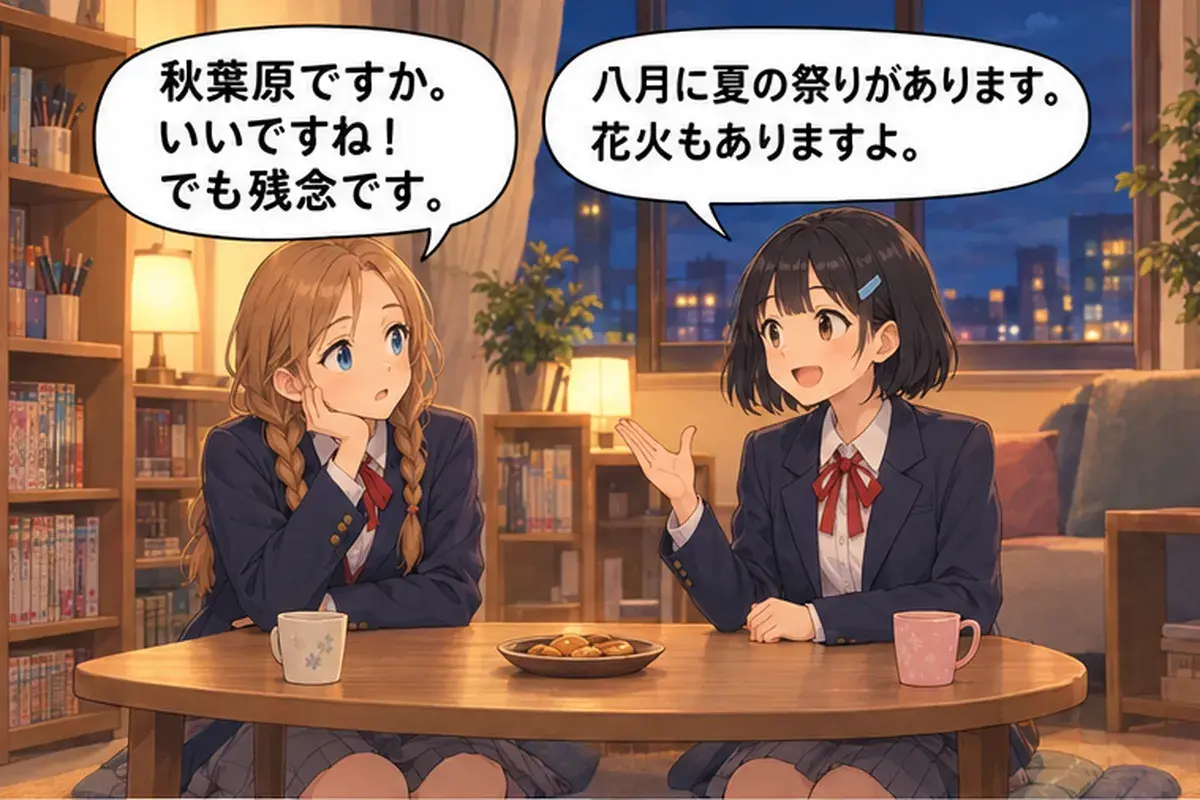
- ソーニャ
秋葉原ですか。いいですね!でも残念です。
Akihabara? Sounds great! But that's too bad.
- ゆい
八月に夏の祭りがあります。花火もありますよ。
There's a summer festival in August. There are fireworks too.
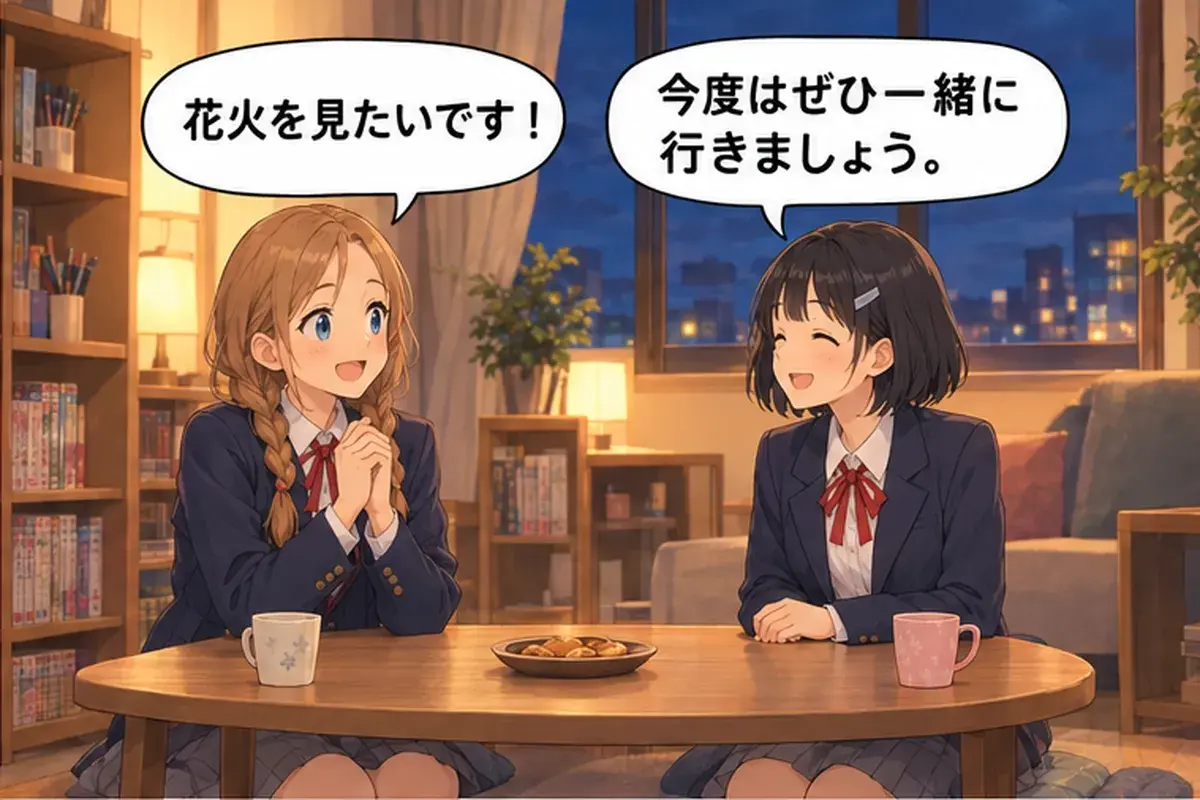
- ソーニャ
花火を見たいです!
I want to see the fireworks!
- ゆい
今度はぜひ一緒に行きましょう。
Next time, let's definitely go together.
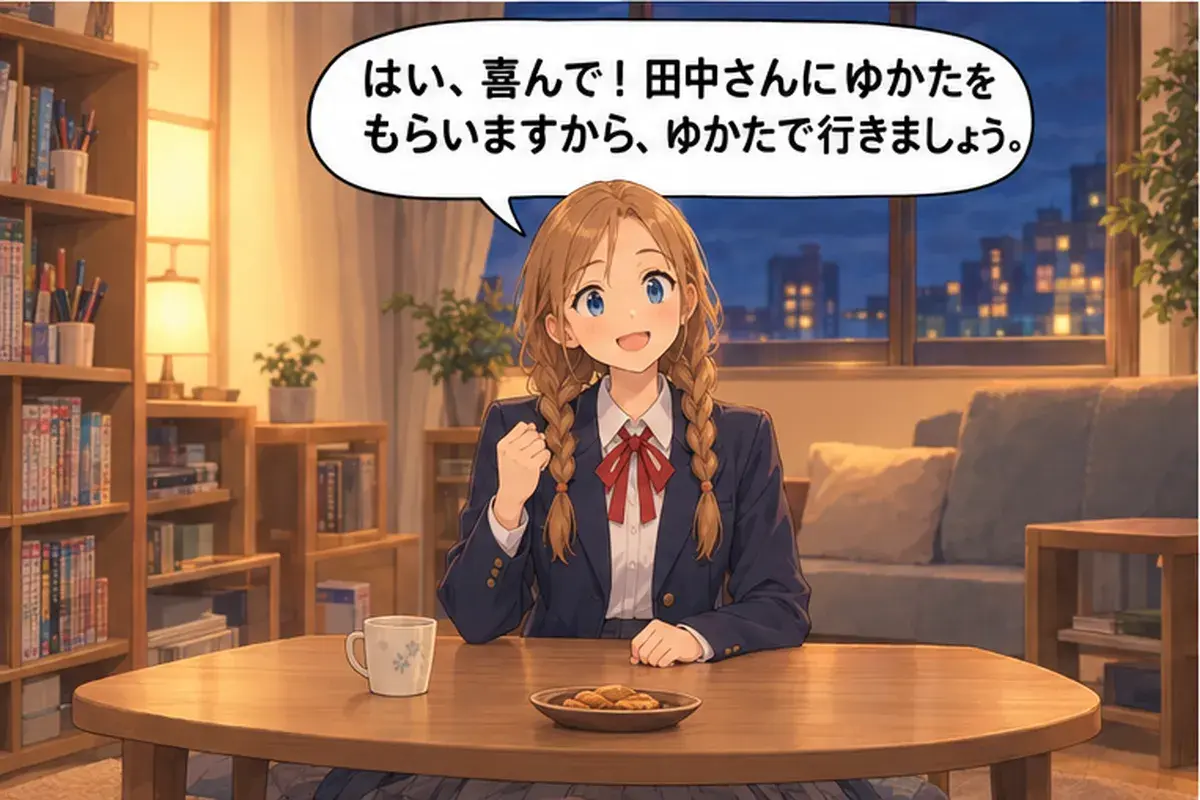
- ソーニャ
はい、喜んで!田中さんにゆかたをもらいますから、ゆかたで行きましょう。
Yes, I'd be glad to! I'm getting a yukata from Tanaka-san, so let's go in yukatas.
- ゆい
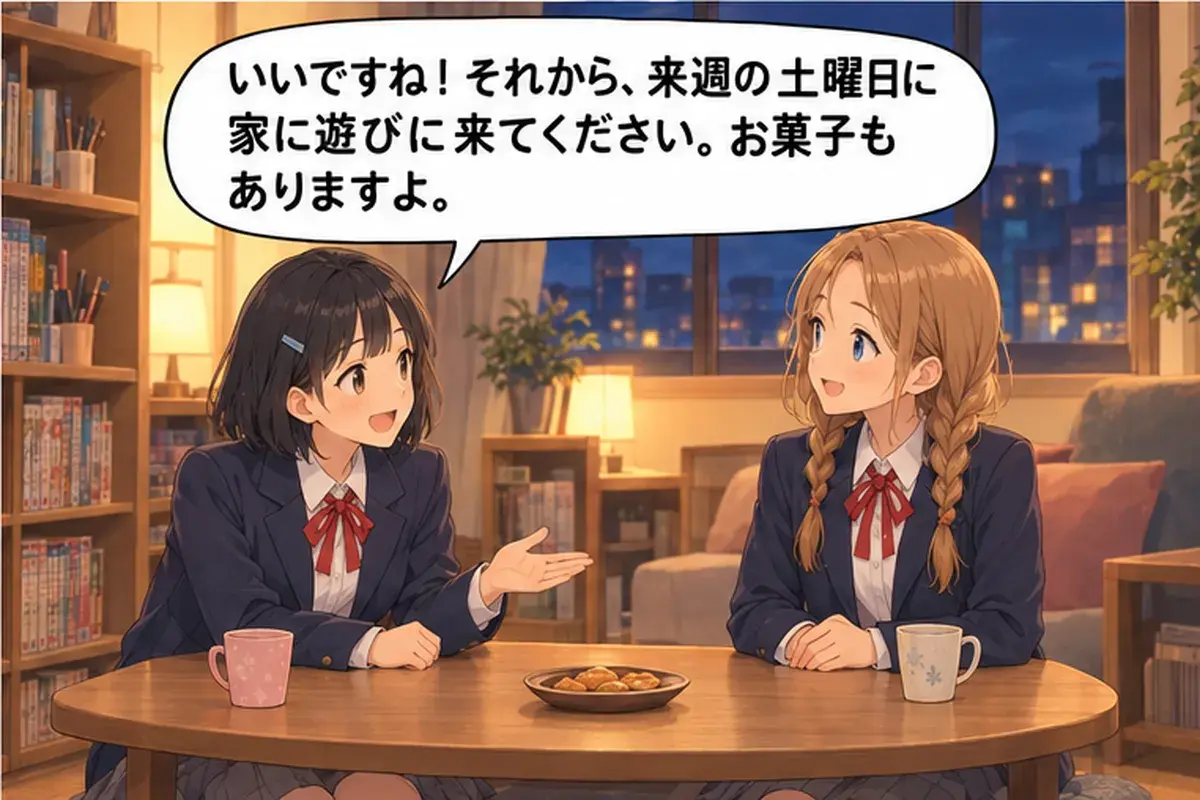
いいですね!それから、来週の土曜日に家に遊びに来てください。お菓子もありますよ。
Sounds good! Also, please come over to my house on Saturday next week. There are sweets too.
- ソーニャ
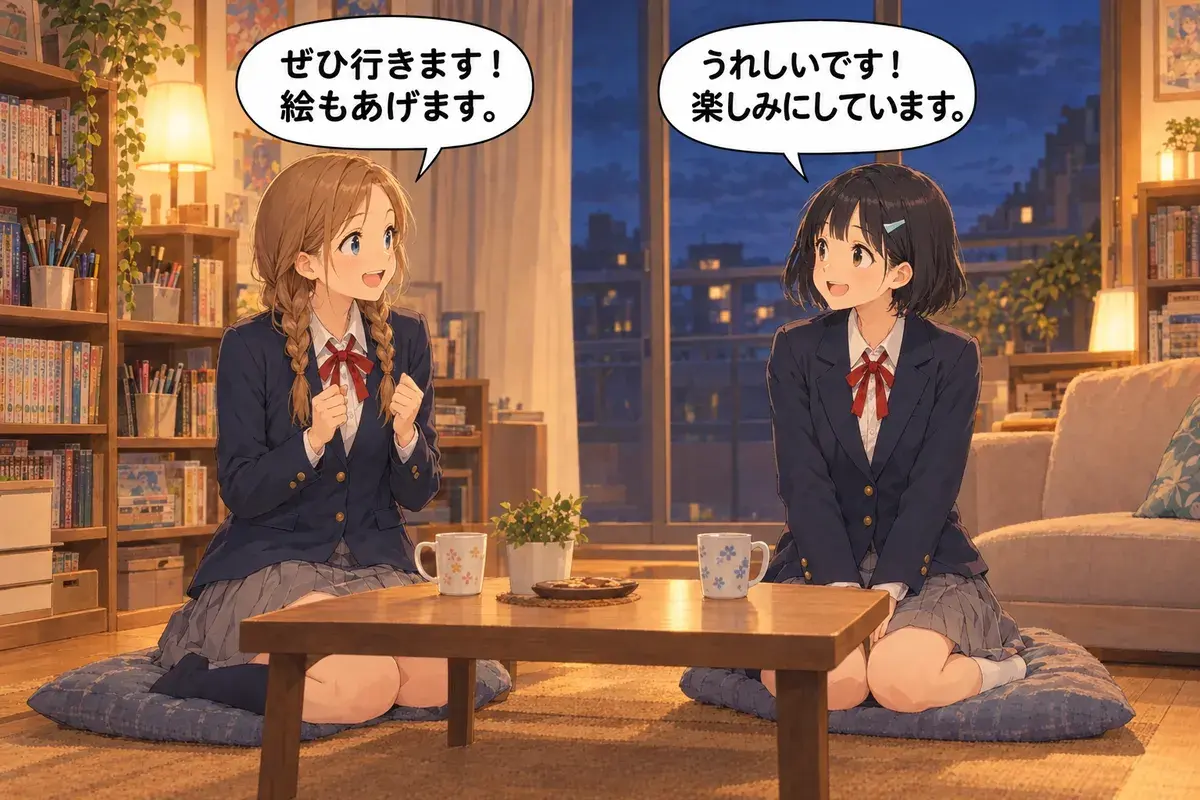
ぜひ行きます!絵もあげます。
I'll definitely come! I'll give you a drawing too.
- ゆい
うれしいです!楽しみにしています。
I'm happy! I'm looking forward to it.
Grammar for this text
これ、 招待 の カード です — Sonya drew the invitation card herself. 招待 means "invitation"; the word is a bit formal, and in everyday talk "to invite" is 誘う.
残念 です が、 その 日 は 約束 が あります is a polite no. 残念 です が means "unfortunately, but...", and 約束 here is "plans": "I already have plans that day". Japanese people avoid a direct "no". 兄 と 秋葉原 に 行きます — 兄 is your own older brother (unit 12); someone else's would be お兄さん.
今度 は ぜひ 一緒に 行きましょう — 今度 means "next time", ぜひ means "definitely". はい、 喜んで is a polite "I'd be glad to".
田中 さん に ゆかた を もらいます から — here もらいます is about the future: the ます form covers both the present and the future (unit 6). から means "because, so" (unit 10): "I'm getting a yukata, so let's go in yukatas".
遊び に 来て ください — 遊ぶ means "to play, to hang out", and 遊び に 来る is "to come over for fun". Masu stem + に + 来る means "come to do something" (unit 18). お菓子 も あります よ — お菓子 are sweets, and も means "too".
絵 も あげます — Sonya will give Yui one of her drawings.
楽しみ に して います is a set phrase: "I'm looking forward to it".
Words and grammar of the unit: Invite and answer invitations.
Learn the words from the texts with flashcards
In the app, you can tap any word in a text to see its translation, forms and examples, and new words stick with flashcards. 15 minutes a day.
Start for freeEverything is open for free. No card needed to sign up.