
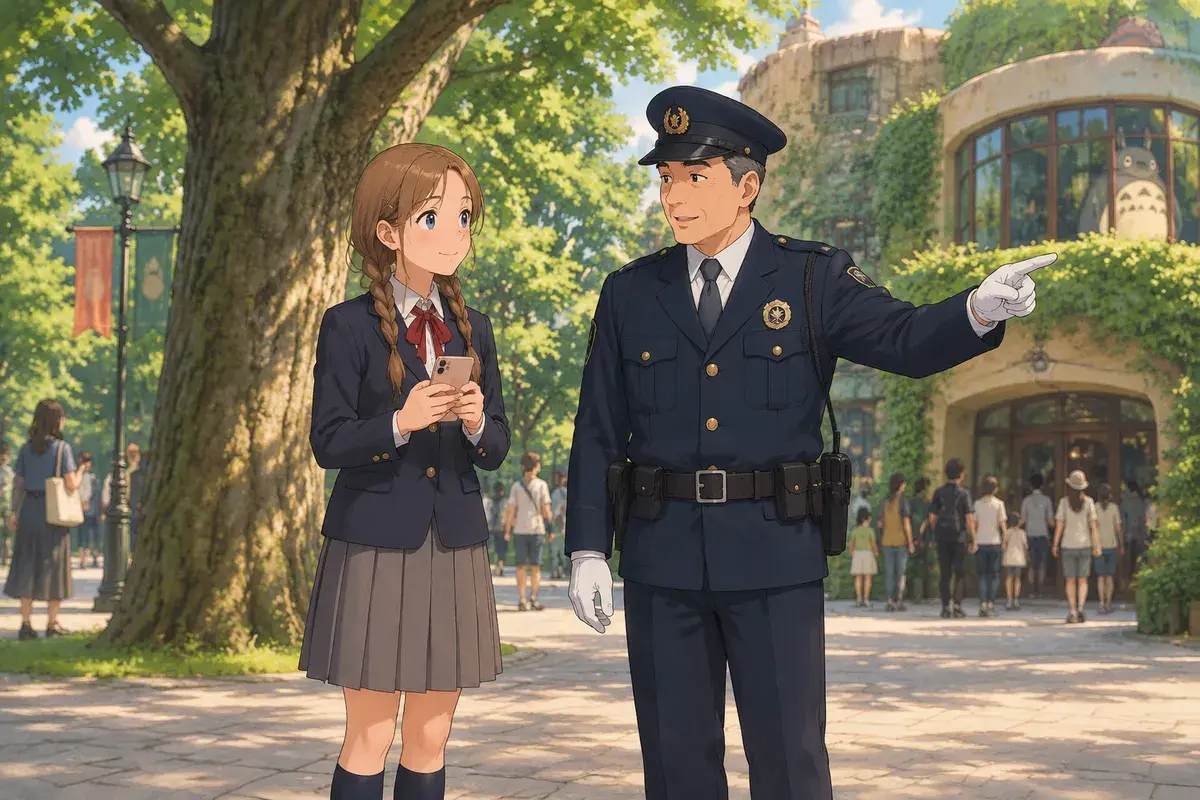
Japanese dialogue with translation · A1 · 12 lines
二つ目の信号を右に曲がってください Please turn right at the second traffic light
Comic · 8 panels
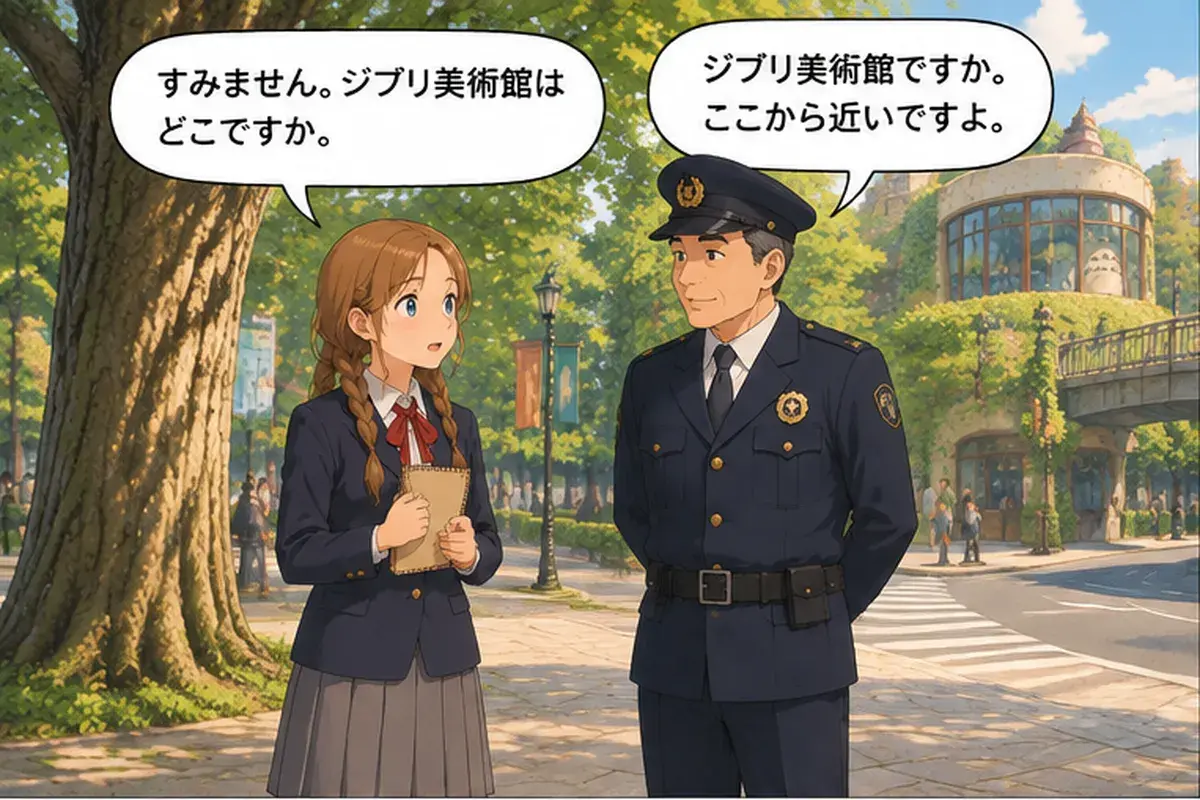
- ソーニャ
すみません。ジブリ美術館はどこですか。
Excuse me. Where's the Ghibli Museum?
- 警察官
ジブリ美術館ですか。ここから近いですよ。
The Ghibli Museum? It's close to here.
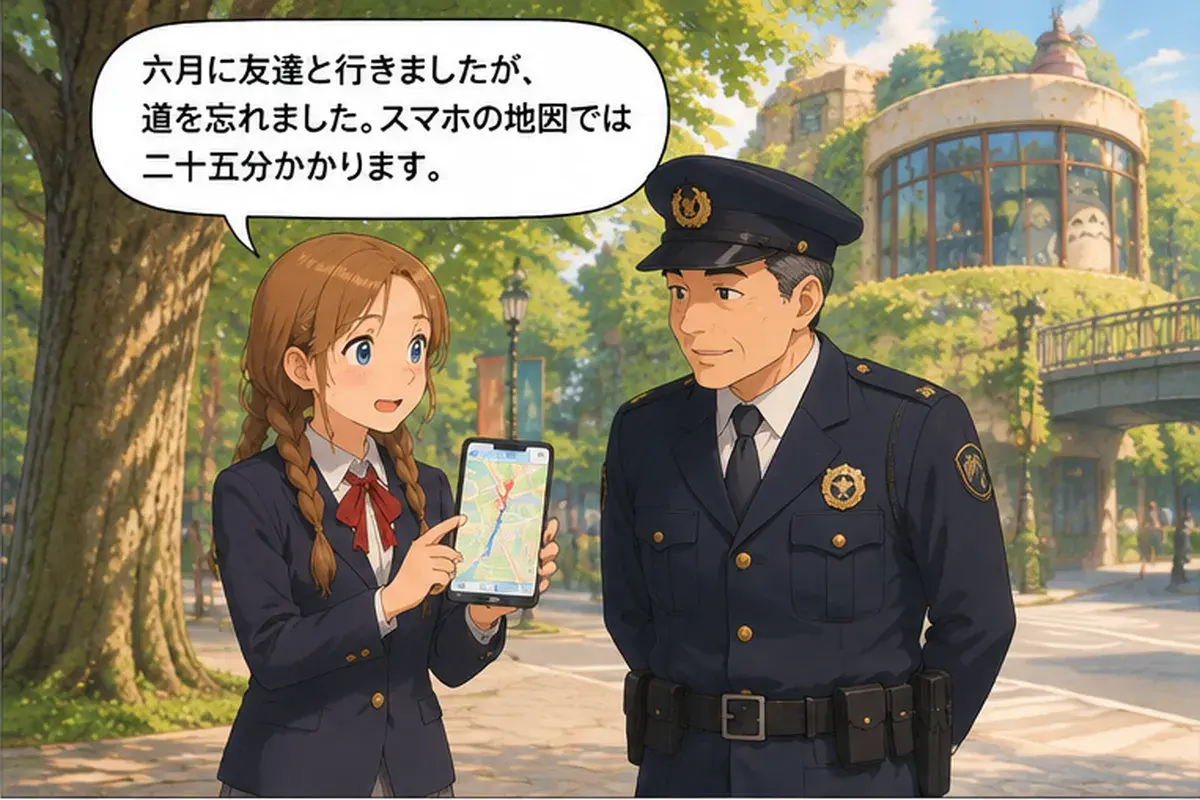
- ソーニャ
六月に友達と行きましたが、道を忘れました。スマホの地図では二十五分かかります。
I went there with a friend in June, but I forgot the way. On my smartphone map it takes 25 minutes.
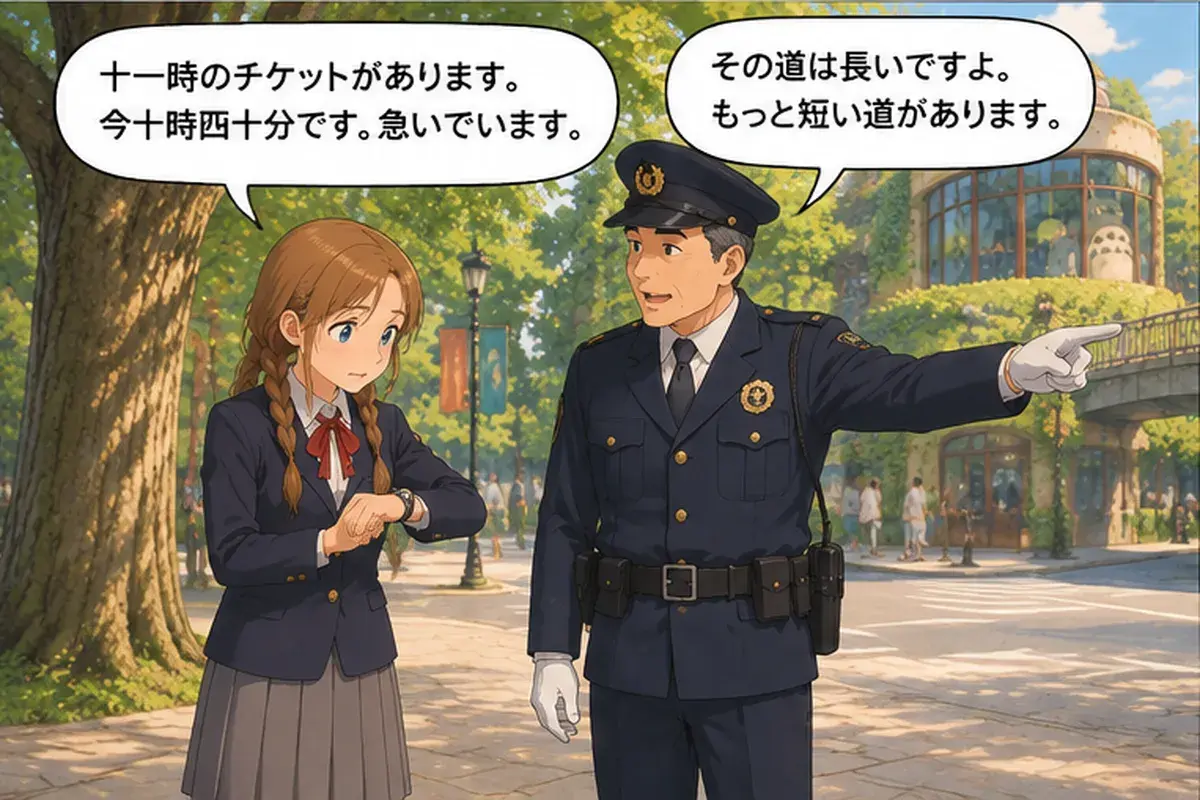
- 警察官
その道は長いですよ。もっと短い道があります。
That way is long. There's a shorter way.
- ソーニャ
十一時のチケットがあります。今十時四十分です。急いでいます。
I have a ticket for eleven o'clock. It's 10:40 now. I'm in a hurry.
- 警察官
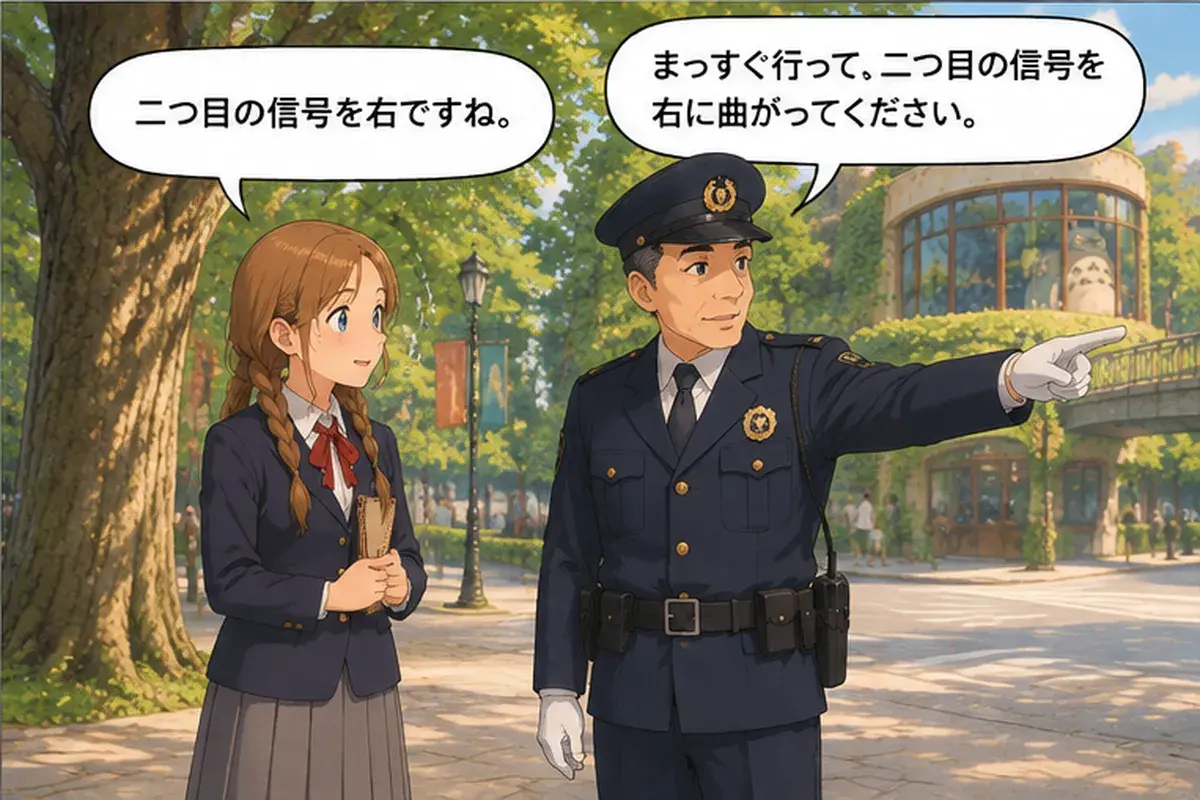
まっすぐ行って、二つ目の信号を右に曲がってください。
Please go straight and turn right at the second traffic light.
- ソーニャ
二つ目の信号を右ですね。
So it's right at the second traffic light?
- 警察官
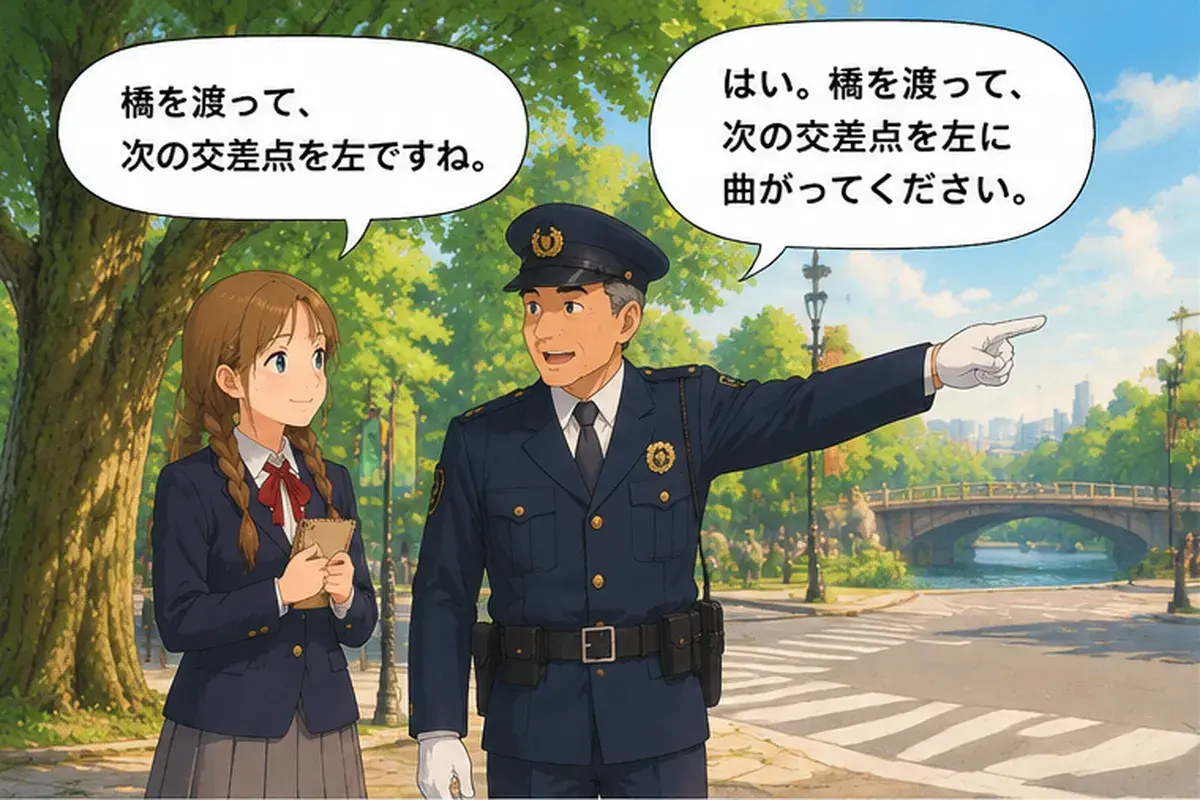
はい。橋を渡って、次の交差点を左に曲がってください。
Yes. Please cross the bridge and turn left at the next intersection.
- ソーニャ
橋を渡って、次の交差点を左ですね。
Cross the bridge, and it's left at the next intersection?
- 警察官
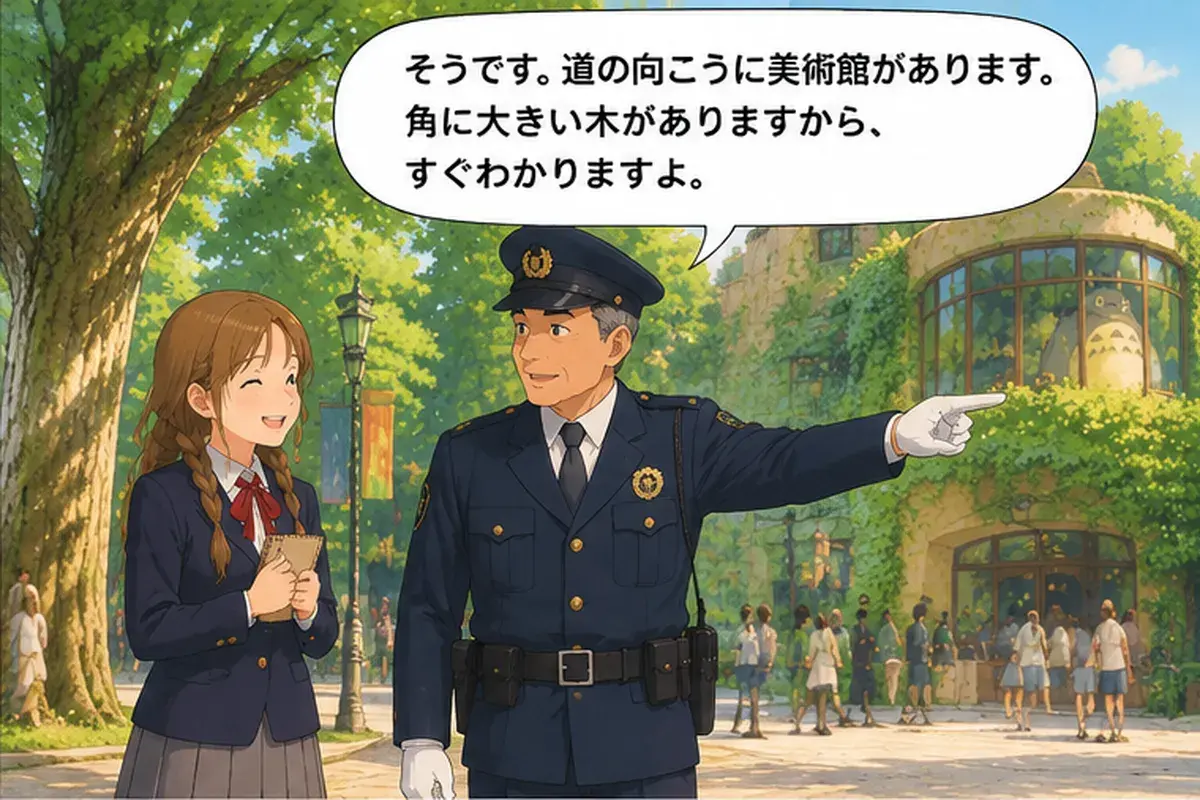
そうです。道の向こうに美術館があります。角に大きい木がありますから、すぐわかりますよ。
That's right. The museum is across the street. There's a big tree on the corner, so you'll know it right away.
- ソーニャ
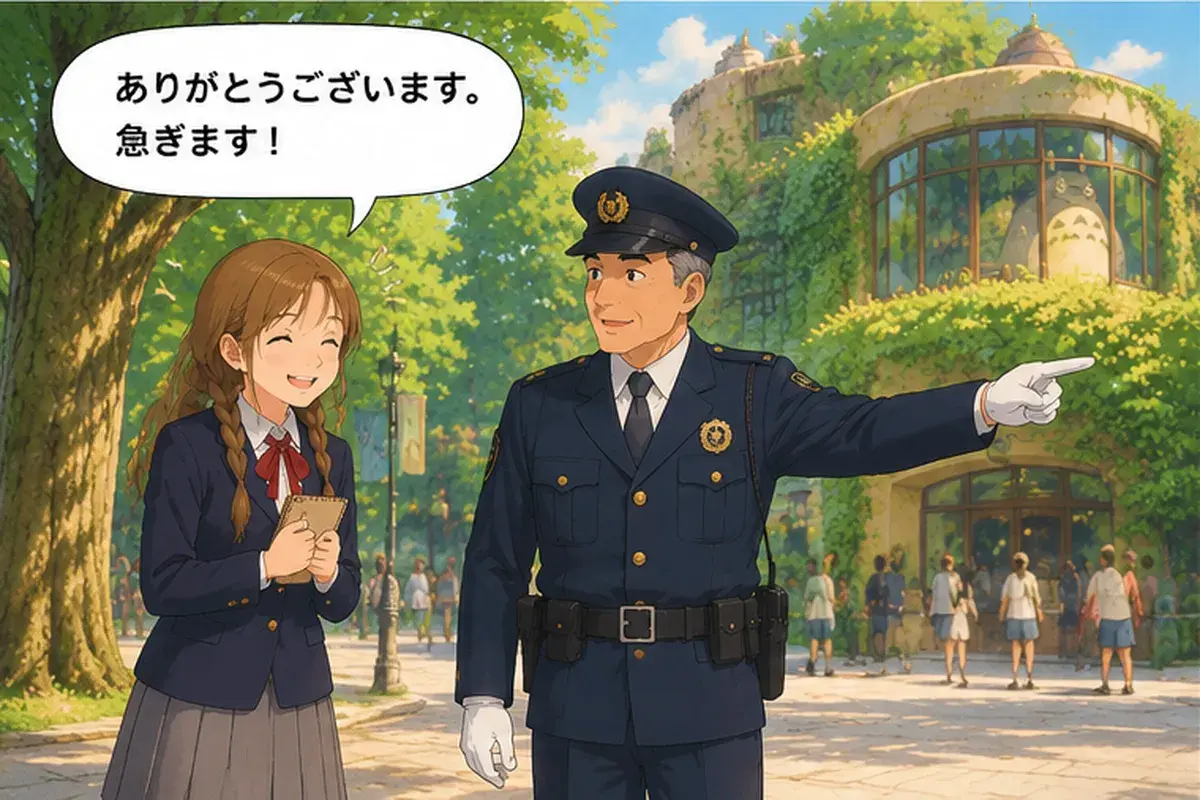
ありがとうございます。急ぎます!
Thank you. I'll hurry!
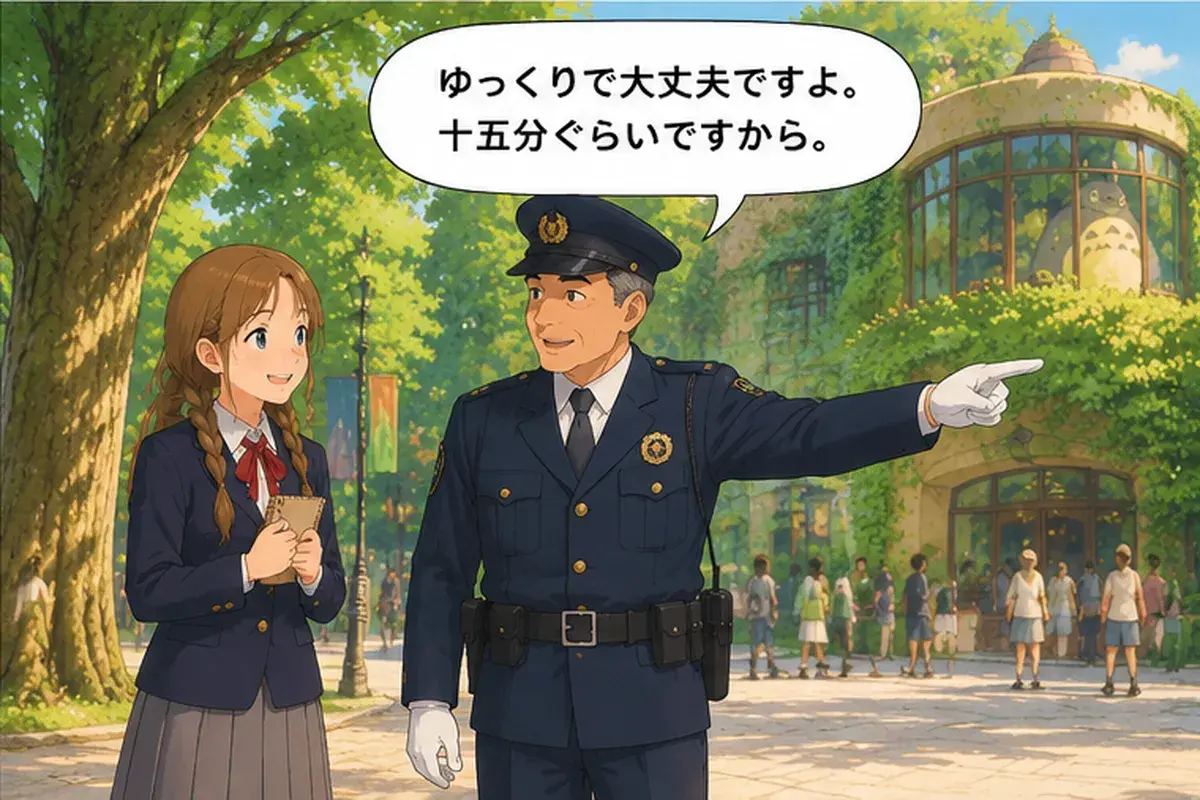
- 警察官
ゆっくりで大丈夫ですよ。十五分ぐらいですから。
It's fine to go slowly. It's about 15 minutes, after all.
Grammar for this text
二つ目 の 信号 — "the second traffic light". 二つ目 (ふたつめ) is a number from unit 7 plus 目 ("-th, in order"). In 信号 を 右 に 曲がって ください, 曲がる means "to turn": を shows where you turn (at the traffic light), and に shows which way (right). 曲がって is the te-form for a request.
橋 を 渡って — 渡る means "to cross"; the thing you cross (a bridge, a road) takes を.
次 の 交差点 is "the next intersection". 道 の 向こう is "across the street". 角 is a street corner or the corner of a building; people often give directions by it.
六月 に 友達 と 行きました が、 道 を 忘れました — Sonya has already been to the museum with Yui (unit 15), but that time Yui knew the way.
スマホ の 地図 で は — here で means "according to", and は adds a contrast: "going by the map on my smartphone".
もっと 短い 道 — もっと means "more"; with an adjective it gives "shorter". Japanese adjectives don't need a special ending like English -er.
十時 四十分 — 十時 is read じゅうじ, and 四十分 is read よんじゅっぷん: as in 十分 (じゅっぷん), じゅう shortens to じゅっ, and ふん becomes ぷん (see the topic on 〜時間 and 〜分).
急いで います — 急ぐ → 急いで (ぐ changes to いで, as in 泳ぐ); "I'm in a hurry" uses the form for something going on right now.
ゆっくり で 大丈夫 です よ。 十 五分 ぐらい です から。 — there's no need to hurry: it's about a 15-minute walk, and there are still 20 minutes until eleven. Word for word, ゆっくり で 大丈夫 is "slowly is fine". The reason with から (unit 10) comes after the main sentence, as an add-on; people often do this in conversation.
Words and grammar of the unit: Ask for directions and change trains.
Learn the words from the texts with flashcards
In the app, you can tap any word in a text to see its translation, forms and examples, and new words stick with flashcards. 15 minutes a day.
Start for freeEverything is open for free. No card needed to sign up.