
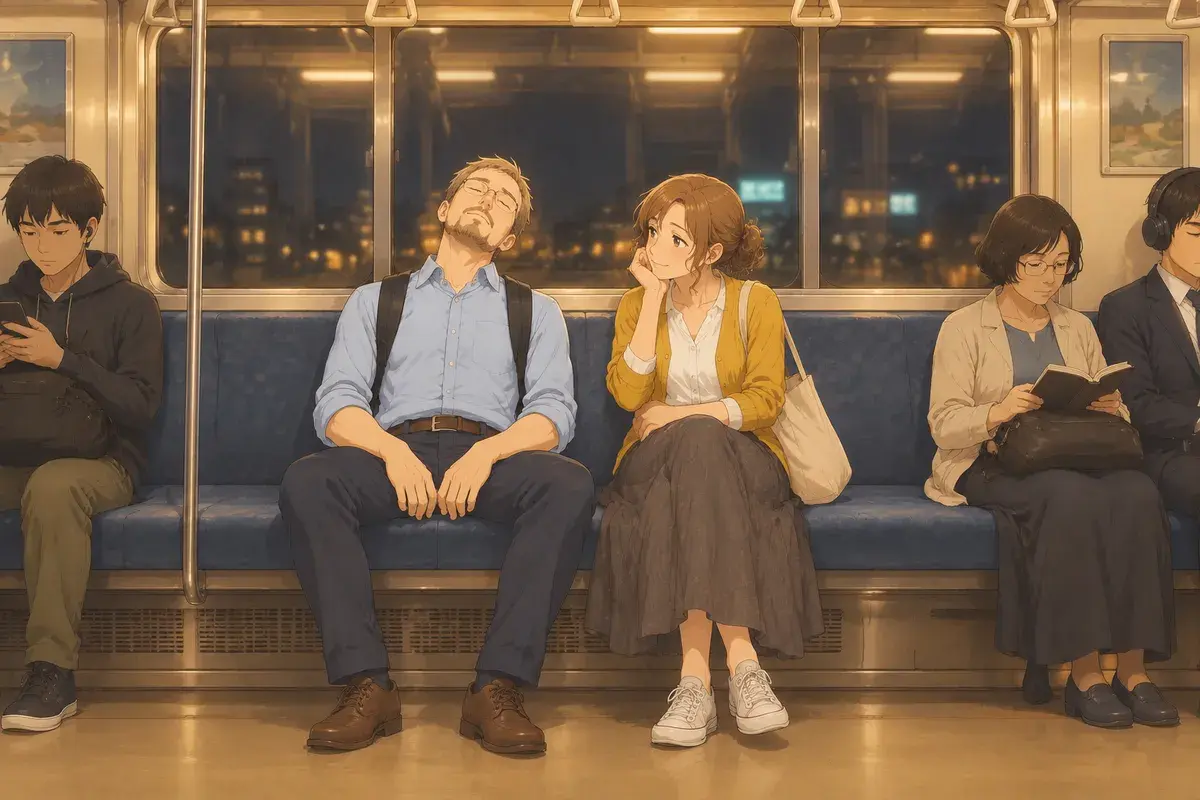
Japanese dialogue with translation · A1 · 11 lines
昨日は長い一日でした Yesterday was a long day
Comic · 8 panels
- マルク
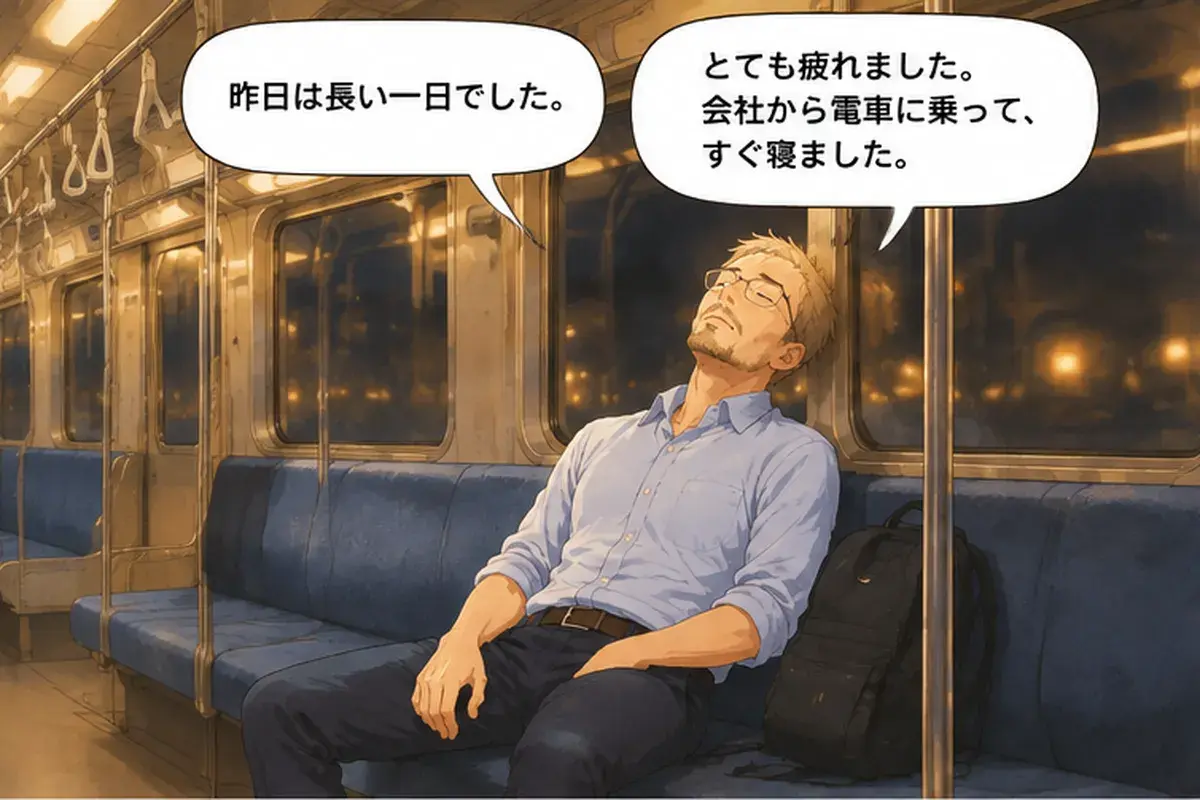
昨日は長い一日でした。
Yesterday was a long day.
- マルク
とても疲れました。会社から電車に乗って、すぐ寝ました。
I was very tired. I took the train from work and fell asleep right away.
- マルク
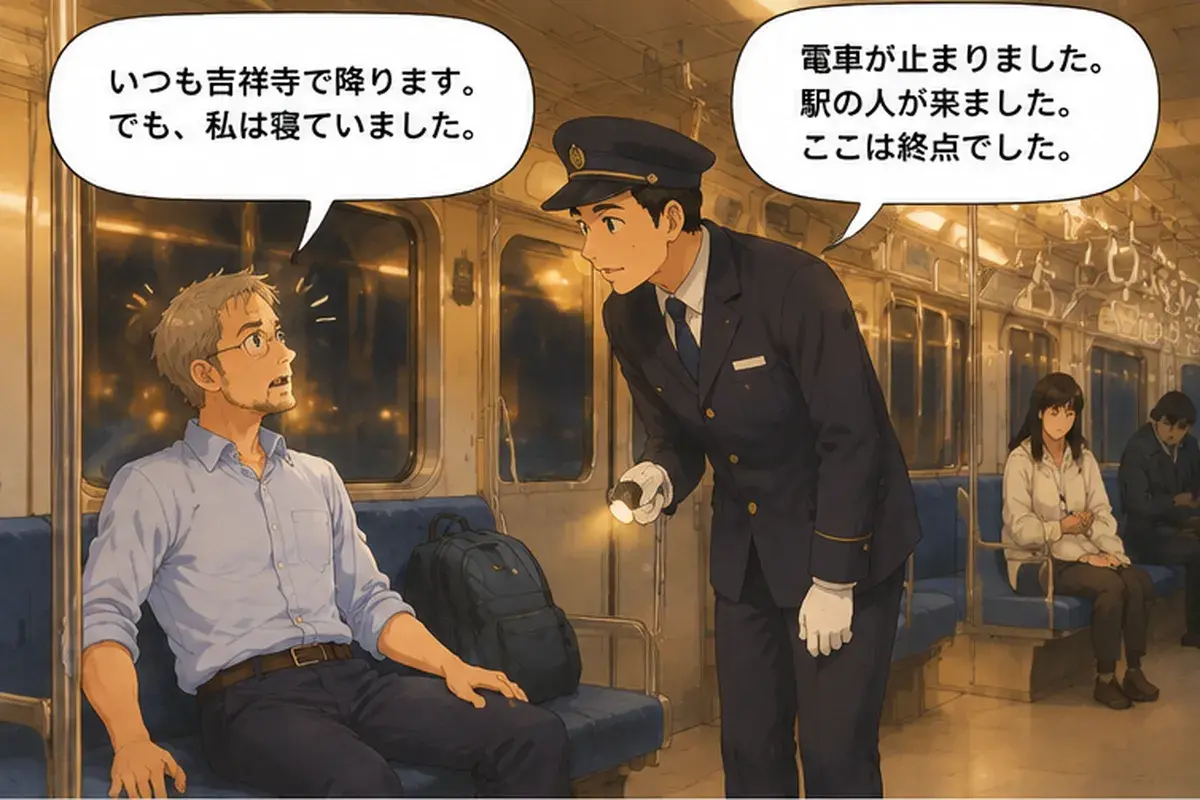
いつも吉祥寺で降ります。でも、私は寝ていました。
I always get off at Kichijoji. But I was asleep.
- マルク
電車が止まりました。駅の人が来ました。ここは終点でした。
The train stopped. Someone from the station came. This was the last stop.
- マルク
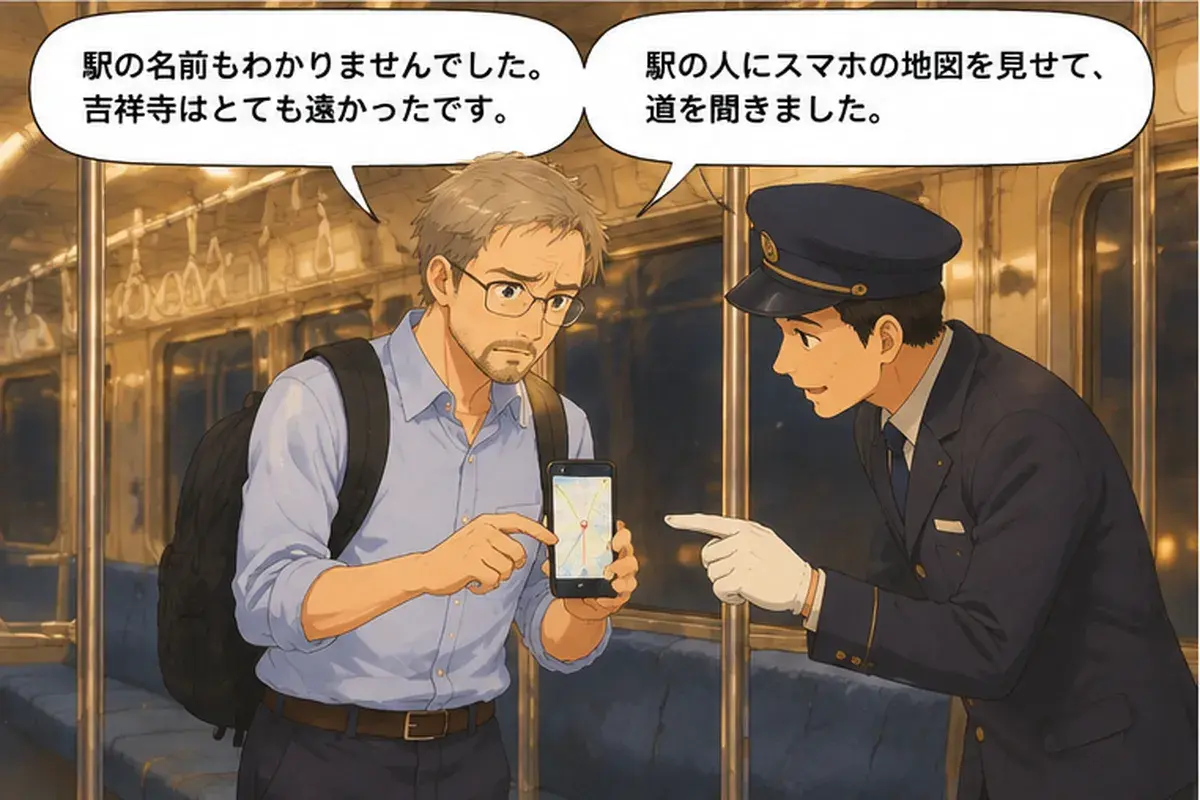
駅の名前もわかりませんでした。吉祥寺はとても遠かったです。
I didn't even know the name of the station. Kichijoji was very far away.
- マルク
駅の人にスマホの地図を見せて、道を聞きました。
I showed the person from the station the map on my smartphone and asked the way.
- マルク
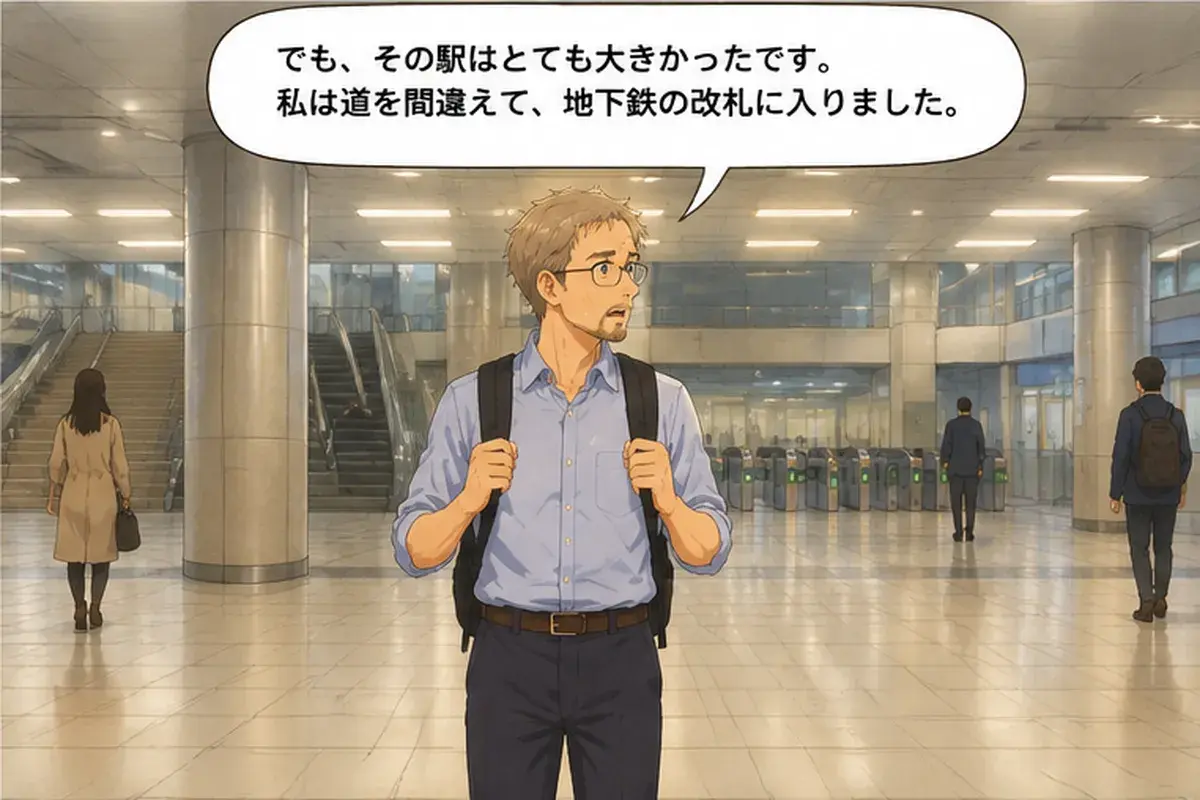
でも、その駅はとても大きかったです。私は道を間違えて、地下鉄の改札に入りました。
But that station was very big. I took the wrong way and went in through the subway ticket gates.
- マルク
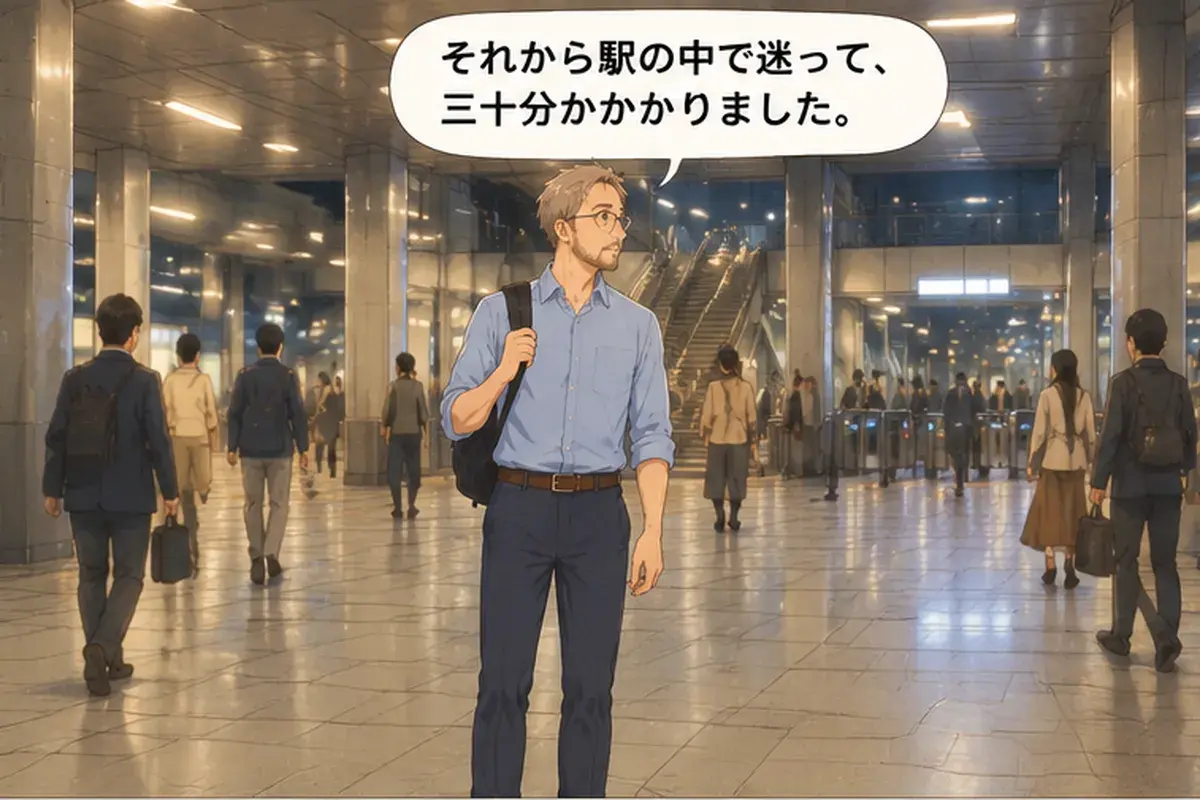
それから駅の中で迷って、三十分かかりました。
Then I got lost inside the station, and it took 30 minutes.
- マルク
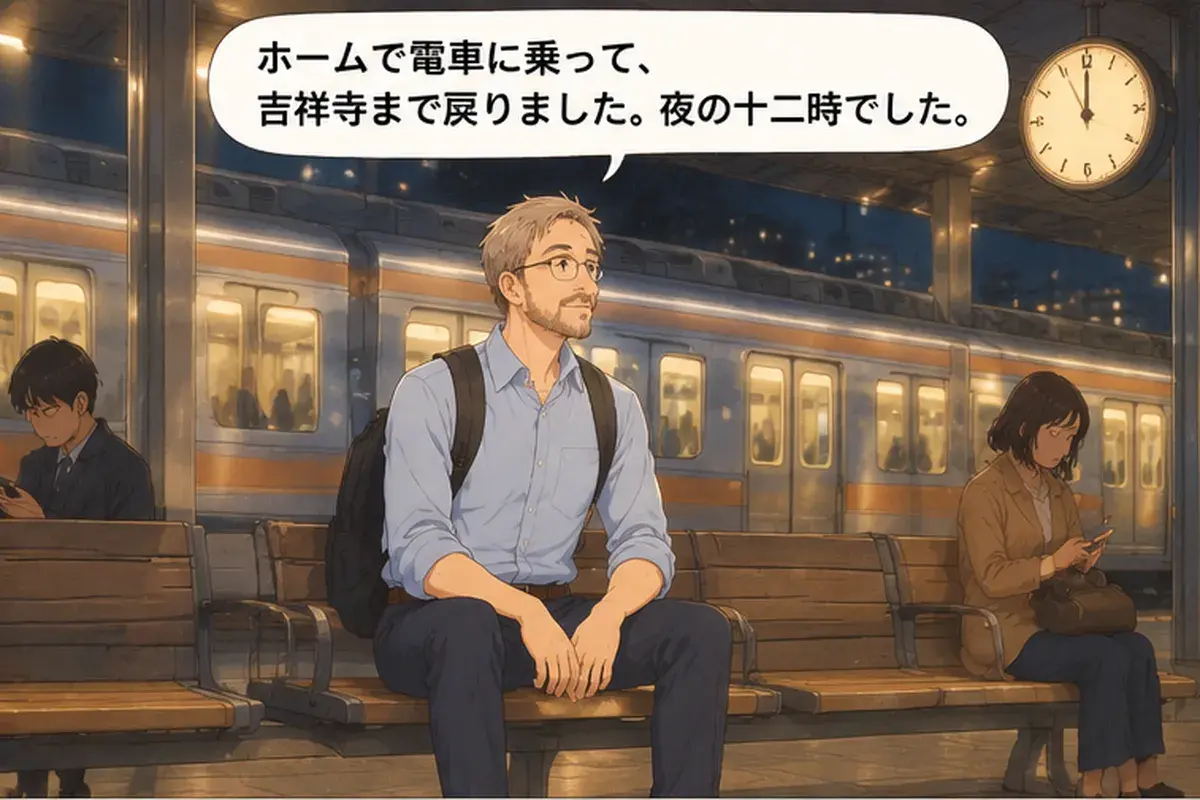
ホームで電車に乗って、吉祥寺まで戻りました。夜の十二時でした。
I got on a train at the platform and went back to Kichijoji. It was twelve o'clock at night.
- マルク
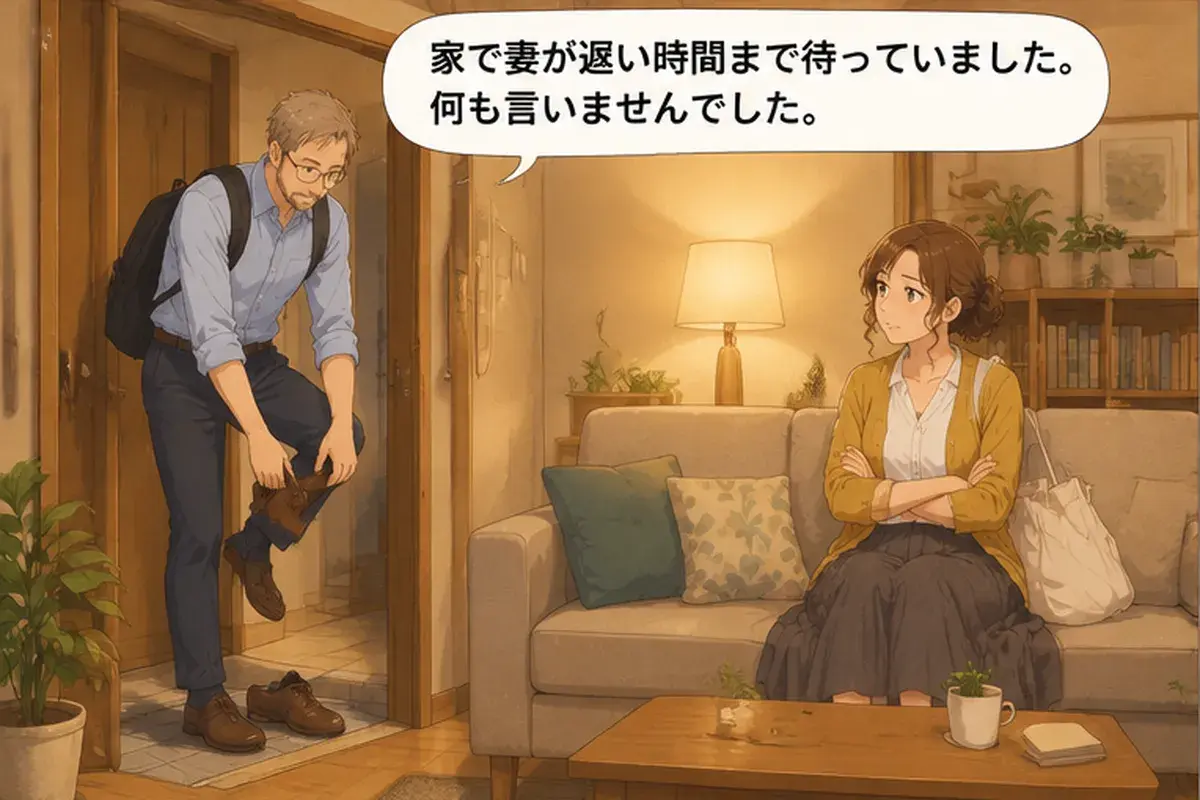
家で妻が遅い時間まで待っていました。何も言いませんでした。
My wife was waiting at home until late. She didn't say anything.
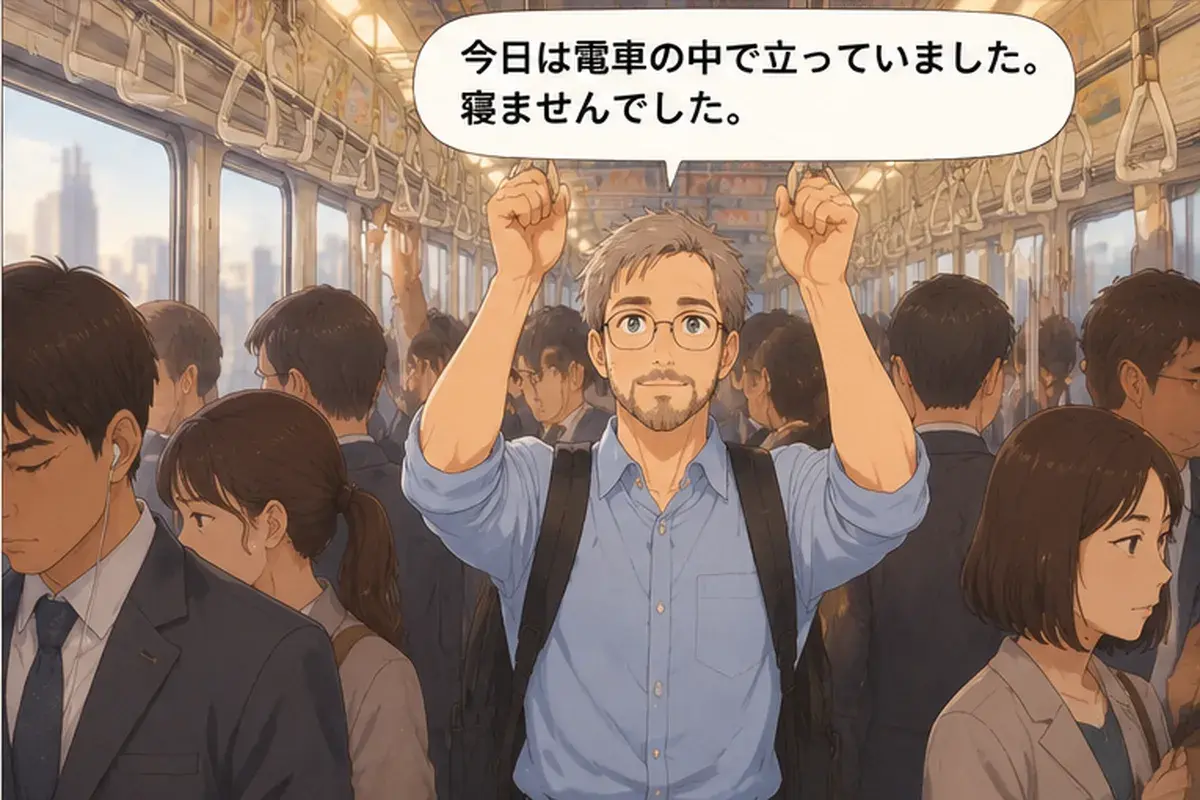
- マルク
今日は電車の中で立っていました。寝ませんでした。
Today I was standing on the train. I didn't sleep.
Grammar for this text
長い 一日 でした — "a long day". 長い ("long") goes before the noun. Here 一日 means "a whole day" (いちにち), not "the first of the month" (ついたち). でした is the past of です (unit 11).
いつも 吉祥寺 で 降ります is how you talk about a habit: on his way home Mark usually gets off at Kichijoji, but this time he slept through his stop and rode to the end of the line in central Tokyo. 〜で 降ります means "I get off at (a station)". 寝て いました means "I was asleep (at that moment)": 寝て います is a state or an ongoing action (unit 14), and いました puts it in the past.
ここ は 終点 でした — 終点 is the last stop: the train goes no farther, and everyone gets off. If you fall asleep on the train, you can end up there.
遠かった です, 大きかった です — 遠い ("far") and 大きい ("big") in the past: い → かった (unit 11).
道 を 聞きました — "I asked the way": the way is the object, with を, and the person you ask takes に (駅 の 人 に), just like English "ask someone the way".
道 を 間違えて — 間違える means "to get something wrong"; the thing you got wrong takes を: "I took the wrong way". 地下鉄 の 改札 に 入りました — に 入る means "to go into". At big stations the subway entrance is right next to the train entrance, so it's easy to go in the wrong one.
駅 の 中 で 迷って — 迷う means "to get lost"; the place where you get lost takes で.
吉祥寺 まで 戻りました — 戻る means "to go back": Mark rode past his station and is going back.
遅い 時間 まで 待って いました — 遅い means "late" (and "slow"), and まで means "until": she waited until late.
何も 言いませんでした — 何も with a negative verb means "nothing" (unit 9).
立って いました means "I was standing". 立つ is "to stand up", and 立って います is "to be standing".
Words and grammar of the unit: Ask for directions and change trains.
Learn the words from the texts with flashcards
In the app, you can tap any word in a text to see its translation, forms and examples, and new words stick with flashcards. 15 minutes a day.
Start for freeEverything is open for free. No card needed to sign up.