
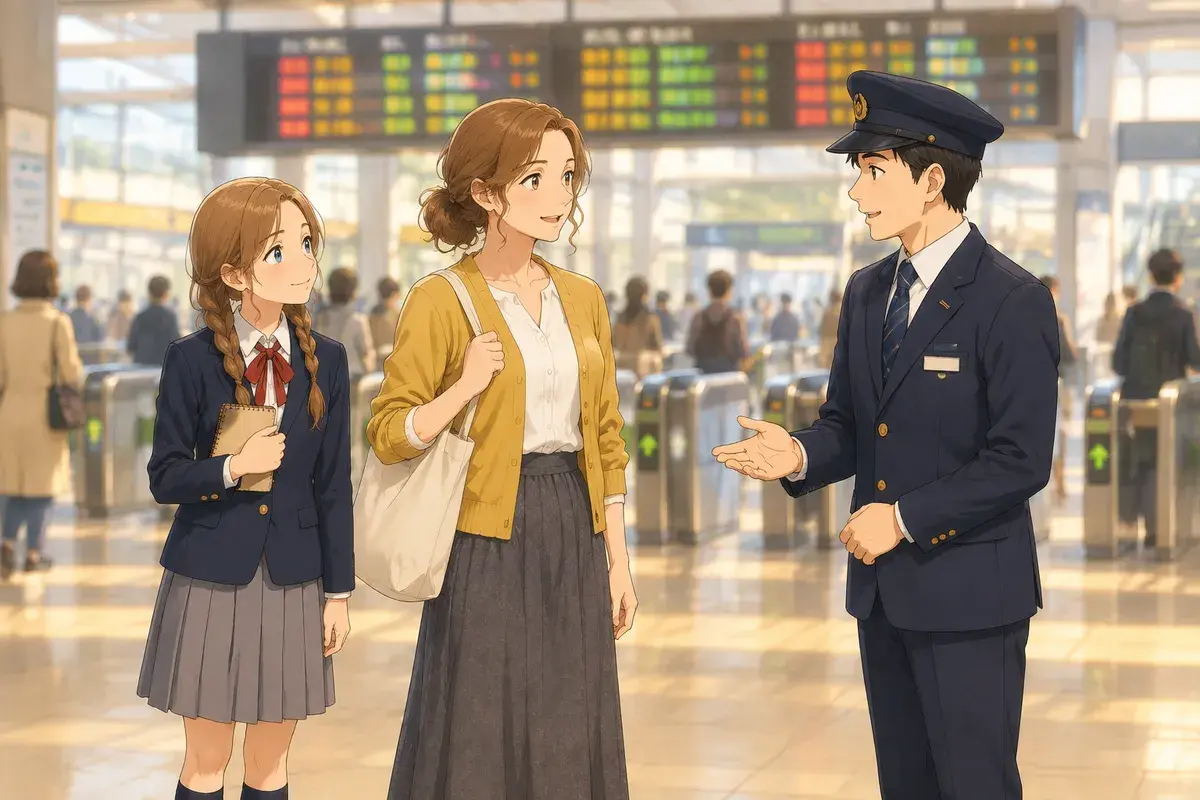
Japanese dialogue with translation · A1 · 14 lines
鎌倉までどうやって行きますか How do I get to Kamakura?
Comic · 8 panels
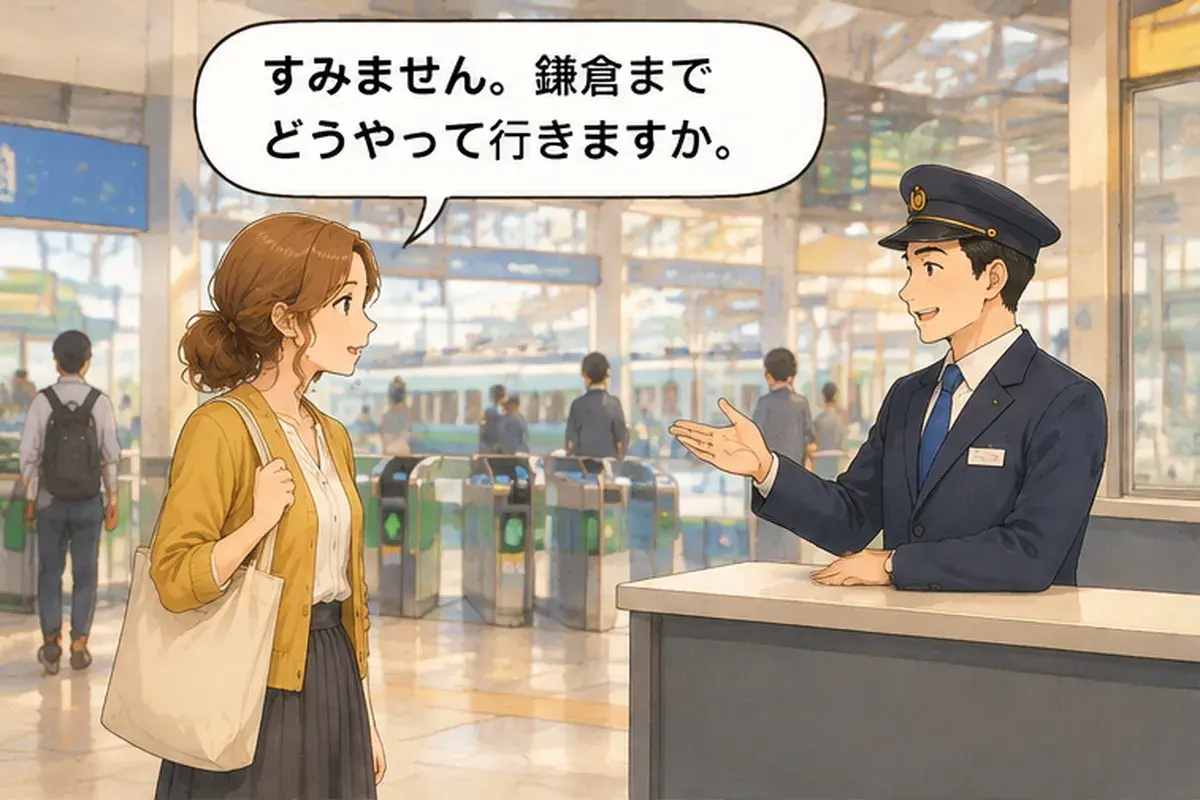
- アンナ
すみません。鎌倉までどうやって行きますか。
Excuse me. How do I get to Kamakura?
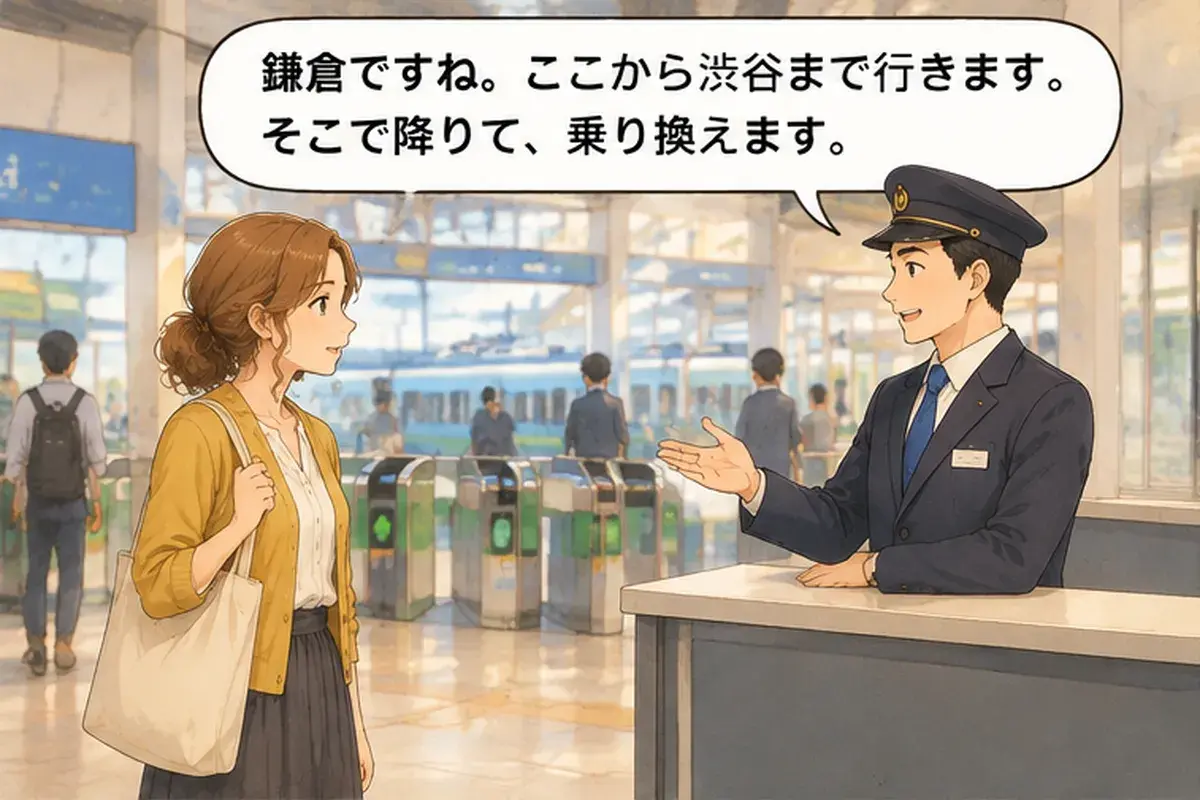
- 駅員
鎌倉ですね。ここから渋谷まで行きます。そこで降りて、乗り換えます。
Kamakura, right. From here you go to Shibuya. You get off there and change trains.
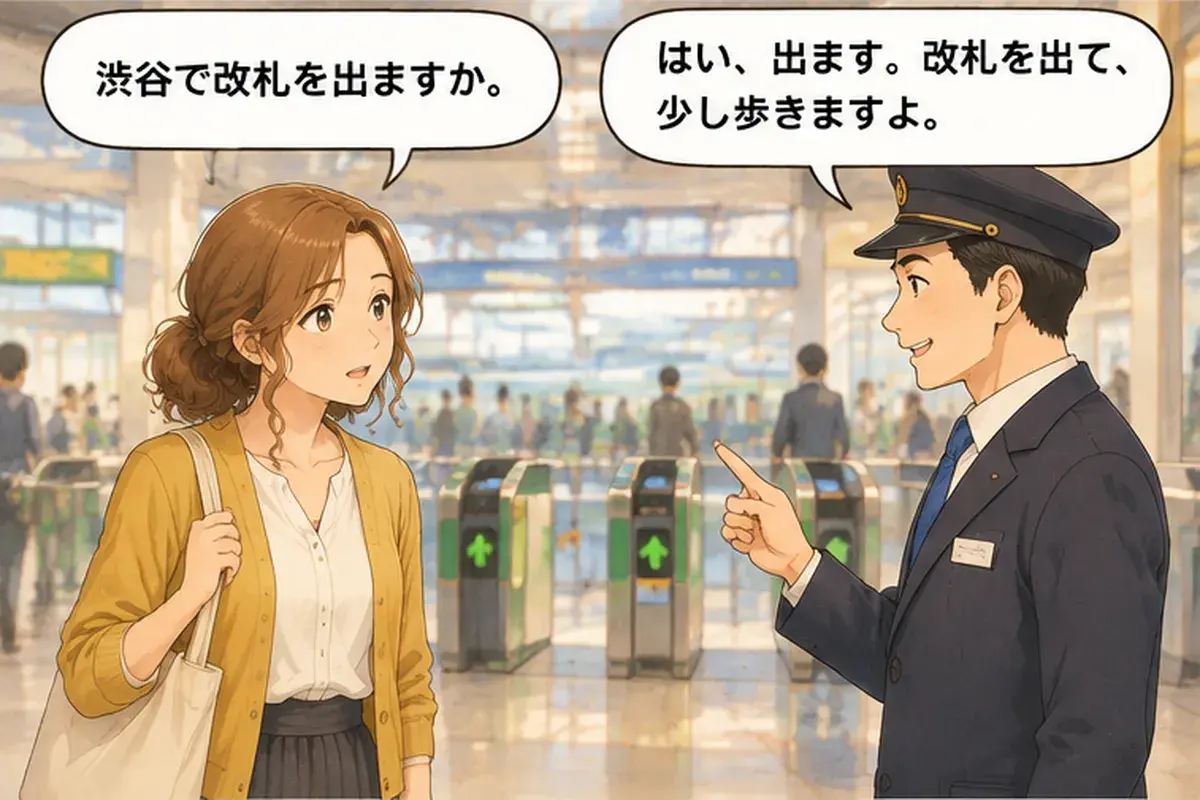
- アンナ
渋谷で改札を出ますか。
Do I go out through the ticket gate at Shibuya?
- 駅員
はい、出ます。改札を出て、少し歩きますよ。
Yes, you do. You go out through the ticket gate and walk a little.
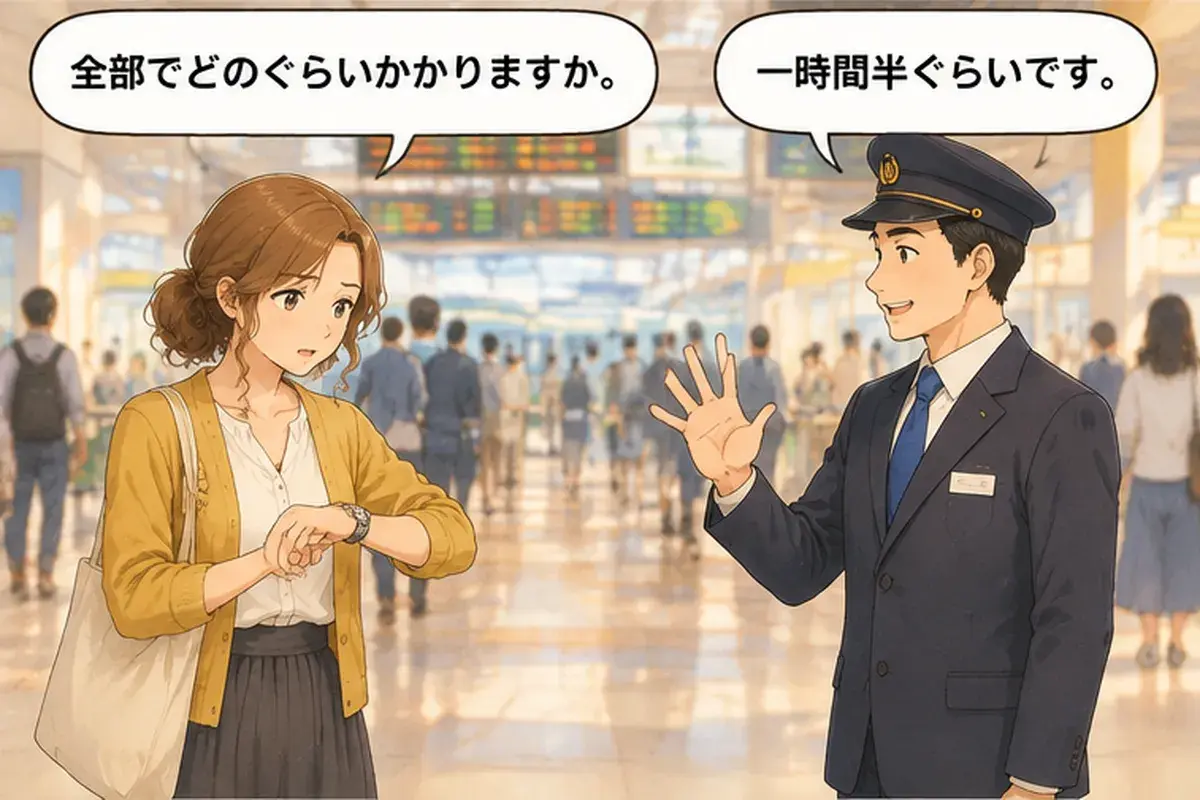
- アンナ
全部でどのぐらいかかりますか。
How long does it take in total?
- 駅員
一時間半ぐらいです。
About an hour and a half.
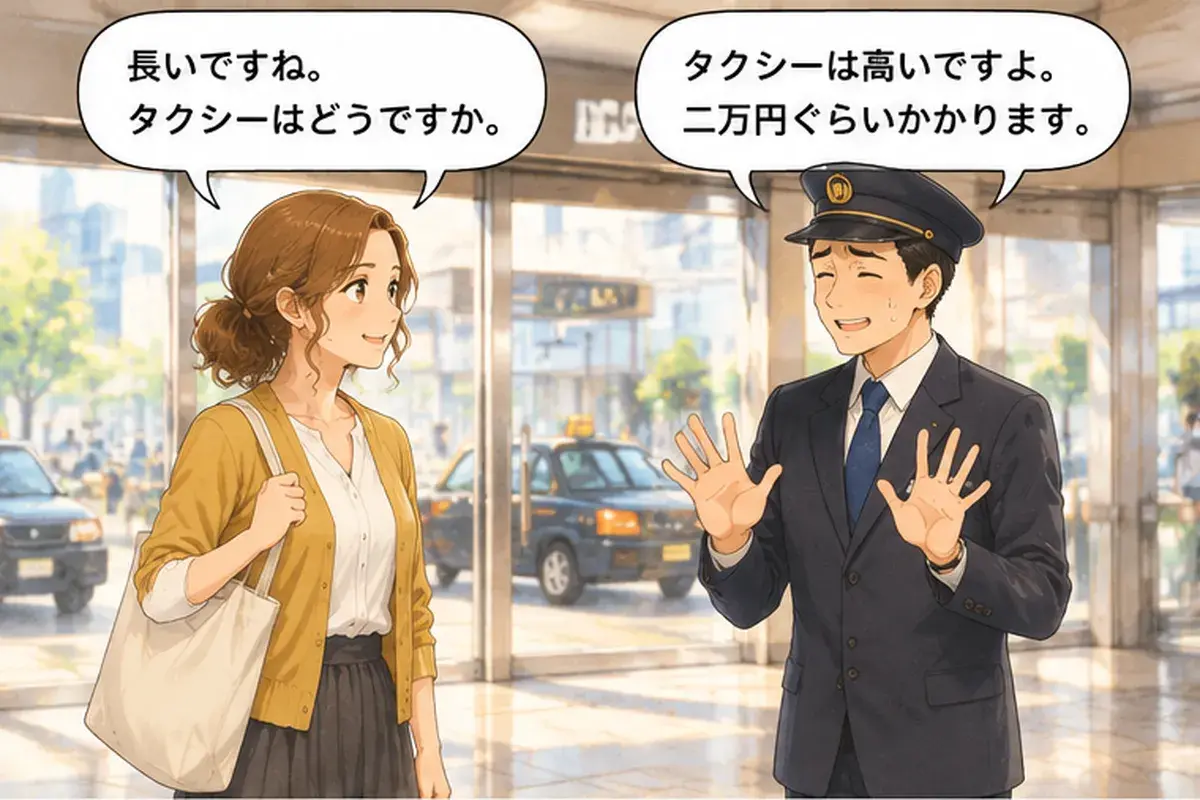
- アンナ
長いですね。タクシーはどうですか。
That's long. How about a taxi?
- 駅員
タクシーは高いですよ。二万円ぐらいかかります。
A taxi is expensive. It costs about 20,000 yen.
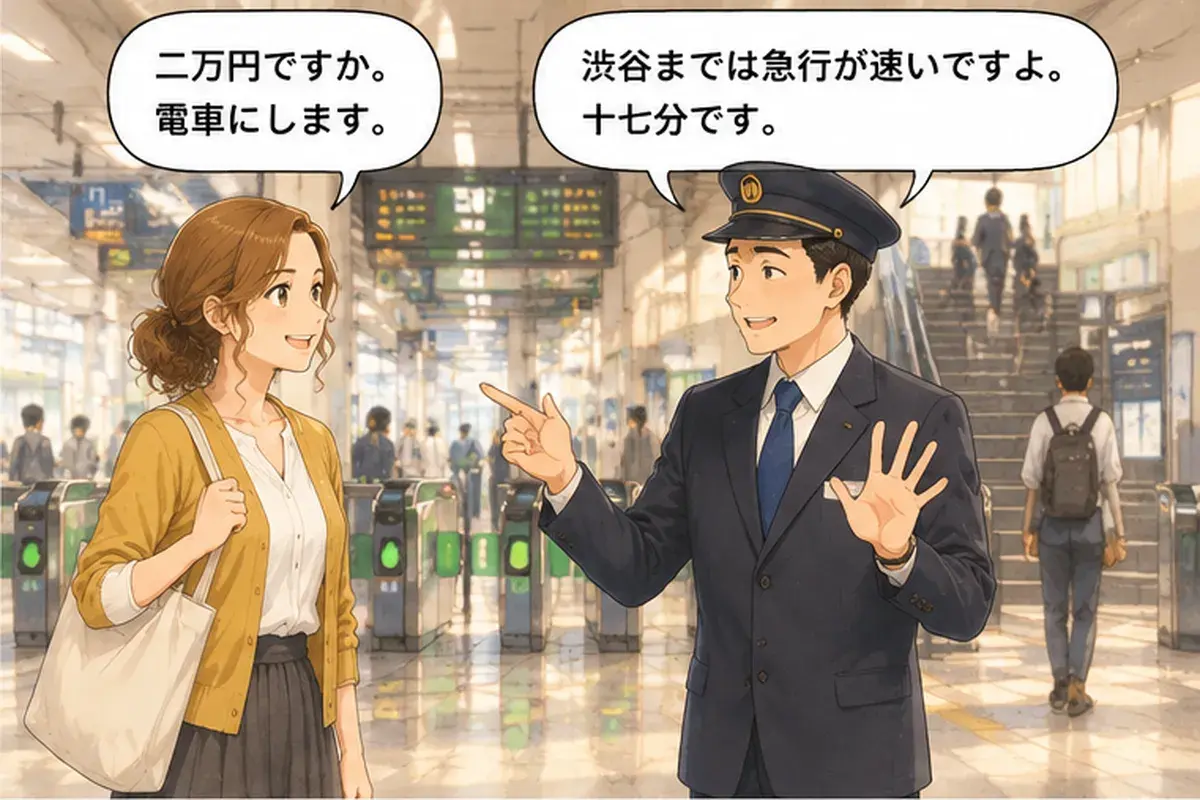
- アンナ
二万円ですか。電車にします。
20,000 yen? I'll go with the train.
- 駅員
渋谷までは急行が速いですよ。十七分です。
To Shibuya, the express is fast. It's 17 minutes.
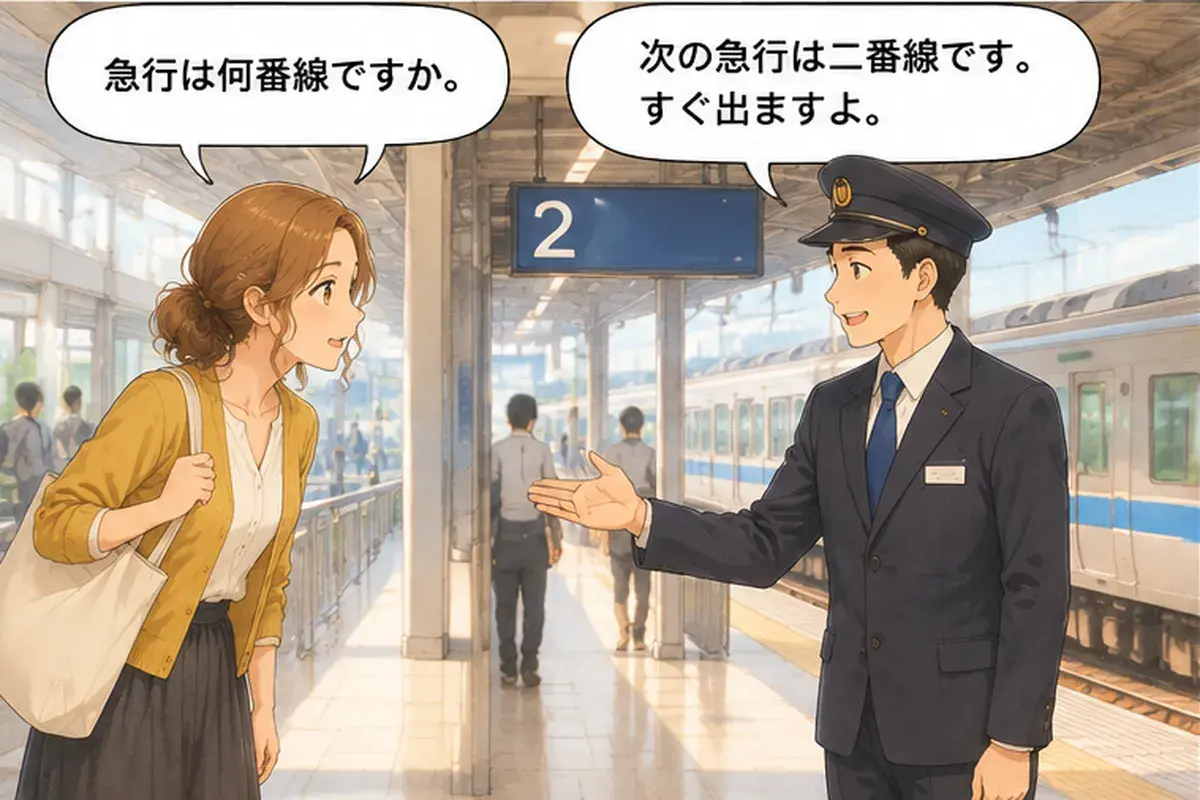
- アンナ
急行は何番線ですか。
Which track is the express on?
- 駅員
次の急行は二番線です。すぐ出ますよ。
The next express is on track 2. It's leaving right away.
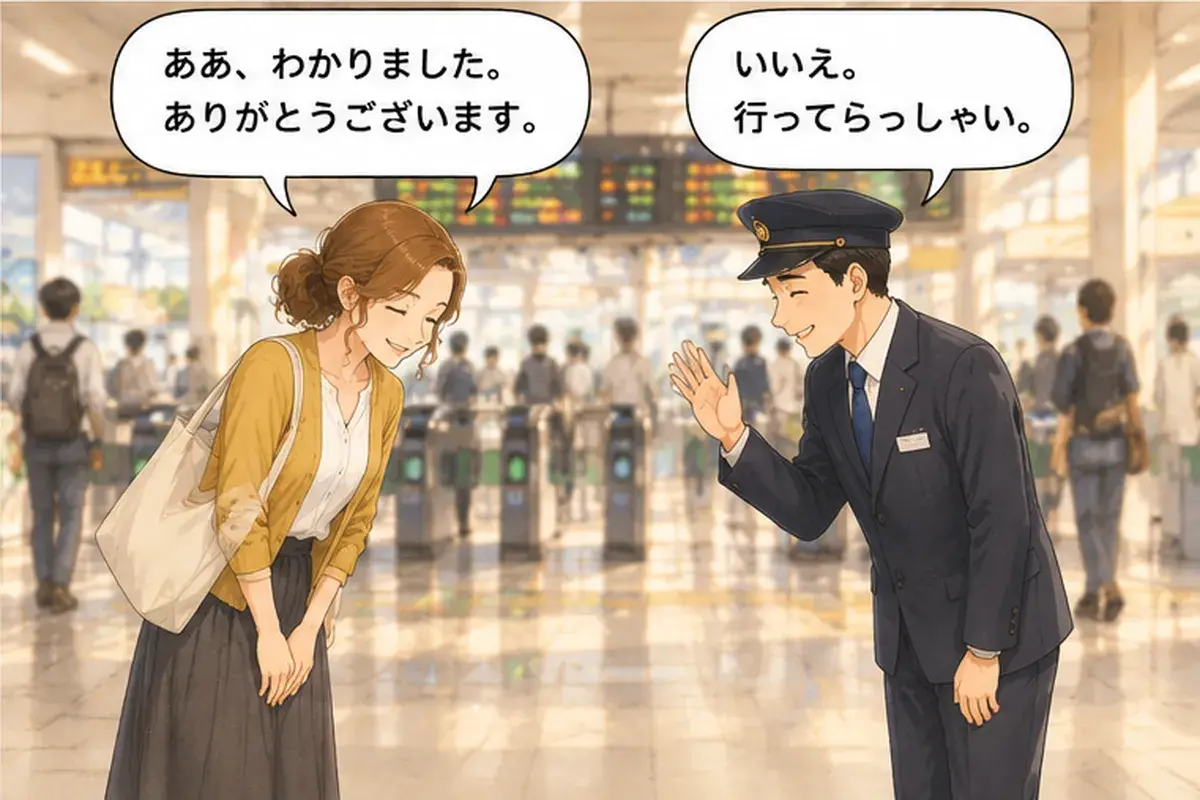
- アンナ
ああ、わかりました。ありがとうございます。
Ah, I see. Thank you.
- 駅員
いいえ。行ってらっしゃい。
Not at all. Have a good trip!
Grammar for this text
鎌倉 まで どうやって 行きます か — "How do I get to Kamakura?" どうやって asks about the means or the route. Don't mix it up with どう ("how is it?") and どうして ("why?"). More in the unit grammar.
そこ で 降りて、 乗り換えます is a route, step by step. 降りて is the te-form of 降りる ("to get off"), and then comes 乗り換えます ("to change trains"). Every step except the last is in the te-form, and ます comes only at the very end (unit 16). The station where you get off takes で.
渋谷 で 改札 を 出ます か — 改札 is the ticket gate. When you change trains on the same railway, you don't go out through the gates. But at Shibuya Anna changes to a train of another railway, so the answer is はい、 出ます。 改札 を 出て、 少し 歩きます よ: out through one set of gates and on to the other. A Suica card works on both.
全部 で どのぐらい かかります か — かかる means "to take" about time and "to cost" about money; the time or the amount goes before it with no particle. 全部 で means "in total, altogether".
一 時間 半 ぐらい です — 半 is "half": an hour and a half. ぐらい means "about".
電車 に します — "I'll take the train": a noun + に します is how you choose (unit 7).
渋谷 まで は 急行 が 速い です よ — 急行 is an express: it doesn't stop at every station. 十 七分 is read じゅうななふん.
何 番線 です か — "Which track?" The answer is a number and 番線: 次 の 急行 は 二 番線 です (にばんせん). More in the unit grammar. In すぐ 出ます よ, 出る about a train means "to leave".
行って らっしゃい is a set phrase from unit 9, "have a good day, have a good trip". It isn't only for home: station and hotel staff also say it to someone who's leaving.
Words and grammar of the unit: Ask for directions and change trains.
Learn the words from the texts with flashcards
In the app, you can tap any word in a text to see its translation, forms and examples, and new words stick with flashcards. 15 minutes a day.
Start for freeEverything is open for free. No card needed to sign up.