
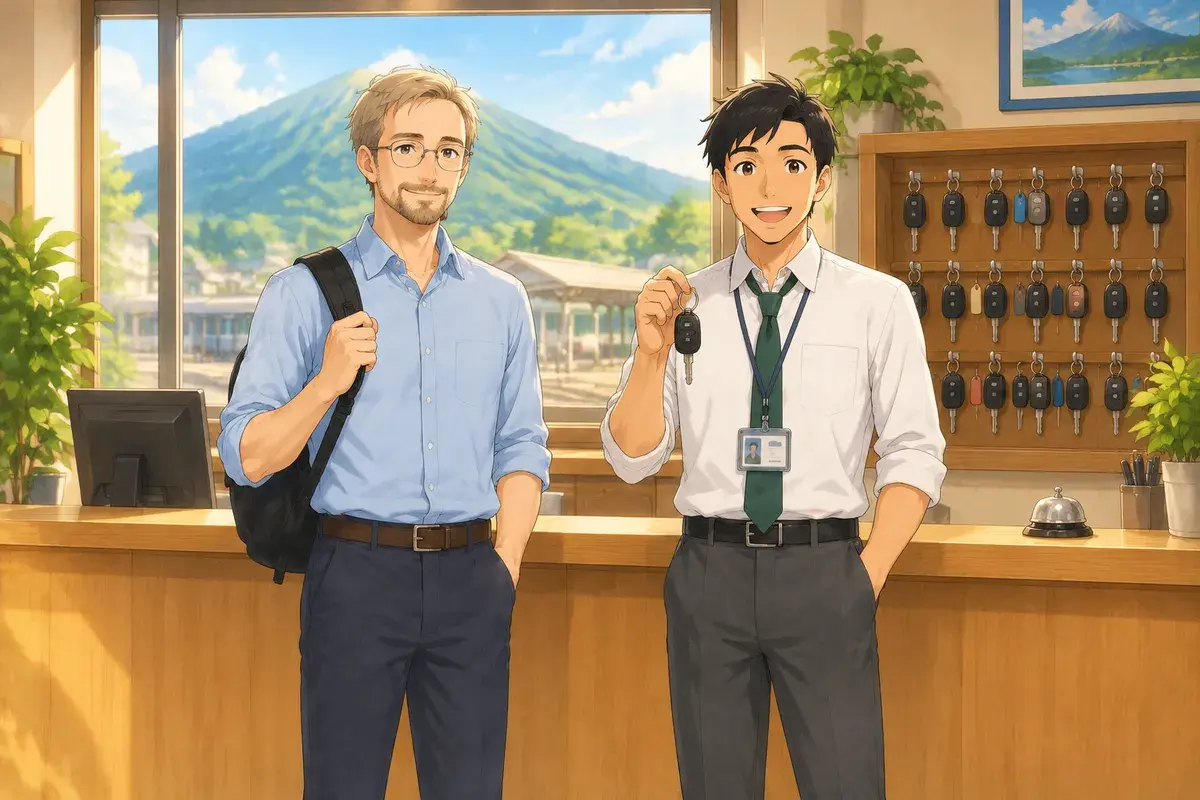
Japanese dialogue with translation · A1 · 12 lines
車を借りてください Please rent a car
Comic · 8 panels
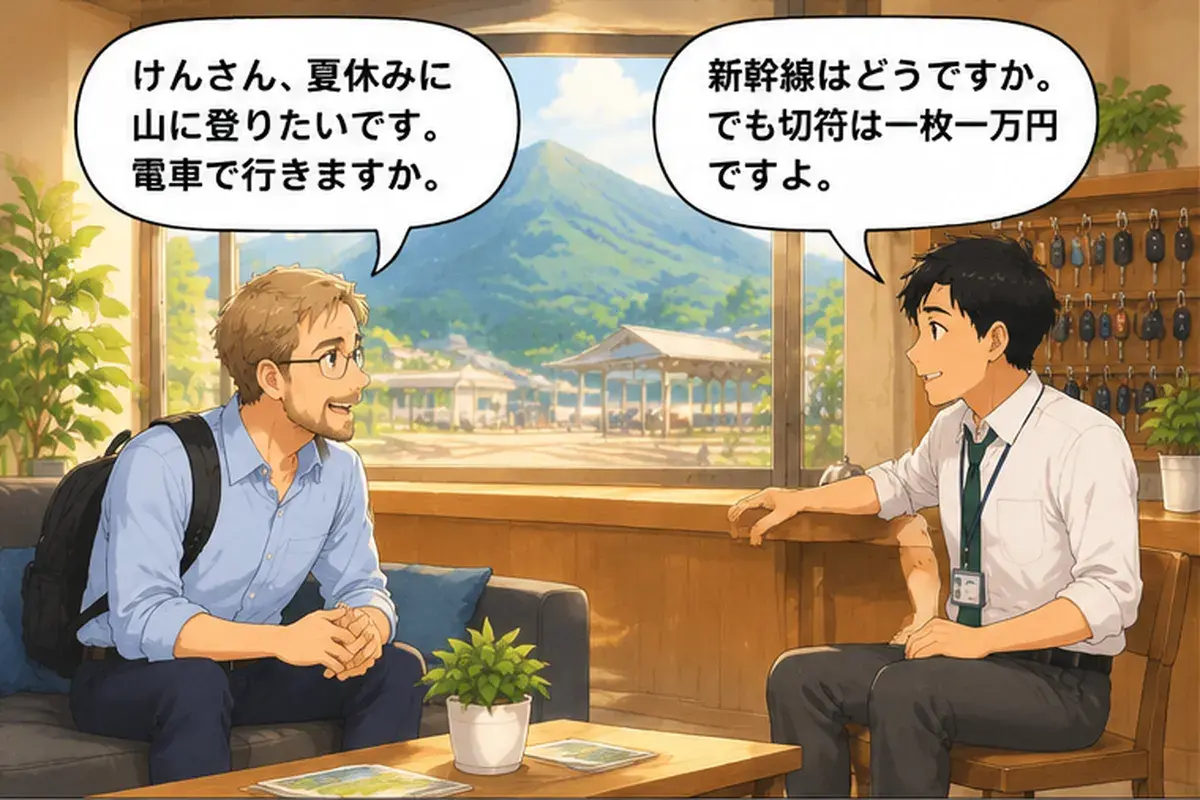
- マルク
けんさん、夏休みに山に登りたいです。電車で行きますか。
Ken-san, I want to climb a mountain during summer vacation. Do I go by train?
- けん
新幹線はどうですか。でも切符は一枚一万円ですよ。
How about the bullet train? But tickets are 10,000 yen each, you know.
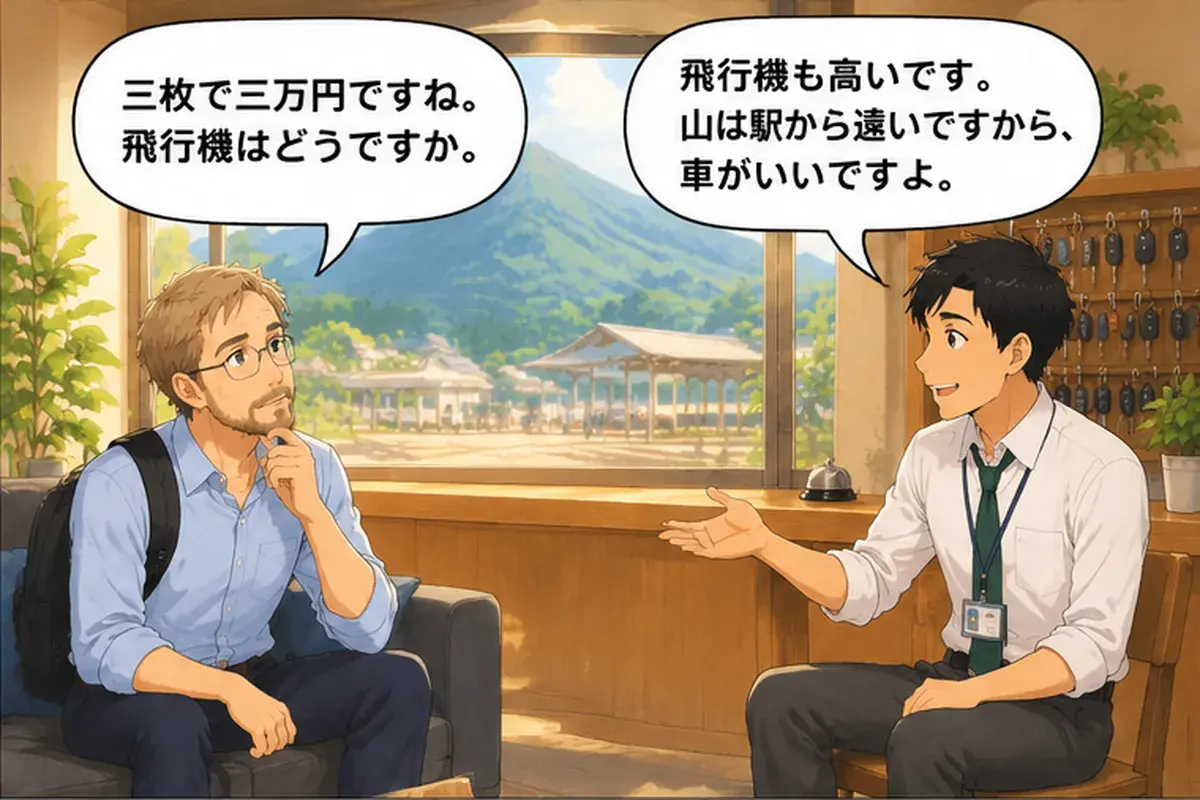
- マルク
三枚で三万円ですね。飛行機はどうですか。
So three tickets come to 30,000 yen. How about a plane?
- けん
飛行機も高いです。山は駅から遠いですから、車がいいですよ。
Planes are expensive too. The mountain is far from the station, so a car is better.
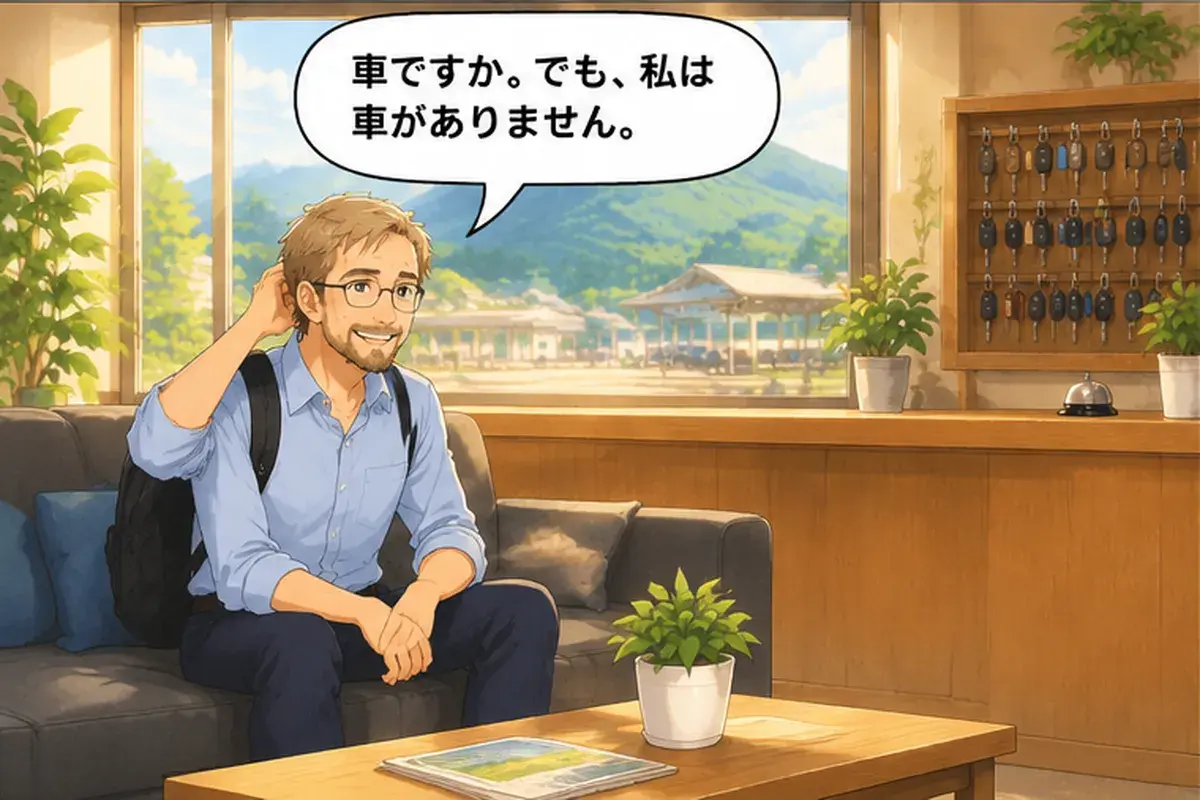
- マルク
車ですか。でも、私は車がありません。
A car? But I don't have a car.
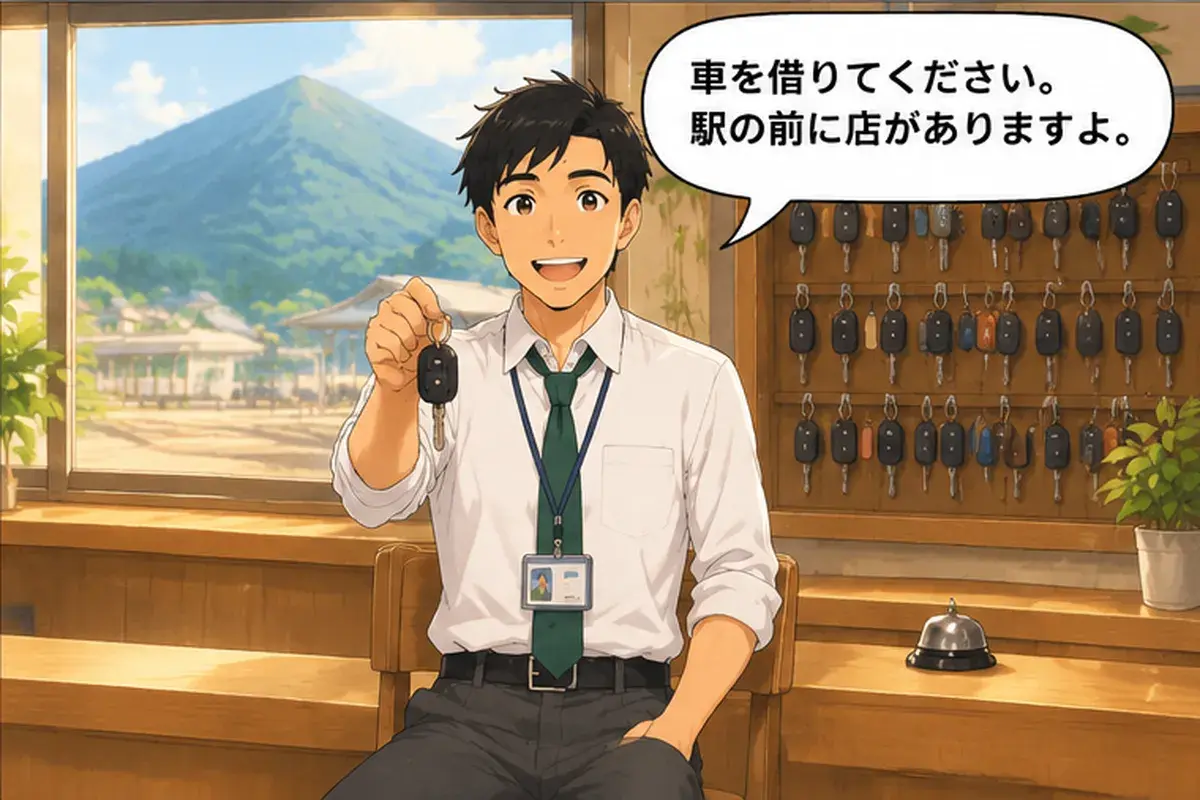
- けん
車を借りてください。駅の前に店がありますよ。
Please rent a car. There's a store in front of the station.
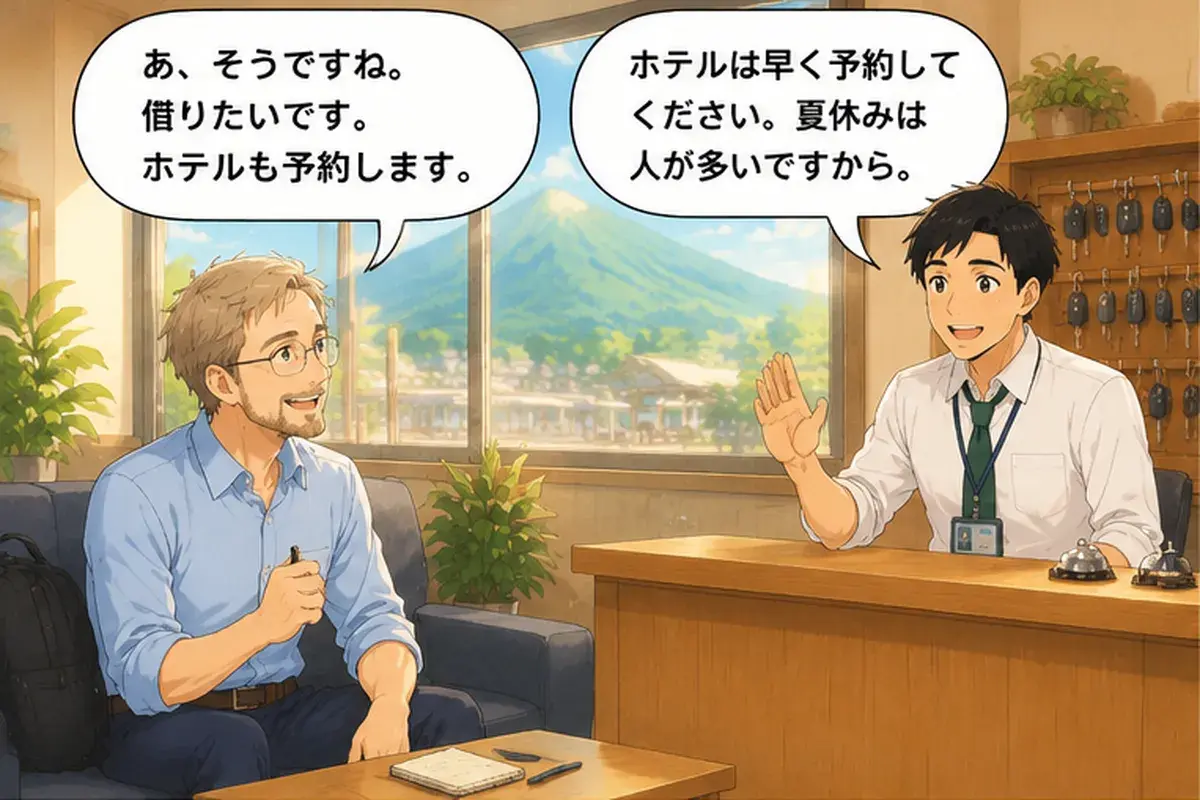
- マルク
あ、そうですね。借りたいです。ホテルも予約します。
Oh, that's right. I want to rent one. I'll book a hotel too.
- けん
ホテルは早く予約してください。夏休みは人が多いですから。
Please book the hotel early. There are a lot of people during summer vacation.
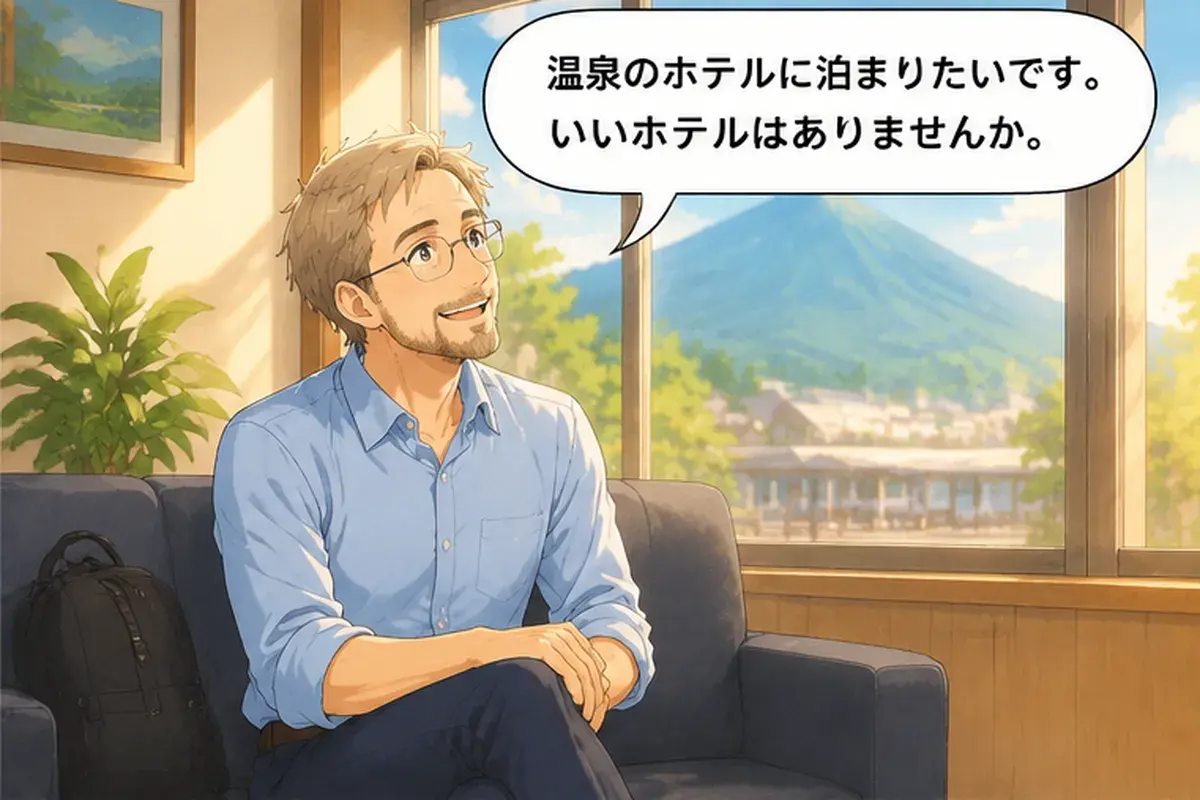
- マルク
温泉のホテルに泊まりたいです。いいホテルはありませんか。
I want to stay at a hot spring hotel. Aren't there any good hotels?
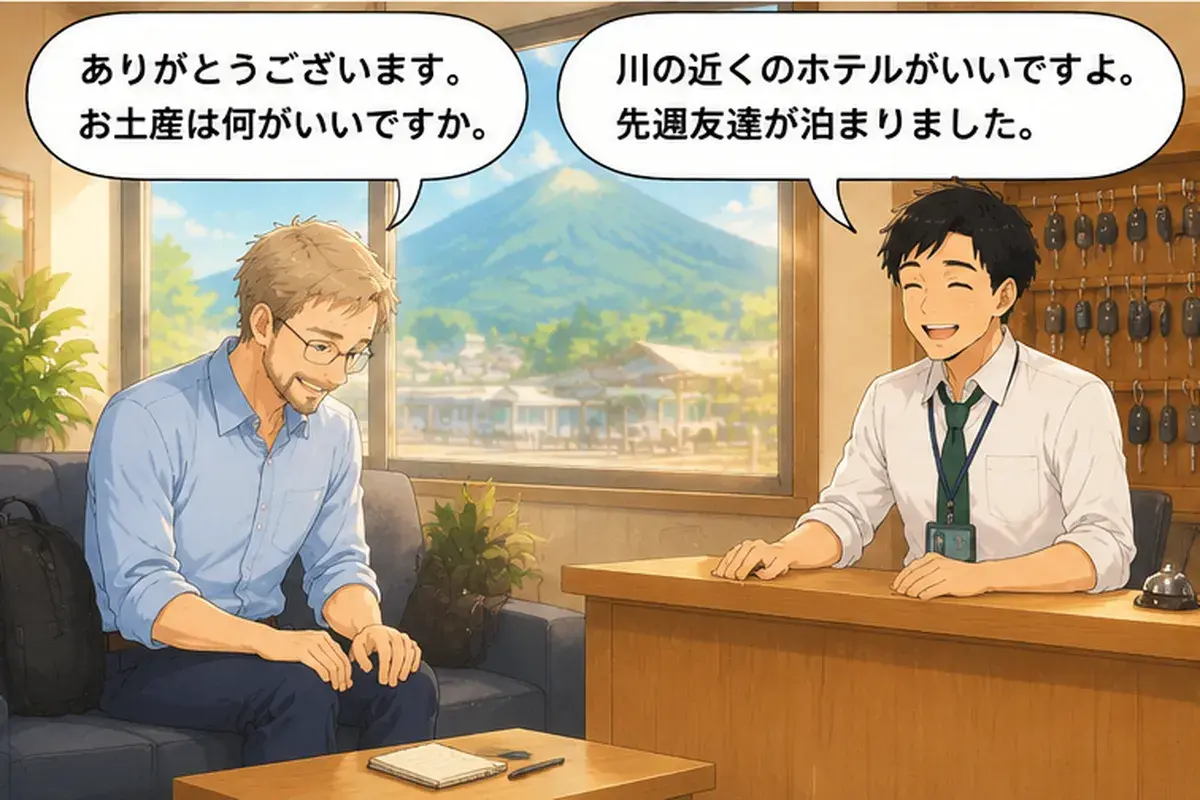
- けん
川の近くのホテルがいいですよ。先週友達が泊まりました。
A hotel near the river is good. A friend of mine stayed there last week.
- マルク
ありがとうございます。お土産は何がいいですか。
Thank you. What would be a good souvenir?
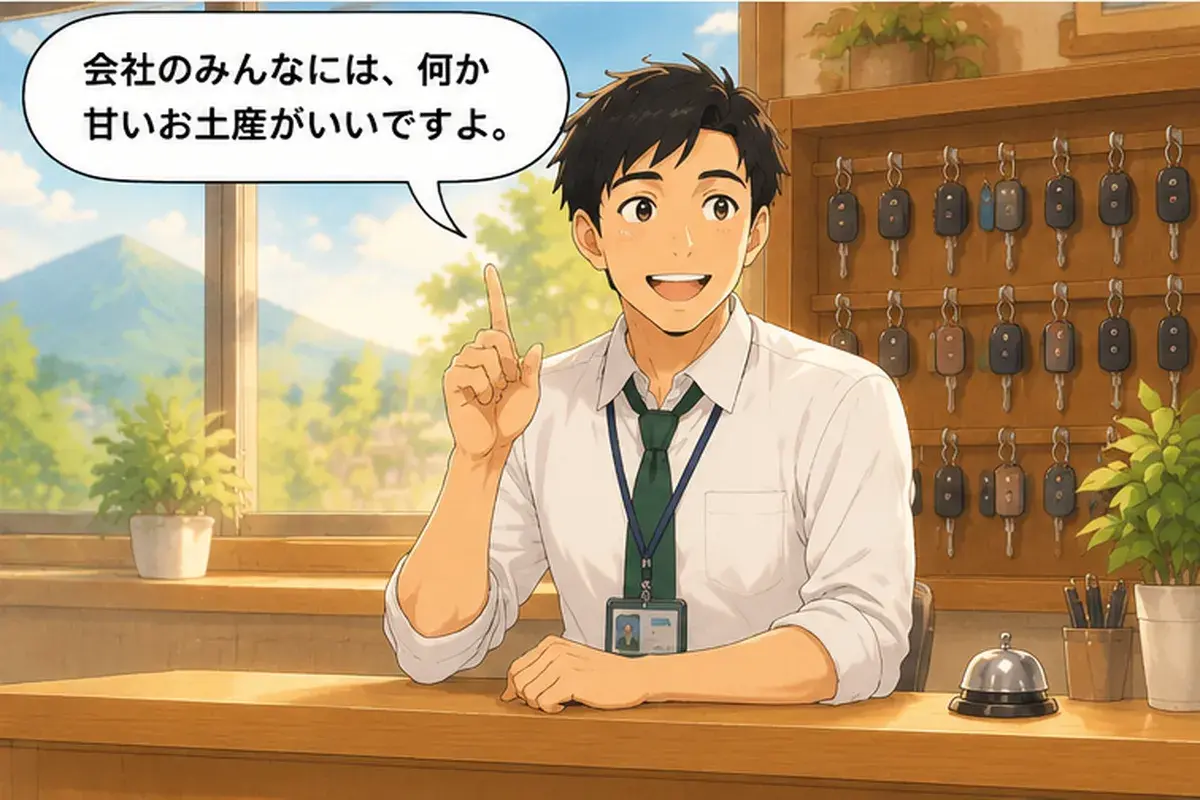
- けん
会社のみんなには、何か甘いお土産がいいですよ。
For everyone at the office, something sweet would be a good souvenir.
Grammar for this text
車 が ありません— "I don't have a car": what you have or don't have takesが(unit 9). In Tokyo, not everyone has a car: people get around by train.車 を 借りて ください— a request (unit 13).借りる(Group 2) changesるtoて.借りるmeans "take for a while, rent", and買うmeans "buy". Car rental shops are near big stations:駅 の 前 に 店 が あります よ.借りたい です—借りますwithoutます+たい: "I want to rent".三 枚 で 三万 円 です ね—枚counts tickets.でhere means "for all of them": the total price for the three.ホテル は 早く 予約して ください—予約するmeans "to book";早くmeans "early": during the vacation, hotels fill up fast.温泉 の ホテル に 泊まりたい です—泊まるmeans "to stay overnight". The place takesに.会社 の みんな に は、 何か 甘い お土産 が いい です よ—何かis "something",お土産is a souvenir from a trip. People in Japan don't ask for a souvenir for themselves: Ken suggests bringing sweets for the whole office. That's the custom: after every trip, people bring back a box of sweets and hand them out to coworkers.に はmeans "for them (as for them)":はafterにpoints out who you're talking about.
Words and grammar of the unit: Say what you want.
Learn the words from the texts with flashcards
In the app, you can tap any word in a text to see its translation, forms and examples, and new words stick with flashcards. 15 minutes a day.
Start for freeEverything is open for free. No card needed to sign up.