

Japanese dialogue with translation · A1 · 12 lines
絵が上手ですね You're good at drawing!
Comic · 11 panels
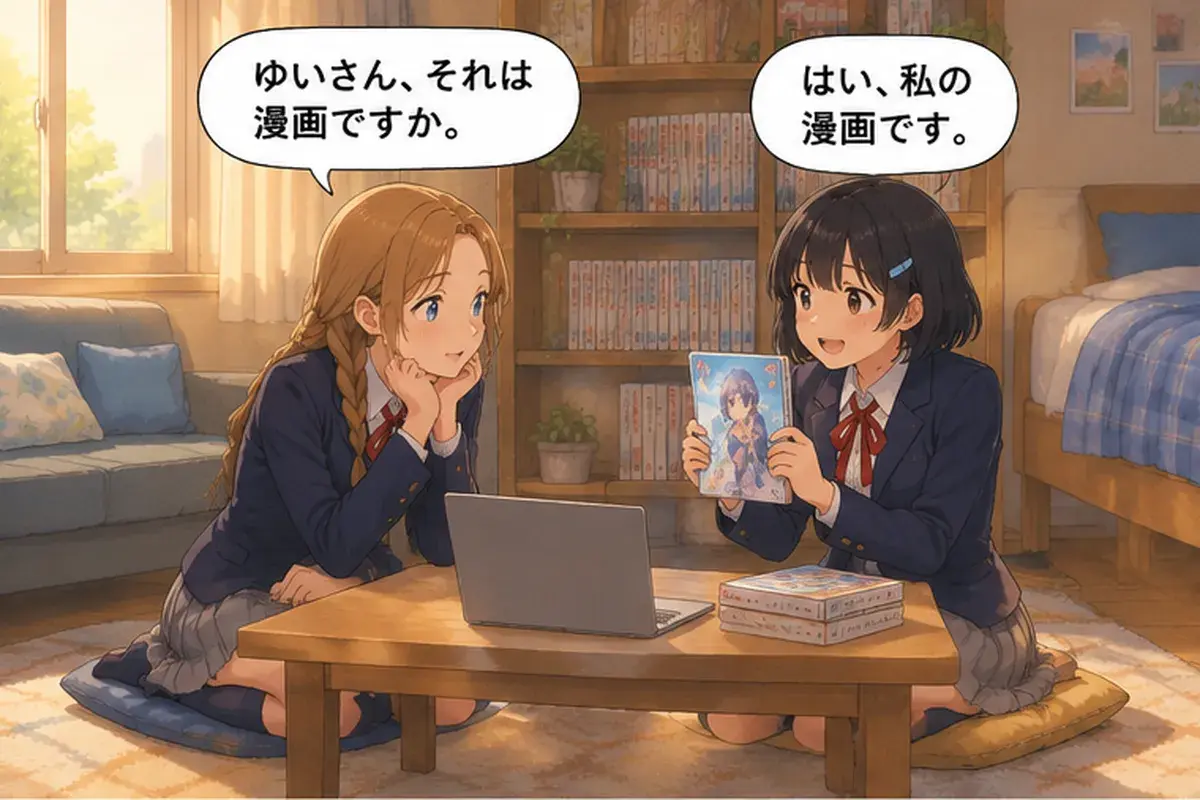
- ソーニャ
ゆいさん、それは漫画ですか。
Yui-san, is that a manga?
- ゆい
はい、私の漫画です。
Yes, it's my manga.
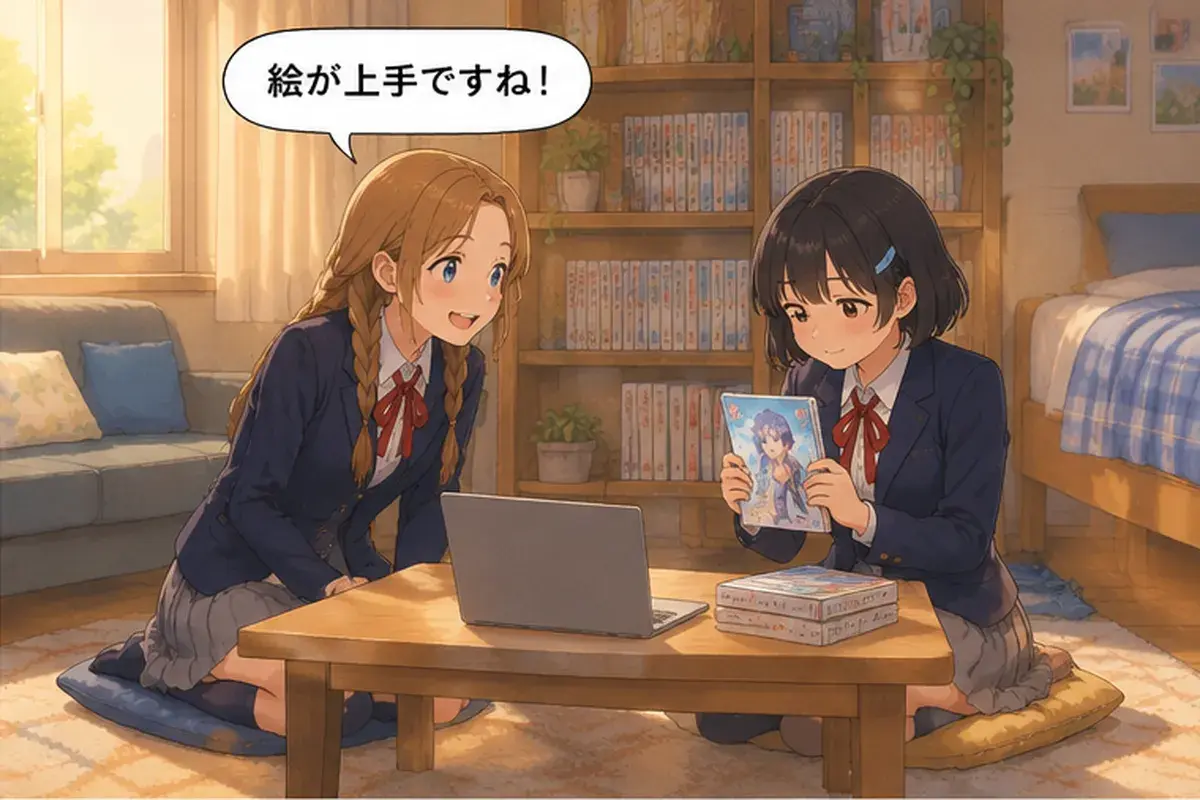
- ソーニャ
絵が上手ですね!
You're good at drawing!
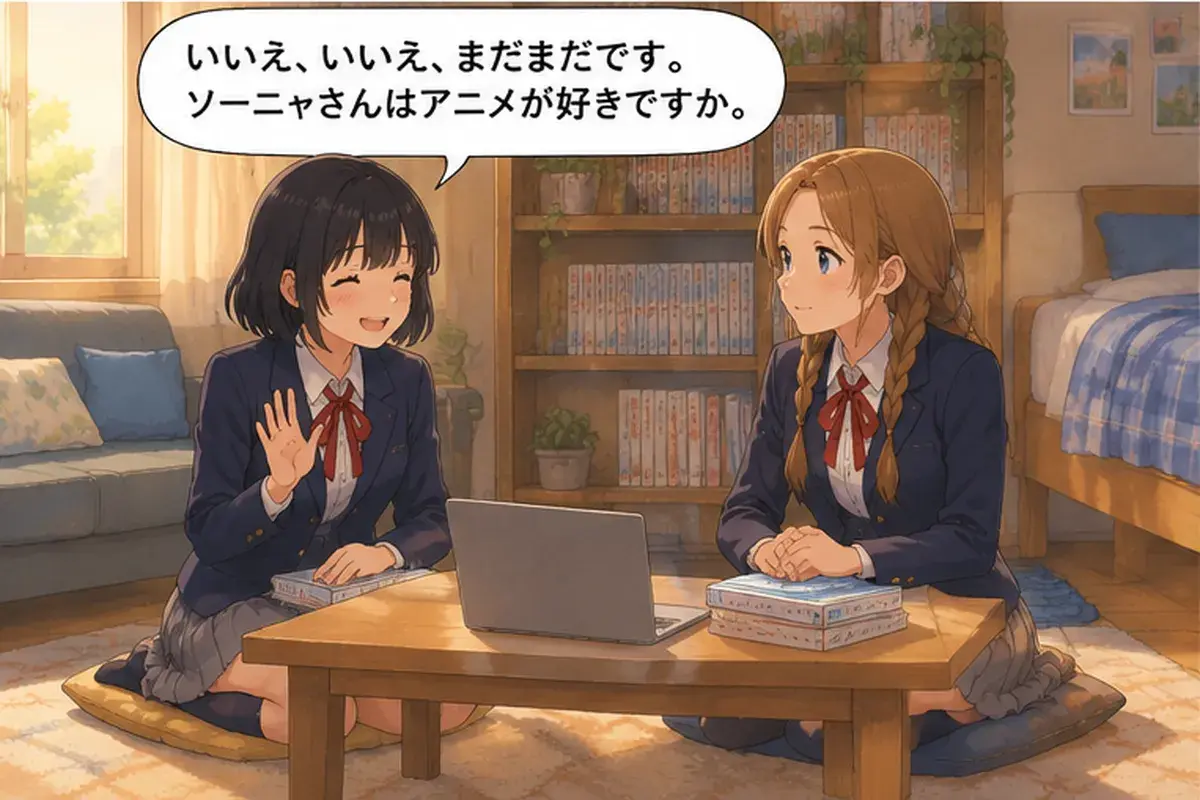
- ゆい
いいえ、いいえ、まだまだです。ソーニャさんはアニメが好きですか。
No, no, I still have a long way to go. Sonya-san, do you like anime?
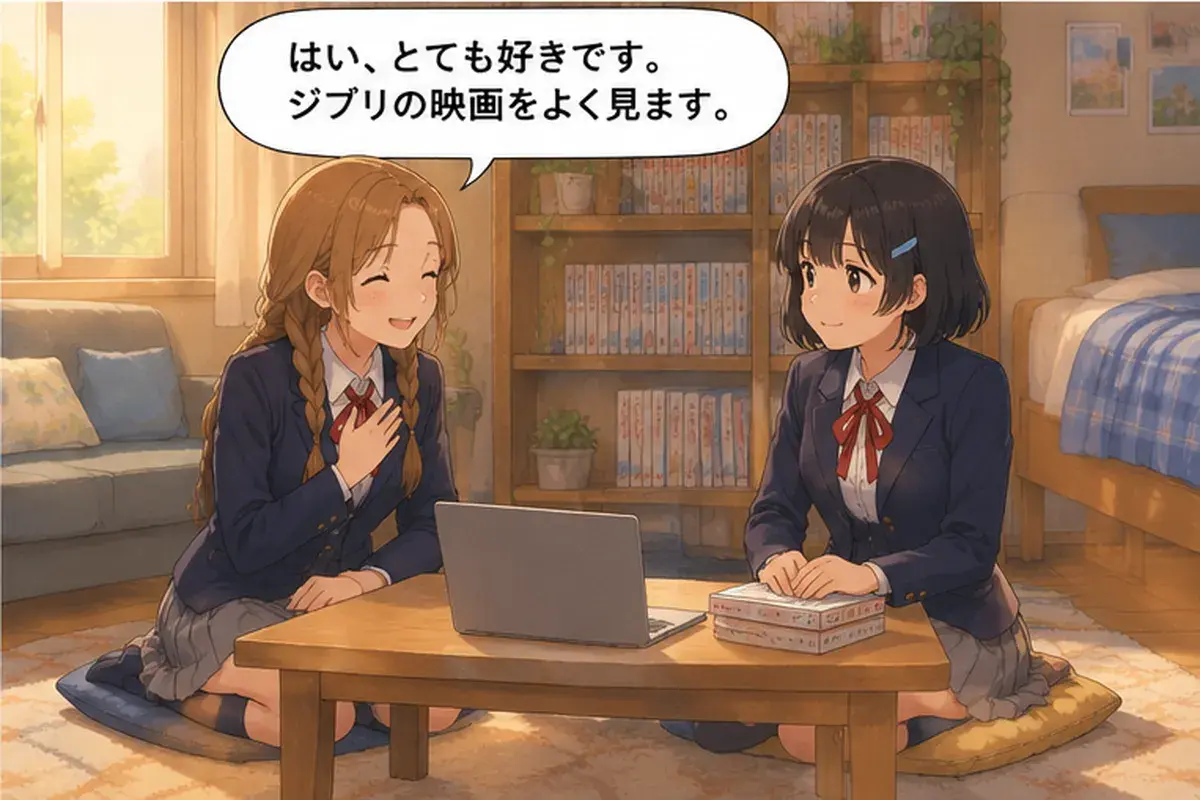
- ソーニャ
はい、とても好きです。ジブリの映画をよく見ます。
Yes, I like it very much. I often watch Ghibli movies.
- ゆい
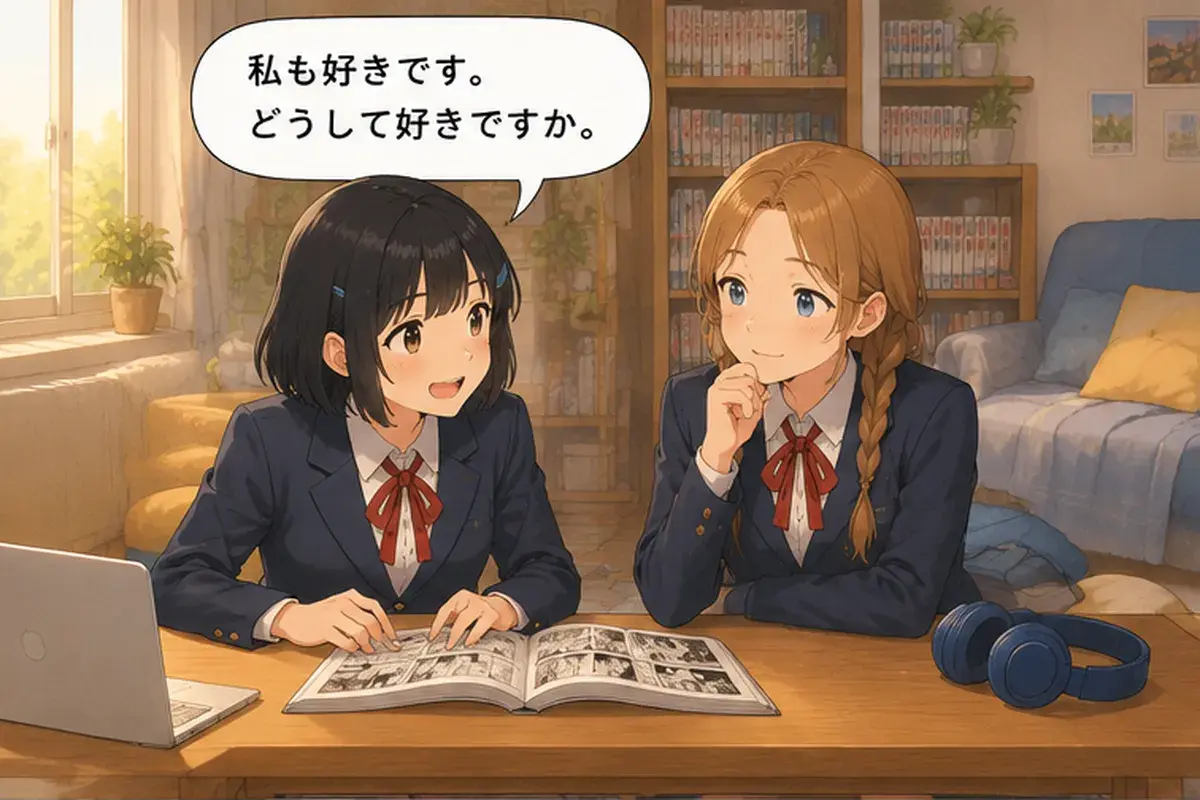
私も好きです。どうして好きですか。
I like them too. Why do you like them?
- ソーニャ
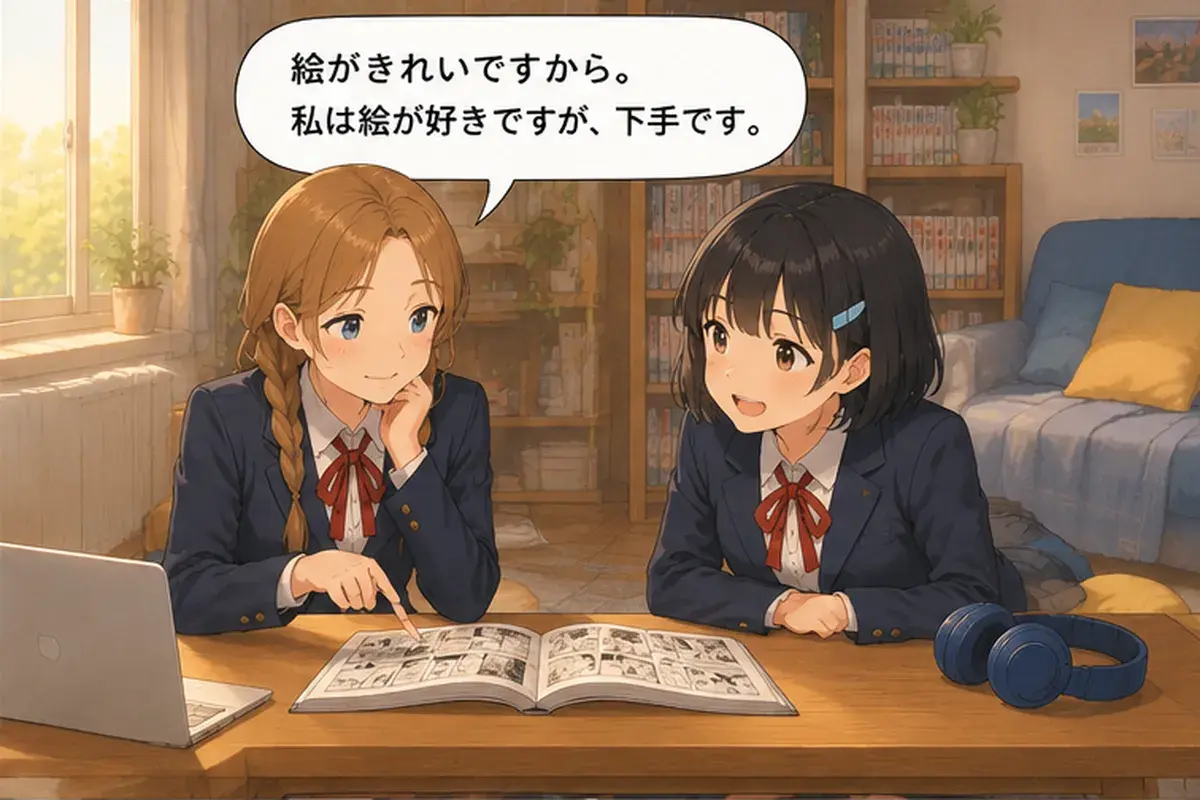
絵がきれいですから。私は絵が好きですが、下手です。
Because the pictures are beautiful. I like drawing, but I'm bad at it.
- ゆい
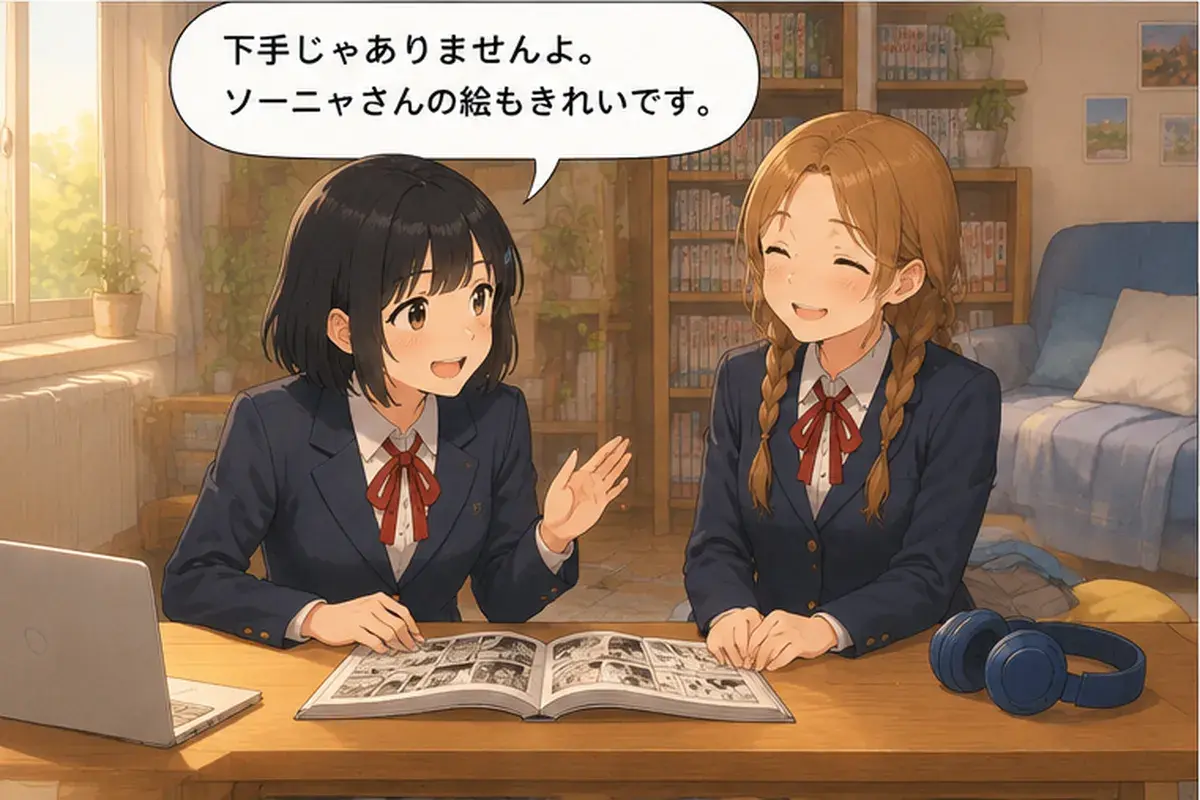
下手じゃありませんよ。ソーニャさんの絵もきれいです。
You're not bad at it! Sonya-san, your pictures are beautiful too.
- ソーニャ
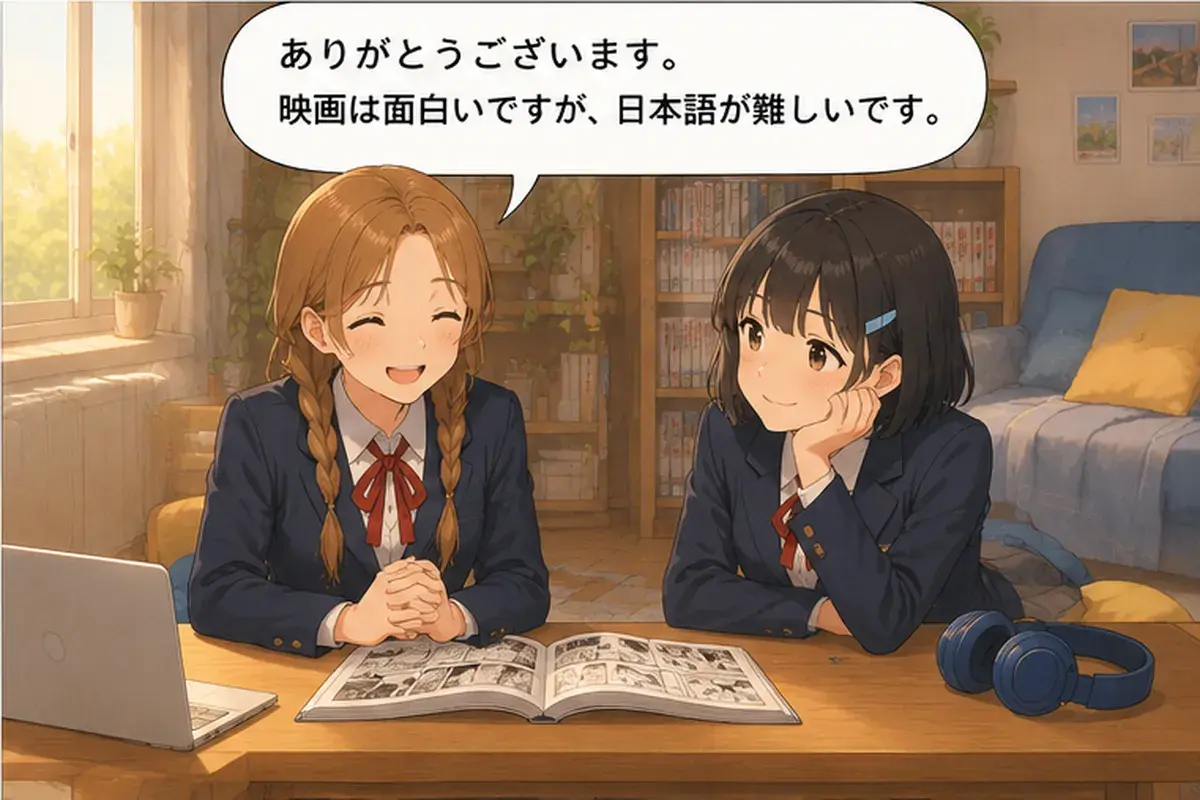
ありがとうございます。映画は面白いですが、日本語が難しいです。
Thank you. The movies are interesting, but the Japanese is difficult.
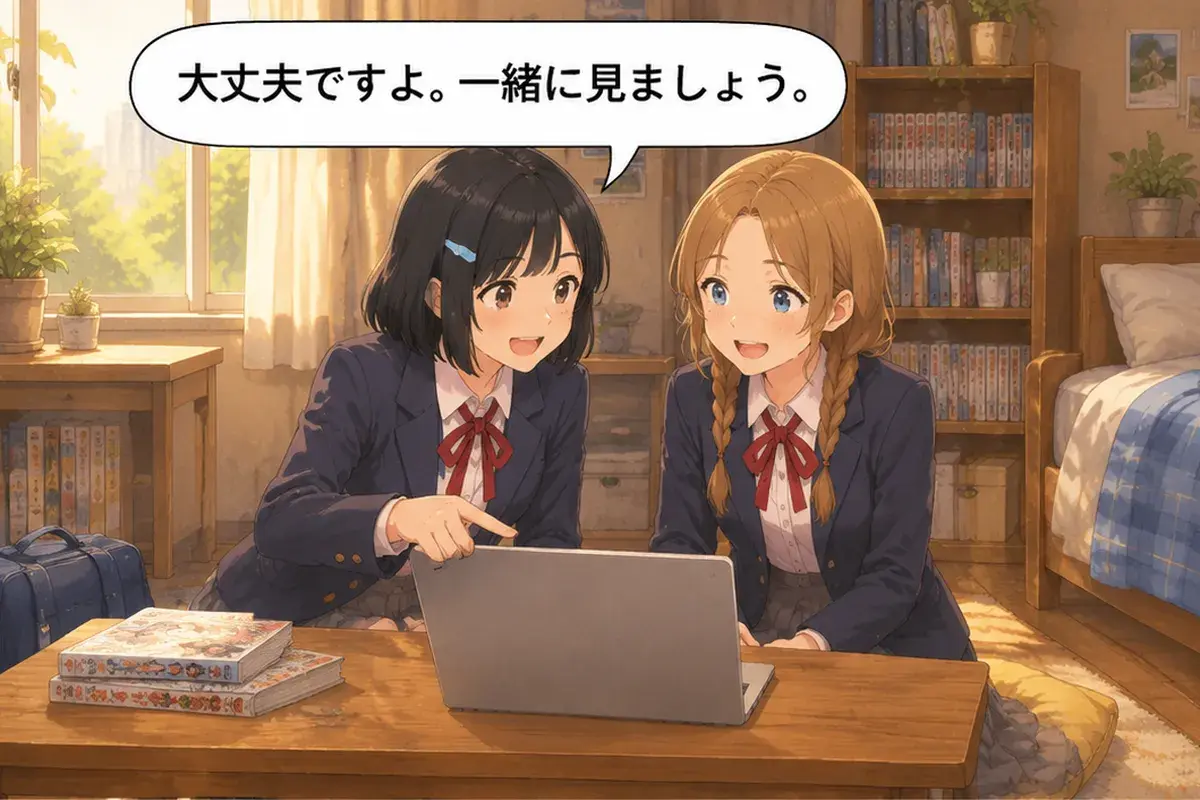
- ゆい
大丈夫ですよ。一緒に見ましょう。
It's OK. Let's watch them together.
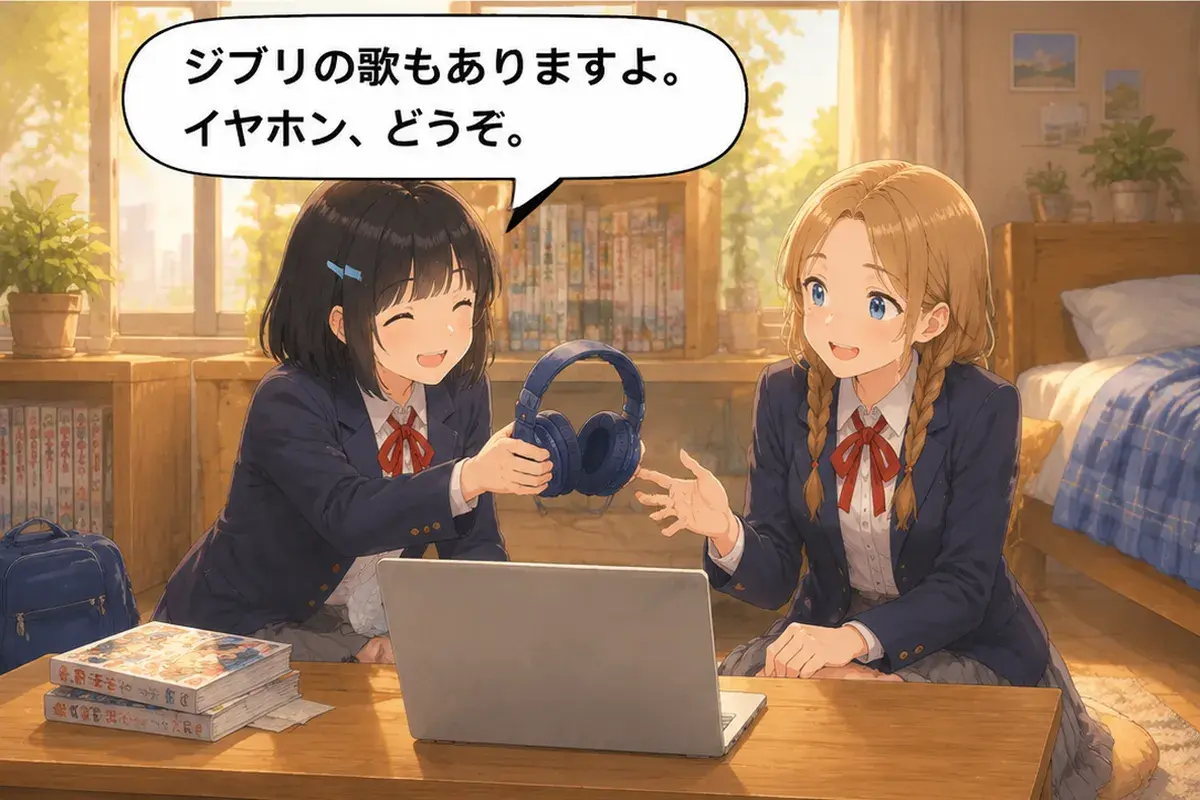
- ゆい
ジブリの歌もありますよ。イヤホン、どうぞ。
I have Ghibli songs too. Here, take the earphones.
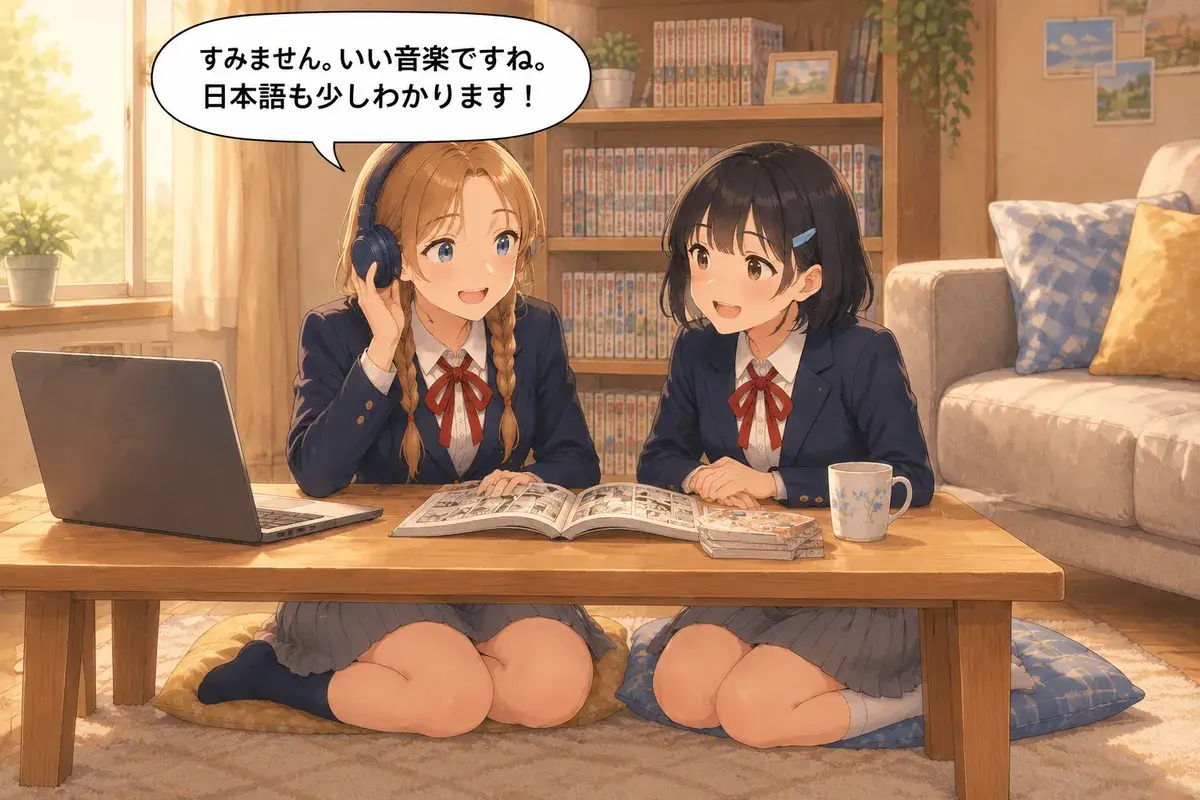
- ソーニャ
すみません。いい音楽ですね。日本語も少しわかります!
Sorry for the trouble. It's nice music. I understand a little Japanese too!
Grammar for this text
絵 が 上手 です ね — "you're good at drawing". What someone is good at takes the particle が; word for word, "in drawing, skillful". ね at the end means "right?": Sonya expects Yui to agree.
いいえ、 いいえ、 まだまだ です — this is how people answer praise. Saying "thank you" or agreeing feels awkward, so people say "no, no, I still have a long way to go". Word for word, まだまだ is "still, still". The doubled いいえ means "oh no, not at all".
絵 が きれい です から — から goes at the end of the reason: "the pictures are beautiful — that's why". It answers どうして (why). English "because" comes before the reason; Japanese から comes after it.
私 は 絵 が 好き です が、 下手 です — here が after です means "but". People often call themselves 下手 (bad at it) to be modest. Yui disagrees: 下手 じゃ ありません よ — "you're not bad at all".
一緒に 見ましょう — "let's watch them together": ましょう makes a suggestion; it's a form of 見ます (unit 7).
すみません — here Sonya is thanking Yui for the earphones. It means both "excuse me" and "thank you for going to the trouble".
日本語 も 少し わかります — わかります means "I understand" (written in kana). Usually what you understand takes が; here も means "too, also".
Words and grammar of the unit: Say what you like and what you're good at.
Learn the words from the texts with flashcards
In the app, you can tap any word in a text to see its translation, forms and examples, and new words stick with flashcards. 15 minutes a day.
Start for freeEverything is open for free. No card needed to sign up.