

Japanese dialogue with translation · A1 · 14 lines
昼ご飯はいつもラーメンです I always have ramen for lunch
Comic · 13 panels

- けん
マルクさん、昼ご飯はラーメンですか。
Mark-san, is it ramen for lunch?
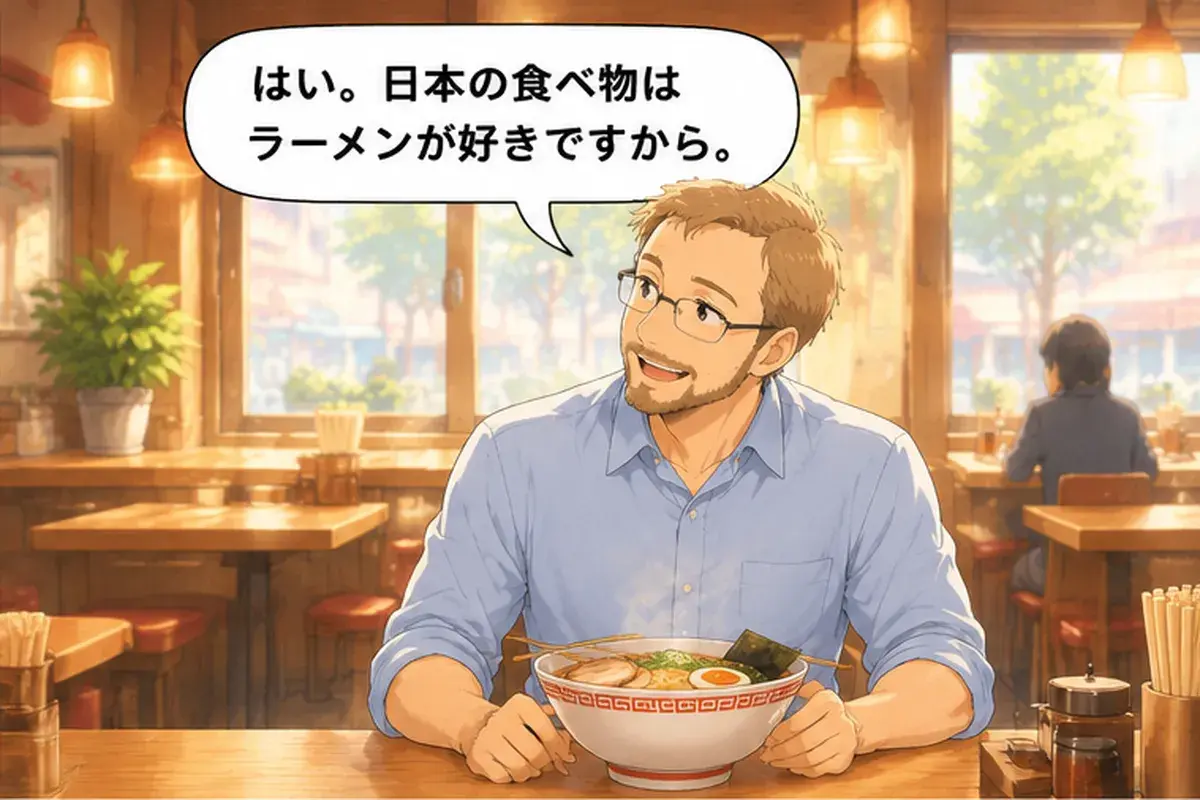
- マルク
はい。日本の食べ物はラーメンが好きですから。
Yes. Because when it comes to Japanese food, I like ramen.

- けん
私も好きです。昼ご飯はいつもラーメンです。
I like it too. I always have ramen for lunch.
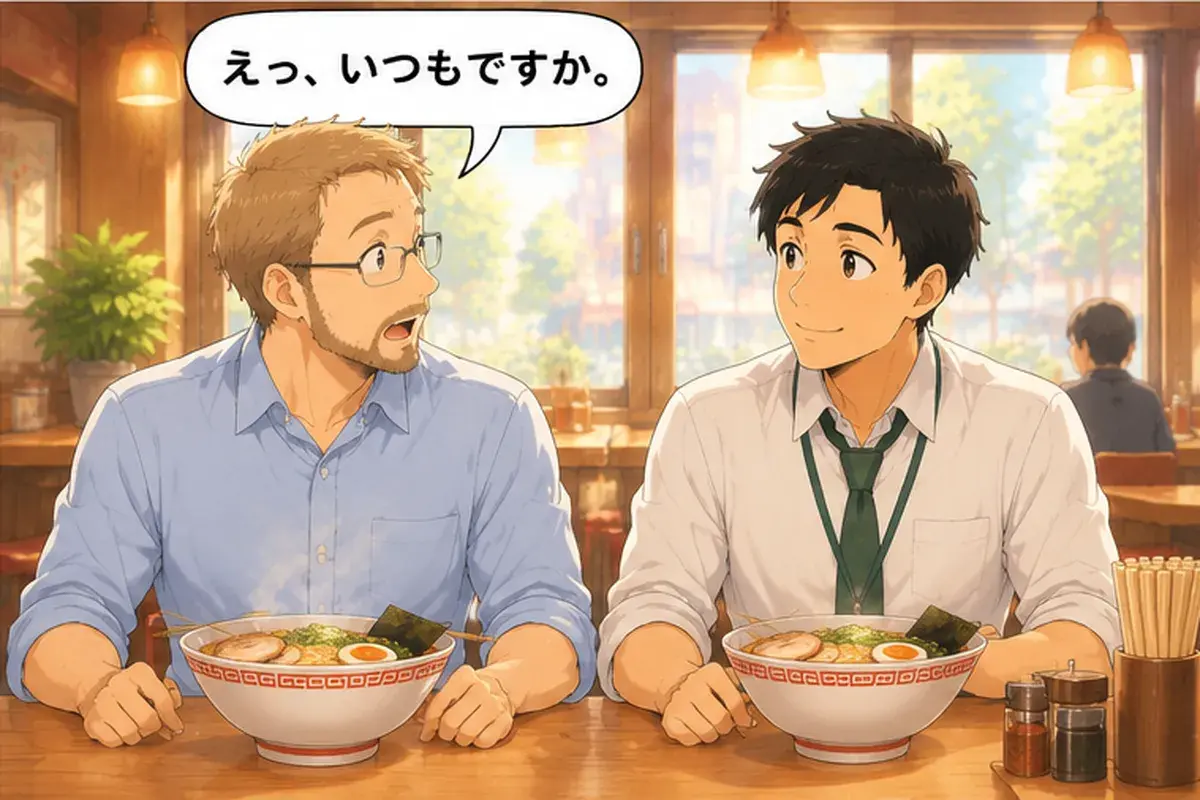
- マルク
えっ、いつもですか。
What, always?

- けん
はい。野菜も食べますよ。ラーメンの中にありますから。
Yes. I eat vegetables too. Because they're in the ramen.
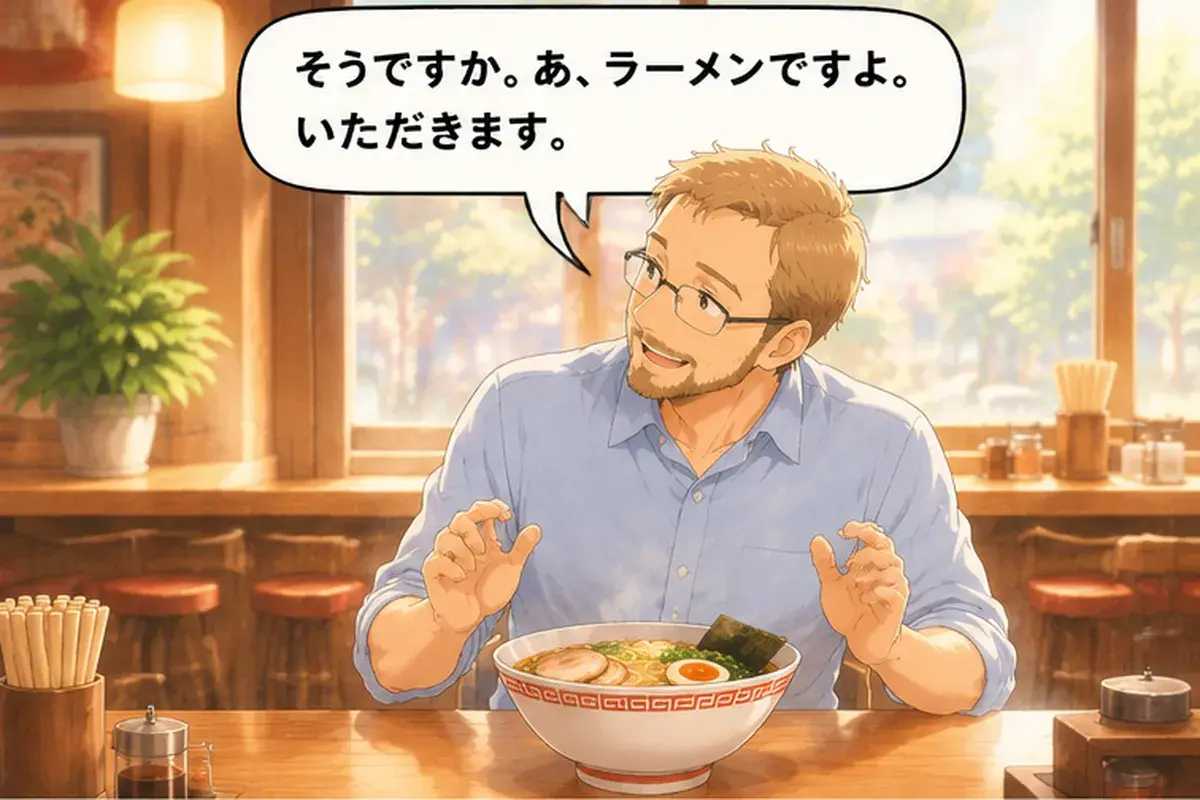
- マルク
そうですか。あ、ラーメンですよ。いただきます。
I see. Oh, here's the ramen. Let's eat!

- けん
いただきます。マルクさんはスポーツが好きですか。
Let's eat! Mark-san, do you like sports?
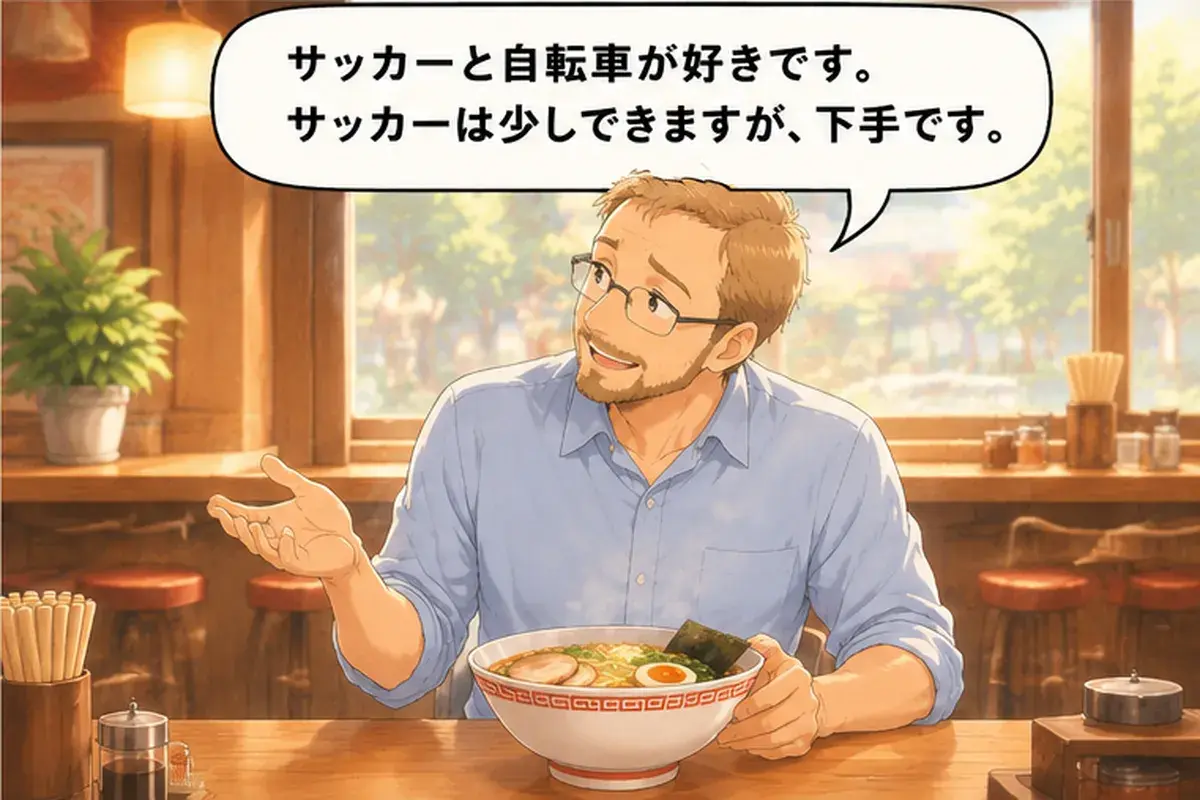
- マルク
サッカーと自転車が好きです。サッカーは少しできますが、下手です。
I like soccer and bicycles. I can play soccer a little, but I'm bad at it.
- けん
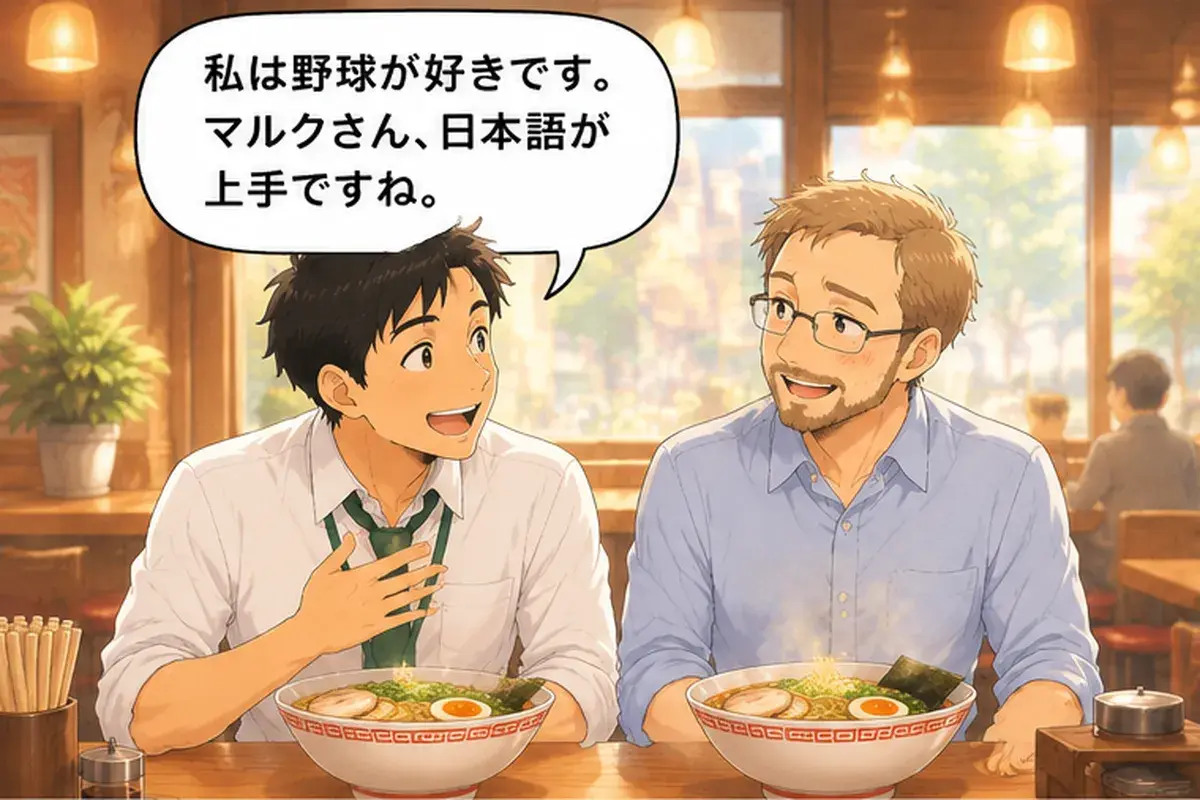
私は野球が好きです。マルクさん、日本語が上手ですね。
I like baseball. Mark-san, you're good at Japanese!
- マルク
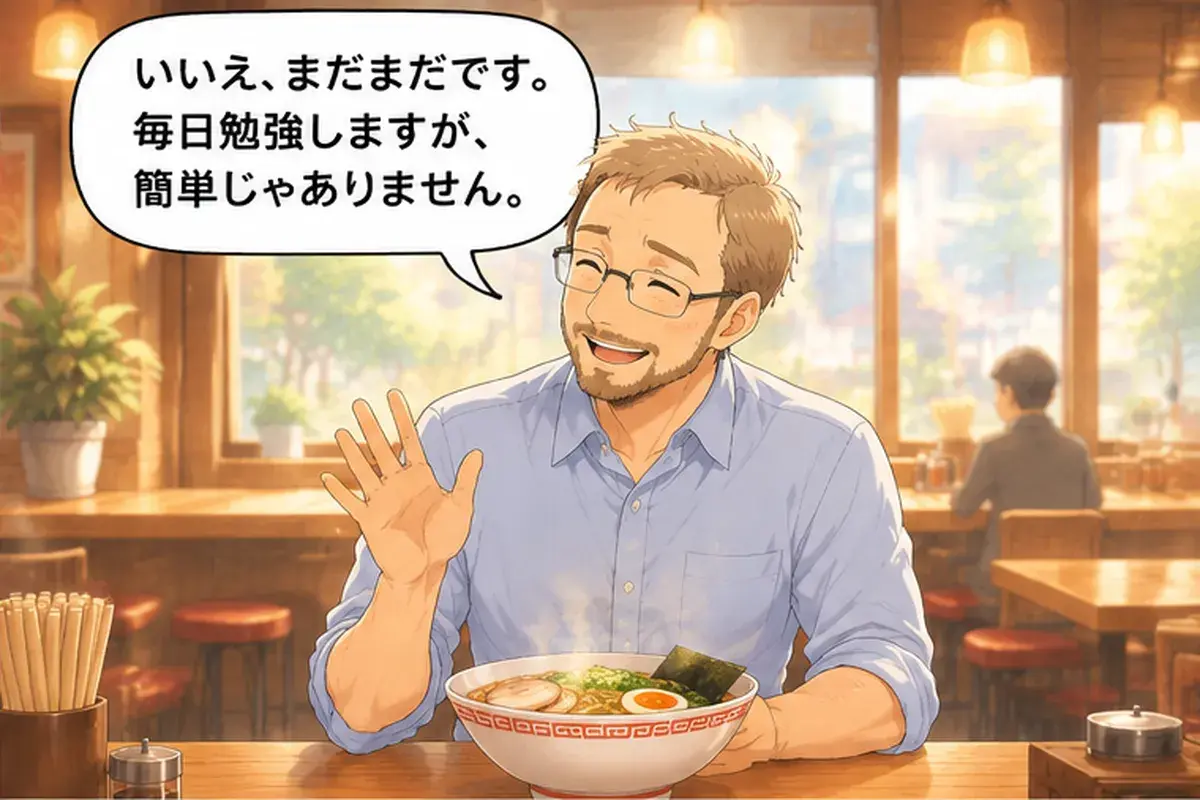
いいえ、まだまだです。毎日勉強しますが、簡単じゃありません。
No, I still have a long way to go. I study every day, but it isn't easy.

- けん
インターネットのゲームでも日本語の勉強ができますよ。面白いですから。
You can study Japanese with internet games too, you know. Because they're interesting.

- マルク
ゲームですか。いいですね。
Games? Sounds good.

- けん
ごちそうさまでした。
Thank you for the meal.
- マルク
ごちそうさまでした。
Thank you for the meal.
Grammar for this text
日本 の 食べ物 は ラーメン が 好き です から — は names the topic ("as for Japanese food"), and が marks what he likes; から means "because, you see".
えっ、いつも です か — えっ shows surprise: "what?". Mark repeats the word with か and asks "always?".
ラーメン の 中 に あります から — "they're in the ramen, you see" (the vegetables). 中 means "inside", に あります means "is (somewhere)" (unit 9), and から means "because", with the reason at the end. Ken is joking: ramen every day, but with vegetables.
サッカー は 少し できます が、 下手 です — できます means "can, be able to". What you can do takes が, but here it's は, because soccer was already named in the sentence before (the rule from unit 9). The last が means "but".
日本語 が 上手 です ね and いいえ、 まだまだ です — Ken gives praise, and Mark answers modestly, as is the custom: not "thank you" and not "yes". A foreigner in Japan hears this praise very often, even after a couple of sentences.
簡単 じゃ ありません — 簡単 (easy) is a na-adjective, so its negative is じゃ ありません. 勉強 します means "I study".
ゲーム で も 日本語 の 勉強 が できます — 勉強 が できます means "you can study". で means "with, by means of", and も means "too": "with games too". 面白い です から — the reason at the end: "because they're interesting".
ごちそうさまでした — people say it when they finish eating: "thank you for the meal". It's the pair of いただきます; people say it even if everyone pays for themselves: it thanks the cook and is thanks for the food itself. でした is the past form of です (unit 11); for now, learn the phrase as a whole.
Words and grammar of the unit: Say what you like and what you're good at.
Learn the words from the texts with flashcards
In the app, you can tap any word in a text to see its translation, forms and examples, and new words stick with flashcards. 15 minutes a day.
Start for freeEverything is open for free. No card needed to sign up.