

Japanese dialogue with translation · A1 · 14 lines
もう一度言ってください Please say it once more
Comic · 13 panels
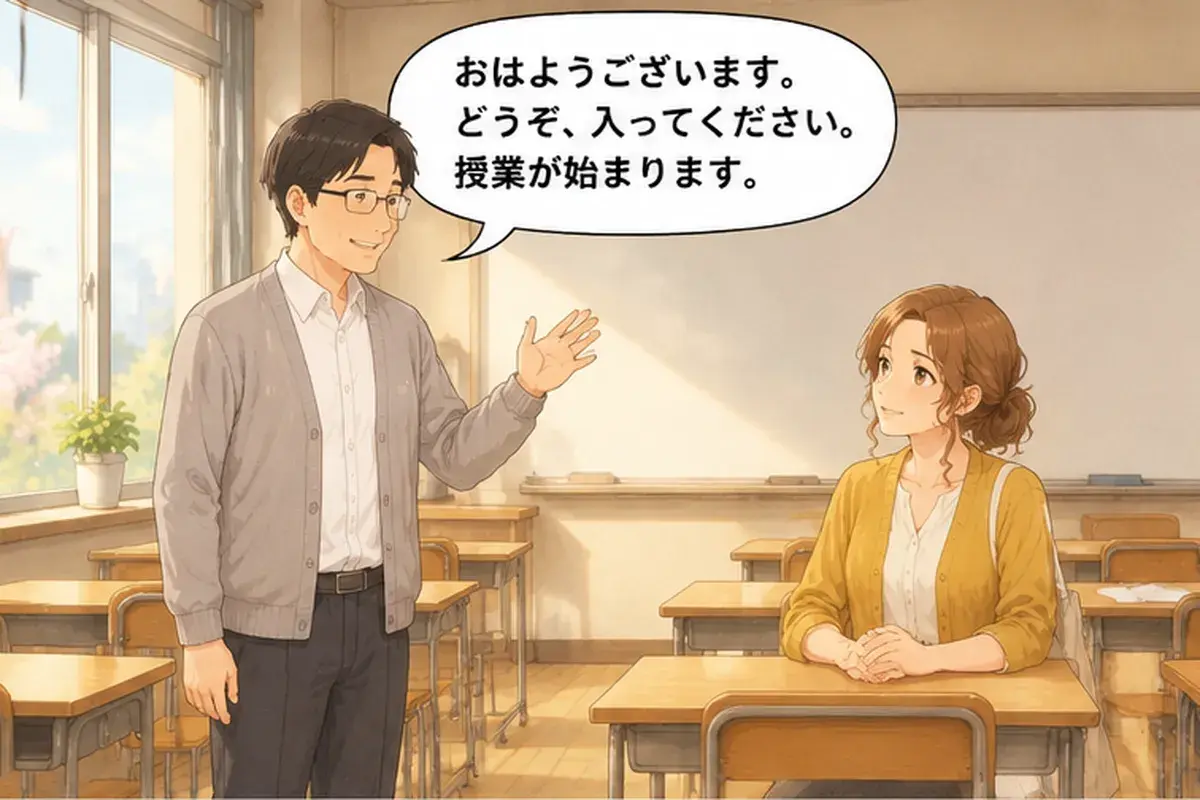
- 山田
おはようございます。どうぞ、入ってください。授業が始まります。
Good morning. Please, come in. Class is starting.
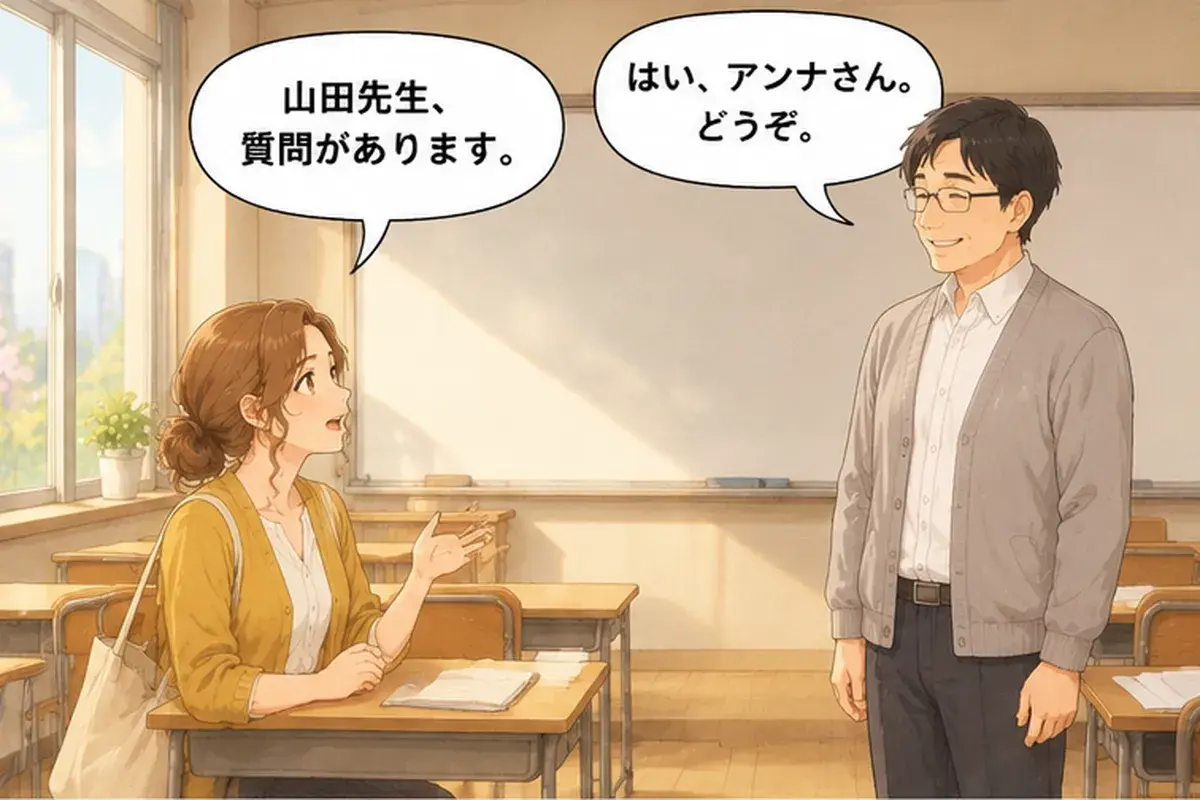
- アンナ
山田先生、質問があります。
Yamada-sensei, I have a question.
- 山田
はい、アンナさん。どうぞ。
Yes, Anna-san. Go ahead.
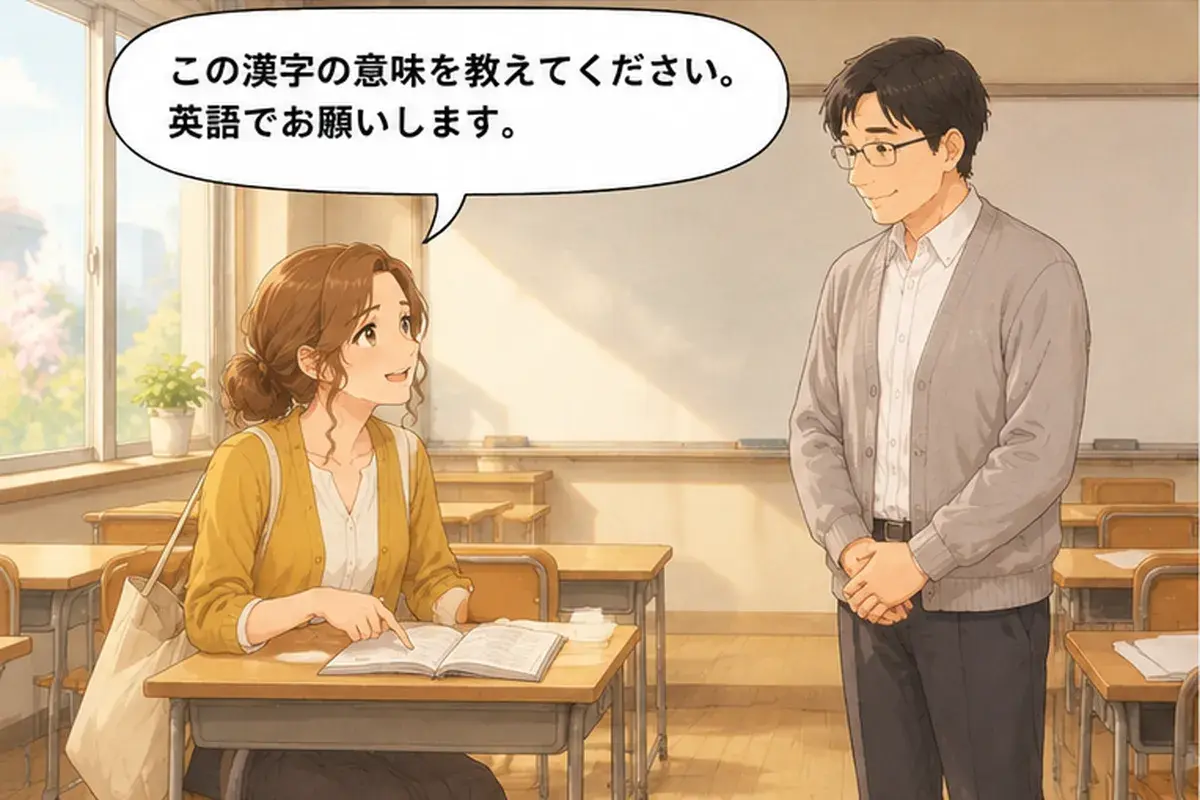
- アンナ
この漢字の意味を教えてください。英語でお願いします。
Please tell me the meaning of this kanji. In English, please.
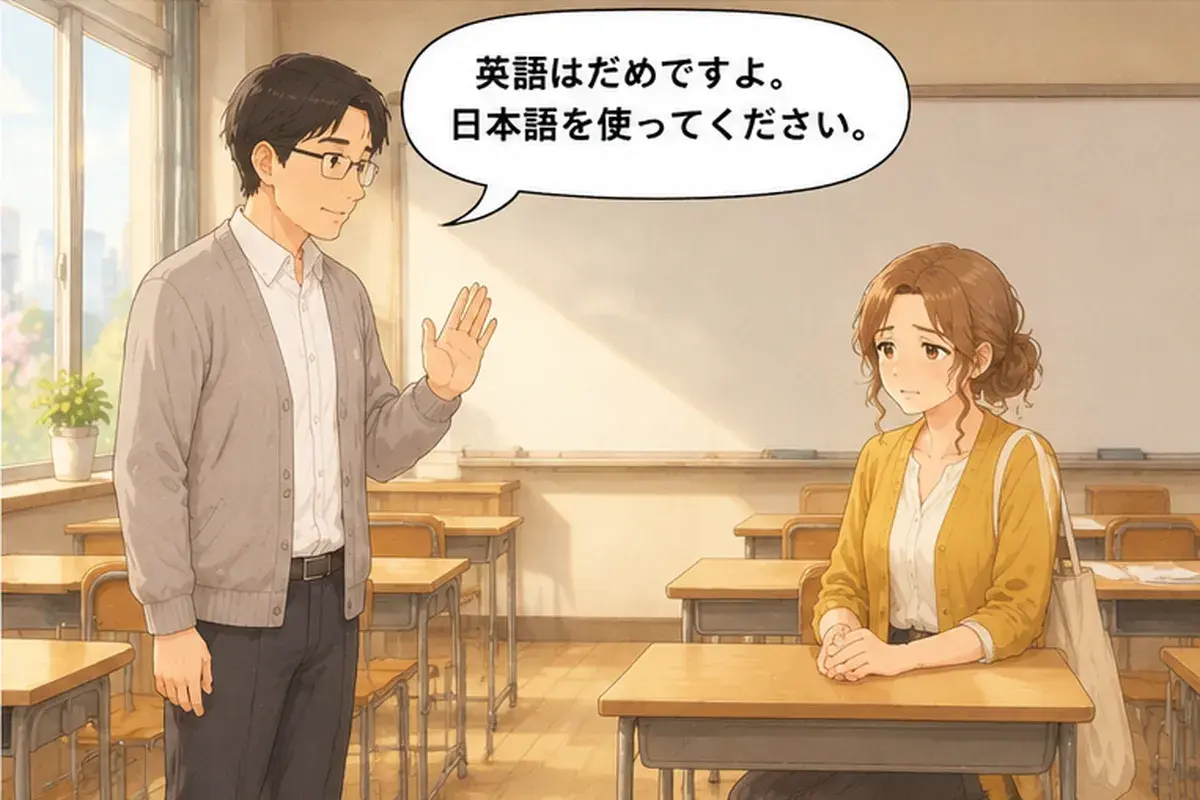
- 山田
英語はだめですよ。日本語を使ってください。
English isn't allowed. Please use Japanese.
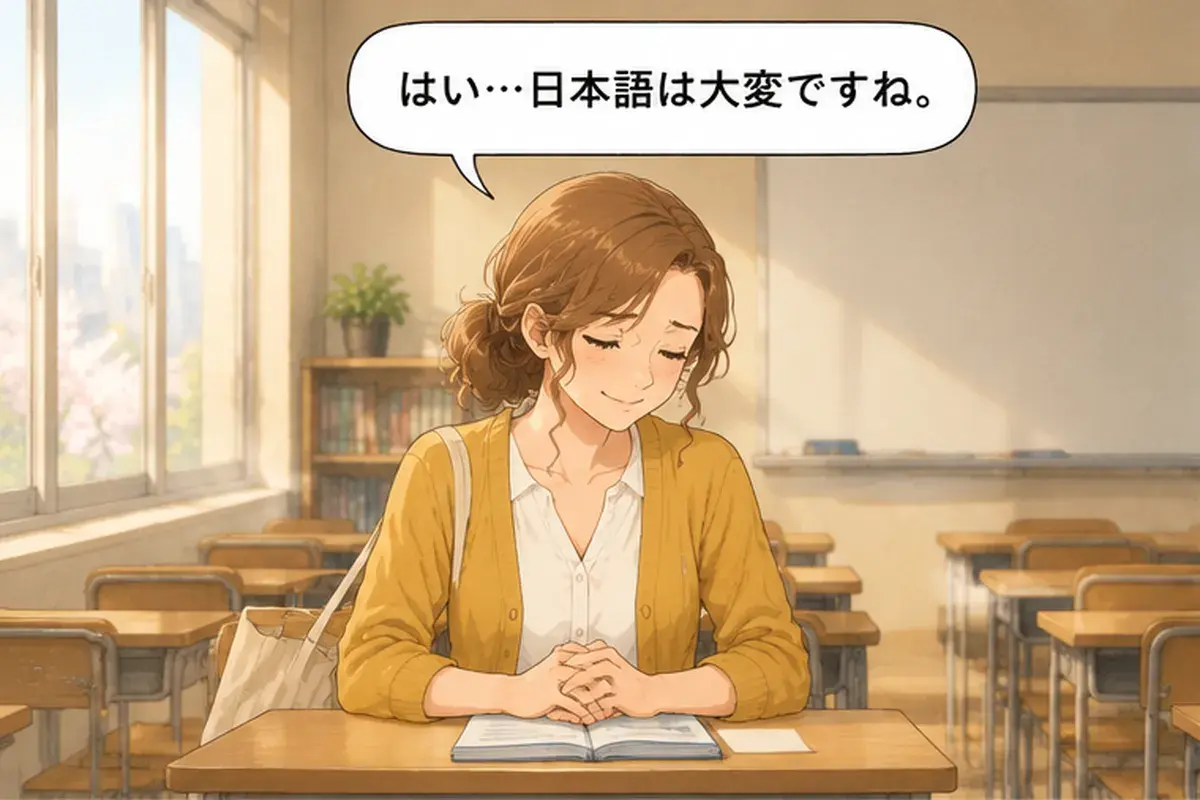
- アンナ
はい…日本語は大変ですね。
OK... Japanese is hard, isn't it?
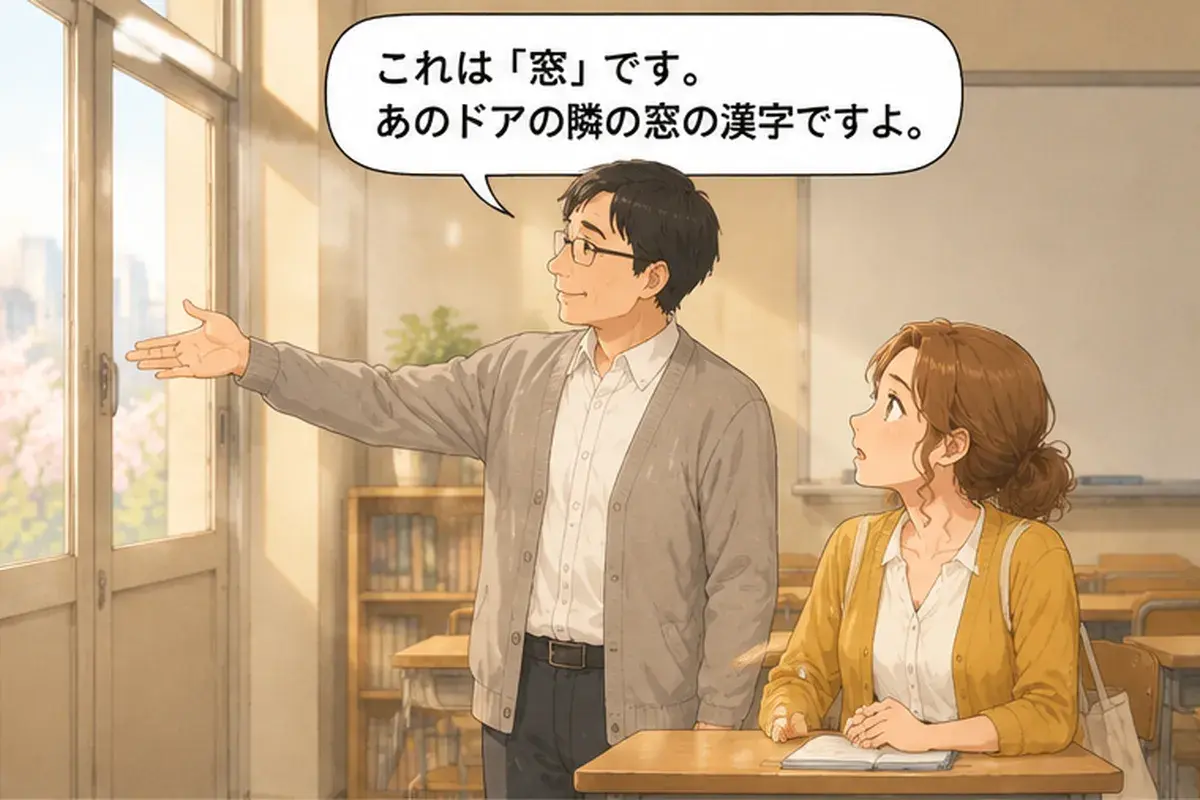
- 山田
これは「窓」です。あのドアの隣の窓の漢字ですよ。
This is "window." It's the kanji for that window next to the door.
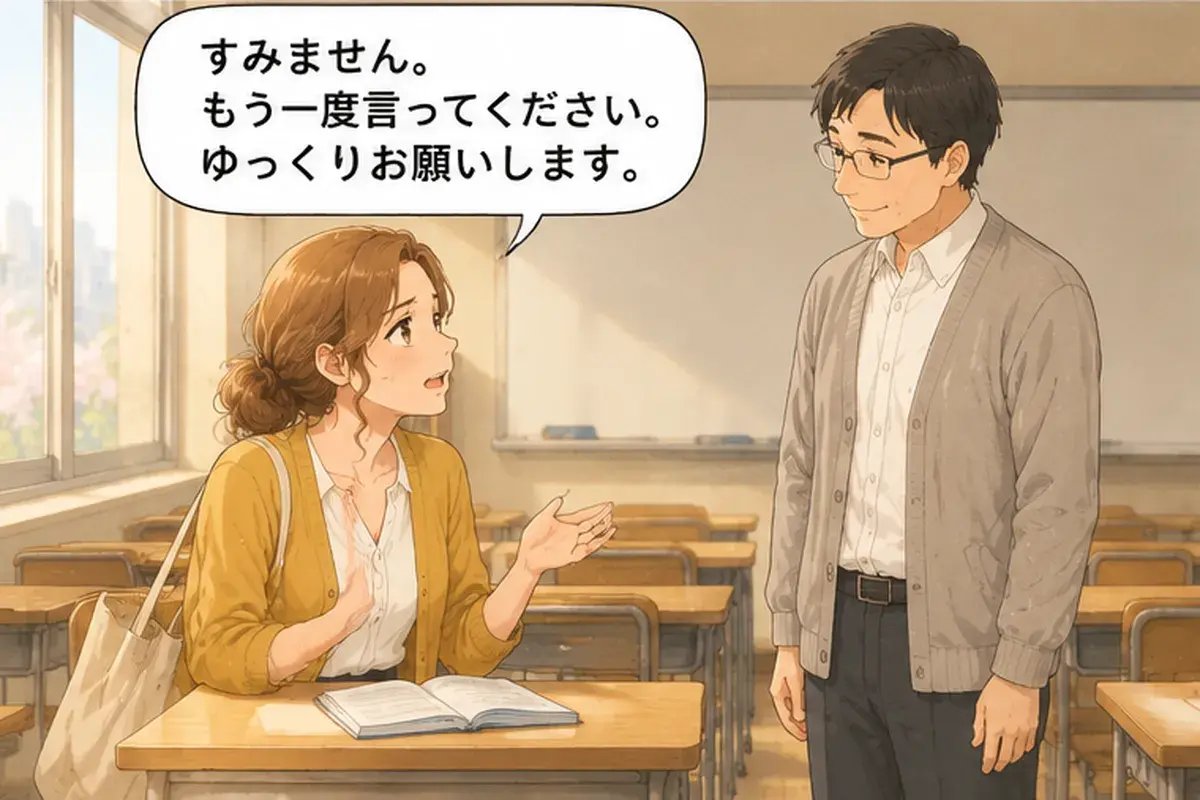
- アンナ
すみません。もう一度言ってください。ゆっくりお願いします。
I'm sorry. Please say it once more. Slowly, please.
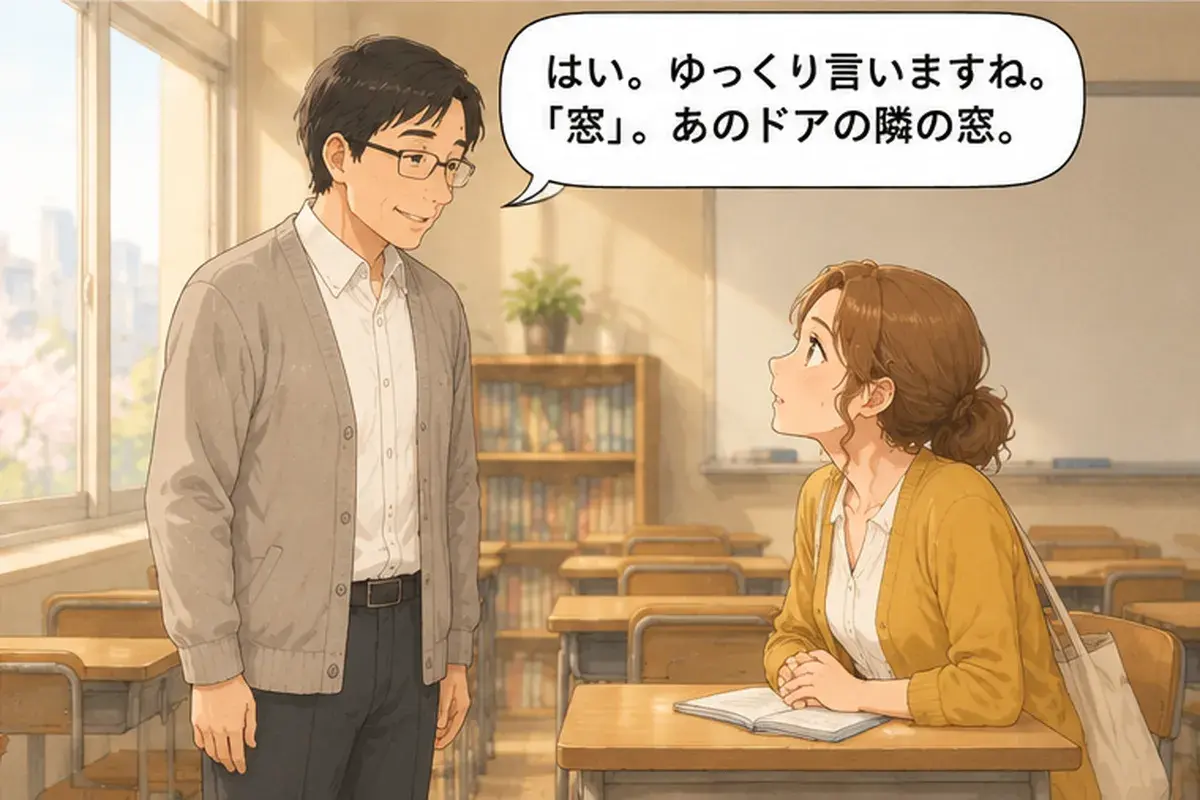
- 山田
はい。ゆっくり言いますね。「窓」。あのドアの隣の窓。
OK. I'll say it slowly. "Window." That window next to the door.
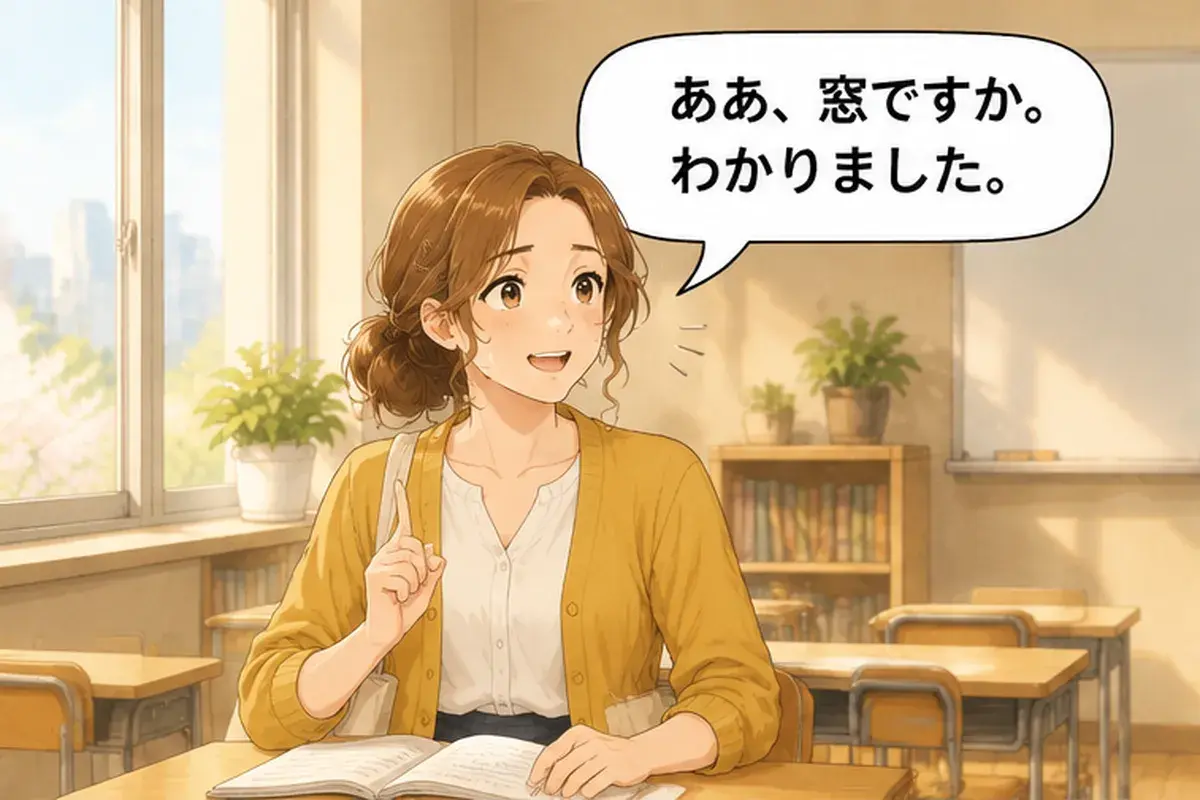
- アンナ
ああ、窓ですか。わかりました。
Ah, a window? Got it.
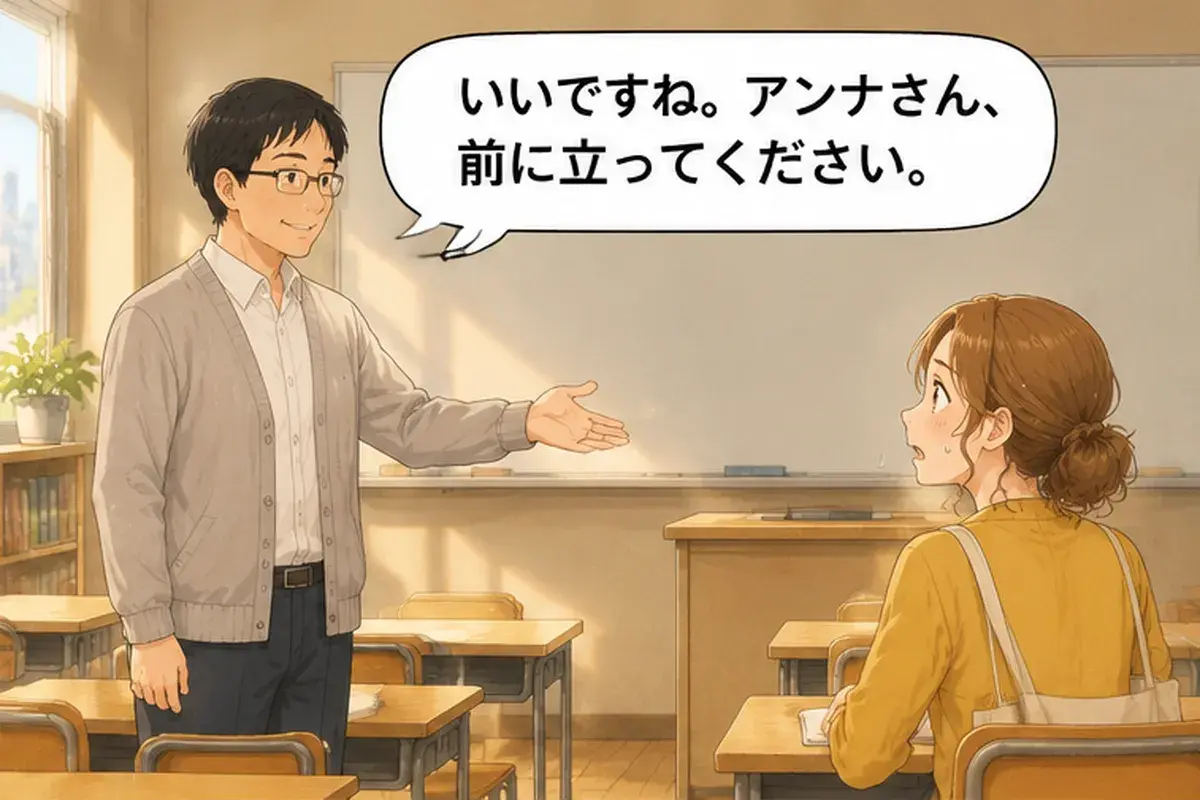
- 山田
いいですね。アンナさん、前に立ってください。
Good. Anna-san, please stand at the front.
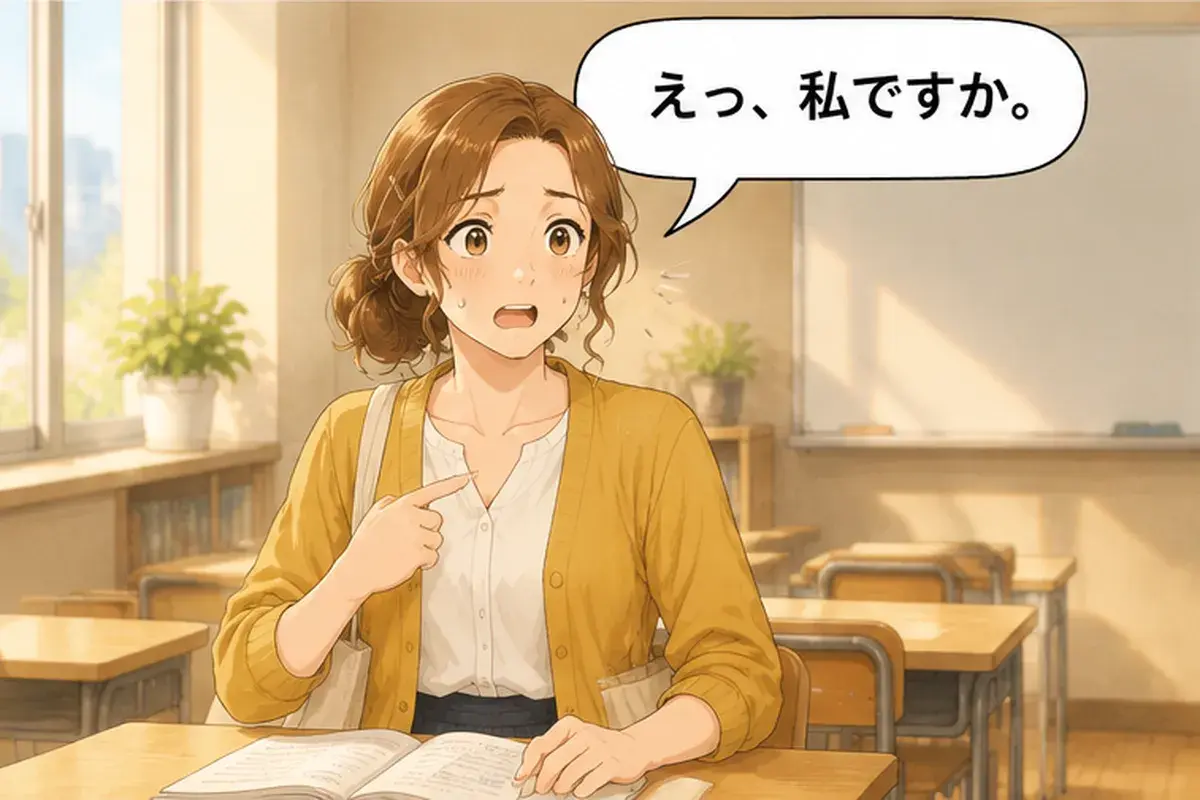
- アンナ
えっ、私ですか。
What? Me?
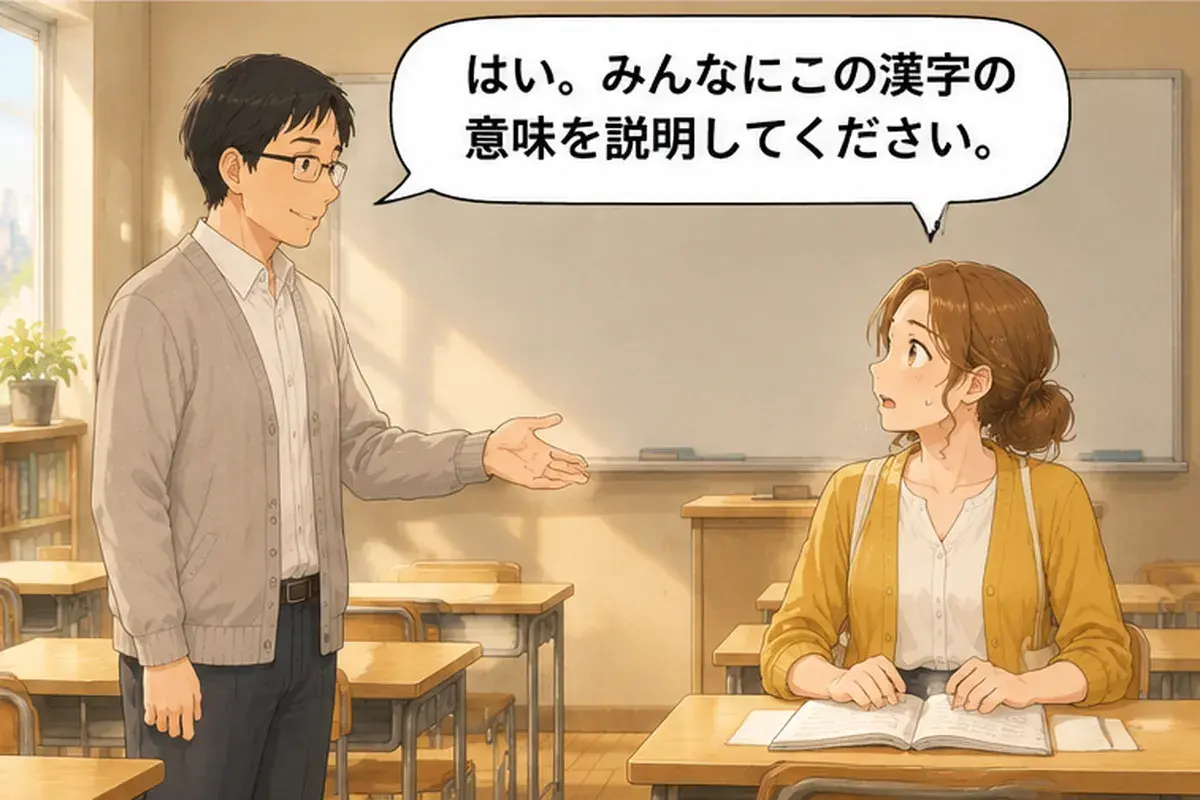
- 山田
はい。みんなにこの漢字の意味を説明してください。
Yes. Please explain the meaning of this kanji to everyone.
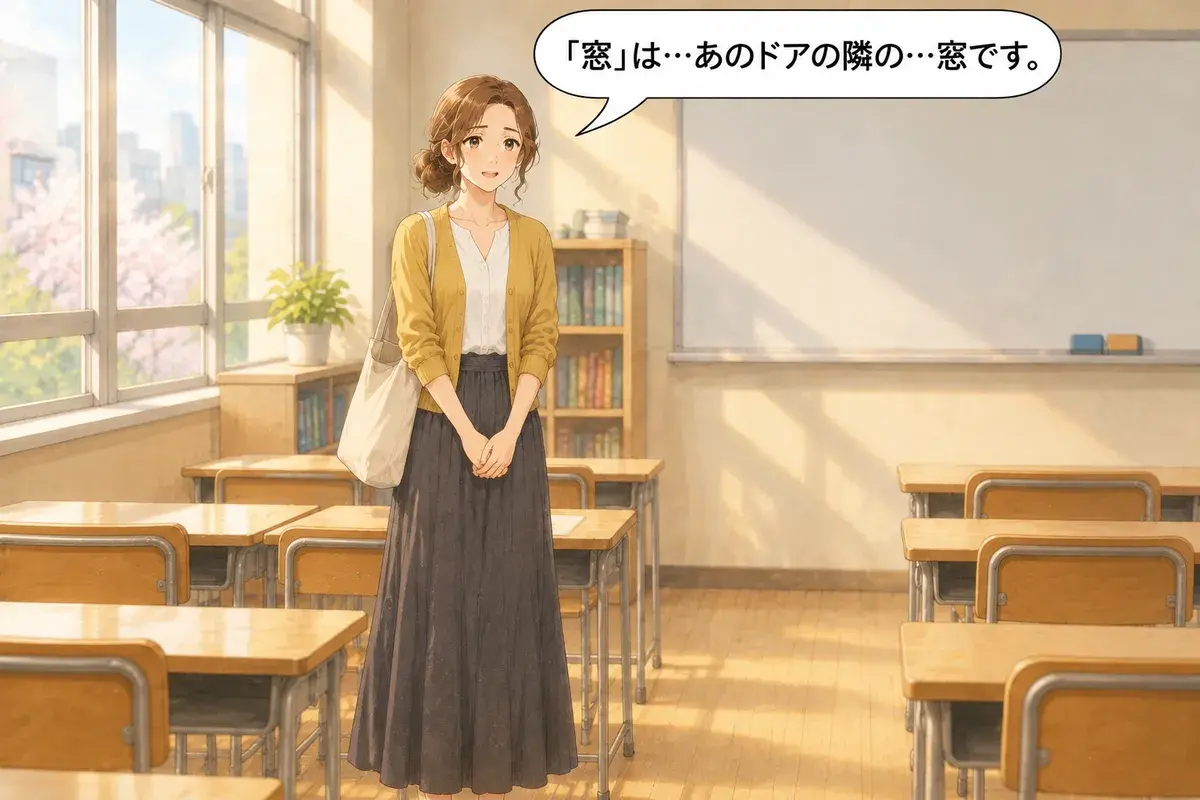
- アンナ
「窓」は…あのドアの隣の…窓です。
"Window" is... that... next to the door... window.
Grammar for this text
入って ください, 使って ください, 言って ください, 立って ください — the forms of 入る, 使う, 言う, 立つ: the end of the word changes to って (haitte, tsukatte, itte, tatte). 入る looks like a Group 2 verb, but it's Group 1.
教えて ください — 教える is Group 2: drop る. This is how you ask someone to tell you something, explain it or teach you.
英語 で お願いします — here で means "in (a language)". 英語 は だめ です よ — "English isn't allowed": Yamada-sensei wants the class to speak Japanese.
もう 一度 言って ください, ゆっくり お願いします — "once more" and "slowly"; 言って is read itte, the same as 行って (from 行く): tell them apart by the kanji and the meaning.
これ は 「窓」 です — the brackets 「 」 mark the kanji they're talking about.
前 に 立って ください — "please come up to the front".
説明して ください — 説明する + して.
えっ、 私 です か — "What? Me?": people ask this when they're surprised.
日本語 は 大変 です ね — 大変 means "hard, a lot of trouble".
The joke at the end: Anna explains the meaning of the kanji by simply pointing at the window.
Words and grammar of the unit: Ask people politely to do things.
Learn the words from the texts with flashcards
In the app, you can tap any word in a text to see its translation, forms and examples, and new words stick with flashcards. 15 minutes a day.
Start for freeEverything is open for free. No card needed to sign up.