

Japanese dialogue with translation · A1 · 14 lines
午後に来てください Please come in the afternoon
Comic · 10 panels
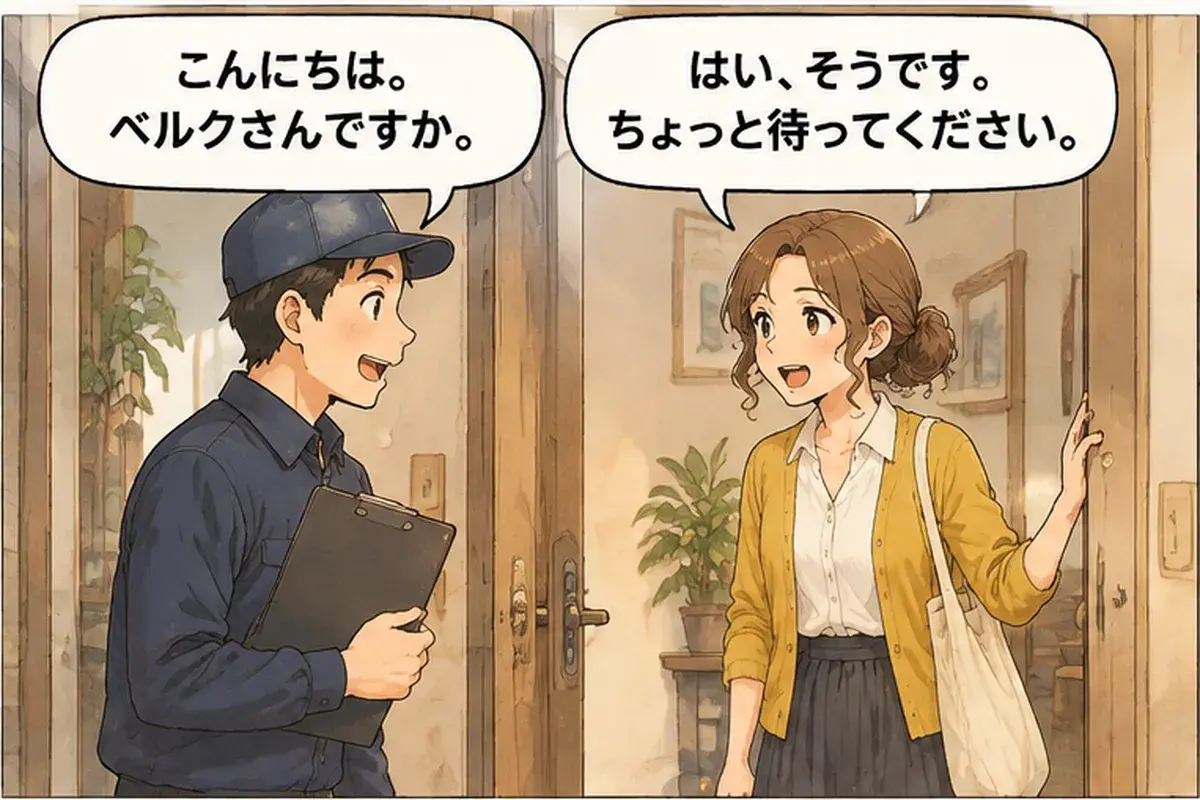
- 配達員
こんにちは。ベルクさんですか。
Hello. Are you Berg-san?
- アンナ
はい、そうです。ちょっと待ってください。
Yes, that's right. Please wait a moment.
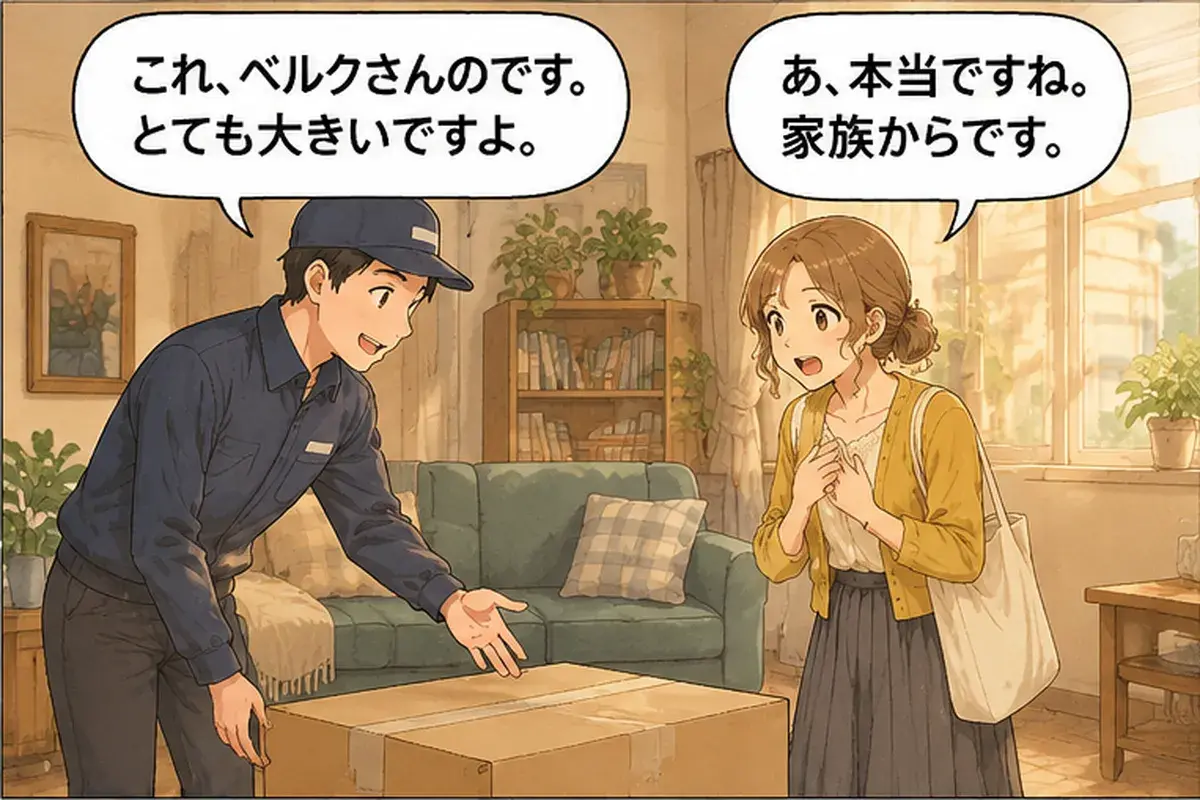
- 配達員
これ、ベルクさんのです。とても大きいですよ。
This is yours, Berg-san. It's very big.
- アンナ
あ、本当ですね。家族からです。
Oh, it really is. It's from my family.
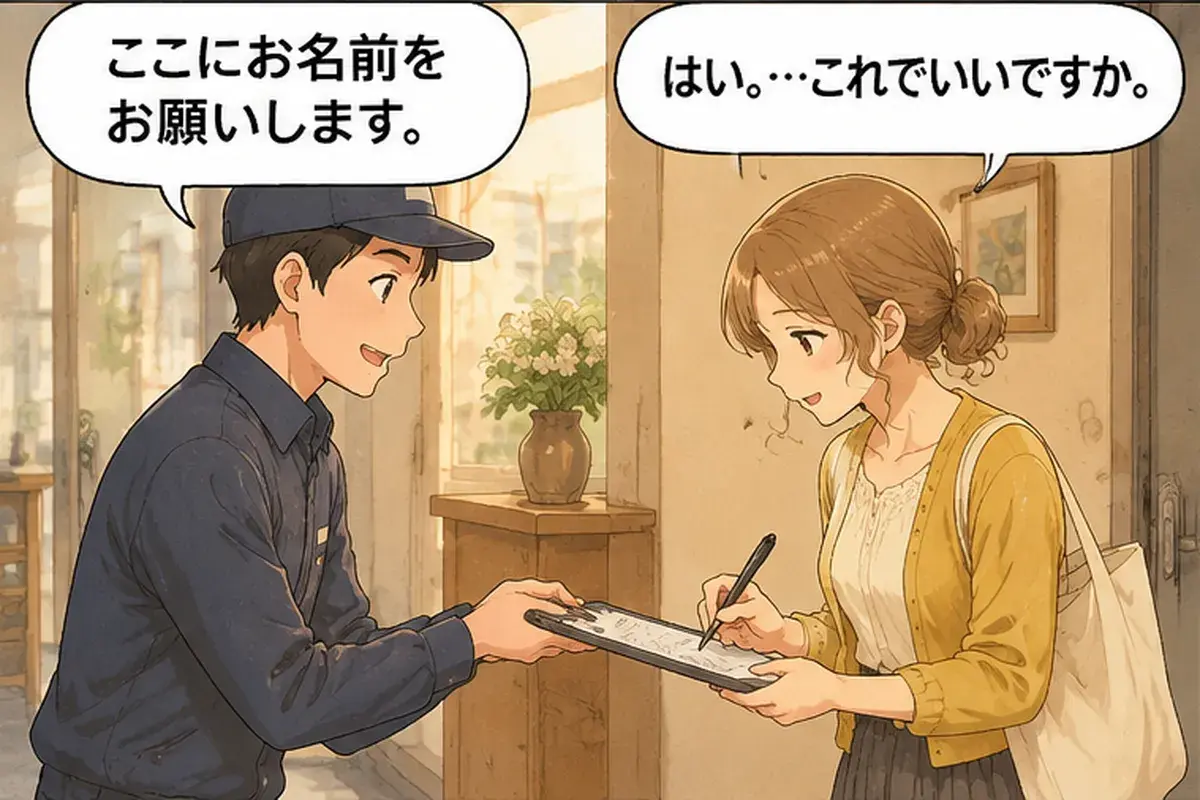
- 配達員
ここにお名前をお願いします。
Your name here, please.
- アンナ
はい。…これでいいですか。
OK. ...Is this all right?
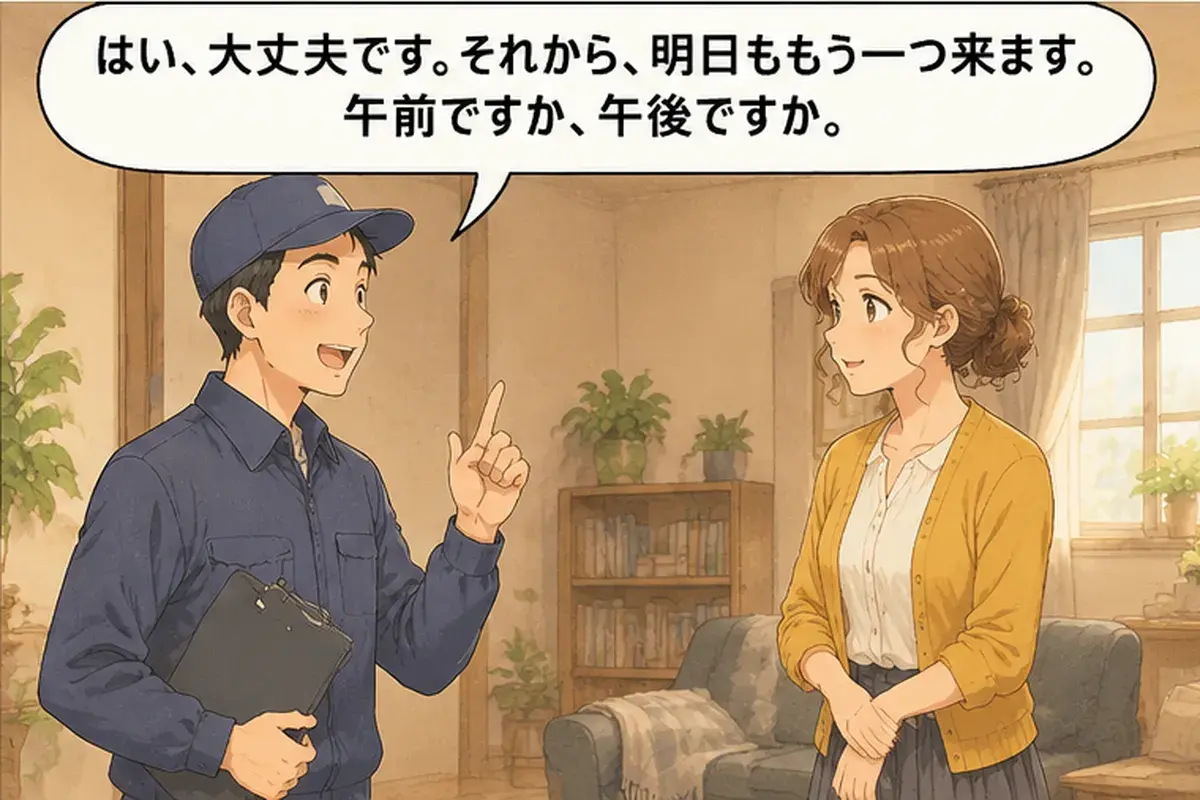
- 配達員
はい、大丈夫です。それから、明日ももう一つ来ます。午前ですか、午後ですか。
Yes, that's fine. Also, one more is coming tomorrow too. Morning or afternoon?
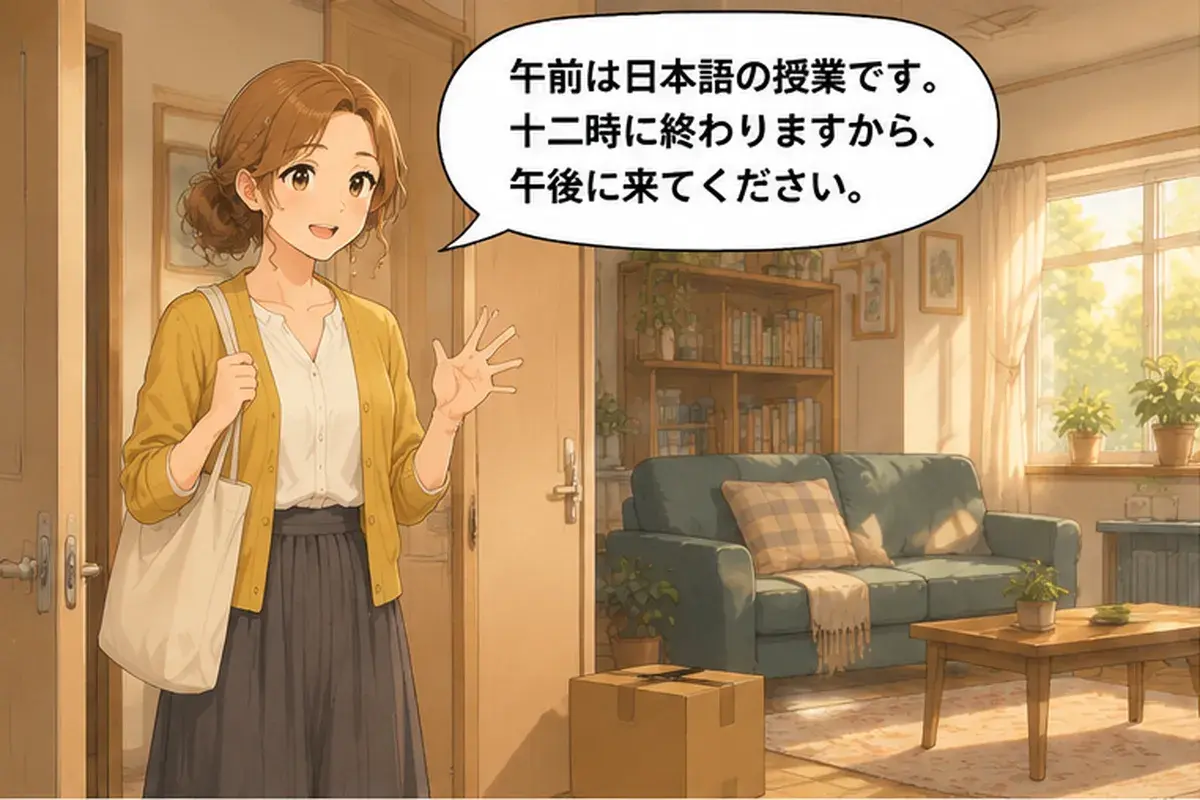
- アンナ
午前は日本語の授業です。十二時に終わりますから、午後に来てください。
In the morning I have Japanese class. It ends at twelve, so please come in the afternoon.
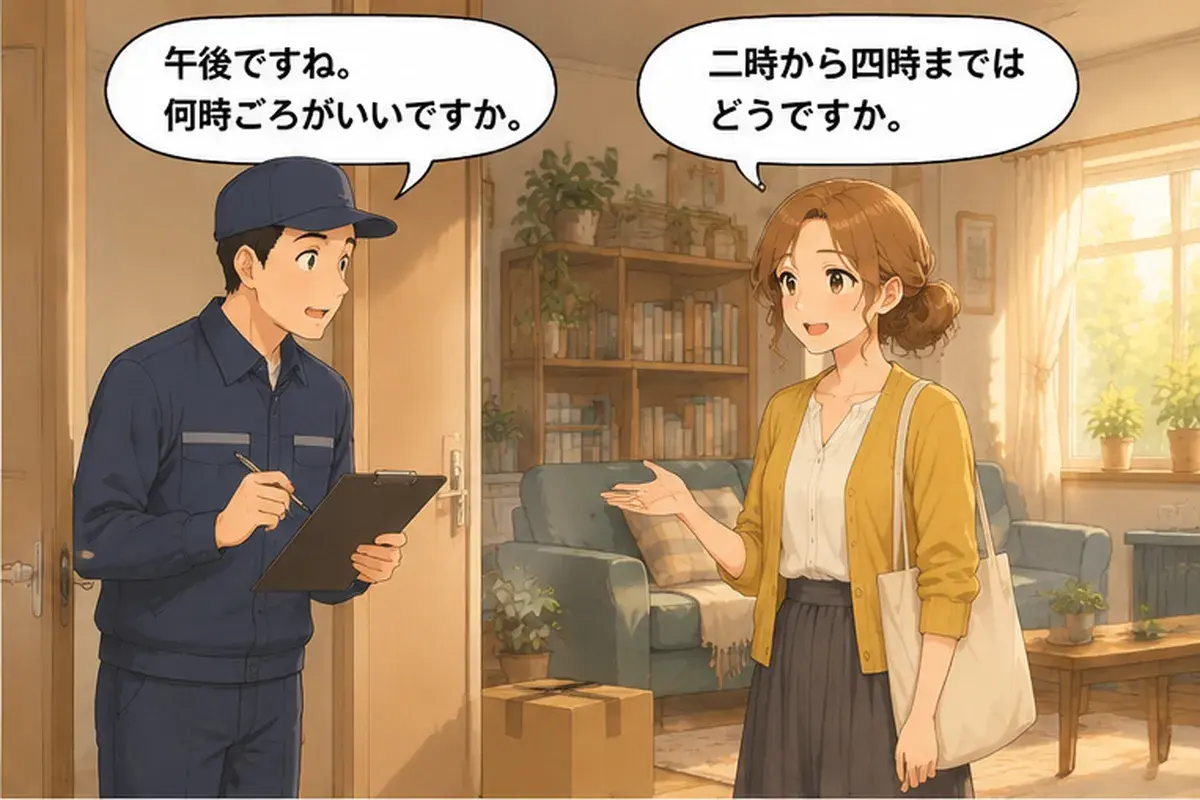
- 配達員
午後ですね。何時ごろがいいですか。
The afternoon, then. Around what time is good for you?
- アンナ
二時から四時まではどうですか。
How about from two to four?
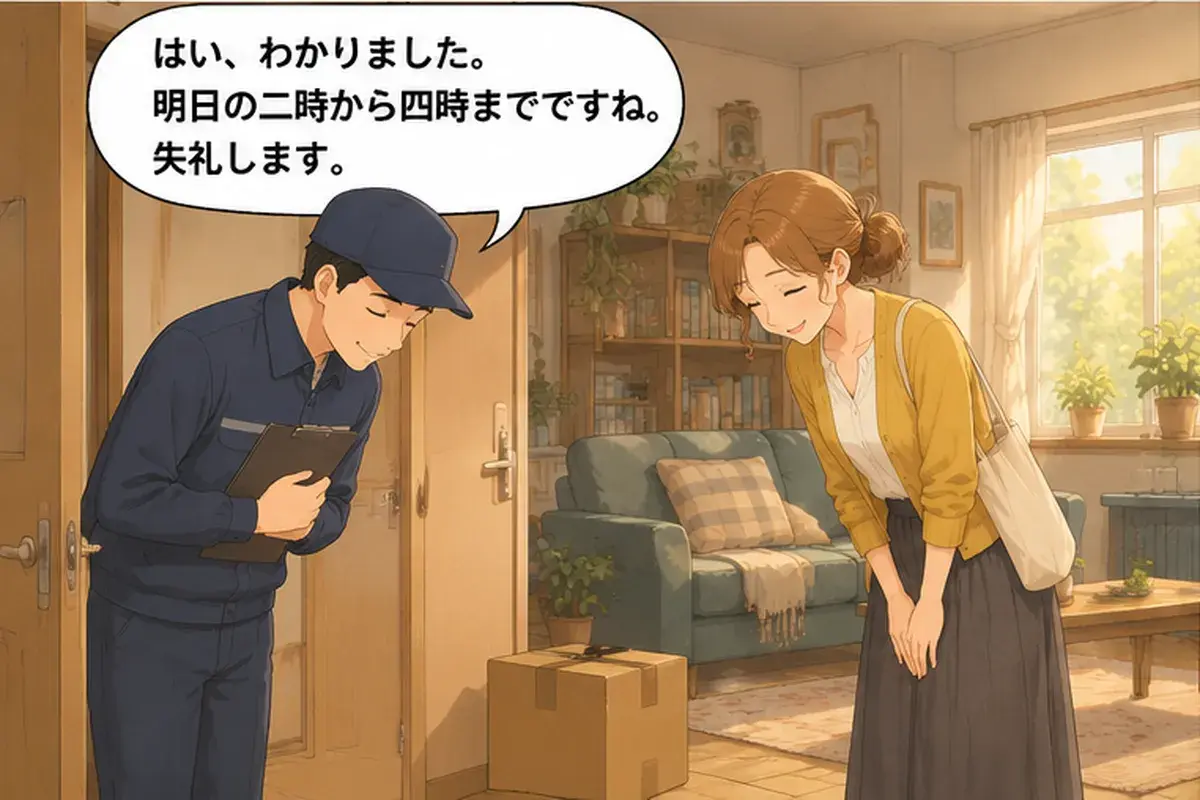
- 配達員
はい、わかりました。明日の二時から四時までですね。失礼します。
Yes, got it. Tomorrow from two to four, then. Excuse me, I'll be going.
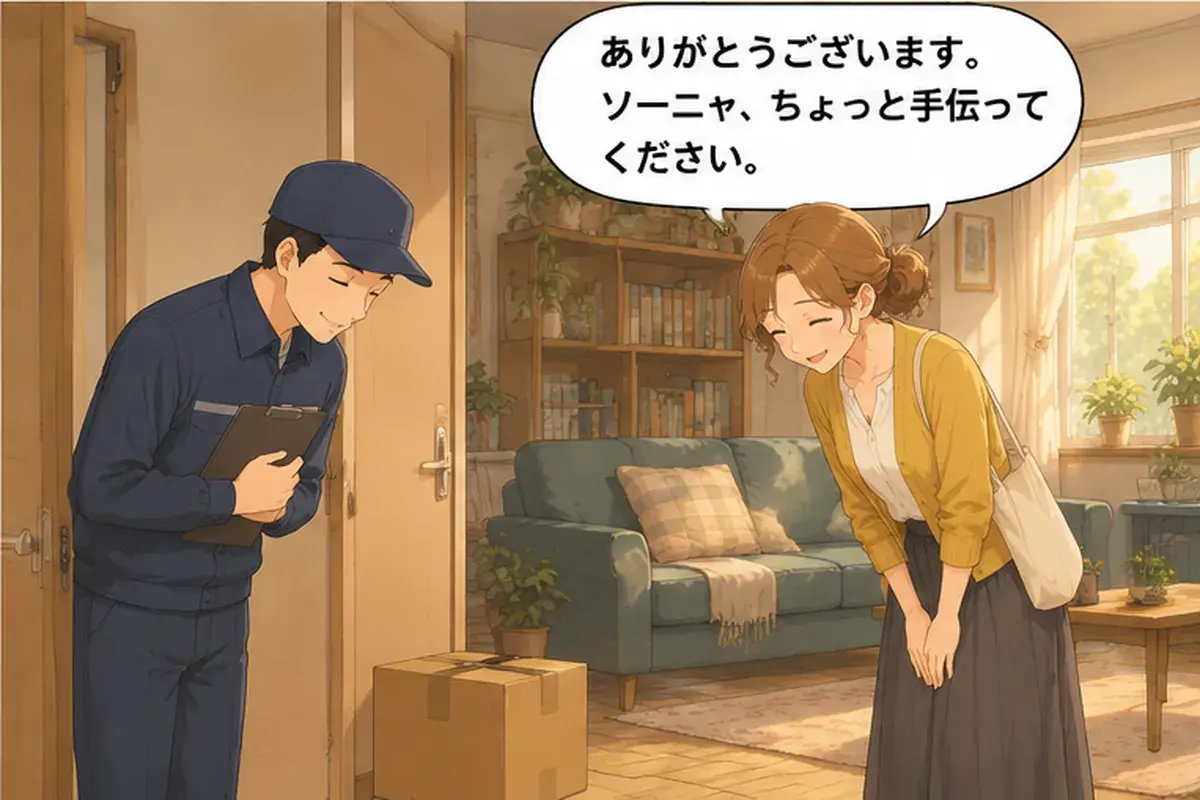
- アンナ
ありがとうございます。ソーニャ、ちょっと手伝ってください。
Thank you. Sonya, please help me a little.
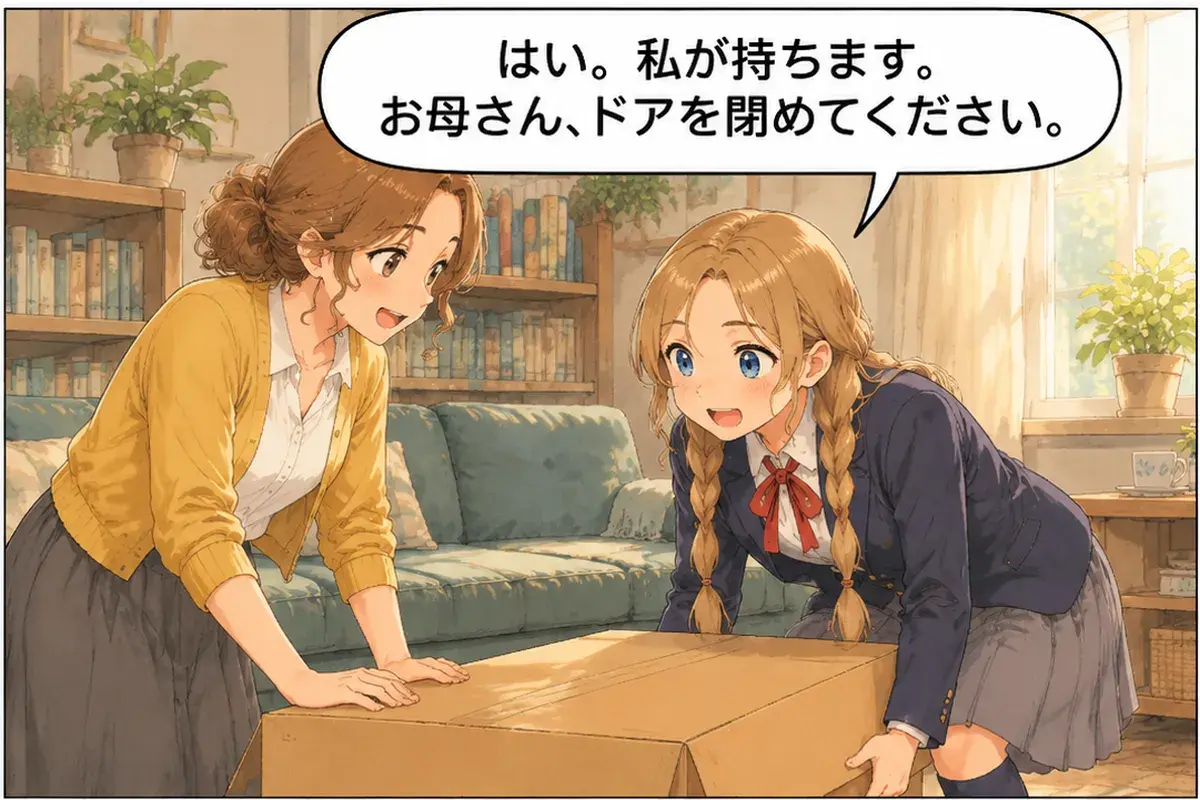
- ソーニャ
はい。私が持ちます。お母さん、ドアを閉めてください。
OK. I'll carry it. Mom, please close the door.
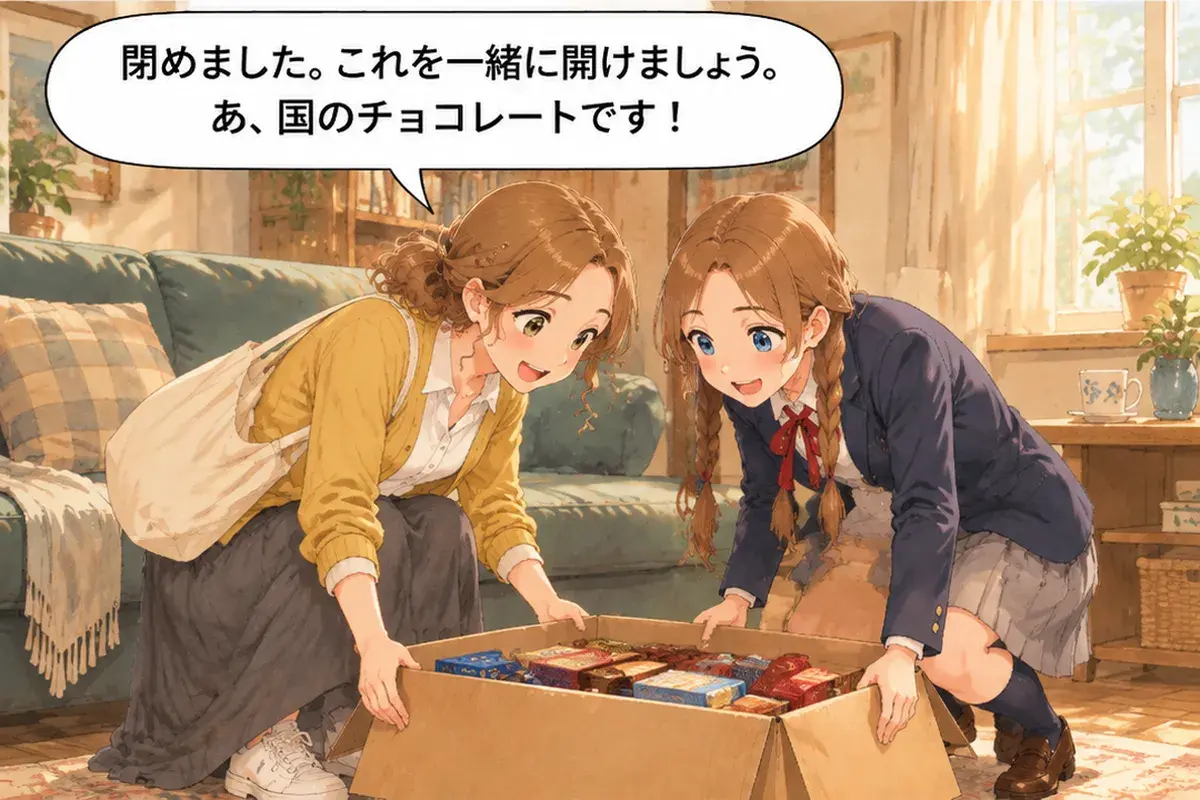
- アンナ
閉めました。これを一緒に開けましょう。あ、国のチョコレートです!
I closed it. Let's open this together. Oh, it's chocolate from our home country!
Grammar for this text
午後 に 来て ください — "please come in the afternoon". 来る is a Group 3 (irregular) verb: 来て is read きて. This is how you arrange a second delivery: the driver asks 午前 です か、 午後 です か, and you name the time.
ちょっと 待って ください — "just a moment": 待つ → 待って (matte). People say it into the intercom on the way to the door.
ここ に お名前 を お願いします — "your name here, please", that is, please sign here. Japanese people often use a personal seal; a foreigner can just sign.
これ で いい です か — "is this OK?": で means "with this, this way".
明日 も もう 一つ 来ます — もう 一つ means "one more"; a package "comes": 来ます.
十二時 に 終わります から — から at the end of a clause means "because, so" (Unit 10): first the reason, then the request.
失礼します — a set phrase, "excuse me (for disturbing you)": people say it when they leave someone's home or office (and when they come in, too).
ドア を 閉めて ください — 閉めました, これ を 一緒に 開けましょう — 閉める "to close" and 開ける "to open" are both Group 2: drop る and add て, ました or ましょう. What they open is the package: これ.
Words and grammar of the unit: Ask people politely to do things.
Learn the words from the texts with flashcards
In the app, you can tap any word in a text to see its translation, forms and examples, and new words stick with flashcards. 15 minutes a day.
Start for freeEverything is open for free. No card needed to sign up.