

Japanese dialogue with translation · A1 · 14 lines
電車を待っています I'm waiting for the train.
Comic · 8 panels
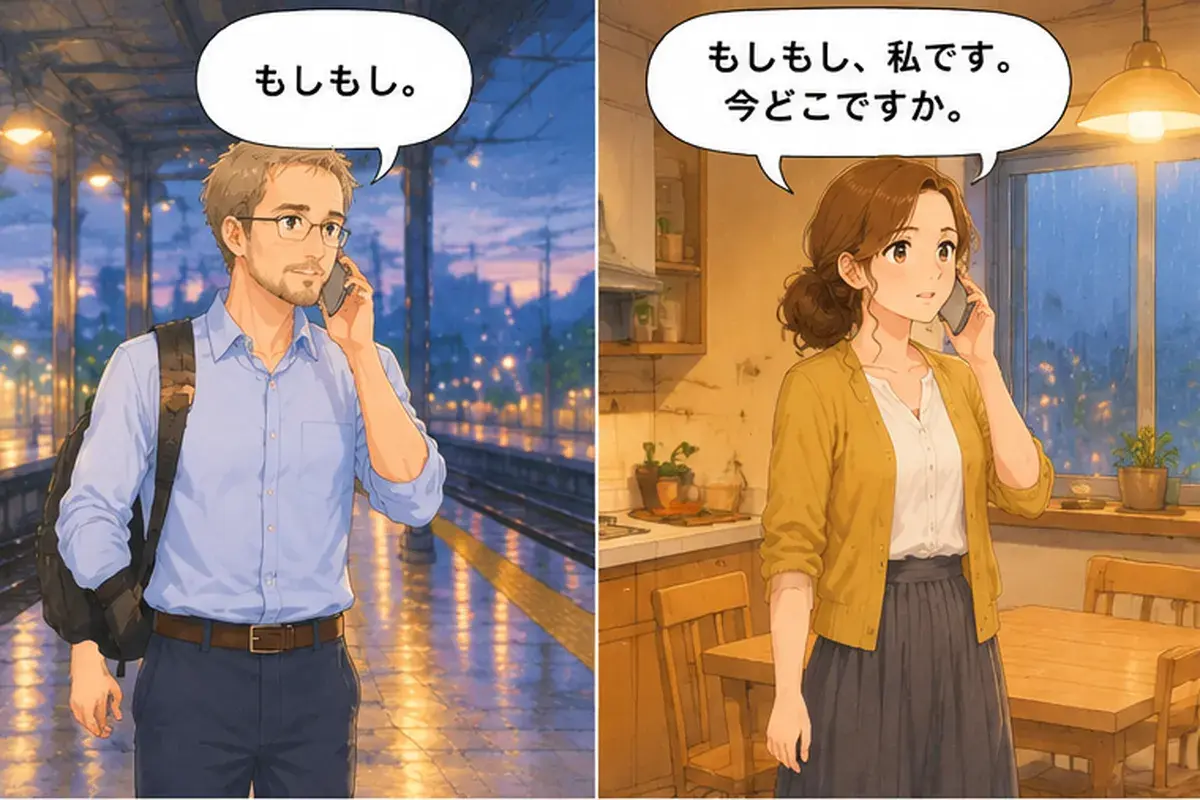
- マルク
もしもし。
Hello?
- アンナ
もしもし、私です。今どこですか。
Hello? It's me. Where are you now?
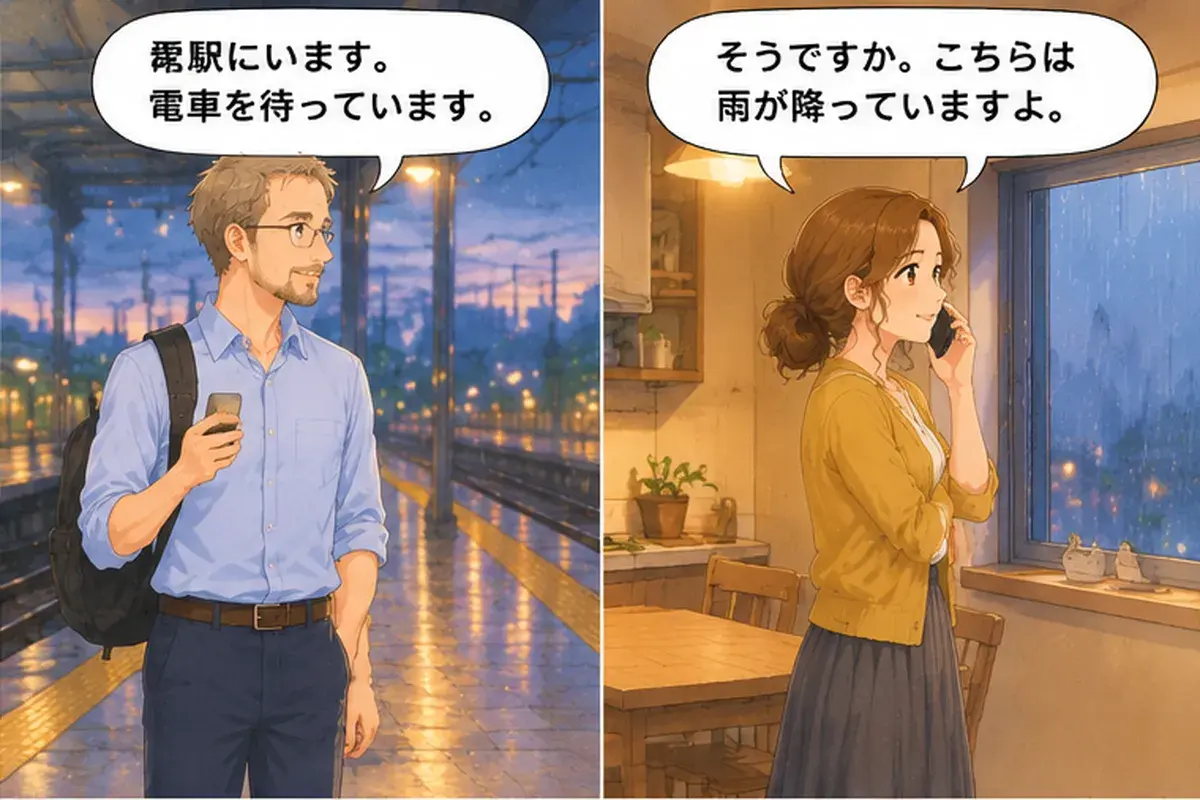
- マルク
駅にいます。電車を待っています。
I'm at the station. I'm waiting for the train.
- アンナ
そうですか。こちらは雨が降っていますよ。
I see. It's raining over here.
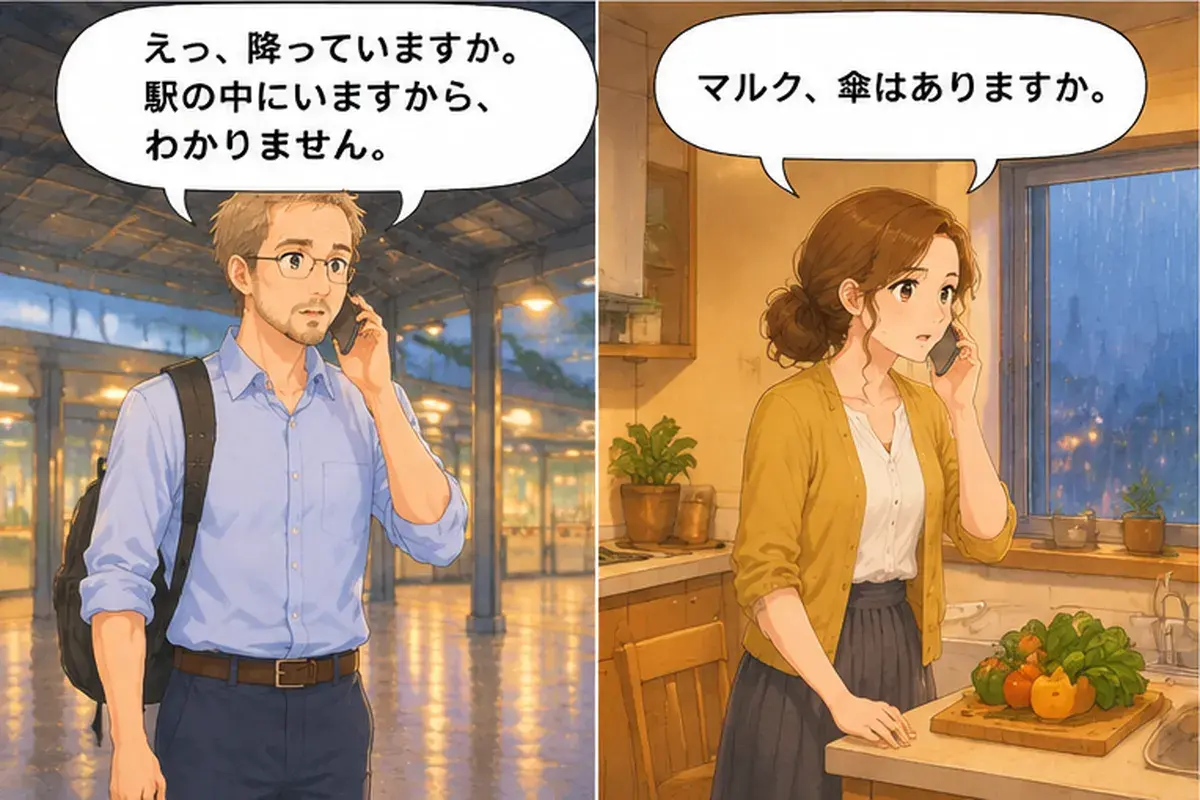
- マルク
えっ、降っていますか。駅の中にいますから、わかりません。
What? It's raining? I'm inside the station, so I can't tell.
- アンナ
マルク、傘はありますか。
Mark, do you have an umbrella?
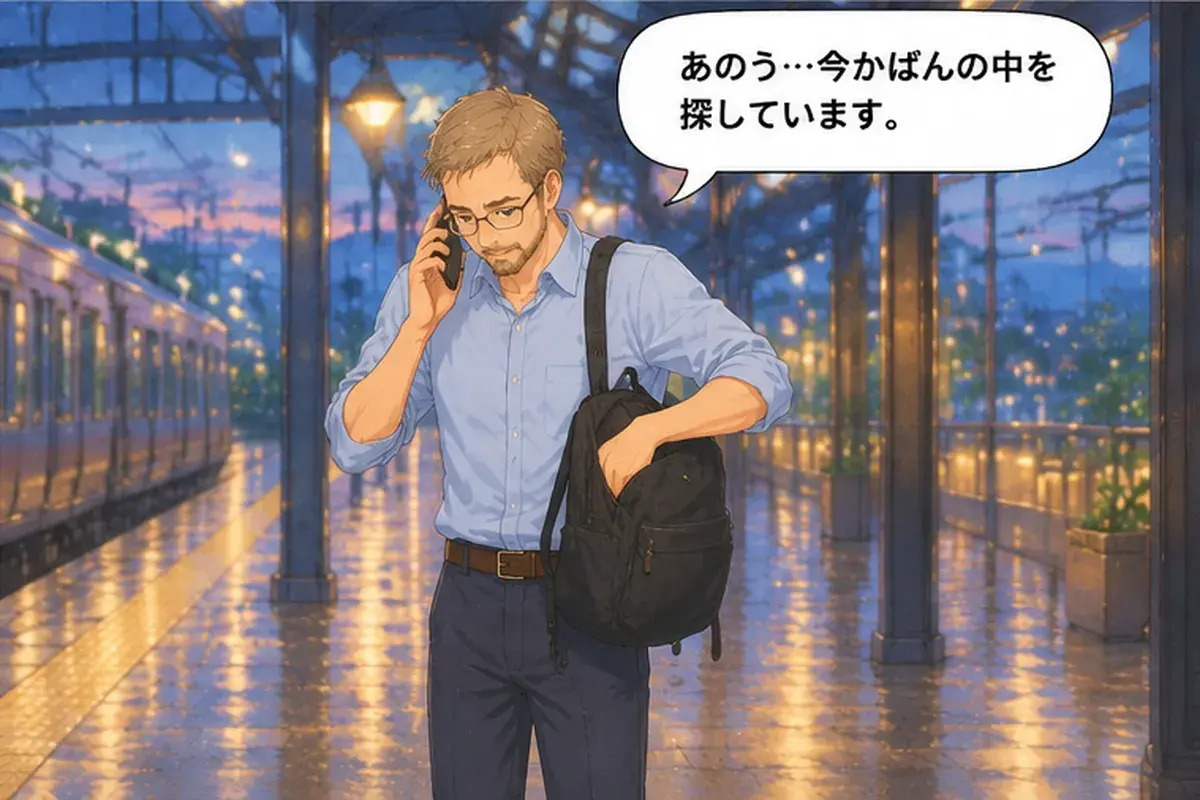
- マルク
あのう…今かばんの中を探しています。
Um... I'm searching through my bag now.
- アンナ
ありましたか。
Was it there?
- マルク
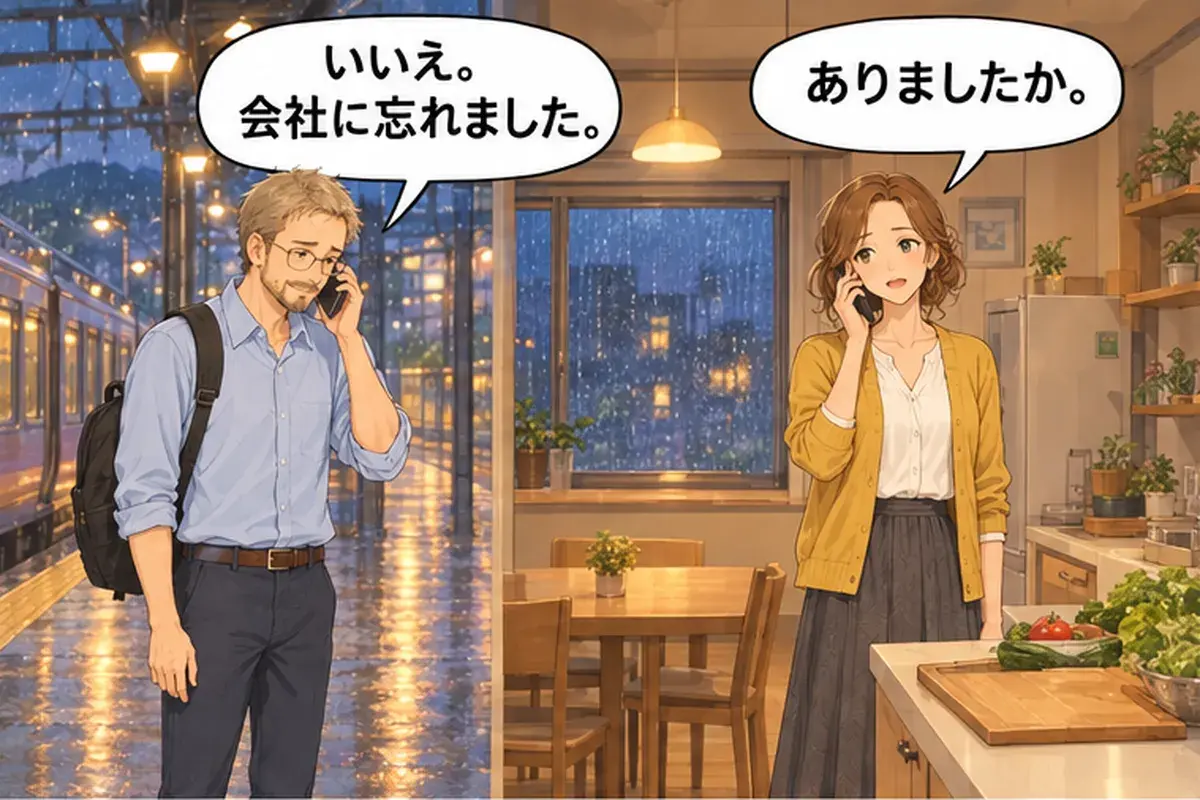
いいえ。会社に忘れました。
No. I forgot it at the office.
- アンナ
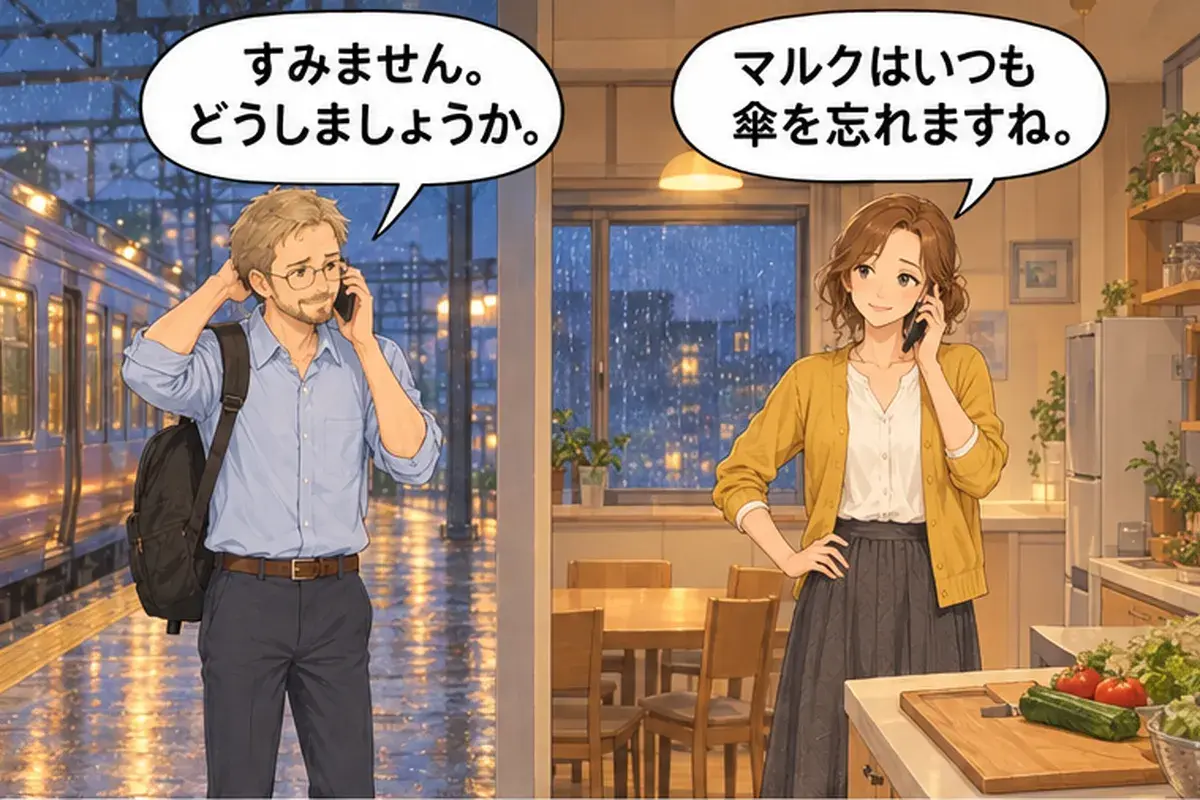
マルクはいつも傘を忘れますね。
Mark, you always forget your umbrella, don't you?
- マルク
すみません。どうしましょうか。
Sorry. What should I do?
- アンナ
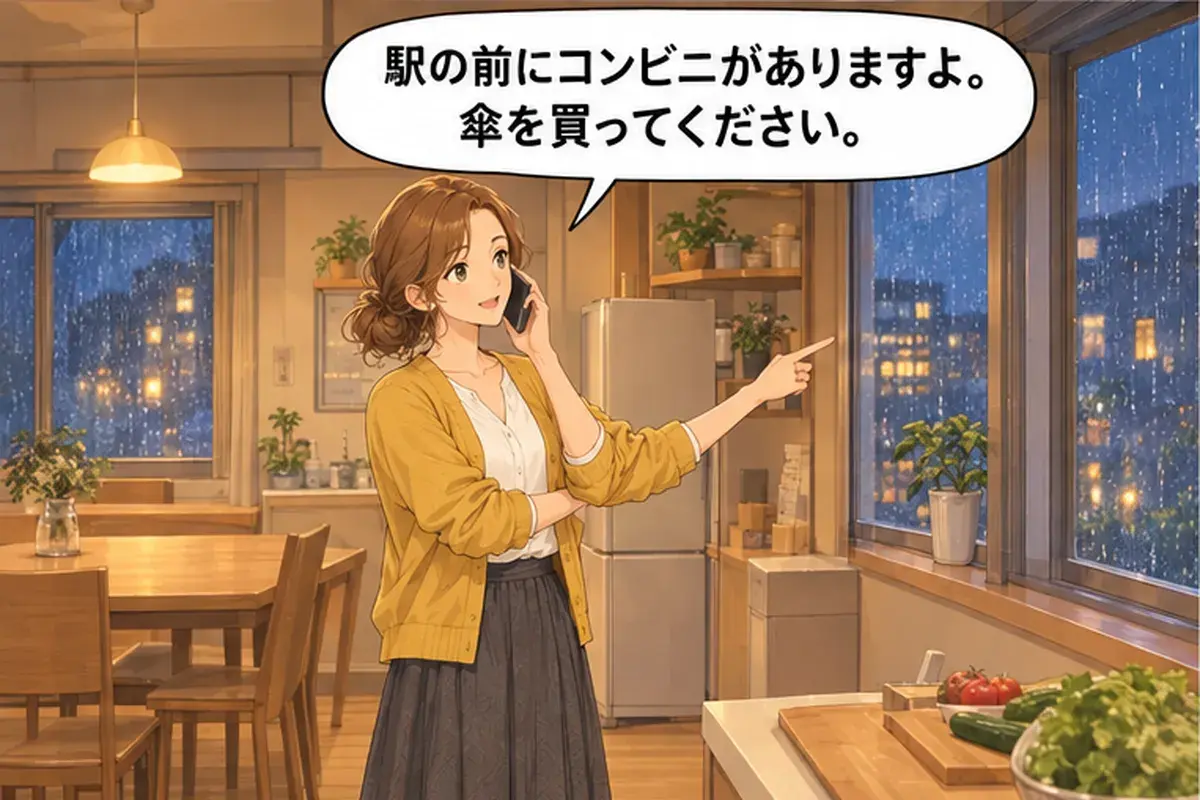
駅の前にコンビニがありますよ。傘を買ってください。
There's a convenience store in front of the station. Please buy an umbrella.
- マルク
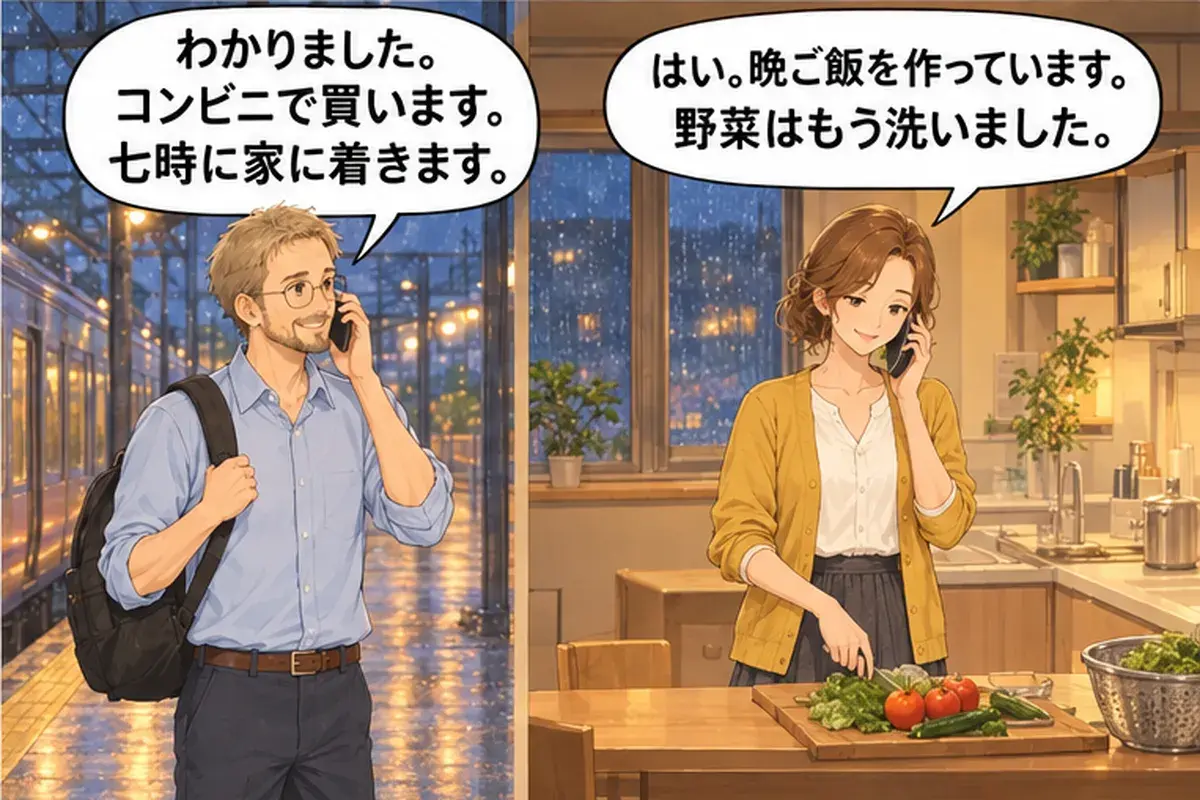
わかりました。コンビニで買います。七時に家に着きます。
Got it. I'll buy one at the convenience store. I'll arrive home at seven.
- アンナ
はい。晩ご飯を作っています。野菜はもう洗いました。
OK. I'm making dinner. I've already washed the vegetables.
Grammar for this text
電車 を 待って います — "I'm waiting for the train". Japanese needs two words here: 待って (the te-form of 待つ, unit 13) and います. Together they mean "I'm doing it right now". More on this in the unit grammar.
雨 が 降って います — "it's raining". The rain "falls" by itself, so 降る takes が, not を. 降る is a Group 1 verb (there's a う sound before る): 降る → 降って.
探して います — "I'm looking for it". In 探す the last syllable す changes to し: 探して. This form is new to you; the rule is in the unit grammar.
ありました か — literally "was it there?". Anna asks whether Mark found an umbrella in his bag. Japanese asks this with the verb ある ("was it there?"), not with a verb for "find".
家 に 着きます — "I'll arrive home". With 着く the place takes に, not を.
もしもし — "hello?" on the phone. Both the person who answers and the person who calls start with it.
どう しましょう か — "what should I do?" For now, learn it as a set phrase: this is how you ask for advice. Unit 20 takes it apart: どう ("how") and しましょう か ("shall we do?").
こちら は 雨 が 降って います — こちら ("this side", unit 1) means "here, where I am".
Words and grammar of the unit: Say what you're doing now.
Learn the words from the texts with flashcards
In the app, you can tap any word in a text to see its translation, forms and examples, and new words stick with flashcards. 15 minutes a day.
Start for freeEverything is open for free. No card needed to sign up.