

Japanese dialogue with translation · A1 · 14 lines
どこに住んでいましたか Where did you live?
Comic · 14 panels
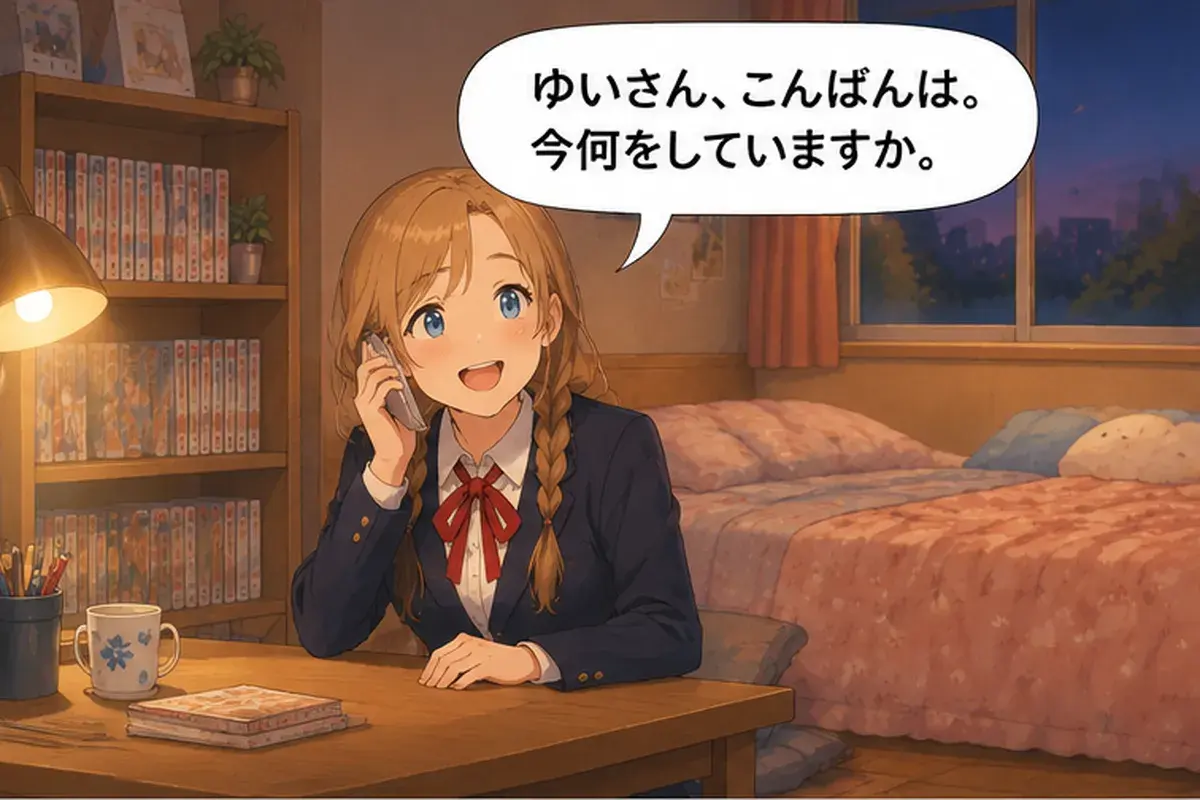
- ソーニャ
ゆいさん、こんばんは。今何をしていますか。
Yui-san, good evening. What are you doing now?
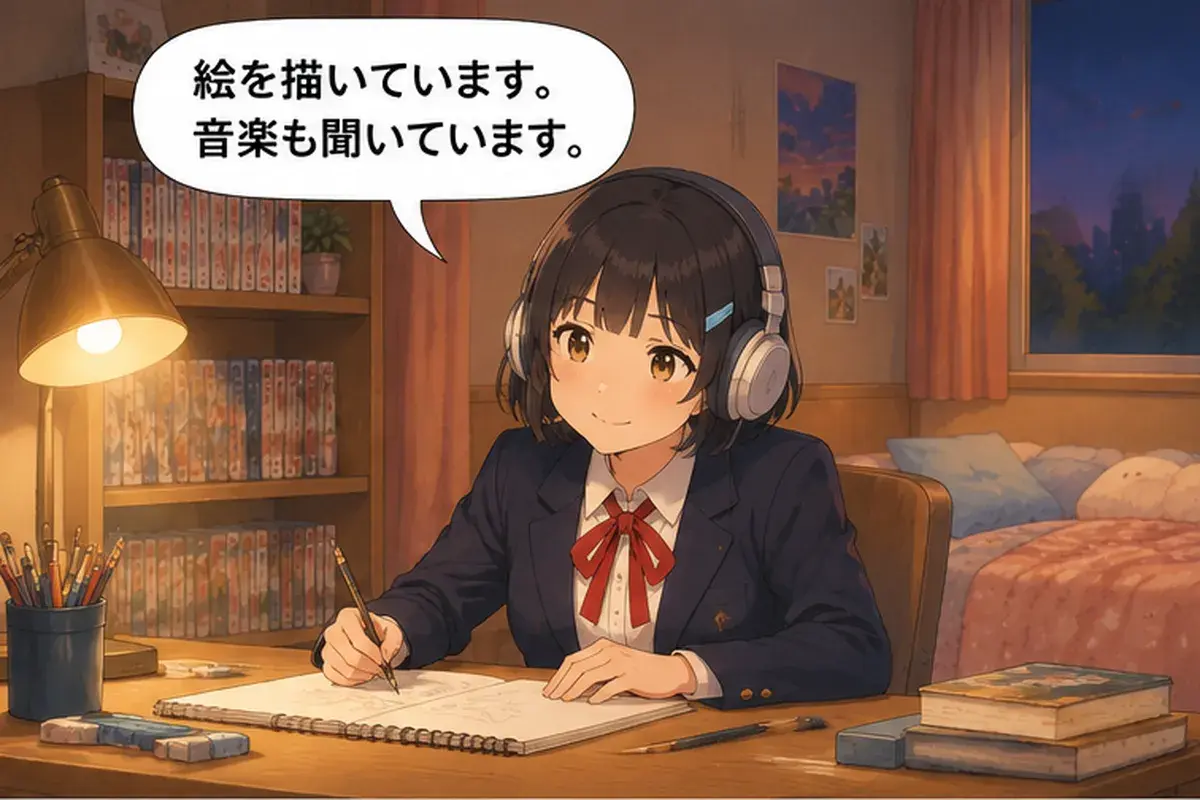
- ゆい
絵を描いています。音楽も聞いています。
I'm drawing. I'm also listening to music.
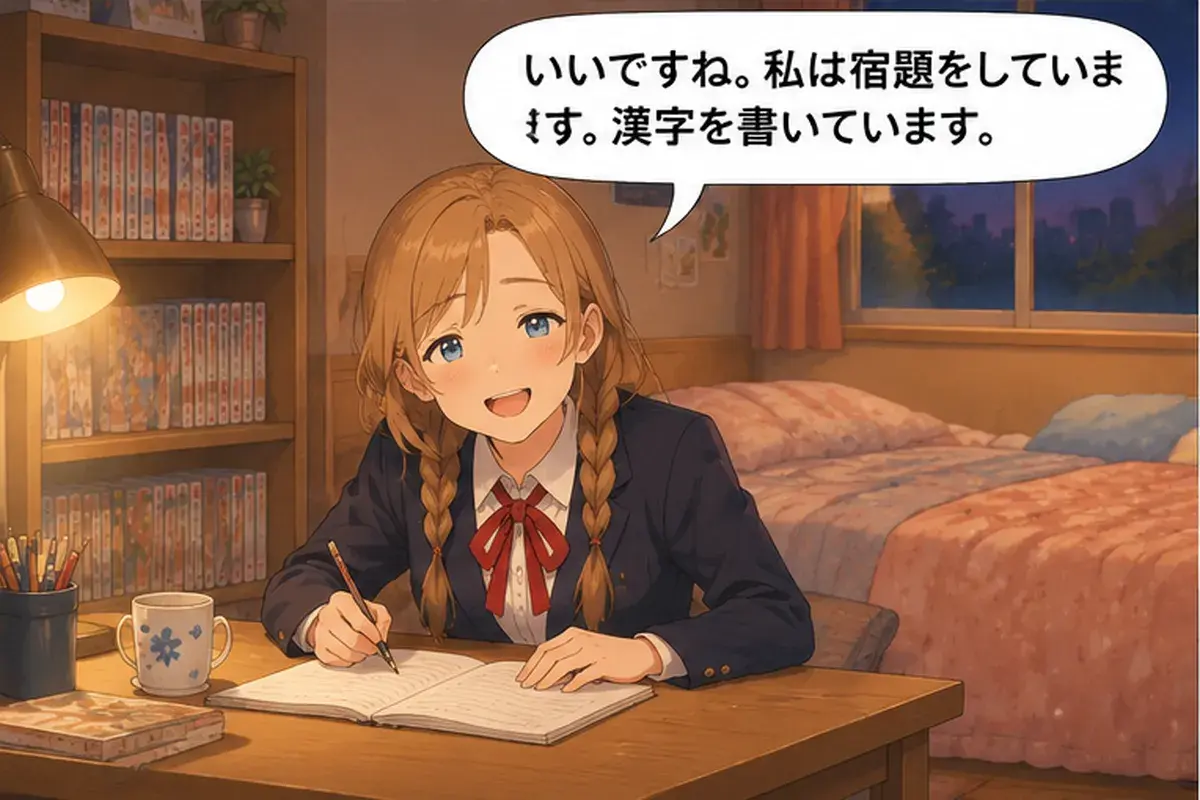
- ソーニャ
いいですね。私は宿題をしています。漢字を書いています。
That's nice. I'm doing my homework. I'm writing kanji.
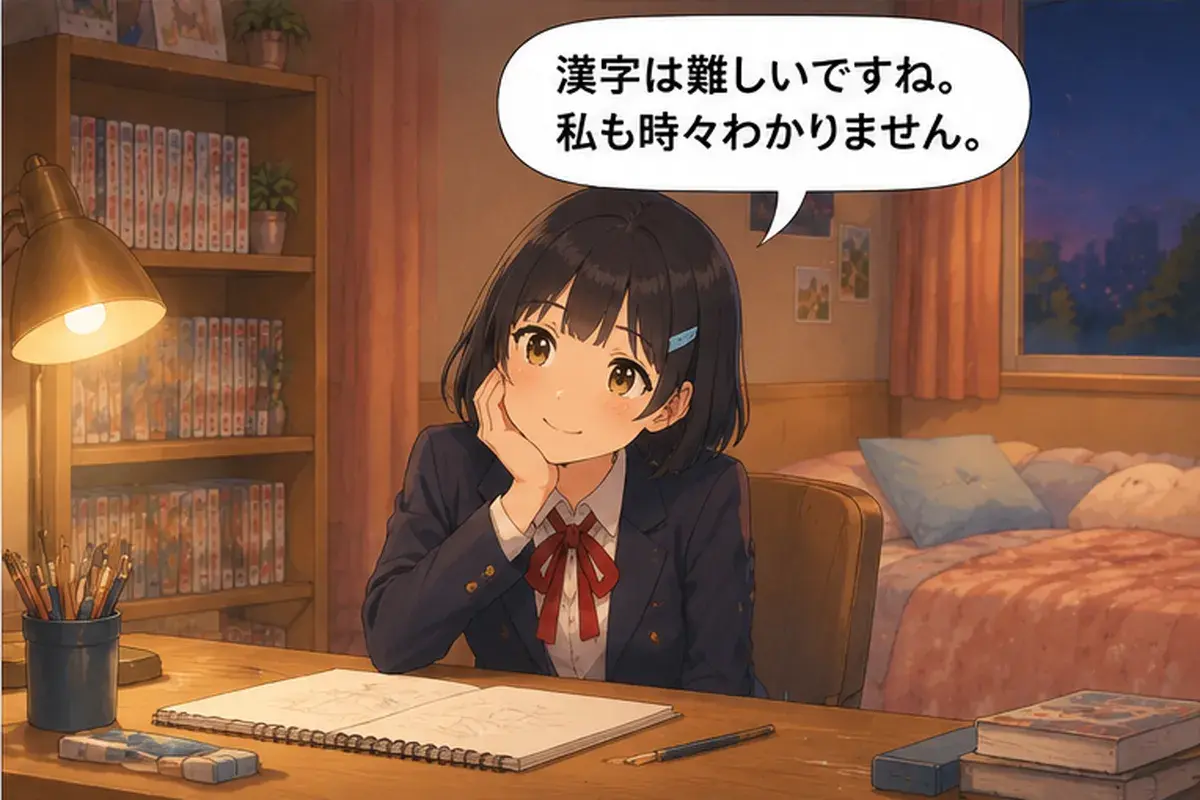
- ゆい
漢字は難しいですね。私も時々わかりません。
Kanji are hard, aren't they? Sometimes I don't understand them either.
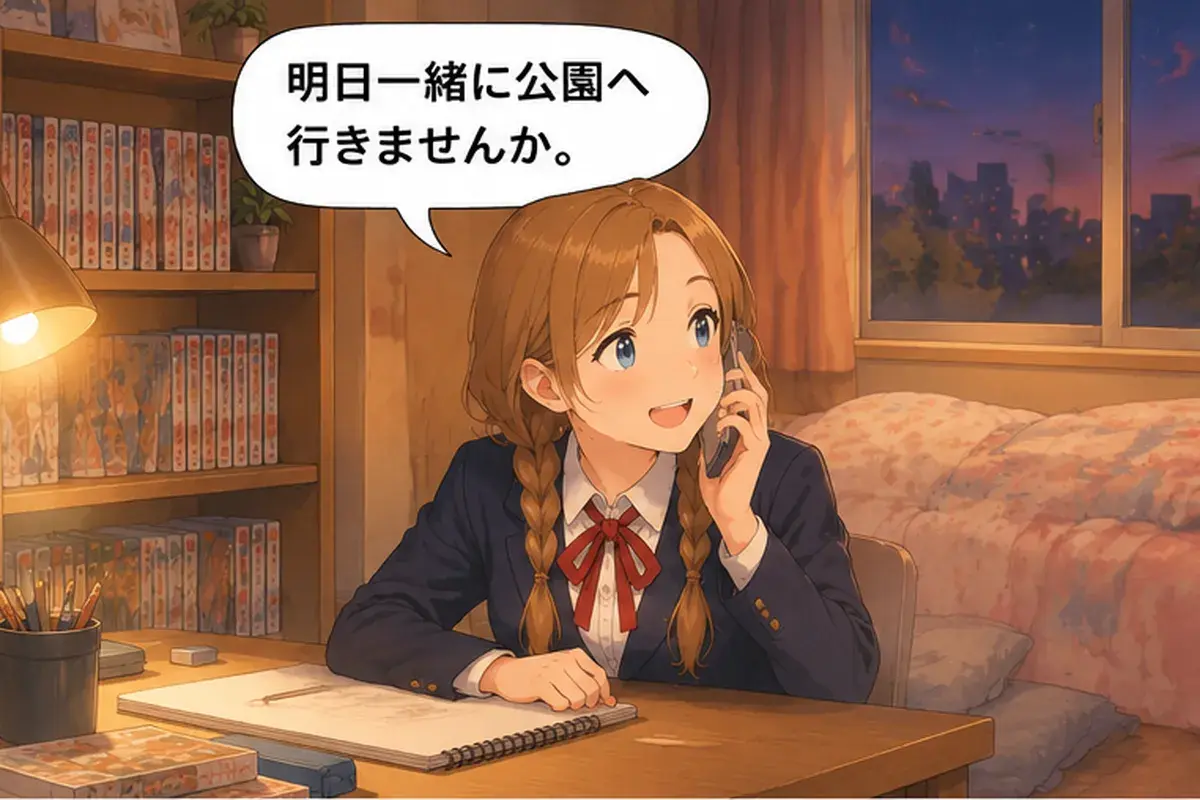
- ソーニャ
明日一緒に公園へ行きませんか。
Would you like to go to the park together tomorrow?
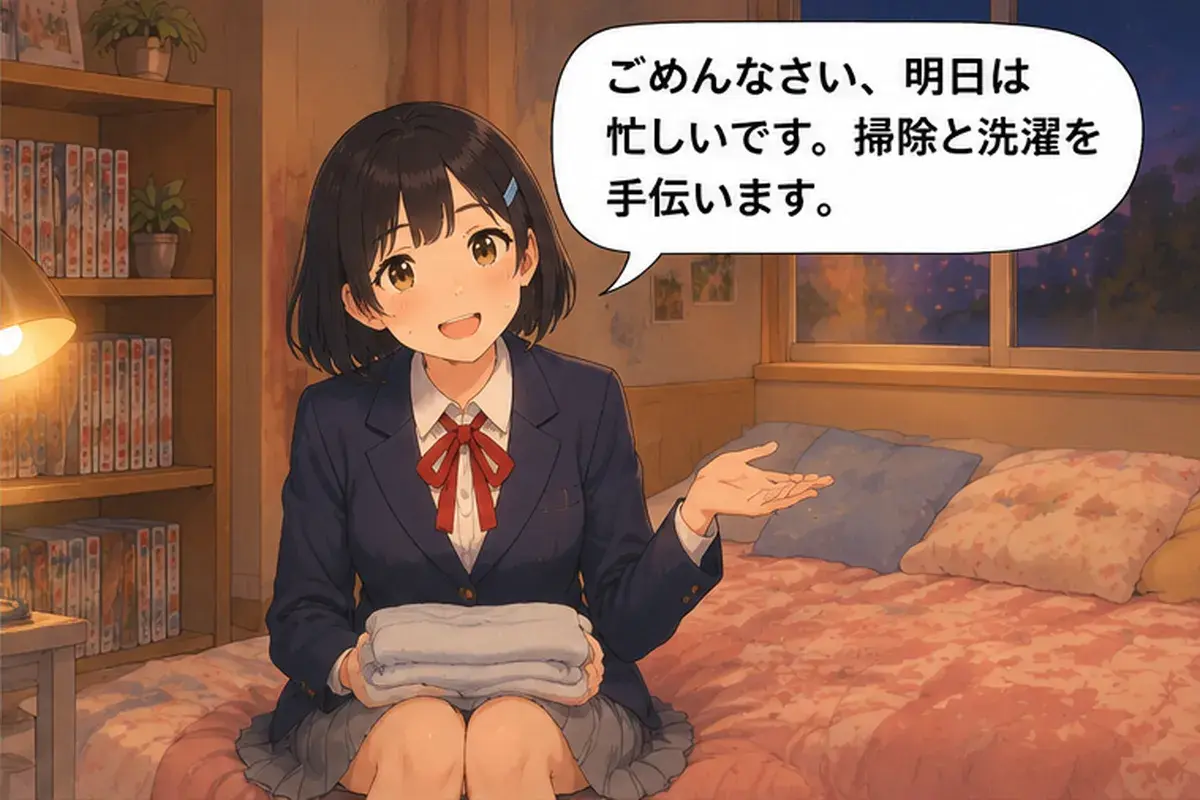
- ゆい
ごめんなさい、明日は忙しいです。掃除と洗濯を手伝います。
I'm sorry, I'm busy tomorrow. I'm going to help with the cleaning and the laundry.
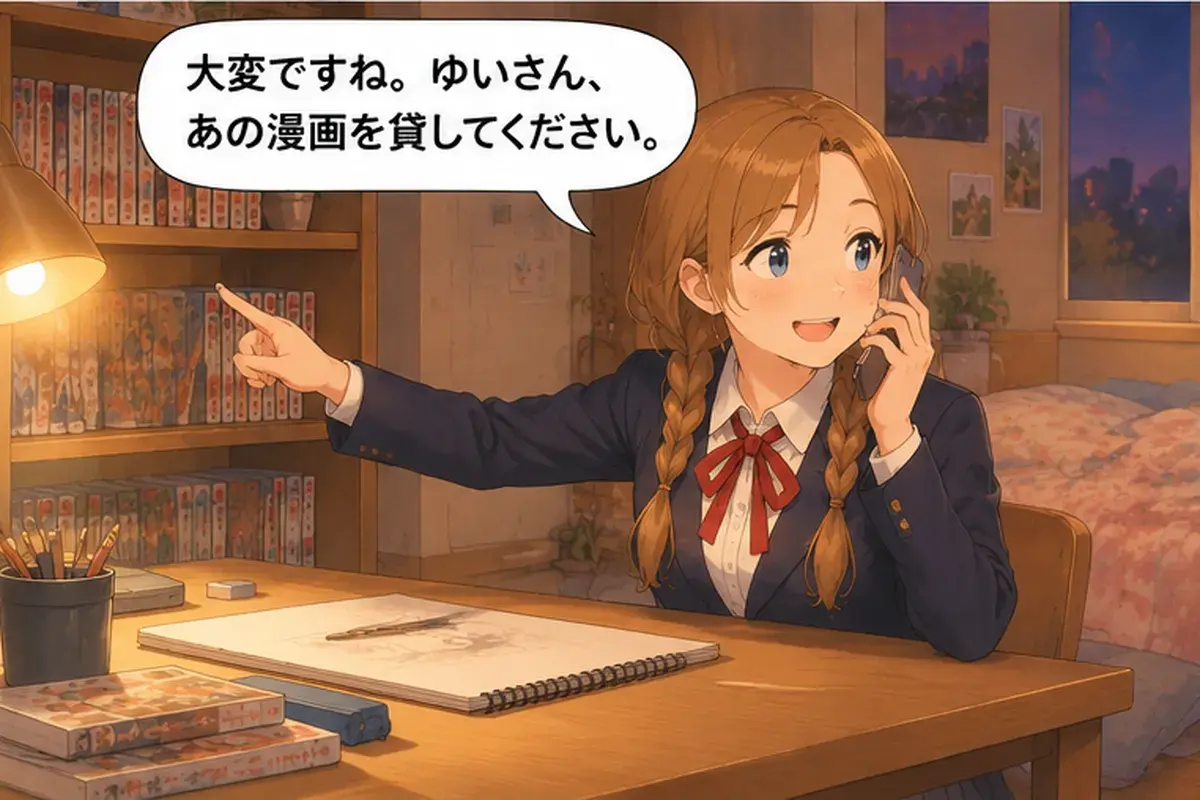
- ソーニャ
大変ですね。ゆいさん、あの漫画を貸してください。
That's tough. Yui-san, please lend me that manga.
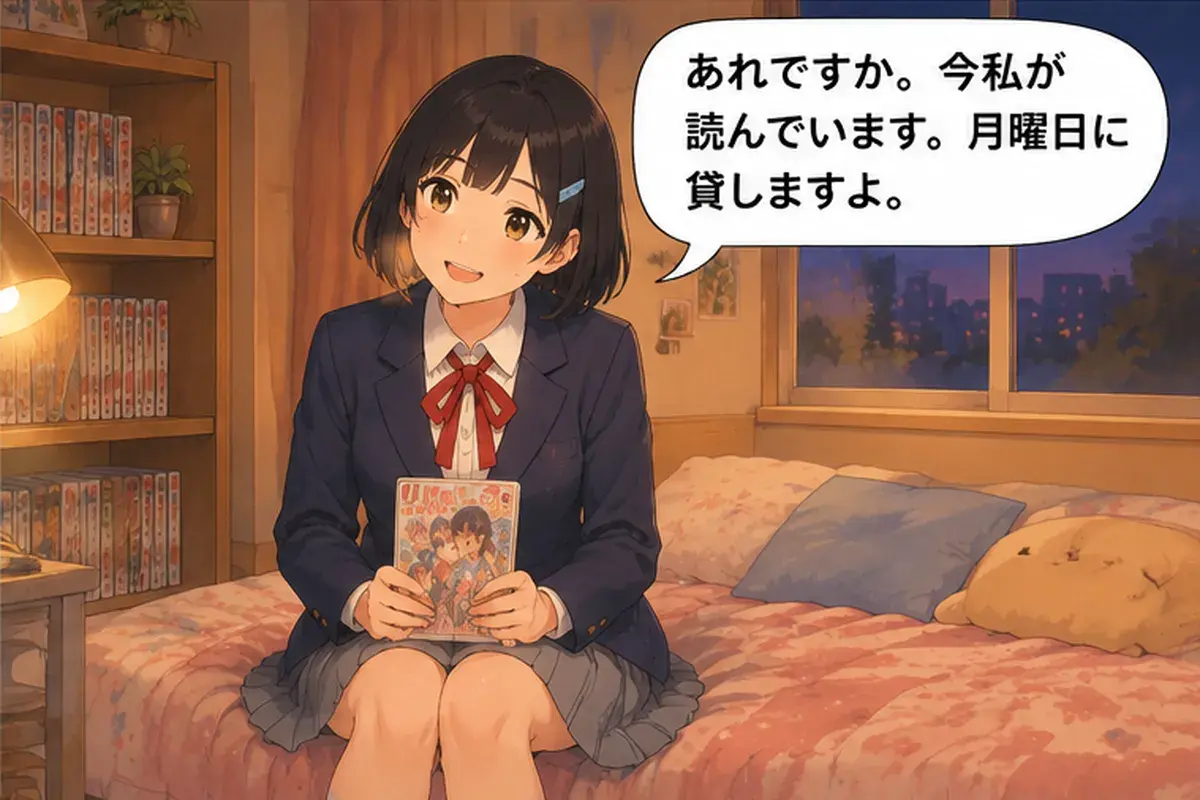
- ゆい
あれですか。今私が読んでいます。月曜日に貸しますよ。
That one? I'm reading it now. I'll lend it to you on Monday.
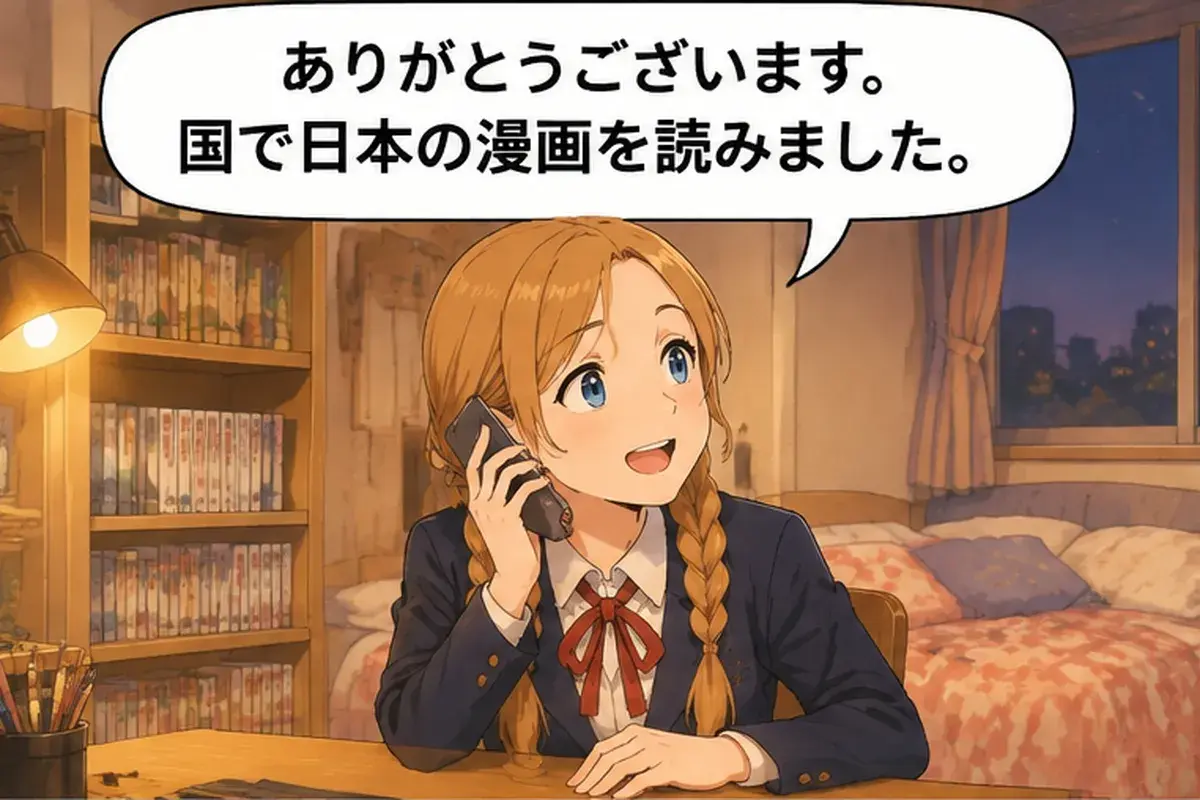
- ソーニャ
ありがとうございます。国で日本の漫画を読みました。
Thank you. I read Japanese manga in my home country.
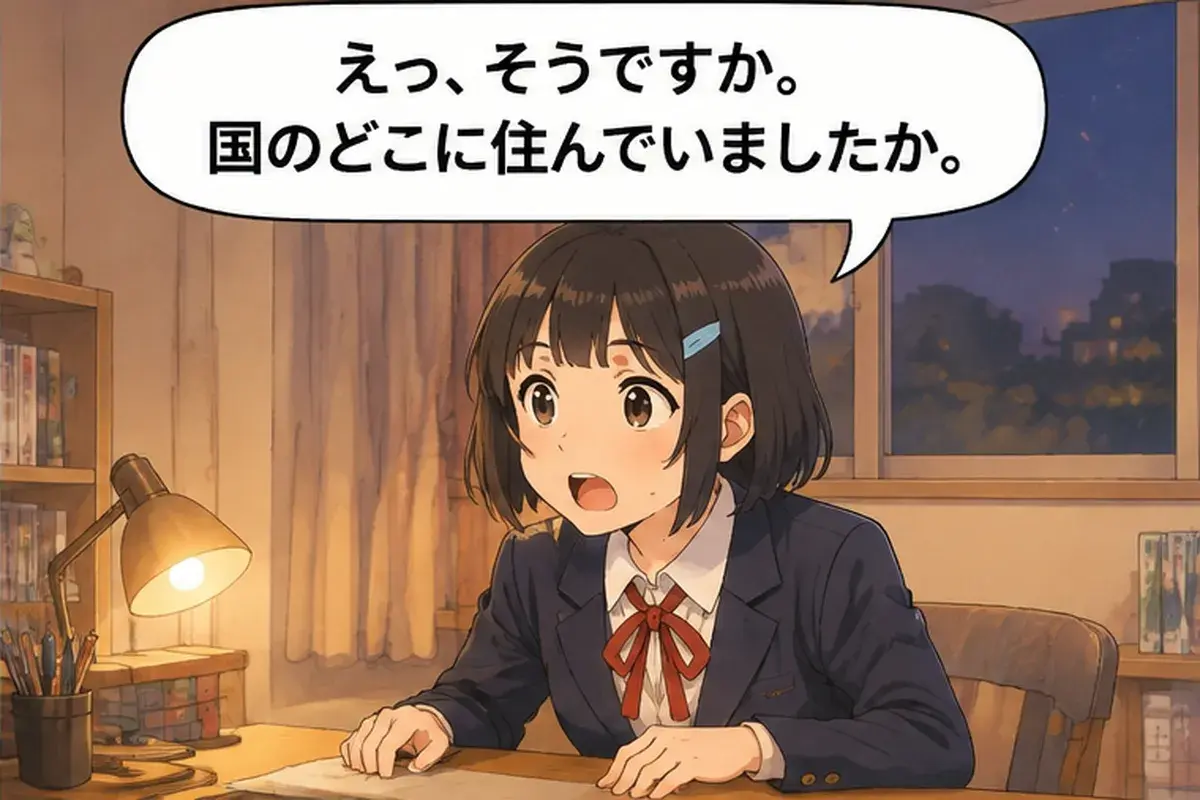
- ゆい
えっ、そうですか。国のどこに住んでいましたか。
Oh, really? Where in your country did you live?
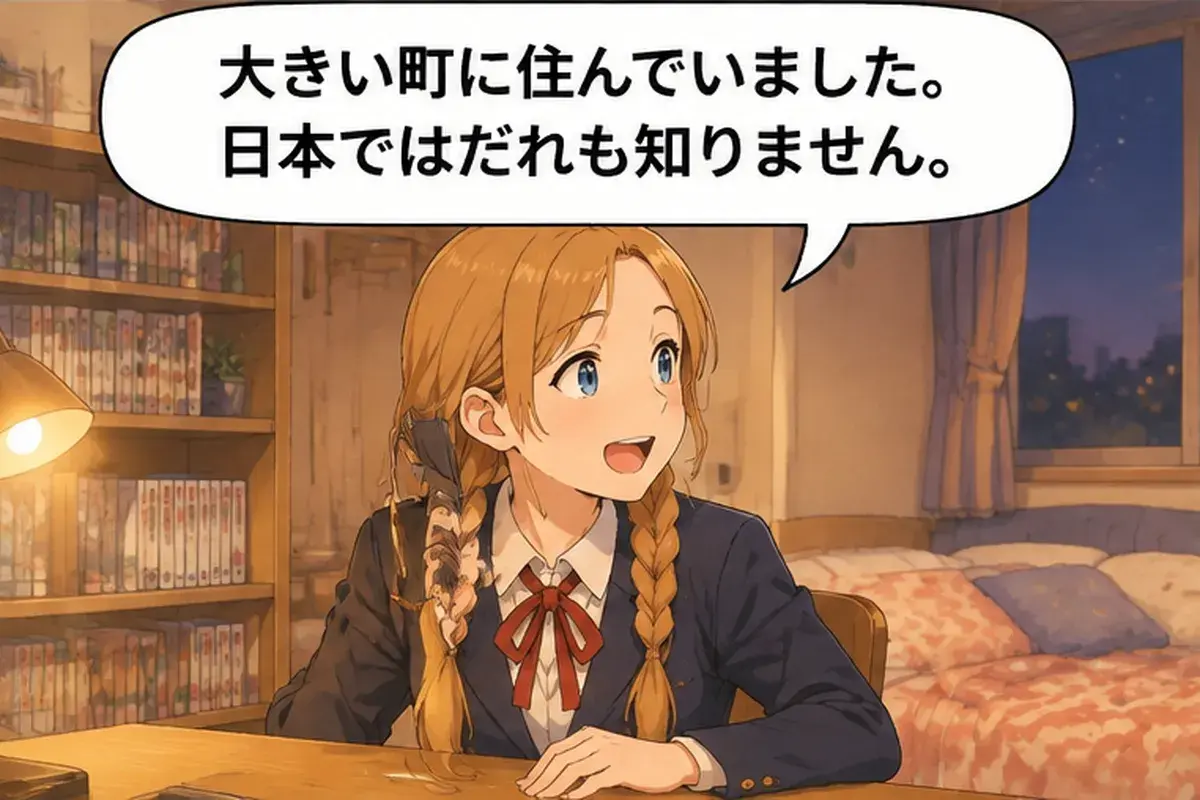
- ソーニャ
大きい町に住んでいました。日本ではだれも知りません。
I lived in a big town. Nobody in Japan knows it.
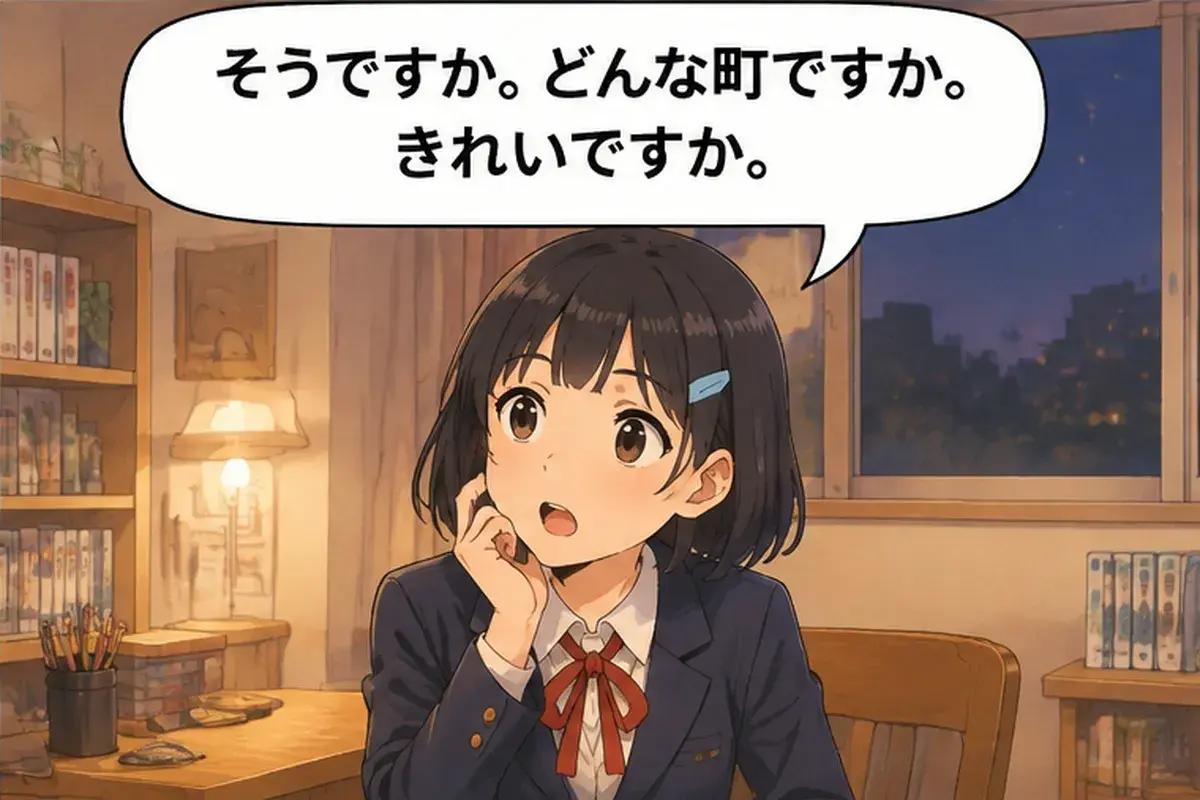
- ゆい
そうですか。どんな町ですか。きれいですか。
I see. What kind of town is it? Is it pretty?
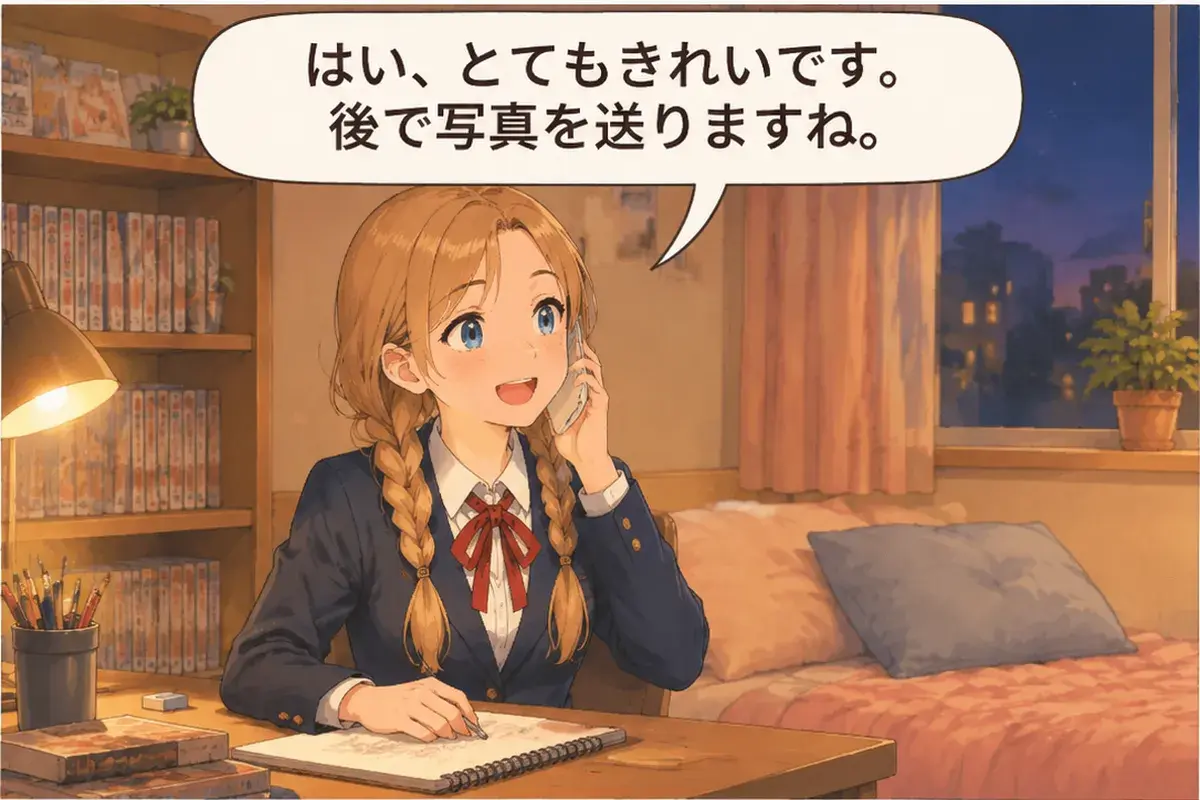
- ソーニャ
はい、とてもきれいです。後で写真を送りますね。
Yes, very pretty. I'll send you photos later.
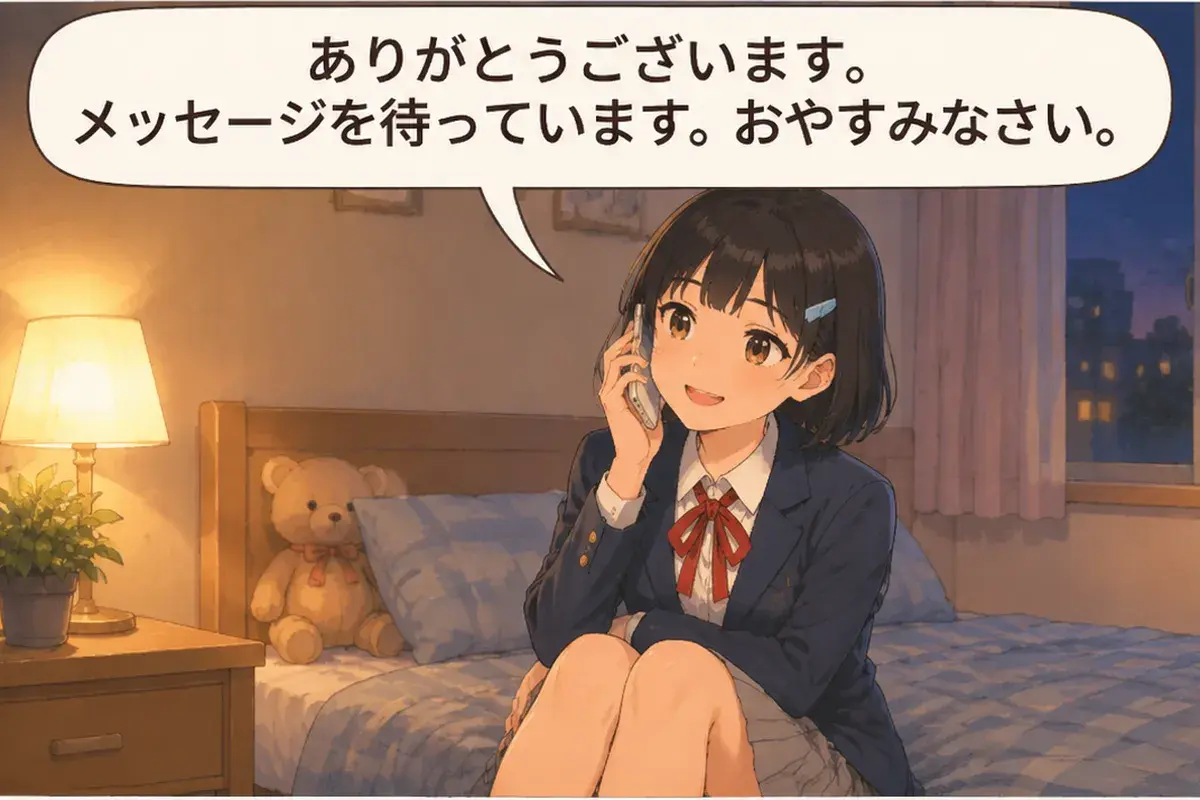
- ゆい
ありがとうございます。メッセージを待っています。おやすみなさい。
Thank you. I'll be waiting for your message. Good night.
Grammar for this text
絵 を 描いて います and 漢字 を 書いて います — 描く ("to draw") and 書く ("to write") are read the same: かく (kaku). The kanji and the word next to them tell them apart: you draw 絵 (a picture), you write 漢字. In both, く changes to い: 描いて, 書いて.
読んで います — 読む ends in む, so む turns into んで: 読んで. Here て います doesn't mean "reading this very second" but "the book is with me now, I'm in the middle of it": that's why Yui will lend it on Monday.
貸して ください — 貸す → 貸して (す → して), "please lend me". Sonya only knows polite speech so far, so she says 〜て ください to her friend too.
掃除 と 洗濯 を 手伝います — と joins two nouns ("the cleaning and the laundry"), and 手伝う is "to help": what you help with takes を. 掃除 and 洗濯 are words that usually take する.
ごめんなさい、 明日 は 忙しい です — turning down an invitation: first say you're sorry, then give the reason.
住んで いました — 住む → 住んで. Here います is in the past: "I lived (before)".
だれも 知りません — "nobody knows": だれも with a negative means "nobody" (unit 9). "I know" is 知って います, but the negative is the special form 知りません, not 知って いません. The unit grammar explains why.
後で 写真 を 送ります ね — 後で is "later"; ね makes the promise softer.
こんばんは and おやすみなさい — "good evening" and "good night": the evening hello and goodbye, in messages too.
Words and grammar of the unit: Say what you're doing now.
Learn the words from the texts with flashcards
In the app, you can tap any word in a text to see its translation, forms and examples, and new words stick with flashcards. 15 minutes a day.
Start for freeEverything is open for free. No card needed to sign up.