
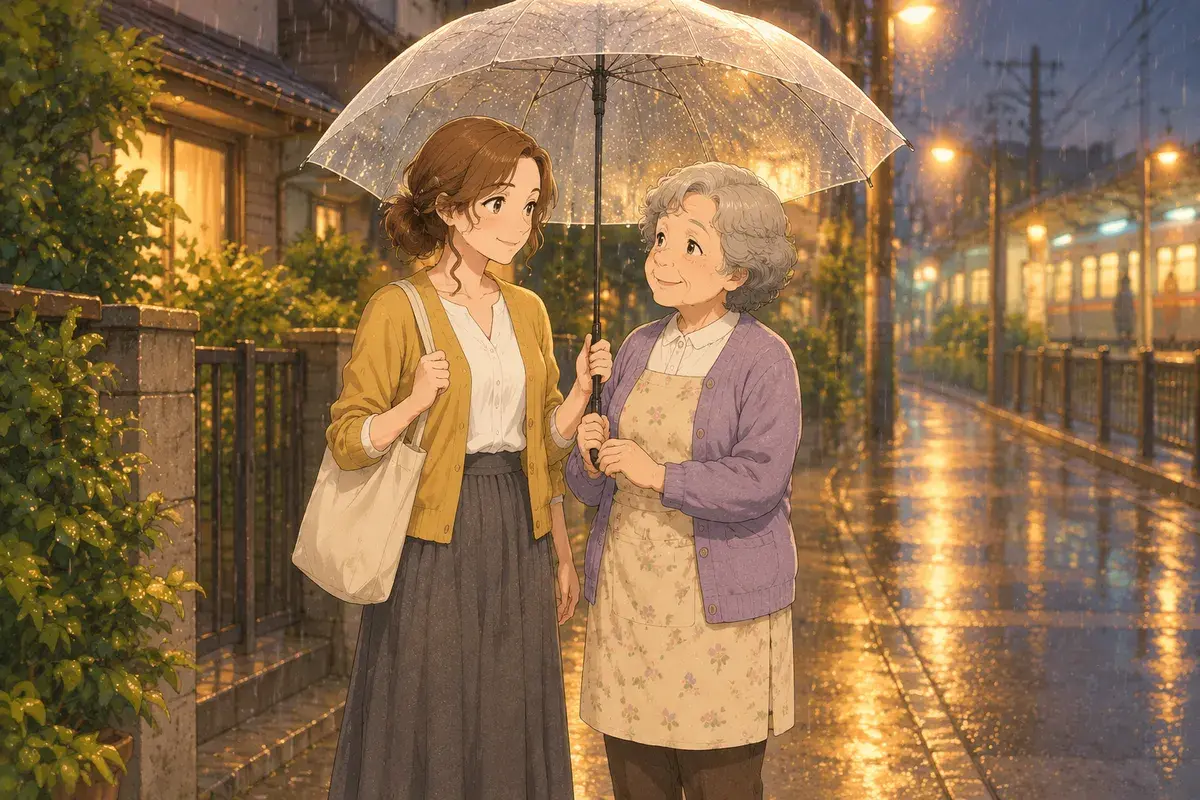
Japanese dialogue with translation · A1 · 14 lines
手紙を出します I'll mail a letter.
Comic · 10 panels
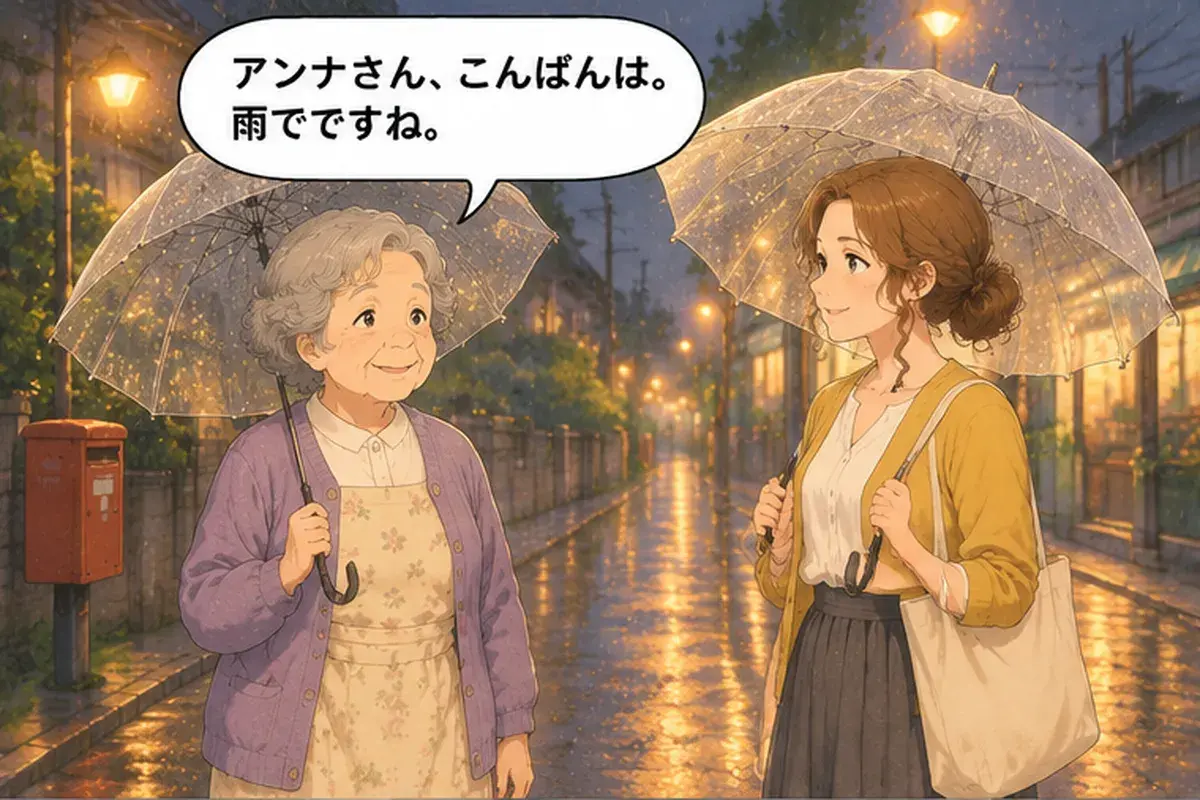
- 田中
アンナさん、こんばんは。雨ですね。
Good evening, Anna-san. It's rainy, isn't it?
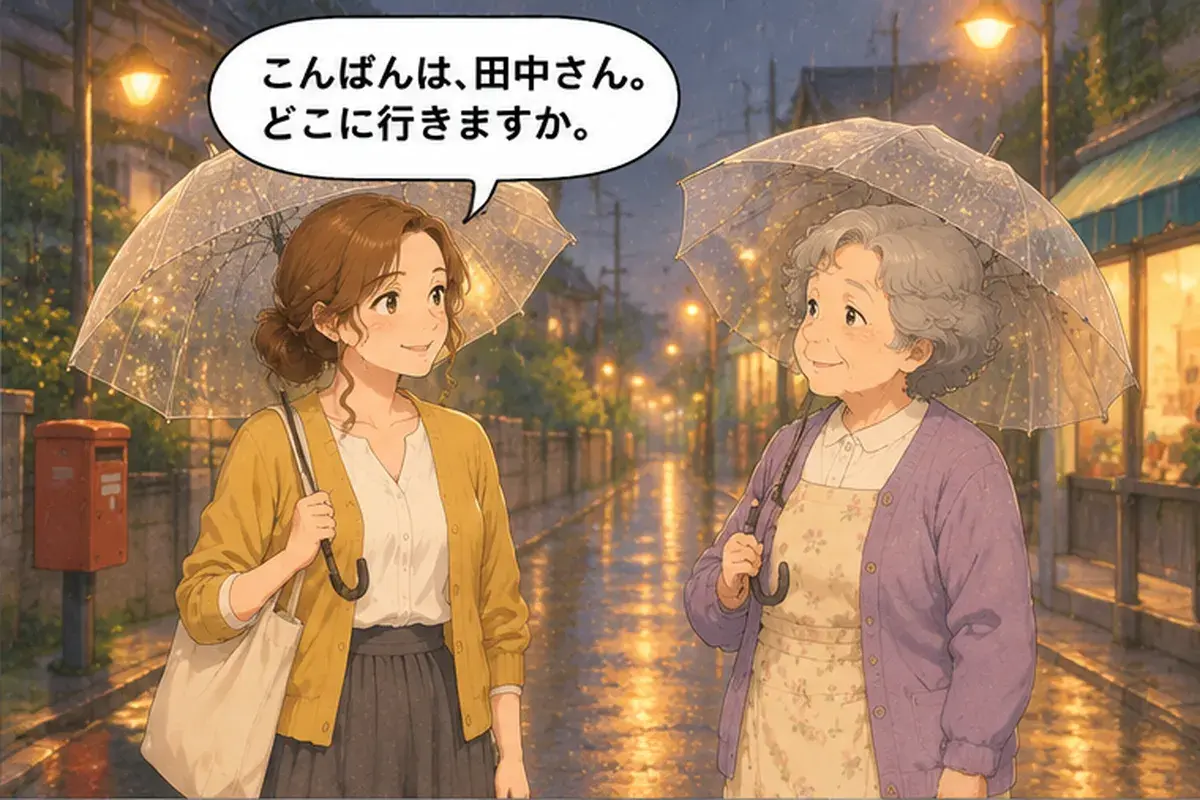
- アンナ
こんばんは、田中さん。どこに行きますか。
Good evening, Tanaka-san. Where are you going?
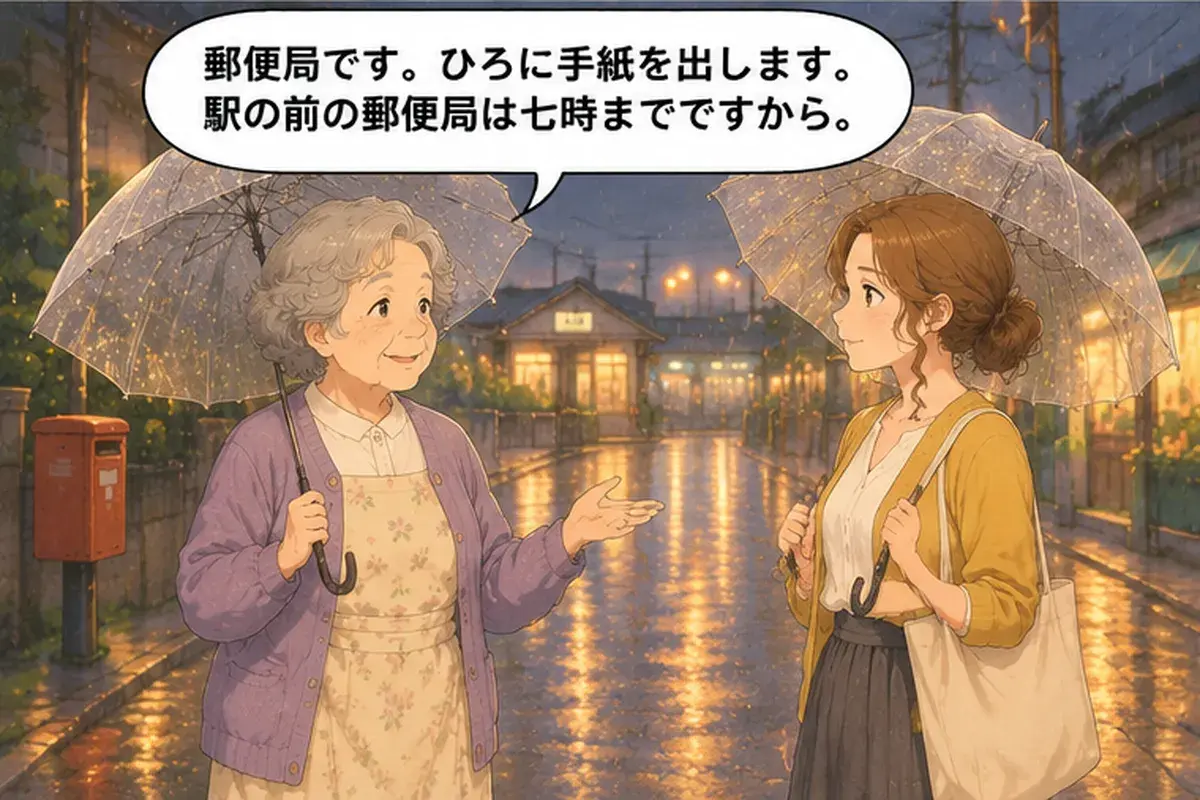
- 田中
郵便局です。ひろに手紙を出します。駅の前の郵便局は七時までですから。
To the post office. I'll mail a letter to Hiro. The post office in front of the station is open until seven, you see.
- アンナ
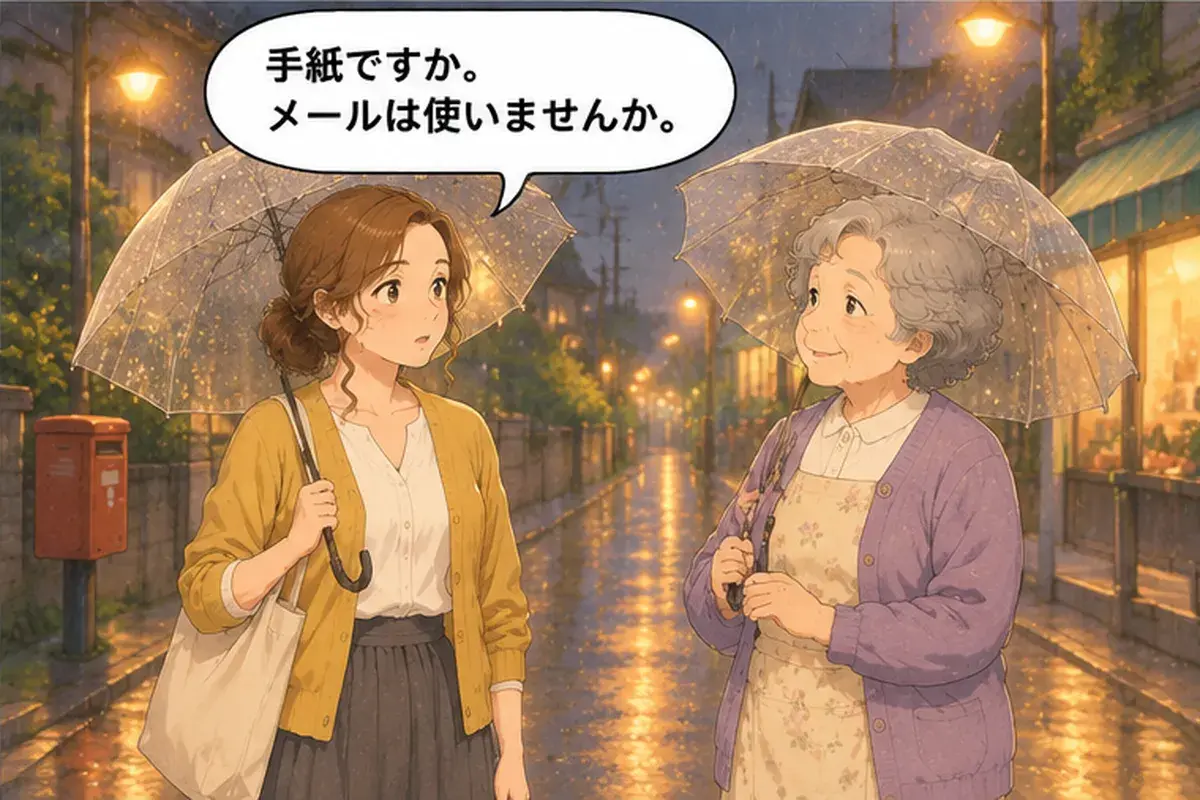
手紙ですか。メールは使いませんか。
A letter? Don't you use email?
- 田中
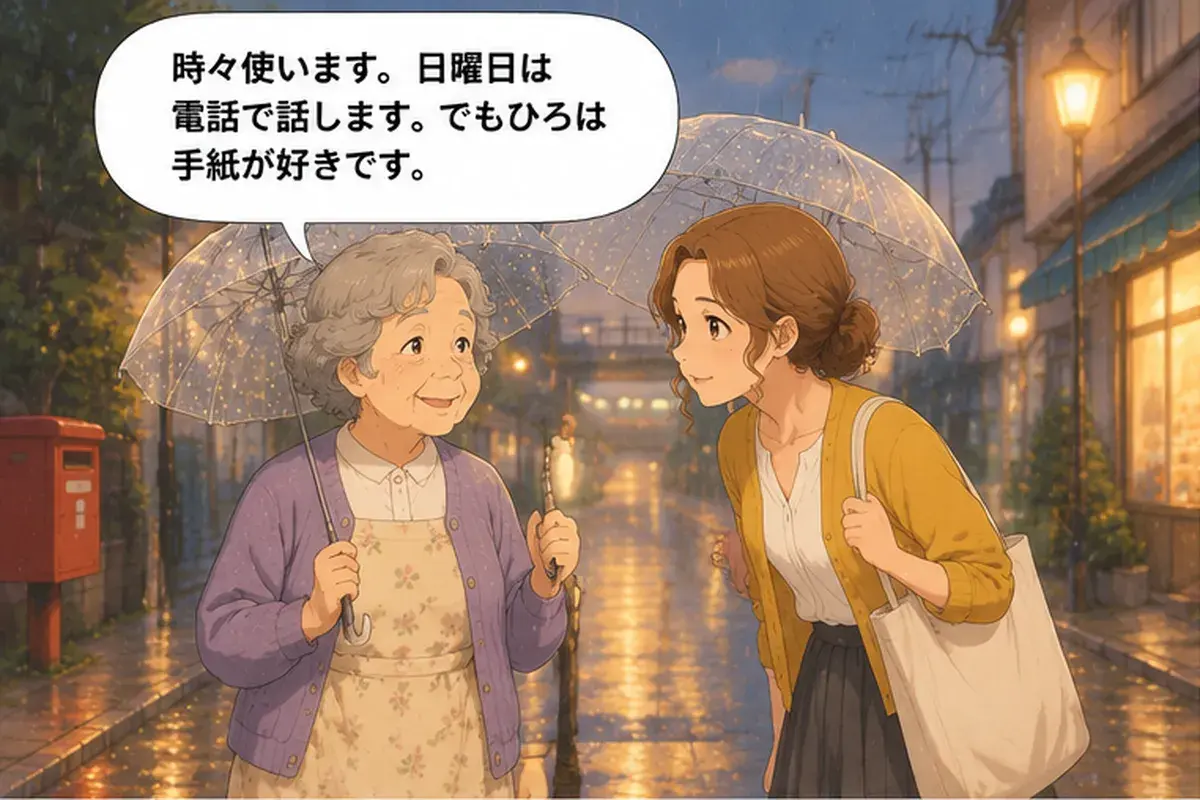
時々使います。日曜日は電話で話します。でもひろは手紙が好きです。
I use it sometimes. On Sundays we talk on the phone. But Hiro likes letters.
- アンナ
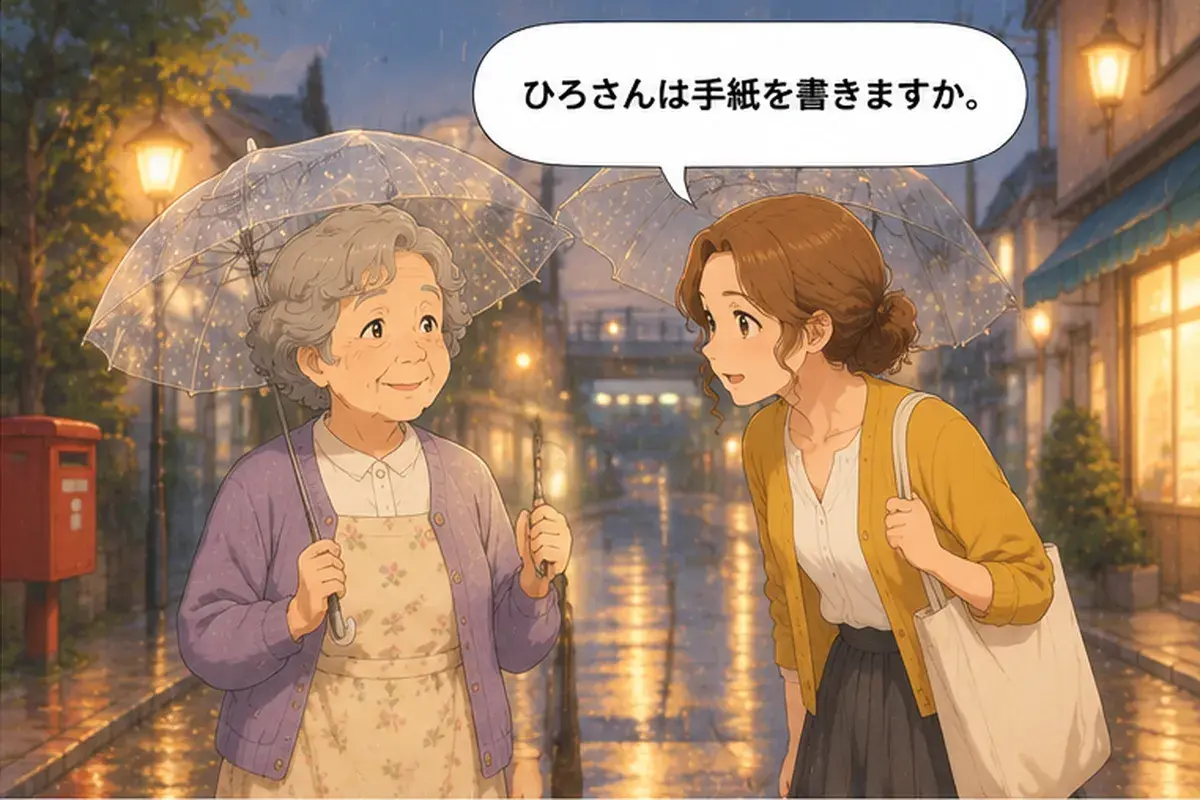
ひろさんは手紙を書きますか。
Does Hiro-san write letters?
- 田中
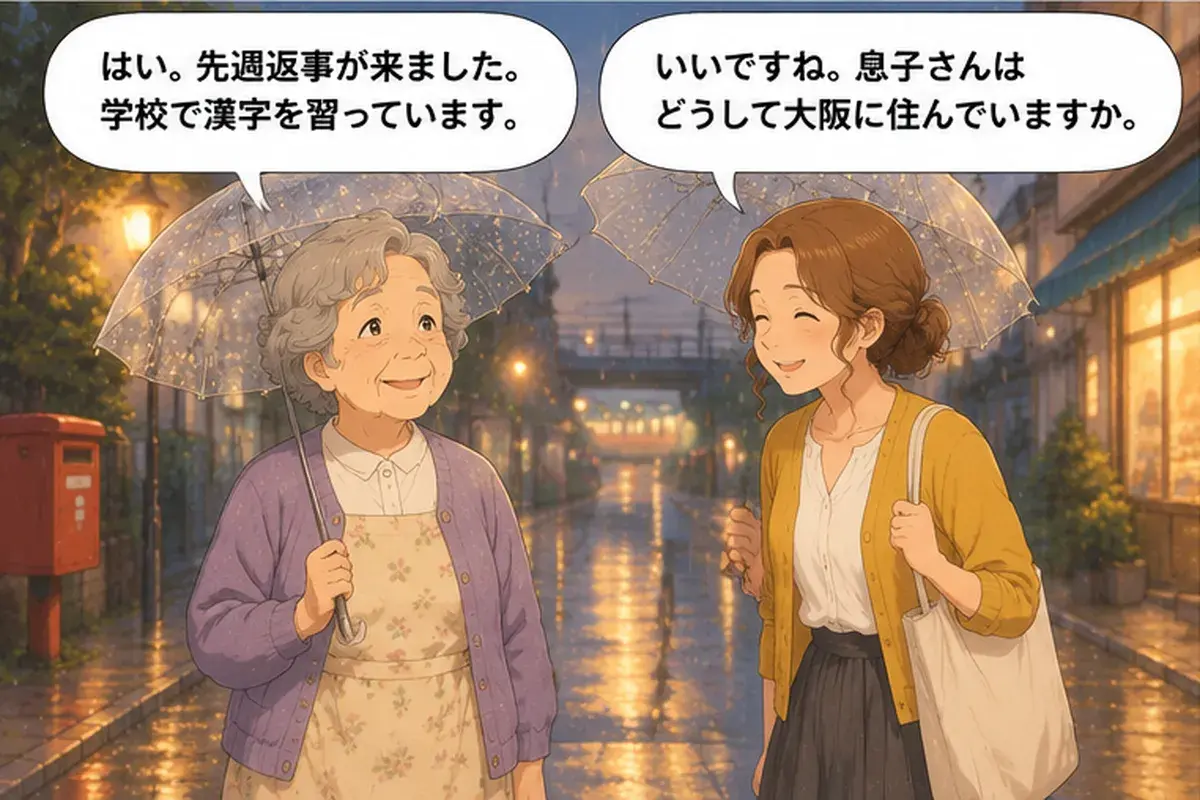
はい。先週返事が来ました。学校で漢字を習っています。
Yes. A reply came last week. He's learning kanji at school.
- アンナ
いいですね。息子さんはどうして大阪に住んでいますか。
That's nice. Why does your son live in Osaka?
- 田中
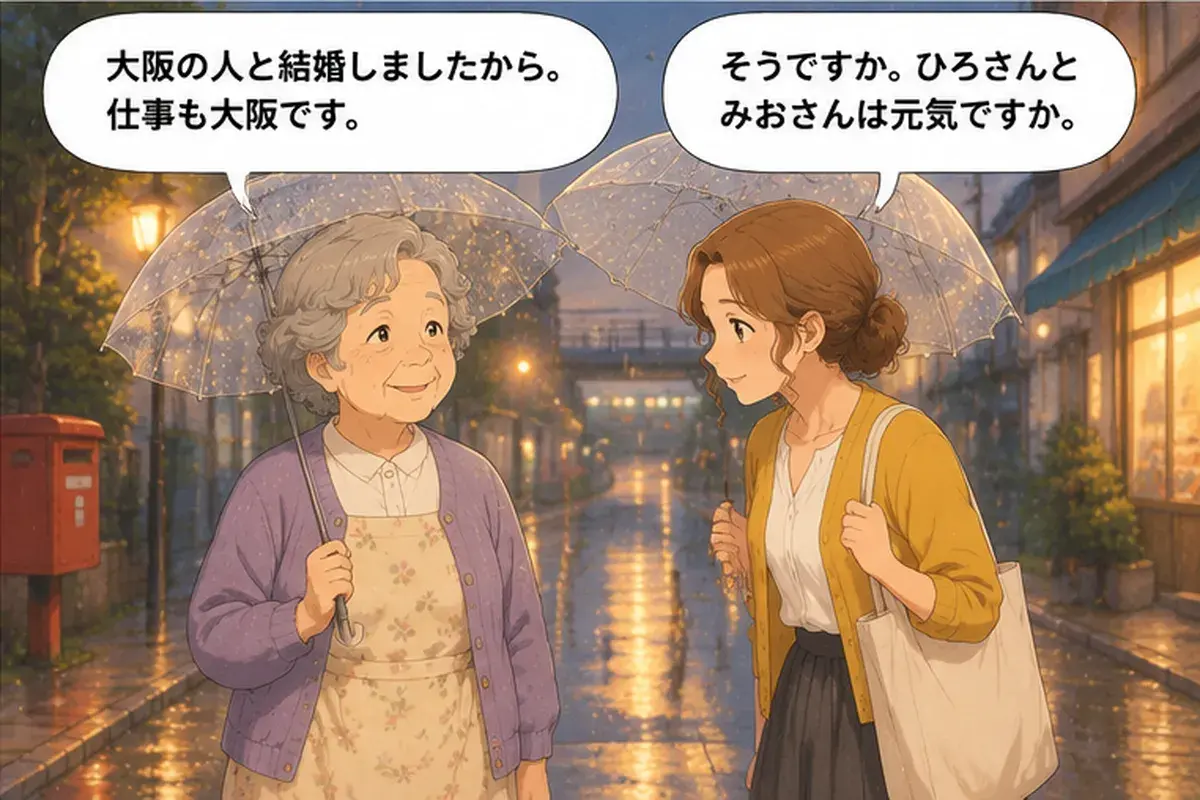
大阪の人と結婚しましたから。仕事も大阪です。
Because he married someone from Osaka. His job is in Osaka too.
- アンナ
そうですか。ひろさんとみおさんは元気ですか。
I see. Are Hiro-san and Mio-san doing well?
- 田中
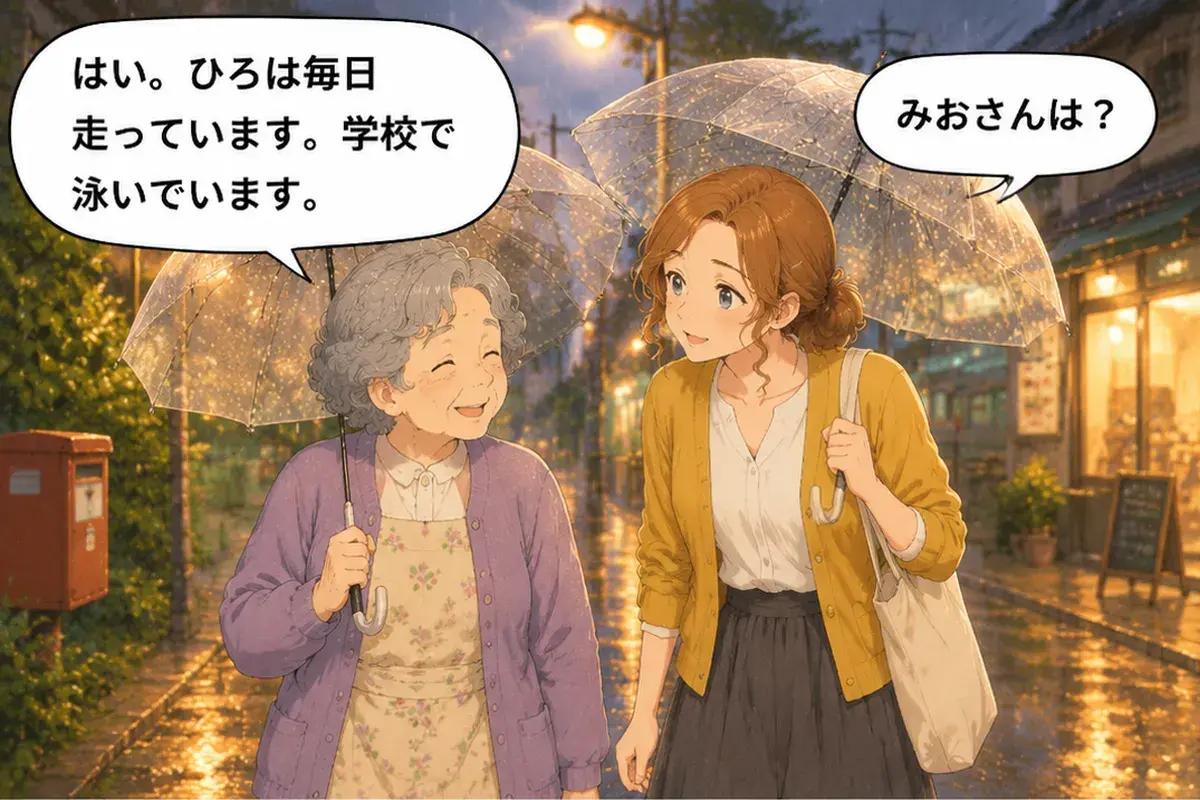
はい。ひろは毎日走っています。学校で泳いでいます。
Yes. Hiro runs every day. He swims at school.
- アンナ
みおさんは?
And Mio-san?
- 田中
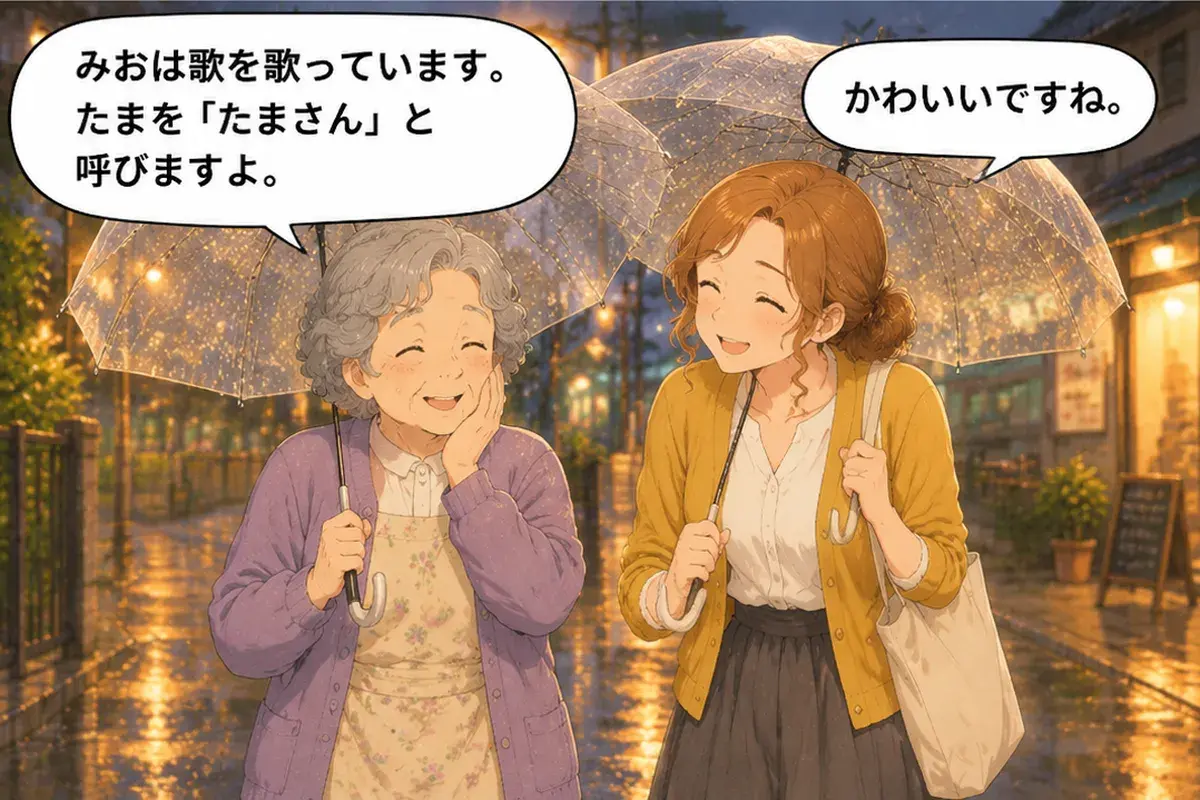
みおは歌を歌っています。たまを「たまさん」と呼びますよ。
Mio sings songs. She calls Tama "Tama-san".
- アンナ
かわいいですね。
How cute.
Grammar for this text
手紙 を 出します — here 出す means "to mail, to send": you "put the letter out" of your hands. 手紙 is a paper letter, and メール is an email. The person you send it to takes に: ひろ に.
こんばんは — "good evening": the greeting once it gets dark. In the daytime it's こんにちは.
駅 の 前 の 郵便局 は 七時 まで です から — から at the end means "because, you see": Tanaka-san explains why she's going to the post office in the evening. She wants to get there before it closes.
使いません か — you know 〜ません か as an invitation ("would you like to...?"). But in a talk about habits it's just a question: "don't you use it?"
電話 で 話します — で names the means: "on the phone". 話す → 話して (す → して).
習って います — 習う ends in う, so it becomes 習って. て います says that Hiro is learning kanji now, during this period, not just this minute.
どうして 大阪 に 住んで います か — どうして is "why"; the answer ends with から: 大阪 の 人 と 結婚しました から. 住んで います is a state, not an action: "he lives there". 結婚する is "to get married"; the person you marry takes と ("with").
泳いで います — 泳ぐ → 泳いで: after ぐ comes a voiced で. In the same way, 走って comes from 走る and 歌って from 歌う.
たま を 「たま さん」 と 呼びます — here 呼ぶ means "to call (someone by a name)". The name takes と: Mio calls the cat たま さん, as if it were a grown-up. Tanaka-san talks about her grandchildren as just ひろ and みお, but Anna says ひろ さん, みお さん about someone else's children: talking about someone outside your family without さん is impolite.
Words and grammar of the unit: Say what you're doing now.
Learn the words from the texts with flashcards
In the app, you can tap any word in a text to see its translation, forms and examples, and new words stick with flashcards. 15 minutes a day.
Start for freeEverything is open for free. No card needed to sign up.