
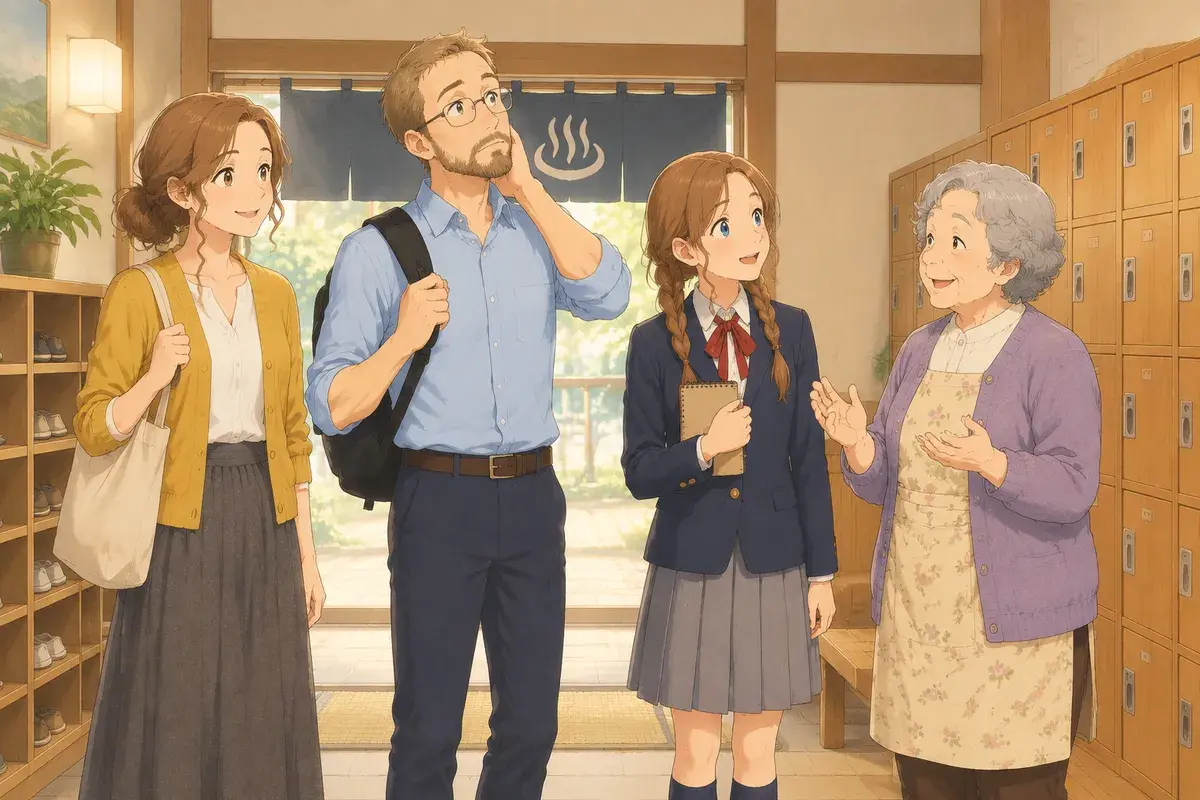
Japanese dialogue with translation · A1 · 14 lines
お風呂ではちょっと… In the bath, that's a bit...
Comic · 10 panels
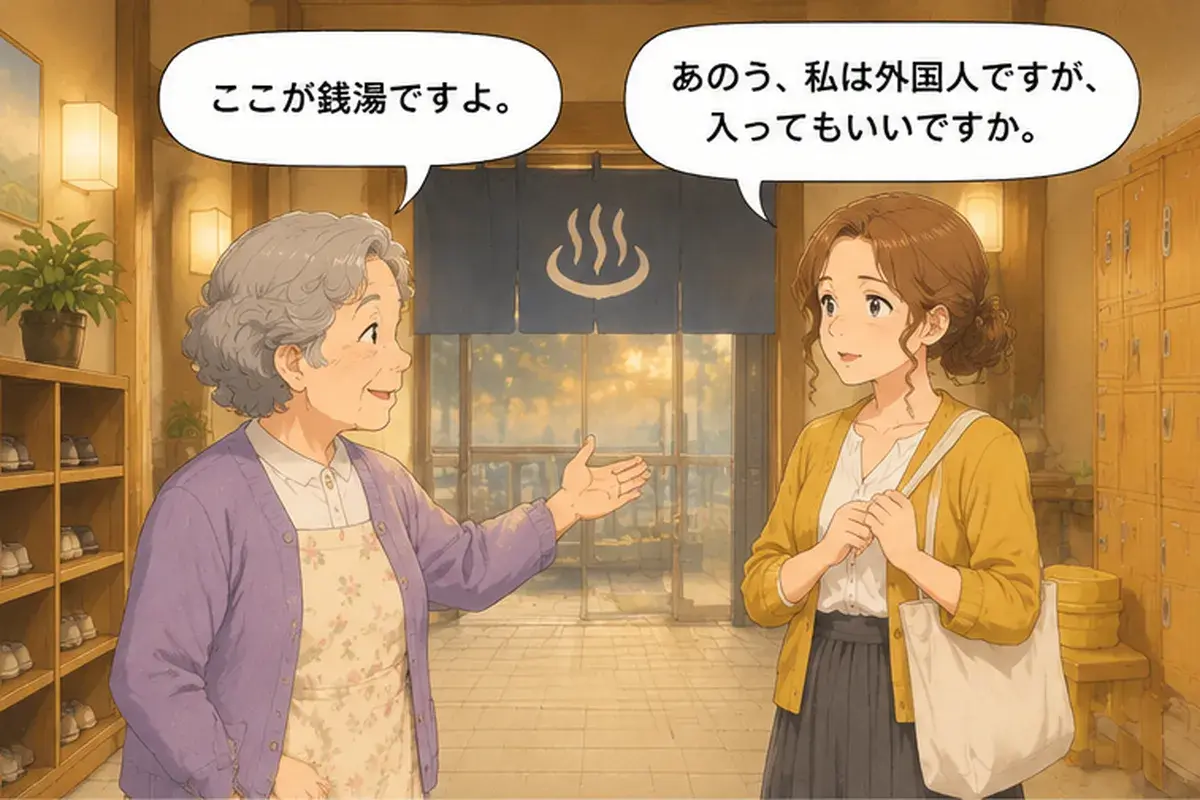
- 田中
ここが銭湯ですよ。
This is the public bath.
- アンナ
あのう、私は外国人ですが、入ってもいいですか。
Um, I'm a foreigner, but may I go in?
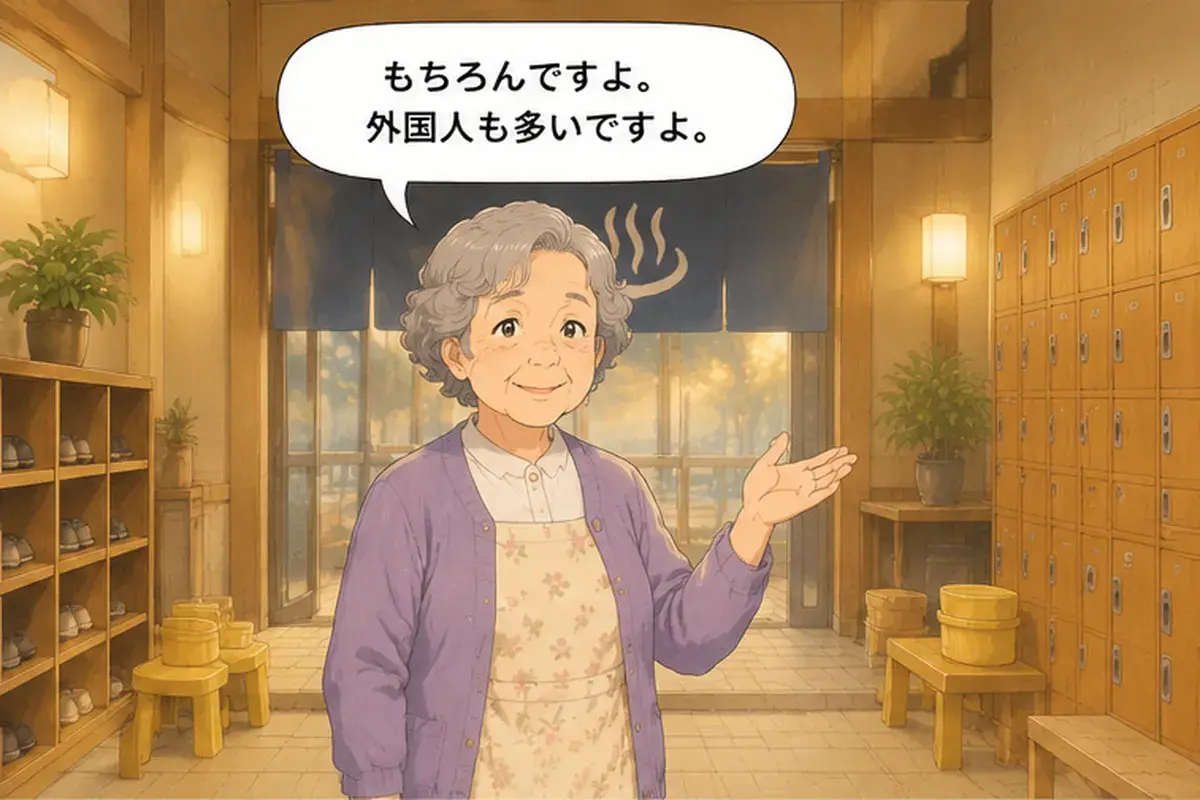
- 田中
もちろんですよ。外国人も多いですよ。
Of course. There are lots of foreigners too.
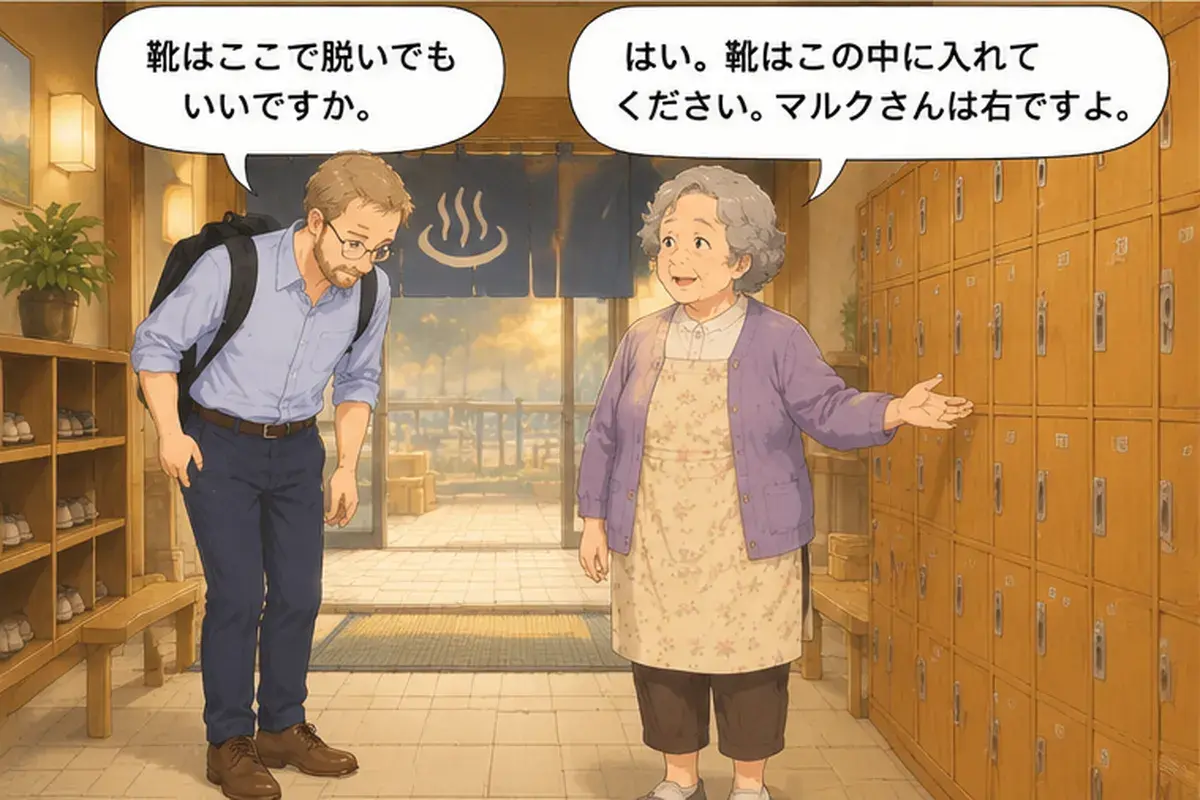
- マルク
靴はここで脱いでもいいですか。
Can I take off my shoes here?
- 田中
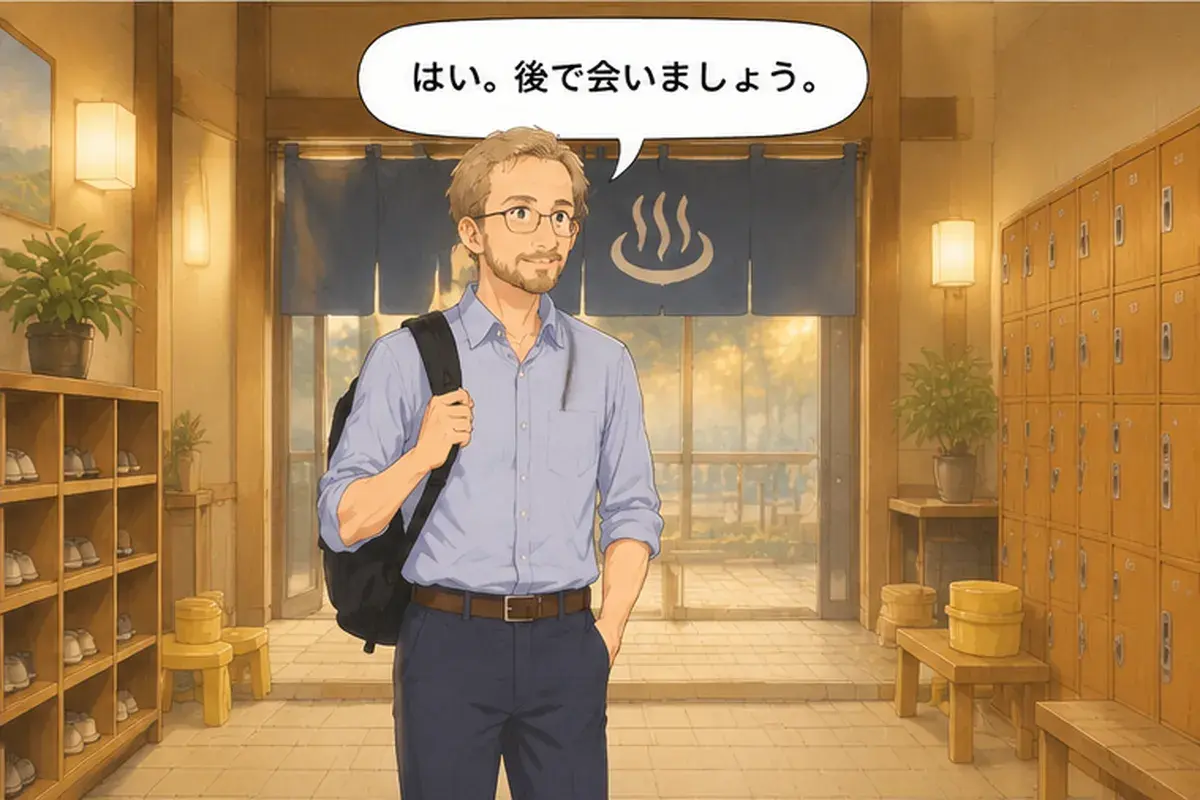
はい。靴はこの中に入れてください。マルクさんは右ですよ。
Yes. Please put your shoes in here. Mark-san, you're on the right.
- マルク
はい。後で会いましょう。
OK. Let's meet later.
- ソーニャ
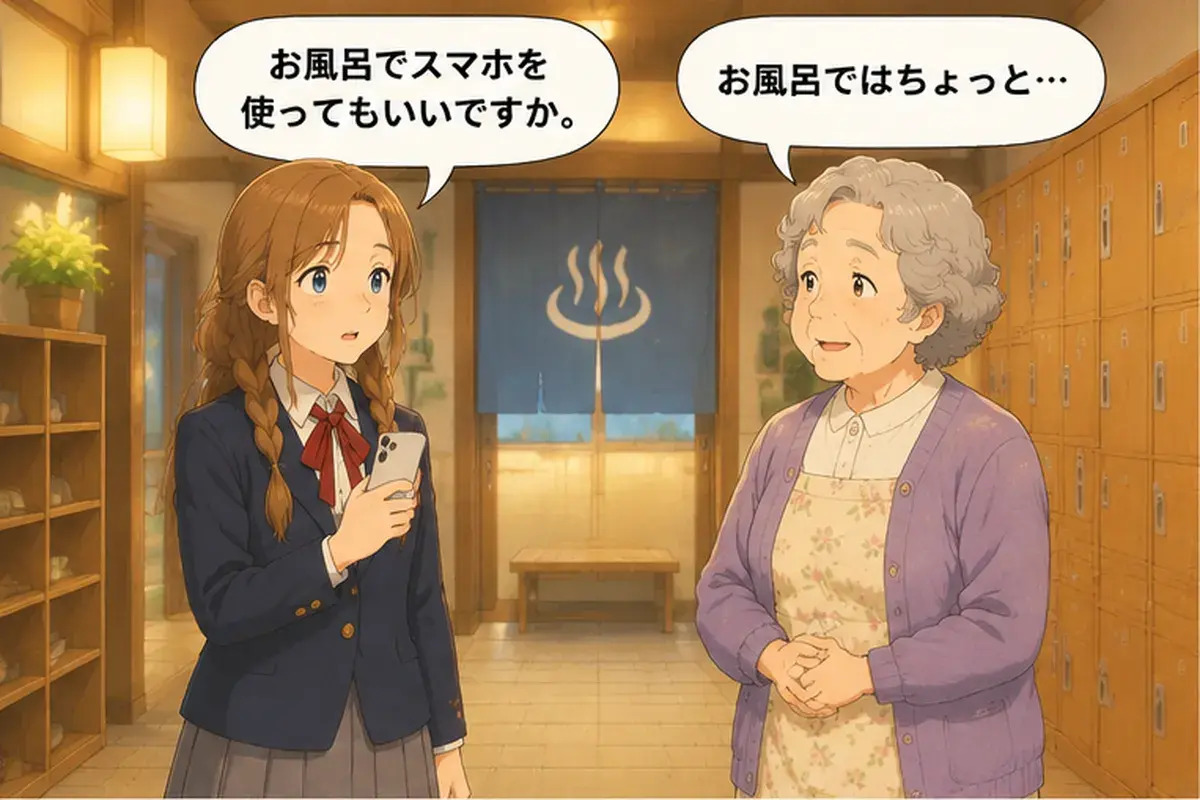
お風呂でスマホを使ってもいいですか。
Can I use my smartphone in the bath?
- 田中
お風呂ではちょっと…
In the bath, that's a bit...
- ソーニャ
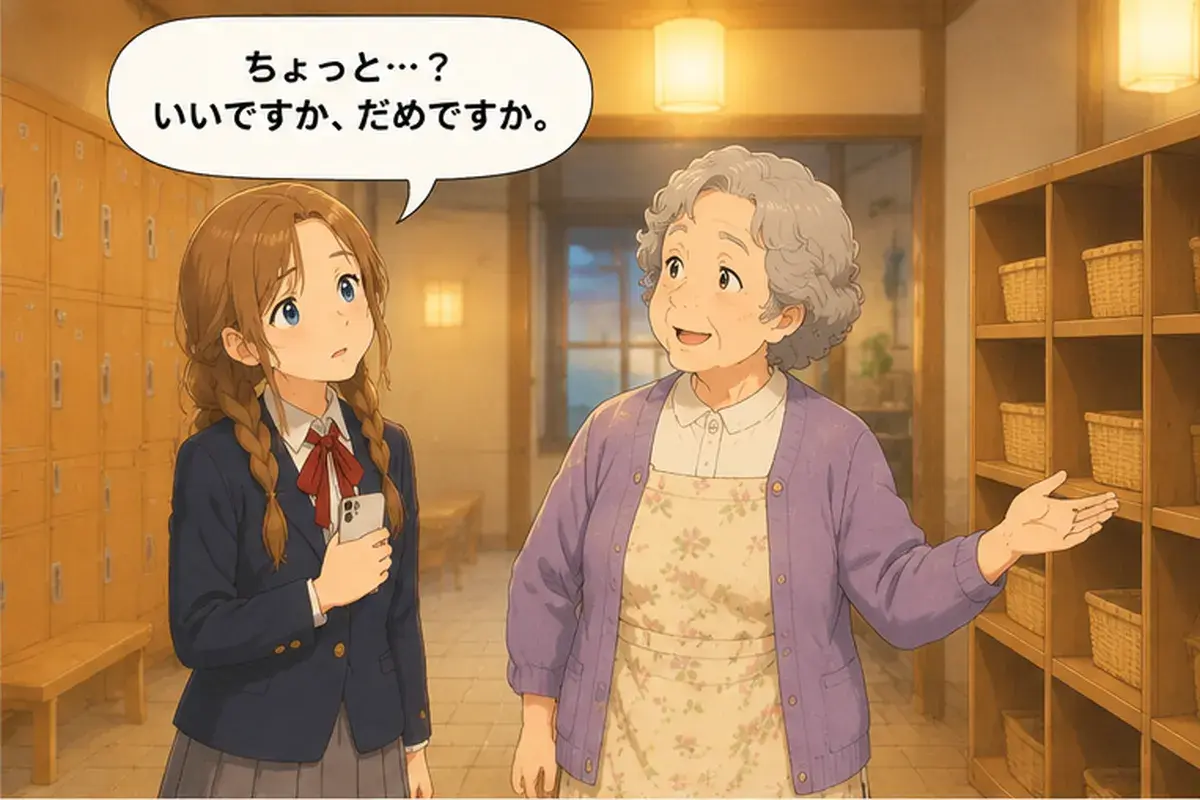
ちょっと…?いいですか、だめですか。
"A bit..."? Is it OK, or is it not allowed?
- 田中
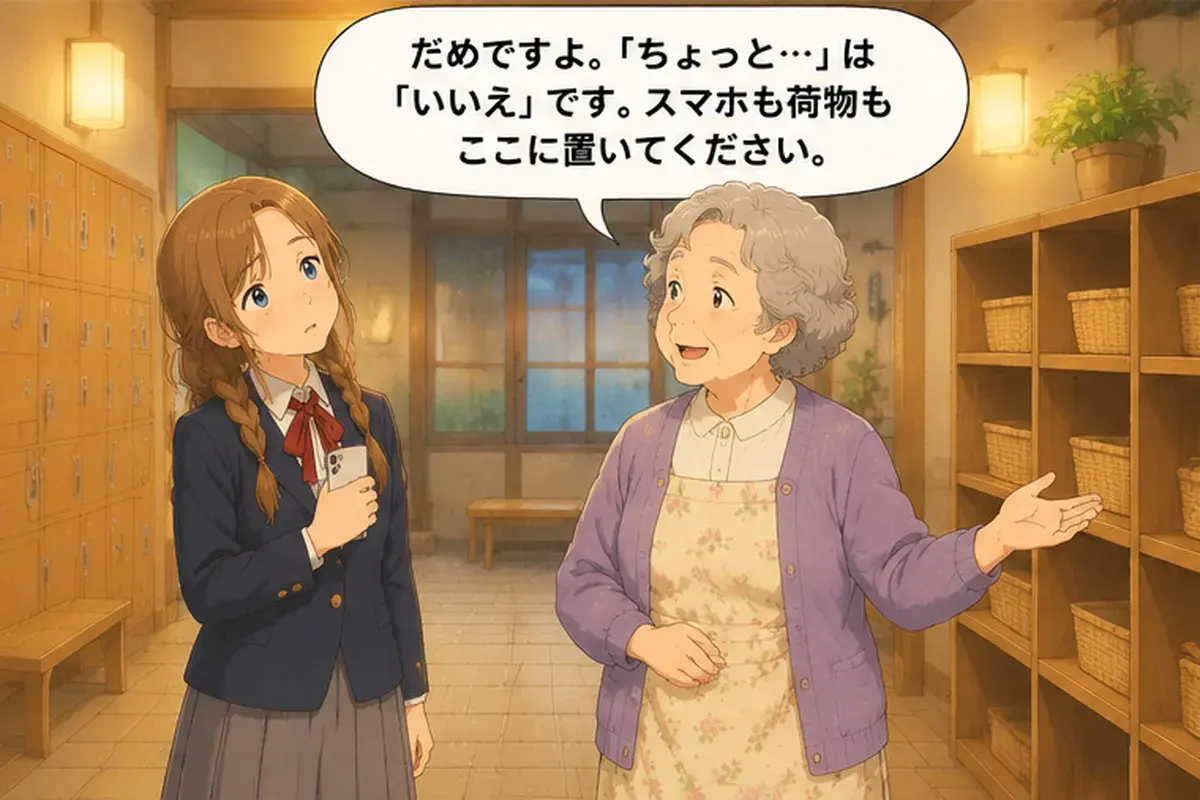
だめですよ。「ちょっと…」は「いいえ」です。スマホも荷物もここに置いてください。
It's not allowed. "A bit..." means "no." Please leave both your smartphone and your bags here.
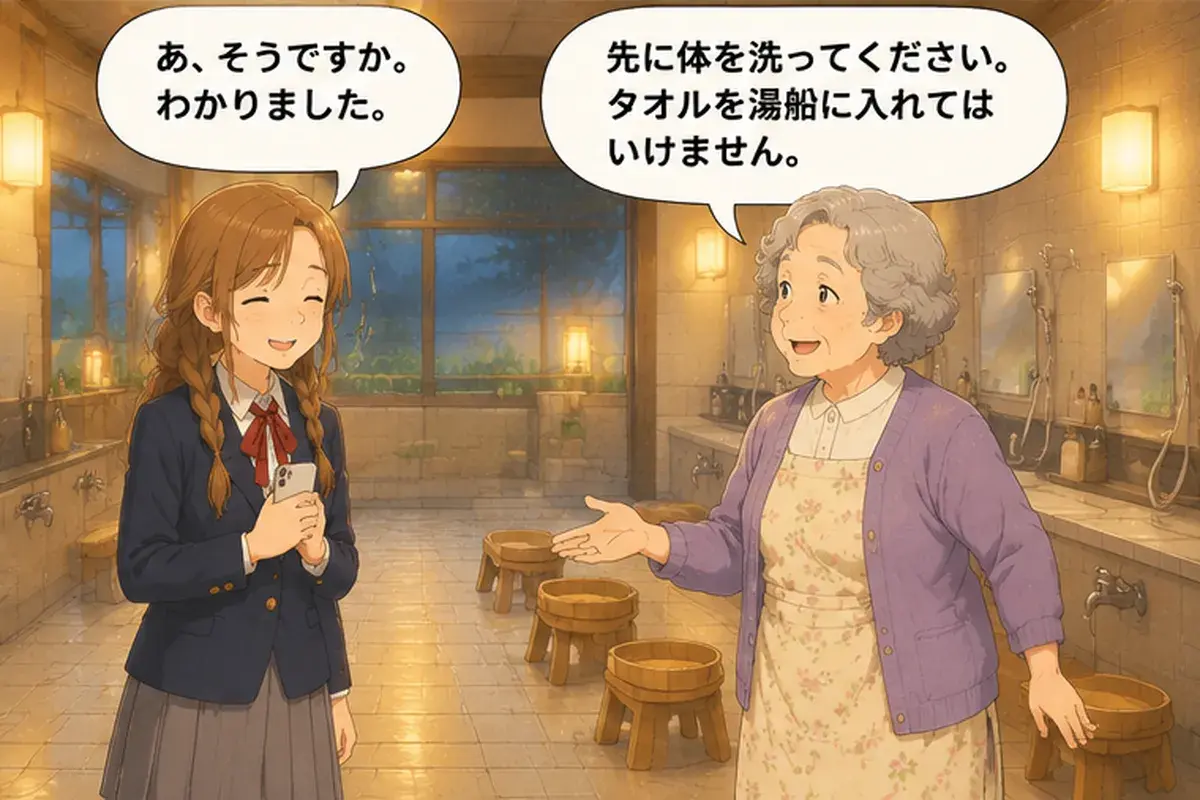
- ソーニャ
あ、そうですか。わかりました。
Oh, I see. Got it.
- 田中
先に体を洗ってください。タオルを湯船に入れてはいけません。
Please wash your body first. You must not put your towel in the bathtub.
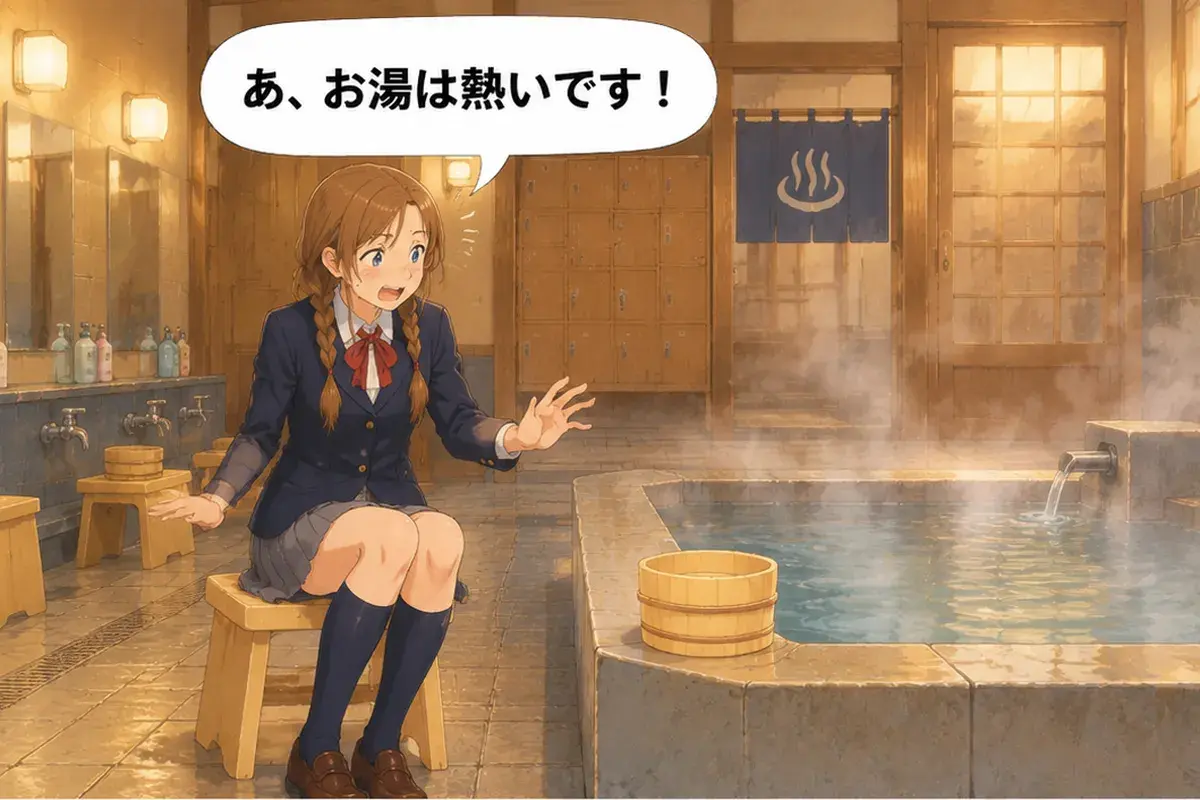
- ソーニャ
あ、お湯は熱いです!
Oh, the water is hot!
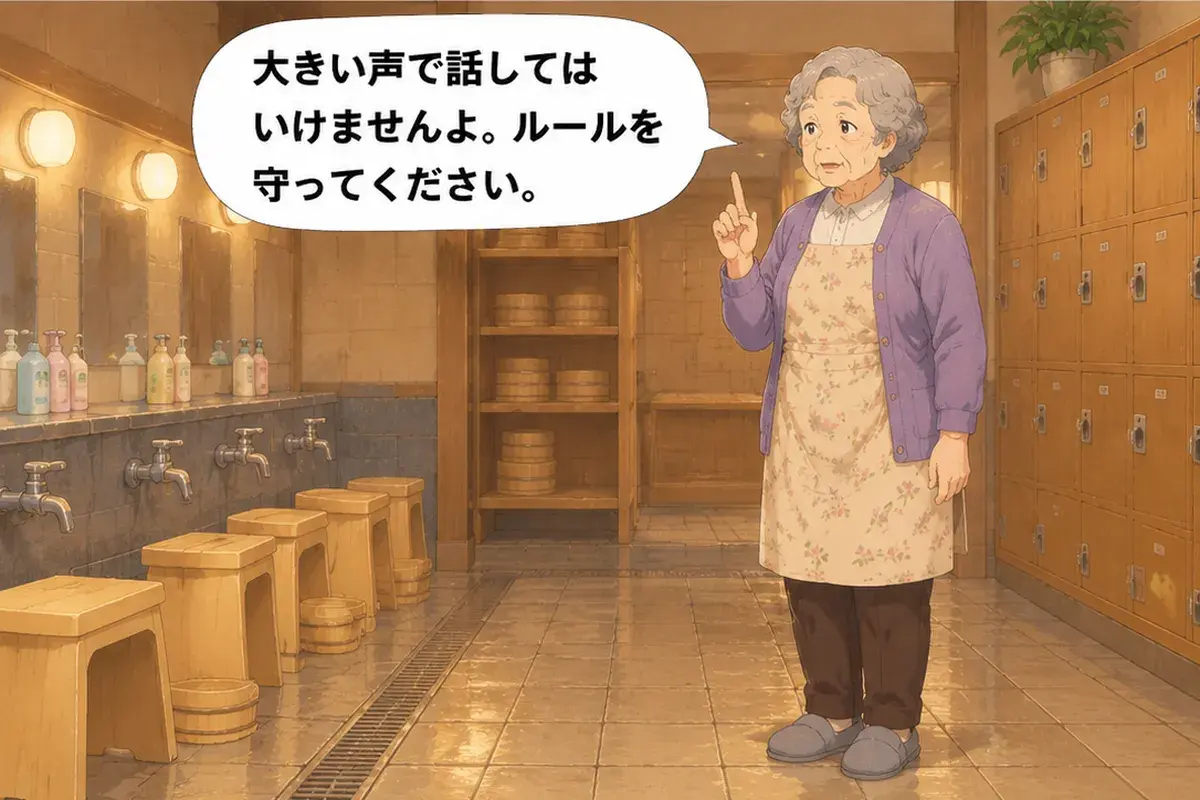
- 田中
大きい声で話してはいけませんよ。ルールを守ってください。
You must not talk in a loud voice. Please follow the rules.
Grammar for this text
入って も いい です か — "may I go in?" 入って is the te-form of 入る (unit 13), and も いい です か turns it into a request for permission. More in the unit grammar.
私 は 外国人 です が — here が means "but" (unit 8): Anna apologizes in advance for being a foreigner. Tanaka-san reassures her: 外国人 も 多い です よ.
マルク さん は 右 です よ — men and women bathe separately, and each side has its own entrance. Mark goes to the right, the others to the left.
お風呂 で は ちょっと… — a polite no. Tanaka-san doesn't say "no"; she just stops halfway. Sonya doesn't get it and asks again: ちょっと…? いい です か、だめ です か. Tanaka-san explains directly: 「ちょっと…」 は 「いいえ」 です. More in the unit grammar.
ここ で 脱いで — 脱ぐ ends in ぐ, so its te-form is 脱いで (unit 14). この 中 に 入れて ください — 入れる means "to put in"; don't mix it up with 入る, "to go in".
先に 体 を 洗って ください — 先に means "first". At a public bath you wash at a faucet first, and only then get into the bathtub. The towel doesn't go in the water: 入れて は いけません means "you must not put it in." This is how strict rules sound.
あ、お湯 は 熱い です! — Sonya cries out at the hot water, and Tanaka-san reminds her right away: 大きい 声 で 話して は いけません. ルール を 守って ください means "please follow the rules": 守る is a Group 1 verb, so る → って.
Words and grammar of the unit: Ask for permission.
Learn the words from the texts with flashcards
In the app, you can tap any word in a text to see its translation, forms and examples, and new words stick with flashcards. 15 minutes a day.
Start for freeEverything is open for free. No card needed to sign up.