

Japanese dialogue with translation · A1 · 14 lines
在留カードを見せてください Please show me your residence card
Comic · 9 panels
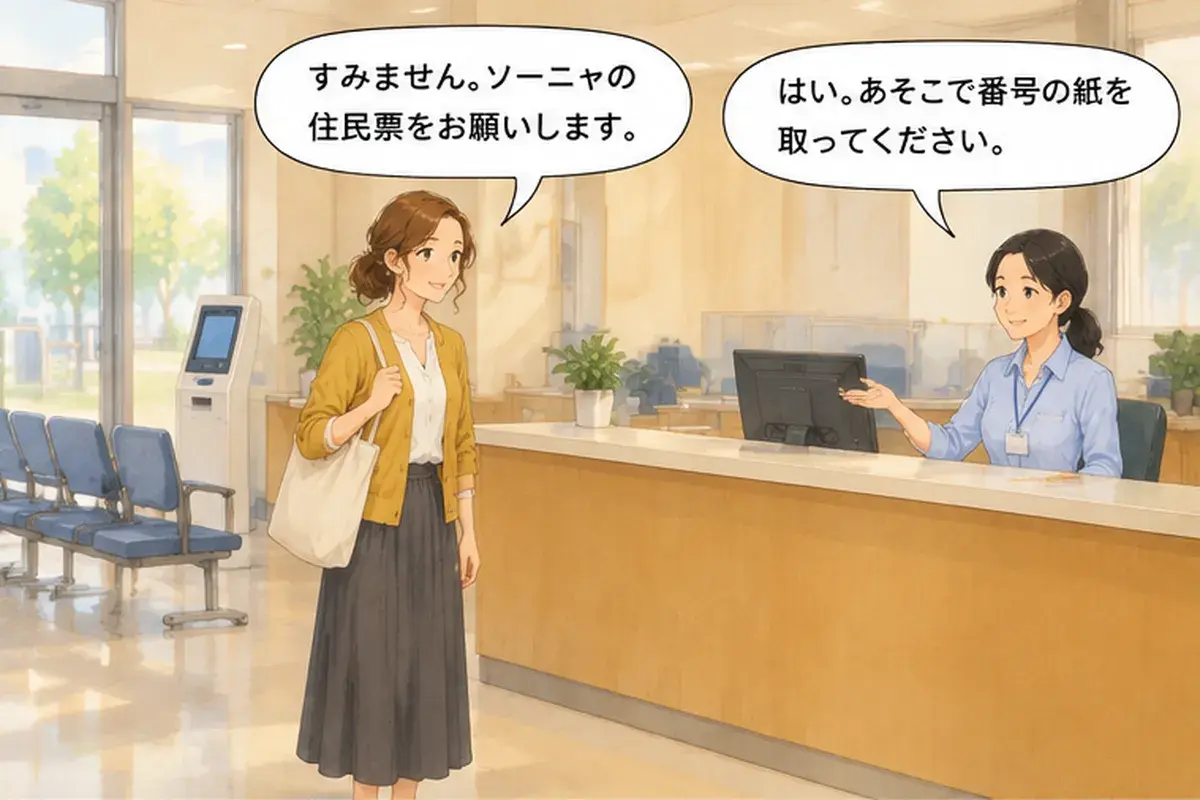
- アンナ
すみません。ソーニャの住民票をお願いします。
Excuse me. Sonya's certificate of residence, please.
- 係員
はい。あそこで番号の紙を取ってください。
Yes. Over there, please take a paper with a number on it.
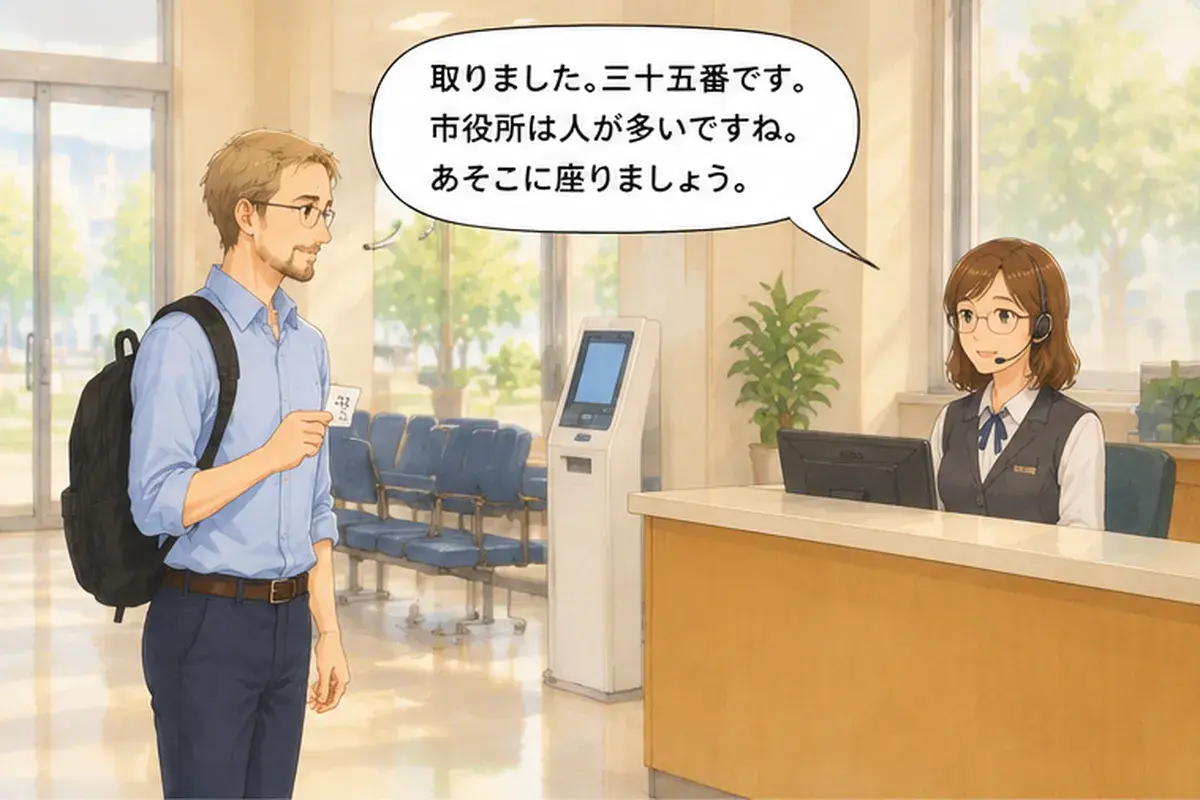
- マルク
取りました。三十五番です。市役所は人が多いですね。あそこに座りましょう。
I took one. It's number 35. There are a lot of people at city hall, aren't there? Let's sit over there.
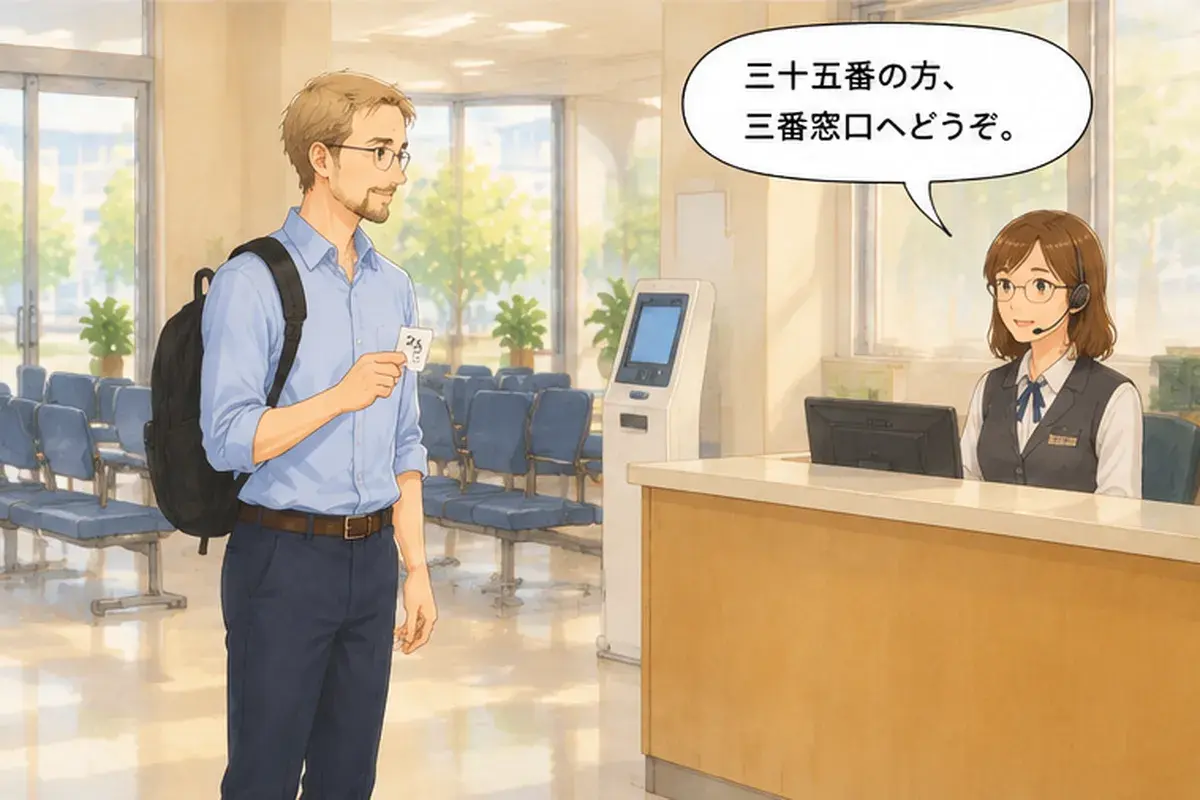
- アナウンス
三十五番の方、三番窓口へどうぞ。
Number 35, please go to counter 3.
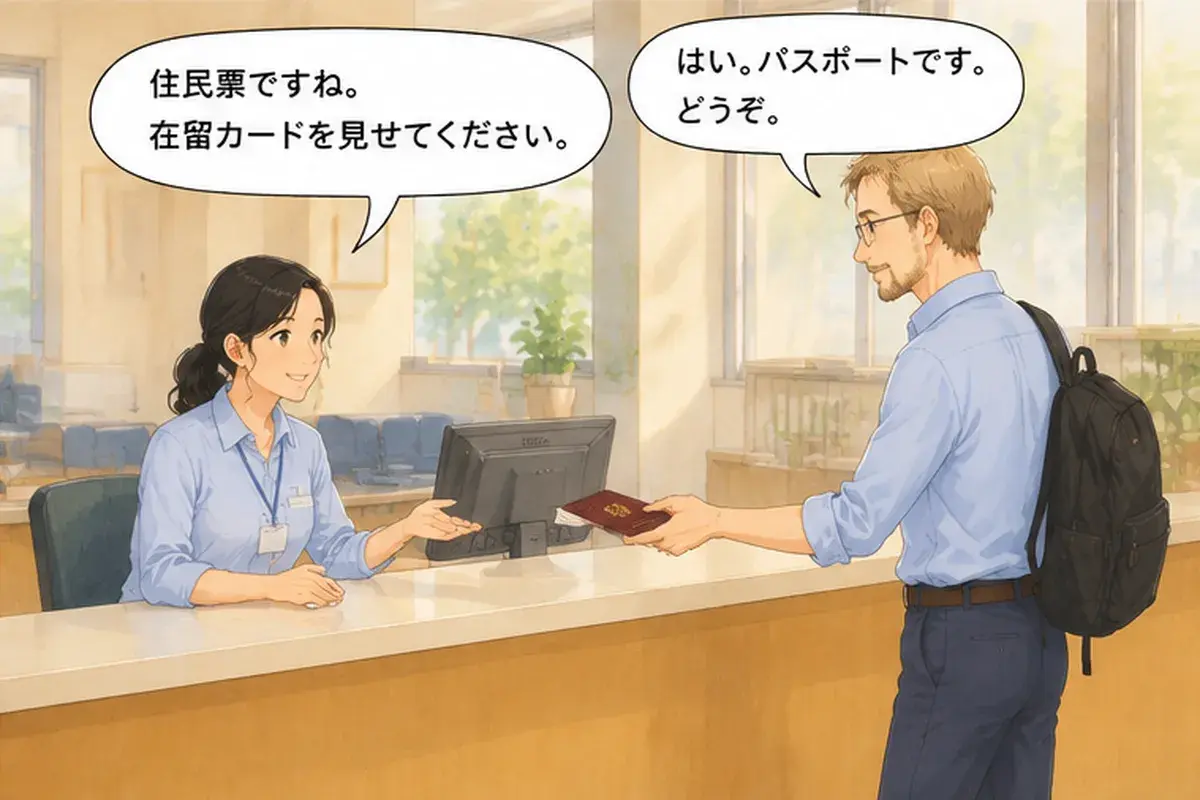
- 係員
住民票ですね。在留カードを見せてください。
A certificate of residence, right? Please show me your residence card.
- マルク
はい。パスポートです。どうぞ。
Yes. It's the passport. Here you go.
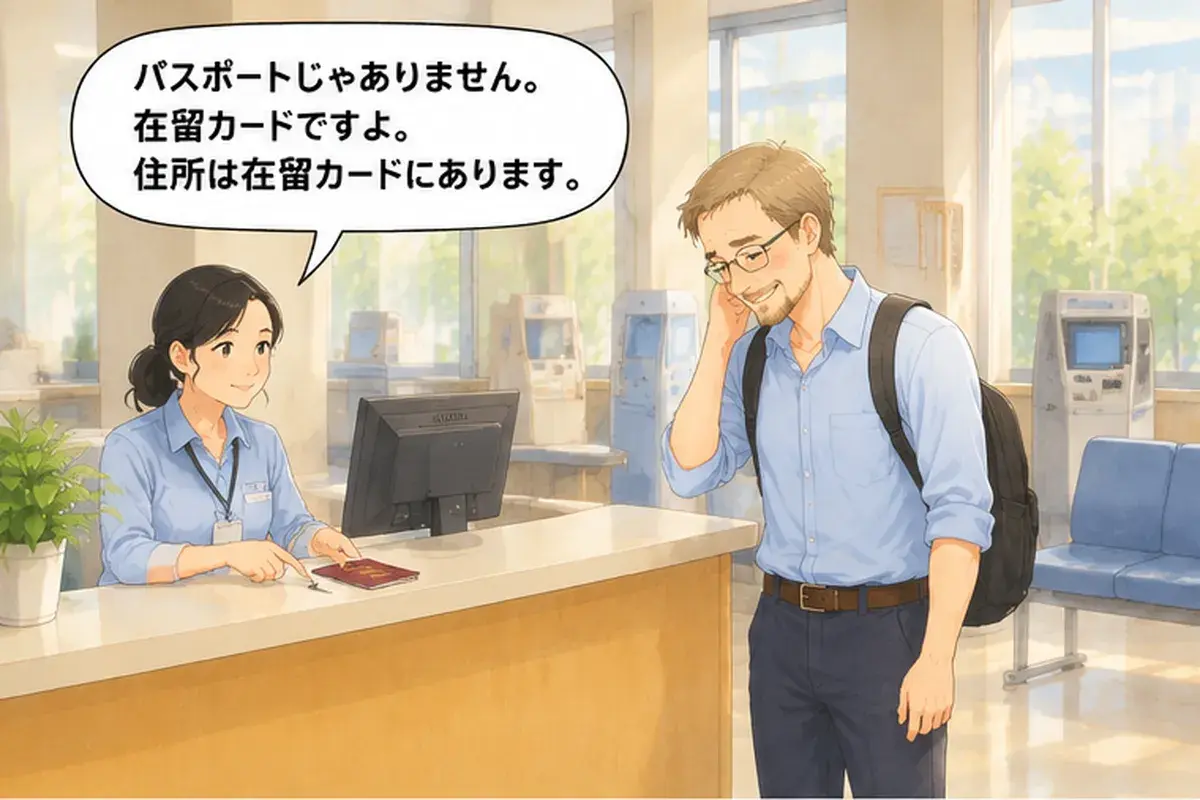
- 係員
パスポートじゃありません。在留カードですよ。住所は在留カードにあります。
It's not a passport. It's the residence card. The address is on the residence card.
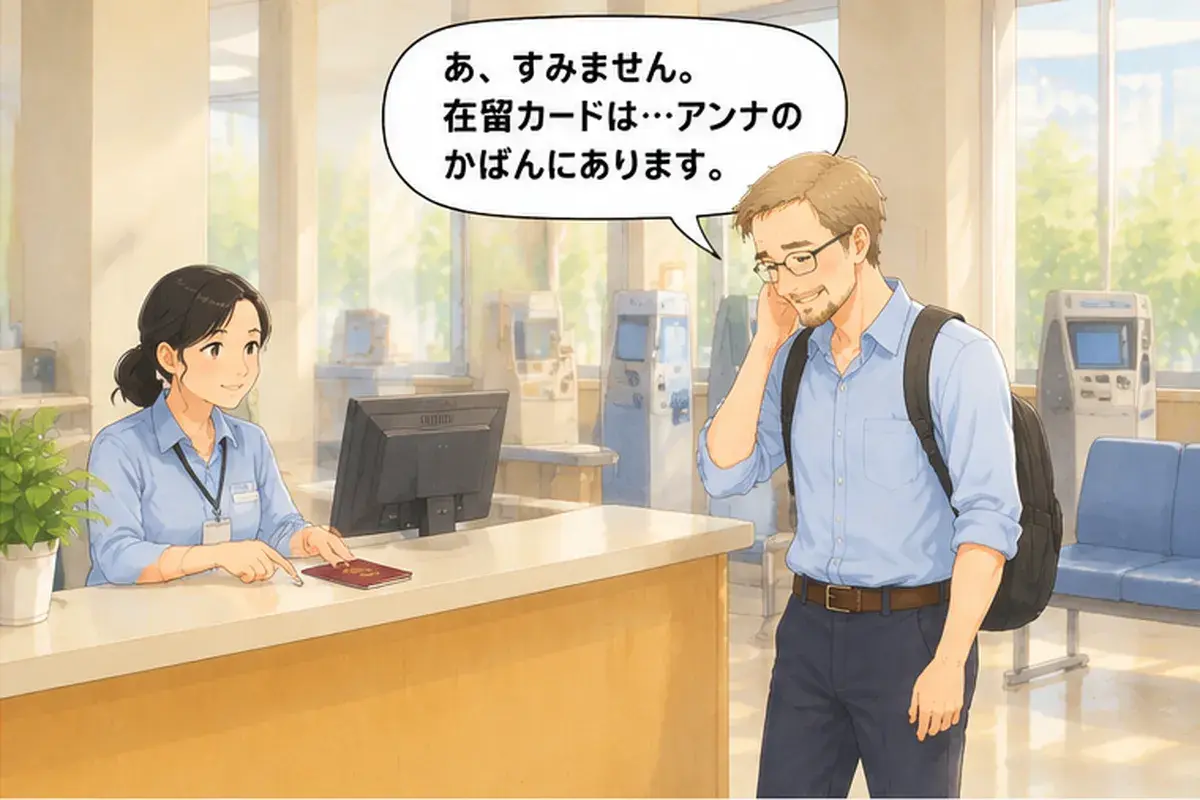
- マルク
あ、すみません。在留カードは…アンナのかばんにあります。
Oh, I'm sorry. The residence card is... in Anna's bag.
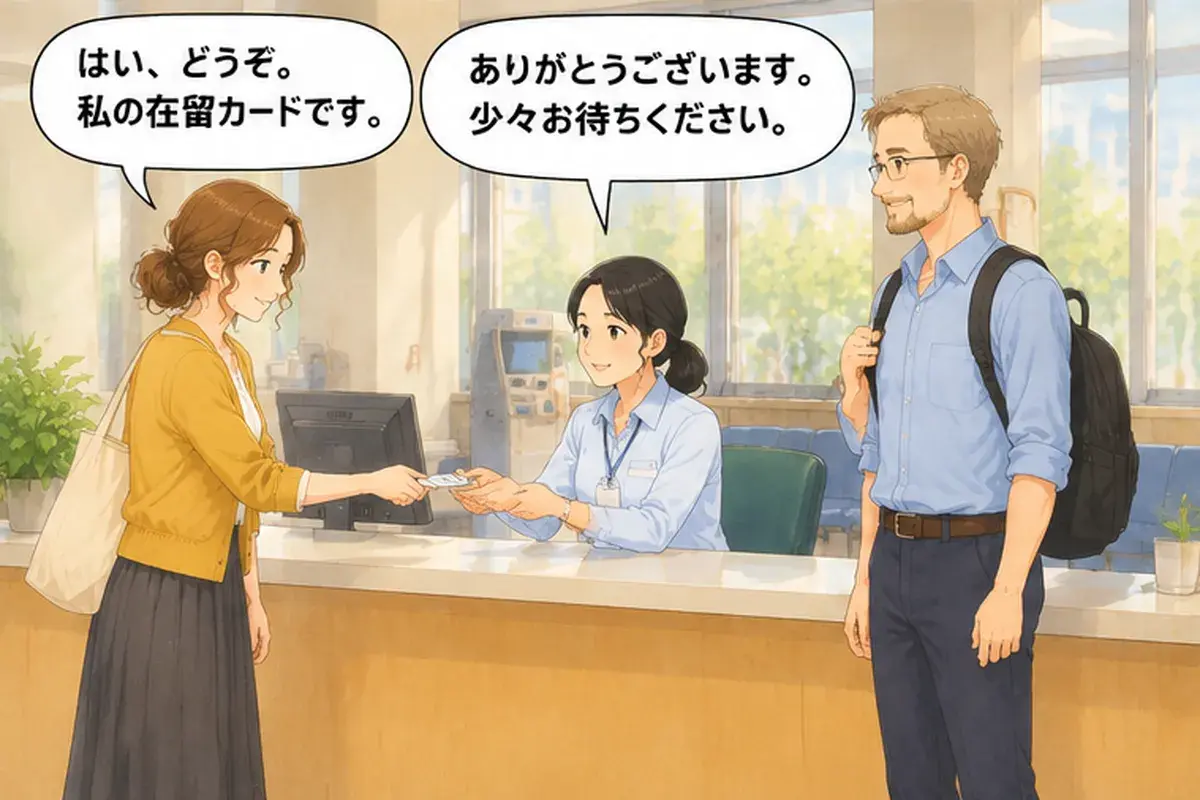
- アンナ
はい、どうぞ。私の在留カードです。
Yes, here you go. It's my residence card.
- 係員
ありがとうございます。少々お待ちください。
Thank you. One moment, please (very polite).
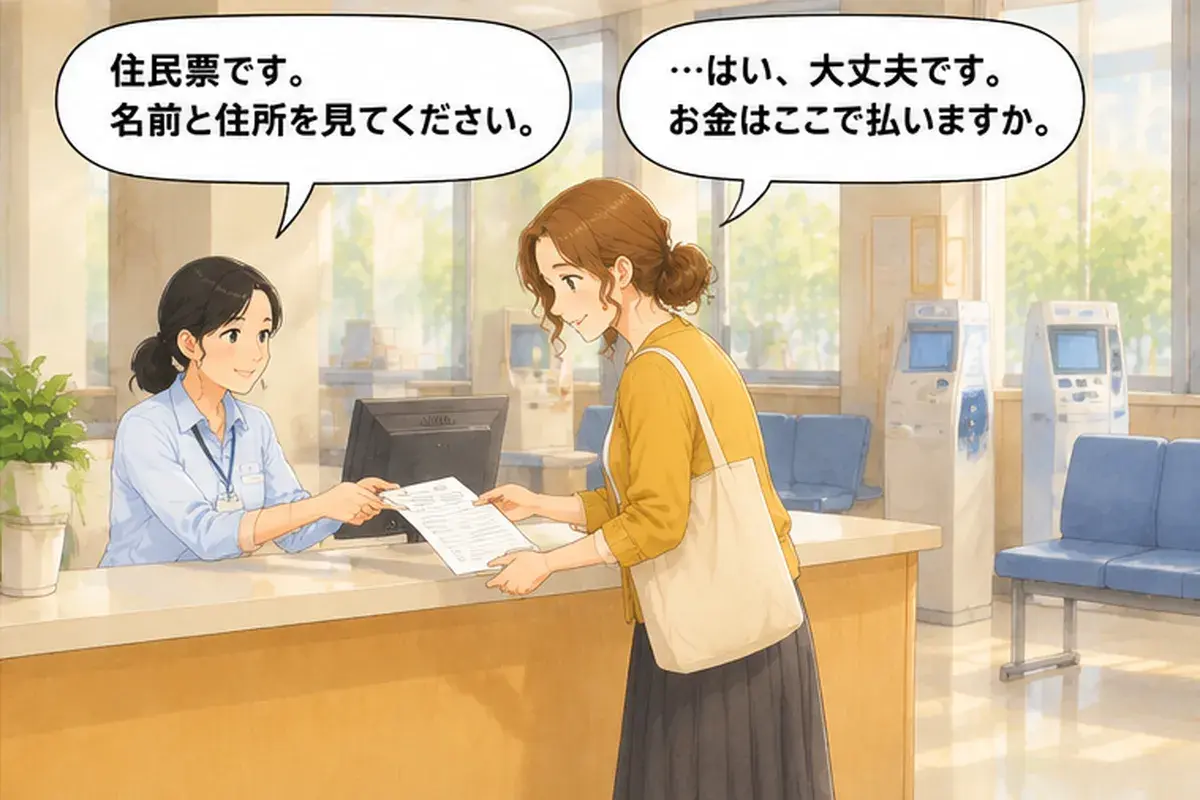
- 係員
住民票です。名前と住所を見てください。
Here's the certificate of residence. Please look at the name and address.
- アンナ
…はい、大丈夫です。お金はここで払いますか。
...Yes, it's fine. Do I pay here?
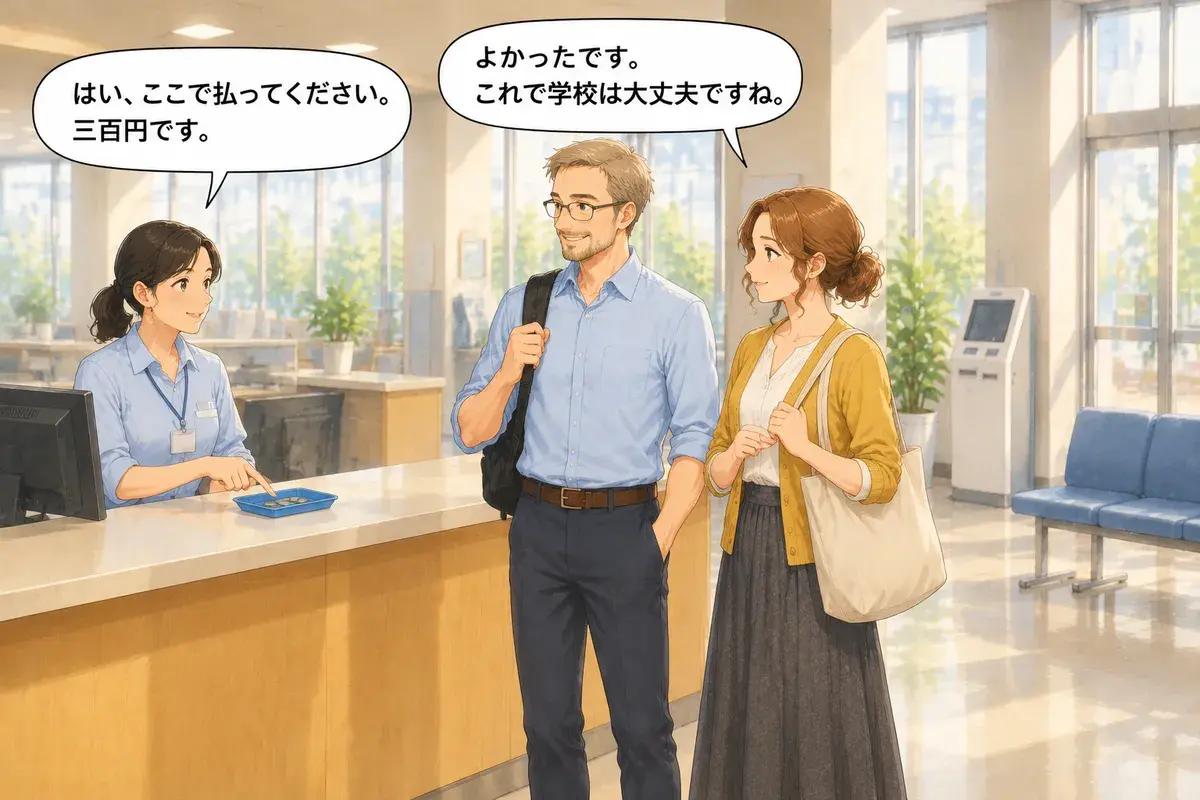
- 係員
はい、ここで払ってください。三百円です。
Yes, please pay here. It's 300 yen.
- マルク
よかったです。これで学校は大丈夫ですね。
Great. Now everything's fine for school.
Grammar for this text
取って ください — "please take". 取る is a Group 1 verb: in the te-form its る becomes って: totte. Don't confuse it with 撮る ("to take a photo"): they sound the same, but the kanji are different.
在留カード を 見せて ください — "please show me". 見せる doesn't mean "to look" (that's 見る); it means "to let someone look". The form: drop る, add て.
名前 と 住所 を 見て ください — "please look at the name and address": 見る → 見て, again drop る. You look at the certificate right away, at the counter.
払って ください — 払う → 払って, with a double consonant: haratte.
少々 お待ちください — a set phrase of staff and clerks: "one moment, please". It's a very polite version of 待って ください; you'll see how it's built in A2.
三十 五 番 の 方、 三 番 窓口 へ どうぞ — this is what real announcements sound like. 番 is "number" after a numeral: 三十 五 番 is "number 35", and 三 番 窓口 is "counter 3". 方 (かた) is a polite word for "person": "the person with number 35". へ どうぞ means "please go to...". When you hear your number, go to the counter they name.
パスポート じゃ ありません。 在留カード です よ。 — "not the passport, the residence card": here じゃ ありません (Unit 2) corrects a mistake.
住所 は 在留カード に あります — "the address is on the card": に あります means "is in, is on" (Unit 9).
お金 は ここ で 払います か — a question in the ます form: "do I pay here?".
これ で 学校 は 大丈夫 です ね — これ で means "with this, now": Sonya needs the certificate for school.
A local detail: at city hall you take a ticket with a number and wait until your number and counter are called. A foreigner's address is on the residence card, so that's what they ask for, not the passport.
Words and grammar of the unit: Ask people politely to do things.
Learn the words from the texts with flashcards
In the app, you can tap any word in a text to see its translation, forms and examples, and new words stick with flashcards. 15 minutes a day.
Start for freeEverything is open for free. No card needed to sign up.