
Japanese dialogue with translation · A1 · 13 lines
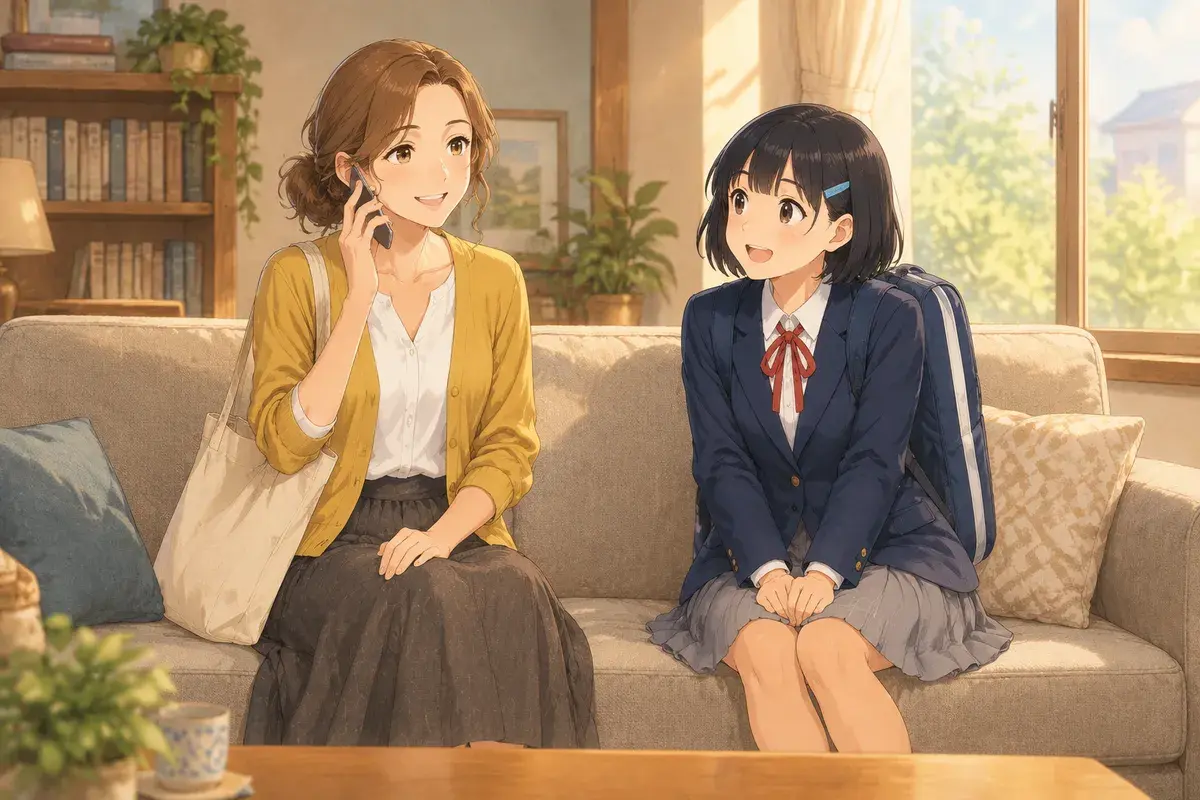
ソーニャの母です I'm Sonya's mother
Comic · 8 panels
- アンナ
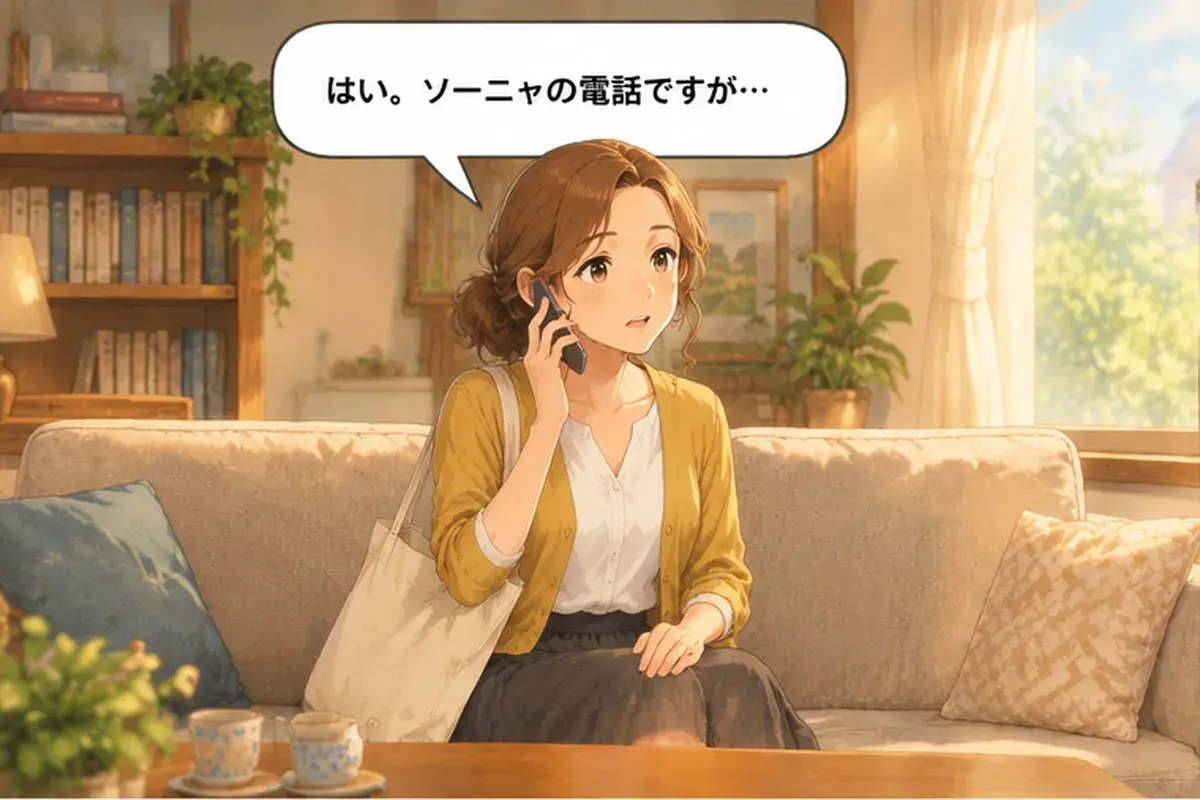
はい。ソーニャの電話ですが…
Yes? This is Sonya's phone, but...
- ゆい
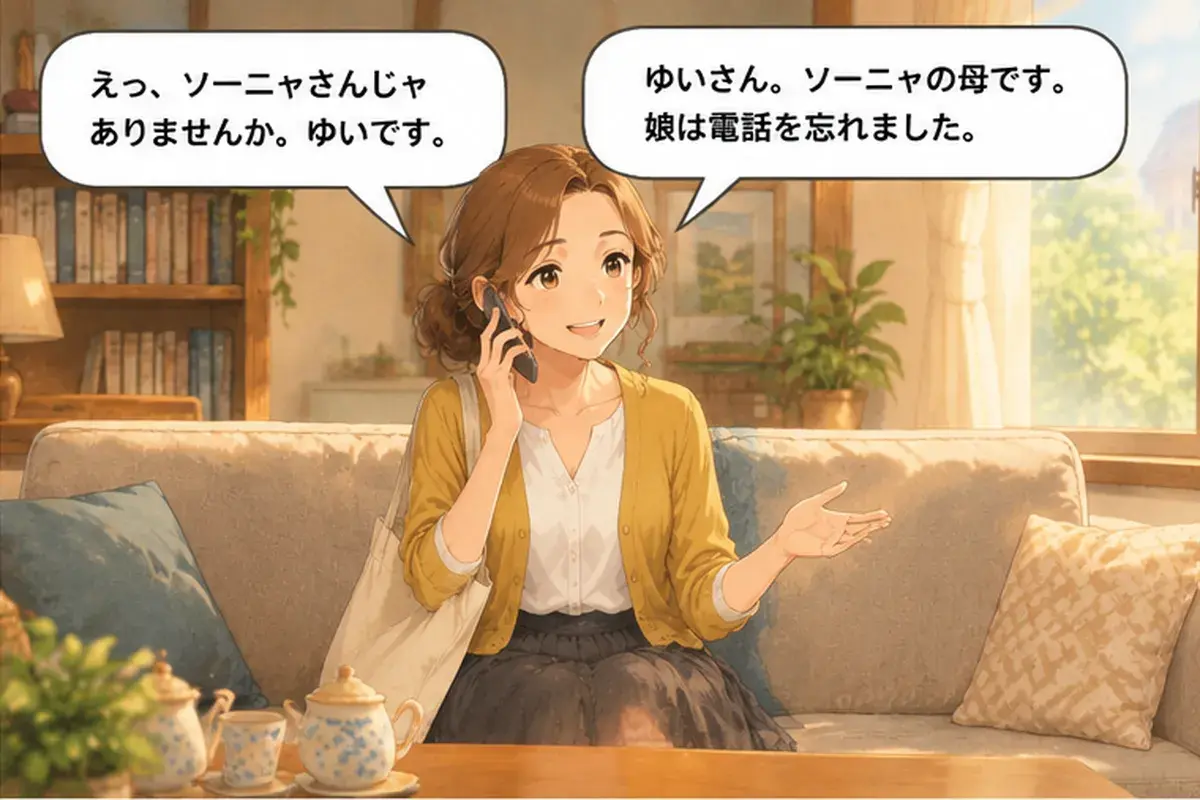
えっ、ソーニャさんじゃありませんか。ゆいです。
Huh? Isn't this Sonya-san? It's Yui.
- アンナ
ゆいさん。ソーニャの母です。娘は電話を忘れました。
Yui-san. This is Sonya's mother. My daughter forgot her phone.
- ゆい
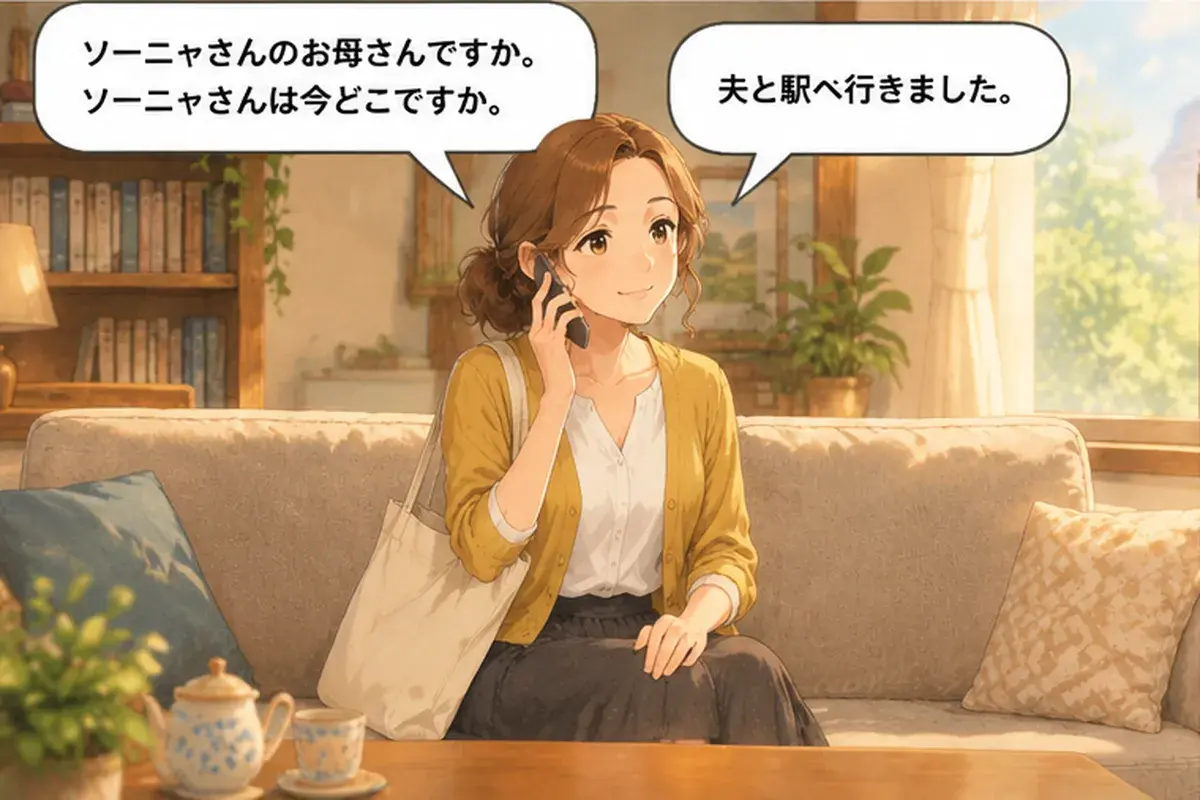
ソーニャさんのお母さんですか。ソーニャさんは今どこですか。
Are you Sonya-san's mother? Where is Sonya-san now?
- アンナ
夫と駅へ行きました。
She went to the station with my husband.
- ゆい
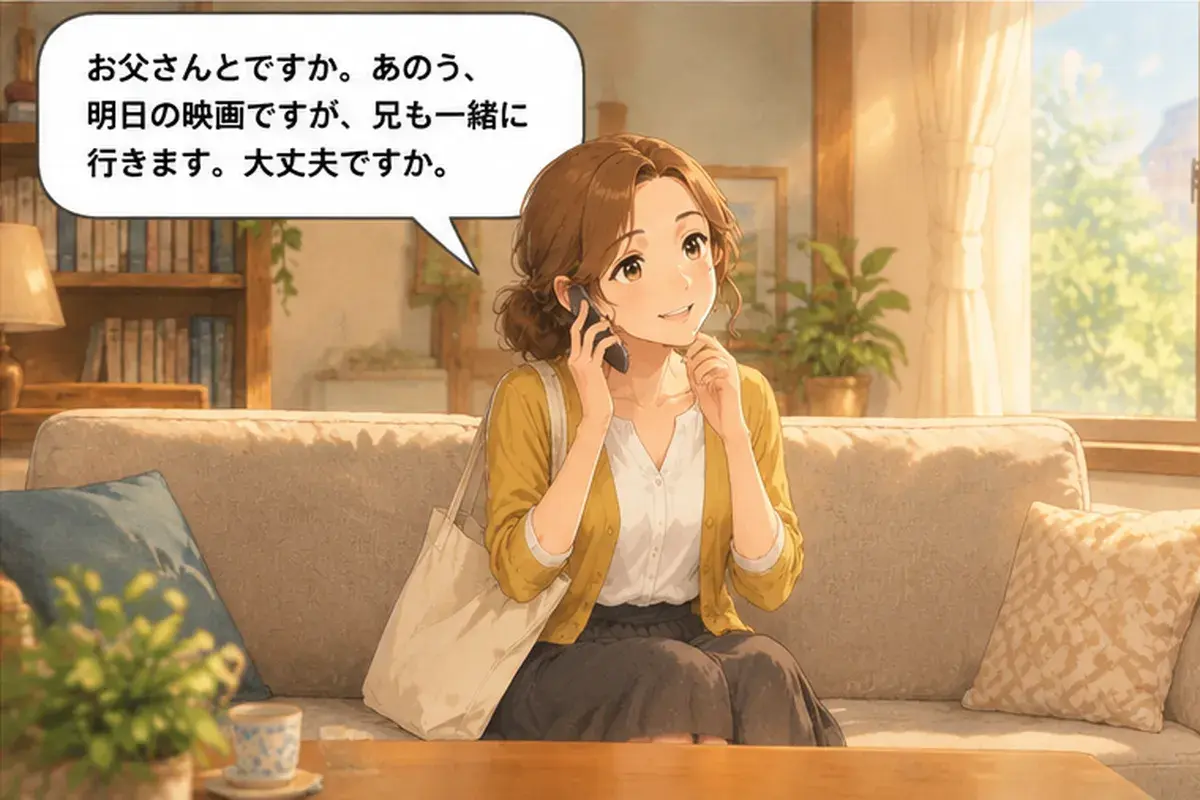
お父さんとですか。あのう、明日の映画ですが、兄も一緒に行きます。大丈夫ですか。
With her dad? Um, about the movie tomorrow: my older brother is going with us too. Is that OK?
- アンナ
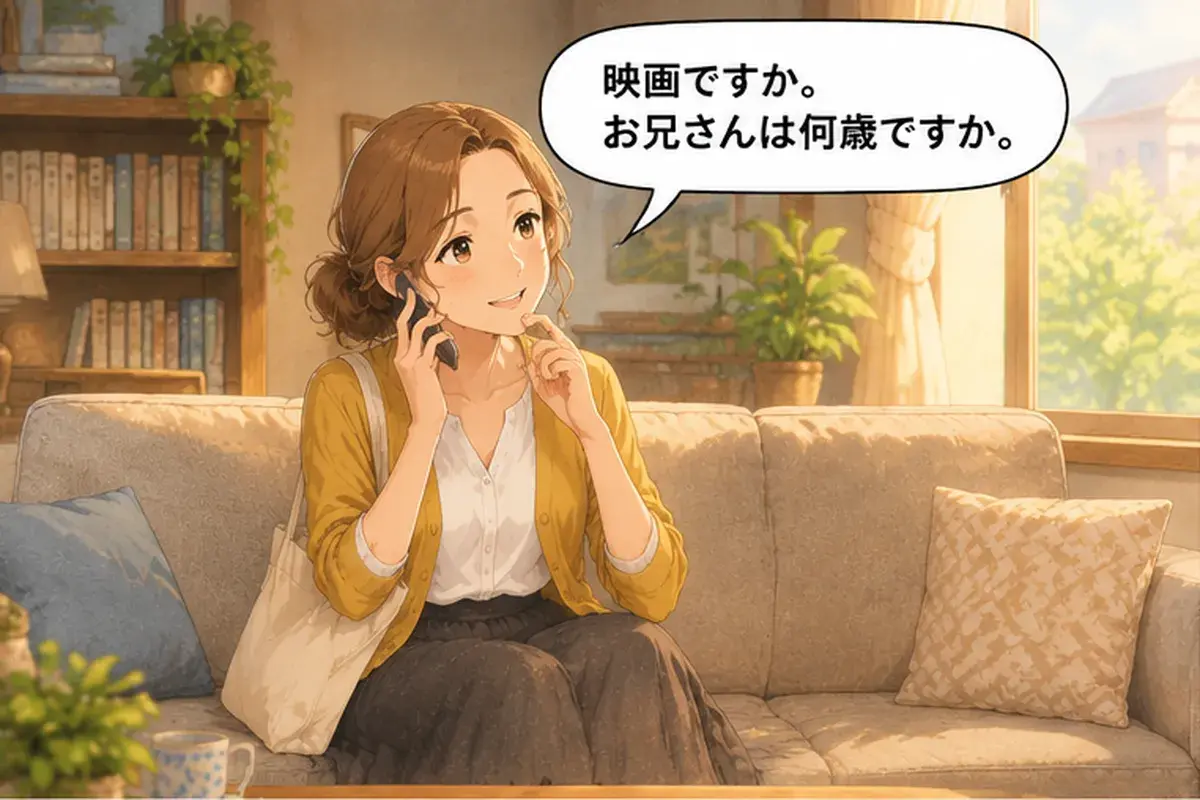
映画ですか。お兄さんは何歳ですか。
The movie? How old is your older brother?
- ゆい
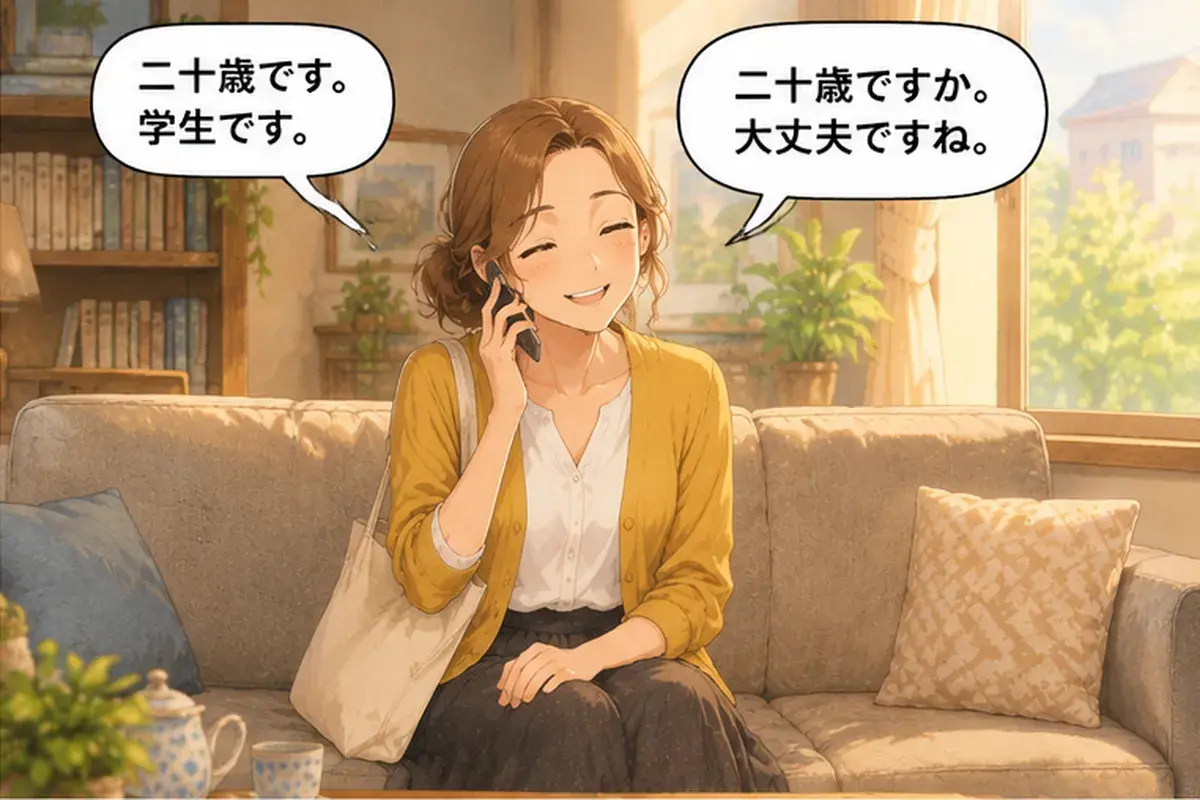
二十歳です。学生です。
He's 20. He's a student.
- アンナ
二十歳ですか。大丈夫ですね。
He's 20? Then it's fine.
- ゆい
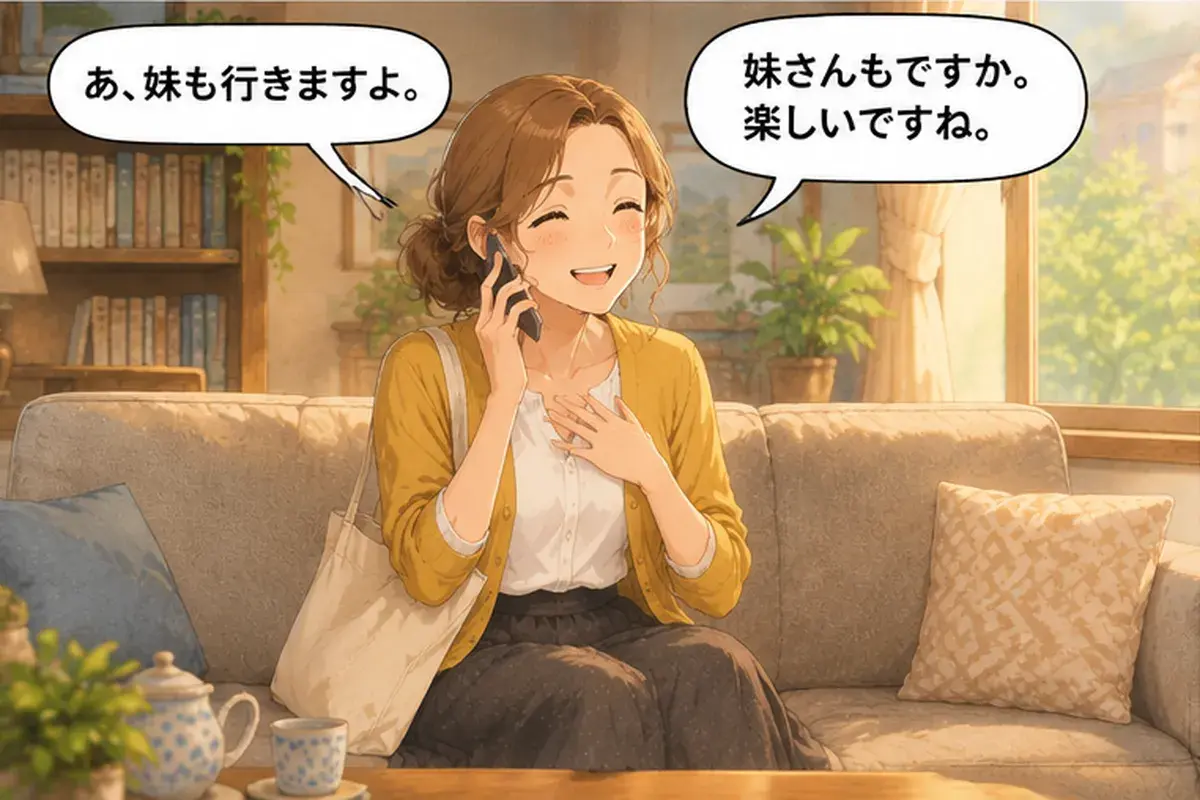
あ、妹も行きますよ。
Oh, my younger sister is going too.
- アンナ
妹さんもですか。楽しいですね。
Your younger sister too? That'll be fun.
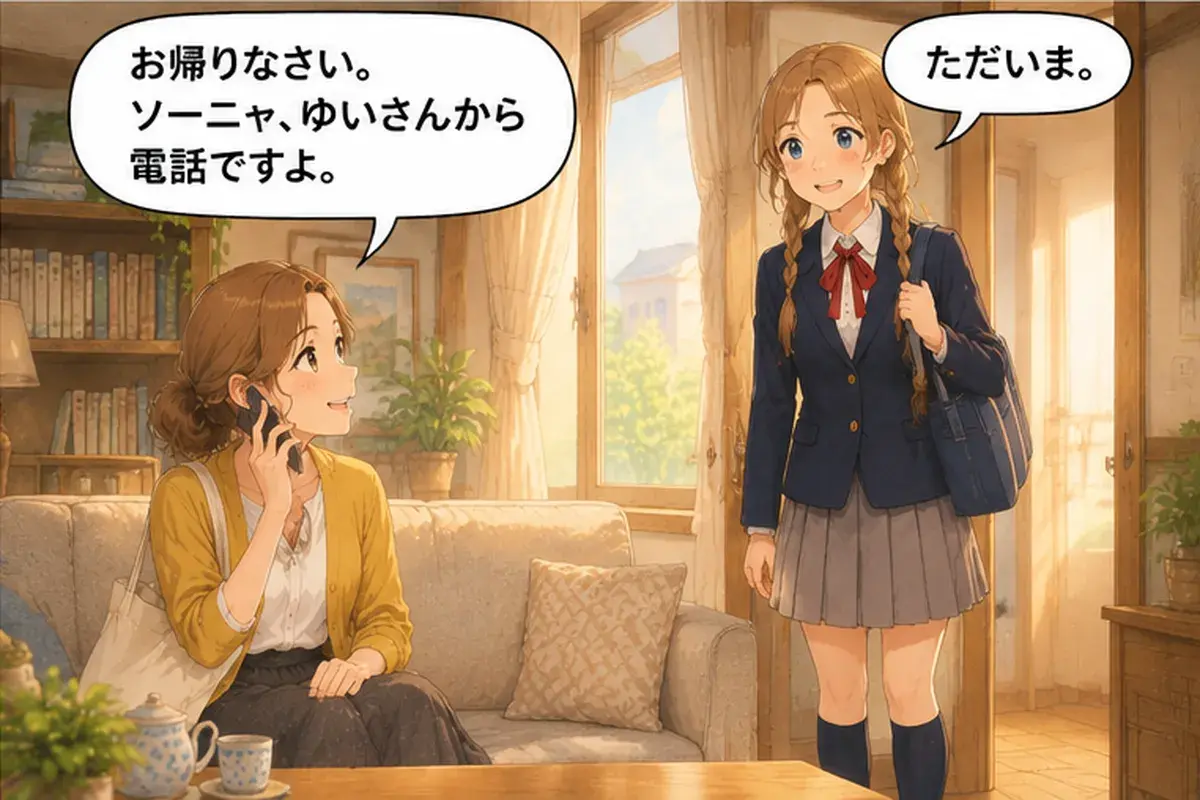
- ソーニャ
ただいま。
I'm home.
- アンナ
お帰りなさい。ソーニャ、ゆいさんから電話ですよ。
Welcome home. Sonya, there's a call from Yui-san.
Grammar for this text
ソーニャ の 母 です — Anna calls herself 母: she's talking to her daughter's friend, someone outside the family. Yui answers ソーニャ さん の お母さん です か: for someone else's mother you say お母さん.
夫 と 駅 へ 行きました — 夫 is her own husband. 行きました is the past tense, "went" (Unit 11). Anna doesn't say who went: it's clear from the question that it's Sonya.
お父さん と です か — Yui asks back "with her dad?" and changes the word: for someone else's father it's お父さん, not 夫.
娘 は 電話 を 忘れました — 娘 is her own daughter; 電話 here is the phone; 忘れました means "forgot".
明日 の 映画 です が、 兄 も 一緒に 行きます — Yui and Sonya agreed to go to the movies back in Unit 11; now Yui is warning that her brother is coming too. が at the end of the first part softens it: "about tomorrow's movie...". Yui says 兄 for her own older brother, and Anna asks about someone else's: お兄さん は 何歳 です か. 二十歳 です — a special word, read はたち.
妹 さん も です か — 妹 with さん: the other person's younger sister, not your own.
ソーニャ さん じゃ ありません か — a negative question: "isn't this Sonya?" You ask like this when you expected someone else.
ただいま — "I'm home!": the person who comes home says it. The answer is お帰りなさい, "welcome home". Both are set phrases that people say every day.
ゆい さん から 電話 です よ — から means "from": "a call from Yui", that is, "Yui is calling you".
あのう — "um...": a way to start talking or to make a careful request.
Words and grammar of the unit: Talk about your family.
Learn the words from the texts with flashcards
In the app, you can tap any word in a text to see its translation, forms and examples, and new words stick with flashcards. 15 minutes a day.
Start for freeEverything is open for free. No card needed to sign up.